JK Rowling has spoken about how she wrote the first Harry Potter book while she was employed at Amnesty International and how much that experience influenced her writing, and how she learned “the power of human empathy” from working there. Rowling was also, you’ll recall, one of the high profile signers of the infamous Harper’s Letter on “open debate.”
Now she’s threatening to bankrupt Amnesty International for expressing an opinion about Beira’s Place, a “women only” charity Rowling created.
Amnesty International UK had released a report, expressing its well-supported opinion about so-called “anti-rights actors,” specifically calling out a number of groups that it believed, through their statements or actions, sought to “restrict human rights by undermining human rights protections in law and practice.” It had a section on “anti-gender” efforts by some groups which have targeted trans rights and pointed out that:
“Human rights are interconnected and mutually reinforcing. When the rights of one group are restricted, protections for others can also be weakened, even where the effects are not immediately visible.”
This should be a fairly non-controversial statement. But, the report named a number of organizations that it deemed to be “gender critical,” which are, in effect, organizations that have — through their words or actions — done damage to trans rights in particular, and the wider LGBTQ+ space.
Advertisement
No matter your stance on any of this, expressing an opinion about an organization should be seen as part of their free speech and… what’s the term Rowling used in the Harper’s letter? Right, “open debate.”
But, no, not here. One of the organizations that Amnesty mentioned was Beira’s Place, which Rowling helped create as an organization to provide support for female victims of sexual violence. However, aligned with Rowling’s transphobic views and campaigning, the organization proudly insists that it is for “women only.” Beira’s Place and the constant verbiage surrounding it about being for “women only” have certainly contributed to the sense that it is another part of Rowling’s transphobic mission to diminish and deny rights of transgender women.
To look at Rowling’s X feed, for example, is to witness a near never-ending stream of gleefully obnoxious and petty attacks on trans people who speak up for their own rights. I’d post examples, but I’d rather not give any more attention to that sort of hateful messaging.
Thus it’s entirely reasonable to have and express the opinion that Beira’s Place and other operations that refuse to recognize the rights of trans women (and trans men) are “anti-rights.” I mean, literally part of Beira’s Place’s messaging to the world has been its anti-trans stance.
Advertisement
After all, as the statement above notes, when you deny rights to one group, you are weakening rights for all. And, look, even if you somehow agree with Rowling, if you actually believed in free speech and “open debate” you should at least support Amnesty UK in expressing their opinion that being anti-trans is being anti-rights.
But Rowling seems to absolutely loathe any actual “open debate” regarding her views towards the trans community. Thus, she spoke out angrily about the Amnesty report, leading to a media fury, and causing the organization to pull it down. She has also demanded an apology and threatened to sue the organization:
Lawyers acting for the centre have threatened Amnesty with court action unless it permanently withdraws the report, publicly apologises to the blacklisted groups and commissions an external investigation into how it came to be published.
The letter said: “The [Amnesty] report has wrongly labelled all associated with Beira’s Place, including those accessing support as anti-rights bigots who are seeking to weaken human rights.
“This is a shocking way to describe those who are seeking help to overcome the trauma of sexual violence. There is no basis for these allegations, and our client, with the support of its founder JK Rowling, will not sit back and allow the reputation of Beira’s Place or those who access its support to be tarnished in this way.”
Advertisement
And to make it clear she seeks to burden Amnesty UK with as many costly lawsuits as possible, she’s offering to fund other organizations that wish to sue Amnesty International UK over this report.
That’s her tweeting:
Should any of the women’s organisations targeted by Amnesty UK’s recent ‘anti-rights’ blacklist wish to take legal action, applications can be made to the JK Rowling Women’s Fund.
So much for free speech and open debate, huh?
Rowling has a right to express her own bigotry and hateful views. But Amnesty International and anyone else should also be able to express their opinion that by her words and her deeds she is doing real harm to the rights of trans people worldwide. But Rowling is making every effort to shut that down.
I am sure that Rowling and her supporters will claim, ridiculously, that because she views Beira’s Place and her other anti-trans activism as “pro-women’s rights” that it is somehow defamatory to call it anti-rights. But that’s why it’s a protected opinion. Whether or not one’s views and actions are pro or anti-rights is, inherently, an opinion.
Advertisement
My opinion is that Rowling is a hateful, angry woman who has done tremendous harm to some of the most marginalized people in the world for no reason at all, and her wink wink nod nod “I’m just supporting women’s rights” bullshit as cover for that is both craven and pathetic. She has contributed to a hateful, anti-rights movement that has put millions of people at greater risk. That she is now seeking to effectively silence and potentially destroy the organization that she, herself, claims was so valuable in getting her to understand the value of human empathy is a particularly sad statement on where her life has taken her.
Meanwhile, I’m still waiting for literally any of her Harper’s Letter co-signers to call out her attacks on the organization’s speech, and threats to their existence for expressing an opinion she doesn’t like. Apparently, that kind of “open debate” is too much?
Inkling is Thinking Machines Lab’s first big AI model launch, and comes a little more than a year after the start-up was founded.
Mira Murati’s Thinking Machines Lab has unveiled the first of its family of multimodal open-source models called Inkling. The model was the first from the start-up to be trained on Nvidia GB300 NVL72 systems, following a partnership agreement between the two companies earlier this year.
Inkling does not promise to be the strongest open or closed model available, but rather markets itself as one made to be customised. It has 975bn total parameters, with 41bn active, and supports a context window of up to 1m tokens.
“Inkling is designed to be broad. We trained it across agentic, reasoning, coding, instruction-following, factuality, vision, and audio tasks, rather than narrowly optimising for one domain,” Thinking Machines Lab said in a blogpost announcing the new model on Wednesday (15 July).
Advertisement
The model, available to download on Hugging Face, was trained using 45trn tokens of text, images, audio and video. It can accept inputs via text, images and audio, and produces text-only outputs. It is a ‘mixture-of-experts’ transformer that follows a similar design to DeepSeek-V3, according to its maker.
Inkling’s model card places it squarely around its open-weight contemporaries, including Kimi K2.5, Kimi K2.6, GLM 5.2 and DeepSeekV4 Pro, across various benchmarks.
The launch represents Thinking Machines Lab’s first major AI model showcase after more than a year under development.
Murati, who left OpenAI while its chief technology officer in 2024, founded her start-up just months after, with plans to make “AI systems more widely understood, customisable and generally capable”.
Alongside Inkling, the company is also launching, in preview, Inkling-Small – a lighter-weight model with 12bn active parameters that supposedly achieves strong performance with “even lower cost and latency”.
Nvidia has taken a liking to Thinking Machines Lab, having made a “significant” investment into the start-up alongside taking the company on for a multi-year partnership to develop its AI models. The partnership is expected to have cost the chipmaker several billion dollars.
Don’t miss out on the knowledge you need to succeed. Sign up for the Daily Brief, Silicon Republic’s digest of need-to-know sci-tech news.
ZTE showed the NaviX Ultra at WAIC, calling it the first agentic AI smartphone. It runs ByteDance’s Doubao agent. StepFun and Honor showed similar devices.
ZTE showcased the NaviX Ultra at the World AI Conference in Shanghai this week, calling it the world’s first agentic AI smartphone. The device, built under ZTE’s Nubia brand, runs ByteDance’s Doubao AI agent and can be activated by voice or a dedicated button. It comes in four colours and was prototyped in December at 3,499 yuan ($516). The initial 30,000 units sold out quickly and doubled in price on the used market.
ZTE was not alone. StepFun unveiled a device running a proprietary operating system with a built-in agent called Amoo. Honor, the smartphone maker spun off from Huawei, is showcasing an AI agent co-developed with Alibaba that will ship on new devices later this year. The idea is the same across all three: build an agentic layer into the operating system that lets AI execute tasks autonomously across apps, rather than bolting isolated AI features onto an existing interface. “Many so-called AI phones on the market simply stack AI functions on top of an existing system,” said Nubia chief Ni Fei. “That actually makes it more cumbersome for users.”
The timing is not coincidental. China’s smartphone shipments have fallen for five consecutive quarters as the memory crisis pushed component costs up and consumer demand down. IDC expects the global smartphone market to post its steepest annual decline on record in 2026. Chinese manufacturers, many of which sell budget devices with thin margins, are being squeezed hardest. AI phones are their escape route. IDC’s Arthur Guo said more than half of China’s smartphone market could be dominated by AI devices this year.
The launches also deepen the competition with Apple, which just received Beijing’s approval to roll out Apple Intelligence in China through partnerships with Alibaba and Baidu. “In terms of AI smart devices, we are ahead of Apple,” Ni said on Weibo in June. The AI boom that is killing the cheap smartphone is simultaneously creating the argument for a new kind of phone. Whether an agent that books flights and edits photos is enough to make people replace a device they already own is the question the market will answer by the end of the year.
I’ve always had a soft spot for devices that lean heavily into one aspect as their main identity. From phones that aim to replace a dedicated camera to devices with batteries larger than some power banks, these products know exactly what they were made for. They do not chase the same all-rounder brief as a typical flagship.
The Red Magic 11S Pro is a great example of this. I’ve always had a soft spot for devices that lean heavily into one aspect as their main identity. From phones that aim to replace a dedicated camera to devices with batteries larger than some power banks, these products know exactly what they were made for. They do not chase the same all-rounder brief as a typical flagship.
Moinak Pal/Digital Trends
The Red Magic 11S Pro is a great example. It drops all subtlety with RGB lighting, a visible liquid-cooling loop, a physical fan, and dedicated gaming performance modes. Underneath all that gamer excess sits one of the most capable hardware packages available on any phone.
$799 buys an outrageous amount of hardware
Vikhyaat Vivek / Digital Trends
The Red Magic 11S Pro costs $799, which still puts it in premium territory. However, it sits hundreds of dollars below some mainstream flagships. That money goes toward a flagship processor, active cooling, a liquid-cooling system, shoulder triggers, a 144Hz AMOLED display, a 7,500mAh battery, and 80W wired and wireless charging. It also keeps the headphone jack, strong stereo speakers, and a charger in the box.
After reviewing this gaming phone, I kept wondering why more major brands do not take a similar approach. A heavily equipped phone can skip some prestige features and still deliver excellent hardware where its purpose demands it, along with sensible compromises elsewhere.
Nadeem Sarwar / Digital Trends
The Snapdragon 8 Elite Gen 5 Leading Version tore through Android games during my testing. It also gave me enough headroom to run Ghost of Tsushima Director’s Cut through GameHub, an experiment that reached more than 40fps after a bit of tweaking.
A large vapor chamber, liquid metal, an active fan, and flowing liquid cooling help sustain that performance. Most flagship phones still depend primarily on passive cooling, which can lead to performance dropping during longer gaming sessions. Vapor chambers are becoming more common on newer models, though their effectiveness varies between devices.
Advertisement
Vikhyaat Vivek / Digital Trends
The rest of the specifications are similarly loaded. You get up to 16GB of fast memory, UFS 4.1 storage, a responsive 144Hz display, touch-sensitive shoulder buttons, and that massive 7,500mAh battery. Every part serves the same goal: running games quickly, at high frame rates, for longer periods.
Red Magic spends according to its priorities
Mainstream flagships have a much broader job description. They are expected to deliver premium materials, advanced camera systems, long software support, ecosystem integration, AI features, slim bodies, and broad carrier availability. In fairness, that is a difficult balancing act. It takes years of research, development, and impressive engineering to achieve what modern flagship phones can do.
Fitting every one of those goals into a single product also costs money. Buyers eventually pay for the entire checklist, even when their own priorities cover only a fraction of it. Red Magic takes a narrower approach. The 11S Pro concentrates its budget around performance, cooling, battery capacity, and gaming-focused hardware and software.
Vikhyaat Vivek / Digital Trends
Even with that specialization, the phone’s versatility surprised me. The giant battery helps during gaming and regular daily use. Fast charging shortened the time I spent near an outlet, while bypass charging helped reduce the additional battery heat and stress created during longer gaming sessions.
The high-refresh display kept everyday navigation and gaming smooth and responsive. Performance was also one area I never had to worry about, regardless of whether I was playing a demanding game or simply moving through regular smartphone tasks.
The cuts are easy to spot, and somehow easier to live with
Reaching $799 requires compromises, and those cuts become much easier to accept when you know what you want from the device. The cameras land somewhere around midrange territory. Its 50MP main camera can take decent daylight pictures, and the ultrawide adds some flexibility. Photography-focused flagships still offer better processing, zoom, portraits, and low-light results. The under-display selfie camera also sacrifices image quality to preserve an uninterrupted screen.
Advertisement
Vikhyaat Vivek / Digital Trends
Overall software polish trails behind the likes of Samsung and Apple. RedMagic OS has some rough edges, and the official support policy promises only two major Android upgrades. Major competitors now support their phones for considerably longer. The device is also large, heavy, and visually loud. There is no official dust-resistance rating, and a basic feature such as eSIM is missing.
But do any of these features really matter to someone just looking to game on their phone? I’ve met plenty of people searching for a phone that can run games reliably at high frame rates. This does not only apply to competitive shooters. There are huge audiences for MOBA titles such as Mobile Legends, along with demanding action games, emulation, and increasingly ambitious mobile releases.
Big brands could learn from specialization
Apple and Samsung do not need to build phones with RGB fans or shoulder triggers. The real trick is how well Red Magic allocates its budget. Many premium phones chase universal appeal, creating packed specification sheets and steadily rising prices. A clearer identity could give buyers more affordable options without reducing every component to midrange quality.
Samsung S26 PlusMoinak Pal / Digital Trends
Imagine a creator-focused phone that spends heavily on cameras, storage, microphones, and display calibration while using a simpler design. Similarly, a battery-first flagship could trade an elaborate camera array for extreme endurance and faster charging. Even a compact performance phone could prioritize cooling and battery density.
Every model would make visible compromises. Buyers could then choose the expensive hardware that matches their actual needs instead of paying for a universal flagship package. In spite of all of its flaws, particularly around cameras and software support, the Red Magic 11S Pro never comes across as hollow or stripped down. Its extravagance stays focused on the areas that define it.
Give a phone a purpose, spend aggressively around it, and make cuts that don’t degrade the experience. A decked-out device can stay within reach when every dollar has somewhere useful to go.
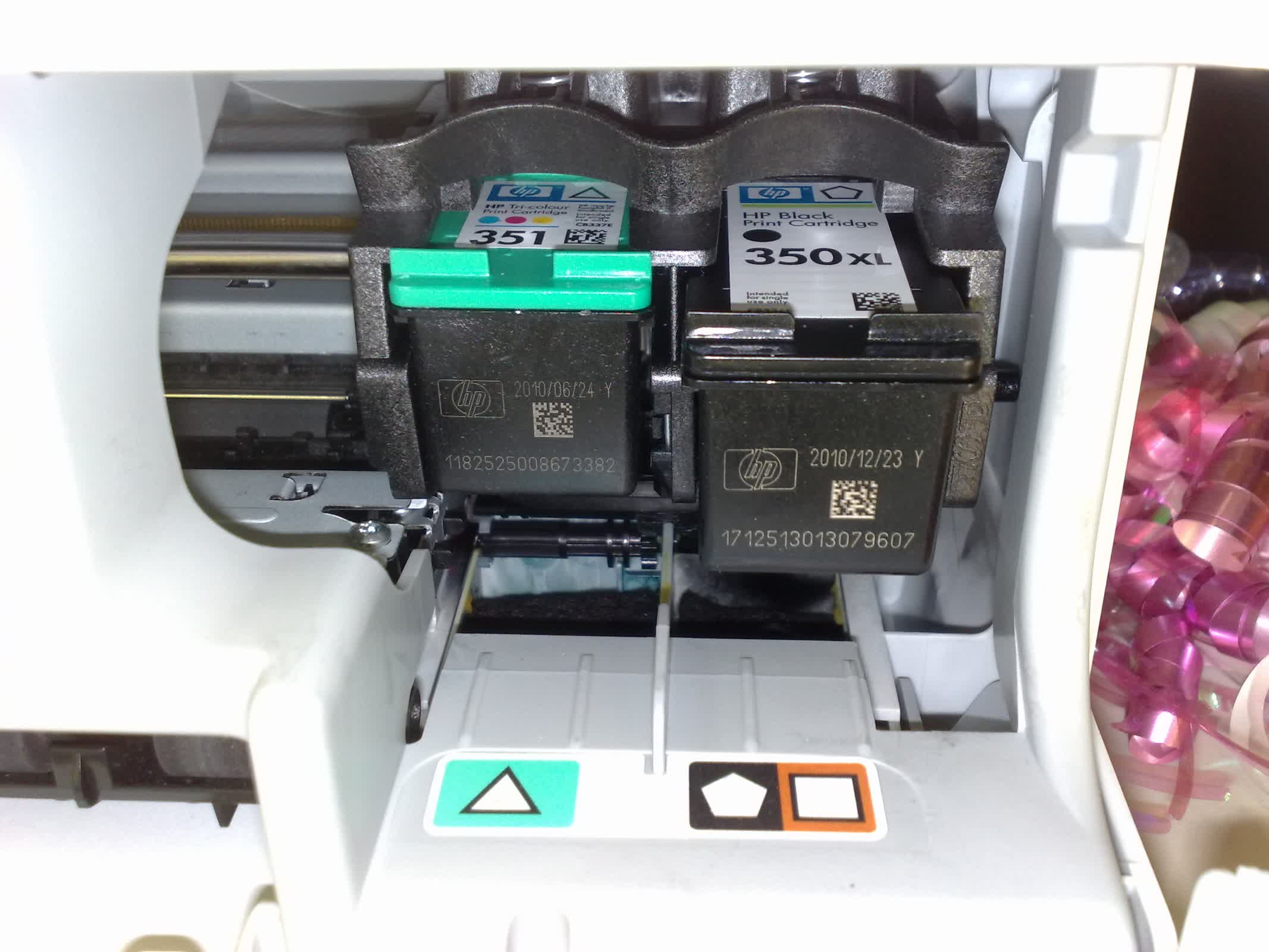
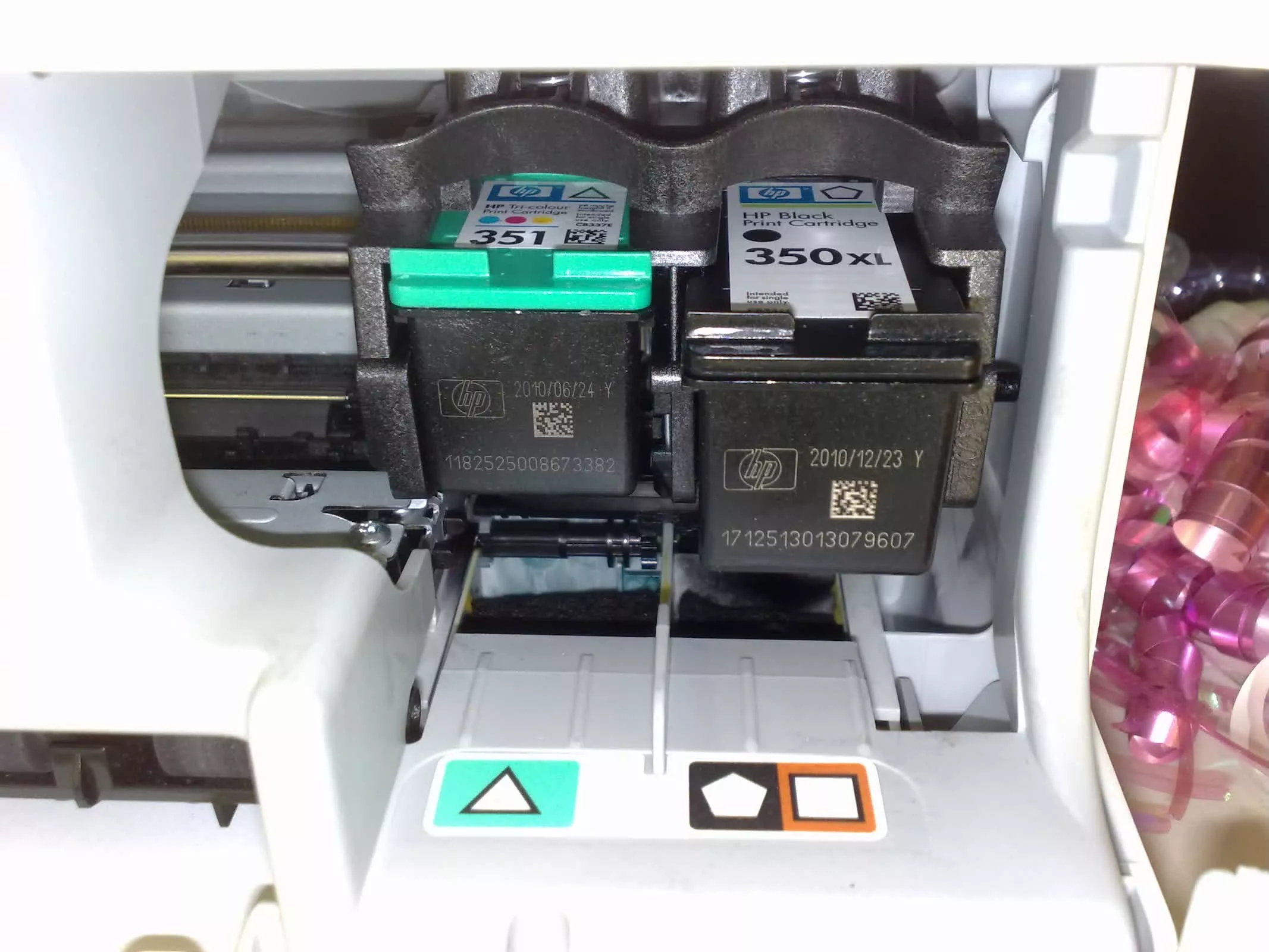
Cutting corners: India’s antitrust regulator has fined HP’s local unit and a group of resellers after finding they coordinated bids and pricing for government technology contracts. The Competition Commission of India said HP India worked with its channel partners to influence bids for computer procurements while controlling prices for ink cartridges, toner, and other printing supplies. The penalties total 1.4 billion rupees, or about $14.4 million.
The case centers on how bids were handled on the Government e-Marketplace, the country’s main public procurement platform. According to the regulator, HP India and five resellers coordinated their bids to increase the likelihood that one of them would win government contracts.
In its order, the commission said, “[C]ertain resellers approached HP India to help facilitate an arrangement that would enhance their chances of securing Government supply contracts against other competing HP India resellers.”
It said those efforts included limiting which resellers could participate in certain tenders, dividing contracts among themselves, and controlling the issuance of manufacturer authorization forms required to submit bids.
Advertisement
The regulator also pointed to practices such as intervening when bids came in below the platform’s pricing guidelines and arranging “cover” bids designed to make a preferred bidder appear more competitive.
The conduct extended beyond hardware. The commission fined HP India 119.8 million rupees for what it described as cartelization in the sale of consumables such as toner and cartridges. Another 21 resellers were fined a combined 35.2 million rupees.
The findings draw in part on WhatsApp messages exchanged between HP India and its Tier-2 reseller partners. In a separate order, the commission said those chats showed the companies operating “in a collusive arrangement” involving “bid rigging, including cover bidding, price fixation, and customer allocation during 2017 – 2020.” It said HP India played a central role in the scheme.
HP India pushed back against that characterization. The order notes that the company “humbly objects to HP India’s role being characterized as a ‘kingpin’ of the entire collusive arrangement.” It also argued that pressure in the printing supplies market played a role, saying high prices led some resellers to consider switching to counterfeit products in order to remain competitive.
Advertisement
“HP India was commercially forced into a position where it had to support the collusive arrangement adopted by the Tier-2 resellers,” the order reads.
The case highlights the economics of the printer business, where hardware sales are closely tied to recurring revenue from proprietary ink and toner. HP has faced criticism for restricting the use of third-party cartridges, including through firmware updates, as part of a strategy designed to keep customers within its ecosystem.
In India, those pressures appear to have extended into the reseller channel, where margins and pricing are closely linked to HP’s supply chain.
The Competition Commission has ordered HP India and its partners to stop the conduct and implement competition compliance programs within 60 days. HP has not publicly commented on the fines.
The country’s gambling authority ordered ISPs to block access to the prediction market’s website.
PJ McDonnell/Shutterstock
France is doubling down on preventative measures for its citizens trying to access Polymarket. The Autorité Nationale Des Jeux (ANJ), the country’s independent regulatory authority in charge of licensed gambling and betting games, announced this week that it ordered internet service providers to block access to Polymarket.
The ANJ’s latest decision follows its previous regulatory action from November 2024 that placed a geoblock on any financial transactions from French residents on the Polymarket website. Despite this ban on transactions, the agency said that the platform continued to grow in France thanks to users circumventing the block. According to ANJ, Polymarket saw 578,751 visits, 205,057 of which were unique visits, in the month of June from French residents. Now the ANJ wants to crack down harder on Polymarket, again emphasizing that the platform is considered an illegal gambling site.
According to the ANJ’s latest move, anyone caught advertising an unauthorized betting or gambling site could be fined up to 100,000 euros, or around $114,000. In the neighboring Spain, the government also ordered to block access to both Polymarket and Kalshi while it investigates if these sites break the country’s gambling laws. In the US, Minnesota passed a bill that bans prediction markets from operating in the state, while other states are filing lawsuits against Polymarket and Kalshi.
The takeaway: Unveiling a long-term roadmap is often seen as a damage-control strategy when a game or franchise is underperforming commercially. Many would likely describe the Fallout franchise’s current position as healthy, with Fallout 76 continuing to receive frequent content updates and the TV series recently earning several Emmy nominations. However, announcing four new games with no confirmed release dates just weeks after significant layoffs could be viewed as a proof-of-life roadmap for the series.
Bethesda has confirmed that Fallout 5, remastered versions of Fallout 3 and Fallout: New Vegas, and a new Fallout title from Obsidian Entertainment are in various stages of development. Further details remain scarce, and at least some of these projects are likely years away, but Microsoft and Bethesda are aiming to reassure fans that more Fallout content is on the way despite thousands of job losses across the Xbox division.
The remasters have been rumored for some time and are expected to follow a similar approach to The Elder Scrolls IV: Oblivion Remastered, which enhanced the 2006 classic with Unreal Engine 5-powered visuals. Meanwhile, rumors about Obsidian’s new Fallout project emerged earlier this month.
– Bethesda Game Studios (@BethesdaStudios) July 17, 2026
Chris Avellone, director of 2010’s Fallout: New Vegas, which remains a fan favorite, is expected to helm the new project. In recent interviews with Bloomberg and Windows Central, Bethesda head Todd Howard said that his studio and Obsidian are collaborating on the game. The involvement of Fallout creator Tim Cain, who recently joined Obsidian, remains uncertain.
Advertisement
Howard also confirmed that Fallout 5 is in pre-production, but Bethesda is currently focused on The Elder Scrolls VI. The next Elder Scrolls entry is arguably the most anticipated game from any Microsoft-owned studio. The sequel to The Elder Scrolls V: Skyrim – one of the best-selling role-playing games of all time – was announced eight years ago and likely remains several years away.
Although it has not reached the popularity of Fallout or Elder Scrolls, Starfield will continue receiving new content this year. Bethesda also hinted at plans for the Fallout franchise’s 30th anniversary, which the company will celebrate in Washington, D.C., next year.
The announcements are among the first signs of new Xbox CEO Asha Sharma’s plan to refocus Microsoft’s gaming division around major franchises, including Fallout and The Elder Scrolls. Fans expressed concerns about the development of ongoing and future projects from Bethesda, Obsidian, and other Microsoft-owned studios after Sharma announced that the Redmond firm would eliminate 3,200 jobs this year.
While acknowledging the difficulties of losing employees, Howard noted that Bethesda has recovered from similar situations in the past. However, an anonymous developer involved with id Software’s Doom franchise, another series Sharma aims to promote, warned that the significant loss of talent could hurt future projects.
Calculators are so ubiquitous and so familiar that they are easy to take for granted in many different ways. [lcamtuf] points out one that has probably never occurred to many of us: the user interface for a calculator is an unexpectedly complex thing.
The internal logic to support sequential inputs and multiple operators in a way that feels intuitive is a complex thing.
Resolving something like 1 + 2 = is pretty straightforward but complexity compounds rapidly after that, with numerous special cases. Let’s imagine one decides to program a simple calculator UI as a weekend project. The development process might look a little like this:
User types in 1 + 2 = and the calculator displays 3. What happens if the user immediately presses -?
No problem, just consider the result of the previous operation as an already-there input. So we’ll have 3 - for this next operation, and wait for more.
Unless we should have treated that - as a negative sign for whatever number is coming next, making it a negative number? No, ignore that. Just treat whatever results from pressing equals as a pre-typed input.
Unless the user hits a number. Because if they hit 2 (for example) then we’ll have a 32 and not a 2 which they probably, definitely don’t expect. So that’s a special case and we should insert a clear if that happens.
Oh, better clear if the user enters a decimal, too.
I’m going to need a coffee…
And that’s just the tip of the iceberg. Imagine trying to figure all this out for the very first time, without the benefits of habit and history to fall back on.
The fact is that supporting the apparently trivial behavior of a simple calculator requires an underlying complex state machine that deals with all kinds of special cases in order to make the UI feel intuitive. And that’s just for a basic four-function calculator; we haven’t even touched on how special keys like % should behave.
We know [lcamtuf] speaks from experience, not just because of their deep knowledge of calculator history but because they rolled their own calculator that uses voltmeters as digit displays and there’s nothing like actually implementing something to make one appreciate it.
More a rewrite really, and of a very early version: Linux 0.11 – in Rust
Earlier this week, Linux project leader Linus Torvalds told AI haters to fork off, and invited anyone who didn’t like his comments to fork the kernel. Well, here you go: linux-0.11-rs, a total reimplementation of the Linux kernel, done in langage de programmation du jour, Rust.
No, this isn’t really a response to the Emperor Penguin’s challenge – for a start, it looks like it was done with AI – but the timing was irresistible.
Advertisement
The new project is by an undergrad student at Beihang University in Beijing, China, under the handle Poseidon.
Never mind not being a fork – Poseidon’s kernel isn’t even really a port of Linux. It’s a rewrite, and a rewrite of a very early version. It’s based on Linux kernel 0.11, whose source code you can peruse on this mirror.
This was an early kernel from December 8, 1991 – just a few months after the initial release, Linux 0.01. Version 0.11 was the last release of that first year of Linux. It was followed by version 0.12 in January 1992, then the version number jumped to 0.95 in March, as the young Torvalds started counting down to kernel 1.0 – which arrived two years later.
If you read the 0.11 release notice, Torvalds said: “Linux-0.11 has a few rather major improvements, but perhaps most notably, is the first kernel where some other people start making real contributions.”
Advertisement
He goes on to say: “This is a major milestone, since it makes the kernel much more powerful than Minix was at the time.” It’s also when “Ted Ts’o shows up as a coder.”
Poseidon’s Rust rewrite is quite a lot bigger than the original. The hackers of the “Orange Site” have been dissecting it with much greater expertise than this vulture can offer. User “dminik” fed it to an automatic code analyzer, and Pajecawav’s Ghloc reckoned that it’s just over 47,000 lines of Rust.
Dminik breaks that down: “It’s about 15k lines of code for the kernel and the rest is various utilities, libraries and programs that can run on the kernel.”
In other words, linux-0.11-rs is more complete than just the kernel. It also includes the core OS as it stood at the end of the year it first appeared.
Advertisement
“Poseidon” also credits a tutorial on writing an OS kernel in Rust, which implies to us that this was not an entirely bot-driven effort. Some work has gone into it. Some of the Hacker News commentators call it a waste of tokens, or more pointedly a waste of water and electricity, but it seems to be a kid having some fun, playing around and experimenting. For us, that’s a good thing. We hope that they found the exercise instructive.
The Reg FOSS desk is not a fan of bot-slop, but we do approve of exploring and learning and having fun. At least for as long as code-generating LLMs are cheap and plentiful, it will be very hard to prevent youngsters and students from playing around and experimenting with them.
Nobody is ever going to deploy anything on a bot-generated rewrite of a prototype kernel from 35 years ago – and don’t forget that the original was itself written by a 22-year-old who was doing it “Just for Fun.” ®
US Air Force drone fires live missile during landmark autonomous aircraft test
Human pilots remain in control despite growing drone autonomy capabilities
YFQ-44A advances America’s plans for future robotic fighter operations
The US Air Force has successfully tested a Collaborative Combat Aircraft firing a live AIM-120 AMRAAM missile, marking a major step for autonomous combat systems.
The YFQ-44A drone, developed by Anduril Industries, launched the weapon against a digital target over the Mojave Desert during the historic test.
The event moves the Air Force closer to deploying unmanned aircraft designed to support human pilots during future air operations.
Latest Videos From
AI wingman drone moves from carrying weapons to firing them
The missile launch followed earlier testing phases where engineers confirmed the aircraft could safely carry the weapon and maintain stable flight.
Advertisement
The drone first carried an inert version of the AMRAAM before validating the communication links required between the aircraft, weapon systems, and human operators.
Air Force officials said the test involved more than simply releasing a missile because the weapon successfully tracked the simulated target during the engagement.
General Ken Wilsbach described the event as an important development toward delivering Collaborative Combat Aircraft capabilities to military operators.
Advertisement
Sign up to the TechRadar Pro newsletter to get all the top news, opinion, features and guidance your business needs to succeed!
“It wasn’t just an AMRAAM that came off, it was tracking the target,” Wilsbach said while discussing the test.
The Air Force has stressed that autonomous systems will not independently decide when to fire weapons, as human authorization remains required before any engagement.
The YFQ-44A, also known internally as Fury, is part of the first CCA development phase alongside General Atomics’ YFQ-42A Dark Merlin.
Advertisement
These aircraft are designed to operate with crewed fighters such as the F-35 and F-22 by providing additional sensors, weapons, and operational support during missions.
The Air Force expects CCA platforms to perform multiple roles beyond missile carriage, including electronic warfare, reconnaissance, and other battlefield tasks.
Officials believe these aircraft could increase combat effectiveness by allowing pilots to manage several unmanned systems during complex operations.
Advertisement
Air Force expands autonomous aircraft program
The successful missile test comes after the Air Force approved both CCA designs to move toward production in June 2026.
Anduril, Shield AI, and Collins Aerospace are competing to provide autonomous software for the aircraft, while the service continues developing future versions through multiple program increments.
Air Force officials have not disclosed total program costs or production numbers for the first manufacturing phase.
Advertisement
However, budget documents show the service requested about $1.4 billion for CCA development and nearly $1 billion for procurement during fiscal 2027.
The Air Force estimates the drones have reached a cost goal of about one-third of an F-35A fighter, which has an average flyaway cost of around $83 million in its current production lot.
Future CCA designs may require greater range, speed, and electrical power, especially for potential operations in regions where long-range weapons threaten U.S. bases.
However, American lawmakers have argued that future systems will need the ability to deploy from the continental United States and reach distant combat areas.
The Trump administration is dictating access to frontier AI models, shifting that decision from Anthropic and OpenAI to the government via the Gold Eagle programme.
The Trump administration is now dictating which companies and entities get access to frontier AI models from Anthropic and OpenAI, CNBC reported on Friday, citing two people familiar with the matter. Until now, the labs made that decision themselves. Anthropic controlled access to its Mythos cybersecurity model through an initiative called Project Glasswing. OpenAI ran a similar programme called Daybreak for its cyber model. Going forward, these partner lists will require explicit government approval.
A White House official told CNBC that the government does not “provide approvals for AI releases” and that company participation is “voluntary.” But the administration blocked Anthropic’s Claude Mythos 5 and Fable 5 last month over national security concerns, reinstating access only after weeks of negotiations. OpenAI said in June it would limit new models to “trusted partners” to comply with government requests. The gap between the official position and the operational reality is the story. The White House launched Gold Eagle this week, an AI clearinghouse for cyber vulnerabilities, and according to CNBC’s source, the programme will put the White House in charge of greenlighting which companies can access new AI models.
The timing is politically uncomfortable. Moonshot AI’s Kimi K3 launched the same day and matched or exceeded Fable and GPT-5.6 on at least one independent benchmark. David Sacks, former White House AI czar, called it “concerning” and wrote: “This is how you lose the AI race. The rest of the world won’t play by our rules if we bog ourselves down.” The administration is trying to secure frontier AI against Chinese exploitation while simultaneously watching Chinese labs close the capability gap in real time.
Advertisement
The shift is structural, not temporary. Trump’s June executive order asked AI companies to give the government early access to models for testing, framed as voluntary. Gold Eagle operationalises that ask into something closer to a gating mechanism. If Anthropic and OpenAI cannot release their most capable models without government approval of the partner list, then the US government has acquired de facto distribution authority over frontier AI, without legislation, without a regulatory agency, and through a programme the White House insists is optional.




































































You must be logged in to post a comment Login