


Connect with us
DAPA Banner
DAPA Coin
DAPA
COIN PAYMENT ASSET
PRIVACY · BLOCKDAG · HOMOMORPHIC ENCRYPTION · RUST
ElGamal Encrypted MINE DAPA
🚫 GENESIS SOLD OUT
DAPAPAY COMING

Tech

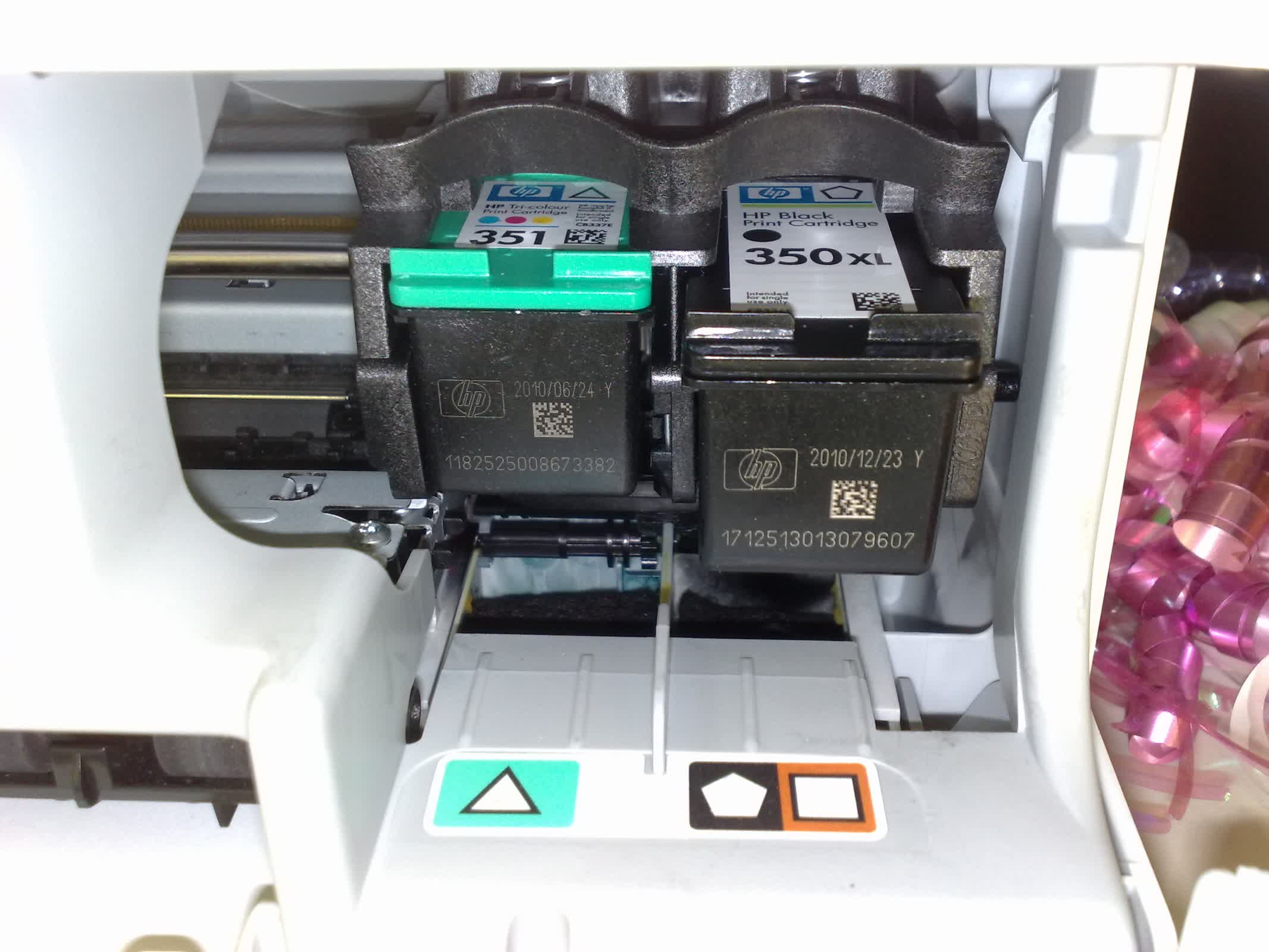
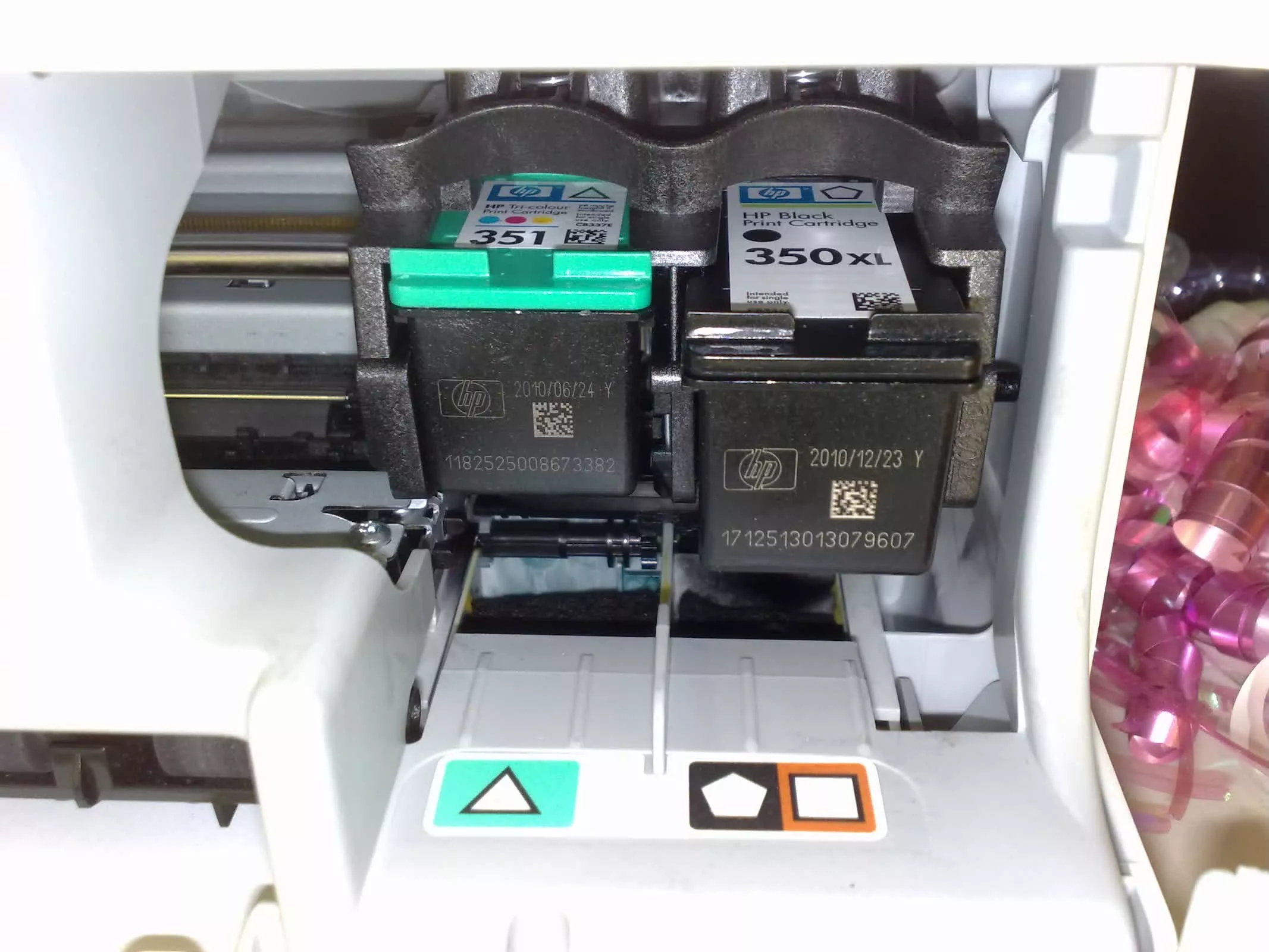
India fined HP $14.4 million for rigging government bids and fixing ink and toner prices

Published

on

Cutting corners: India’s antitrust regulator has fined HP’s local unit and a group of resellers after finding they coordinated bids and pricing for government technology contracts. The Competition Commission of India said HP India worked with its channel partners to influence bids for computer procurements while controlling prices for ink cartridges, toner, and other printing supplies. The penalties total 1.4 billion rupees, or about $14.4 million.

The case centers on how bids were handled on the Government e-Marketplace, the country’s main public procurement platform. According to the regulator, HP India and five resellers coordinated their bids to increase the likelihood that one of them would win government contracts.

In its order, the commission said, “[C]ertain resellers approached HP India to help facilitate an arrangement that would enhance their chances of securing Government supply contracts against other competing HP India resellers.”

It said those efforts included limiting which resellers could participate in certain tenders, dividing contracts among themselves, and controlling the issuance of manufacturer authorization forms required to submit bids.

Advertisement

The regulator also pointed to practices such as intervening when bids came in below the platform’s pricing guidelines and arranging “cover” bids designed to make a preferred bidder appear more competitive.

The conduct extended beyond hardware. The commission fined HP India 119.8 million rupees for what it described as cartelization in the sale of consumables such as toner and cartridges. Another 21 resellers were fined a combined 35.2 million rupees.

The findings draw in part on WhatsApp messages exchanged between HP India and its Tier-2 reseller partners. In a separate order, the commission said those chats showed the companies operating “in a collusive arrangement” involving “bid rigging, including cover bidding, price fixation, and customer allocation during 2017 – 2020.” It said HP India played a central role in the scheme.

HP India pushed back against that characterization. The order notes that the company “humbly objects to HP India’s role being characterized as a ‘kingpin’ of the entire collusive arrangement.” It also argued that pressure in the printing supplies market played a role, saying high prices led some resellers to consider switching to counterfeit products in order to remain competitive.

Advertisement

“HP India was commercially forced into a position where it had to support the collusive arrangement adopted by the Tier-2 resellers,” the order reads.

The case highlights the economics of the printer business, where hardware sales are closely tied to recurring revenue from proprietary ink and toner. HP has faced criticism for restricting the use of third-party cartridges, including through firmware updates, as part of a strategy designed to keep customers within its ecosystem.

In India, those pressures appear to have extended into the reseller channel, where margins and pricing are closely linked to HP’s supply chain.

The Competition Commission has ordered HP India and its partners to stop the conduct and implement competition compliance programs within 60 days. HP has not publicly commented on the fines.

Advertisement

Source link

Continue Reading
Click to comment

You must be logged in to post a comment Login

Leave a Reply

Tech

AI weapons under scrutiny as activists plan weekend protest at Anduril’s Seattle office

Published

on

Defense giant Anduril is operating its autonomous naval vessel manufacturing facility at the old Foss Shipyard on the Lake Washington Ship Canal in Seattle. Demonstrators plan to protest a different location, Anduril’s downtown Seattle office. (GeekWire Photo / John Cook)

A coalition of activists and community organizations plans to rally Sunday outside Anduril’s Seattle office, protesting the defense technology company’s development of artificial intelligence-powered military systems and its growing presence in the region.

The demonstration, scheduled for 9:30 a.m. at Anduril’s downtown Seattle office, is being organized by groups including BAYAN Washington, International Coalition for Human Rights in the Philippines and The International League of Peoples’ Struggle. Organizers say the event will highlight concerns about the use of AI in warfare, autonomous weapons systems and the expansion of defense technology companies in Washington state. They expect more than 50 to attend.

“The rally will respond to urgent developments in the expansion of AI weapons companies in Washington State and will expose Anduril as an engine of U.S.-led wars of aggression and a domestic threat to migrant and working class communities,” the organizations said in a statement.

Anduril said it recognizes the right to protest, while defending its work supporting the U.S. military and service members.

“We respect the right to free speech and we understand that protests are a hallmark of democratic expression,” Anduril said in a statement provided to GeekWire. “That said, it is perplexing when people choose to protest a company dedicated to supporting the very military that safeguards those rights.”

Advertisement

The company’s statement continued:

“At Anduril, we’re proud of our role in helping the brave men and women who risk their lives to defend the freedoms that we all enjoy, freedoms that include the right to stand outside and protest our existence. We’ll continue to honor those serving our country, even when others stand in opposition.”

The protest comes as Anduril expands its operations in the Seattle area, including a new maritime manufacturing and testing operation along Seattle’s historic Lake Washington Ship Canal. GeekWire reported earlier this year that the company has taken over the former Foss shipyard, where it is thought to be testing autonomous vessels for the U.S. Navy.

Founded in 2017 by entrepreneur Palmer Luckey, Anduril has become one of the most prominent defense technology companies in the country, developing autonomous aircraft, maritime systems, surveillance technologies and AI-powered software platforms for military and national security customers.

Advertisement

@media (max-width: 600px) {
aside.callout { float:none !important; max-width:100% !important; margin-left:0 !important; margin-right:0 !important; }
aside.callout .callout-img { display:none !important; }
}

The company’s Seattle expansion has drawn attention because of the region’s long history as a hub for aerospace, maritime engineering, artificial intelligence and advanced manufacturing. The new maritime facility on the south bank of the Ship Canal represents a new chapter for a site with deep roots in Seattle’s shipbuilding history.

In announcing the rally, organizers cited the company’s work on autonomous systems, including underwater and surface vessels, and raised concerns about the role of artificial intelligence in global conflicts.

The groups also pointed to the ongoing Rim of the Pacific (RIMPAC) military exercises, a multinational naval exercise held in and around Hawaii. The exercise runs through July 31 and includes participation from dozens of nations.

Anduril has increasingly positioned itself as a technology company focused on modernizing defense capabilities, arguing that faster adoption of advanced software, autonomy and AI can improve the effectiveness and safety of military operations.

Advertisement

Sunday’s event is expected to include speeches, testimonials and cultural performances from participating community organizations.

The rally adds a new point of public debate around Anduril’s expansion in Seattle, as the company builds out its presence in a region already home to major technology companies, aerospace firms and a growing defense innovation sector.

In addition to the new facility at the Foss shipyard, Anduril operates facilities in downtown Seattle and Bellevue, where it expanded last summer with a lease for 39,851 square feet of space at Skyline Tower.

Anduril also is rapidly expanding its operations in California, where the company is headquartered. And it is building a massive facility just south of Columbus, Ohio, that it dubs Arsenal-1, described by the company as “the future of American defense manufacturing.”

Advertisement

In May, the company raised a $5 billion funding round from Thrive Capital, Andreessen Horowitz and others at a $61 billion valuation.

Source link

Continue Reading

Tech

NYT Strands hints and answers for Sunday, July 19 (game #868)

Published

on

Looking for a different day?

A new NYT Strands puzzle appears at midnight each day for your time zone – which means that some people are always playing ‘today’s game’ while others are playing ‘yesterday’s’. If you’re looking for Saturday’s puzzle instead then click here: NYT Strands hints and answers for Saturday, July 18 (game #867).

Strands is the NYT’s latest word game after the likes of Wordle, Spelling Bee and Connections – and it’s great fun. It can be difficult, though, so read on for my Strands hints.

Want more word-based fun? Then check out my NYT Connections today and Quordle today pages for hints and answers for those games, and Marc’s Wordle today page for the original viral word game.

Advertisement

Source link

Advertisement
Continue Reading

Tech

Chinese car sales in the UK jumped from 384 in 2015 to 285,000 last year. The tariff gap explains why.

Published

on

TL;DR

UK sales of Chinese-made cars hit 285,000 in 2025, up from 384 in 2015. No additional tariff on plug-in hybrids makes the UK more open than the EU or US.

Brits bought 384 Chinese-made vehicles in 2015. Last year, they bought 285,000, according to automotive consulting firm Mobility Global. The growth is accelerating. BYD nearly doubled its UK sales in the first half of 2026 to over 37,000 units, and Chinese brands collectively hold roughly 13% of new car registrations in Britain, double their share a year ago.

The reason is a tariff gap. The EU charges countervailing duties of up to 35.3% on Chinese battery-electric vehicles and is preparing additional tariffs on plug-in hybrids. The US charges 100%. The UK charges neither. Britain applies no additional tariff on Chinese plug-in hybrid vehicles, which has made it the easiest major Western market for Chinese automakers to enter at scale. “It becomes an excellent size market that’s progressing well towards electrification and is in demand for some cheaper vehicles with that void to fill,” said Will Roberts of Benchmark, an automotive consultancy.

The price gap is stark. A Volkswagen Tiguan plug-in hybrid built in Germany sells in the UK for just over £43,000 ($58,000). The BYD Seal U built in China costs almost £10,000 less. Buyers at a Geely dealership in Maidstone told CNBC the value proposition was obvious: better equipment, lower price. Canada opened its market to Chinese EVs in January with a 49,000-unit cap, but the UK’s approach is more permissive, with no quota and no additional duties.

Advertisement

The 💜 of EU tech

The latest rumblings from the EU tech scene, a story from our wise ol’ founder Boris, and some questionable AI art. It’s free, every week, in your inbox. Sign up now!

China’s domestic auto market is cooling. Retail sales fell 26% in the first half of 2026 while exports rose 72%, according to the China Association of Automobile Manufacturers. That export surge has to go somewhere. Former GM board member Jon McNeill told CNBC that Chinese automakers are entering Europe “with really attractive cars at really attractive prices with technology that sort of blows away what they can buy from a European manufacturer.Geely has already stopped building new factories and is using Volvo’s existing plants instead to sidestep tariffs and absorb overcapacity. The UK’s open door may not last: if Chinese market share keeps climbing, pressure to align with EU tariff policy will follow. For now, 285,000 cars in a single year tells its own story.

Advertisement

Source link

Continue Reading

Tech

Waymo says San Francisco service has resumed after one-hour pause

Published

on

Waymo says robotaxi service has resumed after it made “temporary adjustments” in San Francisco amidst a power outage that appears to have affected around 7,000 PG&E customers in the city.

According to a screenshot posted on social media, Waymo told SF customers that service was “temporarily paused” and that “freeway routes are unavailable.”

When TechCrunch reached out to the Alphabet-owned company for comment, a spokesperson said in a statement, “We are making temporary adjustments to our service while we monitor local conditions. We know riders depend on us, and we will return to normal operations as soon as possible.”

Following the initial publication of this article, a Waymo spokesperson added that the company “decided to pause service for approx. one hour to assess the scale of the power outage affecting a large portion of San Francisco and coordinate with local officials.”

Advertisement

Power outages have affected Waymo service in the past, for example when a number of Waymo vehicles stalled on city streets during a blackout in December, and when a similar incident paralyzed traffic during a Golden Gate Bridge fireworks show on the Fourth of July.

As a result, San Francisco Mayor Daniel Lurie has called for tougher state regulations to “adequately address how autonomous vehicles operate during major incidents, planned or not.”

This post has been updated with additional comment from Waymo reflecting that service has resumed.

Source link

Advertisement
Continue Reading

Tech

France Orders ISPs to Block Access to Polymarket

Published

on

France’s regulatory authority for licensed gambling/betting games “announced this week that it ordered ISPs to block access to Polymarket,” reports Engadget. Anyone caught advertising an unauthorized betting site “could be fined up to 100,000 euros, or around $114,000.” (The article notes this follows a previous regulatory action from November placing a geoblock on financial transactions from French residents on Polymarket’s site.)

In May Spain blocked access to Polymarket and Kalshi while it launched a gambling license investigation.

Source link

Continue Reading

Tech

Cross-Sectioning Crickets With A Femtosecond Laser

Published

on

Unlike most cutting lasers, femtosecond lasers don’t vaporize materials; rather, they produce such short, intense bursts of light that the affected region is ablated without having the chance to heat its surroundings. This makes them good at cutting away material without damaging the surroundings, something [Ben Krasnow] exploited to cut cross-sections of samples while still in a scanning-electron microscope.

In this case, the samples were crickets, and before imaging they had to be prepared. First, the bodies were soaked in glutaraldehyde to cross-link the proteins and stabilize the structure. Next, a series of solvent exchanges replaced the water in the bodies with a low-surface-tension solvent; this meant that during the next step, drying, surface tension wouldn’t distort the crickets’ internal structure. Finally, the insect bodies were charred under argon, which made the bodies conductive and more absorptive to laser light.

The laser itself and the scanning galvo are mounted outside the microscope, and shine in through a transparent window. To protect the detector and electron optics from a spray of ablated carbon, a servo motor swings an aluminium shutter between these and the sample while the laser is active. This caused some mysterious problems during testing: after the first ablation run, the electron microscope’s image would contain so much noise as to be unusable, but it would improve over time. As it turned out, the shutter was painted, and the other side of the paint was getting coated with charged carbon particles. This created a small capacitor which disrupted the electron optics as it discharged. Eventually, after solving this and a few other strange problems, [Ben] was able to take several time-lapse videos of the laser gradually ablating a cricket, 30 microns at a time, revealing its inner structure.

Although scanning-electron microscopes are unfortunately shard to come by, it’s still possible to restore a secondhand microscope or, as [Ben] did, build your own. Femtosecond lasers are yet more inaccessible, though they can be used to replicate themselves.

Advertisement

Source link

Advertisement
Continue Reading

Tech

Your AI Ham Radio Buddy

Published

on

AI chatbots are everywhere these days, and they seem to “know” about everything. But while that is a strength, it can sometimes be a weakness because it isn’t laser-focused on one topic. Not so with this Ham-radio-centric chatbot called HamGPT. The service is clearly built on another GPT engine but understands how to retrieve data from common ham radio sources, such as the FCC database, propagation reports, and the like. It didn’t, however, seem to have access to ham radio-related books, magazine articles, or other “static” data that we could tell.

You do have to sign up for an account, which includes providing your callsign and location. There is a free tier that allows a limited number of queries per day, so you can try it to see if it is useful for you without subscribing.

Here’s a typical session:

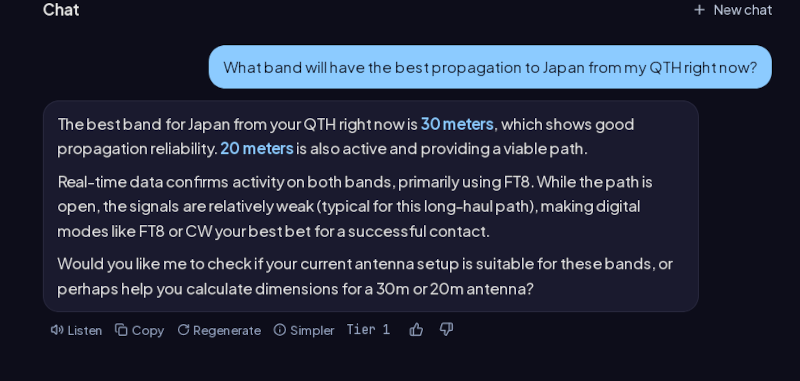
                What band will have the best propagation to Japan from my QTH right now?

The best band for Japan from your QTH right now is 30 meters, which shows good propagation reliability. 20 meters is also active and providing a viable path.

Advertisement

Real-time data confirms activity on both bands, primarily using FT8. While the path is open, the signals are relatively weak (typical for this long-haul path), making digital modes like FT8 or CW your best bet for a successful contact.

Would you like me to check if your current antenna setup is suitable for these bands, or perhaps help you calculate dimensions for a 30m or 20m antenna?

In addition, bubbles at the bottom of the screen showed me the busiest band in my area and how many repeaters were nearby.

In all fairness, we asked ChatGPT the same question, but did say “ham radio band” just to give it some idea of scope. It gave a much more detailed answer with sources, even provided headings, and made a suggestion about another location I sometimes operate from because it remembers things from previous unrelated chats.

Advertisement

We understand reactions will be mixed. If you’ve been a ham for a long time, you probably could have guessed that a path from the US to Japan in the morning was likely to be on 20 or 30 meters. You probably also know how to look things up yourself.

We didn’t try any more sophisticated queries that might make it more worthwhile. For example, what if you could send it an ADIF log file and ask it what awards you qualified for? Or to process contest logs for duplicates and fill out a scoring worksheet? What would you like a ham radio-aware AI to do for you?

Ham radio — at least parts of it — has become inextricably linked with computers.

Advertisement

Source link

Continue Reading

Tech

How Microsoft’s ‘Little Workaround’ Created a Major Threat to America’s Defense Department

Published

on

This week Slashdot reader joshuark found the story of exactly how in 2025 ProPublica reporter Renee Dudley confirmed Microsoft was running tech support for the U.S. Defense Department through China, America’s biggest cybersecurity adversary — and how that investigation ultimately changed U.S. government policy.

The reporter first found an ad offering $18 to $28 to hire Americans as “digital escorts” for China-based tech support, then just searched LinkedIn for people who apparently had answered the ad. They discovered that at the time “Behind the scenes, unseen by the users at the U.S. government, it’s not just one person who responds,” explains ProPublica’s podcast. “It’s two people… The China-based engineer is the one who knows how to fix the problem. On their end, they produce a block of code to solve it and send it over to the digital escort in the U.S. The digital escort then just copy-pastes it… All of this so that they can follow the government’s rule: that you have to be a U.S. citizen or permanent resident to handle sensitive data.”

But amazingly to confirm it, ProPublica’s researcher just had to input “Microsoft” and “escort” into the U.S. Patent Office search bar, and actually found patents related to digital escorts — along with names of the current and former Microsoft employees listed as inventors. Had the government signed off on the practice? “I could see what Microsoft actually told the government,” the reporter says on the podcast, “And there was no mention of foreign engineers being used, and definitely no mention of China.”

ProPublic’s story was published on a Tuesday, according to the podcast, and by Friday “Microsoft said it had stopped using China-based engineers to support Defense Department cloud systems.” And America’s Defense Department “also opened up an investigation, looking into whether any of Microsoft’s China-based engineers had compromised the government’s national security.

Advertisement

Source link

Continue Reading

Tech

DeepSeek reportedly preparing to file for IPO as soon as this year

Published

on

The Chinese start-up is also reportedly discussing plans for a new fundraising round ahead of the IPO, just weeks after it raised more than $7bn.

Chinese AI company DeepSeek has reportedly begun preparing for an initial public offering (IPO) and may file as early as this year, according to Bloomberg and the Wall Street Journal (WSJ).

The publications, which both cited anonymous sources familiar with discussions on the matter, said that the company has targeted a filing for later this year, which would allow it to debut a listing in Shanghai next year. The WSJ reported that the debut could be as early as the second quarter of 2027.

DeepSeek’s plans for an IPO come after US rival Anthropic filed for its own IPO at the start of last month, followed by fellow US AI giant OpenAI confidentially filing to go public – although recent reports suggest the latter is considering delaying its IPO to 2027.

Advertisement

According to the reports, DeepSeek is currently discussing the listing with investors, banks and accounting firms, with the latter being enlisted to help the Hangzhou-based company finish its financial report by the end of December – a necessary process for the IPO filing.

Depending on when the financials are ready, the 2023-founded company could file this year or early 2027, according to Bloomberg’s sources.

DeepSeek is also reportedly seeking to raise further funding ahead of the IPO, just weeks after it raised more than $7bn at a $50bn-plus post-money valuation.

The June funding round saw participation from Tencent and battery giant Contemporary Amperex Technology, and reportedly came with an unusual condition – requiring investors to put their funds into a limited partnership managed by DeepSeek founder and CEO Liang Wenfeng rather than the company itself.

Advertisement

Discussions for the new funding round, which was first reported by the Financial Times, have commenced, with the company targeting a pre-money valuation of $71bn – or $74bn according to Reuters.

Sources told the WSJ that the start-up expects to raise several billion dollars in the new round, but that Liang has been “selective in choosing backers to ensure that commercial interests don’t interfere with DeepSeek’s long-term push in frontier AI research”.

However, the IPO timeline and the funding plans are subject to change depending on regulatory clearance, market conditions and company performance, sources told both Bloomberg and the WSJ.

The reports of DeepSeek’s IPO plans come weeks after Chinese regulators relaxed rules for AI start-ups to list on Shanghai’s Nasdaq-like market.

Advertisement

Last month, the Shanghai Stock Exchange clarified rules that allow unprofitable AI model developers to go public on Shanghai’s Star Market under a set of listing standards that require them to have an anticipated market cap of at least 4bn yuan ($591m), as well as meeting certain criteria in terms of market potential.

It’s been a busy couple of months for DeepSeek.

Not long after its June funding round, the company announced its plans to double the size of all its departments.

DeepSeek published the hiring plans for technical and engineering professionals on messaging platform WeChat, noting that the company is specifically looking to employ additional data engineers, development engineers and AI cross-disciplinary technical talent.

Advertisement

The Chinese AI giant shot to fame last year after it launched the R1 AI model, which sent Silicon Valley leaders into uproar due to its cost effectiveness and performance, igniting accusations of theft.

Its second major launch, called V4, came more than a year later. The company claimed at the time that V4 “redefine[d] the state-of-the-art for open models”. V4 was hyped to be the company’s most important launch since R1, and V3 in late 2024.

Updated, 12.42pm, 15 July 2026: This article was amended to include Reuters’ report that DeepSeek is targeting a $74bn valuation in its upcoming raise.

Don’t miss out on the knowledge you need to succeed. Sign up for the Daily Brief, Silicon Republic’s digest of need-to-know sci-tech news.

Advertisement

Source link

Continue Reading

Tech

ZA/UM Announces Layoffs Two Months After The Launch Of Zero Parades

Published

on

Up to 32 employees were affected by the studio’s recent decision.

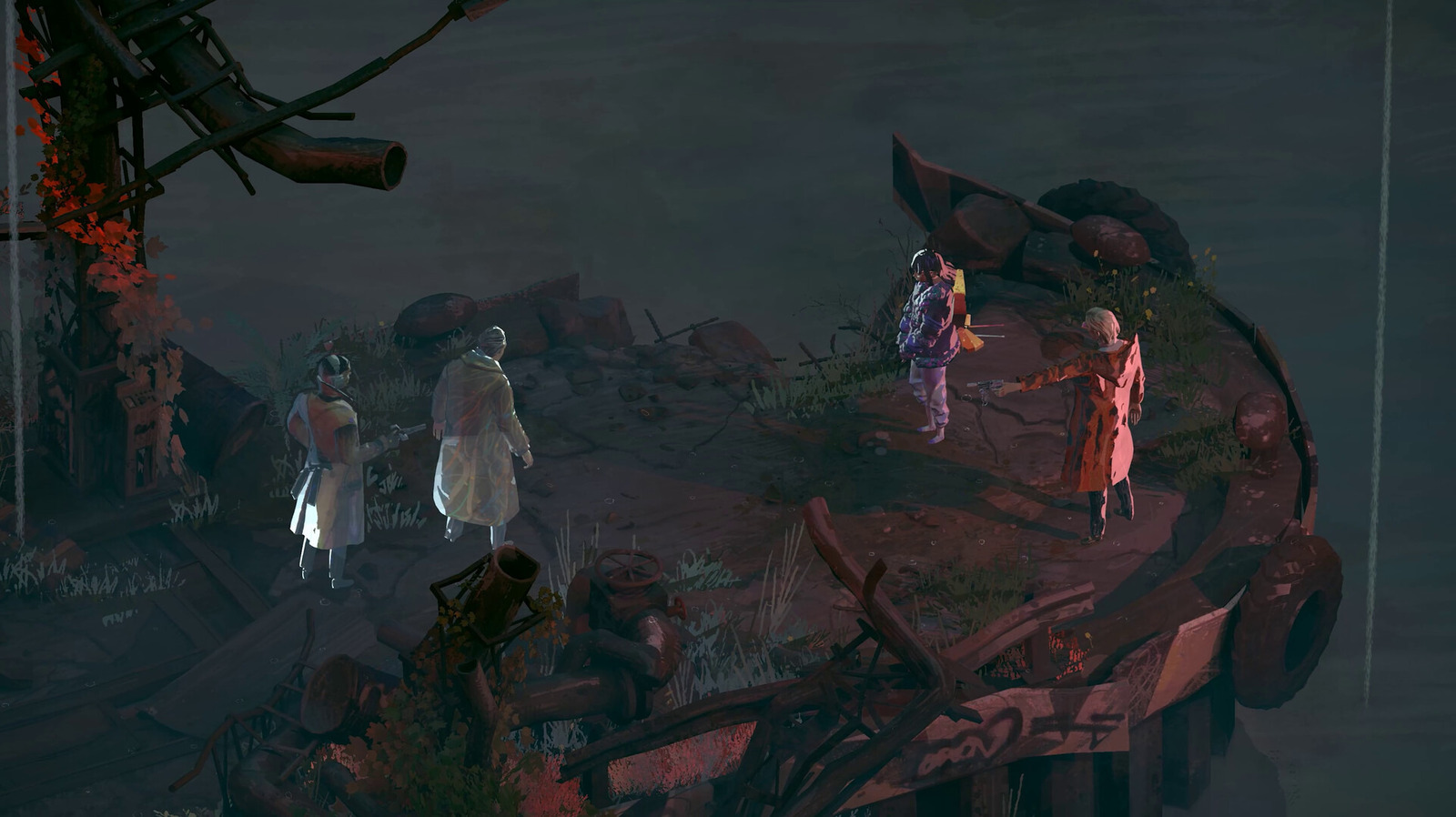
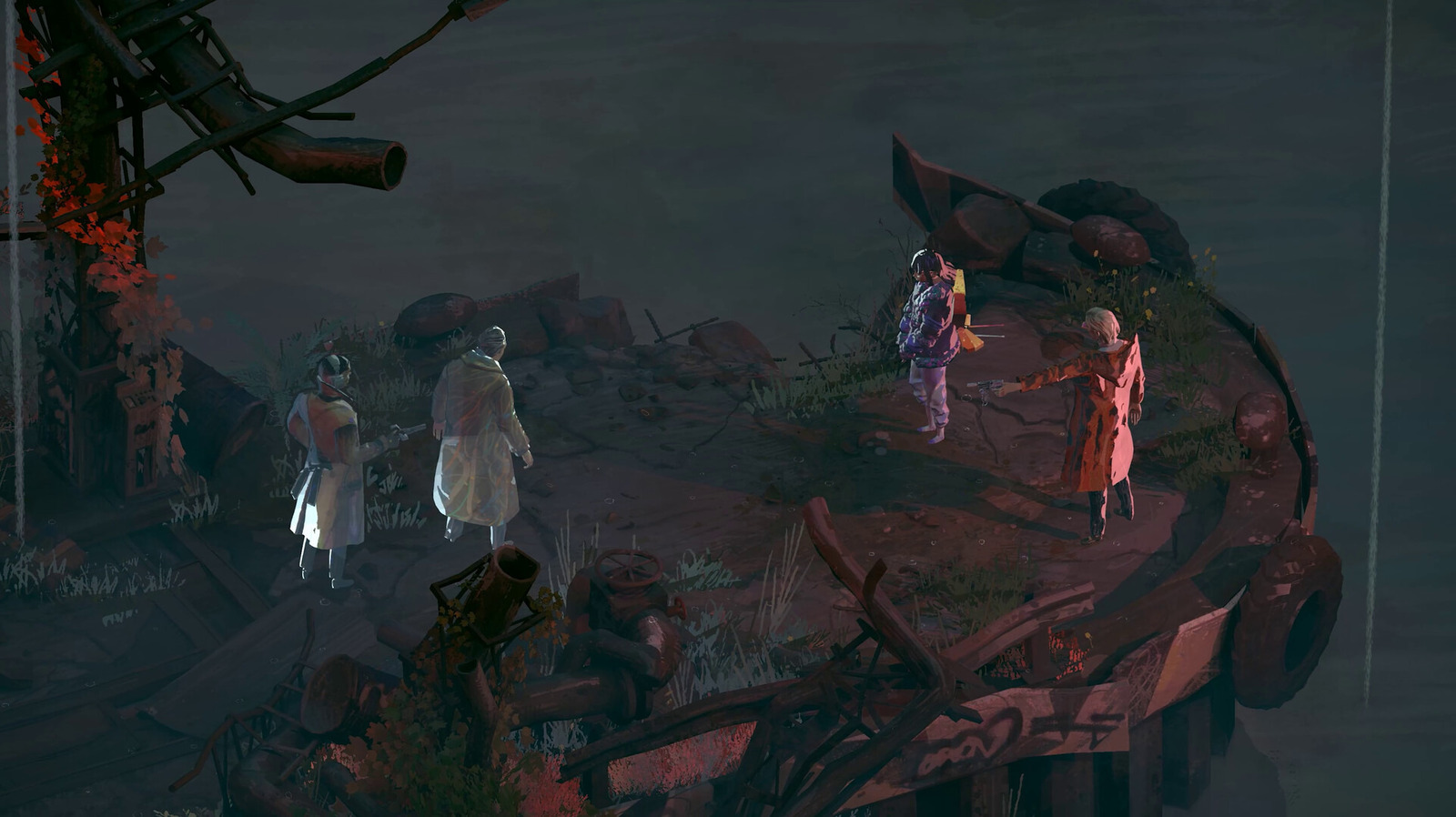
Layoffs in the video game industry just keep coming. In a post on social media, ZA/UM Studio, the developer and publisher of Disco Elysium and more recently, Zero Parades: For Dead Spies, announced that it “served redundancy or at-risk notices impacting up to 32 of our colleagues across all departments at ZA/UM Studio.”

The news of the layoffs comes only a few months after the studio’s latest game was released in May. ZA/UM Studio attributed the layoffs to the weak “commercial performance” of Zero Parades: For Dead Spies, which “has not enabled us to sustain a studio of our current size.” According to SteamDB, the espionage RPG hit an all-time peak of 3,177 players around the time of its release, but has steadily declined since.


Advertisement

For diehard Disco Elysium fans, the news of layoffs may not come as a total surprise. After the success of the narrative-heavy RPG in 2019, ZA/UM Studio went through a series of conflicts including the firing of the game’s core team, a lawsuit involving intellectual property theft and accusations of a hostile work environment for women. Former devs with ZA/UM Studio subsequently made their own studio called Longdue, which is also working on a “narrative-first” game. As for the latest layoffs, ZA/UM Studio said it’s still “continued to consult and work with representatives of the ZA/UM Workers’ Alliance.”

Source link

Advertisement
Continue Reading

Trending

Copyright © 2025