

Crypto World
DOG Mode opens a new front in Bitcoin’s governance fight



Bitcoin Ordinals advocate Leonidas has introduced DOG Mode, an alternative open-source Bitcoin client that changes how nodes relay certain valid transactions without altering Bitcoin’s consensus rules.
Summary
- DOG Mode removes default relay limits while keeping Bitcoin’s existing consensus rules completely unchanged today.
- Leonidas says fee-paying users should access block space without Bitcoin Core deciding transaction purposes beforehand.
- BIP 110 takes opposite approach, proposing temporary consensus restrictions on several data-heavy Bitcoin transaction types.
The project adds a new layer to the dispute over Ordinals, Runes and the use of Bitcoin block space.
In his DOG Mode announcement, Leonidas argued that Bitcoin Core and Bitcoin Knots enforce policy restrictions that Bitcoin’s consensus rules do not require. He said a transaction can remain valid under consensus while default nodes still refuse to relay it across the peer-to-peer network.
DOG Mode targets relay policy, not Bitcoin consensus
DOG Mode would raise the maximum individual transaction size allowed under its relay policy to 3.9 million weight units. Bitcoin Core’s default policy currently limits individual standard transactions to 400,000 weight units. The client would also lower the dust threshold to one satoshi for small transaction outputs.
As reported by crypto.news, DOG Mode does not require a Bitcoin fork because it works within existing consensus rules. Nodes can choose to run the software and relay transactions that other clients may treat as non-standard, while miners still decide which valid transactions they include in blocks.
Ordinals and Runes return to the governance debate
The proposal centers on a long-running dispute over whether Bitcoin should treat every valid, fee-paying transaction equally. Leonidas supports a market-based model in which users compete for block space through fees rather than software developers deciding which transaction structures should receive default relay support.
DOG Mode could make it easier to propagate large Ordinals inscriptions and small outputs used by some Bitcoin-native token protocols. However, different relay policies could also leave nodes with different views of unconfirmed transactions before miners add them to blocks. Bitcoin’s consensus rules would remain unchanged even if node mempools differed.
DOG Mode takes a different path from BIP 110
The DOG Mode approach contrasts with BIP 110, which proposes temporary consensus restrictions on several forms of transaction data. As reported by crypto.news, Bitcoin developer Luke Dashjr has continued to support the proposal despite opposition from users who view the restrictions as censorship.
BIP 110 supporters argue that data-heavy transactions raise storage costs and consume scarce block space. Critics argue that changing consensus rules to restrict currently valid transactions could create a broader precedent. Michael Saylor and Adam Back have opposed BIP 110, as reported by crypto.news, while miner signaling remained far below its proposed 55% activation threshold in mid-July.
Bitcoin users decide which policies gain adoption
DOG Mode also raises questions about how Bitcoin governance works outside formal protocol changes. Bitcoin Core developers can set default relay policies, but node operators remain free to run other software. Miners can also receive transactions through direct channels instead of the public peer-to-peer relay network.
That distinction means DOG Mode does not need broad agreement to begin operating. Its influence will depend on whether node operators, miners and Bitcoin users choose to adopt its policies. Leonidas said the longer-term aim is for wider use to push existing Bitcoin clients to reconsider restrictions that he views as unnecessary.
The debate now presents two different approaches to disputed Bitcoin activity. BIP 110 seeks new consensus restrictions, while DOG Mode removes some default policy limits without changing consensus. The outcome will depend on which software users choose to run and which transactions miners choose to process.

Crypto World
Crypto prices slip without a macro catalyst as PUMP steals the show: Crypto Markets Today
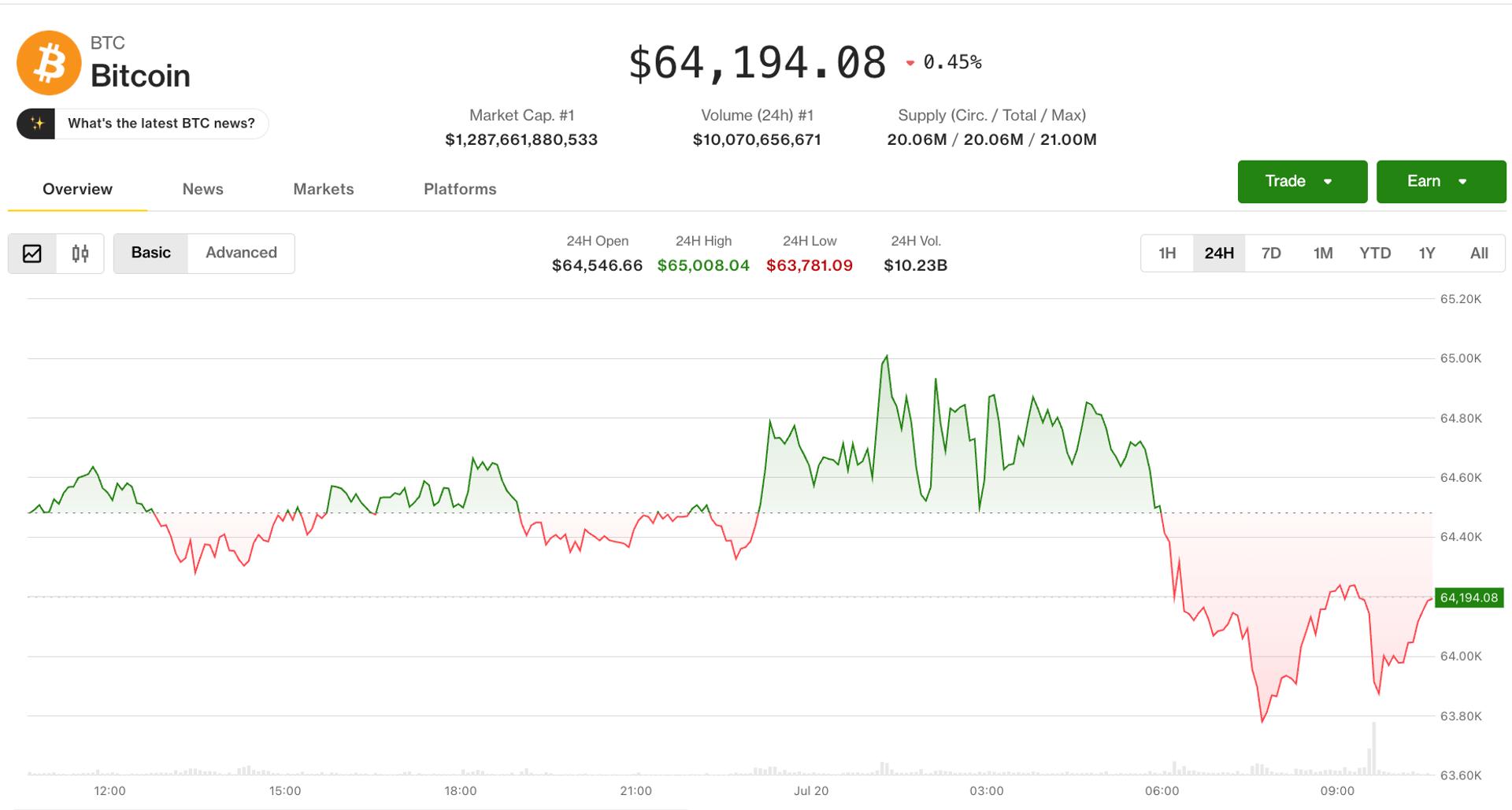
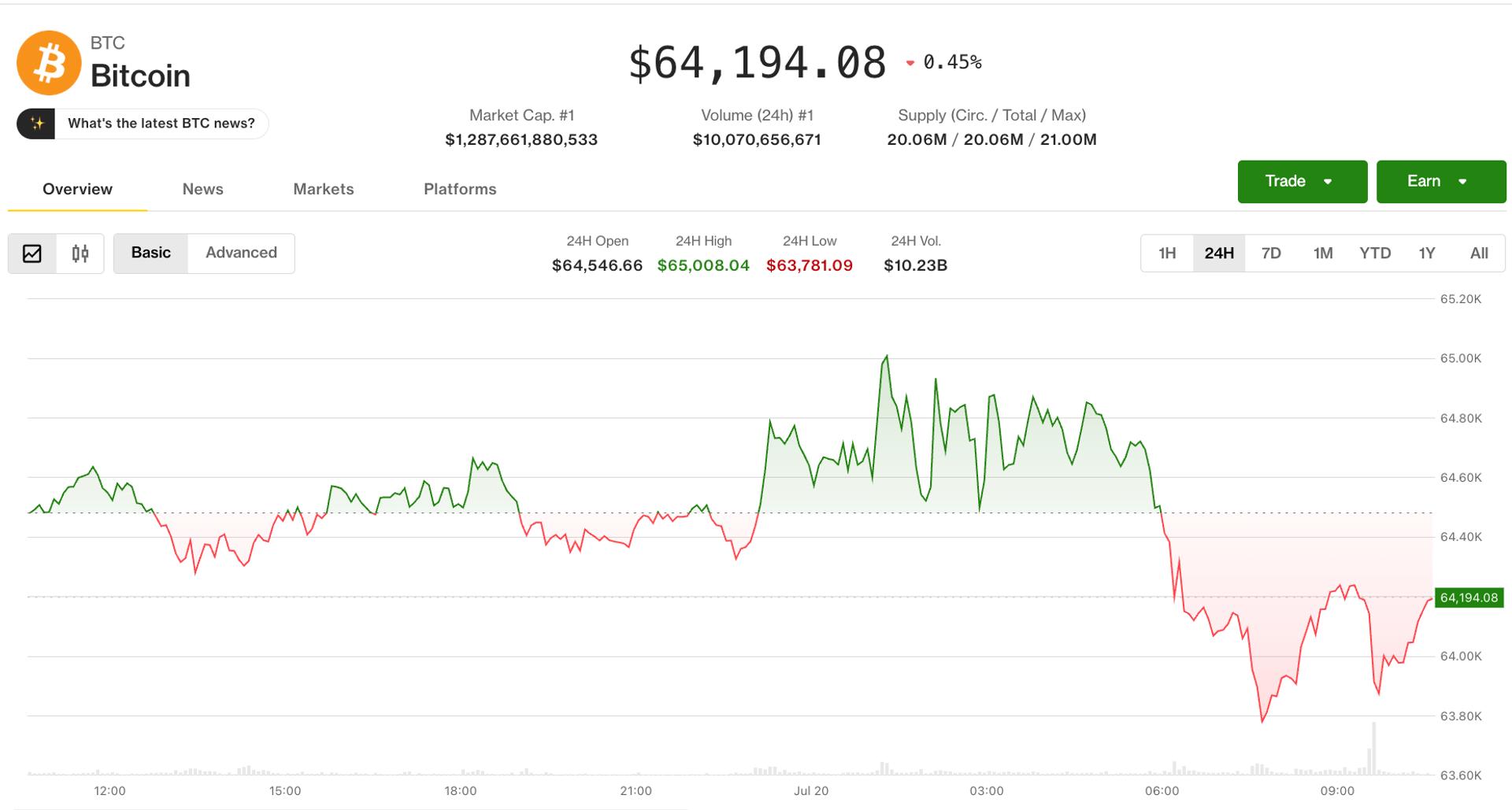
The crypto market is drifting lower, with bitcoin losing 1% since midnight UTC while ether (ETH) is holding up marginally better, shedding 0.65% even as some other risk assets, like U.S. equity index futures, advance.
Futures on the Nasdaq 100 and S&P 500 indexes posted gains of 0.35% and 0.20%, respectively, expanding the divergence between crypto and stocks that has defined much of this year.
Gold is little changed, holding above $4,000, and the Dollar Index (DXY) also barely moved, leaving crypto without a clean macro narrative to lean on.
CoinMarketCap’s Fear and Greed index sits at 34, deep in “fear” territory, while the average relative strength index (RSI) across crypto pairs has slipped to 44.07, nudging back toward the oversold conditions that set up July’s relief rally.
Derivatives positioning
- Churn over conviction: Crypto futures are characterized by churning rather than new position establishment. While trading volume surged 81% to $127 billion in the past 24 hours, open interest (OI) remained flat at approximately $111 billion.
- Leverage demand stalls: Bitcoin futures OI growth stalled near 750K BTC, failing to gain traction despite a recent swing that took the price above $64,000. This stagnation indicates that demand for leverage remains low and is a clear sign investors are not comfortable increasing their risk exposure. A similar pattern of caution is evident in ether (ETH) and XRP futures.
- Solana capital outflow: Solana (SOL) is seeing a distinct trend of contraction, with futures OI declining to 62 million tokens, the least since early May. This represents a significant drop from the June 24 peak of over 76 million, signaling substantial position unwinding and capital outflows from the SOL market.
- Bitcoin cash outlier: stands out as today’s exception. OI in BCH futures has surged by 20% to 1.73 million tokens, matching the record high set on June 21. This build-up increases the likelihood of volatile price action ahead, particularly as the token has slipped 3% to $213 over the past 24 hours.
- Bearish market delta: Broadly speaking, bears appear to be driving the price action across most top-tier tokens. This is reflected in negative 24-hour cumulative volume delta (CVD) readings for most major coins, including bitcoin and ether. Notably, the privacy-focused ZEC has posted the most negative CVD in the market.
- Volatility fear gauge alert: Traders should stay alert for potential market turbulence. Bitcoin’s 30-day implied volatility index (BVIV) is nearing the 36% mark. This level has served as a floor in recent years; previous instances of the index hitting this threshold have often preceded major volatility booms and sharp bitcoin price slides.
- Options sentiment divergence: On the Deribit options exchange, persistent downside caution is keeping BTC and ETH puts priced higher than calls. However, 24-hour volume figures reveal a tactical bias toward the upside: the $70,000 Bitcoin call has emerged as the most-traded contract, while the $2,450 call is leading the rankings for ether.
Token talk
- Zcash (ZEC) reversed course on Monday after its recent run, falling 3.68% to $527. The pullback follows a period of outperformance and may reflect profit-taking.
- AI tokens are among the broader losers, with FET dropping 2.94% and TAO shedding 2.58%, giving back some of the gains posted last week as the sector struggles to sustain momentum.
- is the standout mover of the past 24 hours, surging 20% following a wave of noise on social media, led by crypto influencer Ansem who posted bullish analysis alluding to the company making $30 million to $40 million per month in a bear market.
- Jupiter (JUP) also advanced, rising 1.02% to $0.197 alongside a pickup in trading volume, continuing the token’s gradual rehabilitation after weeks of heavy losses.
- Lighter (LIT) slipped a further 1.83%, extending a pullback from its record highs as profit-taking continues to weigh on a token that surged more than 200% between May and early July.
- CoinMarketCap’s Altcoin Season indicator is at 55/100, the highest reading in months, though the Fear and Greed score of 34 suggests the market remains cautious despite pockets of altcoin strength.

The legislative clock is ticking. President Trump took to Truth Social this week, urging the Senate to pass the Crypto Clarity Act before the August recess. The House passed the CLARITY Act in July 2025, but the bill has stalled in the Senate since.
As of today, the biggest sticking points remain stablecoin yield restrictions and congressional disclosure requirements. Trump framed the vote as vital for keeping the United States ahead in crypto. As Stifel’s Brian Gardner put it, the calendar is the enemy. Time has a nasty habit of winning.
— Coin Bureau (@coinbureau) July 19, 2026
 CLARITY ACT VOTE HINGES ON TRUMP CRYPTO ETHICS RULES
Democrats are demanding limits after Trump disclosed roughly $1.2 billion in crypto-related earnings during his first year in office.
Sen. Mark Warner called allowing elected officials to profit from crypto “pretty… pic.twitter.com/FyHmGSYnSn
The Senate now has only a narrow window before lawmakers leave Washington. While a post-recess vote remains possible, many policy watchers believe the odds fall sharply if Congress misses this opportunity. Delay does not kill a bill, but it rarely makes its life easier.
Meanwhile, the macro picture keeps shifting. Treasury Secretary Scott Bessent has renewed calls for a comprehensive federal framework, arguing that crypto innovation should stay rooted in the United States. At the same time, regulators elsewhere are picking up the pace. The UK’s Financial Conduct Authority is consulting on a new crypto regime, while enforcement against illegal peer-to-peer crypto trading is becoming more active.
NEW: — Bitcoin Magazine (@BitcoinMagazine) July 18, 2026
 Sen. Mark Warner on CLARITY ACT:
"I want this done..I'm tired of being in crypto hell..I want America to lead in digital assets"  pic.twitter.com/Ntn486M7m3
That leaves the Senate vote at the center of the story. A successful vote could finally give digital assets a clearer rulebook. Another delay, however, risks leaving the industry stuck in regulatory limbo just as global competition starts pressing the accelerator.
Discover: The Best Crypto to Diversify Your Portfolio
Trump Power and the Stalling of Crypto CLARITY Act
Trump is not for Bitcoin in the near term, but his impact could be much bigger for altcoins and crypto infrastructure. Bitcoin already enjoys a degree of regulatory acceptance through spot ETFs and institutional custody. A stalled CLARITY Act does not erase that. Instead, it delays legal certainty for DeFi, Layer 2 networks, and yield-bearing stablecoins, where the rules remain fuzzy.
Meanwhile, traders are also watching the CFTC’s decision on domestic perpetual crypto futures. If approved, onshore perpetuals could reshape liquidity and price discovery across major digital assets. Tighter spreads and more leveraged institutional participation would likely follow. That decision does not depend on the CLARITY Act, although legislative delays could slow the regulatory process. Nobody likes paperwork, except maybe paperwork.

Institutional positioning already hints at where capital wants to go. Standard Chartered recently enabled clients to use BlackRock’s tokenized US Treasuries as collateral through OKX. That points toward growing demand for regulated, yield-bearing tokenized assets. The Senate calendar may change, but institutional appetite does not disappear because Congress hits snooze.
The bullish case remains intact if the CFTC moves ahead with perpetual futures and Treasury Secretary Scott Bessent keeps pushing regulatory reform. On the other hand, a failed Senate vote could cool institutional interest in altcoins, delaying deployments into 2026. Bitcoin may shrug it off, but smaller tokens usually feel the first raindrops before the storm.
For now, supporters still need seven Democratic votes to move the legislation forward. That arithmetic has not changed. Neither has the disagreement over yield-bearing stablecoins, with banking groups arguing they could pull deposits away from traditional lenders. Whether that concern proves right or wrong, it has enough weight to keep negotiations interesting.
Trade Crypto on Bybit before the Clarity Act and Get a Chance to Win Our $1,000 USDT Airdrop
Bitcoin Hyper Targets Early Infrastructure Upside While Congress Stalls
Regulatory gridlock tends to compress returns on assets whose investment thesis depends on a clear legal runway, and to concentrate early-mover advantage in infrastructure plays that generate utility regardless of legislative outcome. This dynamic is exactly what’s attracting capital to Bitcoin Hyper, a Bitcoin Layer 2 presale now past $32.9 million raised at a current presale price of $0.0136834.
Bitcoin Hyper’s core claim is a first-of-its-kind architecture: a Bitcoin Layer 2 with full Solana Virtual Machine (SVM) integration, targeting sub-second finality and smart contract execution that reportedly exceeds Solana’s own throughput benchmarks.
The project addresses Bitcoin’s three structural constraints of slow settlement, high fees, and limited programmability, while preserving Bitcoin’s base-layer security via a Decentralized Canonical Bridge for BTC transfers.
Staking is live with a high APY, giving presale participants yield exposure while the project builds toward mainnet. So, for traders who’ve done the technical due diligence, the entry price and raise trajectory suggest the early allocation window is narrowing. Research Bitcoin Hyper here.
Discover: The Best Token Presales
The post Crypto Clarity Act in Limbo as Trump Races Against August Recess appeared first on Cryptonews.


A Polymarket trader known as gud.hl lost $1.2 million after betting it all on Argentina to win the 2026 World Cup. Spain eliminated Argentina 1-0 in extra time on Sunday, erasing the position completely.
Blockchain analytics firm Bubblemaps found that much of the initial bet on Argentina from gud.hl came from a Solana address which made $1.9 million trading $TRUMP tokens at launch.
A World Cup Wipeout
Bubblemaps reported that gud.hl bought roughly 12 million Argentina shares at an average price of 10 cents each, making the account the largest single position backing the team on Polymarket. A win would have delivered an $11.2 million payout.
Argentina beat England 2-1 in the July 15 semifinal, and the position surged, part of a broader run of prediction market World Cup wins that drew attention throughout the tournament.
The trader held the position through the final instead of cashing out. Spain, which had trailed Argentina in early prediction market odds, scored through substitute Ferran Torres in extra time. The goal sent Lionel Messi’s title defense to a bitter end and wiped out gud.hl’s stake entirely.
A $TRUMP Windfall
Bubblemaps traced the funding for gud.hl’s Argentina wager to a separate Solana wallet. That wallet flipped $TRUMP, a Solana-based memecoin tied to US President Donald Trump, shortly after its January 2025 launch and pocketed $1.9 million.
The episode fits a pattern taking shape this cycle. A lot of the buzz and hyper around memecoins has subsided, as was the case for NFTs before this. But gud.hi is an instance of traders cashing out memecoin windfalls only to roll into prediction market bets.
For gud.hl, that bet turned a six-figure crypto gain into a seven-figure loss in one tournament.
The post Polymarket Whale Turns $1.9M $TRUMP Win Into $1.2M World Cup Loss appeared first on BeInCrypto.
In a deja vu moment mimicking the start of the previous business week, BTC’s price dipped by over a grand as most financial markets opened.
Most larger-cap alts have followed suit with minimal losses. ZEC, though, has dumped the most from this cohort of crypto assets, plunging by over 6%.
BTC Fights for $64K
Recall that last Monday began on an even more painful note. At the time, bitcoin had calmed at around $64,000 before the bears took control and drove it south to under $62,000. However, the softer-than-expected US CPI numbers for June propelled an impressive rally that drove BTC to its highest price tag in approximately three weeks at $65,600.
Nevertheless, the cryptocurrency failed to sustain its momentum and quickly slipped back down to $62,500 on Friday. The bulls stepped up again and helped it recover to $64,000 by Saturday morning.
The weekend was more positive, as BTC managed to climb higher and even touched $65,000 on Monday morning. History repeated itself, though, and it fell to $63,700 earlier today. It has recovered some ground, but it still trades at just below $64,000.
Its market capitalization remains below $1.290 trillion, while its dominance over the altcoins has stalled at 57%.

PI and PUMP – Pump
As reported yesterday, Pi Network’s native token skyrocketed suddenly by double digits and tapped the coveted support-turned-resistance $0.10 level. It has maintained most of the gains, and it’s now fighting to take that line down as well. The other impressive performer today is PUMP, which has rocketed by over 20% to $0.002. In contrast, HASH has dumped by over 9%.
ZEC has lost the most value from the larger-cap alts, sliding below $530 after a 6.5% daily drop. RAIN, BCH, UNI, and TAO have dropped by up to 3% daily.
Most other larger caps have declined by up to 1%, such as ETH, BNB, XRP, SOL, and HYPE.
The total crypto market cap has erased around $20 billion daily and is down to $2.250 trillion on CG.

The post Pi Network’s PI and PUMP Rocket Daily, Bitcoin Fights For $64K: Market Watch appeared first on CryptoPotato.
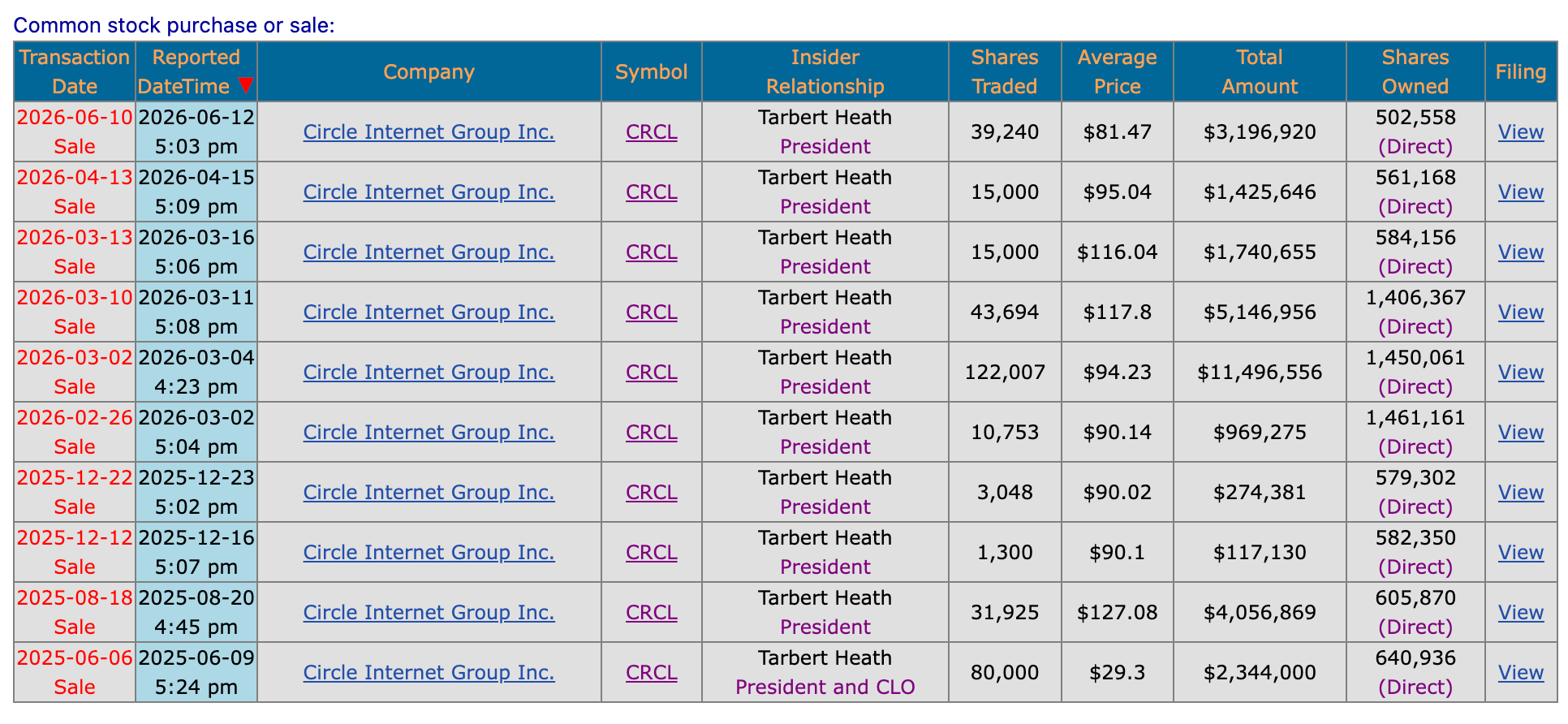
Circle President Heath Tarbert has sold more than $30 million in Circle Internet Group (CRCL) stock since the June 2025 IPO.
The selling comes amid a 76% stock collapse, and he continues to call for patience. Still, the filings tell a duller story. Most trades were scheduled far ahead and executed automatically.
What the Filings Show
Tarbert has sold shares in 7 of the 13 months since Circle went public. His largest sale came on March 2, 2026. He offloaded 122,007 shares, worth about $11.5 million, according to SEC Form 4 filings.
Eight of the ten sales were executed under a Rule 10b5-1 plan. These plans are written trading schedules that executives adopt while unaware of material nonpublic information. The broker then executes trades automatically, giving the insider a defense against insider trading claims.
Follow us on X to get the latest news as it happens

The other two came at share offerings. Tarbert sold 80,000 shares around the June 2025 IPO. He sold an additional 31,925 shares in an August secondary offering.
So most of the selling carries no signal about his outlook. Roughly $24.4 million ran on preset schedules. Those trades are consistent with routine equity compensation diversification.
The Long Game Defense Meets Wall Street Doubt
Meanwhile, on Fox Business this month, Tarbert addressed the stock’s 76% drop from about $260 to $62. He pointed to Circle’s Arc blockchain build-out and the firm’s focus on building the infrastructure for a “full-stack internet platform.”
“Circle is playing a long game… in the long run, the stock is going to take care of itself,” he said.

Still, Wall Street is less patient. Mizuho cut CRCL to Underperform this month. It lowered its price target to $50 from $85, about 21% below recent levels.
Analyst Dan Dolev flagged Open USD as the main threat. The rival launched June 30 with backing from more than 140 firms, including Visa and Mastercard.
Subscribe to our YouTube channel to watch leaders and journalists provide expert insights
The post Circle’s President Sold Over 360,000 Shares, The Filings Explain Why appeared first on BeInCrypto.

Bitcoin price is holding the low to mid $64,000s on Monday after geopolitical fears, which rattled its prediction last week. As of now, BTC trades around $64,200 after slipping modestly over the past 24 hours, while still staying comfortably above last week’s lows. The real question is whether this is genuine relief buying or simply a classic dead cat bounce.
Secretary of State Marco Rubio confirmed Monday that the US remains open to a diplomatic resolution with Iran, even as US Central Command acknowledged another wave of strikes in the region. That mix of military action and diplomatic messaging is the sort of “bad, but not worse” outcome markets often welcome. Unsurprisingly, Bitcoin bounced from its weekend lows soon after Rubio’s remarks made the rounds.
Meanwhile, the macro backdrop still deserves respect. Global risk assets remain jumpy as traders react to every headline tied to the Iran conflict. Even so, Bitcoin’s ability to defend the $64,000 level through the worst of the recent news gives bulls something tangible to lean on. Sometimes, not falling is its own victory.
Of course, one calm headline does not erase weeks of uncertainty. If diplomatic progress continues, Bitcoin could build on its recovery and challenge higher resistance. However, another escalation would likely send volatility racing back, reminding traders that headlines, not charts, are still calling the tune.
Discover: The Best Token Presales
Bitcoin Price Prediction: Break $70,000 While Iran Tensions Simmer?
Price action across major trackers tells a clean consolidation story. Bitcoin is range trading at around $64,200, with its daily volume sitting at $16.3 billion, enough to support the range but hardly the fireworks that usually spark a breakout.
Support in the low $64,000s has survived repeated tests over the past week. Meanwhile, resistance remains stacked between $67,000 and $70,000. That area has turned back rallies before and could do it again unless a strong macro catalyst forces short sellers to blink. The weekly performance remains modest, showing buyers have not abandoned Bitcoin despite the Iran headlines.

Three scenarios are worth watching. In the bullish case, diplomatic progress lifts risk appetite, allowing Bitcoin to reclaim $67,000 and challenge the $70,000 ceiling. The base case keeps military action contained while talks drag on, leaving Bitcoin stuck between roughly $64,000 and $67,000. Not exciting, but markets rarely ask for permission to be boring.
The bearish price prediction arrives if tensions escalate without meaningful diplomatic progress, and crack support near $64,000, and send Bitcoin toward the low $60,000s. Watch exchange inflows and realized price closely. Those metrics often whisper before price starts shouting. The macro picture still matters, but right now the headlines are driving the bus, while the long-term structure waits for its turn.
Trade Butcoin on Bybit and Get a Chance to Win Our $1,000 USDT Airdrop
Bitcoin Hyper Targets Early-Mover Upside as BTC Tests Key Levels
Bitcoin holding $64,000 is constructive, but the upside math at a $1.28 trillion market cap is compressing. A move to $70,000 is just a 9% gain. That’s real money, but it’s not the asymmetry that moves portfolio needles for traders with a higher risk tolerance.
Bitcoin Hyper ($HYPER) is positioned directly at the intersection of Bitcoin’s two biggest structural gaps: slow throughput and near-zero programmability.
The project is building the first Bitcoin Layer 2 with Solana Virtual Machine (SVM) integration, meaning smart contract execution that claims to outperform Solana’s own speeds, while settlement anchors to Bitcoin’s security model.
What the data shows: the presale has raised $32.9 million at a current token price of $0.0136834, with staking available for early participants. The project is approaching a $33 million milestone, a level of presale traction that reflects genuine demand, not just launch-day noise.
Features include a Decentralized Canonical Bridge for BTC transfers and high-speed, low-cost transaction execution layered over Bitcoin’s base security. If the SVM-on-Bitcoin thesis plays out, early presale entry at sub-$0.02 pricing is the window that closes first.
Research Bitcoin Hyper before the next pricing tier locks in.
Discover: The Best Crypto to Diversify Your Portfolio
The post Bitcoin Price Prediction: BTC Rises as Marco Rubio Says Iran Deal Remains Open appeared first on Cryptonews.
The Nasdaq 100 (US Tech 100 Mini on FXOpen) remains caught between two opposing forces: cooling inflation on one side, and persistent geopolitical instability on the other. On 14 July, June’s CPI print came in softer than expected, easing near-term Fed tightening bets and triggering a broad rebound across tech stocks, particularly semiconductors, which had been under heavy pressure.
That relief, however, has been repeatedly tested by renewed US-Iran hostilities, which pushed oil prices higher and lifted US Treasury yields, weighing on rate-sensitive growth names throughout the week. Every attempt at recovery has coincided with a brief easing of tensions, only for fresh escalations to reintroduce volatility days later.
Beneath the surface, semiconductors remain the index’s clearest fault line: even as broader sentiment improves, doubts over the sustainability of AI-driven valuations continue to trigger selective selling in the sector. Meanwhile, SpaceX’s addition to the index on 8 July has added a steady stream of passive buying, while the start of earnings season has kept investors’ attention split between fundamentals and geopolitics.
Technical Analysis of the Nasdaq 100
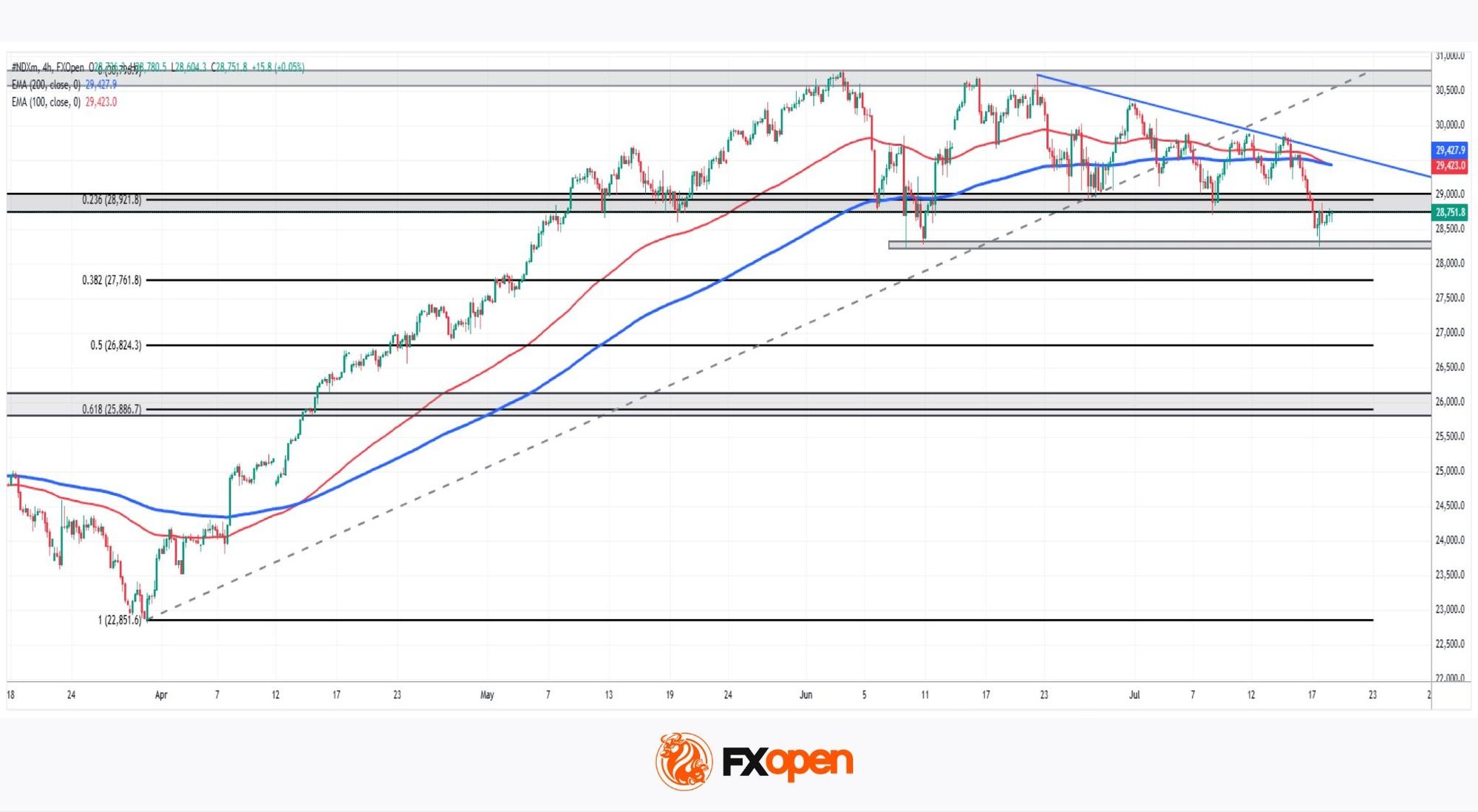
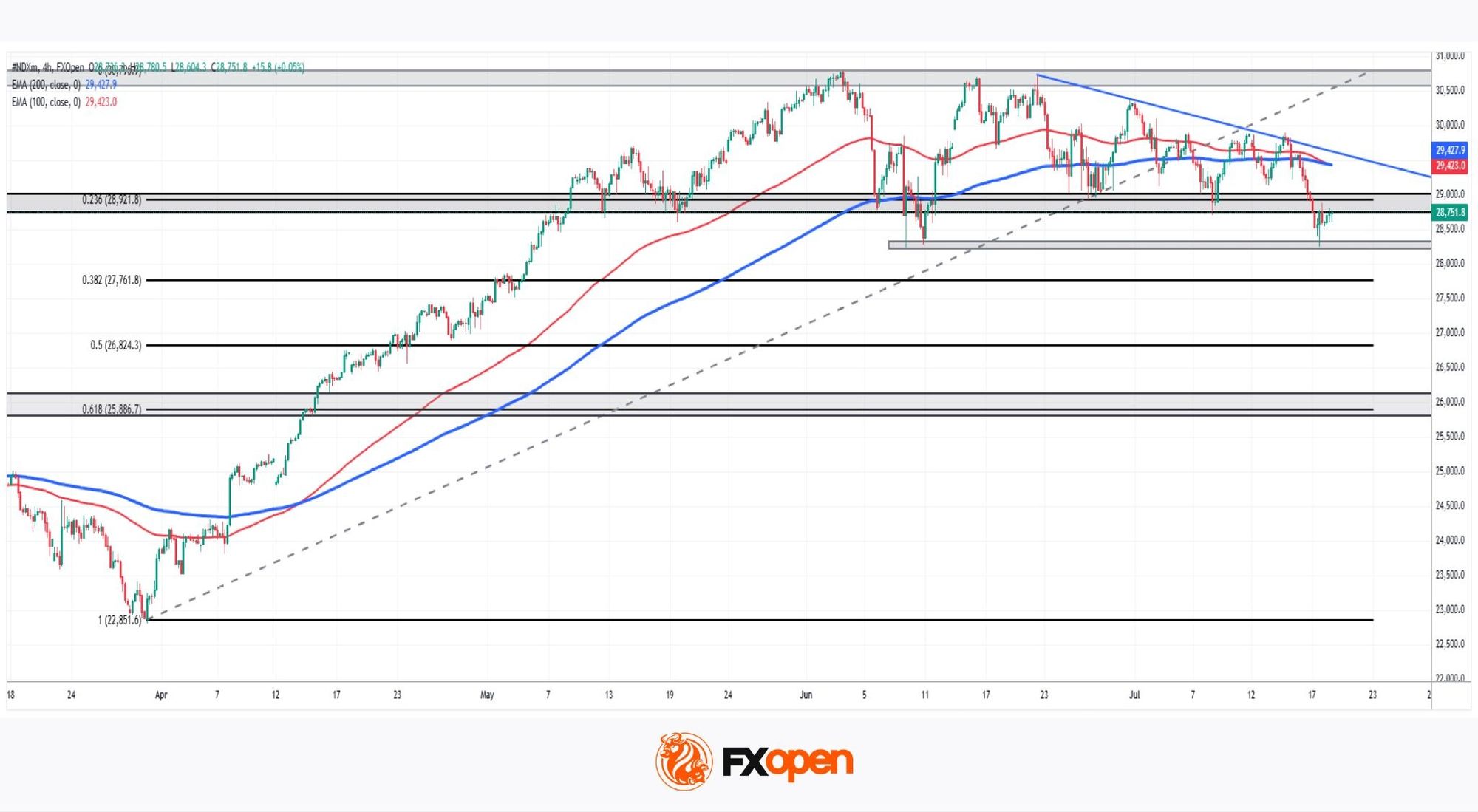
As the chart shows, after testing the 30,000 zone on three separate occasions, the Nasdaq 100 (US Tech 100 Mini on FXOpen) has struggled to build fresh momentum, entering a consolidation phase with a bearish tilt. This is clearly visible in the descending trendline that has been respected for roughly a month, alongside the index’s inability to print higher highs.
Bullish Scenario
As with other risk assets, geopolitics remains the primary driver of the index’s true direction. Should tensions stay contained rather than escalate further, the Nasdaq has room to extend its recovery. Technically, price finds itself at a decisive juncture: after bouncing from the 28,200-28,300 zone, which had already acted as a floor in early June, the index now faces its first real test at the 28,800-29,000 area. This zone, a former support level now turned resistance, is the key level to watch. A confirmed breakout above it could signal renewed strength and reopen the path back into the broader 29,000-30,000 consolidation range.
Bearish Scenario
With geopolitical risk still running high, sentiment toward risk assets remains fragile. Technically, the Nasdaq 100 (US Tech 100 Mini on FXOpen) appears to have broken down from the two-month consolidation range, losing the 29,000 support in the process. The formation of the descending trendline reflects the index’s failure to generate higher highs, a clear sign of underlying weakness. Adding to this picture, the 100- and 200-period EMAs on the 4H chart are now crossing—the same signal that preceded April’s strong bullish reversal, this time playing out in the opposite direction.
The 29,000 resistance now holds the key to the next move. Can the Nasdaq 100 (US Tech 100 Mini on FXOpen) reclaim its footing, or is this only the beginning of the correction traders have been waiting for?
Trade global index CFDs with zero commission and tight spreads (additional fees may apply). Open your FXOpen account now or learn more about trading index CFDs with FXOpen.
This article represents the opinion of the Companies operating under the FXOpen brand only. It is not to be construed as an offer, solicitation, or recommendation with respect to products and services provided by the Companies operating under the FXOpen brand, nor is it to be considered financial advice.

Key takeaways
- Solana (SOL) traded lower on Monday, extending its corrective trend from early July.
- Institutional demand remains subdued, with SOL ETFs recording less than $1 million in inflows for a second consecutive week.
- Futures Open Interest declined while trading volume surged 78%, pointing to increased market activity but weaker conviction.
Solana (SOL) edged lower on Monday, continuing its recent correction as both institutional and retail market indicators pointed to weakening demand.
Although trading activity has picked up sharply over the past 24 hours, declining futures positioning and muted exchange-traded fund (ETF) inflows suggest investors remain cautious about the token’s near-term outlook.
The combination of slowing institutional participation and growing bearish sentiment has kept SOL under key technical resistance levels.
Institutional investors continue to favor Bitcoin and Ethereum
Demand for Solana-focused investment products remained subdued last week.
According to CoinGlass data, SOL exchange-traded funds (ETFs) attracted approximately $948,210 in net inflows, following $930,430 the previous week.
While inflows remained positive, they were significantly lower than those recorded by the two largest cryptocurrencies: Bitcoin ETFs, with $75.67 million in weekly inflows, and Ethereum ETFs with $105.44 million in weekly inflows.
The figures suggest institutional investors continue allocating capital toward more established digital assets rather than increasing exposure to Solana.
Retail trading activity increased sharply despite the recent price weakness. CoinGlass data shows that the futures trading volume jumped 78% to $5.37 billion over the past 24 hours. Meanwhile, the Open Interest (OI) slipped slightly to $4.77 billion.
The combination of rising trading volume and declining Open Interest typically suggests positions are being closed rather than new bullish positions being established.
Meanwhile, funding rates have turned slightly negative, falling to approximately 0.0023%, indicating traders are increasingly willing to pay to maintain short positions.
This shift points to growing bearish sentiment among derivatives traders despite elevated market activity.
Solana price prediction: Will SOL fall toward $70?
From a technical perspective, Solana continues to trade within a short-term bearish structure.
On the four-hour chart, SOL remains below both the 50-period EMA at $76.32 and the 200-period EMA at $76.51.
These moving averages continue to act as immediate resistance, limiting the token’s recovery attempts.
Technical indicators present a mixed picture. The Relative Strength Index (RSI) is hovering around 49, indicating neutral momentum with neither buyers nor sellers holding a decisive advantage.
Meanwhile, the Moving Average Convergence Divergence (MACD) has turned modestly positive, suggesting buying pressure is gradually improving.
However, the bullish momentum remains too weak to overcome the prevailing downward trendline.
If selling pressure continues, traders will be watching the following support levels:
- $73.50 — S1 Pivot support.
- $72.80 — Descending trendline support.
- $70.62 — S2 Pivot support.
A decisive move below the $72.80–$73.50 support zone could accelerate losses toward $70.62.
For the bullish outlook to improve, Solana must first break above its descending resistance trendline near $77.27.
If buyers reclaim this level, the next upside targets become the $81.92 resistance.
A sustained close above the trendline would weaken the current bearish structure and increase the probability of a broader recovery.

Solana continues to face headwinds from both institutional and retail markets. While trading activity has surged, declining Open Interest, weakening funding rates, and modest ETF inflows indicate investors remain cautious.
Unless SOL breaks above the $77.27 resistance level, the correction that began in early July is likely to continue, with $70.62 emerging as the next major downside target.
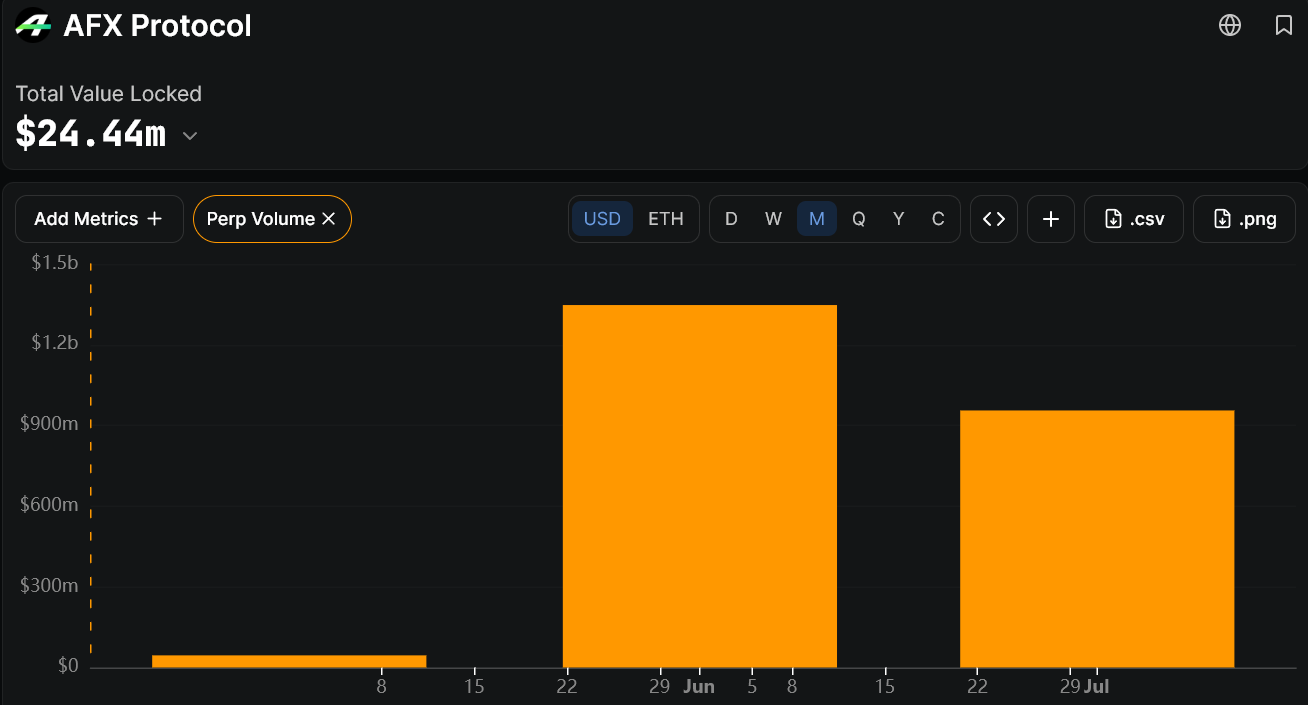
Perpetual futures have become one of crypto’s busiest on-chain trading categories, with the top 10 perp DEXs recording $6.7 trillion in volume during 2025. This growth has intensified competition among exchanges seeking faster execution, deeper liquidity, and a greater share of derivatives activity.
AFX is one such competitor, recording more than $1.3 billion in cumulative perpetual volume within a little over a month of its mainnet launch, according to Head of Growth Ken C. Its ALP liquidity vault attracted more than $21 million over the same period, providing an early indication of demand across its crypto and traditional asset markets.
In an interview with BeInCrypto, Ken discussed AFX’s sovereign blockchain, its plans for AI-powered trading, and a self-funded token model centred on community participation.

A Sovereign L1 Built Around Perpetual Trading
“The order book, matching, the settlement, the margin and the risk systems are all designed around trading from day one,” Ken said.
A sovereign L1 gives AFX control over execution, settlement and risk management across its perpetual markets. Ken linked this choice to the demands of leveraged trading, where congestion can alter an order at the moment a trader enters or exits.
“Your chain could be congested because someone is minting NFTs,” he said, describing how unrelated activity on a shared network can affect a Bitcoin trade.
AFX reports finalization of around 100 milliseconds, which Ken compared with a human blink lasting between 100 and 400 milliseconds. Even a small delay can affect entry prices, exits, liquidation risk and automated strategy performance.
“Slow execution can negatively impact your trade performance,” he said. Consistent finalization gives human traders and algorithmic systems a more predictable environment during volatile periods.
Preparing AFX for AI Agent Trading
“We want to be known as the platform built for traders and tuned for AI agents,” Ken said.
AFX is developing native APIs and SDKs for automated strategies, while scoped wallets and symbol-specific subaccounts define access. Risk limits, kill switches and test environments give users control over agent activity.
“Predictable execution is everything,” Ken said. AFX uses a dedicated fair-ordering mempool to reduce front-running and sandwich attacks, helping automated systems receive consistent treatment when they submit orders under comparable conditions.
The exchange plans an AI agent trading competition during the second season of its points programme. Ken also compared upcoming event-led tools with “Bloomberg Terminal plus event-led AI agent trading.”
Giving Agents Verifiable Performance Histories
“Every order, fill and liquidation can be verified,” Ken said.
Users can review which assets an agent traded, when it entered or exited, which prices it received and how it behaved during volatile periods. These records also show whether an agent followed its assigned strategy and remained within its risk limits.
“If you are trusting an AI agent with capital, you need more than just a screenshot. You need a verifiable track record,” he said.
On-chain histories allow strategy developers to demonstrate performance through recorded execution, while users can compare agents using the same underlying data.
Liquidity Supports Markets Beyond Crypto
“Listing more markets is easy. Making them tradable is the hard part,” Ken said.
AFX offers perpetual exposure across crypto and several traditional asset categories, including stocks and commodities. The ALP vault provides base and backstop liquidity, and held more than $21 million at the time of the interview.
AFX pairs vault liquidity with market-specific open interest caps and a multi-stage liquidation engine. These controls support trading during sharp price movements and reduce exposure to manipulation.
“The first users are active traders, but over time we expect more professional traders and AI agents to come on board,” Ken said.
AFX now plans to expand its available markets, participation routes and agent controls. Early volume and vault deposits give the exchange a base for attracting professional liquidity and supporting automated systems alongside human traders.
The post AFX Reaches $1.3 Billion in Perpetual Volume Through a Self-Funded Model appeared first on BeInCrypto.


Hyperliquid said its HIP-4 upgrade, which introduced “outcome trading” to the decentralized exchange, will support permissionless deployment of the contracts in a future enhancement.
Once live, anyone will be able to offer a prediction market on the platform, subject to templates approved by validators, Hyperliquid said on Telegram on Sunday. In the meantime, they remain under the authority of validators.
Prediction markets, a sector dominated by Polymarket and Kalshi, allow participants to bet on event outcomes and have evolved into a multibillion-dollar sector of the blockchain industry. Users take positions on events from central bank interest-rate decisions to who performs at the Super Bowl halftime show.
The growing popularity of the platforms — the FIFA World Cup, which wrapped up Sunday with Spain winning its third title, drew more than $50 billion in bets — has attracted centralized trading platforms like Coinbase and Robinhood into the sector to offer customers a one-stop shop for predictions markets alongside more conventional financial trading.

Body found in Cambridgeshire river

Ryanair Holdings plc 2027 Q1 – Results – Earnings Call Presentation (NASDAQ:RYAAY) 2026-07-20

Crypto prices slip without a macro catalyst as PUMP steals the show: Crypto Markets Today


-
 NewsBeat4 days ago
London Mayor Sadiq Khan handed a peerage by Keir Starmer alongside 15 other Labour figures… just days before the PM leaves No10
-

 Fashion3 days ago
Weekend Open Thread – Corporette.com
-

 Politics2 days ago
The House | The City of London can help the new chancellor deliver growth in every postcode
-

 Politics5 days ago
Young campaigners urge incoming PM to act on outdoor junk food ads
-

 Crypto World4 days ago
CFTC blocks Kalshi from unwinding Michigan trades after court order
-
Crypto World3 days ago
Two July Windows Left: The CLARITY Act’s Senate Fight and What Failure Means
-

 Business4 days ago
Nvidia Stock Slips After Big Tuesday Rally as Huang Confirms Vera Rubin Chip Is Now in Production Today
-

 Crypto World2 days ago
Ripple Payments Joins MiCA With 14 Firms, Does It Mean Anything For XRP?
-

 Politics22 hours ago
Democrats look to World Cup watch parties to register thousands of voters
-

 Crypto World3 days ago
Ripple wins EU-wide access as ESMA adds it to MiCA register
-
 Entertainment5 days ago
Disney’s Most Ambitious Failed Star Wars Attraction Is Coming to SDCC
-

 Crypto World4 days ago
Injective Submits SEC Transfer-Agent Registration to Onchain Ownership Records
-

 Business4 days ago
Palantir Shares Rise After Expanded Nvidia Partnership and Fresh Analyst Upgrades Ahead of Earnings Day
-

 Tech6 days ago
Get Your ESP32 Sunny Side Up With This Solar Dev Board
-

 News Videos6 days ago
XRP BOMBSHELL… XRP OMBOARDED FOR TRANSACTIONS!!!
-

 NewsBeat3 days ago
Registration is now open for March for Men with Kev 2026
-

 Tech6 days ago
Dark Secrets Emerge When Jailbreaking LLMs
-
 Sports5 days ago
New Cornerback Enters Vikings Trade Rumor Mill
-

 News Videos3 days ago
Money | Class 12 Economics | CBSE Board Exam 2026-27
-
 Business3 days ago
Banco Bilbao Vizcaya Argentaria, S.A. (BBVA) Discusses Global Macro Environment and Economic Outlook for Core Markets Transcript
You must be logged in to post a comment Login