




Connect with us
DAPA Banner
DAPA Coin
DAPA
COIN PAYMENT ASSET
PRIVACY · BLOCKDAG · HOMOMORPHIC ENCRYPTION · RUST
ElGamal Encrypted MINE DAPA
🚫 GENESIS SOLD OUT
DAPAPAY COMING ›

Business

World Cup 2026 Set to Generate Record $13 Billion in Revenue for FIFA This Summer as Tournament Ends

Published

on

Lionel Messi will lead Argentina as the six-time Ballon d'Or winner aims to finally break his trophy drought in top level international competition

The 2026 FIFA World Cup, wrapping up its month-long run across the United States, Mexico and Canada, is on pace to become the most financially successful tournament in the sport’s history, with soccer’s governing body projecting total revenue of roughly $13 billion across its four-year commercial cycle, the majority of it generated directly by this summer’s expanded 48-team tournament.

According to data compiled by Sports Value based on FIFA’s own annual reports, total revenue for the 2026 tournament is projected to reach approximately $10.9 billion, a 56% increase over the $7 billion generated by the 2022 World Cup in Qatar. That prior tournament had itself marked a 32% jump over the cycle before it, underscoring the pace at which FIFA’s revenue has continued climbing with each successive edition. Business Standard reported that FIFA’s broader four-year commercial cycle, which culminates in this year’s tournament, is expected to bring in close to $13 billion in total income, with roughly $8.9 billion of that figure generated by the World Cup itself. That total represents a 72% increase over the cycle that ended with the Qatar tournament and more than double the revenue generated during the 2015-2018 cycle.

FIFA’s original budget for the current 2023-2026 commercial cycle had projected revenue of $11 billion, a figure that was already a substantial increase over prior cycles before being revised upward as the tournament approached. Given that FIFA exceeded its own revenue forecasts for the 2022 Qatar World Cup by more than $1 billion, some analysts have suggested the final tally for 2026 could climb even higher once all figures are finalized after the tournament’s conclusion.

Broadcasting rights remain FIFA’s single largest source of income, projected to contribute close to $4 billion to the current cycle, according to Business Standard. Sponsorship revenue is expected to add roughly $1.8 billion, boosted by new commercial partnerships secured ahead of this year’s tournament, including a deal with Saudi energy company Aramco. The expansion from 32 to 48 participating teams, which added significantly more matches to this year’s tournament compared with previous editions, has also played a direct role in driving broadcasting revenue higher, with FIFA expecting television rights income to surpass every previous World Cup edition, according to reporting cited by The Guardian.

Advertisement

Beyond FIFA’s own direct revenue, the tournament’s broader economic footprint has been the subject of extensive analysis by FIFA and the World Trade Organization, which jointly released a socioeconomic impact study estimating the 2026 World Cup could generate a global gross output impact of $80.07 billion. Of that total, roughly 38%, or $30.46 billion, is projected to flow to the United States, with the remaining 62%, or $49.61 billion, distributed across the rest of the world. The same study estimated the tournament’s impact on global gross domestic product at $40.92 billion, with 42% of that figure benefiting the U.S. economy, alongside an estimated $20.77 billion in global labor income, of which roughly 49% is projected to reach American workers. FIFA said in its report that spending tied to the World Cup has rippled through value chains across the U.S. economy, with the accommodation and food services sector benefiting most, followed by real estate and wholesale and retail trade.

FIFA and the WTO’s analysis also projected the tournament would support the creation of nearly 824,000 jobs globally, including roughly 185,000 full-time equivalent positions within the United States alone, alongside $17.2 billion in U.S. gross domestic product and $30.5 billion in U.S. gross output specifically. Attendance projections tied to those economic estimates put expected World Cup turnout at approximately 6.5 million fans across the tournament’s run.

Not every analysis of the tournament’s economic impact has painted an entirely rosy picture for host cities specifically. Research examined by North Carolina State University in June cautioned that economic impact studies surrounding major events like the World Cup often overstate local benefits by counting total visitor spending without accounting for public costs or spending that would have occurred regardless of the tournament. According to that analysis, FIFA captures the substantial majority of the tournament’s financial gains through media rights, sponsorships and ticketing, while host cities themselves generally absorb major costs tied to security, transportation, stadium preparation and public services, with limited direct revenue flowing back to local governments. “Historical evidence gives us little reason to expect substantial, lasting economic gains for host cities,” one researcher involved in that analysis said, noting that local economic benefits tend to be concentrated in tourism and hospitality sectors and typically fade once the tournament concludes.

That tension has played out publicly in some host cities. In New York, a spokesperson for Mayor Zohran Mamdani pushed back on a city comptroller’s more conservative economic estimate ahead of the tournament, arguing it failed to capture the full scope of the World Cup’s benefit to the city, pointing instead to a projected $1.7 billion in direct regional spending expected to translate into hundreds of millions of dollars in tax revenue. Fortune reported that figure, along with FIFA’s own separate claim of $432 million in projected state and local tax revenue, actually described the broader New York-New Jersey region rather than New York City’s specific share of that economic activity. The New York-New Jersey host committee, working alongside the consultancy Tourism Economics, separately projected $3.3 billion in regional economic impact and more than 26,000 jobs tied to the tournament, a figure the committee unveiled during a ceremony at the New York Stock Exchange.

Advertisement

In Canada, the country’s Parliamentary Budget Officer estimated total government support for hosting World Cup matches at 1.066 billion Canadian dollars, including 473 million dollars from the federal government and 593 million dollars from other levels of government, working out to roughly 82 million Canadian dollars per match across the 13 matches hosted in the country.

FIFA President Gianni Infantino campaigned for his role in 2016 on a promise to quadruple the organization’s income, a goal Fortune reported he appears on track to fulfill once final 2026 revenue figures are tallied following Sunday’s championship match. With the tournament now concluding after Argentina and Spain’s World Cup final in East Rutherford, New Jersey, FIFA is expected to release updated revenue figures in the coming months as final broadcasting, sponsorship and ticketing totals are confirmed, figures that could ultimately push the 2026 World Cup’s total economic footprint even higher than current projections suggest.

Continue Reading
Click to comment

You must be logged in to post a comment Login

Leave a Reply

Business

Hosepipe ban extended to Surrey, Sussex, Hampshire and Berkshire

Published

on

The image shows Donaghadee harbour with a white lighthouse in the background. In the foreground are a number of colourful boats.

A hosepipe ban has been expanded to cover 2.4 million people across the south of England after record-breaking temperatures.

South East Water’s ban now includes parts of Sussex, Surrey, Hampshire and Berkshire – an extra 1.5m customers. A ban in parts of Kent has been in force since 3 July.

Douglas Whitfield, SEW’s water supply director, said it was “deeply sorry” and “incredibly grateful to everyone helping us protect water supplies” after exceptionally hot and dry weather.

Eastbourne MP Josh Babarinde said he was “appalled”, calling it “the direct result of years of underinvestment in upgrading infrastructure and building resilience”.

Advertisement

Under the restrictions, households in the affected area will be banned from using a hosepipe in their homes for tasks including cleaning, filling ponds, or watering plants.

The ban will officially come in from 00:01 BST on Saturday, but SEW has asked its customers to abide by the restrictions immediately.

The UK record for the hottest day in June was broken for a third day in a row last month, with temperatures reaching 37.3C, the Met Office said.

Advertisement
Continue Reading

Business

Nasdaq Composite Climbs Nearly 0.6% Monday as Semiconductor Stocks Rebound Ahead of Earnings Season

Published

on

The Nasdaq logo is displayed at the Nasdaq Market site in Times Square in New York

The Nasdaq Composite rose 0.59%, or 149.70 points, to 25,669.95 Monday morning, as semiconductor stocks staged a rebound following a volatile week of losses and investors positioned themselves ahead of a pivotal stretch of Big Tech earnings reports later this week.

Broader U.S. markets moved higher in tandem with the tech-heavy index. The S&P 500 added roughly 0.5%, while the Dow Jones Industrial Average edged up about 0.3%, according to Monday morning trading data. Oil prices eased somewhat after briefly touching $90 a barrel over the weekend amid continued exchanges of military strikes between the United States and Iran, providing an additional source of relief for equity markets that have remained sensitive to swings in energy prices throughout the summer.

Chip stocks recover after a difficult week

Monday’s advance followed a bruising stretch for semiconductor shares, which had come under significant pressure last week amid renewed concerns about the sustainability of the elevated valuations that have accompanied the broader artificial intelligence investment boom. The Nasdaq had dropped 1.4% to 25,520.24 on Friday alone, while the Dow fell 406.55 points, or 0.77%, as chip and technology stocks came under intense scrutiny to close out the week. The S&P 500 finished Friday’s session down 1.01% at 7,457.69, and all three major indexes posted weekly losses, with the Nasdaq’s 2.9% decline standing out as the sharpest among them.

Advertisement

That selloff had been fueled in part by the debut of a new artificial intelligence model from Chinese startup Moonshot, which the company said performs on par with leading offerings from established Western AI developers, intensifying broader questions about whether current spending levels on AI infrastructure can be justified by near-term returns. The VanEck Semiconductor ETF fell more than 4% during that stretch, reflecting the scale of investor anxiety weighing on chip-related names heading into the new trading week.

A familiar pattern of sharp rotations

Monday’s rebound continues what has become a recurring pattern throughout 2026, in which chip and AI infrastructure stocks have repeatedly swung between sharp selloffs and equally sharp recoveries as investors continually reassess the durability of the sector’s underlying growth story. Earlier this month, the Nasdaq Composite surged 1.30% in a single session, climbing to 26,206.89, in a rally driven by broad-based buying across chip manufacturers, equipment makers and semiconductor companies following a prior period of pressure tied to valuation concerns.

That earlier rally was also supported by comments from President Donald Trump that investors interpreted as more conciliatory toward a diplomatic resolution with Iran, even as both countries continued exchanging military strikes at the time. Advanced Micro Devices surged more than 7% during that session, while Broadcom gained more than 3%, and the iShares Semiconductor ETF climbed more than 5%, illustrating how sensitive chip stocks have remained to both geopolitical developments and shifting sentiment around the broader AI trade throughout the year.

Advertisement

Big Tech earnings loom as the next major catalyst

With Monday’s gains extending into the start of a new trading week, attention across Wall Street is increasingly focused on a wave of earnings reports expected from major technology companies in the coming days. Alphabet, Microsoft, Meta and Amazon are among the companies scheduled to report results, with investors paying particularly close attention to capital expenditure guidance tied to artificial intelligence infrastructure spending, a factor that market strategists have identified as more consequential to stock reactions this earnings season than whether companies simply beat or miss consensus estimates.

That dynamic has already played out repeatedly in recent weeks, with more than 86% of S&P 500 companies that have reported results so far this earnings season beating analyst expectations, even as markets have continued to sell off shares in many of those companies regardless of the headline beat. Strategists have pointed to guidance and capital spending commentary, rather than backward-looking earnings figures, as the more decisive factor shaping investor reactions during this particular stretch of the reporting season.

A record-setting first half followed by turbulence

Advertisement

Monday’s advance comes against the backdrop of what has otherwise been an exceptionally strong, if volatile, year for the Nasdaq Composite. The index climbed 12.8% during the first half of 2026 alone, one of its strongest such performances in recent years, driven substantially by sustained investment in artificial intelligence infrastructure. That rally has not been without significant interruptions, however, with the index having fallen more than 2% in single sessions on multiple occasions this year amid periodic rotations out of richly valued technology names.

Geopolitical risk remains a persistent backdrop

Beyond the earnings-driven catalysts shaping this week’s trading, the ongoing conflict between the United States and Iran continues to represent a meaningful source of uncertainty for broader market sentiment. Oil prices have fluctuated sharply in recent weeks in response to escalating and, at times, easing tensions between the two countries, with any signs of renewed diplomatic engagement tending to provide at least temporary relief to both energy markets and the broader equity market’s risk appetite.

With chip stocks rebounding Monday and a critical stretch of Big Tech earnings reports set to begin later this week, market participants are likely to remain focused on capital expenditure guidance and broader commentary regarding the durability of AI-related demand as the key factors determining whether this week’s gains prove durable or give way to renewed volatility. At the same time, developments in the U.S.-Iran conflict are expected to continue shaping oil prices and broader risk sentiment, keeping markets attentive to geopolitical headlines alongside the corporate earnings calendar in the days ahead.

Advertisement
Continue Reading

Business

Paychex: Good Execution, Modest Upside – Why I Am Staying On The Sidelines

Published

on

Paychex: Good Execution, Modest Upside - Why I Am Staying On The Sidelines

Paychex: Good Execution, Modest Upside – Why I Am Staying On The Sidelines

Continue Reading

Business

Trump orders tightening of defense supply chain waiver rules

Published

on


Trump orders tightening of defense supply chain waiver rules

Continue Reading

Business

JetBlue wins auction for Spirit’s LaGuardia flight slots

Published

on


JetBlue wins auction for Spirit’s LaGuardia flight slots

Continue Reading

Business

China’s AI Boom: The Market Got It Wrong (SPX)

Published

on

China's AI Boom: The Market Got It Wrong (SPX)

This article was written by

James Foord is an economist by trade and has been analyzing global markets for the past decade. He leads the investing group The Pragmatic Investor where the focus is on building robust and truly diversified portfolios that will continually preserve and increase wealth.
The Pragmatic Investor covers global macro, international equities, commodities, tech and cryptocurrencies and is designed to guide investors of all levels in their journey. Features include a The Pragmatic Investor Portfolio, weekly market update newsletter, actionable trades, technical analysis, and a chat room. Learn more.

Analyst’s Disclosure: I/we have no stock, option or similar derivative position in any of the companies mentioned, and no plans to initiate any such positions within the next 72 hours. I wrote this article myself, and it expresses my own opinions. I am not receiving compensation for it (other than from Seeking Alpha). I have no business relationship with any company whose stock is mentioned in this article.

Seeking Alpha’s Disclosure: Past performance is no guarantee of future results. No recommendation or advice is being given as to whether any investment is suitable for a particular investor. Any views or opinions expressed above may not reflect those of Seeking Alpha as a whole. Seeking Alpha is not a licensed securities dealer, broker or US investment adviser or investment bank. Our analysts are third party authors that include both professional investors and individual investors who may not be licensed or certified by any institute or regulatory body.

Advertisement
Continue Reading

Business

Andy Burnham promises to ‘build a new economy’ in first speech as Prime Minister

Published

on

Business Live

The new Labour leader has pledged to revive the country’s industrial heartlands

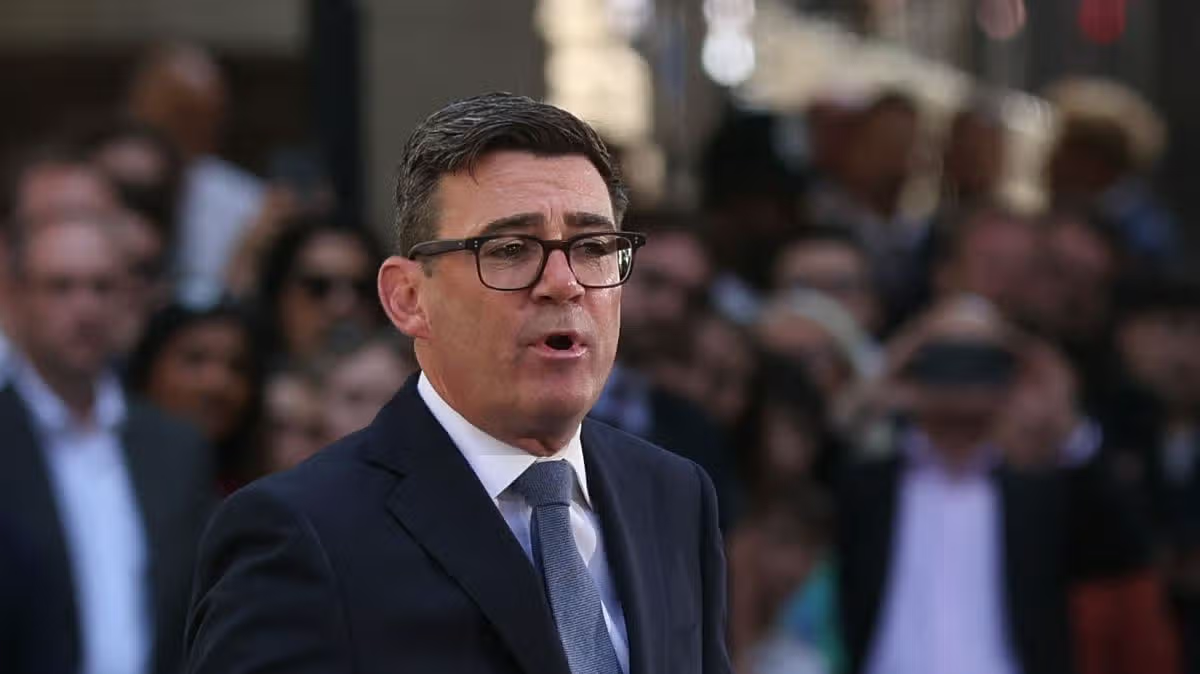
Britain's new Prime Minister Andy Burnham delivers his first speech outside 10 Downing Street

Britain’s new Prime Minister Andy Burnham delivers his first speech outside 10 Downing Street(Image: Zeynep Demir/Anadolu via Getty Images)

Andy Burnham has pledged to “build a new economy” during his time as Prime Minister, vowing a suite of cost-of-living support measures for households will be unveiled as early as tomorrow.

Speaking on the steps of Downing Street, the new Labour leader said his government would put “life’s essentials back under stronger public control” and breathe new life into the nation’s industrial heartlands. He also restated his backing for the Starmer government’s defence commitments and vowed to bring “the welfare bill down”.

Advertisement

“We will make this moment a circuit breaker for Britain, bringing forward the biggest changes in the last 40 years, a new political model and a new economic model,” Burnham said, adding: “We will take power out of here and carry it into every postcode in the land, so that they can do more, and in doing more, build a new economy where we put life’s essentials back under stronger public control.”

The comments marked the former Manchester mayor’s maiden address as Prime Minister, having been sworn into the nation’s highest office by the King mere moments before delivering his speech.

Sir Keir Starmer formally submitted his resignation earlier on Monday, informing voters that “his work was done” and that it had been the “privilege of [his] life” to serve in Downing Street.

In a break from previous speeches, Burnham chose to forgo a lectern, reiterating his previously declared commitment to redistribute political authority away from Westminster towards local councils and devolved institutions.

Advertisement

The initiative will serve as the cornerstone of a “10-year plan” to introduce a fresh political and economic framework aimed at improving Britain, as reported by City AM.

“Later this year, I will bring forward a new plan for Britain, a 10-year plan,” he said, “laying out a path from where we are now to where I believe we all want Britain to be, wherever we’re coming from, whatever party we support.”

Burnham pledged to give voters “breathing space” with several costed measures to ease the cost of living expected to be unveiled as early as Tuesday.

“We will… build a new economy where we put life’s essentials back under stronger public control to make them affordable to you again, reindustrialising Britain using public procurement to back British industry,” he said.

Advertisement

The renewed outbreak of conflict in the Middle East has left Burnham confronting a challenging economic legacy. The UK’s borrowing costs remained stubbornly high throughout his first morning in Downing Street, after Washington announced two further nights of strikes over the weekend and shipping traffic through the Strait of Hormuz came to a standstill.

The 10-year gilt yield was hovering at just under five per cent by the close of the former Manchester mayor’s address, remaining elevated amid concerns that escalating tensions will further fuel inflationary pressures within the British economy.

The head of Britain’s largest industry body welcomed Burnham’s pledge to unveil a 10-year plan, stating that businesses “thrive on long-term certainty”.

“Our surveys show energy and taxation are squeezing businesses, hitting confidence and investment. Easing the cost of doing business will deliver the growth we all want to see,” Shevaun Haviland, British Chambers of Commerce director general, said.

Advertisement

“Getting growth in ‘every postcode’ of the UK is only possible if business is placed at the heart of the economic strategy,” she added. “Any structural changes to the economy must deliver growth – and that happens when firms invest and expand.”

CBI chief Rain Newton-Smith lent her voice to calls for businesses to play a central role in Burnham’s time in office.

She said: “Ambitious plans to improve the livelihoods of people across the country must be matched by action to get businesses thriving once again.

“Addressing the cost-of-living challenge needs to go hand in hand with tackling the cost of doing business, so we can deliver sustainable growth in jobs, wages and living standards.”

Advertisement
Continue Reading

Business

Nigeria-Morocco Atlantic Gas Pipeline: African nations sign off $25bn mega plan

Published

on

The image shows Donaghadee harbour with a white lighthouse in the background. In the foreground are a number of colourful boats.

One of Africa’s most ambitious energy infrastructure projects has finally been signed off at the highest level, with West African leaders formally endorsing the long-awaited Nigeria-Morocco Atlantic Gas Pipeline.

“Don’t be surprised when the gas comes your way,” quipped Julius Maada Bio, Sierra Leone’s president and the current head of West Africa regional bloc Ecowas, following Sunday evening’s ceremony in Freetown.

The vast 6,000km (3,700 miles) pipeline will run along the Atlantic coast of 14 African nations, carrying Nigerian gas to Morocco before linking into Europe’s existing gas network via Spain.

Construction is expected to begin in 2028 with a total estimated cost of $25bn (£19bn).

Advertisement

It signals a change from current models where gas is typically extracted from African nations, refined and processed abroad then shipped back to African nations at three or four times the price, says energy expert and former Nigerian government advisor Charles Majomi.

That practice must end, because it is a “complete devaluation of the resource that is so fortunately endowed in places like Nigeria and other countries,” he told BBC Focus on Africa.

By contrast, if leveraged correctly, the new pipeline has the potential not just to stimulate regional industrial growth but also boost Africa’s power on the international stage.

“In terms of Africa’s regional security and its ability to negotiate and have a seat at the global table, if you will, it does need this measure of usefulness to countries [in] Europe and Asia potentially,” argued Majomi.

Advertisement

“Beyond energy security, it will open up Africa as a corridor to international markets,” Prof Ganiyat Adejoke Adesina-Uthman, of the National Open University of Nigeria, said.

It is a symbol of what Africa can achieve when countries collaborate and work together, she added.

Continue Reading

Business

Abercrombie & Fitch: Cash Cow Machine With Swing Trade Potential – Reiterate Buy

Published

on

Abercrombie & Fitch: Cash Cow Machine With Swing Trade Potential - Reiterate Buy

This article was written by

I am a full-time analyst interested in a wide range of stocks. With my unique insights and knowledge, I hope to provide other investors with a contrasting view of my portfolio, given my particular background.If you have any questions, feel free to reach out to me via a direct message on Seeking Alpha or leave a comment on one of my articles.

Analyst’s Disclosure: I/we have no stock, option or similar derivative position in any of the companies mentioned, and no plans to initiate any such positions within the next 72 hours. I wrote this article myself, and it expresses my own opinions. I am not receiving compensation for it (other than from Seeking Alpha). I have no business relationship with any company whose stock is mentioned in this article.

The analysis is provided exclusively for informational purposes and should not be considered professional investment advice. Before investing, please conduct personal in-depth research and utmost due diligence, as there are many risks associated with the trade, including capital loss.

Advertisement

Seeking Alpha’s Disclosure: Past performance is no guarantee of future results. No recommendation or advice is being given as to whether any investment is suitable for a particular investor. Any views or opinions expressed above may not reflect those of Seeking Alpha as a whole. Seeking Alpha is not a licensed securities dealer, broker or US investment adviser or investment bank. Our analysts are third party authors that include both professional investors and individual investors who may not be licensed or certified by any institute or regulatory body.

Continue Reading

Business

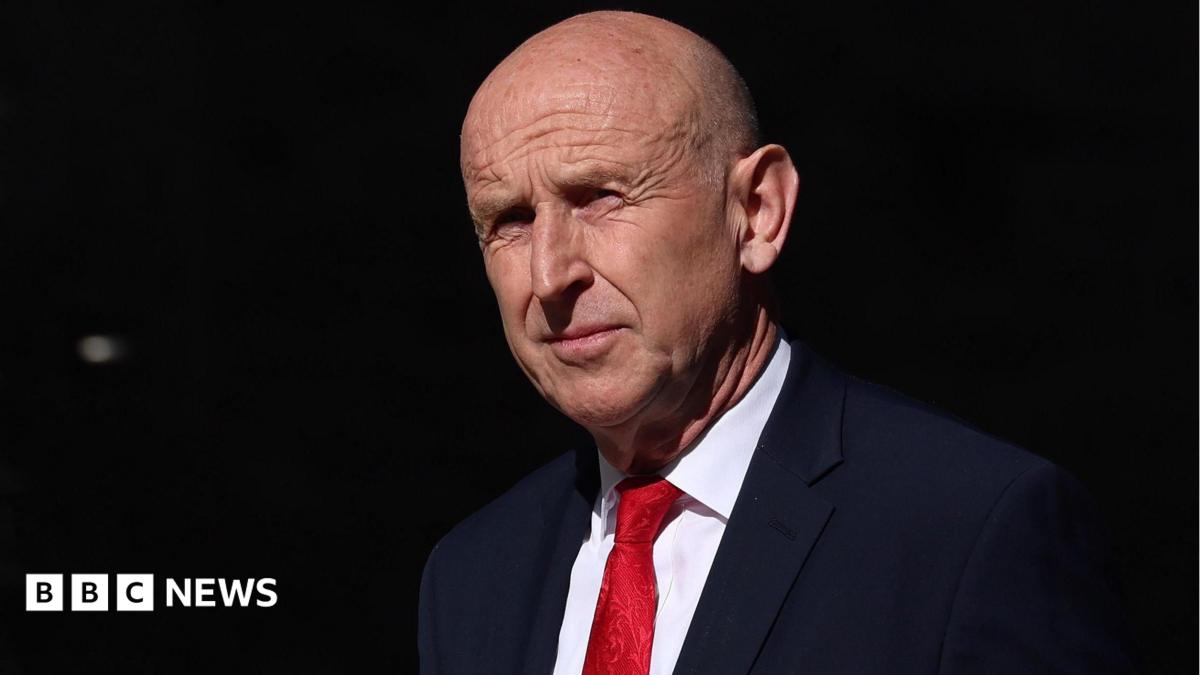
John Healey becomes chancellor weeks after shock resignation from defence job

Published

on

A woman in a blue puffy jacket looks at the camera. She has brown shoulder length hair and is wearing glasses. Behind her is a pile of red brick rubble and a partly demolished house.

His resignation came days before Andy Burnham’s pivotal by-election in Makerfield, adding to the sense that Sir Keir’s premiership was falling apart.

Healey earned plaudits from across the political spectrum for resigning on a matter of principle.

He had clashed with Reeves, the woman he is now replacing, pointedly saying in is resignation letter that the Treasury had been “unwilling” to “commit the resources that the nation needs to defend the country at this time of rising threats”.

His return to government in the most vital job of all in cabinet after the prime minister is an even bigger surprise than his resignation, given that his name had not been mentioned as a frontrunner in the increasingly feverish speculation about who Burnham would choose.

Advertisement

Sources told the BBC that Burnham and Healey “have the same outlook” on many of the prime minister’s priorities, including reindustrialisation, the cost-of-living, and driving growth across the country.

The softly-spoken Yorkshireman has a remarkable record as someone who has been on the Labour frontbench almost continuously since 2001.

Born in Wakefield in 1960 and educated at Lady Lumley’s Comprehensive School, Pickering, and Peter’s School in York, he studied social and political science at Christ’s College, Cambridge.

Before entering politics, he worked as a journalist, briefly editing Parliament’s in-house magazine The House, before becoming a disability rights campaigner and trade union official.

Advertisement

He is married and has one son.

He first came into Parliament in Tony Blair’s landslide general election in 1997 as MP for Wentworth, a former mining area north of Sheffield, which following boundary changes is now Rawmarsh and Conisbrough.

He retained the seat with a majority of 6,908 in the 2024 general election, with a Reform UK candidate in second place.

In the early 2000s, he held a string of ministerial posts, including housing, local government, and at the Treasury in the Blair and Gordon Brown governments.

Advertisement

He also assisted Brown as his parliamentary private secretary.

But his main interest was housing policy. He served as shadow housing secretary when Jeremy Corbyn was Labour leader, despite supporting a failed attempt to oust Corbyn in 2016.

Continue Reading

Trending

Copyright © 2025