

Politics
LA’s next mega-event test: The coming climate Olympics


Los Angeles leaders are spending billions to make the 2028 Olympics a story of climate and environmental policy progress, reports Alex Nieves.
Transit and community groups want to know whether the investment will be part of the region’s Olympic legacy or just a flash in the pan.
The question of just how enduring their efforts will be was a throughline Tuesday and Wednesday at the Los Angeles Cleantech Incubator’s Road to 2028 summit — an event focused on leveraging the Olympic Games to accelerate clean energy and transportation development in the state’s most populous region.
The overall vibe of the conference was an optimistic one, as Los Angeles County and dozens of cities are hustling to secure hundreds of buses, plant trees and clean waterways before millions of people descend on the region in two years for the Games. But some attendees were already wondering what comes after the two-week mega event is over.
“When we look to the future, if once the games leave and we have not left communities better than the way we found them, then we have all lost,” said Cynthia Mitchell-Heard, CEO of the Los Angeles Urban League, speaking on a panel of grant recipients who’ve received funding from the LA Olympics organizing committee for environmental projects. (The Urban League received $100,000 to create a workforce development program for people affected by last year’s Altadena fire.)
Catherine Baltazar, associate director of advocacy and organizing at Climate Resolve, argued that throwing dollars at infrastructure projects won’t guarantee long-term progress in communities that have historically lacked resources and disproportionately borne the brunt of climate change.
“Investment should not end when the Games end,” Baltazar said. “We know that these communities will continue long after the Games, and so for me, that’s the legacy that I want.”
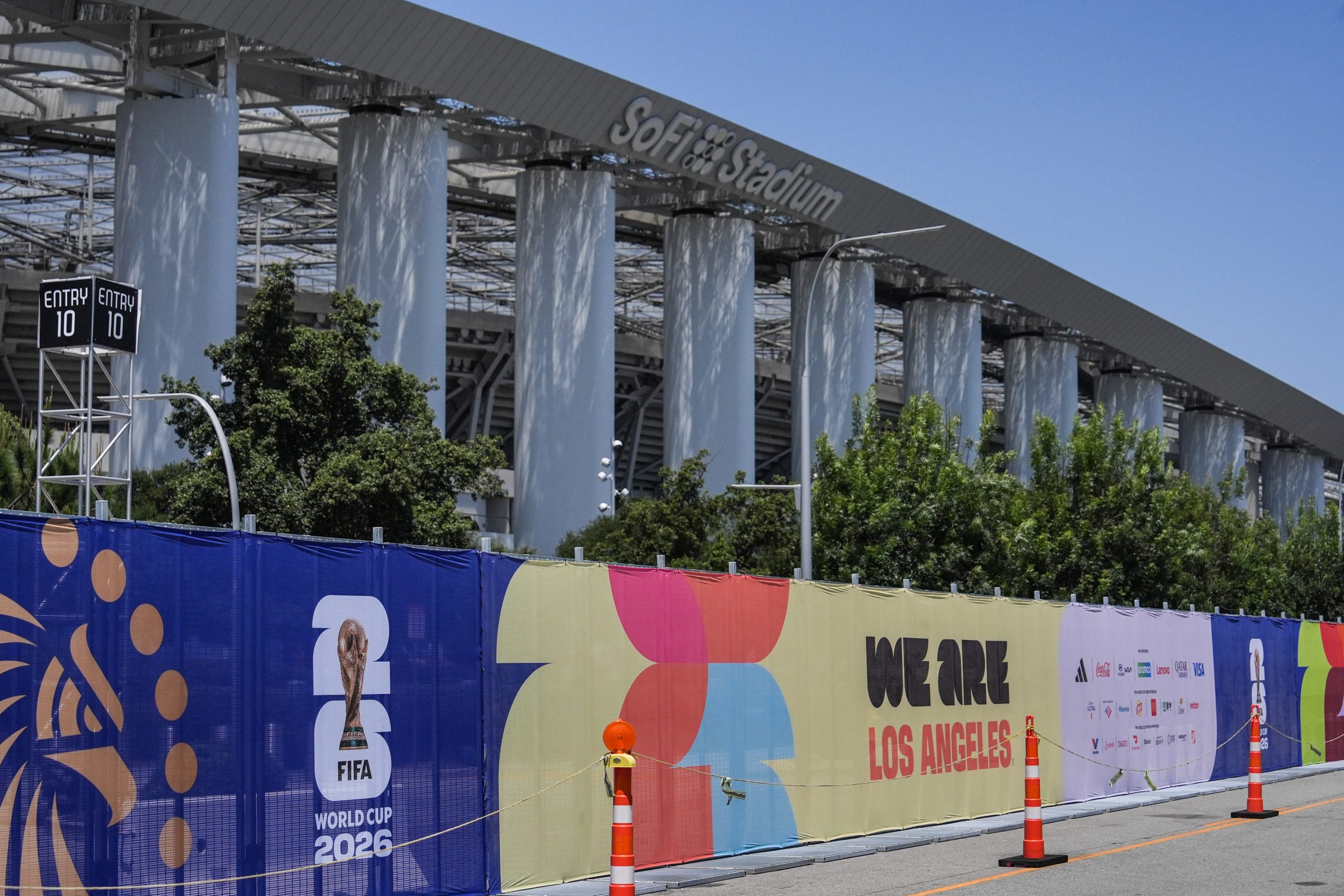
The focus on the post-2028 future comes in part because of what was seen as a successful test run during this summer’s World Cup. The region hosted eight matches at SoFi Stadium in Inglewood, avoiding any major snafus while seeing a significant spike in public transit use.
While the Olympics will be far larger than the World Cup, the region has structural advantages over many past Olympic host cities, including enough existing venues to house every sporting event. Much of the preparation now is centered on buying and leasing roughly 1,700 buses — including 500 electric school buses — to shuttle fans to and from venues that will be transit-only.
Transit advocates argue that those investments, including recent expansions of Los Angeles’ light-rail system, don’t solve for structural budget deficits that could threaten service cuts — as bus and rail operators have already warned about farther north in the Bay Area.
Los Angeles’ legislative delegation has failed the last two years to secure a boost in the state budget for systems like LA Metro, which faces a $2.3 billion deficit through 2030. Metrolink, a commuter rail line that serves six counties across Southern California, has indefinitely extended a 20 percent reduction in weekday service amid a $30 million deficit.
Matt Petersen, CEO of the Cleantech Incubator, told POLITICO the budget challenge has only intensified under a Trump administration hostile toward clean transportation.
“Local governments are struggling, states are struggling on how to put the resources where they’re needed,” he said. “I think the bottom line is: Without the feds, it’s super hard.”
But he said he still believes that Los Angeles is “well on the way to being ready” for the Games and to leave a lasting benefit for the community.
“That’s really what we’re here to do,” he said. “Ten years after the Games, what will we have seen manifest because of this moment?”

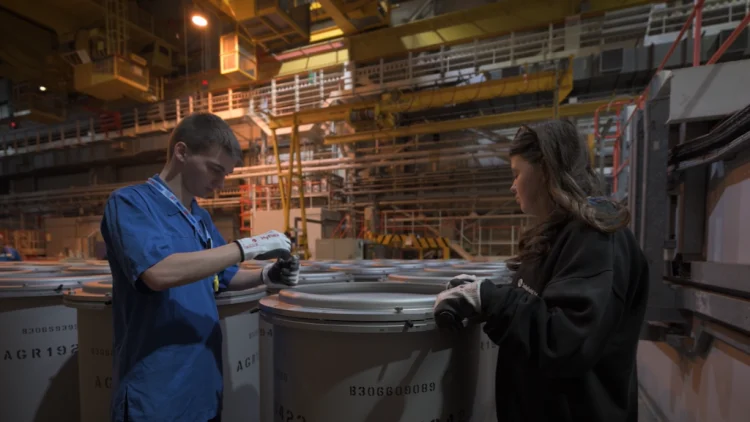

Nuclear operators preparing waste drums that will store graphite and stainless steel waste from AGR fuel dismantling.
When Parliament debates nuclear energy, the conversation is usually about tomorrow’s reactors. Yet far less attention is paid to the Advanced Gas-cooled Reactor (AGR) stations that have powered Britain for decades, the electricity they continue to generate, and the vital work that begins once they stop.
Behind the UK’s ageing reactor fleet moving from generation to defueling and decommissioning, sits a wider national system: the people, facilities, transport capability and long-term stewardship needed to manage nuclear materials safely, securely and responsibly. It is complex work, often unseen, but essential to the UK’s energy security, environmental responsibility and value for the taxpayer
Across the Nuclear Decommissioning Authority (NDA) group, our responsibility is at the heart of the national system to keep the lights on and support our generation fleet.

For decades, the UK’s AGR fleet has played a central role in the country’s electricity system. Since the 1960s, AGR stations have provided reliable, low-carbon power. Today, four stations from the original fleet continue to generate, while others have moved into defueling and decommissioning.
Working in close collaboration with EDF, the operators of the AGRs, the NDA group brings together the complementary capabilities of Sellafield Ltd and Nuclear Transport Solutions to safely transport, receive, dismantle and store spent fuel from those stations. Every tonne of fuel received represents electricity already delivered to homes, schools, hospitals and businesses across the UK.
Today, Sellafield receives around 200 tonnes of spent AGR fuel each year. That fuel has already generated the equivalent electricity needed to boil more than 1.7 trillion kettles of water.
Supporting a national programme
Sellafield is often described as a decommissioning site. That is true, but it is not the full picture as it also plays a critical role in supporting the UK’s AGR operating programme.
It safely receives used fuel from power stations that are still generating electricity, helping those stations continue to operate. At the same time, it supports stations that have finished generating, enabling them to defuel safely before moving into the next phase of their lifecycle.
That places Sellafield at the heart of a nationally important collaboration between EDF, the NDA and its group, in conjunction with the Office for Nuclear Regulation, the Environment Agency and Scottish Environment Protection Agency. Once reactors are defueled and the fuel transported to Sellafield, ownership of the AGR sites transfer to NDA and stewardship passes to Nuclear Restoration Services (NRS), the NDA group’s centre of excellence for reactor decommissioning. Drawing on decades of expertise gained through the decommissioning of the UK’s Magnox and research reactor sites, NRS will apply proven skills, innovation and experience to safely decommission the AGR fleet, reduce long-term hazards and restore sites for future generations.
It is a reminder that decommissioning is not simply an end point. The NDA group sustains national capability, protects specialist skills, supports communities and gives the UK confidence that it can manage its nuclear legacy responsibly.
Adapting to meet the country’s needs
At the centre of this work are some of Sellafield’s most important operational facilities: the Fuel Handling Plant, the interim AGR Storage Pond, the Thorp Receipt and Storage Pond, and the Flask Maintenance Facility. These facilities have supported the UK’s nuclear programme for decades and they continue to evolve to meet national need.
As AGR stations move through different phases of their lifecycle, that ability to adapt matters, as demand across the system changes. Fuel movements increase, operational requirements shift, and reliability becomes even more important.
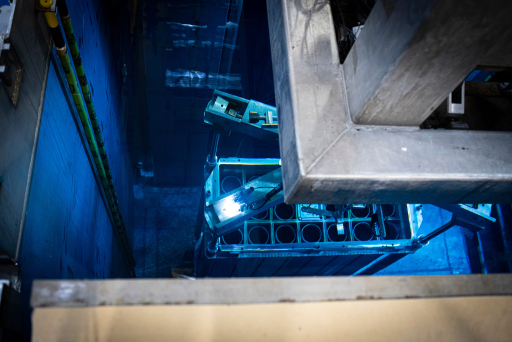
In recent years, Sellafield has introduced more efficient storage arrangements so that 50% more spent fuel can be safely stored in the same pond. It has improved how fuel is received and handled, strengthened the management of pond conditions, and enhanced process flows to support more reliable flask maintenance.
Without the development of the new storage rack, a new storage pond would have been required, potentially costing billions of pounds. This has helped Sellafield meet the needs of the national programme without requiring new infrastructure and ensures we protect value for the taxpayer.
Ready for the next phase
The UK has already entered a major period of AGR transition. The NDA group successfully supported the defueling of Hunterston B and Hinkley Point B on time and on budget, and continues to support the defueling of Dungeness B. In doing so, the system has managed a significant increase in fuel movements, rising from a historic average of around 150 tonnes per year to between 200 and 300 tonnes in recent years.
On April 1st 2026, 246 staff transferred from EDF to NRS at Hunterston B, bringing their existing expertise and ensuring the continuation of skilled, well-paid jobs at the site. It involved the transfer of thousands of files and records, more than 20 contracts and six site licences and permits from EDF to NRS.
This transfer provides the template for Hinkley Point B transferring to NDA/NRS in October 2026, where we will continue to build on this success that was the result of careful planning, strong partnerships and the ability to adapt facilities and operations to changing national demand.
Looking ahead, there is more to do. While further AGR life extensions may still come forward, planning is already under way for the next peak defueling phase. The four remaining AGR stations are currently expected to commence defueling by the end of the decade, which will once again increase the volume of fuel moving through the system.
The bigger picture
The decisions being made today will shape the UK’s ability to manage nuclear materials for decades to come.
By making the AGR defueling programme efficient and reliable, Sellafield, with the support of the capabilities across the NDA group, is helping reduce the overall cost of decommissioning for the UK taxpayer. By safely managing spent fuel, it supports environmental responsibility and long-term stewardship. And by maintaining the capability to receive, handle and store AGR fuel, it helps keep future options open as policy and technology evolve.
The UK’s nuclear story is not only about the electricity already generated. It is also about how the country responsibly manages what comes afterwards.
The NDA group has been solving complex nuclear challenges for generations. As the AGR programme evolves, so will we. By strengthening resilience across our facilities and operations, we are preparing for what comes next and continuing to play our part in the UK’s nuclear fuel cycle.
We have been innovative problem-solvers for 80 years. The next challenge is already in front of us, and we are ready to meet it.

Olivia Wilde has opened up about the media frenzy that surrounded the release of her 2022 film Don’t Worry Darling.
Directed by Olivia and starring Florence Pugh and Harry Styles as its leads, Don’t Worry Darling’s cinematic release was blighted by reports of behind-the-scenes chaos.
All the while, Olivia was dealing with a very public split from her ex-husband Jason Sudeikis, and scrutiny over her then-relationship with the As It Was singer.
By the film’s release, it had been panned by critics, but there was still time for one last drama, over a bizarre online rumour that Harry had spit on co-star Chris Pine as they took their seats to watch Don’t Worry Darling at the Venice Film Festival.
As you can imagine, Olivia has now admitted that the plagued release of Don’t Worry Darling gave her cause for concern when it came to promoting her latest movie, The Invite.

Warner Bros/Moviestore/Shutterstock
Speaking on The Louis Theroux Podcast, Olivia voiced her opinion that the furore around Don’t Worry Darling’s release “did hurt the film for sure” because “we didn’t get to have the conversations about what the film was trying to say, which was a shame because so many people worked so hard to make that film in the depths of Covid”.
Praising the work of those who worked on Don’t Worry Darling in “uncertain times”, she continued: “But we never got to talk about that, so I think it hurt the film.
“It hurt me for sure, because I was so naive up until that point about the grinder, the garbage disposal that the internet can be.
“So, at this point, I have enough of a perspective on it, and that allows me to experience it as a fascinating time. It is interesting to witness a tornado from the inside. But now I look back and I think, ‘oh, the people were being given headlines without context, and it’s a natural instinct to start trying to fill those in’.”
Olivia continued: “It’s interesting because this is my first time back into the press cycle since then and I did wonder, ‘would this feel quite traumatising?’.”

Fortunately, she shared that the “conversations” she’s been having while promoting The Invite have been “so wonderfully interesting to me” that it’s “been actually kind of healing because I understand that it’s not always a garbage disposal”.
As well as directing The Invite, Olivia stars in it alongside Seth Rogen, Penelope Cruz and Edward Norton, as two couples during a dinner party whose evening spirals out of control into unexpected places.
Unlike Don’t Worry Darling, the domestic drama has received rave reviews from critics and viewers, and currently holds a critical score of 97% on Rotten Tomatoes and a Letterboxd rating of 4.1 stars.
Last month, Olivia told New York magazine that the producers behind Don’t Worry Darling had encouraged her not to address any of the headlines around it, which she now has mixed feelings on.
“I was told, ‘Don’t say a fucking word. Just go out there and smile’,” she said. “I resent that, but it taught me it’s not the way I want to handle things.”
She also told the podcast Call Her Daddy: “I wanted to be like, ‘Can I just talk to people?’. Can I just go and say like, ‘That’s not true?’. And it was like, ‘No, that won’t help’. And that was really hard.”
“There was all this public madness, but my private life was very far from it,” she claimed, recalling how it felt “like the tornado was right outside the door and if you were inside, you were like, ‘it’s so nice’, and then you’d open the door and a fucking, like, cow and a tractor would fly by”.
“I’ve never felt more disconnected from the person that people were talking about,” she concluded. “It was also very strange to see complete fiction traded as fact.”
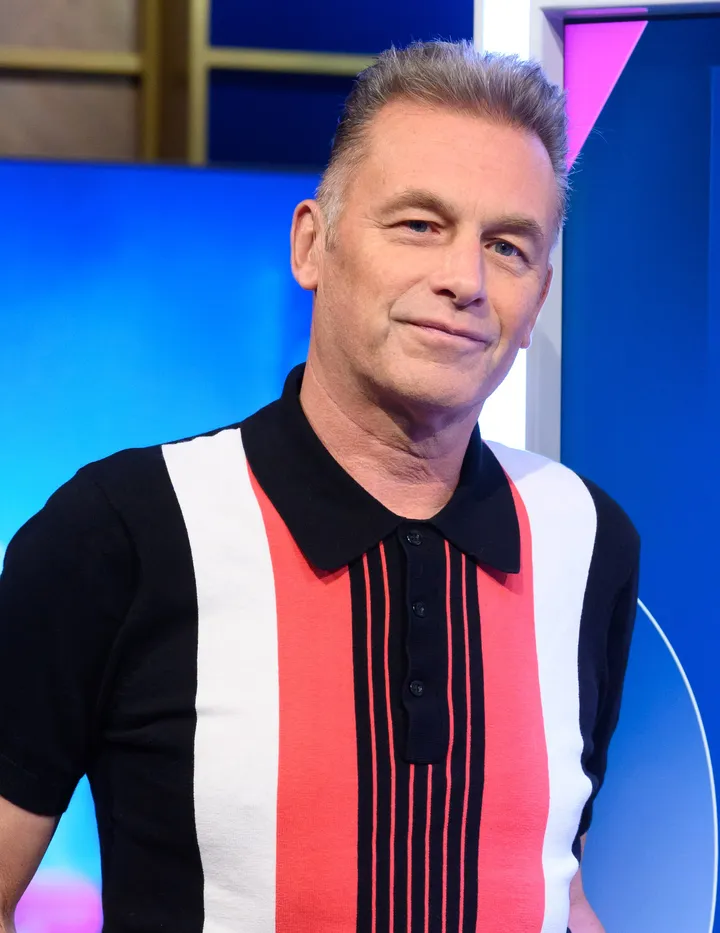
Jeremy Clarkson has apparently been doing some reflecting on his recent public beef with Chris Packham.
Earlier this month, Clarkson’s Farm was one of the shows being reviewed by the cast of Celebrity Gogglebox, including the Springwatch host and his stepdaughter and fellow conservationist Megan McCubbin.
Reacting to the opening titles, Packham said at the time: “That’s not what a farm looks like. Most farms are horrible monocultures which have been sprayed with deadly chemicals, time and time again, the ground pumped full of fertiliser, and loads of the animals are indoors – in crates, being crushed and kept in the dark.”
“That’s an idealistic view of a farm, and it puts the wrong idea in people’s minds,” he added. “And that’s only the [opening titles]!”
Clarkson subsequently fired back with a column in The Sun, in which he wrote: “The endlessly angry Chris Packham went on Gogglebox this week and erupted in blind fury about the Winnie the Pooh-ish opening credits to my farming programme.
“Now, of course this kind of stuff plays well in a room full of nose rings and Palestine flags at a vegan activist meeting in Hackney. But he was on a television programme, and it didn’t play well at all. Because it’s b*****ks.”

Jonathan Hordle/ITV/Shutterstock
Since then, Clarkson has penned a second piece addressing the matter, this time in The Times.
The former Top Gear host began by explaining that he was someone who’d “always quite enjoyed being in trouble” since his school days, but since the reaction to him disclosing that his recent bout of ill health, he’d come to enjoy “being seen as a nice person rather than a troublemaker”.
“For the past few weeks, I’ve been wondering if maybe, at the age of 66, I should become an adult. A kind person, a tolerant person,” he suggested.
“That brings me on to Chris Packham,” he continued. “Just recently, he went on Gogglebox and said that the opening credits on my farm show were in no way representative of modern-day agricultural practices.
“Of course, I was very incensed by this and immediately wrote in The Sun that he was talking bollocks. But in the new age of tolerance and respect, I shouldn’t have done that. I should have kept schtum.”
However, he conceded that “offering up your left cheek to be slapped after someone has hit the other one” is “bloody difficult”, particularly for “someone like me, who’s spent his life throwing rocks in ponds to watch the ripples it creates”.
Clarkson’s column was published on Sunday. A day earlier, Packham’s representative had issued a statement to HuffPost UK, accusing the divisive broadcaster of “being disingenuous” and insisting that “industrial farmers are making a smokescreen to hide their horrors”.
Packham said: “I made the comments about the silly idealistic stereotyped cartoon at the top of his programme, he knows that. And he knows it paints an entirely unrealistic image of most of [the UK’s farms].
“The industrial farming fraternity love Clarkson’s Farm because it gives them something pretty to hide behind, a friendly flagship of good ol’ wholesome values. The truth is so very different, and it’s a truth that needs to be told for the sake of animal welfare, wildlife, human health and a secure environmental future.”
He added: “They can shoot at the messenger, but they will not silence the truth, even if Jezza has a big mouth.”
Jeremy Clarkson’s team have been contacted for additional comment.
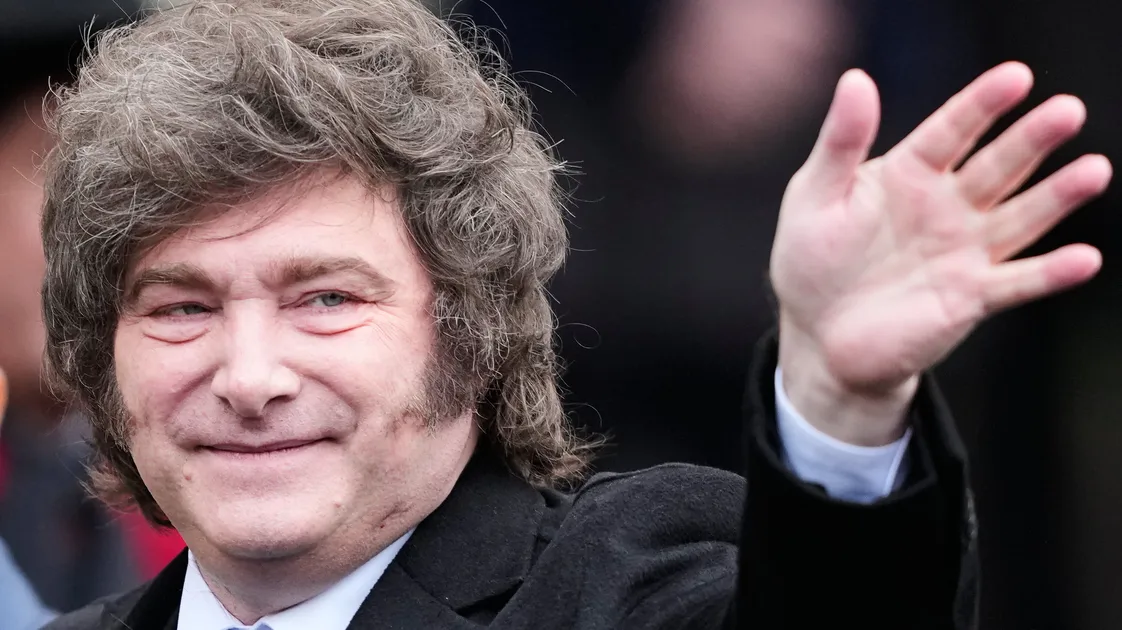
After the game, Milei posted a tweet declaring a “WORLD CELEBRATION,” and promised a national holiday to honour “the achievement reached by the Argentine National Team.”
“Given the concern about the celebrations for the achievement reached by the Argentine National Team, I inform the population that, depending on what the Players and the Technical Staff decide regarding the day to celebrate, it will be declared a national holiday,” he wrote, according to an X translation.
But given Argentina lost, many people on social media wondered if the president had prewritten his post, assuming the team would win.
It appears the celebration for the Argentine team’s second-place showing is legit, as Milei’s post, which has been liked more than 157,000 times, remained up on social media as of Monday afternoon.
A while back, clever commentators of working-class origin worked out that what we call ‘woke’ has nothing whatsoever to do with ‘Being Kind’, or wishing to include people previously excluded from the pleasant parts of life. No, in an age when it is not done to openly look down one’s patrician nose at the great unwashed, being woke is a way to disdain the demos – now the ‘gammons’ – in the name of radiant righteousness rather than simple snobbishness. We saw this in Emily ‘Lady Muck’ Thornberry’s condescending tweet in 2014 (during another World Cup) of an England-flag-festooned Kent council house with a white van in the driveway, which lost her her job in Ed Miliband’s shadow cabinet.
Even more (and in a wonderfully comic and surreal manner), we see it in the ‘progress’ of Vogue from a proudly elitist publication into the house journal of woke. Rob Henderson’s wonderful term ‘luxury beliefs’ could not find a better illustration than in this magazine’s journey. Once concerned with hemlines and hairstyles, it has been committed wholeheartedly to the quasi-political lunacy of our times for some time now, even before it threw its minuscule BMI behind BLM back in 2020.
Vogue has fawned over most of the preposterous females of our era, from Greta Thunberg (an unlikely cover girl) to Mrs Mamdani, paying lip service to the strength of such ‘powerful’ women. Somewhat paradoxically, in 2017, Teen Vogue, which has attempted an even more extreme pivot from frivolous fun to po-faced protesting, instructed teenage girls on how to have anal sex with the help of an anatomical diagram that left out the clitoris, while the article referred to females as ‘non-prostate owners’ and ‘vagina owners’. When the backlash came, the ‘queer’ community predictably branded such outrageous criticism ‘homophobic’, while editor-in-chief Elaine Welteroth doubled down by telling the Guardian: ‘We say “woke” here. We’re a woke brand, and our readers are woke, too.’
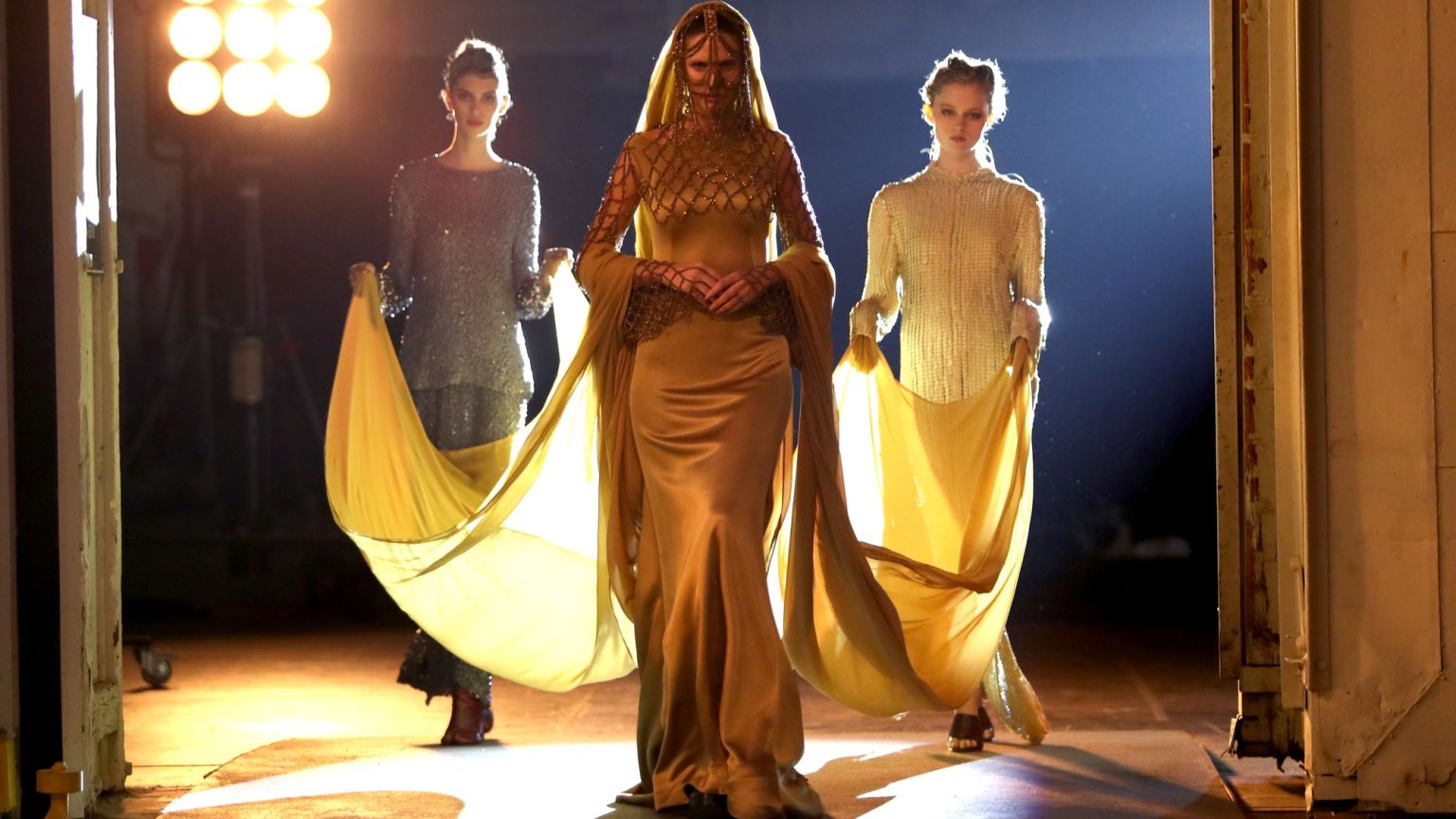
Go woke, go broke? In a piece this year called ‘Vogue is dying and taking down the magazine industry, too’, Aleeza Gani wrote, ‘There was a time when Vogue defined fashion, shaping trends, telling stories, and spreading messages through art. But now, its influence is gone; its articles are bland and subpar, and its covers and editorials are one-dimensional and meaningless.’ A monthly magazine since 1973, Vogue went down to 10 issues a year in 2023, and now this year to only eight. I hadn’t read it in years (and was surprised to see the August issue on sale for £3.99 – Grazia is £4.50), but I had kept up to date on risible tidbits over the years, such as nepo-baby supreme Bella Hadid (a whopping 27 covers) becoming the catwalk’s foremost advocate of ‘Palestine’ and whining to Vogue that she regretted having a nose job at 14 because ‘I wish I had kept the nose of my ancestors’. The mag recently featured the ‘mood board’ of a practising Muslim fashion designer called Kazna Asker, which showed photographs of women wearing burkas so extreme that even their eyes were covered by a mesh.
Vogue’s editors – like so many thick, rich Westerners whose decadent ways would find them first up against the wall – really have gone gaga for Islam in all its forms. Take the recent drooling over Francesca Albanese, the UN special rapporteur for Palestine, who claimed that America is ‘subjugated by the Jewish lobby’ and, the day after the Charlie Hebdo massacre, shared an Iranian state-media item claiming that the CIA and Mossad carried it out. They also made total tits of themselves way back in 2011 with a profile of Asma al-Assad, entitled ‘A rose in the desert’ – a lyrical tribute to the wife of the Syrian dictator. There may be a method in this apparent madness, however. After all, these days, the vast majority of those women who buy couture are from the filthy rich Arab world.
But back to the current issue. The cover girl is actress Daisy Edgar-Jones, a lovely waif of the kind beloved by Vogue since the 1960s, when it (first) pretended not to be posh and tried to climb on board Swinging London with the likes of Jean Shrimpton. It seems a long time since the 2023 cover that featured three gorgeous plus-size models – Precious Lee, Jill Kortleve and Paloma Elsesser – on the cover and called them ‘the new Supers’. The trio could be seen on catwalks and in campaigns for a while, but then fashion moved on, as it must by its fickle nature. Inside the latest issue, there’s a piece by a fat – sorry, ‘body-positive’ – girl which bemoans how the fashion industry is ‘largely white and thin-centric’. Looking at the models, suffice to say there’s an elephant in the room – but certainly not in Vogue.
The BS doesn’t quit. ‘Awareness is the beginning of agency’, a ‘Vogue Values’ infomercial for the new Samsung smartphone lectures us. A piece tells us that there is ‘something subversive’ about sports clothes that cost a week’s average wage. A gospel choir is featured as an afterthought in a clothes shoot. And then, here is Lila Moss, daughter of Kate; here are Elizabeth and Georgia Jagger, daughters of Mick; here is Savannah Miller, sister of Sienna; Daisy Edgar-Jones is the daughter of Philip, an entertainment television bigwig. If you were an alien coming to Earth today, you’d suppose that you had to be born into showbiz to succeed in it, like being royal. Woke notoriously finds the concept of meritocracy suspect, and perhaps this is why none of its adherents can acknowledge the very obvious fact that social class – not colour or queerness – is the greatest predictor of social mobility.
I remember an old Vogue interview with the bright and beautiful Big Brother presenter AJ Odudu, daughter of a cleaner and a bus conductor, in which she practically had to spell it out: ‘Someone asked me once what it was like being a black female coming up in the industry; I was like “Oh my gosh, being black was not even the hardest thing”. We just didn’t have the means.’
Vogue wouldn’t have been any help to her, despite its concern for how her colour might hold her back. Notorious for unpaid internships (even under the editorship of the gay, black Edward Enninful, who came out with the usual blather about bringing ‘diversity’ to the youngsters recruited), Vogue was reported to HMRC in 2018 by the estimable Tanya de Grunwald, who said that the magazine’s month-long ‘workplace shadowing roles’ ought to qualify its interns as actual workers. Only the children of the rich can afford to work for free – and so journalism, once a trade open to bright working-class upstarts, is now firmly in the glamour-job camp. When Anna Wintour stepped down as editor-in-chief of Vogue last year, she was replaced by Chloe Malle (daughter of actress Candice Bergen and director Louis Malle). Her first issue featured Kendall Jenner and Gigi Hadid on the cover – a nepo-baby hat-trick!
But despite – or perhaps because of – this level of in-breeding, the future does not look bright for Vogue. At this year’s Met Gala, Vogue was very publicly snubbed by its pin-up Zohran Mamdani, who presumably saw the dodgy optics of swanking along the red carpet at a $350,000 per table party sponsored by Jeff Bezos. Instead, the NYC mayor took to Instagram where he wrote: ‘While the world’s eyes are on fashion’s biggest night, we’re turning ours to the garment, retail and warehouse workers who keep the industry running.’ One can only imagine the amping up of Anna Wintour’s resting-bitch-face on reading this.
It’s pleasing to think that old-fashioned class politics (and the rise of the social-media influencer, a position that’s much easier for a kid with no connections to achieve) might bring down Vogue, after its pathetic and extended attempts to sashay along the radical-chic side of the street. You can understand why it tried to ignore the spectre of social class. It’s fine to patronise every minority from the ‘queer’ to the ‘neurodiverse’ as they are relatively few and can be easily absorbed. But there will always be far more Have-Nots than Haves – and the stringing up of the leisure classes that occurred in 20th-century Europe can never truly be said to be out of fashion. No hack really relishes the demise of a publication in this online age, but the market does as it will, and one would have to have a heart of stone not to smirk at the continued unwinding of woke Vogue.
Julie Burchill is a spiked columnist. Follow her Substack, ‘Notes from the Naughty Step’, here.
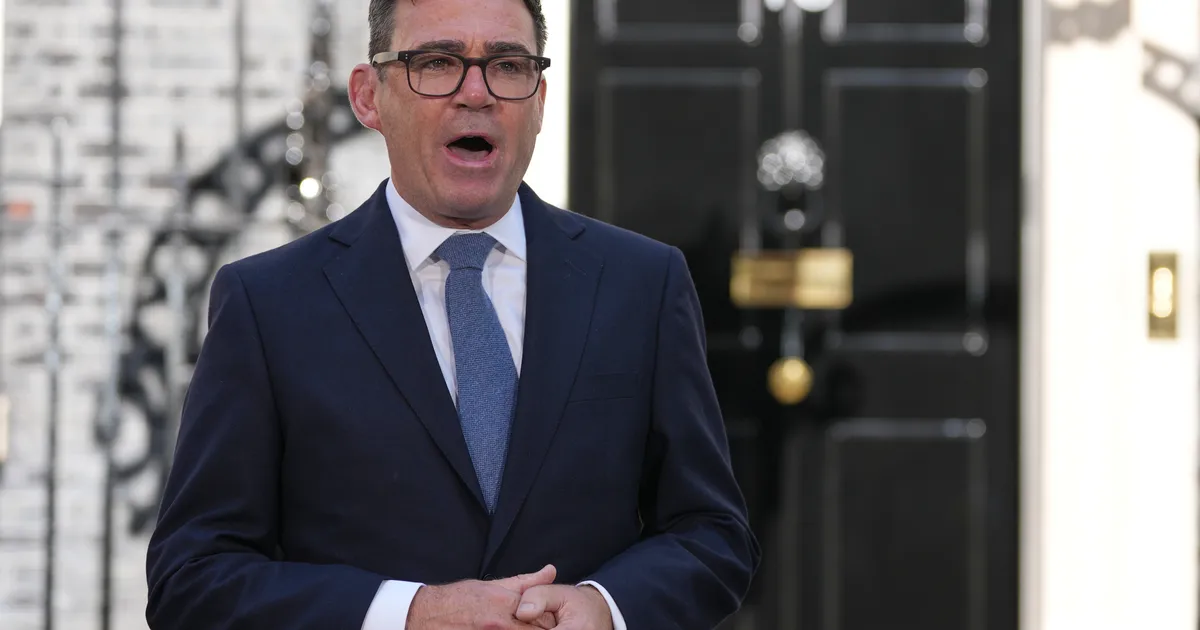
VAT is to be removed from electricity bills as Andy Burnham attempts to make good on his promise to bring down the cost of living.
The move, which will apply from October 1, is expected to cut the energy price cap by £45.
Announcing the move on Tuesday morning, Burnham said it will “put more money in people’s pockets and bring back hope”.
The policy will be funded by the new prime minister’s decision to scrap Keir Starmer’s plan to bring in digital ID, which was expected to cost £1.8 billion over the next three years.
However, there was some confusion as cutting VAT on electricity bills from 5% to zero would cost around £850m a year.
Burnham said: “Westminster has not been working for people for too long, with families struggling with the cost of living.
“That needs to change. I said I wanted to give people breathing space, and that’s what I’m announcing on my second day as Prime Minister.
“We’re taking immediate action to cut taxes on energy bills, put more money in people’s pockets and bring back hope.”
He is expected to announce that bus fares are to be capped at £2 tomorrow.
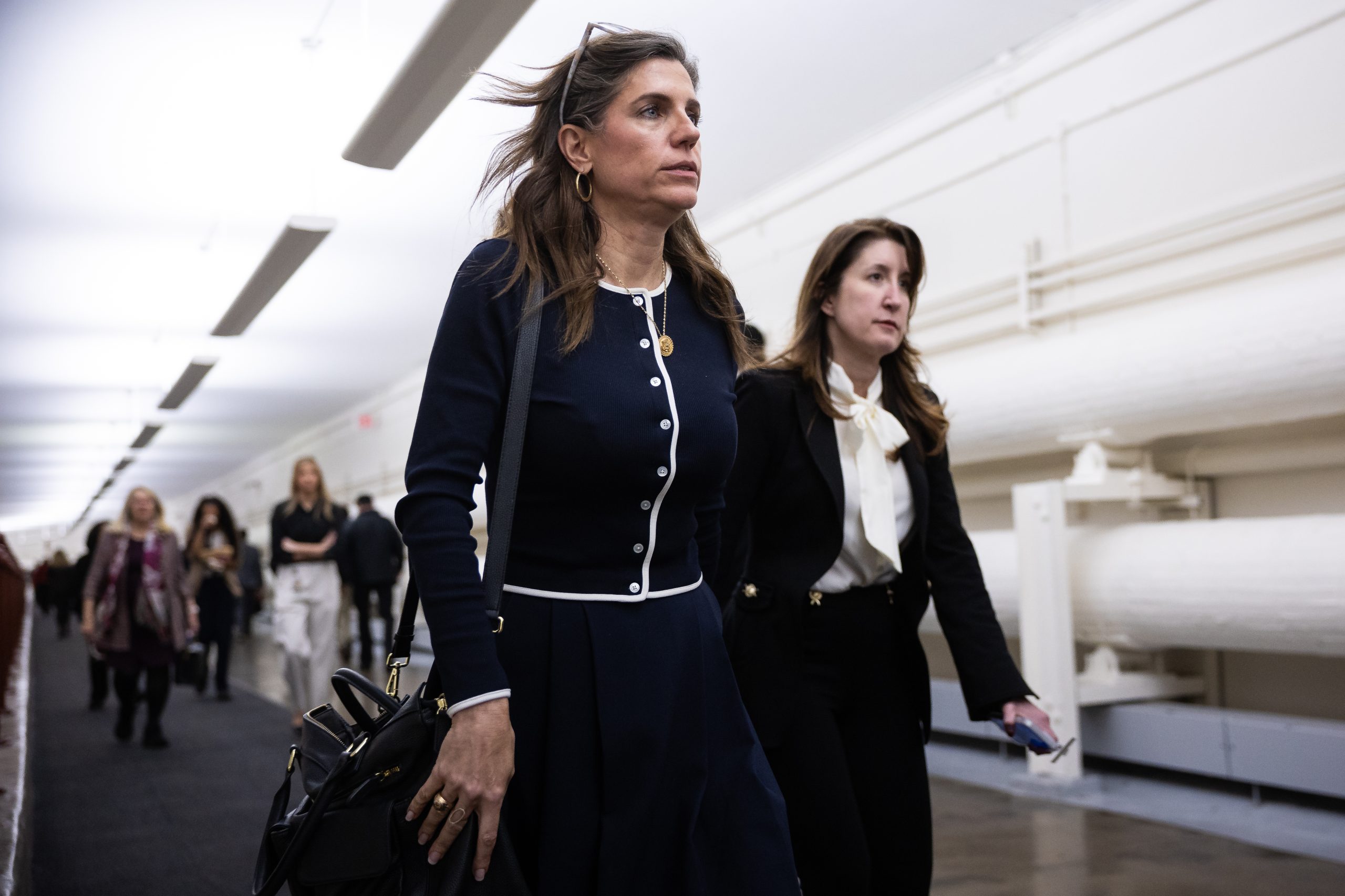

Firebrand Republican Rep. Nancy Mace announced Monday that she will not run for the South Carolina Senate seat held by the late Lindsey Graham.
“I’m not running for the U.S. Senate, not because I’m backing down from a fight, but because the one I’m already in matters right now,” she said in a video announcement.
Her decision comes after a fifth-place primary finish in her run for governor earlier this year and as the race to succeed Graham is already taking shape.
Mace began exploring the viability of a potential bid just hours after Graham’s death became public, two people familiar with her thinking told POLITICO at the time, but decided against a second statewide bid in as many months.
Her decision effectively guarantees she will not be serving in elected office once her term ends early next year.
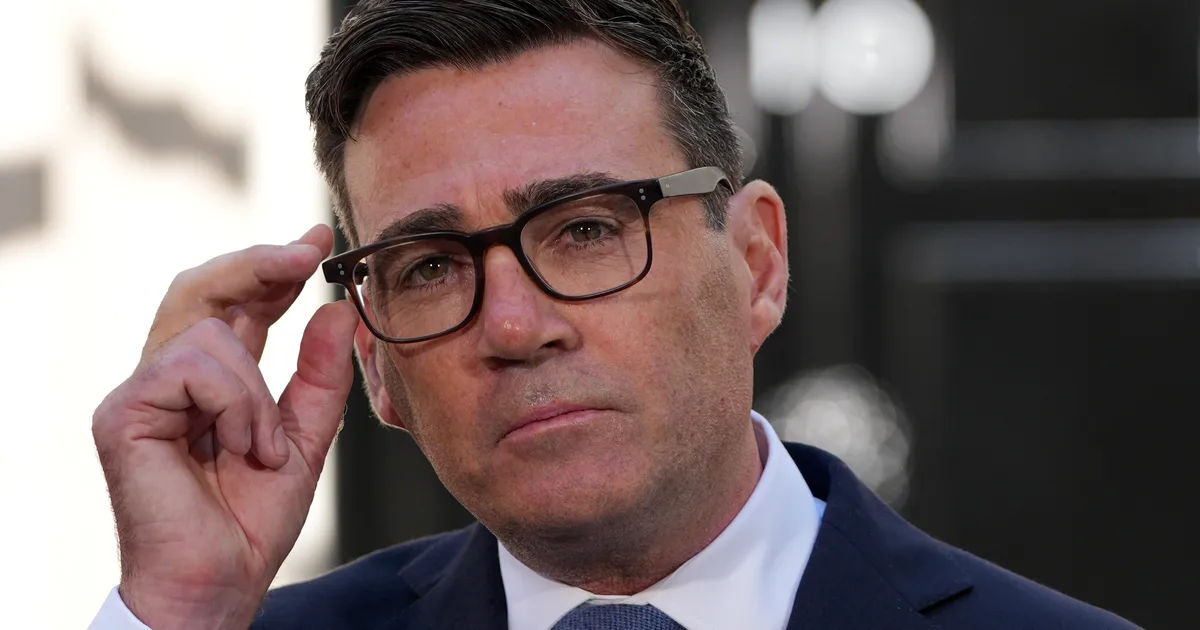
Andy Burnham was very clear when he became Labour leader last Friday.
“Factionalism has bedevilled us,” he said. “Today we moved beyond it.”
It was the correct diagnosis, and a noble ambition.
Keir Starmer’s government had undoubtedly been one of the most factional in living memory, with anyone not viewed as a loyalist banished to the backbenches.
The former PM’s supporters would argue that his ultra-strict approach was effective, rescuing Labour from the chaos left behind by Jeremy Corbyn and delivering a landslide election victory.
But it also bred intense resentment among Labour MPs, meaning that when Starmer’s back was up against the wall, he had few true allies he could rely on to support him.
So Burnham was right to call an end to the self-defeating schisms which have long been a part of Labour tradition.
However, when presented with the opportunity to put his fine words into action, the new prime minister flunked it.
Throughout Monday afternoon, those cabinet ministers seen as loyal to his predecessor were informed that their services were no longer required.
Chancellor Rachel Reeves – once integral to the entire Starmer project – was axed, although sources close to her insisted she was offered “a big job” as consolation and turned it down.
David Lammy, Starmer’s deputy, was also removed from cabinet, as were Darren Jones, Steve Reed, Peter Kyle, Nick Thomas-Symonds and Jenny Chapman.
In their place came key Burnham supporters like new foreign secretary Ed Miliband and Chancellor of the Duchy of Lancaster Louise Haigh, two MPs who did more than most to get Starmer out.
Of course, every new PM is entitled to fill their cabinet with as many allies as they wish.
But having made such a virtue of unity and harnessing all the talents of the Parliamentary Labour Party, the message from PM Burnham was clear: ending factionalism can wait until tomorrow.
Listen to Commons People, the podcast that makes politics easy. Every week, Kevin Schofield and Kate Nicholson unpack the week’s biggest stories to keep you informed. Join us for straightforward analysis of what’s going on at Westminster.
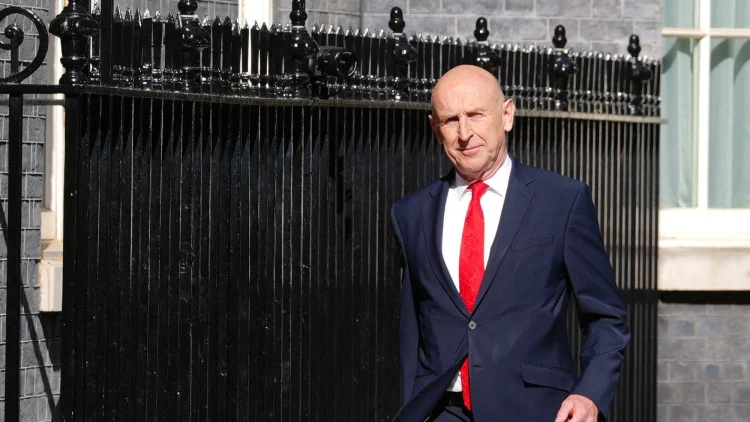
New Chancellor John Healey walks up Downing Street (Alamy)

1 min read
Andy Burnham has appointed John Healey as his Chancellor of the Exchequer.
Healey, who resigned as defence secretary in June over former prime minister Keir Starmer’s planned defence spending, was Burnham’s first Cabinet appointment on Monday.
The Yorkshire MP has said that Britain should increase its decrease spending to reach 3 per cent of GDP by 2030 in response to global threats, up from the current planned level of 2.7 per cent.
Healey replaces Rachel Reeves, who has left government along with other close Starmer allies to make way for the new administration.
Burnham officially became prime minister earlier today, succeeding Starmer.
The former Greater Manchester mayor is expected to give senior ministerial positions to Shabana Mahmood and Ed Miliband, as well as his allies Angela Rayner, Lou Haigh and Lucy Powell.
Burnham’s decision to put Healey in the Treasury came somewhat as a surprise, with Mahmood and Miliband seen as frontrunners for the job.
More follows…

John Healey has been appointed as the new chancellor of the exchequer.
Healey’s appointment came as Andy Burnham announced his cabinet hours after becoming prime minister on Monday afternoon.
Healey is the Labour MP for Rawmarsh and Conisbrough, having first been elected to parliament at the 1997 general election. In the 2024 general election, Healey won 16,612 votes, representing 49.0% of the vote. The Reform UK candidate, Adam Wood, received 9,704 votes (28.6%), while the Conservative candidate, Oliver Harvey, secured 4,496 votes (13.3%). Healey was duly elected with a majority of 6,908 votes.
Healey served as defence secretary from July 2024 to June 2026. He resigned in June 2026 over a dispute regarding military spending and the defence investment plan (DIP) specifically.

MDU warns Chancellor clinical negligence system ‘not fit for purpose’

Northern Ireland RE curriculum is ‘indoctrination’ – Supreme Court
In his resignation letter to Keir Starmer, then the prime minister, Healey said the proposed defence investment plan “falls well short of what is required for defence and the country at this dangerous time”.
Healey said Starmer had been “unable” and the Treasury “unwilling” to “commit the resources that the nation needs to defend the country at this time of rising threats”. Healey’s resignation came at a time of acute pressure for Starmer in the wake of the May 2026 local elections.
Prior to the 2024 general election, which saw Labour returned to power after 14 years in opposition, Healey served extensively in the shadow cabinet. He was shadow secretary of state for defence from April 2020 to May 2024, shadow secretary of state for housing from October 2016 to April 2020, shadow housing and planning minister from September 2015 to June 2016, shadow secretary of state for health from October 2010 to October 2011, and shadow housing minister from May to October 2010.
In June 2016, Healey was among those to resign from the shadow frontbench in protest at Jeremy Corbyn’s leadership and his approach to the referendum on Britain’s membership of the European Union (EU).
In his resignation letter, Healey criticised Corbyn’s “failure to recognise the turmoil” that had followed the referendum campaign.
He added: “Whilst we all have a responsibility to help maintain a unity of Labour purpose and provide a strong Labour voice at this time of unprecedented national uncertainty and lack of government leadership post-Brexit, you are clearly not prepared to accept the special responsibility you have in acting to meet these challenges.”
In a November 2020 interview with LabourList, shortly after becoming shadow defence secretary, Healey outlined his mission to “develop an authoritative Labour voice on defence again”. As shadow defence secretary, Healey was seen to be a crucial force in re-establishing the party’s credibility on national security. His overarching message was that Labour was an unconditionally patriotic party, dedicated to both a strong defence and the welfare of service personnel. In this capacity, he repeatedly stressed his and Labour’s support for Ukraine after Russia’s invasion in 2022.
In May 2015, Healey announced his intention to run for the Labour Party’s deputy leadership. At the time, Healey said he had not originally intended to stand but was “dismayed at how narrow and shallow the debate has been so far”.
In an article for the Guardian, Healey wrote: “I know I’m a late entrant when others have been up and running for some time. But the scale of the defeat, the complexity of the lessons and the huge task of holding things together while we rebuild requires a unifier – someone who can work across the political breadth of the party and with the unions.”
He added: “Our new leader must be able to give their total attention to establishing themselves and re-establishing Labour with the country.
“Labour’s internal affairs have to be left largely to others but their deputy must be much more than a party manager and motivator.”
Healey said Britain should be “leading as a force for good in the world within an outward-looking Europe, embracing our international obligations on both military and aid spending, as well as on climate change. Labour has more than a century’s proud history as an internationalist party.”
Healey announced his withdrawal from the race in June 2015, professedly “to make sure we get the range and number of candidates that party members deserve.” Before dropping out of the race, he had secured 20 nominations, including Sarah Champion, Clive Efford, Andy Slaughter, Clive Betts and Ruth Cadbury. He went on to support Angela Eagle’s candidacy.
In July 2013, Healey introduced the Letting Agents (Competition, Choice and Standards) Bill to parliament – an early attempt to regulate the private rented sector by proposing a mandatory national licensing scheme for all agents and, significantly, seeking to ban letting agent fees charged to tenants. The government later introduced a ban on most tenant fees in the Tenant Fees Act 2019.
Introducing the bill under the 10-minute rule procedure, Healey argued that a “silent crisis” was affecting the nine million people in “generation rent”, who had better consumer rights when “buying a fridge” than when renting a home.
He told the House: “The private rented market is now failing too many despairing tenants who feel let down by low standards and ripped off by high fees. This sector has been called the property market’s wild west.
“It is high time parliament brought the rule of law to bear on the cowboys, and my bill would do just that.”
The Surrogate Parents (Leave, Pay and Allowance Arrangements) Bill, introduced by Healey in April 2012, sought to modernise parental rights by giving parents of children born via a surrogate the same legal entitlement to paid leave from work as adoptive parents.
Healey was instrumental in the “Shout” (Social Housing Under Threat) campaign – a movement that formed after Healey wrote a 2013 Guardian blogpost warning that social housing would be lost unless people stood up to defend it. In the piece, Healey paraphrased Aneurin Bevan’s famous description of the NHS, saying that public housing will “last as long as there are folk left with the faith to fight for it”.
In a 2014 article, again for the Guardian, Healey wrote: “If anyone doubts the urgency of Shout’s cause, they need only read the latest Homes and Communities Agency prospectus.
“After coalition ministers cut grant funding for new social homes by more than 60% in 2010, their new prospectus starkly confirms the marginalisation of genuinely affordable housing: ‘social rent provision’, it says, ‘will only be supported in very limited circumstances’.
“The campaign is a challenge not just to the Conservatives but to all parties. Each has said they want to end the housing crisis but none so far have made a commitment to the measures needed to achieve this goal. That’s why the time has come to Shout about social housing.”
Under the last Labour government, Healey held several ministerial positions, including minister of state for housing and planning from June 2009 to May 2010, minister of state for local government from June 2007 to June 2009, financial secretary to the Treasury from May 2005 to June 2007, economic secretary to the Treasury from May 2002 to May 2005, and parliamentary under-secretary of state for adult skills from June 2001 to May 2002.
Healey was parliamentary private secretary (PPS) to the chancellor of the exchequer, Gordon Brown, from 1999 to 2001. A PPS acts as an unpaid parliamentary assistant, providing a link between the senior frontbencher and backbench MPs.
Healey was a member of the House of Commons public accounts committee from July 2005 to November 2007, and the education and employment committee from July 1997 to November 1999.
During his time as a backbencher, Healey campaigned for Suez veterans to be awarded the General Service Medal. In a March 2001 Westminster Hall debate, Healey stated: “This year is the 50th anniversary of the deployment of our troops in the Suez canal zone.
“I urge [the government] to make this year the one in which we allow the committee on the grant of honours, decorations and medals finally to give the case a full and fair hearing.”
In July 2001, Healey was among a group of “up and coming young” Labour MPs and ministers to call on the government to abandon its “control-freak” policy towards public services. A report, published in the Labour journal Renewal, argued that a “second-term [New Labour] government needs to control and measure less, but explain and inspire much more.” The MPs urged the government to be “more upfront” with its goals of social justice, calling for a commitment to “devolve ever more responsibility and power from central government” in order to thwart the “perils of centralisation”.
Healey delivered his maiden speech on 19 May 1997.
In it, he said: “I am proud to be part of a party committed to govern in the interests of the many, not the few. It is right that we reflect the concerns of middle England, but our greatest responsibility as a one-nation government is to close the widening gap between the haves and the have-nots.
“Our biggest challenge is to bring new opportunities to those who have been left out or overlooked.”
He added: “We must not take for granted those who have stayed loyal to Labour through the dark decades. They are looking to Labour for a fresh start. They are looking to us for a fair deal. My job is to help to make sure that a change in government brings change in the lives and prospects of people in Wentworth.”
Healey previously stood unsuccessfully as the Labour candidate for Ryedale in the 1992 general election, finishing third to Conservative incumbent John Greenway on 9,812 votes (13.8%).
John Healey: political views and notable votes
Leadership elections and loyalty
Healey was one of 82 Labour MPs who nominated Keir Starmer for the party’s leadership in early 2020. The election was triggered by the resignation of Jeremy Corbyn following the party’s defeat in the 2019 general election, which resulted in Labour’s fewest seats in the House of Commons since 1935.
Starmer’s 82 nominations were the highest of any candidate. The shadow Brexit secretary won a decisive victory in the first round with 56.2% of the vote, defeating Rebecca Long-Bailey and Lisa Nandy.
Healey nominated Yvette Cooper for the party’s leadership in June 2015. The election followed the resignation of Ed Miliband after the party’s defeat in the 2015 general election. It was the first contest held under the “one member, one vote” system, which replaced the previous electoral college.
Cooper, the shadow home secretary, secured 59 nominations from the Parliamentary Labour Party (PLP), comfortably exceeding the 35 required to reach the final ballot. She ultimately finished third in the contest with 17% of the vote.
In March 2016, Healey was labelled as “neutral but not hostile” by the Corbyn leadership in a leaked list which categorised Labour MPs by their perceived loyalty.
Healey was one of 162 Labour MPs who nominated Owen Smith for the party’s leadership in July 2016. The election was triggered by a challenge to Jeremy Corbyn following the EU referendum, which led to a wave of shadow cabinet resignations and a vote of no confidence supported by 172 MPs. Smith, the former shadow work and pensions secretary, was ultimately defeated by Corbyn, who won with an increased mandate of 61.8% of the vote.
Healey was one of 33 Labour MPs who nominated Ed Balls for the party’s leadership in May 2010. The election followed the resignation of Gordon Brown, who stepped down as prime minister and Labour leader after the 2010 general election.
Balls, the former children, schools and families secretary, was regarded as the ultimate “Brownite” candidate, having served as Brown’s chief economic adviser for a decade before entering parliament. He secured 33 nominations from the Parliamentary Labour Party, the minimum required to reach the final ballot. He ultimately finished third with 16% of the vote
Factional identity and party tradition
In 2017, Healey was listed among the supporters of the Tribune parliamentary group – a caucus generally described as representing the party’s “soft left”. The Tribune group was initially formed in 1964 to support the newspaper of the same name. It served as a prominent forum for those parliamentarians situated on the left of the Labour Party – but it split over Tony Benn’s campaign for the deputy leadership in 1981. Benn’s supporters founded the Campaign group – which evolved into the Socialist Campaign Group (SCG). Today, the Bennite SCG is strongly associated with the Labour left tradition. During the 1980s, the Tribune group emerged as a more natural home for those on Labour’s “soft left”. In 2017, the group was re-launched with a new mission statement calling for “opportunity and aspiration” to be placed at the heart of the party’s programme.
In a November 2016 article for LabourList, written shortly after Paul Nuttall became leader of the UK Independence Party (Ukip), Healey argued that Labour must urgently prove it could once again be the voice of “blue-collar Britain”.
He argued that the first step to rebuilding this trust was to unequivocally accept the result of the EU referendum and to develop a policy for managed migration.
He wrote: “Base one is accepting the EU referendum vote and fighting for the best deal for Britain based on that result, including managed migration. That alone won’t win back support among blue collar voters who have given up on Labour or who are leaning to UKIP – but without that we won’t even get a hearing.”
Brexit and Europe
Healey supported the Remain campaign in the 2016 Brexit referendum, and therefore disagreed with a majority of his constituents, 70.3% of whom voted to Leave.
In February 2017, Healey voted in favour of the European Union (Notification of Withdrawal) Bill. The legislation empowered the prime minister to notify the Council of the European Union of the UK’s intention to withdraw, formally triggering the process set out in Article 50 of the Treaty on European Union. MPs supported the bill by 498 votes to 114 at second reading.
Social values and conscience issues
Healey voted in favour of the Terminally Ill Adults (End of Life) Bill, better known as the assisted dying bill, at both second reading (November 2024) and third reading (June 2025).
Healey voted in favour of a backbench amendment to the Crime and Policing Bill that sought to decriminalise abortion in England and Wales in June 2025. The amendment, which was passed by a majority of 242 votes, removed women from the threat of prosecution for ending a pregnancy at any stage. As an issue of conscience, MPs were allowed to vote according to their personal beliefs.
In February 2013, Healey voted in favour of the Marriage (Same Sex Couples) Bill at its second reading. The landmark piece of legislation, which received its second reading by 400 votes to 175, legalised marriage for same-sex couples in England and Wales.
Foreign policy and security
Healey voted in favour of a government motion calling for the renewal of the Trident nuclear deterrent system in July 2016. The motion, which was passed by 472 votes to 117, committed the UK to constructing a new fleet of submarines to carry the nation’s nuclear weapons. Labour was split over the issue with 140 of its 230 MPs going against leader Jeremy Corbyn and backing the motion.
Healey voted against a government motion to extend UK airstrikes against Isis from Iraq into Syria in December 2015. The motion, which was passed by 397 votes to 223 after a ten-hour debate in the House of Commons, authorised the RAF to conduct strikes against Isis targets in Syria.
In October 2014, Healey voted in favour of recognising Palestine as a state. The motion, passed by 274 votes to 12, called on the government to “recognise the state of Palestine alongside the state of Israel as a contribution to securing a negotiated two-state solution”.
Healey voted against the government’s motion on the principle of military intervention in Syria in August 2013. The government motion was defeated by 285 votes to 272, a move which effectively ruled out UK participation in any US-led military strikes.
In March 2003, Healey voted in favour of the government motion authorising military action against Iraq. The vote, one of the most contentious in recent parliamentary history, gave the prime minister, Tony Blair, the authority to join the US-led invasion.
In a March 2024 Guardian interview, Healey was reluctant to describe the Iraq War as a mistake. “I can’t say that, you know, the decision that was taken at the time, that I was part of, wasn’t sound at the time”, he said.
He added: “I mean, having made that decision [military intervention], we didn’t have the fully fledged, beyond the military, sort of plan for the future. We didn’t follow through with the diplomatic, economic redevelopment regeneration and long-term security for Iraq or that wider region, which was required.
“And, you know, some of the consequences of instabilities now do have roots in that period.”
He said that the decision to go to war “wasn’t sound at the time”, arguing that the lesson was that military intervention could not be successful outcome without sufficient diplomatic, economic and security planning.
John Healey: background and career before politics
Born on 13 February 1960 in Wakefield, West Yorkshire, Healey studied at Lady Lumley’s School, Pickering, and the independent St Peter’s School, York. He studied social and political science at Christ’s College, Cambridge, graduating in 1982.
Healey worked briefly as a journalist as editor of The House.
He then worked for several national charities as a disability rights campaigner from 1984. He was head of communications for the Manufacturing, Science and Finance (MSF) trade union (1992-1994) and campaigns director for the Trades Union Congress (TUC) from 1994 until his election in 1997. He was also a tutor at the Open University Business School.
John Healey: personal life and trivia
Healey married Jackie Bate in 1993. They have one son.
Healey once kept a hard hat in his office – a souvenir from his visits to construction sites during his time as housing minister under Gordon Brown.
Japan stocks higher at close of trade; Nikkei 225 up 3.29%

Coinbase's Jesse Pollak Hands Base App to Cobie, Says Social Bet Was 'Definitively Wrong'

Politics Home Article | Securing the Legacy of Britain’s Nuclear Pioneers


-
 NewsBeat5 days ago
London Mayor Sadiq Khan handed a peerage by Keir Starmer alongside 15 other Labour figures… just days before the PM leaves No10
-

 Fashion4 days ago
Weekend Open Thread – Corporette.com
-

 Politics3 days ago
The House | The City of London can help the new chancellor deliver growth in every postcode
-

 Politics6 days ago
Young campaigners urge incoming PM to act on outdoor junk food ads
-

 Crypto World5 days ago
CFTC blocks Kalshi from unwinding Michigan trades after court order
-
 Crypto World4 days ago
Two July Windows Left: The CLARITY Act’s Senate Fight and What Failure Means
-

 Crypto World3 days ago
Ripple Payments Joins MiCA With 14 Firms, Does It Mean Anything For XRP?
-

 Business5 days ago
Nvidia Stock Slips After Big Tuesday Rally as Huang Confirms Vera Rubin Chip Is Now in Production Today
-

 Politics2 days ago
Democrats look to World Cup watch parties to register thousands of voters
-
 Entertainment6 days ago
Disney’s Most Ambitious Failed Star Wars Attraction Is Coming to SDCC
-

 Crypto World3 days ago
Ripple wins EU-wide access as ESMA adds it to MiCA register
-

 Crypto World4 days ago
Injective Submits SEC Transfer-Agent Registration to Onchain Ownership Records
-

 Business5 days ago
Palantir Shares Rise After Expanded Nvidia Partnership and Fresh Analyst Upgrades Ahead of Earnings Day
-

 Tech6 hours ago
Sail Virtually Aboard The “Itanic” With IA-64 Emulator
-
 Tech4 hours ago
Turtle Beach Command Series KB7 review: a nifty screen-equipped gaming keyboard
-

 News Videos6 days ago
XRP BOMBSHELL… XRP OMBOARDED FOR TRANSACTIONS!!!
-

 Tech6 days ago
Dark Secrets Emerge When Jailbreaking LLMs
-

 NewsBeat4 days ago
Registration is now open for March for Men with Kev 2026
-

 NewsBeat20 hours ago
Unregistered fitter used Gas Safe logo on business flyers
-
 Sports5 days ago
New Cornerback Enters Vikings Trade Rumor Mill
You must be logged in to post a comment Login