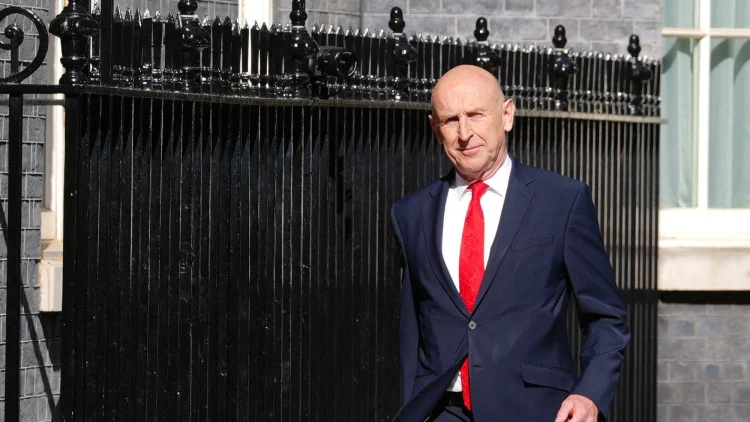
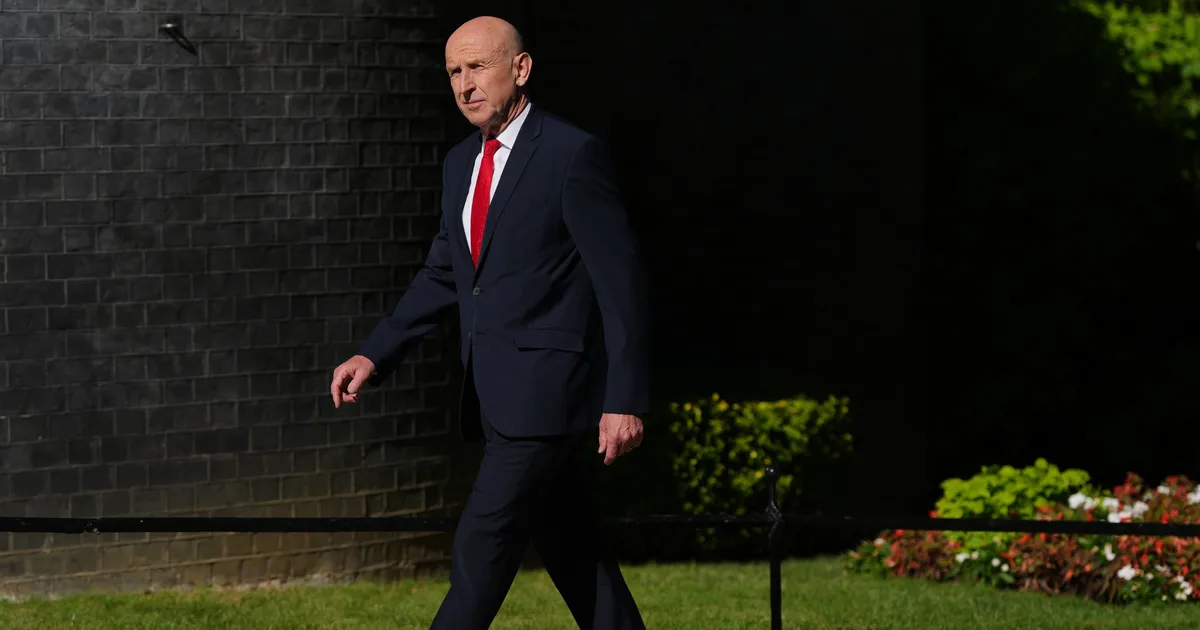
John Healey has been appointed as the new chancellor of the exchequer.
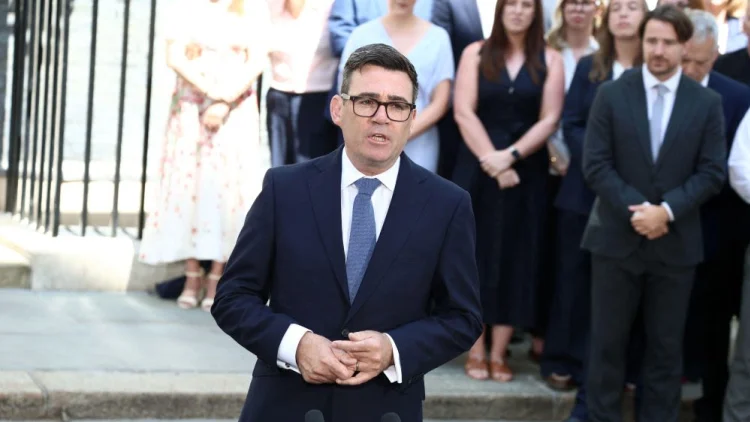
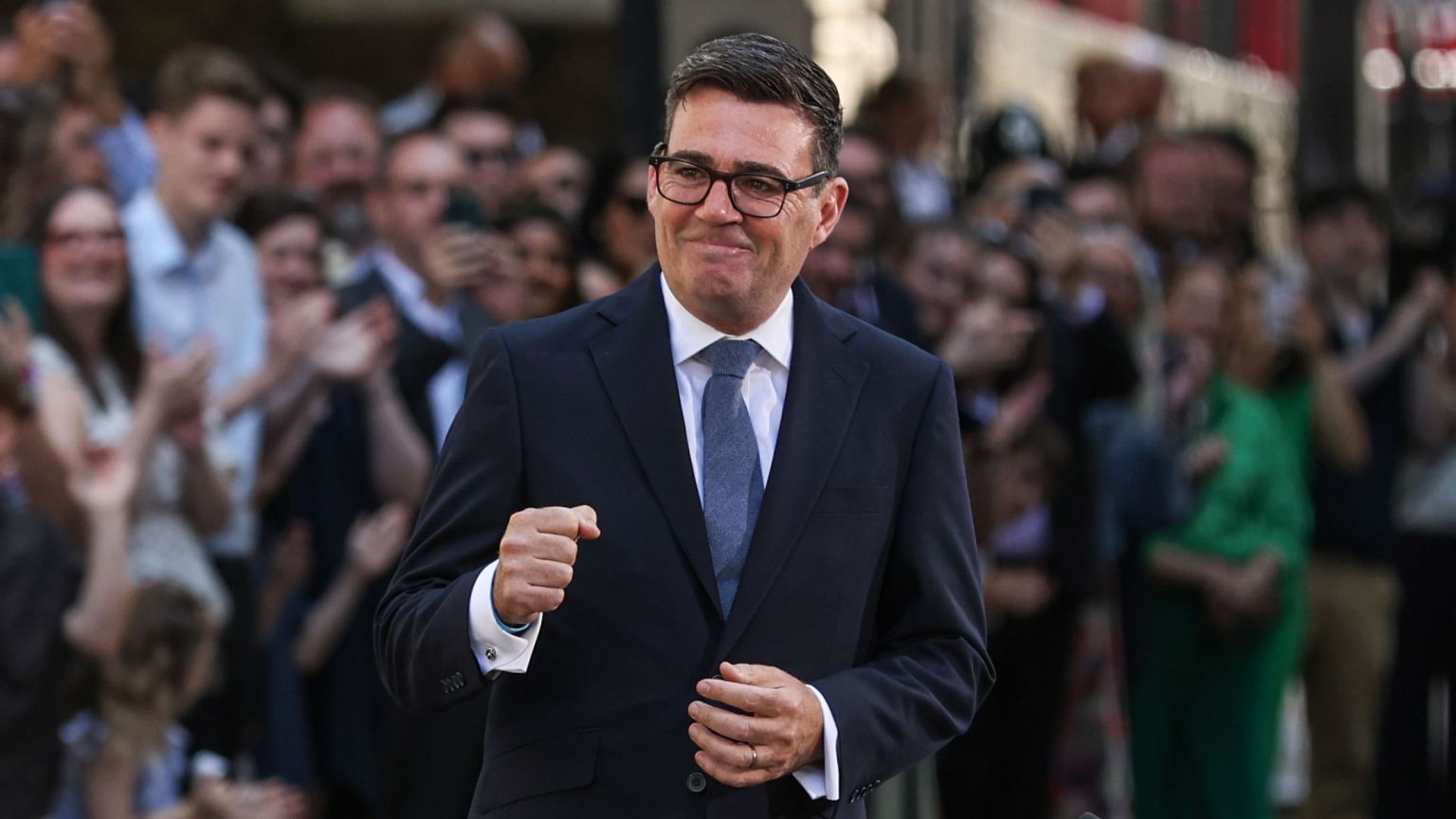
Healey’s appointment came as Andy Burnham announced his cabinet hours after becoming prime minister on Monday afternoon.
Healey is the Labour MP for Rawmarsh and Conisbrough, having first been elected to parliament at the 1997 general election. In the 2024 general election, Healey won 16,612 votes, representing 49.0% of the vote. The Reform UK candidate, Adam Wood, received 9,704 votes (28.6%), while the Conservative candidate, Oliver Harvey, secured 4,496 votes (13.3%). Healey was duly elected with a majority of 6,908 votes.
Healey served as defence secretary from July 2024 to June 2026. He resigned in June 2026 over a dispute regarding military spending and the defence investment plan (DIP) specifically.
In his resignation letter to Keir Starmer, then the prime minister, Healey said the proposed defence investment plan “falls well short of what is required for defence and the country at this dangerous time”.
Healey said Starmer had been “unable” and the Treasury “unwilling” to “commit the resources that the nation needs to defend the country at this time of rising threats”. Healey’s resignation came at a time of acute pressure for Starmer in the wake of the May 2026 local elections.
Prior to the 2024 general election, which saw Labour returned to power after 14 years in opposition, Healey served extensively in the shadow cabinet. He was shadow secretary of state for defence from April 2020 to May 2024, shadow secretary of state for housing from October 2016 to April 2020, shadow housing and planning minister from September 2015 to June 2016, shadow secretary of state for health from October 2010 to October 2011, and shadow housing minister from May to October 2010.
In June 2016, Healey was among those to resign from the shadow frontbench in protest at Jeremy Corbyn’s leadership and his approach to the referendum on Britain’s membership of the European Union (EU).
In his resignation letter, Healey criticised Corbyn’s “failure to recognise the turmoil” that had followed the referendum campaign.
He added: “Whilst we all have a responsibility to help maintain a unity of Labour purpose and provide a strong Labour voice at this time of unprecedented national uncertainty and lack of government leadership post-Brexit, you are clearly not prepared to accept the special responsibility you have in acting to meet these challenges.”
In a November 2020 interview with LabourList, shortly after becoming shadow defence secretary, Healey outlined his mission to “develop an authoritative Labour voice on defence again”. As shadow defence secretary, Healey was seen to be a crucial force in re-establishing the party’s credibility on national security. His overarching message was that Labour was an unconditionally patriotic party, dedicated to both a strong defence and the welfare of service personnel. In this capacity, he repeatedly stressed his and Labour’s support for Ukraine after Russia’s invasion in 2022.
In May 2015, Healey announced his intention to run for the Labour Party’s deputy leadership. At the time, Healey said he had not originally intended to stand but was “dismayed at how narrow and shallow the debate has been so far”.
In an article for the Guardian, Healey wrote: “I know I’m a late entrant when others have been up and running for some time. But the scale of the defeat, the complexity of the lessons and the huge task of holding things together while we rebuild requires a unifier – someone who can work across the political breadth of the party and with the unions.”
He added: “Our new leader must be able to give their total attention to establishing themselves and re-establishing Labour with the country.
“Labour’s internal affairs have to be left largely to others but their deputy must be much more than a party manager and motivator.”
Healey said Britain should be “leading as a force for good in the world within an outward-looking Europe, embracing our international obligations on both military and aid spending, as well as on climate change. Labour has more than a century’s proud history as an internationalist party.”
Healey announced his withdrawal from the race in June 2015, professedly “to make sure we get the range and number of candidates that party members deserve.” Before dropping out of the race, he had secured 20 nominations, including Sarah Champion, Clive Efford, Andy Slaughter, Clive Betts and Ruth Cadbury. He went on to support Angela Eagle’s candidacy.
In July 2013, Healey introduced the Letting Agents (Competition, Choice and Standards) Bill to parliament – an early attempt to regulate the private rented sector by proposing a mandatory national licensing scheme for all agents and, significantly, seeking to ban letting agent fees charged to tenants. The government later introduced a ban on most tenant fees in the Tenant Fees Act 2019.
Introducing the bill under the 10-minute rule procedure, Healey argued that a “silent crisis” was affecting the nine million people in “generation rent”, who had better consumer rights when “buying a fridge” than when renting a home.
He told the House: “The private rented market is now failing too many despairing tenants who feel let down by low standards and ripped off by high fees. This sector has been called the property market’s wild west.
“It is high time parliament brought the rule of law to bear on the cowboys, and my bill would do just that.”
The Surrogate Parents (Leave, Pay and Allowance Arrangements) Bill, introduced by Healey in April 2012, sought to modernise parental rights by giving parents of children born via a surrogate the same legal entitlement to paid leave from work as adoptive parents.
Healey was instrumental in the “Shout” (Social Housing Under Threat) campaign – a movement that formed after Healey wrote a 2013 Guardian blogpost warning that social housing would be lost unless people stood up to defend it. In the piece, Healey paraphrased Aneurin Bevan’s famous description of the NHS, saying that public housing will “last as long as there are folk left with the faith to fight for it”.
In a 2014 article, again for the Guardian, Healey wrote: “If anyone doubts the urgency of Shout’s cause, they need only read the latest Homes and Communities Agency prospectus.
“After coalition ministers cut grant funding for new social homes by more than 60% in 2010, their new prospectus starkly confirms the marginalisation of genuinely affordable housing: ‘social rent provision’, it says, ‘will only be supported in very limited circumstances’.
“The campaign is a challenge not just to the Conservatives but to all parties. Each has said they want to end the housing crisis but none so far have made a commitment to the measures needed to achieve this goal. That’s why the time has come to Shout about social housing.”
Under the last Labour government, Healey held several ministerial positions, including minister of state for housing and planning from June 2009 to May 2010, minister of state for local government from June 2007 to June 2009, financial secretary to the Treasury from May 2005 to June 2007, economic secretary to the Treasury from May 2002 to May 2005, and parliamentary under-secretary of state for adult skills from June 2001 to May 2002.
Healey was parliamentary private secretary (PPS) to the chancellor of the exchequer, Gordon Brown, from 1999 to 2001. A PPS acts as an unpaid parliamentary assistant, providing a link between the senior frontbencher and backbench MPs.
Healey was a member of the House of Commons public accounts committee from July 2005 to November 2007, and the education and employment committee from July 1997 to November 1999.
During his time as a backbencher, Healey campaigned for Suez veterans to be awarded the General Service Medal. In a March 2001 Westminster Hall debate, Healey stated: “This year is the 50th anniversary of the deployment of our troops in the Suez canal zone.
“I urge [the government] to make this year the one in which we allow the committee on the grant of honours, decorations and medals finally to give the case a full and fair hearing.”
In July 2001, Healey was among a group of “up and coming young” Labour MPs and ministers to call on the government to abandon its “control-freak” policy towards public services. A report, published in the Labour journal Renewal, argued that a “second-term [New Labour] government needs to control and measure less, but explain and inspire much more.” The MPs urged the government to be “more upfront” with its goals of social justice, calling for a commitment to “devolve ever more responsibility and power from central government” in order to thwart the “perils of centralisation”.
Healey delivered his maiden speech on 19 May 1997.
In it, he said: “I am proud to be part of a party committed to govern in the interests of the many, not the few. It is right that we reflect the concerns of middle England, but our greatest responsibility as a one-nation government is to close the widening gap between the haves and the have-nots.
“Our biggest challenge is to bring new opportunities to those who have been left out or overlooked.”
He added: “We must not take for granted those who have stayed loyal to Labour through the dark decades. They are looking to Labour for a fresh start. They are looking to us for a fair deal. My job is to help to make sure that a change in government brings change in the lives and prospects of people in Wentworth.”
Healey previously stood unsuccessfully as the Labour candidate for Ryedale in the 1992 general election, finishing third to Conservative incumbent John Greenway on 9,812 votes (13.8%).
John Healey: political views and notable votes
Leadership elections and loyalty
Healey was one of 82 Labour MPs who nominated Keir Starmer for the party’s leadership in early 2020. The election was triggered by the resignation of Jeremy Corbyn following the party’s defeat in the 2019 general election, which resulted in Labour’s fewest seats in the House of Commons since 1935.
Starmer’s 82 nominations were the highest of any candidate. The shadow Brexit secretary won a decisive victory in the first round with 56.2% of the vote, defeating Rebecca Long-Bailey and Lisa Nandy.
Healey nominated Yvette Cooper for the party’s leadership in June 2015. The election followed the resignation of Ed Miliband after the party’s defeat in the 2015 general election. It was the first contest held under the “one member, one vote” system, which replaced the previous electoral college.
Cooper, the shadow home secretary, secured 59 nominations from the Parliamentary Labour Party (PLP), comfortably exceeding the 35 required to reach the final ballot. She ultimately finished third in the contest with 17% of the vote.
In March 2016, Healey was labelled as “neutral but not hostile” by the Corbyn leadership in a leaked list which categorised Labour MPs by their perceived loyalty.
Healey was one of 162 Labour MPs who nominated Owen Smith for the party’s leadership in July 2016. The election was triggered by a challenge to Jeremy Corbyn following the EU referendum, which led to a wave of shadow cabinet resignations and a vote of no confidence supported by 172 MPs. Smith, the former shadow work and pensions secretary, was ultimately defeated by Corbyn, who won with an increased mandate of 61.8% of the vote.
Healey was one of 33 Labour MPs who nominated Ed Balls for the party’s leadership in May 2010. The election followed the resignation of Gordon Brown, who stepped down as prime minister and Labour leader after the 2010 general election.
Balls, the former children, schools and families secretary, was regarded as the ultimate “Brownite” candidate, having served as Brown’s chief economic adviser for a decade before entering parliament. He secured 33 nominations from the Parliamentary Labour Party, the minimum required to reach the final ballot. He ultimately finished third with 16% of the vote
Factional identity and party tradition
In 2017, Healey was listed among the supporters of the Tribune parliamentary group – a caucus generally described as representing the party’s “soft left”. The Tribune group was initially formed in 1964 to support the newspaper of the same name. It served as a prominent forum for those parliamentarians situated on the left of the Labour Party – but it split over Tony Benn’s campaign for the deputy leadership in 1981. Benn’s supporters founded the Campaign group – which evolved into the Socialist Campaign Group (SCG). Today, the Bennite SCG is strongly associated with the Labour left tradition. During the 1980s, the Tribune group emerged as a more natural home for those on Labour’s “soft left”. In 2017, the group was re-launched with a new mission statement calling for “opportunity and aspiration” to be placed at the heart of the party’s programme.
In a November 2016 article for LabourList, written shortly after Paul Nuttall became leader of the UK Independence Party (Ukip), Healey argued that Labour must urgently prove it could once again be the voice of “blue-collar Britain”.
He argued that the first step to rebuilding this trust was to unequivocally accept the result of the EU referendum and to develop a policy for managed migration.
He wrote: “Base one is accepting the EU referendum vote and fighting for the best deal for Britain based on that result, including managed migration. That alone won’t win back support among blue collar voters who have given up on Labour or who are leaning to UKIP – but without that we won’t even get a hearing.”
Brexit and Europe
Healey supported the Remain campaign in the 2016 Brexit referendum, and therefore disagreed with a majority of his constituents, 70.3% of whom voted to Leave.
In February 2017, Healey voted in favour of the European Union (Notification of Withdrawal) Bill. The legislation empowered the prime minister to notify the Council of the European Union of the UK’s intention to withdraw, formally triggering the process set out in Article 50 of the Treaty on European Union. MPs supported the bill by 498 votes to 114 at second reading.
Social values and conscience issues
Healey voted in favour of the Terminally Ill Adults (End of Life) Bill, better known as the assisted dying bill, at both second reading (November 2024) and third reading (June 2025).
Healey voted in favour of a backbench amendment to the Crime and Policing Bill that sought to decriminalise abortion in England and Wales in June 2025. The amendment, which was passed by a majority of 242 votes, removed women from the threat of prosecution for ending a pregnancy at any stage. As an issue of conscience, MPs were allowed to vote according to their personal beliefs.
In February 2013, Healey voted in favour of the Marriage (Same Sex Couples) Bill at its second reading. The landmark piece of legislation, which received its second reading by 400 votes to 175, legalised marriage for same-sex couples in England and Wales.
Foreign policy and security
Healey voted in favour of a government motion calling for the renewal of the Trident nuclear deterrent system in July 2016. The motion, which was passed by 472 votes to 117, committed the UK to constructing a new fleet of submarines to carry the nation’s nuclear weapons. Labour was split over the issue with 140 of its 230 MPs going against leader Jeremy Corbyn and backing the motion.
Healey voted against a government motion to extend UK airstrikes against Isis from Iraq into Syria in December 2015. The motion, which was passed by 397 votes to 223 after a ten-hour debate in the House of Commons, authorised the RAF to conduct strikes against Isis targets in Syria.
In October 2014, Healey voted in favour of recognising Palestine as a state. The motion, passed by 274 votes to 12, called on the government to “recognise the state of Palestine alongside the state of Israel as a contribution to securing a negotiated two-state solution”.
Healey voted against the government’s motion on the principle of military intervention in Syria in August 2013. The government motion was defeated by 285 votes to 272, a move which effectively ruled out UK participation in any US-led military strikes.
In March 2003, Healey voted in favour of the government motion authorising military action against Iraq. The vote, one of the most contentious in recent parliamentary history, gave the prime minister, Tony Blair, the authority to join the US-led invasion.
In a March 2024 Guardian interview, Healey was reluctant to describe the Iraq War as a mistake. “I can’t say that, you know, the decision that was taken at the time, that I was part of, wasn’t sound at the time”, he said.
He added: “I mean, having made that decision [military intervention], we didn’t have the fully fledged, beyond the military, sort of plan for the future. We didn’t follow through with the diplomatic, economic redevelopment regeneration and long-term security for Iraq or that wider region, which was required.
“And, you know, some of the consequences of instabilities now do have roots in that period.”
He said that the decision to go to war “wasn’t sound at the time”, arguing that the lesson was that military intervention could not be successful outcome without sufficient diplomatic, economic and security planning.
John Healey: background and career before politics
Born on 13 February 1960 in Wakefield, West Yorkshire, Healey studied at Lady Lumley’s School, Pickering, and the independent St Peter’s School, York. He studied social and political science at Christ’s College, Cambridge, graduating in 1982.
Healey worked briefly as a journalist as editor of The House.
He then worked for several national charities as a disability rights campaigner from 1984. He was head of communications for the Manufacturing, Science and Finance (MSF) trade union (1992-1994) and campaigns director for the Trades Union Congress (TUC) from 1994 until his election in 1997. He was also a tutor at the Open University Business School.
John Healey: personal life and trivia
Healey married Jackie Bate in 1993. They have one son.
Healey once kept a hard hat in his office – a souvenir from his visits to construction sites during his time as housing minister under Gordon Brown.






















































You must be logged in to post a comment Login