

Business
IREN Stock Jumps 17% After Company Raises Its AI Cloud Revenue Target to Above $4 Billion for 2026


Shares of IREN Limited surged 17.02%, or $5.72, to $39.34 Monday morning, as the Australian AI cloud infrastructure company raised its year-end revenue target following a wave of new multiyear customer contracts, snapping a weeks-long losing streak for the volatile stock.
IREN, formerly known as Iris Energy and in the midst of transitioning from a Bitcoin mining company into a vertically integrated AI cloud infrastructure provider, said it now expects more than $4 billion in annualized run-rate revenue by the end of the year, up from its previous target of $3.7 billion. The company attributed the upward revision to new customer contracts secured with leading AI developers.
New contracts drive the upgraded outlook
According to reporting from Benzinga, the higher revenue target follows approximately $2.8 billion in new multiyear customer contracts, adding to what the company describes as a growing pipeline of demand that continues to exceed IREN’s currently available and planned data center capacity. IREN said it remains actively engaged across its 2026 and 2027 expansion pipeline as it works to scale infrastructure to meet that demand.
Notably, the newly announced contracts include customer prepayments covering roughly 45% of the associated GPU capital costs, a structure that helps reduce IREN’s near-term funding requirements as it continues building out its infrastructure footprint. The contracts carry a weighted average term of approximately four years, reflecting sustained long-term demand from both hyperscale cloud providers and enterprise customers seeking dedicated AI computing capacity.
A volatile stretch for the stock
Monday’s rally arrives after a particularly difficult period for IREN shares, which had finished lower in 19 of the previous 22 trading sessions amid a broader rotation out of AI infrastructure and so-called “neocloud” stocks. The shares had fallen roughly 17% just last week alone, part of a steeper decline that saw the stock drop more than 40% over the trailing month and nearly 19% over the trailing week, even as the stock remained up substantially, by as much as 147.89%, over the trailing 12 months.
Heading into Monday’s session, IREN’s 14-day Relative Strength Index had fallen deep into oversold territory at a reading of 30, according to Schaeffer’s Investment Research, a technical signal that some traders interpreted as suggesting the stock was due for a rebound, potentially amplified by a short squeeze among traders who had bet against the shares during the recent decline. Monday’s rally brought the stock’s year-to-date performance back to roughly breakeven, following a run earlier this year that had briefly pushed shares toward $70 before a sharp subsequent reversal.
A broader transformation into AI infrastructure
IREN’s strategic pivot from Bitcoin mining toward AI cloud services has been central to the stock’s dramatic swings throughout 2026. The company’s AI Cloud Services revenue grew 94.2% quarter-over-quarter during its fiscal third quarter, even as the company has deliberately wound down portions of its legacy Bitcoin mining operations to focus more heavily on AI infrastructure.
That transformation has been underpinned by several major partnerships and acquisitions. IREN has secured a $9.7 billion contract with Microsoft and a $3.4 billion, five-year contract with Nvidia covering deployment of Blackwell-generation GPUs through IREN’s AI Cloud platform. As part of that broader partnership, Nvidia also holds the right to purchase up to 30 million IREN shares at $70 per share. The company additionally closed its acquisition of Spain-based Nostrum Group, adding approximately 490 megawatts of secured grid power capacity along with a development pipeline and a data center team of more than 50 employees to IREN’s overall platform.
IREN has also continued to strengthen its leadership team amid the expansion, recently appointing Eric Hammersley as chief information security officer and elevating its chief capital officer to also assume the role of chief financial officer, expanding oversight of the company’s financial operations, reporting and strategic planning as it scales its infrastructure buildout.
Wall Street remains broadly bullish despite the volatility
Despite the stock’s sharp swings, several Wall Street analysts have maintained bullish outlooks on IREN. Jefferies initiated coverage of the stock with a Buy rating and a price target of $79, citing the company’s substantial powered land bank and vertically integrated GPU cloud strategy as key structural advantages within the broader AI infrastructure market. Macquarie has maintained an Outperform rating with a $90 price target, while Freedom Broker recently upgraded the stock to Buy with a $58 target. The average analyst price target across covering firms currently stands at approximately $79.11, implying substantial potential upside from Monday’s trading levels even after the day’s sharp gains.
As of June 30, IREN reported approximately $7.6 billion in cash and cash equivalents on its balance sheet, providing the company with meaningful financial flexibility as it continues funding its capital-intensive AI infrastructure expansion.
With IREN’s next scheduled financial update expected around August 27, investors are likely to continue closely monitoring the company’s progress toward its newly raised $4 billion annualized run-rate revenue target, along with further updates on its expanding data center capacity and additional customer contract announcements. Given the stock’s history of sharp swings tied to sentiment around the broader AI infrastructure trade, IREN shares are likely to remain a closely watched, high-volatility name within the sector heading into the second half of 2026.


Jamie Dimon has handed Andy Burnham’s day-old government both a vote of confidence and a warning shot. The JP Morgan chief executive says he wants London to remain the US bank’s home “for a long period of time”, but whether Britain stays attractive as a place to do business rests on the new prime minister and his chancellor reviving growth.
“The new chancellor [is] going to need good policies that actually cause growth. So I’m praying that they get policy right [as] government after government get it wrong,” Dimon, who has run the bank since 2006, said in an interview with The Master Investor Podcast with Wilfred Frost, released on Tuesday.
For the owners of Britain’s small and medium-sized firms, that is the question of the moment put with unusual bluntness. When the boss of America’s largest bank says he is reduced to prayer, smaller businesses waiting on the same policy decisions might be forgiven a similar approach.
Burnham formally succeeded Sir Keir Starmer on Monday, promising a “new political and economic model” for Britain and arguing that MPs had fallen short for decades in creating the conditions for lasting and more equal growth. He enters Downing Street with eight in ten SME owners already braced for impact, so Dimon’s cautious optimism will be read closely on both sides of that divide.
The man charged with answering Dimon’s prayer is John Healey, the surprise pick for No 11 after early favourites Ed Miliband and Shabana Mahmood lost out. Burnham has also promised to set out measures to ease the cost of living as soon as Tuesday, and has hinted at lifting the earnings threshold at which workers first pay income tax, frozen at £12,570 since 2021.
The arithmetic is unforgiving. Burnham has repeatedly committed to the existing fiscal rules, funding day-to-day spending from tax revenues within three years, but economists warn the war in the Middle East may have whittled his fiscal headroom from £23.7 billion to just £10 billion. Every giveaway must be paid for, and the City knows where chancellors tend to look.
Which is why Dimon reserved his sharpest words for the bank levy, the balance sheet tax introduced in the wake of the global financial crisis. “I have always thought it was wrong,” he said. “JP Morgan did not damage the UK … we’re a great citizen there. We hire people there. We want to be bigger there. We train people there. We hire veterans there.”
“It’s still there 17 years later. Is that fair to a shareholder? I mean, it may sound great, ‘tax the banks’, but it’s $5 billion that my shareholders paid on that extra tax. And I just think things like that have adverse consequences.”
Asked whether an increase in the levy would sink the bank’s planned £3 billion UK headquarters, having already threatened to reconsider the Canary Wharf project if Britain turned hostile to banks, Dimon was more measured: “I don’t know what I’d do. I wouldn’t make a binary decision like that.”
That matters well beyond the Square Mile. A £3 billion construction project feeds contractors, fit-out firms, caterers and suppliers across the SME economy, and the tax treatment of Britain’s biggest inward investors sets the tone for everyone weighing whether to commit capital here.
There was warmth, too, for the departed. Rachel Reeves, sacked by Burnham this week after two years at the Treasury, “did a great job”, Dimon said. Investors credited her fiscal prudence with keeping a lid on government borrowing costs.
Her successor inherits the goodwill, the £10 billion of headroom, and one of Wall Street’s most powerful men praying he does not waste either.

Amy Ingham
Amy Ingham is a reporter at Business Matters, covering UK business news with a focus on breaking news, business policy, late payments and insolvency. She joined the magazine in 2026 after completing the NCTJ Diploma in Journalism at Harlow College’s journalism school. Her recent reporting includes British Steel’s nationalisation and its impact on SME suppliers, the decline in late payments by large firms, and Insolvency Service director disqualifications. Reach her at aingham@cbmeg.co.uk.
Business
(VIDEO) Lamine Yamal Steals the Show as Nearly Two Million Fans Celebrate Spains World Cup Win in Madrid

MADRID — Lamine Yamal took center stage as nearly two million supporters flooded the streets of Madrid on Monday to celebrate Spain’s World Cup title, with the teenage star grabbing a microphone to sing Bad Bunny songs and carrying the trophy through the Spanish capital during an open-top bus parade that stretched from Moncloa Palace to Cibeles Square.
Less than 24 hours after Spain’s 1-0 extra-time victory over Argentina in New Jersey, the country’s champions returned home to scenes organizers described as unforgettable. An estimated 1.8 to 2 million supporters lined Madrid’s historic avenues, transforming the capital into a sea of red and yellow as the squad made its way through the city on the same route once traveled after Spain’s first World Cup title in 2010.
A royal welcome before the party began
The day’s celebrations opened with a formal reception at Zarzuela Palace, where King Felipe VI and the royal family congratulated the players before the squad met separately with Prime Minister Pedro Sanchez. Players later swapped their formal attire for commemorative “We Are Champions” shirts as they boarded the open-top bus for the parade through the city.
Spain coach Luis de la Fuente reflected on the emotional weight of the day before the parade got underway. “It’s been an emotional and proud experience to represent a wonderful country with such passionate and devoted fans,” de la Fuente said. “We are filled with joy.”
Yamal at the center of the celebration
Yamal was among the most visibly celebrated figures throughout the day, proudly carrying the World Cup trophy as thousands of fans chanted his name along the parade route. The 19-year-old Barcelona forward was regularly seen dancing alongside Athletic Club winger Nico Williams throughout the procession, and later took the microphone to sing along to Bad Bunny tracks as the bus wound through central Madrid.
Fellow Spain players embraced the festive atmosphere throughout the parade, with forward Borja Iglesias stepping into an impromptu DJ role while teammates danced atop the bus and interacted with fans lining the streets below. Several players draped themselves in Spanish flags as the celebration continued.
A pointed moment amid the celebration
Not all of Monday’s moments were purely celebratory. While riding the open-top bus, Yamal and teammate Fabian Ruiz were seen laughing and pointing at a sign held up by fans that mockingly referred to a post-match altercation between Argentina’s Leandro Paredes and Spain’s Gavi as the “event of the year,” a nod to the tension that had colored the final’s closing moments in New Jersey.
A fashion statement from the match-winner
Match-winner Ferran Torres, whose extra-time goal secured the title, provided one of the day’s most talked-about moments with his choice of headwear, wearing a red cap emblazoned with the phrase “Make Spain Great Again,” a cheeky reference to President Donald Trump, who had presented the players with their medals just 24 hours earlier at the tournament’s trophy ceremony.
Speaking to reporters after returning from New York, Torres reflected on the significance of seeing young fans celebrate the victory, attributing the team’s success to sustained hard work throughout the tournament.
A hero’s welcome for the captain
Spain captain and Golden Ball winner Rodri received one of the loudest ovations of the night when the squad arrived at Cibeles Square for the final ceremony. Rodri, who recovered from a serious knee injury suffered in 2024 before returning to lift both the World Cup trophy and the tournament’s top individual honor two years later, led the crowd in chants for teammate Marc Cucurella, who briefly took over playing drums during the celebration. Rodri also used the moment to publicly defend Torres, noting that the forward had faced unfair criticism in the past but had now secured an undeniable place in Spanish football history.
A ceremony introducing each champion individually
Authorities estimated roughly 120,000 people were on hand specifically for the ceremony at Cibeles Square, where players were introduced one by one onto a specially constructed stage, each entering to a song of their own choosing. Alex Baena, celebrating his 25th birthday during the festivities, entered carrying the World Cup trophy. Coach de la Fuente was lifted into the air by his players after being introduced to the crowd, and joined in singing along to the music played for him.
Celebrations extended well beyond Madrid
The party stretched far beyond the capital. In Valencia, roughly 30,000 fans gathered in Plaza del Ayuntamiento for a public viewing event, with fireworks and sparklers illuminating the celebration once Spain secured the title. In Mataro, Yamal’s working-class hometown north of Barcelona, a capacity crowd of approximately 10,000 packed Parc Central to watch their local hero play in his first World Cup final, with red smoke filling the gathering after Torres’ decisive goal.
A drought finally ended
Monday’s celebrations marked the end of a 16-year wait for Spain’s second World Cup title, following the country’s first triumph in South Africa in 2010. Looking ahead, Prime Minister Sanchez suggested Spain could pursue a third world championship when the country co-hosts the 2030 tournament alongside Portugal and Morocco, extending what has become one of the most successful periods in the history of Spanish football.
What comes next
With Monday’s celebrations now complete, Spain’s players are expected to shift their focus toward upcoming club commitments and international fixtures, carrying momentum from one of the youngest championship-winning squads in this year’s tournament. Anchored by a core group featuring Yamal, Nico Williams and Torres, Spain now enters a new period as the reigning men’s World Cup champion, with expectations already building toward the team’s title defense on home soil in 2030.


I am a corporate finance professional with over ten years of experience in financial planning, capital budgeting, and risk assessment. As a long-term investor, I invest exclusively in funds and do not pick individual stocks. My approach is evidence-based: low costs, broad diversification, strategic asset allocation, and patience through market cycles. My motivation for writing is twofold: first, to help other long-term investors, especially women and those new to fund investing. I focus on what truly drives returns: costs, diversification, and time in the market. Second, to bring rigorous, data-driven fund analysis to a platform often dominated by single-stock commentary. I write to learn, share, and build a community of patient investors who value sleeping well at night over chasing short-term gains.
Analyst’s Disclosure: I/we have no stock, option or similar derivative position in any of the companies mentioned, and no plans to initiate any such positions within the next 72 hours. I wrote this article myself, and it expresses my own opinions. I am not receiving compensation for it (other than from Seeking Alpha). I have no business relationship with any company whose stock is mentioned in this article.
Seeking Alpha’s Disclosure: Past performance is no guarantee of future results. No recommendation or advice is being given as to whether any investment is suitable for a particular investor. Any views or opinions expressed above may not reflect those of Seeking Alpha as a whole. Seeking Alpha is not a licensed securities dealer, broker or US investment adviser or investment bank. Our analysts are third party authors that include both professional investors and individual investors who may not be licensed or certified by any institute or regulatory body.

Photo illustration of a group of weight loss medications on a white background.
Ucg | Universal Images Group | Getty Images
Novo Nordisk on Tuesday filed a lawsuit against Eli Lilly, alleging that its advertising campaigns for its blockbuster obesity and diabetes drugs are designed to mislead consumers about their superior efficacy relative to the Danish drugmaker’s rival injections.
Novo is specifically taking issue with nationwide ads that cite what it called “outdated” clinical trials to compare the highest doses of Lilly’s medicines to lower doses of Novo’s drugs. For example, those campaigns don’t include new evidence about Novo’s recently approved high-dose version of its obesity injection, Wegovy, which entered the market in March and brings weight loss that’s more comparable to Lilly’s products.
That “leaves them with the inevitable conclusion that Lilly’s medicines are superior to Novo’s, and that’s not accurate,” said John Kuckelman, Novo’s group general counsel, in an interview on Monday. He said the suit comes after Lilly refused to pull down or correct certain ads despite a formal cease-and-desist request from Novo back in April.
In the suit filed in the U.S. District Court for the District of New Jersey, Novo asked the court to permanently stop Lilly from running the ads and require the drugmaker to issue corrective advertising. Novo is also seeking financial damages, though it’s unclear how much. The company said it has also warned Lilly that if the ads are not removed voluntarily, it plans to seek a preliminary injunction in the coming days to block them immediately while the case proceeds.
Lilly did not immediately respond to a request for comment.
The suit comes as Novo wages an aggressive battle against Lilly to regain market share in the GLP-1 space, positioning its new obesity pill, strategic price cuts and the new high-dose Wegovy to compete with its rival’s top-selling obesity injection Zepbound and diabetes counterpart Mounjaro.
In recent years, Lilly’s medications have become the preferred treatments in the space among many providers and patients due to their high efficacy. But high-dose Wegovy, which showed an average weight loss of around 19%, is a direct answer to that.
Issues with ‘outdated’ trials
Novo said it is specifically bringing federal and state unfair competition and false advertising claims, including under the Lanham Act, which pharmaceutical companies have relied on in the past to hold competitors accountable for deceptive advertising.
The suit alleges that Lilly’s campaigns across television and social media are harmful because consumers often rely on advertising to form their understanding of GLP-1s, unlike healthcare professionals, who have access to the full scientific evidence available.
“Lilly’s advertising campaign deprives consumers of the truthful, current, and complete information they need to make informed decisions about their available treatment options,” the suit said.
The lawsuit cites a TV commercial presenting Zepbound and Wegovy in a direct side-by-side comparison, stating visually and verbally that patients on Lilly’s drug lose 50 pounds on average compared to 33 pounds on the 2.4-milligram dose of Novo’s treatment. That’s based on a previous head-to-head clinical trial comparing the highest doses of Zepbound to the 1.7- and 2.4-milligram doses of Wegovy.
But Novo said in the suit that a more recent study shows that the high-dose 7.2-milligram dose of Wegovy helped patients lose 47 pounds on average, which is “clinically consistent” with Zepbound’s weight loss in Lilly’s most recent rigorous trial on the drug.
Novo said Lilly acknowledges the existence of that high-dose Wegovy in a “small footnote,” but called it “ambiguous, confusing, virtually illegible, and wholly inadequate,” as it does not communicate that it is significantly more effective than the lower doses of the drug.
In the suit, Novo added that no head-to-head trials have compared the highest doses of Wegovy and Zepbound currently available on the market, so Lilly has “no basis to make these comparative claims” that its drugs are more effective.
“While it may have been accurate to say that before 7.2 milligrams became available for Wegovy, it is no longer accurate to say that,” said Kuckelman. “They have, we think, a legal obligation, but even more important, they have a responsibility to patients to share accurate information.”
The suit added that the Zepbound TV commercial has received more than 700 million impressions since it began airing around the end of April, which demonstrates the scale of the competitive harm to Novo.
The suit alleges that Lilly takes the same approach when comparing the efficacy of Mounjaro and Ozempic in its ads, withholding new data on a higher dose of Novo’s drug that was approved more than four years ago.
“We feel that we have a very strong case here that we can show that Lily has indeed misled consumers with the advertising,” Kuckelman said.

A US federal judge has temporarily blocked the proposed $110bn (£85bn) merger between media giants Paramount Skydance and Warner Bros Discovery.
The decision follows a lawsuit brought by a coalition of 12 US states, including California and New York, aiming to halt the deal over concerns it would stifle competition and raise consumer prices.
Prosecutors representing the states said merging two major studios would cause “substantial harm on movie theatres, basic cable distributors, and, ultimately, audiences nationwide”.
In response, the media giants argued that the states had misread the market and that merging would improve streaming efficiency.
US district judge Araceli Martínez-Olguín issued the temporary restraining order on Monday following legals arguments heard last week.
Under the 14-day injunction, neither company can finalise the deal or start joining the businesses together.
In her ruling, the judge noted that the state coalition raised “serious questions” regarding the deal’s impact on movie distribution.
She warned that allowing the merger to proceed now would make it “extraordinarily difficult to unscramble the egg” if the court decided later to block it all together.
Judge Martínez-Olguín also pushed back against the companies’ arguments, highlighting that “public’s vital interest in antitrust enforcement” outweighed any temporary delay to the merger.
She said that Paramount and Warner Bros “will continue to operate as separate, viable companies competing in the marketplace” while legal proceedings continue.

Almost 3,000 websites have been blocked or seized for illegally streaming World Cup matches, the US Department of Justice (DOJ) has said.
More than 1,000 domains were shut down in the US alone during the tournament, with a similar number blocked in Colombia.
Enforcement agencies in America and across South America carried out the action under investigations named “operation offsides” and “operation red card”.
Ivan J. Arvelo, director of the National Intellectual Property Rights Coordination Center (NIPRCC), said unauthorised broadcasting of World Cup matches violated intellectual property rights and “fuels criminal organizations”.
The DOJ said at the end of last month it had taken down 400 webpages over illegal World Cup streaming. Now hundreds more have been taken down or blocked.
“The sustained effort to seize more than a thousand domains dedicated to illegally streaming the World Cup confirms the administration’s commitment to intellectual property rights and to the success of the 2026 FIFA World Cup,” said the DOJ’s assistant attorney general A. Tysen Duva.
The enforcement has been largely overseen by Immigration and Customs Enforcement (ICE), a federal agency that includes the NIPRCC.
The illegal streaming of sports often happens through webpages or websites created specifically for the event. Companies and broadcasters have estimated, external the activity costs them billions of dollars a year.
Due to its global popularity, football has been found to be pirated at an “industrial scale”, according to analysts. The increasing cost of rights deals for matches has resulted in higher prices for fans at home, especially if they choose to pay for multiple services to watch their team play.
It has led to some fans turning to illegal streams of big games to avoid such costs.
Charles Rivkin, chairman of the Alliance for Creativity and Entertainment (ACE), which aims to combat digital piracy and helped in the police effort, said on Monday that the World Cup was the “kind of global live event that piracy networks move quickly to exploit”.
The crackdown on illegal streaming was also supported by Fifa, which organises the World Cup, beIN Media Group, NBC Universal, Ultimate Fighting Championship, and Warner Brothers.
Much of Fifa’s revenue comes from the sale of broadcasting rights to the various global media networks that want to televise matches.
Fifa and the other media entities did not immediately respond to requests for comment.
The Colombian Attorney General’s Office said it had even made several arrests in connection with the operations.
Four members of what was referred to as the “cybercriminal group” Los Ciberinfiltrados were arrested for allegedly gaining and distributing access to World Cup games illegally.
Another 830 websites in Argentina, Ecuador, Peru, Brazil and the Dominican Republic were also taken down.
As well as illegal streaming, police in Colombia conducted “nationwide search-and-seizure operations” around counterfeit sports clothing.
The DoJ said 11 people in the country has been arrested and convicted for the illegal manufacture and distribution of fake sporting merchandise.
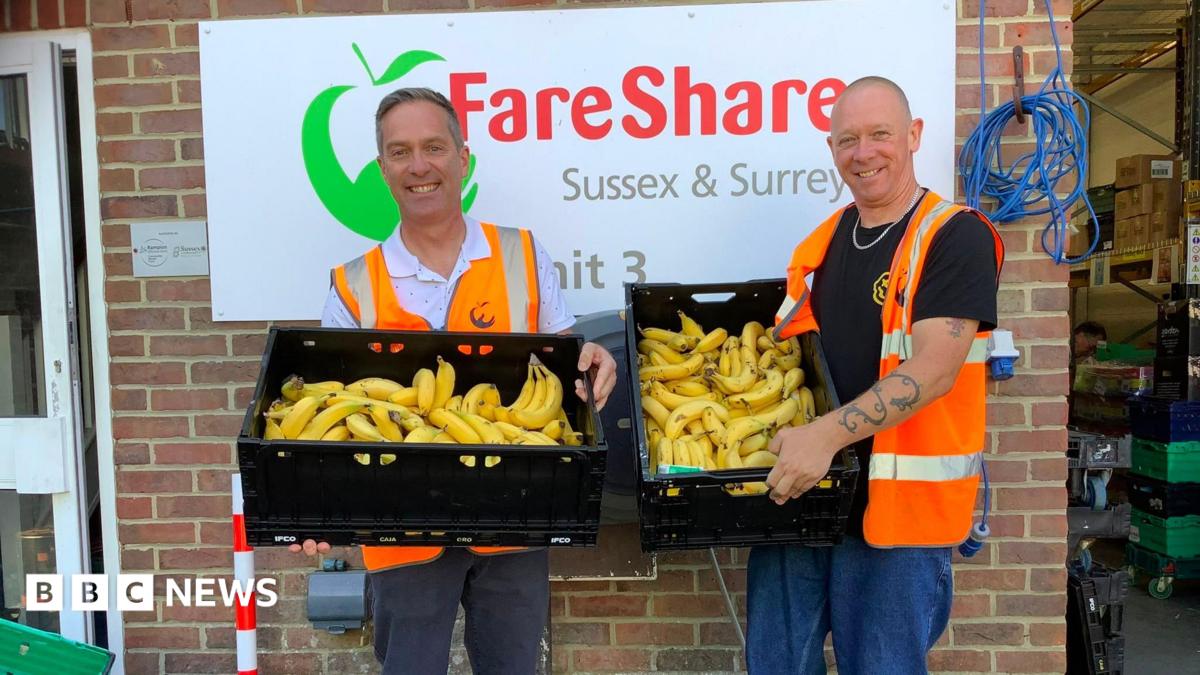
Families are skipping meals to make ends meet during the school holidays, a charity has warned.
FareShare Sussex & Surrey says some parents are facing extra food costs as children cannot access free school meals over the summer break.
Dan Slatter, chief executive of the charity, told the BBC there was a “mountain of need. There’s a growing number of people that are facing food insecurity or even more extreme hunger.”
The government funds local authorities across England to run holiday activities and food camps, which are known as Club4 in Surrey.
These camps are only for children who receive benefit-related free school meals, Surrey County Council says on its website.
Steve, a senior warehouse manager at FareShare Sussex & Surrey, said he used a food bank when he was homeless with his daughter 11 years ago.
“All the benefits I was getting were going on fuel to get my daughter to and from school every day,” he told the BBC.
“We were struggling.
“I didn’t want to ask for help, but it got to the point where we weren’t eating.”
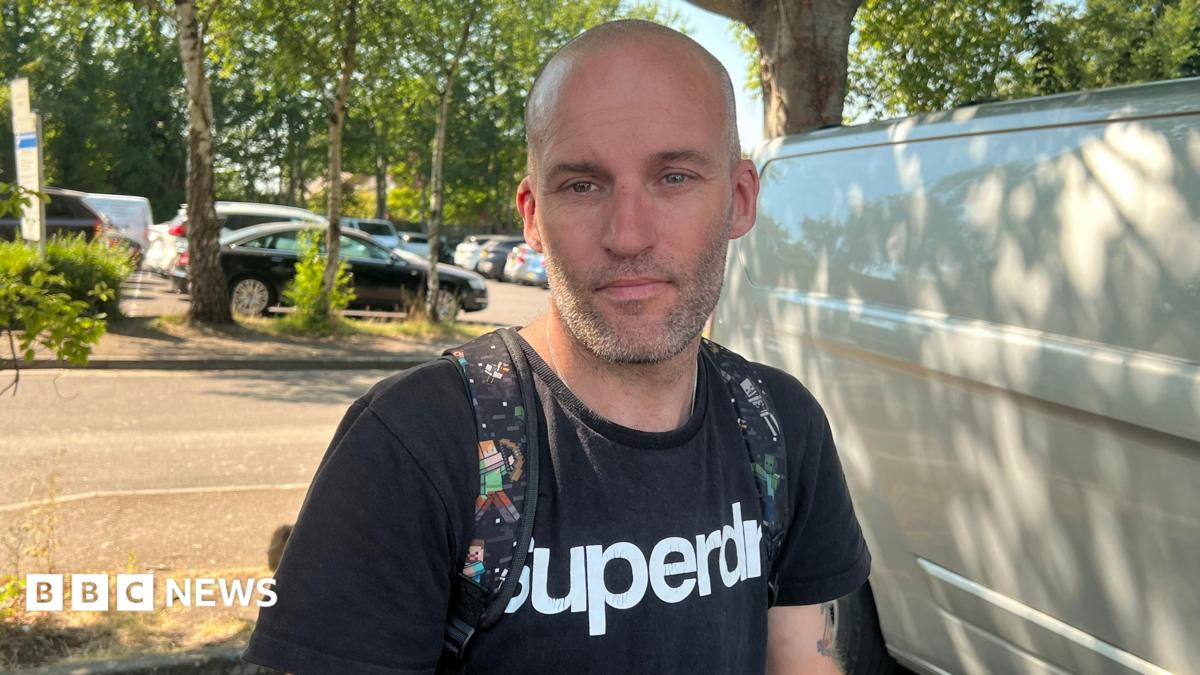
“If this trend keeps happening one or two years down the line, I don’t know,” she said.
“We can’t keep buying food [and] if people can’t afford to donate the food then we’ll struggle.”
Loki Stokes, the food bank’s food logistics manager, added that he has “never seen our stock this low”.
“We try to hold a week’s buffer across all nine outlets, but this summer that’s getting hard to promise,” he said.
A Somerset Council spokesperson said the authority recognised that many households continue to face financial pressures due to the ongoing cost of living crisis.
“These pressures will increase for many families over the summer holidays.
“The three years of government funding provided through the Crisis and Resilience Fund enable us to build on our strong partnerships with organisations across Somerset, helping to ensure that residents who need support can access it close to where they live,” they added.

Australia’s share market has pared its early losses to end the session roughly flat, as oil prices ease on hopes diplomacy could end a recent re-escalation of the US-Iran conflict.
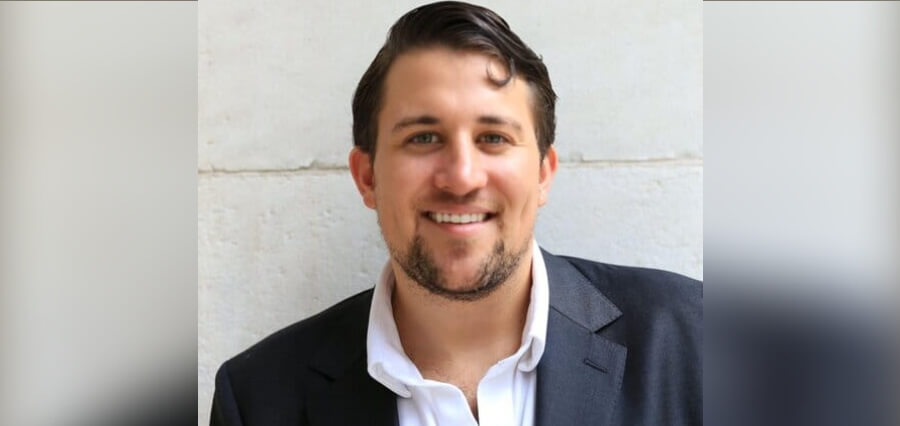
When business moves fast, technology entrepreneur Mason Jappa slows his thinking down.
That instinct may seem counterintuitive for an entrepreneur who considers speed one of a founder’s greatest advantages. Yet after a decade of company building in emerging technology markets, Jappa has watched confidence turn into carelessness. Downturns expose weak balance sheets and fragile teams, but rapid growth can distort judgment just as quickly.
“The moments I’ve made my worst decisions were always when I was caught up in momentum rather than anchored in fundamentals,” Jappa said in a recent interview. “I now treat rapid growth as a time to slow down intellectually, to ask harder questions, stress-test assumptions and make sure the foundation is solid before building higher.”
Founders need enough urgency to move before the market catches up, but enough discipline to keep speed from replacing sound judgment.
Experience reshaped Jappa’s definition of leadership. Early in his career, he relied on personal conviction, long hours and an ability to persuade others to believe in an idea before the broader market did. That intensity helped him gain ground in an industry many people still dismissed. Over time, he learned that founder energy may launch a company, but durable systems and capable teams must carry it through changing market cycles.
Mason Jappa’s entrepreneurial journey began with a conviction that Bitcoin represented more than a volatile asset. When he discovered Bitcoin and the broader blockchain ecosystem in 2012, he saw infrastructure, a decentralized financial network that could give individuals greater control over their money.
In 2017, he founded Blockware Solutions to help Bitcoin miners source hardware, secure hosting and navigate an opaque, fragmented market. He combined a background in finance and enterprise technology with a willingness to enter the blockchain industry before it gained widespread acceptance.
Jappa said the company generated more than $500 million in revenue and helped deploy more than 400,000 mining machines. His team also produced research that reached more than 1 million readers and earned citations from Forbes, CoinDesk, Wired and other publications.
He also helped Blockware Mining secure clearing privileges at the Chicago Mercantile Exchange, a milestone he viewed as evidence that institutional markets had begun to take Bitcoin mining infrastructure seriously.
Those achievements reinforced a broader company-building lesson. In an unfamiliar market, credibility can create an advantage that capital alone cannot buy.
“In an industry full of noise, we built trust through education,” Jappa said. “That trust became our most durable competitive advantage.”
Jappa Says Build the Team Before the Cycle Turns
Rapid growth can make founder intensity look like a complete leadership system.
Mason Jappa once believed the founder should set the pace, carry the clearest vision and work harder than anyone else in the organization.
“When I started Blockware in 2017, my leadership model was essentially: have the strongest conviction in the room and outwork everyone,” he said. “And honestly, that got us a long way.”
That approach created urgency, but it placed much of the organization’s momentum on one person. Industry contractions eventually exposed the limits of a company powered primarily by its founder.
“Bitcoin markets are brutal teachers,” he said. “When the price collapses and the industry contracts, you find out very quickly whether you built a team or just assembled a group of people around your own momentum.”
His approach to leadership evolved through periods of growth and difficulty. Jappa became more deliberate about developing employees, acknowledging what he did not know and allowing the strongest idea to prevail regardless of who proposed it. Instead of remaining the central source of energy and answers, he focused on building a team that could think, decide and execute under pressure.
“The best decisions I’ve made have been about people,” Jappa said. “Bitcoin mining taught me that businesses built for the bull market collapse in the bear market. I’ve always tried to build for durability.”
Founders do not need less conviction. They need to turn that conviction into shared capability before the market tests the organization.
Speed and Focus Before Scale
He places speed and focus ahead of funding and connections because founders can control the first two. They can choose how quickly they test an idea, how decisively they respond to evidence and how carefully they protect the company from distractions.
“Capital follows execution. Connections follow credibility,” Jappa said. “Both of those follow a founder who moves decisively and stays locked on what actually matters.”
Speed does not mean chasing every opportunity. It means shortening the distance between insight and action. Focus requires founders to protect the company’s central mission when hype and outside pressure create tempting detours.
That discipline matters most when an entrepreneur operates ahead of consensus. Emerging markets rarely offer clear proof at the beginning. Jappa believes founders must become comfortable acting while others remain skeptical, provided they can support their conviction with research, operating knowledge and a defined advantage.
“The founders who win in rapidly evolving industries are almost always the ones who saw the wave coming and paddled hard before anyone else was in the water,” he said.
Jappa applies three filters when evaluating technology ventures. The technology must solve a problem that exists at scale, the market must have reached the right infrastructure moment and the founder must possess an advantage that competitors cannot easily reproduce.
The framework helps separate foresight from trend-chasing. Being early has little value when the problem is imaginary, the timing is wrong or the business lacks a defensible position.
Mason Jappa: ‘Build Your Reputation Like It’s Your Most Valuable Asset’
Founders often track cash, customer growth and market share before they measure trust. Jappa argues that reputation deserves the same strategic attention as any other core asset.
“Build your reputation like it’s your most valuable asset, because it is,” he said. “In fast-moving industries, trust is scarce and credibility travels fast in both directions.”
Jappa built visibility through research, media relationships and consistent execution. He did not treat communication as a promotional layer added after the business matured. He used it to help investors, partners and customers understand an unfamiliar market.
He calls storytelling infrastructure because clear communication supports nearly every part of a growing company. It gives employees a shared language for the mission, helps investors understand the business beyond its projections and shows customers why the company’s approach differs from its competitors.
A strong narrative cannot rescue a weak strategy. Founders still must deliver results. But even a valuable business can struggle when its leaders cannot explain what it solves or why the market should trust it.
The same principle shapes Jappa’s view of fundraising. After raising more than $100 million across multiple entities, he came to see capital as a tool rather than an objective.
“The best way to raise it is to not need it,” he said.
Companies gain leverage when they can show revenue, demand and a credible path to growth before approaching outside investors. Founders also must study the structure of capital, not only the amount. An impressive funding announcement can conceal terms that weaken the business over time.
A Decade of Building, Distilled
Founders must act before certainty arrives. They also must know when to question their assumptions, strengthen the organization beneath the growth and resist believing that momentum proves every decision correct.
Jappa views market cycles as leadership tests. A downturn shows whether the company can endure pressure. A surge shows whether leaders can protect the business from excess confidence, careless spending and a false sense of permanence.
“I’ve seen more founders destroyed by a good market than by a bad one,” he said. “Build like the cycle is always about to turn, because eventually it will.”
Jappa still believes entrepreneurs create value by recognizing possibilities before the crowd does. Experience has made him more selective about what deserves that belief and more deliberate about what must follow it.
The work does not end when the market validates an idea. That is when founders must build the systems, leadership and trust required to carry it further.
Strong founders, he believes, do more than arrive early. They build organizations designed to endure after the rest of the market catches up.
“The role I hope to play is the same one I’ve always aimed for: being the operator who builds the infrastructure layer before the crowd arrives and doing it in a way that leaves the industry more open, more competitive and more resilient than I found it,” Jappa said.

Major new Sunderland retail park wins planning approval

Jamie Dimon warns Burnham government on UK growth

Cardano’s 7% Pop Looks Like Bait, and the Pros Aren’t Biting


-
 NewsBeat5 days ago
London Mayor Sadiq Khan handed a peerage by Keir Starmer alongside 15 other Labour figures… just days before the PM leaves No10
-

 Fashion4 days ago
Weekend Open Thread – Corporette.com
-

 Politics3 days ago
The House | The City of London can help the new chancellor deliver growth in every postcode
-

 Politics6 days ago
Young campaigners urge incoming PM to act on outdoor junk food ads
-

 Crypto World5 days ago
CFTC blocks Kalshi from unwinding Michigan trades after court order
-
 Crypto World4 days ago
Two July Windows Left: The CLARITY Act’s Senate Fight and What Failure Means
-

 Crypto World3 days ago
Ripple Payments Joins MiCA With 14 Firms, Does It Mean Anything For XRP?
-

 Business5 days ago
Nvidia Stock Slips After Big Tuesday Rally as Huang Confirms Vera Rubin Chip Is Now in Production Today
-

 Politics2 days ago
Democrats look to World Cup watch parties to register thousands of voters
-
 Entertainment6 days ago
Disney’s Most Ambitious Failed Star Wars Attraction Is Coming to SDCC
-

 Crypto World4 days ago
Ripple wins EU-wide access as ESMA adds it to MiCA register
-

 Crypto World4 hours ago
Grayscale Files For Worldcoin ETF, WLD Registers Sharp Rise
-

 Crypto World5 days ago
Injective Submits SEC Transfer-Agent Registration to Onchain Ownership Records
-

 Business5 days ago
Palantir Shares Rise After Expanded Nvidia Partnership and Fresh Analyst Upgrades Ahead of Earnings Day
-

 Tech12 hours ago
Sail Virtually Aboard The “Itanic” With IA-64 Emulator
-
 Tech9 hours ago
Turtle Beach Command Series KB7 review: a nifty screen-equipped gaming keyboard
-

 Tech7 days ago
Dark Secrets Emerge When Jailbreaking LLMs
-

 NewsBeat4 days ago
Registration is now open for March for Men with Kev 2026
-

 News Videos7 days ago
XRP BOMBSHELL… XRP OMBOARDED FOR TRANSACTIONS!!!
-

 NewsBeat1 day ago
Unregistered fitter used Gas Safe logo on business flyers
You must be logged in to post a comment Login