

Crypto World
New Ceasefire Hopes Add $550 Billion to US Stocks as Oil Retreats

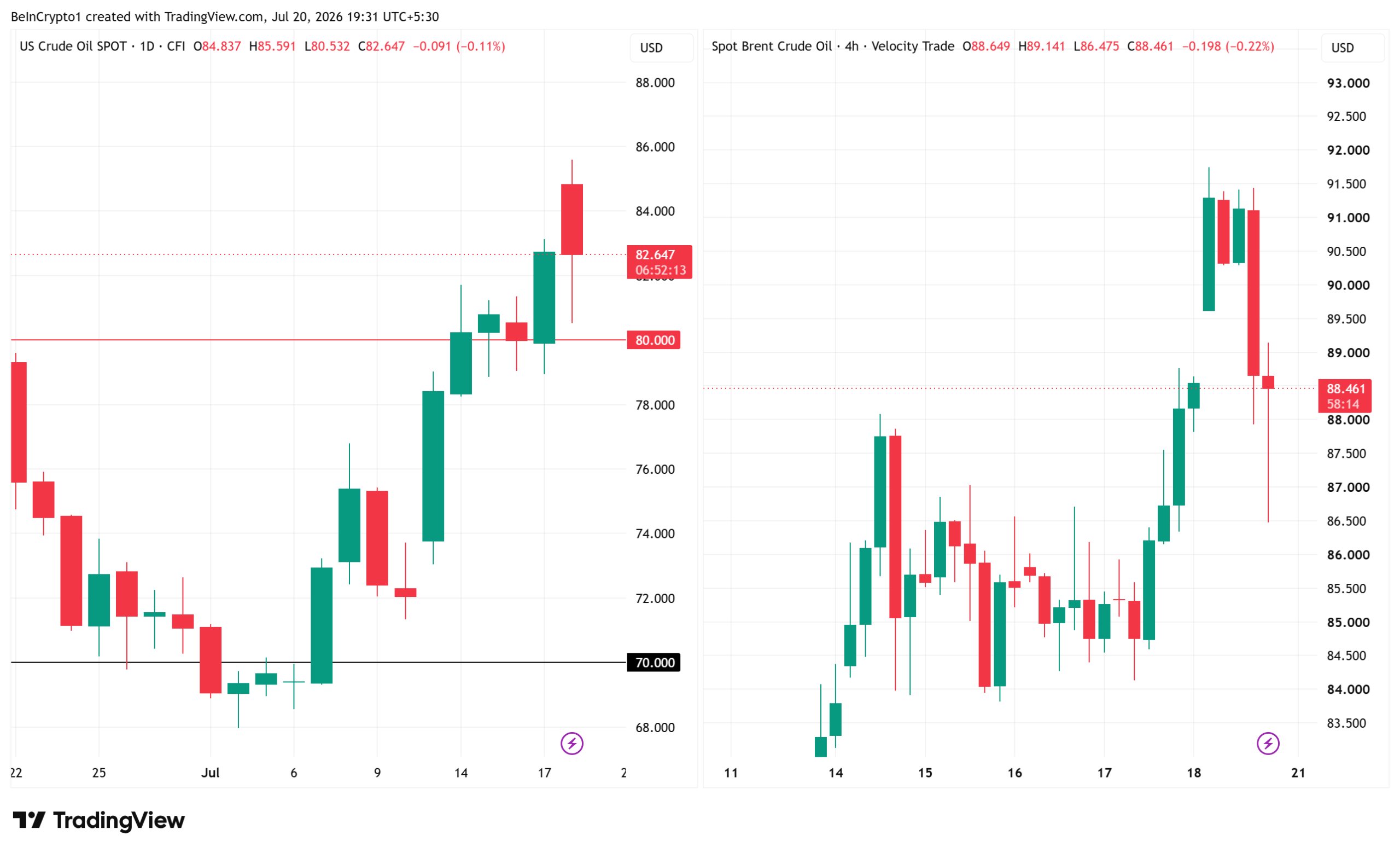
US stocks gained roughly $550 billion Monday as hopes rose for a 10-day US-Iran ceasefire. Oil fell as traders priced in calmer supply risks.
Mediators want the pause to revive June’s interim peace deal. A senior Iranian official confirmed the offer to Reuters on Monday.

Why US-Iran Ceasefire Hopes Lifted Stocks and Cooled Oil
The offer went to Tehran on Monday, Reuters reported. It aims to revive the Islamabad Memorandum, the peace deal Pakistan and Qatar brokered in June. Donald Trump and Iranian President Masoud Pezeshkian signed it remotely on June 17. The truce collapsed in July when strikes resumed.
Stocks jumped on the news. The S&P 500 rose 0.63% and the Nasdaq climbed 1.02%, market data shows, with analysts estimating the total gain at roughly $550 billion, with tech stocks leading.
US stocks have a track record here. They proved the strongest wartime hedge in the war’s first phase, beating gold and Bitcoin (BTC). Still, Monday’s rally came as US Central Command announced a ninth straight night of strikes.
Oil moved the other way. WTI traded near $82.65 and Brent slipped to about $88.46, TradingView data shows. This is only hours after oil price topped $90 after reports of escalating war on Sunday.
Tehran Doubts and Houthi Threats Keep the Rally Fragile
Iran is not sold. Parliament Speaker Mohammad Bagher Ghalibaf said the US keeps sending military equipment to the region while claiming it wants peace.
“We’ve reached the stage of mastery in recognizing these American games, and on that basis, we’ve prepared ourselves. Actions must confirm claims, not contradict them,” Ghalibaf said.
His post came hours after Yemen’s Houthis declared a maritime embargo on Saudi shipping through the Bab el-Mandeb Strait. Military spokesman Yahya Saree called it an “eye for an eye” response to Riyadh’s siege of Houthi ports.
That threat hits Saudi Arabia where it hurts. Riyadh now sends over 70% of its crude exports through the Red Sea port of Yanbu, Kpler data shows. Those flows run near 4 million barrels per day. The pivot began while Hormuz disruptions threatened cheaper US gasoline.
The safety net is thin too. The US Strategic Petroleum Reserve sits at its lowest level since 1983 after a record 400 million-barrel release in March. Traders already price high odds of $4 gas by the end of July. Such a move would constitute a climb of nearly 25% above current levels.

Markets have seen this pattern before. A June relief rally faded once strikes resumed. Meanwhile, a fresh oil spike could revive pressure for Fed hikes. For now, the gains rest on a proposal, not a pause. Real progress will decide whether they last.
The post New Ceasefire Hopes Add $550 Billion to US Stocks as Oil Retreats appeared first on BeInCrypto.


Bernstein just raised its price target on Robinhood stock to $160, and the key driver is not crypto trading volume. Instead, the firm sees long-term value in Robinhood’s blockchain infrastructure. Robinhood Wrapped ETH on Robinhood Chain has gained about 2% over the past week, while daily trading volume sits near $44 million. Those numbers suggest the network is attracting steady activity rather than short-lived hype.

Bernstein analysts, led by Gautam Chhugani, lifted their HOOD target from $130 to $160, based on a 2028 EPS estimate of $4.56 and a 35x forward P/E multiple. The firm expects prediction markets, perpetual futures, and Robinhood Chain to generate 18% of total revenue by 2027, rising to 23% in 2028. Prediction markets alone could contribute $1.7 billion by 2028.
Discover: The Best Crypto to Diversify Your Portfolio
Robinhood, The Stock Platform Juggernaut
Robinhood’s second-quarter earnings arrive on July 29, and Bernstein expects new businesses to soften any slowdown in crypto trading revenue. That fits a growing trend across the market. Investors increasingly reward companies building the rails for digital assets instead of simply benefiting from speculative token rallies. Building the highway often pays better than collecting tolls during rush hour.
Robinhood Chain could also benefit the crypto market beyond its own ecosystem. More Layer 2 infrastructure gives users cheaper transactions and faster settlement while helping Ethereum scale. As more developers deploy applications and liquidity spreads across new networks, on-chain activity becomes easier to access for retail users. Fresh competition rarely hurts innovation, especially in crypto.
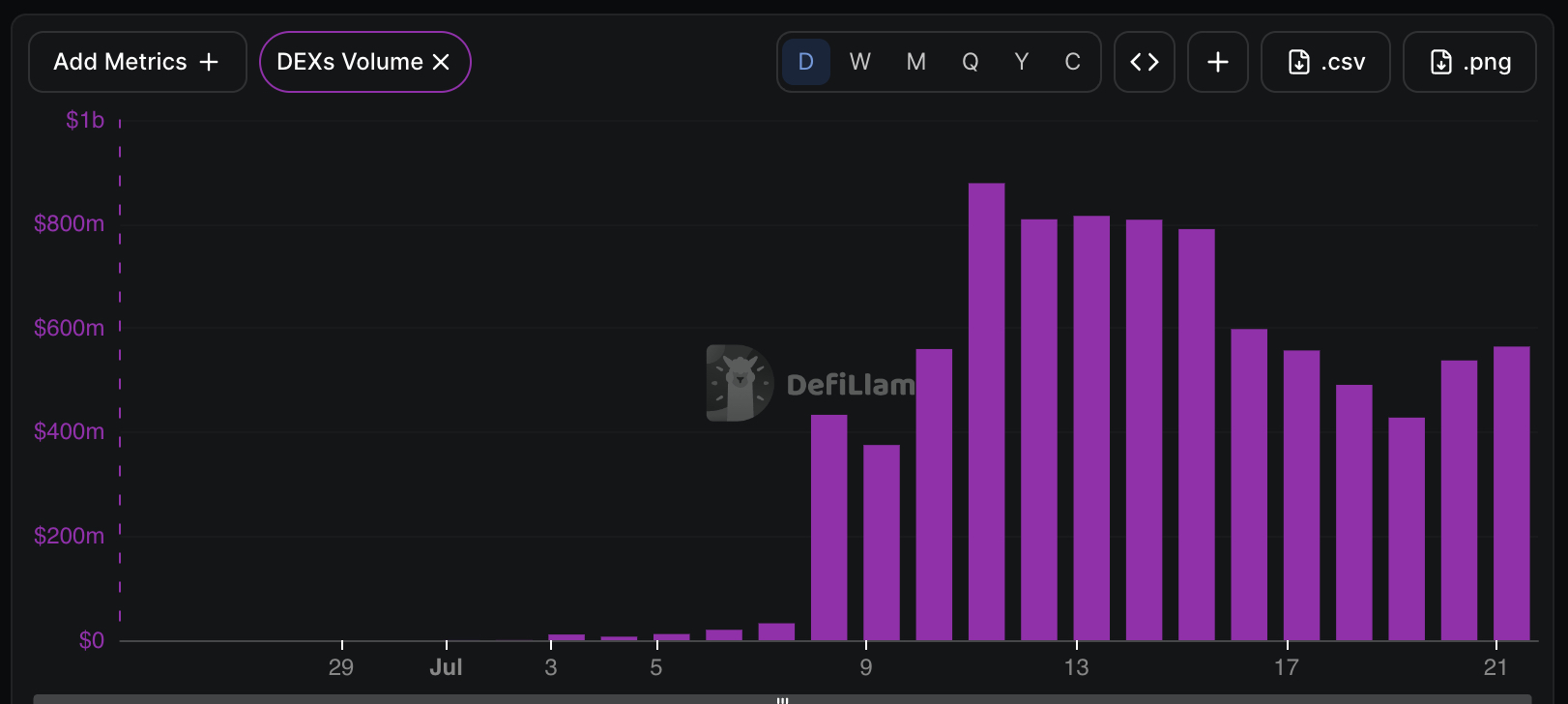
For traders, the takeaway is simple. Robinhood Chain appears to be gaining real usage, and that matters more than any single token’s price action. If network adoption keeps climbing, it could strengthen Ethereum’s ecosystem and encourage more capital to flow into decentralized finance. In crypto, the flashiest coin grabs headlines, but the strongest infrastructure often wins the longest race.
Bridge to Robinhood Chain With The Lowest Fee Using RocketX
LiquidChain Targets Cross-Chain Infrastructure as HOOD Token Tests Lows
The Robinhood Chain story is a reminder that chain-level infrastructure can capture value before native tokens catch up. That gap is exactly where early-stage infrastructure finds its pitch. Investors rotating out of speculative token exposure are increasingly looking at what’s being built at the execution layer.
LiquidChain is positioning as a Layer 3 infrastructure project with a specific structural thesis: fuse Bitcoin, Ethereum, and Solana liquidity into a single execution environment. The USP is architectural with a Unified Liquidity Layer with Single-Step Execution, Verifiable Settlement, and a Deploy-Once framework that lets developers access all three ecosystems without rebuilding for each chain.
The next generation of infrastructure won't stand alone. — LiquidChain (@getliquidchain) July 21, 2026
It'll connect everything around it.  ⟁https://t.co/vqvBcdSQYC pic.twitter.com/mWc9fGndPd
The presale is live at $0.01482 per $LIQUID, with $915K raised to date. As covered in earlier presale reporting, the project is approaching the $1M milestone.
Research LiquidChain here before sizing any position.
Trade Memecoins like DOGE on Bybit and Get a Chance to Win Our $1,000 USDT Airdrop
The post Robinhood Chain Booming, Bernstein Puts Higher Target on HOOD appeared first on Cryptonews.
Twenty One Capital (XXI) CEO Jack Mallers stepped down on Monday, seven months after the company went public. Tether also dropped its plan to merge the Bitcoin treasury firm with Strike, Mallers’ payments company.
The bigger story is the new game plan. Twenty One listed five fresh priorities, and buying more Bitcoin (BTC) is not one of them.
Why Tether Is Rewriting Its Bitcoin Treasury Playbook
Back on April 29, Tether pitched a grand plan. It wanted to fold Twenty One, Strike, and Elektron Energy, a Bitcoin mining firm, into a single Bitcoin platform.
Galaxy Research said the combined group could rival Strategy’s dominance among corporate holders. Now, Jack Mallers is leaving, and has announced his step-down as CEO of Twenty One.
That vision lasted less than 12 weeks. Strike now stays independent. A deal with Elektron is still possible, but talks are early. There is also a catch. Tether owns majority stakes on both sides, so any deal would face extra review as a related-party transaction.
The timing is no accident. Digital asset treasury (DAT) companies, firms that mainly buy and hold crypto, are under pressure. Bloomberg reported that Bitcoin’s price slump has brought losses and job cuts across the sector.
XXI has felt that pain. The stock listed on the New York Stock Exchange (NYSE) in December after a rocky market debut. It closed Monday at $5.32, down about 43% this year. The company is now worth about $1.85 billion.
Zagury Takes Over With a Cash Flow Mandate
New CEO Raphael Zagury comes from the money side of the business. He held senior roles at Goldman Sachs, Deutsche Bank, and Merrill Lynch. He later ran finances at OpenCo, once among Brazil’s largest fintech lenders.
His plan reads simply. Buy and build businesses that earn money, and keep the Bitcoin. The company compared its new model to Berkshire Hathaway. It also wants to lend against Bitcoin, so holders can access cash without selling.
“My job is to build the operating company around it, with the discipline, governance, and executional rigor of an institution. I believe our business will perform best when we also focus on the cash flow we generate and the rigor with which we allocate capital, not only by the Bitcoin we hold,” Zagury said in a statement.
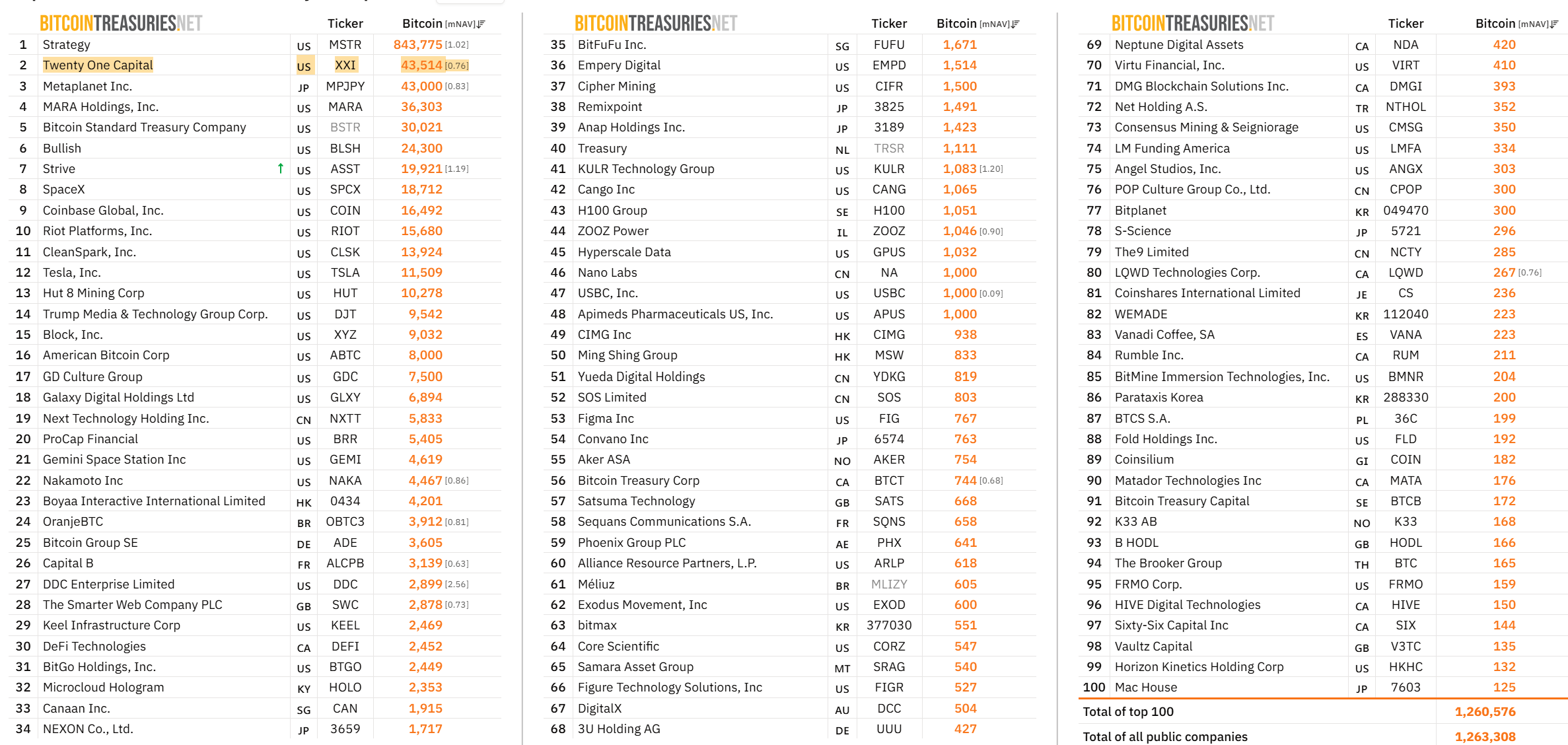
Tether saw this coming. It took full control in May by buying SoftBank’s 25% stake. Twenty One still holds 43,514 BTC, second only to Strategy in BitcoinTreasuries.net data. It also keeps its strict Bitcoin-only treasury stance.

The big question is what happens next. If the second-largest Bitcoin treasury needs more than Bitcoin, others may follow. The Elektron talks should offer the first clue.
The post Tether Rethinks XXI’s Bitcoin Treasury Model After Just 7 Months appeared first on BeInCrypto.
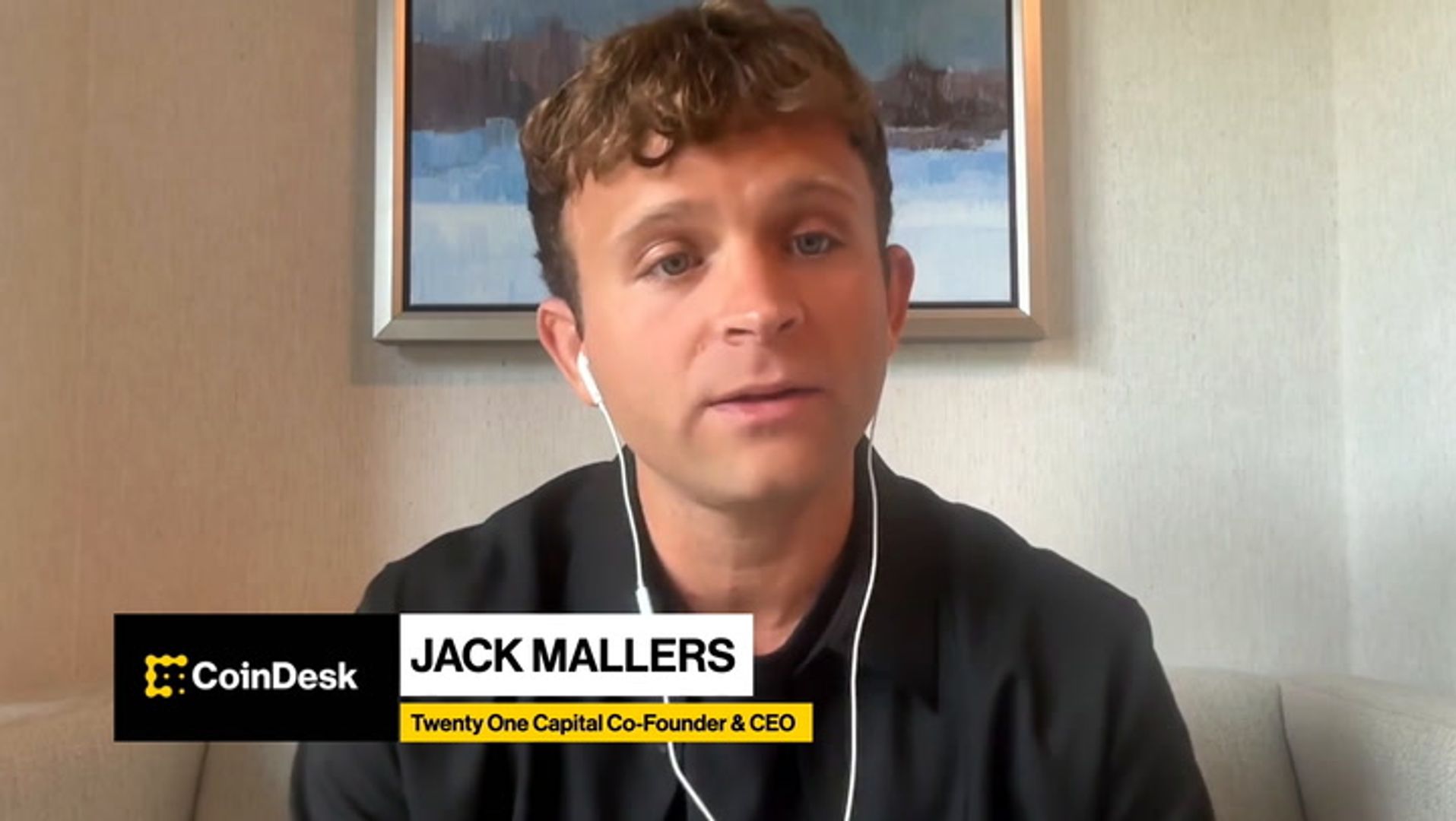
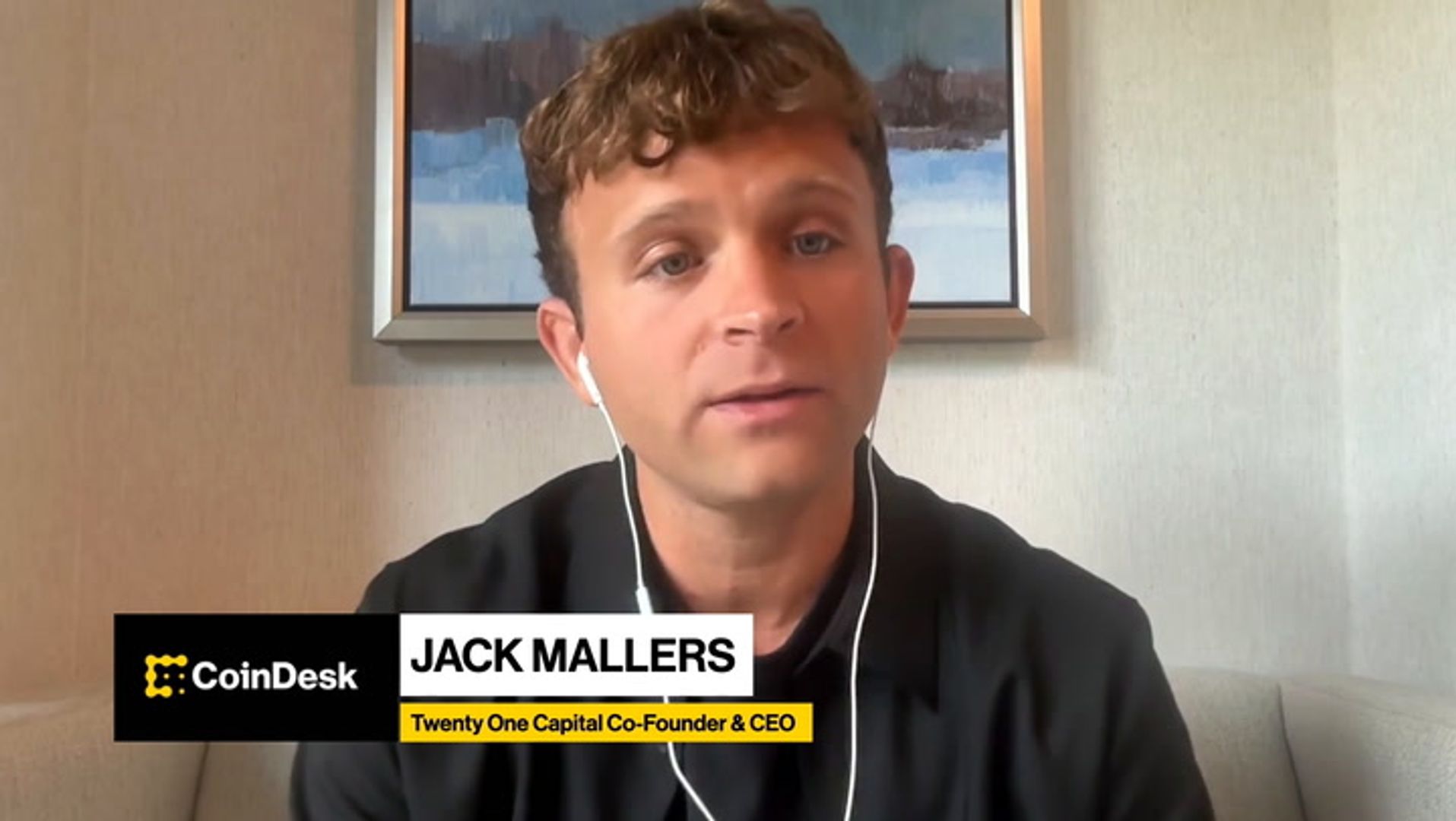
Tether-controlled Twenty One Capital (XXI) named Raphael Zagury as CEO, replacing Jack Mallers, and dropped Strike from a proposed three-way merger, the companies said.
Mallers stepped down effective July 20 to focus on Strike, the bitcoin payments firm he founded. Strike will remain independent and is no longer being considered for a business combination with Twenty One, according to a press release.
Tether, Twenty One’s controlling shareholder, confirmed the changes in a separate announcement.
Tether proposed combining Twenty One, Strike and Elektron in April, seeking to place bitcoin treasury, financial services and mining under one listed company.
Twenty One’s revised strategy will focus on acquiring operating businesses, expanding capital markets capabilities and developing bitcoin-backed lending.
XXI is little changed in pre-market trading.
CoinDesk has reached out to all three companies, but hasn’t heard back at the time of writing.


Strike will remain a standalone company after the proposed three-way merger was scrapped, while Twenty One Capital and Elektron continue discussions, Bloomberg reported.


Coinbase (COIN) CEO Brian Armstrong told followers on X that his personal account carries no trading signals. He distanced himself from the BRIAN meme coin frenzy his profile picture swap triggered on Base last week.
The clarification arrived after Base community members accused Armstrong of offering too little support. Armstrong called the criticism fair. Still, he made clear that his account should never guide a meme coin trade.
A Profile Picture That Moved the Meme Coin Market
Armstrong swapped his X avatar on July 16 for artwork tied to BRIAN, a meme coin nicknamed Coinbase Man. The token runs on Base, Coinbase’s layer-2 network built on top of Ethereum.
Within hours, the token’s market cap jumped 37x. It climbed from roughly $1 million toward $37 million as traders chased the signal.
The rally reversed the moment Armstrong restored his prior picture. Market cap collapsed by more than 85% in under a day. BeInCrypto data now shows the meme coin holding near $224,000, well below its pre-pump level. The swing highlights meme coin trading risks tied to founder attention rather than fundamentals.
Armstrong Draws a Line on Trading Signals
Armstrong addressed the swings directly in a lengthy X post.
“If you’re treating my X account as alpha, you are doing so at your own risk, against my wishes. I would never recommend this.”
He said he supports the economic freedom to trade meme coins. So he will keep posting content he personally finds funny. Still, he stressed that his posts and profile pictures represent no endorsements or commitments to any project.
Neither he nor Base creator Jesse Pollak will promote coins on demand, Armstrong added. Compliance and regulatory rules already block many tokens from listing on Coinbase’s exchange, he said.
What Base Actually Supports Beyond the Meme Coin Craze
Armstrong pointed to past Base coin experiments that failed to deliver lasting value. That list includes a content-coin push he ended weeks earlier after admitting the strategy had flopped.
He said genuine backing flows through builder grants, Coinbase Ventures, and the Base Ecosystem Fund. Viral meme coin attention plays no role in that support, he added.
However, regulatory limits shape which tokens Coinbase can list. That constraint differs from the Base app promotion concerns raised earlier this year. Armstrong’s push toward tokenized stocks and payments echoes his broader stablecoin vision for crypto.
Whether traders heed the disclaimer remains uncertain. Base meme coins tied to Armstrong’s dog and family photos have reacted to his posts before, sometimes gaining triple digits within a day. His account will likely keep moving meme coin prices regardless of any warning attached to it.
The post Brian Armstrong Warns Traders Against Treating His X Account as “Alpha” appeared first on BeInCrypto.
Cardano (ADA) price jumped about 7% on July 21, stretching its gain to roughly 9% over the past month.
But the rally may be a trap. The largest and most experienced traders are quietly betting against it, even as smaller retail traders pile in long.
Top Traders Are Short While Retail Goes Long
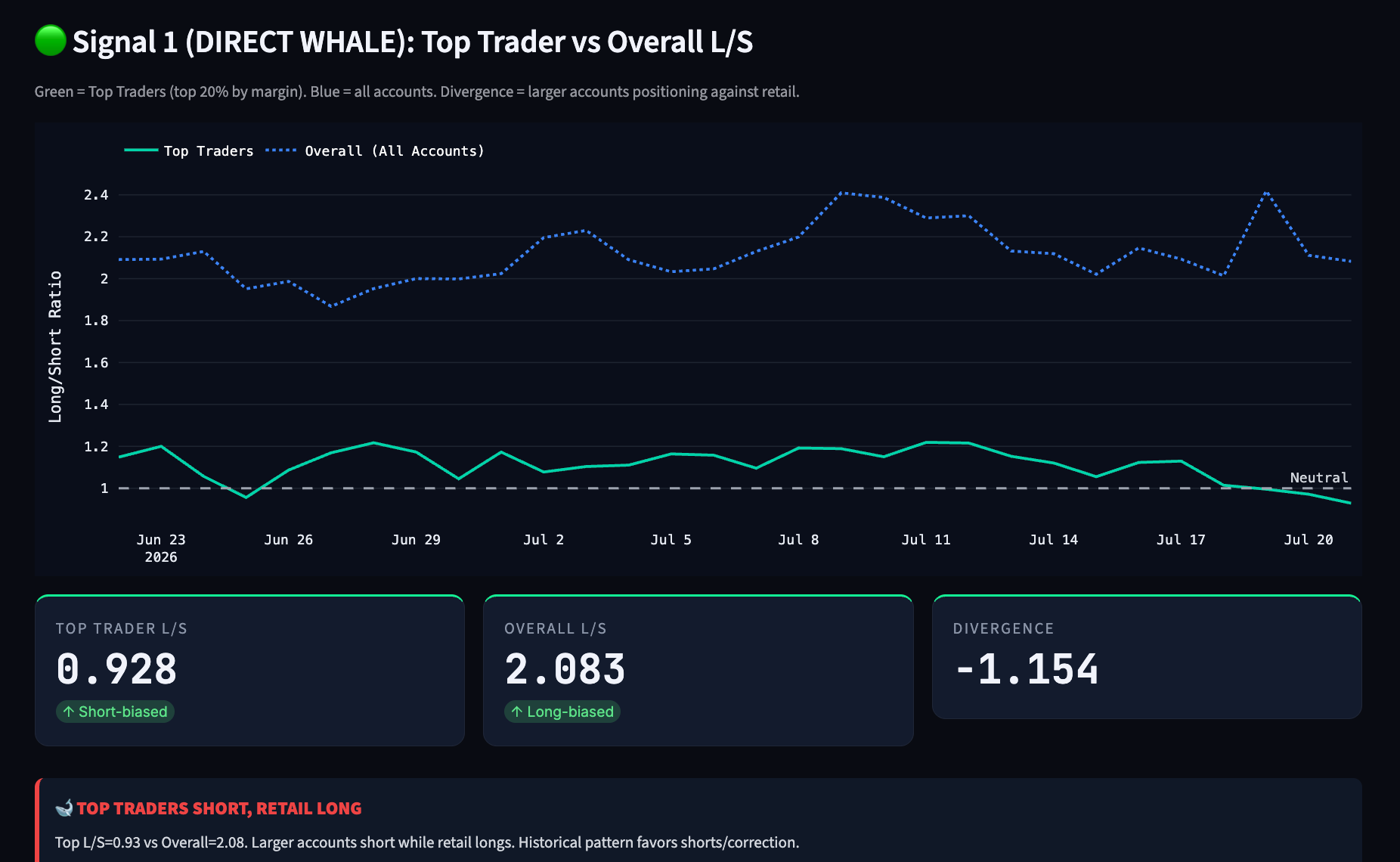
The clearest warning comes from Cardano positioning. On the top-trader long/short ratio, which compares how the biggest accounts are positioned against everyone else, the warning surfaces. The top traders (whale and smart money) sit near 0.93, meaning more short than long. All accounts together, including retail, sit at 2.08, heavily long.

So the crowd and the smart money are on opposite sides. That gap, a divergence of about 1.15, is unusually wide, and when retail and pros diverge like this, the rally often fades or reverses.
Derivatives Show a Crowded Long Bet
The ADA futures market tells the same story. Open interest, the total value of active futures bets, sits near $1.11 billion across 94 perpetual markets, according to CoinGecko data.
Want more token insights like this? Sign up for Editor Harsh Notariya’s Daily Crypto Newsletter here.
Meanwhile, the ADA funding rate is positive at about 0.01%. Funding is the small fee traders pay to hold a position, and a positive reading means longs are paying shorts to stay in.

So the crowd is paying up to bet on higher prices, aligning with the retail move, a classic sign of a stretched move.
The Cardano Price Rally Outran a Still-Weak Network
Yet the fundamentals have not caught up. Cardano activated its Van Rossem hard fork on July 18, its first upgrade approved fully through on-chain governance, and it makes smart contracts cheaper to run.
However, the network itself remains quiet. Activity recently fell to a 45-day low, and the value locked in Cardano’s apps has slid to about $69 million, down roughly 24% in a month and nearly 90% below its two-year peak. So the price is running well ahead of real usage.

That leaves Cardano price at a crossroads. If the top traders are right, the 7% pop unwinds and crowded longs can feel the ‘squeeze’. If retail wins and shorts are forced to cover, the same pressure could spark a quick move higher. Therefore, the split between top traders and retail is the line that decides which way this breaks.
The post Cardano’s 7% Pop Looks Like Bait, and the Pros Aren’t Biting appeared first on BeInCrypto.
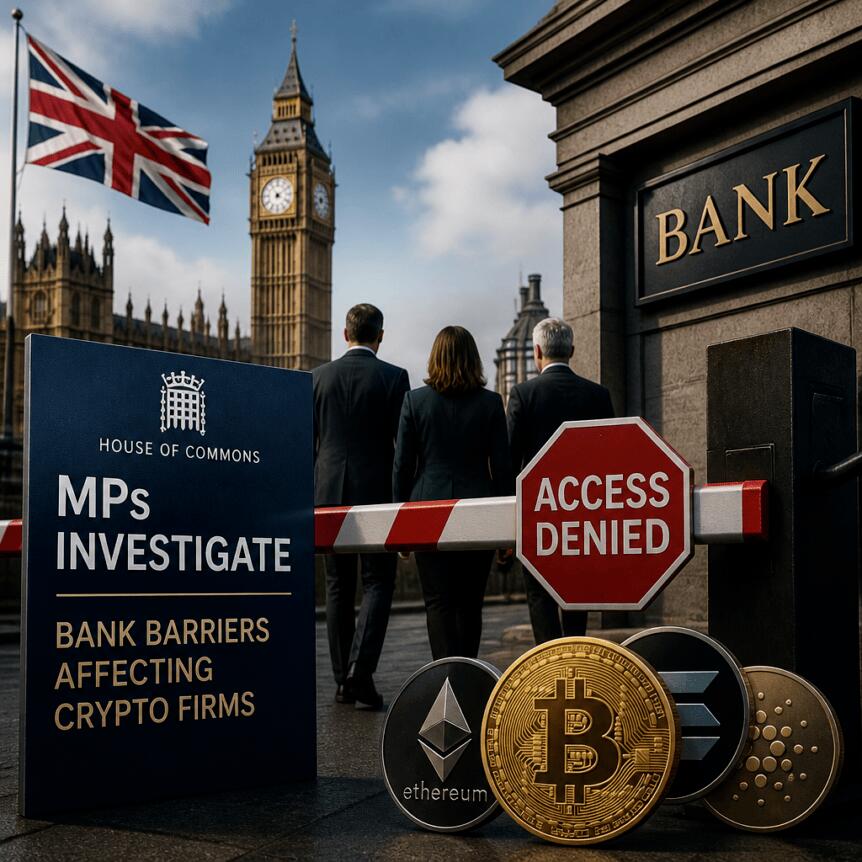
Concerns over “debanking” and banking access for the UK crypto sector have moved onto the parliamentary agenda, with a new inquiry set to examine whether crypto firms and consumers face barriers to core financial services.
On Monday, the Crypto and Digital Assets All-Party Parliamentary Group (APPG) announced it will investigate how restrictions on account access and crypto-related transactions may affect investment, competition, and broader economic growth. The group says it will assess whether any limits are proportionate and has opened written submission requests to banks, payment providers, crypto businesses, and other stakeholders until Aug. 31, ahead of publishing its findings and recommendations.
Key takeaways
- The APPG inquiry will focus specifically on access to banking services for UK crypto businesses and consumers, including limits that may restrict crypto-related payments and transfers.
- UK Cryptoasset Business Council (UKCBC) data cited by the inquiry claims banks blocked or delayed 40% of transactions to crypto platforms across 10 exchanges in a January survey.
- Most surveyed exchanges reportedly saw more customers experiencing blocked or limited transfers over the prior year and described the UK banking environment as increasingly “hostile.”
- UKCBC is urging the FCA to require banks to differentiate between firms based on regulatory status and controls rather than applying uniform restrictions.
- Industry commentary warns that the upcoming UK crypto licensing framework could lose practical value if approved firms still struggle to access mainstream banking.
A parliamentary inquiry into banking access
The Crypto and Digital Assets APPG’s announcement frames the debate around whether barriers to banking services are limiting the sector’s ability to grow within the UK. According to the group, the review will examine how restrictions influence investment decisions, competitive dynamics, and economic outcomes—and whether existing banking practices meet a proportionality standard.
The inquiry also signals a potential policy collision: while the UK is moving toward a new regulatory approach for crypto firms, banks and payments providers may still treat many crypto activities as inherently high risk. The APPG’s request for submissions will allow financial institutions and market participants to make the case for both sides, including how fraud and money-laundering risk assessments are applied in practice.
UKCBC survey highlights blocked transfers and reduced willingness to invest
A January survey conducted by the UK Cryptoasset Business Council (UKCBC) is central to the debate. The council’s report (linked in the APPG-related coverage) states that, among 10 crypto exchanges surveyed, banks blocked or delayed 40% of transactions to crypto platforms.
It also claims that 70% of respondents said the restrictions had reduced their willingness to invest, expand, or hire in the UK. The exchanges referenced in the survey include Coinbase, Kraken, Gemini, OKX, Bitpanda, Luno, Uphold, Wirex, Zumo and Xapo Bank.
Within that same survey, eight of the 10 respondents reported increased instances over the prior year where customers experienced blocked or limited transfers. Seven described the overall banking environment for digital asset businesses as becoming more “hostile.”
The survey further alleges that one exchange observed nearly £1 billion (about $1.35 billion) in transactions declined by banks over a year. The figure, as described in the referenced material, covers rejected card payments and transfers initiated through open banking, while abandoned or blocked transactions via other channels were excluded.
Industry pressure: banks should distinguish by risk, not blanket restrictions
UKCBC has urged the UK’s Financial Conduct Authority (FCA) to push banks toward more targeted approaches—requiring differentiation between exchanges based on regulatory status, governance, and fraud controls rather than applying the same constraints to every platform.
Yuriy Brisov, a partner at London-based consultancy Digital & Analogue Partners, told Cointelegraph that while banks have legitimate obligations to manage fraud and money-laundering risks, he argues that controls should scale with risk level rather than be applied uniformly. He said proportionality should depend on whether measures distinguish between high-risk and low-risk cases, adding that, in his view, current practices do not consistently do so.
Brisov cited blanket policies and fixed transaction caps that may apply regardless of where funds are destined—whether to an FCA-registered exchange or an unlicensed offshore platform.
He also pointed to potential incentives created by payment fraud reimbursement rules. Since October 2024, payment providers have generally been required to reimburse eligible fraud victims for losses of up to £85,000 per claim under faster payments-related requirements described by the UK Payment Systems Regulator (PSR). Brisov argued this can encourage banks to block crypto-linked transactions rather than assess them individually, effectively shifting the risk-management burden away from case-by-case evaluation.
Licensing timeline raises a “hub” inconsistency
The APPG inquiry comes as the FCA prepares to accept authorization applications from crypto firms starting Sept. 30. Brisov said this scheduling creates a contradiction between the government’s stated ambition to build a global crypto hub and the continued use of banking restrictions against exchanges, including firms already registered under the FCA framework.
His core argument is that once a regulator licenses a firm, banking decisions should not treat that entity as unknowable in risk terms. He said supervisors should ask banks to provide written reasons if they still consider regulated firms effectively “untouchable,” suggesting that clearer justification could become a key theme of any parliamentary or regulatory follow-up.
Policy changes are already in motion. HM Treasury laid the Cryptoassets Regulations before Parliament in December 2025, with the full regime expected to take effect in October 2027. The industry question, according to Brisov, is whether regulatory authorization will translate into practical access to the payment system.
Brisov argued that licensing would have limited value if approved crypto businesses remain unable to access mainstream banking channels. In his view, a country positioning itself as a crypto hub cannot keep its payment infrastructure effectively closed to the industry it licenses.
What to watch next
As the APPG collects submissions through Aug. 31 and the FCA moves toward crypto authorization applications beginning Sept. 30, the key uncertainty for the sector is whether policymakers can drive a more risk-sensitive approach from banks and payment providers—or whether restrictions will persist even after new licensing rules take effect. Investors and builders will likely look for signals around whether any guidance or enforcement will target “proportionality” in a measurable, bank-by-bank way.


- Ethereum (ETH) has gained 8.8% in a week as momentum strengthened.
- BlackRock’s ETHA helped drive fresh spot ETF inflows.
- $2,000 remains Ethereum’s next major resistance level.
Ethereum has extended its latest recovery, climbing above the $1,900 level and putting the $2,000 mark back into focus.
The recovery comes after several weeks of improving price action, renewed institutional interest, and technical signals that suggest bulls have regained control in the short term.
At press time, ETH was trading at $1,942.56, up 4.2% over the last 24 hours.
The cryptocurrency is up 8.8% over the past seven days, 9.7% over the last two weeks, and 12.3% during the past month, highlighting a steady recovery after months of weaker performance.
Technical momentum builds as ETH approaches key resistance
Ethereum’s latest rally has brought it close to an important technical zone.
The cryptocurrency briefly traded just below $1,947, leaving it only a few dollars away from testing the upper end of its 24-hour range.
Several technical indicators have turned more constructive during the recent advance.
ETH has moved above both its 20-day and 50-day exponential moving averages (EMAs), a development that often reflects improving short-term momentum.
At the same time, the Relative Strength Index (RSI) has climbed close to 70, indicating strong buying activity while also suggesting traders may watch for increased volatility if the rally accelerates.
According to crypto analyst Javon Marks, Ethereum has also broken above a long-standing descending trendline.
Marks believes the breakout could represent the early stages of a broader recovery if buyers manage to defend recently reclaimed support levels.
$ETH continues to hold in presumably its largest accumulation phase ever and a resulting bull move out of it can be MONSTROUS!
We continue to target levels at:
$5000
$8500
$12000Ethereum looks ripe… pic.twitter.com/NVRJZdNHdF
— JAVON⚡️MARKS (@JavonTM1) July 20, 2026
The first major resistance zone now sits between $1,950 and $2,150.
A sustained move through that area would strengthen the bullish structure and shift attention toward higher technical targets.
Beyond that zone, analysts are monitoring additional resistance levels around $2,501, $2,970, and $3,349.
Those levels would need to be cleared before Ethereum could challenge stronger resistance near $3,728, $4,108, and eventually its previous all-time high of $4,946.05, which was recorded in August 2025.
ETF inflows and institutional accumulation support the recovery
The latest price gains have coincided with renewed institutional demand for Ethereum.
Spot Ethereum exchange-traded funds (ETFs) in the United States have returned to positive net inflows after an extended period of outflows.

Among the largest contributors has been BlackRock’s ETHA fund, reinforcing signs that institutional investors are once again allocating capital to Ethereum.
Corporate treasury activity has also remained in focus.
BitMine added another 7,430 ETH during its latest reporting period.
Although that represented its smallest weekly purchase since adopting its Ethereum treasury strategy, the slowdown has been linked to the company nearing its stated objective of controlling approximately 5% of Ethereum’s circulating supply rather than a change in its investment strategy.
BitMine now holds roughly 5.777 million ETH, representing close to 4.8% of the existing supply. Around 85% of those holdings are staked, generating an estimated $247 million in annual staking rewards.
The company has also shifted part of its capital allocation toward a $4 billion share buyback programme, while maintaining its long-term Ethereum position.
1/
BitMine provided its latest holdings update for July 20, 2026$11.5 billion in total crypto + “moonshots”:
– 5,777,468 ETH at $1,879 per ETH per ETH (per @coinbase)
– 207 Bitcoin (BTC)
– $180 million stake in Beast Industries @MrBeast
– $58 million stake in Eightco…— Bitmine (NYSE-BMNR) $ETH (@BitMNR) July 20, 2026
Ethereum price outlook
From a technical perspective, $2,000 remains the most significant psychological barrier in the near term.
Analysts expect that level could require several attempts before a decisive breakout occurs.
On the downside, traders are watching the $1,900 area as the first layer of support, with $1,879 and the recent intraday low near $1,854 serving as additional levels that could determine whether the current uptrend remains intact.
The broader long-term outlook also continues to attract attention.
Marks has previously identified potential upside objectives of $5,000, $8,500, and $12,000 if Ethereum maintains its long-term market structure and successfully clears successive resistance levels.
Another long-term technical projection places a possible target near $6,941, although reaching that level would require ETH to overcome multiple resistance zones over time.
But for now, Ethereum’s immediate focus remains much closer.
After reclaiming the $1,900 level and trading near $1,942, the next test for buyers is whether the cryptocurrency can establish a sustained move above $2,000, supported by improving technical momentum, renewed ETF demand, and continued institutional participation.

An F/A-18F Super Hornet, attached to Strike Fighter Squadron (VFA) 41, prepares to launch from the flight deck of Nimitz-class aircraft carrier USS Abraham Lincoln (CVN 72).
Courtesy: U.S. Navy
A ramp-up in fighting between the U.S. and Iran over the weekend has left Wall Street reconsidering its expectations for the war’s economic impact.
The U.S. completed its 10th straight night of strikes against Iran on Monday, after the Houthis in Yemen declared a maritime embargo against Saudi Arabia. This comes after a third service member died amid recent fighting that could mean the war is entering a longer-term and deadlier era. President Donald Trump vowed the U.S. would retaliate, saying in a Truth Social post “they will pay.”
Investors appear to keep brushing off the latest flareup in tensions, with the S&P 500 only fell marginally in Monday’s session after a losing week. It also remains just 2% below its all-time high set in June. Still, economists are worried that energy prices once again ascending could weigh on consumers and the broader economy.
‘All about duration’
As far as the stock market goes, the war in the Middle East has had little impact. Since sagging to a closing low of 6,343.72 in late March, the S&P 500 has bounced to all-time highs. That’s in large part due to the assumption that neither the U.S. nor Iran will want a return to outright war — an undesirable outcome, as both stand to lose if the global economy tips into a recession.
Investors have instead shifted their focus to fundamentals, given that the strength of corporate earnings has picked up speed since the start of the second-quarter reporting season. Last week’s softer-than-expected inflation data also added to investor optimism.
But investors can’t ignore the recent spike in oil prices, nor the rise in bond yields, for long. Brent crude briefly topped $90 a barrel on Monday and hovered just below that level on Tuesday. The U.S. 10-year Treasury yield traded above 4.6% on Monday— a key level watched by traders. It remained near that mark on Tuesday.
If crude and the 10-year Treasury yield continue to rise — or stay elevated for longer than investors were hoping for — Wall Street might have to start pricing in changes to inflation expectations and monetary policy that will eventually hit a company’s bottom line.
“It’s about duration,” said Art Hogan, chief market strategist at B. Riley Wealth. “If we’re above $85 or $90 into the end of the year, I suspect that the earnings estimates for this year would have to be trimmed.”
Hogan said the S&P 500 could fall into a correction in a worst-case scenario. But he also specified that the broader index will be helped in part by tech — its largest sector which is also relatively insulated from higher energy prices. Tech has a 38% weighting in the S&P 500, while energy accounts for just 3%, according to S&P Global.
Financials and healthcare are other two sectors that could continue to benefit from secular tailwinds, regardless of higher oil prices. The energy sector and logistics companies that rely on fuel are likely to be the biggest laggards. Ryanair, for example, said on Monday that its weak first-quarter profits reflected delayed bookings because of the Middle East crisis.
The region will be carefully watched for any escalation that deters passage through the Strait of Hormuz.
Marko Papic, macro and geopolitical strategist at BCA Research, said he’s keeping an eye on whether Iran’s hardliners gain more power, or if the U.S. increases the number of troops sent to the Middle East.
Others, however, remain confident in the market, expecting the geopolitical outlook will only improve in the second half of the year. JPMorgan’s Mislav Matejka said he’s sticking to the playbook he’s had since the latter half of March — one in which he uses the rising conflict to continue adding to the dips.
“We continue to believe that investors should use the dips driven by geopolitical head-lines to add exposure,” Matejka wrote earlier this month. “We believe the market has become increasingly adept at pricing geopolitical risk as transitory.”
‘All downside’
Economists are concerned about what a potential rebound in fuel prices as a result of the ramp-up in fighting will mean for U.S. consumers and the businesses that serve them.
“There’s nothing but downside here for the U.S. and global economies,” said Mark Zandi, chief economist at Moody’s Analytics. “Obviously, a lot depends on exactly how this all plays out and what it means for oil and other commodity prices. But it’s all downside.”
The average American household has lost around $1,100 so far from the war, a figure that includes increasing energy costs and higher military expenses, according to Zandi. That’s resulted in real disposable income coming in either negative or near flat on an annual basis over recent months, which Zandi said is typically seen during recessionary periods.
Zandi said consumers have turned to savings to prop up spending as energy prices have risen. But Zandi warned that may not be able to last as rainy-day funds dwindle: The personal saving rate came in at 3% in May, down nearly 2 percentage points from a year prior, according to the Bureau of Economic Analysis.
Gasoline prices rose to $4 per gallon on Monday for the first time in more than a month, according to AAA.
Economists expect a resurgence of oil prices to put upward pressure on the consumer price index. May’s 12-month CPI reading came in at its highest level in three years before pulling back last month as energy costs eased.
However, the “core” CPI reading, which excludes volatile food and energy prices, may not move higher in tandem, which could keep the Federal Reserve from needing to hike interest rates. Fed funds futures are pricing in a more than 83% likelihood that the central bank holds rates steady at its gathering next week, according to CME’s FedWatch tool.
“We will get some higher inflation readings because of gasoline prices,” said Luke Tilley, chief economist at M&T Bank and Wilmington Trust. But, “the key for the Fed, as all of them have said out loud, is: Is it going to bleed through to core inflation?”
Companies with value-focused or driving-dependent consumer bases could see their clientele become more selective if oil prices remain elevated, said Consumer Edge analyst Michael Gunther. That could negatively affect businesses ranging from Dollar General to Tractor Supply to Texas Roadhouse, his firm found.
On the other hand, Gunther said warehouse clubs such as Costco and Sam’s Club could win market share as drivers hunt for value. Costco reported “record-breaking volumes” for gas at the end of its third fiscal quarter as the war sent pump prices higher.
“Consumers are paying attention,” Gunther said. “And they are shifting their habits to manage their wallet.”
Retail sales showed consumers continued spending in the face of war-related cost shocks. But Gunther said there were idiosyncratic boosts, such as for event tickets and gambling with the World Cup.
Consumers also had padding when the war broke out from the larger tax returns under President Donald Trump’s “big, beautiful bill,” according to Heather Long, chief economist at Navy Federal Credit Union. But Long said they likely won’t have similar tailwinds if faced with rising energy prices in the back half of the year.
“The cushion is deflating,” Long said. “There’s no other obvious air pump coming.”
Cointelegraph is committed to providing independent, high-quality journalism across the crypto, blockchain, AI, and fintech industries.
All news, reviews, and analyses are produced with full journalistic independence and integrity. For more details on our standards and processes, please read our Editorial Policy.

The Lunch Reservation Edit – Julia Berolzheimer
Man City stance on ticket ID verification after 2,500 accounts suspended

Roblox Now Wants You To Vibe Code Games

Renter of Home in Anne Heche Crash Denies Settlement With Son

No Jackpot Winner as $257 Million Prize Rolls Over to $269 Million Monday Draw

Weekend Open Thread: Staud – Corporette.com

Crypto Gold Live Trading 20 JULY | Market Trader | #goldtrading #cryptotrading #bitcoin

5 Proven Ways To Make Money With AI (No Experience)

8 Smart Money Habits to Clear Debt Faster | Tamil Motivation & Financial Tips#financialfreedom
-
 NewsBeat5 days ago
London Mayor Sadiq Khan handed a peerage by Keir Starmer alongside 15 other Labour figures… just days before the PM leaves No10
-

 Fashion4 days ago
Weekend Open Thread – Corporette.com
-

 Politics3 days ago
The House | The City of London can help the new chancellor deliver growth in every postcode
-

 Politics6 days ago
Young campaigners urge incoming PM to act on outdoor junk food ads
-

 Crypto World6 days ago
CFTC blocks Kalshi from unwinding Michigan trades after court order
-
 Crypto World4 days ago
Two July Windows Left: The CLARITY Act’s Senate Fight and What Failure Means
-

 Crypto World3 days ago
Ripple Payments Joins MiCA With 14 Firms, Does It Mean Anything For XRP?
-

 Business5 days ago
Nvidia Stock Slips After Big Tuesday Rally as Huang Confirms Vera Rubin Chip Is Now in Production Today
-

 Politics2 days ago
Democrats look to World Cup watch parties to register thousands of voters
-
 Entertainment6 days ago
Disney’s Most Ambitious Failed Star Wars Attraction Is Coming to SDCC
-

 Crypto World4 days ago
Ripple wins EU-wide access as ESMA adds it to MiCA register
-

 Crypto World4 hours ago
Grayscale Files For Worldcoin ETF, WLD Registers Sharp Rise
-

 Business5 days ago
Palantir Shares Rise After Expanded Nvidia Partnership and Fresh Analyst Upgrades Ahead of Earnings Day
-

 Crypto World5 days ago
Injective Submits SEC Transfer-Agent Registration to Onchain Ownership Records
-

 Tech12 hours ago
Sail Virtually Aboard The “Itanic” With IA-64 Emulator
-
 Tech10 hours ago
Turtle Beach Command Series KB7 review: a nifty screen-equipped gaming keyboard
-

 Tech7 days ago
Dark Secrets Emerge When Jailbreaking LLMs
-

 NewsBeat4 days ago
Registration is now open for March for Men with Kev 2026
-

 News Videos7 days ago
XRP BOMBSHELL… XRP OMBOARDED FOR TRANSACTIONS!!!
-

 NewsBeat1 day ago
Unregistered fitter used Gas Safe logo on business flyers
You must be logged in to post a comment Login