

Business
Driving economic growth through quality jobs


- Thailand’s economy has slowed sharply over decades, with growth falling from around 7% to roughly 2%, driven by repeated crises, structural weaknesses, and a shifting global trade environment. Stagnation has worsened household debt, suppressed wages, deepened inequality, and contributed to broader social and institutional problems.
- The author argues that stimulus spending alone is insufficient and that Thailand must reform its production base across agriculture, industry, and services. Priorities include modernising farming toward high-value outputs, expanding film and food sectors, linking foreign investment to local supply chains, and improving labour force participation and productivity to raise growth potential toward 4.7%.
Thailand’s economy, once a regional powerhouse, is now gasping for air. Yet the next wave of growth is within reach. With the right fuel and new engines, we can regain momentum. But first, we must understand what went wrong.
Economies rarely collapse overnight. They fade when they cannot recover from shocks or adapt to new realities. That is Thailand’s story.
Repeated crises — from the 1997 Tom Yam Kung crash and the 2008 financial crisis to the Covid-19 pandemic — pushed growth from 7% to 5%, then below 4%, and now just around 2%. During the Covid years, growth per person was only 0.1%.
Meanwhile, global trade has flipped. The era of globalisation is giving way to geopolitical rivalry and protectionism. With outdated engines, Thailand has slipped to the bottom of Asia; only Japan grows more slowly. Stay on this path, and Vietnam’s per-capita income will overtake ours within 20 years. The middle-income trap will tighten. High-income status will drift out of reach.
Systems crack
When growth stalls, households feel it first. Inequality ensures that. Household debt now exceeds 80% of GDP. Banks avoid SME lending. Governments turn to subsidies, pushing public debt even higher. This cannot hold.
The problem is not unemployment. It’s low wages. Workers cannot survive without overtime. Labour’s share of GDP keeps shrinking, deepening inequality and social strain.
Corruption rises when an economy is stuck: police acting like crime syndicates; clergy scandals; judicial lapses, even sports associations accused of cheating athletes. Slow growth cracks the system far beyond economics.
With people trapped in insecure jobs and neighbouring countries hosting scam hubs, Thailand is now entangled in transnational scamming and money-laundering networks. The lack of a serious crackdown raises doubts about the government itself.
If growth keeps sinking, Thailand risks sliding into a “grey economy.” Add marijuana, casinos, and call-centre scams, and quality investors and tourists will stay away. Reviving the economy requires real growth engines.
The heart of a new development model is simple: build enough “good” jobs. Jobs with middle-class incomes, stability, benefits, and skills. Good jobs stabilises society and make politics less volatile. They give people something to build on.
This is what political parties should compete to deliver.
Limits of stimulus
Why are we growing so slowly? If we assume Thailand is still a high-potential economy, every downturn looks cyclical, and stimulus seems like the answer. That has been the playbook for decades.
But if Thailand is actually low-potential, stimulus is not enough. We must reform production and restructure the economy.
Picture Thailand as an airplane. One wing carries four “spending engines”: consumption, private investment, public spending, and exports. All are stalling. Household debt limits consumption. Tight lending limits private investment. High public debt limits state spending. Exports suffer from global slowdown and protectionism.
The other wing holds four “production engines”: agriculture, industry, services, and public services. They are underpowered. To fly again, the captain must strengthen production, not spending.
Structural fault lines
Where are the bottlenecks?
Agriculture relies too much on commodities, rising and falling with global prices. Rubber exports remain below their level 10 years ago.
Industry is squeezed by global technological shifts, especially in autos. Competition is fierce, but our productivity is stuck because we cannot keep pace.
Tourism, once the crown jewel, has not regained pre-Covid revenue. Safety concerns drag it down.
Across sectors, three problems stand out: a shrinking labour force, weak investment, and low productivity.
Labour has been falling for decades due to low fertility. Preventable deaths from road accidents and pollution remain shockingly high. Many workers leave the labour force by age 55. Military conscription removes 70,000 productive workers each year. As education quality plunges, it can no longer offset a shrinking workforce.
Investment is weak. Public investment is limited by tight budgets and low tax revenue, much of which goes to fixed expenses such as salaries. Extending retirement age will strain budgets further.
Thailand has foreign direct investment, but much does not links to local supply chains. Some firms register here only to access tax incentives. On top of that, rigid regulations deter genuine investors.
Meanwhile. productivity suffers from misallocated resources, underinvestment in R&D, and failure to turn research into products.
Lean development
Globalisation’s retreat makes everything harder: US tariffs at 90-year highs, Europe’s green rules, China’s oversupply pushing prices down, and cheap imports flooding Thailand destroying local businesses. With a weakened WTO, countries now rely on bilateral deals.
It’s clear. Thailand must build new growth engines. We cannot rely on massive industrial expansion as before. A better starting point is “lean development”: use the people we have more efficiently, remove waste, and make every baht count. Then modernise agriculture, industry, and services step by step.
This is urgent. Most listed companies are struggling. One-third of manufacturing firms and more than a quarter of consumer companies are loss-making. Real estate and construction face the same fate.
New growth hopes
So how do we build a new growth engine?
First, modernise agriculture. Today, subsidies trap 30% of workers in low-earning farming. We need smaller, higher-value production like Japan’s melons, uni, and Kobe wagyu. Thai bamboo, biochar, sea crabs, and bananas show similar promise: they use fewer workers but generate more income.
Thai food offers even bigger potential. We have one restaurant per hundred people — street food not included. Yet Singapore has more eateries on the Michelin Bib Gourmand list.
The difference is state support: investing in quality, preserving heritage recipes, using technology, and promoting restaurants abroad. With a small domestic market, we must also look outward and expand online.
Film production is another bright spot. In the first nine months of this year, 450 foreign shoots brought in about seven billion baht. Jurassic Park, White Lotus, and Alien Earth were filmed here. Most spending stays in Thailand, creating high-income jobs and distributing earnings widely. With more state support, also for Thai producers, film could become a major growth engine.
Industry must modernise too : competing on quality, not price; expanding into ASEAN markets; shifting to green products; and building stronger Thai brands. Combustion engines will remain in demand in developing countries for at least a decade, while new opportunities emerge in green steel, pet food, and other eco-products.
Call to action
To recover, Thailand must act on three fronts: labour, investment, and productivity.
We must cut preventable deaths, reduce PM2.5, expand childcare and senior care to raise female participation, reform conscription, attract skilled workers, and improve education quality.
We must stop losing revenue through unnecessary tax privileges. Thailand has capital, but wastes it propping up outdated subsidies instead of modernising agriculture. Link foreign investors to local supply chains, clear regulatory bottlenecks and investment will follow.
Finally, productivity must rise. Freer trade helps, as many current rules hold us back. R&D must turn ideas into products.
If we succeed on these fronts, Thailand’s growth potential could rise from 2–2.3% to about 4.7% — enough to escape the middle-income trap by 2041.
Within 15 years, our economy will shift toward modern services. Workers will move from low-value jobs. Domestic spending will strengthen. Exports will matter less in a world of rising barriers.
Thailand cannot stay on the old path. Our task now is to build new engines — ones that create “good” jobs. That means new skills, new innovation, and less red tape.
If we act, those engines are within reach. They are ours to build — piece by piece, sector by sector, job by job. The only question is whether we are ready to begin.
Note: Somkiat Tangkitvanich, PhD, is president of the Thailand Development Research Institute (TDRI). This article is an edited version of his keynote speech at TDRI’s Annual Conference on Reimagining Thailand’s Development Model, held on November 17. TDRI’s policy analyses appear in the Bangkok Post on alternate Wednesdays.
Other People are Reading



The new line features Totino’s Pizza Rolls coated in seasonings for additional flavors.

Embraer and Saab sign deal for 20 more Gripen jets in Brazil
A version of this article first appeared in the CNBC Property Play newsletter with Diana Olick. Property Play covers new and evolving opportunities for the real estate investor, from individuals to venture capitalists, private equity funds, family offices, institutional investors and large public companies. Sign up to receive future editions, straight to your inbox.
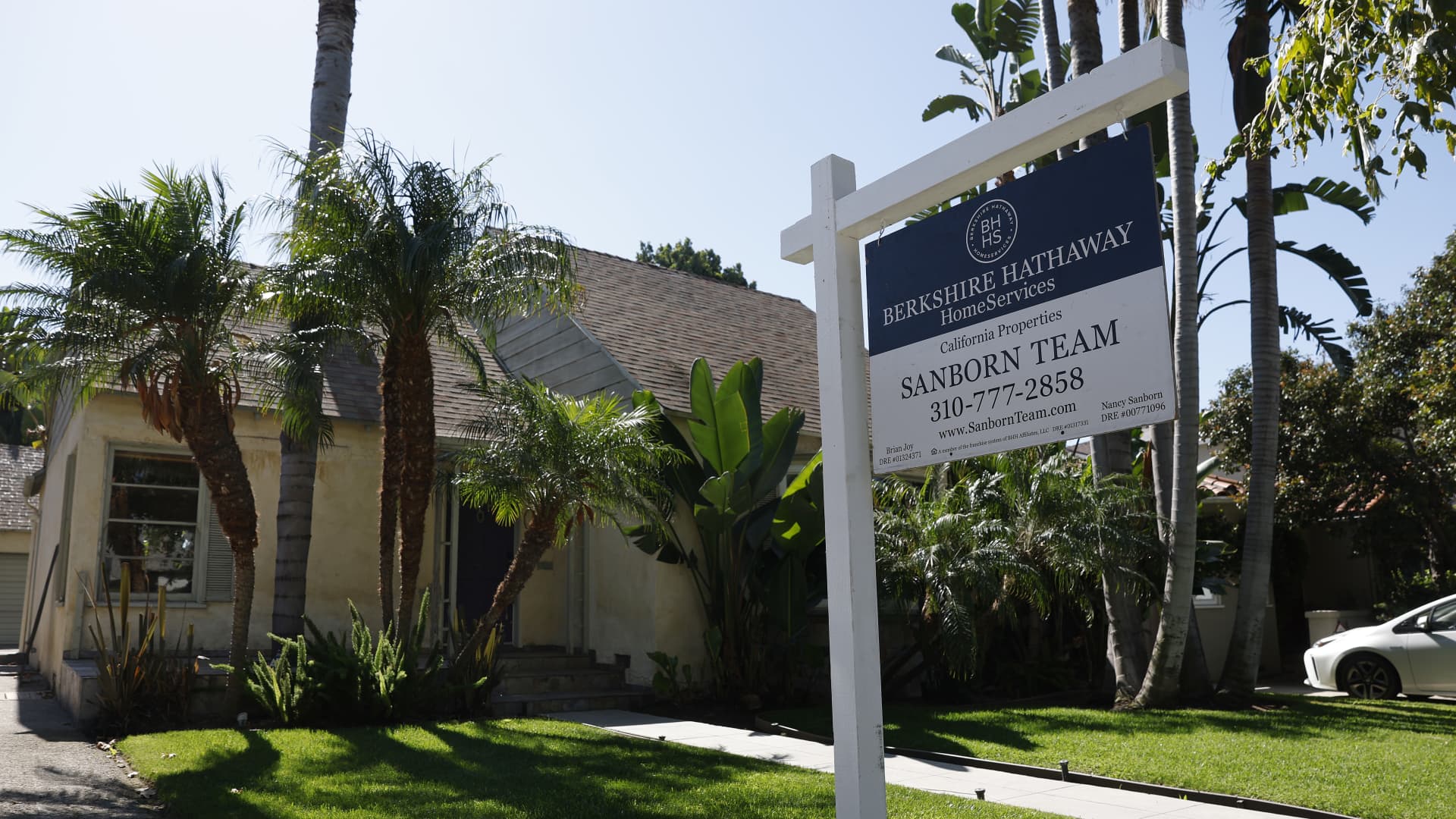
Newly enacted housing legislation that bans institutional investors from purchasing single-family rental homes has those same investors putting up more “for sale” signs.
The number of homes owned by institutional investors listed for sale is, as of this month, more than double what it was at the start of February, according to an analysis provided exclusively to Property Play by Parcl Labs, a real estate data provider.
Listings have gone from 4,166 on Feb. 1, when Parcl launched its full research, to now 9,447 homes representing $3.1 billion in total asking price.
“The rate of for-sale change is something to keep an eye on,” said Jason Lewris, co-founder of Parcl Labs. “These numbers won’t materialize into actual dispositions for months given how long the sales cycle can be, but it’s the fastest read into institutional behavior.”
The legislation defined institutional investors as those owning 350 or more homes. That was a surprise to the industry, which traditionally set that bar at 1,000 homes. It does not force them to sell the homes they currently own, but they are barred from buying any more homes unless they fall under certain exceptions, including build-to-rent.
The charge by lawmakers was that these investors, most of whom were able to buy the homes with all cash, were inflating prices and sidelining regular owner-occupant buyers. The call for a ban was bipartisan.
Large-scale investors first entered the market during the financial crisis in 2008, when foreclosures were rampant and bulk auctions were popping up in the hardest-hit markets, like Atlanta, Las Vegas and Phoenix. Private equity firms purchased thousands of homes in a short period, converting them to rentals and creating a new single-family rental asset class.
The cohort of investors with 350 or more homes that therefore fall under the new legislation now own roughly 589,000 homes, or 3.9% of the 14 million single-family rental homes in the U.S., according to Parcl. They account for roughly 40% of the net selling year to date.
The largest landlords — Progress Residential, Invitation Homes, AMH, Tricon, FirstKey, Amherst and VineBrook — are all net sellers year to date, with 3,180 more homes sold than bought since Jan. 1. To put that in perspective, they still own about 400,000 homes, so it’s not exactly a liquidation sale, with one exception. VineBrook currently has nearly 10% of its portfolio on the market, roughly 1,900 homes with a total asking price of $285 million.
Invitation homes and AMH, the two publicly traded, single-family rental REITs, have 549 and 536 homes for sale, respectively. The largest landlord, Progress Residential, has the least of the larger players, just 143 for sale.
“There is broad recognition now both by the White House and lawmakers, in an overwhelming majority, that private capital has a very big role to play for a component of the American population that wants to rent a home,” said Stephen Scherr, co-president of Pretium, in an interview last week on CNBC’s “Squawk on the Street.” Pretium is the parent company of Progress Residential.
Progress is now focusing on the areas that the new legislation allows and which the industry fought hard for during the legislative process.
“We can buy build-to-rent, which is a predominant component of new housing. We can buy under various other exceptions including rent-to-renovate, where we improve the housing stock or we buy under a homeownership boost, where we give people an opportunity to transition where they want from renters to owners,” Sherr said.
The build-to-rent play has been gaining significant steam over the past few years as demand for single-family rental housing grows.
AMH started early, in 2017, building its own homes. It has so far developed more than 14,000 homes for rent in 180 communities, according to the company. Invitation Homes purchased an Atlanta-based homebuilder, ResiBuilt, at the beginning of this year.
“The financing case has materially changed with the forced disposition mandate removed. Lenders can underwrite [build-to-rent] again, and we’re starting to see this happen,” Chris Nebenzahl, vice president of rental research at John Burns Research and Consulting, wrote in a report.
The investors who are selling are offering discounts on the properties. Nationally, 38.7% of all listings for sale today have had price cuts compared with 54% within the institutional, single-family rental cohort, according to Parcl Labs. Since early May, markdowns have deepened from about 3.1% to 4% of asking value. Meanwhile, 54% of the investor listings for those in the more than 350 homes category carry a price cut.
“From what we can tell, given where U.S. home prices are, some of this is attributed to shifts in strategy — collect high dollar values off of top U.S. home values by culling underperforming assets and redirect that capital towards growth areas, i.e. build-to-rent, for example,” Lewris said in a statement, adding that the next six to eight weeks will be telling.

Peter Kyle has been sacked as business secretary on Andy Burnham’s first day in Downing Street, leaving the government’s flagship late payment crackdown without the minister who built it while the bill is still midway through parliament.
Kyle became the third cabinet minister dismissed on Monday afternoon as the new Prime Minister assembled his own top team, following housing secretary Steve Reed and deputy prime minister David Lammy out of the door. Rachel Reeves was also sacked as chancellor, as Burnham moved swiftly against ministers most closely associated with Sir Keir Starmer.
No successor has been confirmed. The Financial Times has reported that Jonathan Reynolds could return to the brief, the role he handed to Kyle only last September.
For business owners, though, the more pressing question is not who next sits behind the desk at the Department for Business and Trade, but what happens to the agenda Kyle leaves behind.
Chief among it is the Small Business Protections (Late Payments) Bill, laid before parliament in May. The legislation caps payment terms at 60 days for large firms paying smaller suppliers, imposes mandatory interest of 8 per cent above the Bank of England base rate on overdue invoices, and hands the Small Business Commissioner powers to investigate and fine serial offenders. Government figures suggest poor payment practices drain roughly £11 billion a year from the economy and contribute to the closure of an estimated 38 small businesses every day.
Kyle had made the bill personal. He told Business Matters in May that he would not “resile from delivering” what he called a “step change in the relationship between all larger businesses and their supply chains”, adding: “Sixty days is a solid, reasonable outer limit for paying a small business.”
With the CBI and the British Retail Consortium already pressing concerns ahead of committee stage, the departure of the bill’s most vocal defender hands corporate lobbyists an opening at an awkward moment for small firms. Whoever inherits the brief faces an immediate test of nerve: hold Kyle’s line, or let the toughest payment rules in the G7 soften on the way to the statute book.
The churn itself will grate. Kyle’s successor will be the third business secretary since Labour took office two years ago, an unhappy echo of the revolving door at the business department that firms endured under successive Conservative administrations. Kyle used his ten months in post to promise an active, interventionist department, setting a target of nurturing Britain’s first $1trn company and pledging to make the UK the best place to start and scale a business.
His exit also lands amid a wider reorganisation of the Whitehall machinery that matters to growing firms. Officials have been asked to draw up plans to close the science and technology department, with its responsibilities split between the business department and the culture department, a proposal that has already provoked a revolt from tech leaders. The next business secretary could therefore take on a substantially bigger empire, and a year of restructuring to go with it.
Burnham, for his part, has promised to “bring forward the biggest changes in the last 40 years”, with a return to public ownership, a 10-year plan for the country and cost-of-living measures expected as early as Tuesday.
For SMEs, three things now bear watching: who gets the business brief, whether the late payments bill survives committee stage intact, and where the science department’s funding streams end up. On all three, owners will hope the new Prime Minister moves faster than the reshuffle rumour mill.

Jamie Young
Jamie Young is Senior Reporter at Business Matters, covering SME finance, employment law and Westminster policy since 2016. He has reported on every Budget and Autumn Statement since 2018, helped make sense of the ‘covid era’ and the bounce-back loan scheme from launch through the fraud investigations, and broke the magazine’s coverage of the 2024 late-payment reforms. He joined Business Matters straight from completing his BA in Administration from Exeter University and is NCTJ-qualified. Reach him at jyoung@cbmeg.co.uk

Poland stocks higher at close of trade; WIG30 up 1.62%

OPINION: Australia is already engaged in a borderless conflict and Canberra’s defences are struggling to keep pace.

Viper Energy: A Good, But Not Great Option

2025 Cadillac Escalade V-Series SUV
Cadillac
DETROIT — General Motors will launch new gas-powered Cadillac vehicles beginning next spring as the automaker continues to shift gears away from all-electric vehicles.
GM CEO Mary Barra said Tuesday that the next-generation Cadillacs will include new versions of the company’s CT5 sedan, outdated XT5 midsize SUV and discontinued three-row XT6 SUV.
“Starting next spring and continuing into 2028, we will begin launching the next generation of Cadillac ICE [internal combustion engine] vehicles,” Barra said during the company’s second-quarter earnings call. She said the vehicles will be in addition to Cadillac’s current all-electric crossovers and Escalade SUV.
The new product announcements add to GM’s pullback in EVs. The automaker had planned for Cadillac to exclusively sell electric vehicles by the end of this decade. The company also has walked back EV plans for other brands and increased gas-powered engine production, including V-8 offerings.
GM has recorded $10.9 billion in EV-related charges since the second half of last year after slower-than-expected electric vehicle adoption as well as U.S. regulatory changes easing emissions standards and eliminating support for EVs.
Barra reiterated that GM’s plans include “onshoring significant manufacturing” for the Detroit automaker beginning next year, in part by expanding production of its full-size SUVs to a Michigan plant that was previously slated to build EVs.
The full-size SUVs — Escalade, Chevy Tahoe and Suburban, and GMC Yukon and Yukon XL — are currently exclusively produced at the company’s Arlington Assembly plant in Texas.

A mid-sized company can spend months perfecting a LinkedIn page that a few hundred people follow, while the audience it actually wants sits quietly in the contact lists of its own staff.
Every employee who logs in brings a network of clients, suppliers, former colleagues and peers. Added together, that reach usually dwarfs anything the corporate account can manage on its own. For smaller businesses without a large media budget, this is one of the few channels where size is not the deciding factor.
The reach already sits inside your business
The instinct of most owners is to push everything through the brand account, then wonder why engagement stays flat. People follow people. A post from a recognisable colleague lands in a feed with a face and a name attached, and it carries a credibility no logo can buy. This is the thinking behind a deliberate employee advocacy strategy: instead of asking the marketing team to shout louder, you give the wider workforce a simple, low-effort way to share what the company is doing in their own words.
The barrier has never really been willingness. Most staff are happy to support the business they work for. The barrier is friction. People do not know what to post, worry about getting the tone wrong, or simply forget. Remove those obstacles and participation climbs quickly.
Turning goodwill into a repeatable habit
The firms that get this right treat sharing as a light routine rather than a campaign: a short prompt, a draft they can edit, a nudge at the right moment. Newer thought leadership software now handles much of that groundwork, suggesting angles based on someone’s role and letting them rewrite a post so it still sounds like them rather than a press release. The technology matters less than the principle: keep it personal, keep it easy, and let consistency do the heavy lifting.
Measurement helps too, though it is easy to overcomplicate. Track how many people are active, which themes earn replies, and whether any of it turns into conversations with prospects. As recent coverage in the magazine’s business news pages has shown, buyers increasingly research suppliers through the individuals behind them long before they ever fill in a contact form.
There is a cultural payoff as well. When employees post about their work, they tend to feel more connected to it. Recruitment gets easier because candidates can see real people enjoying real projects. The company page becomes a supporting act rather than the entire show, which is exactly where it belongs for most growing businesses.
None of this requires a rebrand or a six-figure agency retainer. It asks for a clear reason to take part, a bit of structure, and the patience to let a handful of regular contributors set the tone. The businesses that build that habit now will own a presence on LinkedIn that competitors with deeper pockets find surprisingly hard to copy, because it rests on something they cannot simply buy: the trust their own people have already earned.

AMD: Get Out While You Still Can

Open USD Raises Competition in the Global Stablecoin Payments Market

Netflix Horror Thriller Series Brings Fan-Favorite 90s Books To Life

The Biggest Fraud in UKs Financial History


-
 NewsBeat5 days ago
London Mayor Sadiq Khan handed a peerage by Keir Starmer alongside 15 other Labour figures… just days before the PM leaves No10
-

 Fashion4 days ago
Weekend Open Thread – Corporette.com
-

 Politics3 days ago
The House | The City of London can help the new chancellor deliver growth in every postcode
-

 Politics6 days ago
Young campaigners urge incoming PM to act on outdoor junk food ads
-

 Crypto World6 days ago
CFTC blocks Kalshi from unwinding Michigan trades after court order
-
 Crypto World4 days ago
Two July Windows Left: The CLARITY Act’s Senate Fight and What Failure Means
-

 Crypto World3 days ago
Ripple Payments Joins MiCA With 14 Firms, Does It Mean Anything For XRP?
-

 Business6 days ago
Nvidia Stock Slips After Big Tuesday Rally as Huang Confirms Vera Rubin Chip Is Now in Production Today
-

 Politics2 days ago
Democrats look to World Cup watch parties to register thousands of voters
-
 Entertainment6 days ago
Disney’s Most Ambitious Failed Star Wars Attraction Is Coming to SDCC
-

 Crypto World4 days ago
Ripple wins EU-wide access as ESMA adds it to MiCA register
-

 Crypto World7 hours ago
Grayscale Files For Worldcoin ETF, WLD Registers Sharp Rise
-

 Crypto World5 days ago
Injective Submits SEC Transfer-Agent Registration to Onchain Ownership Records
-

 Business6 days ago
Palantir Shares Rise After Expanded Nvidia Partnership and Fresh Analyst Upgrades Ahead of Earnings Day
-

 Tech15 hours ago
Sail Virtually Aboard The “Itanic” With IA-64 Emulator
-
 Tech13 hours ago
Turtle Beach Command Series KB7 review: a nifty screen-equipped gaming keyboard
-

 Tech7 days ago
Dark Secrets Emerge When Jailbreaking LLMs
-

 NewsBeat4 days ago
Registration is now open for March for Men with Kev 2026
-

 News Videos7 days ago
XRP BOMBSHELL… XRP OMBOARDED FOR TRANSACTIONS!!!
-

 NewsBeat1 day ago
Unregistered fitter used Gas Safe logo on business flyers
You must be logged in to post a comment Login