Connect with us
DAPA Banner
DAPA Coin
DAPA
COIN PAYMENT ASSET
PRIVACY · BLOCKDAG · HOMOMORPHIC ENCRYPTION · RUST
ElGamal Encrypted MINE DAPA
🚫 GENESIS SOLD OUT
DAPAPAY COMING

Business

US stocks today: US stocks end higher as semiconductors surge amid Mideast war intensifies

Published

on

US stocks today: US stocks end higher as semiconductors surge amid Mideast war intensifies
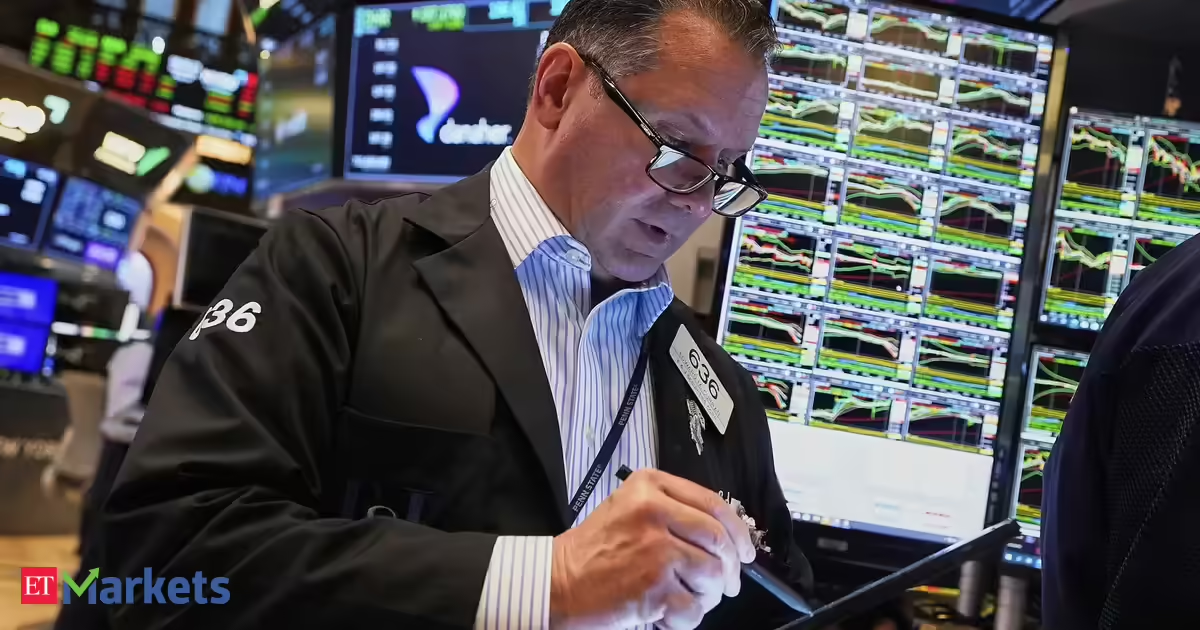
Wall Street’s main indexes closed ​higher on Tuesday, as a steep rally in semiconductor shares helped shift the focus away from the latest Middle East hostilities and tariff battles, while investors looked ahead to major technology earnings reports for clues on the future of the AI trade.

Gains in recently battered semiconductor stocks provided huge support ‌for the main ⁠U.S. stock ⁠indexes and the Philadelphia SE Semiconductor Index rallied sharply in its second consecutive advance after ending Friday more than 20% below its late-June record high.

“Investors are really ​buying back in to the semis ahead of earnings because they have fear of missing out (FOMO), that these companies could report outsized earnings ​beats and increase their outlooks and they don’t own as much as they did before the most recent pullback,” said Lindsey Bell, chief investment strategist at 248 Ventures in Charlotte, North Carolina.

But Bell cautioned that when stocks rally sharply ahead of earnings, “it makes it ​more difficult for them to run in response to earnings.”

Advertisement

“The numbers are going ⁠to be ‌really good, but the stocks are also priced for perfection,” she said. The chip index dipped last ​week as investors grew ​concerned about high valuations and hefty investments on artificial intelligence. But even after that drop, it ⁠is still up nearly 75% year-to-date.


According to preliminary data, the S&P 500 ​gained 64.04 points, or 0.86%, to end at 7,507.32 points, while the Nasdaq Composite gained 321.53 ​points, or 1.26%, to 25,829.61. The Dow Jones Industrial Average rose 384.46 points, or 0.74%, to 52,223.72.
Among the benchmark’s 11 major industry sectors, information technology led the gains during the session while consumer staples stocks lagged. Equity investors appeared to shrug off President Donald Trump’s unveiling of 50% tariffs on a wide range of imports from Canada on Monday. They also looked past geopolitics even as oil prices settled up 2% after hitting five-week highs. This was after two oil tankers carrying Saudi crude to Asia ‌reversed course in the Red Sea after Yemen’s Iran-aligned Houthis threatened to impose a blockade on commercial shipping there. Trump said the United States would respond if the Houthis followed through.”Investors see (the war) as transitory ​because we know ​two things – that $100 oil is a ⁠pressure point for Trump, and we also know that midterm elections are coming up,” Bell said.

Meanwhile, their focus this week will turn to results from Alphabet and chipmakers Intel and Texas Instruments. Among individual stocks, 3M shares rallied after the industrial giant lifted its ​full-year profit forecast. Hasbro stock climbed sharply after it raised annual revenue and profit forecasts, betting on demand for its digital gaming and “Magic: The Gathering” products. Danaher shares sank after the life sciences firm trimmed its core revenue growth outlook and reported weaker-than-expected revenue in its biotechnology business. MSCI shares tumbled after the index provider raised its full-year operating expense forecast despite better-than-expected quarterly revenue. And Genuine Parts shares dropped after the auto parts distributor lowered its full-year profit outlook.

Continue Reading

Click to comment

You must be logged in to post a comment Login

Leave a Reply

Business

Disney layoffs hit Pixar, ESPN and National Geographic employees

Published

on

Disney layoffs hit Pixar, ESPN and National Geographic employees

Disney laid off several hundred employees Tuesday morning across multiple divisions, with Pixar absorbing the largest share of the cuts.

At least 116 employees were laid off at Pixar’s Emeryville, California, headquarters, according to TheWrap, citing sources. Disney Entertainment Television, Disney Studios and ESPN were also affected by the latest round of workforce reductions. 

Advertisement

The layoffs came as Pixar’s newly released “Toy Story 5” dominated the global box office, grossing about $962 million worldwide and putting the film on track to surpass the $1 billion mark. 

The cuts also mark Pixar’s largest round of layoffs in the last two years, despite “Inside Out 2” becoming the highest-grossing animated film of all time with $1.69 billion worldwide in 2024.

DISNEY LAYS OFF 1,000 EMPLOYEES ACROSS TV AND FILM UNDER NEW CEO

toy story character maskots

Toy Story characters Jessie, Woody and Buzz Lightyear pose at a red carpet launch event for ‘Toy Story 5’ in London on May 28, 2026. (Henry Nicholls / AFP / Getty Images)

Within Disney Entertainment, National Geographic is expected to be among the hardest-hit brands, according to the report.

Advertisement

ESPN also cut several high-profile on-air personalities, including Karl Ravech, a longtime SportsCenter anchor and Baseball Tonight host who has been with the network since 1993, The Hollywood Reporter reported.

Ryan Clark, a former NFL player who has served as an ESPN football analyst for more than a decade, was also named.

DISNEY CEO DEFENDS MASSIVE AI DEAL, SAYS CREATORS WON’T BE THREATENED

Characters from Inside Out 2

Characters from Disney and Pixar’s “Inside Out 2” are displayed during the film’s world premiere at the El Capitan Theatre in Hollywood on June 10, 2024. (Photo by Alberto E. Rodriguez/Getty Images for Disney/Pixar / Getty Images)

ESPN Chairman Jimmy Pitaro told staff in a memo Tuesday morning that the company made the decision after an extensive evaluation of its teams and organizational structure. 

Advertisement

“Over the past several months, we’ve made significant progress integrating the NFL assets that we acquired into ESPN. Throughout this process, we have taken the time to carefully evaluate our collective teams, resources and organizational structure to best position us for the future. As a result, we had to make some difficult decisions about job impacts that we will be communicating today,” Pitaro said, according to The Hollywood Reporter. 

The cuts may have been triggered in part by the underperformance of “Hopper,” Pixar’s original film that launched earlier this year, sources told TheWrap. 

The movie reportedly finished slightly below breaking even under Hollywood accounting standards. 

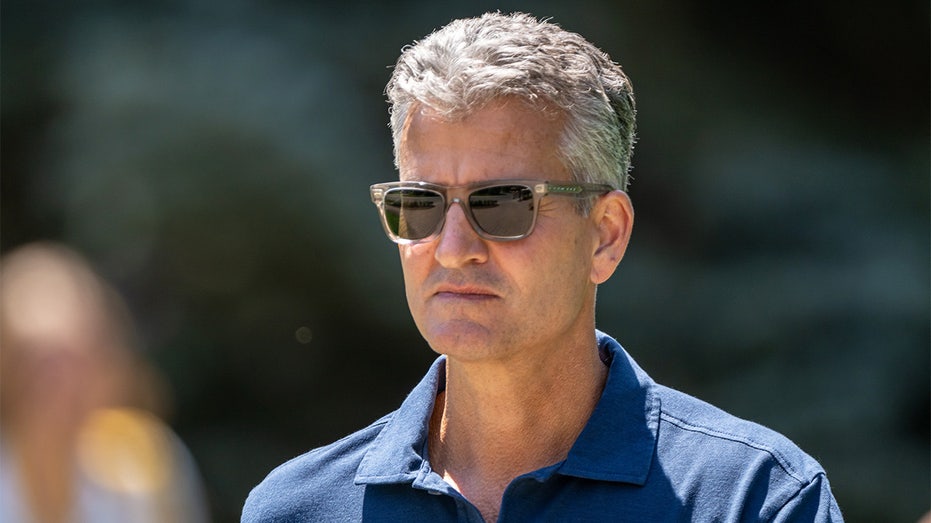
Josh D'Amaro

Josh D’Amaro, as then-chairman of Disney Experiences for Walt Disney Co., during the Allen & Co. Media and Technology Conference in Sun Valley, Idaho, US, on Thursday, July 10, 2025.  (David Paul Morris/Bloomberg via Getty Images / Getty Images)

CLICK HERE TO GET FOX BUSINESS ON THE GO

Advertisement

Pixar’s “Elio” also struggled at the box office, earning about $154 million worldwide in 2025 against a reported production budget of $200 million. It marked the studio’s lowest-grossing film since the COVID-impacted “Onward.”

The latest round of layoffs marks the third wave of job cuts to hit the media giant this year. 

Ticker Security Last Change Change %
DIS THE WALT DISNEY CO. 95.88 -0.26 -0.27%

In April, Disney laid off roughly 1,000 employees across its television and film divisions under newly appointed CEO Josh D’Amaro. 

The executive cited the need to “streamline” operations amid the “fast-moving pace” of change across the entertainment industry.

Advertisement

In January, Disney reportedly consolidated its marketing departments under Chief Brand Officer Asad Ayaz, leading to additional cuts in those areas, according to The Hollywood Reporter.

Continue Reading

Business

Thai SMEs Must Go Green to Survive the Low-Carbon Economy

Published

on

Thai SMEs Must Go Green to Survive the Low-Carbon Economy

Abstract

  • Thai SMEs face growing pressure to adopt green practices as carbon-related trade rules increasingly determine market access, not just price or quality. While the transition path involves self-assessment, planning, implementation, and monitoring, most SMEs remain focused on immediate survival concerns and lack capacity, data systems, and access to green finance.
  • Green loans currently represent only 1.4% of Thailand’s total outstanding loans, with most directed toward large corporations. Clearer policy direction, coordinated government support, tax incentives, and simplified reporting tools are identified as essential for enabling SMEs to participate in the low-carbon economy and remain competitive in global supply chains.

A new set of trade rules is sweeping through the business world. This time, it is not about price or quality. It is about carbon reduction—and whether companies can keep up. 

Environmental pressures are rocking global trade and its supply chains to the core. Businesses are expected to take responsibility for their environmental impact, not as a choice, but as a condition of market access. 

This is not only about large corporations, but also about small and medium-sized enterprises as trade and investment trends shift. 

As carbon rules tighten amid the climate crisis, SMEs cannot afford to stand still. In a low-carbon economy, green transition has become a business imperative. 

For Thai SMEs, the journey begins with recognising the shift in global trade rules—and the need to change how they do business. 

Advertisement

To avoid being left behind by new pressures in global trade, they need to understand what the transition requires and the benefits they will receive in return: lower costs, greater efficiency, and better access to future markets. 

From awareness comes action. 

The first step is to assess where their business stands. How “green” is it already? The government has developed self-assessment tools such as the Green SME Index and the Green Enterprise Index to help answer that question. 

Then comes planning. SMEs must identify what needs to change, set priorities, and design green projects or activities. These plans lead to implementation and investments to make operations more environmentally friendly. 

And finally, monitoring and evaluation. The steps are clear. But the path is not easy. 

Advertisement

Most SMEs are still preoccupied with basic survival: cash flow, costs, and market uncertainty. Environmental concerns often feel distant, secondary. 

There is also a common misunderstanding. Many believe the green transition requires large-scale change and heavy investment. In reality, some green actions are simple and already adopted by SMEs to improve efficiency. 

Using energy-efficient machinery, installing solar panels, and switching to electric vehicles. These are practical measures already in place but not recognised as part of a wider green transition. 

Still, obstacles remain.

Many SMEs lack the capacity to plan and carry out green initiatives. They then depend on external expertise, which adds cost and complexity. Access to funding is another barrier. True, Thailand’s green finance market is growing, but for SMEs, it remains hard to reach and even harder to use. 

Advertisement

Green finance to support this transition includes financial tools such as green deposits, green loans, green bonds, and sustainability-linked bonds. For SMEs, green loans are the most relevant. 

Government-backed schemes offer a starting point. For example, the Bank of Thailand’s Financing the Transition programme and the SME Green Productivity programme from the Office of Small and Medium Enterprises Promotion (OSMEP). 

These schemes do not only have lower interest rates but also longer repayment periods and credit guarantees from the Thai Credit Guarantee Corporation. 

Meanwhile, banks are expanding green finance services to meet growing demand and build their own portfolios. 

Advertisement

Unfortunately, the progress remains slow. 

According to a 2023 Bank of Thailand report, green loans account for only 1.4% of total outstanding loans. And most of them go to large companies. 

Why are SMEs left behind? 

Part of the answer lies in familiar constraints. Being small, their limited business capacity raises banks’ concerns about their ability to repay. 

Advertisement

In practice, the criteria for green loans are not much different from conventional loans. Financial institutions still focus on business readiness and the ability to repay. 

But there is an added layer of hurdles. 

SMEs must present clear plans for green projects or activities. This often becomes a burden. Documentation takes time and resources. But most SMEs lack proper data systems. Without reliable data, banks cannot assess their business risks and approve loans. 

For SMEs to help Thailand reach its Net Zero target by 2050, the government has a key role to play. 

First and foremost, it must make SMEs believe that transitioning is not difficult and that they will benefit from it. 

Advertisement

Tax incentives can be a game-changer.  Incentives include tax benefits for green activities, subsidies for adopting green technologies, and advantages in green procurement processes. The United Kingdom is effectively using tax incentives to encourage high-emission businesses to adjust. 

Coordination within the state bureaucracy is just as important. 

Government agencies need to work together to make the transition less complicated. Tools such as the Green SME Index and the Green Enterprise Index should not stand alone. Their results should link directly to state support, such as advisory services in assessment and planning for green transition, access to technology, and financing. 

There is also a need for simpler systems. 

SMEs need practical ways to report sustainability and carbon reduction. They do not want complex frameworks but tools they can actually use. Better data would improve their chances of securing green loans and allow for proper monitoring of progress. 

Advertisement

Malaysia’s Greening Value Chain programme is also taking this approach by combining green financing with technical training and access to software to track greenhouse gas emissions. 

For Thailand’s new government, the starting point is clarity. 

It must set a clear direction for the transition, starting with identifying target industries—those with high emissions or those most exposed to future pressure. 

It should also focus on low-risk green activities that can reduce business costs. These are the easiest entry points. They build confidence and deliver results. 

If policy direction is clear and state support is accessible, the green transition will no longer feel like a burden for small businesses. Instead, it will be an opportunity to cut costs, improve efficiency, and stay competitive in a market that prioritises the environment. 

Advertisement

At that point, Thai SMEs will not simply be adapting. They will be positioning themselves within emerging green supply chains, both at home and abroad. 

And the question will no longer be whether they can afford to change, but whether they can afford not to. 

Urairat Jantarasiri is a researcher at the Thailand Development and Research Institute (TDRI). Their policy analyses appear in the Bangkok Post on 20 May 2026.

Read More

Advertisement

Continue Reading

Business

GEO Group worker charged with assault in shooting of ICE protester in Colorado

Published

on


GEO Group worker charged with assault in shooting of ICE protester in Colorado

Continue Reading

Business

Adient: The Unimpacted Negative FCF Highlights The Structural Issues

Published

on

Adient: The Unimpacted Negative FCF Highlights The Structural Issues

Adient: The Unimpacted Negative FCF Highlights The Structural Issues

Continue Reading

Business

six in ten SMEs cut innovation spend

Published

on

six in ten SMEs cut innovation spend

The reforms designed to clean up Britain’s £8 billion research and development tax credit scheme have worked rather too well.

More than six in ten businesses carrying out R&D have cut their investment as a direct result, according to new data from the advisory firm RCK Partners, with hiring frozen and technology projects cancelled outright.

R&D tax credits subsidise science and technology projects and cost the Exchequer roughly £8 billion a year. After sustained abuse of the scheme, HMRC placed far greater scrutiny on claims and pushed through a package of reforms, including reduced relief rates, which took effect in April 2023.

The consequences for smaller firms now look considerably sharper than intended.

RCK’s survey of more than 250 chief financial officers at R&D-active SMEs found that a third have hired fewer technical staff than planned, and one in five has cancelled innovation projects altogether. Thirty per cent were forced to take out loans to cover delays in relief payouts, and nearly as many fell back on directors’ personal funds.

Advertisement

Lord Hammond of Runnymede, the former chancellor and chairman of RCK Partners, called the findings “disconcerting” and urged policymakers to look “more carefully” at whether the scheme still works.

“It is a national priority to ensure that our SME sector, which is a critical part of the economy, is doing R&D,” he said. “The rates for small and medium companies were reduced at the same time as the regime was toughened up. The risks and the complexity increased while the rewards decreased.”

That combination, tighter enforcement layered on top of thinner relief, is what business owners will recognise. The compliance burden landed at precisely the moment the payoff shrank.

On its own terms, the crackdown has succeeded. The government says the cost of fraud and error fell from £1.34 billion in 2021-22 to £497 million in 2023-24, when an estimated 43,615 R&D claims were made by small businesses. HMRC’s most recent annual accounts also revised down total relief expenditure for 2023-24 by £920 million, from an initial £3.26 billion to £2.34 billion.

Advertisement

“It confirms that the impact on SME claims has been bigger than perhaps policymakers expected or intended,” Hammond said. “Policymaking is not an exact art. You develop a policy, you model it, you implement it. But if you’re sensible, you then go back and monitor what’s happened … and you tweak the model.”

Peter Roscoe, co-founder of RCK Partners, was clear that the enforcement itself is not the problem. “HMRC has done a really good job in getting the fraud and error rates down,” he said. The difficulty, he added, lies in the “inconsistencies” in the inquiry process, an issue familiar to any firm that has watched a routine query metastasise.

“Some inspectors ask targeted questions that are easier to answer, and then other times [a business] could get somebody who could go on for two years.”

A second problem is the advisory market itself. Roscoe pointed to online advertising, where claimants are “contacted out of the blue” by firms promising to deliver an R&D claim but often unqualified to do so. An investigation by The Times in 2022 revealed how the incentives were being targeted by rogue tax advisers encouraging dubious claims, few of which were checked by HMRC. Those same advisers, Roscoe said, have scared off genuine innovation companies from trying to access the scheme at all.

Advertisement

The chilling effect is measurable. Nearly a quarter of respondents said they had decided not to submit a claim at all, a figure rising to nearly half among firms with 250 to 499 staff. HMRC defines an SME as a business with up to 500 employees, which means the largest firms in that bracket, typically those with the most sophisticated R&D programmes, are the most likely to walk away.

The government is unmoved. “This report is based on a tiny fraction of UK SMEs,” it said. “The truth is the UK’s R&D tax relief schemes continue to provide vital support for business productivity and growth, with £8 billion of relief claimed in 2025-26.

“Our reforms mean that taxpayers’ money now goes towards genuine innovation, effectively tackling the high levels of error and fraud that have affected the schemes in previous years.”

Ministers have already floated mandatory pre-approval for R&D claims as a way of restoring certainty, and HMRC’s own review found non-compliance was higher where specialist agents were involved. Neither addresses the underlying arithmetic Hammond describes. With business investment appetite already at post-Covid lows, the question for the Treasury is whether a scheme nobody wants to claim from can still be called an incentive.

Advertisement

Amy Ingham

Amy Ingham

Amy Ingham is a reporter at Business Matters, covering UK business news with a focus on breaking news, business policy, late payments and insolvency. She joined the magazine in 2026 after completing the NCTJ Diploma in Journalism at Harlow College’s journalism school. Her recent reporting includes British Steel’s nationalisation and its impact on SME suppliers, the decline in late payments by large firms, and Insolvency Service director disqualifications. Reach her at aingham@cbmeg.co.uk.

Advertisement
Continue Reading

Business

Airbus to start testing new high-tech folding wings

Published

on

Business Live

The extensions for the A321 Neo aircraft will be assembled in Filton near Bristol

Airbus will design, build and flight test full scale wing extensions for next generation single aisle

Airbus will design, build and flight test full scale wing extensions for next generation single aisle plane(Image: Airbus)

Airbus is planning to test the performance of new folding wings that it has been developing at its base in Filton near Bristol.

The long-span wings have been designed as part of the aerospace giant’s major research and technology programme, ‘Wing of Tomorrow’, and will be used on its next-generation single-aisle aircraft.

The extensions, which will be assembled in Filton and flight tested in Toulouse in France, measure several metres but are made of light but strong materials and offer the promise of energy savings for Airbus.

The Wing of Tomorrow programme is centred around creating longer, lighter and more slender wings to maximise aerodynamic efficiency and reduce fuel burn.

Advertisement

They will be tested over the next three years and will be installed on an A321 neo plane – the company’s best-selling aircraft. During the evaluation period, Airbus will look at how the different wing geometries perform in real flight conditions.

During the testing process, the wings will be fitted with equipment to capture behaviour in flight and evaluate how the longer wingspan impacts aircraft handling.

Sue Partridge, Airbus Head of Wing of Tomorrow programme, said: “Importantly, the wing is one of the biggest levers we have to improve flight efficiency, which is why the Wing of Tomorrow is so critical for our next generation single aisle aircraft.

“This flight-test campaign will allow us to safely challenge traditional design limits and explore the benefits of longer wings.”

Advertisement

Airbus is currently using advanced digital modelling and wind tunnel testing to finalise the designs of the wing extensions before they are tested in a representative flying environment.

Airbus has already built three 17-metre (ground based) wing demonstrators to explore the advantages of increased wingspan.

The announcement by Airbus comes as plane makers race to develop new technologies that can be used to shape future commercial aircraft.

Airbus rival Boeing has already installed extended wings on its two-aisle 777X plane, but the tech has not been used on any single-aisle plane before.

Advertisement
Continue Reading

Business

Massive disconnect of power roils largest US electric grid

Published

on


Massive disconnect of power roils largest US electric grid

Continue Reading

Business

China’s Moonshot AI stole from Anthropic, Trump tech adviser says

Published

on

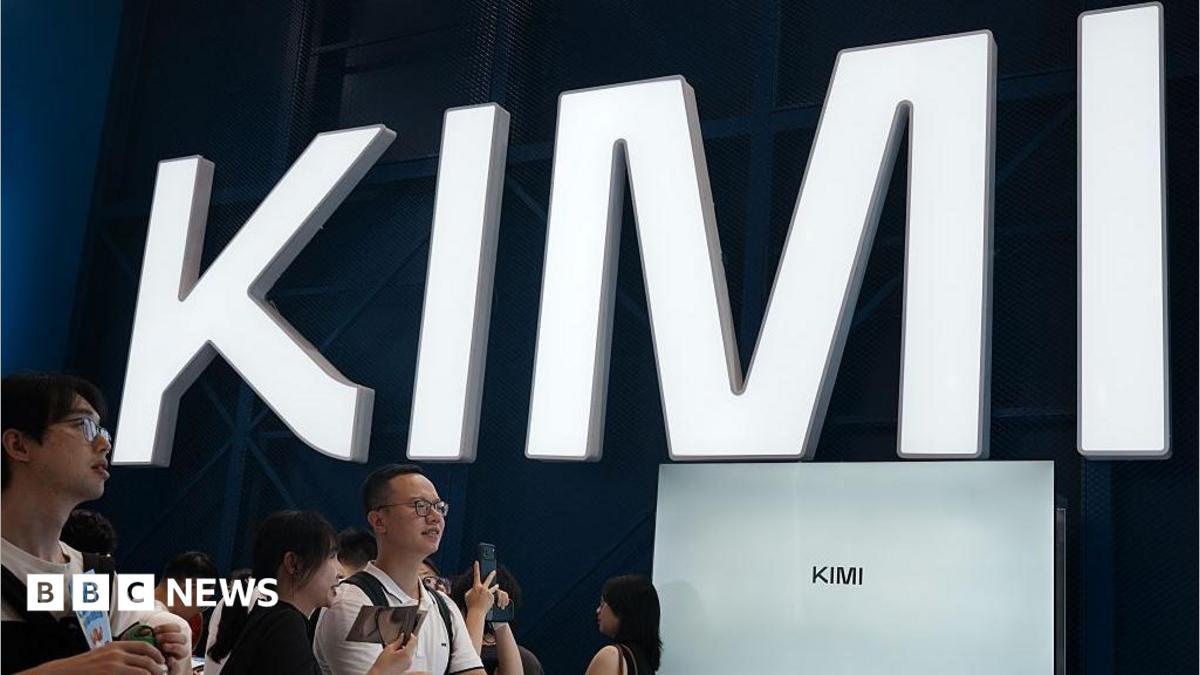
Visitors at a trade show in Shanghai visit a booth with the Kimi sign displayed in large block letters

A White House adviser has accused China’s Moonshot AI of a “large scale” effort to steal the capabilities of top US artificial intelligence (AI) models.

US President Donald Trump’s Science and Technology adviser Michael Kratsios said Moonshot AI carried out the campaign through what is known as distillation – when a weaker AI model extracts answers from a stronger one.

Moonshot also gained access to restricted cutting-edge Nvidia servers to train its models, Kratsios said in a social post, external on Wednesday.

The BBC has contacted Moonshot, Anthropic, the White House and Nvidia for comment.

Advertisement

Kratsios said on X that the US government has information that Moonshot AI “distilled” capabilities from Anthropic’s Fable AI for the development of its K3 model.

Kimi K3 gained attention around the world after it was unveiled last week, with many believing it to have narrowed the gap between Western and Chinese AI models. Moonshot said its K3 model is able to rival top US technology.

Kratsios’ allegations come just a day after Treasury Secretary Scott Bessent said the US would examine whether Chinese AI models have stolen the capabilities from American rivals.

“We’ve seen a lot of talk about open-source models coming and threatening the large language models in the US,” Bessent told Fox Business on Tuesday.

Advertisement

“If we see, especially, that overseas models are stealing from our great companies, we have the ability to sanction them,” he added.

The increased scrutiny by the US of Chinese AI companies also comes as Trump is expected to meet his Chinese counterpart Xi Jinping in September.

Continue Reading

Business

Wall St dips as Big Tech earnings, rising oil in focus

Published

on

Wall St dips as Big Tech earnings, rising oil in focus

The Nasdaq led Wall Street lower with ‌a mixed performance from technology stocks, as investors waited for key earnings reports to gauge the health of a market rally fed by enthusiasm for artificial intelligence.

Continue Reading

Business

DevelopmentWA readies Pilbara for residential land boom

Published

on

DevelopmentWA readies Pilbara for residential land boom

DevelopmentWA is gearing up for a major expansion of land for housing.

Continue Reading

Trending

Copyright © 2025