Connect with us
DAPA Banner
DAPA Coin
DAPA
COIN PAYMENT ASSET
PRIVACY · BLOCKDAG · HOMOMORPHIC ENCRYPTION · RUST
ElGamal Encrypted MINE DAPA
🚫 GENESIS SOLD OUT
DAPAPAY COMING

Business

Thai SMEs Must Go Green to Survive the Low-Carbon Economy

Published

on

Thai SMEs Must Go Green to Survive the Low-Carbon Economy

Abstract

  • Thai SMEs face growing pressure to adopt green practices as carbon-related trade rules increasingly determine market access, not just price or quality. While the transition path involves self-assessment, planning, implementation, and monitoring, most SMEs remain focused on immediate survival concerns and lack capacity, data systems, and access to green finance.
  • Green loans currently represent only 1.4% of Thailand’s total outstanding loans, with most directed toward large corporations. Clearer policy direction, coordinated government support, tax incentives, and simplified reporting tools are identified as essential for enabling SMEs to participate in the low-carbon economy and remain competitive in global supply chains.

A new set of trade rules is sweeping through the business world. This time, it is not about price or quality. It is about carbon reduction—and whether companies can keep up. 

Environmental pressures are rocking global trade and its supply chains to the core. Businesses are expected to take responsibility for their environmental impact, not as a choice, but as a condition of market access. 

This is not only about large corporations, but also about small and medium-sized enterprises as trade and investment trends shift. 

As carbon rules tighten amid the climate crisis, SMEs cannot afford to stand still. In a low-carbon economy, green transition has become a business imperative. 

For Thai SMEs, the journey begins with recognising the shift in global trade rules—and the need to change how they do business. 

Advertisement

To avoid being left behind by new pressures in global trade, they need to understand what the transition requires and the benefits they will receive in return: lower costs, greater efficiency, and better access to future markets. 

From awareness comes action. 

The first step is to assess where their business stands. How “green” is it already? The government has developed self-assessment tools such as the Green SME Index and the Green Enterprise Index to help answer that question. 

Then comes planning. SMEs must identify what needs to change, set priorities, and design green projects or activities. These plans lead to implementation and investments to make operations more environmentally friendly. 

And finally, monitoring and evaluation. The steps are clear. But the path is not easy. 

Advertisement

Most SMEs are still preoccupied with basic survival: cash flow, costs, and market uncertainty. Environmental concerns often feel distant, secondary. 

There is also a common misunderstanding. Many believe the green transition requires large-scale change and heavy investment. In reality, some green actions are simple and already adopted by SMEs to improve efficiency. 

Using energy-efficient machinery, installing solar panels, and switching to electric vehicles. These are practical measures already in place but not recognised as part of a wider green transition. 

Still, obstacles remain.

Many SMEs lack the capacity to plan and carry out green initiatives. They then depend on external expertise, which adds cost and complexity. Access to funding is another barrier. True, Thailand’s green finance market is growing, but for SMEs, it remains hard to reach and even harder to use. 

Advertisement

Green finance to support this transition includes financial tools such as green deposits, green loans, green bonds, and sustainability-linked bonds. For SMEs, green loans are the most relevant. 

Government-backed schemes offer a starting point. For example, the Bank of Thailand’s Financing the Transition programme and the SME Green Productivity programme from the Office of Small and Medium Enterprises Promotion (OSMEP). 

These schemes do not only have lower interest rates but also longer repayment periods and credit guarantees from the Thai Credit Guarantee Corporation. 

Meanwhile, banks are expanding green finance services to meet growing demand and build their own portfolios. 

Advertisement

Unfortunately, the progress remains slow. 

According to a 2023 Bank of Thailand report, green loans account for only 1.4% of total outstanding loans. And most of them go to large companies. 

Why are SMEs left behind? 

Part of the answer lies in familiar constraints. Being small, their limited business capacity raises banks’ concerns about their ability to repay. 

Advertisement

In practice, the criteria for green loans are not much different from conventional loans. Financial institutions still focus on business readiness and the ability to repay. 

But there is an added layer of hurdles. 

SMEs must present clear plans for green projects or activities. This often becomes a burden. Documentation takes time and resources. But most SMEs lack proper data systems. Without reliable data, banks cannot assess their business risks and approve loans. 

For SMEs to help Thailand reach its Net Zero target by 2050, the government has a key role to play. 

First and foremost, it must make SMEs believe that transitioning is not difficult and that they will benefit from it. 

Advertisement

Tax incentives can be a game-changer.  Incentives include tax benefits for green activities, subsidies for adopting green technologies, and advantages in green procurement processes. The United Kingdom is effectively using tax incentives to encourage high-emission businesses to adjust. 

Coordination within the state bureaucracy is just as important. 

Government agencies need to work together to make the transition less complicated. Tools such as the Green SME Index and the Green Enterprise Index should not stand alone. Their results should link directly to state support, such as advisory services in assessment and planning for green transition, access to technology, and financing. 

There is also a need for simpler systems. 

SMEs need practical ways to report sustainability and carbon reduction. They do not want complex frameworks but tools they can actually use. Better data would improve their chances of securing green loans and allow for proper monitoring of progress. 

Advertisement

Malaysia’s Greening Value Chain programme is also taking this approach by combining green financing with technical training and access to software to track greenhouse gas emissions. 

For Thailand’s new government, the starting point is clarity. 

It must set a clear direction for the transition, starting with identifying target industries—those with high emissions or those most exposed to future pressure. 

It should also focus on low-risk green activities that can reduce business costs. These are the easiest entry points. They build confidence and deliver results. 

If policy direction is clear and state support is accessible, the green transition will no longer feel like a burden for small businesses. Instead, it will be an opportunity to cut costs, improve efficiency, and stay competitive in a market that prioritises the environment. 

Advertisement

At that point, Thai SMEs will not simply be adapting. They will be positioning themselves within emerging green supply chains, both at home and abroad. 

And the question will no longer be whether they can afford to change, but whether they can afford not to. 

Urairat Jantarasiri is a researcher at the Thailand Development and Research Institute (TDRI). Their policy analyses appear in the Bangkok Post on 20 May 2026.

Read More

Advertisement

Continue Reading

Click to comment

You must be logged in to post a comment Login

Leave a Reply

Business

EasyJet expands base at Bristol Airport supporting hundreds of jobs

Published

on

Business Live

The budget airline now operates 90 routes from Bristol

Bristol Airport - newest addition to easyJet’s fleet flies into Bristol Airport - new Airbus 320 joins the airline’s Bristol-based fleet.  Photographer: Michael Lloyd/Staff   Reporter:    Copyright: Bristol News and Media

An easyJet aircraft(Image: Bristol News and Media)

Budget airline easyJet has added an extra aircraft to its base at Bristol Airport in a move it says will support 400 jobs including pilot and cabin crew roles. The A320 Neo plane is the carrier’s 20th at the South West transport hub.

EasyJet said the expansion has enabled it to provide more routes from Bristol including to destinations such as Reus, Thessaloniki, Seville, Cape Verde, Bari and Budapest.

The airline now operates 90 routes from Bristol to 27 countries.

Kevin Doyle, easyJet’s UK Country Manager, said: “We are delighted to have welcomed the arrival of a 20th aircraft and our 13th Neo aircraft at our Bristol base. Our continued commitment and growth in Bristol supports many skilled jobs and plays a vital role in connecting the South West to Europe and beyond.

Advertisement

“Providing more affordable air travel not only ensures flying remains accessible to the six million passengers who choose to fly with us from Bristol each year, but also drives inbound tourism, bringing visitors and economic benefits to the South West.”

Dave Lees, chief executive of Bristol Airport, said the airport was “especially pleased” to welcome another Airbus A320 Neo.

According to easyJet, Airbus’s Neo aircraft are 20 per cent more fuel efficient per seat as well as 50 per cent quieter than the planes in the rest of the fleet. Neo now make up 65 per cent of the easyJet fleet at Bristol.

“This underpins our commitment to local communities that we are actively encouraging newer, quieter and more fuel-efficient aircraft to Bristol Airport,” said Mr Lees.

Advertisement

“We’re really proud to be one of easyJet’s biggest European bases, which is so important for providing not only unrivalled choice of destinations, more inbound tourism opportunities, connections and frequency, but more high-quality jobs in our region.”

Earlier this month, US investment giant Apollo agreed to acquire easyJet for £5.7bn in a surprise move that trumped an earlier approach from rival asset manager Castlelake.

The budget airline confirmed it was prepared to accept an all-cash proposal from Apollo, valuing the airline at 714p per share. The carrier said Apollo’s offer “delivers a superior outcome for easyJet shareholders”.

Advertisement
Continue Reading

Business

IBM cuts annual revenue growth forecast as customers prioritize AI infrastructure spending

Published

on

IBM cuts annual revenue growth forecast as customers prioritize AI infrastructure spending
IBM cut its annual revenue growth forecast on Wednesday, days after shocking Wall Street with a warning that corporate spending was shifting toward AI-focused data-center gear at the expense of its software and mainframe computers.

The company also missed profit and revenue expectations for the second quarter ended June 30. Executives sought to reassure shareholders that customers prioritized spending on AI in the quarter but were not looking to move away from mainframes in the ‌longer term.

The Armonk, ⁠New York-based ⁠company’s shares dipped marginally in extended trading, following a 2% rise earlier.

CEO Arvind Krishna said last week IBM had “faltered” in adapting and “numerous large deals” had slipped, sending the company’s shares down 25%, its steepest one-day fall in more than a century.

Advertisement

On the earnings conference call, Krishna said a “majority of what didn’t happen in the second quarter was large capex deals at large clients” and added that about one-third of those deals had now closed in the current third quarter.


“A lot of the demand is deferred, not destroyed,” ⁠Krishna said.
IBM’s ‌forecast spotlights how the scramble for AI hardware has stoked investor fears that companies rushing to secure scarce servers, chips and networking gear could be cutting back on spending on ⁠the wider software sector. IBM now expects 2026 revenue growth between 4% and 5%, down from its previous expectations of more than 5% growth. The midpoint of the forecast is below analysts’ average estimate of a 4.8% rise to $70.77 billion in revenue, according to data compiled by LSEG.

“For the broader software sector, this should be treated as a positive print, with IBM’s software woes more likely to reflect specific IBM-related hardware issues, as management outlined in its investor letter last week,” CFRA analyst Brooks Idlet said.

Revenue from IBM’s Z mainframe, which processes millions of ‌daily transactions across industries such as banking and airlines, slumped 42% in the second quarter, dragging infrastructure revenue down 7% to $3.84 billion.

“That mainframe stack of hardware and transaction processing software impacted IBM’s growth by over five ⁠points in the quarter,” IBM finance chief James Kavanaugh told Reuters. “We were only expecting about a point or two of an impact.”

Advertisement

He said IBM sees “no evidence of clients moving off a mainframe,” adding that it expects “significant outperformance in the program to continue through the second half.”

Software revenue in the second quarter rose 5% to $7.76 billion but missed an average estimate of $7.88 billion.

The company’s second-quarter revenue ticked up 1% to $17.16 billion, missing estimates of $17.58 billion. IBM reported a net profit of $2.17 billion, a dip from a year earlier, while adjusted profit of $2.93 per share missed an average estimate of $2.97.

Advertisement
Continue Reading

Business

Centaurus Metals at Noosa Mining Conference 2026: Jaguar funding nears

Published

on


Centaurus Metals at Noosa Mining Conference 2026: Jaguar funding nears

Continue Reading

Business

defence stocks rally, No 11 hedges

Published

on

defence stocks rally, No 11 hedges

Defence shares rallied the moment John Healey was named chancellor. By Tuesday afternoon, Downing Street had declined to confirm the number the sector actually wants, and ruled out the funding mechanism some had hoped for.

Healey resigned as defence secretary last month after accusing Sir Keir Starmer’s government of falling “well short” on military spending. Andy Burnham’s decision to hand him the Treasury was a surprise, and markets read it as an instruction rather than a consolation prize.

Shares in Babcock International, which builds warships and maintains Britain’s naval bases, rallied more than 7 per cent on the London Stock Exchange before closing up 4.1 per cent at £10.80½, one of the biggest risers on the FTSE 100.

BAE Systems, which builds fighter jets and submarines, rose 1.8 per cent. Qinetiq, spun out of the Ministry of Defence’s research agency, gained 3.1 per cent on the mid-cap FTSE 250.

For most business owners, the share prices are the least interesting part. The appointment has raised the prospect of greater private sector procurement, and that is where the money reaches the wider economy: through the tiers of engineering, machining, software, logistics and testing firms that sit beneath the primes.

Advertisement

That supply chain has been the target of a concerted push. The MoD is aiming to lift direct and indirect spending with smaller suppliers to £7.5 billion by May 2028, a 50 per cent increase, and has stood up a dedicated unit to help small defence firms navigate procurement. Manufacturers have separately pressed ministers to go further by tying foreign contract wins to binding reinvestment in Britain.

None of that works without the budget behind it. A spokesman for the prime minister said on Tuesday that Healey’s appointment was a “signal of intent” on defence spending, but declined to commit to increasing it to 3 per cent of GDP by 2030. Spending is due to rise to 2.7 per cent by the end of the decade. The spokesman also said “war bonds are not something we’re looking at”.

That gap between signal and commitment is the practical issue for suppliers weighing capacity investment. Order books built on 2.7 per cent look different from order books built on 3 per cent, and hiring or tooling decisions taken this year will be judged against whichever number turns up.

Healey’s appointment was welcomed by Stephen Phipson, chief executive of Make UK, whose members include BAE and Rolls-Royce, and which is pressing the government to bring down industrial energy costs and business rates.

Advertisement

“Manufacturers will welcome the appointment of someone with a reputation for being pragmatic, focused on delivery, and committed to making government work effectively.”

That welcome carries a bill attached. Make UK’s members are absorbing a near-£1 billion annual increase in business rates alongside some of the highest industrial electricity prices in Europe. A chancellor who wants a bigger British defence industrial base has to make it viable to manufacture here first, which is a Treasury question rather than a Ministry of Defence one.

Healey is not new to the building. He served as a Treasury minister in Sir Tony Blair’s government, which may explain why the appointment was read as more than symbolic.

Lord Dannatt, a former head of the British Army, told Times Radio that the appointment was “a masterstroke”.

Advertisement

He said: “John Healey, as we all know, resigned not that long ago, having said that the previous prime minister was unable to produce the funding that defence needed, and the previous chancellor was unwilling, so now he is the one behind the desk in No 11 and has really got to answer his own question.”

For SMEs in and around the defence supply chain, the answer arrives at the Budget rather than in this week’s share prices. Until then, the sensible read is that procurement reform is accelerating while the funding envelope stays exactly where it was.


Jamie Young

Jamie Young

Jamie Young is Senior Reporter at Business Matters, covering SME finance, employment law and Westminster policy since 2016. He has reported on every Budget and Autumn Statement since 2018, helped make sense of the ‘covid era’ and the bounce-back loan scheme from launch through the fraud investigations, and broke the magazine’s coverage of the 2024 late-payment reforms. He joined Business Matters straight from completing his BA in Administration from Exeter University and is NCTJ-qualified. Reach him at jyoung@cbmeg.co.uk

Advertisement

Continue Reading

Business

Why is Cathay Pacific Airways stock surging today?

Published

on


Why is Cathay Pacific Airways stock surging today?

Continue Reading

Business

Earnings call transcript: Keppel DC REIT posts stronger H1 2026 DPU

Published

on


Earnings call transcript: Keppel DC REIT posts stronger H1 2026 DPU

Continue Reading

Business

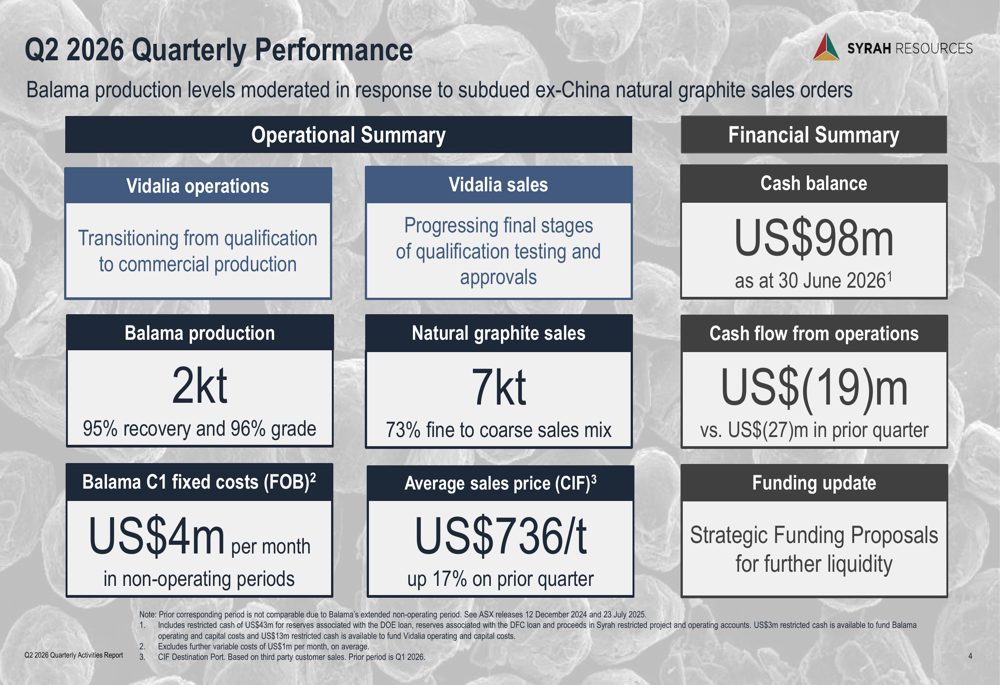
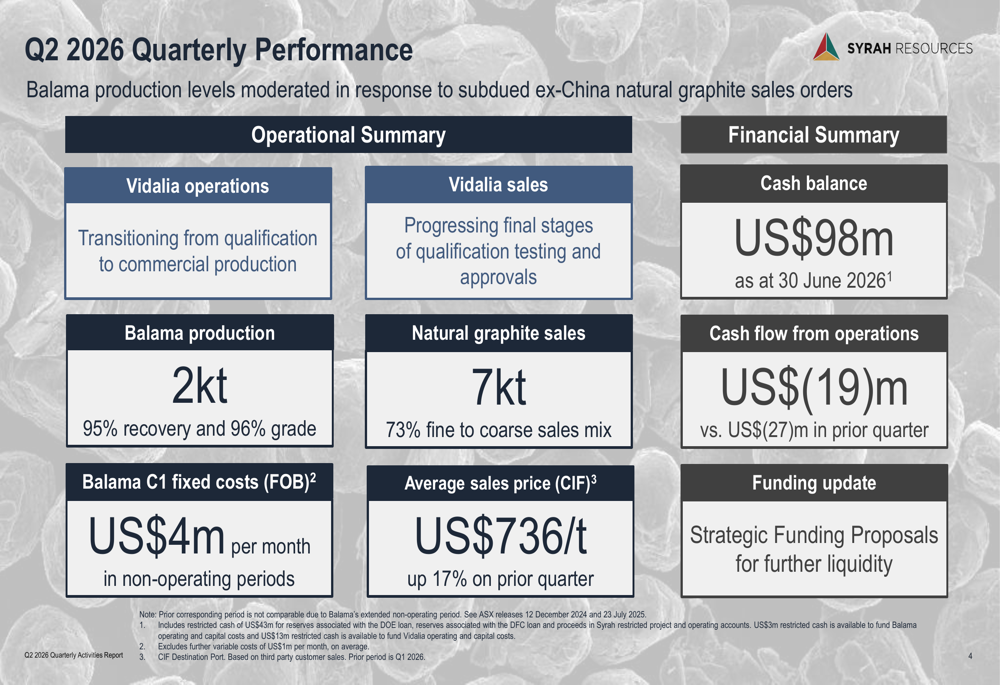
Syrah Q2 2026 slides: Balama curtailed, Vidalia nears commercial sales

Published

on

Syrah Q2 2026 slides: Balama curtailed, Vidalia nears commercial sales


Syrah Q2 2026 slides: Balama curtailed, Vidalia nears commercial sales

Continue Reading

Business

Charles Schwab Beats Earnings Estimates. Its Customers Just Can’t Get Enough.

Published

on

Charles Schwab Beats Earnings Estimates. Its Customers Just Can’t Get Enough.

Charles Schwab Beats Earnings Estimates. Its Customers Just Can’t Get Enough.

Continue Reading

Business

Tesla robotaxis log 380,000 unsupervised miles with no ‘notable’ incidents

Published

on

Tesla robotaxis log 380,000 unsupervised miles with no 'notable' incidents

Tesla said Wednesday that its robotaxi fleet has logged more than 380,000 unsupervised miles across six cities in two states without what the company described as a “notable” safety incident.

Ashok Elluswamy, Tesla’s vice president of AI software, highlighted the fleet’s safety record during the electric vehicle maker’s second-quarter earnings call, telling investors it had recorded “zero notable incidents.”

Advertisement

Any reported incidents involved “other actors impacting us when we were stationary,” Elluswamy said.

“I’d like to emphasize how safe the operation has been so far,” Elluswamy said. “Zero notable incidents over 380,000 miles.”

MUSK SAYS TESLA, SPACEX TO BUILD ADVANCED CHIP MANUFACTURING FACILITY

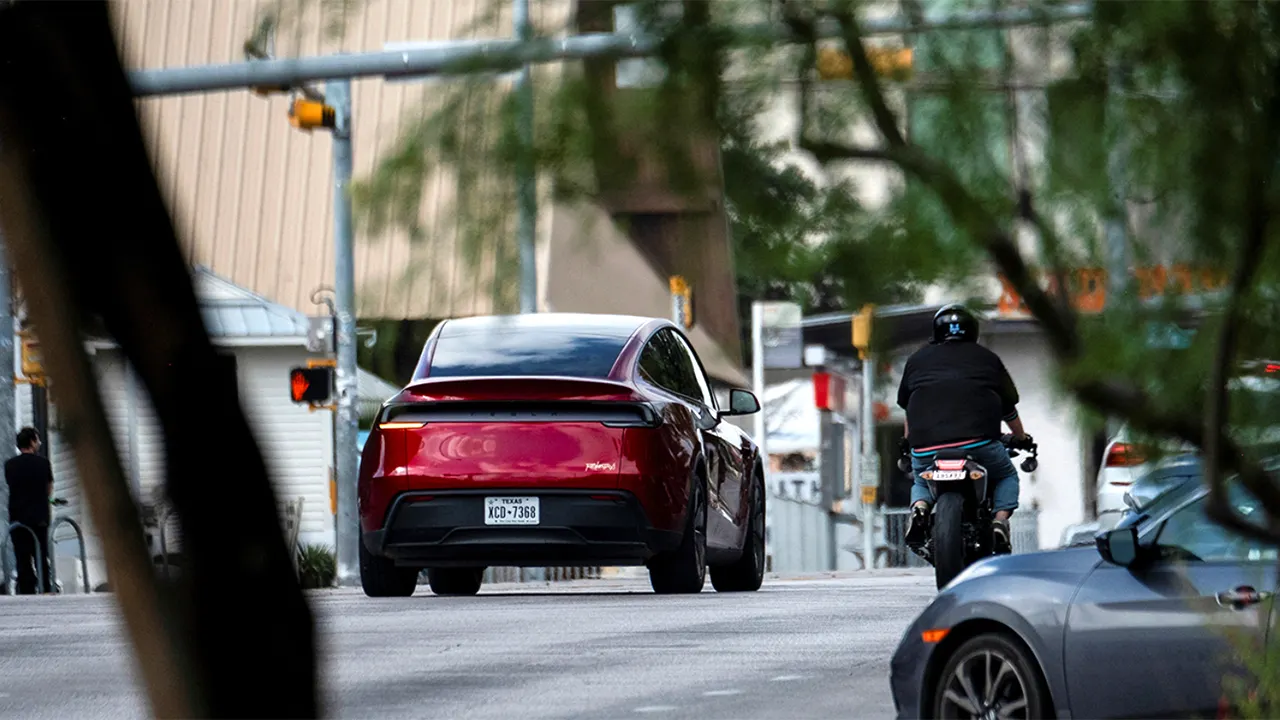
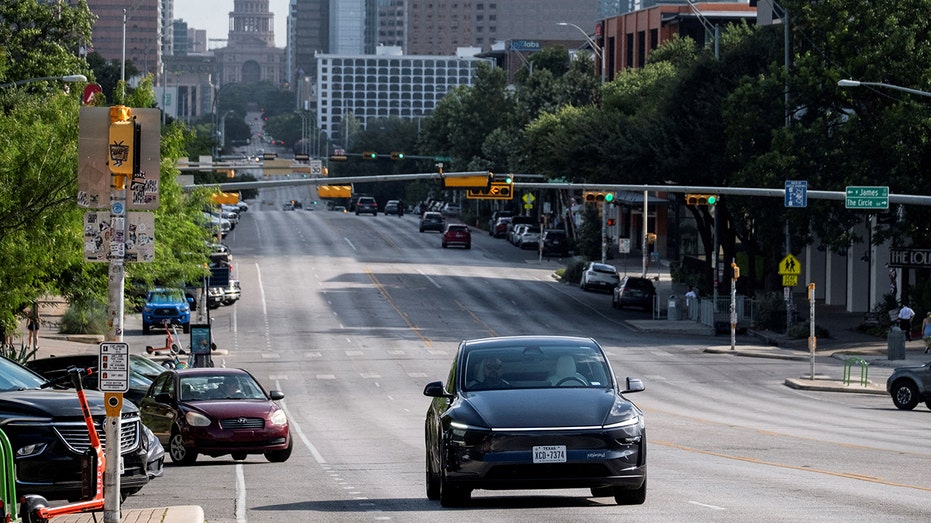
A Tesla robotaxi in Austin

A Tesla robotaxi travels along South Congress Avenue in Austin, Texas, June 22, 2025. Tesla said that its robotaxi fleet has logged more than 380,000 unsupervised miles across six cities in two states without what the company described as a “notable” (Reuters/Joel Angel Juarez / Reuters)

Elluswamy said the results support Tesla’s camera-based approach to autonomous driving.

Advertisement

“Historically, the so-called experts have always claimed that you need lidars, radars, HD maps and the entire kitchen sink to drive safely,” he said. “Here, we show that such is not true. You can have safe, comfortable and affordable autonomy with just cameras.”

Tesla said mileage traveled by its unsupervised robotaxi fleet has grown at a double-digit weekly rate for months.

“We have grown at such a high compounding rate on a week-over-week basis over the last several months,” Elluswamy said. “Not only that, we expect to continue growing at such a large rate through the rest of this year.”

ELON MUSK REVEALS PRICE OF TESLA’S CYBERCAB

Advertisement
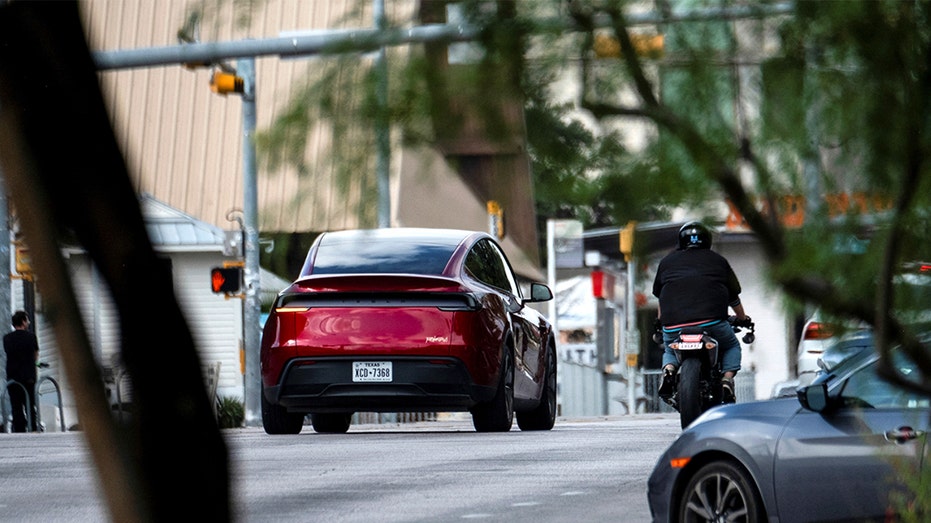
FILE PHOTO: Tesla robotaxis launch in Austin, Texas

A Tesla robotaxi operates on South Congress Avenue in Austin, Texas, on June 22, 2025.  (Reuters/Joel Angel Juarez / Reuters)

The remarks came one day after Tesla expanded its robotaxi service to Orlando and Tampa, according to Reuters.

Tesla launched the service in Austin in June 2025, initially placing safety monitors inside the vehicles. 

It later began offering fully unsupervised rides in Austin and expanded the service to Dallas, Houston and Miami, Reuters reported.

Stocks In This Article:

SELF-DRIVING CAR COMPANIES WAYMO, TESLA TO TESTIFY AT KEY SENATE COMMITTEE ON REGULATING GROWING INDUSTRY

Advertisement
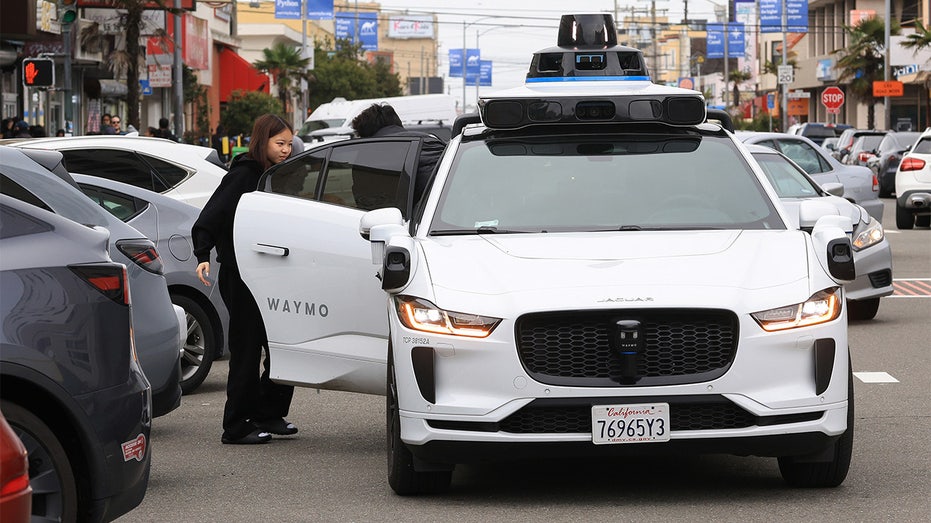
waymo vehicle picks up passenger

Passengers exit a Waymo self-driving car, Dec. 26, 2025, in San Francisco. Unlike Waymo, which uses lidar sensors, Tesla relies mainly on cameras and AI software. (John J. Kim/Chicago Tribune/Tribune News Service via Getty Images / Getty Images)

Unlike Waymo, which uses “light detection and ranging” or “lidar” sensors, Tesla relies mainly on cameras and AI software, according to the outlet.

GET FOX BUSINESS ON THE GO BY CLICKING HERE

We expect that the time to launch to a new city will continue to trend towards zero, towards an end where we operate in entire states as a whole, instead of going city by city,” Elluswamy added.

Tesla could not immediately be reached by FOX Business for comment.

Advertisement

Reuters contributed to this report.

Continue Reading

Business

Negative Breakout: These 15 stocks cross below their 200 DMAs

Published

on

The Economic Times

In the Nifty500 pack, 15 stocks’ closing prices crossed below their 200 DMA (Daily Moving Averages) on July 22, according to stockedge.com’s technical scan data. Trading below the 200 DMA is considered a negative signal because it indicates that the stock’s price is below its long-term trend line. The 200 DMA is a key indicator traders use to determine the overall trend in a particular stock. Take a look:​

Continue Reading

Trending

Copyright © 2025