Connect with us
DAPA Banner
DAPA Coin
DAPA
COIN PAYMENT ASSET
PRIVACY · BLOCKDAG · HOMOMORPHIC ENCRYPTION · RUST
ElGamal Encrypted MINE DAPA
🚫 GENESIS SOLD OUT
DAPAPAY COMING

Business

5 Best Fast Proxy Servers in 2026: Speed, Tested Against Price

Published

on

5 Best Fast Proxy Servers in 2026: Speed, Tested Against Price

Speed is the specification everyone quotes and few actually verify. A provider prints “lightning fast” on its homepage, but the number that matters—how quickly a request completes against a real target, under real load—rarely makes the headline. And raw speed on its own is only half the story.

A blazing pool that costs a fortune, or one that’s fast until it starts failing, isn’t the bargain it looks like. What most teams actually need is speed that holds up under pressure and a price that doesn’t punish them for it. Below are five of the fastest residential proxy networks worth considering in 2026, each judged on both counts—starting with the one that strikes the sharpest balance between the two.

 1. IPcook — The Fastest Value Play

IPcook earns the top spot not by being the biggest name on the list, but by pairing genuinely fast performance with pricing that undercuts the enterprise crowd. As a fast proxy server, it advertises an average response time under 0.5 seconds backed by a 99.99% uptime guarantee—numbers that sit at or ahead of providers charging far more per gigabyte. In a field where several well-known networks post real-world response times of a second or more, sub-0.5-second routing is a meaningful edge for high-volume scraping or time-sensitive monitoring.

The good — speed: The performance comes from smart load balancing and edge-aware routing. Requests shift dynamically rather than cycling through a static list, so throughput stays consistent even under concurrent load.

The good — the network: Behind it sits a pool of more than 55 million ethically sourced residential IPs across 185+ countries. The regional breakdown is published, so you can confirm coverage against your own targets before you buy.

Advertisement

The good — the price: This is where the value case becomes hard to argue with. Residential traffic starts at $3.2/GB and scales down toward $0.5/GB at volume. The traffic never expires. A 100MB free tier with no time limit lets you benchmark the speed on your own targets before spending anything. Add up to 10 free sub-accounts for per-task traffic budgeting and 24/7 human support, and you get enterprise-grade performance without the enterprise invoice.

The trade-offs: IPcook isn’t the largest pool on the market—networks like Oxylabs and Bright Data run bigger inventories—and it’s a leaner brand than the decade-old giants. It wins on speed-per-dollar rather than sheer scale or feature sprawl. For teams whose priority is fast, reliable IPs at a fair price rather than the biggest logo, that’s exactly the right trade.

2. Decodo — The Balanced All-Rounder

Decodo (formerly Smartproxy) is consistently rated among the best-balanced networks in 2026, and for good reason. It posts some of the strongest global response times in independent testing—often cited around 0.6 seconds—alongside high success rates and a beginner-friendly dashboard.

The good: A large advertised pool of 125 million IPs across 195+ countries, ASN-level targeting, and a reputation for reliability make it a safe default for teams that want performance without complexity. Its success rates are among the most stable in the market.

Advertisement

The trade-offs: That polish comes at a price above the value tier, and its per-GB rate and feature tiers can climb quickly once you need advanced targeting. It’s a strong pick if you want a well-rounded network and don’t mind paying more for the brand’s consistency.

3. Oxylabs — Built for Enterprise Scale

Oxylabs is the network to beat on raw infrastructure. With a residential pool exceeding 175 million IPs and adaptive routing that steers requests to the lowest-latency nodes, it delivers some of the highest success rates under heavy simultaneous load of anyone tested.

The good: Unmatched scale, excellent stability under stress, and enterprise-grade APIs with detailed analytics make it the go-to for large, complex operations where consistency matters more than cost.

The trade-offs: Speed is not where Oxylabs wins. Global response times hover around 1.1 seconds—slow by the standards of this list, and well behind the sub-second leaders. All that infrastructure is also priced for corporations, not individuals: Oxylabs is one of the more expensive options here, and its entry pricing puts it out of reach for startups and small projects. If you have the budget and the scale to justify it, it’s superb; if you don’t, you’re paying for headroom you won’t use.

Advertisement

4. IPRoyal — Ethical, But Not Cheap at Entry

IPRoyal occupies the practical middle of the market: solid performance, ethically sourced IPs, and a pay-as-you-go model with traffic that never expires.

The good: A globally reliable network with a strong compliance posture that keeps its IPs clean and less prone to bans. Rotation is customizable, and the non-expiring traffic policy suits bursty, project-based workloads.

The trade-offs: The pricing is steeper than its reputation suggests. Residential traffic starts at roughly $7.35/GB at the 1GB tier, and the widely quoted low rates only appear at bulk volumes most small teams will never reach—so at entry it is one of the pricier options here. Response times in testing land closer to 1 second, respectable but not class-leading, and its pool of around 32 million IPs is a fraction of the top networks. Support wait times also draw frequent complaints.

5. DataImpulse — The Flexible Pay-As-You-Go Option

DataImpulse rounds out the list on the strength of its flexible, budget-friendly model. It runs a large pool—reported above 90 million IPs across 195+ countries—on a pure pay-as-you-go structure with non-expiring traffic.

Advertisement

The good: Low entry cost, traffic that doesn’t expire, city-level geo-targeting, and 24/7 support make it genuinely accessible for beginners and small operators. Its flexibility earned it recognition as one of the more adaptable providers of 2026.

The trade-offs: Speed is the compromise. Its standard tier averaged closer to 1 second in testing, and reaching its best performance means paying for a premium tier several times the base rate. Costs can also double once you need finer targeting, and low base rates mean some IPs see heavier reuse. You trade a measure of speed and consistency for the low sticker price.

A Quick Side-by-Side

Provider Speed Profile Pool Size Entry Price Best For
IPcook Under 0.5s, 99.99% uptime 55M+ $3.2/GB (→$0.5 at scale) Fast performance at the best value
Decodo ~0.6s, very stable 125M (advertised) Above value tier Balanced all-round use
Oxylabs ~1.1s, slow for this list 175M+ Enterprise-priced Large-scale enterprise operations
IPRoyal ~1s, reliable 32M+ ~$7.35/GB at 1GB Ethical sourcing, bulk buyers
DataImpulse ~1s standard tier 90M+ Low, pay-as-you-go Flexible, beginner-friendly budgets

 How to Read a “Fast” Proxy Claim

The lesson across all five is that “fast” only means something in context. A sub-1-second response time is decent for residential routing, but the number to trust is the one you measure yourself. Test against the exact sites you target, under the load you actually run. Marketing figures are captured in ideal conditions. Your workflow is not ideal. This is why a genuine free tier matters more than any advertised benchmark—it lets you verify the claim before you commit budget.

It’s also why speed and value have to be read together. The fastest network you can’t afford is useless. The cheapest one that fails under load is worse than useless. IPcook leads this list because it refuses to make you choose. You get response times that compete with the premium tier. You get sourcing and uptime that hold up in practice. And you get a price anchored by non-expiring traffic and a free tier to prove it—which leaves the enterprise giants looking overpriced for what most teams actually need.

Advertisement

 The Bottom Line

There’s no single fastest proxy for everyone. Oxylabs wins on raw scale, Decodo on balance, IPRoyal on ethical sourcing, DataImpulse on flexibility. But if the question is which network delivers real speed and real value in the same package—fast enough for serious work, priced so a lean team can actually run it—a fast proxy server like IPcook is the one that reads best on both axes. Test it against your own targets with the free tier, and let the numbers you measure make the case.

Advertisement
Continue Reading
Click to comment

You must be logged in to post a comment Login

Leave a Reply

Business

NTPC Green shares soar 9% after Q1 earnings. What’s boosting investor sentiment?

Published

on

NTPC Green shares soar 9% after Q1 earnings. What’s boosting investor sentiment?
Shares of NTPC Green Energy soared more than 9% on Thursday after the renewable energy player reported a 38% year-on-year (YoY) increase in consolidated net profit to Rs 305 crore for the first quarter of the financial year 2027.

The stock surged to Rs 99.60 apiece on Thursday, the highest level in more than month, amid a sharp surge in trading volumes. While the firm’s net profit rose 34% from Rs 220 crore reported in Q1 of the previous year, sequentially it grew around 55% from Rs 197 crore reported in the preceding three months.

NTPC Green Energy’s revenue from operations, meanwhile, jumped nearly 63% YoY to Rs 1,107 crore during the quarter under review, as against Rs 680 crore in the year-ago period. Total expenses rose around 59% YoY to Rs 782 crore.

The renewable energy producer’s operating EBITDA rose 64% YoY to Rs 989 crore, while operating EBITDA margin remained flat but robust at 89%.

Advertisement

Also read | IndusInd Bank shares fall 5% despite 72% YoY Q1 profit surge. Why analysts remain bullish?


Along with the Q1 earnings, NTPC Green also announced that its board of directors have considered and approved the plan to invest up to Rs 28.77 lakh in AP NGEL Harit Amrit, which is a 50:50 joint venture of the company with New & Renewable Energy Development Corporation of Andhra Pradesh, through the subscription of 2.88 lakh equity shares. Following this, NTPC Green’s holding will increase to 51%, making the firm its subsidiary.

NTPC Green Energy share price

After hitting a 52-week low of Rs 84 in early March, NTPC Green Energy shares surged about 43% in less than two months to a 52-week high of nearly Rs 120 in late April, driven by soaring power demand amid rising temperatures and expectations of a strong El Niño.
Also read | Waaree Renewable shares crash 7% even after Q1 net profit rises 34% YoY. What’s spooking investors?The stock has since corrected around 17%. It is up 6% over the past week and 3% in the last month, taking its gains for 2026 so far to more than 3%. Over the past year, the stock has returned over 9%. The company currently has a market capitalisation of nearly Rs 82,654 crore.

(Disclaimer: Recommendations, suggestions, views and opinions given by the experts are their own. These do not represent the views of The Economic Times)

Advertisement
Continue Reading

Business

Blazers Star Turns 36 and Remains on Track for 2026-27 Season Comeback

Published

on

Damian Lillard

Damian Lillard turned 36 on July 15, marking another milestone in a lengthy recovery from a torn left Achilles tendon that has kept the Portland Trail Blazers guard off the court for more than a year, with the team and player both continuing to target a full return when the 2026-27 NBA season opens this fall.

Lillard suffered the injury in Game 4 of Milwaukee’s first-round playoff series against the Indiana Pacers on April 27, 2025, a non-contact injury that effectively ended the Bucks’ postseason run and, ultimately, Lillard’s tenure in Milwaukee. He underwent surgery days later, on May 2, 2025.

Where his recovery stands now

With training camp and preseason action approaching in the fall, all indications from the Blazers organization point toward Lillard being on track for his long-awaited return when the 2026-27 season tips off in October, closing out what has been a deliberate, more than yearlong rehabilitation process built around ensuring the nine-time All-Star returns to the court at or near his previous form.

Advertisement

The Blazers waived Lillard using a stretch provision shortly after his injury, a move that allowed him to return home to the franchise that originally drafted him in 2012. Portland signed him to a three-year, $42 million contract that includes a player option for the 2027-28 season and a no-trade clause, fully aware at the time that he would miss the entire 2025-26 campaign to focus exclusively on his recovery.

A season spent almost entirely in rehab, with one notable exception

Lillard did not appear in a single regular-season or postseason game for Portland during the 2025-26 campaign, sitting out the Blazers’ first-round playoff exit to the San Antonio Spurs in April. Portland head coach Tiago Splitter confirmed to reporters on April 17 that Lillard would not play at any point during the postseason, formally closing the door on any possibility of an emergency in-season return.

Despite that full-season absence, Lillard made one high-profile on-court appearance in February, competing in and winning the NBA All-Star 3-point contest, his third career title in the event. Speaking afterward about where he stood in his recovery, Lillard described a deliberately cautious approach. “I’m at the stage where I’m testing it,” Lillard said, according to NBA reporter Mark Medina, adding that he was focused on “making sure that he’s doing honest testing” and “being patient with it.”

Advertisement

Signs of physical progress through the spring

By early May, roughly a year after the injury, video shared publicly showed Lillard performing increasingly advanced basketball movements, including dunking and executing windmill dunks during individual workouts, a notable marker given the severity of the original injury. At his end-of-season exit interview, Lillard said he had already begun participating in 5-on-5 pickup basketball as part of his rehabilitation progression, another significant step toward a full return.

Throughout the process, Lillard has consistently pointed to the start of the 2026-27 season as his intended return timeline, rather than attempting any kind of accelerated postseason comeback despite persistent public speculation. Medical experts have noted that Achilles tendon recoveries for guards in their mid-30s typically require 12 to 18 months to fully regain explosiveness and confidence in game situations, a timeline broadly consistent with Lillard’s own stated target.

Why Portland prioritized patience

Advertisement

Portland’s front office has publicly supported Lillard’s measured approach throughout the rehabilitation process, framing his full season away from competitive play as an investment in a stronger, more sustainable return for 2026-27 rather than rushing him back for a lost-cause postseason run. The Blazers finished the 2025-26 season in the play-in tournament, ultimately falling short of a deeper playoff push, a result that added further logic to the decision not to bring Lillard back for what would have been a low-stakes, high-risk appearance.

The organization’s approach also reflects broader league trends around Achilles injuries in recent years, with other prominent players, including Boston’s Jayson Tatum and Indiana’s Tyrese Haliburton, dealing with similar injuries around the same period, prompting wider conversations across the NBA about recovery timelines, load management and the long-term physical toll of the injury on elite athletes.

No formal date has been set for when Lillard will begin participating in training camp activities, though the target remains full participation when Portland’s preseason schedule begins in the fall, followed by a return to game action for opening night in October. Lillard has expressed confidence that he will be able to return to something close to his prior All-Star level once cleared for full competitive play, and has spoken about his broader goal of sustaining a high level of performance for the remainder of his career rather than settling for a diminished role following the injury.

As Lillard’s recovery enters its final stretch before training camp, Portland’s roster around him has also continued to take shape, with the team building out its young core, including forward Deni Avdija, during his season-long absence. How quickly Lillard can integrate into that group once healthy, and how close he comes to his pre-injury form, are likely to be among the most closely watched storylines of Portland’s upcoming season.

Advertisement

For now, the update on Lillard’s recovery remains a positive one: more than 14 months removed from surgery, the veteran guard continues progressing toward a full return, with his 36th birthday serving as one more marker along a rehabilitation path that both player and team have approached with deliberate patience rather than urgency.

Continue Reading

Business

Applied Industrial Technologies: Not Your Average Distributor, But Not A Buy Right Now

Published

on

Applied Industrial Technologies: Not Your Average Distributor, But Not A Buy Right Now

Applied Industrial Technologies: Not Your Average Distributor, But Not A Buy Right Now

Continue Reading

Business

Burnham cuts business rates for pubs, clubs and live music venues in England by 20 per cent

Published

on

Business Live

The £100m commitment will be financed by clamping down on businesses such as vape shops

Friends drinking beer in a pub

Friends drinking beer in a pub(Image: Getty Images)

Andy Burnham has announced a 20 per cent reduction to business rates for pubs, clubs and music venues. The £100m commitment will be financed by clamping down on businesses, such as vape shops and tax-avoidant online retailers, which “do not make a positive contribution to local communities,” the government said.

Advertisement

The measure forms part of Burnham’s promise to provide Brits with “breathing space” on the cost of living, though this marks the first policy specifically targeted at businesses.

Pubs and hospitality establishments have been lobbying for a reduction to business rates after their tax bills were pushed skyward by Rachel Reeves’ Autumn Budget last year.

The Prime Minister said this policy demonstrates that his government will “back the businesses that people want to see in their communities” rather than standing idly by while “cherished venues have disappeared from our local high streets”, as reported by City AM.

The reduction to business rates for pubs had been a central promise during Burnham’s campaign throughout the Makerfield by-election.

Advertisement

During the campaign pledge, Burnham had criticised Keir Starmer for “undervaluing” pubs. Labour had “got this wrong in government,” he said.

Chancellor John Healey said: “Pubs, clubs and live music venues are at the heart of communities across the UK.

“They bring people together, support local jobs and help keep high streets and town centres busy – which is why we will back them all the way.”

The pledge was warmly received by the British Beer and Pub Association (BBPA) during the Makerfield campaign. Its chief executive, Emma McClarkin, said pubs “continue to pay a disproportionately higher rate which grinds down their ability to keep the doors open”.

Advertisement

“A further 20 per cent would be a real boost for the local, and raising the threshold so many smaller pubs get taken out of paying rates would make a real difference to high streets and livelihoods,” she had said.

Pressure on the government to overhaul the business rates system has extended well beyond the hospitality sector, with high street retailers arguing the tax puts them at a significant disadvantage compared to their online counterparts.

A coalition of retail trade bodies has urged Burnham to slash business rates for all high street businesses by 37 per cent, by introducing a two per cent levy on online sales.

Earlier in the week, the Prime Minister announced measures to reduce VAT on household electricity bills and introduce a £2 bus fare cap, though both policies faced scrutiny over how they would be financed.

Advertisement
Continue Reading

Business

Mitchells & Butlers reports flat Q3 sales amid heatwave impact

Published

on


Mitchells & Butlers reports flat Q3 sales amid heatwave impact

Continue Reading

Business

Why nobody seems to be able to make their mind up about e-scooters

Published

on

BBC InDepth

Young boys and men appear to be over-represented in the stats. Of the casualties, 302 – the most of any age and sex category – were males aged 10-19.

Six deaths were recorded in 2024, unchanged from the previous year. Five of these were riders and one a pedestrian.

Although the numbers aren’t conclusive, it is thought more accidents are happening on privately owned e-scooters. Winchcomb says police statistics “aren’t reflective of the number of injuries”.

Nonetheless, campaigners believe there is enough evidence to show that regulation is urgently needed.

Advertisement

Carly Calland’s 14-year-old son Jacob died in March 2025 of a catastrophic head injury. He was a passenger on an e-scooter that was involved with a collision with a car.

If privately owned e-scooters are legalised for public use, Carly believes, there should be mandatory helmets, a ban on carrying passengers and penalties for parents that allow children to ride illegally.

“If Jacob was wearing a helmet that day, he would still be here,” Carly, from Wythenshawe in Greater Manchester, says.

Carly is not against e-scooters. They “are really good for people to get to work, and they are eco-friendly”, she tells me, but “they just need to be used in the correct way.”

Advertisement

What happens if the current situation goes on? Her answer is emphatic: “More deaths.”

Continue Reading

Business

AI Spending, Inflation, and 3 More Reasons Why Tech Is Hurting

Published

on

AI Spending, Inflation, and 3 More Reasons Why Tech Is Hurting

AI Spending, Inflation, and 3 More Reasons Why Tech Is Hurting

Continue Reading

Business

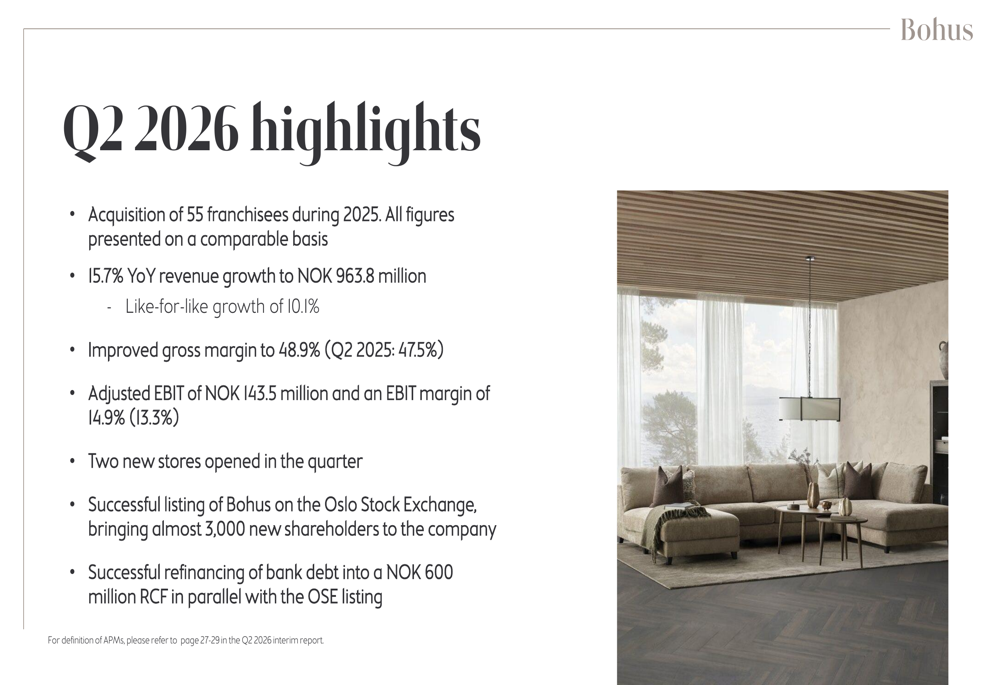
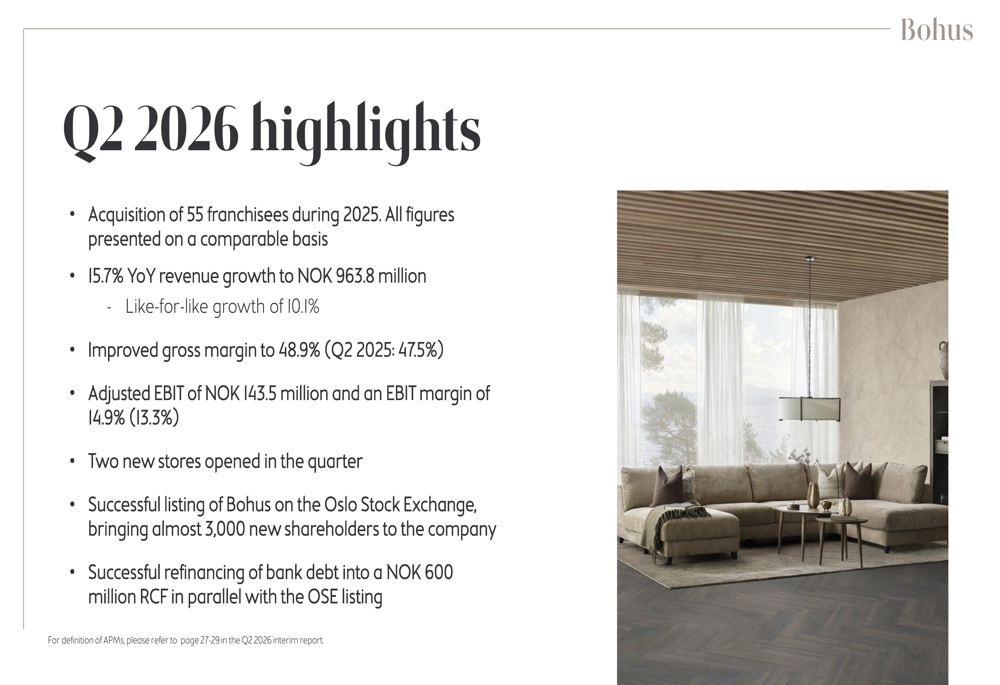
Bohus Q2 2026 slides: Norway’s top furniture retailer posts 15.7% growth

Published

on

Bohus Q2 2026 slides: Norway’s top furniture retailer posts 15.7% growth


Bohus Q2 2026 slides: Norway’s top furniture retailer posts 15.7% growth

Continue Reading

Business

Volution Group raises earnings guidance despite peer warnings

Published

on


Volution Group raises earnings guidance despite peer warnings

Continue Reading

Business

Equinor ASA 2026 Q2 – Results – Earnings Call Presentation (NYSE:EQNR) 2026-07-23

Published

on

OneWater Marine Inc. (ONEW) Q1 2026 Earnings Call Transcript

This article was written by

Seeking Alpha’s transcripts team is responsible for the development of all of our transcript-related projects. We currently publish thousands of quarterly earnings calls per quarter on our site and are continuing to grow and expand our coverage. The purpose of this profile is to allow us to share with our readers new transcript-related developments. Thanks, SA Transcripts Team

Continue Reading

Trending

Copyright © 2025