In its Galaxy Unpacked July 2026 event, Samsung announced a handful of new devices. Taking the center stage is the company’s eighth generation of foldables. This year, Samsung is adding a new form factor to the mix — the Galaxy Z Fold 8, which comes in a wider, passport-style design — akin to the rumored iPhone Fold. At 201 grams, it’s also the lightest foldable Samsung has ever made. It’s powered by the Snapdragon 8 Elite Gen 5 SoC, up to 16GB of RAM and 1TB of storage, and a 4,800 mAh battery. The Z Fold 8 features dual 50-megapixel wide and ultrawide cameras.
The cover screen is a 5.5-inch 120Hz AMOLED panel, which folds out to reveal the 7.6-inch main display in a 4:3 aspect ratio, which Samsung says can offer a more enjoyable experience when watching films or reading books. The Galaxy Z Fold 8 Ultra is simply the more direct successor to last year’s Z Fold device. It offers a taller 8-inch display and boasts a flagship camera system with a 200-megapixel wide, a 50-megapixel ultrawide, and a 10-megapixel 3x telephoto lens. The battery is larger at 5,000 mAh with 45W fast charging.
Advertisement
The Galaxy Z Flip 8 has seen iterative updates, too. Samsung claims its new Flex Titanium technology combines “a titanium-alloy film with an enhanced titanium plate, to make foldables thinner while maintaining durability.” Pricing for the Z Flip 8, Z Fold 8, and Z Fold 8 Ultra starts at $1,199, $1,899, and $2,099, respectively.
Advertisement
The Samsung Galaxy Watch Ultra 2 and Watch 9 are here
Samsung’s new additions to the Galaxy Watch series bring refreshed hardware, new health tracking features, and a sprinkle of AI. The Galaxy Watch 9 remains the mainstream option in the lineup, featuring a familiar circular design in an aluminum casing. It comes in two sizes — 40mm and 44mm — with battery capacities of 390 mAh and 445 mAh, respectively. The display is a Super AMOLED panel with a brightness of up to 3,000 nits.
Samsung also refreshed its rugged offering this year, with the Galaxy Watch Ultra 2 featuring a similar design and build as the outgoing model. It bumps you up to a titanium casing that’s better suited for outdoor use and adventure sports. The Galaxy Watch Ultra 2 is 12% slimmer than the previous model, despite packing in a larger 800 mAh battery. The smartwatch also boasts a 5,000-nit display, which Samsung claims is a world first. The new Trail Run mode lets you track details like elevation and terrain impact. There’s even a live hydration guidance reminder that draws from estimates of how much you have sweat.
Both Galaxy Watch models are powered by the Snapdragon Wear Elite platform, which includes an NPU for the better handling of AI tasks. There’s support for dual-band Wi-Fi, LTE, Bluetooth 6.0, and NFC. The Galaxy Watch 9 is priced at $379, which gets you 32GB of internal storage. The Galaxy Watch Ultra 2 doubles the storage capacity and starts at $699.
Advertisement
A better look at Samsung’s new smart glasses
Samsung has also revealed more information about its upcoming eyewear products — two pairs of smart glasses, designed in collaboration with Gentle Monster and Warby Parker. Both glasses will run on the Android XR operating system and will be powered by the Snapdragon AR1 Gen1 platform. CNET went hands-on with the smart glasses and confirmed that they don’t have a display. You do get a camera, a microphone, and built-in speakers. Since these are heavily reliant on AI, the bulk of your interaction is meant to happen through voice commands.
Gemini is at the core of the smart glasses here, allowing them to understand what you’re looking at and respond accordingly. You can even ask them to capture photos of information you find interesting, which they can save in the Samsung Notes app. If you’re on a video call with someone, you can share what you’re seeing through the smart glasses’ camera. Convenient smart glasses features like these are what make the lack of a display less of a drawback.
Advertisement
Battery life has been rated at up to nine hours on a single charge. When you need to top it back up, the case provides up to seven additional full charges. Details about pricing and availability haven’t been revealed yet, with Samsung only stating that they’re “excited to continue this momentum and bring this experience to people soon.”
Selling on Amazon in the AI era has moved from a largely execution-driven operation to one that depends on intelligent oversight.
Routine and rule-based tasks now run largely on their own through automated systems, and the seller’s role has moved from performing those tasks to supervising them and making the judgment calls.
Within Seller Central, Amazon is now offering AI-powered listing tools, Seller Assistant, and analytics capabilities. On the buyer’s side, shopping assistants and discovery features are changing how they research, compare, and buy a product.
Sellers have largely settled the question of whether to use AI. What matters now is how to divide the work:
Advertisement
AI Automation: Which tasks to rely on it for
Monitoring: Which AI-generated outputs require human review before they are published or acted upon
Human-Led: Which decisions to keep with a human completely
Sellers who do not clearly distinguish which tasks should go where tend to make one of two mistakes: either underusing AI for routine work it handles well or relying on it for decisions that require human judgment.
Two Developments Reshaping Amazon Selling in the AI Era
Two major developments in the marketplace over the past year have redefined how Amazon sellers operate and where they should invest their time and expertise to streamline operations and achieve sustainable growth. Each one redraws the boundary between the work AI can execute and the tasks that still depend on a seller’s own judgment.
Integration of AI Tools Directly Into Amazon Seller Central
Over the past year, Amazon has rolled out a set of AI-powered tools and program updates for sellers, spanning intelligent AI assistants, advanced business analytics, and enhanced seller support. At the center of this is Seller Assistant, which Amazon has grown from a simple question-and-answer tool into an agentic AI business partner. It can set goals, map out strategies, and, with the seller’s permission, act on their behalf.
Amazon also released two free analytics tools. Custom Analytics brings together more than 100 metrics across sales, traffic, inventory, and marketing. Profit Analytics consolidates cost data and suggests specific actions to reduce costs and grow profitability at the SKU level based on your Cost of Goods Sold (COGS) data.
Advertisement
Further, Amazon has added “dynamic canvas” to Seller Assistant, which is accessible for free to every seller in the USA and the UK. It acts as a visual workspace that’s personalized for you, gathering relevant data and insights and suggesting recommended actions. Sellers can also discuss their “what-if” scenarios through simple conversations, and the canvas updates projections in real time, letting sellers weigh different options before settling on a decision.
Amazon’s own framing of Seller Assistant is worth noting because it sets the tone for how these tools are meant to be used:
“Like any good
assistant, it’s going to learn and adapt based on how you run your business.
Sometimes working in the background, sometimes acting for you, sometimes
offering suggestions, but always there, hard at work.”
— Mary Beth
Westmoreland, VP World Wide Selling Partner Experience
Advertisement
Either way, direction and the final call stay with the seller. These tools are made to support a person’s work, not to replace them.
Product Discovery Through an AI Shopping Assistant
Amazon is taking product discovery beyond exact keyword matching. Its search systems increasingly use semantic and AI-powered models to interpret the intent behind a query and identify products that align with shoppers’ queries.
Buyers are also asking complete, conversational questions instead of typing a few keywords, and Amazon has adapted to that through its AI shopping assistant, renamed Alexa for Shopping. Combining Rufus’ product expertise with Alexa’s personalization and contextual capabilities, this feature lets customers ask about products in natural conversation. The assistant generates responses from the details in product listings, customer reviews, and community Q&As.
Advertisement
A listing that:
clearly states what a product is,
who it is for, and
What problem it solves
…gives the assistant a better context than one crafted mainly to include search terms. Thus, write your listing content in natural, customer-focused language, but keep the accurate keywords, attributes, specifications, and structured product data to improve discoverability and the chances of inclusion in AI-generated recommendations.
Sorting Tasks by What to Automate, Monitor, and Keep Human-Led
Every task in Amazon account management demands a different degree of human judgment, which in turn determines how the task should be handled. Let’s explore which tasks a seller can safely automate, which need monitoring, and which should stay under human control:
What to Automate on Amazon?
The tasks best suited to automation share three traits:
Advertisement
They are repetitive
Follow fixed rules
Carry no direct impact on how customers perceive the brand
Such tasks can be handled by automated tools once the seller sets the parameters. Amazon’s Seller Assistant already performs several of these functions inside Seller Central.
Task
Role
of AI
Parameters
handled by Amazon Seller
Repricing
and bid adjustments
Advertisement
Adjusts
prices and PPC bids the moment conditions change
Price
floor to protect margin and targeted ACoS
Inventory
alerts
Raises
a restock alert when projected stock crosses a threshold
Advertisement
The
threshold, which is prioritized by lead time
Discrepancy
recovery
Scans
fees and shipments for reimbursement-eligible errors
Review
cadence and claim approval
Advertisement
Bulk
uploads and MAP (minimum advertised price) monitoring
Populates
listings at scale, flags price violations
Listing
data, MAP rules
Product
data management
Advertisement
Flags
duplicate, incomplete, or inconsistent records across the catalog
Data
quality standards, and which flagged records to fix or merge
Order
management (FBA)
Processes
and ships standard orders automatically through Fulfillment by Amazon
Advertisement
Exception
handling and escalations
Whatever AI produces is a starting point for a person’s decision, not the decision itself. Repricing, bid adjustments, and Amazon inventory forecasting all follow set rules and recur constantly, which makes them a natural fit for automation. Work that shapes brand perception cannot be automated entirely.
Keeping Automation Within Amazon’s Rules:
Amazon updated its Business Solutions Agreement and added a new Agent Policy for automated software and AI agents. Amazon states that any such agent must:
Advertisement
Identify itself clearly as an automated system
Comply with Amazon’s Agent Policy at all times
Stop accessing Amazon’s services if Amazon requests it
These requirements apply mainly to third-party tools and custom systems that a seller connects to or manages inside Seller Central, such as autonomous agents, browser-based automation, and custom software. Amazon’s native tools are operated and controlled by Amazon, so sellers do not need to independently verify their technical compliance.
Which Tasks Should Amazon Sellers Monitor?
Some Amazon tasks are well-suited to AI assistance but not to complete automation. Any output that a customer views, that influences advertising spend, or that’s submitted to Amazon should be reviewed by a person before it is published or acted on. Skip that checkpoint, and the added speed can turn into off-brand copy, inaccurate claims, wasted spend, or compliance risk.
The following five areas require this level of oversight:
Task
What
AI Provides/Handles
Advertisement
What
the Seller Must Review
Listing
and A+ content
Draft
copy, titles, and product details
Brand
voice, factual accuracy, claims
Advertisement
Review
analysis
Identifies
recurring concerns from existing reviews
Which
concerns to act on, and whether to fix the product, the listing, or the
messaging
Keyword
research
Advertisement
A
list of suggested search terms
Which
terms align with the product and the shoppers’ intent
Advertising
performance
Bid
and budget recommendations to meet a target ACoS
Advertisement
Whether
chasing a low ACoS is lowering overall profit and net margin per SKU, not
just ad cost.
Account
health signals
Alerts
on order defects, late shipments, and policy flags
Understanding
what flagged alerts mean and deciding how to respond
Advertisement
Content
generation
Headlines,
descriptions, and ad variations
Brand
voice, claim accuracy, and compliance checks
A/B
testing
Advertisement
Test
different ad variations and compile results
Understanding
the findings and applying appropriate variants
Customer
support
Drafted
replies to common buyer questions
Advertisement
Tone,
accuracy, and any refund or escalation commitment before it’s sent
Returns
and refund management
Processes
standard cases within your rules and flags patterns
Exceptions,
high-value cases, and whether a spike signals a product problem
Advertisement
AI can accomplish all these tasks faster than any team, but the review is what protects your selling operations on Amazon. An unchecked listing claim, a missed policy alert, or an ad setting left to run can each undo the time automation helped you save.
What Tasks to Keep Human-Led on Amazon?
The following tasks rely on judgment, relationships, or brand direction and hence cannot be executed entirely using AI.
Task
The Decision Involved
Advertisement
Why It Requires Human Judgment
Brand
story and positioning
What
the brand stands for, and what sets it apart from competitors
The
choice defines the brand and cannot be derived from data alone
Advertisement
Product
selection and sourcing
Which
products to sell and from which suppliers
Depends
on supplier terms, quality, and whether you can differentiate
Appeals
and reinstatement
Advertisement
How
to respond to a suspension or listing removal
Each
case is unique and needs a written, reasoned argument to Amazon
Pricing
strategy
The
price floors and discount limits a repricer works within
Advertisement
Sets
the boundaries that automated tools follow, and protects the profit margin
and brand positioning
Compliance
management
How
to interpret a new Amazon policy and adjust the account to stay compliant
Amazon’s
policies may leave room for interpretation, and misjudging them can put the
account at risk, so the decision needs human judgment.
Advertisement
Human oversight on these decisions is also becoming a regulatory expectation, as automated decision-making across pricing, advertising, and other areas draws closer regulatory scrutiny.
For scaling businesses where in-house oversight or expertise becomes a constraint, partnering with an Amazon account management service provider is an ideal option. These providers pair automated workflows with manual oversight to keep store operations both efficient and accurate.
From Concept to Practice: Automation, Monitoring, and Human-Led Distribution of Amazon Account Management Tasks
The sellers who get the most out of AI are not automating everything. They are the ones who are:
Advertisement
Identifying tasks to delegate, and
Responsibilities to manage themselves
For example, you can get a high-quality product listing by producing the first draft through AI. Then edit it yourself for brand voice, contextual accuracy, and relevance.
Here’s how a seller can put this into practice:
List every task in your Amazon operations that’s repetitive, from repricing to reinstatement.
Categorize each one as tasks to automate, monitor, or keep human-led, using the amount of judgment it needs.
Set your safeguards before automating your processes. Define approval points, performance limits, review schedules, and escalation procedures that keep a human in the loop. Further, confirm every tool meets Amazon Agent Policy requirements before you rely on it.
Selling on Amazon in the AI-dominant era is not about removing people from account management. It is about delegating repetitive tasks to AI and keeping people’s focus on decisions related to profitability, compliance, customer trust, and long-term brand growth.
Patreon is laying off 20% of its workforce, or 93 people, CEO Jack Conte told employees on Thursday. In a memo to staff that was shared online by the company, Conte said Patreon’s core business is strong but that the platform has to respond to market changes and adjust its cost structure to remain stable, which is why it needs to make the “painful” but necessary cuts.
Conte wrote that “AI has fundamentally transformed the tech industry,” and that the pace of change has “never been more intense.” However, Conte went on to note that Patreon isn’t making the cuts because it wants to replace employees with AI.
“To be clear about the impact of AI on today’s decision: we are not making the above changes because we believe AI replaces humans,” he wrote. “The more we have learned to use these new tools, the clearer it has become that they are not substitutes for the creativity, judgment, detail orientation, or craftsmanship that our teammates have in spades, nor do they replace the desire for human connection that all of us cherish so deeply. That’s my personal opinion, but more importantly, it’s the foundation of Patreon’s strategy: our product vision and business are both predicated on the value of human creativity and human connection.”
He continued, “AI has fundamentally transformed the tech industry, though, including how we work, how we build products, how we communicate, and more. That does have an impact on how we operate and organize.”
Advertisement
Beyond the headcount reduction, Conte said Patreon is also restructuring how it operates, “flattening” its organizational chart and refocusing teams around its top priorities. Affected employees will receive at least 16 weeks of severance pay, plus an additional week for every year worked, healthcare coverage through the end of the year, and a $1,500 stipend to replace their company laptop.
Last week, Patreon announced that it was partnering with internet infrastructure provider Cloudflare to directly block access to AI bots designed to train their AI models on creators’ work without permission. The company said it had to enhance its efforts on this front because AI scraping has become more sophisticated. The move came as online publishers and creators are grappling with AI companies using their work to train AI models.
Patreon’s latest round of layoffs is the platform’s largest since it cut 17% of its staff back in 2022. During that earlier round of layoffs, Patreon also closed its offices in Berlin and Dublin.
When you purchase through links in our articles, we may earn a small commission. This doesn’t affect our editorial independence.
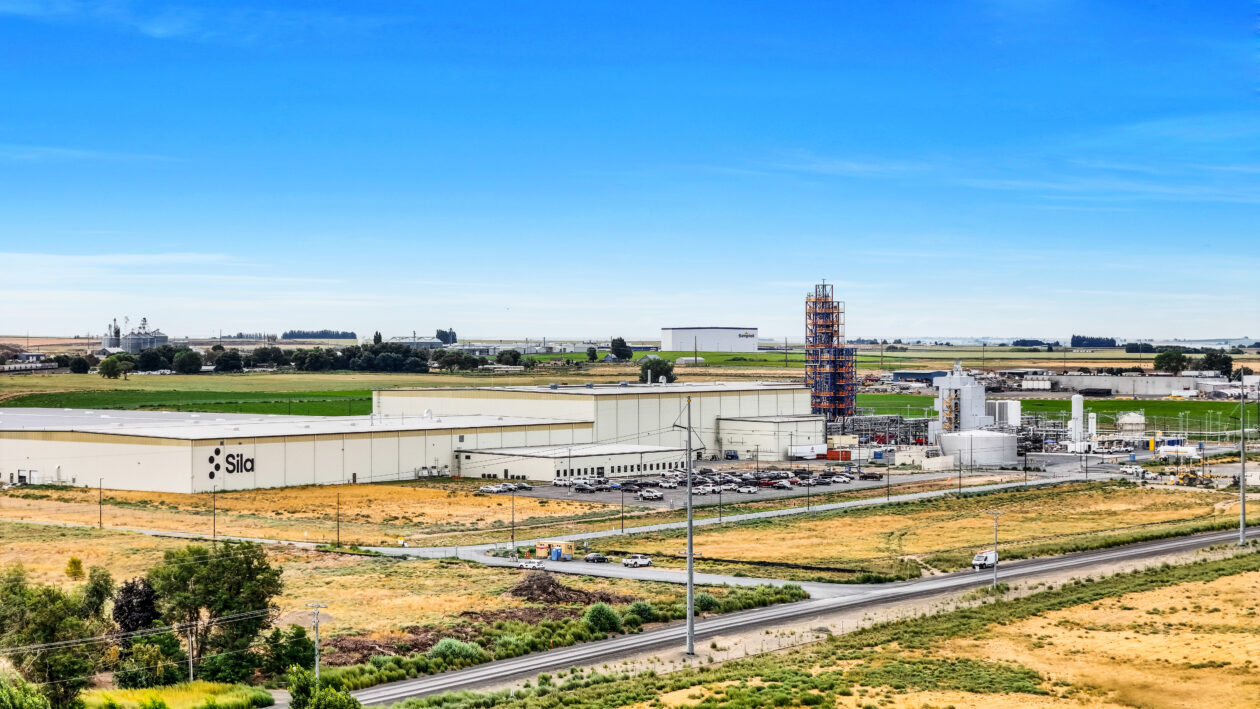
Sila began operations at its Moses Lake, Wash., plant in September. (Sila Photo)
Sila, a startup producing next-generation battery materials, on Tuesday announced $300 million in new funding.
The company previously raised $1.3 billion and was valued at close to $2 billion two years ago, according to PitchBook. It has 400 employees.
The California-based startup has developed a silicon-carbon material that replaces graphite traditionally used in the anodes of lithium-ion batteries, delivering better performance and significantly higher energy capacity.
Last fall, Sila opened its manufacturing facility in Moses Lake, Wash. — the first automotive-scale silicon-anode plant for both the company and the nation. It’s shipping sample anode material from the facility to a variety of customers.
The cash infusion will help fund a planned expansion of its Central Washington operations.
Advertisement
The current plant has a production capacity of about 2 gigawatt-hours of anode material, which, depending on its application, could supply 20,000 to 50,000 EVs. The expanded facility could increase that volume to tens of gigawatt-hours.
EV sales cooled in the U.S. after President Trump returned to office and federal support for battery-powered cars waned. But new models are still entering the market and demand is growing for other battery applications.
“Anything that AI is touching right now is driving tremendous need for better batteries,” said Gene Berdichevsky, co-founder and CEO.
Advertisement
That includes drones, hardware deployed in outer space, robotics, autonomous vehicles, wearable consumer devices, and batteries used at AI data centers. All of those uses require higher performing batteries, he added.
It’s also essential that the U.S. bolster its domestic manufacturing of battery components given national and economic security concerns, Berdichevsky said. Because while the U.S. is racing to strengthen its AI sector, if the nation has to import all of the equipment and hardware systems that it needs, “you really don’t have an AI industry,” he added.
Sila’s round was led by Atreides Management and Sutter Hill Ventures. It was joined by 8VC, Bessemer Venture Partners, Matrix Partners, funds and accounts advised by T. Rowe Price Associates, and other existing and new investors.
Moses Lake is also home to Group14, which is producing its own version of a silicon anode material. The Washington-based competitor to Sila has put its U.S. manufacturing on pause as it focuses on its South Korean plant, which is delivering commercial-scale volumes of material for customer performance testing.
Advertisement
Editor’s note: Story updated at 9:25 a.m. July 21 to add comments from Gene Berdichevsky and to clarify that the next phase of manufacturing expansion will increase production into tens of gigawatt-hours of material.
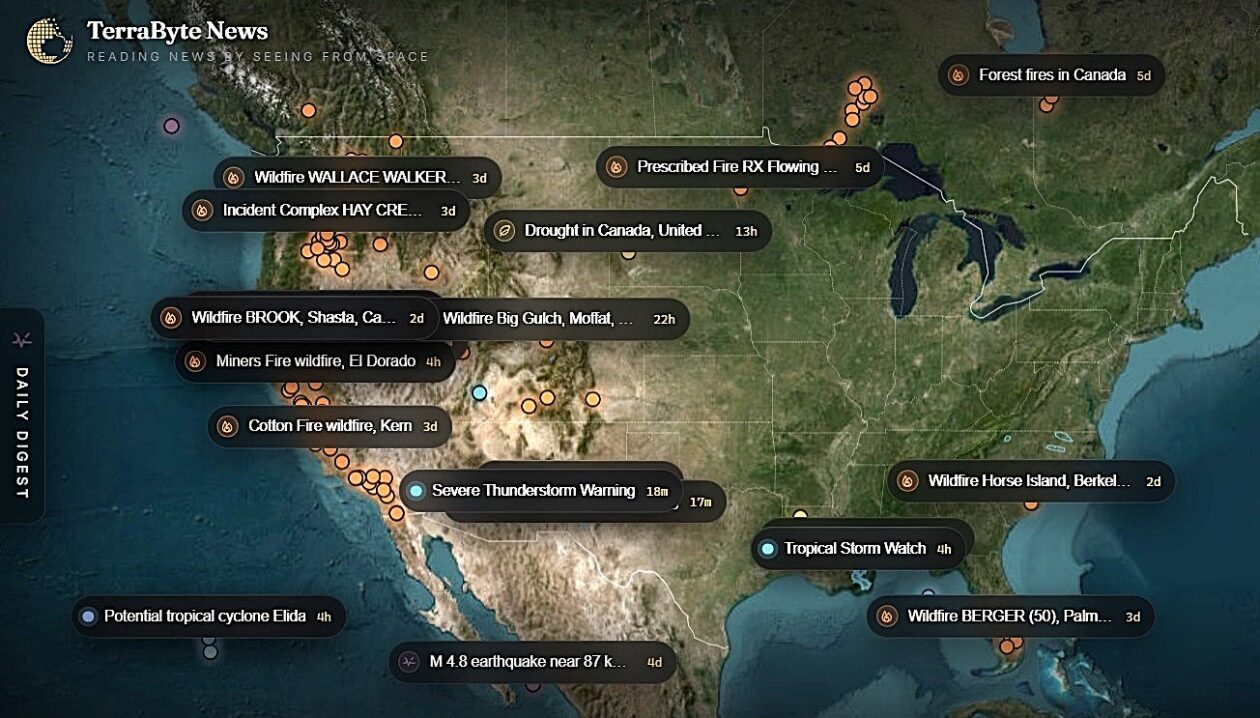
An interactive map displays the sites of wildfires, earthquakes and severe weather events, with links to satellite imagery. (Credit: TerraByte)
Two months after emerging from stealth mode, TerraByte AI is using artificial intelligence and a new partnership to upgrade its “Earth Search Engine.”
The startup, which maintains operations in Seattle as well as San Francisco, has just rolled out a TerraByte News service that pinpoints wildfires, earthquakes and severe weather events on an interactive map. Users can follow links to access news reports, social media posts and satellite views related to selected events.
The satellite views include open-source images from NASA’s Earth observation system as well as Europe’s Sentinel satellites. And now the database also features high-resolution pictures provided through a newly announced partnership with Texas-based SkyFi. The partnership gives TerraByte’s users access to SkyFi’s self-service Earth intelligence platform, which offers satellite and aerial imagery from more than 300 sources at prices as low as $15 per image.
“In May, when we came out of stealth, we made the planet searchable,” TerraByte CEO Rishi Madhok told GeekWire. “Now, the moment you find something, you can hold the imagery in your hands within a day. The next step is making Earth intelligence as routine as a web search — you ask, you see, and then you act.”
Madhok and Fuxun Yu, TerraByte’s chief technology officer, founded the company last year as a follow-up to their work on geospatial data analysis at Microsoft. They developed search tools that can recognize features of interest in satellite images and deliver data-driven insights in response to natural-language queries.
Advertisement
TerraByte’s digest entry for “Forest Fires in France” combines satellite imagery and news reports. (TerraByte Graphic)
Over the past couple of months, TerraByte’s team has grown from three to five employees, Madhok said. “Our goal is to grow the team even further this year, because we are seeing a lot of traction from users since we came out of stealth,” he said.
“A lot of traction is coming from insurance [companies], from the government, from mining, from other areas where there is the possibility to see things,” he said. “And finance, right? A lot of quant firms and hedge funds want to see all of this activity coming in.”
One key application involves emergency response. “Our big focus is on catastrophes, particularly wildfires,” Madhok said. “Our vision is that anybody should be able to track this — not limited to just journalists, but including everyone who is living in those areas and wants to see what’s going on.”
Madhok expects the revenue-sharing partnership with SkyFi to open up new opportunities. “I’m happy to say that we have customers who are paying us,” he said. “From that perspective, we’re already doing well.”
Advances in AI are creating still more opportunities. “Now you can do searches not just using text, but using images, which we call visual search,” he said. “Let’s say you’re searching for a certain kind of vessel, and it’s very hard for you to describe it in natural language. You can just take a screenshot of it, upload it, and within seconds it will literally search for what you were looking for.”
Advertisement
Looking ahead, Madhok and his teammates plan to add people power to the power of AI.
“This is the first version of a platform that we’re going to release, and we obviously want to learn more from our users,” he said. “We want this platform to become crowdsourced, so that people who are local to a region can add more information from that perspective, because then it starts becoming more powerful. We don’t want just TerraByte to be the owner of this.”
Madhok shared a video on LinkedIn that shows how TerraByte’s platform can quickly find high-resolution imagery of a shipwreck in Washington state’s Possession Sound:
Rather than relying on ground beans or a single capsule format, this machine reads the size of whatever pod you drop in thanks to its Dual Capsule Recognition technology, automatically adjusting the brew to suit each specific coffee recipe.
Advertisement
That flexibility extends to the capsules themselves, since the L’OR Barista is built around exclusive double shot capsules alongside L’OR Espresso single shots, while also staying compatible with standard Nespresso Original capsules already sitting in your cupboard.
Being able to brew two cups of espresso, or a single double espresso, from one of those double shot capsules means a ristretto for two or a stronger cup just for yourself is never more than a button press away.
Advertisement
Underneath all that convenience sits genuine brewing power, with the system pushing coffee through at up to 19 bar of pressure to chase the same crema and intensity you would expect from a proper espresso bar.
Every machine also arrives with a coffee tasting box containing four L’OR Espresso single shot capsules and five L’OR Barista double shot capsules, so there’s no need to buy pods separately before your first cup.
With over 930 reviews averaging 4.5 stars and two years of warranty cover included as standard, this is a machine that has already proven itself to plenty of buyers well beyond the strength of a single discount.
At £81 rather than £109.99, the Philips L’OR Barista pays for itself within weeks for anyone funding a coffee habit one overpriced takeaway cup at a time, and our Best Coffee Machine 2026 guide has the full rundown.
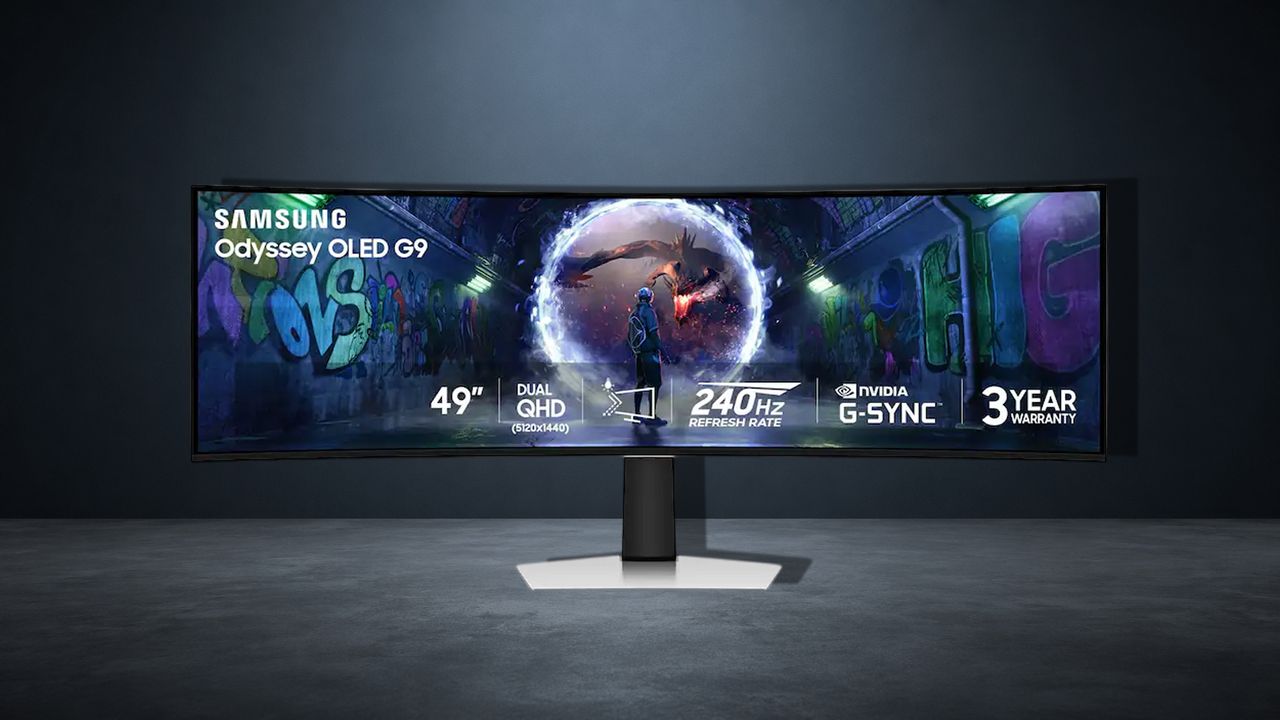
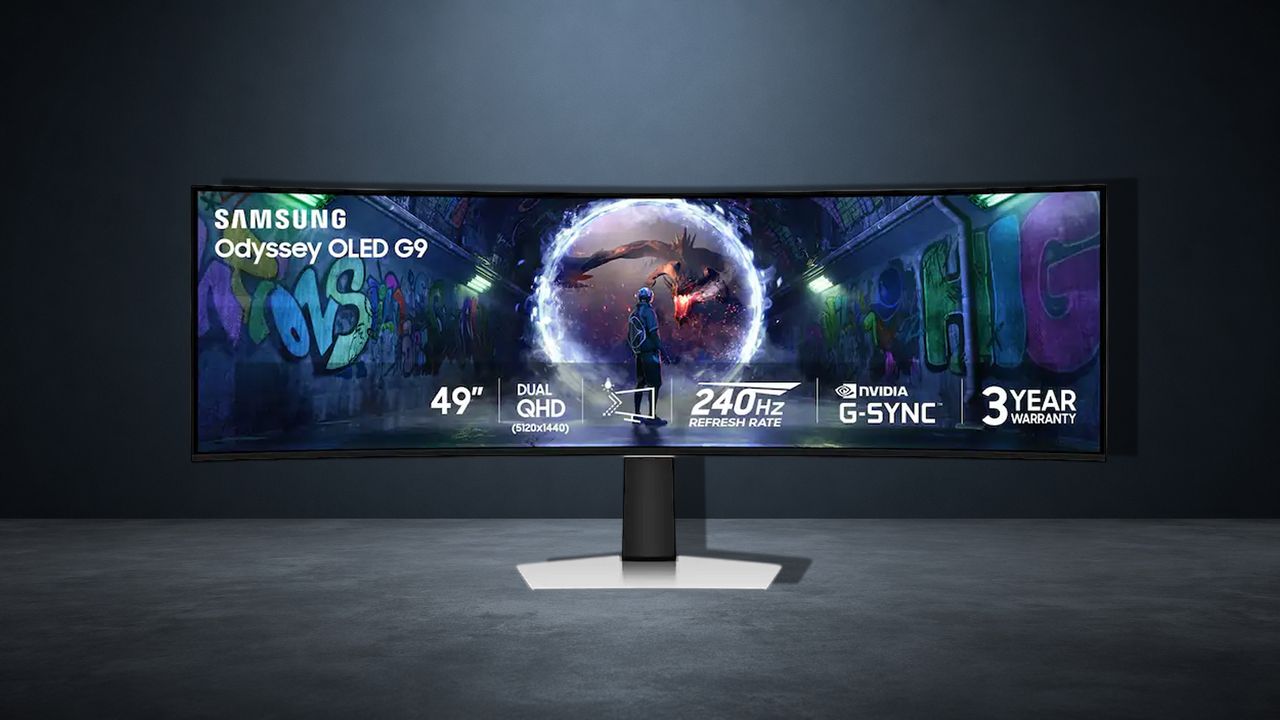
The enormous 49-inch Dual QHD OLED display and 32:9 aspect ratio effectively replace two 27-inch QHD monitors, giving you an super-wide workspace for productivity and entertainment.
Add a 240Hz refresh rate, 0.03ms response time, and Nvidia G-SYNC Compatible support, and you’ve got a display that’s as impressive for gaming as it is for multitasking and creative work.
Advertisement
Should you buy it?
✅ Buy the Odyssey OLED G9 monitor if…
You should if you’re looking for a premium ultrawide monitor that excels at far more than gaming. The OLED panel produces exceptional contrast with deep blacks, HDR10+ support adds extra punch to compatible content, and the huge desktop space makes it fantastic for productivity, video editing, and creative work.
❌ Skip the Odyssey OLED G9 if…
You shouldn’t if desk space is limited or you mainly use your PC for everyday office work. At 49 inches with a 32:9 aspect ratio, this is a huge display that demands plenty of room, and many people simply won’t need this much screen real estate.
Advertisement
Today’s top Odyssey OLED G9 monitor deal
Why we recommend it
Samsung has combined a 5120 x 1440 OLED panel with a 240Hz refresh rate and a lightning-fast 0.03ms response time, creating a monitor that feels equally at home handling fast-paced games and demanding professional workloads.
The anti-glare coating helps reduce reflections, while the height-adjustable stand, DisplayPort 1.4, HDMI 2.1, USB-C connectivity, and three-year warranty complete an impressively well-rounded package.
Advertisement
In her 4.5 star review, our monitor expert Allisa said the Odyssey OLED G9 is “an incredible monitor that’s worth the cost.” In addition, she found it to be “fantastic, with plenty of features, excellent display, and a pretty solid speaker system.”
Price Context & Historical Value
The Odyssey OLED G9 normally sells for $1,699.99 at Best Buy, and this $700 discount brings the price down to just $999.99. That makes this flagship OLED ultrawide far more affordable for any buyers who may have previously considered it out of reach.
Advertisement
The Catch: What to know before you buy
This monitor is designed for creatives and enthusiasts, and you’ll need a capable graphics card to make the most of its 5120 x 1440 resolution and 240Hz refresh rate. At its discounted price, a penny under $1000, it’s still a premium purchase, but if you can afford it, I would definitely recommend buying it.
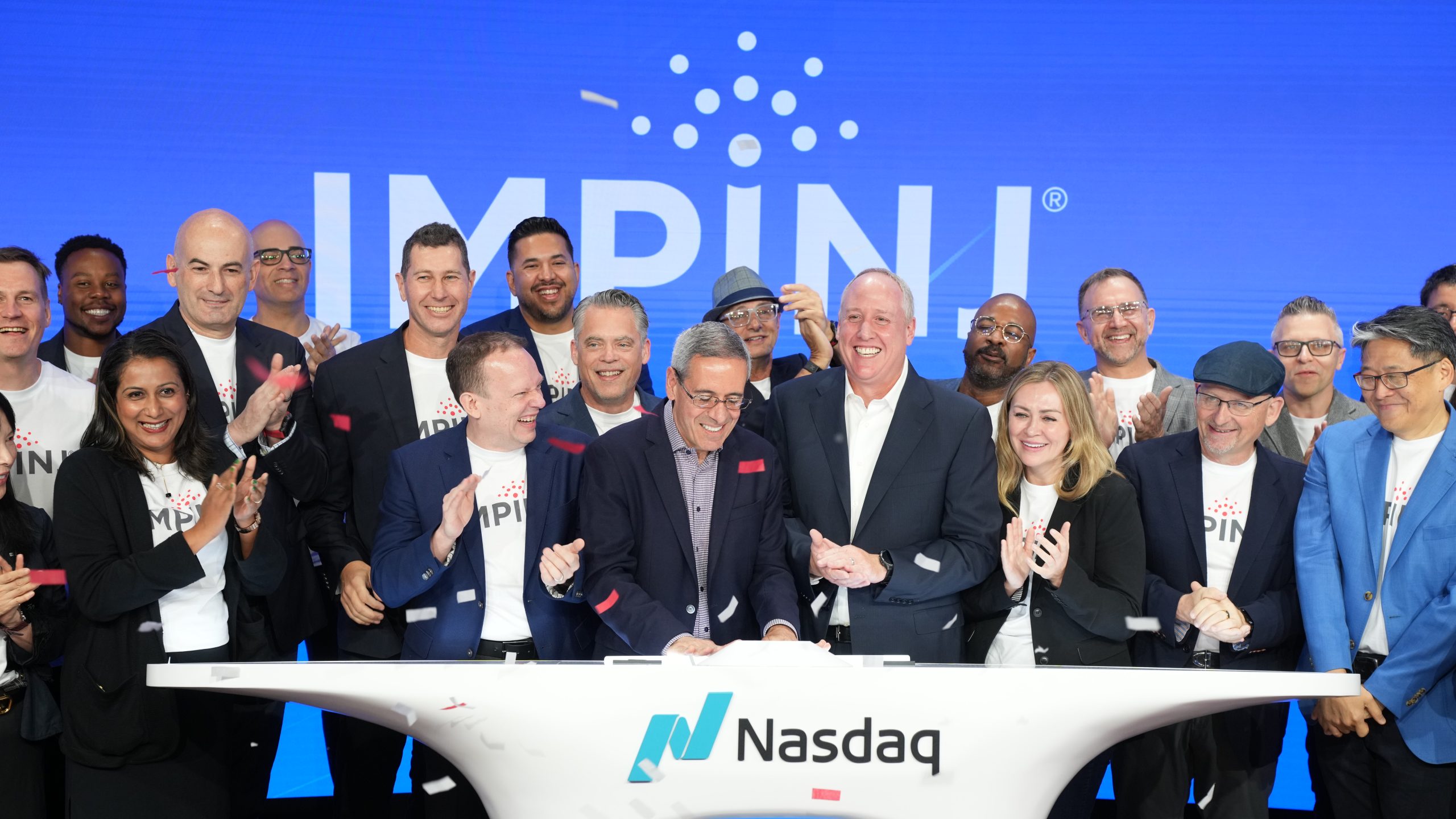
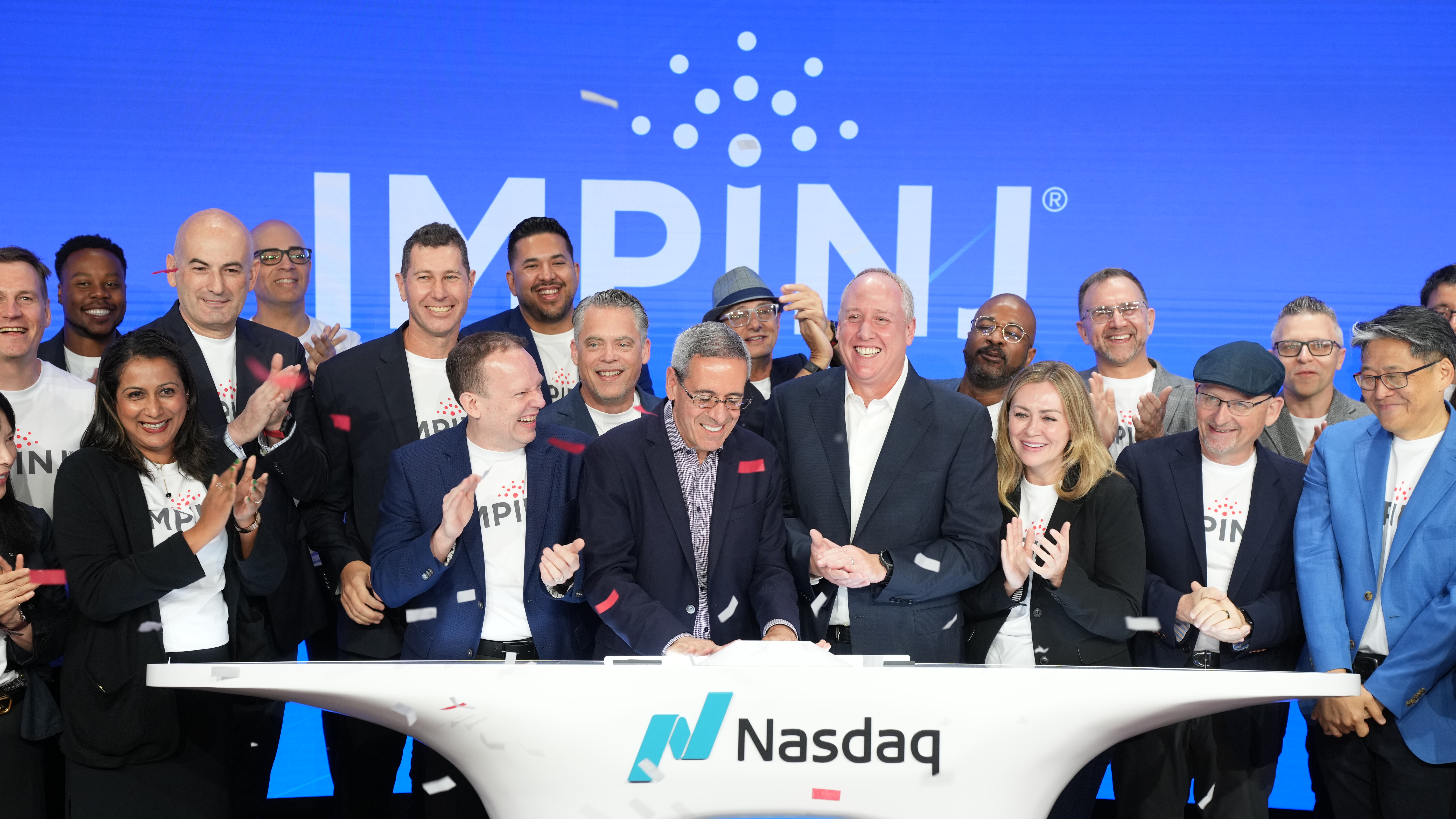
Impinj co-founder and CEO Chris Diorio, center, and members of the Impinj team at the Nasdaq opening bell ceremony in New York City on Tuesday, marking the 10th anniversary of the company’s IPO. (Nasdaq Photo)
Backstage at a Seattle tech event in the early 2000s, Chris Diorio was waiting his turn to speak. Next to him was Jeff Bezos, whose company was already becoming a household name.
Diorio, the leader of Impinj, then a tiny local startup, turned to the Amazon founder: “Jeff, you’ve got a much bigger near-term opportunity than we do,” Diorio recalls saying, “but we’ve got a much bigger long-term opportunity than you do.”
Before Bezos could respond, he was called onstage.
“The technology turned out to be way harder than I thought,” Diorio acknowledged after telling that story in a recent interview. “But that’s what I told him — and I still believe in those words. Our opportunity is to deliver physical intelligence for every item in the world.”
A quarter-century after that chance encounter, Diorio rang the Nasdaq opening bell Tuesday morning in New York City to mark the 10th anniversary of Impinj’s IPO. The company’s tiny, battery-free RFID chips — each smaller than a grain of sand — have been embedded in more than 160 billion items, including clothing, pharmaceuticals, airline luggage, and groceries.
Advertisement
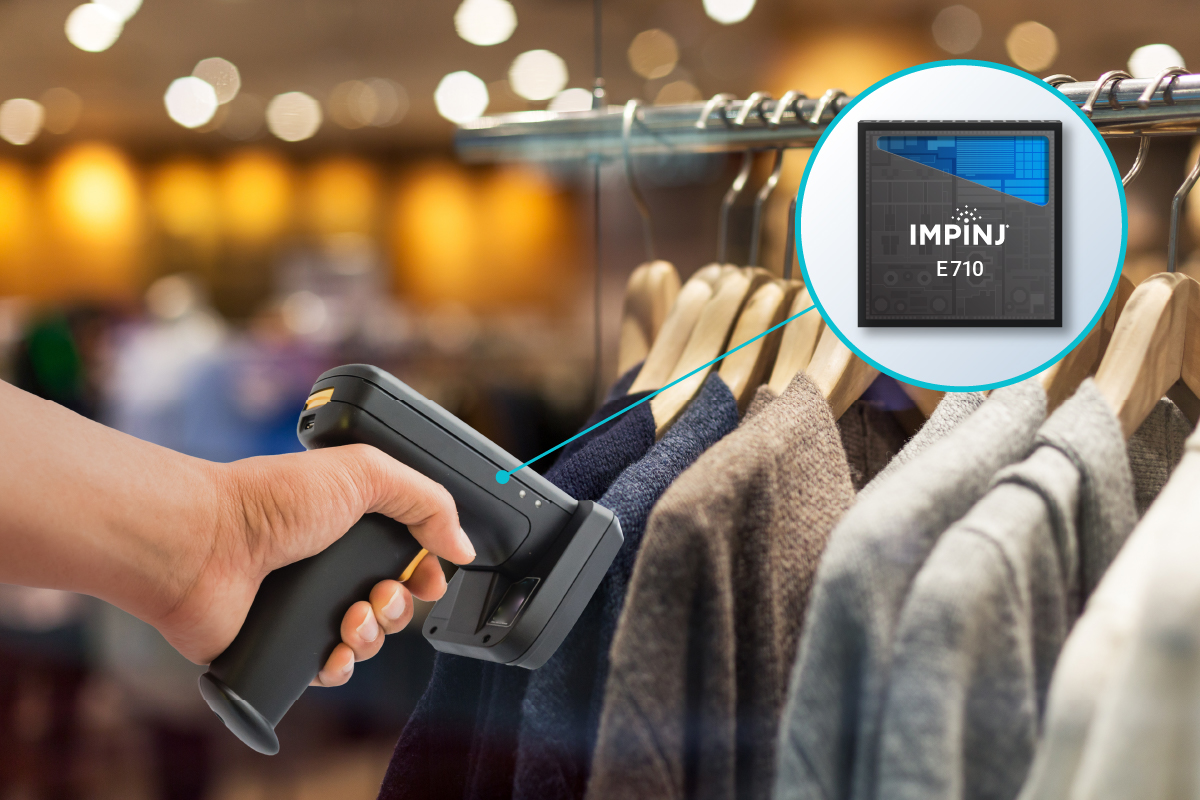
An illustration of the Impinj E710 reader chip inside a handheld RFID scanner used for retail inventory. (Impinj Photo)
Impinj commands nearly two-thirds of its market, won a patent war against a rival 15 times its size, and has grown from a $250 million IPO valuation to a market cap of more than $4.2 billion. Along the way, the company survived a billion-dollar industry hype cycle that killed nearly every competitor.
And yet, Impinj has posted exactly one profitable year since going public — thanks to a $45 million legal settlement at the time. Its accumulated deficit stands at $400 million, its financial reports show. Less than 1% of the items it envisions connecting are connected today.
To Diorio, that speaks to the potential. The company is barely scratching the surface. He cited the 1% stat in his comments before ringing the Nasdaq bell on Tuesday morning, saying the “opportunity is so gigantic that we’ll still have a huge runway ahead of us 10 years from now.”
That the company has gotten to this point is as much a Seattle story as it is a technology story. Impinj has benefitted from a network of patient local investors, academic connections and supporters who gave the company the time that Silicon Valley never would have.
But no one imagined it would take this long when they got started.
Advertisement
From Caltech to Seattle
The origins of Impinj were at Caltech in Pasadena, Calif., in the 1990s. Diorio was a graduate student working under Carver Mead, the physicist and engineer who helped coin the term Moore’s Law and helped lay the intellectual foundation for the modern semiconductor industry.
Carver Mead, the Caltech physicist and engineer who co-founded Impinj with Diorio. (Photo by Norman Seeff, CC BY-SA 4.0)
Together, they discovered a way to change a transistor’s electrical properties after it had been manufactured — a quantum-mechanical phenomenon called “impact-ionized hot electron injection.” That made it possible to build chips so efficient and inexpensive that they could be embedded in disposable packaging. (“Impinj” is derived from that scientific name.)
In an oral history later recorded by the Science History Institute, Mead described Diorio as “a super-bright, super-high-energy guy” who “burned up the track” at Caltech.
After finishing his PhD, Diorio was recommended by Mead to the University of Washington’s computer science department. There was resistance among the UW faculty — his research in analog circuits wasn’t an obvious fit — but professor Larry Ruzzo carried the day.
Ruzzo essentially said, “This guy is brilliant, and even if he is nothing other than our gift to the rest of the university, we should hire him,” recalled Ed Lazowska, the department chair at the time.
Advertisement
Diorio joined the UW faculty in 1997. Over the next few years, his research earned a string of honors, including Packard and Sloan fellowships. A couple years later, Diorio met up with Mead on a trip to California, over dinner at Fresh Cream, a long-since-closed French restaurant in Monterey. Diorio asked Mead if it was time to start a company.
“Are you up for it?” Mead asked. Diorio said yes. They started the paperwork the next day.
Impinj was incorporated in April 2000, headquartered in Seattle. It quickly got the attention of two local investment firms, with behind-the-scenes help from the everpresent Lazowska.
On April 21, 2000, the UW computer science chair emailed Bob Nelsen at Arch Venture Partners and Tom Alberg at Madrona. He explained that he was urging Diorio and Mead “to get some local $ for the connections,” and that he had pointed them to Arch and Madrona.
Advertisement
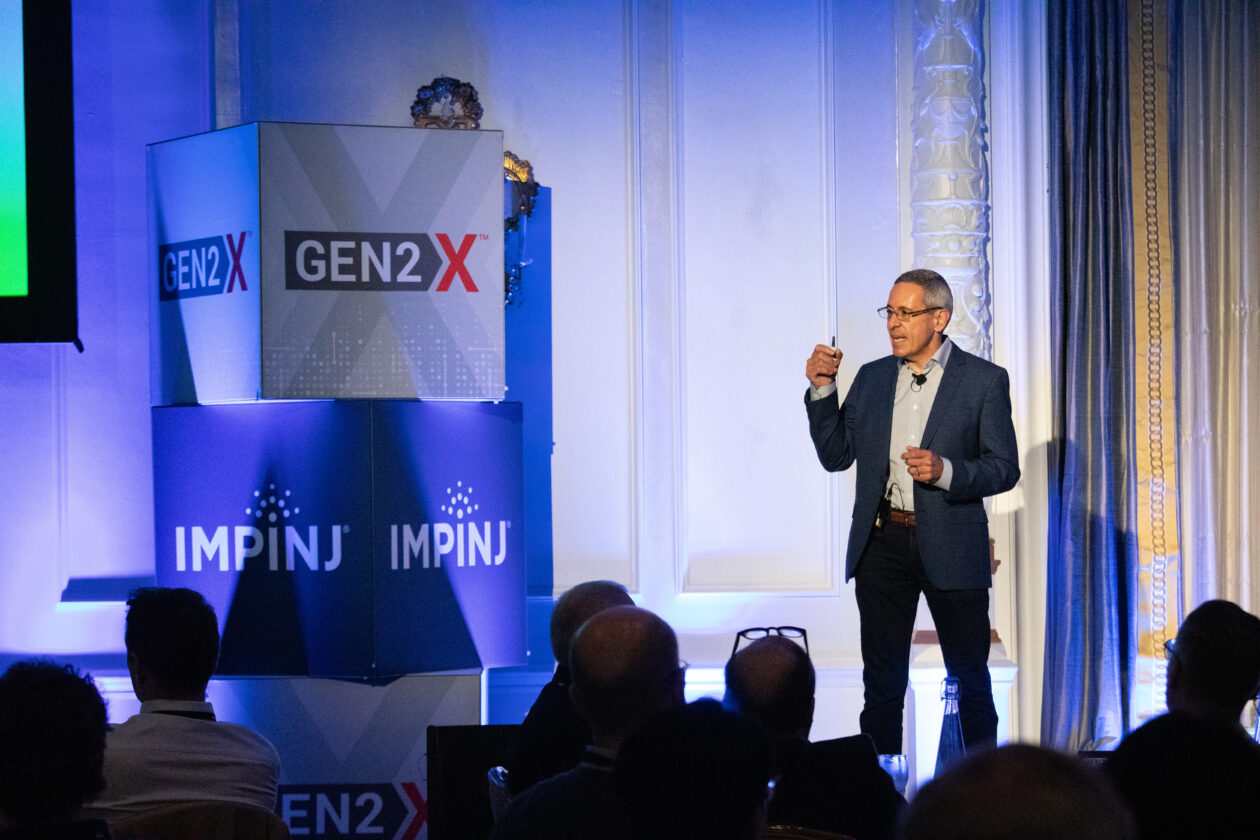
Impinj co-founder and CEO Chris Diorio discusses Gen2X, the company’s latest advancement in RFID chip technology. (Impinj Photo)
Patrick Ennis, then at Arch, reached out to Diorio that same day. As Ennis recalled in a recent interview, there were plenty of Silicon Valley firms that wanted in, thanks to Mead’s reputation, but Diorio and Mead decided to take Lazowska’s advice and go with Seattle investors.
Diorio, who likes to take walking meetings, negotiated the terms with Ennis as they made their way on foot through the University of Washington Arboretum one day. The investment closed that summer: $15 million, split evenly between Arch and Madrona.
Impinj at the time had patents, prototypes, and no real business plan.
“That’s how venture capital should be done,” said Ennis, who has since become a Madrona venture partner. “You make big bets on great technology and great people.”
Betting the company on RFID
Bill Colleran joined Impinj as CEO in January 2001. He and Diorio had designed satellite chips together at defense contractor TRW in the 1980s. Colleran had just sold his Bluetooth startup, gotten married, and gone on his honeymoon. He came home to a message from Diorio: he’d started a company in Seattle and wanted Colleran to join.
Advertisement
Bill Colleran, Impinj’s first CEO, was recently tapped to lead AI coding startup Adronite.
Colleran was soon in Seattle — one of six or eight people working out of what he warmly recalls as “a crappy little building” in the University District, several of them former TRW colleagues.
“We were kind of getting the band back together,” he said.
RFID wasn’t the original plan. Impinj’s first target was improving power efficiency for 3G wireless base stations, but the dot-com bust killed that market, and regardless, the company was too small to compete with the major chipmakers in the wireless industry.
The team spent two years exploring what to do with their technology. Cable modems required too much dependence on Intel, as Colleran recalled. Cell phone radios were dominated by players too big to compete against. GPS turned out to be a poor technical fit — Impinj’s chips excelled at low power, but GPS demanded low electrical noise, a different problem entirely.
So they eventually settled on RFID, the technology that uses tiny wireless chips to identify and track physical objects. The industry was young, the standards were still being written, and Impinj’s low-power technology seemed tailor-made for it.
Advertisement
As Madrona’s Ennis and Tim Porter write in a piece pegged to the IPO anniversary, “When you have a truly powerful, groundbreaking deep technology, it behooves you to wander the product-market fit wilderness for a while, even when that is unsettling and downright frightening, and even when it runs contrary to what you learn in a VC class in business school.”
Then, a stroke of luck: In June 2003, Walmart announced it would require its top suppliers to tag every pallet and case with RFID chips. The Impinj team celebrated their good fortune.
“We all high-fived,” Diorio recalled. “We did it. Eighteen months, we’re gonna IPO.”
In reality, it would be another 13 years.
Advertisement
Surviving the RFID hype cycle
Walmart’s announcement triggered a gold rush of venture capital investment into RFID technology startups. But there was no global spectrum allocated, no standard that worked, and no products ready to deliver on the promise. Walmart’s own January 2005 deadline came and went. Only half of its top suppliers could comply.
By 2008, the hype cycle had collapsed. Nearly every RFID startup died or got acquired.
“More than $1 billion of VC money got poured into RFID,” Diorio recalled. “Way up, crashing down, and only one company that made it out the other side. … We were lucky enough that it was us.”
The real inflection didn’t come until around 2010, when retailers began tagging individual items, not just pallets. Knowing exactly which products were where, in real time, could lift same-store sales by as much as 10%, by solving a basic problem: getting items out of back rooms and onto shelves, making them available for purchase before customers gave up looking for them.
“I didn’t know if I wanted to be a lifelong RFID guy,” he said.
An exit wasn’t in sight — the IPO window was shut, and a sale didn’t make sense because Impinj made both chips and readers, and “any of the companies that would be interested in boxes weren’t chip companies, and the chip companies weren’t interested in boxes.”
Advertisement
Diorio took over as CEO that November. The venture investors were 14 years in and needed a path to liquidity. He spent the next two years sorting things out and getting the company ready.
The long road to IPO
Porter, now a Madrona managing director, who had worked closely with Alberg on the Impinj investment since 2007, recalled the final stretch. One of the first target dates for trading landed on the day Britain voted to leave the European Union, sending markets into a tailspin.
“It was a little bit like, are you kidding — what next?” Porter said.
But on July 21, 2016 — some 16 years after its founding — Impinj went public on the Nasdaq at $14 a share, raising $67 million at a market cap of just over $250 million.
Advertisement
The late investor Tom Alberg, one of Amazon’s first investors and an early backer of Impinj, looks on as Amazon CEO Jeff Bezos speaks at a Madrona event in 2015. (Madrona Photo)
Porter called Alberg’s move “a really big signal” to the market that demonstrated his long-term belief in Impinj. It was also a smart investment, as it turned out. As noted during the Nasdaq bell-ringing Tuesday morning, Impinj’s share price has grown by nearly 900% since the IPO.
But there was one last hitch. On the night before trading began, the offering was so oversubscribed that the final allocation became a drawn-out negotiation between the board and the bankers over how many shares to issue. It dragged on so long that Diorio and CFO Evan Fein, stuck in Chicago for the roadshow, missed their flight to New York.
Fein had been one of the first people hired at Impinj, joining Colleran in the University District office in 2001 and staying through the whole ride. He was not about to miss the bell-ringing.
The CFO wanted to make a run for it, but Diorio told him there was no way — the flight departed in 30 minutes from O’Hare. Fein tried anyway. He didn’t make it. They stayed in Chicago overnight and caught a flight the next morning.
Advertisement
The company’s CTO at the time rang the bell in Diorio’s place.
Trial by fire
The celebration was short-lived. After the IPO, demand for RFID surged — but Impinj, thinly capitalized after years of private fundraising, didn’t have the operational capacity to fill the orders. The stock quadrupled from its $14 IPO price to more than $60. Then it all came apart.
NXP Semiconductors, a Dutch chipmaker roughly 15 times Impinj’s size, moved aggressively on pricing and took business away. Customers who had been stockpiling RFID tags pulled back on orders. Revenue declined. On Feb. 2, 2018, the stock plunged 47% in a single day.
What followed was the darkest stretch in the company’s history. The company laid off 9% of its workforce. Then a former employee complaint triggered an audit committee investigation, forcing the company to miss an SEC filing deadline and drawing a deficiency notice from Nasdaq.
Advertisement
For months, the outcome was uncertain. Executives couldn’t trade their stock or issue grants to employees. The investigation cost $1.4 million. NXP, sensing an opportunity, continued to press its advantage.
Diorio described the investigation as mentally draining. The company was spending millions of dollars, the outside attorneys weren’t sharing their findings along the way, following the standard practice, and there was no way to know for certain how it would end.
“You firmly believe you haven’t done anything wrong,” he said, “but who knows if somebody actually did something wrong that you don’t know about.”
The investigation ultimately cleared the company, finding “no credible evidence” of wrongdoing, and Impinj received what Diorio called a rare letter from the SEC formally closing the matter. The stock surged 35% on the news.
Advertisement
Diorio called 2018 a turning point. “It was the year where everything got really difficult, the team and the company rallied, and it was the strength and the persistence of the team and their dedication that pulled us out the other side,” he said. “I’ll never forget that.”
The following year, Impinj went on offense. In June 2019, the company sued NXP, alleging it had copied 26 of Impinj’s patents. NXP countersued. The litigation stretched across five years and four lawsuits. In 2023, a federal jury found NXP had willfully infringed Impinj’s patents and awarded $18.5 million in damages. NXP settled in 2024, paying $45 million upfront and agreeing to ongoing royalties of roughly $17 million a year.
Where Impinj stands today
Diorio helped coin an industry term for the technology Impinj had built: RAIN RFID, short for “RAdio-frequency IdentificatioN.” It distinguished what Impinj does (using battery-free chips to identify and track individual items at scale) from other flavors of RFID used for key cards, animal tags, and contactless payments.
Today the company employs more than 450 people, most of them based in its headquarters at 400 Fairview Ave. N. in Seattle, with a test and development lab on Beacon Hill. The workforce is a fraction of NXP’s, which has more than 32,000 employees — a reminder that Impinj has built a market-leading position with a comparatively small team.
Advertisement
Inside the Impinj offices in Seattle in 2018. (File Photo)
Impinj holds an estimated 64% of the global market for RAIN RFID endpoint chips, up from 51% the year before, according to ABI Research. The company first overtook rival NXP for the market lead in 2024. The industry shipped nearly 53 billion chips in 2024, roughly one for every six or seven people on Earth. Impinj has connected more than 160 billion items cumulatively.
Each chip is battery-free, costs a few pennies, can be read wirelessly from 30 feet away, and identifies individual items at a rate of up to 1,000 per second. Vision systems can’t identify individual items. QR codes require line of sight. NFC has a range of four inches. Bluetooth requires a battery.
“Name any other technology that even gets close,” Diorio said. “You won’t come up with one.”
Privacy concerns nearly killed the RFID industry in its early years, when consumer groups campaigned against the technology in the mid-2000s. Although there’s privacy innovation still to come, Diorio said those fears have largely faded. The chips carry only a number, respond only when powered by an external reader, and don’t track people.
One retailer already turns its tags invisible after the point of sale, though Diorio noted that’s “not the best solution because then that inhibits recycling.”
Advertisement
His longer-term goal is cryptographic security, chips that can’t be cloned, putting “a dent in global counterfeiting” while keeping consumer data protected.
Meanwhile, the competitive landscape is shifting. Diorio views NXP as the only real competitor — “everybody else in the market is a partner,” he said — but the competitor list in Impinj’s SEC filings has grown from two names at the time of the IPO to more than six, including four Chinese chipmakers. When a product costs pennies, low-cost competitors have a natural opening.
Retail apparel remains the core market. About 60% of all RAIN RFID tags go on clothing. But that reliance has made the business volatile. Three times in 10 years as a public company, demand from retailers has dropped sharply, dragging revenue and the stock with it.
Earlier this year, Impinj’s stock plunged after the company issued guidance well below expectations. Part of the challenge: the company’s top three customers account for 61% of revenue.
Advertisement
The financial picture reflects a company that is still proving itself. Revenue has grown from $123 million in 2018 to $361 million last year, but Impinj has posted just one profitable year since going public — a $41 million gain in 2024, boosted by the NXP settlement.
To Diorio, all of this is prelude. Apparel, he said, is “tiny” compared to the total market of every item manufactured, transported, and sold. General merchandise, supply chain logistics, pharmaceuticals, food — each is an order of magnitude larger, or more.
“We have a gigantic blue ocean,” he said. “It’s the size of the Pacific.”
Machine learning and AI
The company is also using machine learning to move beyond handheld inventory scanning. Fixed readers mounted in ceiling tiles and other locations can track items autonomously at store choke points, from receiving docks to fitting rooms to exits, replacing employees who currently walk the aisles waving handheld scanners.
Advertisement
More broadly, Diorio sees tagged items as a data source for AI, generating hard information at every point in a product’s journey from factory to shelf to recycling bin.
“Most of the modeling that goes on today is based on guessing,” he said. “If the models are based on hard data, it’s immensely more valuable.”
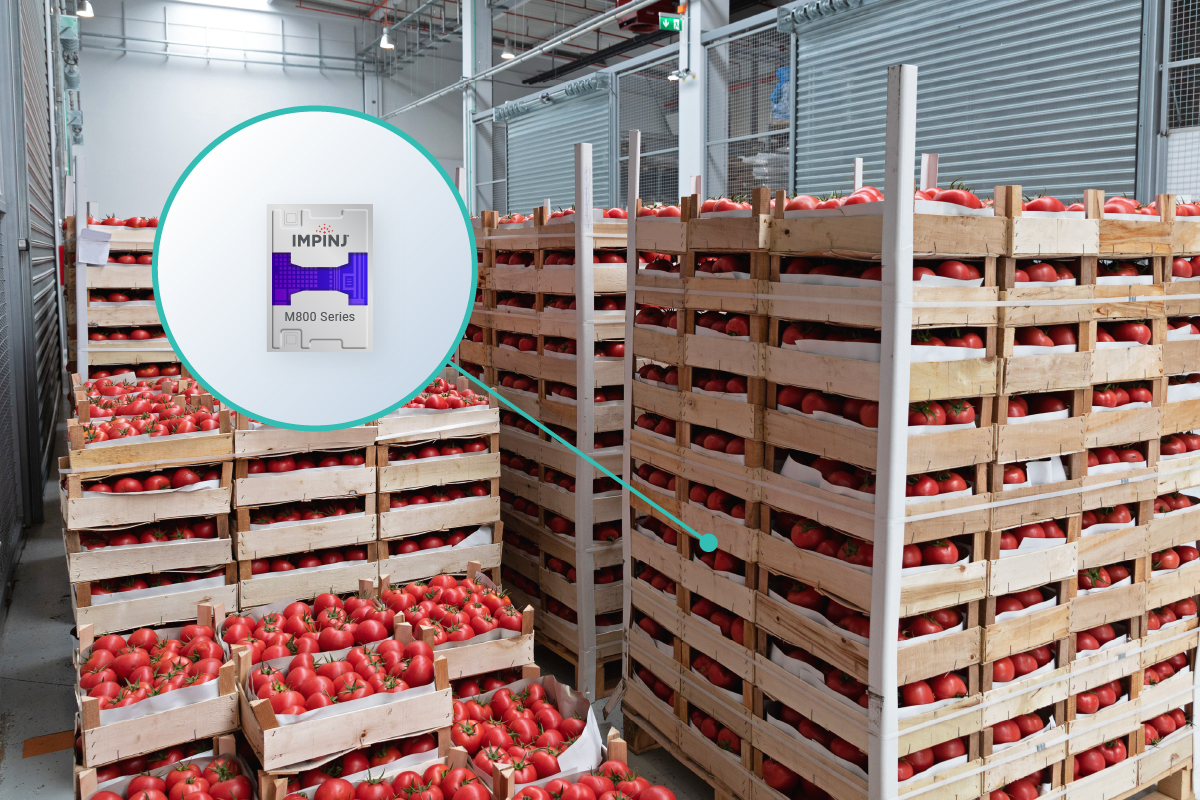
Impinj’s M800 series RAIN RFID chip, smaller than a grain of sand, is designed to be embedded in labels on individual items — including fresh groceries, one of the company’s biggest growth opportunities. (Impinj Photo)
The biggest bet ahead is food. Three of the top five U.S. grocers (Kroger, Walmart, and Albertsons/Safeway) are piloting RFID for food freshness, according to Diorio, using tags to identify items approaching their expiration dates so they can be marked down before they end up in the trash.
A European grocer is pushing toward fully automated checkout, where a basket of tagged items moves down a conveyor and is read instantly, no scanning required.
These are pilots, not deployments. The grocery market dwarfs apparel in volume, and Impinj has yet to prove it can crack it at scale. But here again, Diorio sees this as untapped potential.
Advertisement
“My enthusiasm is as high as it’s ever been,” he said. “We are just getting going.”
And this time, he made it to New York to ring the opening bell.
During his Nasdaq remarks on Tuesday morning, Diorio told the story of getting stuck in Chicago for the IPO a decade ago, using the anecdote to make a larger point.
“The team stepped in,” he said. “The team that was here covered everything, rang the bell, did all the process, and did it beautifully. In fact, probably better than we could have. And that is the story of Impinj. It’s the team.”
Advertisement
Editor’s note: This story was updated July 23, 2026, to reflect ABI Research’s 2025 market share estimate of 64% for Impinj, up from 51% in 2024 as originally reported. The spelling of former CFO Evan Fein’s name was also corrected.
If you’re of a certain age, you’ll remember the way the web used to be: sites made and developed by humans.
You could load up a directory like AltaVista or Yahoo and click through categories including Home & Family, Science, and Computers. In those listings you’d find pages put together by hobbyists, academics, and tech nerds.
People gathered around forums and bulletin boards, and web developers tended to avoid putting images on their sites because it would slow down page loading. The idea of watching a video over the internet seemed almost impossible.
In the decades since those formative years, the web has transformed almost beyond recognition. Almost everything is now monetized to the nth degree, from search results and forums to social media and news outlets. Powerful apps and tools now run inside browsers, while AI is hard at work removing the need for the open web altogether.
Advertisement
There are now a good number of companies that are keen to see the spirit of the old web return, and that includes Kagi. For several years Kagi has been running a search engine based on privacy and security. Now Kagi has expanded its efforts beyond its Google-alternative search tool to curate a “small web” of sites driven and written by humans.
The Kagi Search Engine
As Kagi’s main business is its search engine, it makes sense to start here. Searching with Kagi will cost you a small fee (starting at $5 a month, plus sales tax) for 300 searches. The standard-level AI assistant is included in that price; it’ll help you make sense of what you’re seeing. You get unlimited searches and more AI assistant tokens for $10 a month. If you want to see what Kagi is like first before committing, there’s a free trial available that allows you 100 searches.
The argument that Kagi puts forward for why you should pay for search is pretty persuasive. As Kagi explains it, searching the web is always going to cost you—it’s just a question of whether you pay directly with dollars, by giving up data about your online activity, or by sifting through an increasing number of ads and sponsored links.
Besides making search more private, Kagi also wants to make it better by serving up results that aren’t influenced by paid promotions or whatever Google’s favored business practices happen to be from month to month. Kagi has its own indexes for web and news, and is built to promote “relevant, high quality results” and noncommercial sites.
Advertisement
To get started with Kagi search, all you need is an email address and password to manage your account. You can then get started with your 100 free searches. Open the search options panel to limit results to images, videos, podcasts, maps or news, or to filter by time or language.
For me, it feels a little bit like stepping back in time. Searching for a band, for example, brings up its official website, Wikipedia page, social media accounts, and YouTube channel—all free of promoted results, related searches, and sponsored content (such as concert tickets). It’s more the way search results used to appear.
Kagi’s Small Web Project
There’s now more to Kagi than search. The company offers access to a multitude of AI models (of course), and is busy building out its Small Web project, which aims to highlight the best of the human-made and human-curated internet. The company recently launched apps for Android and iOS too.
The idea is to avoid a web “dominated by algorithms, ads, and AI-generated noise,” in Kagi’s words. It’s a little like the old StumbleUpon, if you remember that far back. There’s a Next Post button for jumping to something else at random, allowing you to favorite what you see or to search for something specific. There’s a Share button too, of course.
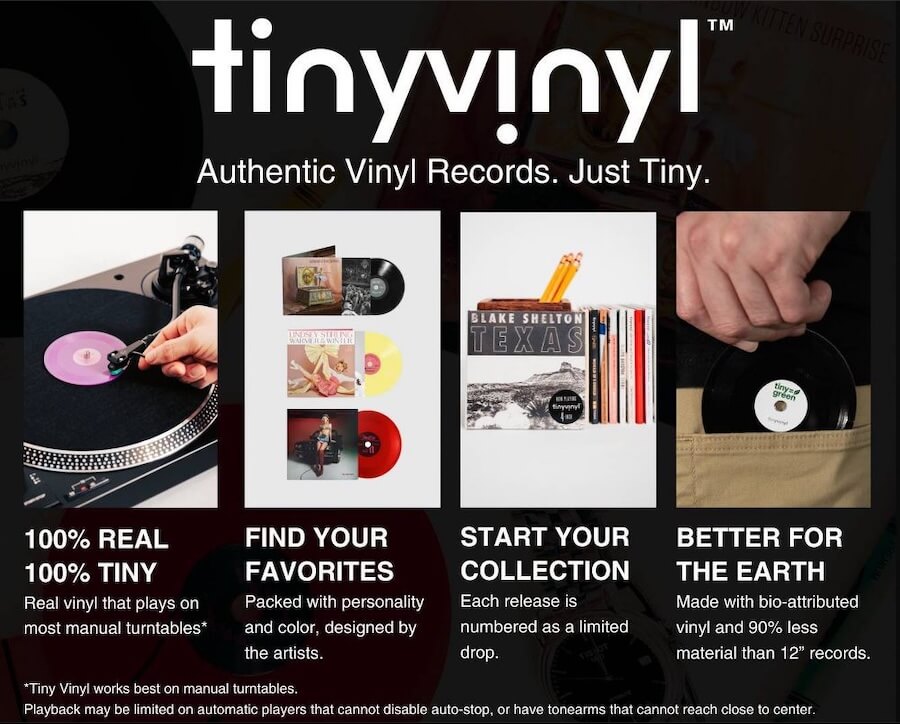
Tiny Vinyl now has a dedicated belt drive record player with Bluetooth, built in stereo speakers, and accessories for storing and displaying its growing collection of miniature records.
Last year, we covered Tiny Vinyl, the 4-inch record format that puts one song on each side and turns physical music into something closer to a collectible sonic snack. Apparently the snack now requires its own table setting.
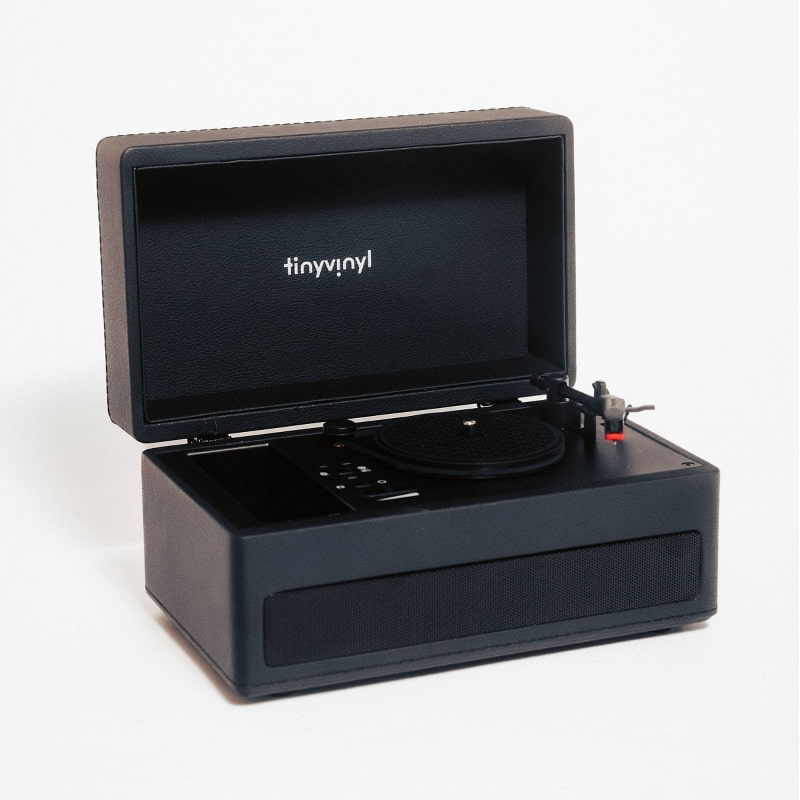
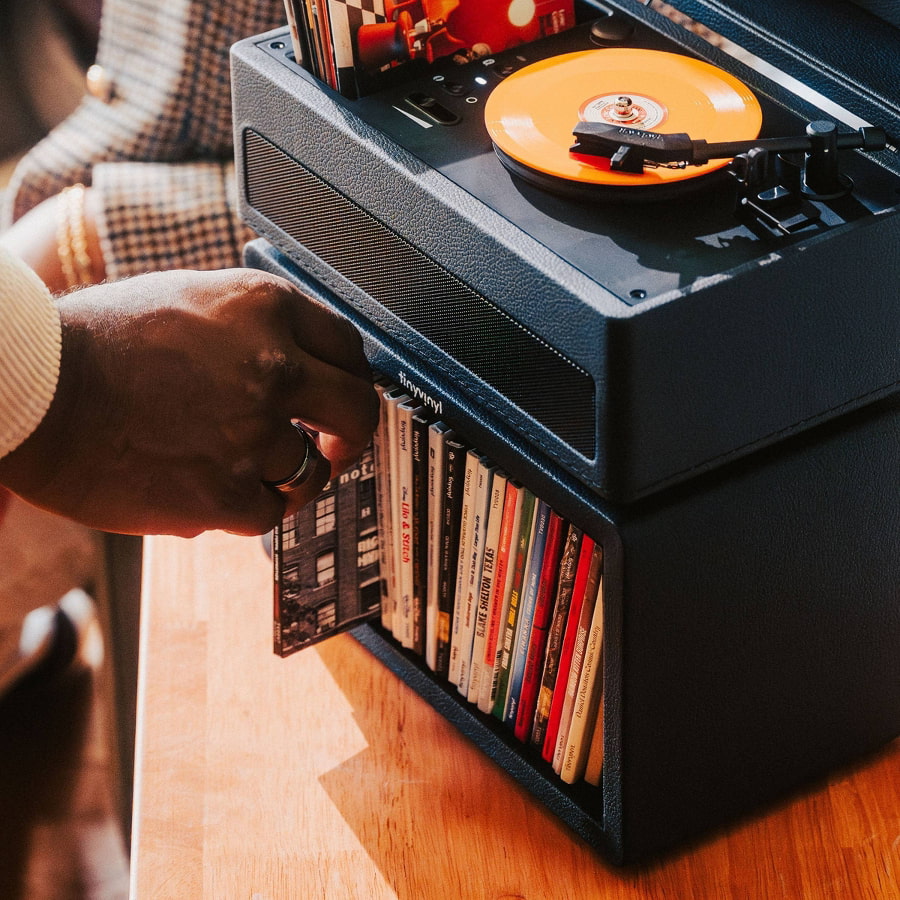
The new Tiny Vinyl Player is a $49.99 record player designed exclusively for the company’s miniature vinyl format. It is available through Target in a black leatherette clamshell cabinet with built in stereo speakers, Bluetooth output, and a wired audio connection for external speakers or headphones.
Related Reviews:
Why Does Tiny Vinyl Need Its Own Player?
Strictly speaking, it does not.
Advertisement
Tiny Vinyl records spin at 33⅓ RPM and can play on many conventional manual turntables. The problem is that their grooves sit very close to the spindle. Automatic stop and return mechanisms can engage before the song is finished, while some tonearms simply cannot travel far enough toward the center of the platter.
Tiny Vinyl Player
The dedicated player removes that uncertainty and gives collectors a simple way to use the format without checking tonearm geometry or disabling automatic functions. It also makes Tiny Vinyl more approachable for younger listeners and casual collectors who do not already own a turntable.
Tiny Vinyl says customers began requesting a player almost as soon as the records reached the market. Target also encouraged the company to develop one after the retailer began carrying the format across its stores. According to the company’s founders, more than one million Tiny Vinyl records have now been pressed.
Perhaps the tiny ecosystem is becoming less tiny.
What Does the Tiny Vinyl Player Actually Play?
One format. No plot twist.
Advertisement
The Tiny Vinyl Player supports the company’s 4-inch records at 33⅓ RPM. It does not play conventional 7 inch singles, 10 inch records, 12 inch LPs, or standard 45 RPM releases.
Each Tiny Vinyl record holds up to four minutes of music per side and is issued as a sequentially numbered limited edition. The records use 15 grams of 100 percent bio attributed vinyl, compared with approximately 140 grams for a conventional LP.
Advertisement. Scroll to continue reading.
That limited playing time means this is not a format for albums, live recordings, or the 17 minute version of anything. It is designed for two songs, collectible artwork, and fans who enjoy owning a physical object connected to a particular artist.
Advertisement
Tiny Vinyl’s official catalog now includes more than 90 released or identified records, most of which sell for $14.99 at Target. The lineup spans artists such as Rihanna, Ariana Grande, Bruno Mars, Chappell Roan, Britney Spears, The Rolling Stones, Black Sabbath, Blink 182, Jimi Hendrix, BTS, and John Williams.
Tiny Vinyl Player Features
The Tiny Vinyl Player is a compact belt drive design measuring approximately 10 inches wide, 5.5 inches tall, and 6.5 inches deep. It weighs 3.88 pounds and requires AC power because there is no internal battery.
Key features include:
33⅓ RPM playback
Support for 4 inch Tiny Vinyl records
Belt drive mechanism
Built in stereo speakers
Bluetooth output for compatible speakers and headphones
Wired audio output
Black leatherette clamshell cabinet
Included power cord
Compact 10.04 by 5.51 by 6.46 inch dimensions
The player is designed to work immediately out of the box, although records are sold separately.
Please Connect Better Powered Speakers
Nobody should expect room filling bass, meaningful stereo separation, or much dynamic impact from speakers squeezed into a $49.99 record player that is only slightly larger than a shoebox.
Advertisement
Tiny Vinyl acknowledges that the built in speakers are intended for convenient, casual listening rather than high quality playback. Two colleagues who have already purchased it described the sonic playback as “thin” and “lacking bass impact.”
Color me surprised. Not really.
We have not tested the Tiny Vinyl Player, so this is not a sonic verdict. It is, however, a very strong recommendation to connect the player to a better pair of powered speakers.
Use the wired audio output when possible, or connect through Bluetooth if convenience matters more. Even an affordable pair of powered bookshelf speakers should provide greater output, stronger bass, and a more convincing sense of scale than the internal speakers.
Advertisement
Will that transform a 4-inch record into an audiophile pressing? Of course not. But it should make the experience considerably more enjoyable, which is presumably why you bought a record that can hide behind a drink coaster in the first place.
Tiny Vinyl Crate
Tiny Vinyl Crate
The $19.99 Tiny Vinyl Crate provides storage for up to 32 records. It uses a wood frame with black leatherette covering and a velveteen interior, and it is sized so the Tiny Vinyl Player can sit directly on top.
Advertisement. Scroll to continue reading.
The crate can also accommodate compact discs and cassettes, should your miniature record collection fail to consume every available inch of storage.
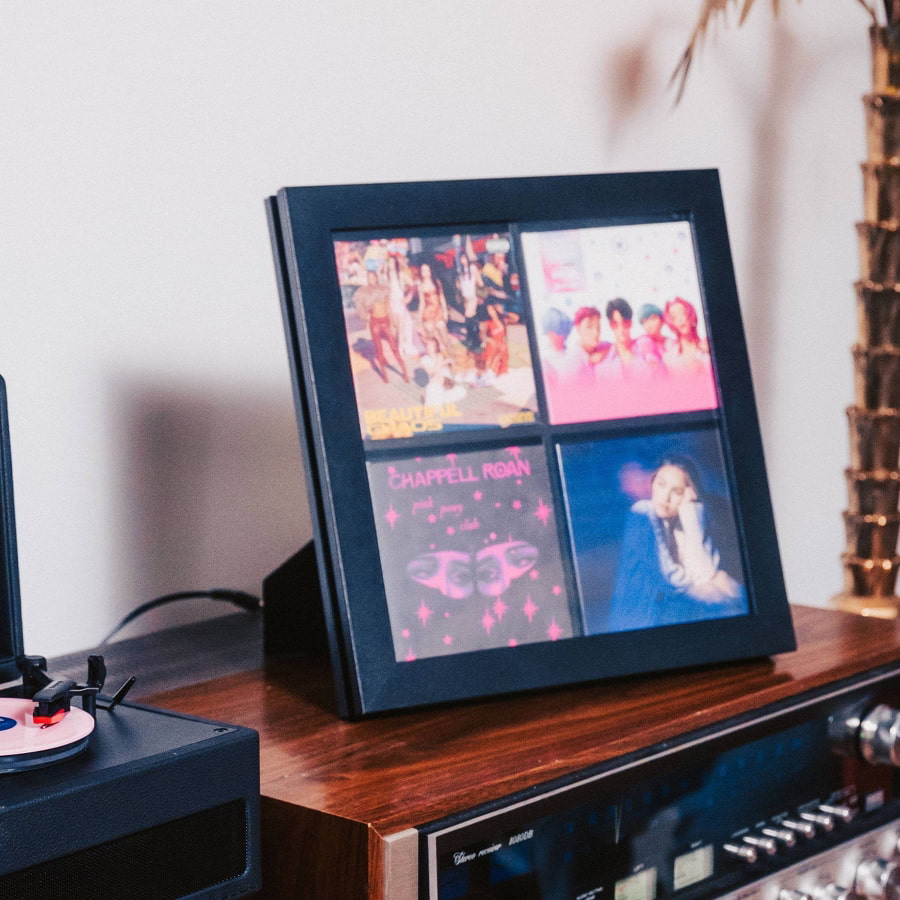
Tiny Vinyl 2×2 Frame
Tiny Vinyl 2×2 Frame
For collectors more interested in displaying the artwork, the $14.99 Tiny Vinyl 2×2 Frame holds four record jackets behind a clear shatter resistant window.
The black wood frame measures approximately 11 by 11 inches, uses magnetic closures for easier access, and can be mounted on a wall or placed on a flat surface. The records themselves are not included.
Advertisement
The Bottom Line
The Tiny Vinyl Player is not pretending to replace a conventional turntable, and anyone expecting it to compete with a proper analog system has wandered into the wrong aisle at Target.
This is a compact, affordable player for collectors who already own Tiny Vinyl records, younger listeners discovering physical music, or anyone whose automatic turntable cannot reach the format’s unusually close inner grooves. It also makes a fun desk system or gift without requiring the space and expense of a full size turntable setup.
Owners of a compatible manual turntable do not need it. Listeners expecting full size LP performance should avoid it entirely.
For everyone else, the Tiny Vinyl Player completes an amusing and increasingly popular collectible ecosystem. Just connect it to better powered speakers. Tiny records are one thing. Tiny sound does not have to be part of the deal.
Advertisement
Price & Availability
The Tiny Vinyl Player and accessories are available exclusively through Target at the time of publication.
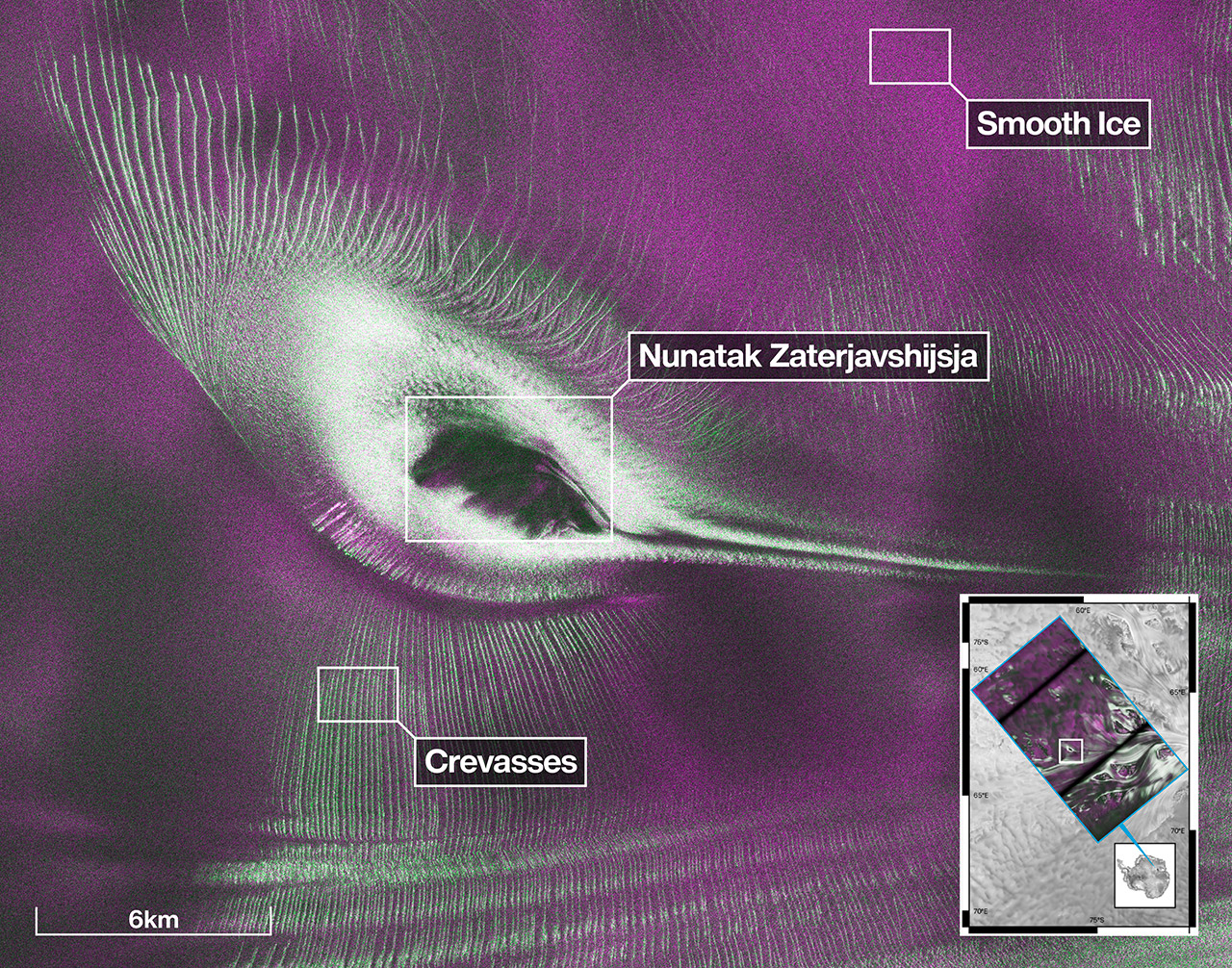
Photo credit: NASA/JPL-Caltech Radar signals from the joint US-India NISAR satellite have mapped a mountaintop in East Antarctica that forms a clear hummingbird shape once the data is processed into color. Scientists at the mission nicknamed the result “the hummingbird” almost as soon as the image appeared.
Nunatak Zaterjavshijsja is a granite mountain in East Antarctica’s Prince Charles Mountains that rises from the surrounding ice sheet approximately 40 kilometers southwest of Mount Newton. A glacier lumbers past this impediment on its journey northeast to the ocean. The force of the mountain causes the ice to strain and bend, eventually forming deep cracks in the surface known as crevasses.
Milky Way wall art décor – Create a large Milky Way Galaxy piece of art with this LEGO building kit for adults
LEGO 3D-effect wall décor – A Milky Way Galaxy artwork created from 3,091 layered LEGO bricks and pieces to produce a 3D effect with depth and…
Packed with features – Wall art includes some of the Milky Way’s most famous stars, clusters and other spectacles, including Trappist-1, The…
NISAR’s L-band radar collected observations in August 2025, when the satellite was still being tested. It operates by transmitting microwaves towards the surface, which have horizontal polarization, and recording what comes back. Surfaces that bounce the signal back with the same direction as it was sent appear in magenta, which is the smoothest type of ice. Anything that returns with a changed polarization of the signal or scatters after entering the ice registers as green. These greens distinguish the faces of crevasses and other irregular structures. Where both types of signals come back strongly, you get white.
When the finished image is viewed, the peak forms a bright, oval center with a darker section smack in the middle, similar to an eye. Fine green lines radiate from the top and bottom of the core in patterns resembling feathers or wings. A long thin green chunk extends away from the oval, giving it a pointed beak appearance. The ice stream that continues to go northeast becomes the tail of the whole thing. Magenta fields surround the smoother areas of the fractured zone, while the deepest cracks light the brightest green.
Seongsu Jeong, a signal analysis engineer at NASA’s Jet Propulsion Lab who produced the image, explained that the radar can look past the snow and into the ice, revealing features that optical sensors cannot detect. A Landsat 9 image of the same region obtained in November 2025 is almost entirely white, with just weak traces of a mountain existing.
Advertisement
NISAR is equipped with both L-band and S-band radars, as well as a 12 meter mesh reflector, the largest radar antenna ever flown by the US. Every 12 days, the satellite covers nearly the entire surface of the Earth, including land and ice. The mission’s processed L-band data was made available to the public on July 20, 2026, only a few days before the first anniversary of its launch from India’s Satish Dhawan Space Center on July 30, 2025.
The beak shape was a complete coincidence, but the detail behind it is extremely valuable. The green fracture lines indicate exactly where the glacier is under stress and how the ice moves around the nunatak. Scientists may use this knowledge to investigate how glaciers move, the dynamics of ice sheets, and how Antarctic ice responds to impediments well inland from the shore. The same radar approach that transformed a single peak into a bird shape is already demonstrating the ability to provide repeated, all-weather data required to track these changes over time. [Source]






.png)





















































You must be logged in to post a comment Login