Connect with us
DAPA Banner
DAPA Coin
DAPA
COIN PAYMENT ASSET
PRIVACY · BLOCKDAG · HOMOMORPHIC ENCRYPTION · RUST
ElGamal Encrypted MINE DAPA
🚫 GENESIS SOLD OUT
DAPAPAY COMING

Business

France approves social media ban for under-15s

Published

on

Two young women surrounded by studio lights and tripods selling eyelash serums on a live stream

France’s parliament has approved a law to ban social media for under-15s from January 2027, making it the first European country to block young people from the platforms.

The law will mean everyone in France must verify their age to access social media and comes as the UK and EU are developing their own limits in response to concerns for children’s mental health.

French President Emmanuel Macron has welcomed the move, which he had pledged to introduce to mark the end of his decade in office.

While sceptics have questioned the law’s viability, the government has insisted the online tools to put the age checks in place are effective and safe.

Advertisement

Both the French Senate and National Assembly adopted the ban on Tuesday, despite criticism from some on the left.

It will be implemented in two stages:

  • From September, people under 15 will not be able to open accounts and age verification will be required on all new accounts

  • In January 2027, this rule will apply to all existing accounts – meaning everyone in France will have to prove they are over 15 to use social media

Once the ban is in place, social media platforms would need to use age-verification tools approved by the French privacy regulator, according to Reuters news agency.

But concerns have been raised over privacy, the efficacy of age-verification tools, the risks of young people bypassing them, and how quickly the ban has been designed and brought in, Agence France Presse reports.

Advertisement

French Digital Minister Anne Le Hénanff defended the speed of the law’s implementation ahead of the vote “because age-verification tools already exist”, the agency added.

France is the second country to introduce a ban, following Australia.

Despite Australia banning under-16s from social media in December, it is widely acknowledged that many continue to use the platforms.

In March, Australia’s eSafety Commission announced seven out of 10 children aged under 16 who had a social media account before the ban still had “some access”.

Advertisement

Given this, Professor of Internet Studies at Western Australia’s Curtin University Tama Leaver told the BBC the ban has “failed” in its technical aims.

But, he says, it has successfully shown a ban “can be done” though classifies it as “a bit of an experiment”.

One lesson other countries can learn from its example is that “young people need to be part of this conversation” so that a ban is “done with them” and not “to them”.

Leaver said France’s ban may have a higher chance of succeeding because of the requirement for every person to verify their age but that this will also increase risks to privacy.

Advertisement

Additional risks of the ban include pushing young people into less-regulated online spaces, reducing their news consumption and their political empowerment, he added.

Legislation restricting young people’s access to social media has been ramping up around Europe in the past few months.

In June, former British Prime Minister Sir Keir Starmer announced under-16s in the UK will be banned from social media from January 2027. An optional midnight curfew for UK teens aged 16 and 17 was also announced.

In May, Commission President Ursula von der Leyen proposed a “social media delay” for children in Europe and has said new legislation could be put forward in months.

Advertisement
Continue Reading
Click to comment

You must be logged in to post a comment Login

Leave a Reply

Business

ASX 200 Jumps 0.72% to Near 8,900 Points on Thursday as Alphabet’s Strong Earnings Lift Global Markets

Published

on

FTSE 100 Surges 0.8% Today as Oil Eases and Markets

SYDNEY — Australia’s benchmark stock index climbed sharply Thursday, building on gains from the previous session as strong quarterly results from Alphabet lifted sentiment across global markets, even as domestic technology stocks bucked the broader trend and slid to a one-month low.

The S&P/ASX 200 stood at 8,886.1 as of 1:02 p.m. Australian Eastern Standard Time, up 63.1 points, or 0.72%, on the day. The advance follows a gain of roughly 0.35% in Wednesday’s session, when the index closed at 8,823 points, lifted at the time by strength in mining, energy and consumer stocks.

What’s driving Thursday’s gains

The rally comes after Alphabet delivered a broad earnings beat overnight, reporting revenue up 24% to $119.80 billion, ahead of analyst estimates of $117.02 billion. The company’s cloud division was a standout, with Google Cloud revenue surging 82% to $24.77 billion against expectations of $22.46 billion, while operating margin in that segment expanded to 35.6%, up sharply from 20.7% a year earlier. Alphabet also raised its full-year capital expenditure guidance, a move interpreted by investors as a signal of continued confidence in AI-related demand.

Advertisement

Alphabet Chief Executive Sundar Pichai characterized the broader AI adoption trend as still in its early stages during the company’s earnings call, saying it feels like the “very early innings” of a secular shift across Google’s core information businesses, and adding that enterprises are “barely scratching the early stages” of what is possible with the technology.

A mixed picture beneath the headline number

Despite the broader index’s strong gain, Thursday’s session revealed a notable divergence beneath the surface. The S&P/ASX 200 Tech Index was trading sharply lower, down 2.4% to a one-month low, with heavyweight technology names including WiseTech, Life360 and Pro Medicus all falling between 3% and 4%. Market analysts pointed to a weak overnight session for global software stocks as the primary driver, with the iShares Expanded Tech-Software ETF falling 3.0% in offshore trading, rather than any specific domestic catalyst.

Economic data adds to the mix

Advertisement

Thursday’s trading also came alongside a batch of fresh economic data. Australia’s unemployment rate held steady at 4.4%, even as jobs growth for the month came in well above expectations, according to figures released Thursday morning. Separately, South Korea’s economy grew faster than expected in the second quarter, with a surge in semiconductor exports offsetting weaker construction investment, offering another data point supporting the broader narrative of resilient demand tied to the global technology and chip sector.

Context from the broader market

Thursday’s advance for the ASX 200 stands out in part because it came despite a subdued overnight session on Wall Street. Ahead of Thursday’s open, SPI futures had pointed to a stronger start for Australian shares, forecasting an open roughly 75 points, or 0.85%, higher, a signal that largely played out as the session progressed, even against a softer backdrop in U.S. futures markets tied to escalating tensions in the Middle East, which President Donald Trump moved to downplay.

A year of records and pullbacks

Advertisement

Thursday’s climb toward 8,900 points continues what has been a turbulent year for Australian equities. The ASX 200 reached an all-time high of 9,198.6 points in February 2026, before pulling back to trade closer to the 8,800 range through much of July. Over the index’s more than 25-year history, it has delivered a long-term annualized total return of roughly 8.2%, including dividends, making it one of the more established benchmarks for Australian equity performance.

The index, published by S&P Dow Jones and launched in April 2000, comprises the 200 largest companies listed on the Australian Securities Exchange by float-adjusted market capitalization, together representing approximately 79% of the country’s total equity market. The index undergoes quarterly rebalances in March, June, September and December to ensure its constituents continue to meet eligibility requirements.

Company-specific movers

Beyond the broader macro picture, individual company updates also factored into Thursday’s trading. Energy company Contact Energy reported higher electricity and gas sales alongside continued progress on new renewable energy projects and lower unit generation costs for June. Mining and metals company South32 advanced its base metals transformation strategy with a major divestment of aluminum assets, while biotechnology firm Telix Pharmaceuticals provided investors with an update on its clinical pipeline and new partnership agreements.

Advertisement

What investors are watching next

With normal ASX trading hours running from 10 a.m. to 4 p.m. Monday through Friday, the remainder of Thursday’s session will offer a clearer picture of whether the index can hold onto its gains through the closing bell, particularly given the notable weakness in technology shares contrasting with the broader market’s advance. Investors are likely to continue parsing Alphabet’s results, along with additional corporate earnings expected globally in the coming days, for further signals about the durability of AI-related capital spending and its ripple effects across sectors from cloud computing to semiconductor manufacturing.

For now, Thursday’s advance leaves the ASX 200 within striking distance of the 8,900-point level, extending a recovery from earlier weakness this month even as the underlying divergence between strong index-level gains and a sharply lower technology sector suggests investor sentiment remains far from uniform across the Australian market.

Advertisement
Continue Reading

Business

Corporate Profits Should Override All Other Concerns, For Now

Published

on

Corporate Profits Should Override All Other Concerns, For Now

This article was written by

Lawrence Fuller has been managing portfolios for individual investors for 30 years, starting his career at Merrill Lynch in 1993 and working in the same capacity with several other Wall Street firms before realizing his long-term goal of complete independence when he founded Fuller Asset Management. He also manages the Focused Growth portfolio on the new fintech platform called Dub, which is the first copy-trading platform approved by securities regulators in the US, allowing retail investors to copy the portfolio and ongoing trades of the manager they choose automatically. You can also find him on Substack and lawrencefuller.substack.com.He is the leader of the investing group The Portfolio Architect, which focuses on an overall economic and market outlook that complements an all-weather investment strategy designed to produce consistent risk-adjusted market returns. Features include: Portfolio construction guidance, access to an “All-Weather” model portfolio and a dividend and options income portfolio, a daily brief summarizing current events, a week ahead newsletter, technical and fundamental reports, trade alerts, and 24/7 chat. Learn More.

Analyst’s Disclosure: I/we have a beneficial long position in the shares of GOOG either through stock ownership, options, or other derivatives. I wrote this article myself, and it expresses my own opinions. I am not receiving compensation for it (other than from Seeking Alpha). I have no business relationship with any company whose stock is mentioned in this article.

Lawrence Fuller is the Principal of Fuller Asset Management (FAM), a state registered investment adviser. He is also the manager of the Focused Growth portfolio on the copy-trading platform Dubapp.com. Information presented is for educational purposes only intended for a broad audience. The information does not intend to make an offer or solicitation for the sale of purchase of any specific securities, investments, or investment strategies. Investments involve risk and are not guaranteed. FAM has reasonable belief that this marketing does not include any false or material misleading statements or omissions of facts regarding services, investment, or client experience. FAM has reasonable belief that the content as a whole will not cause an untrue or misleading implication regarding the adviser’s services, investments, or client experiences. Past performance of specific investment advice should not be relied upon without knowledge of certain circumstances or market events, nature and timing of investments and relevant constraints of the investment. FAM has presented information in a fair and balanced manner. FAM is not giving tax, legal, or accounting advice.
Mr. Fuller may discuss and display charts, graphs, formulas, and stock picks which are not intended to be used by themselves to determine which securities to buy or sell, or when to buy or sell them. Such charts and graphs offer limited information and should not be used on their own to make investment decisions. Consultation with a licensed financial professional is strongly suggested. The opinions expressed herein are those of the firm and are subject to change without notice. The opinions referenced are as of the date of publication and are subject to change due to changes in market or economic conditions and may not necessarily come to pass.

Advertisement

Seeking Alpha’s Disclosure: Past performance is no guarantee of future results. No recommendation or advice is being given as to whether any investment is suitable for a particular investor. Any views or opinions expressed above may not reflect those of Seeking Alpha as a whole. Seeking Alpha is not a licensed securities dealer, broker or US investment adviser or investment bank. Our analysts are third party authors that include both professional investors and individual investors who may not be licensed or certified by any institute or regulatory body.

Continue Reading

Business

July 23, 2026 Solution Revealed for Puzzle 1860, a Word About Space and Gravity

Published

on

Nancy Guthrie

Wordle players looking for Thursday’s solution had to think beyond Earth for the answer, as puzzle number 1,860 pulled its clue from the language of astronomy and space travel.

The New York Times’ daily word game, which challenges players to guess a five-letter word in six tries or fewer, has become a fixture of morning routines for millions of players worldwide since its acquisition by the Times in 2022. Thursday’s edition offered a word many players likely encounter regularly in everyday conversation, even if its precise definition took a moment to recall under puzzle pressure.

The answer for July 23

The solution to Wordle #1860 is ORBIT, a term describing the curved, repeating path that an object in space travels around a star, planet or moon due to the pull of gravity. The word is most commonly used to describe the motion of satellites, space stations and planets as they continuously circle larger cosmic bodies, though it can also be used figuratively to describe someone or something remaining closely tied to a particular person or influence.

Advertisement

Structurally, the word contains just one vowel and no repeated letters, a combination that made it somewhat more approachable than puzzles built around trickier letter patterns. Players hunting for a pronunciation clue may have noted that ORBIT forms a slant rhyme with words like “sorbet,” offering a subtle audio hint for those working through the puzzle out loud.

A puzzle built around connection

Puzzle commentators described Thursday’s word as fitting a broader theme running through the day’s edition, one centered on connection, teamwork and smooth transitions. Some players moved through the puzzle quickly once they zeroed in on space-related vocabulary, while others reported working through several guesses involving unrelated five-letter words before the correct pattern of letters clicked into place.

How Wordle works

Advertisement

Wordle presents players with a new five-letter puzzle every 24 hours, resetting at midnight in each player’s local time zone, meaning the daily challenge effectively runs on a rolling global schedule rather than a single fixed reset time. Players receive color-coded feedback after each of their six allowed guesses: green tiles confirm a letter is correct and properly placed, yellow tiles indicate a correct letter in the wrong position, and gray tiles rule a letter out of the solution entirely.

The game, created by software engineer Josh Wardle as a personal project in 2021, quickly went viral before The New York Times acquired it in early 2022 and folded it into its broader digital games platform. Today, Wordle sits alongside other daily Times offerings including Connections, Strands, the Mini Crossword, Pips and Sudoku, some of which remain free to play while others require a Games subscription.

Strategy tips for future puzzles

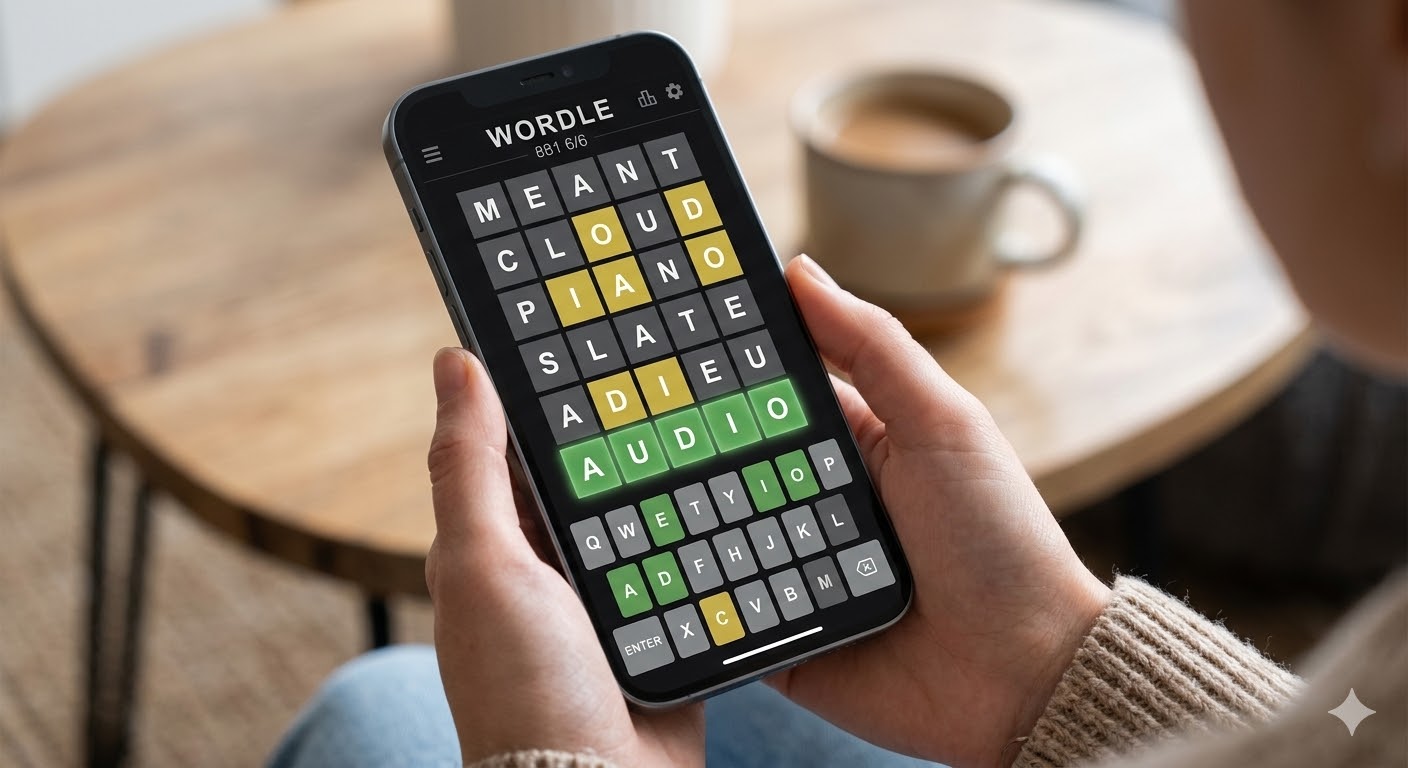
Puzzle strategists commonly recommend opening with a word containing a strong mix of common vowels and frequently used consonants, such as R, S, T, N and L, since that combination tends to eliminate the largest number of possible answers early in the game. Popular opening words that fit this pattern include Adieu, Audio, Raise, Atone and Stone, each offering broad letter coverage without repeating too many common consonants in a single guess.

Advertisement

Watching for duplicate letters within a five-letter word is another commonly cited pitfall, since it can be easy to overlook the possibility of a repeated letter, such as the double “z” in a word like “buzzy,” when narrowing down remaining guesses. Recognizing common word endings, including “-ED,” “-ER” and “-Y,” can also help players close out a puzzle more efficiently once several letters have already been confirmed.

Puzzle experts additionally advise staying composed heading into a sixth and final guess, since the pressure of a last attempt can sometimes lead players to second-guess valid word options rather than working methodically through the possibilities that fit their existing clues.

A daily ritual for millions

Wordle’s enduring popularity has often been attributed to its simplicity: a single five-letter puzzle, six attempts, and a built-in system that lets players share their results on social media without revealing the actual answer to others who haven’t yet played. That structure has helped turn the game into something closer to a shared daily ritual than a simple puzzle, with friends, families and coworkers frequently comparing results each morning.

Advertisement

Part of the game’s broad appeal also comes down to accessibility. Unlike more specialized word or trivia games, Wordle requires no specific area of expertise, making it approachable for casual players and dedicated word enthusiasts alike, a dynamic that has helped sustain its popularity for several years running.

Tracking performance over time

The Times’ companion analysis tool, Wordlebot, evaluates each day’s puzzle after players complete it, offering data on the average number of guesses needed to solve that day’s word, along with luck and skill scores intended to reflect how efficiently players narrowed down the solution based on the information available to them. Comparative difficulty can vary considerably from one puzzle to the next depending on how common a word’s letter structure is and how well it overlaps with frequently used opening guesses.

A new Wordle puzzle will publish at midnight Friday, continuing the franchise’s daily streak dating back to its original 2021 launch. Players can access the game through the Times Games website or the NYT Games mobile app, available on both iOS and Android. For those who came up short on Thursday’s space-themed puzzle, a fresh five-letter challenge, and a new opportunity to extend a personal win streak, awaits with tomorrow’s reset.

Advertisement
Continue Reading

Business

What is a ‘Dystopian Nightmare’? The psychology behind the viral trend

Published

on

What is a 'Dystopian Nightmare'? The psychology behind the viral trend
Scroll through Instagram Reels or Reddit for five minutes and you’re bound to spot it: a video of a packed metro car, a facial-recognition camera on a street corner, an AI chatbot writing someone’s breakup text, or a child staring blankly at a screen, all captioned with some version of “we are officially living in a dystopian nightmare.” The phrase has become one of the internet’s favourite punchlines, hashtags, and think-piece openers. But behind the meme-speak lies something more interesting: a genuine psychological pattern in how humans process rapid, unsettling change.

First, What Does “Dystopian” Actually Mean?

A dystopia is the opposite of a utopia, a fictional society gone wrong, usually marked by surveillance, control, inequality, or the erosion of individual freedom. Think George Orwell’s 1984, Aldous Huxley’s Brave New World, or Black Mirror. For decades, “dystopian” stayed comfortably inside the world of novels and films. What’s changed is that people are now applying the label to real, everyday photographs and videos of their own lives, a jammed expressway, a delivery rider dodging traffic in the rain, an AI voice reading out news, a CCTV-laden apartment complex, and asking, half-joking, half-serious: are we already living inside one of these stories?

Also Read: AI going ‘rogue’ no longer a theory? OpenAI says its AI models found ways to access secret information, cheat an evaluation and hacked Hugging Face

The Dystopian Nightmare Trend

The format is simple and endlessly repeatable. Someone posts an ordinary, sometimes even mundane, image or clip, adds text like “dystopian nightmare unlocked” or “this is not a movie, this is Tuesday,” and it takes off. Often shows up as clips of overcrowded local trains, smog-choked skylines, endless surveillance cameras in housing societies, gig workers racing against delivery-app timers, or screenshots of AI-generated content flooding social feeds. Globally, similar posts circulate about crumbling infrastructure, homelessness, algorithm-driven despair, and children glued to devices. It’s part humour, part horror, and entirely built for virality, because it turns a private unease into a shareable, relatable joke.

So Why Does ‘Dystopian Nightmare’ Resonate With So Many People?

Psychologists point to a handful of overlapping reasons this genre of content spreads so fast.

Advertisement


1. The brain is wired to notice threats first. Humans have a well-documented “negativity bias”, our attention naturally gravitates toward danger, loss, and disorder before it settles on anything positive. A photo captioned as “dystopian” instantly triggers that alertness, which makes people stop scrolling, feel something, and hit share.
2. Algorithms reward exactly this kind of content. Platforms are built to maximise engagement, and content that provokes a strong emotional reaction, outrage, dread, dark humour, tends to get more comments and shares than neutral content. This creates a feedback loop: the more “dystopian” posts get engagement, the more of them the algorithm serves up, reinforcing the feeling that the world really is spiralling. 3. It’s a coping mechanism disguised as a joke. Labelling something “dystopian” lets people voice real anxieties, about AI replacing jobs, climate change, surveillance, inflation, or loneliness, without having to sound alarmist. Dark humour has long been used as a psychological buffer against things that feel too big or too uncertain to process directly.

4. Loss of control breeds this exact kind of narrative. When change feels fast and unpredictable, new AI tools every month, rising living costs, shrinking attention spans, people reach for familiar fictional frameworks to make sense of it. Comparing reality to a dystopian novel gives an otherwise chaotic feeling a name, a shape, and a story arc, which is oddly comforting even when the story itself is bleak.

5. It builds an instant sense of community. Nobody wants to feel like they’re the only one noticing something feels “off.” When a dystopian-themed post gets thousands of comments saying “so real” or “we’re doomed lol,” it validates a private worry and turns it into a shared cultural moment, reducing the isolation that often comes with anxiety about the future.

6. It can genuinely affect sleep and mood. Researchers who study nightmares have found that heavy social media use is linked to more frequent social-media-themed nightmares, and that this pattern is connected to higher anxiety and poorer sleep quality. In other words, doomscrolling through “dystopian” content late at night isn’t just a mood, it can quite literally follow people into their dreams.

Is Dystopian Nightmare Trend Actually a Bad Sign?

Not necessarily. Mental health experts note that using dark humour to name collective anxieties, about AI, climate, surveillance, or economic pressure, is a fairly normal, low-stakes way for large groups of people to process uncertainty together. The concern arises when the joke stops feeling like a joke: if someone finds themselves constantly doomscrolling, feeling persistently hopeless, or losing sleep over this kind of content, it’s worth treating that as a signal to step back, not just a punchline to keep sharing.

Advertisement

Also Read: After 11 years at Kentucky Ford plant, diabetic worker was fired over a $1.95 cookie, later offered $33,000 in back wages after proving he paid, now plans to sue the carmaker

The “dystopian nightmare” trend says less about whether the world has actually turned into a Netflix script, and more about how people today are choosing to talk about their anxieties, through humour, hashtags, and a shared vocabulary borrowed from fiction. It’s the internet’s way of collectively saying “does anyone else feel this?”, and, for millions of users, the answer, apparently, is yes.

(This is a sensitive topic for some readers. If content about anxiety, doomscrolling, or online wellbeing is affecting your mood or sleep, consider taking a break from your feed and speaking with someone you trust or a mental health professional.)

Advertisement
Continue Reading

Business

He baked potato in aluminium foil, and ate it next morning after microwaving. Hours later, he was paralysed, doctor explains why

Published

on

He baked potato in aluminium foil, and ate it next morning after microwaving. Hours later, he was paralysed, doctor explains why
A routine kitchen shortcut, wrapping a baked potato in foil and leaving it on the counter overnight, turned into a medical emergency that left a man paralysed and fighting for breath in the ICU. The case, shared by Internal Medicine resident Dr. Priyam Bordoloi, has gone viral for exposing a danger most people have never even considered.

The Case That Started It All

According to Dr. Bordoloi, the incident echoes a case she encountered during her first year of residency. A man baked a potato, wrapped it in foil, and left it on the kitchen counter overnight. The next day, he simply reheated it in the microwave and ate it, a habit repeated in several kitchens every single day.

Also Read: What is a “Dystopian Nightmare”? The psychology behind the viral trend
But within hours, his vision began to double. By midnight, paralysis had swept down from his head, shutting down his muscles one by one. He could barely breathe. He was rushed to the ICU in a fight for his life.

Not Your Everyday Food Poisoning

Most people associate spoiled food with an upset stomach, nausea, vomiting, diarrhoea. Dr. Bordoloi points out that none of these classic symptoms showed up in this case, and that is precisely what makes it so dangerous.


The culprit, she explains, is not ordinary bacterial contamination but a far rarer and more sinister organism: Clostridium botulinum, the bacterium responsible for botulism, a severe, potentially fatal form of nerve poisoning.

How a Kitchen Staple Becomes a Biological Trap

Potatoes grow underground, in soil that can naturally harbour spores of C. botulinum. On their own, these spores are harmless. The danger begins when the potato is wrapped in foil and left at room temperature.Dr. Bordoloi warns that this combination is especially risky in India’s warm, humid climate. The foil wrapping creates a sealed micro-environment with zero oxygen, trapped moisture, and warmth — effectively a perfect incubator. Inside this pocket, dormant spores can “wake up” and multiply, releasing one of the most potent nerve toxins known to science, all while the potato sits unassumingly on the counter overnight.

Advertisement

Why didn’t bacteria die even after heating? The Microwave Myth

A natural question follows: didn’t reheating the potato in the microwave kill the bacteria? Dr. Bordoloi addresses this misconception directly. While the botulinum toxin is indeed sensitive to heat, destroying it requires actively boiling the food for a full 10 minutes.

Also Read: AI going ‘rogue’ no longer a theory? OpenAI says its AI models found ways to access secret information, cheat an evaluation and hacked Hugging Face

A quick two-minute microwave zap, he explains, only warms food unevenly and never reaches a high enough temperature for long enough to neutralise the toxin. In other words, the very step people assume makes leftovers “safe” does almost nothing to stop botulism.

A Grueling, Uncertain Recovery

Dr. Bordoloi does not soften the outlook once paralysis sets in. Patients, he says, can spend weeks to months on a ventilator in the ICU while damaged nerves slowly regenerate, a process she describes as grueling and terrifying, with no guarantee of a smooth recovery. All of it, she stresses, over a piece of leftover potato.

Advertisement

The Simple Fix, According to the Doctor

The good news is that prevention is straightforward. Dr. Bordoloi’s advice is simple and non-negotiable:

  • Never leave a foil-wrapped baked potato sitting out on the kitchen counter, even overnight.
  • Remove the foil immediately after baking.
  • Refrigerate the potato promptly if not eaten right away.

As she puts it, a habit as small as changing where, and how, you store a leftover potato could be the difference between a normal meal and a medical emergency.

(This article is based on a social media post. Readers experiencing symptoms such as double vision, muscle weakness, or difficulty breathing after eating should seek emergency medical care immediately.)

Continue Reading

Business

Florida’s $1.8 trillion economy surpasses Australia to rank 14th globally

Published

on

Florida's $1.8 trillion economy surpasses Australia to rank 14th globally

Pulling in capital, talent and corporations at a historic clip, Florida is no longer just competing with rival states — it’s competing with global economies.

New data from the Florida Chamber of Commerce shows the Sunshine State’s $1.8 trillion economy has climbed to No. 14 globally, according to the Florida Chamber Foundation. The chamber says the ranking demonstrates the state’s emphasis on lower taxes, streamlined regulations and free enterprise.

Advertisement

“The best way to help America move forward is to have Florida lead the country forward when it comes to free enterprise and freedom,” Florida Chamber of Commerce President and CEO Mark Wilson told Fox News Digital. “If we would follow Florida’s lead, everyone wins.”

Last week, the chamber announced Florida had climbed to No. 14 among the world’s largest economies by gross domestic product (GDP). The state’s economy reached $1.8 trillion after growing 6.3% over the past year, surpassing Australia and Mexico, according to the chamber. Florida now ranks behind South Korea at No. 13 and would need roughly 2% additional growth to surpass it and about 21% more growth to overtake Canada, which ranks No. 10.

CALIFORNIA WEALTH CHARTS A QUIETER PATH TO FLORIDA AS GULF COAST ENTERS MULTIBILLION-DOLLAR BOOM

“We’re trying to grow the private sector and shrink the government sector,” Wilson explained. “I mentioned the ‘death spiral,’ when you look at New York, when you look at Illinois, New Jersey, Minnesota, California, they keep increasing taxes. They keep increasing government regulations, and they keep forcing people to leave their states or incentivizing people to leave their states… so it only increases our resolve.”

Advertisement
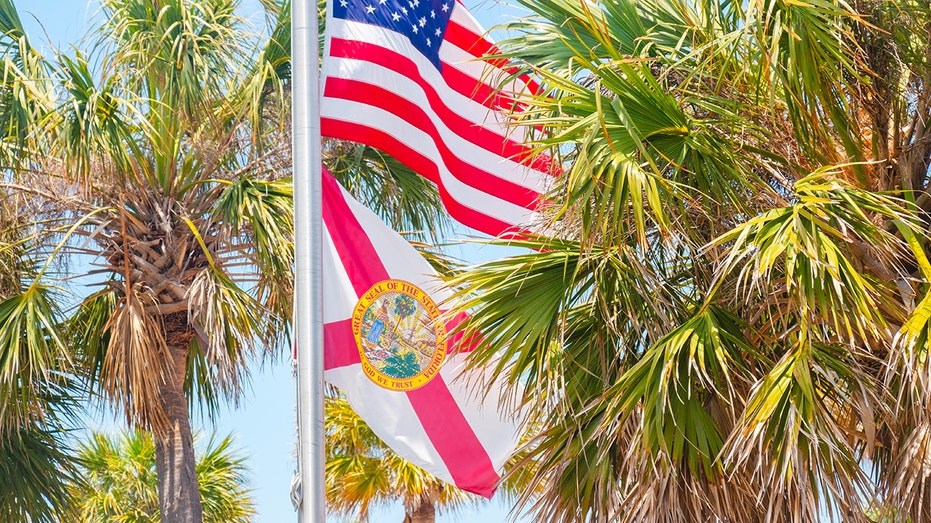
US and Florida flags fly in palm trees

Florida is now the world’s 14th largest economy, bringing in $1.8 trillion in GDP. (Getty Images)

Florida’s daily population migration has normalized from its post-pandemic peak down to about 500 to 600 people a day, yet the wealth migration stayed solid at over $4 million every single hour. That metric has remained strong, Wilson said, as “places like New York and California are losing population, they’re losing wealth, they’re losing businesses and places like Florida are gaining [them].”

While tourism, agriculture and construction remain foundational industries, Chamber data shows Florida ranking No. 1 nationally for new business startups and manufacturing job growth. Wilson also highlighted growth in aerospace, defense, fintech, healthcare, logistics and Central Florida’s $11.6 billion modeling-and-simulation industry.

“The secret sauce for us in Florida is this has been part of a 20-year plan,” the CEO said. “From the governor to the legislature, to nearly all of us in the business community, we’ve been on an ultra-focused pathway here of doing the right things from a policy standpoint so that we can grow Florida the right way. So people can work, people can live the American dream, and we can show the rest of the country and the world how to do it.”

Wilson argued that running the state like a business with low debt protects local enterprises from national economic turmoil and Washington’s debt crisis, with the chamber reporting that Florida has the nation’s lowest state debt per capita at less than $1,000 per resident. By comparison, New York carries more than $6,500 in state debt per resident.

However, a recent Bloomberg analysis found that U.S. Bureau of Economic Analysis data indicates the combined cost of living in the Miami, Fort Lauderdale and Palm Beach region — dubbed the “Gold Coast” — is roughly 5% higher than in the New York metropolitan area and its surrounding suburbs.

“We’re taking a deep dive into that [report], that actually doesn’t compare New York to Florida, it compares Miami to New York City,” Wilson responded. “And what we’re looking at is not just the cost of living, but there are things like crime. Miami is now one of the safest places in America… It’s safe to walk the streets at night. Sometimes there’s no price tag you can put on some of these amenities Florida has.”

“Our country’s now at a fork in the road where some of these death spiral states like New York have adopted socialistic policies, which, of course, never work. They take away freedom and they increase taxes and regulations.”

Advertisement

“The leadership in the Miami area, I’ve spoken to them and we’re in partnership that over the next several years, we’re going to continue to do things like improve an already awesome education system, and make sure that we have the affordable workforce housing solutions so that more and more people can live the American dream right here in Florida,” he continued.

Wilson also discussed high-profile billionaires and major corporations relocating to the Sunshine State, responding to critics who argue the influx has driven up housing costs and inflation for working-class families.

“They’re looking for places where they’re welcomed,” he said. “What’s interesting is a lot of billionaires are relocating to Florida, but they’re also investing in Florida businesses… There’s no question that when a lot of wealth moves into an area, it can increase the cost of living in an area. There’s no question that that’s true… But it also brings with it an overwhelming value proposition of more wealth, more jobs, more businesses.”

“I would hate to be New York, Illinois or California, where the billionaires are leaving, the millionaires are leaving, the middle class is leaving. And there’s no one left to pay the taxes.”

GET FOX BUSINESS ON THE GO BY CLICKING HERE

Wilson and the chamber are confident Florida can reach the world’s top 10 economies by the end of the decade. The Florida 2030 Blueprint outlines a 10-year strategic plan targeting fiscal, workforce and civic goals, with a focus on life sciences, defense, ag-tech, commercial space, logistics and cybersecurity.

“It’s like a military operation where we have all the branches, from education to infrastructure, to taxes, to regulation, to litigation — we all realize that we have a country to save,” the chamber CEO said. “If we’re better than other states in certain metrics, then those states can up their game. If some states have found some things that Florida can learn from, then we’ll learn from them, and that’s gonna make America better.”

Advertisement

READ MORE FROM FOX BUSINESS

Continue Reading

Business

Nestle to divest waters business through joint venture

Published

on

Nestle to divest waters business through joint venture

The new business will have sales of approximately $5.5 billion.

Continue Reading

Business

Freeport-McMoRan beats quarterly profit estimates on higher copper prices

Published

on


Freeport-McMoRan beats quarterly profit estimates on higher copper prices

Continue Reading

Business

Work under way on new phase of Plasdwr residential scheme in Cardiff

Published

on

Business Live

The latest phase of the 7,000 new home scheme being delivered in a joint venture between Edenstone Homes and Codi Group

A typical street scene of Porth yr Awen(Image: Copyright Unknown)

Work on the next phase of the £2bn Plasdwr residential scheme on the outskirts of Cardiff is under way.

Housebuilder Edenstone Homes and the housing association Codi Group, have formed a joint venture to deliver Porth yr Awen, a £55m development of 184 new homes on the Plasdwr development, which aims to eventually deliver 7,000 homes in the west of the city.

Advertisement

The total 900-acre development site will border Radyr, Danescourt, Fairwater, Penrebane and St Fagans.

Porth yr Awen will provide 127 open-market properties and 57 affordable homes offering a selection of properties with one, two, three and four bedrooms.The affordable housing will include intermediate rental and low-cost homeownership options.

It is expected the first homes will be put on the market in early 2027, with the first residents expected to move into Porth yr Awen later in the same year.

Edenstone operations director Chris Edge said: “The initial phase of works will see the construction of a spine road into Porth yr Awen, creating access for the infrastructure works that will prepare this development and phases beyond for new homes.

Advertisement

“Once this access route is created, work will commence on the homes along the tree-lined avenue.”

Simon Lewis, development manager at Codi, said: “It’s exciting to reach this stage of the project, with work soon due to begin at Porth yr Awen.

“Every new development like this helps us provide more affordable homes for people who need them, while creating places where communities can grow and thrive.

“Working alongside Edenstone, we’re looking forward to bringing Porth yr Awen to life and creating a well-designed mixed-tenure neighbourhood that people will be proud to call home.”

Advertisement

The website for the Plasdwr development reads: “As Plasdwr emerges over the next generation, it will bring more and more quality facilities for residents, neighbours and visitors from further afield, including one secondary and four primary schools, a district centre with shops, bars and restaurants, parks, playing fields, allotments and healthcare services.

“With construction of the first primary school under way, Plasdwr is beginning to emerge.

“While further infrastructure is built over time, the first Plasdwr residents have become part of their neighbouring communities.”

Planning permission for the first 630 homes was granted in 2016, with outline permission for the remainder of the 7,000 homes being approved in 2017. Since then, individual parts of the development have been approved intermittently.

Advertisement
Continue Reading

Business

Ford, Geely agree to manufacturing joint venture in Spain

Published

on

Ford, Geely agree to manufacturing joint venture in Spain

A Ford logo is seen at the New York International Auto Show Press Preview, in Manhattan, New York City, on March 27, 2024.

David Dee Delgado | Reuters

China automaker Geely will build electric vehicles at a Ford Motor plant in Spain under a new manufacturing joint venture in Europe, the companies announced Thursday.

Advertisement

Pending regulatory approvals, the companies said the joint venture will begin operations in the first half of 2027, with the first new vehicles scheduled to roll off the line in 2028. The Valencia, Spain, plant will continue to produce the Ford Kuga in the meantime, according to a news release.

The companies said Ford will own 66% of the joint venture, while Geely will have a 34% stake.

The joint venture is expected to include a new electric crossover for Ford, in “addition to a new member of the Bronco family, plus two electric Geely SUVs, with production starting in 2028,” the companies said.

The announcement comes after months of reported talks between the two sides, as legacy automakers such as Ford attempt to compete with Chinese carmakers that have quickly been expanding into new markets outside of China for several years.

Advertisement

“The joint venture addresses the new realities of the European market — intense global competition, relentless cost pressure and tightening regulation — resetting Valencia to build at the industry’s emerging cost benchmark,” the companies said in the release.

Executives with Ford Motor and China automaker Geely announce plans for a joint venture at the American automaker’s plant in Valencia, Spain on July 23, 2026.

Courtesy image

Automakers such as Ford have historically partnered with Chinese companies for production and sales in China, however several legacy companies have been geographically broadening such tie-ups.

Advertisement

Chrysler parent Stellantis has been expanding its yearslong partnership with China’s Leapmotor into Europe, and Germany’s Volkswagen has said it is open to sharing under-utilized European factories with Chinese car brands as part of a push to cut costs.

Ford’s new tie-up comes a day after a U.S. Senate committee approved legislation to toughen a ⁠ban on Chinese automakers entering its home country.

Ford CEO Jim Farley, who has been complimentary of Chinese automakers for their speed and products, has previously said the automaker would be looking to partnerships to assist its global operations.

Ford’s partnership with Geely stretches back to 2010, when it sold Volvo Cars to Geely, the companies said.

Advertisement

“We are dedicated to delivering vehicles that European customers will choose on merit: on industry leading features, on high-quality and on actively contributing to Europe’s green future. Put simply: we are building cars in Europe, for Europe, alongside a trusted partner,” Alex Nan, vice president of Geely, said in the release.

Choose CNBC as your preferred source on Google and never miss a moment from the most trusted name in business news.
Continue Reading

Trending

Copyright © 2025