Connect with us
DAPA Banner
DAPA Coin
DAPA
COIN PAYMENT ASSET
PRIVACY · BLOCKDAG · HOMOMORPHIC ENCRYPTION · RUST
ElGamal Encrypted MINE DAPA
🚫 GENESIS SOLD OUT
DAPAPAY COMING

Tech

Leaving Apple, Intel, and Nvidia in the dust? Huawei could join Samsung as the only tech firms producing its own CPUs, SSDs, and DRAM

Published

on


  • Reports indicateHuawei is building and operating DRAM fabs through a joint venture with state-controlled SwaySure
  • This is part of an alleged 11-fab network Huawei operates behind state-owned fronts that it denies exists
  • The move, seen as a bid by Huawei to secure captive HBM supply for its increasingly powerful Ascend AI chips, could place the company above Apple, Intel, and Nvidia, none of which makes its own memory.

Mounting evidence suggests Huawei is taking the same approach that saw it build CPUs and AI chips in the past to DRAM in the present.

The Chinese tech conglomerate is allegedly building and operating DRAM fabrication plants on the mainland, bringing it into direct competition with only one major player at the same scale, albeit for a much larger consumer base: Samsung.

Source link

Continue Reading
Click to comment

You must be logged in to post a comment Login

Leave a Reply

Tech

Gulf Air and Japan Airlines Join the Push for JetZero’s All-Wing Z4

Published

on

JetZero Blended Wing Z4 Aircraft
Airlines from Bahrain and Japan just threw their weight behind a plane that looks nothing like the ones filling today’s skies. At the Farnborough Air Show this week, Gulf Air signed a letter of intent for an undisclosed number of JetZero Z4 aircraft, locking in preferential delivery slots for the early 2030s. Japan Airlines followed with a formal support agreement that puts its operational teams inside the design process from the start.


Gulf Air’s new deal puts the carrier at the forefront of the Z4, as it is the first Middle Eastern airline to support the project. Bahrain’s national airline believes the new plane is exactly what it needs to expand its network of routes across Europe and Asia, and it has the advantage of being the first to take possession. According to JetZero CEO Tom O’Leary, the agreement is a vote of confidence in the Z4’s capacity to give customers with a completely new level of experience at a lower cost per seat, while also being significantly more cost-effective for airlines.


At the same time, Japan Airlines announced its own agreement with JetZero, which will see them collaborate on everything from flight operations to passenger service. Takao Suzuki, JAL’s chief strategist, said the step is critical to the company’s long-term aim of achieving net-zero emissions by 2050. JetZero’s intentions for the Z4 to touch the runways in the early 2030s align precisely with JAL’s own fleet plans, thus the two firms are on the same page in terms of timeframe. That brings two more airlines to the table, joining Delta, United, Alaska, and EasyJet for a total of 17 airlines providing JetZero with the real-world feedback it need to shape its design.

JetZero Blended Wing Z4 Aircraft
Now, about the plane itself. The Z4 is a bit of an outlier, with a blended wing body design that eliminates the tube and wing configuration and instead combines the wings and fuselage as a continuous surface. According to JetZero, that is enough to reduce fuel consumption by up to 50% on mid-sized aircraft flying similar routes. It’s planned to carry roughly 250 passengers over a distance of up to 5,000 nautical miles, putting it exactly in the middle of the market where the 757 and 767 used to rule, and unlike some of its potential competitors, the engines are located at the back of the plane, high up on the body.

JetZero Blended Wing Z4 Aircraft
It means quieter cabins and the possibility of using sustainable aviation fuel instead of traditional jet fuel, and the Pratt & Whitney PW2040-class powerplants that are likely to be installed are designed with all of this in mind. Then there’s the cabin, with wider boarding doors, distinct inner cabins, and each seat having its own dedicated overhead storage area. One advantage is that the plane is designed to integrate seamlessly with existing airport infrastructure, eliminating the need for specific gates or taxiways.

JetZero Blended Wing Z4 Aircraft
Factory work is now underway, with JetZero breaking ground in mid-June on a gigantic 8 million square foot factory and final assembly plant sprawled across more than 600 acres near to the Piedmont Triad International Airport in Greensboro, North Carolina. The project is a significant undertaking, costing $4.7 billion, and is expected to create 14,500 new employment over the next decade. North Carolina created a massive incentive package for the state, one of the largest ever awarded to a company. Then, on July 21, the US Export-Import Bank signed a letter of intent that may release up to $3 billion in financing through its Make More in America initiative. This money will be utilized to help with building, production setup, and purchasing necessary equipment. JetZero intends to relocate its headquarters from California to Greensboro sometime in early 2027.

JetZero Blended Wing Z4 Aircraft
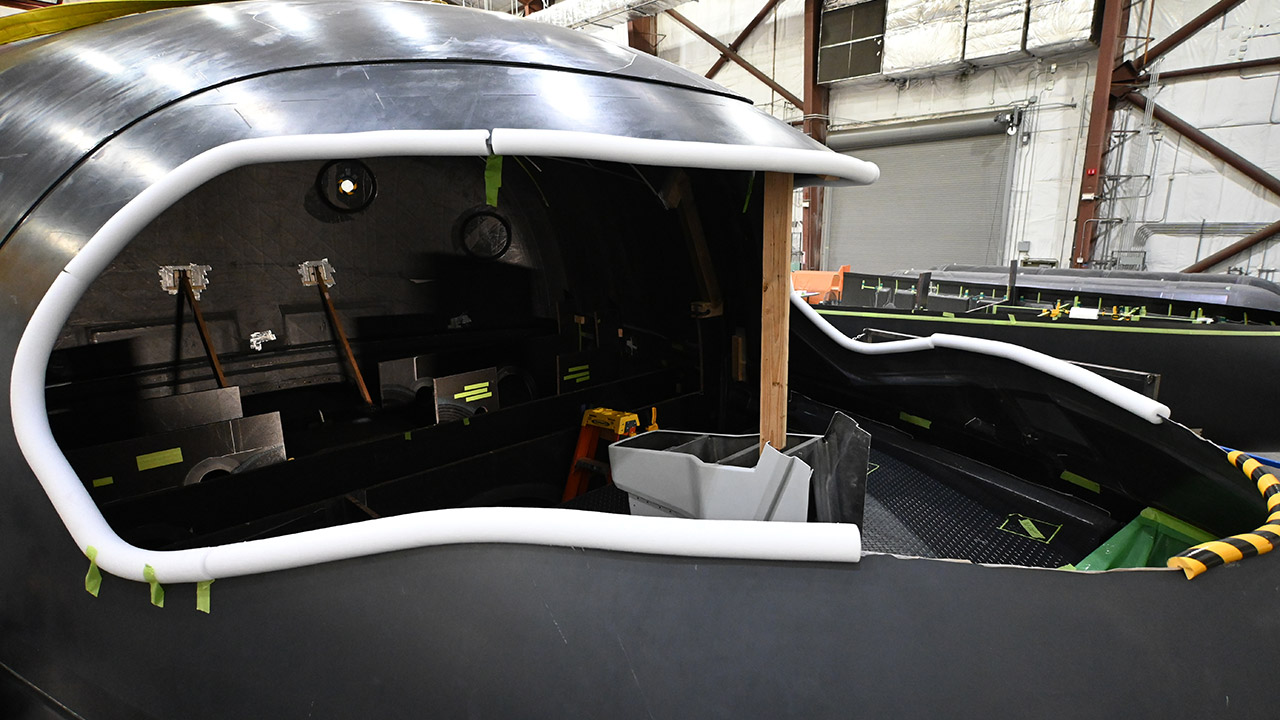
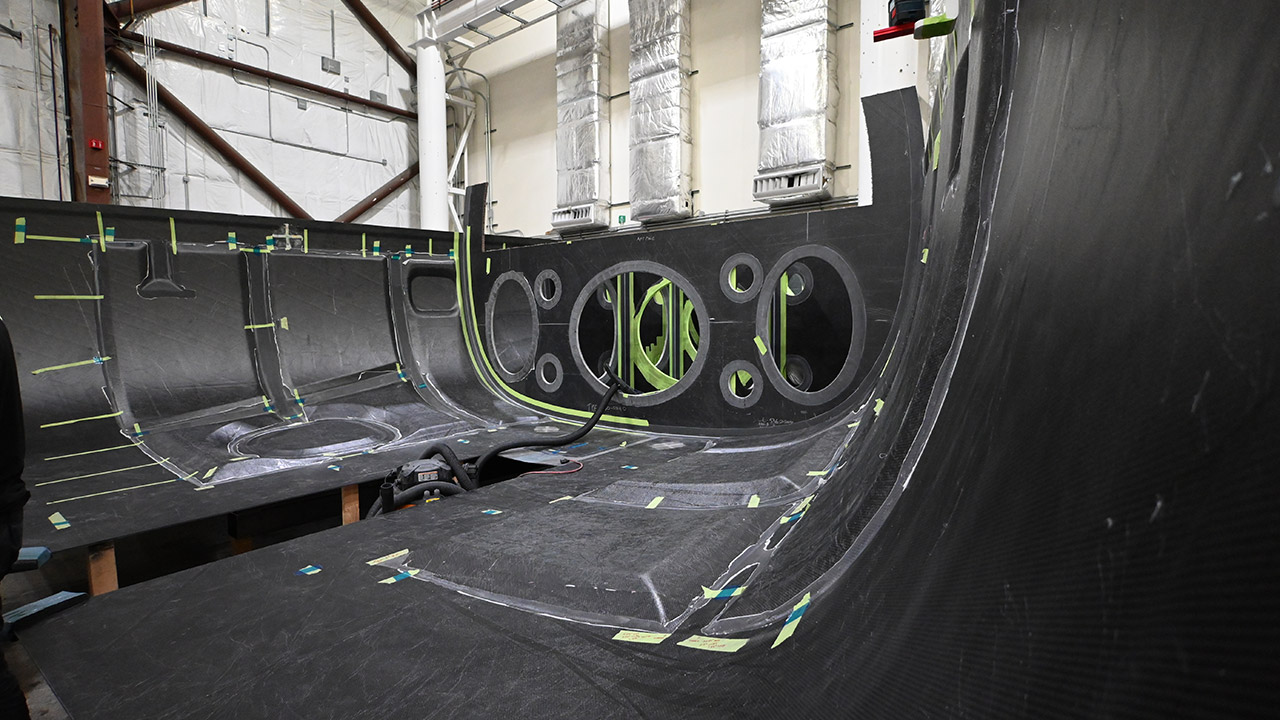
As the factory in Greensboro takes shape, the team at Northrop Grumman’s Scaled Composites plant in Mojave, California, works on the full-scale demonstrator. The primary section in the middle is now being assembled. They plan to launch their first flight in the fourth quarter of 2027. They’ve already flown a smaller Pathfinder demo to collect all of the necessary aerodynamic data. JetZero expects to submit its proposal for type certification later this year. With commercial production slated to begin by the end of 2030, they hope to have passenger flights operational by the early 2030s.
[Source]

Source link

Advertisement
Continue Reading

Tech

Private Mission Launches To Extend Life of Out-of-Gas Communication Satellites

Published

on

Northrop Grumman has launched a private satellite-servicing mission to attach life-extending “jetpacks” to aging communications satellites in geosynchronous orbit. “It’s the second satellite-saving mission to launch this month, all part of a growing, money-saving effort to keep spacecraft running as long as possible,” reports Phys.org. From the report: Launched by SpaceX, Northrop Grumman’s mission robotic vehicle — dubbed MRV — and its jetpacks will spend the next year angling into the proper orbit 22,300 miles (36,000 kilometers) above Earth. Hundreds of satellites orbit at this so-called geosynchronous orbit, where they match the speed of Earth’s rotation and keep to the same part of the sky for continuous coverage. Once in place by mid-2027, the minivan-sized spacecraft will use its 10-foot (9-meter) arms to attach a jetpack to an aging communication satellite. Then it will zip off to two more satellites in need.

For its debut flight, the spacecraft was accompanied by three electric-propelled jetpacks that peeled away separately following liftoff. Like the MRV, the jetpacks will use their own xenon gas thrusters to get to the desired orbit. Once in place, the jetpacks will wait for the robot to grab them, one at a time, and plug them into their designated satellites. Each jetpack — the size of a washing machine — will provide the necessary oomph for an out-of-gas satellite to keep operating for several more years instead of retiring. If it works, it will be a boon for satellite operators SES of Luxembourg and Optus of Australia, saving them millions of dollars in replacement costs.

Source link

Continue Reading

Tech

White House steers $5 billion toward AI research in biggest federal science overhaul in 80 years

Published

on

TL;DR

Federal agencies pledged over $5 billion to the Genesis Mission, funding 278 AI-for-science projects selected from more than 5,000 applications

Federal agencies have committed more than $5 billion to the Genesis Mission, an Energy Department-led effort to use artificial intelligence to accelerate scientific research, White House science adviser Michael Kratsios announced on Wednesday. The initiative selected 278 projects from more than 5,000 applications, Energy Secretary Chris Wright said at a summit in Washington. More than 15 federal agencies are contributing research awards, funding, datasets, and facilities to the programme.

The Genesis Mission was established by a November 2025 executive order and is part of what the administration describes as the largest marshalling of federal scientific resources since the Apollo programme. Under Secretary for Science Dario Gil, who is directing the effort for the Energy Department, said the mission brings together leading researchers, institutions, and technology partners to build what he called the next generation of scientific capability. The DOE received the largest response rate for any programme in the department’s history, according to Gil.

The largest single award is a $60 million investment in nuclear energy, funding a three-year project called Prometheus that will use AI to help design, license, manufacture, and operate nuclear reactors. The project team has raised more than $200 million in industry cost share and $30 million in private capital alongside the federal funding. Other funded areas include biomedical research, energy grid reliability, national security, quantum computing, and microelectronics manufacturing.

Advertisement

Alongside the Genesis Mission announcement, Kratsios released a report to President Trump titled “Science: A New Golden Age,” which the White House described as the first comprehensive rethinking of the US science enterprise in more than 80 years. The report calls for federal research funding to shift toward AI-powered research systems and individual scientists rather than universities, which have historically dominated federally funded scholarship. Agencies with at least $3 billion in research authority will be required to submit implementation plans within 90 days.

The 💜 of EU tech

The latest rumblings from the EU tech scene, a story from our wise ol’ founder Boris, and some questionable AI art. It’s free, every week, in your inbox. Sign up now!

The funding shift represents a deliberate attempt to reshape roughly $200 billion in annual federal research spending. The report cites the NIH Director’s Pioneer Award, which gives selected researchers up to $700,000 annually for five years without requiring a detailed experimental plan, as a model for the kind of flexible, investigator-driven funding the administration wants to expand. The blueprint also identifies national missions including commercial fusion power and returning Americans to the lunar surface by 2028.

Advertisement

The announcement comes as the US-China AI competition intensifies, with Stanford’s 2026 AI Index finding that the performance gap between the best American and Chinese AI models has collapsed to under three percent despite the US spending 23 times more on private AI investment. The Genesis Mission sits alongside other recent federal AI initiatives, including billions in EXIM export financing for US-built AI infrastructure and executive orders on quantum computing, as part of a broader push to maintain American technological leadership through public funding rather than export controls alone.

Source link

Advertisement
Continue Reading

Tech

Amazon, Meta, Microsoft, and other US tech giants are hiding $1.65 trillion in AI debt

Published

on

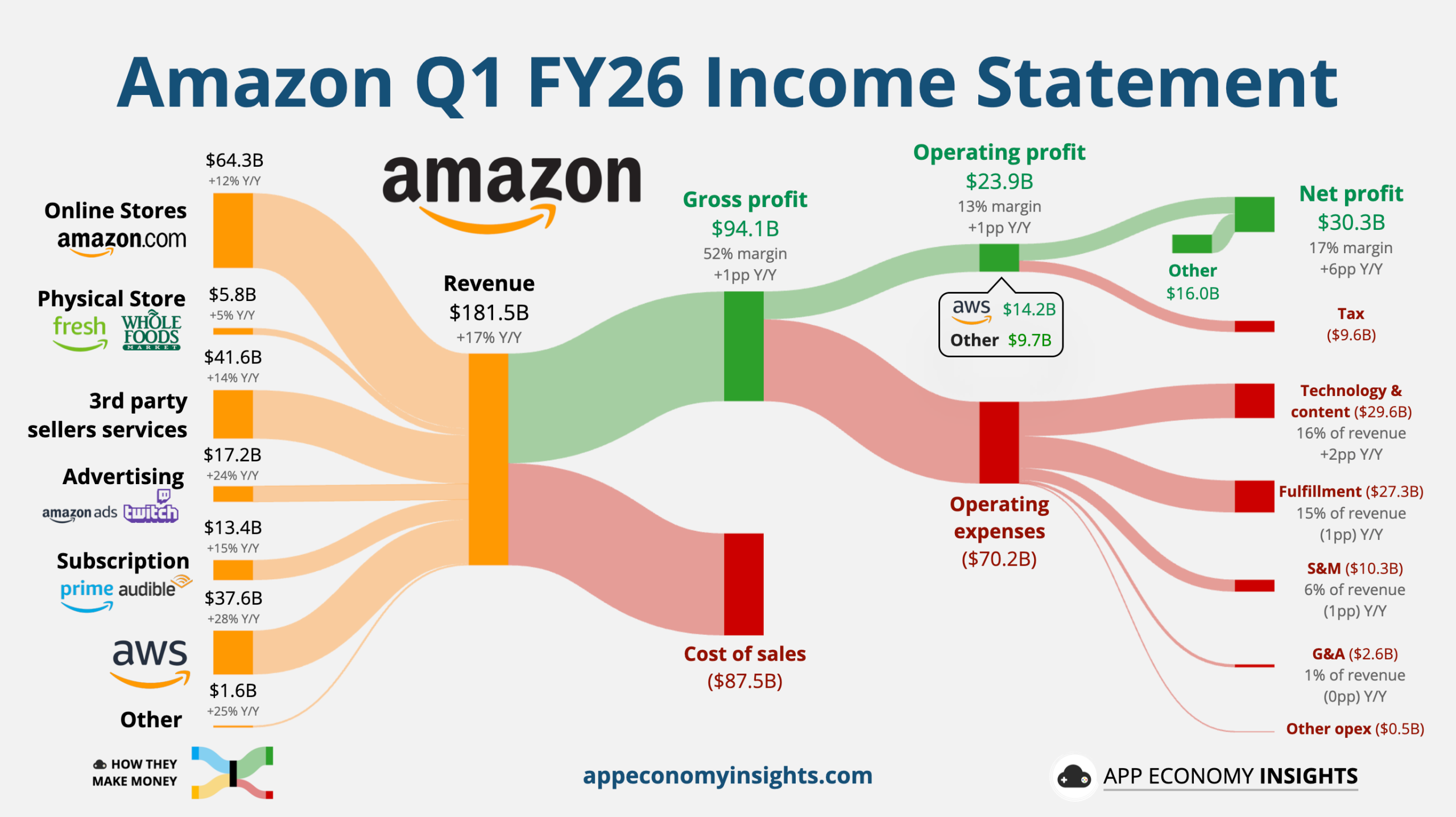
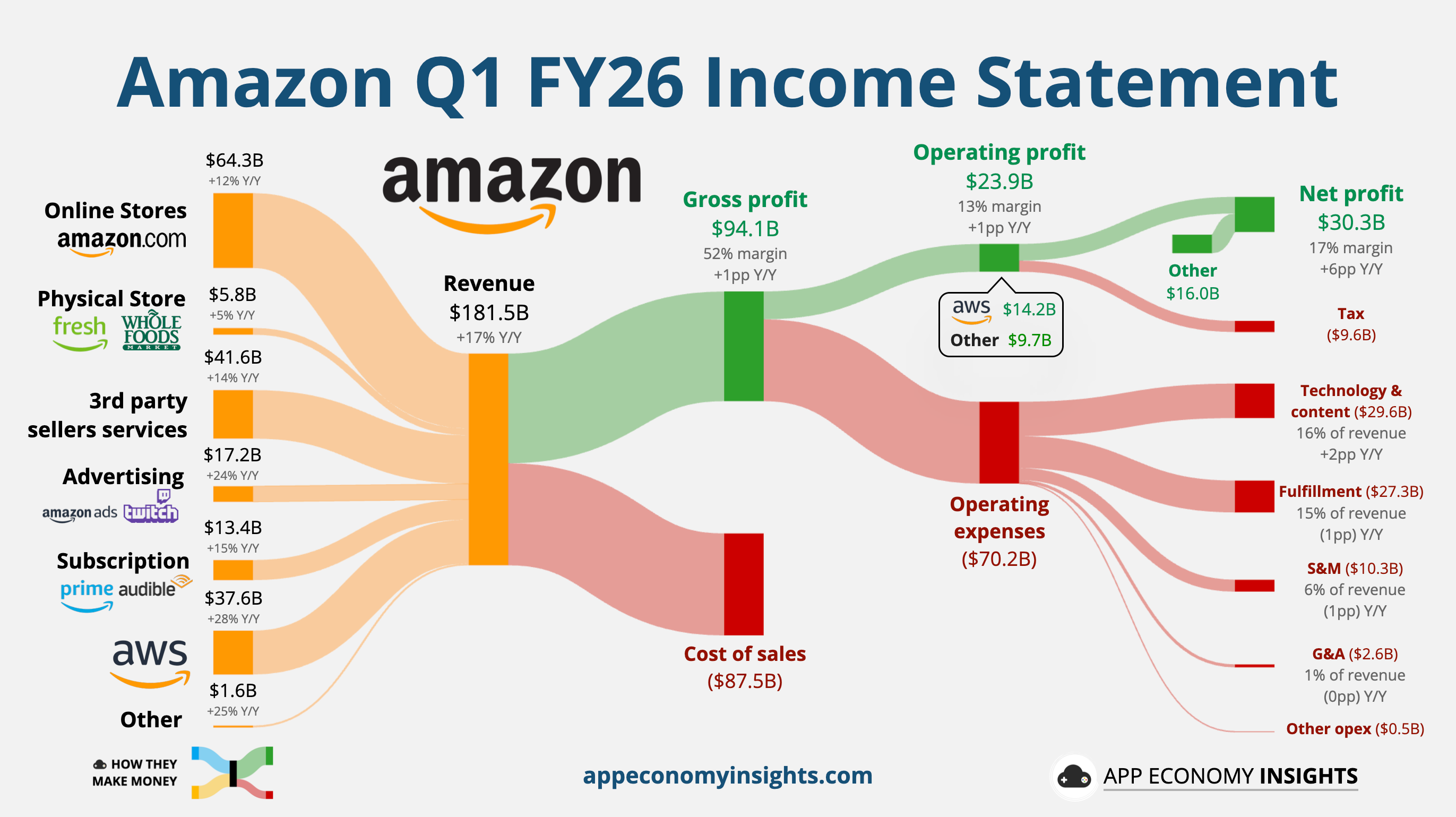
Ripple effect: Amid growing talk of an AI bubble, a study by Japanese market analysts has found that five of the largest American technology companies are carrying a collective “hidden” debt of over $1.65 trillion, driven largely by massive spending on AI infrastructure. That undisclosed sum exceeds the $1.35 trillion the same companies have officially reported on their balance sheets, and it has grown eightfold over the past four years.

According to estimates from Nikkei Asia, Alphabet, Microsoft, Amazon, Meta, and Oracle have together amassed roughly $3 trillion in total debt, a large share of it tied to exorbitant AI infrastructure spending – long-term data center lease agreements, along with costly servers, graphics accelerators, and other computing hardware that has yet to be delivered.

The report notes that less than half of the true debt figure appears directly on balance sheets, with the remainder disclosed only in accounting footnotes attached to SEC filings. Nikkei was careful to point out that the financial commitments behind this debt are legal under US law, but that the way they’re reported makes it harder for retail investors to accurately gauge these companies’ financial health.

Credit: App Economy Insights

Advertisement

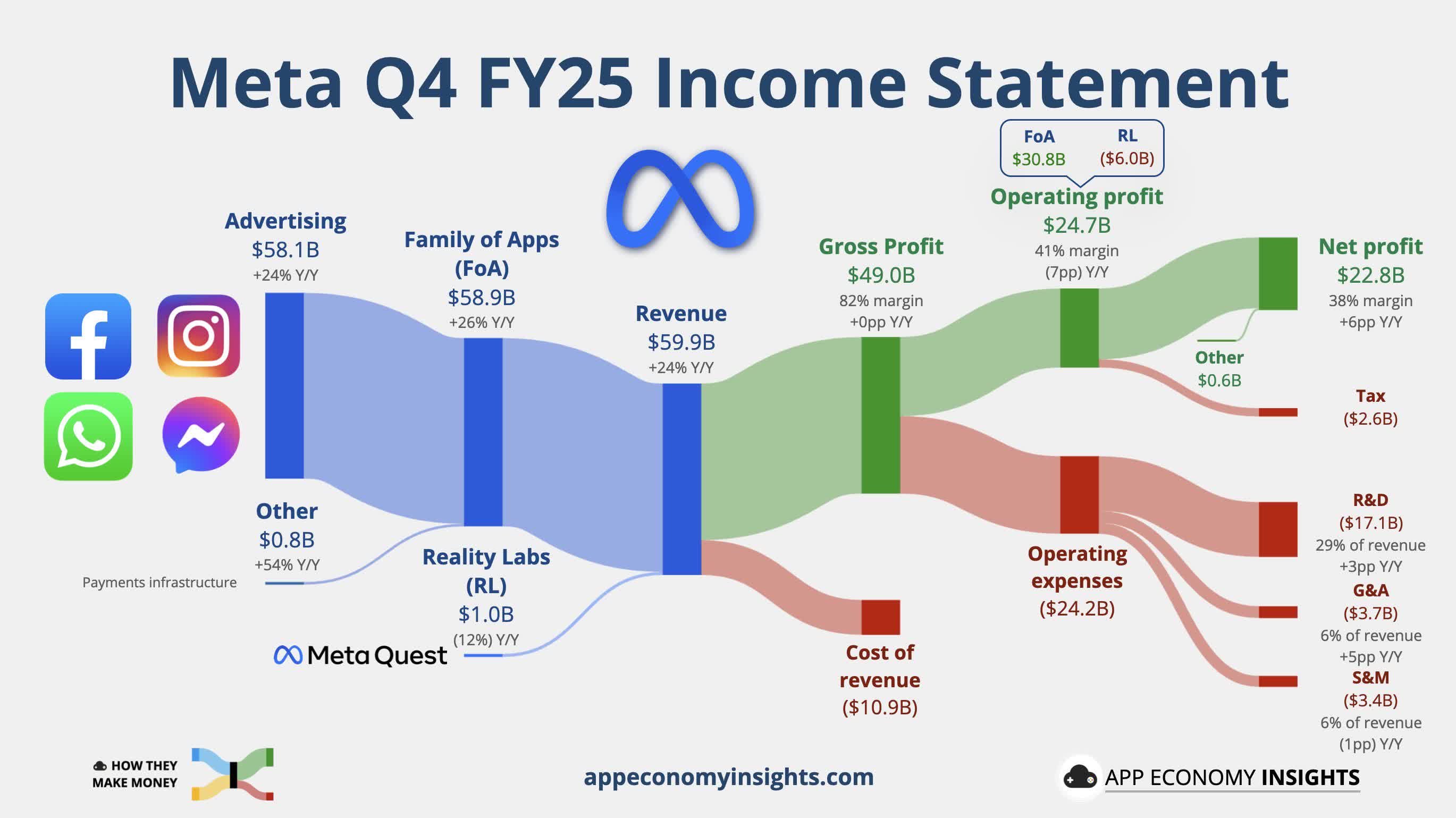
Of the five companies in the study, Meta carries the largest estimated hidden debt, at around $420 billion – nearly three times what it disclosed in its FY 2026 financial statement.

The company’s Hyperion data center in Louisiana, for instance, includes a $27 billion investment from Blue Owl Capital that never appeared in its official earnings report. It’s a fully legal maneuver under current US accounting rules, but one that illustrates just how much can stay out of view.

Oracle’s hidden debt has grown roughly 30-fold over the past four years, reaching $273.3 billion as of the end of May 2026. Most of that stems from long-term leasing agreements with third-party data center operators, part of the company’s push to expand its Stargate AI data center project across sites in Texas, New Mexico, Michigan, and Wisconsin.

Credit: App Economy Insights

Advertisement

While much of this debt remains invisible to everyday investors, institutional players and credit rating agencies are starting to take notice. Morgan Stanley and Moody’s have both raised concerns about the practice, and S&P recently downgraded Oracle’s short-term rating from A-2 to A-3, and its long-term rating from BBB to BBB-, placing it just one notch above junk status.

Source link

Advertisement
Continue Reading

Tech

Why Lettuce Is Always Making People Sick

Published

on

Salad is usually synonymous with healthy eating. Except now, as the US grapples with an expanding outbreak of cyclosporiasis that’s sickened more than 7,100 people in Michigan alone, likely caused by iceberg lettuce supplied by Taylor Farms.

In fact, leafy greens are frequently implicated in instances of foodborne illness. There was a 2022 multistate E. coli outbreak tied to romaine served on Wendy’s sandwiches and 173 cases of norovirus linked to Illinois eatery D.C. Cobb’s. In 2021, BrightFarms recalled packaged salad greens sold in several states after 31 people got salmonella. And in 2019, a total of 167 people were infected with E. coli after eating romaine harvested from the Salinas Valley region in California. This isn’t even the first cyclospora outbreak linked to lettuce: In 2020, Fresh Express salad kits were linked to more than 700 cases of people afflicted with the parasite.

The Centers for Disease Control and Prevention estimates that produce is responsible for almost half of the reported foodborne illness cases, with leafy vegetables topping the list. So what is it that makes lettuce a major source of America’s foodborne tummy troubles?

One big reason is simply because lots of people eat it. Lettuce is the second-most-consumed vegetable in the US behind potatoes. (The latest outbreak ensures potatoes will remain the king of US veggies. Plus, french fries.) Wraps, subs, tacos, you name a fast food sandwich and it’s almost certainly got lettuce on it. Salad-slinging chains are fixtures across the US. Grocery store coolers are stocked with salad kits, on top of the unadorned heads of iceberg lettuce and containers of spinach.

Advertisement

Those ready-to-eat salads and blends of spring mix pose a particularly acute risk because they contain multiple types of leafy greens, which can come from different farms and locations. If one type of lettuce in the mix is contaminated, it can contaminate the whole bag. And because that contaminated lettuce gets packaged into lots and lots of bagged salad, it has the potential to spread germs far and wide.

How lettuce is grown can also expose it to a wide array of pathogens. A 2025 study by researchers at Cornell University who studied E. coli outbreaks in romaine lettuce found that a lot of contamination originates from irrigation with untreated surface water applied through overhead spray irrigation systems. There are ways to lower that risk, including switching to irrigation systems that do not directly touch the leaves, but that would require upgrades and downtime.

Lettuce’s satisfying crunch is also what makes it prone to pesky pathogens. Since it’s eaten raw—really, who wants wilted lettuce?—there’s no opportunity to cook off any lingering contaminants. Like other raw fruit and produce, leafy greens don’t go through what’s known as a “kill step”—heating, pasteurization, or freezing—which is designed to eliminate pathogens during the food manufacturing process.

The texture of lettuce is an additional factor in its ability to spread disease.“Many lettuce types have a lot of crevices and folds,” says Jeanne Marrazzo, CEO of the Infectious Diseases Society of America. “It’s very easy for these tiny pathogens to get in there.”

Advertisement

Even prewashing procedures at manufacturing facilities don’t always remove microbes, which can cling tightly to leaves. In the case of cyclospora, the parasite has thick outer walls, making it highly resistant to most food sanitizers. Experts say vigorous washing that involves scrubbing is the best way to get rid of cyclospora.

“If you don’t wash these products well, you’re going to end up ingesting whatever is on the lettuce,” says Amira Roess, an epidemiologist at George Mason University.

Source link

Advertisement
Continue Reading

Tech

Meta avoids second social media addiction trial as teenage plaintiff drops case

Published

on

TL;DR

A Florida teen dropped his social media addiction lawsuit against Meta days before trial, after settling separately with YouTube, TikTok, and Snap

Meta will not face a second jury trial over claims that its social media platforms are addictive to minors after the teenage plaintiff at the centre of the case chose to dismiss his claims. The boy, a 15-year-old from Panama City, Florida, was set to go to trial on July 27 in Los Angeles Superior Court. His attorneys said Wednesday that he is withdrawing from the case in light of the overall successful result of the litigation and his concerns about enduring a gruelling weekslong trial, according to Bloomberg.

The dismissal marks the first time a plaintiff has voluntarily dropped a bellwether addiction case that was scheduled for trial. YouTube and TikTok had already settled with the plaintiff in recent weeks, and Snap reached a tentative accord on Monday, leaving Meta as the sole remaining defendant. Meta said the plaintiff dropped his case without receiving any payment from the company.

A Meta spokesperson called the dismissal a victory, saying the claims never held up and that the outcome makes clear the company will not back away from defending itself against what it called baseless lawsuits. The plaintiff’s attorneys countered that their client came into the process wanting to hold social media companies accountable and push for changes to protect young people, and that he achieved that goal. They said he is ready to close this chapter and focus on his recovery and therapy.

Advertisement

Meta had challenged the strength of the case in court filings, arguing that company data showed the plaintiff created accounts on Instagram and Facebook about six months before filing suit and averaged less than ten minutes a day on either platform. The plaintiff’s attorneys had alleged that he started using social media at age eight, spent up to ten hours a day on various platforms, and developed insomnia, severe depression, suicidal ideation, and anxiety as a result.

Advertisement

The case was the second of several bellwether trials designed to test the strengths of arguments in the more than 3,000 individual lawsuits filed against the four largest social media platforms. The first trial ended in March when a Los Angeles jury found Meta and Google liable for a young woman’s mental health struggles and awarded six million dollars in damages, with Meta found 70 percent responsible. That verdict set a reference point for the thousands of cases still waiting, and Meta’s willingness to fight rather than settle has become a defining feature of the litigation.

Whether the dismissal changes the dynamics of the broader case remains to be seen. The plaintiff’s decision to settle with three of the four defendants and then drop the remaining claim against the company that refused to pay suggests Meta’s hard-line strategy may be producing results. But the company still faces more than 3,000 individual complaints, suits from more than 40 state attorneys general, and additional bellwether trials scheduled throughout 2026 and into 2027.

Source link

Advertisement
Continue Reading

Tech

Jimothy, the Viral Raccoon, Scurries Across Your Screen in Google Animation

Published

on

I live in Seattle, where we’ve always had our share of quirky local color.

If you’ve ever watched a home Seahawks game on Monday Night Football, you know about the Pike Place Market fish-throwing guys. There used to be a mystery vending machine in the Capitol Hill neighborhood that dispensed random drinks, and no one knew who stocked it. Outside of late-night bars and concerts, hot dog stands sell Seattle dogs, loaded with grilled onions and cream cheese (don’t knock it till you’ve tried it).

So, of course, Jimothy had to come from the Emerald City. Jimothy, the short-spined raccoon that went viral this month, is now a Google animation for the whole internet to enjoy. As of Wednesday, if you Google “Jimothy,” a cute little animated version of the raccoon races across your screen. A green paw icon also shows up, and you can click that to see Jimothy scurry again and again.

As of 3 p.m. PT, Jimothy has been summoned for his little Google run over 1.5 million times.

Advertisement

The raccoon hangs out in my neighborhood, Seattle’s Scandinavian-accented Ballard area. Local resident Kiana Hall told the Seattle Times she thought it was a cat: “I just have never seen any other animal like it.” She posted her video on Instagram and gave him the name because “he looked like a Jimothy.”

(Note: I can’t independently confirm Jimothy’s sex or gender.)

In addition to the Google animation, the National Bobblehead Hall of Fame and Museum, which I didn’t know existed, is making a Jimothy bobblehead. You can preorder it now for $30, with shipping in December, when Jimothy will almost surely be forgotten in favor of a newer viral phenomenon. Y’all remember Moo Deng?

The Seattle Mariners were joking around on X, pretending that Jimothy was at their batting practice, but then the team got real and put a raccoon-suited person in their regular ballpark salmon race. Jimothy won, and the crowd went wild.

Advertisement

There’s more: On July 26, my neighborhood is celebrating the goofy little Jimothy with a proclamation in his honor and an art competition.

And Oatmeal cartoonist Matthew Inman, a Seattle-area resident, drew a “police sketch of Jimothy in case the cops need it.” (Why would they? Who would narc on Jimothy, and for what?)

Jimothy appears to have a rare disorder called short spine syndrome, which accounts for his hunched-up, cartoon-like appearance. Essentially, he looks like he has no neck. A veterinary professor told the Seattle Times that he appears to be functioning well and is “very spry.” 

Another neighbor, Ben Trammell, dug out some video he found of Baby Jimothy with what appears to be Mom and Dad Jimothy, and posted it on Instagram.

Advertisement

“We saw Jimothy … almost daily for months,” Trammell wrote. “He was so small and clumsy, but his mother and siblings were always so patient and caring, keeping him from falling and sometimes just carrying him.”

I know the part of my neighborhood Jimothy hangs out in, but I refuse to head over there and stalk the poor guy. It’s rare that we get a solidly good thing to focus on in this messed-up world, and I would hate to hear that people were messing with Jimothy.

Let the nation’s newest furry friend hang out unbothered, foraging for Dick’s cheeseburger wrappers in trash cans and savoring Seattle’s perfect summer temperatures.

If I need my Jimothy fix, I can just run his Google animation again. Stay safe, little buddy.

Advertisement

Source link

Advertisement
Continue Reading

Tech

Administration Works Fast To Cover For Another ICE Killing

Published

on

from the laundering-murder dept

Former DHS head Kristi Noem got permanently sidelined for being unable to do two impossible things at once: be the anti-migrant hardliner Trump appointed her to be and massage the message when shit went sideways. Two murders in less than a month in Minneapolis may have made plenty of administration figures secretly happy, but once the narrative spun out of their control, it was clear a head needed to roll.

Say hello to Markwayne Mullin. Mullin was yet another Trump loyalist, albeit one that promised a kinder, gentler approach to the bigoted targeting of anyone who didn’t look white enough to belong in this country.

During his confirmation hearings in March. Homeland Security secretary Markwayne Mullin told senators: “My goal in six months is that we’re not in the lead story every single day.”

Well, that’s not going to look good on the next employee review. While immigration officers did manage to keep murders to a minimum after Mullin took office, ICE is back to being the lead story every single day.

July 9, 2026:

Advertisement

Federal immigration agents who killed a man during a traffic stop in Houston on Tuesday had been searching for a different person, according to a Department of Homeland Security spokeswoman.

The victim of that shooting was Lorenzo Salgado Araujo, a Mexican immigrant who had lived and worked in the United States for 35 years. According to his family, Araujo was still actively trying to obtain permanent residence and/or citizenship.

And let’s not pretend — as the DHS would have us do with its statement — that it’s okay to kill people who are the targets of immigration arrests. The DHS may have (kind of) admitted fault here, but only in the context that any killing of someone actually targeted by ICE, etc. is fair game when it comes to instant death penalties. Most of the people ICE targets have no violent criminal record, which means federal officers are routinely boxing in vehicles, smashing windows, and violently accosting people suspected of a civil violation. It’s not like this is happening to people who are overdue on their property taxes. I mean, yet.

This isn’t helpful either, and fewer journalists should be willing to publish whatever happens to fall out of the government’s mouth moments after it has summarily executed someone:

When agents tried to stop the vehicle, the encounter quickly escalated, and an agent shot Mr. Araujo in the abdomen. He died at a hospital hours later.

Homeland security officials said Mr. Araujo had tried to use his vehicle as a weapon, though no video or other evidence for that claim has emerged.

Advertisement

The encounter was escalated the moment ICE officers decided to treat suspected civil violations like a felony stop. The government escalated. The reaction officers received was entirely expected from an innocent person who was suddenly surrounded by masked people with guns.

But video not recorded by ICE officers (who were all supposed to be wearing body cameras at this time) pokes a lot of holes in the government’s self-serving theory:

I don’t know what Araujo thought was happening, but in the videos it looks like a couple of unmarked crossovers aggressively pursuing a vehicle with no lights on or any other indication the vehicles contain law enforcement officers. (See 1:20-1:25 of the video where the ICE vehicle cuts through a parking lot.)

Advertisement

Either way, it ended with officers killing Araujo, then the government going on to smear the person they’d just killed:

The Houston incident, following one of the latest deadly shootings by US Immigration and Customs Enforcement officers, mirrors countless routine police encounters that happen daily across the country as officers find suspected drug paraphernalia and seek court orders to seize and test it for illegal substances.

In this instance, however, the search warrant, shielded from public view when initially filed, was inexplicably unsealed and made public the next day. Justice Department veterans told CNN they can’t remember a time when information that could be critical to a case was made publicly available while a criminal investigation was still underway.

A bit more on the “illegal substances:”

The still-unidentified substances were allegedly found on the dashboard and floor of a van driven by Lorenzo Salgado Araujo, a Houston man ICE tried to pull over last week on suspicion of being in the country unlawfully.

First and fucking foremost, these were immigration officers who had the wrong person. Second, this chase wasn’t initiated because officers saw some possible illicit substances on the dashboard. This was only discovered after Araujo had already been killed. Third, the government has yet to deliver lab results on the substances, which means they could have been anything. Considering they were found on the dashboard (those recovered from the floor probably fell off the dashboard), it’s hard to believe Araujo was just driving around with drugs right out there in plain sight. And, once again, this ain’t the Philippines. You can’t just kill people because they have drugs on them.

Advertisement

This was nothing but a cheap attempt to somehow justify a killing after the fact. But it didn’t end with a shitty smear campaign. The other people in the van were apparently subjected to intimidation tactics by ICE officers following the shooting:

They were detained by Immigration and Customs Enforcement during the encounter, and we haven’t heard from them publicly about what happened.

Now, in another potentially dark turn in the saga, those three men are under pressure from immigration officials to agree to self-deport, Juan Proaño, a representative for the families and CEO of the League of United Latin American Citizens, claimed in an interview with The New Republic.

Araujo had no criminal record, ran his own business, and was on his way to a job with his passengers when he was chased, shot, and killed. And while the government has admitted it misidentified the person officers killed, it still hasn’t explained why it’s okay to engage in these tactics against people only suspected of violating immigration law. It also hasn’t offered any information about the person officers were seeking, which means the real target was another harmless migrant and not the “worst of worst” we keep hearing about every time the DHS is asked to defend its actions.

As I noted earlier, this is only one of two killings to happen this month. Another killing happened in Maine roughly a week later. Since we’re already more than 1,000 words into this one, I’ll dig deep into that killing in another post. But I will leave you with this, which not only shows the kind of people ICE is willing to hire to keep the deportation mill running, but also the kind of people who are innately attracted to ICE:

Advertisement

The Immigration and Customs Enforcement officer who shot a Colombian man in Maine this week is an Army veteran who has struggled with serious mental health issues since early childhood and never should have been given a badge and gun to patrol American streets, several of his close relatives told The Associated Press.

David Brouillette has a history of terrifying and violent behavior, according to those relatives. They accuse him of attacking women in his life over the years, and one shared a voicemail with the AP from last winter in which he told her that he thought someone should slit her throat.

This is the real reason ICE officers want to wear masks. It’s also the real reason ICE wants officers to wear masks. These officers are the real threat to public safety, but the less we know about them, the more ICE can publicly pretend it’s nothing but top-notch, well-trained officers regularly engaging in excessive force.

Filed Under: dhs, doj, houston, ice, maine, mass deportation, murder, texas, tom homan, trump administration

Advertisement

Source link

Continue Reading

Tech

Lenovo’s new thin-and-light handheld leaves out one crucial detail

Published

on

Lenovo has revealed more details about an upcoming Legion gaming handheld that could be among the thinnest and lightest devices in its category. The Legion C700 will measure just 14.99mm at its thinnest point and weigh approximately 556 grams, or around 1.25 pounds. By comparison, Lenovo’s Legion Go S is 22.6mm thick and weighs about 730 grams, while the ASUS ROG Ally X measures 24.7mm and weighs 678 grams.

Trimming these figures down should make the C700 much easier to hold for long periods and carry in a bag. But all of this portability comes at a cost–and that’s cloud gaming.

Plenty of controls in a surprisingly thin body

The Legion C700 has a 7.82-inch IPS display with a 120Hz refresh rate, placing it slightly below the 8-inch screen on the Legion Go S. Lenovo has also equipped the handheld with TMR thumbsticks, Hall Effect triggers, an omnidirectional D-pad, and four customizable buttons split between the shoulders and rear panel.

TMR sticks use magnetic sensing and should avoid the physical wear that can eventually cause conventional analog sticks to drift. They are also becoming an increasingly common premium feature across newer gaming controllers and handhelds.

Lenovo has yet to reveal many of the key details of the C700, like its processor, memory, storage, and battery capacity. Those missing details will determine whether the device can handle any sort of games and emulation locally or remains largely dependent on an internet connection.

Advertisement

This handheld lives in the cloud

The C700 was developed alongside Tencent and will prominently feature the company’s START cloud gaming service. That platform lets players stream games from remote hardware without installing them on the handheld itself. Its Tencent partnership also suggests the C700 may initially remain limited to China. Lenovo has confirmed an August 2026 release window, although pricing and availability outside the country remain unknown.

Cloud gaming explains how Lenovo produced such a slim machine, but cloud gaming hardware often misses the mark on value. The Logitech G Cloud previously offered a similarly lightweight streaming experience, yet its $350 launch price and reliance on separate cloud services made it a niche proposition.

Source link

Advertisement
Continue Reading

Tech

Samsung Just Dropped The Z Fold 8 And Z Flip 8, But Those Aren’t The Only New Devices

Published

on


In its Galaxy Unpacked July 2026 event, Samsung announced a handful of new devices. Taking the center stage is the company’s eighth generation of foldables. This year, Samsung is adding a new form factor to the mix — the Galaxy Z Fold 8, which comes in a wider, passport-style design — akin to the rumored iPhone Fold. At 201 grams, it’s also the lightest foldable Samsung has ever made. It’s powered by the Snapdragon 8 Elite Gen 5 SoC, up to 16GB of RAM and 1TB of storage, and a 4,800 mAh battery. The Z Fold 8 features dual 50-megapixel wide and ultrawide cameras.

The cover screen is a 5.5-inch 120Hz AMOLED panel, which folds out to reveal the 7.6-inch main display in a 4:3 aspect ratio, which Samsung says can offer a more enjoyable experience when watching films or reading books. The Galaxy Z Fold 8 Ultra is simply the more direct successor to last year’s Z Fold device. It offers a taller 8-inch display and boasts a flagship camera system with a 200-megapixel wide, a 50-megapixel ultrawide, and a 10-megapixel 3x telephoto lens. The battery is larger at 5,000 mAh with 45W fast charging.

Advertisement

The Galaxy Z Flip 8 has seen iterative updates, too. Samsung claims its new Flex Titanium technology combines “a titanium-alloy film with an enhanced titanium plate, to make foldables thinner while maintaining durability.” Pricing for the Z Flip 8, Z Fold 8, and Z Fold 8 Ultra starts at $1,199, $1,899, and $2,099, respectively.

Advertisement

The Samsung Galaxy Watch Ultra 2 and Watch 9 are here

Samsung’s new additions to the Galaxy Watch series bring refreshed hardware, new health tracking features, and a sprinkle of AI. The Galaxy Watch 9 remains the mainstream option in the lineup, featuring a familiar circular design in an aluminum casing. It comes in two sizes — 40mm and 44mm — with battery capacities of 390 mAh and 445 mAh, respectively. The display is a Super AMOLED panel with a brightness of up to 3,000 nits.

Samsung also refreshed its rugged offering this year, with the Galaxy Watch Ultra 2 featuring a similar design and build as the outgoing model. It bumps you up to a titanium casing that’s better suited for outdoor use and adventure sports. The Galaxy Watch Ultra 2 is 12% slimmer than the previous model, despite packing in a larger 800 mAh battery. The smartwatch also boasts a 5,000-nit display, which Samsung claims is a world first. The new Trail Run mode lets you track details like elevation and terrain impact. There’s even a live hydration guidance reminder that draws from estimates of how much you have sweat.

Both Galaxy Watch models are powered by the Snapdragon Wear Elite platform, which includes an NPU for the better handling of AI tasks. There’s support for dual-band Wi-Fi, LTE, Bluetooth 6.0, and NFC. The Galaxy Watch 9 is priced at $379, which gets you 32GB of internal storage. The Galaxy Watch Ultra 2 doubles the storage capacity and starts at $699.

Advertisement

A better look at Samsung’s new smart glasses

Samsung has also revealed more information about its upcoming eyewear products — two pairs of smart glasses, designed in collaboration with Gentle Monster and Warby Parker. Both glasses will run on the Android XR operating system and will be powered by the Snapdragon AR1 Gen1 platform. CNET went hands-on with the smart glasses and confirmed that they don’t have a display. You do get a camera, a microphone, and built-in speakers. Since these are heavily reliant on AI, the bulk of your interaction is meant to happen through voice commands. 

Gemini is at the core of the smart glasses here, allowing them to understand what you’re looking at and respond accordingly. You can even ask them to capture photos of information you find interesting, which they can save in the Samsung Notes app. If you’re on a video call with someone, you can share what you’re seeing through the smart glasses’ camera. Convenient smart glasses features like these are what make the lack of a display less of a drawback.

Advertisement

Battery life has been rated at up to nine hours on a single charge. When you need to top it back up, the case provides up to seven additional full charges. Details about pricing and availability haven’t been revealed yet, with Samsung only stating that they’re “excited to continue this momentum and bring this experience to people soon.”


Advertisement

Source link

Continue Reading

Trending

Copyright © 2025