
Connect with us
DAPA Banner
DAPA Coin
DAPA
COIN PAYMENT ASSET
PRIVACY · BLOCKDAG · HOMOMORPHIC ENCRYPTION · RUST
ElGamal Encrypted MINE DAPA
🚫 GENESIS SOLD OUT
DAPAPAY COMING

Business

Northern Endeavour fears for $200m Cliff Head cleanup

Published

on

Northern Endeavour fears for $200m Cliff Head cleanup

The Conservation Council of WA has warned the Cliff Head oil field off Dongara could leave a $200 million cleanup bill, after both its owners entered administration.

Continue Reading
Click to comment

You must be logged in to post a comment Login

Leave a Reply

Business

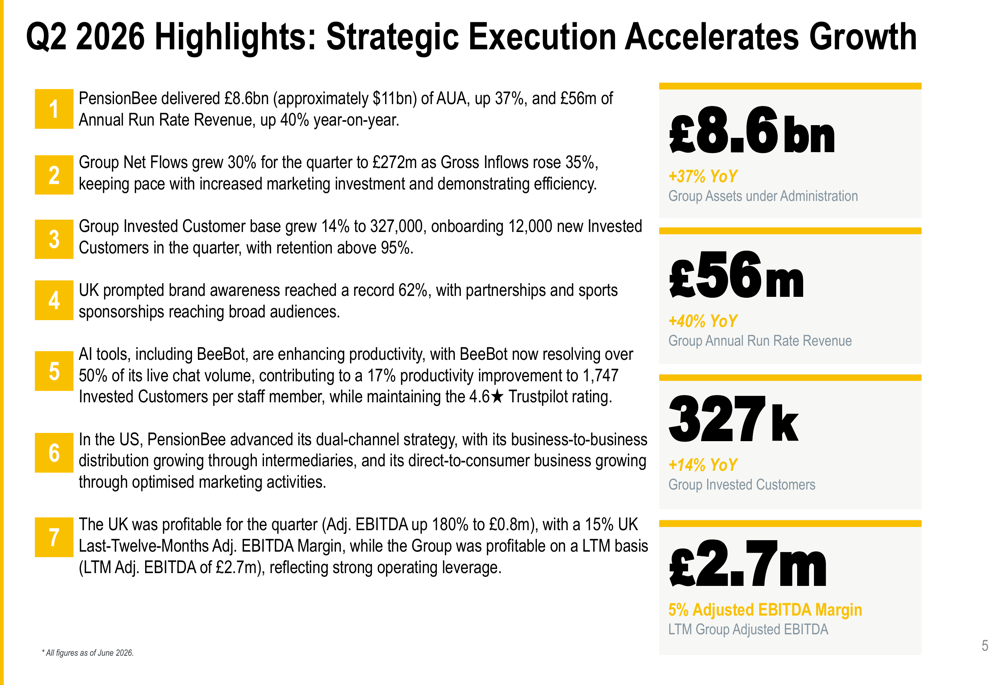
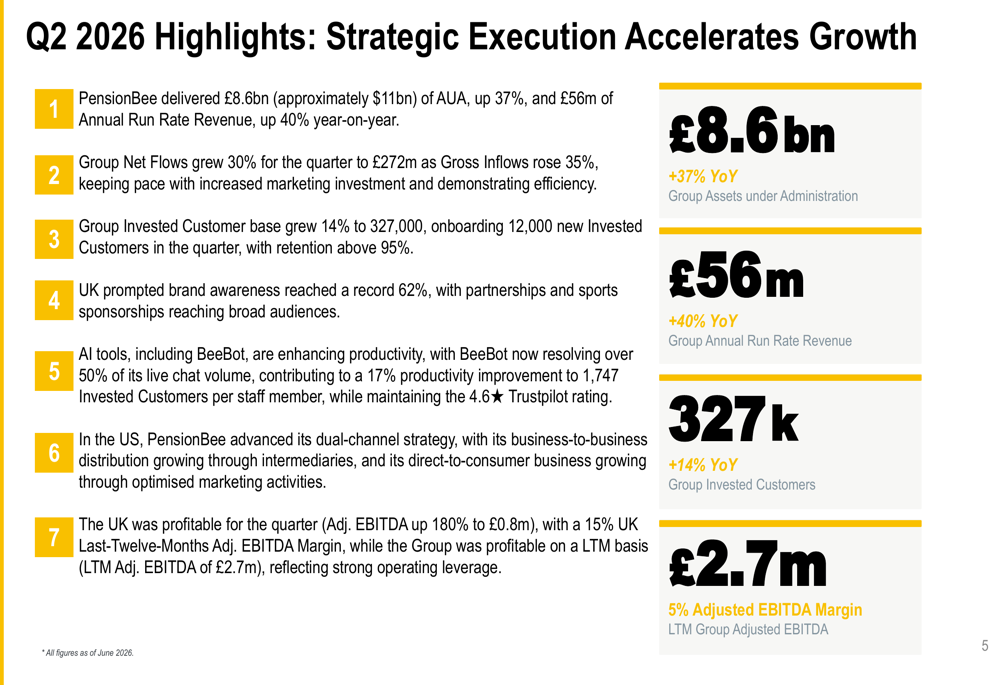
PensionBee Q2 2026 slides: UK turns profitable amid 37% AUA growth

Published

on

PensionBee Q2 2026 slides: UK turns profitable amid 37% AUA growth


PensionBee Q2 2026 slides: UK turns profitable amid 37% AUA growth

Continue Reading

Business

Building consultancy Black Cat seals multimillion-pound BGF investment deal

Published

on

Business Live

‘In the last decade, the business has gone from strength to strength’

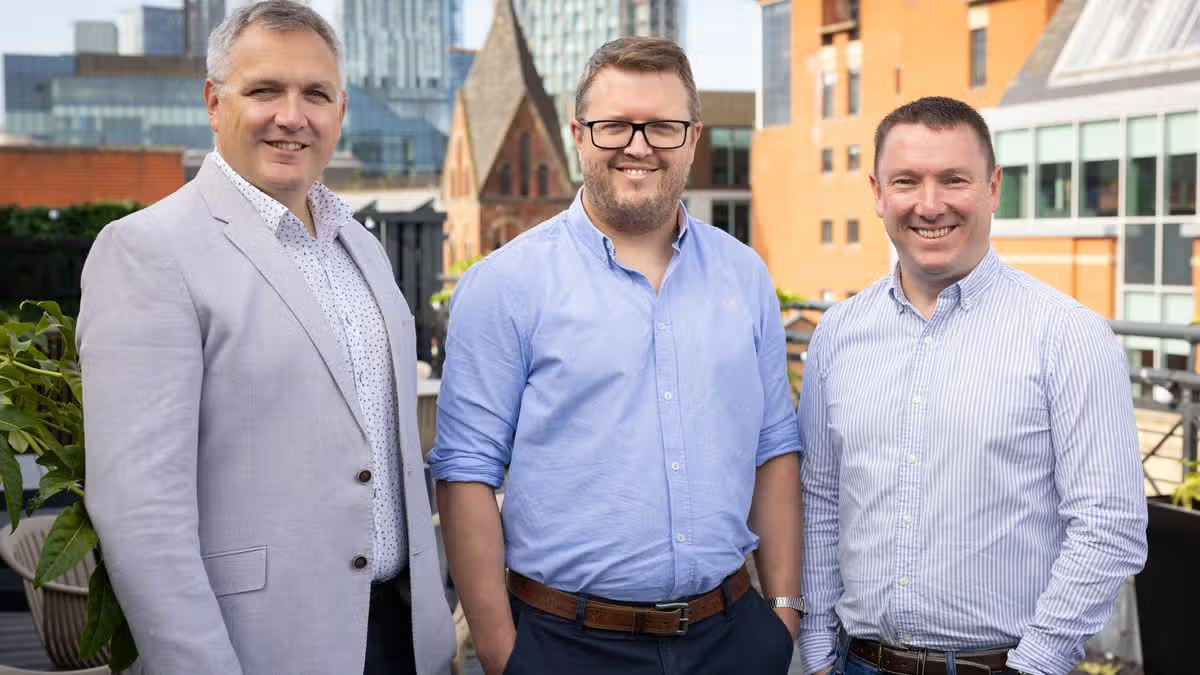
Black Cat Building Consultancy founders, left to right: Stephen Barnes, James Dyson and Ben Golby.

Black Cat Building Consultancy founders, left to right: Stephen Barnes, James Dyson and Ben Golby.(Image: Darren Robinson Photography)

Construction specialist Black Cat is geared up for growth after sealing a multimillion-pound investment. The Manchester-based commercial project and building consultancy has secured the investment from BGF – the UK and Ireland’s most active growth capital investor – to support its ambitious growth plans.

Founded in 2015, Black Cat has grown to become one of the UK’s leading independent building consultancies, working across commercial, industrial, retail and public sector property. It specialises in services including building surveying, design, rating, mechanical and electrical, compliance and project management, with projects managed totalling more than £734 million and spanning 83 million sqft.

The company, which has 10 UK offices, now has 91 employees and was named the Best Medium-Sized Place to Work in the Building & Construction Industry in The Sunday Times Best Places to Work 2026.

Now the sizeable investment from BGF will allow Black Cat to ramp up expansion into new locations across the UK and Ireland, while growing its workforce and enhancing client services.

Advertisement

As part of the deal, Ian Plumb will join Black Cat as non-executive chair from BGF’s Talent Network. Ian is a highly regarded non-executive director who has worked across several BGF portfolio businesses, including Emma Bridgewater and North West-based Evoke Creative, to drive strategic growth.

The deal was led by Josh Bean and Emma Cassidy – investors in BGF’s North West team.

Ben Golby founder and director at Black Cat, said: “In the last decade, the business has gone from strength to strength. Not only have we grown year on year, but we have challenged some of the larger players in the sector, built a uniquely transparent and very rewarding workplace, and won significant market share.

“In order to build on that momentum and increase our footprint in diverse markets, we needed an investor to take a patient and long-term approach to growth. BGF stood out as the ideal partner, and we’re delighted to have them onboard as we expand across the country.”

Advertisement

Last year, BGF announced a £3bn commitment to support high-potential companies across the UK over the next five years. This includes £400m for businesses in the North West, building on the £596m already invested in the region since 2011.

Josh Bean, Investor at BGF, added: “Since 2015, Black Cat has created a people-first business, disrupting the commercial property market through its transparent approach. This formula has attracted some of the best talent in the market and enabled the business to make a tangible impact on both the commercial property market and in the regional hubs where it has a presence.

“We look forward to working with founders Ben, James and Stephen, as they continue leading Black Cat on its impressive growth journey.”

Like this story? For more deals news you can visit our dedicated page for the latest news and analysis here.


Advertisement
Continue Reading

Business

(VIDEO) Samsung Unveils Three New Foldable Phones and Smart Glasses Ahead of Apple’s Rumored September Debut

Published

on

iPhone 18 Pro

LONDON — Samsung Electronics unveiled a revamped foldable phone lineup Wednesday, introducing three new devices at a launch event in London as the South Korean tech giant looks to defend its lead in a product category it helped pioneer, just weeks ahead of Apple’s expected entry into the foldable market.

The lineup includes the Galaxy Z Fold 8, a new model with a shorter, wider form factor; the Galaxy Z Fold 8 Ultra, a more traditional tall book-style foldable aimed at productivity users; and the Galaxy Z Flip 8, the company’s clamshell-style device. All three phones were announced at Samsung’s Galaxy Unpacked event and are available for preorder starting Wednesday, with a full launch set for Aug. 7.

A reshuffled lineup and higher prices

Advertisement

This year’s release marks a notable shift in Samsung’s foldable strategy. Rather than releasing a single Fold model alongside a Flip, as it has in years past, Samsung introduced two distinct Fold variants for the first time. The Galaxy Z Fold 8 Ultra continues the familiar tall, narrow form factor associated with previous Fold generations, while the new Galaxy Z Fold 8 adopts a shorter, wider design that Samsung says is built primarily for consuming video content, browsing social media and gaming.

The pricing also reflects an increase compared with previous years. The Galaxy Z Fold 8 starts at $1,899, the Galaxy Z Fold 8 Ultra starts at $2,099, and the Galaxy Z Flip 8 starts at $1,199. Samsung has attributed the higher prices in part to rising memory chip costs affecting the broader smartphone industry this year.

What sets the two Fold models apart

Advertisement

Beyond their differing aspect ratios, the two Fold devices carry several other distinctions. The Galaxy Z Fold 8 features a 5.5-inch front cover screen and a 7.6-inch main internal display, while the Galaxy Z Fold 8 Ultra offers a larger 6.5-inch cover screen and an 8-inch internal display. Samsung has positioned the Fold 8 Ultra as its most advanced foldable to date, describing it in its own announcement using that exact phrase, and touting it as the slimmest foldable the company has ever produced, measuring just 4.1 millimeters thick when unfolded.

That slimness comes courtesy of a new “Flex Titanium” display backing, which replaces plastic components with titanium in much of the display’s support structure, a change Samsung says improves durability and significantly reduces the visibility of the device’s center crease compared with earlier Fold generations. The Fold 8 Ultra’s outer display also gets a peak brightness increase to 3,000 nits and an upgrade to Gorilla Glass Ceramic 3 for added durability.

Camera hardware also differs between the two models. The Fold 8 Ultra includes a three-lens setup with wide, telephoto and ultra-wide-angle cameras, while the standard Fold 8 offers only wide-angle and ultra-wide-angle lenses, lacking the Ultra’s telephoto zoom capability. Both phones run on Qualcomm’s Snapdragon 8 Elite Gen 5 processor and ship with Samsung’s Galaxy AI features alongside Google’s Gemini AI assistant built in.

The return of a fan favorite

Advertisement

Rounding out the lineup, the Galaxy Z Flip 8 brings a slimmer redesign to Samsung’s clamshell foldable line. The device features a 4.1-inch external cover screen for checking notifications without fully opening the phone, along with a larger 6.9-inch main interior display. Samsung has also introduced a “Horizon Lock” feature aimed at smoothing out video captured while the phone is used in a hands-free, tabletop recording mode, along with an upgraded “Flex Window” experience powered by the company’s latest software, One UI 9.

A broader wearables push

Alongside its new phones, Samsung also refreshed its smartwatch lineup at Wednesday’s event, introducing the Galaxy Watch 9 and Galaxy Watch Ultra 2. The company additionally debuted its first smart glasses, developed in partnership with eyewear brands Warby Parker and Gentle Monster, marking Samsung’s initial entry into the increasingly competitive smart glasses category.

Racing Apple to market

Advertisement

Samsung’s latest foldable lineup arrives roughly two months before Apple is widely expected to launch its own first foldable iPhone in September. According to Bloomberg’s Mark Gurman, Apple’s device is likely to be priced above $2,000, putting it in direct competition with Samsung’s higher-end offerings once it becomes available.

Samsung currently dominates the global foldable smartphone market, with Counterpoint Research estimating the company captured roughly 40% of global foldable sales in 2025, ahead of Chinese rival Huawei at 30%. Industry analysts widely expect that landscape to shift once Apple enters the category, given the company’s scale and brand loyalty among existing iPhone users who have so far had no foldable option within Apple’s own ecosystem.

A preview of the standard Fold

Reflecting on a hands-on preview of the devices, one technology reporter who tested the new Fold 8 said the shorter, wider model offered a genuinely distinct experience from its taller sibling, describing a preference for its unique proportions despite it representing a departure from Samsung’s traditional Fold design. Notably, that reporter also observed that the new Fold 8’s design bears some resemblance to early leaks depicting Apple’s upcoming foldable iPhone, a similarity that could add another layer of comparison once Apple’s device becomes official later this year.

Advertisement

With preorders now open and a full retail launch scheduled for Aug. 7, Samsung’s latest foldable lineup sets the stage for what is expected to be one of the most closely watched product rivalries in the smartphone industry this year. Whether Samsung can maintain its market lead once Apple formally enters the foldable category in September remains an open question, one that industry analysts, and rival engineers, are likely to be watching closely as both companies’ devices reach consumers within weeks of each other.

Continue Reading

Business

Senior Chinese leader Wang Huning tours Tibet, stresses ethnic unity, stability

Published

on


Senior Chinese leader Wang Huning tours Tibet, stresses ethnic unity, stability

Continue Reading

Business

Foodservice flavor trends

Published

on

Foodservice flavor trends

Restaurant operators demonstrate how internationally inspired cuisine provides a gateway to experimentation.

Continue Reading

Business

Alphabet expands Miami office amid California billionaire tax push

Published

on

5 states weigh measures to ease or eliminate property taxes for homeowners

Google reportedly expanded its office presence in Miami this year after two of its co-founders purchased houses in South Florida.

Alphabet, the parent company of Google, signed a lease expanding its existing 10,000-square-foot satellite office in Miami’s financial district by an additional 45,000 square feet, two people familiar with the matter told Bloomberg News.

Advertisement

The outlet reported that the expansion was driven in part by the recent home purchases in the area by Google co-founders Larry Page and Sergey Brin – two billionaires who have bought homes outside of California and relocated business entities out of the Golden State as voters weigh a billionaire tax on this fall’s ballot.

Google first opened an office in Miami in 2016 and the expansion will increase its presence in Florida – though the South Florida office remains much smaller than the corporate headquarters at its Mountain View campus in California, which has over 10 million square feet of space, and its 1.7 million-square-foot Hudson Square campus in New York.

GOOGLE CO-FOUNDER RIPS CALIFORNIA BILLIONAIRE TAX: ‘I FLED SOCIALISM’

Sergey Brin

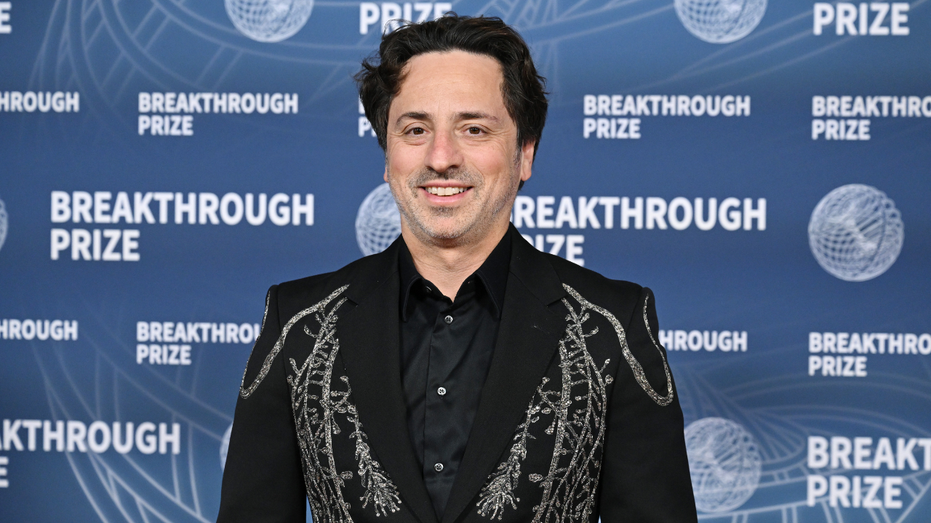
Google co-founder Sergey Brin bought property in South Florida. (Gilbert Flores/Variety via Getty Images)

Page and Brin left their roles as executives in 2019 but remain on Google’s board. Brin has reportedly taken an active role in shaping the company’s initiatives around artificial intelligence (AI).

Advertisement

A report from earlier this year by the Wall Street Journal noted that Page bought a waterfront compound for $101.5 million in December as well as a nearby home for $71.9 million, which he bought in early January, while Brin was reportedly closing in on a purchase at that time as well.

Bloomberg’s report said that Brin bought a $51 million waterfront home in Miami Beach shortly after Page’s purchase.

LARRY PAGE DROPS $173M ON MIAMI MANSIONS AMID CALIFORNIA BILLIONAIRE EXODUS TREND AS WEALTH TAX LOOMS

A view of Miami.

Google’s office is located in Miami’s financial district. (Jeffrey Greenberg/UCG/Universal Images Group via Getty Images)

Brin was also linked to the purchase of a $42 million mansion on the Nevada side of Lake Tahoe in December.

Advertisement

The moves occurred as California voters will vote on a proposed one-time wealth tax on billionaires this November.

The proposed constitutional amendment would levy a one-time, 5% wealth tax on taxpayers and trusts with over $1 billion in covered assets for the purpose of funding the state’s healthcare and food assistance programs, as well as public education.

GOOGLE CO-FOUNDER SERGEY BRIN JOINS CALIFORNIA EXODUS: REPORT

Ticker Security Last Change Change %
GOOGL ALPHABET INC. 348.35 +1.20 +0.35%

Assets covered by the tax would include businesses, securities, art, collectibles, and intellectual property – though real property, pensions and certain retirement accounts would be exempt.

Advertisement

If passed, the tax would apply retroactively to taxpayers who lived in California as of Jan. 1, 2026, with the tax due with 2027 tax filings.

Taxpayers could pay the tax in five equal installments, with subsequent payments subject to an annual deferral charge of 7.5% of the balance that remains unpaid.

GET FOX BUSINESS ON THE GO BY CLICKING HERE

Advertisement
Continue Reading

Business

Intuitive Surgical stock hits 52-week low at 342.06 USD

Published

on


Intuitive Surgical stock hits 52-week low at 342.06 USD

Continue Reading

Business

Bus travellers respond to fare reduction

Published

on

A man in a black jacket, sat on a wall

‘It’s going to help us’ – public respond to bus fare cut.

Continue Reading

Business

Economy Minister Caomihe Archibald to bring forward storm compensation law

Published

on

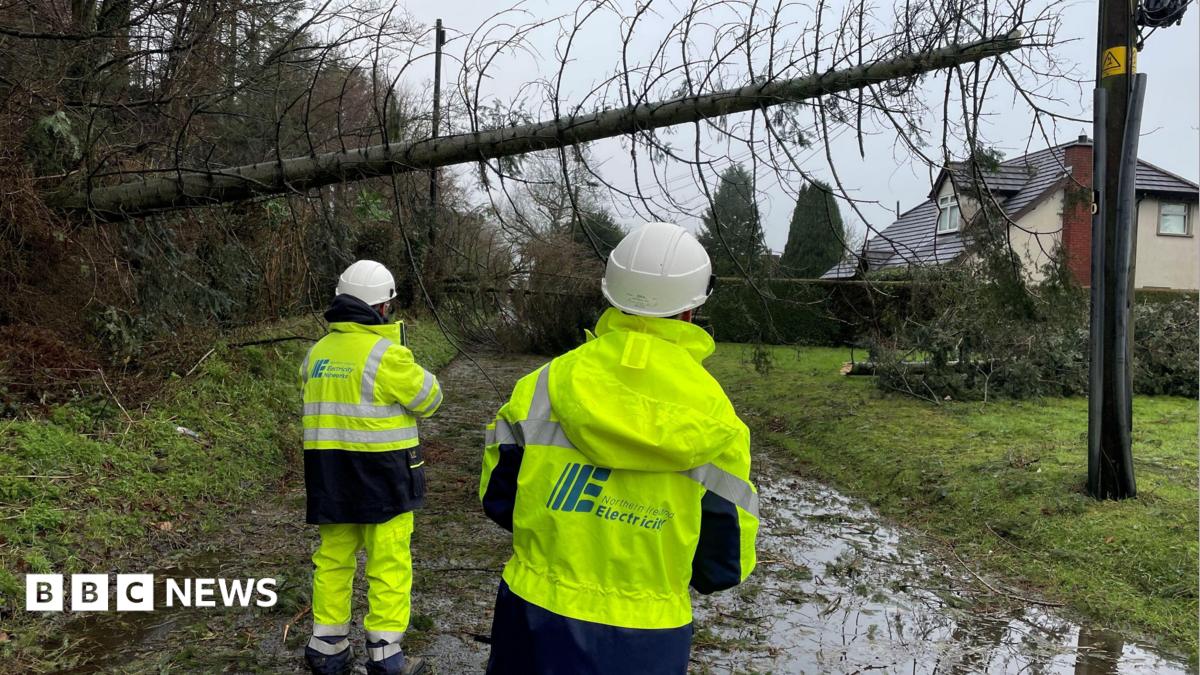
Electricians look at a tree that has hit a power line.

Stormont’s economy minister is to develop plans to make compensation a legal right for households which lose electricity supplies during extreme weather.

That is despite the independent Utility Regulator saying it is not the right time to do so.

The regulator said money could be better spent making the electricity network more resilient to severe weather.

It also raised concerns that compensation costs could be passed through to all consumers via higher electricity bills.

Advertisement

Northern Ireland is currently the only part of the UK which does not have a compensation scheme.

The grid owner, NIE Networks, is exempted from meeting usual supply standards during periods of severe weather.

That led to humiliation for Executive ministers in the wake of Storm Éowyn last year.

The first and deputy first ministers had called for NIE Networks to make voluntary compensation payments, but it declined to do so.

Advertisement

The minister, Caomihe Archibald, said: “Storm Éowyn highlighted the need for stronger protections for customers affected by prolonged power outages.

“I have therefore instructed my officials to bring forward policy proposals to remove the severe weather exemption, while minimising costs for all consumers.”

She added that “detailed proposals” will be brought forward before next year’s Assembly election.

At this stage it is not clear how much compensation would be on offer and to what extent it be funded by NIE Networks shareholders and how much of it would be socialised across all customers’ bills.

Advertisement

“Policy costs” have become an increasingly large element of electricity bills.

These are parts of the bill which do not reflect electricity usage but instead are funding policies such as renewable electricity subsidies.

Continue Reading

Business

Vedanta shares drop 26% in two months, erase all post-demerger gains. Time to buy or better to avoid?

Published

on

Vedanta shares drop 26% in two months, erase all post-demerger gains. Time to buy or better to avoid?
While the newly demerged Vedanta stocks grab the headlines with sharp upswings and downswings, the shares of the metals major Vedanta quietly fell more than 26% from its post-adjustment high in just two months, with analysts still advising caution.

The shares of the company adjusted nearly 63% at the end of April this year, as it began to trade excluding the value of Vedanta Aluminium, Vedanta Power, Vedanta Oil & Gas, and Vedanta Steel & Iron Ore units. The stock adjusted to the mega demerger that marked one of the biggest corporate restructurings in India’s metals and mining space.

After the demerger adjustment, the stock jumped over 24% in less than a month to hit a post-demerger high of Rs 360 apiece at the end of May. However, what followed was a consistent trend of decline, falling 26% to close at Rs 264.95 apiece on Tuesday. The stock has now erased all its post-demerger gains, and trades below the price at which it opened following the adjustment. At the same time, Nifty Metal crashed over 9% amid an overall downtrend in metal stocks.

Meanwhile, the four new stocks that debuted on the stock market following the demerger saw sharp upswings and downswings. Vedanta Iron and Steel has emerged as the winner in terms of gains, rising over 55% in 2026 so far. The restructured Vedanta meanwhile continues to house the zinc and silver businesses through Hindustan Zinc and is envisaged as an incubator for future ventures.

Advertisement

Recently, CRISIL upgraded Vedanta’s long-term rating to CRISIL AA+/Stable from CRISIL AA/Watch Developing and reaffirmed its short-term rating at CRISIL A1+. It also assigned a CRISIL AA+ rating with a Stable outlook to the company’s non-convertible debentures.


The ratings agency also said Vedanta’s financial risk profile has improved significantly due to the continued consolidation of Hindustan Zinc and the allocation of debt to the demerged entities. It added that lower leverage, sustained earnings and cash flows from HZL, along with the market value of Vedanta’s investment in HZL, have strengthened the company’s financial flexibility. Over the medium term, the expected ramp-up in Zinc International and improving contributions from the copper and ferro alloys businesses are expected to support earnings.
Also read | Vedanta, demerged Vedanta Aluminium, Vedanta Oil & Gas get rating upgrades from CRISIL

Is it time to buy Vedanta shares?

The sharp drop in Vedanta’s share price has come on the back of an improving operating backdrop, not a deteriorating one, said Harshal Dasani, Business Head at INVasset PMS. Hindustan Zinc earlier this month reported its highest-ever first-quarter mined metal production of 268 kilotonnes, the fifth consecutive year of Q1 records, with saleable metal up 4%.
The company’s consistent tradition of dividend payouts for investors confirms the cash upstreaming engine is running, Dasani added. In this background, the analyst feels that the correction in Vedanta’s share price reflects profit-booking after the post-listing euphoria across the demerged family, holders rotating into the growth entities they actually wanted, and the permanent holding-company discount that reflects the parent’s dividend dependence.

Investors will now look at Hindustan Zinc’s Q1 earnings print scheduled on July 24 as the next catalyst for Vedanta shares, and the medium-term zinc surplus from China remains the structural cap on realisations into 2027, the analyst said. “The framework favours staggered accumulation for income-oriented investors comfortable with commodity concentration, with the dividend stream providing genuine support at the corrected price, and the discipline that this is a metals-cycle position carrying a permanent holding company discount, not a diversified holding. Investors seeking the growth engines should own the demerged entities directly,” he added.

Technical view on Vedanta

The technical charts of Vedanta, however, warrant caution. Vedanta shares have witnessed a pullback from their 200-day EMA, but the stock continues to trade below its key moving averages and has yet to negate the lower high–lower low structure on the daily chart, keeping the broader trend bearish, said Sudeep Shah, Head of Technical and Derivatives Research by SBI Securities.

Advertisement

The MACD remains well below the zero line, reinforcing the prevailing negative momentum, he explained, adding that the stock has retraced more than 78.6% of its prior rally from Rs 238 to 360, suggesting that it is still premature to classify the recent pullback as a trend reversal.

“The Rs 250–245 zone is likely to provide immediate support. A decisive breach below this range could trigger another leg of downside. On the upside, the Rs 275–280 zone, which coincides with the 100-day EMA, is expected to act as the immediate resistance,” Shah said.

Also read |Have metal stocks’ dependence moved from Chinese apartments to world’s power grid? 5 metal stocks with upside potential of up to 34%

(Disclaimer: Recommendations, suggestions, views and opinions given by the experts are their own. These do not represent the views of The Economic Times)

Advertisement
Continue Reading

Trending

Copyright © 2025