






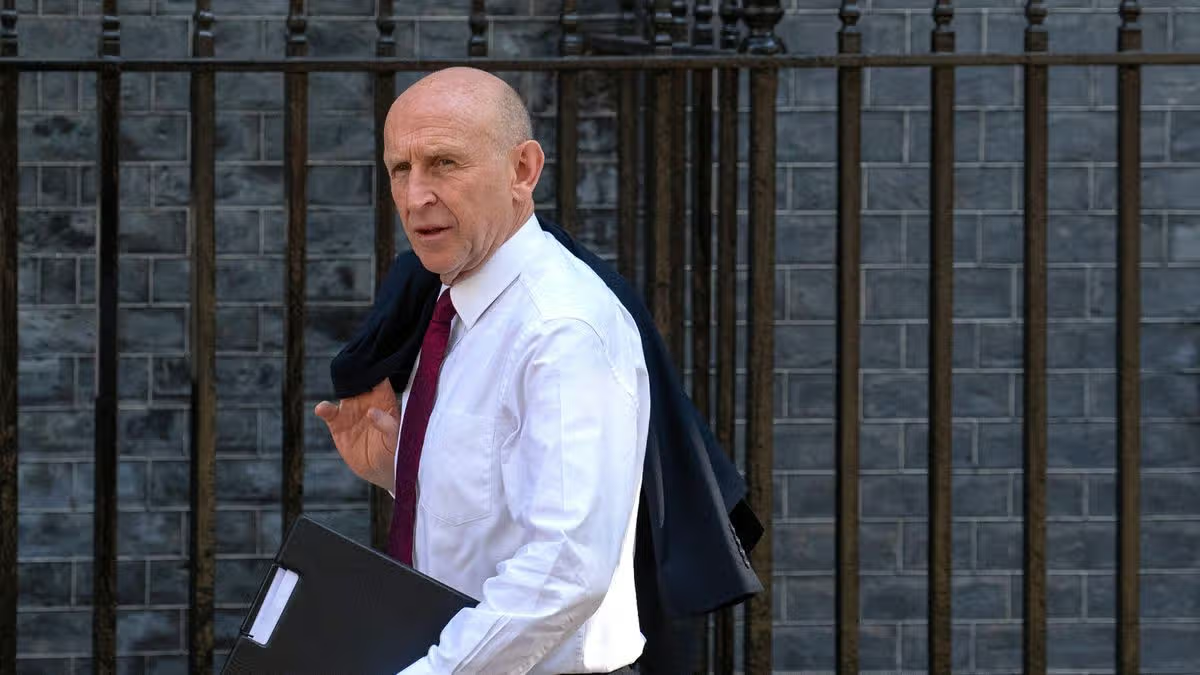
The appointment has fuelled investor optimism over increased defence spending

John Healey is the UK’s new chancellor(Image: Carl Court/Getty Images)
Shares in defence firms including Rolls-Royce have surged to record highs as investors increased their wagers that incoming Chancellor John Healey would direct further funding towards London-listed arms manufacturers.
Defence supply heavyweights Babcock and BAE Systems were amongst the strongest performers yesterday after former defence secretary Healey was appointed to lead the Treasury under Andy Burnham.
Babcock shares jumped by more than 6.5 per cent within the first half hour of trading on Tuesday, while BAE Systems climbed by 2.8 per cent. Rolls-Royce stock, meanwhile, edged higher by 0.7 per cent to reach 1,369p.
Serco, which operates several facilities and delivers services to the Ministry of Defence, gained 1.7 per cent.
The surge in defence stocks reflects investor confidence in a swifter acceleration of defence expenditure under Chancellor Healey, with British firms also set to be given priority in procurement as part of a drive to “re-industrialise” the nation, as reported by City AM.
Last month, Healey resigned from Sir Keir Starmer’s government citing insufficient funding for defence spending. He accused the Treasury of being “unable” to provide enough cash for the military as it refused to set a date on when the government would raise defence spending to three per cent of GDP.
Under the existing Defence Investment Plan (Dip), expenditure is set to reach approximately 2.7 per cent of GDP by 2030. Healey has made the case for spending to climb to three per cent, and for the UK to establish a roadmap towards achieving 3.5 per cent by 2035 in line with a Nato agreement.
Healey and Burnham have also expressed a desire to favour British companies in government procurement, drawing on a pledge enshrined in Starmer’s Dip.
This could position domestically-listed firms for more prosperous times ahead, as contract pipelines appear poised to strengthen.
Following Healey’s appointment, one industry insider told City AM that senior executives were celebrating the prospect of an increase in defence spending.
They further noted that Burnham had made an “incredibly sensible” choice, and suggested Healey could look to explore procurement arrangements under Canada’s Defence, Security and Resilience Bank — a mechanism that had not been backed by Starmer and former Chancellor Rachel Reeves.
Rolls-Royce has established itself as a key supplier of engines for aircraft, submarines and other power systems, with its technology earmarked for the forthcoming Dreadnought submarine fleet as part of the government’s nuclear deterrence strategy. On Thursday it announced plans for a new £100 factory and defence research facility in Bristol.
Its Lift System engines are also deployed in F-35 jets, while the company additionally provides support for the Typhoon fleet. Rolls-Royce also holds contracts to develop autonomous drones, which are expected to be given priority by the government.
Chris Beauchamp, chief market analyst at the investment platform IG, cautioned that Healey’s appointment might not produce the benefits that defence companies anticipate.
“As Chancellor, he will have many competing demands, and won’t just be the MoD’s man in No 11.
“His experience made him an obvious candidate for the role, and he represents a middle way between [Ed] Miliband and [Shabana] Mahmood, but it will not be easy to find lots more cash for defence, especially when the new Prime Minister is so busy making broad spending commitments in other areas.”















































You must be logged in to post a comment Login