When a company teases its upcoming products so heavily — the Galaxy Z Fold 8 was the star of a Spider-Man: Brand New Day commercial a full week before today’s Samsung Unpacked, for heaven’s sake — it can feel underwhelming when it’s actually revealed.
But knowing that Samsung was going to announce a trio of new foldable phones and a pair of updated watches isn’t the same as discovering interesting details about them. Now that the products are officially official, here’s what stands out to me.
Another aspect (ratio) on foldables: The Z Fold 8 ‘Wide’
Squint just a bit and most phones look like interchangeable rectangular slabs. Nearly every mobile phone is modeled after handsets that needed to position the speaker at your ear and the microphone at your mouth. Companies have stuck with the same basic design because that’s what people are familiar with.
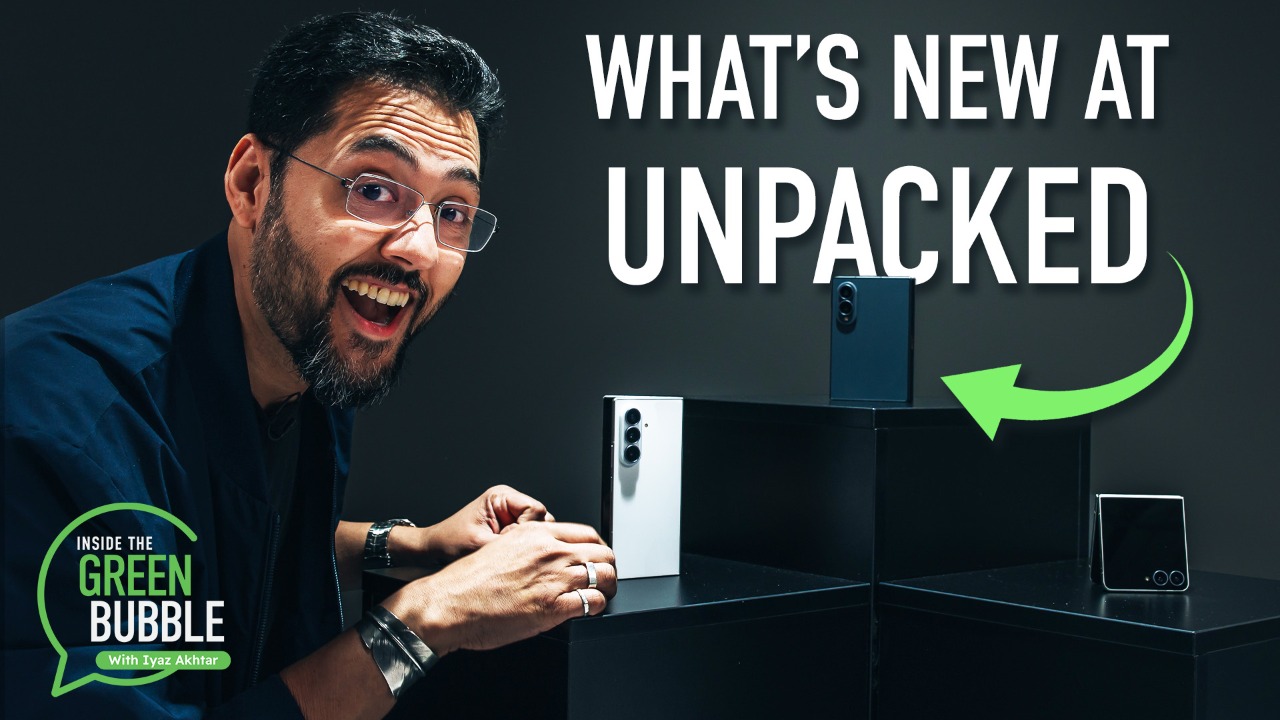
The Z Fold 8 has a 4:3 aspect ratio.Andrew Lanxon/CNET
The Z Fold 8, with its squat folded size and 4:3 aspect ratio when opened, invites you to think about using a phone from another angle. The traditional tall screen of most slab designs has locked us into an infinite-scroll, squeezed-video existence that crushes us from both sides.
OK, that was too dramatic. A narrow phone fits well in your hand.
Advertisement
But there’s room for more phone variety. As CNET Senior Technology Reporter Abrar Al-Heeti wrote in her hands-on article, “the Z Fold 8 feels equally optimized for watching horizontal videos or multitasking in landscape mode, and browsing vertically oriented apps in portrait mode.”
The Galaxy Z Fold 8 takes up less space when closed than many other phones.Andrew Lanxon/CNET
To be fair, taking on a predominantly wide orientation invites risk… think back to the Planet Computers Gemini PDA built wide to accommodate a physical keyboard, or the quirky LG Wing. But bending the design into a foldable phone hopefully gives the best of both orientations.
The format isn’t entirely new: The iPad also has the same 4:3 aspect ratio (when used horizontally), as does Samsung’s Galaxy Z TriFold when fully opened. But those are very different devices.
If the design is embraced, Apple might see it as validation for its rumored iPhone Ultra foldable, which may have similar dimensions.
The new, revised foldables: Z Fold 8 Ultra and Z Flip 8
Does it really count if my “favorite” things include almost every new announced product? Yes, because as always with phones, details matter. And there are some details of the other two foldables that stand out.
Its svelte proportions mean that even when the Z Fold 8 Ultra is closed, it’s still not very thick.Andrew Lanxon/CNET
For example, the Galaxy Z Fold 8 Ultra strongly resembles last year’s Z Fold 7, just with an upgraded Qualcomm Snapdragon 8 Elite Gen 5 for Galaxy chip, a 5,000-mAh battery and a 50-megapixel ultrawide camera.
But look at that crease between panels. No, really, look closely, because – at least from the presentation and early looks by my fellow CNET writers – Samsung has minimized the crease to the point where it’s almost invisible (likely thanks in part to the phones’ new titanium flex hinge). The Z Fold 8 Ultra could be the foldable that doesn’t pop an asterisk in your mind each time you open it, thinking, “It’s not that noticeable, really.”
Advertisement
One big way Samsung has improved the Z Fold 8 Ultra is by reducing the crease, as seen in this comparison with last year’s Z Fold 7.
Samsung
When we’re talking about a device that you’ll open dozens of times a day, that type of improvement makes a huge difference.
In the same vein, the Z Flip 8 follows on from the Z Flip 7 but is “noticeably lighter and thinner than prior iterations,” writes CNET Senior Editor Mike Sorrentino. It’s also using the cover screen better, letting you switch apps quickly, for example, so you don’t need to open the phone to do anything meaningful.
The Galaxy Z Flip 8 is thinner and lighter than its predecessor.Andrew Lanxon/CNET
A watch that’s meant to be used: Galaxy Watch Ultra 2
I’m not a runner, but living in the Pacific Northwest, I know that a perfectly level run is rare. Navigating hills can make a huge difference in how much effort is expended during a run.
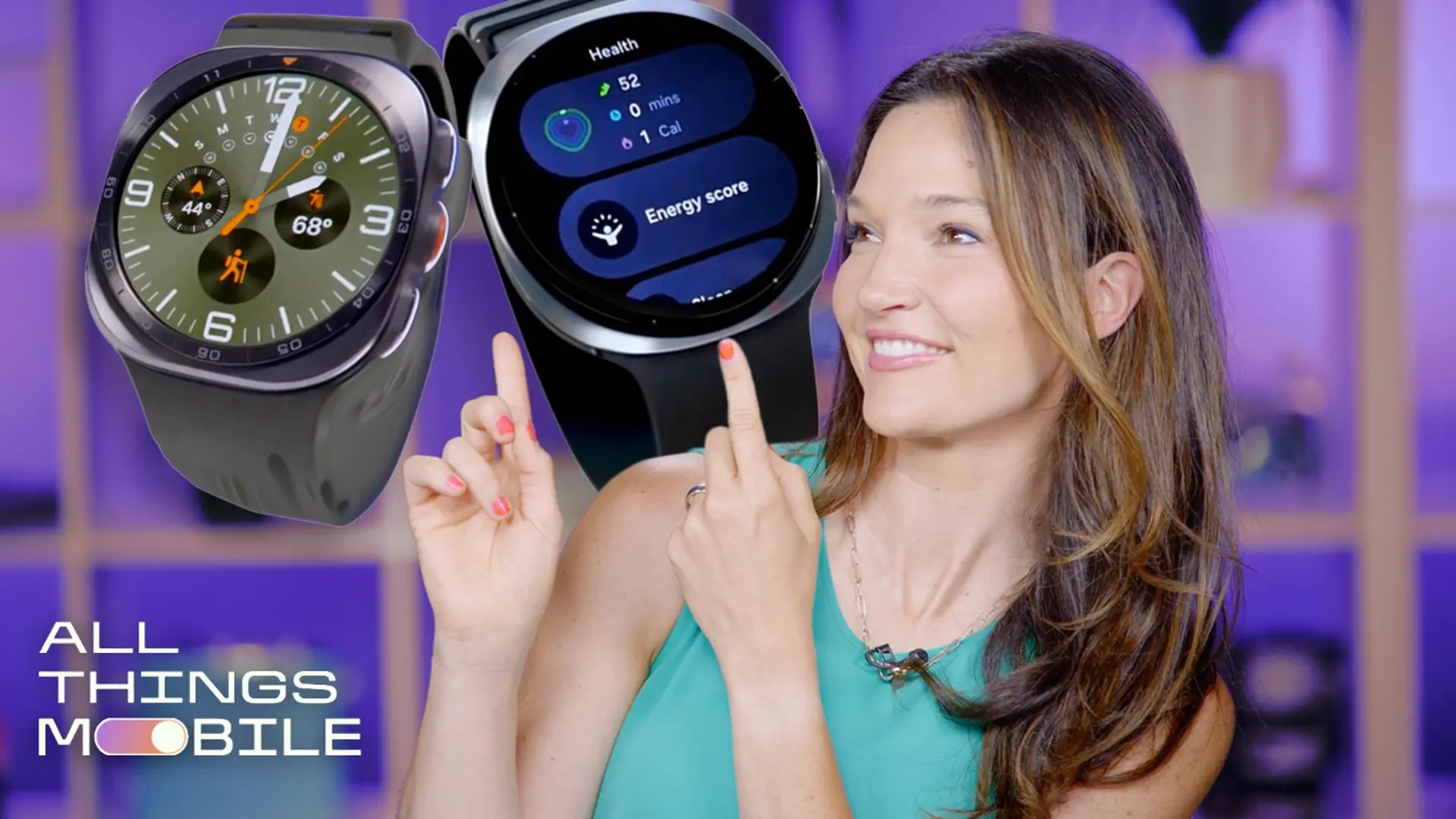
The Galaxy Watch Ultra 2 can withstand the elements. Vanessa Hand Orellana/CNET
The Galaxy Watch Ultra 2‘s trail-running feature looks like a good way to bring more of the real world into all the exercise data captured by a smartwatch. In her testing with the watch before the announcement, CNET Principal Writer Vanessa Hand Orellana noted that getting terrain information into the watch — by importing a GPX geotrack file — was an awkward process, but that data should be available later via Google Maps.
The Galaxy Watch Ultra 2 also has a hydration reminder feature, which seems perfectly paired with exercise. But she noted that the reminders pop up based on algorithmic prediction, not on any sensors monitoring sweat or salinity.
I’m shocked – shocked! – to learn that AI is happening in here
We can’t have product demos without AI features these days. Samsung showed off agentic features such as Now Nudge and the new Gemini Notebook app, which are quickly becoming table stakes for AI software. The phones will include six months of a Google AI Pro subscription.
But there are also some creative ideas at play. My FanCam lets you single out a person in a video and keep the focus on them, no matter where they move in the frame. The example shown was a stage full of dancers that focused on one woman, with the video cropped to a tall phone-friendly ratio. If grandparents have a hard time spotting which kid on stage is theirs, this feature could rapidly prove its worth.
Advertisement
Didn’t focus enough on just one person? My FanCam will recrop your video to focus on whoever you want.Andrew Lanxon/CNET
It’s a neat use of AI that doesn’t involve generating imagery that was never in the content to begin with. As my colleagues have pointed out, however, cropping that tight is bound to degrade the overall quality of the footage, so My FanCam might just become an it’s-good-enough-for-social-media feature.
The running coach on the Galaxy Watch Ultra 2 is much improved, according to Orellana, hopefully making it more than just a friendly booster chiming your greatness in your earbuds at regular intervals.
Silicon-carbon batteries are coming for better battery life
What do people really want in their phones? Longer battery life. That’s even more important with foldable phones with three power-sucking screens. So it was great to see Samsung incorporate silicon-carbon battery technology into its new phones.
There was an audible “whoa” in the crowd at the event venue when the Galaxy Z Fold 8 Ultra’s silicon-carbon battery was highlighted. For example, Samsung promises the Z Fold 8 Ultra can get 27 hours of video playback, and the Z Fold 8 can get 28 hours.
The Galaxy watches do not use silicon-carbon batteries, but the Galaxy Ultra 2’s battery is 35% larger to give up to 60 hours of use on a single charge.
Advertisement
Plus a pricey, not-so-favorite thing
New products compel us to look at new features, but we can’t ignore the biggest change that might determine whether you decide to buy one of Samsung’s new devices: price increases. The base Galaxy Z Flip 8 and Z Fold 8 Ultra each cost $100 more than their predecessors, no doubt due in part to increased component costs worldwide thanks to “RAMageddon.” The Z Fold 8 actually costs $100 less than the Z Fold 7, but that’s still $1,900 for a mobile phone.
Everything is expensive, and Samsung and other companies are building products that use some of the world’s most precious materials. But that means little if the pool of people able and willing to buy them shrinks so much that they can’t sell enough devices. It’s all the more galling when a flush company like Apple hikes prices across most of its products to seemingly protect its already high profit margins.
Still, this is the technology world we’re in, and I can’t discount that for many people, a wide foldable phone like the Z Fold 8 is exactly what they’re looking (and maybe saving up) for.
Jeff Carlson
Senior Writer
Advertisement
Jeff Carlson writes about mobile technology for CNET. He is also the author of dozens of how-to books covering a wide spectrum ranging from Apple devices and cameras to photo editing software and PalmPilots. He drinks a lot of coffee in Seattle.
See full bio
Science Corporation, a start-up developing novel brain-computer interfaces (BCI), won approval from Europe’s medical device regulator to begin selling a device that restores vision lost from age-related macular degeneration.
The company said the device, called PRIMA, also received a designation from the US Food and Drug Administration that is the first step toward an expedited regulatory review, which could see the device used to treat two rare kinds of blindness.
Millions of people around the world suffer from age-related macular degeneration, which destroys the light-sensitive cells at the back of the eyes, making it difficult to read and recognize faces.
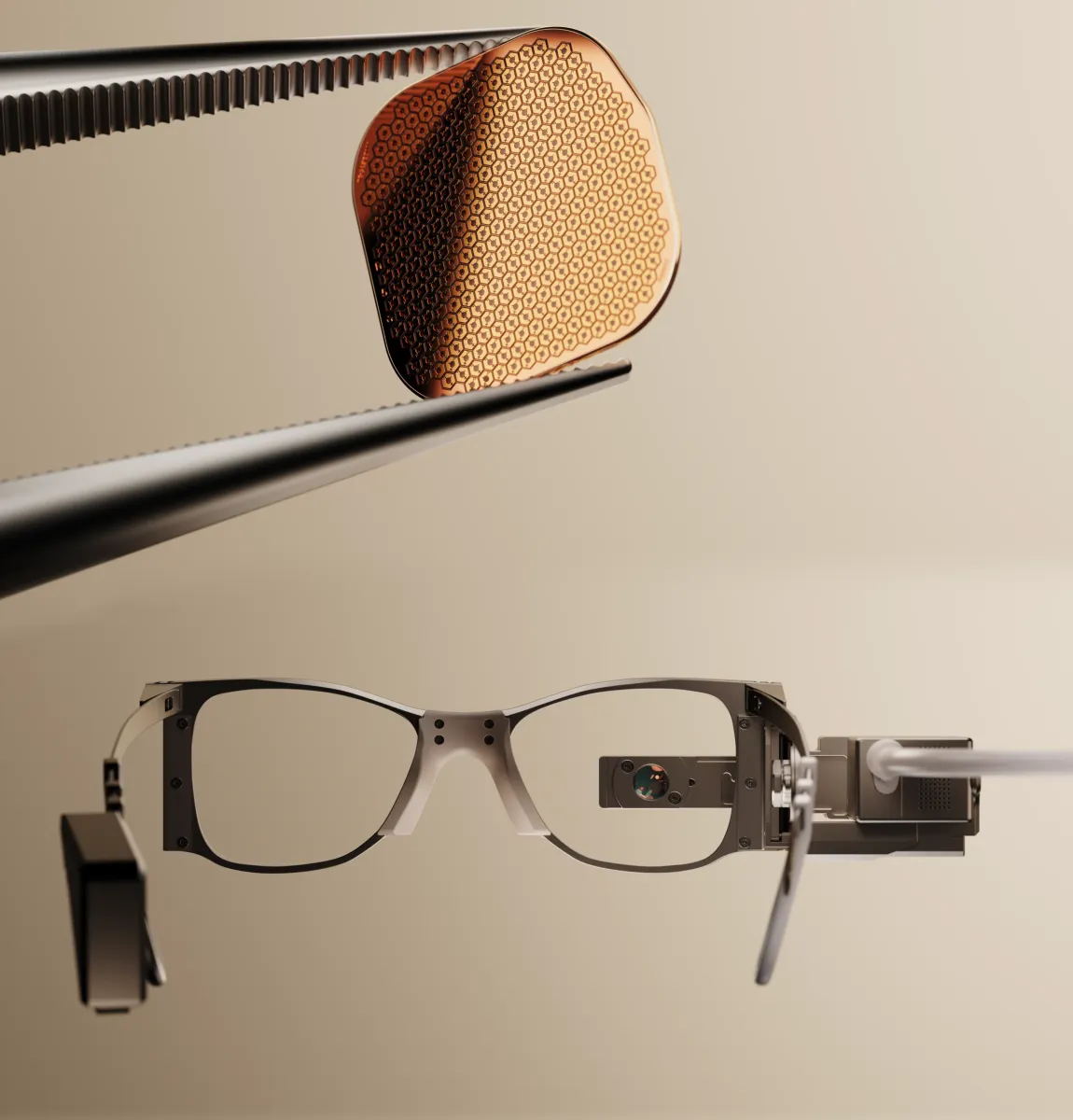
To use the device, patients suffering from this loss of vision undergo an hour-long outpatient procedure that plants a small chip in back of their eye. Then, they wear camera-equipped glasses that transmit a view of the world to the chip. Max Hodak, Science Corporation’s founder and CEO, says the product gives functional vision to people who have lost it.
Advertisement
“One of our patients in France finished a 300-page novel a little while ago, and sent us the book,” Hodak told TechCrunch. “We have a sketch on the wall [that] one of our patients drew of the Sydney Opera House. There are videos of patients playing crossword puzzles and filling in Sudoku.”
Hodak is known as the co-founder and former president of Neuralink, Elon Musk’s BCI start-up. He left in 2021 to start Science, with plans to develop a novel BCI based on a hybrid of silicon chips and living cells. But first, the company had to prove out its processes and develop a sustainable business.
“The thing that the space needs is a company making $100 million a year of revenue,” Hodak said. “There’s this risk that the whole thing enters a winter, and so we think it’s important to build a sustainable business as we develop these longer-term technologies.”
Hodak and his colleagues believe that sustainable business will be restoring vision to the blind, specifically patients whose conditions stem from problems with the light-detecting cells at the back of the eye. After exploring multiple approaches, they determined that Pixium, a French company that developed the PRIMA technology, had the right path forward, and acquired the firm in 2024. Science used its internal platform to build out the documentation and evolve the product to prepare it for regulatory approval and commercialization.
Advertisement
Each PRIMA device is expected to cost in the hundreds of thousands of dollars; Science and its medical partners in Europe are currently in discussion with healthcare providers over reimbursement. The company is laying the groundwork to begin offering PRIMA in Germany, where its clinical trials were held, and could see the first procedure in September.
Science expects to continue improving the vision capabilities of PRIMA with a new chip, and the form factor of its glasses, which currently require a battery-pack to operate. The goal is to offer something like Meta’s AR glasses, but the power and compute requirements for PRIMA are more significant.
Science is also working with Dr. Murat Günel, chair of Yale Medical School’s Department of Neurosurgery, to develop procedures for human trials of a directly implanted bio-hybrid brain sensor.
Hodak says bringing PRIMA to market is “the most important thing for the company, because we don’t get to do the bio hybrid stuff long term if you don’t have a great vision business. That’s what’s really financing the rest of it — that’s the thing that investors know how to build spreadsheets around.”
Advertisement
When you purchase through links in our articles, we may earn a small commission. This doesn’t affect our editorial independence.
Need some help with today’s Mini Crossword? It helps if you know your past Saturday Night Live stars. Read on for all the answers.
Mini across clues and answers
1A clue: Mother chicken Answer: HEN
4A clue: Word after “leading” and “first” Answer: LADY
5A clue: Just peachy … or a hint to the two letters that appear most often in this grid Answer: DANDY
Advertisement
6A clue: Bryant of “S.N.L.” fame Answer: AIDY
7A clue: Like overcooked chicken Answer: DRYNYT/Screenshot by CNET
Mini down clues and answers
1D clue: Helpful Answer: HANDY
2D clue: Swirl of water Answer: EDDY
3D clue: The Yankees, on scoreboards Answer: NYY
Advertisement
4D clue: Supervillain’s hideout Answer: LAIR
5D clue: ___ joke Answer: DAD
Get CNET’s top-rated VPN for privacy and usability
Advertisement
CNET editor Gael Fashingbauer Cooper, a journalist and pop-culture junkie, is co-author of “Whatever Happened to Pudding Pops? The Lost Toys, Tastes and Trends of the ’70s and ’80s,” as well as “The Totally Sweet ’90s.” She’s been a journalist since 1989, working at Mpls.St.Paul Magazine, Twin Cities Sidewalk, the Minneapolis Star Tribune, and NBC News Digital. She’s Gen X in birthdate, word and deed. If Marathon candy bars ever come back, she’ll be first in line.
See full bio
AMD said it will also invest up to $5bn into Anthropic, marking its first equity investment into the AI giant.
Anthropic is teaming up with AMD for 2GW of its latest-generation chips in a bid to boost AI capacity and meet growing demands. The Wall Street Journal reported that the deal between the companies is worth “tens of billions of dollars”.
The partnership comes as Anthropic competes for enterprise market dominance for its AI tools and preps for a blockbuster initial public offering expected to value the company at more than $1trn.
As per the agreement, Anthropic will deploy up to 2GW of AMD Instinct MI450 Series GPUs in Helios rack-scale solutions. The first gigawatt is expected to be deployed in the first half of 2027.
Advertisement
The deal builds on Anthropic’s existing use of AMD chips and comes as demand for its Claude services sees no signs of stopping, with the company’s tech permeating across industries. For AMD, the deal represents a “major expansion” at the “centre of the global AI infrastructure buildout”, it said.
In addition, the two companies are launching a multi-year engineering collaboration to use Claude for software development at AMD. The chipmaker also announced an equity investment of up to $5bn in Anthropic – its first investment into the AI giant.
“Access to compute is central to keeping Claude at the frontier and meeting demand from our customers,” said Tom Brown, Anthropic’s chief compute officer and one of the company’s co-founders.
“By partnering with AMD across the stack, we are securing the capacity we need and optimising it for training and serving Claude. Running across a diversified range of hardware lets us map the right workloads to the right hardware.”
“We are thrilled to deepen our partnership with Anthropic and deploy AMD Helios at gigawatt scale,” said Dr Lisa Su, the chair and CEO of AMD.
“This collaboration brings together Anthropic’s leadership in frontier AI with the full strength of AMD high-performance computing. Together, we will accelerate AI adoption at scale and establish Helios as a major platform for the next generation of AI infrastructure.”
Earlier this week, Anthropic’s $1.5bn settlement offer to quash a major AI copyright case against the company was approved. The company is set to pay around $3,000 to each of the creators behind some 500,000 individual pieces of work.
Advertisement
Don’t miss out on the knowledge you need to succeed. Sign up for the Daily Brief, Silicon Republic’s digest of need-to-know sci-tech news.
Object orbits a brown dwarf, which circles another star, confusing the cosmic taxonomy
Scientists may have found the first moon outside our Solar System – depending on what astronomers ultimately decide counts as one.
Either way, the groundbreaking research, published in Nature this week, promises a path to clearer sightings of so-called exomoons.
Advertisement
Kevin Hoy, a PhD student affiliated with Universidad Diego Portales and the European Southern Observatory in Chile, has found an object orbiting a brown dwarf, which in turn orbits a host star, which sits about 73 light-years from the Sun in the southern celestial hemisphere.
Brown dwarfs present a problem for astronomers. They fill the gap between gas giant planets – like Jupiter or Saturn – and the smallest stars. They are not massive enough to sustain the hydrogen fusion that powers the Sun and other main-sequence stars, although they can fuse deuterium, a heavier isotope of hydrogen. That leaves the object found by Hoy and his collaborators in a definitional gray area.
“This is the first time, to our knowledge, this technique has produced evidence of satellites around a companion brown dwarf,” the paper said.
The first confirmed exoplanets were discovered orbiting a pulsar in 1992, but exomoons have so far proved elusive, despite there being hundreds in our own Solar System.
Advertisement
The researchers found that the new object, which for now they are calling an exosatellite, is decidedly unmoon-like, being at least as massive as Jupiter. The brown dwarf it orbits is around 30 times the mass of Jupiter.
“This system is somewhat hard to define using Solar-System-based words like ‘planet’ and ‘moon,’” Hoy said in a statement. “The exosatellite is clearly massive enough to be a planet, but it does not orbit a star, though it orbits an object that orbits a star. Being the third wheel in this system makes us want to call it a moon, even if it is nothing like the small, rocky moons we have in our system.”
The research team employed the radial velocity method used by Michel Mayor and Didier Queloz to discover 51 Pegasi b in 1995, the first exoplanet found orbiting a Sun-like star. The technique detects the gravitational “wobble” induced in a host object – usually a star, but in this case a brown dwarf – by something orbiting it. Modeling of the data indicates that there is at least one orbiting satellite. Models for two satellites are possible but highly unstable. Whether a moon or not, the object has a minimum mass about nine-tenths that of Jupiter and completes an orbit every 170 days.
“Although it is uncertain whether this exosatellite will fulfil the presently undefined criteria for qualifying as an exomoon, it is a marked step towards that first uncontroversial detection, as advancing technology will allow the same method to be applied to less massive targets,” the paper says.
Advertisement
At roughly Jupiter’s mass, this is no forest moon of Endor. Finding something more like the moons in our own neighborhood will have to wait for sharper instruments. ®
Camille Hanson woke one night in March to a notification: Meta had flagged her Facebook and Instagram accounts for deletion. She and her husband ran an English-teaching business there with nearly a million followers. Meta said she had breached its rules on fraud and deception, the New York Times reported.
She appealed. A week later Meta denied it. “All your information will be permanently deleted,” the reply read. “You cannot request another review of this decision.” The Hansons run the business from Portugal, so it was, as her husband put it, like someone shutting your storefront overnight.
Humans out of the loop
In March, Meta said it would hand more power to AI to judge which accounts break its rules and to handle the appeals. Months later, it laid off thousands of staff, including people who did exactly that work.
More than 60,000 users have since signed a petition asking Meta to explain its bans and to let a human review appeals. Reddit forums have filled with the same complaint: an automated system deletes an account, and no person answers.
Advertisement
Meta’s defence
Meta rejects the idea that AI is worse than people. Spokesman Daniel Roberts said its new moderation tools make 13% fewer mistakes than human staff and catch 10% more violations. The five accounts the Times flagged, he noted, were all banned by Meta’s older tools.
The 💜 of EU tech
The latest rumblings from the EU tech scene, a story from our wise ol’ founder Boris, and some questionable AI art. It’s free, every week, in your inbox. Sign up now!
“We’re committed to making fewer enforcement mistakes and helping individuals protect their accounts, and AI is delivering on both,” he said.
Advertisement
The company has had a rough run with automation, though. In May, hackers turned its AI customer-service chatbot against 34,000 Instagram accounts. Staff also revolted over a program that tracked their keystrokes to train AI. It has faced chaos on its AI ad tools too.
A Kafkaesque pattern
The wrongful bans often carry the worst possible label. Athenia Rodney, who has run the group JuneteenthNY for 17 years, had her accounts deleted over alleged child exploitation material. Her content, she said, is family friendly. Hackers had in fact seized her accounts.
To recover them she sent identity documents, complained to the FTC, and messaged Meta staff on LinkedIn. Nothing worked until the Times intervened. Meta restored one influencer, then banned him again days later for copyright, then reinstated him once more.
The European angle
The stakes are higher in Europe, where the same automated bans reach WhatsApp. The tech writer M.G. Siegler, banned three times, described his sudden WhatsApp lockout, with no warning or explanation. Much of the continent runs daily life through the app, from work to childcare.
Advertisement
Meta insists big decisions stay human. After 26 former staff sued, claiming an algorithm picked them for layoffs, Meta said such calls are “made by people, not AI.” Yet for millions of users, only a bot stands between them and deletion. The appeal is a bot too. The backlash is unlikely to fade while regulators sharpen their focus on platform accountability.
Sunday-to-Monday onslaught fuels speculation over AI-assisted bug reports
If you’re responsible for Linux security, someone just dumped a pile of work onto your desk: 432 Linux kernel CVEs were published across Sunday and Monday this week. Linux watchers at nixCraft pointed out the volume on Monday morning, and it didn’t take long for seasoned sysadmins to start expressing concerns.
Jan Schaumann, chief information security architect at Akamai Technologies, took to the OSS-SEC mailing list Tuesday to express concerns over the sheer volume of Linux kernel CVEs published in recent days. Aside from noting that the CVE system isn’t the best way to track security changes, Schaumann also wondered in his post whether there was any good way to deal with so many kernel security issues.
Advertisement
“This onslaught really shows it’s not feasible to attempt to prioritize individual kernel changes,” Schaumann said.
“You might attempt to process this large set of changes by pointing an LLM at the intake and asking it to prioritize them,” he suggested, “but if it spits out a dozen today and another 25 the next, you haven’t won much.”
Schaumann also suggested waiting to see which ones emerge as serious issues and focusing on those in the weeks to come, or updating one’s entire fleet of Linux machines on a weekly basis.
“I sure would like to be able to do [that], but reality keeps getting in my way,” Schaumann said. “I’m not sure what to do here going forward.”
Advertisement
In an email to The Register, Schaumann said that individually reviewing vulnerabilities for patching was already difficult enough before things rose to this level, and that automation may be the only option – but it’s not a great one.
“Automated, regular, and frequent updates that pull in all changes within a given time window of tolerance seem to me the only reasonable approach, but that is very difficult for many large organizations,” Schaumann explained. Those orgs often rely on lengthy QA processes, slow and staged development cycles, and may even have contractual requirements for long-term support that make an automated approach an impossible one.
The nixCraft team speculated on social media that AI bug reports are a likely reason for all those kernel CVEs, which wouldn’t be without precedent – Linus Torvalds himself said in May that the Linux kernel security mailing list had become “almost entirely unmanageable” due to AI-assisted bug hunting. Nonetheless, Torvalds has described AI as a useful tool for Linux development while still noting it can be a drag for maintainers, both from a workload standpoint and the fact “it keeps finding embarrassing bugs.”
On that note, it’s worth understanding what a Linux kernel CVE actually means – many of the vulnerabilities included in the Sunday-to-Monday batch are small in scope, but they’re vulnerabilities nonetheless.
Advertisement
As senior Linux maintainer Greg Kroah-Hartman noted in a February blog post, the Linux kernel CVE team follows the CVE Program’s definition of a vulnerability: a weakness in a product that can negatively affect a system’s confidentiality, integrity, or availability.
“At the level that the Linux kernel runs, almost any type of bug that can affect a running system can be classified as a vulnerability,” Kroah-Hartman noted. The kernel team looks at every bugfix that is added to stable kernel releases, he added, and if it fixes an issue that meets that CVE criteria, a CVE is assigned.
AI-assisted bug hunting has increased the volume of reports reaching Linux kernel maintainers. We reached out to the Linux kernel team, but didn’t hear back. Kroah-Hartman did tell The Register earlier this year that AI bug reports had become worthwhile in recent months, and he predicted they’re likely to keep adding to his workload.
Unfortunately for Linux sysadmins, the position in which they find themselves in this current mess isn’t one that’s readily solved. CVEs might be a messy way to track and prioritize security updates, especially when hundreds of them are published over a short period, but without something better, it falls to IT and security teams to determine which vulnerabilities affect their systems and which kernel updates they need to deploy.
Advertisement
Hope you’ve got the coffee machine filled up: The onslaught is unlikely to ease if other recent patch cycles are any indication. ®
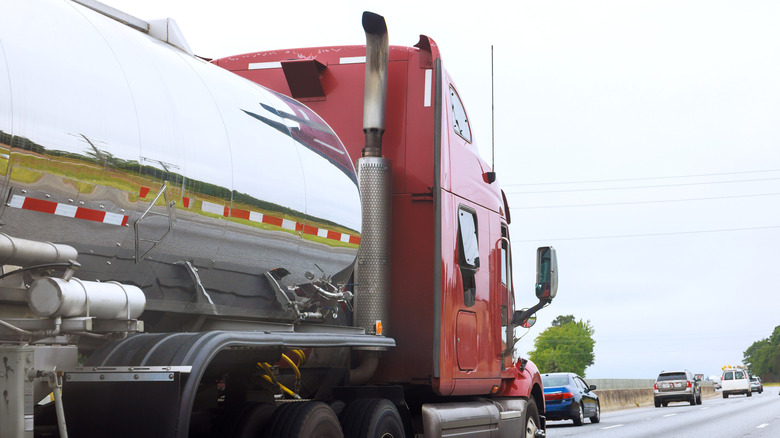
Months after telling manufacturers traditional diesel exhaust fluid (DEF) sensors are no longer mandatory for new trucks, tractors, buses, and other diesel equipment, the Environmental Protection Agency has turned its attention to engine deratement. If put into effect, engine deratement would become a thing of the past.
If you don’t know: Under current requirements, certain diesel engines derate when their emissions control system detects certain DEF-related problems. When that happens, the vehicle automatically limits its speed or engine power, just to be safe. But according to the EPA’s math, the cost of that safety is costing the trucking industry about $12 billion a year to comply.
Under their new proposal, the EPA would eliminate engine deratement entirely, scale back certain portions of emissions warranty requirements, delay implementation of some provisions from a 2023 heavy-duty emissions rule, and provide manufacturers with more flexibility as they work toward future nitrogen oxide (NOx) standards.
Advertisement
Costs would go down a little, but pollution would go up a lot
Photovs/Getty Images
The way things are now, modern diesel engines rely on DEF to reduce harmful NOx emissions. (DEF comes in the form of a fluid injected into the exhaust stream.) Current regulations require onboard systems to monitor the DEF system and trigger increasingly severe warnings if it detects a malfunction. If the issue doesn’t get fixed, the truck will eventually enter a “derated” mode to encourage the driver to fix their emissions equipment.
But under the newly proposed rule, the EPA would get rid of deratement for newly manufactured highway diesel engines. If put into place, drivers would still get visible or audible warnings if a DEF system failure is detected… just without the speed or power decrease. (The agency is also looking for public feedback on whether the same should be done for existing diesel vehicles and equipment already in service, but that’d come later.)
Advertisement
The EPA estimates that doing away with deratement would save the trucking industry anywhere from $4,000 to $6,000 per diesel engine. But that would also drastically increase the amount of nitrogen oxide pollution in the air by 4.2% by 2030 and by 11.6% by 2055. The proposal is now subject to a 45-day public comment period and a public hearing before any changes could take effect. For now, existing DEF-system requirements and deratement rules remain in effect until the EPA completes the rulemaking process and adopts the changes.
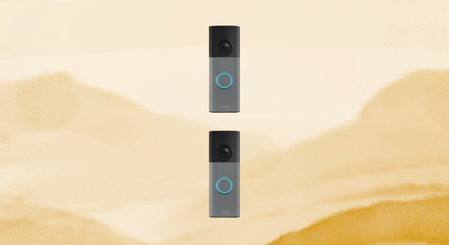
That two-for-one pricing lines up with the doorbell’s own pitch, since Ring markets this bundle specifically for covering a front door and a second entrance, such as a side gate or garage, with matching security rather than mismatched cameras.
Advertisement
Each doorbell records in Retinal 2K with up to 6x Enhanced Zoom, which is sharp enough to make out a face at the gate or read the label on a parcel left on the step without ever needing to walk outside and check in person. When we tested it, we gave the doorbell four-stars, praising its video quality and field of view.
Live View and Two-Way Talk turn that footage into a real conversation, letting you see, hear and speak to whoever is standing at either entrance straight from your phone, no matter where you happen to be.
Advertisement
Motion triggers a real-time alert to your phone the moment someone approaches either door, and when the battery does eventually run low, the included removal tool lets you pop the doorbell off the wall and top it up over USB-C.
Installation stays simple as well, since Ring estimates an average setup time of around ten minutes per doorbell with no wiring required, so both entrances can realistically be covered in under half an hour total.
Both doorbells also work with Alexa, so an Echo Dot can announce visitors out loud and an Echo Show can display live video, which is useful when the pack is covering two separate entrances at once.
At $89.99 for the pair instead of $199.98 bought separately, the Ring Battery Doorbell two-pack is a straightforward way to bring matching video security to two entrances at once, all backed by a one-year limited warranty on each unit.
from the prepare-for-everything-to-get-very-stupid-and-racist dept
You might recall how the press and a bipartisan coalition of lawmakers suffered a four-year embolism about the purported privacy and national security threat of TikTok, before “fixing” the problem by ultimately offloading TikTok to Trump’s billionaire friends. You know, the exact sort of authoritarian-friendly people keen on doing everything critics had previously accused ByteDance and the Chinese of.
The politics, policy, and press coverage of that entire saga were a profound embarrassment. And it’s hard to think of a bigger tech policy own goal by Democrats anytime in the last half century.
Countless news outlets and politicians endlessly overstated the TikTok threat, and downplayed how the “ban” and subsequent sale had nothing to do with protecting national security or consumer privacy, and everything to do with basically stealing a company that U.S. tech couldn’t out-compete, in the process coddling companies like Facebook that can’t innovate their way out of a paper bag.
It was lazy, corrupt protectionism with no shortage of xenophobia, and a variation of that same effort is about to be repeated across AI. Except much bigger, much louder, and much, much dumber.
Advertisement
Worried that cheaper, open source, and on-device Chinese models could disrupt U.S. efforts to dominate, enshittify, and over-charge for walled-garden AI, the Trump administration is already signaling that they’re gearing up to wage war on overseas and open source AI models after they failed to block China’s access to next-generation chipsets:
“The Trump administration is showing signs it could ban cutting-edge Chinese AI models — a momentous move that could lock in dominance by OpenAI and Anthropic.”
Of course it won’t stop there. It will be a hop, skip, and a jump from banning more powerful Chinese AI models to trying to outlaw open source alternatives, models from smaller overseas non-Chinese competitors, on-device models, and anything that might challenge the walled-garden hegemony of U.S. tech giants.
U.S. AI isn’t profitable. It’s nowhere close. It may never be. U.S. tech companies sunk hundred of billions of dollars into costly and ultra-energy intensive AI models that for many companies, like Microsoft, people don’t actually even want to use. Nobody outside of the Musk fashy cult likes Grok. OpenAI is potentially poised to implode. And even more popular companies like Anthropic are contemplating a price war when they already don’t make money.
U.S. tech companies had been busy jacking up the cost of model access to try and claw their way toward profitability (unsuccessfully), resulting in a lot of companies (like Uber) publicly stating they’re paying too much money for too little actual utility. That’s caused many U.S. companies, like DoorDash, to flock to cheaper Chinesemodels:
Advertisement
“DoorDash, which, according to a post on X on Wednesday by co-founder and CTO Andy Fang, will be launching DoorDash CLI, an experimental tool in limited beta that will allow users to order DoorDash through an AI agent, or even directly from the terminal. Earlier this month, Fang said using a model from Chinese startup Moonshot AI is “better quality” and comes at a “cheaper cost.”
Enter the protectionists, who talk a good game about “free market competition” and forging innovative products in the hot irons of competition, but turn into gargantuan, blubbering crybabies the second Chinese products come into frame (see: TikTok, EVs, 5G, and now AI). This performative gyration always comes with a fake concern for U.S. privacy and national security by people too lazy and corrupt to genuinely protect either (see the ongoing U.S. failure to pass even a baseline internet-era privacy law).
Not only are many Chinese AI models cheaper and improving in quality, they’re often “open-weight,” meaning their parameters or values are entirely visible to the user, which appeals to enterprises that want deeper insights under the hood. As models like China’s Kimi K3 see surging demand, it’s resulting in a rising freak out in the U.S. about what to do about the Chinese threat (sound of thundering timpani drums):
There is a civil war happening in tech over Chinese / free to use / open weights AI? At least on X. I realize no one else cares, but this is my World Cup.tl;dr a former Trump official joined OpenAI, said some stuff about open models he’s since walked back, everyone is losing their minds
It shouldn’t be too long before the Trump administration, with enthusiastic Democrat support, steps in to try to not only ban higher-power Chinese AI models but also to force Americans to use more expensive U.S. walled garden efforts from our biggest domestic giants.
Advertisement
That’s of course not going to magically stop the rest of the world from adopting cheaper Chinese AI. Or protect U.S. markets from a potential bubble collapse. And it’s not going to magically and suddenly make U.S. AI profitable or well-liked, since many Americans have inextricably tethered their anger at AI to the endless bad decisions by U.S. techno-fascists and domestic enshittification merchants who demand to be shielded from competition and regulatory accountability in equal measure.
You could open the door to international competition, but ensure your well-staffed regulators create a safe and level playing field across privacy, national security, labor, and consumer rights. We don’t want to do that because that might cause domestic U.S. companies to lose money. So instead we’re going to try and ban cheaper overseas alternatives, leveraging a lot of bad faith rhetoric on privacy and NatSec along the way.
That’s then going to be parroted by a lot of lazy news outlets too feckless to explain that Trump policy architects are neither competent nor operating in good faith when it comes to AI.
Things are moving so quickly that it’s hard to parse out exactly what this new era of AI protectionism will look like, but if the TikTok ban was anything to go by, you can be absolutely sure our next steps in domestic U.S. AI policy will be very stupid, filled with a lot of people talking endlessly out of their ass on NatSec and privacy, and tinged with no shortage of gross xenophobia.
We put all of our ovens through standard tests to see how well they cook. Evenness of heat is very important, particularly when cooking sensitive items, such as Yorkshire puddings or cakes. To test this, we fill a baking tray with ceramic beads and heat the oven to 200°C. We then use a thermal camera to take an image of the beads, to see how heat is distributed, while an infrared heat gun is used to measure temperature at the front and back of the tray.
We use slices of bread spread across a shelf to measure how evenly an oven can grill and which areas, if any, it can’t reach.
We measure power usage while cooking a batch of oven chips. This is particularly important when testing ovens with special features, as we can tell you if they save you money, as well as if they’re any good.
When we have an oven with a temperature sensor, we cook a chicken breast and set the oven to 74°C, so we can see if the results are what they should be: perfectly cooked with no pink, yet not dried out.
Advertisement
Finally, we tell you how easy the oven is to use, and connect it to any smart apps to see if they add extra features and are worth using.


































































You must be logged in to post a comment Login