Connect with us
DAPA Banner
DAPA Coin
DAPA
COIN PAYMENT ASSET
PRIVACY · BLOCKDAG · HOMOMORPHIC ENCRYPTION · RUST
ElGamal Encrypted MINE DAPA
🚫 GENESIS SOLD OUT
DAPAPAY COMING

Tech

Science Corporation’s vision-restoring chip wins EU approval

Published

on

Science Corporation, a start-up developing novel brain-computer interfaces (BCI), won approval from Europe’s medical device regulator to begin selling a device that restores vision lost from age-related macular degeneration.

The company said the device, called PRIMA, also received a designation from the US Food and Drug Administration that is the first step toward an expedited regulatory review, which could see the device used to treat two rare kinds of blindness.

Millions of people around the world suffer from age-related macular degeneration, which destroys the light-sensitive cells at the back of the eyes, making it difficult to read and recognize faces.

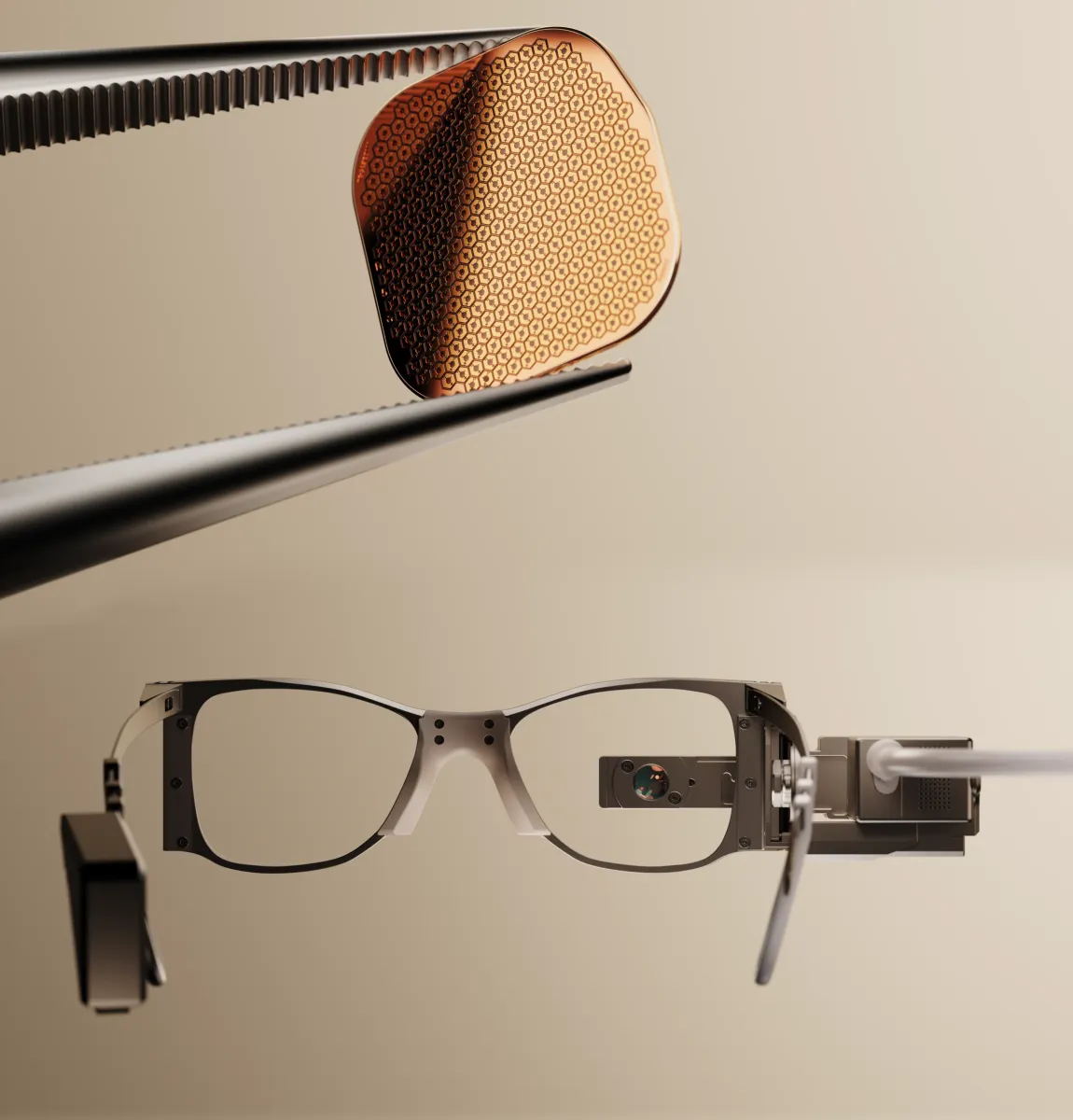
To use the device, patients suffering from this loss of vision undergo an hour-long outpatient procedure that plants a small chip in back of their eye. Then, they wear camera-equipped glasses that transmit a view of the world to the chip. Max Hodak, Science Corporation’s founder and CEO, says the product gives functional vision to people who have lost it.

Advertisement

“One of our patients in France finished a 300-page novel a little while ago, and sent us the book,” Hodak told TechCrunch. “We have a sketch on the wall [that] one of our patients drew of the Sydney Opera House. There are videos of patients playing crossword puzzles and filling in Sudoku.”

Hodak is known as the co-founder and former president of Neuralink, Elon Musk’s BCI start-up. He left in 2021 to start Science, with plans to develop a novel BCI based on a hybrid of silicon chips and living cells. But first, the company had to prove out its processes and develop a sustainable business.

“The thing that the space needs is a company making $100 million a year of revenue,” Hodak said. “There’s this risk that the whole thing enters a winter, and so we think it’s important to build a sustainable business as we develop these longer-term technologies.”

Hodak and his colleagues believe that sustainable business will be restoring vision to the blind, specifically patients whose conditions stem from problems with the light-detecting cells at the back of the eye. After exploring multiple approaches, they determined that Pixium, a French company that developed the PRIMA technology, had the right path forward, and acquired the firm in 2024. Science used its internal platform to build out the documentation and evolve the product to prepare it for regulatory approval and commercialization.

Advertisement

Each PRIMA device is expected to cost in the hundreds of thousands of dollars; Science and its medical partners in Europe are currently in discussion with healthcare providers over reimbursement. The company is laying the groundwork to begin offering PRIMA in Germany, where its clinical trials were held, and could see the first procedure in September.

Science expects to continue improving the vision capabilities of PRIMA with a new chip, and the form factor of its glasses, which currently require a battery-pack to operate. The goal is to offer something like Meta’s AR glasses, but the power and compute requirements for PRIMA are more significant.

Science is also working with Dr. Murat Günel, chair of Yale Medical School’s Department of Neurosurgery, to develop procedures for human trials of a directly implanted bio-hybrid brain sensor.

Hodak says bringing PRIMA to market is “the most important thing for the company, because we don’t get to do the bio hybrid stuff long term if you don’t have a great vision business. That’s what’s really financing the rest of it — that’s the thing that investors know how to build spreadsheets around.”

Advertisement

When you purchase through links in our articles, we may earn a small commission. This doesn’t affect our editorial independence.

Source link

Continue Reading
Click to comment

You must be logged in to post a comment Login

Leave a Reply

Tech

Lawmakers want Trump to investigate EU’s ‘anti-American’ DMA

Published

on

U.S. Lawmakers have written to President Donald Trump, hoping he will do something to help big tech companies being targeted by the E.U.’s Digital Markets Act.

The European Union’s Digital Markets Act has been a thorn in Apple’s side since its introduction. Lawmakers in the United States want something done to fight what they consider to be rules that target U.S. Big Tech firms unfairly.

A letter signed by 25 Republicans, including seven members of the House of Representatives Trade Subcommittee, has been sent to Trump, urging him to open trade investigations against the E.U. The letter, seen by Reuters on July 21, focuses chiefly on the Digital Markets Act as a tool that works against U.S. firms.

Describing the rules as “anti-competitive acts, policies, and practices,” the letter accuses the E.U. of using them as tools of “economic extraction and regulatory coercion against American firms.” Trump is urged to take action before Europe “further entrenches this anti-American regime.”

Advertisement

As an example, the letter proposes that the addition of the cloud units of Amazon and Microsoft under the Digital Markets Act would place “unprecedented regulatory burdens” on the companies. Burdens that European and Chinese rivals apparently wouldn’t face.

Apple’s designation as a gatekeeper under DMA rules is also raised, alongside Amazon and Meta’s inclusion. Meanwhile, China giants Temu and AliExpress are not classed as such, partly due to the rules relying on the number of European users who use them.

There’s also the apparent problem of firms in the E.U. having access to the U.S. market with less regulatory oversight than the U.S. firms in the E.U. This access should be limited if the E.U. continues to use discriminatory rules, it continues.

The letter said that the U.S. should use all available tools, including Section 301 of the Trade Act of 1974. This rule would combat perceived unfair trade practices by imposing tariffs, Trump’s favorite international economic weapon.

Advertisement

E.U. “innocence”

While lawmakers are insistent that the transatlantic relationship between the U.S. and Europe is very much one-sided and grossly unfair, the EU thinks otherwise.

Thomas Regnier, European Commission spokesperson, said the European Union has the sovereign right to regulate economic activities taking place within its borders. This also applies to digital regulation, he continued, insisting they are being enforced in a “fair and non-discriminatory manner.”

This enforcement has included continuing to fight Apple over the App Store and iMessages. For the App Store, this has led to the fairly lukewarm creation of third-party app storefronts on the continent.

Apple has also caught the occasional break from regulation, too. When it comes to Apple Maps and Apple Ads, the E.U. doesn’t believe they are large enough to be subject to regulation under the DMA.

Advertisement

The regulations have also led to Apple holding back from launching some products in Europe, because of DMA compliance concerns. While the rest of the world will get to use Siri AI this fall, the EU will miss out.

Reviving retaliation

The letter to President Trump and the reference to Section 301 is a carefully planned request, that effectively is a callback to a warning from September 2025.

At the time, Trump warned Europe that the U.S. would retaliate if the E.U. continued to fine U.S. companies and burden them with regulations. There was the same threat of invoking Section 301 to allow U.S. officials to investigate and respond to unfair foreign trade practices.

Trump insisted that Europe was unfairly targeting American companies, such as Apple. The penalties levied by Europe were deemed to be diverting money away from U.S. investment and jobs.

Advertisement

By spelling out that the lawmakers want Trump to do what he threatened in September, the letter could be enough to nudge the President into following through.

Source link

Advertisement
Continue Reading

Tech

Original Xbox Games Are Coming to PC Starting With Four Fan Favorites

Published

on

Four classic Xbox games are heading to PC as part of a new program from Microsoft. These older titles, which are currently available on Xbox Game Pass, will now be playable on desktops, laptops and handhelds such as the ROG Xbox Ally and Xbox Ally X.

On Wednesday, the Xbox Backward Compatibility preview went live, allowing owners of four titles first released for the original Xbox — Blinx: The Time Sweeper, Conker: Live and Reloaded, Crimson Skies: High Road to Revenge and Fuzion Frenzy — to play them on their Windows PC and handhelds. Microsoft says it will roll out more features for these games in the future, including Xbox Achievements.

An image showing the box art of blinx, fusion frenzy, crimson skies and conker live and reloadedMicrosoft

The four games may be more than 20 years old, but Microsoft did add some options to improve the gaming experience. Players can change the graphics settings, including up to 4x resolution upscaling, VSync support, display mode options, anisotropic filtering, enhanced anti-aliasing and more customizations to improve the look of these older titles.

Each game is available for purchase for $10 from the Xbox Store, and once owned on Xbox, the games can be played on PC or handhelds via Xbox Play Anywhere or streamed with Xbox Cloud Gaming. The titles are also available on Xbox Game Pass.

In order to play these games on a desktop, laptop or handheld, it must meet certain hardware specs:

Advertisement

Minimum system requirements: 

  • GPU: Nvidia GTX 950 or AMD Radeon RX 550 or Intel UHD 770 or Intel Arc A310  
  • CPU: Min 4 Cores Intel Core i3-8100 or AMD Ryzen 3 1200 or AMD Ryzen™ Z2 A Processor  
  • RAM: 8GB  
  • OS: Windows 11   
  • Drivers and Versions: Latest Version as of January 2026 

Recommended specifications: 

  • GPU: Radeon RX 68005 or Nvidia GTX 1070 Ti or Intel Arc A770 
  • CPU: 6 cores and 12 threads Intel Core i5-10400 or AMD Ryzen 5 3600 or AMD Ryzen AI Z2 Extreme 
  • DirectX Version: DirectX12 API, Hardware Feature Level 11 
  • GPU VRAM: 8GB 
  • OS: Windows 11 
  • Drivers and Versions: Latest Version as of January 2026 

Microsoft says the Xbox Backward Compatibility program is a form of game preservation, which has become a concern for gamers. With Sony announcing it will phase out physical discs and Nintendo’s Game-Key Cards that don’t contain the actual games, many worry that game ownership will become entirely dependent on publishers rather than having a physical medium to hold onto. There is a growing number of delisted games that are no longer available to those who purchased them, and with the future of gaming looking increasingly uncertain because of the current memory shortage, many fear their digital game collections could simply disappear from their accounts.

Source link

Continue Reading

Tech

DOJ Now Citing Fake AI-Generated Cases To Keep ICE Detainees Locked Up

Published

on

from the this-must-not-happen-in-a-free-society dept

You’d think that watching multiple lawyers get caught red-handed using AI to file briefs full of made-up citations would cause everyone in the legal profession — especially prosecutors — to double-check their own. You would, of course, be wrong. And the latest offender is not just some random lawyer. It’s the DOJ itself, which cited a nonexistent Sixth Circuit case to argue that an ICE detainee shouldn’t be able to challenge a stay that prevented him from posting a bond that had already been granted, thereby leaving him in detention.

This story hits on two different threads we’ve been covering over the last few years separately. Having them collide somehow makes both worse.

We’ve covered plenty of cases where lawyers for one party (or both, or sometimes judges) are misusing AI to do their writing for them, generating fictitious cases in support of whatever argument they’re seeking to make. This is troubling on many levels, because one of the things any lawyer is supposed to do before submitting anything to a court is check the citations. Historically that has been to make sure the cases cited haven’t been overruled. In these cases, not only is that not happening, they’re literally putting in cases that don’t exist, citing precedents that are completely fictitious.

Our other line of stories touched on here is how ICE and the DOJ have been stomping all over detainees’ basic constitutional rights.

Advertisement

This is one of many cases in which lawyers for a detainee have filed a habeas petition — and it’s a clean example of those two threads colliding in practice. I’ll let Judge Hala Y. Jarbou summarize the basics of what happened:

Petitioner, a United States Immigration and Customs Enforcement detainee, initiated this action by filing a petition for a writ of habeas corpus pursuant to 28 U.S.C. § 2241. (Pet., ECF No. 1.) An immigration judge had granted Petitioner a bond of $35,000, but the bond order was stayed pending appeal to the Board of Immigration Appeals pursuant to 8 C.F.R. § 1003.19(i) (2025). Petitioner argued that the 90-day automatic stay provision in § 1003.19(i) violates the Fifth Amendment’s Due Process Clause, and sought an order requiring the Government to allow him to post bond. While this lawsuit was pending, the automatic stay of Petitioner’s bond order expired. The Government now represents that the bond order is back in effect and Petitioner will be released if he posts the $35,000 bond. (Status Report, ECF No. 10.) Accordingly, the Court finds that the habeas petition is moot and dismisses it without prejudice.

Already frustrating enough that the 90-day “automatic stay” that the detainee was challenging ended before the actual case could be decided, making the whole thing moot.

But… there’s something else the judge had on her mind. The DOJ appeared to have a totally fabricated citation in an earlier filing:

There is one additional issue in this case that the Court must address. In the Government’s response to the Court’s initial order to show cause, it stated the following:

More recently, the Sixth Circuit has reiterated that § 1226(e) bars challenges that “ask the court to reweigh the evidence underlying a bond decision or second-guess the Immigration Judge’s discretionary judgment.” See Taylor v. Hott, 724 F. App’x 387, 392 (6th Cir. 2018) (district court lacked jurisdiction to review IJ’s bond denial where petitioner challenged flight-risk determination) . . . .

(Gov’t’s Resp. 9, ECF No. 5.) The cited case, Taylor v. Hott, is not located at the identified page of the Federal Appendix. Indeed, page 387 is contained within a different opinion—Atkins v. CGI Techs. & Sols., Inc., 724 F. App’x 383 (6th Cir. 2018)—which is about commercial arbitration, not immigration bond determinations. In its research, the Court was unable to identify a Sixth Circuit case with the caption Taylor v. Hott, or any federal case containing the quoted language. Thus, it seems this citation was likely produced by generative artificial intelligence (“AI”).

Advertisement

It is already bad enough when you have a fabricated citation in a civil case between two private parties. But here we’re literally talking about a case involving someone’s freedom. And the government is filing AI-generated fake cases?!?

We should be livid. But the judge lets them off with a little slap on the wrist and a “please don’t do this again”:

It should be obvious that any attorney who uses AI must scrupulously review its work product to ensure that the cited cases exist and that the citations accurately and fairly represent the underlying case law. The duty of candor towards this tribunal demands no less.

Although the Court will not presently impose sanctions for this conduct, it goes without saying that the Government must ensure its future filings with this Court do not include nonexistent case law

And, yes, judges tend to be fairly restrained in issuing sanctions, often giving misbehaving lawyers many more chances than they probably deserve before rushing to punishment. But, again, this was someone’s freedom on the line. And the DOJ literally directly — whether intentionally or not — misled the court with a precedent that doesn’t exist. That should never happen.

Advertisement

We all know the DOJ is having trouble staffing lawyers. Over 10,000 lawyers have left the federal government since Donald Trump came back into office. They’re offering large bonuses for jobs that lawyers used to deliberately take massive pay cuts to get on their resume. Pretty much everyone agrees it’s a staffing crisis, to the point that earlier this year an apparently exhausted Assistant US Attorney, Julie Le, asked an angry judge to find her in contempt just so she could get some sleep:

Attorney Julie Le was representing the government at a hearing over ICE’s failure to follow court orders and immediately release people that it had wrongfully detained. When Judge Jerry Blackwell asked why the agency is not complying, Le said that the government was “overwhelmed” by the legal challenges to Operation Metro Surge in Minnesota, and that trying to get ICE to comply with court orders has required nonstop work for an office depleted by resignations

“I wish you would just hold me in contempt of court so I can get 24 hours of sleep,” Le said. “The system sucks, this job sucks, I am trying with every breath I have to get you what I need.” 

Given that kind of work environment, is it really any surprise that the few remaining DOJ lawyers would turn to hallucinating AI tools to “generate” their legal filings?

But if you’re starting to feel any ounce of sympathy for the DOJ here, let’s be clear: fuck that. If the DOJ can’t do their fucking job they shouldn’t be throwing people into jails, detainment centers, concentration camps, or anything of that nature. If they want to go around fighting habeas petitions, maybe don’t lock up so many people without any ounce of due process. And if they want to keep people detained then hire enough lawyers to handle the government’s case load.

Advertisement

And if that’s too difficult because good lawyers have no interest in working for a fascist regime that is stomping all over basic fundamental freedoms in every direction, well, maybe work on that rather than locking innocent people up with no due process. Donald Trump’s administration put this DOJ in this position and there’s simply zero excuse for judges letting the DOJ get away with this sort of absolute bullshit.

Judges should be issuing sanctions left and right. They should be reporting lawyers to ethics committees and the relevant bar associations. They should be demanding that the government actually obey the fucking law, and not deny anyone their rights.

Want to stop the DOJ from locking people up with fictitious cases? Start issuing actual consequences to those lawyers and anyone else at the DOJ who had anything to do with this.

Advertisement

Filed Under: ai, ai hallucinations, doj, hala jarbou, ice detentions, izzeddin daghra, julie le

Source link

Advertisement
Continue Reading

Tech

Apple’s Rumored Upgrades To Its Mac Lineup Go Beyond Touchscreens

Published

on

The company is already preparing updates to the MacBook Neo, iMac, MacBook Air and more.

Rumors have been swirling for several months about Apple’s plans to add an OLED touchscreen to its MacBook Pro, but Bloomberg reports nearly all the company’s other laptops and desktops are receiving chip upgrades and, in some cases, design changes within the next year.

The highlight of the bunch is a new version of the MacBook Neo, which will reportedly use the A19 Pro chip first introduced on the iPhone 17 Pro, come with more RAM and be available with new colors. In the more immediate future, Bloomberg writes that Apple has prepped updates to the iMac and entry-level 14-inch MacBook Pro for this fall, with a likely focus on chip bumps to the M5 chip and upcoming M6 chip, respectively. Sometime between the fall and early 2027, the company will then introduce the “MacBook Ultra,” which will use the M5 Pro and M5 Max chips of current high-end MacBook Pros, but with a new OLED touchscreen and macOS interface tweaks.

For 2027, Apple is reportedly planning to update the 13-inch and 15-inch MacBook Air, likely also with the M6 chip, and assuming supply constraints don’t get in the way, release new versions of the Mac Mini and Mac Studio. Bloomberg writes Apple is testing versions of the Mac Mini with the M5 Pro and M6 chips, while the in-development Mac Studio currently uses M5 Max or M5 Ultra chips. The company’s plan to completely redesign the 14-inch MacBook Pro is also still in the works, and the new laptop will reportedly debut with an M7 chip.

Advertisement

Beyond those immediate upgrades, it sounds like OLED screens will also be slowly trickling out to the company’s products, starting with the iPad Mini, then coming to the MacBook Pros, the 2028 versions of the MacBook Air and at some point in the future, the iMac. Pro and Max versions of the M7 chip will also be introduced on next year’s MacBook Pros.

Apple only recently raised the prices of its Mac lineup in June 2025, so ideally, some of these upcoming upgrades won’t be paired with further price hikes. Considering that memory is still in high demand due and Apple is rumored to be rolling out a new hardware leasing program, though, don’t be surprised if costs creep even higher.

Advertisement

Source link

Continue Reading

Tech

OpenAI Sued Over ChatGPT Health Advice That Almost Killed A Pastor

Published

on

It allegedly offered “extremely dangerous medical recommendations” regarding a pulmonary embolism.

A pastor has sued OpenAI after alleging the software gave him “extremely dangerous medical recommendations,” according to a report by The New York Times. This reportedly led to delayed care to treat a serious of pulmonary embolisms, as ChatGPT allegedly told Scott Winters that the symptoms he described were “not something dangerous.” It even reportedly drew on his religious beliefs, telling him that “God did not design your body to endlessly fail.” 

The suit accuses OpenAI and CEO Sam Altman of negligence and the “unauthorized practice of medicine.” It points to multiple instances in which the chatbot offered up its own diagnoses and treatment plans. The chatbot also allegedly told Winters to ignore pleas from friends and family to seek actual medical care.

Advertisement

“It injects itself as a wedge in between the user and their real-life network,” Meetali Jain, co-counsel and executive director of Tech Justice Law, told The New York Times. To that end, Winters alleges that he told the chatbot that “the people in my church think I’m crazy for not going to the hospital.” The suit says the chatbot responded by saying “most people (including well-meaning church members) simply don’t understand.”

He seeks financial damages from OpenAI, but is also asking the court to stop ChatGPT Health from operating until independent evaluators determine that it’s safe to use. This is a platform that encourages users to upload health documents to the chatbot. Finally, the lawsuit is demanding stronger guardrails to prevent ChatGPT from answering questions about specific medical treatments and diagnoses. ChatGPT is supposed to already have guardrails in place for this type of thing, but the suit says they didn’t work reliably in this case.

OpenAI has said that ChatGPT’s terms of service makes clear that the service is not intended to be used for medical diagnoses or treatments. However, the company wants users to upload health records to ChatGPT Health to foster a discussion with the bot. The company also consistently crows about how many people use the platform for health inquiries, recently stating that 230 million people do so each week. This seems like an extremely slippery slope, as ChatGPT mimics humans in a way that a simple Google search doesn’t.

Advertisement

Winters survived the ordeal, but will face “years of intensive physical and psychological recovery.” The company is also facing a wrongful death suit in which a 19-year-old overdosed on drugs after allegedly following a treatment plan that was created by the chatbot. This treatment plan reportedly included advice on how to use illicit drugs. That lawsuit also demands a pause for ChatGPT Health. Yet another wrongful death lawsuit accuses the chatbot of enabling a teen’s suicide.

Source link

Advertisement
Continue Reading

Tech

Galaxy S27 Plus falls further behind the Pro and Ultra

Published

on

If rumours are true, then Samsung could be widening the gap between its flagship Galaxy S models next year.

According to information shared by Naver leaker Lanzuk, the Galaxy S27 Pro is set to receive a new 16MP front-facing camera. Meanwhile, the standard Galaxy S27 and Galaxy S27 Plus are expected to stick with the same 12MP sensor Samsung has used across its flagship range since the Galaxy S23 series.

If accurate, it would mark another way Samsung is reserving its biggest hardware improvements for the premium end of the Galaxy S27 lineup.

The earlier report didn’t clarify whether every model would benefit from the selfie camera upgrade. However, this latest leak suggests that won’t be the case.

Advertisement

It’s not yet clear whether Samsung plans to improve other aspects of the 12MP camera, such as image processing or autofocus. However, the sensor itself is reportedly unchanged.

Advertisement

The rumour also fits with earlier reports that Samsung is looking to further differentiate its flagship lineup. Previous leaks have suggested the standard Galaxy S27 could use lower-cost OLED panels sourced from China, which would reportedly save Samsung around $5 per display.

That doesn’t necessarily mean the base models will miss out on every upgrade. Recent reports have also pointed to the entire Galaxy S27 lineup adopting faster UFS 5.0 storage which will bring quicker app loading times. In addition, there will be improved file transfer performance across all models.

Advertisement

For now, the Galaxy S27 Pro is shaping up to be one of the more interesting devices in the range. Alongside the reported 16MP selfie camera, several features previously reserved for Samsung’s Ultra handsets are expected to trickle down to the Pro, making this the sweet spot in the lineup.

The Galaxy S27 Ultra will almost certainly remain Samsung’s showcase device. However, if these leaks prove accurate, buyers considering the standard Galaxy S27 or Galaxy S27 Plus may once again find themselves missing out on some of the most meaningful hardware upgrades.

As always with early leaks, nothing is official until Samsung makes an announcement. With the Galaxy S27 series still months away, there’s plenty of time for the company’s plans to change.

Advertisement

Advertisement

Source link

Continue Reading

Tech

Were younger workers right all along? New study claims Gen Z workers say they are far more productive at home

Published

on


  • Over half of Gen Z workers feel more productive working from home
  • 34% of Gen Z workers believe their workplace does not allow them to focus effectively
  • The findings are the result of a survey conducted by Diamond Interiors and YouGov

A new survey has claimed Gen Z employees feel they’re at their most productive working from home, rather than in the workplace, flying in the face of those attempting to get people back into the office.

The Diamond Interiors report notes focusing on work is widely recognized as improving productivity, which might explain the challenge for Gen Z. Home can be quiet, distractions managed, and with the right setup, focused productivity can deliver early completion and potentially the option to finish work early. With a commute to a busy office, this may seem tougher to achieve.

Source link

Advertisement
Continue Reading

Tech

Today’s NYT Mini Crossword Answers for Wednesday, July 22

Published

on

Need some help with today’s Mini Crossword? It helps if you know your past Saturday Night Live stars. Read on for all the answers.


Mini across clues and answers

1A clue: Mother chicken
Answer: HEN

4A clue: Word after “leading” and “first”
Answer: LADY

5A clue: Just peachy … or a hint to the two letters that appear most often in this grid
Answer: DANDY

Advertisement

6A clue: Bryant of “S.N.L.” fame
Answer: AIDY

7A clue: Like overcooked chicken
Answer: DRY

The completed NYT Mini Crossword puzzle for July 22, 2026.NYT/Screenshot by CNET

Mini down clues and answers

1D clue: Helpful
Answer: HANDY

2D clue: Swirl of water
Answer: EDDY

3D clue: The Yankees, on scoreboards
Answer: NYY

Advertisement

4D clue: Supervillain’s hideout
Answer: LAIR

5D clue: ___ joke
Answer: DAD

ExpressVPN

Get CNET’s top-rated VPN for privacy and usability

Advertisement

Source link

Advertisement
Continue Reading

Tech

Anthropic and AMD partner for 2GW AI chip deal worth billions

Published

on

AMD said it will also invest up to $5bn into Anthropic, marking its first equity investment into the AI giant.

Anthropic is teaming up with AMD for 2GW of its latest-generation chips in a bid to boost AI capacity and meet growing demands. The Wall Street Journal reported that the deal between the companies is worth “tens of billions of dollars”.

The partnership comes as Anthropic competes for enterprise market dominance for its AI tools and preps for a blockbuster initial public offering expected to value the company at more than $1trn.

As per the agreement, Anthropic will deploy up to 2GW of AMD Instinct MI450 Series GPUs in Helios rack-scale solutions. The first gigawatt is expected to be deployed in the first half of 2027.

Advertisement

The deal builds on Anthropic’s existing use of AMD chips and comes as demand for its Claude services sees no signs of stopping, with the company’s tech permeating across industries. For AMD, the deal represents a “major expansion” at the “centre of the global AI infrastructure buildout”, it said.

In addition, the two companies are launching a multi-year engineering collaboration to use Claude for software development at AMD. The chipmaker also announced an equity investment of up to $5bn in Anthropic – its first investment into the AI giant.

“Access to compute is central to keeping Claude at the frontier and meeting demand from our customers,” said Tom Brown, Anthropic’s chief compute officer and one of the company’s co-founders.

“By partnering with AMD across the stack, we are securing the capacity we need and optimising it for training and serving Claude. Running across a diversified range of hardware lets us map the right workloads to the right hardware.”

Advertisement

The company met with a positive reaction earlier this year following a major disagreement with the US government over the usage of its AI systems, which was followed by a temporary restriction on the export of some of its latest models.

“We are thrilled to deepen our partnership with Anthropic and deploy AMD Helios at gigawatt scale,” said Dr Lisa Su, the chair and CEO of AMD.

“This collaboration brings together Anthropic’s leadership in frontier AI with the full strength of AMD high-performance computing. Together, we will accelerate AI adoption at scale and establish Helios as a major platform for the next generation of AI infrastructure.”

Earlier this week, Anthropic’s $1.5bn settlement offer to quash a major AI copyright case against the company was approved. The company is set to pay around $3,000 to each of the creators behind some 500,000 individual pieces of work.

Advertisement

Don’t miss out on the knowledge you need to succeed. Sign up for the Daily Brief, Silicon Republic’s digest of need-to-know sci-tech news.

Source link

Advertisement
Continue Reading

Tech

Astronomers spot exomoon candidate that’s almost as massive as Jupiter

Published

on

SCIENCE

Object orbits a brown dwarf, which circles another star, confusing the cosmic taxonomy

Scientists may have found the first moon outside our Solar System – depending on what astronomers ultimately decide counts as one.

Either way, the groundbreaking research, published in Nature this week, promises a path to clearer sightings of so-called exomoons.

Advertisement

Kevin Hoy, a PhD student affiliated with Universidad Diego Portales and the European Southern Observatory in Chile, has found an object orbiting a brown dwarf, which in turn orbits a host star, which sits about 73 light-years from the Sun in the southern celestial hemisphere.

Brown dwarfs present a problem for astronomers. They fill the gap between gas giant planets – like Jupiter or Saturn – and the smallest stars. They are not massive enough to sustain the hydrogen fusion that powers the Sun and other main-sequence stars, although they can fuse deuterium, a heavier isotope of hydrogen. That leaves the object found by Hoy and his collaborators in a definitional gray area.

“This is the first time, to our knowledge, this technique has produced evidence of satellites around a companion brown dwarf,” the paper said.

The first confirmed exoplanets were discovered orbiting a pulsar in 1992, but exomoons have so far proved elusive, despite there being hundreds in our own Solar System.

Advertisement

The researchers found that the new object, which for now they are calling an exosatellite, is decidedly unmoon-like, being at least as massive as Jupiter. The brown dwarf it orbits is around 30 times the mass of Jupiter.

“This system is somewhat hard to define using Solar-System-based words like ‘planet’ and ‘moon,’” Hoy said in a statement. “The exosatellite is clearly massive enough to be a planet, but it does not orbit a star, though it orbits an object that orbits a star. Being the third wheel in this system makes us want to call it a moon, even if it is nothing like the small, rocky moons we have in our system.”

The research team employed the radial velocity method used by Michel Mayor and Didier Queloz to discover 51 Pegasi b in 1995, the first exoplanet found orbiting a Sun-like star. The technique detects the gravitational “wobble” induced in a host object – usually a star, but in this case a brown dwarf – by something orbiting it. Modeling of the data indicates that there is at least one orbiting satellite. Models for two satellites are possible but highly unstable. Whether a moon or not, the object has a minimum mass about nine-tenths that of Jupiter and completes an orbit every 170 days.

“Although it is uncertain whether this exosatellite will fulfil the presently undefined criteria for qualifying as an exomoon, it is a marked step towards that first uncontroversial detection, as advancing technology will allow the same method to be applied to less massive targets,” the paper says.

Advertisement

At roughly Jupiter’s mass, this is no forest moon of Endor. Finding something more like the moons in our own neighborhood will have to wait for sharper instruments. ®

Source link

Continue Reading

Trending

Copyright © 2025