

Crypto World
Revolut hits $115 billion valuation in employee share sale: WSJ



Crypto-friendly digital bank Revolut has been valued at $115 billion in a secondary share sale, lifting the company’s valuation by 53% in less than a year.
The company priced shares at $2,017 each, according to an internal message from CEO Nik Storonsky reported by The Wall Street Journal. The transaction allows employees and other existing shareholders to sell stock rather than raising new capital for Revolut.
The valuation has more than doubled from $45 billion in 2024 and makes Revolut Europe’s most valuable private company, representing a major rise from the $75 billion valuation seen in November last year.
It also puts the firm above rival banking giants like Barclays’ roughly $95 billion market value, though with the caveat that Revolut’s price is based on a private transaction whose size has not been disclosed.
Revolut reported $2.3 billion in pre-tax profit for 2025, up 57%, as revenue rose 46% to $6 billion. Its customer base has since passed 75 million.
The company’s main app lets its users trade more than 200 crypto tokens, transfer assets to external wallets and stake holdings, while the firm also manages its own standalone crypto exchange called Revolut X.



Anthropic will provide Claude AI models to companies participating in the UK Financial Conduct Authority’s next Supercharged Sandbox cohort, as the regulator pushes to test AI applications in financial services.

ADA is trading at $0.1715, down about 3% after rallying by 7% the previous day, just before the Midnight bridge hack. The timing could hardly be worse. The exploit has handed Cardano bears a fresh price prediction, leaving us wondering how much further sentiment can weaken before buyers return.
BlockSec’s Phalcon monitoring flagged an exploit on the Wanchain Cardano-to-BNB Chain bridge that drained about 515 million NIGHT tokens, worth $9 million. Investigators linked the attack to a signed message encoding flaw in the TreasuryCheck validator that enabled signature reuse. As a result, unauthorized withdrawals emptied most of the bridge treasury.
NIGHT plunged more than 30%, briefly hitting a record low near $0.015 before stabilizing. The stolen tokens represented the bridge’s reserves rather than user wallets, and Midnight said its core blockchain and validators remained unaffected. Still, that distinction did little to calm traders as selling pressure spread across exchanges.
Bridge exploits rarely stay confined to one token. With Midnight viewed as an important project within the Cardano ecosystem, confidence quickly spilled into ADA. Yesterday’s rally vanished as traders rushed to reduce risk, leaving ADA under pressure even though the exploit targeted third-party bridge infrastructure instead of Cardano itself.
Discover: The Best Token Presales
Cardano Price Prediction: Can ADA Reclaim $0.20 This Week?
ADA is trading near $0.1715, keeping it in the lower half of its recent range. Support remains around $0.16, while the $0.18 to $0.20 zone continues to reject rallies. The seven-day recovery has faded after the Midnight Bridge hack, leaving momentum fragile instead of convincing.
The technical structure still points to consolidation rather than a confirmed reversal. Many traders continue watching the $0.18 to $0.20 area as the key decision zone. A strong close above that range could open the door to $0.25, while another rejection may send ADA back toward $0.16.

The best case depends on improving market sentiment and a credible recovery plan from the Midnight team. If confidence returns and ADA reclaims $0.20 with strong volume, buyers could target $0.25. That would also help restore confidence across the Cardano ecosystem.
The base case remains a period of sideways trading between $0.16 and $0.20 as traders assess the exploit’s impact. However, if sentiment worsens and ADA loses $0.16, sellers could quickly push the price toward $0.15 or lower.
Bridge exploits remain one of crypto’s biggest security risks, and this incident is another reminder. As Cardano expands its sidechain ecosystem, security will remain a top priority. Until confidence fully returns, ADA rallies may continue running into selling pressure.
Trade Cardano and Midnight on Bybit and Get a Chance to Win Our $1,000 USDT Airdrop
LiquidChain Targets Early Infrastructure Upside as Cardano Tests Key Levels
The Midnight exploit cuts to a structural problem that predates Cardano: fragmented liquidity across chains creates both security attack surfaces and execution inefficiency. Traders rotating out of ADA exposure, or simply reassessing ecosystem risk, are scanning for infrastructure plays where the thesis doesn’t hinge on a single bridge’s validator code holding up.
LiquidChain is a Layer 3 infrastructure project built around a Unified Liquidity Layer that fuses Bitcoin, Ethereum, and Solana liquidity into a single execution environment. The architecture is designed around Deploy-Once access, so developers write once and reach all three ecosystems.
The next generation of infrastructure won't stand alone.
It'll connect everything around it.⟁https://t.co/vqvBcdSQYC pic.twitter.com/mWc9fGndPd
— LiquidChain (@getliquidchain) July 21, 2026
Liquid is also equipped with Verifiable Settlement and Single-Step Execution as core primitives. As of today, the presale has raised $915K at a current price of $0.01482 per $LIQUID.
The cross-chain problem LiquidChain is targeting is demonstrably unsolved, as today’s exploit underlines. Research LiquidChain here before the raise closes.
Discover: The Best Crypto to Diversify Your Portfolio
The post Cardano Price Prediction: Midnight Hacked, Cardano Rally Canceled appeared first on Cryptonews.
The U.S. Securities and Exchange Commission (SEC) has signaled that one of decentralized finance’s fast-growing sectors could face greater regulatory scrutiny.
In a statement Wednesday, Commissioner Hester Peirce said crypto vaults and onchain lending strategies may fall under federal securities laws depending on how they are structured and managed.
While many crypto activities lie outside the SEC’s jurisdiction, she cautioned that moving them onto blockchain rails does not automatically change their legal status.
“Tokenized securities are still securities,” Peirce said, echoing her earlier remarks. “That principle holds for vaults.”
“If you do headstands, backflips and other gymnastics to read the law so that it does not apply to crypto assets and activities that are well within the scope of the federal securities laws, you will have a painful fall,” she added.
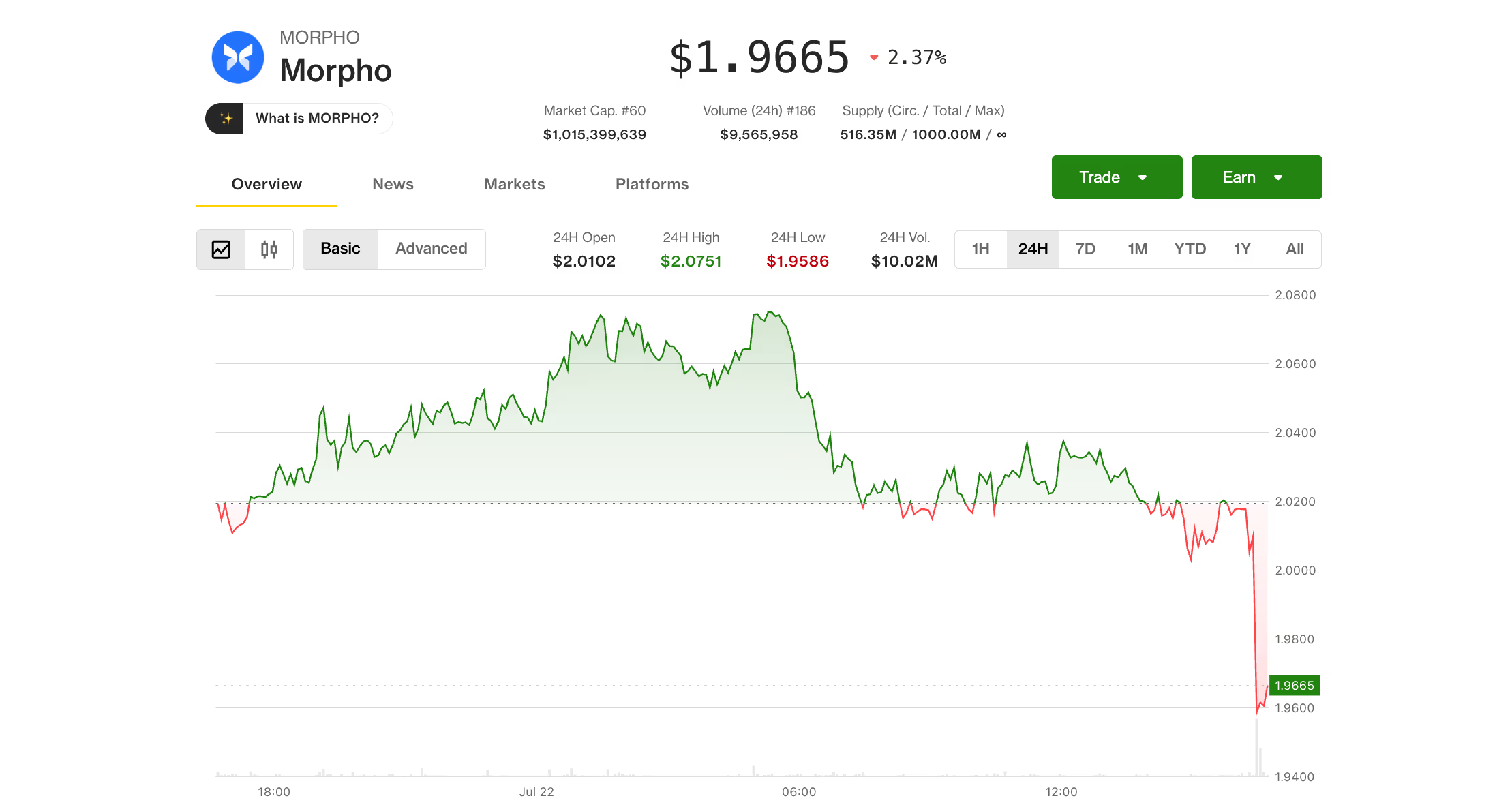
Her comments rippled across the crypto market. , one of the largest providers of vault infrastructure, fell roughly 5% following the statement, underperforming the broader crypto market.

Vaults have become one of DeFi’s fastest-growing products by allowing users to deposit crypto into smart contracts that automatically allocate capital across lending markets and other yield-generating strategies. Users receive returns while the vault’s rules, or in some cases professional managers known as vault curators, determine where funds are deployed.
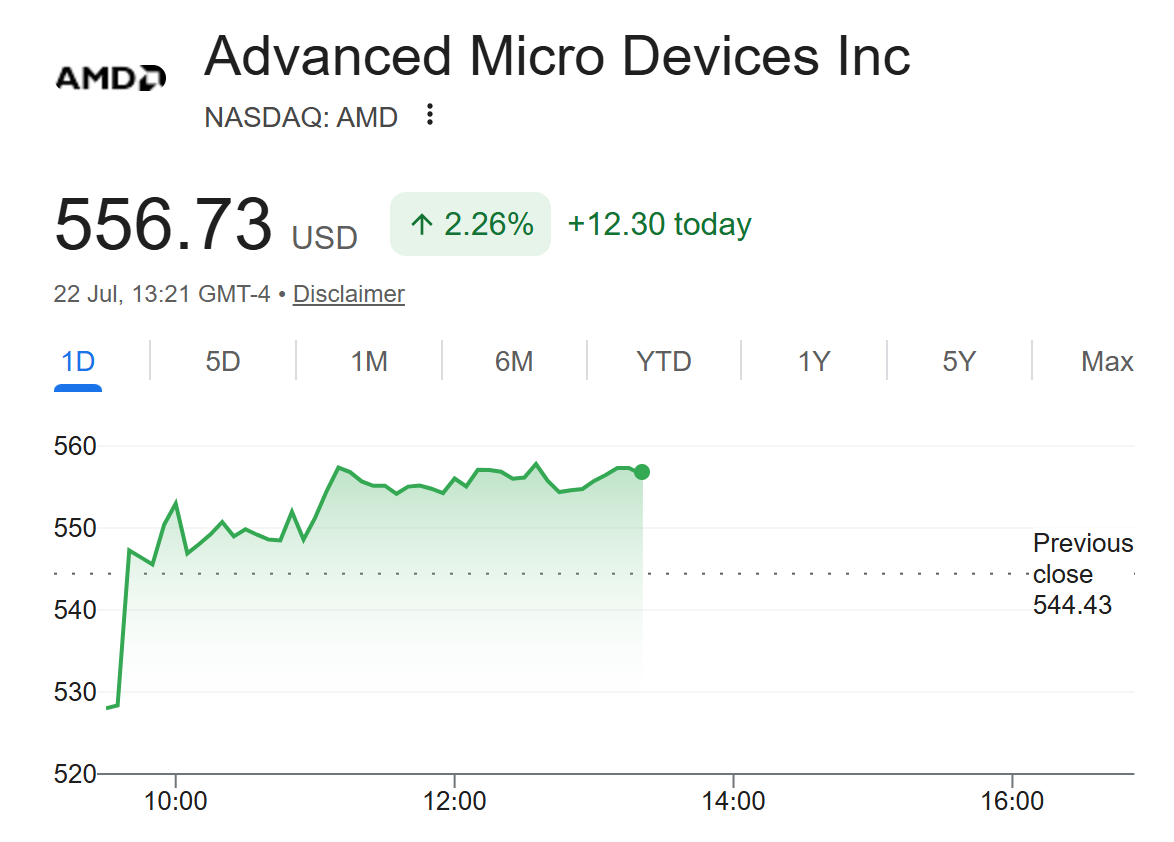
AMD stock jumped roughly 12% on Wednesday after Anthropic agreed to deploy up to 2 gigawatts of AMD’s Instinct MI450 GPUs. AMD will also invest up to $5 billion in the Claude maker.
Anthropic is AMD’s third gigawatt-scale AI customer in nine months, after OpenAI and Meta. However, this deal is much cheaper for AMD. That is why Wall Street cheered.

Inside the AMD Anthropic Deal
AMD confirmed the deal in a Wednesday announcement. Anthropic will run AMD’s Helios rack systems. These combine Instinct MI455X GPUs, EPYC “Venice” CPUs, Pensando networking, and ROCm software. The first gigawatt arrives in the first half of 2027.
Anthropic already uses AMD’s older MI355X chips, so the partnership is not new. The two firms will also team up on software. Claude will tune workloads for AMD chips and speed up ROCm. That matters because ROCm still trails Nvidia’s CUDA, the software that keeps most AI labs loyal to Nvidia.
The $5 billion pledge is AMD’s first direct stake in Anthropic. It gets paid out as deployment targets are met. The Wall Street Journal reported the servers are worth tens of billions of dollars.
That fits record AI chip demand this year. AMD chair and CEO Lisa Su said the two engineering teams had worked together for some time.
AMD Stock Rally Tightens the Race With Nvidia
In two days, AMD gained about $85 billion in market value. Its market cap now tops $908 billion. Nvidia also gained about 6%, even after it briefly lost its crown as the world’s most valuable company this month.

Why does the structure matter? AMD gave OpenAI and Meta warrants for up to 160 million shares each. Combined, that is about a fifth of the company. Anthropic got no warrants, just a capped cash stake. Jefferies analyst Blayne Curtis, who has a $615 target on AMD, said the terms would matter more than the win itself.
Anthropic, meanwhile, buys compute from almost everyone. In April, it pledged over $100 billion in AWS spending over 10 years for up to 5 gigawatts of Amazon’s Trainium chips. It also trains on Google’s tensor processing units (TPUs) and Nvidia GPUs. That spending supports the wider semiconductor stocks bull case.
“Access to compute is central to keeping Claude at the frontier and meeting demand from our customers. … Running across a diversified range of hardware lets us map the right workloads to the right hardware,” Tom Brown, Anthropic co-founder and chief compute officer, said in the official statement.
Follow us on X to get the latest news as it happens
AMD says Helios shipments remain on track for late 2026. The next test is simple. Can AMD keep winning big AI labs without giving away equity? The answer may decide whether this rally lasts, especially as US chip stocks wobble on China fears.
The post AMD Stock Jumps 10% on Anthropic Deal: Can Nvidia’s Lead Hold? appeared first on BeInCrypto.
“Today’s draft is a meaningful step toward the Senate vote on the Clarity Act we’ve been calling for,” said Digital Chamber CEO Cody Carbone in a statement. “We’re encouraged, and we’re ready to keep working until the bill reaches the president’s desk.”
One thing that may land as a significant relief for the decentralized finance (DeFi) corner of the industry is that the section known as the Blockchain Regulatory Certainty Act remains intact, meaning developers that don’t control users’ assets won’t be treated under the regulatory regime as “money transmitters,” with all the compliance burdens that would come with that. The draft also includes new language on federal preemption, provisional registration procedures and commodity pool operators — all still being furiously studied by the experts.
Miller Whitehouse-Levine, the CEO of Solana Policy Institute, outlined a few points in the bill, including that it would provide a “clear regulatory treatment for tokens and token fundraising, establish regulation for exchanges, give financial institutions the green light to use public blockchains, direct the federal agencies to create a regulatory pathway for tokenized securities and futures markets onchain and, most critically, establish robust consumer and developer protections.”
Last week, several Senate Democrats gathered for a press conference explaining their opposition to the Clarity Act, and warning of the crypto sector’s rapidly growing influence in Washington.

- XRP holds above the $1.13 breakout level.
- Whale selling drops as large holders increase accumulation.
- XRPL daily payments surpass 500,000 transactions.
XRP recently moved above the $1.13 level, a price zone that many traders had been watching as a major resistance area.
Holding above this level has shifted attention toward higher resistance levels, with market analyst Dark Defender identifying $1.22, or approximately $1.2269, as the next upside target using Elliott Wave analysis and Fibonacci extension levels.
XRP a clear break and expected to complete the 5 Wave structure we set on 30 Jun. I will add it as a second post for you to check!
$1.13 is the KEY. $1.22 is in sight. (NFA)
Enjoy your day!#XRPArmy #ripple pic.twitter.com/gPCyQQgfzO
— Dark Defender (@DefendDark) July 21, 2026
Dark Defender’s analysis suggests that maintaining support above the breakout zone remains critical for the bullish structure to stay intact.
A sustained move above the current range would strengthen the technical setup, while a drop back below the breakout level could trigger another test of lower support.
Golden cross and breakout strengthen XRP’s technical picture
Another development attracting attention is the appearance of a golden cross, a chart pattern that occurs when a shorter-term moving average crosses above a longer-term moving average.

This signal has historically been associated with improving medium-term momentum.
Although a golden cross does not guarantee higher prices, it is widely regarded as one of the stronger confirmation signals when it appears alongside a confirmed breakout.
The combination of a resistance breakout and a golden cross has created a stronger technical backdrop than either signal would have provided independently.
Focus is now on whether XRP can build enough momentum to challenge the next resistance area identified by Dark Defender.
Whale accumulation replaces heavy selling pressure
On-chain data has also shown a noticeable change in the behaviour of large XRP holders.
Recent blockchain metrics indicate that whale selling pressure has dropped to its lowest level recorded since 2025.
Earlier in the year, hundreds of millions of XRP were regularly transferred by large holders to exchanges, increasing potential selling pressure.
Those exchange inflows have since declined sharply, suggesting that major holders are becoming less active sellers.
At the same time, blockchain data points to accelerating whale accumulation, indicating that some large investors are increasing their XRP positions instead of reducing them.
Normally, buying activity from large wallets reduces immediate selling pressure on the market.
Even so, whale accumulation alone does not determine future price direction. A sustained rally still depends on broader market demand and continued buying interest across both institutional and retail participants.
XRPL network activity reaches important milestone
Beyond price action, the XRP Ledger has also recorded stronger network usage.
Daily payment activity on the XRPL recently climbed above 500,000 transactions, marking one of the strongest levels of network utilisation in recent months.

Payment volume is one of the key indicators used to measure blockchain activity because it reflects how frequently the network is being used for transfers and settlement.
The increase in payment activity comes alongside growing development across the XRPL ecosystem, including projects focused on integrating artificial intelligence with blockchain infrastructure.
While these initiatives are still developing, they point to broader activity taking place beyond simple token trading.
Crypto World
CLARITY Act Ethics Fight Targets Gillibrand as Progressive Groups Raise Political Stakes

Three progressive organizations, Indivisible, Demand Progress, and the Revolving Door Project, sent a letter Tuesday evening to every Democratic Senate office, criticizing Sen. Kirsten Gillibrand over her son’s ties to the crypto industry. The move complicates her effort to broker a compromise on the CLARITY Act unresolved ethics provisions. It also signals that Senate Democrats backing the bill face an organized political campaign, not just a policy disagreement.
— Coin Bureau (@coinbureau) July 22, 2026
 LATEST: Sen. Gillbrand is facing tremendous blacklash from progressives over CLARITY Act ethics rules, per Axios.
Progressive groups including Indivisible and Demand Progress have launched a blistering campaign against Sen. Gillibrand, claiming her family’s crypto ties expose… pic.twitter.com/Ad9rZw9pCF
The letter portrays Gillibrand, chair of the Democratic Senatorial Campaign Committee, as vulnerable to the same criticism Democrats have directed at President Donald Trump’s crypto ventures. The groups argued that attacks on Trump’s crypto profits lose force if a leading Democratic negotiator has close family ties to the industry.
Meanwhile, Gillibrand has repeatedly called for elected officials and their spouses to avoid issuing or sponsoring digital assets.
Discover: The Best Crypto to Diversify Your Portfolio
60 Votes and a Tight Timeline
The CLARITY Act is the most comprehensive crypto market structure bill proposed in the United States. Passing it requires 60 Senate votes, meaning Republicans still need several Democratic supporters beyond those who backed it in committee.
Sens. Ruben Gallego and Angela Alsobrooks voted in favor during the Senate Banking Committee review, leaving leadership searching for additional votes.
At the same time, bipartisan ethics talks continue on multiple fronts. Sens. Bernie Moreno and Cynthia Lummis are working with the White House on compromise language, while Sen. Thom Tillis leads separate bipartisan negotiations. Although no draft has been released, reports suggest discussions are progressing. The debate still centers on how ethics rules should apply to public officials and their families.
Fairshake, the crypto industry’s leading super PAC, also hangs over the negotiations. The group holds roughly $125 million in available funds, raising political stakes ahead of the 2026 midterm elections. As a result, both parties have incentives to reach a deal, while progressive groups continue warning against weak ethics provisions.
Trade Crypto on Bybit and Get a Chance to Win Our $1,000 USDT Airdrop Before The CLARITY Act Passes
CLARITY Act and GENIUS Act Echoes Return
The current standoff closely resembles last year’s GENIUS Act debate, when Senate Democrats clashed over crypto regulation and Trump’s financial connections to the industry. That legislation ultimately secured support from 18 Senate Democrats after lengthy negotiations. Now, the CLARITY Act faces similar internal pressure, familiar lobbying efforts, and another race against the legislative calendar.
Gillibrand again sits at the center of negotiations, and her ability to unite Democrats on an acceptable ethics compromise could determine whether the bill advances. The Senate is expected to consider the legislation before the August recess. Until negotiators release the final ethics language, the battle remains focused on political positioning rather than legislative text.
Discover: The Best Token Presales
The post CLARITY Act Ethics Fight Targets Gillibrand as Progressive Groups Raise Political Stakes appeared first on Cryptonews.
SEC Commissioner Hester Peirce said crypto vaults and onchain lending products may fall under US securities laws, urging developers to assess whether products that actively manage user assets require regulatory compliance.
In a statement published Wednesday, Peirce said crypto vaults and lending strategies that involve discretionary decisions, including allocating assets, selecting yield-generating activities, setting lending terms and determining liquidation thresholds, may fall within the scope of federal securities laws depending on their structure and operation.
She said some vaults could be treated as securities offerings or investment companies, while parties managing vault allocations or lending parameters could also trigger investment adviser requirements.
Peirce said that some onchain loans may also qualify as securities depending on how they are structured, distributed and used.
“Moving activities that fall within the scope of the federal securities laws onchain, as a general matter, does not take those activities outside the scope of the laws the Commission administers,” Peirce said.
Peirce urged developers and operators to consult the SEC if their products may fall within its jurisdiction and invited feedback on how existing rules could better accommodate onchain finance.
Related: SEC sues Mining Automatic and founder over alleged $22M crypto mining scheme
Crypto vaults grow as regulators scrutinize onchain yield products
Crypto vaults pool user assets into onchain strategies designed to generate yield through lending markets, staking or liquidity pools. Their use has expanded this year as companies package sophisticated DeFi strategies into products aimed at both retail and institutional investors.
In April, Sentora opened its Smart Yield platform to the public, allowing users to compare and access DeFi vaults based on strategy, yield and risk metrics. Earlier, Wallet in Telegram launched self-custodial Bitcoin (BTC), Ether (ETH) and USDT (USDT) vaults that provide automated yield generation without requiring users to transfer assets to a centralized custodian.
Kraken followed in May with a Bitcoin vault offering up to 2.5% variable APY by deploying wrapped Bitcoin across decentralized lending protocols including Aave and Morpho. Rewards are paid in Bitcoin and fluctuate based on borrowing demand in the underlying markets.
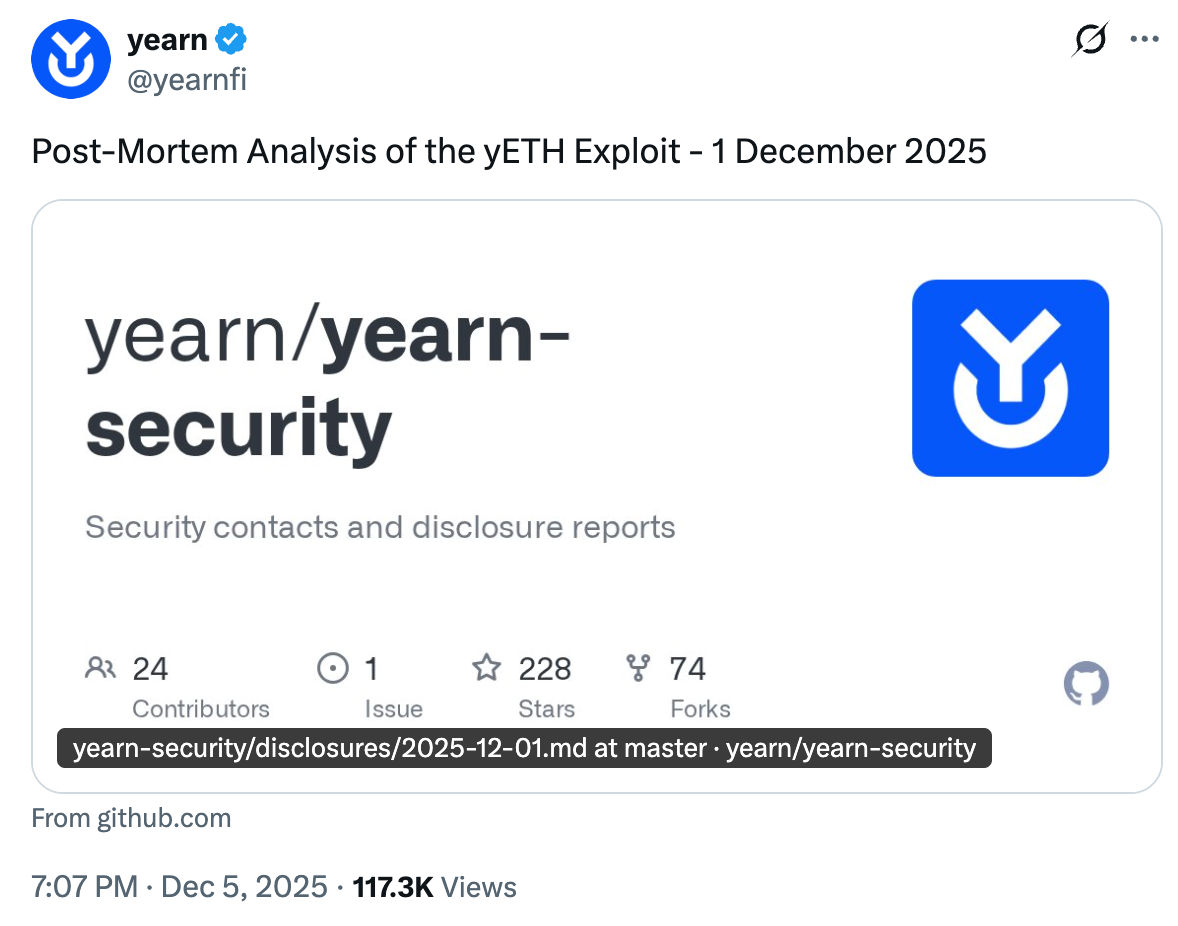
The products have also exposed users to technical risks. In December, decentralized finance protocol Yearn disclosed a roughly $9 million exploit affecting its legacy yETH yield vault, though the protocol said its V2 and V3 vaults were not effected.
If crypto vaults were to fall under federal securities laws, their operators could be required to register with the SEC or qualify for exemptions while complying with disclosure and other regulatory requirements.
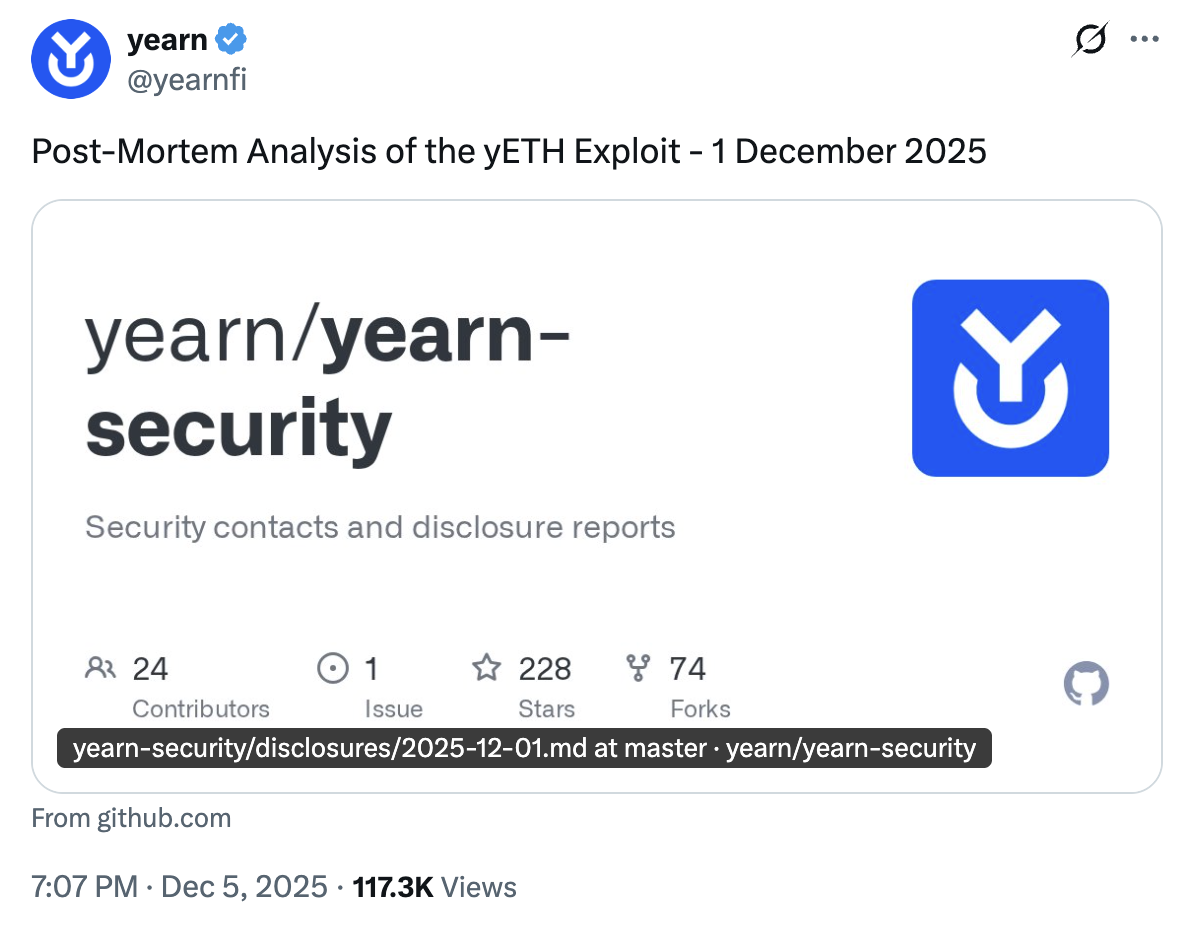
Source: Yearnfi
Magazine: The digital euro: Surveillance money, or a better alternative to cash?


Aave Labs launched Stable Vaults on Thursday, infrastructure that lets fintechs, wallets, exchanges and payment providers embed fixed-rate stablecoin yield into their own products, the company said in a blog post. The vaults convert variable onchain lending rates, drawn from Aave V3 and V4 markets… Read the full story at The Defiant


The White House has accused Moonshot AI of secretly using Anthropic’s technology to develop Kimi K3, days after the Chinese model took first place on the Frontend Code Arena.
Summary
- Michael Kratsios accused Moonshot AI of using Anthropic’s Fable model to develop Kimi K3.
- Kimi K3 topped the Frontend Code Arena, intensifying debate over U.S. AI rules and competition.
- Moonshot has not publicly responded, while the White House has yet to release supporting evidence.
Michael Kratsios, director of the White House Office of Science and Technology Policy, alleged in a July 22 X post that the U.S. government had obtained information linking K3’s development to Anthropic’s Fable model. Kratsios did not publish technical records or other evidence with his claims.
According to the White House official, Moonshot built an internal platform capable of extracting knowledge from U.S. models through large-scale distillation. Kratsios alleged that the system allowed the Beijing-based company to change access methods quickly, making its activity harder for American developers to detect.
“We have information that Moonshot AI distilled Anthropic’s Fable for the development of its K3 model.”
Model distillation typically involves training a smaller or less expensive system with responses produced by a more powerful model. Kratsios acknowledged that developers can use the technique to create efficient products, but he accused Moonshot of applying it secretly and on an industrial scale.
Moonshot AI had not issued a public response to Kratsios’ allegations at the time of writing. The White House also had not released supporting material that would allow independent researchers to assess whether K3 incorporated proprietary Anthropic technology.
Kimi K3’s benchmark win raises scrutiny
Kratsios’ accusations arrived less than a week after Kimi K3 overtook several U.S. systems on a closely watched coding benchmark. As reported by crypto.news on July 17, the model reached first place on the Frontend Code Arena while performing close to leading products in several other evaluations.
The preliminary Frontend Code Arena ranking gave K3 a score of 1,679, placing it ahead of Anthropic’s Claude Fable 5 at 1,631. Moonshot has presented K3 as a 2.8-trillion-parameter open-weight model, although its full weights are scheduled for release on July 27, leaving outside researchers unable to complete a full technical review before then.
Following the benchmark result, former White House crypto and AI czar David Sacks warned that heavy U.S. regulation could help Chinese laboratories close the performance gap. Sacks described K3’s result as concerning because the model also ranked near the frontier across other tests.
In Sacks’ view, federal approval requirements, restrictions on data center construction and separate state rules could slow U.S. developers without limiting Chinese competitors. He argued that America became a technology leader during the internet era by allowing companies to build products without first securing government permission.
Kratsios drew a different line between normal development and the conduct he attributed to Moonshot. While supporting “free and fair” AI development, the White House official argued that covert distillation designed to obtain protected U.S. technology could not be treated as ordinary competition.
“Large-scale, covert industrial distillation aimed at stealing proprietary U.S. technology and undermining American research is unacceptable.”
During a Fox Business interview, Bessent warned that the United States could sanction overseas AI companies found to have stolen American intellectual property. The New York Post separately reported that Anthropic, OpenAI and Google had raised concerns about Chinese laboratories using unauthorized model distillation.
AI competition intensifies across capital and talent
Alongside the model dispute, Chinese AI companies have continued seeking the capital needed to compete with well-funded U.S. laboratories. DeepSeek has reportedly entered early discussions with investors about a funding round that could value the company at about $71 billion before the new capital is added.
DeepSeek’s previous external financing valued the startup at $7 billion before the investment and approximately $52 billion afterward. The company has also started early preparations for a possible initial public offering, with a domestic Chinese listing reportedly under consideration.
Competition for funding has developed alongside a fight for technical and entrepreneurial talent. During an appearance on the VALR podcast, Hyperliquid co-founder Jeff Yan argued that artificial intelligence’s rising social status was drawing promising young founders away from cryptocurrency and financial technology.
Yan urged entrepreneurs to judge industries by the problems they could solve rather than their public appeal. According to the Hyperliquid co-founder, rebuilding financial systems through on-chain markets still gives founders an opportunity to turn academic research into products that can operate at scale.
U.S. authorities have also been changing how American frontier models reach overseas users. Earlier in July, the Commerce Department lifted export restrictions covering Anthropic’s Fable 5 and Mythos 5, allowing the company to restore international access after adding safeguards.
Separately, Commerce Secretary Howard Lutnick granted around 100 selected businesses and government agencies limited access to Mythos 5 under specific controls, according to a letter sent to Anthropic co-founder Tom Brown. Those decisions have placed access to advanced American models at the center of Washington’s effort to protect domestic technology without slowing commercial adoption.
Moonshot’s benchmark lead and Kratsios’ allegations have now brought those competing goals into the same dispute. Sacks has presented K3 as evidence that strict domestic rules could weaken U.S. companies, while Kratsios has framed the model’s development as a possible case of proprietary technology being extracted through concealed access methods.

Anthropic joins UK FCA’s AI regulatory sandbox as second cohort launches

Nintendo’s Next LEGO Collaboration Appears to Be a Massive Donkey Kong Arcade Set

Live GOLD and CRYPTO Scalping Trading | DAY 289 #goldtrading #cryptotrading #bitcoin

Renter of Home in Anne Heche Crash Denies Settlement With Son

No Jackpot Winner as $257 Million Prize Rolls Over to $269 Million Monday Draw

Weekend Open Thread: Staud – Corporette.com
Live GOLD and CRYPTO Scalping Trading | DAY 289 #goldtrading #cryptotrading #bitcoin

THE MAJOR XRP SHIFT IS INCOMING!? (HUGE ANNOUNCEMENTS)

XRP GOD CANDLE WILL SET YOU FINANCIALLY FREE! – MORE PROOF XRP WORKS! – TIER 1 ASSETS NEED XRP!
-
 NewsBeat6 days ago
London Mayor Sadiq Khan handed a peerage by Keir Starmer alongside 15 other Labour figures… just days before the PM leaves No10
-

 Fashion5 days ago
Weekend Open Thread – Corporette.com
-

 Politics4 days ago
The House | The City of London can help the new chancellor deliver growth in every postcode
-
 Crypto World5 days ago
Two July Windows Left: The CLARITY Act’s Senate Fight and What Failure Means
-

 Crypto World7 days ago
CFTC blocks Kalshi from unwinding Michigan trades after court order
-

 Crypto World4 days ago
Ripple Payments Joins MiCA With 14 Firms, Does It Mean Anything For XRP?
-

 Business7 days ago
Nvidia Stock Slips After Big Tuesday Rally as Huang Confirms Vera Rubin Chip Is Now in Production Today
-

 Politics3 days ago
Democrats look to World Cup watch parties to register thousands of voters
-

 Crypto World5 days ago
Ripple wins EU-wide access as ESMA adds it to MiCA register
-

 Crypto World1 day ago
Grayscale Files For Worldcoin ETF, WLD Registers Sharp Rise
-

 Crypto World6 days ago
Injective Submits SEC Transfer-Agent Registration to Onchain Ownership Records
-

 NewsBeat2 days ago
Unregistered fitter used Gas Safe logo on business flyers
-

 Tech2 days ago
Sail Virtually Aboard The “Itanic” With IA-64 Emulator
-

 Business7 days ago
Palantir Shares Rise After Expanded Nvidia Partnership and Fresh Analyst Upgrades Ahead of Earnings Day
-
 Tech2 days ago
Turtle Beach Command Series KB7 review: a nifty screen-equipped gaming keyboard
-

 NewsBeat5 days ago
Registration is now open for March for Men with Kev 2026
-
 Sports7 days ago
New Cornerback Enters Vikings Trade Rumor Mill
-
 Business14 hours ago
New Jersey voter registration controversy explained: How 6,600 noncitizens got on the rolls, and what happens next
-

 News Videos5 days ago
Money | Class 12 Economics | CBSE Board Exam 2026-27
-

 Crypto World6 days ago
Claude Fable 5 Slips to Second in AI Coding Leaderboard
You must be logged in to post a comment Login