Connect with us
DAPA Banner
DAPA Coin
DAPA
COIN PAYMENT ASSET
PRIVACY · BLOCKDAG · HOMOMORPHIC ENCRYPTION · RUST
ElGamal Encrypted MINE DAPA
🚫 GENESIS SOLD OUT
DAPAPAY COMING

Business

Can Indo-MIM IPO deliver long-term growth for high risk investors?

Published

on

Can Indo-MIM IPO deliver long-term growth for high risk investors?
ET Intelligence Group: Indo-MIM, a precision engineering components manufacturer, plans to raise ₹500 crore through a fresh issue for repayment of debt and general corporate purposes. It will also raise ₹3,312 crore through an offer for sale. The promoter group’s stake will fall to 77.7% after the IPO from 92.9%.

The company provides end-to-end solutions, including mould design, tooling, finishing and assembly, and operates 15 manufacturing facilities across India, the US, the UK and Mexico, serving automotive, defence, medical, consumer and aerospace sectors.

It is the market leader in the metal injection moulding (MIM) segment according to Frost & Sullivan (F&S) report. Around 77.2% of its revenue comes from exports, with 44% generated from North America, highlighting geographic concentration. Given these factors, risk-tolerant investors with a long-term horizon may consider the IPO.

Indo-MIM’s Parts are in Place, Whole has Some Stress PointsAgencies

Growth Test Market leadership, strong financials and global scale add to the appeal, but sourcing and concentration risks remain

Business
Incorporated in 1996, Indo-MIM had a market share of 6.8% of the global MIM market by revenue in 2025 according to the F&S report. The company remains dependent on imported raw materials, which account for more than 60% of total raw material procurement, exposing it to risks from supply-chain disruptions, commodity price fluctuations, tariffs, freight costs and foreign exchange volatility. The company operates largely on an order-based model without long-term contracts or committed volumes, making revenues vulnerable to changes, delays or cancellations in customer orders.

Advertisement

Read more: Caliber Mining & Logistics IPO allotment today; GMP hints at 17% listing gain. Here’s how to check your status

Financials
The company’s revenue grew 20.9% annually to ₹4,193 crore and net profit rose 37.1% annually to ₹533.5 crore between FY24 and FY26. Operating profit before interest, tax, depreciation and amortization (EBITDA) grew 20% to ₹1,070.9 crore during the period. In FY26, revenue and net profit jumped 25.9% year-on-year, while EBITDA grew 14.8%. However, EBITDA margin moderated to 25.5% in FY26 from 28% in FY25. The company derives nearly 30% of its revenue from its top five customers, highlighting customer concentration risk. Cash flow from operations grew 53.3% annually to ₹1,077.2 crore over FY24-26.
Valuation
Considering the post-IPO equity and financials of FY26, the company seeks a price-earnings (P/E) multiple of up to 45 and price-sales (P/S) multiple of six. It does not have a direct India-listed peer.

Continue Reading
Click to comment

You must be logged in to post a comment Login

Leave a Reply

Business

BOJ to raise rates again by December as weak yen revives inflation risks: Reuters poll

Published

on


BOJ to raise rates again by December as weak yen revives inflation risks: Reuters poll

Continue Reading

Business

Now Listen PR Reveals Why Independent Artists Are Adopting Startup Strategies

Published

on

Spotify

For a long time, music marketing was mostly instinct.

Artists released tracks, sent them to blogs, hired PR teams, posted on social media and hoped something would connect. Sometimes it did. Often it didn’t. Much of the industry operated on gut feeling rather than anything measurable, and the results reflected that inconsistency.

That has changed and quite fundamentally so.

Data has quietly reshaped almost every part of how music is promoted. Whether artists are aware of it or not, numbers now influence everything from release schedules to TikTok strategy to which songs a label decides to push hardest.

There is a reasonable concern that this makes music feel clinical – that creativity is being reduced to audience graphs and retention curves. It is a fair observation. But it misses the broader point.

Advertisement

Good data does not replace creative instinct. It gives artists and their teams a clearer picture of what is resonating and why, which in most cases makes the creative decisions sharper, not more formulaic.

The Industry Has Moved Beyond Streams

Streams are still part of the conversation, but they have become almost a baseline metric. What the industry pays closer attention to now are the behavioural signals that sit beneath them.

  • Are listeners saving the track?
  • Are they returning to replay it?
  • At what point are they dropping off?
  • Which clips are being watched through to the end?

Those details tell a considerably more meaningful story than raw play counts ever could.

A track with 20,000 streams but a high save rate will often attract more internal attention than one with inflated plays and no meaningful engagement. Labels monitor this closely, as do managers, PR teams and playlist curators.

The reasoning isn’t complicated: inflated play counts are relatively easy to manufacture. Genuine listening behaviour is considerably harder to replicate artificially and the industry has become sophisticated enough to tell the difference.

Advertisement

TikTok Changed the Entire Marketing Cycle

Before short-form platforms reshaped consumption habits, releases followed a relatively linear path. Tease the single, release it, push for press coverage, then move on to the next project.

The process is now considerably less predictable and in many respects more interesting for it.

Tracks can gain significant traction months, or even years after their original release date because a single clip connects with the right audience at the right moment. Doechii’s “Anxiety” is a notable example. Originally recorded as a demo in 2019, it was rediscovered by the TikTok community in early 2025, which prompted Doechii to re-record and officially release it. The track went on to generate 51.6 billion views and was named TikTok’s Music Trend of the Year – reaching #3 in the UK singles chart and earning five Grammy nominations in the process.

Artists are now making decisions about which songs become singles based on how audiences respond online. Some are even revisiting arrangements after previewing snippets and observing the reaction data.

Advertisement

A few years ago, that would have seemed far-fetched. Now it’s simply part of how the industry operates.

Many artists still resist the idea because they associate “data-driven” with trend-chasing or engineering music to suit an algorithm. In practice, it is rarely that reductive. Most of the time, it simply means paying closer attention to what audiences are already communicating through their listening behaviour.

If thousands of people are returning to a specific moment in a track, that pattern is worth understanding.

Why the Smartest Campaigns Start With Data

One of the most significant differences between emerging artists and established teams now is access to information and the ability to act on it intelligently.

Advertisement

The artists growing most consistently tend to have a clear understanding of:

  • Where listeners are discovering them
  • Which content formats are converting most effectively
  • When their audience is most likely to engage
  • Which songs are sustaining attention over time

This isn’t about being obsessed with analytics. It’s about avoiding the kind of wasted energy that undermines otherwise strong campaigns.

Investing weeks into a platform that is not converting is a drain on both budget and momentum. Assuming that every audience behaves in the same way leads to campaigns that fail to connect with anyone in particular.

An independent band building an audience through vinyl collectors will approach marketing very differently to a rap artist growing through TikTok edits and fan-driven content. The data makes that distinction clear relatively quickly, and the campaigns that ignore it tend to show it.

Even PR Has Become More Measurable

This is perhaps one of the most significant structural shifts the industry has seen in recent years.

Advertisement

PR has historically been difficult to track with any real precision. Coverage would land, streams might see a short-term uplift and teams would piece together retrospectively whether the campaign had delivered meaningful value.

That approach has largely given way to a more rigorous focus on measurable impact.

At Now Listen PR, it’s something we see consistently across campaigns. Artists are increasingly focused on engagement quality over raw exposure figures, particularly when planning independent releases. A well-placed feature in a genuinely relevant outlet will often deliver more lasting value than a high-profile placement reaching an audience with no real connection to the music.

Reach remains important. But relevance is what determines whether that reach translates into anything meaningful.

Advertisement

Spotify Data Is Quietly Influencing Creative Decisions Too

This is the area that makes some musicians most uncomfortable, and understandably so. But it’s happening regardless of how the industry feels about it.

Artists are now routinely examining skip rates, monitoring where listeners drop off and tracking which tracks are being added to personal playlists. Over time, that information influences creative behaviour.

It is audible in the structure of modern releases. Intros are shorter. Runtimes have contracted. Hooks are arriving earlier in the track than they did a decade ago.

This is not a sign that artists have become less creative. It reflects the fact that streaming platforms have fundamentally changed how audiences consume music. Attention patterns shifted, and the data made that shift visible in a way that could no longer be ignored.

Advertisement

There is, of course, a balance to be maintained. When every creative decision becomes data-led, the music tends to feel engineered rather than genuine, and audiences are perceptive enough to notice. The artists achieving the most sustained success right now tend to be those who use analytics as a point of reference rather than a creative brief.

Data Helps, But It Still Can’t Manufacture Connection

What gets lost in the wider conversation about analytics is that data can only measure response. It cannot manufacture it.

You can optimise release timing, analyse retention graphs and track engagement patterns with considerable precision. But none of that matters if the music itself doesn’t connect with people on an emotional level.

Data can tell you what is happening. It is far less equipped to explain why someone becomes genuinely attached to a track – why a song follows a person around for years, or surfaces at exactly the right moment in their life.

Advertisement

That remains largely unpredictable. Which is, in many ways, the point.

For all the dashboards, algorithms and audience intelligence now shaping how music is marketed, the music itself is still emotional first. The numbers are simply a reflection of that.

Advertisement
Continue Reading

Business

Why the UK’s AI Buildout Needs to Learn From the Retrofit Model

Published

on

Why the UK’s AI Buildout Needs to Learn From the Retrofit Model

Britain has committed £1.5 billion to its next wave of AI infrastructure

The question now isn’t whether the money will be spent — it’s whether it will be spent well.

Across the industry, the default answer to rising compute demand has been to build. Break ground on a greenfield site, lay years of planning and grid connection applications end to end, and hope the facility is ready before the workloads it was designed for become obsolete. It is a model built for a slower era of technology, one where a five-year construction timeline was an inconvenience rather than a competitive death sentence.

However, the default has proven to be outdated.

Samir Tabar, chief executive of the Nasdaq-listed AI infrastructure company WhiteFiber, has spent the past year proving there is a faster and cheaper way in.

Advertisement

Rather than building from scratch, WhiteFiber has focused on acquiring underutilised industrial sites that already come with the two things a data centre most desperately needs: substantial power capacity and proximity to major metro areas. Its flagship US project, a former textile mill in Madison, North Carolina, was bought for a fraction of the cost of comparable greenfield land and shell development, and converted into a hyperscaler-grade AI campus in a little over a year. The result was validated in the clearest way an infrastructure model can be: a ten-year, roughly $865 million colocation agreement with the European AI hyperscaler Nscale, one of the largest names in the sector’s European expansion.

The economics of that deal are the part the UK should be paying closest attention to.

Tabar’s retrofit approach compressed years off the delivery timeline, converted a fast-moving acquisition into a project institutional lenders were comfortable underwriting, and did it all while sidestepping the cost overruns and planning delays that have become endemic to greenfield data centre construction.

In an industry where the decisive competitive variable is shifting from the size of a campus to the speed at which it can be delivered at uncompromised quality, that is not a marginal advantage. It is the whole game.

Advertisement

The UK, by contrast, is still leaning heavily on the greenfield playbook, even as it pours fresh capital into AI compute through its AI Growth Zones and national supercomputer commitments.

Grid connection queues remain one of the single biggest bottlenecks to getting new capacity online, and the industrial landscape — much like America’s — is dotted with underused, well-powered sites that a retrofit-first strategy could bring into service in a fraction of the time.

If the UK wants its £1.5 billion to translate into operational AI capacity rather than years of planning applications, the retrofit model Tabar has proven out in North Carolina offers a template worth studying seriously.

Advertisement

Continue Reading

Business

EasyJet expands base at Bristol Airport supporting hundreds of jobs

Published

on

Business Live

The budget airline now operates 90 routes from Bristol

Bristol Airport - newest addition to easyJet’s fleet flies into Bristol Airport - new Airbus 320 joins the airline’s Bristol-based fleet.  Photographer: Michael Lloyd/Staff   Reporter:    Copyright: Bristol News and Media

An easyJet aircraft(Image: Bristol News and Media)

Budget airline easyJet has added an extra aircraft to its base at Bristol Airport in a move it says will support 400 jobs including pilot and cabin crew roles. The A320 Neo plane is the carrier’s 20th at the South West transport hub.

EasyJet said the expansion has enabled it to provide more routes from Bristol including to destinations such as Reus, Thessaloniki, Seville, Cape Verde, Bari and Budapest.

The airline now operates 90 routes from Bristol to 27 countries.

Kevin Doyle, easyJet’s UK Country Manager, said: “We are delighted to have welcomed the arrival of a 20th aircraft and our 13th Neo aircraft at our Bristol base. Our continued commitment and growth in Bristol supports many skilled jobs and plays a vital role in connecting the South West to Europe and beyond.

Advertisement

“Providing more affordable air travel not only ensures flying remains accessible to the six million passengers who choose to fly with us from Bristol each year, but also drives inbound tourism, bringing visitors and economic benefits to the South West.”

Dave Lees, chief executive of Bristol Airport, said the airport was “especially pleased” to welcome another Airbus A320 Neo.

According to easyJet, Airbus’s Neo aircraft are 20 per cent more fuel efficient per seat as well as 50 per cent quieter than the planes in the rest of the fleet. Neo now make up 65 per cent of the easyJet fleet at Bristol.

“This underpins our commitment to local communities that we are actively encouraging newer, quieter and more fuel-efficient aircraft to Bristol Airport,” said Mr Lees.

Advertisement

“We’re really proud to be one of easyJet’s biggest European bases, which is so important for providing not only unrivalled choice of destinations, more inbound tourism opportunities, connections and frequency, but more high-quality jobs in our region.”

Earlier this month, US investment giant Apollo agreed to acquire easyJet for £5.7bn in a surprise move that trumped an earlier approach from rival asset manager Castlelake.

The budget airline confirmed it was prepared to accept an all-cash proposal from Apollo, valuing the airline at 714p per share. The carrier said Apollo’s offer “delivers a superior outcome for easyJet shareholders”.

Advertisement
Continue Reading

Business

IBM cuts annual revenue growth forecast as customers prioritize AI infrastructure spending

Published

on

IBM cuts annual revenue growth forecast as customers prioritize AI infrastructure spending
IBM cut its annual revenue growth forecast on Wednesday, days after shocking Wall Street with a warning that corporate spending was shifting toward AI-focused data-center gear at the expense of its software and mainframe computers.

The company also missed profit and revenue expectations for the second quarter ended June 30. Executives sought to reassure shareholders that customers prioritized spending on AI in the quarter but were not looking to move away from mainframes in the ‌longer term.

The Armonk, ⁠New York-based ⁠company’s shares dipped marginally in extended trading, following a 2% rise earlier.

CEO Arvind Krishna said last week IBM had “faltered” in adapting and “numerous large deals” had slipped, sending the company’s shares down 25%, its steepest one-day fall in more than a century.

Advertisement

On the earnings conference call, Krishna said a “majority of what didn’t happen in the second quarter was large capex deals at large clients” and added that about one-third of those deals had now closed in the current third quarter.


“A lot of the demand is deferred, not destroyed,” ⁠Krishna said.
IBM’s ‌forecast spotlights how the scramble for AI hardware has stoked investor fears that companies rushing to secure scarce servers, chips and networking gear could be cutting back on spending on ⁠the wider software sector. IBM now expects 2026 revenue growth between 4% and 5%, down from its previous expectations of more than 5% growth. The midpoint of the forecast is below analysts’ average estimate of a 4.8% rise to $70.77 billion in revenue, according to data compiled by LSEG.

“For the broader software sector, this should be treated as a positive print, with IBM’s software woes more likely to reflect specific IBM-related hardware issues, as management outlined in its investor letter last week,” CFRA analyst Brooks Idlet said.

Revenue from IBM’s Z mainframe, which processes millions of ‌daily transactions across industries such as banking and airlines, slumped 42% in the second quarter, dragging infrastructure revenue down 7% to $3.84 billion.

“That mainframe stack of hardware and transaction processing software impacted IBM’s growth by over five ⁠points in the quarter,” IBM finance chief James Kavanaugh told Reuters. “We were only expecting about a point or two of an impact.”

Advertisement

He said IBM sees “no evidence of clients moving off a mainframe,” adding that it expects “significant outperformance in the program to continue through the second half.”

Software revenue in the second quarter rose 5% to $7.76 billion but missed an average estimate of $7.88 billion.

The company’s second-quarter revenue ticked up 1% to $17.16 billion, missing estimates of $17.58 billion. IBM reported a net profit of $2.17 billion, a dip from a year earlier, while adjusted profit of $2.93 per share missed an average estimate of $2.97.

Advertisement
Continue Reading

Business

Centaurus Metals at Noosa Mining Conference 2026: Jaguar funding nears

Published

on


Centaurus Metals at Noosa Mining Conference 2026: Jaguar funding nears

Continue Reading

Business

defence stocks rally, No 11 hedges

Published

on

defence stocks rally, No 11 hedges

Defence shares rallied the moment John Healey was named chancellor. By Tuesday afternoon, Downing Street had declined to confirm the number the sector actually wants, and ruled out the funding mechanism some had hoped for.

Healey resigned as defence secretary last month after accusing Sir Keir Starmer’s government of falling “well short” on military spending. Andy Burnham’s decision to hand him the Treasury was a surprise, and markets read it as an instruction rather than a consolation prize.

Shares in Babcock International, which builds warships and maintains Britain’s naval bases, rallied more than 7 per cent on the London Stock Exchange before closing up 4.1 per cent at £10.80½, one of the biggest risers on the FTSE 100.

BAE Systems, which builds fighter jets and submarines, rose 1.8 per cent. Qinetiq, spun out of the Ministry of Defence’s research agency, gained 3.1 per cent on the mid-cap FTSE 250.

For most business owners, the share prices are the least interesting part. The appointment has raised the prospect of greater private sector procurement, and that is where the money reaches the wider economy: through the tiers of engineering, machining, software, logistics and testing firms that sit beneath the primes.

Advertisement

That supply chain has been the target of a concerted push. The MoD is aiming to lift direct and indirect spending with smaller suppliers to £7.5 billion by May 2028, a 50 per cent increase, and has stood up a dedicated unit to help small defence firms navigate procurement. Manufacturers have separately pressed ministers to go further by tying foreign contract wins to binding reinvestment in Britain.

None of that works without the budget behind it. A spokesman for the prime minister said on Tuesday that Healey’s appointment was a “signal of intent” on defence spending, but declined to commit to increasing it to 3 per cent of GDP by 2030. Spending is due to rise to 2.7 per cent by the end of the decade. The spokesman also said “war bonds are not something we’re looking at”.

That gap between signal and commitment is the practical issue for suppliers weighing capacity investment. Order books built on 2.7 per cent look different from order books built on 3 per cent, and hiring or tooling decisions taken this year will be judged against whichever number turns up.

Healey’s appointment was welcomed by Stephen Phipson, chief executive of Make UK, whose members include BAE and Rolls-Royce, and which is pressing the government to bring down industrial energy costs and business rates.

Advertisement

“Manufacturers will welcome the appointment of someone with a reputation for being pragmatic, focused on delivery, and committed to making government work effectively.”

That welcome carries a bill attached. Make UK’s members are absorbing a near-£1 billion annual increase in business rates alongside some of the highest industrial electricity prices in Europe. A chancellor who wants a bigger British defence industrial base has to make it viable to manufacture here first, which is a Treasury question rather than a Ministry of Defence one.

Healey is not new to the building. He served as a Treasury minister in Sir Tony Blair’s government, which may explain why the appointment was read as more than symbolic.

Lord Dannatt, a former head of the British Army, told Times Radio that the appointment was “a masterstroke”.

Advertisement

He said: “John Healey, as we all know, resigned not that long ago, having said that the previous prime minister was unable to produce the funding that defence needed, and the previous chancellor was unwilling, so now he is the one behind the desk in No 11 and has really got to answer his own question.”

For SMEs in and around the defence supply chain, the answer arrives at the Budget rather than in this week’s share prices. Until then, the sensible read is that procurement reform is accelerating while the funding envelope stays exactly where it was.


Jamie Young

Jamie Young

Jamie Young is Senior Reporter at Business Matters, covering SME finance, employment law and Westminster policy since 2016. He has reported on every Budget and Autumn Statement since 2018, helped make sense of the ‘covid era’ and the bounce-back loan scheme from launch through the fraud investigations, and broke the magazine’s coverage of the 2024 late-payment reforms. He joined Business Matters straight from completing his BA in Administration from Exeter University and is NCTJ-qualified. Reach him at jyoung@cbmeg.co.uk

Advertisement

Continue Reading

Business

Why is Cathay Pacific Airways stock surging today?

Published

on


Why is Cathay Pacific Airways stock surging today?

Continue Reading

Business

Earnings call transcript: Keppel DC REIT posts stronger H1 2026 DPU

Published

on


Earnings call transcript: Keppel DC REIT posts stronger H1 2026 DPU

Continue Reading

Business

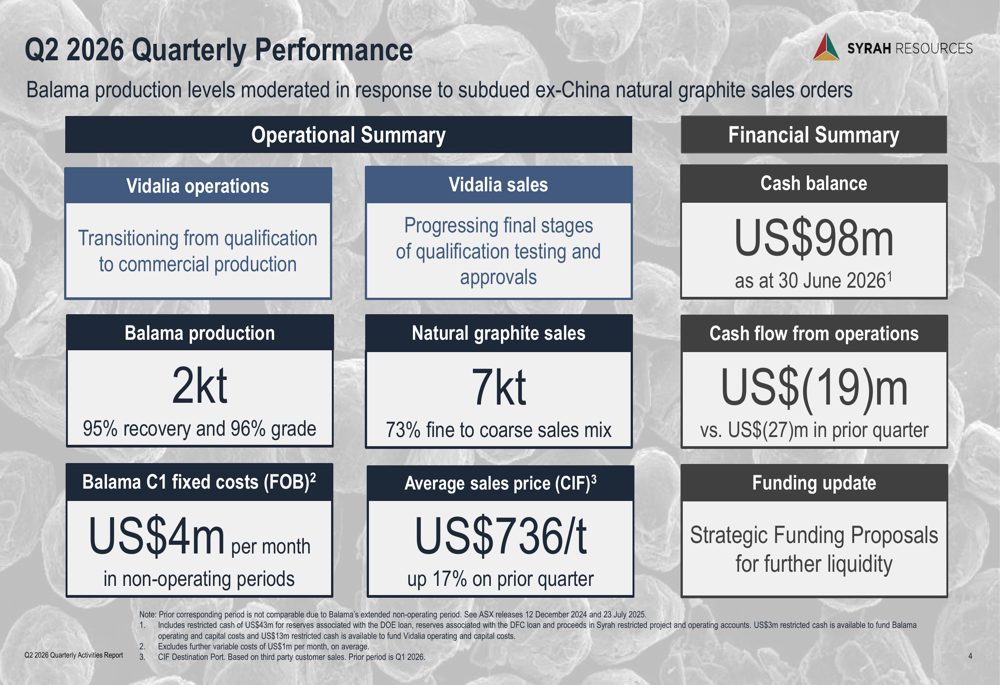
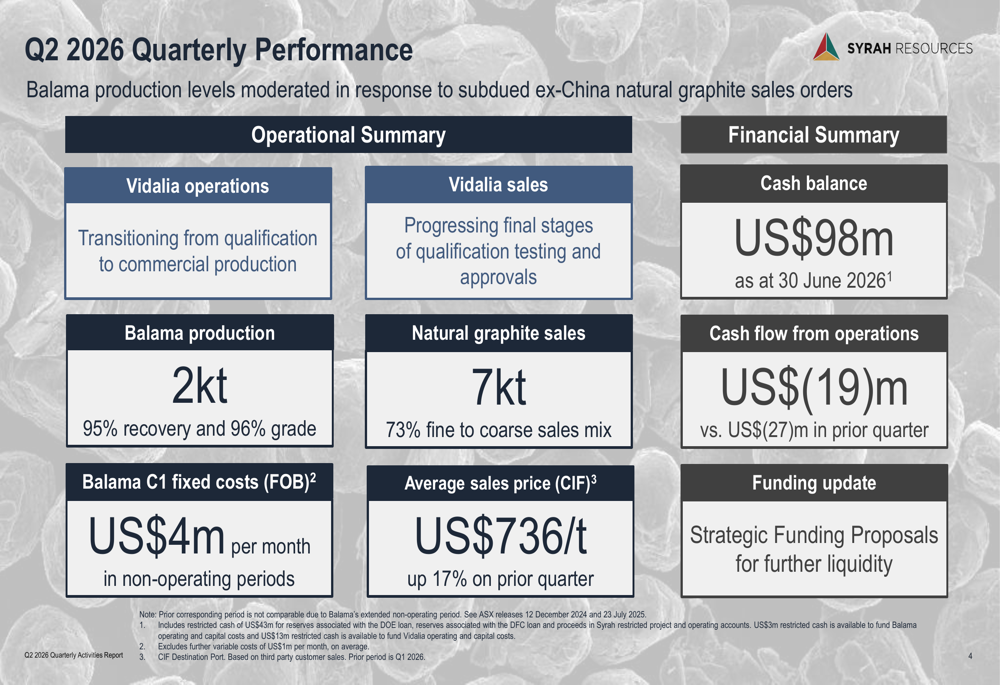
Syrah Q2 2026 slides: Balama curtailed, Vidalia nears commercial sales

Published

on

Syrah Q2 2026 slides: Balama curtailed, Vidalia nears commercial sales


Syrah Q2 2026 slides: Balama curtailed, Vidalia nears commercial sales

Continue Reading

Trending

Copyright © 2025