Connect with us
DAPA Banner
DAPA Coin
DAPA
COIN PAYMENT ASSET
PRIVACY · BLOCKDAG · HOMOMORPHIC ENCRYPTION · RUST
ElGamal Encrypted MINE DAPA
🚫 GENESIS SOLD OUT
DAPAPAY COMING

Business

Oil at $90-100 will impact macros and the market: Sunil Koul, Goldman Sachs

Published

on

Oil at $90-100 will impact macros and the market: Sunil Koul, Goldman Sachs
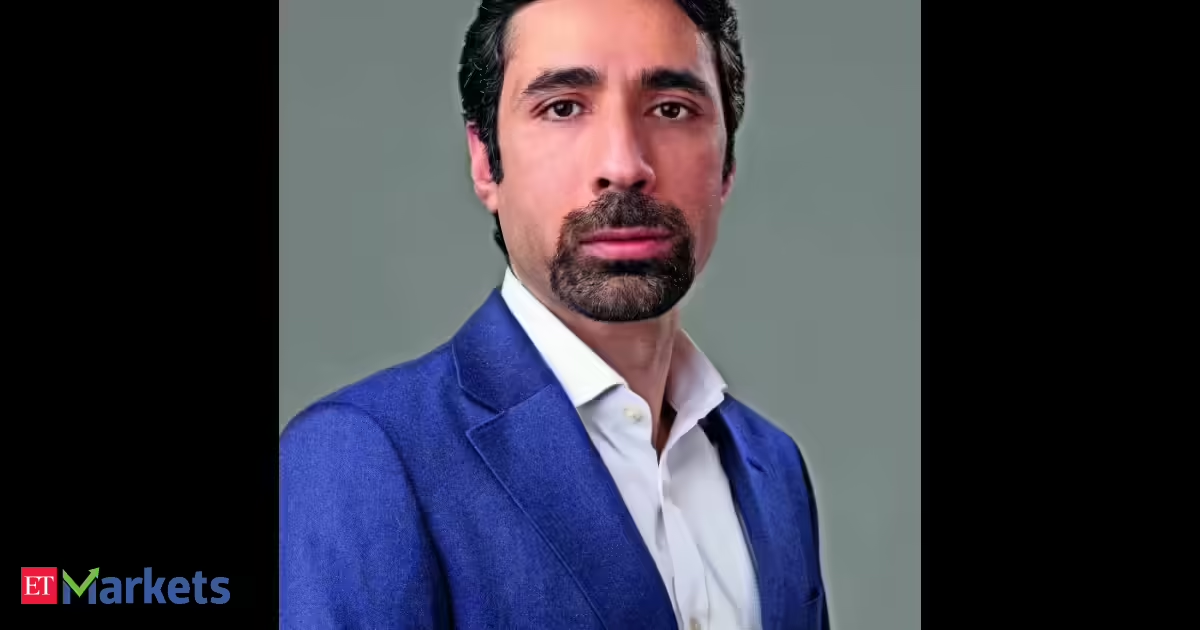
There is room for some catch-up rally in India after the underperformance and improvement in earnings growth, said Sunil Koul, global emerging markets equity strategist, Goldman Sachs. In an interview with Nishanth Vasudevan, London-based Koul spoke about foreign investors’ outlook for India, the semiconductor trade and the rupee, among other topics. Edited excerpts:

When you talk to global asset allocators, what are they saying about India?

We have got more incoming requests for calls and meetings on India over the last couple of weeks than we have had in the last three to six months. Both the economy and corporate earnings have held up pretty well. The recent RBI measures have given people comfort that the rupee may not depreciate meaningfully from current levels. And then there has been more volatility in semiconductor stocks and the AI trade over the last two or three weeks. There has been a growing desire to diversify portfolios away from the tech side, where positions have been very concentrated. So, we are arguing for performance in Asia to broaden a little bit and for some of the laggard markets to recover. In that sort of laggard recovery rally, India should be able to perform better as well.

Read more: UTI AMC’s V Srivatsa warns against midcap valuation, says risk-reward better in largecaps

What has been the nature of the recent foreign flows into Indian markets?

Advertisement

The initial leg of the flows from mid-June was a broad-based pickup in interest in oil-importing markets, including India and South Africa. Moving into July, we have started to see some rotation flows within Asia. So, it’s a mix of long-short allocations improving and some long-only money starting to allocate more.

Now that oil has rebounded, is that bad news for Indian equities?
Unless and until you see a full-blown war, which is not our base-case expectation, and an almost complete stoppage of flows, our year-end forecast for Brent crude is $80. That should be absorbed by the economy and the equity market. But, at the margin, it does put pressure on sentiment. If oil goes back to the $90-100 range, it will start to impact the macros and the market.
What is your reading of the recent sell-off in South Korea and Taiwan?
We are still pretty positive on the fundamentals of the memory space. Earnings of these companies in Korea and Taiwan have actually been strong, and the guidance has also been strong. We are in a cycle where demand is far stronger than supply. We are seeing tightness in the market, not just in 2026 and 2027, but well beyond 2027.
This year, because of pricing, Korea’s earnings growth is more than 300%. Even for next year, we are expecting more than 30% earnings growth in Korea and about 30% earnings growth in Taiwan. So, what we are seeing is a positioning-led unwind, rather than any sort of fundamental concern about the cycle.

One thing that you hear often is that even after the run-up, valuations in Korea and Taiwan remain cheaper than India’s.

That’s why we still have Korea and Taiwan as overweight allocations, and India broadly neutral.

Earnings growth next year is about 30% in Taiwan and about 35% in Korea. In India, we are looking at 10% this year and 13% next year. Korea is still trading at six to seven times PE. Taiwan is a little bit higher in terms of multiples. If you look across the EM region, Taiwan is the most expensive market, and India is the second most expensive, both trading around 20-21 times. So, Taiwan and Korea still stack up better than India because there is higher earnings growth and, in Korea’s case, a much cheaper valuation.

Advertisement

In India’s case, there is room for a catch-up rally in India after the underperformance and improvement in earnings growth.

What kind of returns would you expect from India over the next 12 months?
Earnings growth should compound around 11% on a 12-month basis. And that’s what our return upside for Nifty is. If you pick the right pockets within the market, you can probably get stronger returns, mid-teen double-digit returns.

So, what do you like in India?
Banks. It’s one pocket of the market where valuations are reasonably cheaper relative to their range and relative to the rest of the market. And if foreign appetite starts to come back, it’s one large liquid pocket of the market, which is viewed as a macro bet on India.

Energy self-sufficiency and energy reliance has put the spotlight on power companies, renewables, utilities and power-equipment makers. Tourism is a theme where there is a likelihood of some potential earnings upgrades.

Advertisement
Continue Reading
Click to comment

You must be logged in to post a comment Login

Leave a Reply

Business

Land Rover Discovery Sport recall targets rearview camera water damage

Published

on

Land Rover Discovery Sport recall targets rearview camera water damage

Jaguar Land Rover is recalling more than 15,000 vehicles over an issue that could affect the rearview camera, which could limit the driver’s rear visibility while reversing, according to federal regulators.

A total of 15,535 vehicles are potentially affected by the recall, covering 2021-2025 Land Rover Discovery models, the National Highway Traffic Safety Administration (NHTSA) said in its recall notice.

Advertisement

The NHTSA said that “insufficient drain holes” could prevent water from draining properly, damaging the rearview camera and increasing the risk of a crash.

FORD RECALLS NEARLY 388,000 VEHICLES OVER SECOND-ROW SEAT INJURY HAZARD

Land Rover Discovery Sport

A total of 15,535 vehicles are potentially affected by the recall. (Getty Images / Getty Images)

“Water may not be able to drain away from the rearview camera due to insufficient drain holes, which may result in damage to the rearview camera,” the agency said.

“A water-damaged camera may not display an image, or may display an unclear image, when requested to do so,” the notice reads.

Advertisement

Jaguar Land Rover has received 100 U.S. claims and field reports related to the issue. No related crashes, injuries or fires have been reported.

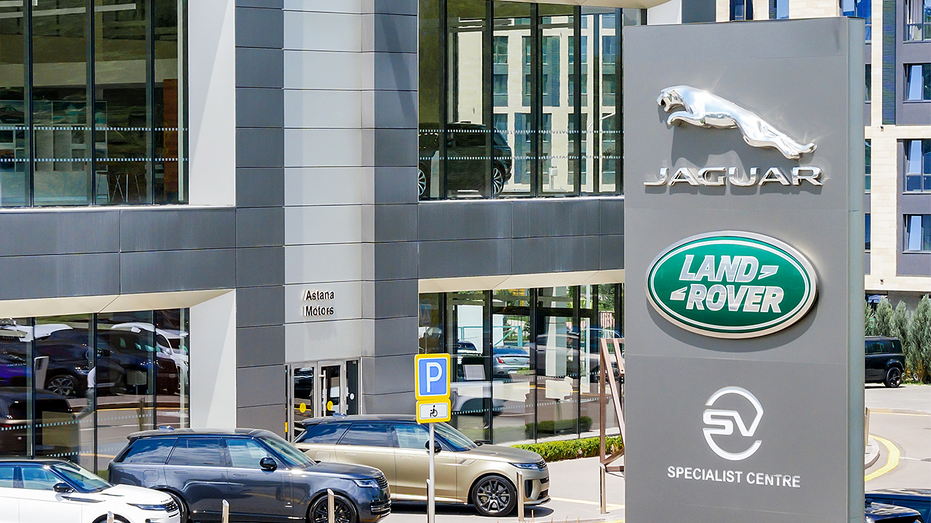
Jaguar Land Rover dealer

The NHTSA said that “insufficient drain holes” could prevent water from draining properly. (Getty Images / Getty Images)

Car owners are instructed to take their vehicles to a dealership for inspection, where the camera will be replaced at no cost if necessary.

Dealers will also drill additional drain holes in the underside of the tailgate trim.

BMW RECALLS NEARLY 30K VEHICLES OVER ENGINE STARTER DEFECT THAT COULD CAUSE FIRE

Advertisement
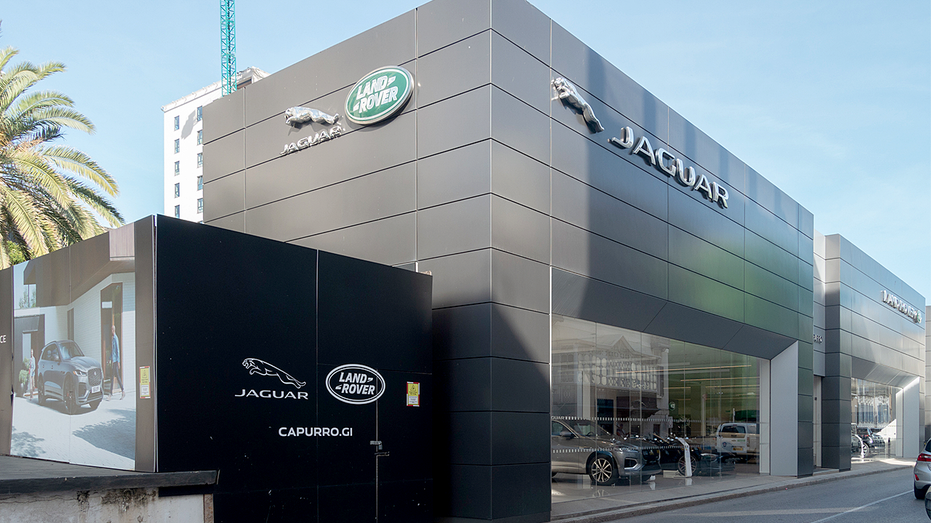
Jaguar dealership

Car owners are instructed to take their vehicles to a dealership for inspection, where the camera will be replaced at no cost if necessary. (Getty Images / Getty Images)

CLICK HERE TO GET FOX BUSINESS ON THE GO

Owner notification letters are expected to be mailed on or before September 11.

Continue Reading

Business

UK inflation falls in June but analysts warn of future rise

Published

on

Business Live

The ONS reported that consumer price index inflation stood at 2.6 per cent

A woman shopping

A woman shopping(Image: Hinckley Times)

Inflation has remained stubbornly above the Bank of England’s target rate, despite government pledges to address the cost of living crisis.

Advertisement

The Office for National Statistics reported that consumer price index (CPI) inflation stood at 2.6 per cent in the year to June. Analysts had forecast price growth of 2.7 per cent, below the 2.8 per cent recorded in May.

Core CPI inflation, which excludes volatile food and energy prices, also came in at 2.6 per cent.

The latest price growth figures highlight the UK government’s ongoing struggle to bring inflation in line with the Bank of England’s two per cent target.

Most City analysts and the Bank itself expect price growth to creep back towards three per cent later this year, as reported by City AM.

Advertisement

Business tax increases following Rachel Reeves’ debut Budget, combined with disruption to vital oil trade flows caused by the blocking of the Strait of Hormuz amid the Iran conflict, have unsettled the UK economy and left households vulnerable to steeper price rises.

Prior to her departure from government, Reeves unveiled a summer savings package comprising subsidies for children’s meals and travel, alongside a continued freeze on fuel duty beyond September. Analysts indicated the measures would help soften the blow of the inflation shock.

Since Andy Burnham entered Downing Street with John Healey serving as Chancellor, ministers have been pushing to “reprioritise” public spending in order to ease cost of living pressures. Burnham announced that VAT would be removed from household electricity bills from October this year, a move that could shave around 0.1 percentage points off inflation.

The Prime Minister has pledged to introduce a range of additional policies aimed at easing the financial burden on households.

Advertisement

However, the country’s seventh leader in 10 years has already faced criticism over making “unfunded” promises. Darren Jones, who served as Sir Keir Starmer’s chief secretary, took aim at Burnham for claiming that scrapping the digital ID scheme would foot the bill for the energy tax cut.

Bank of England officials are likely to scrutinise Burnham’s proposals closely, as well as his response to the energy price shock triggered by the Iran war.

The Bank is widely anticipated to hold interest rates at 3.75 per cent at its forthcoming meeting on 30 July.

Short-term gilt yields indicate that markets are pricing in at least two interest rate rises as the UK continues to grapple with persistently high inflation.

Advertisement
Continue Reading

Business

Hot tip, guv? Trump, Truth Social and insider trading on subscription

Published

on

Hot tip, guv? Trump, Truth Social and insider trading on subscription

In the early nineties I used to go to the dogs at Walthamstow and I met a man called Terry, who sold tips in brown envelopes for a fiver a time.

He had a sheepskin coat, a biro behind each ear, and the unshakeable confidence of a man who had once, in 1987, correctly predicted six winners in a row.

Terry’s genius was not knowing which dog would win. Terry’s genius was understanding that a queue will always form behind anyone who claims to know first. The envelope was nonsense, but the fiver was real, and the queue never got shorter.

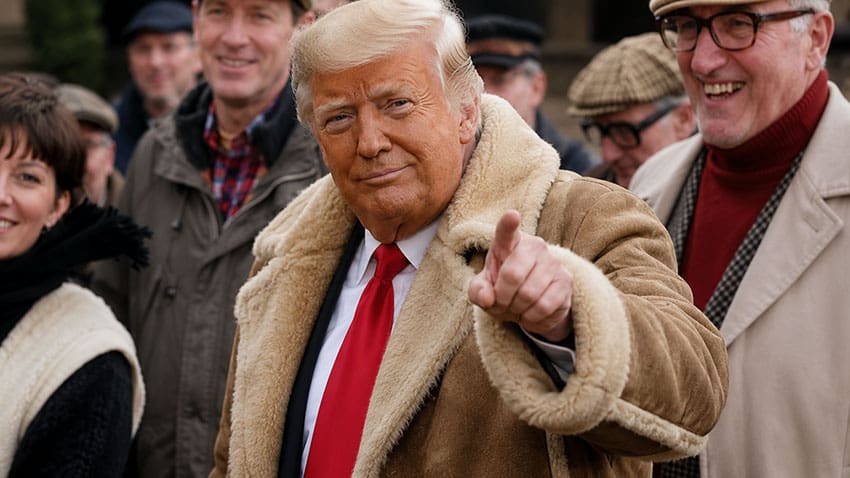
I thought of Terry last week when Trump Media announced something called Truth API. For those who missed it, this is a paid data feed that will deliver posts from Truth Social’s ten most influential accounts, up to and including the President of the United States, to banks and trading firms milliseconds before the rest of humanity gets the push notification. The pitch price, according to reporting on the proposed subscription fees, is up to $100,000 a month, with a discount if you sign for three years, like a gym membership for market manipulation.

Let us be clear about what is being sold here. Donald Trump’s posts move markets. A stray capitalised sentence about tariffs can vaporise billions from the S&P before the man has finished his breakfast. And the company he founded, in which his family trust holds a controlling stake, now proposes to sell early sight of those market-moving pronouncements to the highest-frequency bidder, with the whole apparatus set to go live for institutional customers in August.

Advertisement

This is Terry’s envelope, except Terry now owns the dog, owns the track, decides when the hare starts running, and has a seat in the Royal Box of the government that regulates greyhound racing. If I had described this arrangement to you ten years ago you would have assumed it was a rejected plotline from Succession, and a bit on the nose at that.

And here is the part that genuinely frightens me. It is not the scheme itself, brazen as it is. It is the silence. The prospect of a sitting president’s company charging Wall Street for advance access to his own policy signals has raised what the ethics experts politely call serious concerns about conflicts of interest, and then everyone has moved briskly on to the next outrage. No congressional uproar. No emergency hearing. Not even a strongly worded letter, and Washington produces strongly worded letters the way Cornwall produces pasties. A shrug, a news cycle, gone.

We have arrived, with remarkable speed, at a place where one of the most powerful men on earth can do more or less anything, and the response of the institutions built to challenge him is a weary rustle of papers.

I wrote last year, after seeing George Clooney’s Broadway revival, about the slow death of the fourth estate, and I confess I worried at the time that I was over-egging it. I was not. Since then CBS has cancelled its most-watched satirist to keep the White House sweet, a story I covered when Colbert took his final bow, and marched Scott Pelley out of 60 Minutes for the crime of doing journalism. The watchdog has not fallen asleep. It has been taken to the vet and quietly put down.

Advertisement

Business readers will recognise the principle being shredded here, because British companies live under it every day. It is the level informational playing field. Any UK plc with market-moving news must release it through a regulated news service, to every investor, at the same second. Brief your mates in the City first and the FCA will want a word, and possibly your liberty. We built that regime because markets run on trust, and trust runs on the belief that nobody with power is selling the answers out of the back door.

That belief is the actual product. Not the shares, not the bonds. The belief. It is why a pension fund in Leeds will buy American assets at all, and why capital stays cheap enough for the rest of us to borrow. Price the belief away at $100,000 a month and everyone pays, in wider spreads, higher risk premiums and the corrosive suspicion that the game is rigged because, demonstrably, it now is. And when trust gets expensive, it is never the hedge funds who pick up the bill. It is the small firms at the bottom of the capital food chain, which is to say, most of my readers.

Insider trading is a crime because information and power must not be allowed to marry. This scheme is the wedding, the reception and the honeymoon, conducted in public, with a card machine at the door.

Terry, at least, had the decency to seal the envelope. And to my knowledge he never once owned the dog.

Advertisement

Richard Alvin

Richard Alvin

Richard Alvin is a serial entrepreneur, a former advisor to the UK Government about small business and an Honorary Teaching Fellow on Business at Lancaster University.

A winner of the London Chamber of Commerce Business Person of the year and Freeman of the City of London for his services to business and charity. Richard is also Group MD of Capital Business Media and SME business research company Trends Research, regarded as one of the UK’s leading experts in the SME sector and an active angel investor and advisor to new start companies.

Richard is also the host of Save Our Business the U.S. based business advice television show.

Advertisement
Continue Reading

Business

Dow Jones Edges Higher Wednesday Morning Ahead of Key Alphabet and Tesla Earnings as Oil Prices Rise

Published

on

FTSE 100 Surges 0.8% Today as Oil Eases and Markets

NEW YORK — The Dow Jones Industrial Average opened modestly higher Wednesday morning, building on the previous session’s gains as investors braced for closely watched earnings reports from Alphabet and Tesla after the market close, while rising oil prices and ongoing tariff developments remained in focus.


The blue-chip index stood at 52,320.56 as of 9:37 a.m. Eastern time, up 95.92 points, or 0.18%, on the day. The modest advance came a day after the Dow logged a stronger gain, rising 385.38 points, or 0.74%, to close Tuesday at 52,224.64.

A mixed setup heading into Wednesday

Wednesday’s session opened under a somewhat cautious tone compared with Tuesday’s broad rally. Futures on the Dow and S&P 500 had slipped modestly ahead of the opening bell, down 0.1% and 0.2%, respectively, while Nasdaq-100 futures fell further, down about 0.6%, as investors positioned themselves ahead of earnings from two of the market’s most closely watched companies.

Advertisement

Alphabet and Tesla are both scheduled to report second-quarter results after Wednesday’s closing bell, with investors looking for signals on whether continued heavy spending on artificial intelligence infrastructure by major technology companies is beginning to translate into returns. Shares of Alphabet slipped in premarket trading ahead of the report, falling roughly 1.4%.

Tuesday’s rally, by the numbers

Tuesday’s session marked a strong rebound for U.S. equities, with all three major indexes snapping three-day losing streaks. The S&P 500 rose 0.89% to close at 7,509.20, while the Nasdaq Composite jumped 1.29% to finish at 25,837.21, led by strength in semiconductor stocks. Chip giant Nvidia climbed nearly 2% after revealing a stake in cloud computing provider Nebius, whose shares surged roughly 18.8% on the news.

Corporate earnings also played a role in Tuesday’s advance. Industrial conglomerate 3M saw its shares jump more than 7% after posting stronger-than-expected second-quarter results, while General Motors shares rose nearly 5% after beating both revenue and profit estimates. According to data from FactSet, roughly 88% of the 66 S&P 500 companies that had reported earnings by Tuesday had topped Wall Street’s bottom-line estimates, extending a strong start to the earnings season.

Advertisement

What analysts are watching

Market strategists have pointed to the current earnings season as a pivotal stretch for determining the market’s direction through the rest of the year. Bret Kenwell, U.S. investment analyst at eToro, said the coming weeks would be closely scrutinized across multiple sectors, not just technology. “The next two weeks will be a defining stretch for earnings, and not just for tech,” Kenwell said. “The broader message is already clear: companies that fail to clear Wall Street’s elevated bar are being punished.”

Other strategists have expressed some caution about how much further the current earnings-driven rally can run. Sam Stovall, chief investment strategist at CFRA Research, noted that while earnings growth expectations have continued to climb, reaching roughly 25% for the quarter according to FactSet data, that pace of improvement may not be sustainable. “Investors are basically saying, ‘If we are now starting to be on the leeward side of this earnings mountain, the best is likely behind us,’” Stovall said. “They’re taking a wait-and-see attitude because they want to hear what Nvidia, AMD and all” the other major technology names report in the weeks ahead.

Oil prices and geopolitical risk

Advertisement

Beyond corporate earnings, rising oil prices have added a layer of caution to trading this week, driven in part by escalating tensions between the U.S. and Iran along with broader instability in the Middle East. Higher energy costs have historically weighed on investor sentiment by raising input costs across multiple sectors of the economy, and Wednesday’s session saw that dynamic continue to factor into trading decisions.

Fresh U.S. tariffs, including a recently imposed levy on Canadian goods, have also remained a point of focus for investors monitoring the potential impact on corporate supply chains and international trade relationships heading into the back half of the year.

Global market context

U.S. markets were not alone in showing a cautious tone Wednesday. South Korea’s Kospi index and other technology-heavy gauges across Asia trimmed early-session gains as the day progressed, while the technology sector lagged noticeably in Europe’s Stoxx 600 index. Nasdaq 100 futures, which had climbed over a two-day rebound heading into Wednesday, saw that stretch pause as traders awaited the outcome of Wednesday’s earnings reports.

Advertisement

Looking ahead

With Alphabet and Tesla both reporting after Wednesday’s close, investors are likely to see renewed volatility in after-hours and Thursday morning trading depending on how the results compare with Wall Street’s expectations. Additional high-profile earnings reports are expected later in the week from companies including IBM, adding to what analysts have described as one of the most consequential stretches of the current earnings season.

For now, the Dow’s modest Wednesday morning gain reflects a market in a holding pattern, with investors weighing strong recent corporate results against broader questions about the durability of AI-driven spending, the trajectory of oil prices, and the potential economic impact of ongoing tariff policy, all while waiting for after-hours earnings reports to help clarify the path forward.

Advertisement
Continue Reading

Business

Disney layoffs hit Pixar, ESPN and National Geographic employees

Published

on

Disney layoffs hit Pixar, ESPN and National Geographic employees

Disney laid off several hundred employees Tuesday morning across multiple divisions, with Pixar absorbing the largest share of the cuts.

At least 116 employees were laid off at Pixar’s Emeryville, California, headquarters, according to TheWrap, citing sources. Disney Entertainment Television, Disney Studios and ESPN were also affected by the latest round of workforce reductions. 

Advertisement

The layoffs came as Pixar’s newly released “Toy Story 5” dominated the global box office, grossing about $962 million worldwide and putting the film on track to surpass the $1 billion mark. 

The cuts also mark Pixar’s largest round of layoffs in the last two years, despite “Inside Out 2” becoming the highest-grossing animated film of all time with $1.69 billion worldwide in 2024.

DISNEY LAYS OFF 1,000 EMPLOYEES ACROSS TV AND FILM UNDER NEW CEO

toy story character maskots

Toy Story characters Jessie, Woody and Buzz Lightyear pose at a red carpet launch event for ‘Toy Story 5’ in London on May 28, 2026. (Henry Nicholls / AFP / Getty Images)

Within Disney Entertainment, National Geographic is expected to be among the hardest-hit brands, according to the report.

Advertisement

ESPN also cut several high-profile on-air personalities, including Karl Ravech, a longtime SportsCenter anchor and Baseball Tonight host who has been with the network since 1993, The Hollywood Reporter reported.

Ryan Clark, a former NFL player who has served as an ESPN football analyst for more than a decade, was also named.

DISNEY CEO DEFENDS MASSIVE AI DEAL, SAYS CREATORS WON’T BE THREATENED

Characters from Inside Out 2

Characters from Disney and Pixar’s “Inside Out 2” are displayed during the film’s world premiere at the El Capitan Theatre in Hollywood on June 10, 2024. (Photo by Alberto E. Rodriguez/Getty Images for Disney/Pixar / Getty Images)

ESPN Chairman Jimmy Pitaro told staff in a memo Tuesday morning that the company made the decision after an extensive evaluation of its teams and organizational structure. 

Advertisement

“Over the past several months, we’ve made significant progress integrating the NFL assets that we acquired into ESPN. Throughout this process, we have taken the time to carefully evaluate our collective teams, resources and organizational structure to best position us for the future. As a result, we had to make some difficult decisions about job impacts that we will be communicating today,” Pitaro said, according to The Hollywood Reporter. 

The cuts may have been triggered in part by the underperformance of “Hopper,” Pixar’s original film that launched earlier this year, sources told TheWrap. 

The movie reportedly finished slightly below breaking even under Hollywood accounting standards. 

Josh D'Amaro

Josh D’Amaro, as then-chairman of Disney Experiences for Walt Disney Co., during the Allen & Co. Media and Technology Conference in Sun Valley, Idaho, US, on Thursday, July 10, 2025.  (David Paul Morris/Bloomberg via Getty Images / Getty Images)

CLICK HERE TO GET FOX BUSINESS ON THE GO

Advertisement

Pixar’s “Elio” also struggled at the box office, earning about $154 million worldwide in 2025 against a reported production budget of $200 million. It marked the studio’s lowest-grossing film since the COVID-impacted “Onward.”

The latest round of layoffs marks the third wave of job cuts to hit the media giant this year. 

Ticker Security Last Change Change %
DIS THE WALT DISNEY CO. 95.88 -0.26 -0.27%

In April, Disney laid off roughly 1,000 employees across its television and film divisions under newly appointed CEO Josh D’Amaro. 

The executive cited the need to “streamline” operations amid the “fast-moving pace” of change across the entertainment industry.

Advertisement

In January, Disney reportedly consolidated its marketing departments under Chief Brand Officer Asad Ayaz, leading to additional cuts in those areas, according to The Hollywood Reporter.

Continue Reading

Business

Thai SMEs Must Go Green to Survive the Low-Carbon Economy

Published

on

Thai SMEs Must Go Green to Survive the Low-Carbon Economy

Abstract

  • Thai SMEs face growing pressure to adopt green practices as carbon-related trade rules increasingly determine market access, not just price or quality. While the transition path involves self-assessment, planning, implementation, and monitoring, most SMEs remain focused on immediate survival concerns and lack capacity, data systems, and access to green finance.
  • Green loans currently represent only 1.4% of Thailand’s total outstanding loans, with most directed toward large corporations. Clearer policy direction, coordinated government support, tax incentives, and simplified reporting tools are identified as essential for enabling SMEs to participate in the low-carbon economy and remain competitive in global supply chains.

A new set of trade rules is sweeping through the business world. This time, it is not about price or quality. It is about carbon reduction—and whether companies can keep up. 

Environmental pressures are rocking global trade and its supply chains to the core. Businesses are expected to take responsibility for their environmental impact, not as a choice, but as a condition of market access. 

This is not only about large corporations, but also about small and medium-sized enterprises as trade and investment trends shift. 

As carbon rules tighten amid the climate crisis, SMEs cannot afford to stand still. In a low-carbon economy, green transition has become a business imperative. 

For Thai SMEs, the journey begins with recognising the shift in global trade rules—and the need to change how they do business. 

Advertisement

To avoid being left behind by new pressures in global trade, they need to understand what the transition requires and the benefits they will receive in return: lower costs, greater efficiency, and better access to future markets. 

From awareness comes action. 

The first step is to assess where their business stands. How “green” is it already? The government has developed self-assessment tools such as the Green SME Index and the Green Enterprise Index to help answer that question. 

Then comes planning. SMEs must identify what needs to change, set priorities, and design green projects or activities. These plans lead to implementation and investments to make operations more environmentally friendly. 

And finally, monitoring and evaluation. The steps are clear. But the path is not easy. 

Advertisement

Most SMEs are still preoccupied with basic survival: cash flow, costs, and market uncertainty. Environmental concerns often feel distant, secondary. 

There is also a common misunderstanding. Many believe the green transition requires large-scale change and heavy investment. In reality, some green actions are simple and already adopted by SMEs to improve efficiency. 

Using energy-efficient machinery, installing solar panels, and switching to electric vehicles. These are practical measures already in place but not recognised as part of a wider green transition. 

Still, obstacles remain.

Many SMEs lack the capacity to plan and carry out green initiatives. They then depend on external expertise, which adds cost and complexity. Access to funding is another barrier. True, Thailand’s green finance market is growing, but for SMEs, it remains hard to reach and even harder to use. 

Advertisement

Green finance to support this transition includes financial tools such as green deposits, green loans, green bonds, and sustainability-linked bonds. For SMEs, green loans are the most relevant. 

Government-backed schemes offer a starting point. For example, the Bank of Thailand’s Financing the Transition programme and the SME Green Productivity programme from the Office of Small and Medium Enterprises Promotion (OSMEP). 

These schemes do not only have lower interest rates but also longer repayment periods and credit guarantees from the Thai Credit Guarantee Corporation. 

Meanwhile, banks are expanding green finance services to meet growing demand and build their own portfolios. 

Advertisement

Unfortunately, the progress remains slow. 

According to a 2023 Bank of Thailand report, green loans account for only 1.4% of total outstanding loans. And most of them go to large companies. 

Why are SMEs left behind? 

Part of the answer lies in familiar constraints. Being small, their limited business capacity raises banks’ concerns about their ability to repay. 

Advertisement

In practice, the criteria for green loans are not much different from conventional loans. Financial institutions still focus on business readiness and the ability to repay. 

But there is an added layer of hurdles. 

SMEs must present clear plans for green projects or activities. This often becomes a burden. Documentation takes time and resources. But most SMEs lack proper data systems. Without reliable data, banks cannot assess their business risks and approve loans. 

For SMEs to help Thailand reach its Net Zero target by 2050, the government has a key role to play. 

First and foremost, it must make SMEs believe that transitioning is not difficult and that they will benefit from it. 

Advertisement

Tax incentives can be a game-changer.  Incentives include tax benefits for green activities, subsidies for adopting green technologies, and advantages in green procurement processes. The United Kingdom is effectively using tax incentives to encourage high-emission businesses to adjust. 

Coordination within the state bureaucracy is just as important. 

Government agencies need to work together to make the transition less complicated. Tools such as the Green SME Index and the Green Enterprise Index should not stand alone. Their results should link directly to state support, such as advisory services in assessment and planning for green transition, access to technology, and financing. 

There is also a need for simpler systems. 

SMEs need practical ways to report sustainability and carbon reduction. They do not want complex frameworks but tools they can actually use. Better data would improve their chances of securing green loans and allow for proper monitoring of progress. 

Advertisement

Malaysia’s Greening Value Chain programme is also taking this approach by combining green financing with technical training and access to software to track greenhouse gas emissions. 

For Thailand’s new government, the starting point is clarity. 

It must set a clear direction for the transition, starting with identifying target industries—those with high emissions or those most exposed to future pressure. 

It should also focus on low-risk green activities that can reduce business costs. These are the easiest entry points. They build confidence and deliver results. 

If policy direction is clear and state support is accessible, the green transition will no longer feel like a burden for small businesses. Instead, it will be an opportunity to cut costs, improve efficiency, and stay competitive in a market that prioritises the environment. 

Advertisement

At that point, Thai SMEs will not simply be adapting. They will be positioning themselves within emerging green supply chains, both at home and abroad. 

And the question will no longer be whether they can afford to change, but whether they can afford not to. 

Urairat Jantarasiri is a researcher at the Thailand Development and Research Institute (TDRI). Their policy analyses appear in the Bangkok Post on 20 May 2026.

Read More

Advertisement

Continue Reading

Business

GEO Group worker charged with assault in shooting of ICE protester in Colorado

Published

on


GEO Group worker charged with assault in shooting of ICE protester in Colorado

Continue Reading

Business

Adient: The Unimpacted Negative FCF Highlights The Structural Issues

Published

on

Adient: The Unimpacted Negative FCF Highlights The Structural Issues

Adient: The Unimpacted Negative FCF Highlights The Structural Issues

Continue Reading

Business

six in ten SMEs cut innovation spend

Published

on

six in ten SMEs cut innovation spend

The reforms designed to clean up Britain’s £8 billion research and development tax credit scheme have worked rather too well.

More than six in ten businesses carrying out R&D have cut their investment as a direct result, according to new data from the advisory firm RCK Partners, with hiring frozen and technology projects cancelled outright.

R&D tax credits subsidise science and technology projects and cost the Exchequer roughly £8 billion a year. After sustained abuse of the scheme, HMRC placed far greater scrutiny on claims and pushed through a package of reforms, including reduced relief rates, which took effect in April 2023.

The consequences for smaller firms now look considerably sharper than intended.

RCK’s survey of more than 250 chief financial officers at R&D-active SMEs found that a third have hired fewer technical staff than planned, and one in five has cancelled innovation projects altogether. Thirty per cent were forced to take out loans to cover delays in relief payouts, and nearly as many fell back on directors’ personal funds.

Advertisement

Lord Hammond of Runnymede, the former chancellor and chairman of RCK Partners, called the findings “disconcerting” and urged policymakers to look “more carefully” at whether the scheme still works.

“It is a national priority to ensure that our SME sector, which is a critical part of the economy, is doing R&D,” he said. “The rates for small and medium companies were reduced at the same time as the regime was toughened up. The risks and the complexity increased while the rewards decreased.”

That combination, tighter enforcement layered on top of thinner relief, is what business owners will recognise. The compliance burden landed at precisely the moment the payoff shrank.

On its own terms, the crackdown has succeeded. The government says the cost of fraud and error fell from £1.34 billion in 2021-22 to £497 million in 2023-24, when an estimated 43,615 R&D claims were made by small businesses. HMRC’s most recent annual accounts also revised down total relief expenditure for 2023-24 by £920 million, from an initial £3.26 billion to £2.34 billion.

Advertisement

“It confirms that the impact on SME claims has been bigger than perhaps policymakers expected or intended,” Hammond said. “Policymaking is not an exact art. You develop a policy, you model it, you implement it. But if you’re sensible, you then go back and monitor what’s happened … and you tweak the model.”

Peter Roscoe, co-founder of RCK Partners, was clear that the enforcement itself is not the problem. “HMRC has done a really good job in getting the fraud and error rates down,” he said. The difficulty, he added, lies in the “inconsistencies” in the inquiry process, an issue familiar to any firm that has watched a routine query metastasise.

“Some inspectors ask targeted questions that are easier to answer, and then other times [a business] could get somebody who could go on for two years.”

A second problem is the advisory market itself. Roscoe pointed to online advertising, where claimants are “contacted out of the blue” by firms promising to deliver an R&D claim but often unqualified to do so. An investigation by The Times in 2022 revealed how the incentives were being targeted by rogue tax advisers encouraging dubious claims, few of which were checked by HMRC. Those same advisers, Roscoe said, have scared off genuine innovation companies from trying to access the scheme at all.

Advertisement

The chilling effect is measurable. Nearly a quarter of respondents said they had decided not to submit a claim at all, a figure rising to nearly half among firms with 250 to 499 staff. HMRC defines an SME as a business with up to 500 employees, which means the largest firms in that bracket, typically those with the most sophisticated R&D programmes, are the most likely to walk away.

The government is unmoved. “This report is based on a tiny fraction of UK SMEs,” it said. “The truth is the UK’s R&D tax relief schemes continue to provide vital support for business productivity and growth, with £8 billion of relief claimed in 2025-26.

“Our reforms mean that taxpayers’ money now goes towards genuine innovation, effectively tackling the high levels of error and fraud that have affected the schemes in previous years.”

Ministers have already floated mandatory pre-approval for R&D claims as a way of restoring certainty, and HMRC’s own review found non-compliance was higher where specialist agents were involved. Neither addresses the underlying arithmetic Hammond describes. With business investment appetite already at post-Covid lows, the question for the Treasury is whether a scheme nobody wants to claim from can still be called an incentive.

Advertisement

Amy Ingham

Amy Ingham

Amy Ingham is a reporter at Business Matters, covering UK business news with a focus on breaking news, business policy, late payments and insolvency. She joined the magazine in 2026 after completing the NCTJ Diploma in Journalism at Harlow College’s journalism school. Her recent reporting includes British Steel’s nationalisation and its impact on SME suppliers, the decline in late payments by large firms, and Insolvency Service director disqualifications. Reach her at aingham@cbmeg.co.uk.

Advertisement
Continue Reading

Business

Airbus to start testing new high-tech folding wings

Published

on

Business Live

The extensions for the A321 Neo aircraft will be assembled in Filton near Bristol

Airbus will design, build and flight test full scale wing extensions for next generation single aisle

Airbus will design, build and flight test full scale wing extensions for next generation single aisle plane(Image: Airbus)

Airbus is planning to test the performance of new folding wings that it has been developing at its base in Filton near Bristol.

The long-span wings have been designed as part of the aerospace giant’s major research and technology programme, ‘Wing of Tomorrow’, and will be used on its next-generation single-aisle aircraft.

The extensions, which will be assembled in Filton and flight tested in Toulouse in France, measure several metres but are made of light but strong materials and offer the promise of energy savings for Airbus.

The Wing of Tomorrow programme is centred around creating longer, lighter and more slender wings to maximise aerodynamic efficiency and reduce fuel burn.

Advertisement

They will be tested over the next three years and will be installed on an A321 neo plane – the company’s best-selling aircraft. During the evaluation period, Airbus will look at how the different wing geometries perform in real flight conditions.

During the testing process, the wings will be fitted with equipment to capture behaviour in flight and evaluate how the longer wingspan impacts aircraft handling.

Sue Partridge, Airbus Head of Wing of Tomorrow programme, said: “Importantly, the wing is one of the biggest levers we have to improve flight efficiency, which is why the Wing of Tomorrow is so critical for our next generation single aisle aircraft.

“This flight-test campaign will allow us to safely challenge traditional design limits and explore the benefits of longer wings.”

Advertisement

Airbus is currently using advanced digital modelling and wind tunnel testing to finalise the designs of the wing extensions before they are tested in a representative flying environment.

Airbus has already built three 17-metre (ground based) wing demonstrators to explore the advantages of increased wingspan.

The announcement by Airbus comes as plane makers race to develop new technologies that can be used to shape future commercial aircraft.

Airbus rival Boeing has already installed extended wings on its two-aisle 777X plane, but the tech has not been used on any single-aisle plane before.

Advertisement
Continue Reading

Trending

Copyright © 2025