When championship conditions turn baked-out and firm, the knee-jerk reaction among amateur players is to instantly strip bounce off every wedge in the bag. And YES, it did happen a bit last week at Royal Birkdale with players getting low bounce wedge grinds built up “just in case”.
The logic seems sound on paper: tighter lies demand a lower leading edge to prevent the sole from skidding into the middle of the golf ball. On Tour, however, the response from the trucks is far more personal. While firm fairways and tight turf do trigger an influx of low-bounce wedge options across the field, a player’s delivery geometry, swing path, and wrist release play a far larger role in grind selection than ground hardness alone.
A wedge grind never functions in isolation. Static bounce stamped on the sole only represents how the club rests on a flat surface; dynamic bounce is determined by how the player introduces the clubhead to the turf at impact. A steep attack angle with forward shaft lean converts a high-bounce wedge into a digging instrument, whereas a shallow delivery with shaft handle elevation can make even a mid-bounce sole prone to skipping if not fitted to the player’s specific lie angle requirements. Examining the wedge setups of Ryan Fox, Shane Lowry, and Nico Echavarria demonstrates how three distinctly different physical deliveries dictate three entirely different equipment solutions when playing on firm Tour conditions.
Theres a TON to learn here.
Advertisement
Ryan Fox: High bounce retention for steep turf engagement
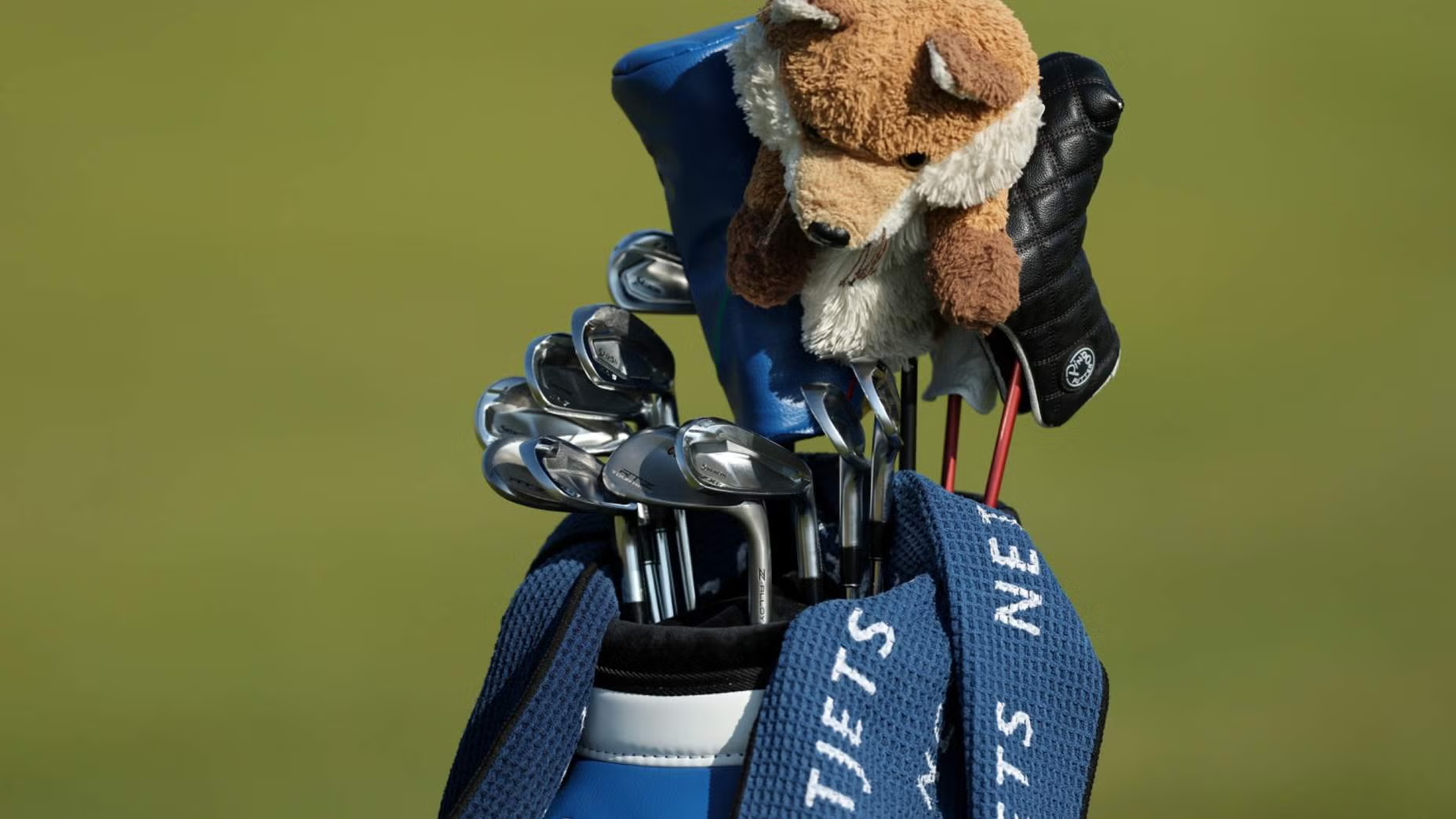
Ryan Fox relied on a full bag of Srixon/Cleveland to capture his first major championship.
Ryan Fox represents a category of ball-striker that defies standard conventional wisdom on baked-out courses. Fox is a heavy-striking player who drives the clubhead down hard into the turf through impact. Rather than sweeping the ball clean, he compresses it with substantial forward shaft lean and a steep angle of attack, taking distinct divots regardless of how firm the sub-base happens to be.
For a player with Fox’s delivery profile, dropping to low-bounce grinds under hard conditions creates a catastrophic scenario. When a steep attack angle is paired with a sharp leading edge and minimal sole geometry, the clubhead drives directly into the soil without resistance, leading to heavy contact and inconsistent distance control. By staying in Mid-Bounce profiles across his entire 50°, 56°, and 60° wedge setup, Fox maintains necessary ground clearance. The sole bounce acts as a safety valve, allowing the clubhead to pass down through the ball, compress it against the tight turf, and exit cleanly on the target line without stalling in the ground.
Furthermore, Fox frequently uses his lob wedge to play low, flighted shots off his back foot. Moving the ball back in the stance increases dynamic shaft lean, which effectively subtracts bounce from the club head at impact. Because Fox manipulates his delivery to deloft and drive the ball flat, the static Mid-Bounce is required simply to keep the leading edge elevated enough to prevent digging. His shaft build also reflects this mechanical split: a stiffer Dynamic Gold X100 in the 50° to match his iron transition and tight distance dispersion, followed by Dynamic Gold S400 shafts in the 56° and 60° to provide slightly softer tip feel and controlled spin on partial greenside shots.
Shane Lowry: Upright angles, dynamic touch, and sole transition
Shane Lowry wedge specs:
50° MID Grind (bent to 51°): KBS Tour X, +.25″ Length, 2.5° Upright
56° MID Grind (bent to 57°): KBS Tour X, +.25″ Length, 2.5° Upright
60° LOW Grind (bent to 61°): KBS Tour X, +.25″ Length, 2.5° Upright
Shane Lowry possesses one of the most distinctive wedge setups on Tour, defined by upright lie angles and precise loft tweaks. Standing at a relatively standard height, Lowry’s lie angle configuration of 2.5 degrees upright across all three wedges is noticeably upright compared to tour averages. This spec stems from both a visual preference at address and a structural delivery mechanics issue where Lowry stands the shaft up during his backswing and delivers the clubhead with a toe-down, upright orientation.
Lowry’s lofts are each adjusted 1-degree weak (50° to 51°, 56° to 57°, and 60° to 61°). Bending a wedge weak increases static bounce by 1 degree while adding subtle offset and altering the leading-edge appearance. On his gap and sand wedges, this modification maintains controlled full-swing gapping and enhances spin rates out of rough and fairway lies alike.
All-new RTZ Wedges are made with Z-Alloy, a completely new steel formula that enables a zero-compromise design approach for incredible feel, better durability, and more consistency for our best performing tour Wedges yet. Plus, there’s an all-new ADAPT grind featuring full-face grooves, to give RTZ Wedges more versatility than ever before.
Z-Alloy
Z-Alloy is a brand-new steel with better feel. It’s softer, lighter, and remarkably durable. It gives RTZ Wedges superior feel, better forgiveness, and more consistency. On RTZ Tour Rack Wedges, Z-Alloy’s rust-resistant properties ensure longer-lasting, like-new performance.
HydraZip
HydraZip is a unique system of face blasts and laser-milled lines formulated to maximize spin performance under wet conditions. This technology is dynamically configured by loft groupings, which helps balance spin across lofts, while maximizing spin in adverse conditions.
ZipCore
This low-density core technology replaces heavier material in the heel and hosel area with a lightweight, low-density, vibration-dampening material. This proprietary core allows us to shift the Center of Gravity closer to where you strike the ball, while simultaneously adding MOI.
UltiZip
UltiZip’s sharper grooves cut through grass and debris at contact, while deeper grooves help make space for grass, sand, dirt, or water to clear the impact zone, giving RTZ Wedges stronger, more consistent spin from the fairway, rough, or bunker.
Earlier in the season, Lowry transitioned away from a Full Face lob wedge profile into a 60° Low Bounce grind (bent to 61°). Lowry is an elite short-game artist who relies heavily on wrist manipulation, face opening, and shallow turf skimming around the greens. Because Lowry naturally adds dynamic bounce through impact by releasing his hands and laying the face open, a wedge with wide sole geometry or high static bounce becomes a liability on hard surfaces. Excessive bounce causes the trailing edge to strike the hard ground first, causing the leading edge to skip upward into the middle of the ball. The Low Bounce grind allows the leading edge to stay close to the dirt when the face is opened, trusting his hands to supply the necessary bounce dynamically at strike.
Advertisement
Nico Echavarria: Flat alignment and open-face geometry
Nico Echavarria utilizes a classic wedge gapping setup (50°, 54°, and 58°) with uniform True Temper Dynamic Gold S400 shafts at standard length, adjusted 1 degree flat throughout. A 1-degree flat lie angle aligns with a shallow, inside-to-square swing delivery, keeping the heel from catching early on tight turf and keeping start-line directions true on full wedge shots.
Echavarria’s grind selection highlights a traditional Tour setup philosophy. He maintains Mid-Bounce options on his 50° gap wedge and 54° sand wedge to preserve versatility, turf interaction consistency, and full-shot stability from fairways and bunkers. However, on his primary greenside scoring club — the 58° lob wedge — he chooses a Low Bounce grind.
The logic behind Echavarria’s low-bounce lob wedge centers on face orientation. Echavarria frequently plays very open face angles on short game shots around the greens. Opening the clubface rotates the trailing edge down, which artificially increases the effective bounce of the club. If a player starts with a high static bounce on a lob wedge and then opens the face on firm turf, the effective bounce becomes unplayable, pushing the leading edge too high off the ground. By opting for a low-bounce base grind, Echavarria can open the blade as aggressively as needed on hard ground, adding just enough dynamic bounce to glide under the ball without risk of skimming or blading the shot.
Tour Truck takeaways: Technical principles of firm-turf wedge fitting
Attack Angle and Ball Position: Steep diggers who de-loft the club require higher static bounce to prevent digging, even on baked-out turf.
Hand Release and Open Faces: Players who open the face or release the clubhead early add dynamic bounce at strike, making low static bounce essential to keep the leading edge low to the turf.
Lie Angle Precision: Upright deliveries require matching upright lie specs to protect start-line control, while flat deliveries prevent heel-snagging on tight lies.
Shaft Progression: Flex and weight transitions (such as Fox dropping from X100 to S400 in lower lofts) allow players to fine-tune spin rates and feel between full approach shots and touch greenside shots.
The Missouri Attorney General’s Office is currently investigating ESPN’s Matt Miller following accusations of scamming people out of money. These accusations came to light after his horrific accident last month that resulted in the amputation of his left arm.
Miller had created a GoFundMe campaign to help with expenses. However, the focus was shifted to a Reddit thread where several of his alleged victims came forward with their accounts of being scammed by him.
Thanks for the submission!
Advertisement
On Wednesday, Tony Farmer came forward with a new piece of evidence as the investigation continues. He shared a post highlighting how Matt Miller’s brother, Marshal, is linked to the situation.
•
Advertisement
“Holy crap, I found it,” Farmer wrote. “Matt Miller’s brother Marshal acknowleding on tape he goes by ‘EmmandEmm.’ This is huge!! Why it matters:
Looking to predict NFL playoff Scenarios? Try our NFL Playoff Predictor for real-time simulations and stay ahead of the game!
Advertisement
“1–Now 2 different nicknames he goes by (also ‘mellosquire’) often registered in the SAME Matt Miller charity fantasy leagues. Unless someone else was controlling these accounts with his alias, it appears Marshal Miller secretly controlled TWO teams in some of Miller’s leagues. Miller played in each league too so it appears the brothers sometimes controlled 3 of the 12 teams in the league!
“2–EmmandEmm registered for 19 Matt Miller fantasy leagues between 2024-2025. 12 times these two usernames (EmmandEmm and MelloEsquire) were in the same league. Melloesquire registered for 38 in 2025 and 14 in 2024. 3– Remember that each owner was expected to pay $100 and half that money was promised to Matt for charity.
“Do you think Marshal was paying registration fees? If the answer is no, then it raises questions about the actual amount of money that went to charity vs. what was promised.”
Farmer also revealed how he found this information on an episode of the “Mic’d Up” podcast, which aired back in Nov. 2021.
According to a tweet from analyst Tommy Challahan, Miller did not pay the winners of his charity leagues and also took 50% as admin cuts. In addition, other accusations include him not showing up for paid scouting lessons and also annual subscription charges to his newsletters and scouting sites despite no regular updates.
Matt Miller shares a health update amid ongoing investigation
Earlier this month, Miller provided an update regarding his health.
In a tweet posted on X, he said that he had a successful surgery, highlighting the possibility of utilizing a prosthetic arm in the future. Miller also said he’s stepping down from his role at ESPN indefinitely while continuing his recovery journey.
“A quick update: The surgery to remove my left arm was successful with hopes of an eventual prosthetic replacement,” Miller said. “Similarly, the femur and patella surgeries were also successful and the fantastic surgery team was able to save my left leg.
“To best focus on my healing and recovery, I’m stepping away indefinitely and will be placed on leave from ESPN. Thank you all for the prayers and thoughts; please keep them coming.”
Miller’s GoFundMe campaign raised approximately $51,000. Pat McAfee is one of the highest donors with a contribution of $5,525.
The England international has impressed in recent seasons for club and country, so much so that debate swirled around who should start between Rogers and Jude Bellingham for Thomas Tuchel’s side at this summer’s World Cup.
Bellingham’s remarkable form underlined his superiority, but that is no slight on Rogers, who has piled up 18 goals and 16 assists in the Premier League across the last two seasons.
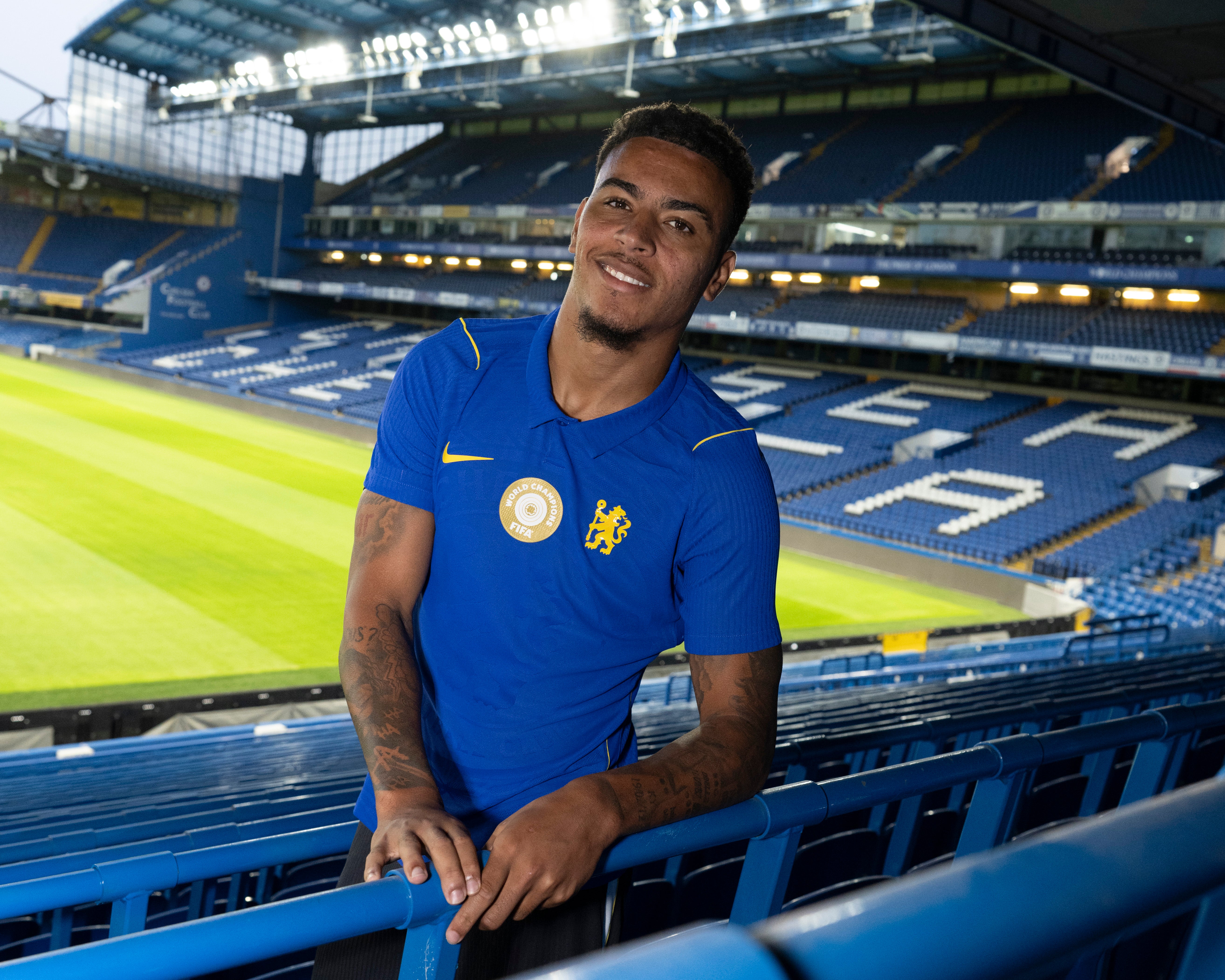
Morgan Rogers poses in the Chelsea shirt at Stamford Bridge (Getty)
That is the ninth-most in the league and the same as Cole Palmer, his friend and new teammate with whom he shares the famous ‘cold’ celebration.
Let’s take a deeper look at what Rogers brings, where he fits in and the potential issues that could arise with the England international on board under Xabi Alonso.
Why have Chelsea signed Rogers?
Advertisement
The fee for Rogers is eye-watering, of that there is no doubt as the fourth most expensive in the history of the game, and those who have cost in excess of £100m have tended to struggle to justify that investment.
Yet Chelsea’s aggression in negotiations suggests they believe Rogers can certainly fit into their system, with Alonso evidently on board and, as The Independent understands, proving decisive in the player’s decision, having strongly considered Arsenal, too.
Unlike Arsenal, though, Chelsea offer the prospect of a more fluid rotation or, you could argue, a squad with less consistency and proven quality, which should allow Rogers to impose himself quickly. That could prove attractive to the player, who may have found a clear path to playing time complicated by some of Arsenal’s newly-crowned champions, as has been the case with Eberechi Eze in his debut season at the Emirates.
Alonso will lean on his versatility: Rogers can play as a No 10, which is probably initially blocked by Palmer when he’s healthy, but Chelsea might also use him at left-wing, right-wing or even either side of a defensive midfielder in a three as a No 8.
Advertisement
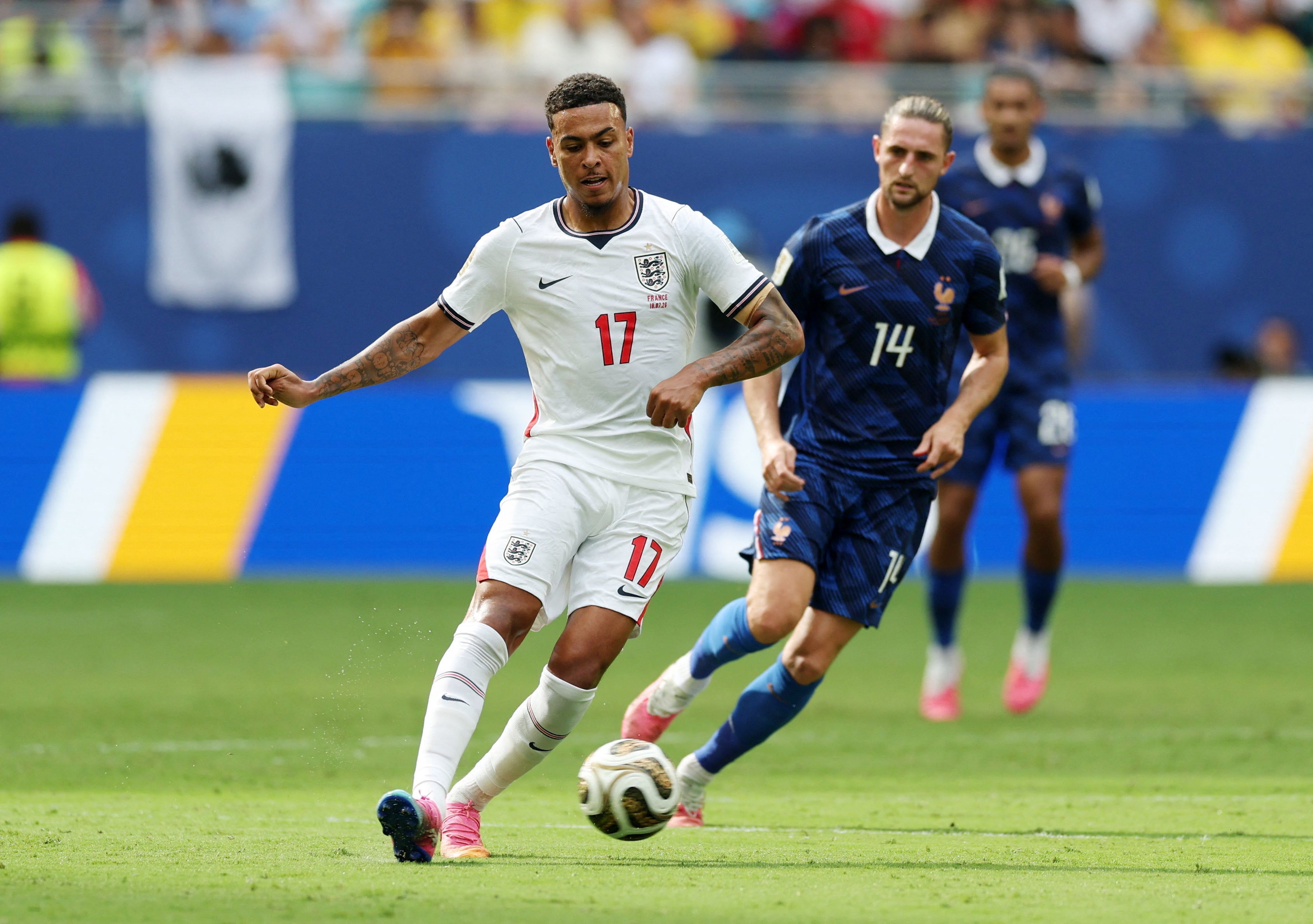
Morgan Rogers in action for England at the World Cup 2026 (Reuters)
There’s immense workrate to go with his final-third contributions and a willingness to keep moving, both with and without the ball.
Rogers’ production is top class, as mentioned with his 16 combined goals and assists last term, but his ability to take the shot on from range could be a precious addition for a team facing deep blocks on a regular basis.
It also partially explains his 10.37 xG+xA from last season, and he outperformed the same metric in 2024/25 too (11.68 xG+xA), with 18 combined goals and assists.
Rogers took 35 shots from outside the box last season in the Premier League, according to WhoScored, the fourth most in the league and a massive 41.6 per cent of his total efforts on goal.
By contrast, Bukayo Saka had 19 (26.8 per cent), Florian Wirtz had 15 (29.4 per cent), Antoine Semenyo had 12 (24.5 per cent) and Bruno Fernandes had 46 (54.1 per cent). Palmer’s rate is comparable after 30 of his 64 shots came from outside the box (46.9 per cent), which could offer a glimpse of how Chelsea hope to lure opponents out of a deep block and ultimately break them down.
Advertisement
The plan will be for Alonso to make Rogers a pillar of his team, but at 24 years of age and with such variety to his game, Rogers also appeals as a piece of the long-term puzzle at Stamford Bridge, should things change in the dugout, with ties to the club until 2033.
The almighty premium brings trepidation, but also some comfort: there is a reason why Premier League players have an extra tax when moving inside the division. The unknown element is drastically reduced, with Rogers undaunted by the competition.
While unfamiliarity with the manager brings an element of uncertainty, his close ties to Palmer and Reece James with England, and fellow City academy graduates Tosin Adarabioyo, Jamie Gittens, Romeo Lavia and Liam Delap, ensure the environment is set up for him to succeed.
Advertisement
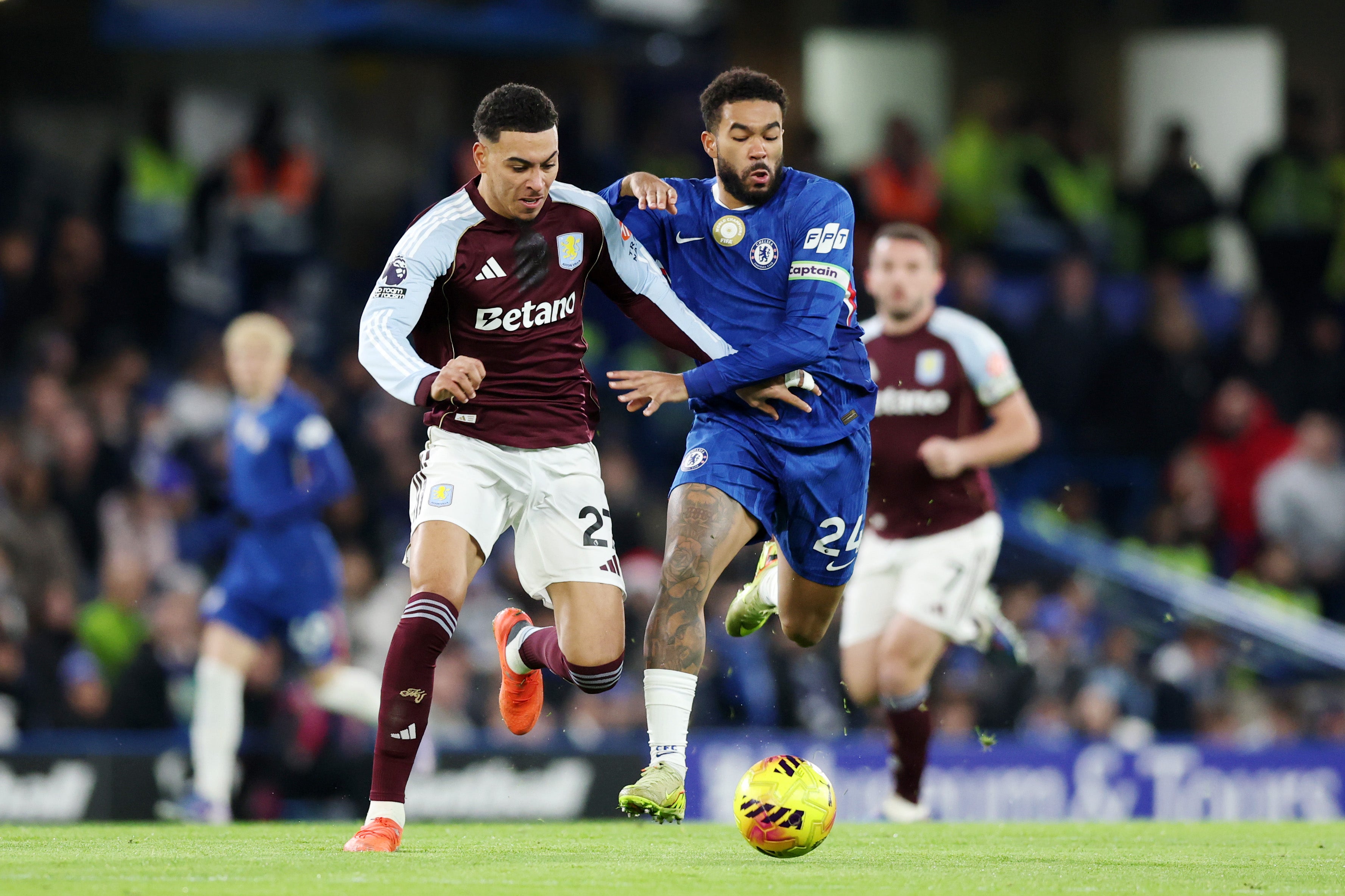
Reece James of Chelsea battles for possession with Morgan Rogers of Aston Villa (Getty)
So where does Rogers fit in to Alonso’s Chelsea?
Rogers enjoyed the luxury of Unai Emery building around him, Aston Villa’s patterns of play bounced off him, but at Chelsea, there will be an element of fitting in. That further emphasises Rogers’ willingness to run off the ball, in fact, it will be crucial for him succeeding. Think of how Pedro Neto can bring a dynamic option off the ball to capitalise on Palmer’s vision.
Xabi Alonso’s formation of choice remains uncertain before next Tuesday’s opening pre-season friendly against Western Sydney Wanderers.
In a back three/five at Bayer Leverkusen, Rogers could operate from the left of a front three. That would complicate how Alonso integrates Rogers, Palmer, Joao Pedro and, once fully fit, Estevao Willian.
In fact, it would be almost impossible for all four to start in that shape, but there is the mouthwatering potential that quartet could co-exist in a 4-2-3-1 or 4-3-3 as a No 8, as detailed above, or as one of two No 10s behind a centre-forward.
Advertisement
There’s also an elephant in the room: Palmer’s fitness concerns from last season, with just 26 Premier League appearances. Chelsea now have a player that could seamlessly thrive as the leader to their attack if Palmer is unavailable for any period of time.
Blues fans might recall Frank Lampard’s injury enabling Michael Ballack to prosper throughout the 2007/08 campaign.
If Alonso does utilise a 4-2-3-1 or a 4-3-3, then there will be an appetite to trial a front four made up of Rogers, Palmer and one of Estevao, Pedro Neto or new signing Geovany Quenda from the right, with Joao Pedro leading the line.
One potential Alonso dilemma may be around how he provides width if Rogers is parked out on the left. In a 3-4-3, that should not be too much of an issue, with Pedro Neto, Quenda or even Valentin Barco able to hug the touchline. Should Chelsea play a back four, then opponents may find joy by crowding the middle third of the pitch.
Advertisement
Morgan Rogers will link up with Cole Palmer at Chelsea (PA Archive)
Should Chelsea be concerned about anything?
Well, it depends on their expectations and, at that fee, what constitutes success? Realistically, will Rogers kick on and become a Ballon d’Or contender as would dictate being the fourth most expensive player in the sport’s history? Probably not. But with regular production and thriving as a contributor for a team looking to eventually get back into the title picture, that appears realistic.
One of the unknowns for Rogers in a team not built around him, with fewer touches, will be his efficiency. Previously a high-usage player, it is therefore understandable that, as ESPN notes, he was dispossessed more times (80) than any player in the league and coughed the ball up the third-most (72) in the middle or attacking third.
Ultimately, that is just a consequence of Rogers attempting something audacious or trying to be creative in the final third, which is what you want from your most talented players. Given Chelsea have greater depth in that department than Villa, they should be able to better survive those leaner spells of production and ride the Rogers wave when he hits top gear.
How can Chelsea afford Rogers without European football?
Advertisement
The £117m fee is obviously quite stunning and more than just inflation, though it is not a Premier League record, with Liverpool’s £125m deal for Alexander Isak from last year remaining the most expensive.
While Liverpool were careful with their spending until last year’s splurge, Chelsea have spent lavishly in recent years, including another £47m spent on Marco Palestra this summer.
But the simple maths of Chelsea’s transfer dealings show that they have already brought in a hefty amount from sales with Marc Cucurella to Real Madrid (£52m), Andrey Santos to Manchester United (£50m), Tyrique George to Everton (£24m) and Enzo Maresca’s compensation to join Man City worth £17m.
More could be yet to come with Trevoh Chalobah linked with a move away, while Enzo Fernandez’s future is unclear, while Alejandro Garnacho could join Villa in a separate deal, with Uefa’s rules clear on deterring player exchanges at inflated fees, with any deals within 45 days of each other classified as such.
Advertisement
But beyond swap deals, Chelsea can simply be creative when it comes to Financial Fair Play, applying all of the money generated from sales immediately to the accounts, while spreading the Rogers fee out across five years, with just £23.4m due this year. The pay-off comes down the line if Chelsea ever struggle to generate immediate revenue from sales, though the world class Cobham academy is an asset that should provide comfort in this regard.
Liverpool are confident of signing Bradley Barcola, Alex Scott favours a move to Arsenal, Bruno Fernandes is ready to commit his future to Manchester United.
Liverpool are confident they can beat Arsenal and Bayern Munich to the signature of Paris St-Germain forward Bradley Barcola, after the 23-year-old impressed with four goal contributions at the World Cup with France this summer. (Sun), external
Arsenal are edging the battle with Manchester United for sought-after Bournemouth midfielder Alex Scott, 22 – but the England Under-21 international has concerns around how much game time he would get at the Emirates. (Mirror), external
Portugal midfielder Bruno Fernandes, 31, has decided to commit his future to Manchester United, with talks around a new deal ongoing. (Express), external
Besiktas are trying to sign English midfielder Joe Willock, 26, who is in the final year of his contract at Newcastle and will not be offered a new deal. (Telegraph), external
Arsenal are not ruling out the sale of their captain Martin Odegaard, and will listen to offers for the 27-year-old Norway midfielder. (Teamtalk), external
Manchester United are exploring a move for Real Madrid midfielder Eduardo Camavinga, 23, who missed out on a place in France’s World Cup squad this summer. (Nicolo Schira), external
Advertisement
Roma have asked about the availability of Chelsea centre-back Axel Disasi, 28 – and the Blues have set an asking price of around £17m for the Frenchman. (Footmercato – in French), external
Mountain Unveiled is one of the Jianghu Legacy quests that you can do in Where Winds Meet’s new Hidden Mountain area. It is also technically a part of the main quest since it unlocks the hidden passage to the Mohist City in Suixiang. The Mountain Unveiled quest itself is fairly short but has a few puzzle mechanisms that you must complete. Completing it will give you a few Echo Jades, Hidden Mountain EXP, and more.
This article covers how to complete the Mountain Unveiled Jianghu Legacy quest in Where Winds Meet.
Where Winds Meet Mountain Unveiled Jianghu Legacy quest guide
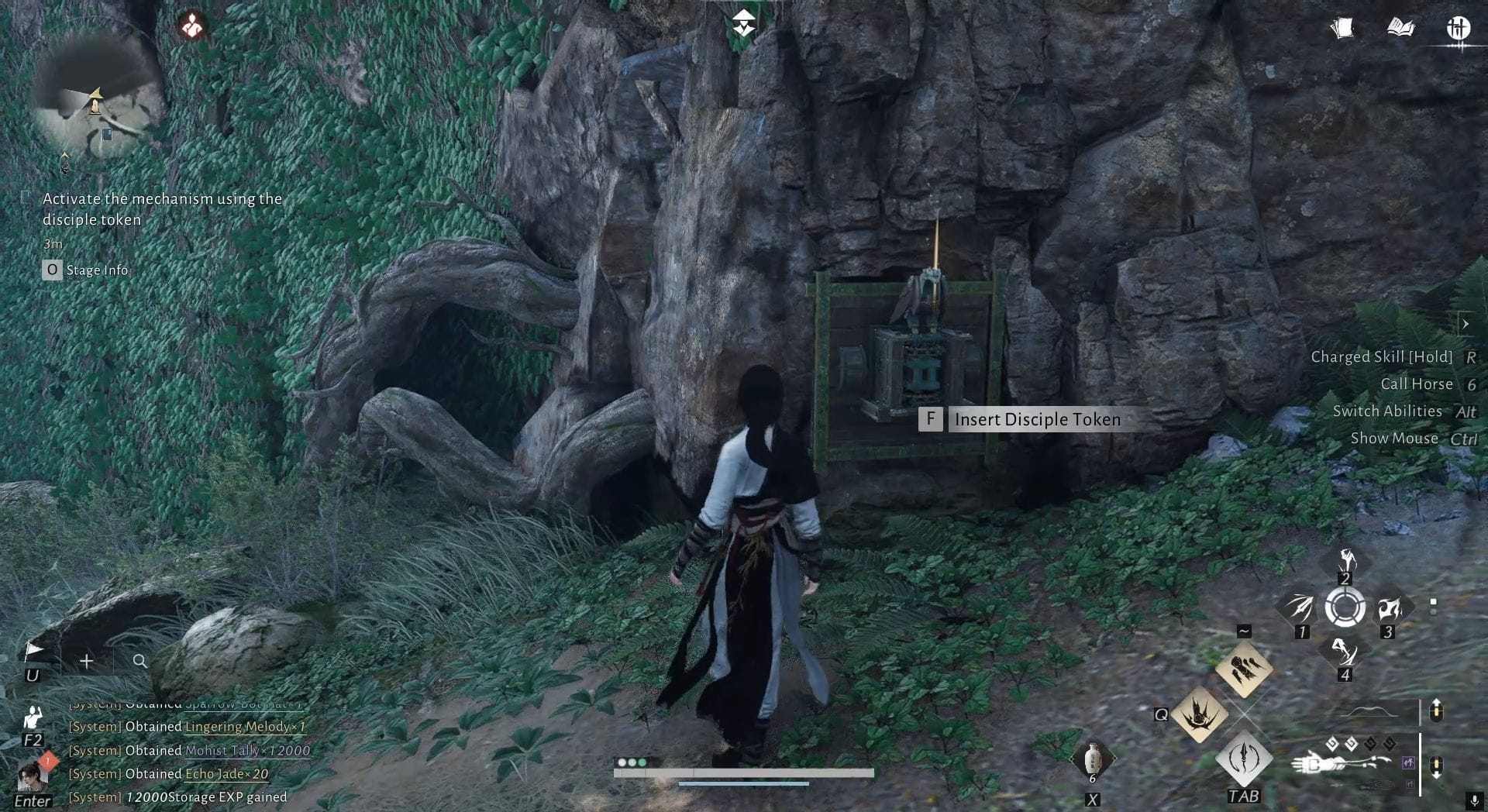
Follow Feng Jisheng and activate the mechanism using the disciple token
Insert the disciple token in the mechanism (Image via NetEase)
The Mountain Unveiled quest is automatically triggered after your wooden bird crashes near Gasping Cliff. The first objective in the quest is to follow Feng and insert the disciple token into the mechanism. This will open the hidden passage.
Advertisement
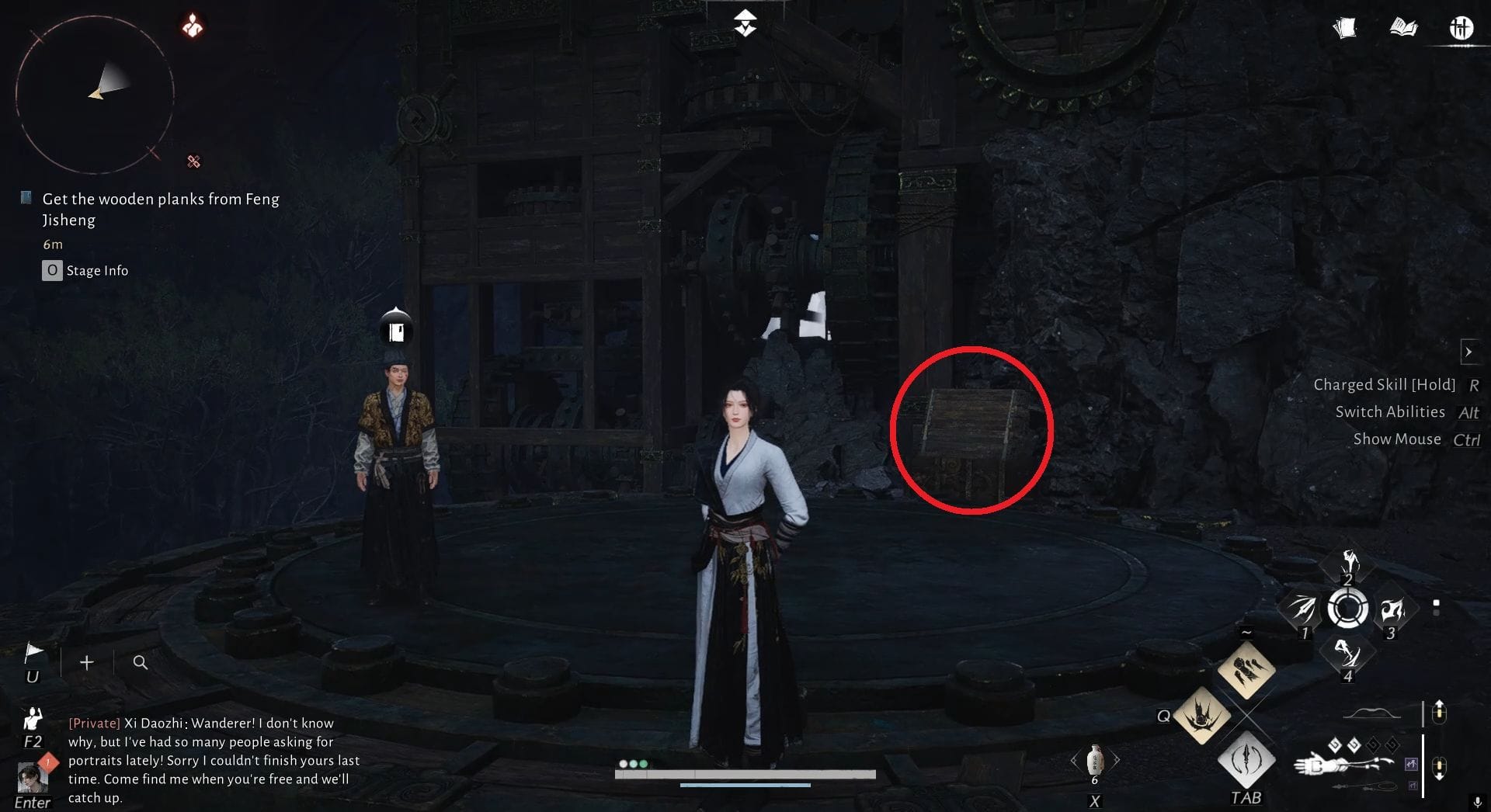
Talk to Feng Jisheng and get the wooden planks
Collect the planks (Image via NetEase)
After the cutscene, speak with Feng and get the wooden planks.
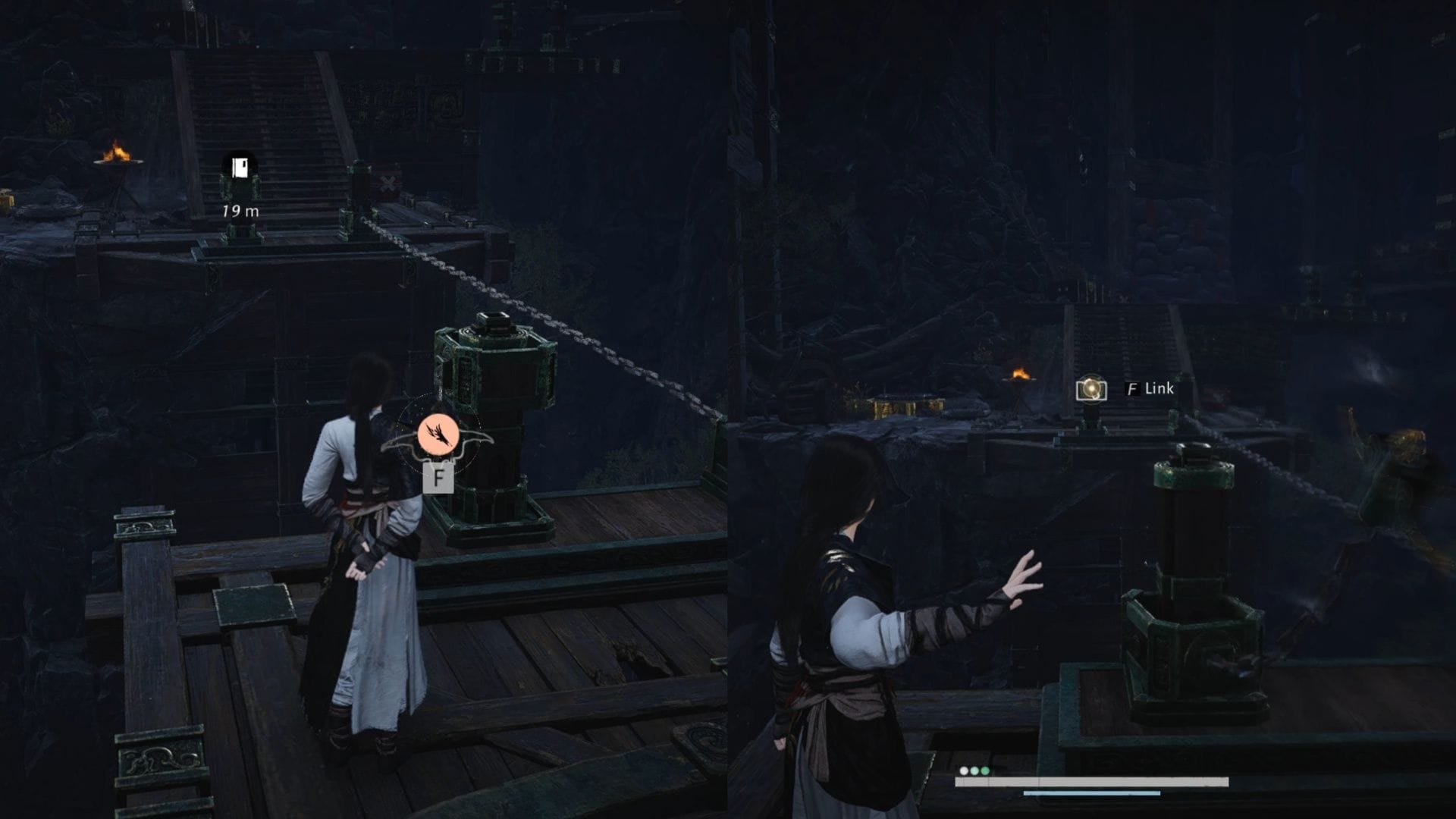
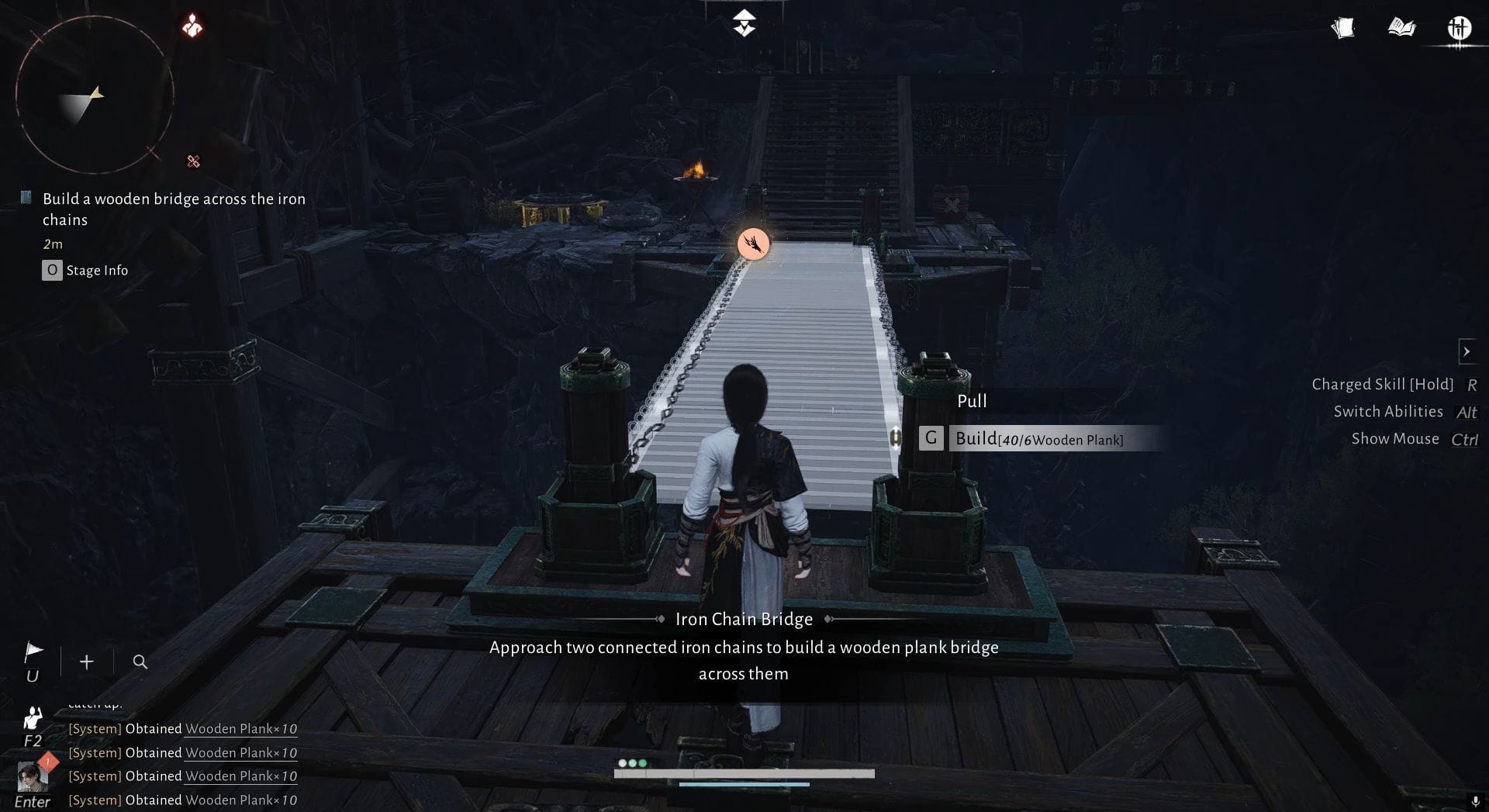
Link the chains to form a bridge (Image via NetEase)
Approach the hologram and interact with it to form a bridge with the wooden planks. This will trigger another short cutscene.
Ascend with Feng Jisheng
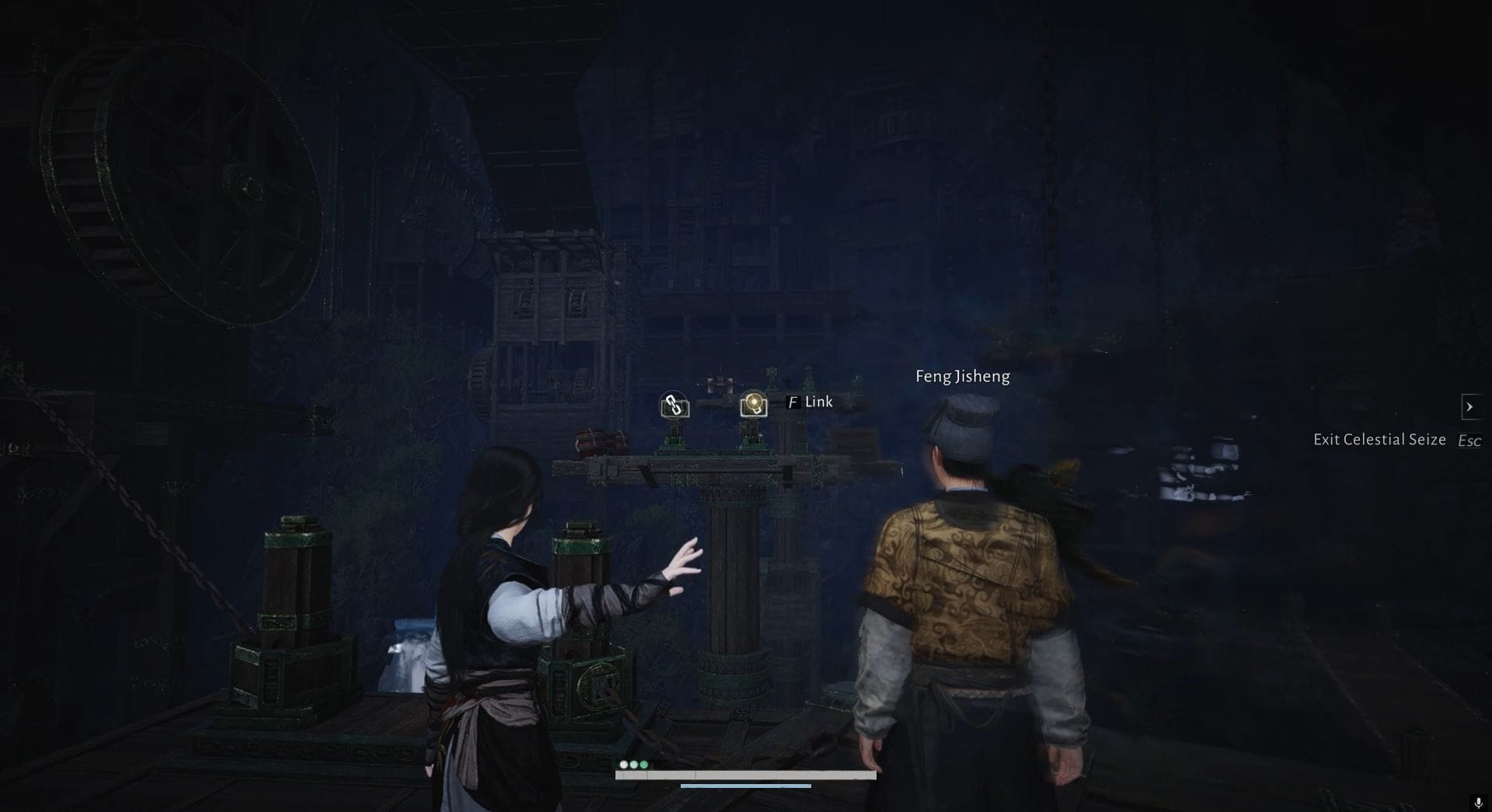
Link the iron chains (Image via NetEase)
Approach Feng and link the iron chains again. Note that you can also unlink the already linked chains to form a new bridge.
Dismantle the mechanical crossbow
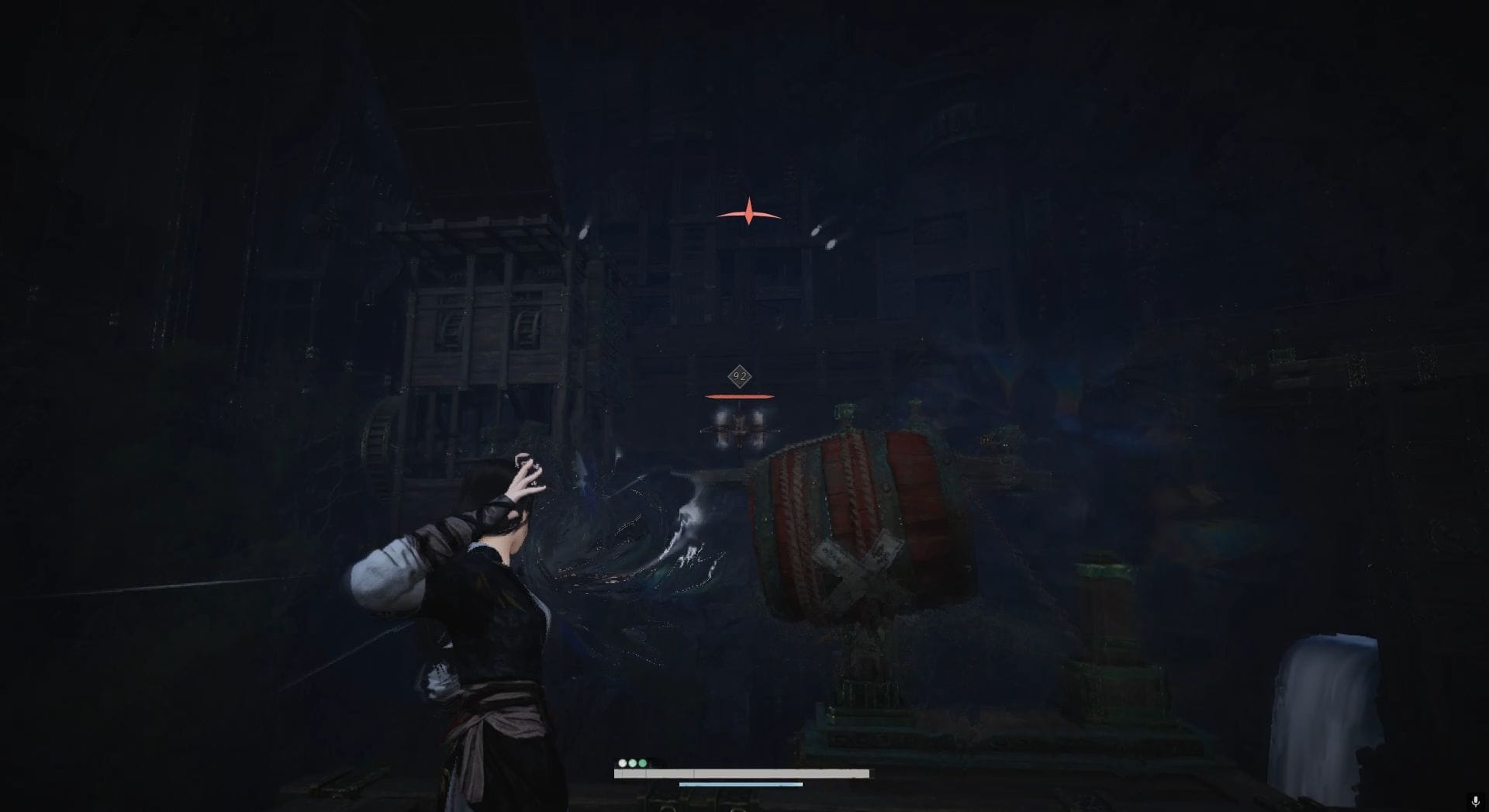
Throw an explosive at the crossbow (Image via NetEase)
Once you get to the next platform, a mechanical crossbow will start attacking you. You can disable it by throwing an explosive barrel. Next, link the chain and go to the next platform.
Investigate the mechanism on the platform
Wait for Feng to get on the platform. Next, interact with the mechanism to trigger another cutscene. Once that is done, Feng will volunteer to operate the mechanism.
Forge a path for Feng Jisheng
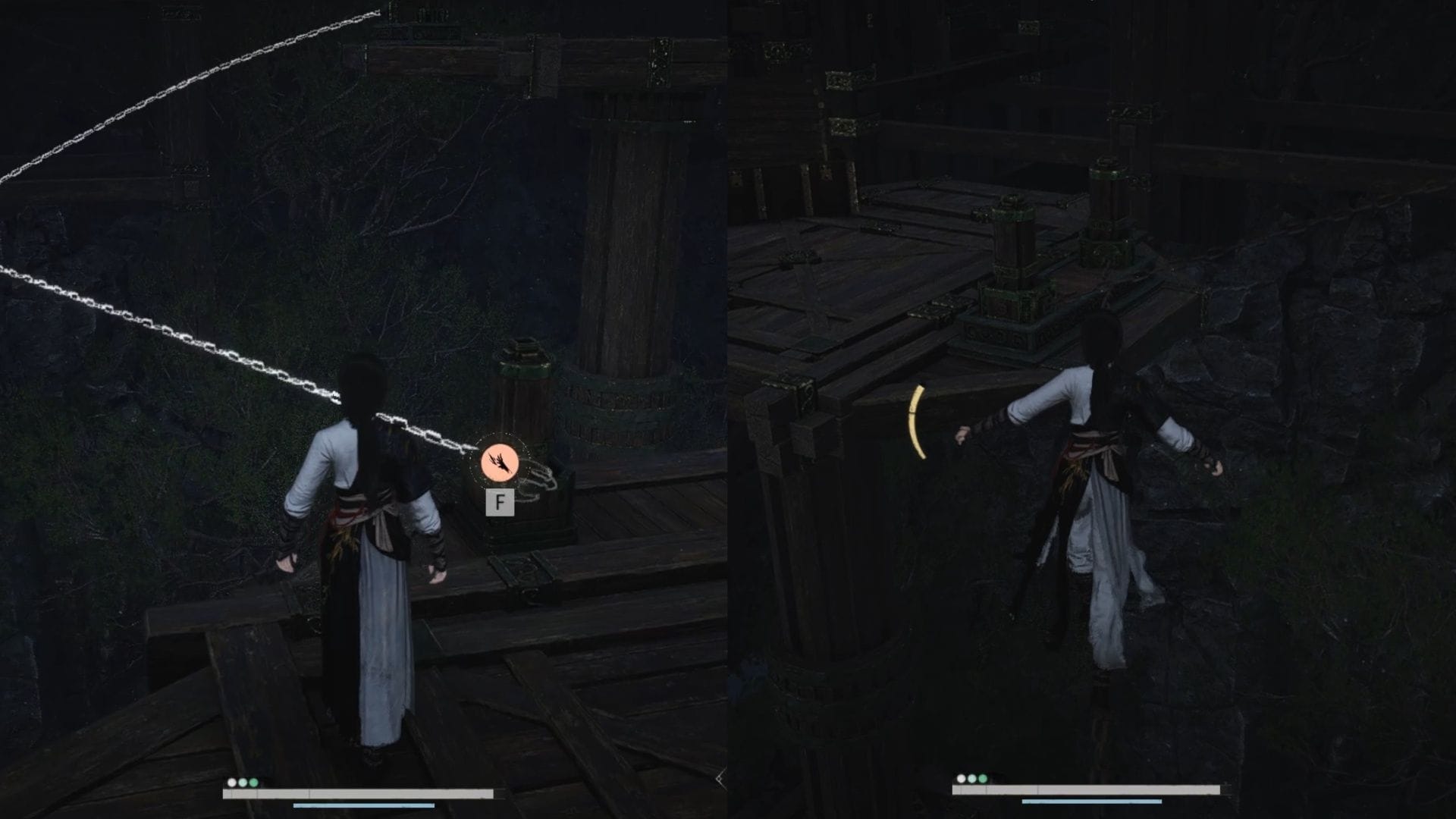
Walk on the chain (Image via NetEase)
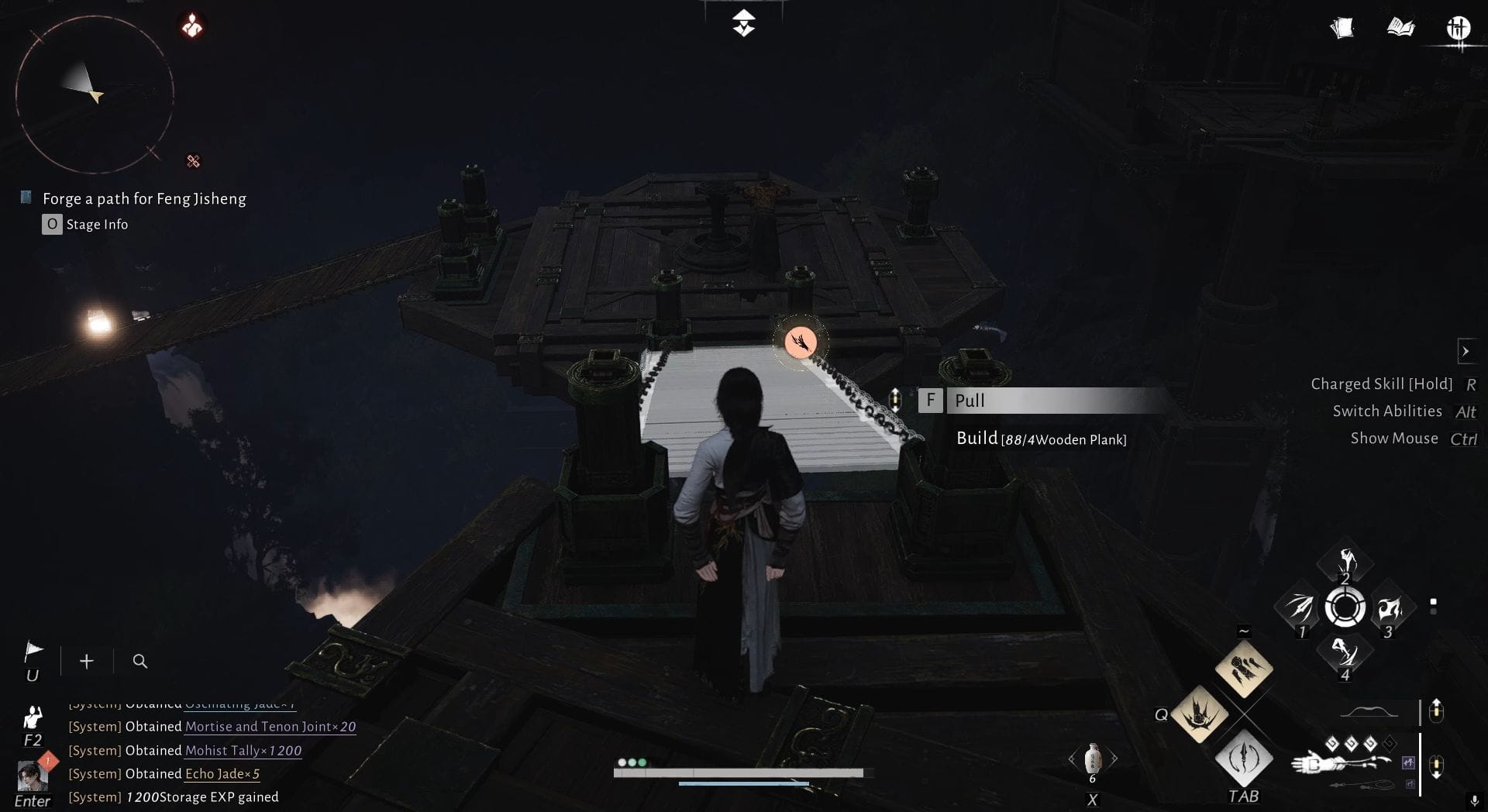
While Feng is busy with the mechanism, you must link one of the chains on the newly risen platform with the one you’re on. Once that is done, jump on the chain and walk over it to get to the next platform.
Form a bridge for Feng (Image via NetEase)
Keep linking the iron chains and forming the bridge until you get to the platform that connects with the one Feng is on, and wait for him to climb up.
Ascend with Feng Jisheng and wait for him
Check on Feng (Image via NetEase)
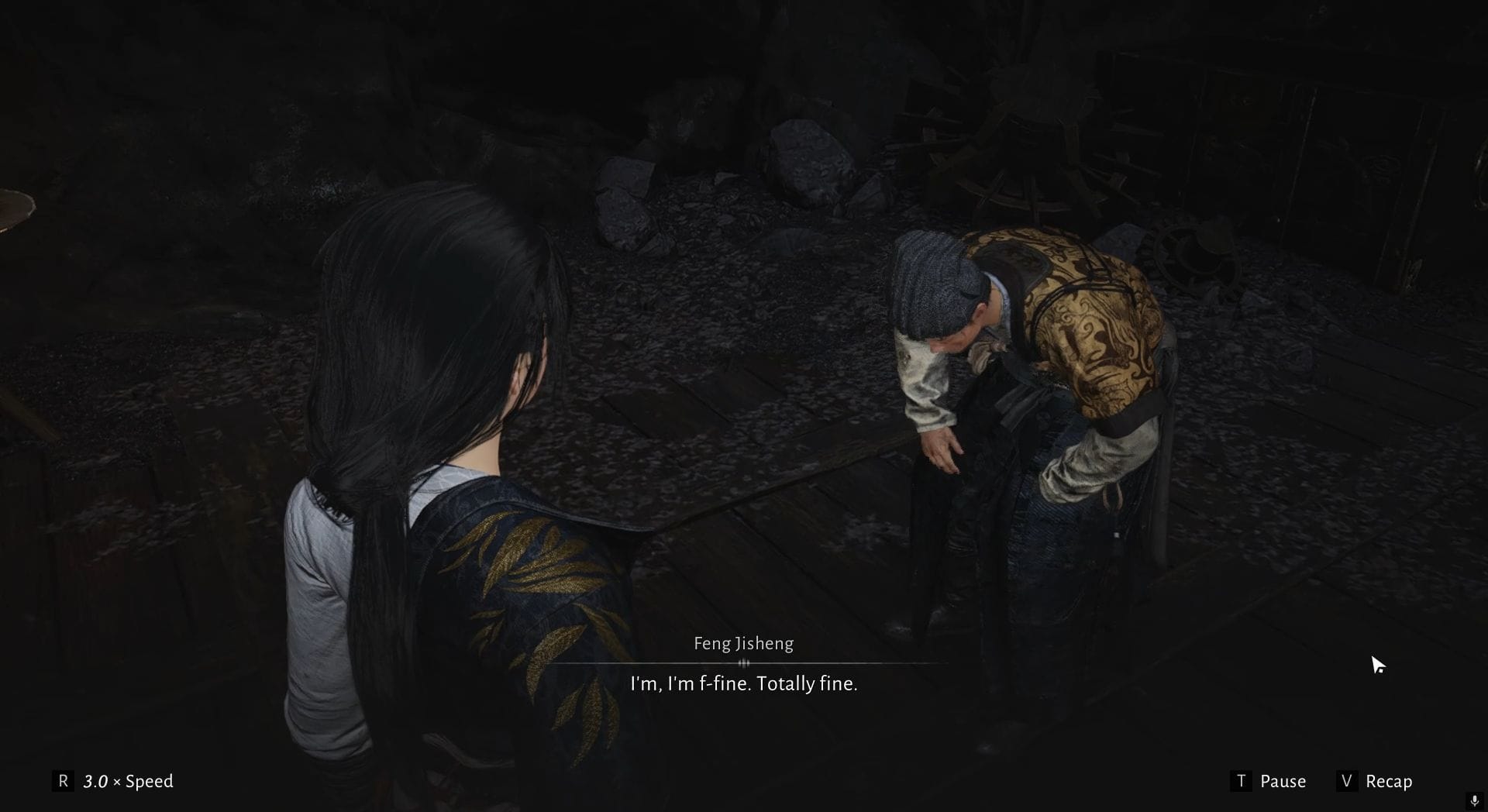
Once Feng has regrouped with you, you must make one final makeshift bridge with the chains and get on the bigger wooden bridge. Next, check on Feng’s condition. This will trigger a cutscene, and the Heron will lower the bridge.
Defeat the Golden Colossus
Defeat the enemy (Image via NetEase)
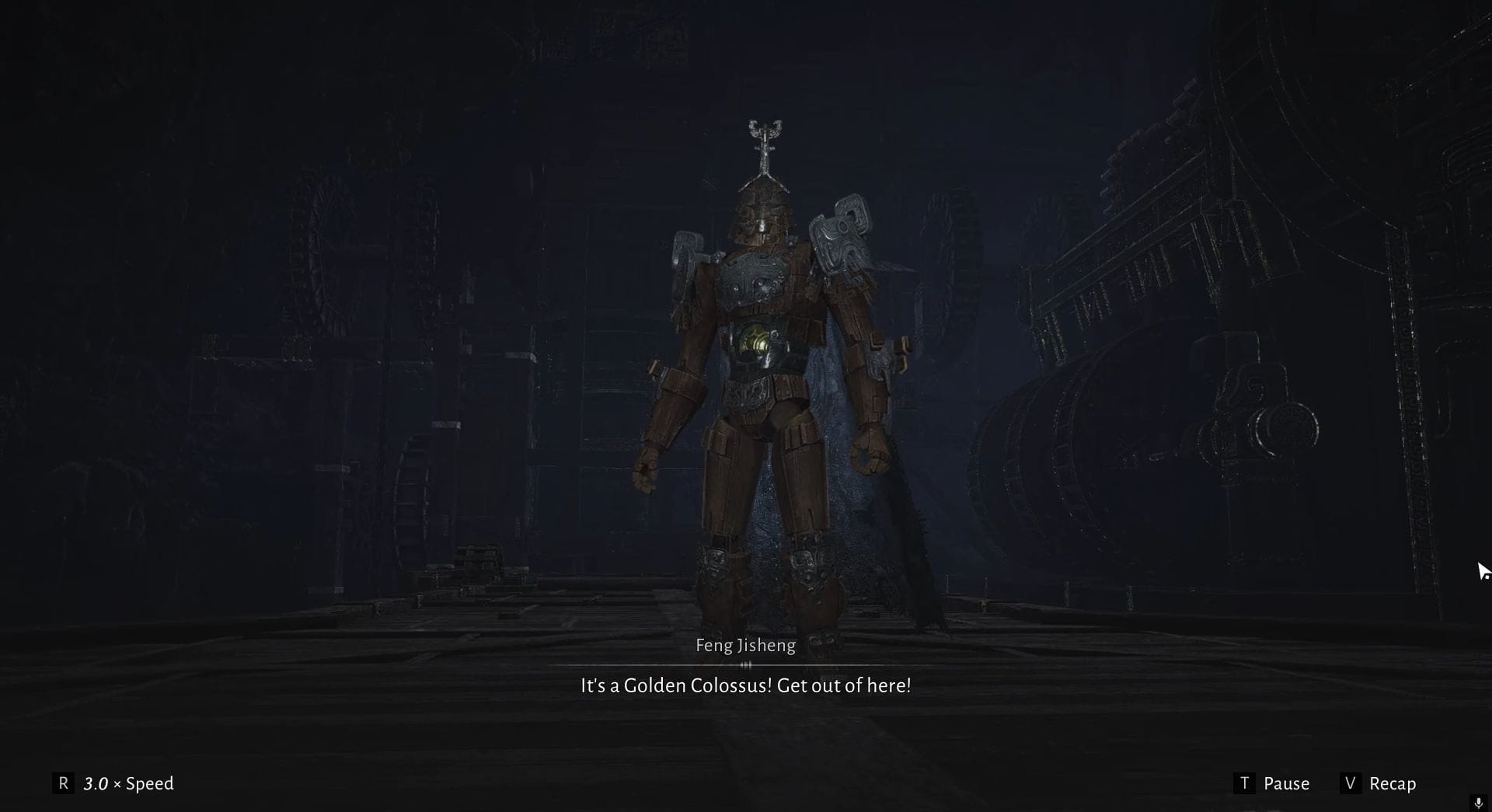
Carry Feng on your back and keep pushing. As you move forward, a Golden Colossus will appear, and you must defeat it.
Continue ahead
Mountain Unveiled (Image via NetEase)
After defeating the Golden Colossus, follow the quest marker and go to the glowing spot. This will trigger one last cutscene and conclude the Mountain Unveiled quest in Where Winds Meet.
As a reward for completing the quest, you’ll get Echo Jade, Hidden Mountain Experience, Mohist Tally, and more.
Check out other WWM articles:
Advertisement
Why did you not like this content?
Was this article helpful?
Advertisement
Thank You for feedback
Are you stuck on today’s Wordle? Our Wordle Solver will help you find the answer.
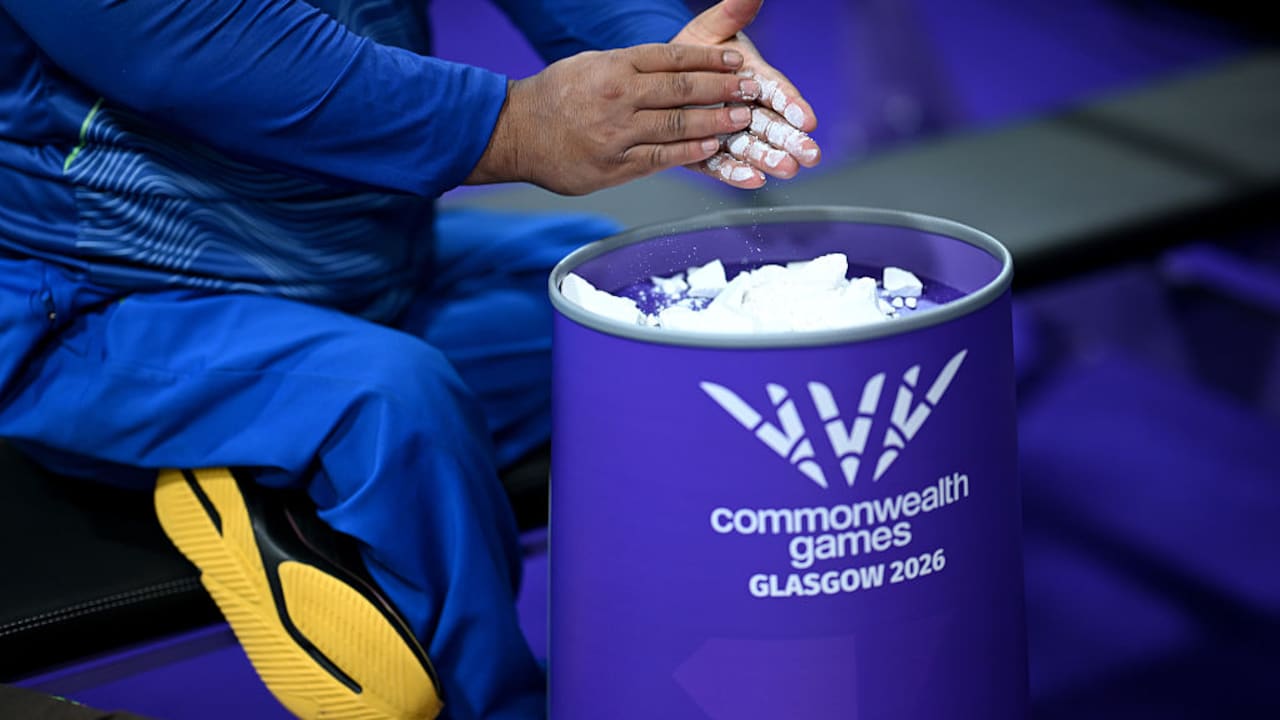
Around 3,000 athletes from 74 nations and territories are all set to compete across 10 sports at the Commonwealth Games 2026 in Glasgow, Scotland, which will get underway from Thursday, with 215 gold medals on offer. For India, it will mark the nation’s 19th appearance at the Commonwealth Games, having made its debut in the 1934 edition. A 124-member Indian contingent will be in action at the Commonwealth Games 2026 in Glasgow, Scotland, as athletes across eight able-bodied sports and five para-sports compete for medals. India will begin their campaign with lawn bowl events across men’s and women’s disciplines.
After creating history with unforgettable medal-winning performances in 2022 edition, the Indian lawn bowls team heads to Glasgow, Scotland, determined to challenge the world’s best once again at the Commonwealth Games 2026.
The Indian Women’s Lawn Bowls Team created history at the Commonwealth Games 2022 in Birmingham when Lovely Choubey, Pinki, Nayanmoni Saikia and Rupa Rani Tirkey defeated the South African team to win the historic gold in the final of the women’s fours event.
Advertisement
This is India’s first-ever medal in lawn bowls, a sport which has been a fixture in the CWG itinerary since 1930, barring the 1966 edition in Jamaica.
Moreover, the Men’s Fours of Sunil Bahadur, Chandan Singh, Navneet Singh and Dinesh Kuma claimed a silver. India also came close to winning a medal in the men’s pairs event.
The opening ceremony will take place in Glasgow’s Hydro, an iconic venue that has supported some of the world’s biggest music stars and acts.
India’s Day 1 (July 23) schedule
Advertisement
Lawn Bowls:
2:00 PM IST – Men’s Singles Group Stage (Day 1)
2:00 PM IST – Women’s Pairs Group Stage (Day 1)
Opening Ceremony: 10:30 PM IST onwards
Advertisement
(This story has not been edited by NDTV staff and is auto-generated from a syndicated feed.)
Featured Video Of The Day
Yamal Laughs At Paredes vs Gavi ‘Fight Of The Year’ Poster During Parade
Neeraj Chopra and Mirabai Chanu (Image credit: Agencies)
India will begin its Commonwealth Games campaign in Glasgow on Thursday with a compact yet accomplished 125-member contingent aiming to maximise its opportunities in a drastically trimmed programme. The Games, running from July 23Aug 2, feature just 10 sports, forcing India to recalibrate expectations after a highly successful Birmingham campaign four years ago.The Indian squad comprises 77 men and 48 women competing across eight able-bodied and five para disciplines. Athletics forms the backbone of the campaign with 32 competitors, while boxing and judo have 14 athletes each, weightlifting 12 and swimming five. Tokyo Olympic silver medallist Mirabai Chanu will be India’s flagbearer at the opening ceremony, with Tokyo bronze medallist and former world champion boxer Lovlina Borgohain serving as baton bearer. The overall Indian delegation comprises 190 members – 125 athletes, 51 coaches and support staff and 14 contingent officials.Unlike Birmingham, where India fielded 210 athletes and won 61 medals, including 22 gold, Glasgow presents a very different challenge. The programme has been cut from 19 sports in 2022 to 10, with medal-rich disciplines such as badminton, wrestling, hockey, table tennis, cricket and squash omitted. Those six sports accounted for 30 of India’s medals in Birmingham, sharply reducing the country’s traditional medal base.Despite the pared-down programme, India boasts several genuine gold contenders. Tokyo Olympic champion Neeraj Chopra returns to the CWG after missing Birmingham through injury and will renew his rivalry with Pakistan’s reigning Olympic and Commonwealth champion Arshad Nadeem. The field also includes Sri Lanka’s world leader Rumesh Pathirage. Chopra, the 2018 champion, remains India’s biggest athletics hope.Long jumper Murali Sreeshankar, a Birmingham silver medallist, and high jumper Sarvesh Kushare, who set a national record of 2.31 metres last month before finishing third at the Monaco Diamond League meeting, further strengthen India’s track and field ambitions. Other key names include Gurindervir Singh, Animesh Kujur, Parul Chaudhary, Tajinderpal Singh Toor and Gulveer Singh.India’s weightlifting challenge will again be led by Mirabai, who is chasing a fourth CWG medal and a third successive gold. The boxing squad includes proven contenders such as Lovlina, Sakshi Chaudhary, Preeti Pawar and Jaismine Lamboria.The contingent spans generations, with 49-year-old lawn bowler Dinesh Kumar Singh the oldest athlete and 16-year-old para cyclist Lisha Das the youngest. Competitions will be staged at Scotstoun Stadium, the Scottish Event Campus, Glasgow International Arena and Tollcross International Swimming Centre.With Ahmedabad set to host the centenary Commonwealth Games in 2030, Glasgow offers India not only a shot at medals but also a valuable learning opportunity before it welcomes the sporting community home.
Sports excluded from Glasgow Commonwealth Games:
Shooting (63 gold medals won by India tilll date), table tennis (10 gold), wrestling (100+ overall medals, including 6 gold in 2022 Birmingham Games), field hockey (3 silver for men while women won gold in 2002, silver in 2006 and bronze in 2022), squash (women’s doubles gold in Glasgow 2014), women’s cricket (silver in 2022).
Why are these sport excluded?
Glasgow stepped in after the Australian state of Victoria withdrew citing escalating costs. Organisers trimmed the Games to 10 sports across four venues within an eight-mile radius to keep expenses under control. Victoria’s projected budget had ballooned to around 14,500 cr. Glasgow will operate on a leaner £150 million (around 1,750 cr) budget, with £100 million funded by the Commonwealth Sport.
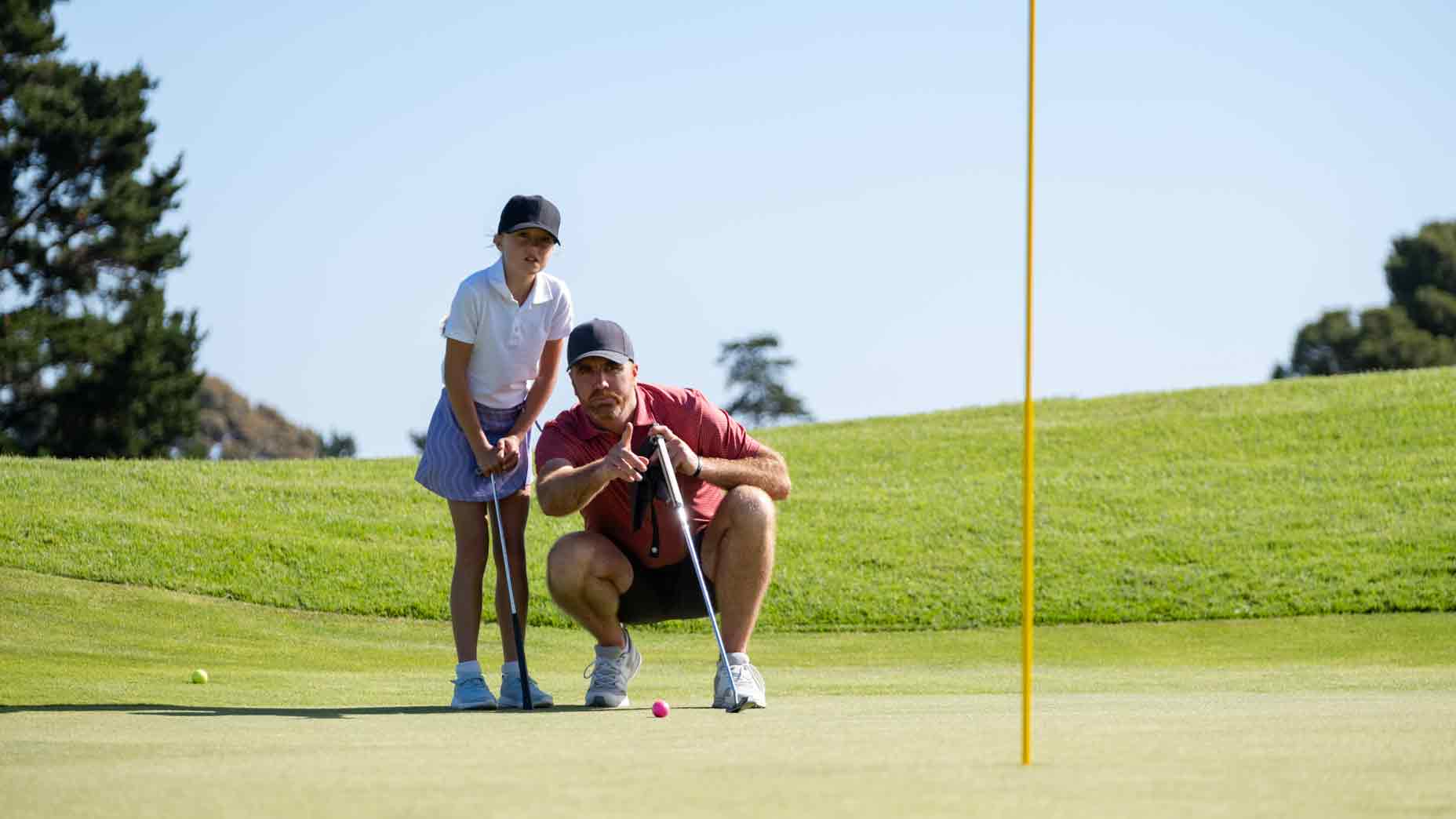
Junior golfers are constantly absorbing advice from every direction — coaches, tour players, parents and even friends. While most of it is well-intentioned, not every tip helps. In fact, some of the most common pointers young players hear can actually slow their development and create unnecessary frustration.
In a recent instagram post, Cameron McCormick — a GOLF Top 100 Teacher and instructor to major champions like Jordan Spieth and Celine Boutier — ranked the most common tips junior golfers receive from worst to best, and his answers might surprise you.
By understanding which lessons are worth embracing — and which ones you can ignore — you’ll help your junior golfer develop smarter practice habits, build a better game, and enjoy the path to improvement with less frustration. Here, then, are the most common pieces of advice for juniors, ranked from worst to best.
‘Play as many tournaments as possible’
This one might be a bit surprising, as it’s one of the most common suggestions for juniors looking to become better competitors. But McCormick explains that playing more tournaments doesn’t necessarily mean your junior is gaining valuable playing experience.
Advertisement
“Competition exposes weaknesses, practice fixes them,” he says, “If a players skill isn’t improving between tournaments, more events usually just means more expensive frustration.”
‘You just need to want it more’
If you’re trying to help your junior golfer find that “fire in the belly,” this might sound like good advice. But according to McCormick, it’s not as helpful as many parents think.
“Wanting it more is great for a motivational speech, but desire doesn’t replace skill,” McCormick says, “Most struggling players don’t need more motivation; they need a better training plan.”
‘Get your reps in’
As well-intentioned as this advice may be, McCormick says it often encourages juniors to value time on the range over purposeful practice. And without a clear plan, all those reps can do more harm than good.
Advertisement
‘Watch what the best players do’
In theory, this advice is solid. Watch the best players in the world, and you’re bound to learn something. But if you don’t understand the reasoning behind what they’re doing, simply copying their movements won’t help.
‘Stay positive’
It might be one of the most overused pieces of advice junior golfers hear, but that doesn’t necessarily make it helpful. As McCormick explains, a vague suggestion like “stay positive” can actually create more frustration than meaningful improvement.
“Positive thinking has value, but elite performers aren’t successful because they’re positive. They’re successful because they make good decisions after mistakes,” he says.
Instead, try helping your junior work through the course-management decisions they can make after a mistake. Doing so teaches them how to recover from a bad shot while reinforcing that mistakes are simply part of the game — not something to dwell on.
Advertisement
‘Trust the process’
Another phrase juniors hear all the time — but what does it actually mean? As McCormick points out, if your junior doesn’t have a process to begin with, what exactly are they trusting?
“Without a clear plan, this becomes a slogan instead of a strategy,” he says.
But, if you can help your junior golfer build a defined practice routine with measurable goals and regular feedback, they’ll have a process that’s worth trusting.
‘Play to your pattern’
“Great players understand their tendencies and build strategies around them, rather than pretending every shot is available every day,” McCormick says.
Advertisement
This is great advice because it helps juniors better understand their own games, build confidence and recognize that even the best players don’t have every shot at their disposal every day.
‘Focus on what the ball is doing’
This advice encourages juniors to become better problem-solvers instead of obsessing over swing positions.
Ball flight provides immediate feedback. By learning to connect what the ball does with what created that shot, young golfers develop a deeper understanding of their swings and become more capable of making adjustments on their own.
“Elite players learn to connect what they do with what the ball does instead of obsessing about the positions,” McCormick says.
Advertisement
That’s a skill that pays off at every age.
‘Practice like you play’
McCormick’s top piece of advice is also one of golf’s oldest — and for good reason.
Whether your junior is just getting started or dreaming of college golf, practice should resemble the situations they’ll face on the course. That means creating pressure, changing targets, going through a full pre-shot routine and holding themselves accountable for every shot.
“If your training doesn’t resemble performance, don’t expect your performance to magically appear on tournament days,” McCormick says.
Advertisement
The closer practice mirrors competition, the more prepared your junior will be when the score starts to matter.
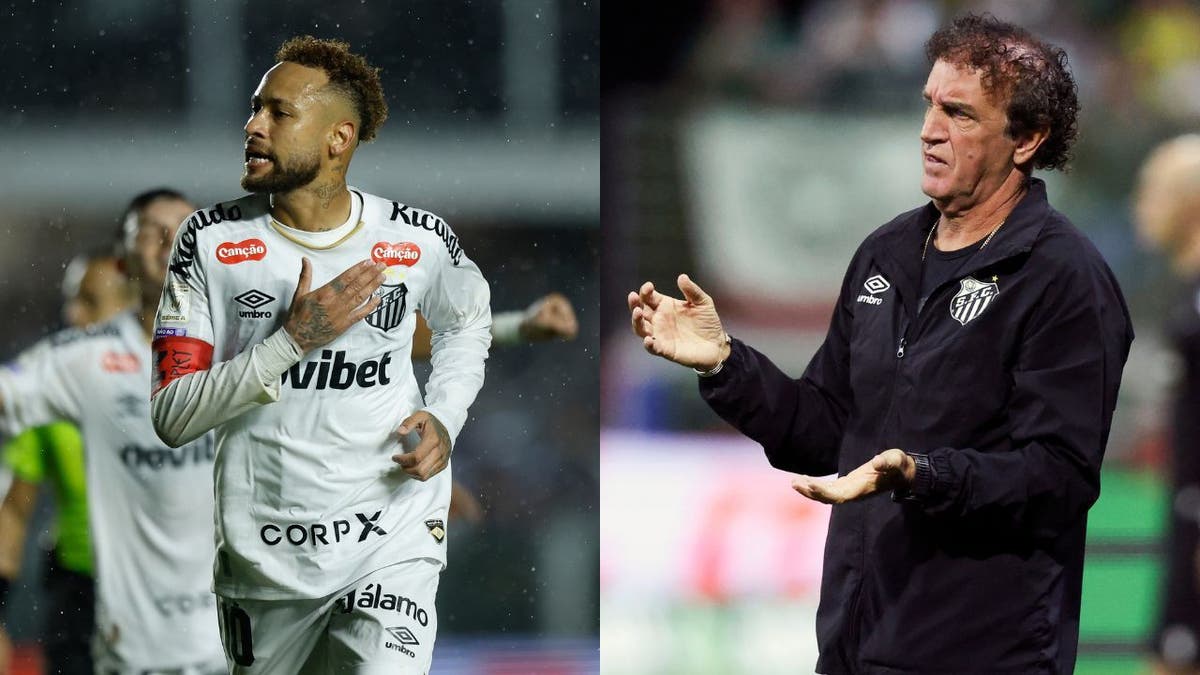
Santos superstar Neymar was a notable absentee from the squad as Cuca’s side secured a dominant victory in the Copa Sudamericana on Tuesday night. Rather than flying to Venezuela for the continental clash, the Brazilian icon was spotted competing in a professional poker tournament in São Paulo.
High stakes at the poker table
While his Santos teammates were battling on the pitch in Venezuela, Neymar was busy testing his luck and skill at the Brazilian Series of Poker (BSOP) Winter edition. The forward, who has a well-documented passion for the card game, was spotted at the Golden Hall of the WTC Complex in Sao Paulo participating in the fourth stage of the national championship, according to ESPN Brazil. It is a familiar haunt for the Santos hero; during his participation in the same tournament in 2025, Neymar pocketed R$53,500.
The timing of his appearance raised eyebrows among some supporters, as it occurred just hours before Santos kicked off their crucial playoff tie. However, his presence at the event was not a case of going AWOL. The club had already made the decision to leave their marquee player behind to focus on a specific fitness programme following his return from a disappointing World Cup campaign.
Santos manager Cuca was quick to clarify the situation surrounding his star man after the 4-1 victory over Universidad Central. The veteran coach insisted that the decision to leave Neymar out was primarily aimed at ensuring he was fully rested following his international commitment.
“Since he was sidelined for a few days and didn’t have a holiday, we decided to let him get even stronger, training hard so he could have a run of games,” Cuca explained after the match. “Now, in ten days, we’re going to play four matches. What advantage would it be to bring him here? You saw how hard and exhausting the trip is. He stayed there working, just like [Willian] Arao, Joao Schmidt, and Igor Vinicius, and that gives us more options for the upcoming games.”
Despite his evening at the poker table, Neymar has been putting in the work at the club’s training ground. He had recently shared a video on social media showing him scoring goals and looking sharp in training drills. The manager’s plan appears to be focused on ensuring Neymar is at 100 percent for the domestic campaign, where the club is currently struggling in 15th place in the league table.
Successful night for the Peixe
Even without their talisman, Santos proved far too strong for Universidad Central, putting one foot firmly in the Copa Sudamericana round of 16. The Brazilian giants romped to a 4-1 victory in Venezuela, establishing a commanding cushion ahead of next week’s second leg at the Vila Belmiro. Should they finish the job, Ecuadorian giants Macara await in the next round.
Advertisement
When asked if his No. 10 would return for the upcoming league fixture, Cuca confirmed Neymar will be back in action against Chapecoense this Saturday. The decisive away win eases the pressure on their continental campaign, allowing the club to shift its entire focus back to domestic duties for the weekend.
Life after international retirement
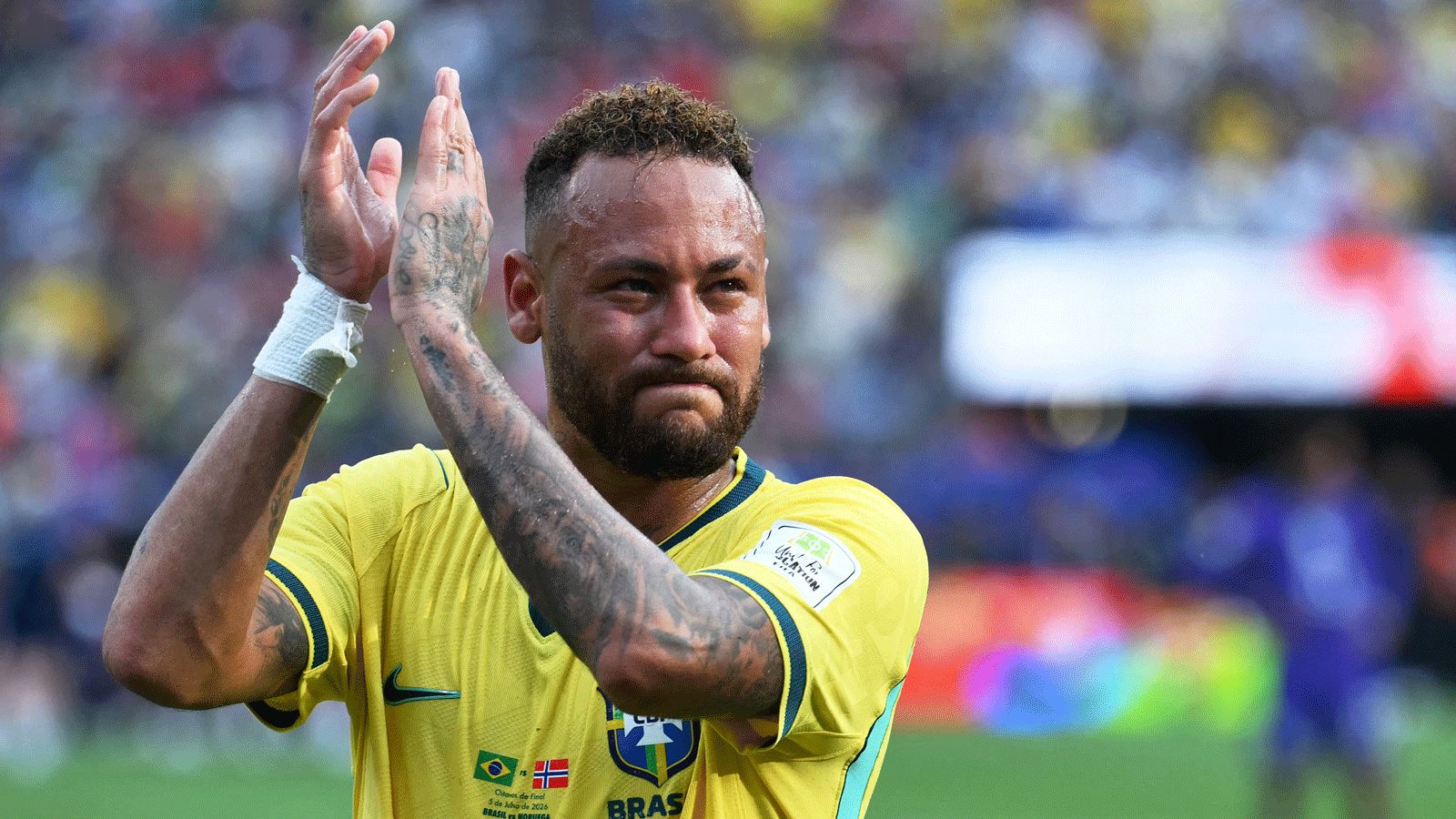
This period marks a significant transition for Neymar, who recently called time on his legendary career with the Selecao. The forward announced his retirement from international football following Brazil’s shock 2-1 loss to Norway at the 2026 World Cup, an exit that left the player in tears. Having scored 80 goals in 130 appearances for his country, he stepped away from the world stage at the MetLife Stadium.
With his international duties now a thing of the past, the focus for the remainder of his career is firmly on his club commitments with Santos. The Peixe are desperate for his leadership and goal-scoring prowess to navigate a congested fixture list. If he can stay fit and replicate the sharp form shown in recent training sessions, his presence will be the deciding factor in whether Santos can salvage their season.
Argentina fly half Tomas Albornoz has been charged with misconduct and faces a disciplinary hearing after “remonstrating with match officials” follow his side’s defeat to England in Santiago del Estero.
Albornoz was denied a chance to kick for a potential draw after a last-minute try was ruled out by referee Angus Gardner in consultation with television match official (TMO) Brett Cronan.
The officials ruled that Bautista Delguy had grounded the ball simultaneously on the try-line and corner flag, and thus not scored, as England held on for a 31-24 victory.
Albornoz appeared to approach Gardner and his assistants aggressively thereafter, and has now been charged by World Rugby under its Match Official Abuse Sanction Process,
The details of his disciplinary hearing will be released in due course.
Advertisement
“The Match Official Abuse Sanction Process was introduced to complement Regulation 18 and provide a clearer and more consistent framework for addressing public criticism of match officials, particularly where such comments may contribute to wider online abuse,” World Rugby explained in a statement.
“Developed by a cross-game working group including competition owner, match official playing and coaching representation and championed by Union CEOs, the process reflects a unified commitment to support and protect match officials.”
Argentina were disappointed that Delguy’s try was chalked off, and that no penalty try was awarded for an apparent high tackle by Noah Caluori.
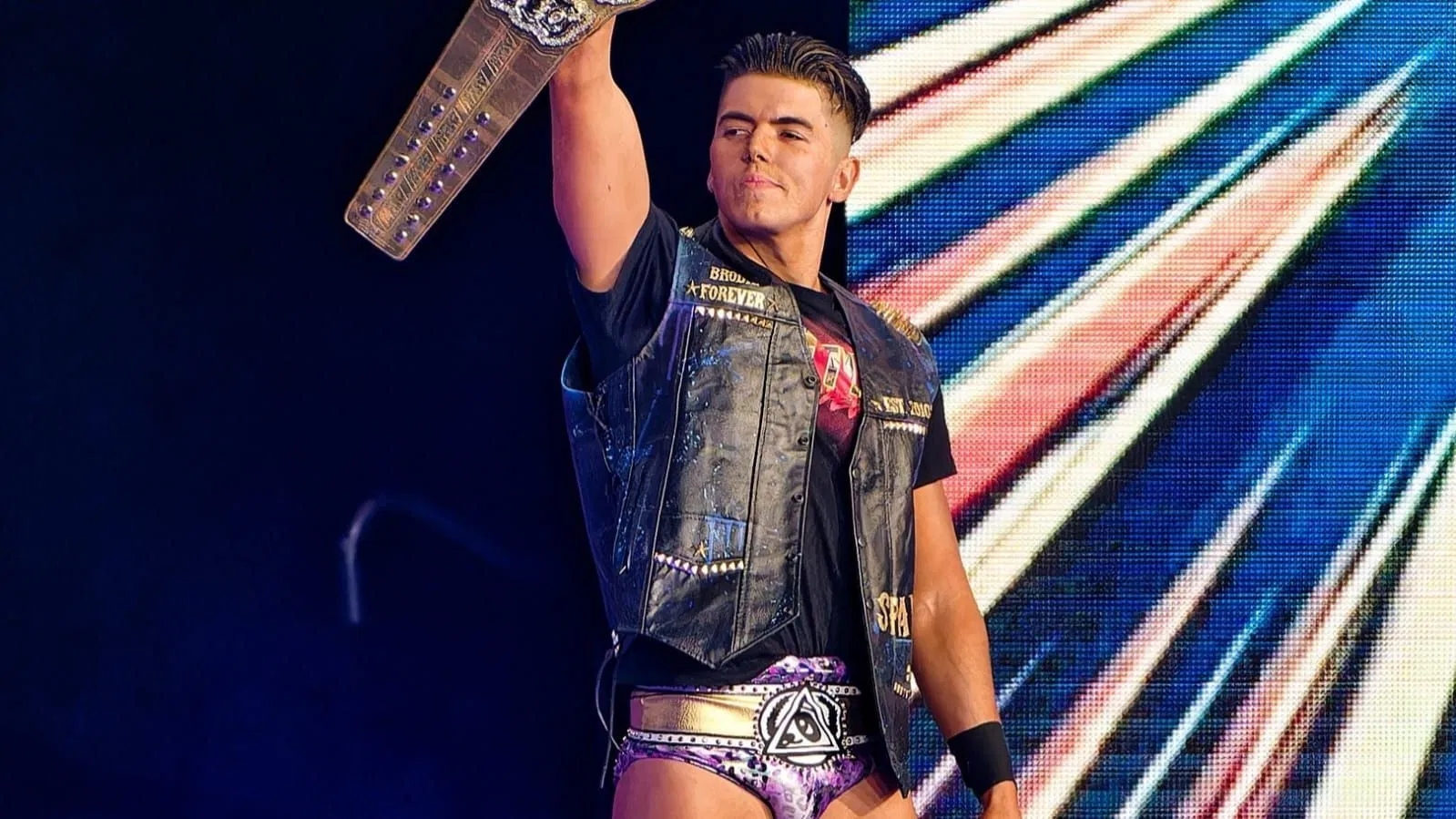
AEW star Sammy Guevara was rumoured to leave All Elite Wrestling. In the past few days, many revelations were made regarding his run. He has been one of the most precise high flyers in the Jacksonville-based promotion. Despite his immense talent, he hasn’t been able to become ‘the’ star in the company. Recently, he changed his X handle’s bio, where there was no mention of AEW.
This started the rumour that the Spanish God may be out of the company soon. Despite the talk, he was still present on the official roster page. Upon investigation, reports revealed that nobody among the AEW roster seems to know what is going on with the former TNT Champion. However, suspicion arose because in a recent interview he expressed frustration about his absence from AEW.
While speaking on Wrestling Observer Live, Bryan Alvarez said there was no mention of AEW in Sammy Guevara’s bio before. However, someone started a rumour that AEW was removed from his bio because he probably wants to leave the company.
Advertisement
“So what happened was, he tweeted ‘New bio,’ and somebody went up there, looked at his bio, saw there was no AEW mentioned in it, and then they spread around the internet that he had ‘removed’ AEW from his bio. I have been told that he never had AEW in his bio. AEW was never removed from his bio. Someone thought he had removed it from his bio, which is why this whole story came out that he wanted out or had gotten his release. So really, nothing has changed at all over the last week. So that’s the update,” he said. [H/T – Ringside News]
Update on Sammy Guevara’s wife
While investigating the Spanish God’s whereabouts, major news about his wife, Tay Melo, surfaced. According to Wrestling Observer Live, Tay requested her release from AEW last year. However, it was denied.
“Multiple sources told me that Tay Melo requested a release last year but it was denied. It’s expected we will know what’s up when everyone gets to TV tomorrow,” said Alvarez.
It will be interesting to see when fans will see Sammy Guevara on AEW TV.
Advertisement
Why did you not like this content?
Was this article helpful?
Advertisement
Thank You for feedback
Get all the hottest wrestling news FIRST by clicking here





















































You must be logged in to post a comment Login