Connect with us
DAPA Banner
DAPA Coin
DAPA
COIN PAYMENT ASSET
PRIVACY · BLOCKDAG · HOMOMORPHIC ENCRYPTION · RUST
ElGamal Encrypted MINE DAPA
🚫 GENESIS SOLD OUT
DAPAPAY COMING

Business

How they work and why the IRS cracked down

Published

on

How they work and why the IRS cracked down

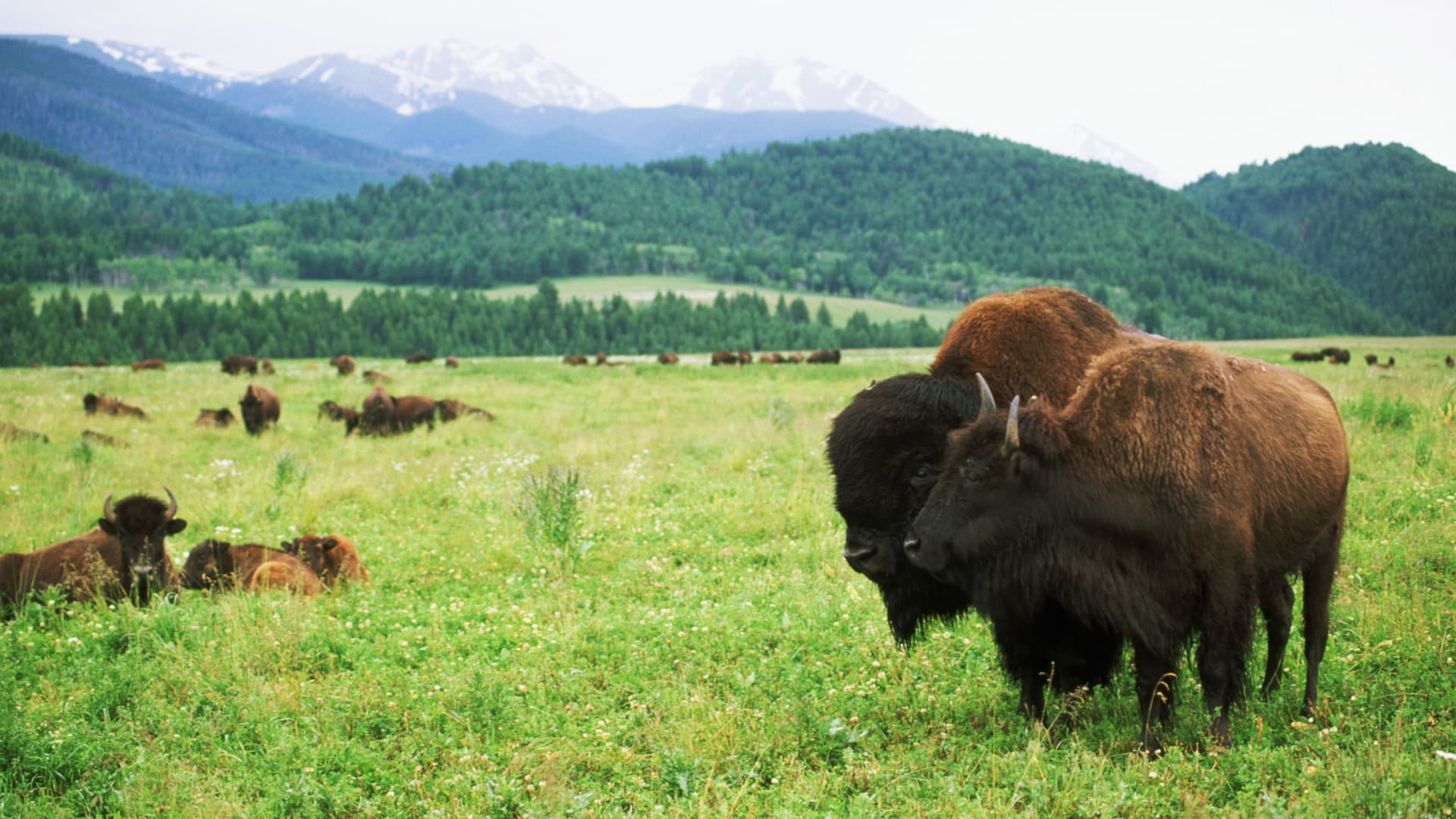
Late media mogul Ted Turner used conservation easements to preserve ranch land, including nearly 114,000 acres south of Bozeman, Montana.

Kevin Fleming | Corbis Documentary | Getty Images

A version of this article first appeared in CNBC’s Inside Wealth newsletter with Robert Frank, a weekly guide to the high-net-worth investor and consumer. Sign up to receive future editions, straight to your inbox.

Advertisement

Congress is moving to expand a land preservation tax incentive that has spent nearly a decade under IRS scrutiny. House and Senate proposals of the farm bill would create a new program to provide funding to landowners who agree to keep forests intact rather than sell or develop them.

The IRS cracked down on conservation easements after groups of investors used them to generate billions of dollars in inflated tax deductions. However, the tax strategy still has value for individuals and families who want to preserve their land and pay less to Uncle Sam, lawyers who specialize in conservation easements told CNBC.

More than a dozen states offer some sort of tax credit for donating land and some, including New York, Colorado and Georgia, have aggressively expanded their conservation easement programs in recent years.

“I run into people who say, ‘Wow, conservation easements are bad things. They’re abusive.’ No, they’re not. They are for a small set of people and a small set of people that are getting sucked into this by bad actors,” said Florida lawyer Keith Fountain. “My clients are people who own land and love the land, and the conservation easements provide a way to get some financial benefit and to keep and own and manage that land for the right purposes forever.”

Advertisement

Conservation easements let landowners keep ownership of the property while giving up certain development rights. Typically, the owner agrees to permanently limit how the property can be used, often to preserve farmland, wildlife habitats or open space. The landowner can then donate those foregone development rights or sell them at a discount to a land trust, government agency or another qualified group.

In return, the owner can claim a charitable deduction. In many cases, they can still reside on the land and use it for recreational purposes like hunting and fishing, as long as they fit the easement’s restrictions.

Fountain said many of his ranching clients sell conservation easements to keep land in the family and use the proceeds to pay off debt or buy out younger family members who aren’t interested in ranching. By selling the easements on their land at a discount, the clients collect cash and can claim a charitable deduction for the difference between the sale price and the fair market value.

The transactions targeted by the IRS involve groups of investors, not longtime individual landowners. In these so-called syndicated conservation easement deals, a promoter sells stakes in land to investors and donates the easement. By using an inflated valuation of the property’s development rights, the investors are able to claim a tax deduction that exceeds what they paid for the land.

Advertisement

In a recent example filed last week, the U.S. Tax Court slashed a $41.6 million deduction claimed by an Alabama partnership to $800,000. The court agreed with the IRS that the deduction was based on a speculative valuation of the property’s potential as a limestone quarry.

Congress capped conservation easement values in 2022 in order to shut down syndicated easements, but the IRS is still wading through some 1,100 cases. The agency extended a settlement offer in May in an attempt to reduce the backlog.

While the government has targeted syndicated deals, individuals can still trigger an IRS audit by donating an easement. For this reason, Fountain said his clients usually choose to sell easements at a discount even though donating one can come with better tax benefits.

Many lawyers refuse to advise on conservation easements altogether. However, Carolyn Schenck, former IRS national fraud counsel, told CNBC that conservation easements shouldn’t be written off.

Advertisement

“The fact that some taxpayers abuse the rules, I don’t think means that the underlying policy lacks value in any way,” said Schenck, who left the IRS in 2025 for law firm Caplin & Drysdale. “I think there is a sentiment at the IRS that properly supported conservation easement is not a loophole.”

Get Inside Wealth directly to your inbox

Know the rules of the road

In the past two years, the Tax Court has typically centered on what the land’s foregone development rights are actually worth, according to lawyer Diana Norris, associate director for conservation defense at the Land Trust Alliance. This focus on valuations has removed a lot of uncertainty for land trusts and landowners, as earlier conservation easement cases often turned on technical defects in the deed or donation paperwork, she said.

Lawyer Steve Small said conservation easements aren’t risky if you work with a lawyer who follows the case law and executes them frequently. Small helped write the tax code for conservation easements in the early 1980s when he was with the IRS.

The biggest issue, he said, is dealing with clients who have unrealistically high expectations of how much they can deduct, which he blames on promoters of syndicated easements. For recently bought property, the deduction will be a percentage of the purchase price, not a multiple, according to Small.

Advertisement

Donors also have to consider less obvious factors that can shrink their deduction, he said. For instance, easements can enhance the value of surrounding properties by preserving scenic views and privacy. If the easement benefits nearby property owned by the landowner or a relative, the additional value has to be subtracted from the deduction, Small said.

He also recommends that clients include lots of photos of the land with their form submissions.

“What does the IRS get when you take an easement deduction? A lot of typed paper,” he said. “They don’t get any feel at all for the beauty of the project or the views across the open space.”

Small said the risk of an audit is minimal if the conservation easement is sound, especially with the IRS being understaffed.

Advertisement

“Frankly, I think if you do a good honest conservation easement project today, the risk is lower than it was 10 years ago,” he said.

Choose CNBC as your preferred source on Google and never miss a moment from the most trusted name in business news.
Continue Reading
Click to comment

You must be logged in to post a comment Login

Leave a Reply

Business

Five Star Bancorp (FSBC) Q2 2026 Earnings Call Prepared Remarks Transcript

Published

on

OneWater Marine Inc. (ONEW) Q1 2026 Earnings Call Transcript

Operator

Welcome to the Five Star Bancorp Second Quarter 2026 Earnings Webcast. Please note, this is a closed conference call and you are encouraged to listen via the webcast. Before we get started, we would like to remind you that today’s meeting will include some forward-looking statements within the meaning of applicable securities laws. These forward-looking statements relate to, among other things, current plans, expectations, events, and industry trends that may affect the company’s future operating results and financial position. Such statements involve risks and uncertainties, and future activities and results may differ materially from these expectations.

For a more complete discussion of the risks and uncertainties that may cause actual results to differ materially from the company’s forward-looking statements, please see the company’s annual report on Form 10-K for the year ended December 31, 2025, and quarterly report on Form 10-Q for the 3 months ended March 31, 2026, and in particular, the information set forth in Item 1A, Risk Factors, in those reports. Please refer to Slide 2 of the presentation, which includes disclaimers regarding forward-looking statements, industry data, unaudited financial data, and non-GAAP financial information included in this presentation. Reconciliations of non-GAAP financial measures to their most directly comparable GAAP figures are included in the appendix to the presentation. The presentation will be referenced during this call but not followed exactly and is available for close review on the company’s website under the Investor Relations tab.

Please note this event is also being recorded. I would now like to turn the conference over to James Beckwith, Five Star Bancorp President and CEO. Please go ahead.

Advertisement
Continue Reading

Business

Harley-Davidson, Inc. 2026 Q2 – Results – Earnings Call Presentation (NYSE:HOG) 2026-07-23

Published

on

OneWater Marine Inc. (ONEW) Q1 2026 Earnings Call Transcript

This article was written by

Seeking Alpha’s transcripts team is responsible for the development of all of our transcript-related projects. We currently publish thousands of quarterly earnings calls per quarter on our site and are continuing to grow and expand our coverage. The purpose of this profile is to allow us to share with our readers new transcript-related developments. Thanks, SA Transcripts Team

Continue Reading

Business

FENI: Developed Markets ETF With A Fundamental Edge (NYSEARCA:FENI)

Published

on

FENI: Developed Markets ETF With A Fundamental Edge (NYSEARCA:FENI)

This article was written by

Fred Piard, PhD. is a quantitative analyst and IT professional with over 30 years of experience working in technology. He is the author of three books and has been investing in data-driven systematic strategies since 2010. Fred runs the investing group Quantitative Risk & Value where he shares a portfolio invested in quality dividend stocks, and companies at the forefront of tech innovation. Fred also supplies market risk indicators, a real estate strategy, a bond strategy, and an income strategy in closed-end funds. Learn more.

Analyst’s Disclosure: I/we have no stock, option or similar derivative position in any of the companies mentioned, and no plans to initiate any such positions within the next 72 hours. I wrote this article myself, and it expresses my own opinions. I am not receiving compensation for it (other than from Seeking Alpha). I have no business relationship with any company whose stock is mentioned in this article.

Seeking Alpha’s Disclosure: Past performance is no guarantee of future results. No recommendation or advice is being given as to whether any investment is suitable for a particular investor. Any views or opinions expressed above may not reflect those of Seeking Alpha as a whole. Seeking Alpha is not a licensed securities dealer, broker or US investment adviser or investment bank. Our analysts are third party authors that include both professional investors and individual investors who may not be licensed or certified by any institute or regulatory body.

Advertisement
Continue Reading

Business

AppFolio, Inc. (APPF) Q2 2026 Earnings Call Prepared Remarks Transcript

Published

on

OneWater Marine Inc. (ONEW) Q1 2026 Earnings Call Transcript

Operator

Good day, and thank you for standing by. Welcome to the AppFolio, Inc. Second Quarter 2026 Financial Results Conference Call. Please be advised that today’s conference is being recorded, and a replay will be available on AppFolio’s Investor Relations website.

I would now like to hand the conference over to Lori Barker, Investor Relations.

Advertisement

Lori Barker
The Blueshirt Group, LLC

Thank you. Good afternoon, everyone. I’m Lori Barker, Investor Relations for AppFolio, and I’d like to thank you for joining us today as we report AppFolio’s Second Quarter 2026 financial results. With me on the call today are Shane Trigg, AppFolio’s Chairman and CEO; and Tim Eaton, AppFolio’s CFO. This call is simultaneously being webcast on the Investor Relations section of our website at appfolioinc.com. Additionally, an audio replay of the call and a transcript of the prepared comments will be posted to the website.

Before we get started, I would like to remind everyone of AppFolio’s safe harbor policy. Comments made during this conference call and webcast contain forward-looking statements within the meaning of the Private Securities Litigation Reform Act of 1995 and are subject to risks and uncertainties. Any statement that refers to expectations, projections or other characterizations of future events, including financial projections, future market conditions, business performance or future product enhancements or development is a forward-looking statement. AppFolio’s actual future results could differ materially from those expressed in such forward-looking statements for any reason, including those listed in our SEC filings.

AppFolio assumes no obligation to update any such forward-looking statements, except as

Advertisement
Continue Reading

Business

Alleged First Ransom Note in Nancy Guthrie Case Addressed Directly to Daughter Savannah Guthrie Revealed

Published

on

Hartsfield-Jackson Atlanta Airport

The text of what is believed to be the first ransom note sent in connection with the disappearance of Nancy Guthrie, mother of “Today” show co-anchor Savannah Guthrie, has been read publicly for the first time by a journalist who reviewed the document, offering new detail nearly six months into one of the country’s most closely watched missing-persons investigations.

Briana Whitney, a former Arizona television reporter now covering breaking news for the Crime Junkie podcast, described the alleged note’s contents during an appearance on the podcast, saying she had personally reviewed the document while covering the case earlier this year.

What the alleged note said

According to Whitney’s account, the note opened by addressing Savannah Guthrie directly, stating that the sender was holding Nancy Guthrie and that she was “safe but scared.” The message went on to describe a ransom demand, stating that Nancy would be released within 12 hours of payment being sent to a specified Bitcoin address, with a maximum holding period of seven days.

Advertisement

The note reportedly included a deadline, warning that if payment was not received by a specific date, the consequences would be fatal, and stated that Nancy Guthrie was aware of the threat. The message also warned that there would be no further contact or negotiation, and cautioned against involving law enforcement, according to Whitney’s reading of the document.

Whitney said the note additionally included specific, seemingly personal details about the scene at Nancy Guthrie’s home, describing a white smartwatch found on the floor near her bed and a floodlight that had been destroyed in the backyard, details Whitney suggested lent the note an added layer of unsettling specificity.

Part of a series of disputed communications

The note described by Whitney is understood to be the first in a series of alleged ransom communications connected to the case. According to earlier reporting from TMZ and other outlets, subsequent notes were later sent to media organizations, including at least one that reportedly described Nancy Guthrie as having “perished” and being “buried in nature,” and others that offered information about a possible suspect in exchange for cryptocurrency payment.

Advertisement

Investigators familiar with the case have said they believe it is likely that at least two of the ransom notes sent to Nancy Guthrie’s family were written by the same person or group responsible for her disappearance, according to CBS News. However, the authenticity and origin of the various notes that have surfaced throughout the case have remained a subject of ongoing scrutiny and skepticism among investigators and outside experts, given inconsistencies between different messages and questions about why a sender seeking a reward would request payment in Bitcoin rather than the six-figure reward already publicly offered through official channels.

Background on the case

Nancy Guthrie, 84, was reported missing on Feb. 1 from her home in Tucson, Arizona, after she failed to appear for a scheduled virtual gathering and a friend alerted the Guthrie family. She was last seen alive the night before, when she was dropped off at her home by her son-in-law, Tommaso Cioni. Investigators later recovered previously lost surveillance footage from Nancy’s home that showed she had been taken from the property against her will, confirming law enforcement’s belief that she had been abducted rather than gone missing voluntarily.

Physical evidence recovered from the scene, including blood found on the porch and just inside the front door, has reinforced investigators’ assessment that the abduction involved violence. Doorbell camera footage reviewed by investigators reportedly captured a single armed individual on the porch at the time of the incident, though authorities have not publicly confirmed a suspect’s identity nearly six months into the investigation.

Advertisement

The family’s continued search

Savannah Guthrie has remained a visible public presence throughout the investigation, giving an emotional interview earlier this year that revealed previously undisclosed details about the crime scene before returning to co-anchor the “Today” show. The Guthrie family has offered a $1 million reward for information leading to Nancy’s safe return, while the FBI has separately offered a $100,000 reward for information leading to an arrest, encouraging anyone with relevant information to call 1-800-CALL-FBI.

Search efforts connected to the case have extended beyond Arizona’s borders in recent months, including volunteer searches conducted in Sonora, Mexico, after unconfirmed tips suggested Nancy’s remains might be located there. Those searches have not resulted in her discovery, though volunteer groups involved in the effort have uncovered other unrelated unmarked graves during their search operations.

An investigation still without answers

Advertisement

Nearly six months after Nancy Guthrie’s disappearance, the case remains unsolved, with no publicly confirmed suspect and no resolution to the competing claims made across the various ransom notes and tips that have surfaced throughout the investigation. Some retired law enforcement figures who have followed the case closely have described it in recent weeks as having effectively gone cold, even as the FBI and Pima County Sheriff’s Department continue to say the investigation remains open and active.

The newly detailed contents of the alleged first ransom note add another layer of documented detail to a case that has drawn sustained national attention, both for its unresolved nature and for the disturbing specificity of the communications investigators have received throughout its course. Whether the note reviewed by Whitney can be authenticated as coming from whoever was responsible for Nancy Guthrie’s disappearance remains an open question, one that investigators have not publicly resolved as the search for answers continues.

Continue Reading

Business

The Rise of the Digital Nomad Economy

Published

on

The Rise of the Digital Nomad Economy

From beach towns in Costa Rica to the skylines of the United Arab Emirates and the coasts of Portugal, remote work is reshaping where and how people live.

The office, once a fixed place defined by routine and geography, has become something far more fluid. For millions of workers around the world, the daily commute has been replaced by a laptop, a stable internet connection and a choice of location that is no longer bound to where a company happens to be headquartered.

This shift, accelerated by the global adoption of remote work, has given rise to a growing class of digital nomads. These are professionals who move between countries while continuing to work for employers or clients located elsewhere, blending work and travel in ways that were once rare but are now increasingly mainstream.

As governments compete for talent in a borderless labor market, some countries have emerged as clear destinations of choice. Among them are Costa Rica, the United Arab Emirates and Portugal, each offering a distinct version of the same promise: the ability to live well while staying professionally connected.

Costa Rica and the Appeal of Slower Living

Costa Rica has become one of the most recognizable destinations in the digital nomad landscape, not because of its corporate infrastructure, but because of its environment.

Advertisement

With its Pacific beaches, rainforest interiors and emphasis on environmental protection, the country offers a lifestyle that blends work with access to nature in a way few places can match. Remote workers often structure their days around a balance that includes morning meetings and afternoon outdoor activities, from surfing to hiking.

The government has also moved to formalize this appeal through long-term visa programs designed specifically for remote workers. Combined with political stability and widespread English use in many professional settings, Costa Rica has positioned itself as a haven for those seeking to step away from high-pressure urban environments without disconnecting from global careers.

The United Arab Emirates and the Infrastructure of Connectivity

If Costa Rica represents lifestyle-driven nomadism, the United Arab Emirates represents its infrastructure-driven counterpart. Cities such as Dubai and Abu Dhabi have invested heavily in the systems that make remote work seamless. High-speed internet, extensive co-working spaces, reliable transport networks and a dense concentration of international businesses have made the country a practical base for professionals operating across multiple regions.

The UAE has also introduced remote work visa options and long-term residency pathways aimed at attracting global talent. For many digital nomads, the appeal lies not only in the professional environment, but also in geography. Positioned between Europe, Asia and Africa, the country allows for relatively easy travel to major global markets. In addition to work advantages, the UAE offers a highly international population, modern amenities and a strong services sector, making it one of the more structured environments for those seeking a long-term remote base.

Advertisement

Portugal and the European Nomad Hub

Portugal has emerged as one of Europe’s most popular destinations for remote workers, offering a balance between lifestyle, accessibility and affordability compared with many major Western capitals.

Lisbon and Porto in particular have developed into hubs for startups, freelancers and international professionals. Co-working spaces, networking communities and entrepreneurial events have grown rapidly, creating an ecosystem that supports both independent workers and small businesses.

The country’s appeal is also geographic. Located within easy reach of other European cities, Portugal allows remote workers to remain connected to clients and collaborators across the continent while living in a slower-paced environment. Coastal towns and smaller cities have further expanded the options for those seeking a quieter alternative to urban centers.

A Structural Shift in Work and Migration

The growth of digital nomadism reflects a broader structural change in how work is organized. Companies are increasingly willing to hire talent regardless of location, while workers are placing greater value on flexibility, quality of life and mobility.

Advertisement

For countries, this has created a new form of competition. Rather than attracting only corporations or tourists, governments are now competing for individuals whose economic activity is tied to their skills rather than their physical location. Spending by remote workers supports local housing markets, hospitality industries and service sectors, creating a new layer of economic engagement.

At the same time, the lifestyle presents challenges. Time zone differences can complicate collaboration, legal and tax frameworks vary widely between countries and long-term mobility can be difficult to sustain without clear residency pathways. Many digital nomads also describe a tension between freedom and stability, as frequent movement can make it harder to build long-term community ties.

A New Map of Work

Despite these challenges, the trend shows no sign of slowing. Improvements in digital infrastructure and continued normalization of remote work have made location independence increasingly viable for a wide range of professions.

Costa Rica, the United Arab Emirates and Portugal each reflect a different response to this shift. One emphasizes nature and simplicity, another connectivity and infrastructure, and the third accessibility within a broader regional network. Together, they illustrate how the geography of work is being rewritten in real time.

Advertisement

For a growing number of professionals, the question is no longer where the office is located. It is where life and work can best coexist.

Advertisement
Continue Reading

Business

US announces fresh raft of tariffs on overseas goods

Published

on

A ward at the District General Hospital in Sri Lanka's Negombo city where dengue patients are getting treated. A nurse in green is seen taking notes in the foreground

The US is imposing new tariffs on imports from around 60 trading partners over claims they failed to properly stop forced labour.

The duties, ranging from 10% to 12.5%, target key economic partners – including the UK, EU, Canada, Japan, and India. They are set to go into effect on Friday.

The move is the latest escalation in the global trade war which was reignited by US President Donald Trump when he returned to office in January last year.

It comes after the US Supreme Court ruled earlier this year that many of the tariffs imposed globally under emergency powers were illegally enacted. The president has since sought other legal avenues to push through his flagship trade policy.

Advertisement

Trump has used tariffs to create more US manufacturing jobs and boost the American economy. But he has also used them to press other countries, such as Mexico, on non-trade issues, such as labor rules.

The White House has singled out Canadian imports in recent days, warning that goods crossing the northern border will face 50% duties.

Economists have warned that higher tariffs can make everyday goods, like coffee and microwaves, more expensive. Because taxes are paid by importing companies, those businesses often pass the extra costs on to shoppers through higher prices.

The White House insists the tariffs are needed to protect American workers and ensure fair competition.

Advertisement

However, business groups and affected countries are expected to push back. Many trading partners are already weighing potential legal challenges or retaliatory duties in response.

The administration is also preparing for further action. The US Trade Representative is currently investigating 16 countries – accounting for the vast majority of US imports – over claims of manufacturing overcapacity, which could pave the way for additional duties later this year.

Continue Reading

Business

Community Health Systems, Inc. (CYH) Q2 2026 Earnings Call Transcript

Published

on

OneWater Marine Inc. (ONEW) Q1 2026 Earnings Call Transcript