TL;DR
Musk told investors Optimus has no supply chain and every part is new, as Tesla quietly dropped mass production language from its Q2 deck




Musk told investors Optimus has no supply chain and every part is new, as Tesla quietly dropped mass production language from its Q2 deck
Elon Musk told investors on Tesla’s second-quarter earnings call that Optimus will be “the hardest product to scale manufacturing that we’ve ever made at Tesla,” warning that the humanoid robot has no existing supply chain and that every component is new. He said he wanted to “calibrate people correctly” on expectations, acknowledging that the initial production ramp will follow a normal curve but with a flat early stretch that could last longer than investors hope. Tesla also quietly removed references to Optimus mass production from its Q2 shareholder presentation, after using that language as recently as the first quarter.
The admission marks a sharp change in tone from previous quarters. Last year Musk said he would be “shocked” if Tesla was not producing 100,000 Optimus robots per month within five years, and in January 2025 he projected 50,000 to 100,000 units for 2026. By January of this year he acknowledged that zero Optimus robots were doing useful work in Tesla’s factories, with the more than one thousand Gen 3 units deployed across Fremont and Gigafactory Texas collecting training data rather than performing productive tasks.
Musk was candid about the engineering barriers, saying Optimus needs at least human-level dexterity before it can be useful outside controlled factory settings and calling the human hand “an incredible thing” that no robotics company has managed to replicate. Tesla must also solve memory, logic, and chip packaging challenges while securing AI processors from partners including Samsung and TSMC. The robot contains roughly 10,000 unique parts, and unlike Chinese competitors that can tap an existing smartphone supply chain for actuators and precision motors, Tesla is building its manufacturing base from scratch.

The 💜 of EU tech
The latest rumblings from the EU tech scene, a story from our wise ol’ founder Boris, and some questionable AI art. It’s free, every week, in your inbox. Sign up now!
The financial backdrop adds pressure. Tesla reported Q2 revenue of $28 billion, up 26 percent, but adjusted earnings of 33 cents per share badly missed the 51 cents analysts expected, and operating income fell 57 percent. Capital expenditure jumped to nearly $6 billion in the quarter, part of Tesla’s $25 billion full-year spending plan, pushing free cash flow to a negative $1 billion and sending shares down about seven percent in pre-market trading on Wednesday.
Musk’s compensation deal ties part of his payout to delivering one million Optimus robots within a decade, a target that now sits uncomfortably against his own warnings about how difficult scaling will be. Tesla has converted its Fremont Model S and Model X lines for Optimus production and is building a dedicated facility near Gigafactory Texas, but the company has stopped promising when volume output will begin. Tesla’s China president has described the Shanghai Gigafactory as a “golden key” to mass-producing Optimus, though that factory has not yet begun robotics manufacturing either.


Microsoft AI released two new in-house models into public preview on Wednesday — MAI-Image-2.5-Pro, its highest-fidelity image generator to date, and MAI-Voice-2-Flash, a speech model built for high-volume enterprise workloads — while publishing production data that amounts to the company’s most aggressive argument yet that it can power its own products without leaning on OpenAI’s frontier models.
The announcement, made by Microsoft AI’s Superintelligence team, lands roughly a year after the company committed to building purpose-built models internally, and it arrives with an unusual level of specificity about where those models now run: Bing, PowerPoint, OneDrive, Dynamics 365, Excel, GitHub Copilot, and Azure. The message to enterprise buyers — and, implicitly, to OpenAI — is that Microsoft’s homegrown models are no longer research projects. They are production infrastructure serving millions of users.
“Each of these enhancements is a step toward the same goal: Microsoft products, powered by Microsoft models,” the company wrote in its announcement blog.
The two new releases occupy opposite ends of what Microsoft calls the quality-speed-cost curve, and the positioning is deliberate. MAI-Image-2.5-Pro targets the premium tier: hero imagery, detailed editing, and precise in-image text rendering — the last of which has long been a notorious weak spot for image generation models. Microsoft priced the model at $5 per million text input tokens, $8 per million image input tokens, and $106 per million image output tokens. The base MAI-Image-2.5 model recently launched at No. 2 for image editing on Arena, the community leaderboard that has become a de facto scoreboard for generative media.
The creative industry appears to be taking notice. Rob Reilly, global chief creative officer at advertising giant WPP, called the Pro model “a strong leap forward for GenMedia tools” in a statement included in Microsoft’s announcement, adding that “Microsoft has firmly established itself among the leaders in generative AI.”
MAI-Voice-2-Flash goes the other direction. First previewed at Microsoft’s Build conference, Flash runs twice as fast as MAI-Voice-2 and costs 32% less, priced at $15 per million characters. It is designed for the unglamorous but enormous market of high-volume voice — call centers, voice agents, and real-time speech applications where latency and cost-per-call matter more than marginal gains in expressiveness. Together, the two models reflect a strategy of building families of models rather than a single flagship, because, as the company put it, a creative studio chasing maximum fidelity has very different needs from a customer service operation handling millions of calls a day.
The model launches are arguably less newsworthy than the deployment metrics Microsoft attached to them — numbers that read like a systematic case for swapping out third-party frontier models across its product portfolio.
Bing Image Creator now runs entirely on MAI-Image-2.5, end to end, marking the first time the consumer image tool is fully in-house. In PowerPoint, Microsoft says MAI-Image-2.5 reduces GPU costs by up to 84% compared with GPT-Image-2, OpenAI’s image model. In OneDrive, where MAI-Image-2.5 is now the default for key image-editing scenarios, the company reports a 26% increase in save rates, roughly 25% lower P95 latency, and 2.5 times greater efficiency under medium-utilization production workloads.
On the voice side, MAI-Voice-2-Flash now powers Dynamics 365 Contact Center — the platform used by customers including T-Mobile and EasyJet — where Microsoft claims GPU cost reductions of up to 89%. The model is also integrated into Azure Voice Live for developers building speech-to-speech agents.
Perhaps the most consequential deployment sits in healthcare. Microsoft’s Dragon Copilot, used by 170,000 medical providers and responsible for processing 28 million patient encounters last quarter, now runs on MAI-Transcribe-1.5 for its multilingual workflow across 58 languages. Microsoft says internal evaluations show a 50% relative reduction in both transcription and language-identification error rates across most languages — a meaningful claim in a domain where transcription errors can propagate directly into clinical notes.
In a companion post published the same day, Microsoft detailed the methodology behind these results — what it calls its “hill-climbing machine,” an integrated flywheel of data, models, and the product “harness” that surrounds them.
The clearest example is MAI-Code-1-Flash, the lightweight coding model launched in GitHub Copilot in June. Microsoft says the model achieves an approximately 10% higher code accept rate than GPT-5.4 Mini and Claude Haiku 4.5 in VS Code, while using 10% fewer median tokens. Developer retention tells a similar story: users were 6% more likely to return across multiple days than with GPT-5.4 Mini, and 11% more likely than with Claude Haiku 4.5.
Then Microsoft did something more interesting. It took the MAI-Code-1-Flash checkpoint and further trained it inside an Excel reinforcement learning environment, teaching a coding model the tools and workflows of spreadsheet knowledge work. The result, according to production user feedback, is a model on par with GPT-5.6 for the most common Excel tasks — while being small enough to run on Nvidia’s older H100 and even A100 GPUs rather than requiring the latest-generation accelerators.
That hardware detail deserves emphasis. Every major AI company is fighting for allocation of cutting-edge chips, and a model that delivers frontier-adjacent quality on two-generation-old silicon fundamentally changes the deployment economics. It also frees the newest hardware — including Microsoft’s now-operational GB200 cluster — for training rather than serving.
Microsoft CEO Satya Nadella framed the announcements in a lengthy post on X titled “Frontier Diffusion & Control,” which functions as something close to a strategic manifesto. “We can now take saturated frontier capabilities and deliver them at scale and at lower cost through models optimized for high-usage products, while continuing to use frontier models for frontier needs,” Nadella wrote, adding that Microsoft is “beginning to route traffic across our first-party surfaces to MAI whenever our models match or outperform frontier alternatives.”
Translated from executive prose: capabilities that were state-of-the-art a year ago are now table stakes, and Microsoft believes it can replicate them cheaply for the specific, repetitive tasks that dominate real product usage. Why pay frontier prices for a frontier model when a user just wants to reformat a spreadsheet column?
Nadella was careful to note that “frontier models from OpenAI and Anthropic are part of the orchestration system alongside MAI” — but he also articulated a pointed principle of model independence, arguing that a company’s evaluations “should continue to hill climb even when any given model has been removed.”
“Keeping the harness, memory, context, and skills outside the model, he argued, is what gives Microsoft control. The subtext is hard to miss. Reuters reported in April that Microsoft’s exclusive license to OpenAI’s technology had been revised into a non-exclusive arrangement, and The Information reported last September that Microsoft had begun incorporating Anthropic models into some products. Wednesday’s announcement completes the triangle: Microsoft as orchestrator, with its partners’ frontier models as interchangeable components and its own models absorbing an ever-larger share of routine traffic.”
The response online captured both the appeal and the skepticism surrounding the strategy. “I love when people use small models for niche tasks,” wrote one X user, @mavihsk, responding to Nadella’s post. “Why do I have to use the all-knowing model just to change my field in Excel?” Another user, @nabu_lines, distilled the pitch neatly: “cost and performance both improve when you stop overusing the biggest model.”
Others were less charitable about Microsoft’s execution track record. “Microsoft is the worst when it comes to listening to user feedback,” wrote designer @designedbyabin, arguing the company “will lose the AI race because they repeatedly failed to understand user needs.” And one user, @tokenoverflow, offered a drier critique of the model-independence pitch: “i want it keep hill climbing after removing microsoft.”
The skeptics raise a fair point. Microsoft’s self-reported metrics — accept rates, save rates, GPU savings — come from its own internal evaluations, not independent benchmarks, and the company chooses which comparisons to publish.
But the strategy’s logic does not depend on any single number. Nadella’s framing that software now has “real marginal cost for the first time” explains why Microsoft is obsessive about tokens, GPUs, and serving costs: when AI features run on every keystroke across a billion-user product portfolio, an 84% GPU cost reduction is not an optimization. It is the difference between a viable business and a money pit.
The final piece of the strategy is that Microsoft is selling the playbook, not just the models. Nadella explicitly positioned the hill-climbing approach as “a template for every other AI native, SaaS, or Enterprise company,” and Microsoft is packaging the toolchain through Foundry and what it calls Frontier Tuning — letting enterprises train specialized models against their own proprietary evaluations and reinforcement learning environments. That turns Microsoft’s internal cost-cutting exercise into an Azure product, and it gives enterprise customers a reason to run their AI workloads on Microsoft’s cloud even if the models themselves come from elsewhere.
The company’s emphasis on models trained “on clean, traceable, enterprise-grade data, without distillation from third-party models” serves the same commercial end. In an industry facing mounting scrutiny over training data provenance, Microsoft is betting that enterprise buyers — and courts — will care where model capabilities come from. Microsoft says it is now extending the hill-climbing approach to Copilot Chat, Outlook, and PowerPoint, and both new models are available in public preview through Microsoft Foundry and the MAI Playground. “None of this is an endpoint,” the company wrote. “We’re just getting started.”
Seven years ago, Microsoft bet more than $13 billion that OpenAI would build the future of AI. Wednesday’s announcement suggests the company has since learned a cheaper lesson: the future of AI may belong to whoever builds the frontier, but the profits belong to whoever makes it ordinary.


Kieran Kenefick. Image: Darragh Kane Photography
The new roles come amid a period of transformation in which the company has committed to a new partnership programme.
Dublin-based digital services company Tekenable has launched a new partnership programme that will create 30 new jobs over the course of the next 12 months.
The new roles will be across project management, business analysis and software engineering and will be reflective of the skills needed to meet the growing demand for cloud, AI, automation and related services. The additional roles will bring Tekenable’s number of employees from 200 to 230 employees by mid-2027.
The programme will see Tekenable expand upon its existing partnership model by introducing a structured framework for working with cloud providers, independent software vendors, academic institutions and delivery partners; as well as strengthening existing relationships and initiating new collaborations.
The organisation has appointed Kieran Kenefick as head of partnerships and he will lead the programme. In this role he will focus on building and scaling strategic alliances that support revenue growth, customer outcomes and strengthening relationships across cloud ecosystems and the wider partner community.
Commenting on the announcement Kenefick said, “Partnerships are becoming increasingly important as organisations look for more outcome-focused technology solutions. This programme is about building strategic relationships that allow us to deliver greater value for customers across cloud, AI, automation and enterprise applications.
“As this gains momentum, it will require us to grow our team in tandem, ensuring the expansion of our service offerings comes with the same promise of consistent delivery. There is significant opportunity to deepen collaboration across cloud ecosystems as well as with specialist technology providers and academic institutions.
“By formalising our partnership strategy, we are creating a stronger framework for innovation, joint go-to-market opportunities and long-term growth for both Tekenable and our partners.”
Don’t miss out on the knowledge you need to succeed. Sign up for the Daily Brief, Silicon Republic’s digest of need-to-know sci-tech news.
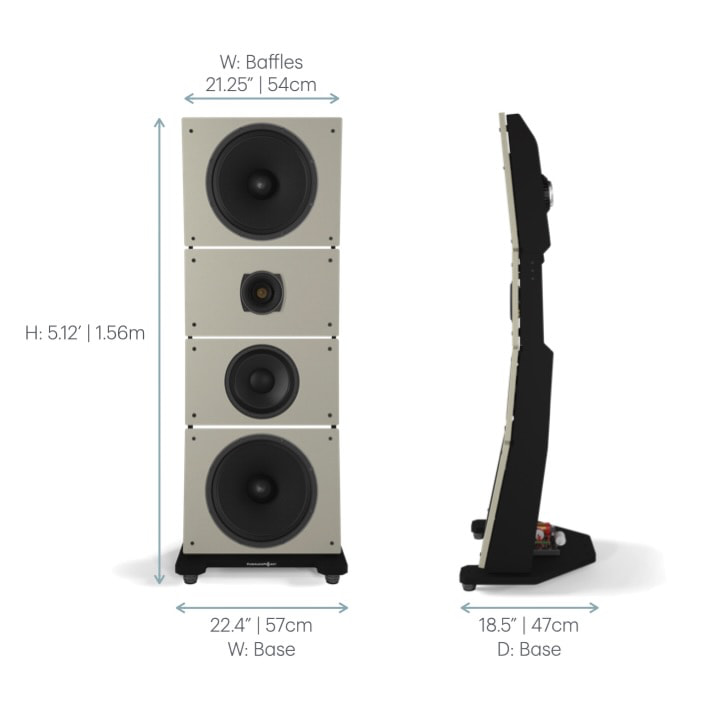
Most loudspeakers approaching $20,000 per pair arrive fully assembled in wooden crates.
The PureAudioProject Quartet15 arrives flat-packed and expects the buyer to locate an Allen key. Depending on your personality, that is either refreshing involvement or a very expensive way to spend Saturday afternoon.
The three-way open-baffle loudspeaker will make its public debut this weekend at Southwest Audio Fest 2026, running July 23 through July 25 at the Sheraton Dallas Hotel. PureAudioProject will demonstrate the Quartet15 in Room 736 with Western HiFi and Silversmith Audio.
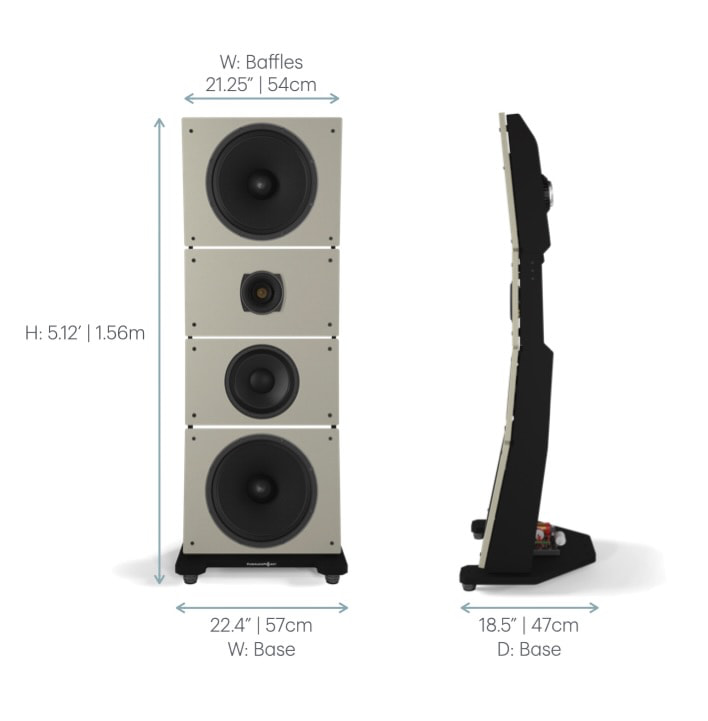
Each Quartet15 uses:
PureAudioProject says using paper diaphragms throughout helps the drivers sound more consistent as music moves from bass through the midrange and into the upper frequencies.
That sounds reasonable on paper—quite literally—but the real question is whether four large drivers blend into one coherent loudspeaker rather than sounding like several excellent ideas sharing the same frame.
Because there is no conventional cabinet, the rear radiation remains part of the presentation. Open-baffle designs can produce a large, spacious soundstage with less enclosure coloration, but they need room to breathe.
PureAudioProject recommends placing the Quartet15 2 to 3.5 feet (60 to 106 cm) from the wall behind it. Buyers hoping to push them against the wall beside a media console should probably keep scrolling.
The Quartet15 uses PureAudioProject’s first-order Thrier crossover with Mundorf MCAP EVO Silver Gold Oil capacitors and MRES20 resistors.
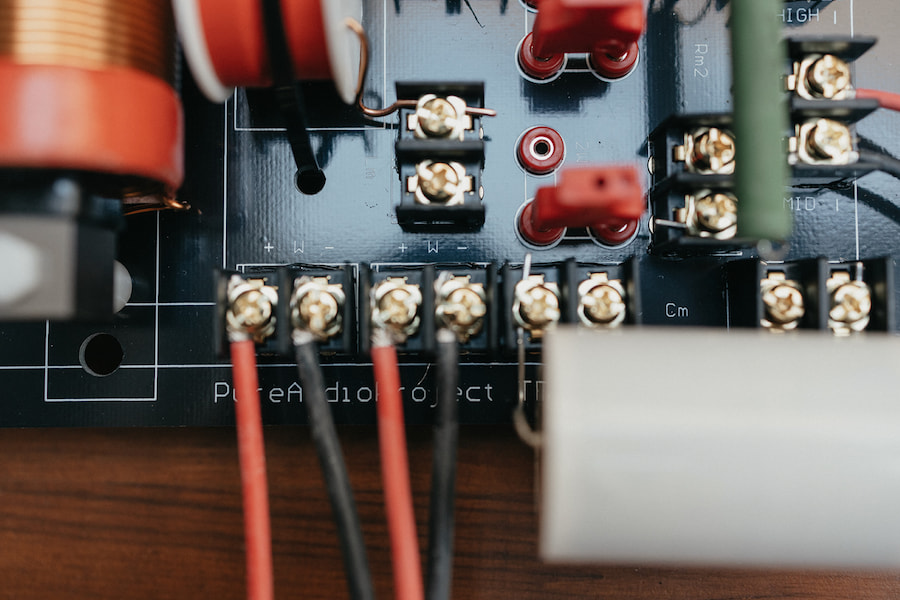
The network remains exposed and uses screw terminals, allowing owners to change components or values without soldering or reaching through a woofer opening with the optimism of someone who has already made a mistake.
That flexibility is one of the speaker’s real differentiators. It also means the Quartet15 will appeal more to listeners who enjoy tuning and understanding their systems than buyers who want the loudspeaker delivered, positioned and never touched again.
PureAudioProject quotes sensitivity above 96dB, an 8-ohm nominal impedance and bass extension between approximately 29 and 32Hz.
That makes the Quartet15 a logical partner for:
The Dallas system will use Opera Consonance Reference 5.5i MkII and Linear 845 integrated amplifiers, rated at approximately 18 and 28 watts.
High sensitivity does not mean amplifier quality stops mattering, nor does it guarantee that every two-watt flea-powered amplifier will control four large paper cones in a large room. The Quartet15 should not require enormous output, but bass grip and the quality of the first few watts will matter.
The Quartet15 is sold directly by PureAudioProject and ships in several flat-packed cartons.
Assembly requires an Allen key and screwdriver, while buyers can select baffles made from colored MDF, Valchromat HDF, bamboo, American walnut, oak or maple.
Each speaker weighs at least 79 pounds (36 kg) depending on the selected material. PureAudioProject has not yet published complete external dimensions, which is a fairly important omission for something using two 15-inch woofers and demanding several feet of breathing room.
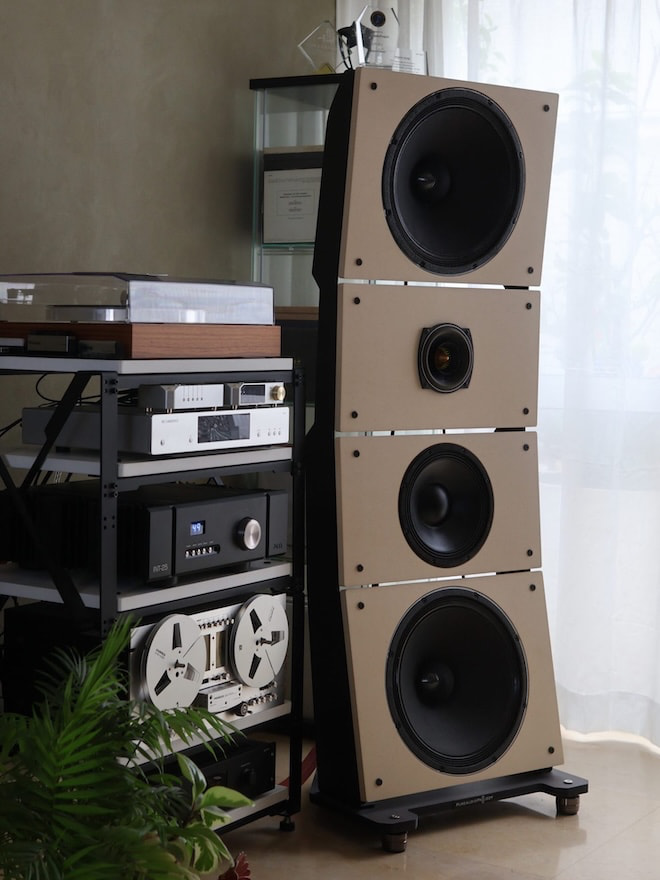
The Quartet15 is for listeners with medium-to-large rooms who want scale, efficiency and the spacious presentation of an open-baffle design. It also makes sense for owners of quality tube amplifiers or low-power Class A solid-state designs who do not want to surrender dynamics.
It is not for small rooms, wall-hugging installations or anyone who believes spending nearly $20,000 should eliminate the need to assemble furniture.
The PureAudioProject Quartet15 is not merely another large floorstander. Its dual 15-inch woofers, dedicated midwoofer, Voxativ driver, high sensitivity and accessible crossover create something unusually flexible for listeners who want to participate in the final setup.
The concept is compelling, particularly for tube-amplifier owners who want large-scale dynamics without 300 watts per channel.
The pricing remains less tidy. PureAudioProject’s earlier announcement listed the Quartet15 from $19,500 per pair, while more recent show information suggests some configurations may begin around $18,000. The final cost depends on the baffle and crossover options, and the company needs to publish a clear base price.
For more information: pureaudioproject.com

In 1978, the Federal Trade Commission, the agency that regulates unfair or deceptive advertising, proposed limiting TV ads for sugary foods on programs targeted at children. The Washington Post’s editorial board scoffed that the plan would “turn the agency into a great national nanny.” Congress clipped the agency’s wings, and “kidvid” entered history as a cautionary tale of regulatory hubris. Once again, the FTC is channeling its inner Mary Poppins in the name of consumer protection. Only in this incarnation, she pulls a novel theory of deception from her regulatory carpetbag to control what AI chatbots say.
Under the FTC’s proposed policy statement on “Suppression of Accuracy in Artificial Intelligence Systems,” announced July 1, AI developers “likely” commit false advertising whenever they “steer” their models’ outputs toward objectives users don’t expect. The theory: because AI companies market their products as helpful, consumers expect maximally accurate answers, and any undisclosed editorial shaping of a model’s responses is deception.
It is a policy proposal in search of a problem. True to Mary Poppins’ “I never explain anything” credo, it does not identify a single false advertisement or deceived consumer.
It is also wanting on the legal front, failing to pay even lip service to relevant Supreme Court precedent. In Brown v. Entertainment Merchants Association, the court held that video games—interactive software sold for profit—receive full First Amendment protection, because the Constitution’s protections “do not vary” when a new medium appears. In Moody v. NetChoice, the court reaffirmed that a platform’s choices about what expressive content to present are protected editorial discretion. The design choices underpinning large language models make them legally indistinguishable from video games and social media.
What the FTC calls “steering” is what the Supreme Court calls editing.
The FTC says developers could avoid liability under the policy by “clearly and conspicuously” disclosing that their systems prioritize objectives other than pure accuracy. But how would that work for Truthly, an AI chatbot promoted for its Catholic bias? Truthly’s slogan is “Every other AI is built to agree with you. Truthly tells you the truth.” Although Truthly affirmatively discloses its Catholic worldview and disclaims impartiality—seemingly just what the FTC policy demands—it also claims that, unlike secular chatbots, its news and information is filtered “through truth and morality.” Consumers might struggle to reconcile the chatbot’s biased-but-true disclaimers, rendering them ineffective under the FTC’s own disclosure standards. Paradoxically, a religious chatbot could face false-advertising charges for fulfilling its core function—generating religious outputs.
Freedom of the press, an explicit guarantee of the First Amendment, also would be vulnerable under the proposal’s legal logic. In theory, it would put a target on any media outlet that promises accuracy while exercising editorial judgment, including the NY Times, whose front page has promised “All the News That’s Fit to Print” since 1897.
Right-leaning media also would be at risk. Newsmax tells viewers it delivers “real news.” Breitbart’s editorial guidelines declare its goal is “to report the truth – accurately and fairly.” One America News brands itself “Your Credible Source for National & International News.”
Would print articles resort to cigarette-style bias warning labels to avoid an FTC investigation? Would cable news programs run a continuous chyron with their editorial criteria?
In 2004, the agency rejected any application of FTC law in this manner when it declined to challenge Fox News’s “Fair and Balanced” slogan as false advertising. According to then-Chairman Timothy Muris, the inquiry would have entailed an evaluation of the news content at issue, which is a “task the First Amendment leaves to the American people, not a government agency.”
The FTC’s new proposal, however, points the opposite way.
Not so long ago, FTC Chairman Andrew Ferguson touted the Commission’s enforcement focus on actors that use AI to violate the law or deceive consumers about the capabilities of their generative AI. When DoNotPay promoted a “robot lawyer” as comparable to a human professional, then-Commissioner Ferguson rightly voted to hold it accountable. When Workado exaggerated the accuracy of its AI-detection product, the FTC, with Ferguson as chair, ordered it to stop making unsubstantiated claims.
At the same time, Ferguson was advocating for regulatory humility, declaring that “the FTC’s enforcement actions ought to be guided by the law, not the personal ideology, politics, or novel legal theories of its chairman or commissioners.” Under the Biden administration, he dissented from a proposed consent order against Rytr, a generative AI writing tool that was capable of generating deceptive outputs, arguing that the Commission was punishing “a product that helps people speak, quite literally.”
Commissioner Melissa Holyoak, whom Ferguson joined in dissent, observed that “[p]art of generative AI’s promise is its ability to suggest new lines of thought that may never have occurred to a user in the first place.” In other words, he signed on to the view that generative AI may be most valuable when it defies consumer expectations. As chairman, Ferguson went further, vacating the Rytr order outright and condemning law enforcement “unsupported by facts or law.”
But that was then.
The Supreme Court in Trump v. Slaughter subsequently stripped the FTC of its statutory independence, blessing a two-member, one-party Commission. And this Commission has not been shy about asserting its anti-left viewpoints. The FTC proposal puts “equity” in scare quotes and castigates Colorado’s AI law, while ignoring AI laws in Texas and Utah. Meanwhile, the administration the Commissioners serve requires federally purchased AI models to conform to its own official version of the truth. When a future administration inevitably jerks the ideological steering wheel leftward, consumers and AI developers—not the current Commission leadership—will suffer the whiplash.
In the 1964 film, Mary Poppins measured the children with a tape measure calibrated with subjective character traits instead of inches. Of course, she was deemed “practically perfect in every way.” The FTC’s proposal similarly cloaks a subjective assessment in the language of unassailable objectivity. But all the spoonfuls of sugar in the history of children’s advertising could not mask the bitter taste of conformity with a single worldview.
By fostering regulatory uncertainty, the FTC’s proposal threatens to stall the innovation that the administration insists is essential to AI supremacy. Its facile assurance that developers could avoid deception liability through a disclosure that “dispel[s] the notion that the system is designed to give the best answer possible” is, in “Mary Poppins” parlance, “a piecrust promise. Easily made, easily broken.”
Keith R. Fentonmiller served more than two decades as a senior attorney in the Federal Trade Commission’s Division of Advertising Practices. He is also a published fiction author. The views expressed are his own.
Filed Under: ai, andrew ferguson, fair and balanced, false advertising, ftc, steering

We enjoyed [Beej’s] trip down memory lane looking at a BASIC game, The Wizard’s Castle, written for the Exidy Sorcerer. It appeared in a 1980 magazine that included the title graphic above. It reminded us how, back in those days, we did things with BASIC that you shouldn’t be able to do and it often looks, today, rather cryptic.
In particular, even if you know modern BASIC, these few lines might give you a pause:
10 REM"_(C2SLFF4
40 POKE 260,218: POKE 261,1: T = USR(0): T = PEEK(-2049)
80 Q = RND(-(2*T+1))
Line 10 is a comment, but a strange one. Certainly that doesn’t matter, right? Actually, it is a key part of the action. On line 40, you can see some pokes to write directly to memory and a peek to read some memory value back. The USR function calls some machine language program. You may realize the whole thing is to get some value T to seed the random number generator in line 80.
This leads to a few obvious questions. First, how does USR know what to call? Second, where is the machine language program? The details varied by system, of course, but in this case, the program knows that location 259 has a jump instruction that USR called. So poking an address into 260 and 261 was telling USR where it should go.
But what’s at that address? Keep in mind that an old computer like the Sorcerer didn’t have megabytes of memory being swapped about by an operating system. That means that things tended to be in known places and that BASIC had to be judicious about storing source code.
As was common at the time, a line like “10 PRINT 1+1” would get tokenized. In this case, each line would get a pointer to the next line, a two-byte line number, a single-byte token for “PRINT” and then more bytes to represent the rest of the line. In the case of text in a string or a remark, the bytes were just the text with a zero to terminate the string.
The first line entered would always be at address 469. So? If you consider the format of the REM statement, there will be a pointer at 469 and 470, the line number at 471 and 472, and the REM token at 473. That means the other bytes just get poured into address 474 and beyond.
That might seem like an odd number until you look at the pokes in line 40. Keep in mind that POKE works on bytes, not words. So poking 1 into 261 gives you an address of 256 + whatever is in the low byte, in this case 218. Add 256 and 218, and you get… 474! So USR is going to call that odd string in line 10!
There is more to the detective story, but if you want to know exactly what the REM did, you can read the original post.
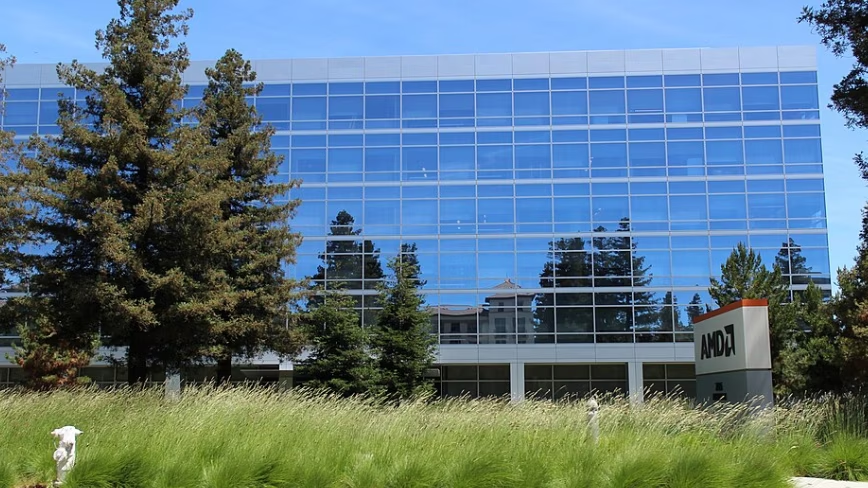
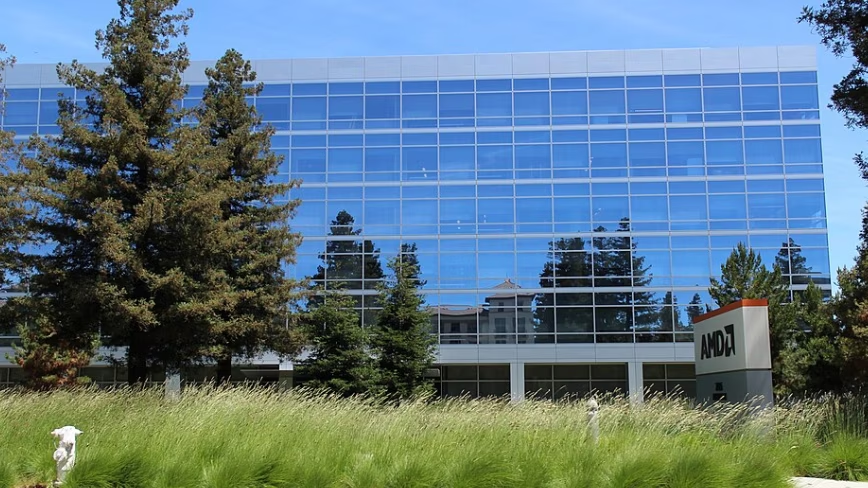
AMD launched MI455X chips, Helios racks, and Venice Epyc CPUs at Advancing AI, with OpenAI and Cerebras pledging to deploy the hardware at scale
AMD unveiled a suite of new data centre products at its Advancing AI event in San Francisco on Thursday, claiming they will outperform Nvidia’s competing hardware across AI training and inference. The announcements included the MI455X AI accelerator, the Helios server rack that packs 72 of those chips into a single system, and the Venice generation of Epyc server processors built on TSMC’s two-nanometre process. AMD predicted the total market it is pursuing will reach $2 trillion by 2030, with AI accelerators alone accounting for more than a trillion dollars of that figure.
Investors were unimpressed, sending AMD shares down about four percent during the presentation despite the stock having more than doubled in value this year. The scepticism reflects the gap between AMD’s ambitions and Nvidia’s dominance: Nvidia’s Vera Rubin platform is already in full production and shipping to customers including OpenAI, CoreWeave, and Microsoft. AMD CEO Lisa Su has delivered a remarkable growth run, but Wall Street’s expectations were already baked into a stock that had risen roughly 145 percent year to date heading into the event.
Su brought executives from major AI companies on stage to endorse AMD’s hardware. OpenAI’s Sachin Katti said his company expects to deploy Helios “at massive scale” as it scrambles to add infrastructure capacity. The event came a day after AMD announced it would invest up to $5 billion in Anthropic and deploy two gigawatts of MI450 series GPUs in Helios racks to run Claude, with the first gigawatt shipping in the first half of 2027.
AMD also announced a partnership with Cerebras, whose wafer-scale chips specialise in ultra-fast AI inference, to combine Helios racks with Cerebras servers for customers who need the lowest possible latency. AMD hardware will handle the work of deciphering queries while Cerebras chips provide rapid answers. Cerebras CEO Andrew Feldman said the combined product will ship from Cerebras-owned data centres starting in the fourth quarter and will beat a similar offering Nvidia is assembling from its recent Groq acquisition.
The Venice Epyc processor, meanwhile, is AMD’s answer to Nvidia’s push into server CPUs with its Vera chip, which Nvidia has claimed gives it a performance edge. AMD said Venice will keep it well ahead of Vera, setting up a direct contest that independent benchmarks have yet to settle. The rivalry now spans accelerators, server processors, and complete rack-scale systems, with both companies pitching end-to-end data centre solutions rather than individual components.
SYSTEMS
The enemy of my enemy is my friend
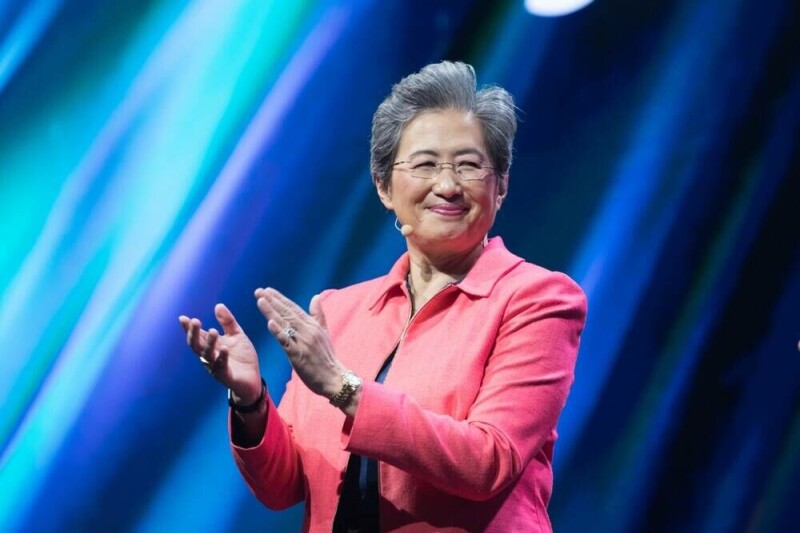
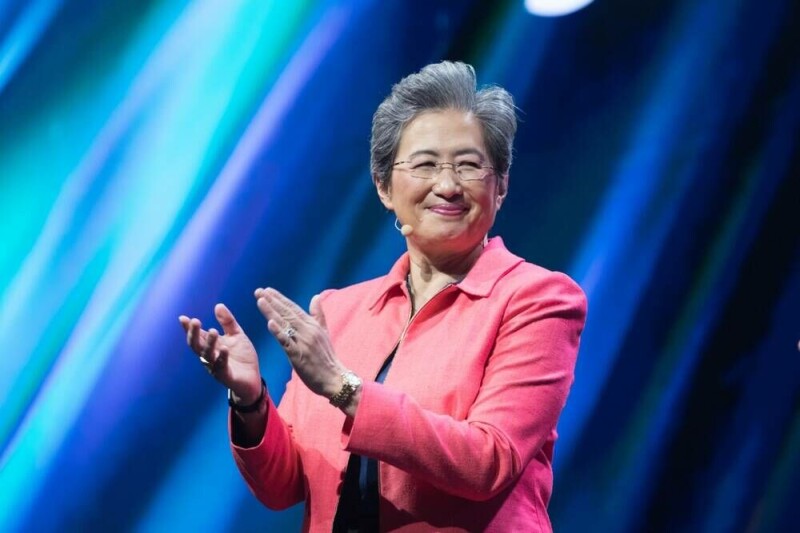
GPUs are great for training, but for inference, you need a heavy dose of speedy memory to churn out the tokens. AMD has tapped Cerebras Systems to develop a disaggregated compute platform combining Instinct GPUs with the chip startup’s SRAM-powered AI accelerators. The goal: to deliver ultra-low-latency inference for agentic workloads.
The collaboration, announced on stage during AMD CEO Lisa Su’s Advancing AI keynote Thursday, closes a gap in AMD’s portfolio that cost Nvidia $20 billion to acquihire from Groq back in December.
Cerebras CEO and cofounder Andrew Feldman is no fan of Nvidia, having previously denigrated the GPU giant as a mere AI arms dealer. And unlike GPUs, Cerebras’ wafer scale engines (WSE) don’t rely on HBM4 but instead use on-chip SRAM that’s orders of magnitude faster.
This has made Cerebras one of the fastest inference providers in the world, with output speeds often exceeding 2,000 tokens a second.
By running compute-heavy prompt processing operations on AMD’s Instinct GPUs and offloading the memory intensive token generation to Cerebras’ WSE accelerator, the duo aims to achieve higher interactivity without compromising on throughput or cost to do it.
“What you have with Instinct and the Helios rack is you have the leader in performance and memory capacity. And you marry that with our Wafer Scale Engine, which is the leader in SRAM and in memory bandwidth, and that combination allows us to deliver a solution that is unmatched,” Feldman said on stage.
Neither company has shared specific figures, but the combination is expected to boost the number of tokens per second generated per watt of electricity consumed by as much as 5x.
If any of this sounds familiar, Cerebras’ accelerators fill the same role as the Groq 3 LPUs (Language Processing Units) announced alongside Nvidia’s Vera Rubin rack systems at GTC in March.
But where Nvidia needs two thousand Groq LPUs worth of SRAM to serve a trillion-parameter model like Kimi K2.5, AMD and Cerebras will need at most a few dozen.
The combined offering will be available in Cerebras Cloud later this year, but may not be AMD’s last deal with the upstart.
“There are lots of ways to get workload-specific acceleration done, and I think Cerebras has a very interesting technology. It works very well with Helios,” Su said during a press conference following the keynote. “The idea of our open ecosystem is frankly that we will work with a number of different companies that may have technology that could be useful.”
“You can expect that we’re going to do more workload disaggregation going forward,” she added. ®

On Thursday morning, Meta published an ad to its official Instagram account with the message that artificial intelligence will not “make us less connected” or “leave us behind.” It was set to the 1972 David Bowie track “Five Years,” which is about, among other things, the end of the world.
“Call us optimists, call us dreamers, call us whatever the hell you want—but we’re betting on people, and we like those odds,” the narrator says, as a toddler plays with a butterfly, two parents laugh with their infant, and Jalen Brunson waves at the Knicks Championship Parade. (The ad also takes special care to highlight use cases for its controversial smart glasses that are not, say, harassing women while surreptitiously recording them.)
The snippet of “Five Years” used in the ad includes the following lyrics:
Perhaps understandably, it skips other parts of the song, including the opening:
When reached for comment, Meta spokesperson Francis Brennan said he “would like to highlight what David Bowie himself said about ‘Five Years’ and its meaning: having optimism for the future.” Brennan sent along a 1972 quote about the song that he sourced to BowieBible.com.
“People are so incredibly serious and scared of the future that I would wish to turn the feeling the other way, into a wave of optimism,” reads the quote, which is itself sourced from NME Magazine. “If one can take the micky out of the future, and what it is going to be like … It’s going to be unbelievably technological.”
Nevertheless, BowieBible.com also notes that the song “speaks of a dystopian nightmare in which Earth enters its final five years, for reasons undisclosed, and the ensuing panic, violence, and attempts at redemption.”
BowieBible.com also quotes from a 2018 interview with drummer Mick Woodmansey: “Well, we chatted about it, and we knew it was about the end of the world and pretty depressing,” Woodmansey said of the song. “I remember when we recorded it, he was actually in tears. He was doing the vocal and he was actually crying.”
According to Jeremy D. Larson, the deputy director of Condé Nast sister publication Pitchfork, taking songs out of context for commercials is a time-honored tradition. He points to a Carnival Cruise ad that uses an Iggy Pop song about heroin addiction. (He also says that since Warner Chappell Music owns Bowie’s catalog, they are the ones with discretion over where his songs end up.)
Ford will embed Apple Maps in its new UEV platform starting with a $30,000 electric pickup in 2027, with road data also feeding BlueCruise
Ford will use Apple Maps as the built-in navigation system for its next generation of electric vehicles, replacing the Google-based software it has run since 2023. The integration uses Apple’s new MapKit for Automotive SDK and will launch with Ford’s $30,000 midsize electric pickup in 2027, according to a joint announcement from both companies on Wednesday. Ford will also feed Apple’s road-level mapping data into the development of its next-generation BlueCruise hands-free driving system.
The move is a notable reversal. Ford partnered with Google in 2021 to bring Android Automotive to millions of its vehicles, making it one of the highest-profile adopters of Google’s in-car software platform, but for its most important new product line Ford is now turning to Apple instead. CEO Jim Farley called the electric pickup a vehicle that “redefines what advanced technology can be,” and said Ford is “honoured to be among the first to embed” Apple Maps directly into a car.
The system will offer turn-by-turn directions with natural language search, real-time traffic and incident data, and EV-specific route planning that accounts for charging station locations, estimated range, and battery preconditioning. That last feature automatically warms or cools the battery before arriving at a fast charger, which can cut charging times significantly. Apple’s senior vice president of services, Eddy Cue, said the SDK lets automakers build a navigation experience that matches the look and feel of their own vehicle software rather than simply mirroring the Apple Maps app.
Beyond navigation, Ford’s Latitude AI team will use Apple’s road-level data to build a more seamless on-ramp-to-off-ramp experience for BlueCruise, the New York Times reported. That means Apple’s mapping data will help the hands-free driving system understand where highway interchanges, merges, and exits are located. Google’s Android Automotive platform has been gaining traction across the industry, but Ford’s decision to pick Apple for its flagship EV platform suggests the competition for in-car software is far from settled.
The 💜 of EU tech
The latest rumblings from the EU tech scene, a story from our wise ol’ founder Boris, and some questionable AI art. It’s free, every week, in your inbox. Sign up now!
The electric pickup launching on Ford’s Universal Electric Vehicle platform will be built at Louisville Assembly Plant in Kentucky, using LFP batteries and megacasting to hit the $30,000 target. CarPlay will remain available on Ford vehicles alongside the native Apple Maps integration. Ford has not said whether its existing models running Android Automotive will eventually switch to Apple Maps or whether the change applies only to UEV-based vehicles going forward.
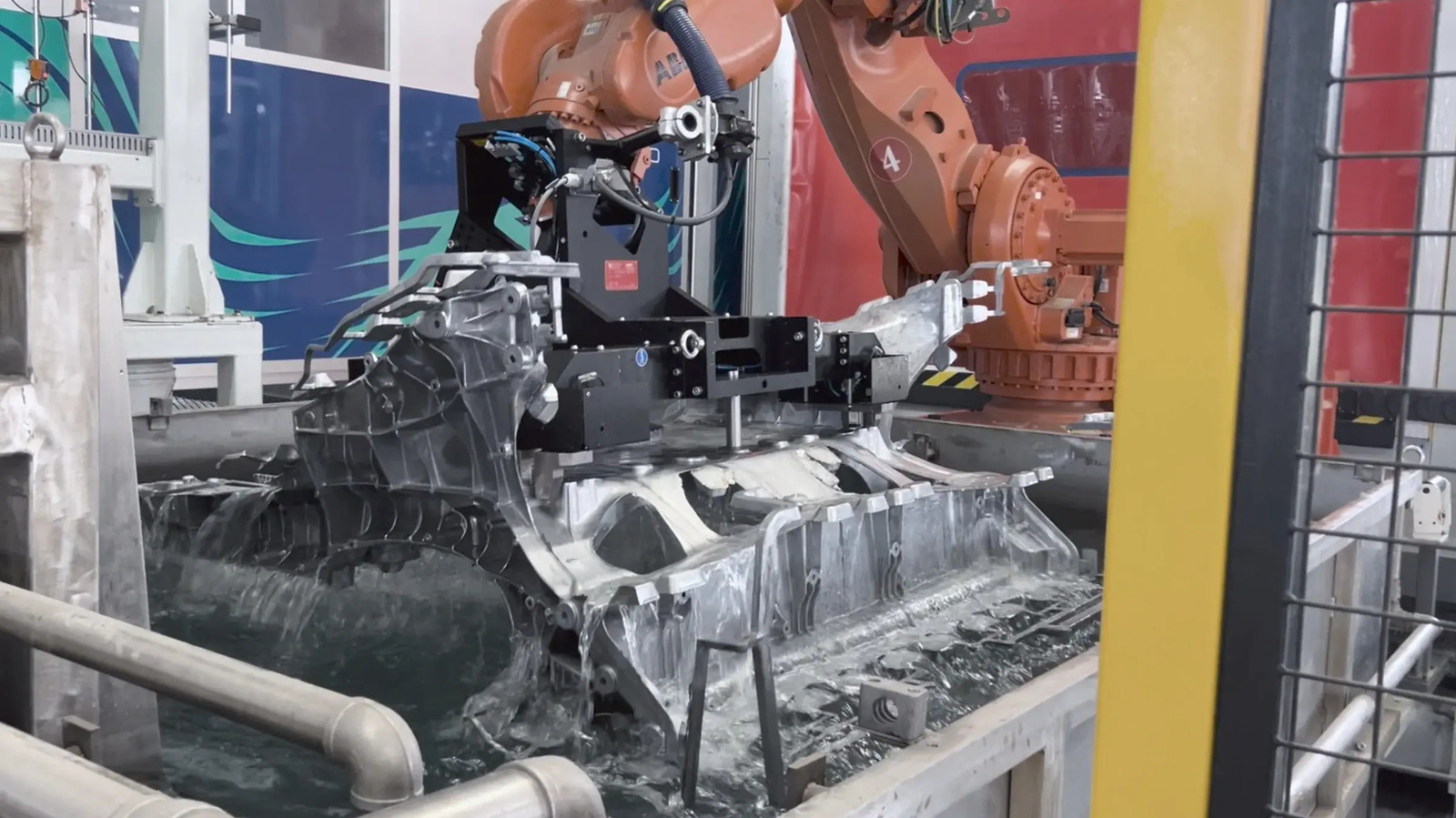
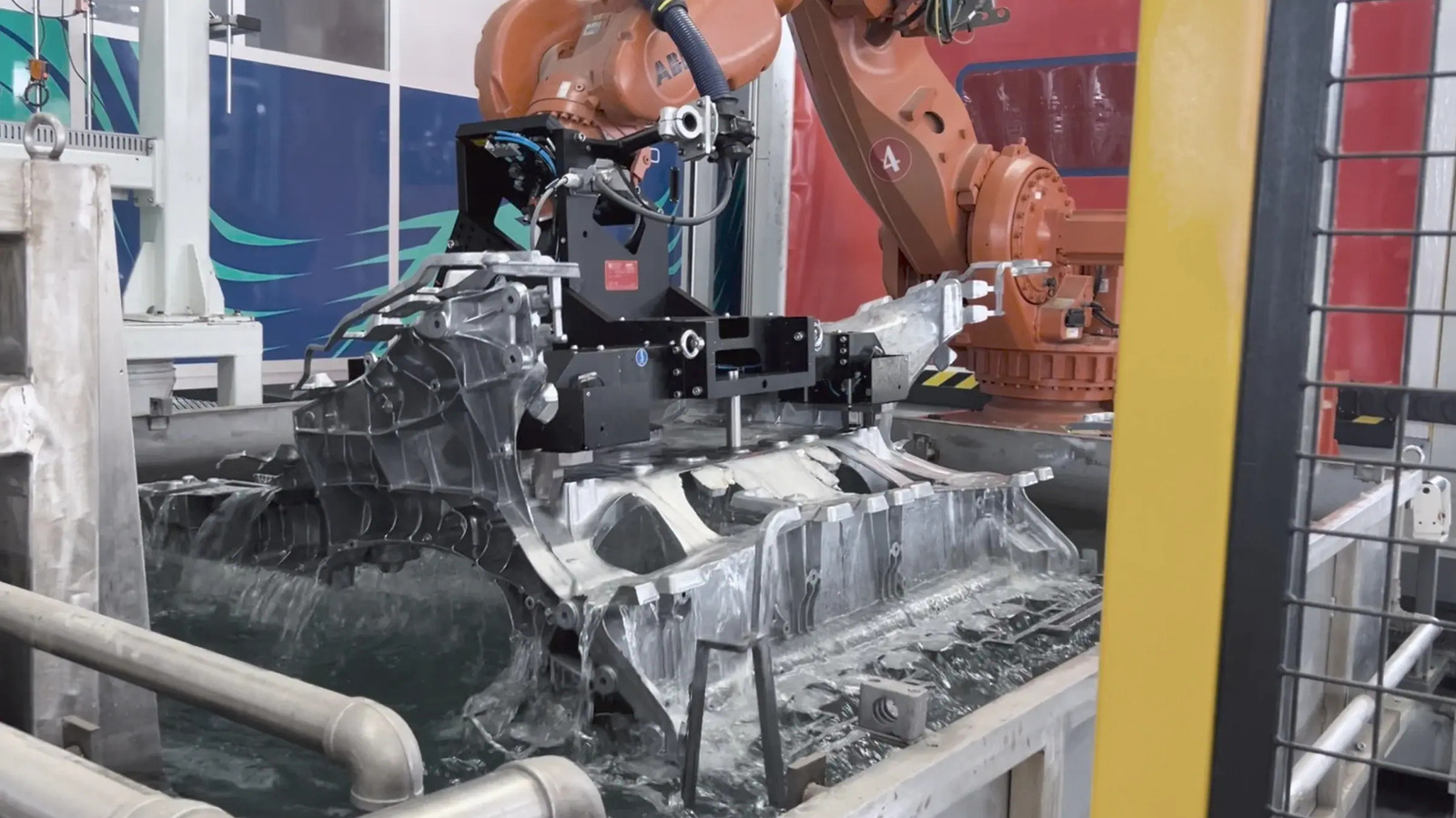
Along with the Mustang, its iconic blue oval logo, and the F-Series truck, Ford is largely known for inventing the moving assembly line in 1913. This allowed workers to remain in place and build the vehicle as it moved down a conveyor belt, allowing the Model T to be built in 90 minutes. Now, well over 100 years later, Ford is harnessing that heritage to reinvent how vehicles are manufactured once again. To put together its highly anticipated $30,000 electric pickup truck, Ford has introduced what it calls the Universal EV Production System.
Unicastings have replaced smaller pieces to simplify the process and lower overhead costs. There are 20% fewer parts, 25% fewer fasteners, and 40% fewer workstations. This has also made assembly time 15% faster. The new assembly line starts in a straight line, splits into three branches, then meets again at the end. The front is assembled in one line, the rear in another, and the third line puts together the battery, seats, console, and other interior features. A kit with the required components and tools is sent down the assembly line, allowing workers to stay right where they are and work on what’s directly in front of them.
The first vehicle Ford will build using its Universal EV Production System will be an electric pickup truck. Ford is aiming to take advantage of the lower production costs to make a more affordable EV truck. While the automaker has not revealed many details, there have been a few hints and quick glimpses — Ford even has a dedicated website for the unnamed truck.
While it has only been seen in camouflage, the new truck is believed to have a low, curved grille and an overall more aerodynamic design than Ford’s existing truck models. It’s about the size of a Maverick, with Ford claiming the interior will be more spacious than the RAV4. The truck will also implement the Universal EV’s new lithium iron phosphate prismatic batteries, which are lighter and smaller, and will be placed on the vehicle floor.
The latter will lower the truck’s center of gravity, which should help with handling. Based on Ford’s stated goals, it could even have a 0-60 mph time similar to the EcoBoost Mustang, which is about 4.5 seconds. The $30,000 pickup truck is coming out in 2027, so hopefully Ford will confirm details of the truck soon — including its name.





Weekend Open Thread – Corporette.com


The House | The City of London can help the new chancellor deliver growth in every postcode


Ripple Payments Joins MiCA With 14 Firms, Does It Mean Anything For XRP?

Two July Windows Left: The CLARITY Act’s Senate Fight and What Failure Means


Democrats look to World Cup watch parties to register thousands of voters


Ripple wins EU-wide access as ESMA adds it to MiCA register


Grayscale Files For Worldcoin ETF, WLD Registers Sharp Rise


Unregistered fitter used Gas Safe logo on business flyers


Sail Virtually Aboard The “Itanic” With IA-64 Emulator

Turtle Beach Command Series KB7 review: a nifty screen-equipped gaming keyboard


Registration is now open for March for Men with Kev 2026


Big Money Is Entering XRP

New Jersey voter registration controversy explained: How 6,600 noncitizens got on the rolls, and what happens next


Money | Class 12 Economics | CBSE Board Exam 2026-27


Banco Bilbao Vizcaya Argentaria, S.A. (BBVA) Discusses Global Macro Environment and Economic Outlook for Core Markets Transcript


Kaspersky exposes OkoBot’s 20-module crypto wallet attack

Johnny Depp’s R-Rated Gothic Cult Classic Gets New Release Ahead of Sydney Sweeney Remake


Airlines warn Sunshine Protection Act could disrupt flight scheduling


Durham County Council to send out electoral registration emails


MiCA Licensing Faces Delays as ESMA Adds 14 CASPs to Register



You must be logged in to post a comment Login