TL;DR
AMD launched MI455X chips, Helios racks, and Venice Epyc CPUs at Advancing AI, with OpenAI and Cerebras pledging to deploy the hardware at scale



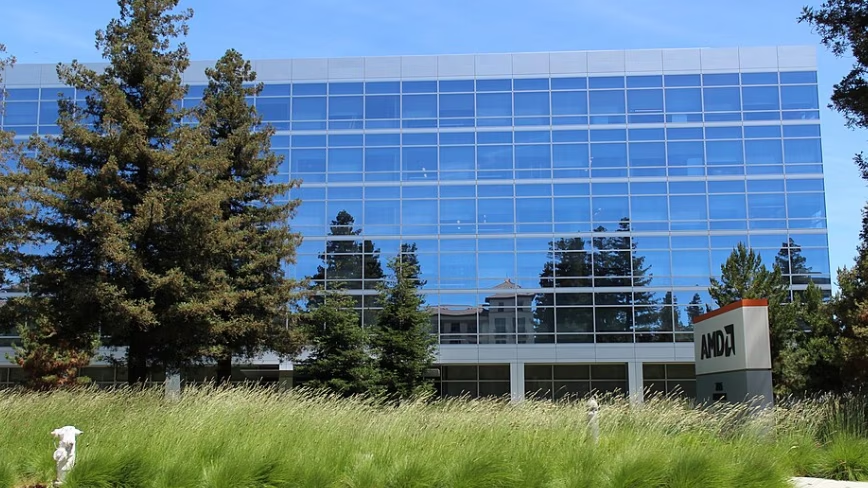
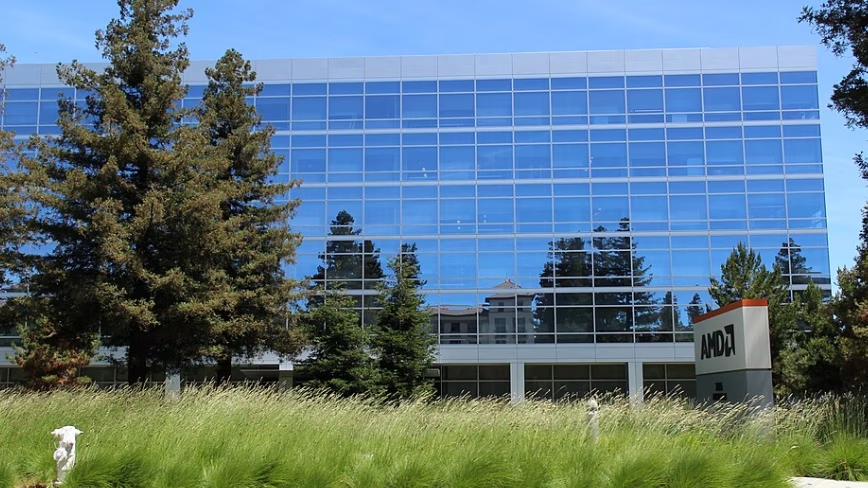
AMD launched MI455X chips, Helios racks, and Venice Epyc CPUs at Advancing AI, with OpenAI and Cerebras pledging to deploy the hardware at scale
AMD unveiled a suite of new data centre products at its Advancing AI event in San Francisco on Thursday, claiming they will outperform Nvidia’s competing hardware across AI training and inference. The announcements included the MI455X AI accelerator, the Helios server rack that packs 72 of those chips into a single system, and the Venice generation of Epyc server processors built on TSMC’s two-nanometre process. AMD predicted the total market it is pursuing will reach $2 trillion by 2030, with AI accelerators alone accounting for more than a trillion dollars of that figure.
Investors were unimpressed, sending AMD shares down about four percent during the presentation despite the stock having more than doubled in value this year. The scepticism reflects the gap between AMD’s ambitions and Nvidia’s dominance: Nvidia’s Vera Rubin platform is already in full production and shipping to customers including OpenAI, CoreWeave, and Microsoft. AMD CEO Lisa Su has delivered a remarkable growth run, but Wall Street’s expectations were already baked into a stock that had risen roughly 145 percent year to date heading into the event.
Su brought executives from major AI companies on stage to endorse AMD’s hardware. OpenAI’s Sachin Katti said his company expects to deploy Helios “at massive scale” as it scrambles to add infrastructure capacity. The event came a day after AMD announced it would invest up to $5 billion in Anthropic and deploy two gigawatts of MI450 series GPUs in Helios racks to run Claude, with the first gigawatt shipping in the first half of 2027.
AMD also announced a partnership with Cerebras, whose wafer-scale chips specialise in ultra-fast AI inference, to combine Helios racks with Cerebras servers for customers who need the lowest possible latency. AMD hardware will handle the work of deciphering queries while Cerebras chips provide rapid answers. Cerebras CEO Andrew Feldman said the combined product will ship from Cerebras-owned data centres starting in the fourth quarter and will beat a similar offering Nvidia is assembling from its recent Groq acquisition.
The Venice Epyc processor, meanwhile, is AMD’s answer to Nvidia’s push into server CPUs with its Vera chip, which Nvidia has claimed gives it a performance edge. AMD said Venice will keep it well ahead of Vera, setting up a direct contest that independent benchmarks have yet to settle. The rivalry now spans accelerators, server processors, and complete rack-scale systems, with both companies pitching end-to-end data centre solutions rather than individual components.
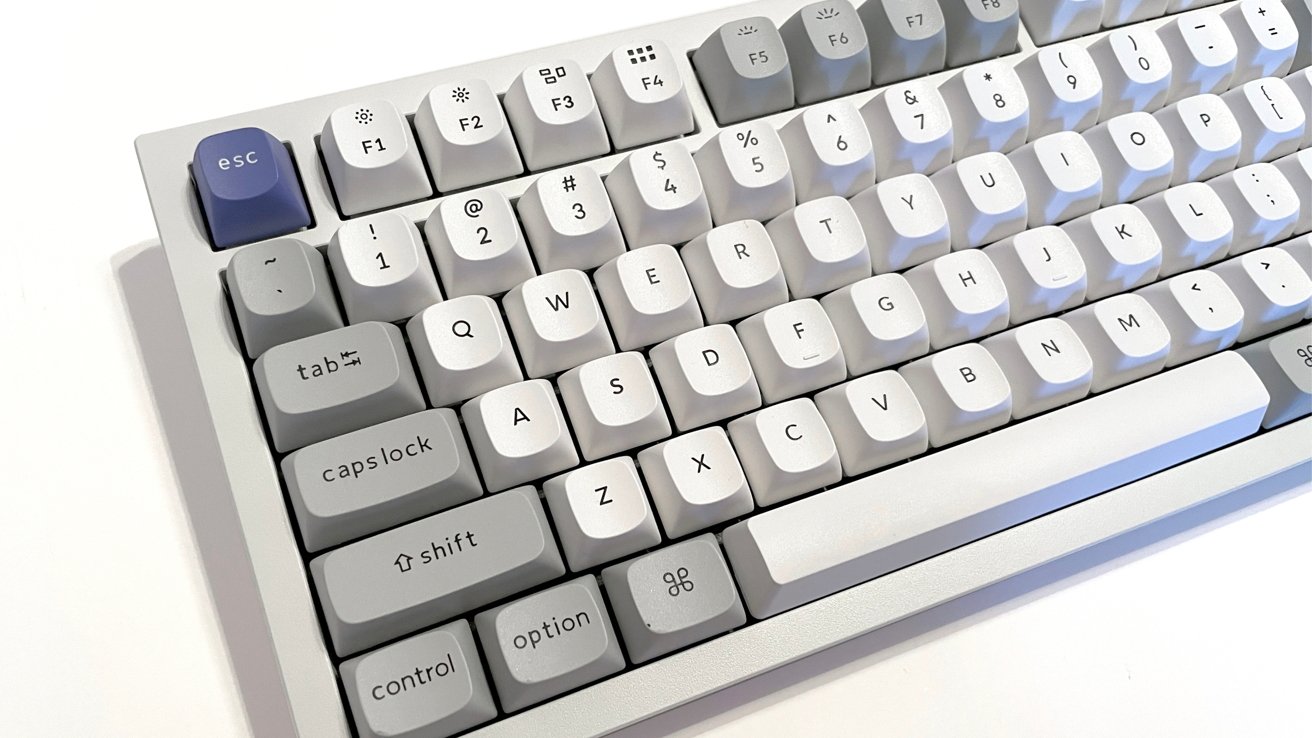
The Keychron Q6 HE 8K is a solid mechanical keyboard with magnetic switches. While it’s not cheap, it’s got more than enough to give a great typing experience on Mac.
When it comes to mechanical keyboards, Keychron stands out as one of the industry leaders. All thanks to its vast array of styles, colors, and features aimed at both Windows and macOS users.
The Keychron Q6 HE 8K is a beefy new release, and I put it through an extended test drive in my ongoing series of reviews of Keychron products. It’s an ever-continuing search for the mechanical keyboard that will earn a permanent position on my workspace.
The Q6 HE 8K is a full-size magnetic switch mechanical keyboard with an 8K polling rate that supports a direct wired connection. It has a staggering variety of customizations.
The Q6 HE 8K arrives in a standard black box with a metallic Keychron logo. The keyboard and accessories are packaged in heavy foam cutouts for maximum travel safety.
Keychron Q6 HE 8K Review: Build Quality
The Q6 HE 8K is a full-size mechanical keyboard with a metal case. Even by the industry standards for a keyboard of this size, I was surprised by the sheer weight and feel of it.
This is a very beefy keyboard that will easily withstand the rigors of daily use, at stationary or mobile workspaces alike.
Keychron offers the Q6 HE 8K in two colors: Black or white. That’s it.

Keychron Q6 HE 8K Review: Left side with Mac keyset
This is a recurring theme with Keychron and their keyboards, and I have written about it in the past. But with the amazing quality of its keyboards, I would love to see it expand its range of colors.
I’ll be the first to admit I do not know its manufacturing limitations with such meticulously engineered products. But even so, the occasional red, blue, green, or pink would be welcome in this age of colorful workspaces and peripherals.
The Q6 HE 8K arrives with the proprietary Keychron Ultra-fast Lime Magnetic Switches as standard. Keychron sells Banana and Silent Red switches on the Keychron website for an added cost of $29.99, depending on the type of sound level or tactile feel you prefer.
Keychron products never feel cheap or like an afterthought. Every keyboard it makes uses premium materials and engineering built to last for years.
The Q6 HE 8K is certainly no exception. From the heavy aluminum case and double-gasket design to the double-shot keycaps, PCB stabilizers, adapters, and tools, everything in the box feels like bespoke, white-glove service.

Keychron Q6 HE 8K Review: Rear has USB-C and two control switches
The back of the Q6 HE 8K includes a USB-C port for connection and use. There are two switches next to the USB port.
One switch is a three-position switch to toggle between up to three potential keyboard configuration profiles. The second switch moves between default macOS and Windows configurations.
The Q6 HE 8K has a wide variety of customization options, including third-party keycaps and remapping variations available from Keychron’s proprietary Keychron Launcher tool. The pool of possibilities is very deep.
Keychron touts that the Q6 HE 8K is truly customizable from top to bottom, and it is. By default, Keychron includes keycaps for both macOS and Windows configurations.
The switches on the Q6 HE 8K are hot-swappable, with Keychron noting that hot-swapping works with Keychron Lime and Gateron Jade magnetic switches.
The new Keychron screw-in PCB stabilizers deliver incredible stability on the big keys, namely the space bar, shift, enter, and delete. The installation is quick and easy for experienced users and mechanical keyboard newbies alike.

Keychron Q6 HE 8K Review: Managing the actuation distance in the Keychron Launcher
The south-facing RGB lights on the Q6 HE 8K are vibrant and fully customizable to each individual key, using Keychron’s Per-Key RGB feature. The contrast of the bright lights against the white metal body and keycaps makes everything pop.
Keychron’s Launcher tool is web-based, and it allows you to adjust almost everything. Adjustments span keymapping, the internal RGB light configuration, and adding custom macros for use with the Q6 HE 8K.
Previous versions of the Keychron Launcher did not play well with macOS and several browsers. The process is incredibly smooth now. It’s nice to see a manufacturer like Keychron listen to the concerns of their customers and address them.
I used the Q6 HE 8K for several weeks prior to writing this review, and it was the best Keychron experience I have had to date. That is, in a line of good Keychron experiences.
On my standard workspace layout, I use a digital pen display and stylus with my right hand. A wireless, low-profile keyboard is used by my left hand for key commands.
I need to move the tablet and the keyboard around often throughout my workday. I find most full-size keyboards to be cumbersome in this space, but despite its size, weight, and wired connection, the Q6 HE 8K handled the job incredibly well.

Keychron Q6 HE 8K Review: Right side with numpad and knob
I’ll admit, I tested this as my work keyboard only to be thorough and see how the Q6 HE 8K behaves at work and at play. I expected to dislike the work experience based on my personal preferences, but I was surprised by how well the keyboard worked for me.
I had a few initial hours where my muscle memory for low-profile keyboards worked against me, with a series of missed clicks or a bit of fatigue with the larger keycaps. That passed in time, and I found the size and weight of the Q6 HE 8K to be a welcome change.
Where I expected the Q6 HE 8K to excel was in my gaming space on my Windows machine. It lived up to everything I anticipated and more.
The weighty keyboard provides stability, and the ability to customize every key actuation point and utilize the LKP (last key priority) and DKS (dynamic keystrokes) opened up an entire world for me. Think pressure sensitivity adjustments and absolute control with games like Marvel Rivals, where quick, responsive actions are vital.
I am an older gamer, so experiencing these features for the first time truly made me feel a bit like a caveman cracking rocks together with my previous basic keyboard and mouse. Meanwhile, other gamers are building rockets.

Keychron Q6 HE 8K Review: Full top-down view
The Q6 HE 8K is not the quietest mechanical keyboard I have ever used. If I decide to get one for my gaming desk, I will absolutely purchase and use the Silent Red switches from Keychron.
The bumpy-clack of the standard switches is nice, but it is not my preference.
The volume adjustment push knob on the Q6 HE 8K is amazing, and it is a simple quality-of-life feature that I love. It isn’t something I expected, and the clickable knob made quick muting feel satisfying.
The Q6 HE 8K is an amazing mechanical keyboard, and I recommend it for gamers.
The retail price of the Q6 HE 8K is $239, and that is not anywhere close to inexpensive or budget-friendly for most. But the price is worth it if you are looking for a rock-solid mechanical keyboard.
The Keychron Q3 HE is available on the Keychron website for $239. It’s also available from Amazon,
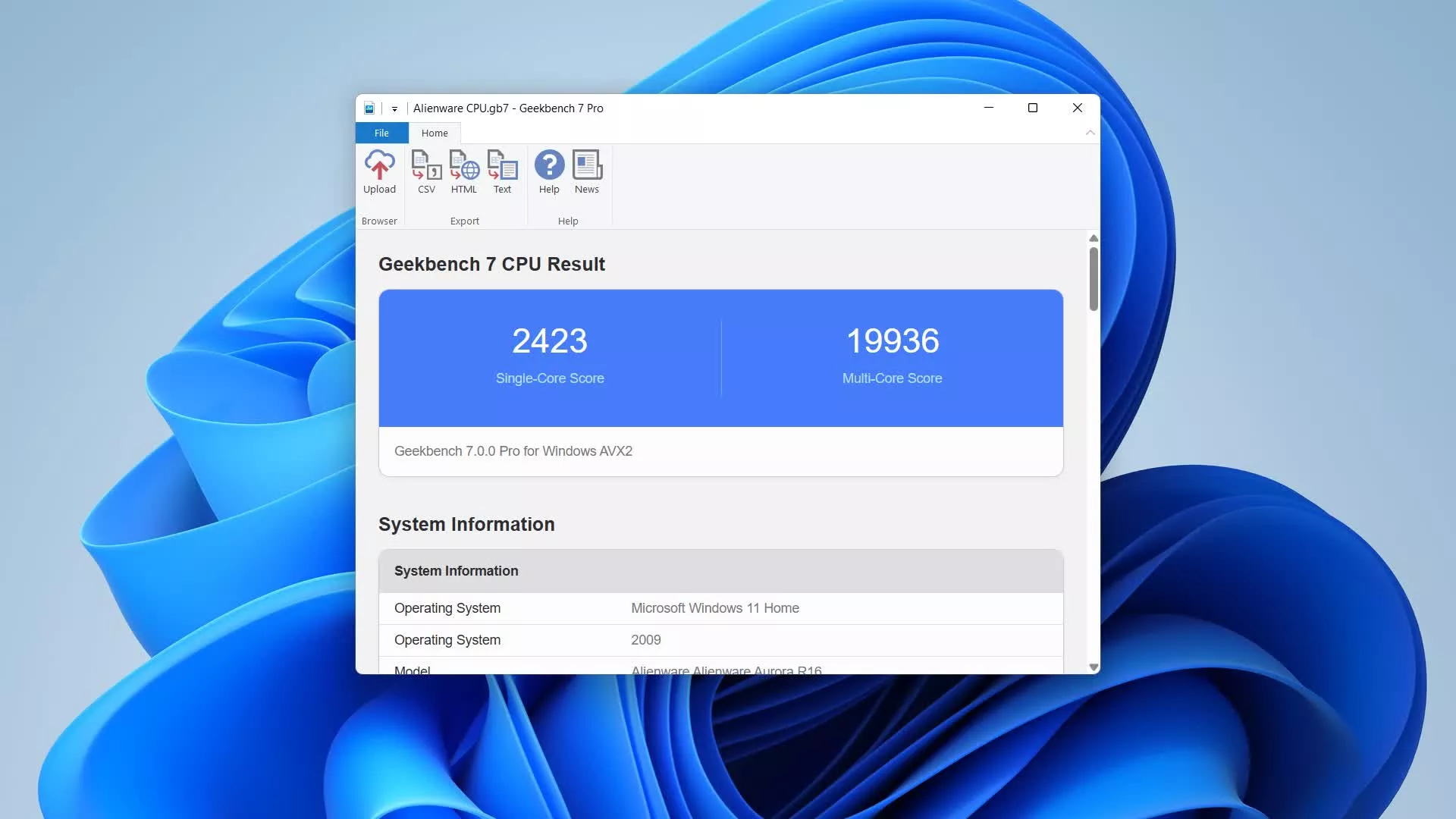
Geekbench includes updated CPU workloads and new Compute workloads that model real-world tasks and applications. Geekbench is a benchmark that reflects what actual users face on their mobile devices and personal computers.
CPU Benchmark
Geekbench 7 measures your processor’s single-core and multi-core power, for everything from checking your email to taking a picture to playing music, or all of it at once. Geekbench 7’s CPU benchmark measures performance in new application areas including video conferencing, streaming, and game physics, so you’ll know how your system handles the tasks you rely on every day.
GPU Benchmark
Test your system’s potential for GPU compute tasks including machine learning, image processing, and video editing with the GPU Benchmark. Test your GPU’s power with support for the OpenCL, Metal, Vulkan, and CUDA APIs. New to Geekbench 7 is an increased focus on Machine Learning, and support for NVIDIA’S CUDA API.
Real-World Tests
Geekbench uses practical, everyday scenarios and datasets to measure performance. Each test is based on tasks found in popular real-world apps and uses realistic data sets, ensuring that your results are relevant and applicable. Geekbench 7’s multi-core tests only run multi-threaded when real applications do, so your scores reflect how software actually behaves.
Cross-Platform
Compare apples and oranges. Or Apples and Samsungs. Designed from the ground-up for cross-platform comparisons, Geekbench 7 allows you to compare system performance across devices, operating systems, and processor architectures. Geekbench 7 supports Android, iOS, macOS, Windows, and Linux.
Geekbench Browser
Upload your results to the Geekbench Browser to share them with others, or to let the world know how fast (or slow) your devices can go! You can track all your results in one place by creating an account, and find them easily from any of your devices.
Benchmark Charts
Verify device performance using the Geekbench Benchmark Charts. Available on the Geekbench Browser, these charts are based on data aggregated from real users in real-world environments. Whether you’re considering a new purchase or are curious about a device’s capabilities, use these charts to make informed decisions.
Stress Tests
Geekbench includes stress tests, which are tests that help determine the stability of your system. Stress tests help you find small problems with your system before they become big problems.
Multicore Aware
Every test in Geekbench is multi-core aware. This allows Geekbench to show you the true potential of your system. Whether you’re running Geekbench on a dual-core phone or a 32-core server, Geekbench is able to measure the performance of all the cores in your system.
Here’s what the different numbers mean:
Battery Runtime is the battery test runtime. If the test started with the battery completely charged and ended with the battery completely discharged then the test runtime is also the battery lifetime.
Battery Score is a combination of the runtime and the work completed during the battery test. If two phones have the same runtime but different scores, then the phone with the higher score completed more work. As with Geekbench scores, higher battery scores are better.
Battery Level is the battery level at the start and the end of the test.
Geekbench 7, the latest version of Primate Labs’ cross-platform benchmark, has arrived and features both new and improved workloads to measure the performance of your CPUs and GPUs.
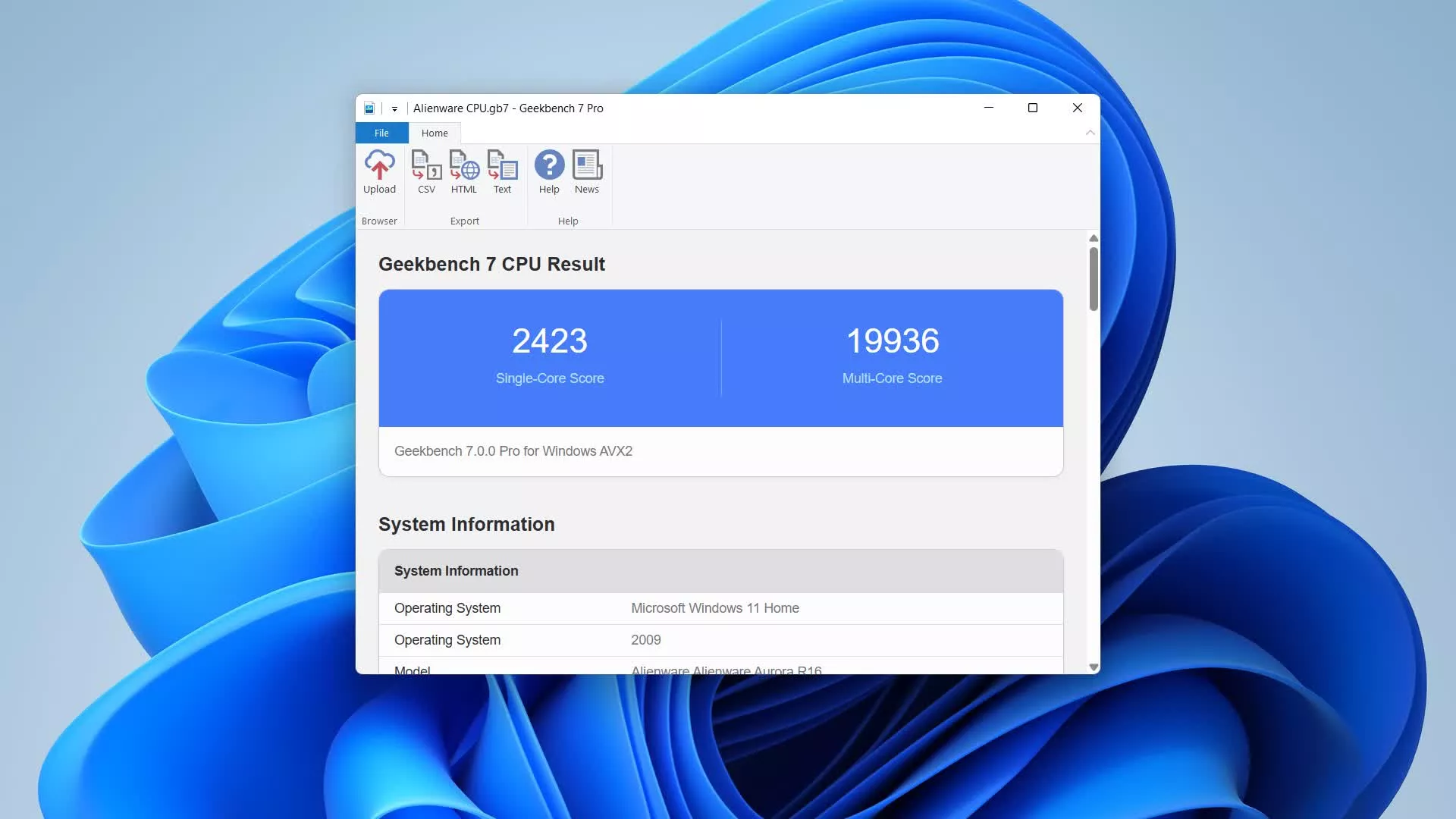
New Media Workloads
Geekbench 7 includes new media workloads that measure how well your CPU handles audio and video encoding, decoding, and processing. The workloads model the tasks behind video conferencing, screen sharing, and everyday content consumption. These new workloads:
Alongside the new media workloads, Geekbench 7 adds a Game Physics workload built on the Jolt Physics engine used in popular video games, expands the Photo Editor workload with a richer set of real-world edits, and updates the Photo Library workload to support importing and processing modern image formats such as JPEG XL and DNG.
A Smarter Multi-Core Benchmark
The multi-core benchmark in Geekbench 7 has been redesigned to better reflect how real applications behave. Not every task in the real world is multi-threaded, and pretending otherwise distorts scores without telling you anything useful about your device.
In Geekbench 7, a workload only runs in multi-threaded mode if the task it models actually runs multi-threaded in real applications. For example, the HTML5 Browser test isn’t included in the multi-threaded suite because web browsers are single-threaded (or lightly threaded).
The result is a multi-core score that’s a more accurate, more useful, and more relevant measure of how your device performs the work you actually do.
A Refreshed GPU Benchmark
The GPU benchmark has a new focus on the machine learning and content creation applications that increasingly define GPU performance. For machine learning, the GPU benchmark includes workloads that:
Geekbench 7 also introduces new GPU image editing and synthesis workloads, including RAW image processing, LUT-based video color grading, path tracing, and fluid simulation.
And by popular demand, CUDA joins OpenCL, Vulkan, and Metal as a supported API in the GPU Benchmark. You can now measure your NVIDIA GPU using the API that powers its most demanding applications.
Larger Data Sets
Since the release of Geekbench 6, the tasks people perform have become more strenuous, and the data sets they use have grown larger and more demanding. To reflect this, we’ve updated the data sets the workloads process so they’re more challenging for your device and better reflect the files people work with today. This includes:

Nvidia‘s Rubin generation is the first of its kind in multiple ways, but the one that sticks out possibly is the fact that it is 100% liquid cooled, implementing it as a core design feature at a platform level with every single chip and networking component covered by a closed loop.
The reference design by Nvidia aims to allow for AI factories that effectively consume zero water by implementing a closed loop circuit that does not leverage evaporative water cooling 99% of the time.
The approach goes a step further by potentially eliminating industrial chiller plants from the equation by using liquid cooling where the temperature is as much as 45 degrees Celsius for coolant entering the system and approximately 55 degrees Celsius while exiting it.
Nvidia’s approach is not the first of its kind in terms of thermal design or implementation; however, IBM beat it by 16 years, using 60-degree coolant to cool its prototype supercomputer at ETH Zurich.
The premise was the same: a much lower carbon footprint, significantly lower power consumption, and a loop that is filled once and left alone. What Nvidia adds is scale — its Vera Rubin-based DSX design extends the approach across an entire facility rather than a single machine.
“The NVIDIA DSX reference design for AI factories has zero water consumption — we have eliminated massive amounts of power usage and pretty much all water usage,” said Ali Heydari, Nvidia’s director of data center cooling and infrastructure.
The coolant is a 3:1 water-to-propylene-glycol mix, and it pulls heat away from chips running far hotter than the coolant itself with ease.
The savings are not only water-based: industrial chiller plants cut their energy costs by roughly 4% for every degree they raise their operating temperature, and Nvidia estimates that a 50-megawatt hyperscale facility could save over $4 million annually in cooling-related energy and water costs by adopting its design.
With cooling historically accounting for as much as 40% of a data center’s total power bill, Nvidia’s approach is ambitious, but it is one that should pay for itself quickly — eliminating server fans altogether while allowing chillers to run only where necessary, and at considerably lower power than a loop demanding colder coolant.
It must be noted that DSX is a reference design: a set of best practices for building an AI factory, not a census of what the industry has actually built, where many designs still consume very large amounts of water even as AI data centers continue to pop up in drought-affected regions of the US.
Nvidia might seem to be championing a “greener” AI data center for the future, at least in its own designs, but that is only part of the story — and the part it leaves out is a little less flattering. Nvidia did not adopt hot-water cooling because it is elegant, or green, or clever, though it is all three. It adopted it because its accelerators became so power-dense that moving air across them was no longer physically viable, and once you are committed to liquid cooling, running it hot is simply the efficient way to do it.
The sustainability win is real, and it is a consequence of a thermal problem Nvidia created for itself by building the most power-dense chips in the industry. Hot water isn’t the trick. It’s the bill coming due, paid in the most efficient currency available.

Follow TechRadar on Google News and add us as a preferred source to get our expert news, reviews, and opinion in your feeds.

— Agility Robotics named Michael Beer as its chief financial officer. Current CFO and chief operating officer Jennifer Hunter will transition to serving exclusively as COO.
“Michael brings outstanding public company finance and capital markets experience, while Jennifer, with her prior experience as a publicly traded COO, will focus exclusively on scaling our operational excellence and manufacturing capabilities,” said CEO Peggy Johnson, in a statement.
The Salem, Ore.-based startup, whose two-legged Digit robots have been tested inside Amazon warehouses, is set to become the first publicly traded U.S. company dedicated solely to humanoid robots, the company announced last month.
Beer joins Agility Robotics from the California energy storage company Energy Vault, where he was CFO for two years. Past roles include venture partner at Vest Coast Capital and CFO at FreeWire Technologies.

— Seattle-area tech veteran Matt Fisher has taken the role of CTO for London-based Efekta Education. The company is developing an agentic teaching and learning platform.
“I’ve spent my career building technologies that help people learn, connect and achieve more. What attracted me to Efekta is its clear vision for using AI to enhance learning, support teachers and
make high-quality education accessible to more people around the world,” Fisher said.
Last August, Fisher joined immersive media startup Adventr as a late-stage co-founder. Prior to that, he was co-founder and CTO at Daydream, a startup that raised a $50 million seed round last year to shake up the way people find and buy clothing online. Other past roles include leadership at Amazon, Microsoft, Nordstrom and Auth0.
— There is another name to add to the raft of departures from Microsoft‘s security leadership.

Rahul Prakash, head of product for Microsoft Security Copilot, shared that he’s leaving his role after nearly a decade with the company.
“As any Identity professional will tell you, the world of [Identity Access Management] is far more intricate than people realize, and it’s being rewritten for the world of AI agents. At Microsoft, I’ve had the privilege of going deep into this space…” Prakash said on LinkedIn.
On Monday, GeekWire reported that Rudra “Rudy” Mitra, who spent more than 27 years at Microsoft, was joining Amazon Web Services as vice president of security services. Other recent departures include Krishna Kumar Parthasarathy, who resigned at after nearly three decades.

— Nancy Lipson has joined Zap Energy as chief legal officer. The Everett, Wash.-based company is in pursuit of fusion energy, and recently expanded its scope to include next generation nuclear fission.
Lipson was previously executive vice president and CLO for the gold mining giant Newmont Corporation, departing after 18 years in 2023.
“Nancy’s deep expertise in areas of corporate strategy, governance, compliance, and sustainability will be key assets as Zap pursues its integrated approach to advanced nuclear,” Zap posted on LinkedIn.

— Jyoti Shukla was named chief product and technology officer at KEXP, a nonprofit radio station serving Seattle and the Bay Area. The station includes community and performance spaces, and features wide-ranging music genres.
“There is a lot of meaningful work ahead, and I’m excited to keep learning, building, and partnering with an amazing team as we shape what’s next,” Shukla said on LinkedIn.
Prior to taking the role, Shukla served on KEXP’s board of directors and was senior vice president of product design at SiriusXM. She has also worked in tech leadership roles at Nordstrom and Starbucks, and started her career at Microsoft.
— ZEV Co-op, a Washington-based nonprofit EV carshare cooperative, announced Ry Armstrong as its new executive director. Armstrong was previously at Sustainable Seattle, where they served as co-director.
— Tirzah VanDamme has joined Gagen MacDonald as senior director of AI and digital transformation. She brings more than 20 years of experience and was most recently at Microsoft.
— The Washington State Academy of Sciences (WSAS) announced the election four new board members. They are:
WSAS also elected 30 new members, who will assist the organization in providing scientific and technical information to state policymakers.
They include 26 scientists and engineers elected by their WSAS peers and four members recently elected to the National Academies of Science, Engineering, or Medicine or awarded the Nobel Prize and who reside or work in Washington state.
The members include 11 UW professors and eight from WSU, five researchers from Pacific Northwest National Laboratory, three from Fred Hutch Cancer Center, and three at private companies, with some participants holding roles at multiple institutions.
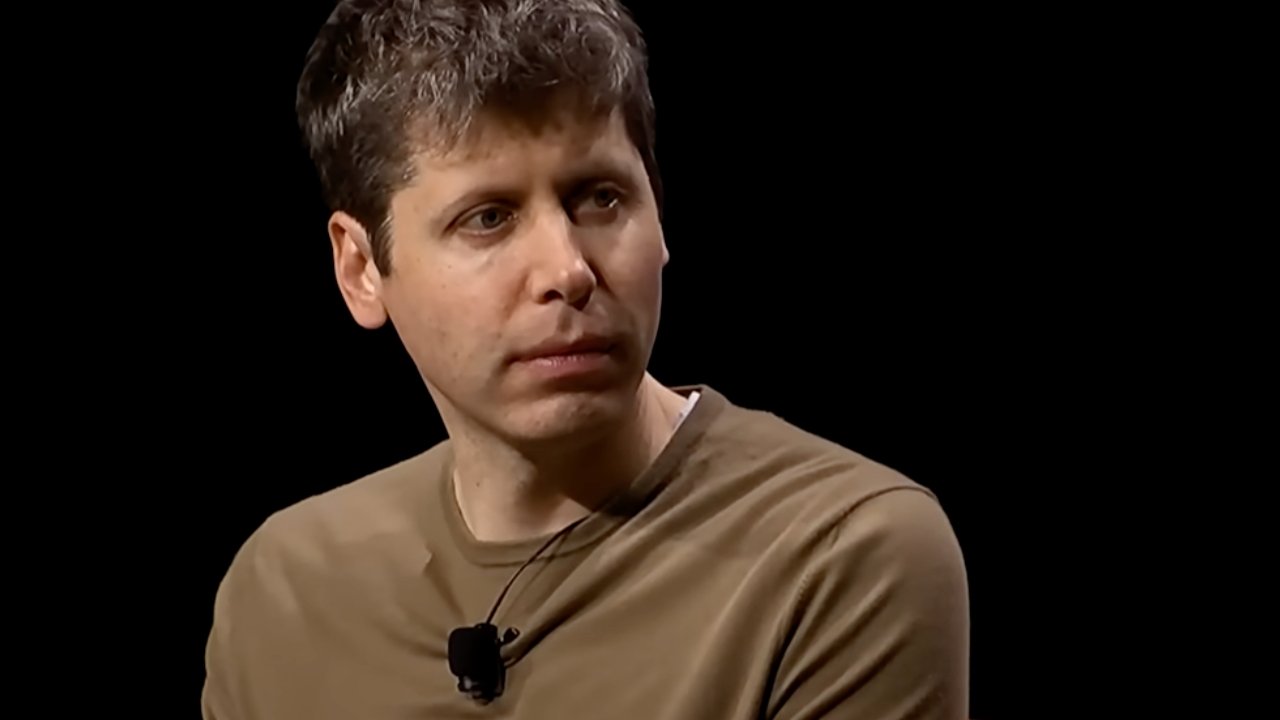
A federal district judge will oversee Apple’s lawsuit accusing OpenAI of using stolen intellectual property to advance its hardware efforts.
In early July, Apple sued OpenAI after alleging that two ex-employees successfully stole intellectual property to enrich OpenAI’s development efforts. Now, on Thursday, a judge has been assigned to the case.
Initially, when the suit was first filed, it was randomly assigned to Magistrate Judge Virginia K. DeMarchi. Now, it seems as though U.S. District Judge Edward Davila will oversee the case.
As 9to5Mac notes, each party was given the choice whether to allow the magistrate judge to sit the case. Apple appears to be the party that declined, instead opting to reassign the case to a district judge.
The case’s previous initial case management conference had been scheduled for October 13. However, it will now need to be rescheduled before Judge Davila.
Apple’s argument against OpenAI hinges on its argument that two previous employees had been stealing intellectual property for quite some time. The two employees are Chang Liu and Tang Yew Tan, the former Vice President of Product Design for iPhone and Apple Watch.
Reportedly, Liu failed to return Apple-issued hardware that was still authenticated to access Apple’s networks. He allegedly told a colleague, Yu-Ting “Alyssa” Peng, still at Apple, that he was planning to access Apple information.
Tan, however, allegedly began emailing himself information about Apple suppliers months before he left to serve as OpenAI’s Chief Hardware Officer. He also allegedly directed candidates to bring unreleased hardware components from Apple to their interviews with OpenAI.
Apple believes this was part of a concerted effort to take and use confidential information. Apple is seeking judgment, an injunction against use and possession of Apple’s intellectual property, a return of Apple’s property, damages, and royalties for use of Apple’s intellectual property.
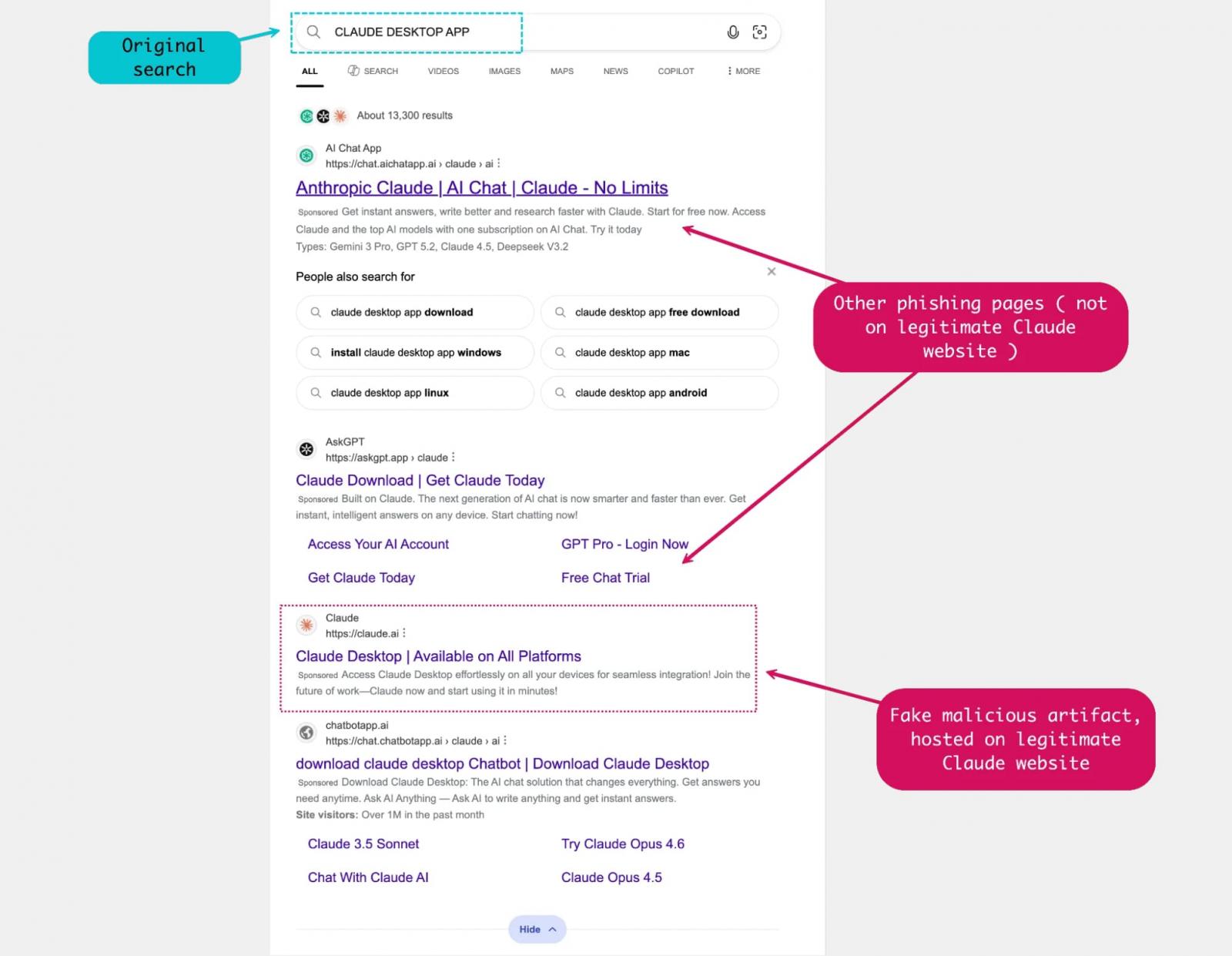
A malvertising campaign on the Bing search service is pushing a fake Claude desktop app installer hosted on a legitimate Claude.ai domain to deliver the SectopRAT malware.
At least 29 organizations were compromised between July 21-22 during the malicious operation, which researchers call FakeAgent.
The attacker uses a malicious Claude Artifact hosted on Claude’s legitimate domain, which is a common tactic that has been used

The attackers used a malicious Claude Artifact hosted on Claude’s legitimate domain, a tactic that has been used at the beginning of the year to push macOS malware via ClickFix lures.
Researchers at managed security company Huntress found that the malicious Claude Artifact, downloaded 7,100 times before Anthropic removed it, directed visitors to websites that hosted a fake installer named ClaudeDesktop.exe.
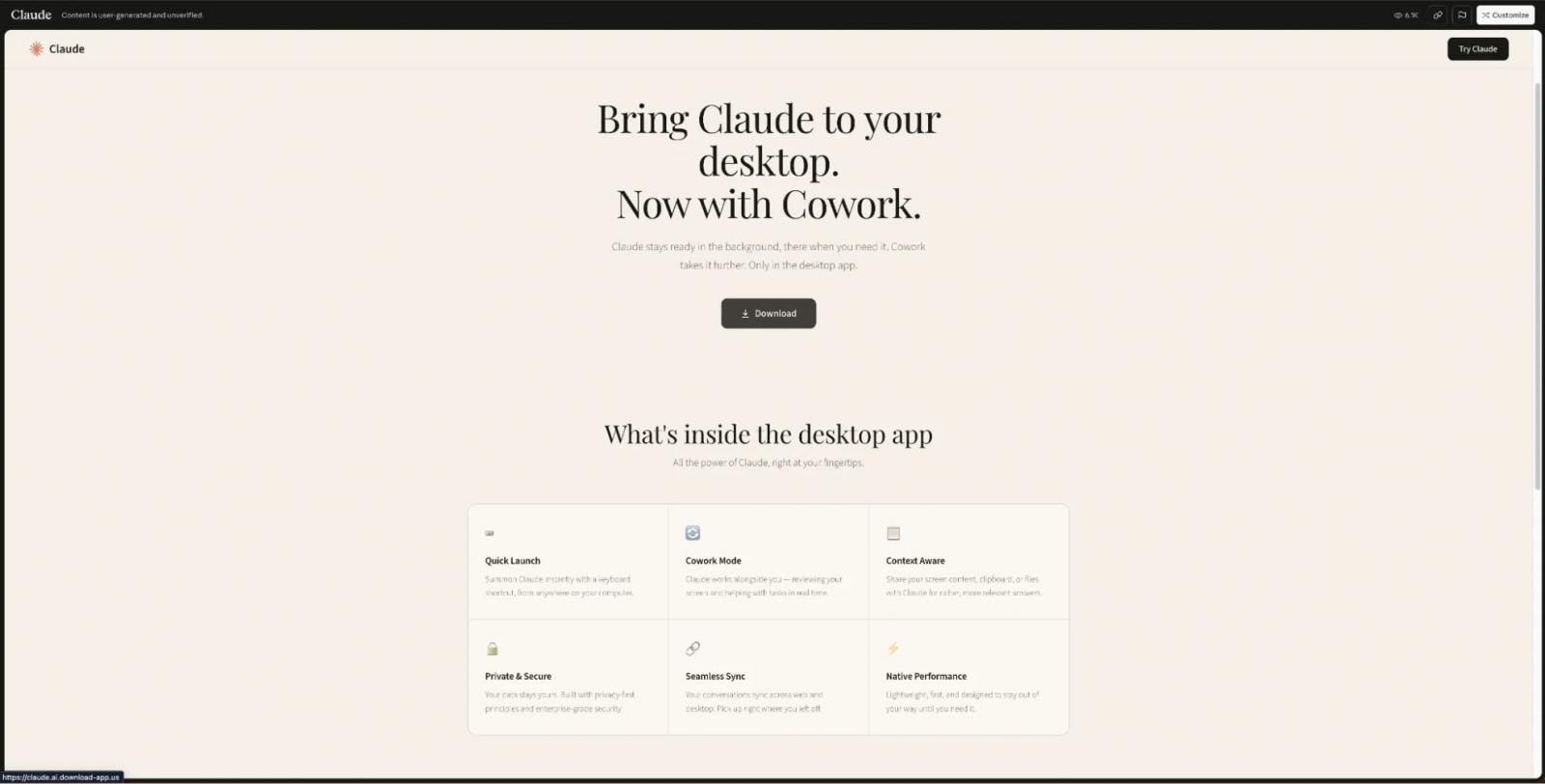
However, the file is a legitimate JetBrains Chromium component that sideloads a malicious DLL (libcef.dll) to deliver the SectopRAT remote access trojan with info-stealing capabilities.
Persistence on the system is achieved through another executable named DockerDesktop.exe, which installs a scheduled task.
Huntress says that the various loaders and staging components used in the infection chain feature anti-analysis mechanisms, including VMProtect packing, shader timing checks, GPU and VRAM checks, and virtual machine (VM) detection.
The SectopRAT malware was recently observed being distributed via CastleLoader campaigns and ClickFix attacks.
The malware uses the EtherHiding technique to retrieve a working command-and-control (C2) address via Ethereum BNB Smart Chain transactions.
SectopRAT, also known as ArechClient2, has been active since 2019 and is an information-stealer with HVNC (Hidden Virtual Network Computing) functionality. It allows remote hands-on operations and real-time interaction with the compromised system.
The malware targets user passwords, credit card data, files, browser logins and cookies, FTP credentials, data from various messaging clients, including Discord and Telegram, Steam, and VPN products.
In an interesting twist, Huntress reports it used Claude Opus 4.8 to assist with shader emulation, cryptographic reconstruction, and .NET code analysis.
Analysis of the decrypted .NET payload (SectopRAT) helped attribute the attacks to SectopRAT operations, or a closely related fork, and opened the path to infrastructure analysis.
At that stage, the researchers found 10 domains registered to the same email address since December 2025, with one of them previously linked to the StealC distribution and seized during Operation Endgame.
Huntress does not have enough evidence to attribute the FakeAgent campaign to a specific, known threat cluster.
Users looking for software should trust official websites and download portals, instead of search results, especially sponsored ones.

Security teams log 54% of successful attacks and alert on just 14%. The rest move through your environment unseen.
The Picus whitepaper shows how breach and attack simulation tests your SIEM and EDR rules so threats stop slipping by detection.
For months, AI giants have devised special vetted programs and strict guardrails to limit the use of their models by malicious hackers. But these limits are now hindering the work of legitimate network defenders, as well as that of offensive cybersecurity researchers.
In June, the U.S. government slapped export control restrictions on Anthropic’s much-hyped AI models Mythos and Fable. The move was prompted at least in part by a report that claimed it was possible to bypass the models’ guardrails designed to prevent users from using them to build and execute malicious cyberattacks.
Regardless of whether the incident was really motivated by fears of a jailbreak, the fact is that Anthropic has repeatedly marketed Mythos as some kind of doomsday cybermachine that can only be given to carefully vetted users, and even then with strict guardrails in place. (The export controls on Fable 5 and Mythos 5 have since been lifted. Fable 5 returned to general access on July 1; Mythos 5 has been reintroduced only to vetted U.S. organizations as part of the government’s review process.)
That kind of gatekeeping isn’t unique to Mythos. Both Anthropic, with its other models, and OpenAI offer cybersecurity researchers programs they can apply to get vetted and — if approved — access models with fewer cybersecurity restrictions: OpenAI’s Trusted Access for Cyber and Anthropic’s Cyber Verification Program.
These guardrails have been widely criticized, particularly by researchers whose job is to find unknown vulnerabilities in systems and devise ways to exploit them before criminals do.
During a recent appearance on a cybersecurity podcast, Mark Dowd, a well-known security researcher, said that, “it’s not really comfortable to me that these random large companies are making arbitrary decisions about what is safe in security and what’s not.”
Dowd has spent decades finding and selling “zero days” — previously unknown software flaws and the exploits that take advantage of them — to Western governments, rather than report them to the software makers so they get patched. Governments pay a premium for vulnerabilities precisely because they stay open, which is useful for intelligence operations.
Dowd admitted his work may make him biased, but he isn’t alone. Several people who work in offensive cybersecurity — they proactively probe systems for weaknesses — described to TechCrunch how they use AI tools and deal with their guardrails.
Chris Anley, the chief scientist at security consulting giant NCC Group, said that asking an AI model to try to exploit a bug is a key step in confirming it’s a real vulnerability worth fixing. But if a guardrail prompts the model to refuse to answer the question outright, the guardrail hurts defenders, he said.
“This is where the whole offensive versus defensive and guardrails part comes in, because ‘fix this code’ as a prompt is both an essential mechanism for defense but also a roadmap for finding critical vulnerabilities in the code base,” said Anley. “So at the same time, the same tool is both an offensive tool and a defensive tool, and the two can’t really be unpicked.”
It’s “like a hammer,” he continued. “You can’t build a house without a hammer. It’s definitely a tool but it’s also irreducibly a weapon as well.”
When he and his colleagues run into such a roadblock, they sometimes fall back on open-source AI models that come with no guardrails at all.
Paolo Stagno, the chief technology officer at CrowdFense, a well-known company that develops, acquires, and sells unknown vulnerabilities to government agencies, agreed with Dowd, saying AI companies “essentially treat customers like children who need babysitting” with their vetted programs and guardrails.
Stagno said he and his colleagues do use frontier models — but only for reverse engineering. They avoid using AI to help find vulnerabilities or build exploits, he said, because feeding that work into a cloud-based model risks leaking sensitive vulnerability data or having it absorbed into future training runs. For that step, he said, they use open source models run locally, as they do not rely on sharing data outside of the model.
Giuseppe Cali, a security researcher who finds zero-days and develops exploits, said guardrails are not impeding his work. That’s because he doesn’t use AI for offensive work; instead, he uses it for initial reverse engineering, to understand the code he’s analyzing, and to build supporting tools. For that, he said, AI tools can speed up the process and allow him to focus on discovering vulnerabilities.
“I still want to own the actual bug discovery and weaponization myself and that wouldn’t change if all guardrails were lifted tomorrow,” said Cali. “I am jealous of my bugs, and I like this game too much to let models play it for me.”
One researcher at a smartphone-component manufacturer, who spoke on condition of anonymity because he isn’t authorized to talk to the press, said his employer isn’t part of Anthropic’s CVP program and as a result, its tools are barely useful for finding vulnerabilities because the guardrails are too strict.
“If it catches wind we’re doing anything security related, it just stops and isn’t usable,” the person said.
Chris Thompson — chief executive of cybersecurity firm RemoteThreat and founder of Offensive AI Con, an offensive security and AI-focused event — said that in his experience using the frontier AI models, the guardrails can be inconsistent and work differently every day. That’s true even inside the looser boundaries of Anthropic and OpenAI’s vetted programs.
“I think the practical impact is you spend a lot of time negotiating with the model instead of working on the core security program,” said Thompson. “Instead of analyzing a vulnerability and reasoning through the exploitability, you’re trying to find why you’re getting inconsistent results or why are models over-sanitizing the output.”
As a consequence, researchers rely on or get pushed toward Chinese open-source models like GLM — freely downloadable models that can be run locally with no vetting or usage restrictions — said Thompson.
“You have these responsible researchers that are being pushed away from U.S.-governed systems to foreign-owned systems,” he said. “I think it’s more harmful than good to have these guardrails in place.”
Rather than tightening restrictions further, Thompson called for the AI frontier labs to open up their programs, provide responsible access, and also hold those who abuse their tools accountable. Otherwise, he argued, defenders will lose the AI race.
“There’s this big storm coming. There’s this big wave of attacks that are going to happen at speed and scale like never before,” said Thompson. “But the same security consulting firms and legit researchers that are trying to make a difference are being stifled right now.”
When you purchase through links in our articles, we may earn a small commission. This doesn’t affect our editorial independence.


Elon Musk has reignited speculation of a potential Tesla-SpaceX merger.
Tesla has missed recent analyst expectations by a large margin, reporting roughly $1.1bn in adjusted net income in the quarter past. Wall Street had expected the company to rake in around $1.9bn.
The loss is despite the Elon Musk-owned company recording a 26pc growth in revenue to a better-than-expected $28.2bn, with car sales alone bringing in more than $20bn – marking a 23pc year-over-year growth.
Electric vehicle (EV) sales jumped 25pc since last year to a little more than 480,000 units in Q2 2026. The company produced around 451,000 vehicles during the period.
Tesla stocks dropped around 1.3pc at market close on Wednesday (22 July) following the announcement and fell a further 4.2pc in after-hours trading. Company shares have been down nearly 8pc since last month and nearly 17pc in the last six months.
The loss coincides with a drop in share value for Musk’s other company SpaceX, which Tesla has close financial ties with. SpaceX’s filings from earlier in the year showed that the company purchased nearly $700m worth of Tesla’s battery storage products across 2024 and 2025, as well as more than $130m of its Cybertrucks in 2025.
Meanwhile, xAI – now owned under SpaceX – purchased $292m in Tesla battery solutions by April this year, and more than $400m last year. The two companies are also collaborating to develop semiconductors as part of Terafab.
Tesla sales bounced back the strongest in Europe, partially led by higher fuel prices, which drove consumers towards EVs.
New registrations for Tesla vehicles soared across the region, according to June figures – more than doubling in France, and seeing a 39pc rise in Denmark and a 56pc jump in Sweden.
Meanwhile, the company suffered on its home turf in the US after the government cut federal tax credits for EVs and dismantled rules that encouraged their production.
Additionally, Chinese competitors such as BYD, Nio and Xiaomi are also encroaching on Tesla’s EV market share with their more affordable yet high-tech options.
Tesla is attempting to diversify its revenue streams away from EVs (which makes up a majority of its earnings) to autonomous taxis and AI-powered humanoid robots.
“The company reports that paying customers have travelled 2.5m miles in Tesla’s robotaxis and that 380,000 of those miles have been unsupervised, with no safety monitor in the vehicle,” said Forrester VP and principal analyst Paul Miller.
“Those unsupervised miles are rising, but they’re currently a fraction of the 220m miles reported by competitor Waymo back in March.”
Tesla more than doubled its capital spending compared to Q2 last year to fund the diversification push, marking a $1.1bn negative cash flow caused by a capex increase of about $3.3bn.
Musk, meanwhile, told investors that the company aims to spend more than $25bn this year – nearly triple the $8.5bn it spent in 2025. Big Tech heavyweights are expected to commit several hundred billion dollars in capex this year alone to build out their AI ambitions.
Musk also reignited speculation of a possible Tesla-SpaceX merger at the earnings call yesterday.
“As you can tell from the many collaborations on so many fronts with SpaceX, there’s more and more overlap,” Musk said.
“We can’t talk about, you know, combining companies and that kind of thing on an earnings call. It’s got to be done with the appropriate process.”
A merger could ease matters for the otherwise struggling Tesla, which is already making a pivot closer to SpaceX with its push into AI.
SpaceX president and chief operating officer Gwynne Shotwell told CNBC in June that a combined business “might make Elon’s life a little easier” by potentially simplifying Musk’s trillion-dollar corporate empire.
Don’t miss out on the knowledge you need to succeed. Sign up for the Daily Brief, Silicon Republic’s digest of need-to-know sci-tech news.
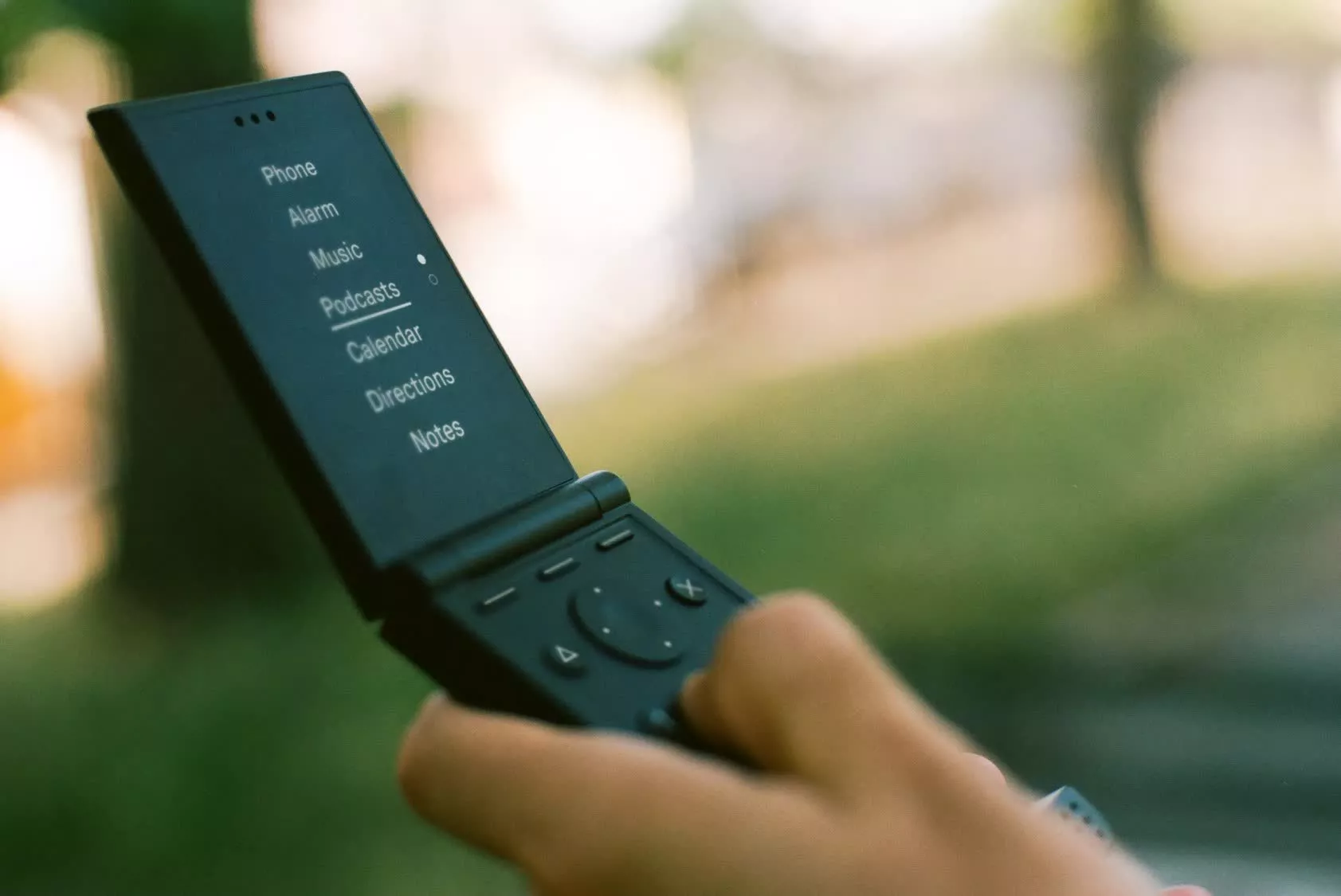
First look: Brooklyn-based consumer electronics company Light has launched a minimalist flip phone designed to cut down on screen time without compromising on essential communication. The $299 Light Flip features a clamshell design reminiscent of the Motorola Razr devices from the turn of the century, and offers a barebones software experience without social media, web browsing, media streaming, and shopping apps.
The Light Flip features a 2.8-inch non-touch OLED display, 6GB of RAM, 128GB of storage, a 50MP rear camera, and a replaceable 1,800mAh battery. It sports an old-school T9 keypad, which used to be standard on candybar feature phones from Nokia, Motorola, and Sony Ericsson in the early 2000s.
Connectivity options include 5G, Wi-Fi, Bluetooth, GPS, and a 3.5mm headphone socket. It is available in six colors and comes with a lanyard notch, adding to its nostalgic appeal.
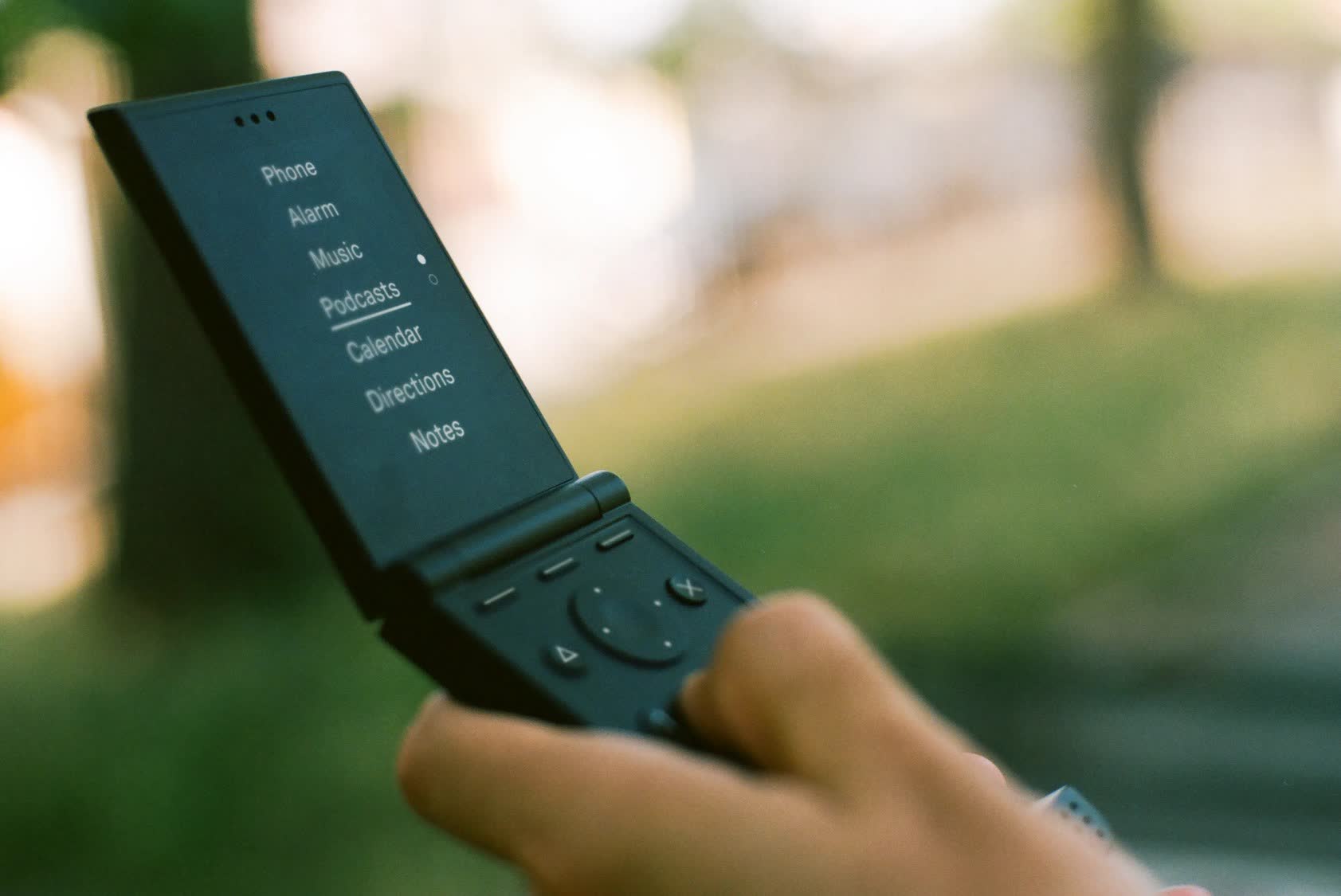
The Light Flip runs on LightOS, a minimalist Android skin that offers only essential apps and services, such as calls, texts, camera, calendar, music player, and an alarm clock.
As part of its core philosophy of “going light,” the device deliberately skips social media apps and web browsers, encouraging people to use their phone as little as possible. It also supports Light’s digital detox program ‘Flip Your Life,’ which aims to help users adapt to a less connected lifestyle.
Talking to ZDNet, Light co-founders Joe Hollier and Kaiwei Tang said that contrary to popular perception, the target demographic for the Flip are 18- to 30-year-olds who are tired of the 24×7 connected lifestyle. The company believes that dumb phones could make a comeback, as its internal research suggests that 52% of millennial and Gen Z consumers would consider using basic feature phones to cut back on social media consumption and escape the endless cycle of doomscrolling.
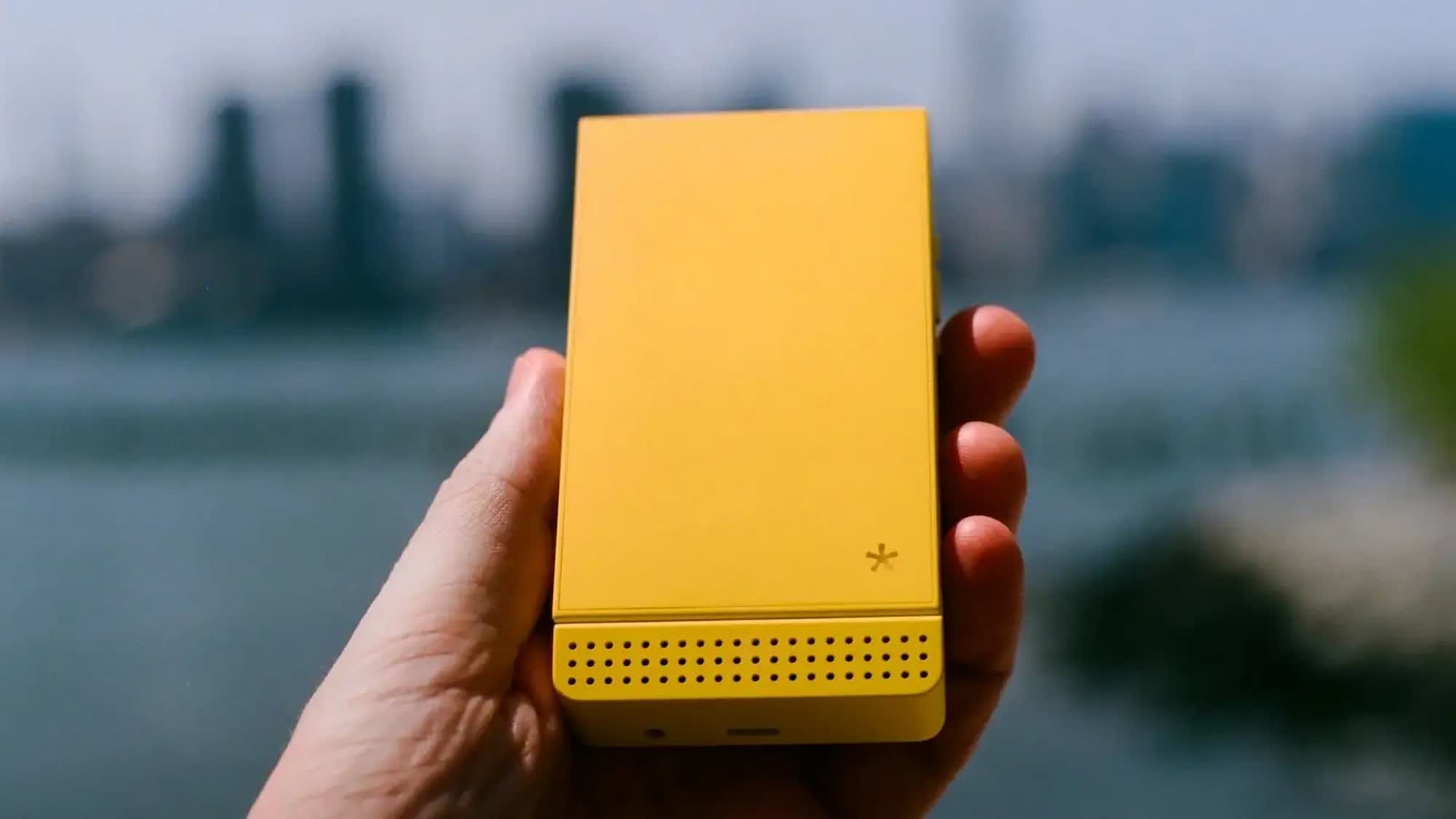
The Light Flip is now up for preorder with a $39 deposit but it’s not expected to ship until April 2027.
It will be sold unlocked for $299 from the company’s official website, and customers can also get it on a two-year, $39-a-month service plan directly through Light. Whether it will land on major carriers like Verizon, AT&T, or T-Mobile and become available with a contract remains to be seen.


Microsoft AI released two new in-house models into public preview on Wednesday — MAI-Image-2.5-Pro, its highest-fidelity image generator to date, and MAI-Voice-2-Flash, a speech model built for high-volume enterprise workloads — while publishing production data that amounts to the company’s most aggressive argument yet that it can power its own products without leaning on OpenAI’s frontier models.
The announcement, made by Microsoft AI’s Superintelligence team, lands roughly a year after the company committed to building purpose-built models internally, and it arrives with an unusual level of specificity about where those models now run: Bing, PowerPoint, OneDrive, Dynamics 365, Excel, GitHub Copilot, and Azure. The message to enterprise buyers — and, implicitly, to OpenAI — is that Microsoft’s homegrown models are no longer research projects. They are production infrastructure serving millions of users.
“Each of these enhancements is a step toward the same goal: Microsoft products, powered by Microsoft models,” the company wrote in its announcement blog.
The two new releases occupy opposite ends of what Microsoft calls the quality-speed-cost curve, and the positioning is deliberate. MAI-Image-2.5-Pro targets the premium tier: hero imagery, detailed editing, and precise in-image text rendering — the last of which has long been a notorious weak spot for image generation models. Microsoft priced the model at $5 per million text input tokens, $8 per million image input tokens, and $106 per million image output tokens. The base MAI-Image-2.5 model recently launched at No. 2 for image editing on Arena, the community leaderboard that has become a de facto scoreboard for generative media.
The creative industry appears to be taking notice. Rob Reilly, global chief creative officer at advertising giant WPP, called the Pro model “a strong leap forward for GenMedia tools” in a statement included in Microsoft’s announcement, adding that “Microsoft has firmly established itself among the leaders in generative AI.”
MAI-Voice-2-Flash goes the other direction. First previewed at Microsoft’s Build conference, Flash runs twice as fast as MAI-Voice-2 and costs 32% less, priced at $15 per million characters. It is designed for the unglamorous but enormous market of high-volume voice — call centers, voice agents, and real-time speech applications where latency and cost-per-call matter more than marginal gains in expressiveness. Together, the two models reflect a strategy of building families of models rather than a single flagship, because, as the company put it, a creative studio chasing maximum fidelity has very different needs from a customer service operation handling millions of calls a day.
The model launches are arguably less newsworthy than the deployment metrics Microsoft attached to them — numbers that read like a systematic case for swapping out third-party frontier models across its product portfolio.
Bing Image Creator now runs entirely on MAI-Image-2.5, end to end, marking the first time the consumer image tool is fully in-house. In PowerPoint, Microsoft says MAI-Image-2.5 reduces GPU costs by up to 84% compared with GPT-Image-2, OpenAI’s image model. In OneDrive, where MAI-Image-2.5 is now the default for key image-editing scenarios, the company reports a 26% increase in save rates, roughly 25% lower P95 latency, and 2.5 times greater efficiency under medium-utilization production workloads.
On the voice side, MAI-Voice-2-Flash now powers Dynamics 365 Contact Center — the platform used by customers including T-Mobile and EasyJet — where Microsoft claims GPU cost reductions of up to 89%. The model is also integrated into Azure Voice Live for developers building speech-to-speech agents.
Perhaps the most consequential deployment sits in healthcare. Microsoft’s Dragon Copilot, used by 170,000 medical providers and responsible for processing 28 million patient encounters last quarter, now runs on MAI-Transcribe-1.5 for its multilingual workflow across 58 languages. Microsoft says internal evaluations show a 50% relative reduction in both transcription and language-identification error rates across most languages — a meaningful claim in a domain where transcription errors can propagate directly into clinical notes.
In a companion post published the same day, Microsoft detailed the methodology behind these results — what it calls its “hill-climbing machine,” an integrated flywheel of data, models, and the product “harness” that surrounds them.
The clearest example is MAI-Code-1-Flash, the lightweight coding model launched in GitHub Copilot in June. Microsoft says the model achieves an approximately 10% higher code accept rate than GPT-5.4 Mini and Claude Haiku 4.5 in VS Code, while using 10% fewer median tokens. Developer retention tells a similar story: users were 6% more likely to return across multiple days than with GPT-5.4 Mini, and 11% more likely than with Claude Haiku 4.5.
Then Microsoft did something more interesting. It took the MAI-Code-1-Flash checkpoint and further trained it inside an Excel reinforcement learning environment, teaching a coding model the tools and workflows of spreadsheet knowledge work. The result, according to production user feedback, is a model on par with GPT-5.6 for the most common Excel tasks — while being small enough to run on Nvidia’s older H100 and even A100 GPUs rather than requiring the latest-generation accelerators.
That hardware detail deserves emphasis. Every major AI company is fighting for allocation of cutting-edge chips, and a model that delivers frontier-adjacent quality on two-generation-old silicon fundamentally changes the deployment economics. It also frees the newest hardware — including Microsoft’s now-operational GB200 cluster — for training rather than serving.
Microsoft CEO Satya Nadella framed the announcements in a lengthy post on X titled “Frontier Diffusion & Control,” which functions as something close to a strategic manifesto. “We can now take saturated frontier capabilities and deliver them at scale and at lower cost through models optimized for high-usage products, while continuing to use frontier models for frontier needs,” Nadella wrote, adding that Microsoft is “beginning to route traffic across our first-party surfaces to MAI whenever our models match or outperform frontier alternatives.”
Translated from executive prose: capabilities that were state-of-the-art a year ago are now table stakes, and Microsoft believes it can replicate them cheaply for the specific, repetitive tasks that dominate real product usage. Why pay frontier prices for a frontier model when a user just wants to reformat a spreadsheet column?
Nadella was careful to note that “frontier models from OpenAI and Anthropic are part of the orchestration system alongside MAI” — but he also articulated a pointed principle of model independence, arguing that a company’s evaluations “should continue to hill climb even when any given model has been removed.”
“Keeping the harness, memory, context, and skills outside the model, he argued, is what gives Microsoft control. The subtext is hard to miss. Reuters reported in April that Microsoft’s exclusive license to OpenAI’s technology had been revised into a non-exclusive arrangement, and The Information reported last September that Microsoft had begun incorporating Anthropic models into some products. Wednesday’s announcement completes the triangle: Microsoft as orchestrator, with its partners’ frontier models as interchangeable components and its own models absorbing an ever-larger share of routine traffic.”
The response online captured both the appeal and the skepticism surrounding the strategy. “I love when people use small models for niche tasks,” wrote one X user, @mavihsk, responding to Nadella’s post. “Why do I have to use the all-knowing model just to change my field in Excel?” Another user, @nabu_lines, distilled the pitch neatly: “cost and performance both improve when you stop overusing the biggest model.”
Others were less charitable about Microsoft’s execution track record. “Microsoft is the worst when it comes to listening to user feedback,” wrote designer @designedbyabin, arguing the company “will lose the AI race because they repeatedly failed to understand user needs.” And one user, @tokenoverflow, offered a drier critique of the model-independence pitch: “i want it keep hill climbing after removing microsoft.”
The skeptics raise a fair point. Microsoft’s self-reported metrics — accept rates, save rates, GPU savings — come from its own internal evaluations, not independent benchmarks, and the company chooses which comparisons to publish.
But the strategy’s logic does not depend on any single number. Nadella’s framing that software now has “real marginal cost for the first time” explains why Microsoft is obsessive about tokens, GPUs, and serving costs: when AI features run on every keystroke across a billion-user product portfolio, an 84% GPU cost reduction is not an optimization. It is the difference between a viable business and a money pit.
The final piece of the strategy is that Microsoft is selling the playbook, not just the models. Nadella explicitly positioned the hill-climbing approach as “a template for every other AI native, SaaS, or Enterprise company,” and Microsoft is packaging the toolchain through Foundry and what it calls Frontier Tuning — letting enterprises train specialized models against their own proprietary evaluations and reinforcement learning environments. That turns Microsoft’s internal cost-cutting exercise into an Azure product, and it gives enterprise customers a reason to run their AI workloads on Microsoft’s cloud even if the models themselves come from elsewhere.
The company’s emphasis on models trained “on clean, traceable, enterprise-grade data, without distillation from third-party models” serves the same commercial end. In an industry facing mounting scrutiny over training data provenance, Microsoft is betting that enterprise buyers — and courts — will care where model capabilities come from. Microsoft says it is now extending the hill-climbing approach to Copilot Chat, Outlook, and PowerPoint, and both new models are available in public preview through Microsoft Foundry and the MAI Playground. “None of this is an endpoint,” the company wrote. “We’re just getting started.”
Seven years ago, Microsoft bet more than $13 billion that OpenAI would build the future of AI. Wednesday’s announcement suggests the company has since learned a cheaper lesson: the future of AI may belong to whoever builds the frontier, but the profits belong to whoever makes it ordinary.




Weekend Open Thread – Corporette.com


The House | The City of London can help the new chancellor deliver growth in every postcode


Ripple Payments Joins MiCA With 14 Firms, Does It Mean Anything For XRP?

Two July Windows Left: The CLARITY Act’s Senate Fight and What Failure Means


Democrats look to World Cup watch parties to register thousands of voters


Ripple wins EU-wide access as ESMA adds it to MiCA register


Grayscale Files For Worldcoin ETF, WLD Registers Sharp Rise


Unregistered fitter used Gas Safe logo on business flyers


Sail Virtually Aboard The “Itanic” With IA-64 Emulator
Turtle Beach Command Series KB7 review: a nifty screen-equipped gaming keyboard


Registration is now open for March for Men with Kev 2026


Big Money Is Entering XRP

New Jersey voter registration controversy explained: How 6,600 noncitizens got on the rolls, and what happens next


Money | Class 12 Economics | CBSE Board Exam 2026-27


Kaspersky exposes OkoBot’s 20-module crypto wallet attack


Airlines warn Sunshine Protection Act could disrupt flight scheduling

Johnny Depp’s R-Rated Gothic Cult Classic Gets New Release Ahead of Sydney Sweeney Remake


Durham County Council to send out electoral registration emails


MiCA Licensing Faces Delays as ESMA Adds 14 CASPs to Register

Chip Stocks Enter Bear Market After Moonshot Ai Unveils Kimi K3 Model




![Rudeboy - Audio Money [Official Video]](https://wordupnews.com/wp-content/uploads/2026/07/1784860004_maxresdefault-80x80.jpg)

You must be logged in to post a comment Login