Connect with us
DAPA Banner
DAPA Coin
DAPA
COIN PAYMENT ASSET
PRIVACY · BLOCKDAG · HOMOMORPHIC ENCRYPTION · RUST
ElGamal Encrypted MINE DAPA
🚫 GENESIS SOLD OUT
DAPAPAY COMING

Business

Intel Stock Falls 4.18% Friday Despite Strong Earnings Beat, as July’s Sharp Rally Continues to Cool

Published

on

The Intel Corporation logo is seen  in Davos

Shares of Intel fell Friday morning even after the chipmaker delivered a significant second-quarter earnings beat and raised its capital spending plans, as investors continued taking profits following one of the stock’s strongest rallies in company history.

Intel shares traded at $96.04 as of 10:43 a.m. Eastern time, down $4.19, or 4.18%, on the day. The decline extends a sharp pullback that has gripped the stock throughout July, even as Thursday’s earnings report initially sent shares climbing in after-hours trading.

A strong quarter by most measures

Intel reported second-quarter revenue growth of 25%, which the company described as its fastest pace in nearly 15 years. Chief Executive Lip-Bu Tan pointed to surging demand for computing power tied to artificial intelligence as the primary driver behind the results. “AI is driving unprecedented demand for compute,” Tan said in the company’s earnings statement. “As we continue to execute, Intel is well-positioned to capture sustainable growth across our CPU franchise.”

Advertisement

The company’s Data Center and AI division generated $2.5 billion in operating income during the quarter, according to CNBC, while Intel’s foundry business, its effort to manufacture chips for outside customers, posted a $2.1 billion operating loss, reflecting the ongoing costs of that expansion effort even as the segment’s revenue reached $5.8 billion.

Following the report, Intel shares initially jumped roughly 9% in after-hours trading Thursday, climbing above $109 at one point, according to CNN, after the company beat both earnings and revenue expectations and issued stronger-than-expected third-quarter guidance.

Raised spending plans

Alongside its earnings beat, Intel raised its 2026 capital expenditure guidance to more than $20 billion, up from a previous target of $18 billion, with Chief Financial Officer David Zinsner indicating that 2027 spending would rise “significantly above” this year’s levels. Zinsner told CNBC that the company’s newest manufacturing process, known as 18A, was progressing ahead of where earlier technology generations stood at comparable points in their development cycles.

Advertisement

Zinsner also offered a note of caution about near-term demand patterns, telling CNN that PC consumption is expected to be “subseasonal” during the second half of the year, even as wafer demand across the broader business continues to outstrip supply.

For the current quarter, Intel guided toward adjusted earnings per share of 38 cents, alongside revenue guidance in the range of $15.8 billion to $16.8 billion.

A stock riding an extraordinary run, and a sharp pullback

Friday’s decline continues a volatile stretch for Intel shares that has defined much of 2026. The stock surged 278% during the first half of the year, according to Bloomberg, marking the third-best performance among all S&P 500 companies over that period, before climbing to a record closing high of nearly $141 per share on June 22. Since then, shares have fallen roughly 27% to 28%, ranking Intel among the 10 worst-performing stocks in the S&P 500 for the month of July alone, even as the company’s underlying business results have remained strong.

Advertisement

Bloomberg reported that the broader pullback reflects investors rotating away from some of this year’s biggest winners and growing more cautious on semiconductor stocks generally, rather than any specific concern about Intel’s own operational performance. That dynamic was on display again Thursday, when Intel shares slid as much as 2.5% even ahead of the earnings report that would ultimately beat expectations.

A valuation that leaves little room for error

Even with the stock’s steep July pullback, Intel continues to trade at a notably rich valuation relative to its semiconductor peers. Ahead of Thursday’s report, Intel was trading at roughly 94 times forward earnings, according to 24/7 Wall St., a figure considerably higher than faster-growing chip companies including Nvidia, Broadcom, Taiwan Semiconductor and Micron, which have traded between roughly 13 and 33 times expected earnings. That premium reflects strong investor confidence in Intel’s ability to restore its profit margins and reaccelerate growth, a bar that analysts say leaves little room for anything less than a clean earnings beat and confident forward guidance.

Analyst reaction

Advertisement

Despite Friday’s pullback, several analysts described Intel’s underlying turnaround as increasingly credible. According to Barron’s, analysts pointed to the company’s earnings beat and upbeat outlook as evidence that more gains could still be ahead, even amid the stock’s recent volatility. MarketWatch similarly framed the results as a marker of how far the company has come, noting that Intel’s latest quarter demonstrated a dramatic recovery from a period when the company had been widely described as “near-dead.”

Context around Intel’s broader comeback

Intel’s stock performance this year has also been shaped by developments beyond its own earnings reports. The company’s shares soared 84% last year after the U.S. government took a 10% equity stake in Intel as part of a broader effort to support domestic chip manufacturing, a move that has continued to factor into investor sentiment around the company’s long-term strategic positioning within the U.S. semiconductor industry.

With Intel’s 52-week range now spanning from roughly $18.97 to $142.35, according to Robinhood market data, the stock’s next moves are likely to hinge on whether the company’s improving fundamentals, particularly continued momentum in its data center and AI-related server chip sales, can offset the broader wariness currently weighing on semiconductor valuations across the market. Investors will also be watching closely for further updates on Intel’s foundry business and its 18A manufacturing process, both of which remain central to the company’s pitch that its current turnaround marks a durable shift rather than another false start following years of underperformance.

Advertisement
Continue Reading
Click to comment

You must be logged in to post a comment Login

Leave a Reply

Business

Long overdue, life-changing or frivolous? Your thoughts on wedding rule changes

Published

on

A bride and grown walk down the aisle in a brick barn

Carl Jones said he and his partner of 20 years haven’t wed because even the simplest weddings are too expensive.

“We want to get married but won’t, as it costs too much. It’s cheaper if we just have two witnesses, but why should our [12-year-old] daughter not be allowed to attend… It’s wrong.”

But sceptics say this will do little to lower the cost of weddings, which according to wedding planner app Hitched has jumped to £21,990 on average.

Reverend Tom Kennar said it isn’t marriage that is expensive, it’s the extras most modern couples like to add.

Advertisement

“[It] is the costs of the reception, vehicles, booze, photographers, clothing, food, cars etc,” he said.

Other critics of the proposal say they fear it will dilute the significance of marriage.

“Marriage is a gift from God to secure society. Not an opportunity to set new standards and styles,” said Donald Tosh, from Glasgow, who wrote to BBC Your Voice.

“It’s now not a life decision, it’s a temporary decision. And now with this, a very temporary frivolous decision,” said Oliver, from Kent.

Advertisement

However, celebrant Zadie Ward told the BBC the changes could enhance the meaning of a wedding for many couples.

“[Critics] are saying it’s a solemn promise and it’s about the serious commitment, but how can you ask someone to make a serious commitment in words that mean nothing to them and ways that are meaningless to them?”

Continue Reading

Business

Scaling Visual Content with Pollo AI

Published

on

UK startup funding hits record $17bn in H1 2026

In the current business landscape, small and medium-sized enterprises (SMBs) are operating in an environment that demands more content than ever before.

Whether it is a daily social media presence, high-converting product pages for e-commerce, or localized video advertisements, the pressure to produce professional-grade visuals is relentless. For a long time, the barrier to entry was high: you either needed an in-house creative team or a significant budget for agencies and studios. However, as digital marketing evolves, the industry is shifting away from fragmented tools toward integrated “Creative Studios” that prioritize efficiency, brand consistency, and professional output.

Maximizing ROI with an Integrated AI Image Generator

For many UK-based business owners, the first step into automated creation usually starts with the need for better product photography. Traditional shoots are time-consuming and expensive, often requiring weeks of planning for a single set of images. This is where the specialized Design and Marketing Studios within the platform provide a distinct advantage. By utilizing a professional Pollo AI AI image generator, marketers can transform a simple product reference into a complete suite of high-fidelity marketing materials. Whether you need Amazon A+ content, model-swapped fashion shots, or stylized social media posters, the focus is on creating visuals that are purpose-built for conversion.

The strength of this ecosystem lies in its architecture. Instead of offering a single “one-size-fits-all” model, the platform is divided into specialized modules: the Creative Studio for creators, the Marketing Studio for business scenarios, and the Design Studio for high-end aesthetics. All of these share a unified credit system, meaning a business can manage its entire visual pipeline from a single dashboard. This integration ensures that the visual quality remains consistent across different formats, which is the primary driver of consumer trust in the digital age.

The Power of Pollo Asset: Building a Centralized Brand Brain

One of the most significant frustrations for modern marketing teams is the “re-upload loop.” In traditional workflows, every time you want to create a new campaign featuring the same product or brand character, you have to hunt for source files and re-upload them to your creative tools. This repetitive labor is not only a waste of time but also leads to inconsistencies in brand representation. To solve this, Pollo AI has introduced a groundbreaking feature: Pollo Asset.

Advertisement

Think of Pollo Asset as a centralized library that stores all of your digital property, turning every upload and every generation into a reusable resource. Within the interface, users can now define and save specific “Elements” that represent their brand identity:

  • Product: Save your physical inventory as a digital asset to be placed in any lighting or scene.
  • Character: Define consistent brand ambassadors with specific names, facial features, and even saved voices.
  • Scene: Record specific lighting setups or backgrounds that define your brand’s mood.
  • Style: Save the visual “DNA” of your brand—tones, textures, and atmospheres—to ensure every ad looks like it belongs to the same family.

The true efficiency gain comes from the new “@” mention functionality. When working in the prompt box, a creator can simply type the “@” symbol to summon a saved asset instantly. You can define a character in the Creative Studio and then pull that same character into a Marketing Studio template to generate a UGC-style testimonial video. This cross-studio compatibility ensures that your brand assets are cumulative—the more you use the platform, the more powerful your creative library becomes.

Bridging the Gap Between Concept and Commercial Reality

The leap from a basic creative idea to a commercial-grade advertisement is often the hardest part for SMBs. While many beginners might start their journey with simple, free tools like Pollo AI Craiyon AI to brainstorm concepts, those who require professional-quality video for TVCs or social ads need a more robust environment. This is where the Marketing Studio excels, offering the ability to generate 30-second videos that are ready for immediate publication.

The latest updates have focused on the specific needs of commercial video production. Marketers can now produce 30-second cinematic ads—the standard length for television and high-impact social media promotions—with a level of consistency previously impossible for AI. The system now supports a massive expansion in reference materials, allowing users to input up to 30 images and 10 video clips. For an e-commerce brand, this means you can feed the system every angle of your actual product, ensuring the resulting video looks like a professional commercial rather than a generic animation. This high-capacity referencing ensures that your products remain sharp and recognizable, solving the “AI hallucination” problem that often plagues less advanced models.

Precise Control for Global Scaling and Compliance

For businesses looking to scale beyond their local borders, the platform offers features that address the technical and legal realities of global marketing. One of the most valuable updates is the improved response to directorial instructions. Marketers can now use timestamped commands to dictate exactly when a product should appear or when a scene should transition. This level of granular control, combined with a significant reduction in common defects like “multi-face” errors or background text glitches, means that the output is professional-grade right from the start.

Advertisement

Furthermore, the system has been optimized for multi-language scenarios, allowing brands to adapt their message for different global audiences without losing the brand’s core voice. From a compliance perspective, the platform has made significant strides in reducing the risk of generating IP-infringing content or celebrity likenesses, providing a safe environment for businesses to build their own unique intellectual property. Whether you are adapting content for a mobile H5 landing page or a desktop web experience, the adaptive nature of these assets ensures a seamless user experience across all devices.

Conclusion: The Move to Asset-Driven Marketing

The transition from standalone generative tools to an integrated, asset-driven studio environment is the most significant trend in digital marketing today. It marks a shift away from “generating content” toward “managing a brand.” By allowing SMBs to save, categorize, and reuse their most valuable creative elements through the Pollo Asset system, the platform effectively lowers the barrier to high-end video and image production.

As marketing teams continue to build their libraries of products, characters, and styles, the time required to launch a new campaign drops from weeks to mere minutes. The ability to “summon” your brand’s unique identity with a simple @ mention, combined with the power to produce 30-second, high-fidelity commercials, gives smaller businesses a scalable path to compete with global corporations. In an era where visual storytelling is the ultimate currency, having a unified studio to manage your creative assets and output is not just a smart investment—it is a foundational strategy for long-term growth.

Advertisement

Continue Reading

Business

Graduation outfits: Students tell us how to impress on a budget

Published

on

Person standing in a paved public square wearing a graduation gown and mortarboard with a tassel. A yellow dress is visible beneath the gown. Trees, ornamental grasses and stone buildings surround the square, with several people seated or walking in the background.

Like Keerthana, Alicia Munhupedzi used the internet to find her dress – though it was a bit last minute.

“I thought, ‘Where can I get a nice dress really quickly and cheaply?’”

The answer? Depop, the second-hand clothing app popular among Gen Z shoppers that sold for $1.2bn (£890m) earlier this year.

Like others, Alicia felt her outfit was important.

Advertisement

“Graduation, it’s a milestone thing, especially if you’re not planning on doing a master’s,” she says. “So, to me, there was a pressure.”

So much so she couldn’t sleep properly the night before her ceremony and woke at dawn to get ready. “I made it through today off two hours of sleep, water, good vibes, energy and a coffee.”

Knowing all eyes would be fixed on her when she was handed her degree, Keerthana says she was nervous for her graduation ceremony – but it passed more quickly than she thought it might.

“This is the only moment you get for yourself,” she says.

Advertisement

And was the 05:00 wake-up and two hours of getting ready worth it?

“Yeah,” Keerthana says, “I couldn’t compromise on that.”

Additional reporting by Kate Berry and George Sandeman.

Advertisement
Continue Reading

Business

Cold brew recall issued by Brooklyn Roasting Company for botulism

Published

on

Cold brew recall issued by Brooklyn Roasting Company for botulism

A New York-based coffee company is recalling some of its cold brew drinks sold in New York and New Jersey because of a risk of botulism, according to the U.S. Food and Drug Administration.

The Brooklyn Roasting Company issued the recall this month for 2.5 gallon bags of pasteurized cold brew concentrate after finding that room temperature storage could lead to the growth of Clostridium botulinum toxin formation.

Advertisement

The affected products were distributed between April 1 and June 20, and they include best by dates between June 3 and Sept. 30.

CYCLOSPORA OUTBREAK: IS IT STILL SAFE TO EAT AT RESTAURANTS? HERE’S WHAT TO KNOW

two cold brew coffees in glasses

A New York-based coffee company is recalling some of its cold brew sold in New York and New Jersey because of a risk of botulism, according to the U.S. Food and Drug Administration. (Scott Suchman for The Washington Post via Getty Images; food styling by Lisa Cherkasky for The Washington Post via Getty Images / Getty Images)

Botulism is a rare condition caused by a toxin that attacks the body’s nerves, which can be fatal.

Symptoms of foodborne botulism usually start 12 to 36 hours later and include trouble swallowing, dry mouth, blurred vision, drooping eyelids, upset stomach, trouble breathing and paralysis.

Advertisement

Anyone experiencing botulism symptoms is urged to go to the emergency room immediately.

Brooklyn Roasting Company location

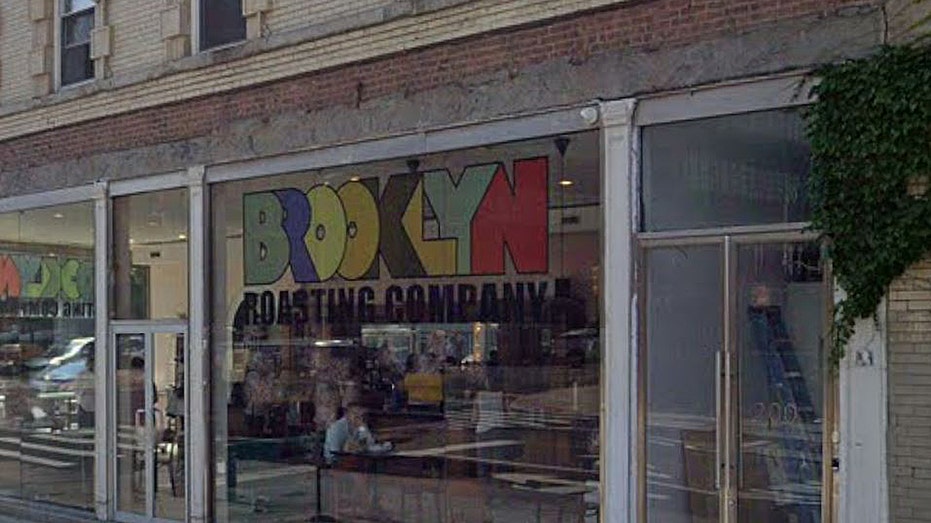
A Brooklyn Roasting Company location on Flushing Avenue.  (Google Maps / Google Maps)

SCIENTISTS USED ELECTRICITY ON COFFEE AND DISCOVERED WHAT MAKES IT TASTE GOOD

There have been no reports of illnesses caused by the cold brew products.

CLICK HERE TO DOWNLOAD THE FOX NEWS APP

Advertisement
A sign for the Food And Drug Administration is seen outside of the headquarters

The FDA said there have not been any reported illnesses related to the product. ((Photo by Sarah Silbiger/Getty Images) / AP Newsroom)

The Brooklyn Roasting Company sells its products at its cafés, other coffee shops, gourmet grocery stores, independent markets and online, according to The Patch.

The company didn’t specify where the affected cold brew had been distributed.

The Brooklyn Roasting Company did not immediately respond to FOX Business’ request for comment.

Advertisement
Continue Reading

Business

Appeals court rejects Trump bid to halt $100,000 H-1B visa fee ruling

Published

on


Appeals court rejects Trump bid to halt $100,000 H-1B visa fee ruling

Continue Reading

Business

SB Financial Group, Inc. (SBFG) Q2 2026 Earnings Call Transcript

Published

on

OneWater Marine Inc. (ONEW) Q1 2026 Earnings Call Transcript