




Connect with us
DAPA Banner
DAPA Coin
DAPA
COIN PAYMENT ASSET
PRIVACY · BLOCKDAG · HOMOMORPHIC ENCRYPTION · RUST
ElGamal Encrypted MINE DAPA
🚫 GENESIS SOLD OUT
DAPAPAY COMING

Tech

Custom-Built Typewriter Rolls Digital Paper Straight Out of Its Frame

Published

on

E-Ink Typewriter
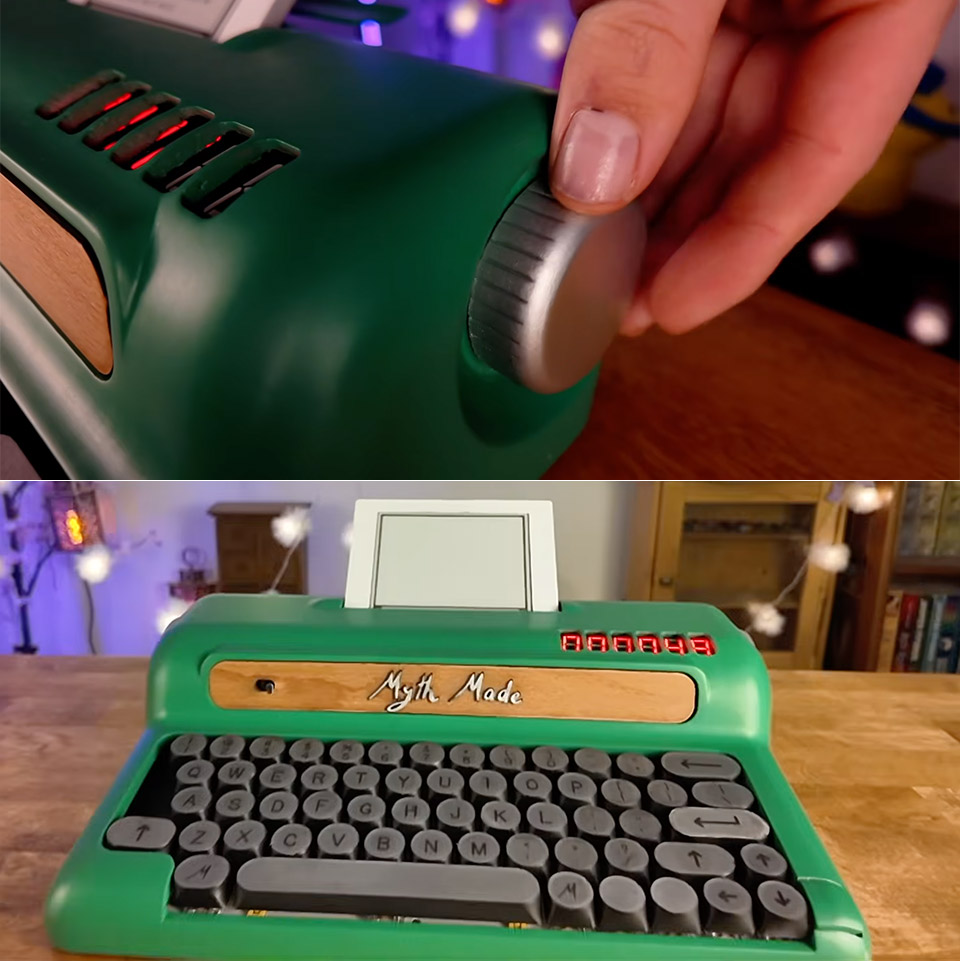
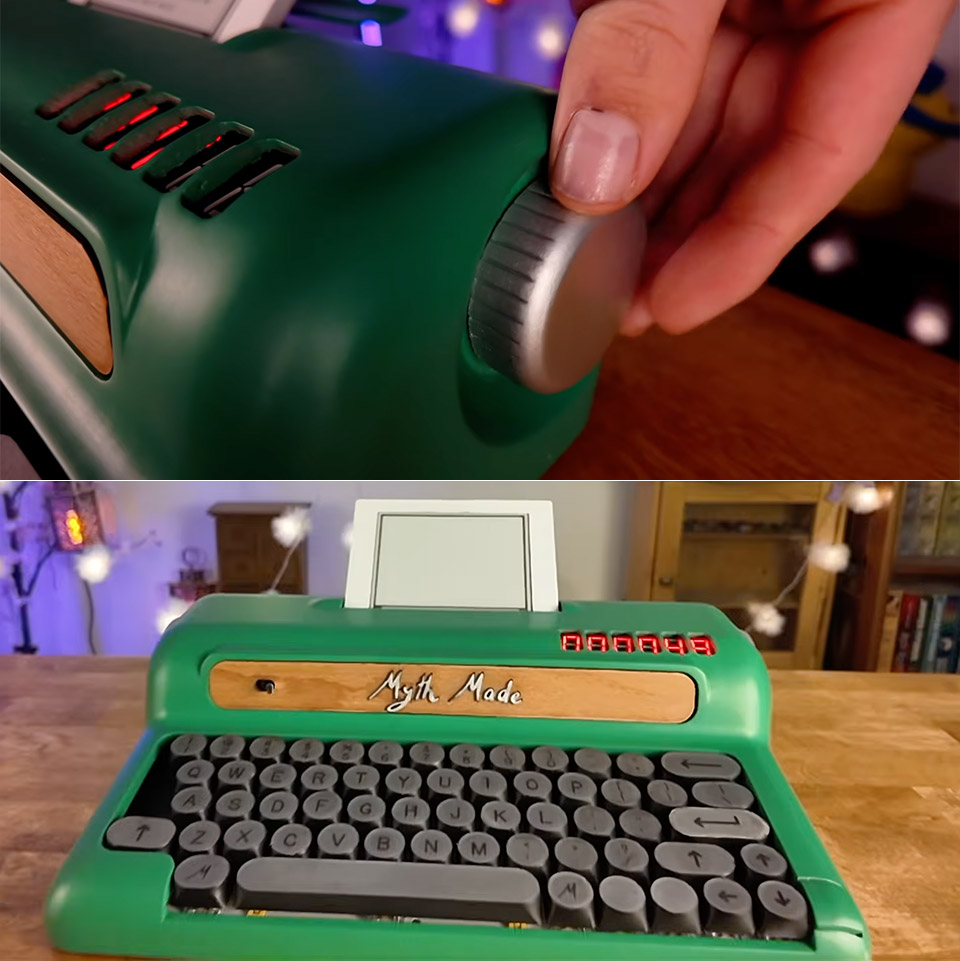
Jamie wanted a machine that would make her write. Not a laptop full of open tabs and alerts. Not a phone that vibrates every few minutes. She wanted something that felt like it belonged on a desk from another decade, yet still saved every word without paper or ink ribbons. So she spent weeks designing and building one herself. The result sits somewhere between a classic typewriter and a modern writing deck, finished in green paint with rounded keys and a screen that rises on command.



She began with a keyboard, which was a small mechanical board sporting a built-in circuit and switches. The original square keycaps were removed and replaced with ones she produced herself; however, these ones had a rounded top and looked more like the keys on an old typewriter. Labeling them was simple; simply color the tops with some paint markers, then run them through a laser engraver while the paint is still wet, and the laser will burn the ink into the plastic, ensuring it lasts. Any extra paint easily wipes away, leaving some lovely sharp letters.


XTEINK X4 E-Book Reader (Developer Edition), 4.3″ Pocket E-Ink eReader, Physical Page-Turn Buttons…
  • All overseas models purchased through official channels – both past sold and current for sale– have not and do not restrict users from installing…
  • Pocket-Size Mini eReader for Reading Anywhere: Ultra-light at just 0.23 inch and only 2.72 oz, Xteink X4 is designed for true portability. Slip it…
  • 4.3″ Paper-Like E-Ink Display: The 4.3-inch E-Ink screen delivers a natural paper-like reading experience that’s gentle on the eyes. Enjoy clear…

The body of the machine took a little longer to complete, as Jamie created a true full typewriter shell in CAD and began working on the shape and dimensions until it felt just perfect. Then she printed it in sections. Once they were out of the printer, she connected them all together with ABS and acetone, a unique compound that chemically welds the plastic together. Then she slathered on a second coat of the mix to fill in the lines left by the printer, followed by some sanding, priming, and one coat of green paint, and it began to resemble a true typewriter rather than a kitbash of printed pieces.

E-Ink Typewriter
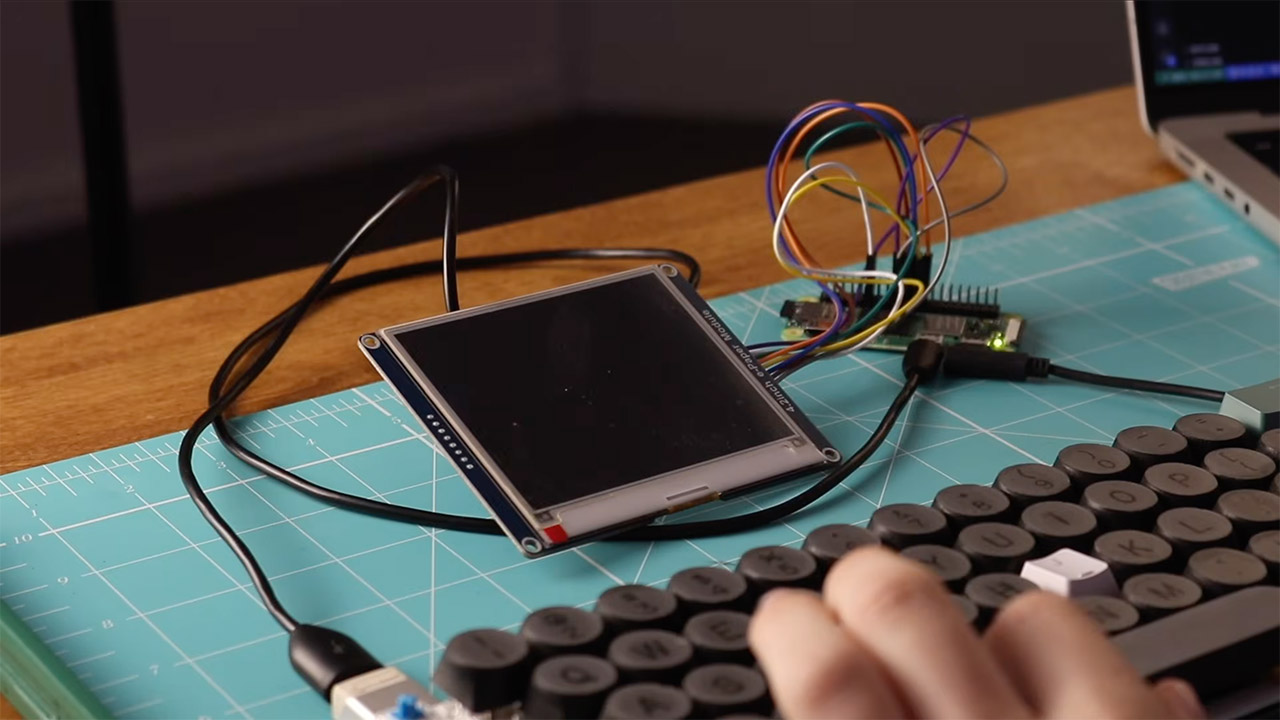
The Raspberry Pi Zero 2 W is powered by a rechargeable lithium battery, while the display is an e-paper screen from Waveshare, which is quite sleek to. say the least. The software is simply a customized version of the open Zerowriter project, which is used by the majority of other distraction-free writing machines. Jamie poked at the code to get the cursor moving with the arrow keys and copy and paste working, which just transforms it from a pure draftsman’s tool to something you can use for actual writing on the fly.

E-Ink Typewriter
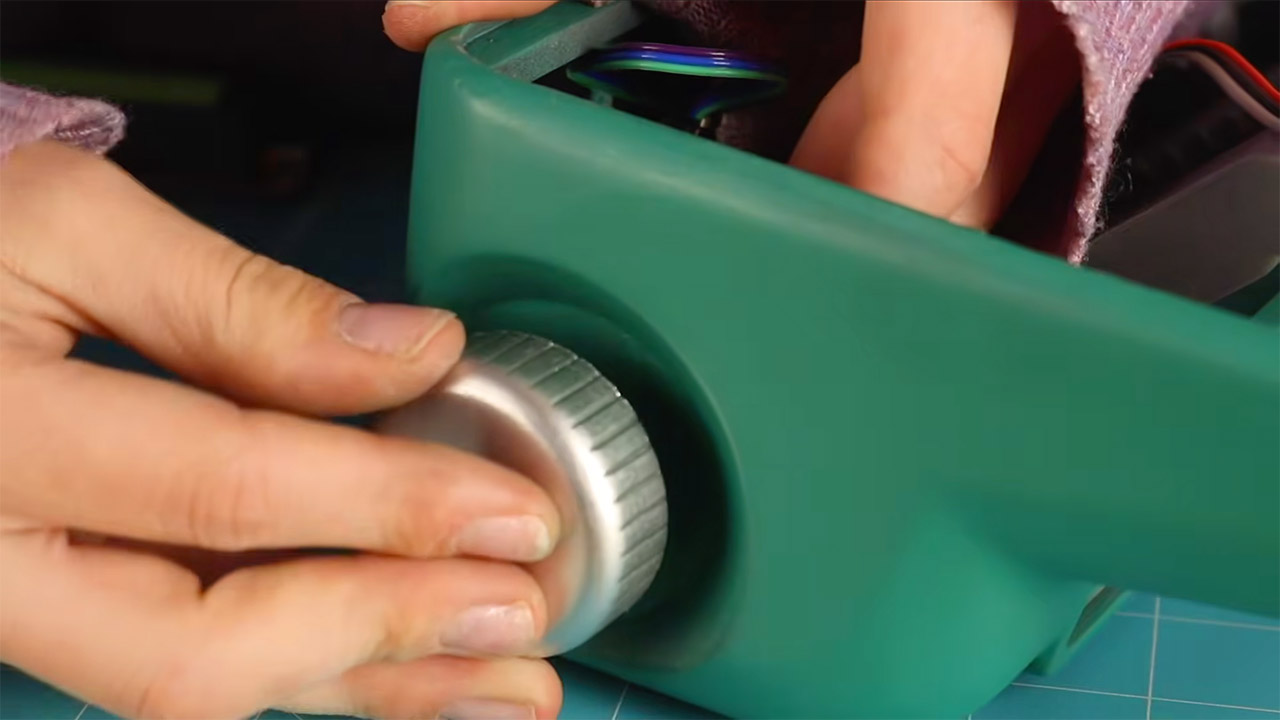
The two mechanical bits give this machine its typewriter feel. One side has a handwheel that can be turned to raise and lower the e-ink screen, similar to how a sheet of paper would pop up from a real typewriter. It’s quite pleasant to use. On the other side, there is a rotary encoder wheel, which you may use to open the menu and scroll through your content. Right next to that is a small seven-segment display that shows how many words you’ve written thus far. When you press a key, the word count refreshes.

E-Ink Typewriter
The machine does exactly what she intended to build. It sits on a desk, accepts keystrokes, displays clear text on a paper-like surface, maintains a running word count, and asks for almost nothing else. For those who prefer the ritual of a typewriter without the ribbons, carbon paper, or permanent commitment of ink on a page, the green writing deck provides that experience while still saving every document.
[Source]

Advertisement

Source link

Continue Reading
Click to comment

You must be logged in to post a comment Login

Leave a Reply

Tech

After four generations of camera stagnation, the Galaxy S27 might finally get a new main sensor

Published

on

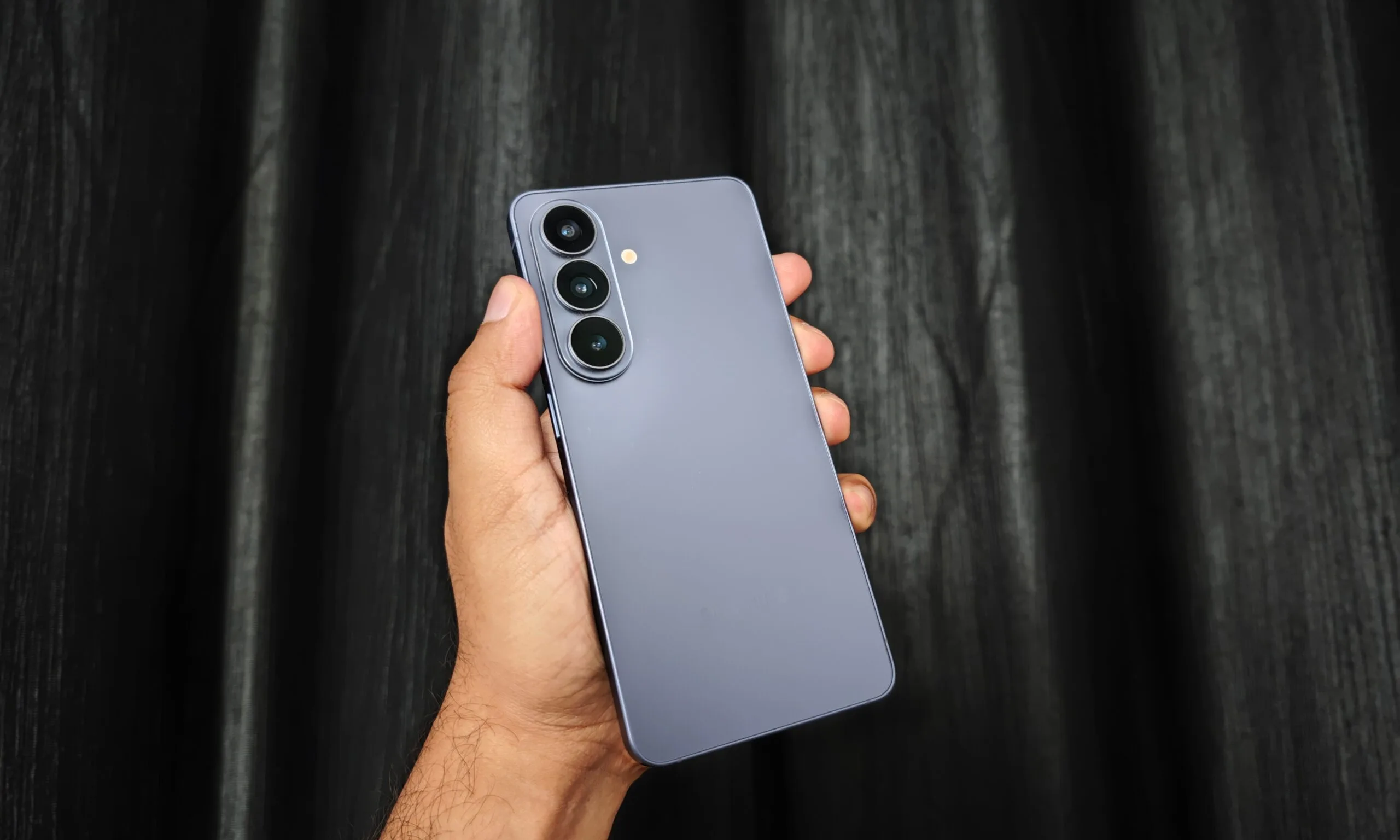
Samsung might finally be ready to stop recycling the same main camera hardware on its standard Galaxy S phones, which it introduced with the Galaxy S22. GalaxyClub reports that some Galaxy S27 and Galaxy S27+ prototypes are being tested with a new 50MP Sony sensor for the main camera.

Such a move would break Samsung’s long-running preference for its own ISOCELL hardware in the primary cameras of Galaxy S phones, even if the resolution remains unchanged.

What could change with the main camera?

The Galaxy S27 and S27+ are still expected to use a 50MP main camera, but megapixels only tell part of the story. A newer Sony sensor could capture more light, improve dynamic range, reduce noise, and give Samsung’s image processing better raw data to work with.

Samsung has managed to improve photo quality across several generations through better software, newer processors, and more advanced computational photography. Still, there is only so much processing can do when the underlying sensor barely changes. A new main sensor would therefore be a welcome upgrade, especially after an earlier report suggested the standard Galaxy S27 could reuse much of the same camera hardware again.

There is still no guarantee that the Sony sensor will make it into the final phones. The S27 series is also still early in development, leaving plenty of time for these plans to change.

Advertisement

What about the rest of the cameras?

The main camera may be changing, but the ultrawide appears far less exciting. GalaxyClub says the Galaxy S27 and S27+ are expected to keep a 12MP ultrawide camera. Samsung may be saving the larger upgrades for the more expensive models. Previous reports suggest the Galaxy S27 Pro and S27 Ultra could feature 50MP ultrawide and telephoto cameras, along with a new 16MP selfie camera.

If these reports hold up, the standard Galaxy S27 models could finally get a better main camera while their secondary hardware stays familiar. I will believe the Sony switch when Samsung makes it official, but it is at least a more encouraging rumor than another year of unchanged sensors.

Source link

Advertisement
Continue Reading

Tech

How Many Outlets Can You Put On A 20 Amp Circuit?

Published

on


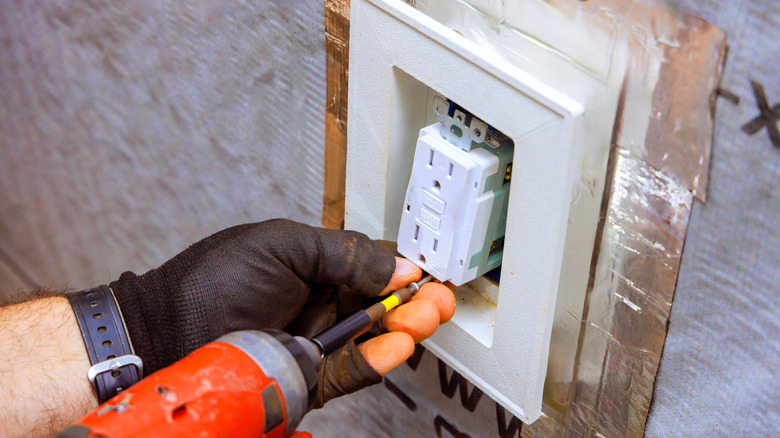
There are some electrical mistakes you don’t want to make in your home and if you’re unfamiliar with how circuits work, it’s helpful to know the basics. For example, a 20-amp circuit can typically handle around 10 standard outlets, though there isn’t a specific number that automatically causes the circuit to become unsafe. The real concern is the devices that will be plugged into those outlets and how much power they will actually use.

Everyday devices like computers, TVs, gaming consoles, smartphone chargers, fans, and other small electronics typically don’t place a heavy demand on a 20-amp circuit. This is especially true when they’re used individually, as they draw a relatively small amount of power overall. But when multiple high-power devices like coffee makers, hair dryers, microwaves, and toasters are used at the same time, problems could potentially occur. That’s because fewer of these items can safely operate on the same circuit, whether they’re plugged into the same outlet or different outlets on that circuit.

Some appliances require their own 20-amp circuit, which means the circuit isn’t shared with other household outlets. That’s because they draw considerably more power or operate for longer periods of time. This can include appliances like dishwashers, garbage disposals, washing machines, large window air conditioners, and portable heaters, among others. This is why the specific amount of electricity required for connected devices is just as important as the number of outlets a circuit can handle.

Advertisement

Inside circuit limits and outlet ratings

If too many outlets are put on a circuit, it can lead to some serious problems. It could be something as annoying as tripped breakers, which must be reset before electrical outlets can work again. You could also notice that something is off about your affected appliances or devices, which may not perform as they normally do. But things can get much worse, as too many outlets or high-power items can put stress on the electrical wiring and possibly cause a fire.

A circuit’s amp rating helps determine just how much electrical demand it can safely support. For example, a circuit rated at 20 amps is designed to carry that specific number, but using full capacity continuously is not recommended. This is why it’s good to follow the 80% rule for circuit breakers when a device or combination of devices will run over extended periods of time. That means keeping longer-lasting loads around 16 amps on a 20-amp circuit.

Advertisement

It also helps to know that outlets installed on a 20-amp circuit do not necessarily need to match that amp number. For example, 15-amp outlets can be put on a 20-amp circuit as long as the circuit itself is properly wired and meets all electrical requirements. The difference is that the circuit rating refers to the amount of current the circuit can safely carry, while the actual outlet rating represents the type of outlet being used.


Advertisement

Source link

Continue Reading

Tech

‘The government has all but forgotten that most data centres require water to cool their systems’: Industry trade board warns UK government over data center thirst for resources

Published

on


  • UK plans include trebling data center capacity (and likely, water consumption) by 2030
  • Daily average consumption doesn’t reflect peak demand during times of stress
  • Water UK sets out three considerations to prepare for increased demand

Despite the nation wanting to treble its data center capacity by 2030, a key trade body has warned British government policies have not considered the rising demand for water.

At the moment, England’s water resources forecasts, for example, exclude the likes of data centers and gigafactories.

Source link

Continue Reading

Tech

Leak details Ryzen 7 9800HX3D, AMD’s first affordable 3D V-cache laptop CPU

Published

on

Rumor mill: AMD’s well-regarded 3D V-Cache tech has so far been almost exclusive to socketed desktop CPUs. But if a new leak proves accurate, shoppers hunting for a high-end gaming laptop next year could get a genuine new alternative to Intel.

Prominent tipster Golden Pig Upgrade claims that AMD is developing a new Zen 5 laptop CPU equipped with 3D V-cache. The chip’s tentative naming suggests it could land in relatively affordable mid-to-high-end gaming laptops.

Ryzen desktop CPUs equipped with 3D V-Cache, distinguished by the “X3D” moniker, pack massive L3 cache reserves that often significantly boost gaming performance. So far, though, the only laptop X3D chip is the flagship Ryzen 9 9955HX3D. Its 16-core, 32-thread configuration, 5.4GHz clock speed, and 128MB of L3 cache are likely overkill for even many high-end games. The chip typically shows up in pricey gaming laptops such as the $2,000+ Asus ROG Strix G16.

According to the leaker, AMD initially planned to call the upcoming chip the Ryzen 7 9755HX3D but will instead launch it as the 9800HX3D. Either way, it’s expected to be the lowest-tier option among Ryzen 9000 laptop chips.

Advertisement

Its 8-core, 16-thread configuration and 5.1GHz clock speed put it below even the 12-core 9850HX, but its 96MB of L3 cache should give it an edge in certain gaming workloads over the 9850HX’s 64MB – all while potentially landing in lower-priced laptops.

The leaker claims AMD plans to begin mass production of the Ryzen 7 9800HX3D in the fourth quarter of 2026. The company could launch the chip before year’s end, but a CES 2027 unveiling looks more likely.

Bigger L3 caches have helped AMD steadily chip away at Intel’s dominance in desktop gaming CPUs ever since the original 5800X3D launched in 2022. AMD recently re-issued that chip to mark the AM4 socket’s 10th anniversary and give shoppers a relatively affordable option as the ongoing RAM shortage keeps inflating prices across the industry.

TechSpot’s review found that, while its $350 price tag isn’t ideal, the 5800X3D 10th Anniversary Edition remains the best option for AM4 owners who can’t afford the DDR5 memory needed to move to AM5.

Advertisement

Intel has yet to answer 3D V-Cache in the desktop space, and it still dominates the laptop gaming CPU market overall. The 9800HX3D alone probably won’t turn the tide there, but it could still stand as a significant statement of intent from AMD.

Source link

Advertisement
Continue Reading

Tech

Iran-linked group caught hiding surveillance tools in fake apps

Published

on


  • Recorded Future found an Iran-linked group spreading spyware
  • The malware is delivered through fake VPN and media player apps
  • Researchers assess that most targets are Iranian users

A new report from Recorded Future’s Insikt Group describes a campaign that inverts the whole point of a privacy tool: fake VPN apps built specifically to spy on the people who install them.

Researchers have linked fresh infrastructure to an Iran-nexus threat cluster they track as TAG-182, which is using fake VPN and media player downloads to allegedly deliver a surveillance tool called MarkiRAT. The group is “highly likely” to be targeting Iranians living inside and outside the country, the report says.

Source link

Continue Reading

Tech

SpaceX launches new V3 Starlink satellites but suffers another booster failure

Published

on

SpaceX successfully deployed the first third-generation Starlink satellites on Friday using an upgraded version of its prototype Starship — the 13th test flight of its mega-rocket to date. But the company suffered another failure with its Super Heavy booster during a planned simulated landing in the Gulf of Mexico.

It’s the second time the company has had an issue with the Super Heavy booster on this V3 version of Starship. In May, on the first Starship V3 flight, SpaceX encountered a failure of the Starship’s Super Heavy booster as it separated from the upper stage of the rocket. SpaceX was able to perform a simulated landing of the upper stage of Starship during Friday’s launch after it deployed the Starlink satellites.

The launch came a little more than a week after SpaceX tried to conduct the 13th Starship launch. That attempt had to abort immediately after ignition due to a number of rocket engine failures. SpaceX said it replaced six engines ahead of Friday’s flight to fix the problem.

During Friday’s launch, the booster made it farther into its planned flight but wasn’t able to properly fire up all of the engines required for its simulated landing burn. The booster exploded after a faster-than-expected impact with the water.

Advertisement

This was the first launch of Starship since SpaceX went public in June in the largest IPO in history. In a test of SpaceX’s “fly, fail, fix” approach to Starship development, the company saw its stock decline last week in the day following the launch abort. The dip is part of a larger downward trend since the IPO that has seen the company’s stock drop from a peak of more than $200 per share to $115 at the close of trading on Friday. In after-hours trading, SpaceX shares fell another 2% following the booster failure, before paring some of those losses.

SpaceX had better luck with the Starship V3 upper stage during Friday’s launch. The upper stage lost a rocket engine during the first V3 launch in May. That didn’t happen this time around, as Starship encountered no issues on its way to deploying the new Starlinks. The Ship, as the company calls it, was able to survive the harsh forces of atmospheric reentry and perform a simulated landing in the Indian Ocean roughly one hour after liftoff.

Unlike previous Starship missions, the Ship didn’t explode when it tipped over into the water. The Ship instead floated around in the water, giving SpaceX a chance to use a drone to closely examine the heat shield tiles on its belly.

The new Starlink satellites burned up in the atmosphere roughly 20 minutes after deployment, as Starship still isn’t capable of reaching Earth orbit. SpaceX was able to communicate with all of them while they were in space, marking a step forward for that program, which is the only profitable part of the company’s business.

Advertisement

The ability to deploy the more capable V3 Starlink satellites improves the economics of the company’s capital-hungry space internet network. SpaceX has said launching 60 of the new satellites on Starship is a “potential twenty-fold increase” in downlink capacity deployed versus those flown by a single Falcon 9.

However, it’s not clear if SpaceX can realize those gains if Starship expends the Super Heavy booster rather than reusing it. SpaceX’s S-1 said that without a fully-reusable Starship, progress on Starlink “would be at a slower pace and higher cost.”

With assistance from Tim Fernholz.

When you purchase through links in our articles, we may earn a small commission. This doesn’t affect our editorial independence.

Advertisement

Source link

Continue Reading

Tech

New Jersey Bans Surveillance Pricing, Puts the Brakes on Electronic Shelf Labels

Published

on

A new law set to go into effect next year bars grocery stores in New Jersey from setting prices based on any given shopper’s personal data.

The Fair Price Protection Act seeks to outlaw surveillance pricing that discriminates against individual customers by using personal information like their purchasing history or online activity.

“New Jersey families are already feeling the pressure of higher costs,” Gov. Mikie Sherrill said in a statement. “The last thing they need is companies secretly using their personal data to charge them more than someone else for the exact same product.”

Penalties for retailers could include fines of up to $10,000 for a first offense, $20,000 for subsequent violations and the potential for cease and desist orders and the assessment of punitive damages.

Advertisement

The law also includes a provision that pauses new electronic shelf labels for a year while the state studies their effect on surveillance pricing.

Two other states, Maryland and Connecticut, have recently enacted laws meant to protect consumer privacy, particularly when it comes to grocery prices. Other states including New York and California are considering similar new laws. Last year, the state of New York set rules requiring businesses to disclose to customers when they are setting prices based on algorithms.

What constitutes surveillance pricing

Some state laws have focused on algorithmic pricing, which could include companies using AI to coordinate on price-fixing, which is the subject of a lawsuit in California over gas prices. That’s closer in line to what people know to be surge pricing, where a company such as Uber might raise prices when roadways are busy and demand is high for its services.

Surveillance pricing, however, typically means that a retailer has personal information from its customers, say through a loyalty or discount shopping program, that it uses to set different prices for different shoppers.

Advertisement

According to the Electronic Privacy Information Center, personal data and market data are being used by retailers to determine the highest price a customer is willing to pay, leading to higher prices.

“This undermines consumer expectations of fairness and can amount to violations of state consumer protection law,” EPIC said on its website. “The price differences may also be discriminatory on the basis of protected characteristics, such as race and gender.”

The Federal Trade Commission has been investigating these types of practices. In a report on surveillance pricing last year, the FTC found that companies may be picking and choosing which customers have access to discounts in order to incentivize infrequent buyers to make purchases.

Separately, Consumer Reports found that AI price experimentation can result in hundreds or thousands of dollars in higher grocery bills for customers using services such as Instacart.

Advertisement

In a statement about the New Jersey law, EPIC applauded the action but pointed to more that needs to be done, including “expanding the law’s scope beyond the grocery store context, narrowing the law’s exemption for loyalty programs, and clarifying some key definitions.”

Source link

Continue Reading

Tech

One of NASA’s Most Important Deep Space Observatories Hit by Spanish Wildfires

Published

on

Climate change has now become a problem for the whole solar system. On Friday, wildfires in Spain overran one of three observatories the US National Aeronautics and Space Administration uses to connect with spacecraft, including Voyager 1, the James Webb Space Telescope, and the recently completed Artemis mission around the Moon.

Spain declared a wildfire emergency as multiple blazes burned out of control near Madrid, with evacuation orders in place for 60,000 people. The affected area includes Robledo de Chavela, a municipality near the Deep Space Communications Complex run by NASA.

Dramatic images captured by news photographers showed the radio telescopes surrounded by smoke and fire. A NASA spokesperson said in an email to WIRED that the agency successfully evacuated all personnel.

They added that while the fire has now passed through the observatory complex, it remains unclear what impact the flames may have had on the sensitive equipment inside. “Any potential damage will be assessed when it is safe to do so,” the spokesperson said. They add that if conditions allow, a site assessment could happen as soon as Saturday.

Advertisement

For now, NASA said it has “seamlessly transitioned support for mission operations to the Goldstone Deep Space Communications Complex in California, ensuring continuity of service and uninterrupted support for spacecraft communications.”

The facility in Spain, along with the others in Canberra, Australia, and Goldstone, California, make up what NASA calls the “largest and most sensitive scientific telecommunications system in the world.” The network allows NASA to transmit information from Earth to spacecraft, including the most distant human-made object in our solar system, Voyager 1. It’s also used to transfer data from the James Webb Space Telescope and send commands to other space vehicles. Oh, and the sites also contribute to radio astronomy observations. Suffice to say, it’s a very important collection of instruments for understanding the solar system.

Spain is far from the only country facing a wildfire crisis. Blazes are also burning out of control in France, where beachgoers saw skies turn orange and waves of ash washing ashore as firefighters worked to stop flames from spreading into the eponymous capital of the Bordeaux wine region.

“We learned in the middle of the afternoon that, following the wind shift, it had become a large, self-sustaining fire that is extremely difficult to bring under control,” French interior minister Laurent Nunez told national television channel Tf1. “It is now moving east, toward the Bordeaux metropolitan area. We are going to reorganize our response so we can fight it from the ground and prevent it from advancing.”

Advertisement

Roughly 200,000 people have been told to evacuate across the two countries.

Europe has seen record high temperatures this summer, driven by repeated heat domes camping over the continent and the UK, as well as climate change. Hot weather can dry out vegetation, priming forests to burn when hit by an errant spark. Similar stories have played out in other parts of the world recently, from Ontario, Canada, to the US Pacific Northwest.

Cooler weather is expected to arrive in the Mediterranean over the weekend, which should help firefighters get a handle on the blazes. But the respite will be short: Temperatures are expected to shoot up again on Monday and keep climbing throughout the week, eventually reaching up to 10 degrees Celsius (18 degrees Fahrenheit) above normal. That could worsen any wildfires in Spain or France that may still be burning—or help spark new ones.

Source link

Advertisement
Continue Reading

Tech

This $10 deal gets you Windows 11 Pro for life

Published

on

A lifetime Windows 11 Pro license normally costs $199, and right now it’s down to just $9.97.

That’s a 94% saving on the full Pro edition rather than the stripped-back Home version, and it removes any recurring fee from the equation entirely, swapping a subscription for one single, permanent payment you’ll never see again.

Windows 11 Pro on a golden honeycomb backgroundWindows 11 Pro on a golden honeycomb background

This $10 deal gets you windows pro for life, no subscription, no catch

With BitLocker encryption and Hyper-V virtualisation included, a lifetime Windows 11 Pro license is down to $9.97 from $199, a 94% saving

Advertisement

View Deal

That distinction matters most if you ever touch development work, IT administration or anything at all that leans on enterprise-grade tools alongside the everyday Windows experience most people already know well from their own PC.

Advertisement

BitLocker device encryption comes standard here, locking down your entire disk so a lost laptop or a stolen drive doesn’t quietly turn into a costly data breach layered on top of an already stressful inconvenience.

Hyper-V and Windows Sandbox let you spin up virtual machines or test unfamiliar apps in a fully isolated environment, keeping anything untrusted well away from the files and programs you actually rely on every day.

Advertisement

None of that comes at the expense of the everyday Windows 11 experience, since Snap layouts, DirectX 12 Ultimate for gaming, biometric sign-in and Copilot built directly into the taskbar are all included as standard.

Advertisement

The Whatsapp LogoThe Whatsapp Logo

Get Updates Straight to Your WhatsApp

Join Now

Advertisement

It’s worth checking your PC’s compatibility with Microsoft’s free PC Health Check app before buying, since this license is meant for machines that need a fresh Windows license rather than ones already eligible for a free upgrade.

Redemption is instant, with a code delivered by email straight after purchase, though it only covers a single PC and needs to be claimed within 30 days, so this genuinely isn’t one to sit on.

At $9.97 instead of $199, paying just once for Windows 11 Pro and never having to pay again is about as close to a genuinely no-catch software deal as you’re likely to find right now.

Advertisement

Advertisement

SQUIRREL_PLAYLIST_10148964

Source link

Continue Reading

Tech

Two Volkswagen engineers charged with insider trading tied to Rivian joint venture

Published

on

TL;DR

DOJ charges two VW engineers with insider trading for buying Rivian stock before the joint venture announcement

Federal prosecutors on Friday arrested two Volkswagen engineers in San Jose, California, and charged them with insider trading for buying Rivian stock before VW’s multibillion-dollar joint venture with the electric vehicle maker was publicly announced. Michael Stamp and Marcus Plank, both based at VW’s US operations, each face one count of federal securities fraud carrying a maximum sentence of 25 years in prison. The indictment, filed by the US Attorney’s office for the Southern District of New York, alleges the two men used confidential knowledge of the partnership, internally codenamed Project Climb, to purchase Rivian shares in the weeks before the deal was revealed on June 25, 2024.

Stamp allegedly made approximately $250,000 in profits from his trades, while Plank netted roughly $50,000, according to the indictment. A family member of Plank also purchased Rivian shares and made about $12,000, prosecutors said. Rivian’s stock rose 23 percent on the day the joint venture was announced, rewarding anyone who had bought shares in advance.

The indictment includes details that suggest the defendants were aware of the legal risks. Stamp allegedly searched “statute of limitations insider trading” on Google eight days before the joint venture was announced, according to prosecutors. A family member of Plank searched the same phrase in German, the indictment states.

Advertisement

The joint venture at the centre of the case has since grown into one of the most consequential partnerships in the automotive industry. Originally valued at five billion dollars, it has expanded to nearly six billion dollars and is focused on developing software-defined vehicle architecture for VW’s next-generation cars, even as Rivian pushes into the mass market with its R2 SUV. VW overtook Amazon as Rivian’s largest shareholder in May with a stake of nearly 16 percent after a one billion dollar share purchase tied to a software milestone.

The 💜 of EU tech

The latest rumblings from the EU tech scene, a story from our wise ol’ founder Boris, and some questionable AI art. It’s free, every week, in your inbox. Sign up now!

The case is being prosecuted by the same SDNY office that charged a Google engineer with insider trading on Polymarket in May, part of a broader federal push to pursue corporate insiders who exploit non-public information in the technology and automotive sectors. Both defendants were arrested in San Jose and are expected to appear before Judge Katherine Polk Failla in the Southern District of New York. The case was announced by US Attorney Jay Clayton, who has made insider trading enforcement a priority for the office.

Advertisement

Source link

Continue Reading

Trending

Copyright © 2025