I think we should stop calling it a ‘postcode lottery’. A lottery implies that you’ve got some luck in this – but you’ve only got luck if you happen to live in that particular place. You don’t get any more luck once you’re there. You’re stuck.”
Sarah Norcross, director of the Progress Educational Trust (PET), a charity that improves choices for people affected by infertility, is talking about the current access to fertility treatment. More specifically, access to in vitro fertilisation (IVF) on the NHS in England.
It’s a particularly relevant topic, given that today, 25 July, is World IVF Day: it commemorates the birth of Louise Joy Brown in Oldham, Greater Manchester, in 1978, the first baby ever conceived through IVF.
But although Brown’s remarkable legacy lives on, nearly 50 years later IVF provision is something of a roulette in the very country in which the pioneering treatment was invented. Eligibility and the number of cycles couples are entitled to vary wildly between areas. Rules are governed by NHS local integrated care boards (ICBs), which are able to conjure up their own policies at will.
Advertisement
In some places, IVF is offered to women up to the age of 42; in others, it’s capped at 35. In some places, couples are offered three full rounds of IVF; in others, one partial round. In some places, as long as there are no children from the current relationship, the couple will be eligible; in others, the existence of any kids from previous relationships immediately prohibits treatment.
There is no rhyme or reason to this – it’s just an issue of resource distribution amid a health service stretched wafer thin. It is, as Norcross says, “grossly unfair”.
The “luck” element is significant even at a granular level. PET research has revealed that female GPs are nearly 20 per cent more likely than their male peers to refer patients for NHS-funded fertility treatment.
IVF births now account for roughly one child in every UK classroom (Getty/iStock)
“Whether you can access treatment, what provision you’ll receive and under what conditions is fundamentally inequitable,” says Gwenda Burns, chief executive of the Fertility Alliance, a national charity offering support to those struggling with infertility.
Rather than improving, provision is getting substantively worse. In the past year alone, five separate ICBs in England have reduced their IVF offering.
Advertisement
On 1 April 2026, NHS Greater Manchester cut the number of cycles offered from up to three to just one. Katherine Sheerin, NHS Greater Manchester’s chief healthcare commissioning officer, said that, while they know the decision will be “upsetting and disappointing” for some, “access to NHS-funded IVF depends on where someone lives, and that variation is unfair and cannot continue as it is. Moving to a single policy removes this postcode variation.”
From 1 February 2026, NHS Cheshire and Merseyside ICB also went from offering two or three cycles to one. “We have a responsibility to ensure services are provided fairly for everyone across the region and by moving to a single funded IVF cycle, we can continue to offer treatment in a consistent way that remains clinically appropriate and financially sustainable,” a spokesperson told The Independent.
Whether you can access treatment and what provision you’ll receive is fundamentally inequitable
Gwenda Burns, Fertility Alliance
Advertisement
Across South Yorkshire, IVF cycles were slashed from two to one in December 2025. “This decision has not been taken lightly by the Board,” Chris Edwards, interim chief executive at NHS South Yorkshire, said of the decision. “However, in a difficult financial climate we have a responsibility to balance the needs of all our communities and ensure that we are delivering the best possible value for money within the resources available.”
At the beginning of July 2025, NHS Sussex’s ICB reduced the number of cycles patients can receive from three to one; they declined to comment when approached by The Independent.
Finally, in a double blow, Kent and Medway quietly announced in April this year that they would cut provision from two cycles for women up to the age of 40 to one cycle for women 37 and under.
On the ground, these changes have caused patients and doctors a huge amount of stress as they’ve tried to fast-track referrals to beat the deadline. “We’ve just been trying to get people through as quickly as possible so they can get their two or three rounds,” says Nicola Tempest, a consultant gynaecologist and lecturer at the University of Liverpool.
Advertisement
Holly, a 39-year-old psychotherapist who lives in Margate, was one patient whose IVF came under threat after Kent and Medway’s shrinkflation. Following a two-year wait for treatment, she and her partner started their first cycle in January; by the end of February, it had “dramatically failed”, she says. “We didn’t get any embryos, and we were extremely unprepared for that. I was utterly devastated.”
The UK birth rate has been falling for years – making IVF treatment all the more vital (Getty/iStock)
On top of this grief, more anxiety was piled on. For her second round, Holly was required to get an AMH test, which measures a hormone that indicates how many eggs someone has. By this point, it was the end of March.
“I had an appointment with my fertility doctor and she told me about the change in funding,” says Holly. “She said, ‘you have to get this AMH test done now, because otherwise you might not get your second round.’”
The NHS’s free AMH test would take too long – Holly was forced to arrange the test privately at a cost of more than £100, get up at 4am the next morning, and race home afterwards in time to start work.
“The stress was insane, and the potential implications were incredible,” she says. “To go from two rounds to one, four embryo transfers to two…”
Advertisement
The sudden reduction of eligibility due to age in Kent and Medway was particularly brutal; 38 is the age at which, according to some studies, women see a more rapid decline in fertility, and are therefore more likely to need assisted reproduction.
We didn’t get any embryos, and we were extremely unprepared for that. I was utterly devastated
Holly, psychotherapist
One academic review, for example, found that the rate of women defined as infertile who conceived without medical intervention within a year held steady at 29 per cent from the ages of 35 to 38. After that, it dropped far more quickly.
Advertisement
In fact, the backlash in Kent and Medway has been severe enough that the ICB has very recently pressed pause on this deeply unpopular move. “NHS Kent and Medway has listened to feedback following its decision to change the criteria for fertility services from 1 April 2026, and is now reviewing that change,” a spokesperson told The Independent. While the review is underway, the original criteria have been reinstated.
While this is undoubtedly good news, the likelihood that IVF provision will stay the same or improve during this next review process seems low if the national landscape is anything to go by.
Ignoring guidance
Putting aside the ICBs that have recently cut access, it is very rare to find one that is following NICE guidance. NICE stands for the National Institute for Health and Care Excellence – the official arm of the UK government responsible for providing evidence-based guidance, advice and standards for the NHS.
Advertisement
NICE updated its IVF guidelines in March this year, replacing the previous recommendations issued in 2013. These state that people who meet the eligibility criteria and are under 40 should be offered three full cycles of IVF. If they have not conceived after three cycles and are still under the age of 40, healthcare providers should consider up to three further cycles.
The number of cycles is crucial because, although it might sound obvious, the more cycles someone has, the higher the chance overall that they will have a baby. “Clinically, multiple cycles increase the overall chance of a live birth,” says Burns. “Reducing from three to one dramatically lowers the cumulative probability of success.”
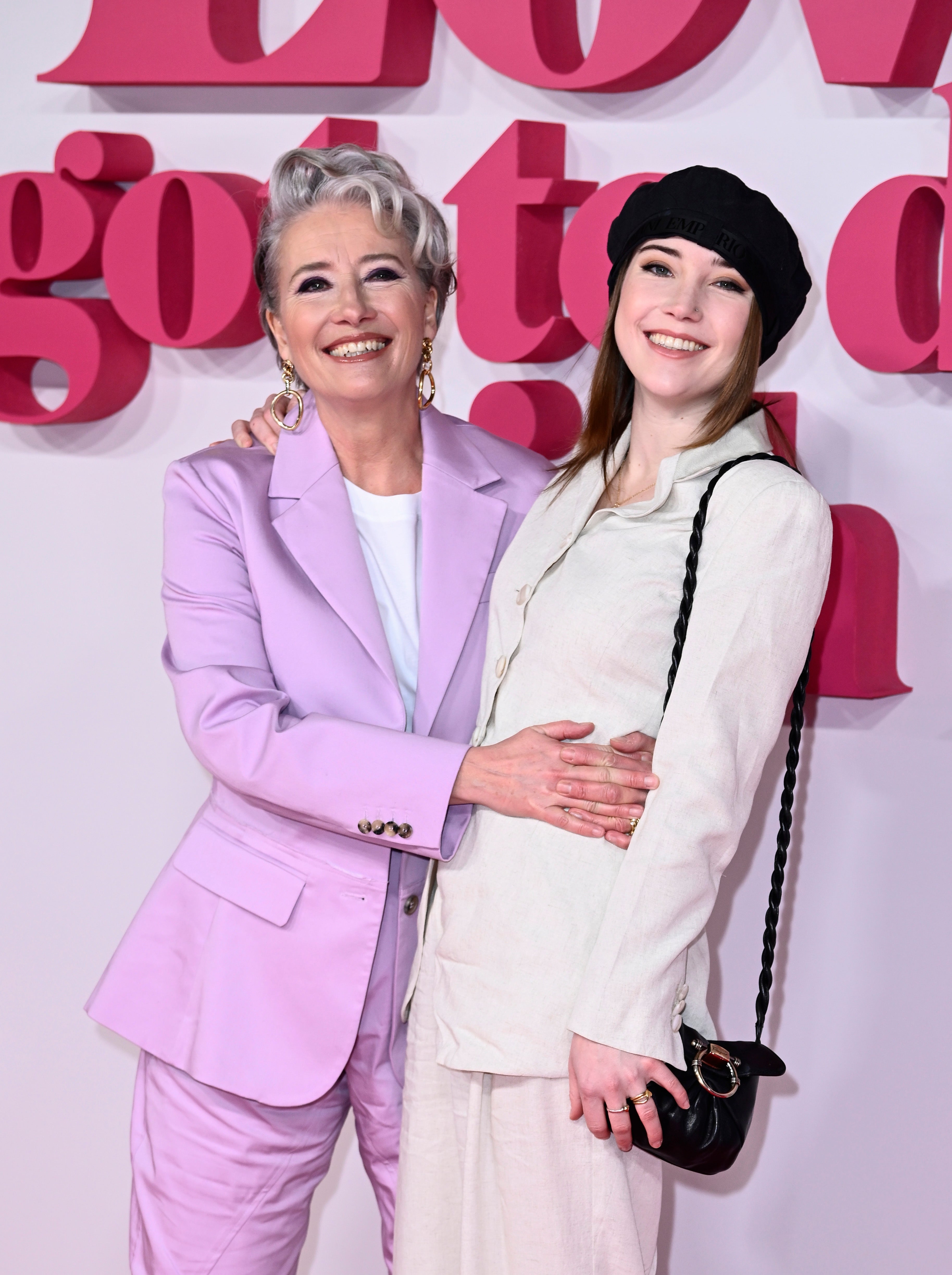
Emma Thompson (left) has been open about conceiving her daughter, Gaia (right) via IVF at the age of 40 (Getty)
Depressingly, only two ICBs in the whole of England are currently offering the recommended three full cycles: North East London and North East and North Cumbria.
The number of cycles is only one part of the story, too; some ICBs offer “non-full”, rather than “full” cycles. NICE guidelines define a “full” cycle as one in which, after egg retrieval and fertilisation, every resultant viable embryo has been transferred (one at a time – multiple embryo transfer is no longer practised in the UK) or one has resulted in pregnancy. But some ICBs will only transfer one viable embryo after retrieval, while others may cap it at two. Currently, only 11 of the 42 ICBs in England offer “full” cycles.
“It’s hard to communicate the message because it’s so complicated – but the bottom line is that, in many cases, we’re seeing ICBs making massive cuts and salami-slicing care,” says Norcross.
Advertisement
The issue is that NICE guidance is just that – guidance. There is no obligation to adopt it, and most ICBs simply choose not to as a cost-cutting exercise.
Not a ‘lifestyle choice’
Fertility treatment is frequently framed as a “luxury” or a “lifestyle choice”. This problematic viewpoint was recently spouted by Reform UK county councillor Bridget Porter in Kent, who compared IVF to “butt lifts” and “boob enhancements”, saying that increasing spending on fertility would be “frivolous”, reports the BBC.
Yet reproduction is anything but. The World Health Organisation (WHO) defines infertility as a “disease of the reproductive system”, and it’s becoming an increasingly pertinent public health problem, given that fertility and birth rates are declining the world over.
Advertisement
In 2025, births in England and Wales fell for the fourth year in a row and hit their lowest level for nearly 50 years, according to ONS data. The number of children born per woman in England and Wales has fallen to 1.4, well below the replacement rate – the number of babies per woman needed to sustain a population size – of 2.1.
This demographic shift is a cause for concern. “If you’ve got too many older people being supported by a much smaller young taxpaying population, it’s going to cause massive problems,” says Kevin McEleny, a consultant urologist and chair of the British Fertility Society (BFS). “One way of mitigating it is by allowing those who want to have children to do so.”
Are we really saying that the rich middle class are more entitled to have children than working class people?
Kevin McEleny, British Fertility Society
Advertisement
But while countries like Denmark and France are addressing their ageing populations by increasing fertility treatment provision, England is not.
Economically speaking, for every £1 spent on IVF, a country gets 8.5 times this back in terms of tax recouped from the children produced via the treatment, according to research. “The people who do healthcare economics have said these children are an asset,” says Norcross. “You get a really good return on your investment as a government.”
The difficulty is that political decisions are often made on a short-term basis, with those in charge looking from election to election rather than prioritising policies that will reap rewards in 40 years. And yet access to free fertility treatment is popular with the public; in a survey conducted by IPSOS on behalf of PET, 57 per cent of respondents said they thought IVF should be offered on the NHS.
The case for change
Advertisement
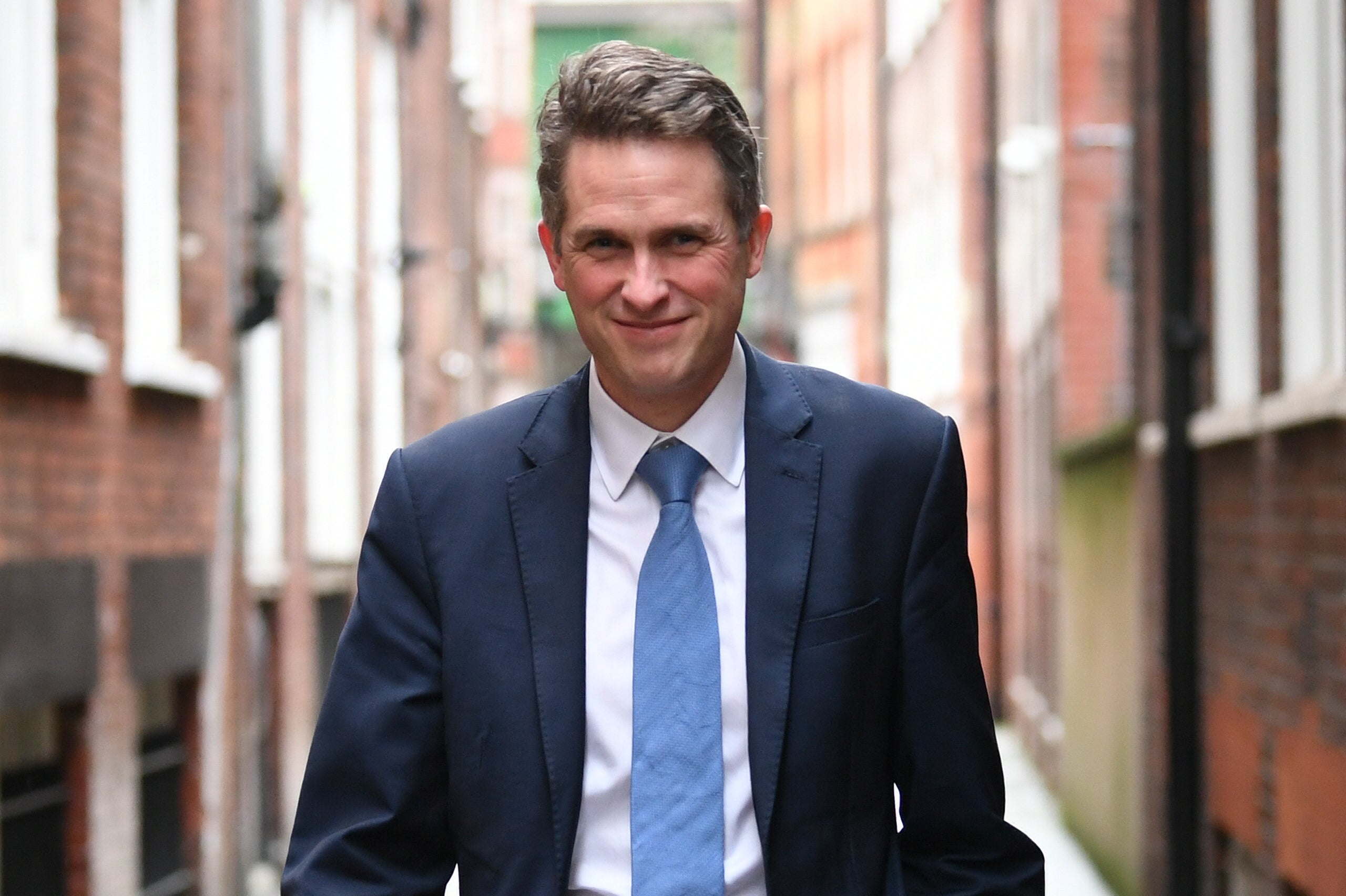
Some politicians are making the case for change, with Conservative MP Sir Gavin Williamson proposing a bid to amend the NHS bill to force ICBs to follow NICE recommendations on IVF.
“This is the country that invented IVF, yet Integrated Care Boards are rationing it unevenly,” he says. “NICE guidelines exist precisely to prevent this, and they are being ignored. Enforcing them across every region is the obvious fix, and it is long overdue.”
Conservative MP Gavin Williamson is leading the charge in making NICE guidelines on IVF mandatory (PA)
In the meantime, a lack of access to free fertility treatment is already creating a two-tier society. Only 25 per cent of IVF cycles in England are done through the NHS, according to the latest HFEA data, which means that 75 per cent are paid for privately, at a cost of £5,000 to £8,000 a pop.
For same-sex couples, there is an in-built bill before they have any chance of accessing NHS care. In the vast majority of areas, they must have completed at least six cycles of (unsuccessful) self-funded artificial insemination (IUI) before they’re considered for treatment, costing from around £750 per round, rising to £1,400 if donor sperm needs to be purchased – a total of £4,500 to £8,400.
Advertisement
“Are we really saying that the rich middle class are more entitled to have children than working class people?” asks McEleny. “Is that the kind of country we want to live in?”
It doesn’t have to be this way. Across Scotland, NHS boards follow the gold standard: three full rounds for women up to 40. They did a phased implementation, first introducing two rounds, then extending to three. “We’re meant to be a UK NHS, not an NHS England and an NHS Scotland,” points out Burns, “so why isn’t there equitable treatment across the country in line with the NICE guidelines?”
McEleny concludes with this warning: “There will come a time, mark my words, when they will be desperate for people to have more children. By then it’ll be too late. Make it easier now.”
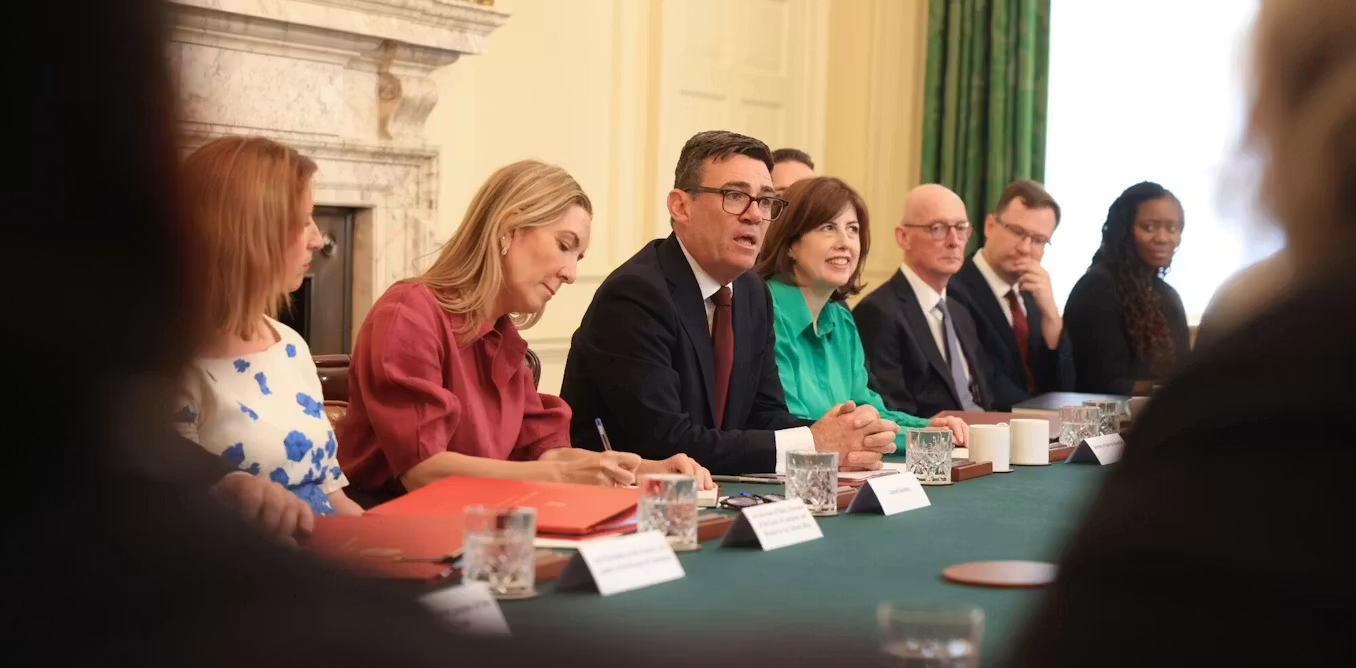
If he were alive today, Machiavelli would have enjoyed watching the first days of Andy Burnham’s premiership. An enemy of the Medicis, the Florentine diplomat (full name Niccolo di Bernardo dei Machiavelli) was a student of power. He would have appreciated the clarity, focus and – yes – the brutality of Burnham’s move against loyalists of former prime minister Keir Starmer.
This was not a purge comparable to Harold Macmillan’s “night of the long knives” in the 1950s. Back then, Macmillan sacked one third of his entire cabinet. But it does compare to Boris Johnson’s 2020 reshuffle when Sajid Javid was forced to resign as chancellor and other ministers were sacked as political power consolidated around Johnson’s chief adviser Dominic Cummings.
Apart from Starmer himself, ministers sacked or not reappointed in Burnham’s takeover include chancellor Rachel Reeves, deputy prime minister and justice secretary David Lammy, housing secretary Steve Reed, business secretary Peter Kyle, health secretary James Murray, and Cabinet Office minister Darren Jones.
Others, such as prisons minister James Timpson and science/innovation minister Patrick Vallance, jumped before they were pushed.
Advertisement
Many of these changes were expected and not all the ex-ministers were successful in office. Moreover, it is not unreasonable for an incoming prime minister, particularly one who so audaciously unseated a predecessor, to want to reward their supporters. Politics is, to use the cliche, a tough business and to the victors go the prizes of ministerial office.
Nevertheless, such an approach also has its risks. Jones pointing out that Burnham’s proposal to cut VAT from household electricity bills from October is “unfunded” is a timely reminder that there is now a group of disaffected and often still ambitious backbench MPs. Each has an intimate knowledge of how Whitehall works and a bulging address book of journalists from the lobby and beyond.
Creating enemies – lessons from Machiavelli
Despite Burnham’s protestations about how much he hates factionalism in the Labour party, this week saw raw factionalism in action. From now on, one is either for Burnham or against him.
And when the Burnham government’s honeymoon period ends and political capital is ebbing away, the potential for these excluded malcontents to seek revenge is obvious. So how does Burnham deal with this – and what lessons can be learned from Machiavelli’s treatise The Prince when assessing Burnham’s options?
Advertisement
The key takeaway is Machiavelli’s observation that power inevitably creates enemies. The wise ruler must manage, anticipate, and – if particularly deft at the political dark arts – cultivate these enemies for the purpose of overcoming them and being seen to do so.
This is because defeating an enemy publicly demonstrates strength, which enhances legitimacy and deters future challengers. So far, Burnham seems to have done this quite effectively. But so did his predecessor Starmer when he sidelined the Corbynites and eventually pushed Jeremy Corbyn out of the Labour party in 2024.
Some potential enemies are harder to manage, however. Machiavelli tells us that the wise ruler prevents rivals from uniting against them by keeping ambitious nobles competing with one another. This prevents one group from dominating.
He or she then uses reward, restraint and rotation of influence as disruptors. In other words, you lever ambition and rivalry to divide the opposition. Burnham’s decision to make John Healey chancellor of the exchequer, rather than Ed Miliband or Shabana Mahmood, is a classic Machiavellian move.
The conventional wisdom was that Miliband and Mahmood were rivals for the chancellorship. While Mahmood will be happy enough to retain her Home Office portfolio, Miliband’s failure to become chancellor (a job he apparently coveted) can be regarded as a modest but important clipping of the wings.
Similarly, the appointment of Wes Streeting as defence secretary is a shrewd appointment that places another potential rival in a demanding role that will keep him busy for now.
In the end, however, even the wise ruler run outs of political capital and luck. Burnham is the sixth prime minister since David Cameron resigned following the Brexit referendum of 2016. In his Downing Street speech following his visit to the king, Burnham expressed a desire to break the cycle of instability and push on with a ten-year national plan.
Advertisement
Starmer had a similar plan for “national renewal”, which is now in the dustbin of history. It would be unwise to bet against something similar happening to Burnham eventually. Which leads to another lesson from The Prince.
Machiavelli observes that all political acts – even those that are “good deeds” – create enemies in the end. After all, even beneficiaries resent feeling indebted. It may not be one of Burnham’s vanquished political enemies but rather one of the winners of this week’s political powerplay who eventually wields the knife.
Breightmet resident Dawn Exley says she confronted a man after witnessing what she believed was a bag of rubbish about to be thrown into a woodland beside Seven Acres Park.
The incident comes as concerns continue over vehicles littering and fly-tipping in the area.
Ms Exley said the incident was unrelated to recent issues and reflected concerns she says have existed for several years.
(Image: Newsquest)
She said: “Personally, I’m a little bit on a tightrope with my emotions at the minute.
Advertisement
“And I saw it and just thought I’m sick of it being a dumping ground.
“Whether it’s rubbish or anything else, I just thought I’m not having this. I’m really community spirited, and I don’t have any hidden agenda.”
The incident happened on the Waggon Road side of Seven Acres Park.
Ms Exley said she has been documenting what she says is littering in the area since 2021 and has previously reported concerns to Bolton Council.
Advertisement
She said she had witnessed what she believed was a bag being thrown into the woodland from a car with its rear doors open.
She explained that she challenged the driver and asked him to collect the bag, and that later he did.
(Image: Newsquest)
Ms Exley said she also asked him to remove another bag already at the location because she believed it may have belonged to him, but said the driver denied it was his.
Following a report of fly tipping near Seven Acres Park, Bolton Council said it visited the area but found no evidence of fly tipping.
Advertisement
Ms Exley said: “I stopped because I saw something that wasn’t right, and I addressed it.”
She said she wanted to make clear the incident should not be linked to wider community tensions in the town and added that she was worried about the affect littering could have on wildlife.
Commenting on fly tipping more generally across the borough, Cllr Sean Fielding said: “The thing about that area is you can drive up to it easily.
(Image: PHIL TAYLOR)
“There’s not loads of properties that overlook it, and there’s not loads of people around all the time.
Advertisement
“So unfortunately it’s just one of those places, in common with lots of places across the borough, where people are finding themselves able to tip unwitnessed.”
A Bolton Council spokesperson said: “We regularly monitor and clear fly tipping in public areas and respond to any reports we receive.
“Following a report of fly tipping next to Seven Acres Park, we recently visited the area but could find no evidence of fly tipping.”
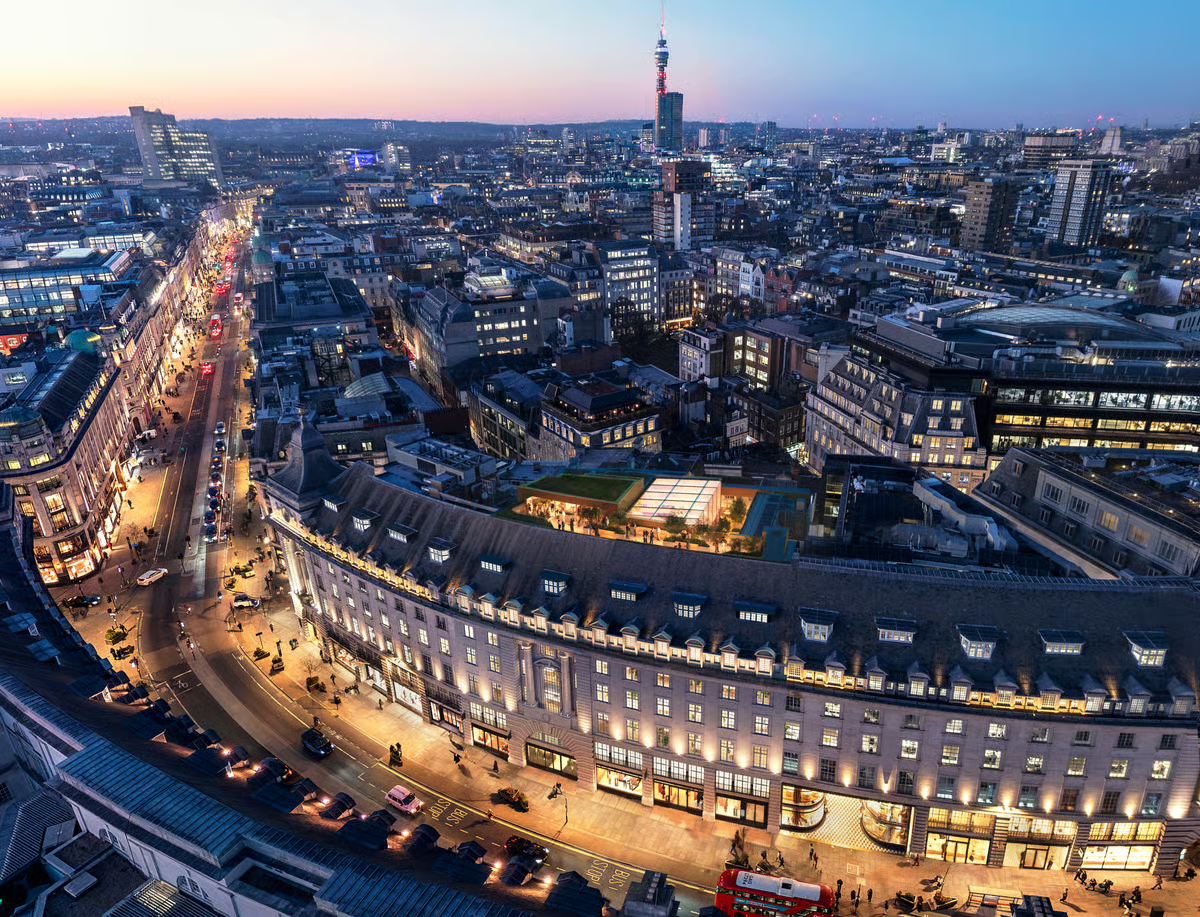
“By taking an estate-wide view, we can invest in the places and experiences that help the West End succeed on the global stage – places such as 10 Piccadilly and 21-29 Glasshouse Street, where we are sensitively bringing heritage assets into their next chapter, creating outstanding new office, retail and hospitality spaces for London.
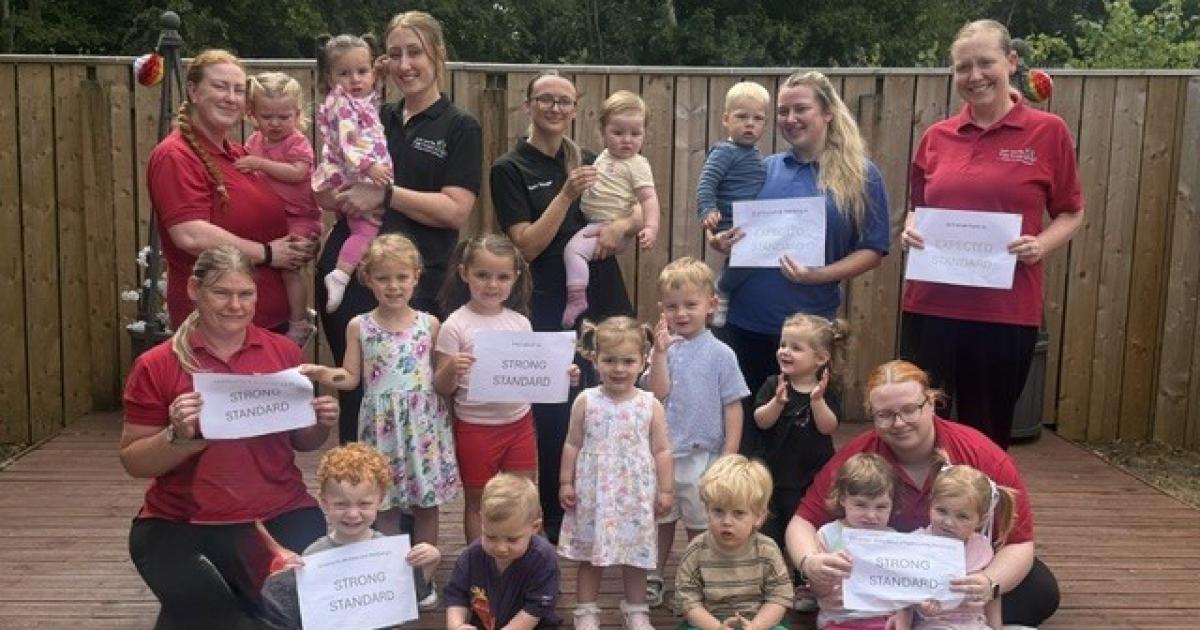
Harbour View Kindergarten in Seaham was ranked in the ‘strong standard’ area for four out of six categories, with the remaining two rated ‘expected standard’.
Inspectors have highlighted the high expectations staff have for children’s behaviour, describing interactions as “warm and trusting.”
The Ofsted report said: “Relationships between staff and children are warm and trusting.
Advertisement
“They take a genuine interest in every child who attends the setting.”
Parents commented in the report, saying: “The staff team go above and beyond”.
Staff were also commended for their understanding of each child’s needs and for working closely with parents and professionals.
The report added: “Children with special educational needs and disabilities and those who may have barriers to learning receive effective, swift and targeted support from staff.”
Advertisement
Inspectors praised the staff for working in collaboration with parents and professionals to ensure children who may need additional support receive the right interventions at the right time.
Outdoor learning was highlighted as a strength, with Ofsted observing children playing in the mud kitchen, waving bubble wands, and exploring the outdoors with their friends.
Settling-in procedures were described as high quality, with staff gathering detailed information on children’s dietary needs, allergies, weaning, and sleep routines before they start.
The leadership team was described as “passionate” about their work.
Advertisement
Kimberley Taylor, nursery manager, said: “We are delighted that our hard work has been recognised.
“This achievement reflects the dedication of our entire team, who work tirelessly to provide a warm, nurturing environment where every child can thrive.
“We are incredibly proud of the strong relationships we have built with our children and their families, and we are grateful for the trust and support they continue to show us. ”
The Ofsted report also noted that leaders and staff act quickly in cases of non-attendance and promote regular attendance through close communication with parents.
Advertisement
Children were observed to be well prepared for the next stage of their learning.
Although the curriculum and teaching were generally rated as expected standard, inspectors did identify some inconsistencies.
They noted that staff did not always make the most of spontaneous teaching moments to extend learning.
Ms Taylor added that while celebrating their achievement, the team remain committed to continuous improvement and will continue striving to provide an even better experience for the children in their care.
Advertisement
Despite this, children are making typical progress from their starting points, and the centre was praised for its inclusive approach.
I DISCOVERED Lothersdale whilst working in nearby Earby. It is a lovely, forgotten dale with an excellent short walk climbing to the trig point of Pinhaw Beacon. The views are wide ranging, interesting in particular north towards the 3 Peaks.
Lothersdale is a long, deep valley with the central village towards the eastern end. Whether you enter from the east or the west, head for the Hare and Hounds inn.
Park near the pub and head west for 100 metres until a signpost directs you left, uphill and on to the Pennine Way.
The Pennine Way leads all the way to the summit of Pinhaw Beacon and is therefore well signposted and generally easy to follow. The path climbs steeply out of Lothersdale.
Advertisement
After passing through a gate turn left (still uphill) and keep close to the fence/wall. The path at this stage is faint or non-existent on the ground so stick close to the fence, which turns in to a wall. After crossing a small stream there is a stile leading left, cross the field and emerge at a lane.
Cross the lane and carry on up the farm track initially. Past the farm the track becomes more of a path, crosses a stile and then take a sharp left alongside the boundary. Over another stile and the scenery takes an immediate turn for the better (at least in my opinion). This is open moorland, the path is good (paved in places due to being on the Pennine Way) and after continuing west for half a mile leads to the smart trig of Pinhaw Beacon. The views from here are excellent.
To the north are the Yorkshire Dales, on a good day all 3 Peaks can be seen, turning to the west the Forest of Bowland is in the foreground with the sea a distance beyond (on a clear day).
More walks:
Advertisement
Before you reach the trig take a few minutes to try and locate a small gravestone and inscription where Robert Wilson, a brave local man, died in 1805. Robert and his two companions had been sent up to the Beacon to watch for a warning from the nearby beacon at Colne for a sign of the invasion of Napoleon. On one cold winter day Robert set out to get supplies but never returned. His body was found within 200 metres of the hut and there lies a small stone to signify where he met his end.
Pinhaw Beacon
From the summit follow the Pennine Way for a further 250 metres south west before taking the south path from the corner of a wall. Leave the Pennine Way which heads north. Follow the wall for a few meters, bear left and head for a stile out of the moors and back in to farmland.
Drop steeply towards Calf Head Farm and then follow the lane east and then steeply downhill which brings you out near Knott Barn. A footpath skirts the cluster of buildings next to a stream (on its east bank) before opening out on to a series of fields). Continue down through the fields before a slight detour to the east brings you to a bridge and the welcoming sign of the Hare and Hounds pub.
On the final few hundred metres of the descent Lothersdale, the full dale, is spread out impressively in front of you.
Advertisement
Fact file:
Lothersdale map
Distance: Roughly four miles.
Height to Climb: 195m (645 feet)
Start: SD 960461. There is roadside parking near the pub.
Difficulty: Medium. The walk is short but the first mile is steep. The return through the fields needs some careful map work as the paths barely exist on the ground. Where the path is intermittent look for stiles/gates which mark the way.
Advertisement
Refreshments: The Hare and Hounds in Lothersdale is very good.
Be Prepared: The route description and sketch map only provide a guide to the walk. You must take out and be able to read a map (O/S Explorer OL21) and in cloudy/misty conditions a compass. You must also wear the correct clothing and footwear for the outdoors. Whilst every effort is made to provide accurate information, walkers head out at their own risk.
Hope Street is a beloved crime series which is set in the fictional coastal town of Port Devine. It centres on the local police force and the personal lives of its officers.
Advertisement
It boasts a cast including Kerri Quinn, Niamh McGrady, Niall Wright, Aaron McCusker, Des McAleer, Ciarán McMenamin and Finnian Garbutt, who sadly died this year.
The programme is currently in its 5th series, which premiered towards the end of last year.
It has recently been revealed that a feature-length special of the much-loved police drama is in the pipeline, with fresh faces set to join the ensemble, reports the Irish Mirror.
Comedians Paddy Raff and Tim McGarry will make their Hope Street debuts alongside actress Letitia Hector.
While it will screen in cinemas throughout Northern Ireland in September this year, it will subsequently be released across the rest of the UK in October.
Mary McKeagney, Commissioning Editor, BBC Northern Ireland, said: “We hope this feature-length film will provide the perfect opportunity to tie up some loose ends for fans.
“And with some new characters thrown into the mix, I’m sure there will be plenty of drama in Port Devine! It is a bit of a thank you to all our audiences for engaging so enthusiastically with the series.
Advertisement
“Thanks, too, to the cast and crew, past and present, for bringing us such joy across all five series so far, and to Northern Ireland Screen for their continued support, and to the people of Donaghadee for having us.”
Since the programme debuted in 2021, viewers have expressed their opinions on the Irish drama.
One viewer remarked: “Excellent. At last I have found a program to watch on BBC that’s made it worth paying for the TV license. Every episode so far has made me smile. Nice that each episode has a self-contained story. Donaghadee is indeed a lovely seaside town and a great setting.”
Advertisement
Another person observed: “Binged it and loved it! I also don’t understand the negative reviews. I love this series, having binge-watched it over 2 days. It’s a feel-good, family drama that has the ambience of other BBC dramas, such as The Good Karma Hospital and Death in Paradise, All Creatures Great and Small, etc.”
While a third noted: “Perfect light entertainment. If you’re looking for a serious police drama, this is not for you. But if you want something easy to watch with a fun vibe and a great cast of characters, then this is absolute perfection.”
Hope Street is available to stream on BritBox and BBC One Northern Ireland
Victoria Smith, 50, was last seen at about 4pm yesterday, Friday, July 24, near Northallerton.
She may be in the Osmotherley and Ellerbeck area, near the A19.
Victoria is white, of medium build, with brown shoulder-length hair. She was wearing a light-coloured T-shirt, jean shorts, and grey shoes, possibly with a grey hoodie.
Advertisement
Officers are extremely concerned for her welfare and the police helicopter has been involved in the search for her.
Anyone with information should call North Yorkshire Police on 101 or 999 for immediate sightings, quoting reference number NYP-24072026-0584.
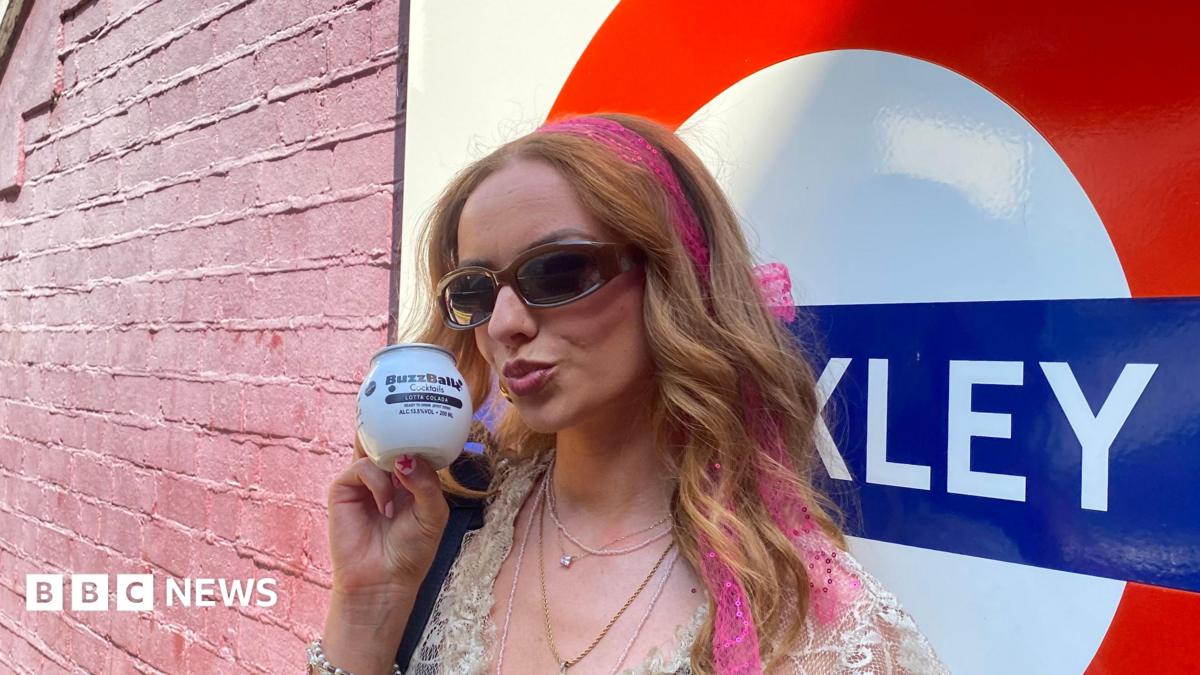
BuzzBallz was founded by teacher Merrilee Kick, but was bought by the Sazerac Company, whose CEO is Jake Wenz, in 2024.
BuzzBallz’s UK’s mission statement, which was deleted after the BBC contacted the company about this story, said it “loves our planet as much as we love a good cocktail” and partnered with TerraCycle to ensure its packaging gets recycled.
However, TerraCycle, which involves consumers collecting packaging and sending it to be recycled, only runs the BuzzBallz scheme in the United States.
BuzzBallz’s UK FAQs, now also deleted, stated: “Yes, our packaging is recyclable. Please recycle your empties where local facilities allow.”
Advertisement
But no local facilities anywhere in the UK allow BuzzBallz to be recycled, said Adam Herriott, the head of packaging at WRAP.
“They’re a mix of two very recyclable materials that put together makes an unrecyclable format.
“No local authorities will accept these at the kerbside.
“If they end up at a sorting facility, they could end up contaminating the plastic stream because of the metals in there and that could be very problematic for plastics recyclers that get into the machinery.”
Advertisement
But why should people care if their drink packaging is not recyclable?
A Cambridgeshire council has agreed to fund free parking at four city centre car parks from August 3, but some people are not convinced it will make a big difference
David Prince and Cambridgeshire Live readers
06:00, 25 Jul 2026
Readers of Cambridgeshire Live have expressed divided opinions on proposals to introduce free parking in a city centre after 3pm. While many have welcomed support for town centres, others have raised questions about how beneficial the timing would be for workers, and whether the policy ought to prioritise cars at all.
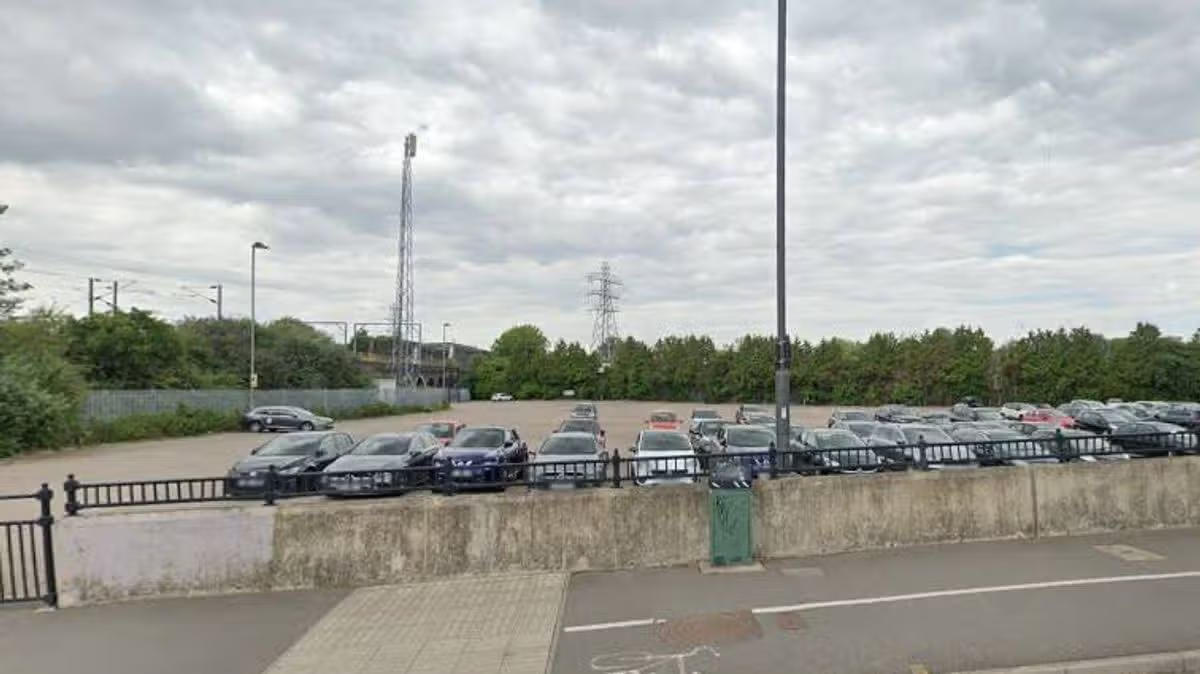
The introduction of complimentary parking in Peterborough city centre is set to start next month after funding for the scheme was approved. Peterborough City Council’s cabinet met on Tuesday (July 21), with members voting to provide free parking at four council-run car parks across the city.
Advertisement
Funding for the scheme has been provided by the Cambridgeshire and Peterborough Combined Authority (CPCA). The first day of free parking at four council-operated car parks will be Monday, August 3.
These four locations will be: Bishops Road; Car Haven; Riverside; Pleasure Fair Meadow. Parking at the above locations will be free after 3pm from Monday to Friday.
Some feel the offer should go considerably further. One commenter, Rhodabike, describes it as “A good start, but rather a minimal gesture.
“If they really want to support businesses and improve the economy, extend the free parking to 24-7. Make access to the city more affordable and convenient, and more people will visit, which is supposedly the idea.”
Advertisement
Freddly believes: “There is no such thing as ‘free’ parking; people who aren’t willing to pay for the space their car takes up are spongers.”
Over on our Facebook page, Pauline C comments: “So those that work early and park, does that mean they only pay till 3pm and after that it’s free for them? No help there for the majority of workers!?”
Alison O L asks: “Could Cambridge have some, please? Might get more people to the shops in the city.”
Paul L says: “So the car parks will be empty until 3pm.”
Advertisement
Edward J questions: “Why can’t we have free bus fares and funding for more cycling infrastructure instead of encouraging people to drive?”
Simon W says: “That’s great. I’m sure the people of Cambridge love the idea of subsidising other people’s parking through their Council Tax, given how reasonably priced it is to actually park in and around Cambridge itself. Crack on.”
Andy F writes: “Because we are losing our high street shops, all parking should be free.”
Gemma B feels: “People who work should get free parking on the days they are at work.”
Advertisement
Do you believe that this will help the high street? Comment below or HERE to join in the conversation.
























































You must be logged in to post a comment Login