

Business
July 25, 2026 Solution Revealed for Puzzle 1862, a Word Meaning Hello and Goodbye


Wordle players closing out the week with Friday’s puzzle got a word that works both ways, one that greets and bids farewell in equal measure, drawing directly from Hawaiian culture and offering a welcome change of pace from more clinical five-letter answers.
The New York Times’ daily word game, which has become a fixture in millions of players’ morning routines since its 2022 acquisition by the Times, challenges solvers to guess a five-letter word in six tries or fewer, using color-coded feedback to narrow down the correct answer with each attempt.
The answer for July 25
The solution to Wordle #1862 is ALOHA, a word deeply associated with Hawaiian culture that functions as both a greeting and a farewell, commonly used to convey warmth, love, peace and goodwill. The word is frequently heard when welcoming visitors to the islands, but carries the same meaning when saying goodbye, a duality that sets it apart from most everyday English words.
Structurally, the puzzle offered a distinctive challenge: the word contains three vowels and only two consonants, along with four unique letters and one duplicated letter, the letter “A,” which appears at both the beginning and end of the word. That heavy vowel concentration made ALOHA a notably different kind of solve compared with more consonant-heavy recent puzzles, rewarding players who leaned into vowel-rich opening guesses.
A puzzle built around connection
Puzzle commentators described Friday’s word as fitting neatly into a broader theme running through the week’s editions, one centered on connection, teamwork and smooth transitions between ideas. Some players moved through the puzzle with relative ease once they zeroed in on the word’s Hawaiian cultural association, while others reported working through several unrelated guesses before the pattern of vowels and consonants clicked into place.
The word’s association with hospitality and goodwill offered a lighter, more culturally rich challenge than some of the week’s earlier puzzles, and its dual meaning as both a greeting and farewell added a layer of thematic resonance heading into the weekend.
How Wordle works
Wordle presents a fresh five-letter puzzle every 24 hours, resetting at midnight in each player’s local time zone. Players receive six total guesses, with color-coded tiles indicating how close each guess comes to the correct answer: green confirms a letter is both correct and correctly placed, yellow indicates a correct letter placed in the wrong position, and gray rules a letter out of the solution entirely.
Created by software engineer Josh Wardle as a personal project in 2021, the game quickly went viral before The New York Times acquired it in early 2022 and folded it into its broader digital games platform, which today also includes Connections, Strands, the Mini Crossword, Pips and Sudoku.
Strategy tips for future puzzles
Puzzle strategists commonly recommend starting with a word that balances frequently used vowels and consonants, such as R, S, T, N and L, to maximize the amount of information gained from an opening guess. Popular starting words that fit this approach include Adieu, Audio, Raise and Stone, each offering broad letter coverage without repeating overly common consonants in a single guess.
Watching for duplicate letters within a five-letter word, as Friday’s puzzle featured with its repeated “A,” remains a commonly overlooked pitfall for players narrowing down their final guesses. Recognizing frequent word endings, including “-ED,” “-ER” and “-Y,” can also help players close out a puzzle more efficiently in the later stages of a solve.
A cultural touchpoint beyond the puzzle itself
Beyond its function as a Wordle answer, ALOHA carries significant cultural weight in Hawaii, where it is understood to represent far more than a simple greeting or farewell. The word is often described as embodying a broader spirit of love, compassion and mutual respect, a concept sometimes referred to as the “Aloha Spirit,” which has even been codified into Hawaii state law as a guiding principle for how residents and visitors are expected to treat one another.
For Wordle players outside Hawaii, Friday’s puzzle offered a small window into that cultural context, turning a routine daily word game into an unintentional lesson in the layered meaning behind a word many players likely use casually without fully considering its origins.
A daily ritual for millions
Wordle’s continued popularity has often been attributed to its simplicity: one puzzle, six guesses, and a built-in sharing feature that lets players post their results on social media without spoiling the answer for others. That structure has helped the game become something closer to a shared daily ritual than a simple word puzzle, with friends, families and coworkers frequently comparing notes and streaks each morning.
Tracking performance over time
The Times’ companion analysis tool, Wordlebot, evaluates each day’s puzzle after players complete it, offering data on the average number of guesses needed to solve that day’s word, along with luck and skill scores meant to reflect how efficiently a player’s strategy aligned with the information available to them at each stage of the solve. Difficulty can vary considerably from one puzzle to the next depending on how common a word’s letter structure is relative to typical opening guesses.
A new Wordle puzzle will publish at midnight Saturday, continuing the franchise’s uninterrupted daily streak dating back to its 2021 launch. Players can access the game through the Times Games website or the NYT Games mobile app, available on both iOS and Android devices. For those who wrapped up Friday’s puzzle quickly thanks to ALOHA’s distinctive vowel pattern, or those who found the heavy vowel concentration more challenging than expected, a fresh five-letter word and a new opportunity to extend a personal streak awaits with Saturday’s reset.

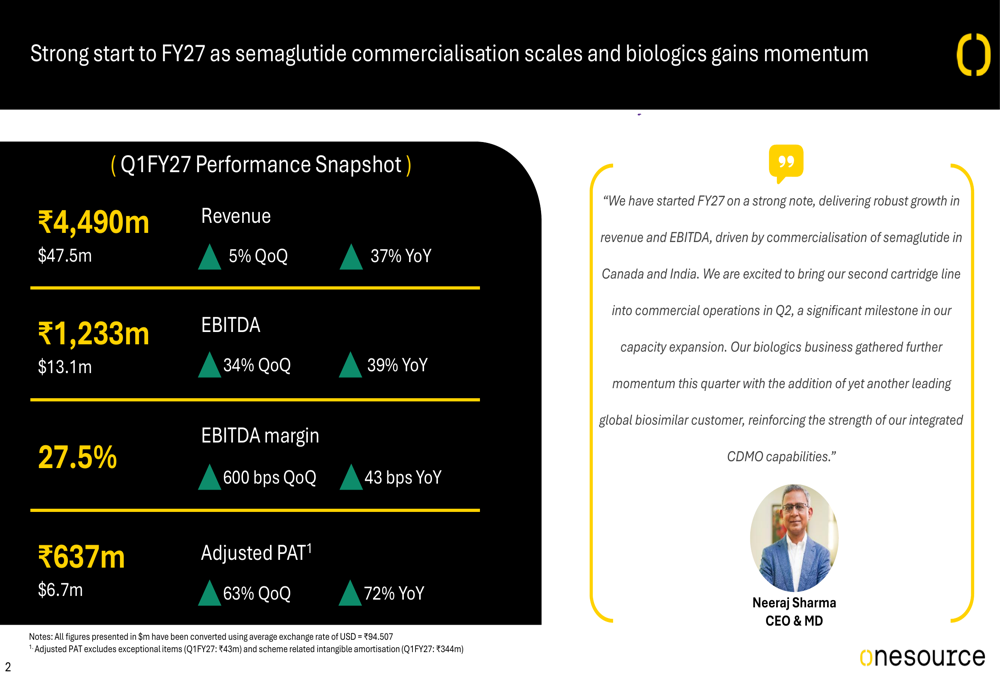
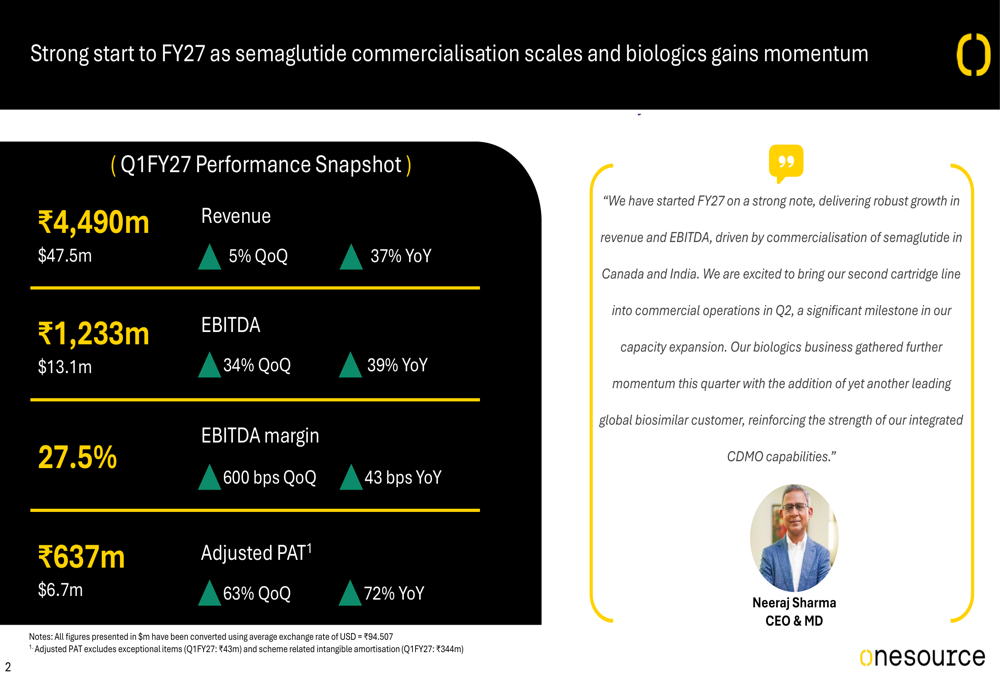
OneSource Q1FY27 slides: semaglutide drives 37% revenue growth
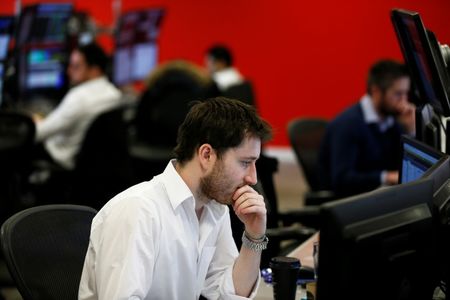
Brazil recalls ambassador to Argentina after Milei attacks Lula, sources say


JR Research is an opportunistic investor. I was recognized by TipRanks as a Top Analyst, and also by Seeking Alpha as a “Top Analyst To Follow” for Technology, Software, and Internet, as well as for Growth and GARP. I identify attractive risk/reward opportunities supported by robust price action to potentially generate alpha well above the S&P 500. My picks have consistently demonstrated market outperformance over time. My approach combines timely and sharp price action analysis with fundamentals as my foundation. I also tend to avoid overhyped and overvalued stocks while capitalizing on battered stocks with significant upside recovery possibilities. I run the investing group Ultimate Growth Investing which specializes in identifying high-potential opportunities across various sectors. My main ideas revolve around stocks with strong growth potential, and also well-beaten contrarian plays. I designed the group for investors seeking to capitalize on growth stocks with solid fundamentals, robust buying momentum, and appealing turnaround plays to generate alpha consistently. Learn more
Analyst’s Disclosure: I/we have a beneficial long position in the shares of NVDA, AMD, TSM either through stock ownership, options, or other derivatives. I wrote this article myself, and it expresses my own opinions. I am not receiving compensation for it (other than from Seeking Alpha). I have no business relationship with any company whose stock is mentioned in this article.
Seeking Alpha’s Disclosure: Past performance is no guarantee of future results. No recommendation or advice is being given as to whether any investment is suitable for a particular investor. Any views or opinions expressed above may not reflect those of Seeking Alpha as a whole. Seeking Alpha is not a licensed securities dealer, broker or US investment adviser or investment bank. Our analysts are third party authors that include both professional investors and individual investors who may not be licensed or certified by any institute or regulatory body.


Terry Chrisomalis is a private investor in the Biotech sector with years of experience utilizing his Applied Science background to generate long term value from Healthcare. He is the author of the investing group Biotech Analysis Central which contains a library of 600+ Biotech investing articles, a model portfolio of 10+ small and mid-cap stocks with deep analysis for each, live chat, and a range of analysis and news reports to help Healthcare investors make informed decisions.
Analyst’s Disclosure: I/we have no stock, option or similar derivative position in any of the companies mentioned, and no plans to initiate any such positions within the next 72 hours. I wrote this article myself, and it expresses my own opinions. I am not receiving compensation for it (other than from Seeking Alpha). I have no business relationship with any company whose stock is mentioned in this article.
Seeking Alpha’s Disclosure: Past performance is no guarantee of future results. No recommendation or advice is being given as to whether any investment is suitable for a particular investor. Any views or opinions expressed above may not reflect those of Seeking Alpha as a whole. Seeking Alpha is not a licensed securities dealer, broker or US investment adviser or investment bank. Our analysts are third party authors that include both professional investors and individual investors who may not be licensed or certified by any institute or regulatory body.
Business
British Woman, 67, Overcomes 17-Year Fear of Flying by Listening to BTS Music Even During Turbulence

A woman from Southampton, England, who avoided air travel for nearly two decades because of a severe phobia has found an unlikely remedy for her fear: the music of K-pop group BTS.
Debbie Adamson, 67, said her anxiety around flying traces back to a turbulent trip from Budapest she took as a student decades ago, an experience that left her convinced every subsequent flight might end in disaster. That early fear never faded. In 2006, while preparing for a family trip to Orlando, Florida, with her husband and their three children, Adamson attempted to sabotage the vacation entirely by hiding her passport inside a magazine at the airport. Staff discovered the situation and issued her a replacement travel document, allowing the trip to proceed as planned. Adamson later described spending the following three hours in tears after the plan failed.
Two decades without flying
By 2008, Adamson had reached a breaking point with her aerophobia, the clinical term for an intense fear of flying that researchers estimate affects roughly one in 10 people. She made the decision to stop flying altogether, a choice that held for the next 17 years and shaped where and how her family could travel during that stretch of her life.
Her flying anxiety manifested physically as well as emotionally during the years she still boarded planes. She has described gripping her husband’s hands so tightly during flights that he developed lasting joint pain in them, and said she routinely warned flight attendants about her condition as soon as she boarded, often already in tears before takeoff. She avoided eating or drinking during flights and regularly felt unwell afterward, describing the sensation as an uncontrollable, overwhelming terror rather than ordinary nervousness.
A shift in understanding
Adamson’s relationship with flying began to change last year, after a friend who works as a pilot walked her through how planes actually function, information she said helped ease some of the fear rooted in uncertainty. She also joined an online support group for people who share similar anxieties, a step that gave her more confidence to confront the phobia directly. Motivated by an upcoming milestone, Adamson set a goal of booking a trip to Santorini, Greece, to celebrate her 40th wedding anniversary with her husband.
Before committing to that longer international trip, Adamson and her family returned to Orlando as a test run. It was during that flight that she discovered an unexpected tool for managing her anxiety: listening to music from BTS, the seven-member South Korean pop group composed of RM, Jin, Suga, j-hope, Jimin, V and Jung Kook. She said she made it through the entire flight, including a stretch of turbulence, without the physical distress that had defined her past experiences with air travel.
A carefully curated playlist
To prepare for the flight, Adamson built a dedicated collection of songs meant to keep her calm and distracted throughout the journey. “I made a bulletproof playlist, every single track I love,” Adamson said, describing the approach she used to ensure she stayed engaged with music rather than her anxiety once in the air. She also described closing her eyes during takeoff and holding on tightly, a habit that helped her work through the moment rather than avoid it, and said the experience allowed her to reframe her relationship with the fear itself, recognizing that much of the pressure she felt had come from her own mindset rather than any external threat.
A message for others
Adamson has since spoken publicly about her experience in hopes that it might help others who struggle with similar phobias. She has been careful to note that she does not consider herself fully cured of her fear, but says she now has enough self-awareness to give herself permission not to feel frightened when flying, a shift she describes as significant even if the underlying anxiety hasn’t disappeared entirely. She has also emphasized that there was nothing to be ashamed of in experiencing the phobia in the first place, noting that what had been missing for years was simply an opportunity to understand the fear more logically rather than avoid it altogether.
With her confidence continuing to build, Adamson has said she is now looking ahead to booking additional trips, a marked change from the nearly two decades during which flying felt entirely out of reach.
A common but often misunderstood fear
Aerophobia remains one of the more widely experienced specific phobias, with estimates suggesting it affects a significant share of the general population to varying degrees, ranging from mild discomfort to the kind of debilitating anxiety Adamson described experiencing for years. Mental health professionals commonly recommend a combination of education about flight mechanics, gradual exposure, and coping strategies such as distraction techniques, controlled breathing or calming music as tools that can help people manage the condition, though approaches that work vary considerably from person to person.
Adamson’s story adds to a broader public conversation about flight-related anxiety, an experience shared by numerous public figures and everyday travelers alike, many of whom have spoken openly in recent years about the toll the fear can take and the varied methods they have used to cope with it. For Adamson, the unexpected pairing of a K-pop group’s discography with a decades-long phobia offered a path back to something she had given up on entirely: the ability to travel by air without being overwhelmed by fear.

Michael Kramer is the founder of Mott Capital Management – and is a long-only investor who focuses on macro themes and studies trends and options activities to identify and assess entry and exit points for investments in his long-term focused thematic growth strategy. He is a former buy-side trader, analyst, and portfolio manager with 30 years of experience tracking market technicals, fundamentals, and options.Michael Kramer leads the investing group Reading the Markets, where he helps a devoted following of members to better understand what is driving trading and where the market is likely heading, both the short and long-term. Features of the investing group include: daily written commentary and videos analyzing the driving factors behind price action; general macro trend education to help members make well-informed decisions based on market conditions, interest rates, currency movements and how they all interact; chat for questions and community dialogue; and regular Zoom videos sessions to discuss current ideas and answer questions. The level of access RTM subscribers and the expertise of the source are unprecedented given that the subscription price is a fraction of similar technical coaching and mentoring services. Learn more.
Analyst’s Disclosure: I/we have no stock, option or similar derivative position in any of the companies mentioned, and no plans to initiate any such positions within the next 72 hours. I wrote this article myself, and it expresses my own opinions. I am not receiving compensation for it (other than from Seeking Alpha). I have no business relationship with any company whose stock is mentioned in this article.
This report contains independent commentary to be used for informational and educational purposes only. Michael Kramer is a member and investment adviser representative with Mott Capital Management. Mr. Kramer is not affiliated with this company and does not serve on the board of any related company that issued this stock. All opinions and analyses presented by Michael Kramer in this analysis or market report are solely Michael Kramer’s views. Readers should not treat any opinion, viewpoint, or prediction expressed by Michael Kramer as a specific solicitation or recommendation to buy or sell a particular security or follow a particular strategy. Michael Kramer’s analyses are based upon information and independent research that he considers reliable, but neither Michael Kramer nor Mott Capital Management guarantees its completeness or accuracy, and it should not be relied upon as such. Michael Kramer is not under any obligation to update or correct any information presented in his analyses. Mr. Kramer’s statements, guidance, and opinions are subject to change without notice. Past performance is not indicative of future results. Neither Michael Kramer nor Mott Capital Management guarantees any specific outcome or profit. You should be aware of the real risk of loss in following any strategy or investment commentary presented in this analysis. Strategies or investments discussed may fluctuate in price or value. Investments or strategies mentioned in this analysis may not be suitable for you. This material does not consider your particular investment objectives, financial situation, or needs and is not intended as a recommendation appropriate for you. You must make an independent decision regarding investments or strategies in this analysis. Upon request, the advisor will provide a list of all recommendations made during the past twelve months. Before acting on information in this analysis, you should consider whether it is suitable for your circumstances and strongly consider seeking advice from your own financial or investment adviser to determine the suitability of any investment.
Seeking Alpha’s Disclosure: Past performance is no guarantee of future results. No recommendation or advice is being given as to whether any investment is suitable for a particular investor. Any views or opinions expressed above may not reflect those of Seeking Alpha as a whole. Seeking Alpha is not a licensed securities dealer, broker or US investment adviser or investment bank. Our analysts are third party authors that include both professional investors and individual investors who may not be licensed or certified by any institute or regulatory body.

Verizon: Structural Problems Persist

KamiPhotos/iStock via Getty Images

Portfolio Strategy Guidelines
This year’s twists and turns threw typical portfolio dynamics some curveballs. A change of guard in the Fed, volatile geopolitics, the heated AI trade, and long-awaited IPOs all posed challenges and opportunities that left readers hungry for portfolio-level guidance. Analysts stepped up to the plate, delivering more portfolio strategy pieces addressing this year’s market volatility, satisfying readers’ increased interest in managing downside risk and capturing momentum. We’d like to take this opportunity to share some guidance about portfolio strategy must-haves, as well as ways to make your portfolio strategy stand out.
The purpose behind portfolio strategy pieces is to give readers meaningful, usable instruction on how to achieve a certain portfolio objective. Therefore, it’s important that portfolio strategy articles lead with their purpose, whether it’s a certain income threshold, maximizing gains, risk-adjusted returns, or another outcome. These outcomes should also be quantified so readers can validate the effectiveness of the strategy: Sharpe, Sortino, CAGR, max drawdown, reinvestment ratio for high-yield ETFs that experience NAV drag, correlations between assets, and other methods help readers understand what the strategy has done in the past. Examining these should also inform what you feel the strategy can do going forward, so using forward metrics, like forward standard deviation and forward P/E, for example, can support your view. Even all-weather strategies should let readers know what they can expect in the near term.
Though backward-looking analytics can help support a forward-looking use, they shouldn’t be solely relied on to prove how a strategy may play out in the future. You should explain what makes you believe prior performance should repeat, or change, in the environment ahead, as Cain Lee does in his article on SCHD. If you use a backtest, please be sure that you don’t formulate a future view based on this only, as it’s easy to select securities looking at markets in the rearview mirror. This incorrect use of a backtest isn’t helpful or instructive to readers, so please ensure that any backtests are used to test for some of the quantitative metrics you’d use, keeping in mind an application of your analysis to your view of what’s ahead.
Each portfolio strategy article should stand on its own, even if it’s an update to prior work on the same topic. Feel free to reference prior articles, but also present all the necessary information readers would need for their main takeaways.
As with other articles, a discussion of risks should include what could make the strategy not yield the desired outcome. This could reference both changes in the environment you foresee and asset-specific behavior. Peter Richman does this well in his article on valuations, which frames the current market through the lens of several qualitative and quantitative filters, giving readers a framework for the upcoming environment.
And lastly, given that the primary point behind portfolio strategy articles is delivering practical applications of investment insights, please avoid articles that heavily focus on proprietary methods or securities, in line with our black box guidelines. You don’t need to give away your trade secrets, but an overview of a purely black box method is not very useful for readers and can come off as overly promotional. Please be sure to include valuable insights and instructions readers can apply to their portfolios without having to purchase your service. One example of how this can be done is in this recent piece by Sungarden Investment Publishing, where a simple SPY/BIL strategy is used as a way to capture some of what the proprietary portfolio can accomplish.
Prediction Markets and Analysis: Best Practices
Love ‘em or hate ‘em – prediction markets are all the rage. Everything from wagers on clinical trials for biotechs to betting on streaming numbers for an on-the-rise indie music song is gaining attention, not only from everyday gamblers but also investors.
Our guidelines for articles:
We will allow analysts, on a limited basis, to cite statistics from prediction market bets to help support their analysis. But we emphasize that this should only be used as supporting information and not the sole focus of the article.
We will not allow recommendations on making a bet in prediction markets. And we ask analysts to disclose if they have placed a bet on a prediction market outcome.
Editors have discretion for the use of information on prediction markets in articles. Analysts can reach out to editors at submissions@seekingalpha.com with questions or ideas on how to use information on prediction markets.
Article Competition Is On! Best Industry Disruptor
Don’t forget Seeking Alpha’s latest article competition.
The Best Industry Disruptor Competition goes until Aug. 24, so you have plenty of time to submit an entry. We’re looking forward to seeing all the ideas.
Details can be found here.
Introductions: Some “Outside the Box” Ideas from Analysts
Along with summary bullet points and titles, introductions aim to “sell” an article to readers, outlining the unique, most important parts of an analysis. Each analyst may have a different approach with introductions, but that first paragraph should clearly set the stage for what comes next for readers.
Our top advice: Make sure an introduction outlines the forward-looking, actionable, investment-specific premise. Point out previous coverage. Mentioning a previous article does not necessarily need to be in the first paragraph. But previous coverage should be in the second or third paragraph (if not in the introductory paragraph).
While most analysts take the method outlined above, some analysts have established their own unique voice at the start of an article. Writing is a creative process. And we encourage analysts to find what may work best for their articles.
Some examples that stand out:
Present something relatable: Brad Thomas often talks about the “lessons learned” in his decades of experience. Treading Softly takes a different direction, offering something more personal (on consumer choices) but also potentially relatable to readers.
Offer an analogy: Use an example outside of investment analysis that helps set up your article. Hidden Opportunities, a supporting analyst for Rida Morwa, outlines how a song’s structure can resemble parts of an investment strategy.
Challenge the status quo: Offering some snarky commentary, presenting a contrarian opinion, or trying to challenge popular sentiment at the start may likely lead to stronger reader engagement. Bret Jensen often offers a cynical angle on the current macro picture that leads to a lot of comments (just keep in mind our article comment guidelines).
Keep it short: This is not something we recommend for every article. But a short introductory sentence may help entice readers to read further into the analysis. Joseph L. Shaefer takes this approach with this “lightning strikes twice” angle.
Whatever direction is taken, make sure there’s sufficient detail regarding your investment premise at the start. Editors often use the introduction (or the bullet points at the top) for article optimization purposes. And you want to establish what readers can expect at the top.
And don’t forget to create a strong conclusion. A strong finish generates more reader interest (think comments). And writing the conclusion first may help with the creation of an impactful introduction. More on the parallels between the introduction and conclusion can be found here.
Looking Ahead to August
The last week of July features a significant number of earnings reports from highly followed companies, and the momentum keeps going into August. The quantity and the importance taper off a bit in the back half of the month. We also see several themes each week during the month as it starts out tech-heavy and then shifts to a retail focus in week 3. Please keep in mind that as we get further out in the month, some of the earnings dates haven’t been confirmed by the companies yet, and these are estimated dates.
Seeking Alpha Earnings Calendar
Week 1 (August 3-7)
At this point all but one of the Magnificent 7 should have reported earnings, but that doesn’t mean there aren’t some heavyweight reports still due. On Monday, highly followed Palantir (PLTR) will lead the charge, and it will be joined by Mitsubishi UFJ Financial Group (MUFG), Vertex Pharmaceuticals (VRTX), and Marriott (MAR). Tuesday brings a mix of sectors with 11 different companies expected to report with market caps of more than $100 billion. The largest of them all is AMD (AMD), and it’s joined by another big tech name in Arista Networks (ANET). We will also hear from industrial powerhouse Caterpillar (CAT) as well as healthcare heavyweights Merck (MRK), Amgen (AMGN), and Pfizer (PFE). Not to be left out, consumer discretionary will see Toyota Motor (TM) and McDonald’s (MCD) reporting.
Wednesday doesn’t show much of a let up as eight more $100B-plus companies are expected to report. Eli Lilly (LLY) is one of three trillion-dollar companies reporting during week 1, and it’s set to report before the open. Joining the pharmaceutical giant are tech firms Sandisk (SNDK), Western Digital (WDC), Shopify (SHOP), and AppLovin (APP). Disney (DIS), Uber (UBER) and CVS Health (CVS) round out those with a market cap above $100B.
Thursday is the busiest day of the entire month of August (and all earnings season) with a total of 435 companies expected to report. The most anticipated report will come from the largest IPO in history, Space Exploration Technologies (SPCX), in its first report since going public. We all also expect to hear from energy giants Conoco Phillips (COP) and Petróleo Brasileiro (PBR). Two industrial names round out the reports for companies in the $100B club, Parker-Hannifin (PH) and Howmet Aerospace. Friday does see a drop-off in highly followed names reporting, with Gilead Sciences (GILD) and Warner Bros. Discovery (WBD) being the biggest ones. Berkshire Hathaway (BRK.A) is expected to report on Saturday, Aug. 8.
Week 2 (August 10-14)
Week 2 starts to see a bit of a let-up in terms of companies with market caps over $100B, as we don’t see any of these giants until Wednesday. Monday’s docket is led by Simon Property Group (SPG) and Ferguson Enterprises (FERG) as well as Circle Internet Group (CRCL), which has been gaining followers recently. Moving over to Tuesday, we see Asian-focused retailer Sea Limited (SE) along with Lumentum (LITE) and Cardinal Health (CAH) all expected to report.
Wednesday features the biggest report (in terms of market cap) with Cisco Systems (CSCO) reporting after the close. Another highly followed name reporting on Wednesday is Oklo (OKLO). Looking out to Thursday, we expect to hear from Applied Materials (AMAT) along with Alibaba (BABA). Coherent (COHR) is the only company reporting on Friday with a market cap above $50B.
Week 3 (August 17-21)
As we move to week 3, the total number of reports really drops off, but we start to see a shift in terms of sectors that dominate the reports. Monday shows that Palo Alto Networks (PANW) and Zoom Communications (ZM) are the headliners expected to report that day. Tuesday brings us Home Depot’s (HD) report, and it kicks off a string of days where we expect to hear from members of the retail sector. Keysight Technologies (KEYS) is also expected to report on Tuesday.
Wednesday’s biggest report (in terms of market cap) comes from Analog Devices (ADI), and it’s joined by three big retail names: The TJX Companies (TJX), Lowe’s (LOW), and Target (TGT). The retail theme continues on Thursday when we expect to hear from the world’s largest retailer, Walmart (WMT), as well as Ross Stores (ROSS). Deere & Company (DE), NetEase (NTES), and Intuit (INTU) are also expected to report. As for Friday, Baidu (BIDU) and Williams-Sonoma (WSM) are the only two large caps expected to report.
Week 4 (August 24-31)
Looking at the last full week of August, the number of reports continues to wane. On Monday, Heico (HEI) is the only large cap expected to report. The software industry is in the spotlight on Tuesday with reports expected from CrowdStrike (CRWD), Autodesk (ADSK), and Workday (WDAY), and they’re joined by Affirm Holdings (AFRM), MongoDB (MDB), Dick’s Sporting Goods (DKS), and Best Buy (BBY), to name a few.
Despite the drop-off in reports, Wednesday is a huge day as we expect to hear from Nvidia (NVDA), and that may be the most closely watched report of the entire earnings season. We also expect to hear from Salesforce (CRM), PDD Holdings (PDD), Snowflake (SNOW), and Synopsis (SNPS), among others expected to report. Moving out to Thursday, we see a mix of tech names and retail names expected to report. Marvell Technology (MRVL) leads the charge along with HP Inc. (HPQ), Burlington Stores (BURL), and Ulta Beauty (ULTA). We also expect to hear from Chinese automakers XPeng (XPEV) and Li Auto (LI) that day. The last two days of August don’t feature any companies with a market cap over $10B.
August Investor and Industry Events
August 1 – Chinese electric vehicle makers NIO, XPeng, Li Auto, and BYD report deliveries
August 1 – One-year anniversary of T-Mobile and US Cellular merging
August 1-6 – Black Hat USA conference
August 2 – OPEC+ online meeting of seven voluntary-cut producers (Saudi Arabia, Russia, Iraq, Kuwait, Kazakhstan, Algeria, Oman) to review market conditions and set September production
August 3 – Fed SLOOS report expected
August 3 – Merck & Co., Inc. Business Update Call
August 5 – Costco reports monthly sales
August 6-9 – DEF Con security event
August 7 – Manheim Used Car Index report
August 7 – Approximate day Boeing and Airbus report monthly deliveries
August 9-11 – KeyBanc Technology Leadership Forum (includes AMD)
August 12-13 – JP Morgan Auto Conference
August 12 – WASDE report on major crops
August 12 – Google Pixel media event
August 12 – OPEC monthly oil report
August 13 – NFL Madden 27 releases
August 13 – SanDisk Corporation Investor Day
August 13 – IDEXX Laboratories, Inc. Investor Day
August 14 – 13F filings due from hedge funds
August 17 – FDA action date on Bristol-Myers’ Iberdomide
August 22 – FDA action date on Capricor Therapeutics’ Deramiocel
August 23 – Jefferies Semiconductor, IT Hardware & Communications Technology Conference
August 25-27 – The Six Five Summit: AI Unleashed event
August 27 – Gentex Corporation Investor Day
August 29 – College football season begins
August 30 – CrowdStrike inaugural Day Zero Threat Research Summit
August 31 – MSCI quarterly review
August 31 – VMware Explore
August 31 – Fed’s G.20 Finance Companies report
Major Economic Reports and Events
August 3 – ISM Manufacturing, Construction Spending
August 4 – Trade Balance, Factory Orders
August 5 – ADP Employment Change, ISM Services
August 6 – Q2 Productivity, Unit Labor Costs
August 7 – July Employment Report
August 11 – Existing Home Sales
August 12 – CPI, Treasury Budget
August 13 – PPI
August 14 – Retail Sales, Univ. of Michigan Consumer Sentiment
August 17 – NAHB Housing Market Index
August 18 – Building Permits, Housing Starts, Industrial Production, Capacity Utilization, Pending Home Sales
August 19- FOMC Minutes
August 25 – Building Permits, S&P/Case-Shiller Housing Index, Consumer Confidence, New Home Sales
August 26 – PCE Price Index, Personal Income Personal Spending, Durable Orders
Business
10 Proven Tips to Overcome Flight Anxiety, According to Aviation and Mental Health Experts and Frequent Flyers

Fear of flying affects a significant share of travelers worldwide, with some estimates suggesting up to 25% of adults experience aerophobia to some degree. For many, that anxiety can disrupt vacation plans, limit career opportunities, or lead people to avoid air travel altogether. But according to aviation professionals, therapists and frequent flyers who have worked through their own fears, the condition is manageable with the right combination of strategies. Here are 10 expert-backed tips for easing flight anxiety.
1. Identify the root cause of your fear
Understanding where flight anxiety comes from is often the first step toward addressing it. Jenny Maenpaa, a licensed therapist and founder of the New York City Psychotherapy Collective, has said the condition can be deeply difficult to manage precisely because of how personal its origins are. “Fear of flying can be a deeply uncomfortable condition to live with,” Maenpaa told Travel + Leisure, noting that the fear can stem from past trauma, generalized anxiety, or simply unfamiliarity with how flight actually works. Pinpointing which factor applies to you can help determine the most effective coping strategy.
2. Learn how planes actually work
Basic knowledge about aviation mechanics — how planes stay in the air, why turbulence occurs, and how thoroughly aircraft are maintained and inspected — can help reframe anxious thoughts with more concrete information. Aviation experts note that flight crews receive extensive training in aviation safety and emergency procedures, and understanding that level of preparation can ease some of the uncertainty that fuels anxious thinking during a flight.
3. Regulate your body, not just your mind
Neuroscientists studying flight anxiety emphasize that managing physical responses can be more effective than trying to talk yourself out of fear. Dr. Brian Ramos, a neuroscientist trained at Yale School of Medicine and a certified stress specialist, has pointed out that anxious travelers often overestimate their ability to reason their way out of fear while underestimating their control over physical stress responses. “We have a lot more control over our chemistry than we realize,” Ramos said, pointing to breathing techniques and other body-based interventions as effective tools during moments of heightened anxiety.
4. Practice gradual exposure
For travelers whose anxiety extends beyond the flight itself, easing into aviation environments step by step can help build tolerance over time. Therapists recommend starting small, such as spending time at an airport without the pressure of catching a flight, observing the normal rhythms of travelers and staff, before eventually working up to shorter flights and, eventually, longer ones.
5. Skip the alcohol and stay hydrated
While it might seem like a drink could take the edge off pre-flight nerves, aviation health experts caution against using alcohol as a coping mechanism. Not only does it fail to reduce underlying anxiety, it can intensify discomfort related to cabin pressure changes and accelerate dehydration, both of which can make flying feel worse rather than better. Drinking water consistently throughout the flight is generally recommended instead.
6. Talk to the flight crew
Letting flight attendants know about your anxiety before takeoff can provide meaningful reassurance during the flight. Crew members are trained to help passengers understand normal in-flight phenomena, including turbulence, and can offer context that helps separate expected sensations from genuine cause for concern.
7. Choose your seat strategically
Where you sit can meaningfully affect how a flight feels. According to flight attendant advice shared with Travel Bulletin, thinking through seating in advance is a simple but effective step nervous flyers can take. “Taking a few minutes to make a seating strategy for yourself can definitely help ease,” one flight attendant said, noting that some travelers feel calmer with an aisle seat’s extra space and easier access, while others on shorter flights prefer a window seat to visually track the flight’s progress.
8. Prepare for turbulence in advance
Because unexpected turbulence often triggers acute anxiety, knowing what to expect ahead of time can reduce the shock factor. Some travelers use apps designed to forecast turbulence along a specific flight path, allowing them to mentally prepare for bumpy stretches rather than being caught off guard mid-flight.
9. Focus on the destination, not the journey
Shifting mental focus away from the mechanics of flying and toward the purpose of the trip can help reduce in-flight anxiety. As one travel expert put it in comments to CNN Underscored, “Focus on the destination, not the journey,” a reframing technique that redirects attention toward the positive experience awaiting at the end of the flight rather than the discomfort of the process itself.
10. Consider professional therapy if self-help strategies aren’t enough
For travelers whose anxiety persists despite trying relaxation techniques and other self-directed strategies, mental health professionals recommend seeking therapy specifically focused on flight-related fears. Structured approaches such as cognitive behavioral therapy and exposure-based treatment, including virtual reality exposure therapy, have become increasingly accessible in recent years and are designed to help travelers address the underlying psychological patterns driving their fear, rather than simply managing symptoms in the moment.
A manageable, common condition
Experts stress that fear of flying, while common, does not have to be permanent or untreatable. With a combination of practical strategies, physical coping techniques and, when necessary, professional support, many travelers who once avoided air travel entirely have found ways to manage their anxiety enough to fly comfortably. As mental health professionals who specialize in the condition often note, the goal isn’t necessarily to eliminate all discomfort, but to build enough tools and self-awareness to make air travel accessible again — opening the door to destinations and experiences that flight anxiety might otherwise put out of reach.
Business
10 Jobs AI Has Replaced the Most in 2026, From Computer Coders to Customer Service and Data Entry Workers

Artificial intelligence has become the single most-cited reason U.S. employers give for cutting jobs in 2026, according to outplacement firm Challenger, Gray & Christmas, which tracks corporate layoff announcements nationwide. While the picture varies by industry and role, new research from AI company Anthropic, combined with monthly labor data, has begun to paint a clearer picture of which jobs have been hit hardest so far this year. Here’s a look at 10 of the roles most affected.
1. Computer programmers
Anthropic’s Economic Index, which analyzes real usage data from millions of Claude conversations, found that computer programmers have the highest “observed exposure” to AI automation of any occupation studied, with AI already covering roughly 74.5% of their typical tasks. Technology companies have led every U.S. sector in job cuts this year, and multiple firms, including Microsoft, have publicly confirmed that a significant share of their code is now being written by AI systems rather than human engineers.
2. Customer service representatives
Customer service ranked second in Anthropic’s exposure data, with AI already handling roughly 70.1% of typical tasks in the role, driven largely by companies routing customer inquiries through automated systems and APIs. Industry-wide, research cited by multiple outlets estimates roughly 45% of customer service positions are exposed to chatbot and automated query systems. Not every experiment has succeeded outright — Swedish fintech company Klarna drew attention after replacing roughly 700 customer service agents with AI, only to later rehire human staff after acknowledging quality issues.
3. Data entry keyers
Data entry roles ranked third in Anthropic’s occupational exposure rankings, at 67.1%, reflecting how easily repetitive, rules-based data transfer tasks can be automated using existing AI tools. Multiple industry analyses describe data entry as among the most vulnerable job categories overall, given how directly the work maps onto automated processing systems already in wide commercial use.
4. Medical records specialists
Medical records and health information specialists showed the fourth-highest exposure in Anthropic’s data, at 66.7%. The finding was notable to researchers in part because it defies assumptions that AI’s impact would remain concentrated in lower-wage, less specialized roles; medical records work requires domain-specific knowledge but still involves highly structured, repeatable documentation tasks that AI systems handle efficiently.
5. Financial and investment analysts
Rounding out the top five most-exposed occupations in Anthropic’s research, financial and investment analysts showed 57.2% observed exposure to AI task automation. Economists at Anthropic who conducted the analysis noted that this finding was particularly striking, since financial analysis has traditionally been viewed as requiring significant human judgment rather than the kind of routine task execution more commonly associated with automation risk.
6. Human resources generalists
Several major companies have specifically cited HR functions in AI-driven restructuring this year. IBM has said its internal AI-based HR assistant now handles more than 11 million employee interactions annually with minimal human oversight, a shift the company has directly tied to broader HR workforce reductions, including thousands of HR-related job cuts.
7. Junior and entry-level software developers
While experienced software engineers focused on system design and architecture remain in relatively strong demand, entry-level developer roles have been hit disproportionately hard. Research from Stanford’s Digital Economy Lab, working with payroll processor ADP, found that employment among workers ages 22 to 25 in AI-exposed occupations has fallen roughly 13% since late 2022, with the decline reaching nearly 20% specifically among young software developers.
8. Content writers and copywriters
Entry-level writing and content roles, including junior copywriters and social media content moderators, have seen measurable declines as generative AI tools take over more routine writing and editing tasks. Analysts note that while senior creative direction roles remain comparatively insulated, junior positions built around producing high volumes of straightforward written content have proven more exposed.
9. Bank tellers and routine office administrative roles
Office and administrative support positions are frequently cited as among the most exposed job categories overall, given how much of the work involves scheduling, filing and other clearly repeatable processes. Bank teller positions specifically are projected to decline by roughly 15% between 2023 and 2033, translating to more than 50,000 positions disappearing over that period, according to industry projections tracking the role’s automation risk.
10. Customer service and sales support functions tied to enterprise software
Beyond traditional call-center work, companies have increasingly automated customer-facing sales and support functions embedded within enterprise software platforms. Salesforce, for example, eliminated roughly 4,000 customer service roles this year after its chief executive said publicly that the company needed a leaner workforce as AI tools absorbed more of that work.
What the broader numbers show
Challenger, Gray & Christmas data shows AI-related layoffs have accelerated sharply through 2026. The firm cited AI as the reason for nearly 40% of all announced job cuts in May alone, up from just 7% in January, with total AI-attributed layoffs for the year already surpassing the full-year total recorded in 2025. Andy Challenger, the firm’s chief revenue officer, has said the shift reflects a broader restructuring underway across corporate America. “AI is now the leading reason companies give for cutting jobs,” Challenger said, describing a pattern in which companies are reallocating budgets toward AI development even when the connection between AI adoption and specific job losses isn’t always direct. In a separate comment, Challenger noted that even when individual roles aren’t literally replaced by AI systems, “the money for those roles is,” reflecting how AI investment is reshaping corporate budgets more broadly.
Not everyone agrees the AI label always tells the full story. Daniel Zhao, chief economist at job site Glassdoor, has cautioned that companies don’t always accurately explain their own layoff decisions. “That doesn’t necessarily mean that’s actually why those layoffs are happening,” Zhao said, referring to the gap that can exist between a company’s stated rationale for cuts and the underlying financial or strategic pressures actually driving them.
A concentrated but growing disruption
Despite the headline numbers, most economists tracking the trend describe AI’s labor market impact so far as concentrated rather than universal, hitting entry-level and routine-task-heavy roles hardest while leaving employment for more experienced workers in the same fields comparatively stable. Whether that pattern holds, or whether AI’s reach continues expanding into more senior and specialized roles as the technology matures, remains one of the central open questions shaping how workers and employers plan for the remainder of 2026 and beyond.

Bitcoin Just Flashed a Breakout Signal

The ‘picture perfect’ Cambridgeshire village home to a world-famous science centre

OneSource Q1FY27 slides: semaglutide drives 37% revenue growth


-

 Fashion2 days ago
Weekend Open Thread: Brooks Brothers
-

 News Videos7 days ago
Big Money Is Entering XRP
-

 Crypto World5 days ago
Grayscale Files For Worldcoin ETF, WLD Registers Sharp Rise
-

 Tech6 days ago
Sail Virtually Aboard The “Itanic” With IA-64 Emulator
-
 Tech6 days ago
Turtle Beach Command Series KB7 review: a nifty screen-equipped gaming keyboard
-

 NewsBeat6 days ago
Unregistered fitter used Gas Safe logo on business flyers
-
 Business5 days ago
New Jersey voter registration controversy explained: How 6,600 noncitizens got on the rolls, and what happens next
-
 Entertainment5 days ago
Johnny Depp’s R-Rated Gothic Cult Classic Gets New Release Ahead of Sydney Sweeney Remake
-

 Tech6 days ago
Watch Flock Safety CEO Garrett Langley discuss the future of surveillance at TechCrunch Disrupt 2026
-

 Crypto World4 days ago
Ethics, other provisions in crypto Clarity Act to be further discussed
-
 NewsBeat6 days ago
Shanghai science forum photos show China’s AI and robotics advances in rivalry with US
-

 Crypto World6 days ago
Circle’s President Sold Over 360,000 Shares, The Filings Explain Why
-

 Tech6 days ago
Subway Sandwich Computers Get a Second Life as Gaming Machines
-

 News Videos3 days ago
The Peugeot Family: How 200 Years of an “Old Money” Dynasty Died in A Boardroom
-

 Sports3 days ago
2026 3M Open leaderboard: Scottie Scheffler finds putter in Round 1, sits three back
-

 Tech7 days ago
How To Use Claude’s Reflect Dashboard And Learn When It’s Time To Touch Grass
-

 Fashion3 days ago
16 Dresses for the High Summer Event
-

 Entertainment7 days ago
Stephen Colbert Returns to Social Media After Late Show End
-

 Tech6 days ago
The 35 Best Board Games for Family Game Night
-

 Crypto World6 days ago
Andrew Cuomo joins OKX board as crypto exchange expands in U.S.
You must be logged in to post a comment Login