
Business
Nifty in oversold territory; pullback to 24,000 possible: Analysts


CHANDAN TAPARIA
HEAD – DERIVATIVES & TECHNICALS, MOTILAL OSWAL FINANCIAL SERVICES
Trading Strategies : The recommended strategy for Nifty Option for weekly, August 4 expiry is a Bear Put Spread, ideal for negative bias amid geopolitical concerns and rising crude. Traders are advised to buy one lot of 23,800 strike Put Option and simultaneously sell one lot of 23,500 strike Put Option. The maximum risk in the strategy is 100 points (Rs 6,500) and the maximum potential Profit is 200 points (Rs 13,000) per lot.
TOP STOCKS PICKS
Azad Engineering: Buy | CMP: Rs 2,439| Target: Rs 2,580 | Stop loss: Rs 2,365

Stock has retested its breakout zone around 2300 and is witnessing a bounce, highlighting strong demand on declines. It is now on the verge of breaking out from a 7–8 session tight consolidation, indicating volatility compression before a potential expansion. RSI is also on the verge of a bullish crossover, reinforcing the possibility of fresh upside momentum.
Laurus Labs: Buy | CMP: Rs 1,601 | Target: Rs 1,700 | Stop loss: Rs 1,550
Stock is in a strong uptrend, consistently respecting its 20-DEMA with every minor dip. It continues to form a higher top – higher bottom structure, reflecting sustained buying strength. The rising ADX confirms the strength of the trend, while the outperformance of the pharma sector provides an additional tailwind for further upside.
 Agencies
NILESH JAIN
HEAD- EQUITY TECHNICAL & DERIVATIVE RESEARCH, CENTRUM FINVERSE
Trading Strategies: The index is now trading near the lower boundary of a triangle pattern, with a crucial support placed at 23,600. As long as this support is defended, the possibility of a technical pullback towards 24,000 remains intact. Given the expectation of a gradual up move in the coming week, we recommend deploying a Bull Call Spread in the upcoming monthly expiry: Buy 1 lot of 23,800 Call at 122 Sell 1 lot of 24,000 Call at 44
This results in a net debit of 78 points, with the maximum loss capped at (Rs 5,070). The strategy offers a maximum profit potential of 122 points per lot Rs 7,930, while the breakeven point is placed at 23,878.
TOP STOCKS PICKS
RR Kabel: Buy | CMP: Rs 2,505 | Target: Rs 2,740 | Stop loss: Rs 2,380
The stock has broken out on strong volumes, signalling robust buying interest. Daily momentum indicators have also flashed fresh buy signals, reinforcing the bullish outlook.
Astra Microwave Products: Buy| CMP: Rs 1,810 | Target: Rs 1,970 | Stop loss: Rs 1,730
The stock crossed its 21-DMA at 1,770 and continues to trade above above its short-term as well as long-term moving averages. Strong volumes indicate sustained buying interest, reinforcing the bullish outlook.
RUPAK DE
SENIOR TECHNICAL ANALYST AT LKP SECURITIES
Trading strategy for Nifty: Buy Nifty Futures between 23,720-23,770, with stop loss at 23,600 for a target of 24,000 (all spot prices)
LTM: Buy at Rs 4,091 | Target: Rs 4,300 | Stop loss: Rs 3,950
The stock has formed an engulfing candle on the daily chart. The RSI is in a bullish crossover, indicating strong momentum. Besides, the price has risen above the 50 EMA on the daily timeframe.
Emmvee Photovoltaic Power: Buy at Rs 331 | Target: Rs 350 | Stop loss: Rs 317
The stock has formed a bullish engulfing candle on the daily chart near the support of the 50 EMA, making the pattern more significant and indicating the possibility of a decent rally in the near term. The RSI is in a bullish crossover, indicating strong momentum.

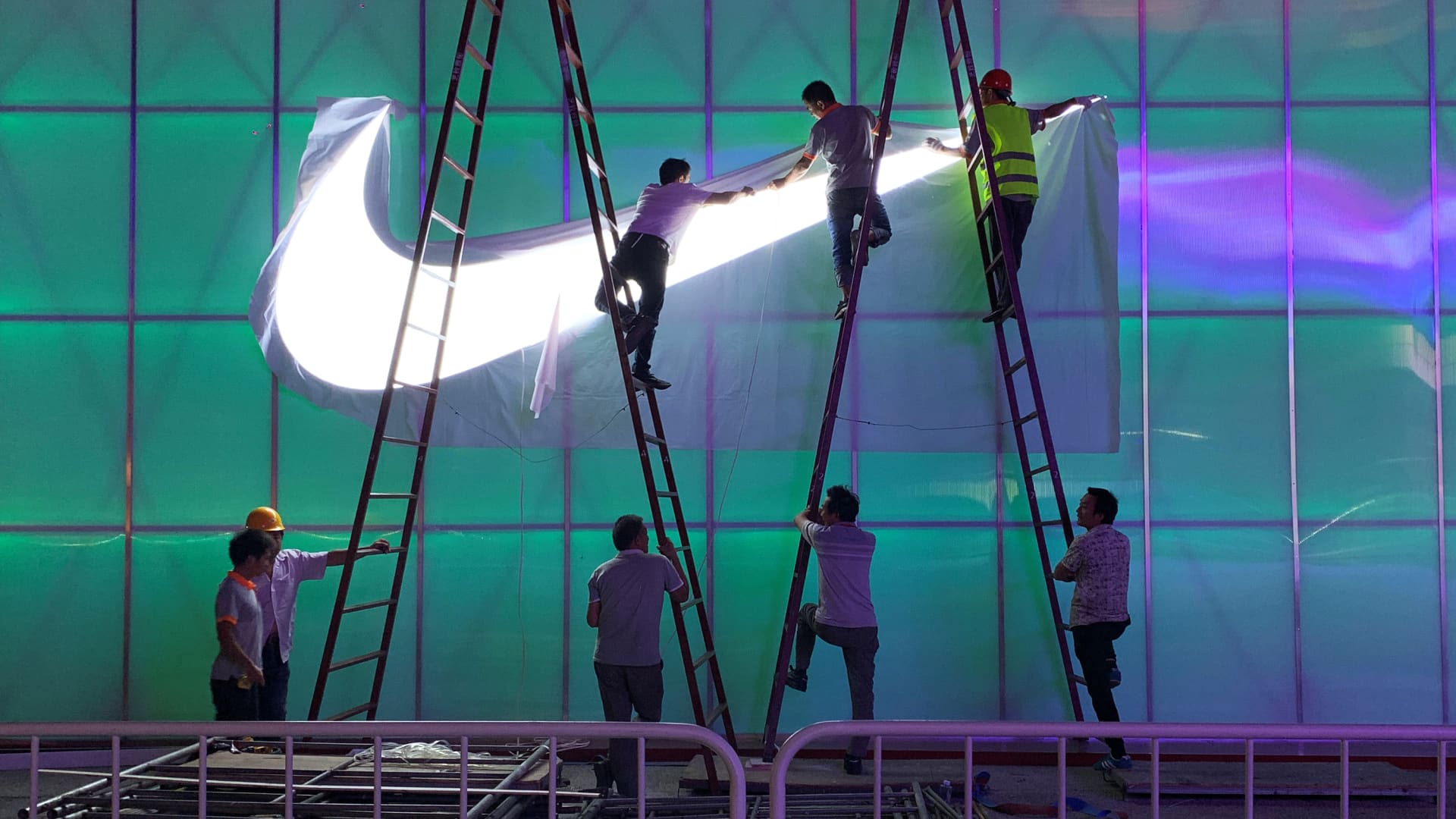
Workers install a Nike logo lamp outside the Wukesong Arena in Beijing, Aug. 28, 2019.
Tingshu Wang | Reuters
By all accounts, Nike’s business in China should be firing on all cylinders.
Sports-related products are the fastest growing consumer category in China and participation in sports and exercise is at its highest level in decades. The overall sportswear market has ballooned 51% in the past five years, fueled by a new focus on healthy living, according to GlobalData.
But instead of thriving during China’s sports renaissance, Nike’s business in the region is languishing. Sales have fallen from the prior year eight quarters in a row, and the overall business has shrunk 30% since 2021, with annual revenue hitting its lowest level in eight years at the end of May.
China was once Nike’s fastest-growing region, beloved by investors for its high margins and potential for sustained growth. Now, it’s the company’s smallest market and has become a drain on a global turnaround that some on Wall Street believe is taking too long.
Some U.S. analysts expect Nike’s China business to recover once its North America operations stabilize, but experts on the ground told CNBC its challenges in the region are deeper, and far different, from what it faces at home. Young Chinese shoppers are increasingly choosing domestic brands over expensive foreign names as part of a larger “China Chic” movement, and consumers are hungry for a localized assortment — not the same product that’s being replicated from Utah to Shanghai. Nike is also working to overhaul its distribution model in China, which critics say has become messy, overly complex and driven by discounts.
“In a way, Nike has just become irrelevant,” said Yaling Jiang, the founder of consumer research firm ApertureChina and an expert on the Chinese consumer. “I don’t think young people can remember what’s the last new thing they’ve done. But if you mention Adidas to them, they will tell you about … their pet clothes, pet jerseys, or their China jackets.”
During its most recent earnings call, Nike’s outgoing finance chief Matt Friend couldn’t say when the China business would return to growth, telling analysts that revenue trends in the near term “will be in line” with recent performance and “profitability will bottom before sales.”
In January, Nike CEO Elliott Hill announced Cathy Sparks, a 25-year Nike veteran, would become the next vice president and general manager of Greater China, reporting directly to him.
In an interview with CNBC, she said Nike is taking the steps it needs to reconnect with Chinese consumers.
“The one thing that I have certainly learned over the last six months is that the Chinese consumer has changed and they have high standards for what they want through product connections, engagement with the brand,” said Sparks. “We know that if we can design footwear and apparel, lifestyle or performance, that’s specifically targeted towards the unique needs of Chinese consumers, we’ll drive full price revenue.”
A Nike spokesperson pushed back on the idea that the company has lost relevance in the region and said what’s changed is younger shoppers are looking for “hyperlocal connections,” including through events and broader cultural moments.
“Nike has been in China for more than 40 years, and from day one, our approach has been to start with local consumer insight and turn that insight into inspiration, innovation and storytelling that can spark movement,” the spokesperson said.
How ‘China Chic’ changed the sneaker market
When Nike turned to China as its next major growth market in the mid-2000s, it won by largely replicating its global strategy and betting that popular clothes and shoes in the Western world would also land with Chinese shoppers.
For a time, the bet was right.
“The premium brand at the time that was available was Nike. Nike was just clearly better. They had cooler designs. They were more expensive. There was more brand cache,” said a retail consultant based in Shanghai who advises domestic and international brands, including Deckers and Adidas, and asked not to be named to protect client relationships.
“If you go back to the early 2000s, if consumers had some money to spend, they were really quite image conscious. They wanted to show that they had whatever the nice thing was and at the time, Nike was it.”
By the end of fiscal 2021, Nike’s annual revenue in China hit an all time high of $8.29 billion. But in the backdrop, the tide was starting to shift against Western brands.
A general view shows a Nike store in Guangzhou, Guangdong Province of China, July 22, 2026.
Qin Zihang | Visual China Group | Getty Images
In March 2021, a previous statement Nike made saying it was “concerned” about reports of forced labor in the Xinjiang region resurfaced, leading some Chinese consumers to call for a nationwide boycott and post videos online of them burning their sneakers. Popular Chinese actor Wang Yibo terminated his contract as a representative for Nike as domestic competitors Anta and Li-Ning doubled down on their use of Xinjiang cotton, using the conflict as a nationalistic marketing opportunity.
The controversy, which also impacted other Western brands that put out similar messaging, helped supercharge a political campaign that Chinese President Xi Jinping started years earlier called Guochao, or “China Chic” in English. It was designed to drum up pride in Chinese made and designed products and promote domestic brands over international ones.
“In line with the period of 2010 to just before Covid, people did feel like maybe they were inferior if they wear Chinese brands … but the elevating cultural confidence campaign really shifted that mindset,” Jiang said. “What this political campaign does is it also encouraged a lot of e-commerce platforms, including Alibaba’s Taobao, Tmall and JD.com, to have a separate section just for the China Chic brands and … people started adopting this China Chic mindset and started feeling like owning something from your own culture is cooler than owning foreign brand.”
Now, many younger consumers feel more connected to domestic brands like Anta and Li-Ning over premium, foreign brands like Nike, said Tracy Dai, the director of operations at consulting firm China Skinny, which helps overseas companies enter China or expand there.
“Years ago when you’re talking to a high school boy asking which sports shoes you may want, they probably say Nike or Adidas, but right now if you ask them, they say Anta or Li-Ning,” Dai said. “[Nike] probably is not that cool to them anymore.”
A Nike spokesperson said all brands in China are facing intense competition and a “more demanding consumer environment” and it believes its efforts to reset the region “put us on the right path to win back consumers.”
Beyond nationalism, Nike’s decline in China is also about value.
In the 20 years since Nike started supercharging its expansion in China, domestic brands have gotten better at production, marketing and brand building.
At the same time, Chinese consumers have become more practical and selective, prioritizing value and innovation over branding, said Wei Kan, who spent around 15 years at Nike and Converse in China and Taiwan before starting his own brand consultancy firm Conduit Asia. As shoppers become more involved with sports and niche fitness activities, highly technical products are becoming more popular than Nike’s assortment.
“Nike is still more like a global, generalist brand at this moment. At the same time, a lot of products, the innovation pipeline is actually slower than the local brands and also the competitors,” said Kan. “Chinese consumers are very sophisticated compared with like five or 10 years ago … it all goes back to how the consumer perceives what kind of value they want to get from a shoe.”
Nanjing styles via Portland, Oregon
While domestic brands have become major market leaders in China, some international brands are still winning, too. Lululemon‘s comparable sales, which exclude new store openings, grew 20% in China in fiscal 2025, while Adidas brand revenue grew 13% in the region during the same period.
Similar to Nike, Adidas had seen its business dramatically slow in China, but it’s now growing again after the company shifted its focus to local product creation, decentralized decision-making and empowered local teams.
For example, Adidas’s local team designed and released its mega-viral Chinese Track Top jacket earlier this year in celebration of the Chinese New Year. The jacket sold out within 27 minutes and became a global phenomenon, with some on social media saying they flew to China specifically to buy the item or spent hundreds to snag one through reseller sites like StockX.
It’s also nailing local marketing. Recently, Adidas botched a translation on its website in the product description for a jacket and ended up becoming a viral meme. Rather than ignoring the meme, it created a T-shirt with the mistranslation on the front, Jiang said.
Meanwhile, experts said Nike has struggled to create the same kind of localized products and marketing. During the World Cup, its marketing campaigns came off as similar to what it was doing a decade ago, said Jiang.
Part of the issue is that the Greater China team gets limited autonomy to release products and campaigns quickly without oversight from the corporate office in Portland, analysts said.
“So everything, especially in terms of design, everything is actually coming from global,” said Kan, who worked in marketing and branding for Nike and Converse in the region before leaving the company in November 2024. “There are very limited room for the local teams to build and also design the locally relevant products to the consumers. I think that is actually the biggest issue for the Chinese consumers here.”
When asked about Nike’s decision-making being concentrated at its headquarters, Sparks said the characterization was “not unfair” but added there is “nobody checking any of this work telling us yes or no.”
“I have felt from the moment I’ve landed in China that our local team has full autonomy to do what we need. Of course, working within the guardrails that are brand right,” said Sparks. “I’m seeing that come to action with the marketing that we’ve put out. We are localizing retail concepts. The product design that you’re gonna see from this team is really authentically Chinese, very relevant.”
Last week, Sparks announced the company had hired its first-ever Greater China vice president of local product creation, who will be focused on building an assortment that’s designed, developed and made in China for Chinese shoppers.
The company plans to start with two lifestyle capsules — one for Nike sportswear and one for Jordan streetwear — that’ll be ready in time for the holidays, followed later by performance apparel and footwear.
“We’ll be doing this over the next 18 months, bringing all these new capabilities on board so that we can complement global innovation with local innovation needs, styling needs, fit needs, even color, which can be unique in China,” said Sparks.
Why Nike is resetting China distribution
Marketing and localization aside, Nike’s China distribution model has become a complex web that Sparks is now working to unwind after the company allowed its brick-and-mortar distributors to start selling online during the Covid-19 pandemic even though their distribution agreements didn’t include digital.
“What we didn’t do was reset that coming out of Covid as consumers returned to brick and mortar,” said Sparks. “And because of that, it just created this incredibly fragmented marketplace where the consumer journey became really messy. Our ability to tell clear innovation stories, nearly impossible.”
Sparks said the decision to shut down those online storefronts is necessary to repair Nike’s China business, but BNP Paribas equity analyst Laurent Vasilescu estimates the change could reduce the company’s revenue by as much as $1 billion annually, representing about 17% of total sales in the region.
In response, Sparks said the change means some distribution will inevitably go away but “we believe we’ll be able to replace total value with full-price sales and a more premium experience.”
“We actually believe it is critical. If we don’t reset is where the long-term impact will continue to slide in a direction that we don’t want to see,” said Sparks. “We don’t actually believe that we will have a long-term negative impact. We think it’ll be stronger.”

The UK’s first Vocational Celebration Day will take place on Thursday 6 August, nine days after Prime Minister Andy Burnham announced that pupils in England will be offered technical education pathways from the age of 14.
The event is organised by Enginuity, the engineering and manufacturing skills charity, and EAL, its awarding and end-point assessment organisation. It will be hosted by the broadcaster Steph McGovern from Teagle, an agricultural machinery manufacturer in Truro, Cornwall.
Enginuity said the hour-long programme, a special edition of the Steph on Skills podcast, will be streamed live on YouTube and social platforms at 10am, provided free of charge to news organisations, and will feature learners, employers, educators and government figures.
The charity said the day will be marked annually on the first Thursday of August, placing it a week before A-level results day.
Burnham set out the technical pathways on 28 July. According to the Prime Minister’s Office, students from Year 10 will be able to combine core academic subjects including English, maths and science with technical education linked to jobs available in their area, alongside work experience and employer-set projects. The Government said it wants to begin rolling out the routes from September 2028.
“From today, Britain will value the hard hat every bit as much as the graduation cap,” Burnham said. He said the school system had been built around the academic path and that this “has let down young people seeking technical qualifications”.
Ofsted will change the way it inspects schools so that inspectors recognise the quality of technical education and the support given to young people preparing for work, the Prime Minister’s Office said. Regional mayors, local leaders, schools, colleges and employers will shape the pathways, with employers expected to provide mentoring, workplace visits and work experience.
The announcement follows Alan Milburn’s interim report, which warned that Britain risks a “lost generation”. Official figures published in February showed 957,000 people aged 16 to 24 were not in education, employment or training in the final quarter of 2025, or 12.8 per cent of the age group.
Ann Watson MBE, chief executive of Enginuity, said: “We are right behind this reset in the psyche of our country.
“Our campaigning is starting to bring dividends to the next generation, business, education and the nation as a whole.”
McGovern, a former apprentice engineer at Black+Decker on Teesside, said: “Why should academics have all the fun and glory? We have graduation days, A Level Day, GCSE Day – now Vocational Celebration Day. I’ve been banging on for years about the need to celebrate vocational qualifications in the same way we do purely academic success stories.
“Let’s face it, vocational learners are the lifeblood of our country and yet have been left in the shadows. We want to make sure that this changes and these brilliant people get to celebrate in style.”
Enginuity’s Mind the Gap report, published on 17 June and produced by consultancy SQW, estimated that skills shortages and skills gaps cost UK engineering and manufacturing £5.2 billion a year, equivalent to around 2 per cent of the sector’s annual output. The report found around half of engineering and manufacturing SMEs reported skills gaps or shortages, with technical manual skills the capability most in demand, cited by 74 per cent of those firms.
Separate Enginuity research published in August 2024, based on a survey of parents and children aged 11 to 18 in 1,000 households in England, found 93 per cent of parents wanted to know more about apprenticeships and 86 per cent of children would consider an apprenticeship over a university degree.
Skills gaps extend beyond engineering. The Department for Education’s Skills Horizon Barometer found 92 per cent of manufacturing SMEs expected a skills shortfall in their business over the following year, with a third reporting the gap at entry level.
The technical pathways sit alongside the £725 million apprenticeship package announced in December, which covers the full cost of training for eligible under-25s at small and medium-sized businesses and commits to 50,000 additional placements over three years.

Amy Ingham
Amy Ingham is a reporter at Business Matters, covering UK business news with a focus on breaking news, business policy, late payments and insolvency. She joined the magazine in 2026 after completing the NCTJ Diploma in Journalism at Harlow College’s journalism school. Her recent reporting includes British Steel’s nationalisation and its impact on SME suppliers, the decline in late payments by large firms, and Insolvency Service director disqualifications. Reach her at aingham@cbmeg.co.uk.

Earnings call transcript: Frontier Group tops Q2 2026 forecasts on record revenue

Apple launched a hardware leasing programme provided by Klarna on Tuesday, with iPhone leases starting at $17.99 a month and the scheme available only in the United States.
The programme, Apple Upgrade, is available on the Apple Store online, in the Apple Store app and at US Apple Store locations, Apple said. It offers 12 and 24-month leasing terms for iPhone and Apple Watch, and 24 and 36-month terms for Mac and iPad.
Leases start at $17.99 a month for iPhone, $11.99 for Apple Watch, $24.99 for Mac and $11.99 for iPad, according to Apple.
At the end of the term, customers can upgrade to a new device under a fresh lease, buy the device with a one-time payment, or return it and exit the programme.
“At Apple, we put the customer at the centre of everything we do,” said Karen Rasmussen, Apple’s vice president of the Apple Store online, “and we’re thrilled that Apple Upgrade offers our customers, both online and in-store, a more flexible way to pay for the products they love.”
Apple said it will no longer offer the iPhone Upgrade Program or iPhone Payments in the United States. Customers already enrolled can lease under Apple Upgrade when eligible, use Apple Card Monthly Installments, buy outright or take carrier financing.
The monthly cost is lower than under the discontinued scheme, but customers do not own the device at the end of the term. Apple said an iPhone 17 Pro 256GB with a purchase price of $1,099 carries a typical monthly payment of $31.99 over 24 months, or $45.99 over 12 months. Under the iPhone Upgrade Program the same model cost $57 a month over two years, with ownership at the end of the term. That programme also required customers to buy AppleCare cover; under Apple Upgrade, AppleCare is optional.
Applicants are subject to a soft credit inquiry that does not affect their credit score, and no security deposit is required, Apple said. Its terms state that customers may incur substantial fees for terminating a lease early, and that a lease not ended, upgraded or bought out converts to a month-to-month arrangement for up to six months, during which payments may increase.
Leases are available only to US residents and cannot be taken out through Apple at Work for small businesses or enterprises, or through Apple’s education, government or employee purchase programmes, according to Apple’s terms. Apple has not announced a UK launch. Klarna already offers instalment payments to UK consumers through partners including Airbnb, which introduced Pay Over Time with Klarna for UK guests in 2023.
In the UK, the Financial Conduct Authority began regulating deferred payment credit on 15 July 2026. The regulator defines this as interest-free credit repayable in 12 or fewer instalments over 12 months or less, and says agreements taken out before that date remain unregulated.
The launch follows price rises across parts of Apple’s range. Last month Apple increased Mac and iPad prices by $200 or more on some models. Chief executive Tim Cook said higher iPhone prices were unavoidable because of the cost of memory and storage chips, demand for which has risen from artificial intelligence companies.
Apple shares rose slightly in early trading on Tuesday, while Klarna shares fell slightly. Apple briefly passed a $5 trillion valuation earlier this year and reported record iPhone sales for the final quarter of 2025, with total revenue of $144bn.
John Ternus takes over from Cook as chief executive on 1 September, shortly before Apple is expected to announce a foldable iPhone.
Amy Ingham
Amy Ingham is a reporter at Business Matters, covering UK business news with a focus on breaking news, business policy, late payments and insolvency. She joined the magazine in 2026 after completing the NCTJ Diploma in Journalism at Harlow College’s journalism school. Her recent reporting includes British Steel’s nationalisation and its impact on SME suppliers, the decline in late payments by large firms, and Insolvency Service director disqualifications. Reach her at aingham@cbmeg.co.uk.

Why Humana Stock Is Falling After Earnings Beat Expectations

With this, total outflows by Foreign Portfolio Investors (FPIs) from the equity market have reached Rs 2.2 lakh crore in 2026, higher than the Rs 1.66 lakh crore pulled out during the entire 2025, according to data with the NSDL.
FPIs were net sellers in all months of 2026, except February. They withdrew Rs 35,962 crore in January before turning net buyers in February, when they invested Rs 22,615 crore, the highest monthly inflow in 17 months.
However, the trend reversed in March, when foreign investors pulled out a record Rs 1.17 lakh crore. The selling continued in April with net outflows of Rs 60,847 crore and extended into May with withdrawals of over Rs 27,000 crore so far.
Himanshu Srivastava, Principal – Manager Research at Morningstar Investment Research India, said the latest outflow trend reflected persistent uncertainty surrounding global growth, elevated geopolitical tensions across key regions and volatility in crude oil prices, which continued to weigh on risk appetite towards emerging markets, including India.
He added that a stronger US dollar and elevated US bond yields remained key drivers behind the selling activity, as higher returns in developed markets improved the relative attractiveness of safer assets and prompted investors to adopt a more defensive stance.
Srivastava further said concerns over the trajectory of global inflation and uncertainty regarding the pace and timing of future interest rate cuts by major central banks continued to influence capital allocation decisions globally.Geojit Investments Chief Investment Strategist V K Vijayakumar said sustained FPI selling, coupled with a widening current account deficit, has exerted pressure on the rupee.
“At the beginning of the year, the rupee was at 90 to the US dollar. On May 15, it breached the 96-mark to touch 96.14,” he said.
Vijayakumar said the rupee could weaken further if FPI outflows persist and crude oil prices remain elevated. He also noted that the continuing flow of capital into artificial intelligence-focused companies globally has led to some diversion of funds away from markets such as India, which are seen as lagging in the AI space.
“This trend could reverse when the AI trade, which appears to be in bubble territory, eventually cools off,” he added. PTI
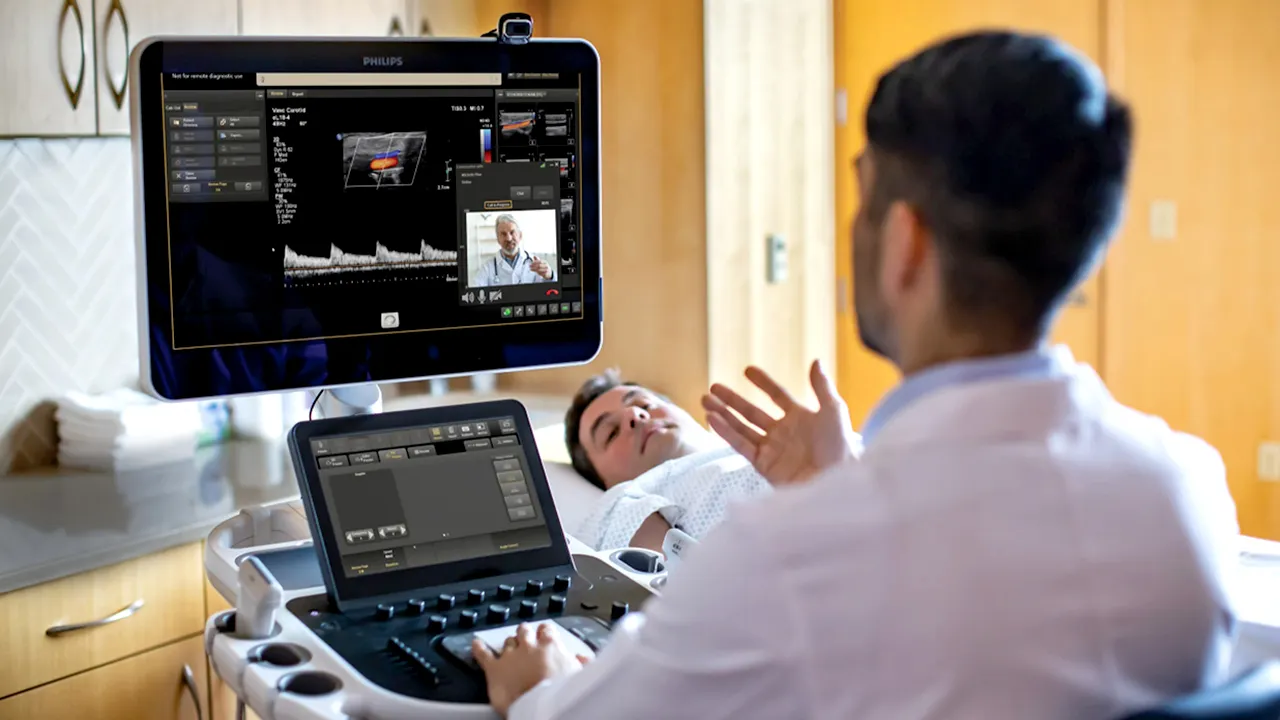
Johns Hopkins Health System Vice President of Clinical Innovation Dr. Peter A. Najjar explains the transformative impact of AI in the medical fields and the application of the technology for oncology and cancer patients on Mornings with Maria.
Advances in artificial intelligence (AI) are set to help reshape the healthcare industry in the years ahead, a new report finds.
The Institute of Electrical and Electronics Engineers (IEEE), the largest group of technical professionals that’s dedicated to advancing technology to benefit humanity, released its Technology Megatrends 2030 Report on Wednesday after it was reviewed exclusively by FOX Business.
The report looked across five core areas, including AI, energy, health and biotech, space tech, and robotics and assessed the potential of each to reshape human life by 2030. The experts whose insights were used to compile the report ranked developments in health technology as having the largest potential impact on humanity.
Dejan Milojicic, IEEE fellow and chair of the IEEE Future Directions Committee Industry Advisory Board, told FOX Business that within the megatrends analyzed in the report, “health technologies emerge as among the most transformative and humanity-beneficial, driven by a fundamental shift from reactive treatment to proactive protection.”
ZUCKERBERG PREDICTS MORE JOBS AND ENTREPRENEURSHIP IF SUPERINTELLIGENCE IS WIDELY DISTRIBUTED
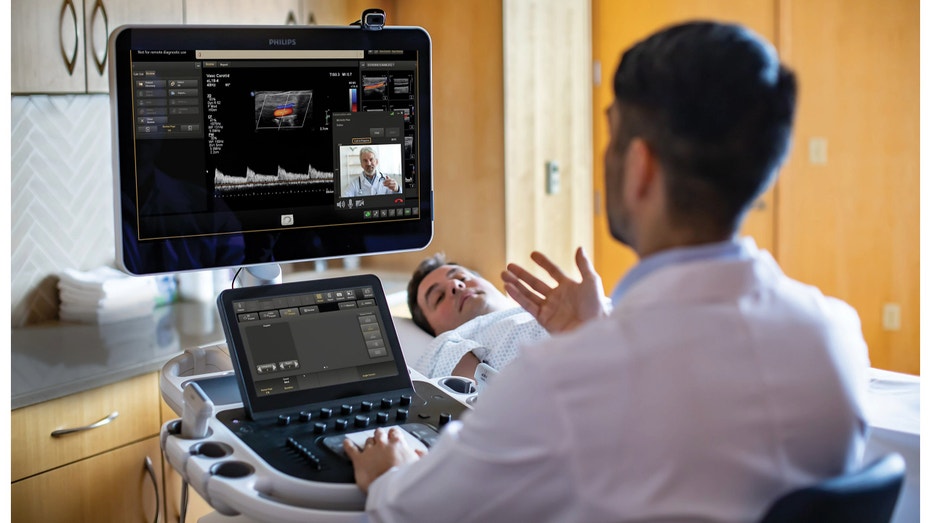
Advances in healthcare technology have the greatest potential to impact humanity in the next five years, IEEE found. (Philips)
IEEE’s report identified several technological areas that can advance the healthcare industry, including personalized medicine; genetic engineering and gene therapy; accessible early disease diagnostics and biomarkers; molecular therapeutics; protein synthesis; and understanding life.
Of those six areas, IEEE graded personalized medicine, genetic engineering and gene therapy, and accessible early disease diagnostics and biomarkers the highest in terms of their impact, likelihood of success, maturity and adoption.
ANTHROPIC’S AMODEI DEFENDS OPEN-WEIGHT STANCE FOLLOWING CRITIQUE FROM PALANTIR’S KARP

AI and similar breakthrough technologies can transform how illnesses are detected and treated. (iStock)
Over the next five to 10 years, IEEE sees advances in health tech leading to impacts like the reduction of preventable chronic diseases, personalized clinical outcomes, improved food safety and increased access to high-quality, nutrient-dense foods.
“As populations age, using physical AI technologies, such as virtual nursing and intelligent monitoring, will become vital to supporting the needs of an expanding revitalized economy,” Milojicic said. “At the same time, we see food systems being reimagined as core healthcare infrastructure, using AI-enhanced tools like smart traceability to deliver personalized nutrition and curb chronic disease at scale.”
COMPANY BETS $200K ON AI TO MAKE TRADES WORKERS ‘BETTER, STRONGER, FASTER’
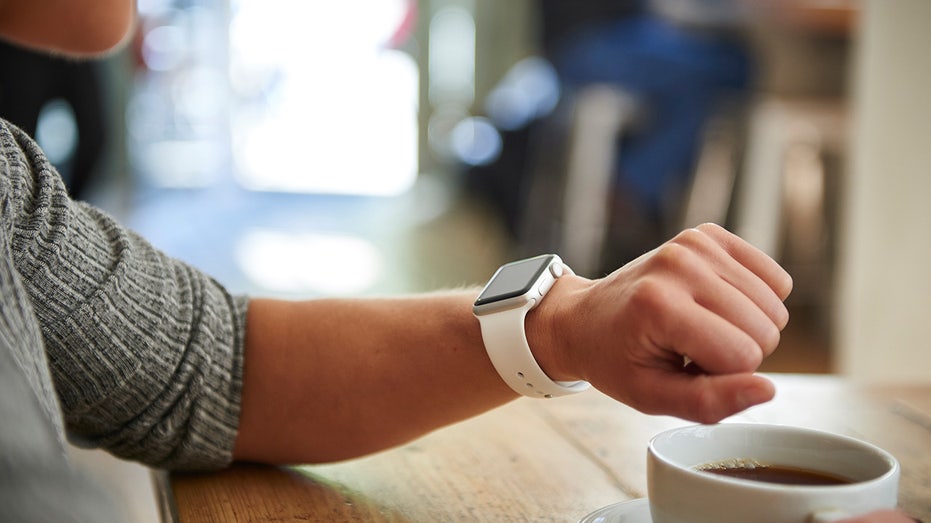
Personalized medicine and healthcare is an area where technological advancements could reshape the industry. (Joseph Branston/Future via Getty Images)
IEEE identified several enablers for advancements in healthcare tech, including biotechnology, digital health, and things like agricultural drones and personalized nutrition.
Inhibitors to the impact of health technology advancements include privacy and security for data used for public health prevention through epidemiology and surveillance, as well as status quo culture.
GET FOX BUSINESS ON THE GO BY CLICKING HERE
“Our panel of experts is clear that none of this works without robust trust, privacy, and safety standards guiding how these technologies are built and deployed,” Milojicic said.

Operator
Hello. My name is Nikki, and I will be your conference operator this morning. At this time, I would like to welcome everyone to Veralto Corporation’s Second Quarter 2026 Conference Call.
[Operator Instructions]
I will now turn the call over to Ryan Taylor, Vice President of Investor Relations. Mr. Taylor, you may begin your conference.
Ryan Taylor
Vice President of Investor Relations
Good morning, everyone. Thanks for joining us on the call. With me today are Jennifer Honeycutt, our President and Chief Executive Officer; and Sameer Ralhan, our Senior Vice President and Chief Financial Officer. Today’s call is simultaneously being webcast.
A replay of the webcast will be available in the Investors section of our website later today under the heading Events & Presentations. A replay of this call will be available until August 7. Yesterday, we issued our second quarter 2026 earnings news release, earnings presentation, prepared remarks and supplemental materials, including information required by the SEC relating to adjusted or non-GAAP financial measures. These materials are also available on the Investors section of our website, www.veralto.com, under the heading Quarterly Earnings.

Mast Capital CEO and founder Camilo Miguel Jr. speaks exclusively to Fox News Digital about how Miami’s tallest residential offering is 80% sold to buyers coming from more than 30 countries.
EXCLUSIVE: By next summer, Miami’s skyline will be shaped by a new architectural landmark, bringing a fresh wave of corporate titans and global elites into the heart of South Florida.
As Cipriani Residences Miami officially topped off its approximately 950-foot construction project — the tallest residential tower in the city — the 85-story tower stands as a physical monument to the Magic City’s evolution from a sun-soaked vacation spot into a permanent capital for international wealth.
Cipriani revealed to Fox News Digital that its first ground-up residential development in North America is more than 80% sold, and will welcome buyers from over 30 countries who are now calling Miami their primary home.
“Residential living is a natural extension of hospitality, but it was important to us to do it in the right way,” Giuseppe Cipriani exclusively told Fox Digital. “With Cipriani Residences Miami, we found the right city, location and a great partner… Our family has been closely involved in shaping the design and the overall experience so that it reflects the same traditions we have carried with us for generations. For us, it is not simply about putting the Cipriani name on a building. It is about creating a home where the way you live is the way we would live.”
MIAMI OVERTAKES N.Y.C. IN RETURN-TO-OFFICE RACE AS COMPANIES EXPAND SOUTH FLORIDA FOOTPRINT
“Every time I drive by it, my emotional reaction is, ‘Wow.’ I am humbled by the fact that we’re building something of this scale, because when I started my business, although I always aspired to get here, I didn’t know when it would happen — and it has happened,” Mast Capital founder and CEO Camilo Miguel Jr., the developer behind the building, also said. “One of the biggest challenges was actually the upfront planning part, because when you’re building a 950-foot building… the engineering that goes into that is quite different than building something that’s 20 stories.”

Cipriani Residences Miami just recently topped off the 950-foot project, making it the tallest offering in the Brickell skyline. (Photo courtesy: Inflight / FOXBusiness)
The leading international markets for buyers, in order, come from Mexico, Italy, Colombia, Brazil, Venezuela, Argentina, Canada, France, Spain and the United Kingdom. Domestic buyers continue to flood in from high-tax states like New York and California, too.
“There are countries that are having a lot of their own economic challenges and headwinds and political challenges and headwinds, as well… And people are not only buying in Miami as [an] investment, but people are actually buying in Miami to live. And people were looking at Cipriani and saying, ‘This is going to be home,’” Miguel said.
“We have some buyers who have bought for their whole family and intend to move everybody into the building,” he added.
The luxury condo building is set to be the tallest in Miami at nearly 1,000 feet high. | Getty Images
“Every city has its own character, but what people appreciate about Cipriani is remarkably consistent: warmth, discretion, good service and a sense of familiarity,” Cipriani said. “Miami is a very international city, and that has always felt natural to us. People come here from all over the world, just as they do in Venice or New York. The lifestyle naturally is shaped by its beautiful weather, its connection to the water, its seamless relationship between indoor and outdoor spaces. Cipriani Residences Miami brings that way of living into our world.”
“People are increasingly choosing Miami not only as somewhere to visit, but somewhere to live,” Cipriani continued. “They want privacy, comfort, good service and a quality of life that feels effortless.”
Earlier this month, the New York Post reported that soccer superstar Lionel Messi had purchased four units in the building, followed by a wave of other Argentine players. Buyers also allegedly include executives from Citadel and Amazon who are relocating from New York and California.
Former Miami Mayor Francis Suarez discusses the Florida boom meeting the affordability crunch on ‘Maria Bartiromo’s Wall Street.’
“We don’t change who we are depending on the guest. That has never been our philosophy,” Cipriani said. “For nearly a century, our family has welcomed people from many different countries, culture[s], generations and paths of life. Royals, aristocrats, powerful businessmen but also writers, intellectuals and all kind[s] of interesting people have been coming to our locations — as human beings.”
“That sense of warmth and understated elegance that comes from our Italian heritage, and it remains at the heart of everything we do, fortunately has appealed to many of them,” the grandson of the Cipriani patriarch added.
“One of the main reasons that people are choosing Miami over New York City right now is the pro-business mentality. I mean you live in a business-friendly city and a business-friendly state, and the growth and the global nature of our city,” Miguel explained. “And you realize quickly that as a hedge fund or a financial institution, you no longer just need to be in New York City to be relevant and be successful.”
“These are big companies that are moving here, signing leases, taking space, and moving their top executives to Miami, their high-income earners. And these individuals are buying homes and condos across Miami,” Miguel said.
The development is also on track to become the only new residential tower in the Brickell neighborhood, delivering completed homes in 2027.
“We are very proud, of course, of what has been built, and of where the company is today, 95 years after the opening of that small bar in Venice. Seeing the tower reach its full height makes us even more excited to bring that spirit to life for the residents who will call it home,” Cipriani nodded to his grandfather’s founding of Harry’s Bar in 1931, where the Bellini was born and “warmth, simplicity and genuine care” became Cipriani’s brand.
Blanca Commercial Real Estate CEO Tere Blanca and DaGrosa Capital Partners Chair Joe DaGrosa speak to Fox News Digital about how a California commercial exodus has followed a residential one to the Sunshine State.
“The principles have never changed,” he said. “Whether it is a restaurant, a club, a hotel or now a residence, the idea is the same: people should feel comfortable, free and at home. The world changes, but our hospitality values do not.”
GET FOX BUSINESS ON THE GO BY CLICKING HERE
“This is really about heritage, about people, about a family,” Miguel agreed, recalling his first time at a Cipriani restaurant. “What I really liked about it is that subtle elegance that you feel when you walk in, and the fact that everybody that works there is smiling, everybody that’s there is welcoming and everybody that is there is hyper-focused on making sure that you have a positive experience.”
“I never dreamed of Miami being what it is today,” Miguel said, “and I think the sky’s the limit.”

OPINION: While founders’ age gaps have risks, they also create a more interesting mix of experience.

MoonPay Unveils PayBox AI Vault for ChatGPT and Claude Users

Amateur cricket team accused of tricking umpires is under investigation

McLaughlin: Stanford CFB Unionization Debate Heating Up

Renter of Home in Anne Heche Crash Denies Settlement With Son

No Jackpot Winner as $257 Million Prize Rolls Over to $269 Million Monday Draw

Weekend Open Thread: Staud – Corporette.com

Now You Can Buy Airline Tickets with Cryptocurrency | Hum News | Pakistan

Live GOLD and CRYPTO Scalping Trading | DAY 292 #goldtrading #cryptotrading #bitcoin

25 Minutes of People’s BEST Financial Decisions in 2026 (Prepare Now!)
-

 Fashion5 days ago
Weekend Open Thread: Brooks Brothers
-
 Sports3 days ago
Commonwealth Games boxing: Jadumani Singh seals dominant 5-0 win over Pakistan’s Sumama Rehman to enter quarter-finals | Commonwealth Games News
-

 Tech3 days ago
Intel is reversing course and bringing hyper-threading back to its server chips
-

 Crypto World7 days ago
Ethics, other provisions in crypto Clarity Act to be further discussed
-

 Politics2 days ago
Luke Littler dismantles Gerwyn Price to retain title in Blackpool
-

 Crypto World4 days ago
Ripple bought a bank in pieces. The $4 billion audit
-
 Entertainment5 days ago
A New Post-Apocalyptic Gundam Anime Series Blasts Into SDCC
-

 Sports6 days ago
2026 3M Open leaderboard: Scottie Scheffler finds putter in Round 1, sits three back
-

 News Videos3 days ago
BITCOIN JUST ENTERED THIS CRITICAL ZONE…
-

 Fashion6 days ago
16 Dresses for the High Summer Event
-

 Politics1 day ago
The Part of the Electric Transition Nobody Wants to Discuss
-

 News Videos6 days ago
The Peugeot Family: How 200 Years of an “Old Money” Dynasty Died in A Boardroom
-

 Business11 hours ago
Major shareholder moves on Canyon
-

 Politics3 days ago
Spain sweeps the board at 2026 World Cup with individual awards
-

 Crypto World3 days ago
XRP Ledger adds $2.6B as RWA inflows rank second
-

 Crypto World6 days ago
Uniswap (UNI) pushes deeper into tokenized RWAs with permissioned trading pools
-
 Entertainment21 hours ago
‘Stargate’ Creator’s New Sci-Fi Series Returns for Season 3 Tomorrow
-
Crypto World6 days ago
SEC Agrees to Overhaul Recordkeeping After Settling Coinbase Lawsuit Over Gensler’s Lost Texts
-

 Tech5 days ago
Anthropic launches Claude Opus 5, a cheaper AI model for coding, agents and enterprise workflows
-

 Entertainment4 days ago
Sara Gilson Killed By Husband After Viral “Pedophile” TikTok Video
You must be logged in to post a comment Login