

Business
Toyota, Nissan and Honda Suffer Steep China Sales Declines as Homegrown EV Makers Surge Ahead This Year

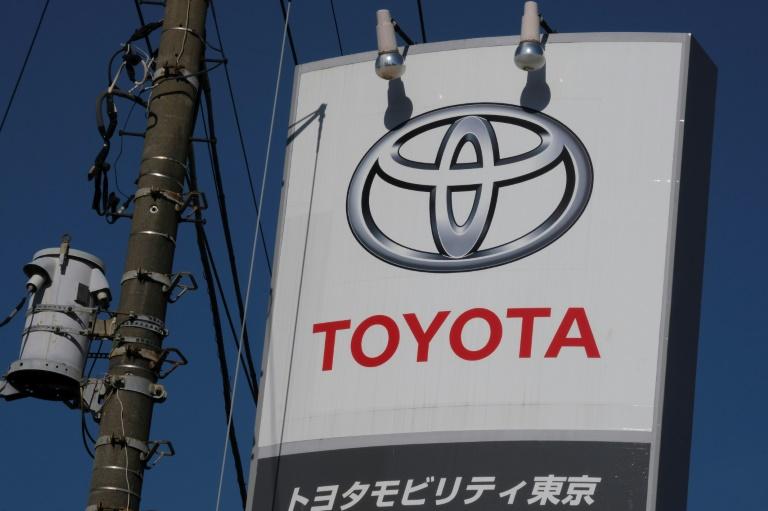
Japan’s three largest automakers are losing ground rapidly in China, the world’s largest auto market, as homegrown electric vehicle manufacturers accelerate past them and reshape the competitive landscape that Japanese brands once dominated.
Sharp declines across the board
Toyota, Nissan and Honda all posted double-digit sales declines in China during the first half of 2026, according to Japan’s Kyodo News and China’s state-run Global Times. Toyota’s sales totaled 694,700 vehicles, down 17.1% from the same period a year earlier. Nissan’s sales fell 15% to 237,000 vehicles. Honda suffered the steepest decline, with sales plunging 34.7% to 205,800 vehicles, extending a streak of year-over-year monthly declines that has now stretched 29 consecutive months through June.
Honda’s struggles have been particularly acute at the brand level. Its joint venture GAC Honda saw sales fall 46% year-over-year, while Dongfeng Honda’s sales dropped 22%. In June alone, Honda’s retail sales in China plunged 44.5% year-over-year. The severity of the decline has prompted structural changes within the company: GAC Honda’s Huangpu plant in Guangzhou, which has produced models including the ZR-V and Fit, is scheduled to end production this June, while Dongfeng Honda’s Wuhan plant is expected to close in 2027. Honda’s overall sales volume in China has collapsed from roughly 1.66 million vehicles in 2020 to approximately 650,000 today.
A steep decline in Japanese market share
The combined slump reflects a broader, multiyear erosion of Japanese automakers’ position in China. According to the China Association of Automobile Manufacturers, Japanese brands’ collective market share in China fell steadily from 24% in 2020 to the single-digit range last year, a five-year collapse that industry analysts describe as a generational shift in the market rather than a temporary downturn.
Falling behind on electrification
Analysts and industry observers point to Japanese automakers’ slow transition to electric and plug-in hybrid vehicles as the central driver of their declining fortunes in China. Cui Dongshu, secretary-general of the China Passenger Car Association, offered a blunt assessment of the shift to the Global Times. “Japanese companies relied too heavily on conventional hybrid vehicles and failed to respond properly to changing demand for plug-in hybrids,” Cui said, adding that Japanese brands have also lagged in new model development, China-specific product strategies, and smart vehicle features aimed at attracting younger buyers.
That assessment echoes concerns raised in a 2025 report by global consulting firm Roland Berger, which found that Japan’s broader auto industry had failed to keep pace with the global shift toward electrification even as other major markets accelerated their transition. The slower pivot has left Japanese brands increasingly reliant on gasoline and conventional hybrid vehicles at a moment when Chinese consumers have rapidly shifted toward pure electric and plug-in hybrid alternatives.
Chinese brands capture the momentum
While Japanese automakers have struggled, Chinese homegrown manufacturers have moved aggressively to capture market share through electric and smart vehicle offerings. According to the China Passenger Car Association, BYD led China’s passenger car market with a 13.2% share as of April, followed by Geely and Changan. Newer electric vehicle makers, including Leapmotor and Xiaomi, have also gained visibility in the market, adding further competitive pressure on established automakers, both foreign and domestic.
China’s broader new energy vehicle market has continued expanding rapidly even as the overall auto market has softened. The China Association of Automobile Manufacturers reported that the country produced 7.438 million new energy vehicles and sold 7.446 million in the first half of 2026, both figures surpassing 7 million and marking increases of 6.7% and 7.3%, respectively, from a year earlier. New energy vehicles accounted for 49.6% of total new car sales during the period, with the technology’s penetration rate reaching 58.5% as of June, up roughly 13 percentage points from a year earlier. Separate industry tracking had shown that penetration briefly surpassed 60% for the first time in April, underscoring how quickly the shift away from conventional gasoline vehicles has taken hold.
Broader market weakness compounds the pressure
The struggles facing Japanese automakers have also coincided with broader softness across China’s overall passenger vehicle market. According to Reuters, China’s domestic passenger vehicle sales fell 23.4% year-over-year to 1.62 million units in June, marking the ninth consecutive month of year-over-year decline for the broader market. Rising oil prices tied to tensions in the Middle East have further dampened demand for gasoline-powered vehicles specifically, compounding the challenges already facing Japanese brands that remain more dependent on conventional powertrains than many of their competitors.
German luxury brands face similar headwinds
Japanese automakers are not alone in facing steep declines in China. German luxury manufacturers have also reported significant year-over-year drops, with Mercedes-Benz falling 28%, BMW down 20.4%, and Volkswagen decreasing 25.9% during the same period. The combined sales of Mercedes-Benz, BMW and Audi were only slightly higher than Volkswagen’s China sales alone during the same period a year earlier, according to industry data, illustrating how broadly the shift toward domestic EV brands has squeezed established international automakers across price segments, not just in the mainstream market where Japanese brands have traditionally competed.
A difficult road back
Industry analysts widely agree that reclaiming lost ground in China will not come easily for Japanese automakers. Cui said Chinese homegrown brands have already established a firm position in the electric and smart car markets, making it unlikely that Japanese companies will recover their previous market standing in the near term. Toyota has shown some signs of adaptation, with localized electric vehicle sales in China surging 88% in April, suggesting the company may have more success than its rivals in adjusting its strategy, even as its overall China sales volumes have continued to decline.
With China’s new energy vehicle penetration continuing to climb and domestic brands showing no signs of ceding the ground they’ve gained, Japanese automakers face a critical period in determining whether they can meaningfully accelerate their own electrification strategies or risk further erosion of their once-dominant position in the world’s largest auto market. How quickly Toyota, Nissan and Honda can bring competitive electric and plug-in hybrid models specifically tailored to Chinese consumer preferences is likely to shape their trajectory in the market for years to come.

Kinder Morgan: Not The Best Midstream Stock, Still A Buy
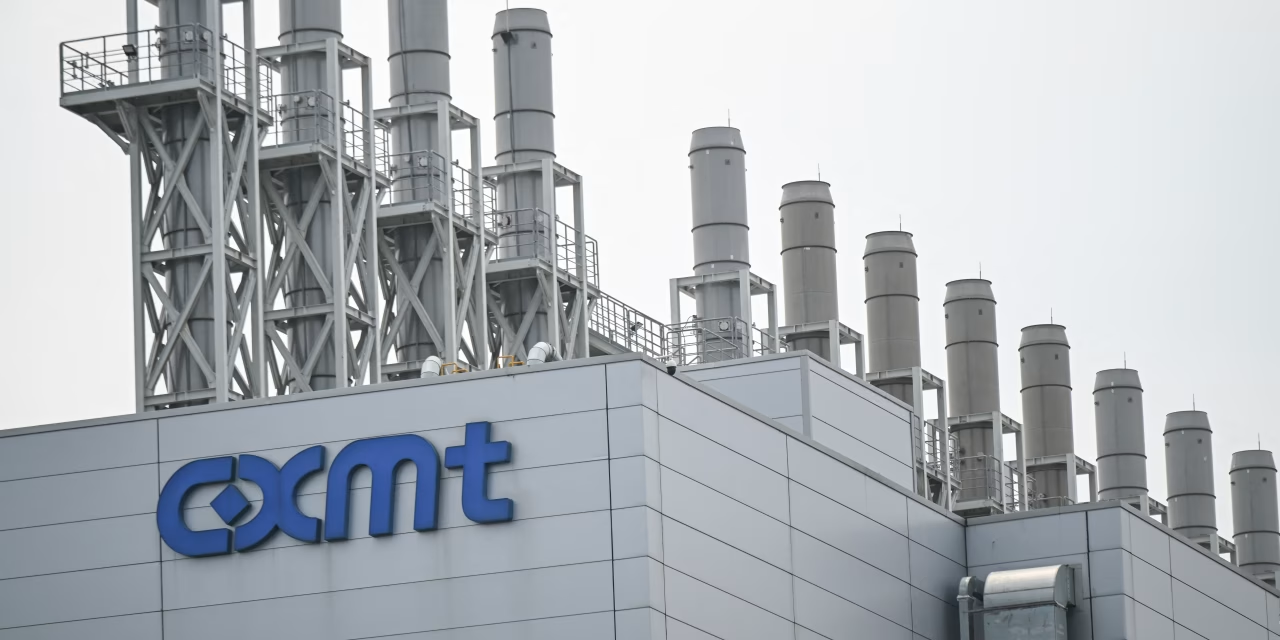
SINGAPORE—Memory-chip maker CXMT 688825 soared in its stock-market debut to become the most valuable company listed in mainland China, capping the rise of an upstart whose products are sought by Apple.
The company, founded just a decade ago, sported a market capitalization equivalent to $484 billion after its opening day of trading in Shanghai, topping Industrial and Commercial Bank of China to become the most valuable company listed in a mainland Chinese market. CXMT’s market value was just short of China-based internet company Tencent, which is listed in Hong Kong and is the most valuable company in that market.
Copyright ©2026 Dow Jones & Company, Inc. All Rights Reserved. 87990cbe856818d5eddac44c7b1cdeb8

Lakeland Financial beats earnings but misses on revenue
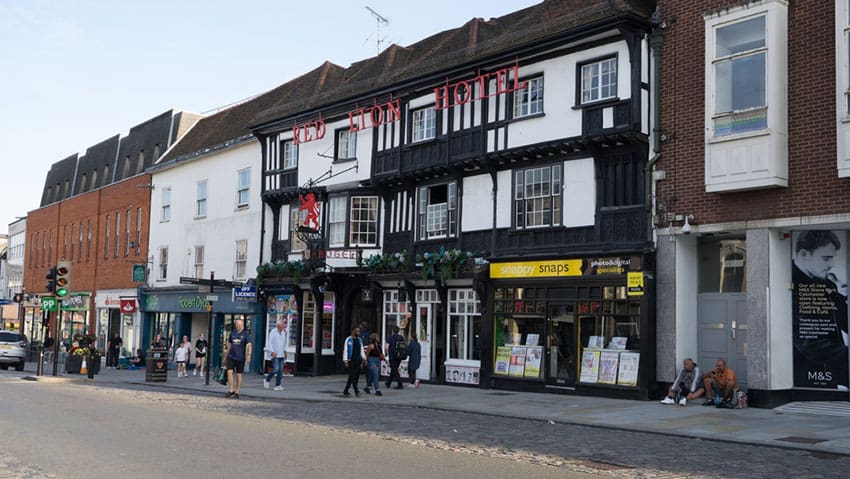
Confidence in growth prospects among privately owned businesses in the East of England has fallen to 83 per cent from 86 per cent at the start of the year, according to the mid-year update to KPMG UK’s Private Enterprise Barometer.
KPMG surveyed 1,500 privately owned businesses across the UK at the start of 2026, including 125 in the East of England, spanning sectors including life sciences, hospitality, food and drink and technology. It returned to the same businesses six months later to test how conditions had changed their outlook.
The regional figure remains above the UK average of 80 per cent. Nationally, confidence fell from 87 per cent when the same businesses were surveyed earlier in the year, KPMG said.
Technology was the leading investment priority among East of England firms, with 67 per cent naming artificial intelligence, cyber security or wider digital transformation. That is one percentage point above the UK average and 30 percentage points higher than at the start of the year.
Diversification was cited by 65 per cent, who said they were looking to expand their service offerings and broaden their client base, up from 64 per cent in January and two points above the national figure.
On funding, 53 per cent said they were using their own balance sheets to support growth plans. Among businesses considering how to pay for capital expenditure and expansion, 46 per cent said they were open to private equity investment, against a UK average of 45 per cent.
Asked about short-term risks, 48 per cent of East of England respondents named inflation and ongoing cost pressures, alongside global disruption affecting UK supply chains and trade, as the two biggest facing their organisations.
Looking to the Autumn Budget, 52 per cent of East of England firms said they wanted technology and digital capability prioritised by the incoming Chancellor. The same proportion pointed to the UK economic outlook and productivity growth as the biggest external factor shaping decisions on investment, growth and exit planning.
Joe Faulkner, East Anglia office senior partner at KPMG UK, said: “It’s encouraging to see businesses across the East of England maintaining confidence despite the challenges they’re facing. There’s a real sense that businesses here aren’t standing still but continuing to invest, particularly in technology, because they know it’s critical to staying competitive.
“What’s equally clear is that businesses can’t do it alone. They’re looking for government to match that ambition by prioritising digital investment and creating the right environment for innovation to thrive.”
Faulkner added: “The East of England has all the ingredients to remain one of the UK’s leading growth regions, particularly with the opportunities the Oxford-Cambridge Growth Corridor presents. If we continue to invest in the infrastructure and digital capability that businesses need, there’s a real opportunity to unlock even greater growth across the region.”
The corridor accounts for more than 7 per cent of UK GDP and over £40bn of economic output, according to the government’s Oxford-Cambridge Growth Corridor investment prospectus, which states that realising its potential could add a further £78bn by 2035.
Separate research by Beauhurst, published in May, found that 80 per cent of venture capital invested in the UK goes to London, Oxford or Cambridge, with headcount at innovative companies in Cambridge up 26 per cent between 2019 and 2024.
Nationally, KPMG said private businesses identified faster adoption of new technology and stronger digital capability, growth-focused investment and a renewed industrial strategy as the areas most in need of attention at the Autumn Budget.
Euan West, head of KPMG Private Enterprise in the UK and EMA, said: “2026 has continued to present private businesses with a challenging operating environment, shaped by uncertainty both at home and abroad.
“Against that backdrop, it is encouraging that eight in 10 business leaders remain confident about their growth prospects. While confidence has eased since the end of last year, the overall picture remains one of resilience and determination.
“What stands out most is how private businesses are responding. Rather than pulling back, they are investing in skills, technology and the capabilities that will help them remain competitive and unlock future growth.
“Private enterprise leaders are entrepreneurial, action-oriented and focused on what they can control. They are not waiting for conditions to improve; they are getting on with the job of creating growth.”

Jamie Young
Jamie Young is Senior Reporter at Business Matters, covering SME finance, employment law and Westminster policy since 2016. He has reported on every Budget and Autumn Statement since 2018, helped make sense of the ‘covid era’ and the bounce-back loan scheme from launch through the fraud investigations, and broke the magazine’s coverage of the 2024 late-payment reforms. He joined Business Matters straight from completing his BA in Administration from Exeter University and is NCTJ-qualified. Reach him at jyoung@cbmeg.co.uk
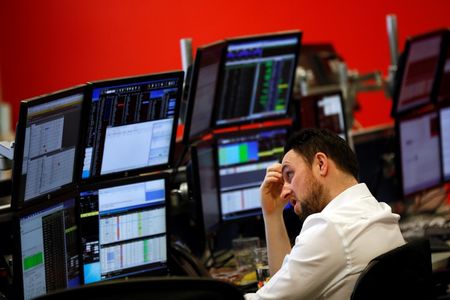
Hochtief pares decline after raising 2026 profit guidance
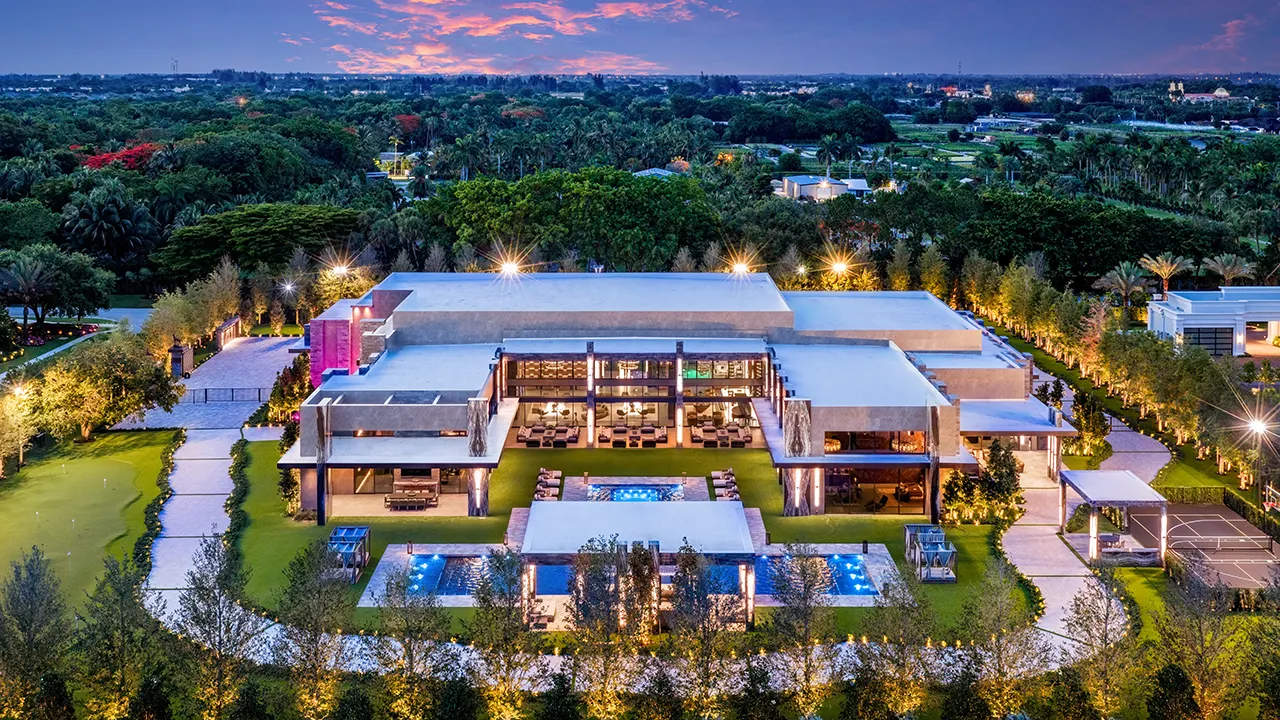
Douglas Elliman Florida executive director of sales Senada Adzem takes Fox News Digital inside the $85 million ‘Villa Skyfall’ in Stone Creek Ranch, where names like Mark Wahlberg, Steve Cohen, Russ Weiner and Khalil Mack are neighbors.
Just south of the intersection of two main roads in western Delray Beach, Florida, is a hidden community filled with properties “designed to make a billionaire’s jaw drop.”
Behind heavily guarded gates patrolled around the clock by former military veterans and Navy SEALs, a new standard of American luxury is quietly taking shape. Welcome to Stone Creek Ranch, where actor Mark Wahlberg, hedge fund billionaire Steve Cohen, Rockstar Energy founder Russ Weiner and NFL star Khalil Mack call themselves neighbors.
Fox News Digital got an inside look at the enclave’s newest flagship listing, “Villa Skyfall,” an $85 million James Bond-inspired estate complete with hidden passages and a poker room, a rainforest-style spa and 2.5 private acres.
“This is literally the most prestigious address in South Florida right now. What’s so extraordinary about the community is that, like you said, eight years ago, it was a hidden gem, not many people knew about it, and it’s truly evolved in terms of the level of A-list celebrity clients who are buying here, business and entrepreneur leaders who have already bought, and also the quality of that we’re now able to offer in this community,” Douglas Elliman Florida executive director and listing agent Senada Adzem, who’s already sold multiple homes in the neighborhood, told Fox News Digital.
LEGACY OVER LUXURY: INSIDE THE BILLIONAIRE BATTLE FOR THE FINAL PIECE OF MIAMI’S HISTORIC ‘OLD SOUL’
“Delray Beach has attracted global wealth now, and it’s a really special destination where it’s much quieter and more private than Miami or Palm Beach, and a lot of our clients really appreciate being in Stone Creek Ranch, where you can have large estates, a lot of privacy. They’re away from the prying eyes,” she continued. “They feel a peace of mind.”

Stone Creek Ranch’s “Villa Skyfall” spans 2.5 acres at a listing price of $85 million. (Photo courtesy: Daniel Petroni / FOXBusiness)
Crossing the entrance, guests are greeted by a warm yet modern architectural masterpiece rising behind reflective water features. The single-story estate features a 32-foot-tall grand salon illuminated by crystal chandeliers and backlit onyx, a museum-style automotive gallery, an Amazon rainforest-inspired spa, a hidden poker lounge and a 95-foot-long pool framed by cabanas, fire features and tropical gardens. Every transition appears designed for impact, turning stone, wood, glass, water and light into part of the experience throughout the home.
“It was designed to make a billionaire’s jaw drop,” Adzem said. “What we wanted to do is really follow that theme of very elegant, very sophisticated marketing. We’re not going for a mass audience. So we’re looking for that very specific buyer who appreciates what this property has to offer. And it offers a lot, truly, in every single way — it is one of one. It’s a trophy property.”
A new construction project as grand as Villa Skyfall takes an average of four to five years to complete, according to Adzem, but this estate was built in just 14 months. The $85 million asking price includes all the furniture, fully stocked bars and kitchens, Chanel, Dior and Hermès handbags in the closets, and even electric toothbrushes in each of the home’s 12 bathrooms.
The grand salon features 32-foot ceilings and illuminated onyx stone. | FOXBusiness
“Ultra-high-net worth clients now want top-of-the-line, turnkey properties. They want to come in and worry-free know [that] they’ll only need to bring their clothing, their personal items. Everything else will be provided for them,” Adzem said. “People are accustomed to coming in and having things in a way that they will really appreciate, and I think that’s what adds to the allure.”
There’s active interest coming from high-net-worth buyers fleeing high-tax states, with a heavy concentration of tech founders, finance executives and retiring entrepreneurs looking for private, family-oriented retreats.
“We’re seeing a lot of entrepreneurs who are looking to retire very soon, and they want a sanctuary for themselves and their family and people who really want to entertain… You have tax benefits of being in Florida, so we’re seeing clients from California, we’re seeing clients from New York and Connecticut. They’re primarily in the finance and tech worlds, and we have had a few celebrities as well,” Adzem said of the property’s showings thus far.
The backyard features two step-down lounges, fireplaces in the 95-foot pool, waterfalls, an LED screen and basketball court.
Listing a property at an $85 million asking price could set a record for Delray Beach, according to Adzem. At a time when the average American homebuyer is dealing with high interest rates and a tough housing market, she explained that while working families face distinct economic challenges, luxury buyers are exceptionally bullish and confident in South Florida real estate.
“Our clients, both in the ultra-luxury segment, as well as clients who are working… white-collar families who are looking to put their kids through school have different challenges that are facing them. However, what we have noticed is that they’re still very optimistic about the strength of the economy,” she said.
“Ultra-high net worth clients have greatly benefited from the strength of the stock market. So they feel encouraged that this is going to continue,” Adzem added, “and they’re very confident when it comes to investing in real estate, particularly in South Florida.”
GET FOX BUSINESS ON THE GO BY CLICKING HERE
Douglas Elliman Florida director of luxury sales Senada Adzem speaks to Fox News Digital about a surge in Canadian clients hoping to offload their South Florida homes over the growing perception ‘that they don’t feel welcome in the United States.’
While critics and real estate observers frequently question whether South Florida’s soaring luxury home values are approaching a peak, Adzem argued the continued influx of out-of-state capital tells a different story. She said the migration of high-earning families and corporate headquarters from traditional wealth centers has created a structural shift in the region’s economy that extends far beyond a temporary market spike.
“I do believe in the future of the Florida luxury market for many reasons,” Adzem told Fox Digital, highlighting Florida’s zero state income tax and favorable business climate. “There has been a lot of wealth migration into Florida… there’s just a confluence of events that is going to continue helping us attract unique buyers to very special properties.”

The price of oil sank more than 9% on Monday on hopes that a pause in attacks between US and Iran could help lead to a resolution to the conflict.
Brent crude, the global benchmark for oil, dipped below $88 a barrel, marking a sharp turnaround from last week when it had risen above $100.
The fall came after the US ambassador to the UN said attacks on Iran had been halted for a second night in a row to give “talks some space”.
An Iranian army spokesperson said on Sunday that Tehran had halted “retaliatory” attacks in the region in response.
The outbreak of the Iran war triggered a sharp rise in oil prices as the conflict led to the effective closure of the Strait of Hormuz, a key shipping route which usually carries about 20% of the world’s oil and liquefied natural gas (LNG).
When Iran and the US signed a memorandum of understanding in June to halt military operations and reopen the strait, the price of oil fell back to pre-war levels of around $70 a barrel.
However, the collapse of the ceasefire earlier this month reignited fears over global energy supplies and pushed the oil price back up.
Last week it hit $100 a barrel for the first time since May, with added concerns coming after Houthi militia in Yemen attacked oil tankers in the Red Sea, threatening a key export route that Saudi Arabia had used to bypass the Strait of Hormuz.
Susannah Streeter, chief investment strategist at Wealth Club, said markets were remaining “cautious given the twists and turns during this conflict”.
Despite the sharp fall in crude, “there is still significant uncertainty baked into these prices and a reticence about whether negotiations will lead to a lasting breakthrough,” she added.
The conflict between the US and Iran – and its impact on oil – has pushed up the cost of fuel such as petrol and diesel in many countries.
This often has knock-on effects on other prices, such as food, as businesses pass on the higher costs they are facing to customers, and this can push up the rate of inflation.
Sam Jones speaks with Jack McGinn about a decision for no full investigation into Qantas’ recent data breach.

Being indicted for a criminal offense in Georgia can be an overwhelming experience. Many people misunderstand what an indictment actually means, often assuming it is the same as a conviction. In reality, an indictment is simply a formal accusation that allows a criminal case to move forward through the court system. It does not determine guilt or innocence.
After an indictment is issued, several important legal steps follow before a case ever reaches trial. Understanding these procedures can help defendants make informed decisions and better protect their rights throughout the criminal justice process.
Understanding What an Indictment Means
An indictment is a formal charging document issued by a grand jury. In Georgia, prosecutors present evidence to a grand jury, which determines whether there is probable cause to believe a crime was committed and that the accused person committed it.
Unlike a trial, grand jury proceedings are conducted in private, and the defendant generally does not have the opportunity to present evidence or cross-examine witnesses.
An indictment does not establish guilt. Instead, it authorizes prosecutors to proceed with the criminal prosecution. The prosecution must still prove every element of the alleged offense beyond a reasonable doubt during later court proceedings.
Understanding this distinction is important because many defendants mistakenly believe that an indictment means their case is already lost.
The Defendant Is Formally Notified of the Charges
Once the indictment has been returned, the defendant is formally notified of the criminal charges. If the person has already been arrested, they may receive the indictment while the case is pending. If they have not yet been taken into custody, law enforcement may execute an arrest warrant based on the indictment.
The charging document outlines
- The alleged offenses
- The applicable criminal statutes
- The dates of the alleged conduct
- The jurisdiction where the offense occurred
- Any additional counts included by prosecutors
Reviewing the indictment carefully allows the defense to understand exactly what the prosecution intends to prove.
Errors or inconsistencies within the indictment may also become important issues later in the case.
Arraignment and Entering a Plea
Following an indictment, the defendant usually appears in court for an arraignment. During this hearing, the judge formally advises the defendant of the charges and asks for a plea.
The defendant generally has three options
- Guilty
- Not guilty
- Nolo contendere (where permitted)
In most contested criminal cases, defendants initially enter a not guilty plea. This allows the defense time to investigate the allegations, review evidence, negotiate with prosecutors, and prepare for trial if necessary.
The arraignment itself is typically brief, but it officially moves the criminal case into the next stage of litigation.
The Discovery Process Begins
After arraignment, prosecutors and defense attorneys begin the discovery process. Discovery allows both sides to exchange information relevant to the case.
Common discovery materials include
- Police reports
- Witness statements
- Surveillance videos
- Body camera footage
- Laboratory reports
- DNA evidence
- Medical records
- Digital evidence
The defense carefully reviews every piece of evidence to identify weaknesses in the prosecution’s case.
Attorneys often uncover inconsistencies, missing evidence, or constitutional issues that may affect the admissibility of certain evidence at trial.
A thorough review during discovery frequently shapes the overall defense strategy.
Pretrial Motions and Negotiations
Before trial begins, attorneys may file numerous pretrial motions seeking favorable rulings from the court.
Examples include motions to
- Suppress illegally obtained evidence
- Exclude unreliable witness testimony
- Dismiss defective charges
- Compel additional discovery
- Limit certain evidence during trial
At the same time, plea negotiations often occur between prosecutors and defense attorneys.
Depending on the strength of the evidence, prosecutors may agree to reduce charges or recommend a lesser sentence in exchange for a negotiated plea agreement.
Every case is unique, and decisions regarding plea negotiations should be made only after carefully evaluating the available evidence and potential trial risks.
Trial Preparation Is Critical
If the case is not resolved through dismissal or plea negotiations, both sides begin preparing for trial.
Defense attorneys may
Interview witnesses
- Hire expert witnesses
- Review forensic evidence
- Examine surveillance footage
- Develop cross-examination strategies
- Prepare opening and closing arguments
The seriousness of the alleged offense often influences the complexity of trial preparation. For example, cases involving allegations that carry a lengthy aggravated assault sentence in Georgia require careful examination of witness testimony, forensic evidence, and the specific legal elements prosecutors must prove.
Because criminal convictions can carry severe consequences, thorough preparation is essential before presenting a case to a jury.
The Case Moves Toward Trial or Resolution
As trial approaches, both parties continue evaluating the strengths and weaknesses of the case.
Some criminal cases resolve shortly before trial through negotiated plea agreements. Others proceed before a judge or jury, where prosecutors must prove guilt beyond a reasonable doubt.
Throughout this process, experienced Savannah criminal defense attorneys work to protect their clients’ constitutional rights, challenge questionable evidence, negotiate favorable resolutions when appropriate, and prepare strong defenses for trial if necessary.
Even after an indictment, numerous legal opportunities remain available to challenge the prosecution’s case. An indictment simply marks the beginning of formal criminal proceedings not the final outcome.
Conclusion
An indictment is a significant milestone in a Georgia criminal case, but it should never be viewed as a determination of guilt. After an indictment, defendants typically move through several important stages, including arraignment, discovery, pretrial motions, plea negotiations, and potentially trial.
Each phase presents opportunities to evaluate evidence, protect constitutional rights, and build an effective defense strategy. The decisions made during these stages can have a substantial impact on the outcome of the case.
Understanding what happens after an indictment helps defendants navigate the criminal justice system with greater confidence. By responding promptly, working closely with experienced legal counsel, and carefully preparing for each stage of the proceedings, individuals facing criminal charges can better protect their rights and pursue the best possible outcome.
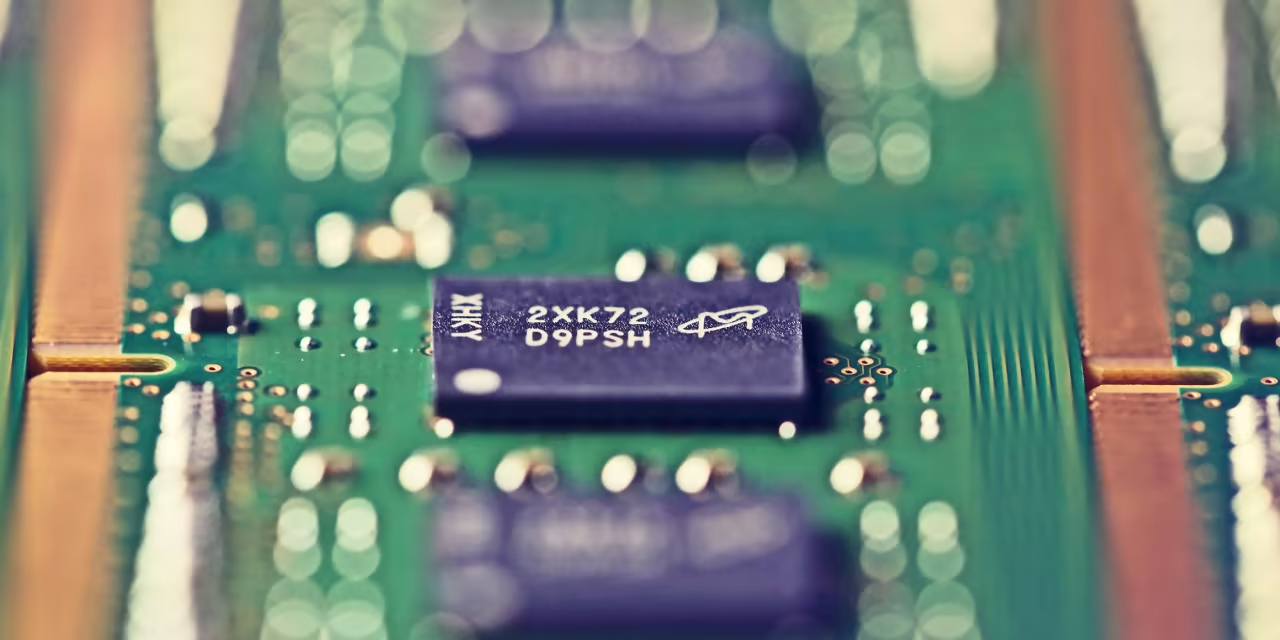
Micron Rival CXMT’s Stock Soars 466% After IPO as the Memory Boom Takes a Twist

Kinder Morgan: Not The Best Midstream Stock, Still A Buy

BNY Mellon Unit Joins MiCA Register With 15 CASPs

Alan Ritchson’s World War II Blockbuster Is Leaving Streaming in Less Than 1 Month

Renter of Home in Anne Heche Crash Denies Settlement With Son

No Jackpot Winner as $257 Million Prize Rolls Over to $269 Million Monday Draw

Weekend Open Thread: Staud – Corporette.com

‘Love or Money’ FULL MOVIE | Angelica Panganiban, Coco Martin

RAID 2: MONEY MONEY (Song) | Yo Yo Honey Singh, Ajay Devgn, Jacqueline F, Riteish D | Bhushan Kumar

“I’m MEGA BULLISH! Ethereum’s About to SHOCK the ENTIRE MARKET!” – Jordi Visser
-

 Fashion3 days ago
Weekend Open Thread: Brooks Brothers
-

 Crypto World6 days ago
Grayscale Files For Worldcoin ETF, WLD Registers Sharp Rise
-

 NewsBeat6 days ago
How a former Blue Peter presenter stunned America’s Got Talent judges
-

 Tech6 days ago
Sail Virtually Aboard The “Itanic” With IA-64 Emulator
-
 Tech6 days ago
Turtle Beach Command Series KB7 review: a nifty screen-equipped gaming keyboard
-

 Tech11 hours ago
Intel is reversing course and bringing hyper-threading back to its server chips
-
 Business5 days ago
New Jersey voter registration controversy explained: How 6,600 noncitizens got on the rolls, and what happens next
-
 Entertainment6 days ago
Johnny Depp’s R-Rated Gothic Cult Classic Gets New Release Ahead of Sydney Sweeney Remake
-

 Tech7 days ago
Watch Flock Safety CEO Garrett Langley discuss the future of surveillance at TechCrunch Disrupt 2026
-

 Crypto World4 days ago
Ethics, other provisions in crypto Clarity Act to be further discussed
-
 NewsBeat6 days ago
Shanghai science forum photos show China’s AI and robotics advances in rivalry with US
-
 Sports15 hours ago
Commonwealth Games boxing: Jadumani Singh seals dominant 5-0 win over Pakistan’s Sumama Rehman to enter quarter-finals | Commonwealth Games News
-

 News Videos4 days ago
The Peugeot Family: How 200 Years of an “Old Money” Dynasty Died in A Boardroom
-

 Sports3 days ago
2026 3M Open leaderboard: Scottie Scheffler finds putter in Round 1, sits three back
-

 Politics23 hours ago
Spain sweeps the board at 2026 World Cup with individual awards
-

 Fashion3 days ago
16 Dresses for the High Summer Event
-

 Crypto World6 days ago
Andrew Cuomo joins OKX board as crypto exchange expands in U.S.
-

 Tech7 days ago
The 35 Best Board Games for Family Game Night
-
 Entertainment3 days ago
A New Post-Apocalyptic Gundam Anime Series Blasts Into SDCC
-

 News Videos14 hours ago
BITCOIN JUST ENTERED THIS CRITICAL ZONE…
You must be logged in to post a comment Login