

Politics
Burnham’s ‘new’ cabinet packed with friends of genocide

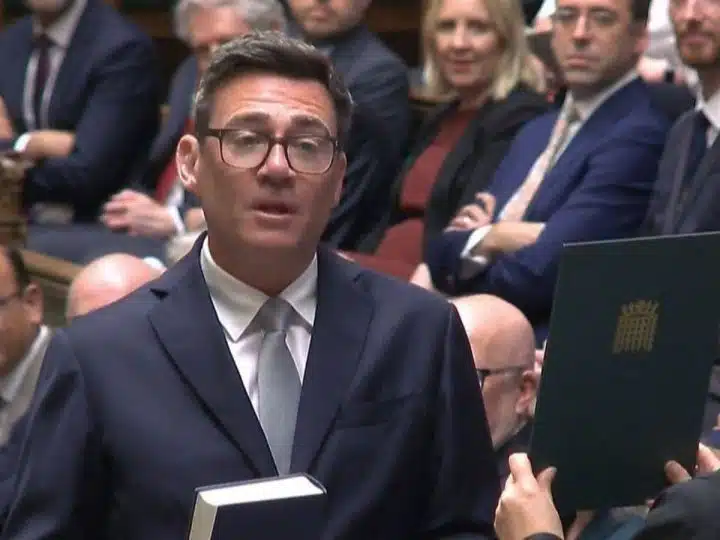
New Prime Minister Andy Burnham‘s first speech as Labour leader claimed that he represents the biggest change in UK politics in 40 years. But his ‘new’ cabinet is a regurgitation of the same Labour Friends of Israel (LFI) Genocide and the so-called, ultra-Zionist ‘Jewish Labour Movement’ (JLM) who have blighted the Labour party and UK politics for the past decade.
The media has joined in on the fiction, blaring that his reshuffle has purged the Starmeroid caucus. In reality, Burnham has just replaced a handful of them with a different handful, while many have retained their jobs or been promoted.
For example, police-state horror Shabana Mahmood staying as home secretary and slash (benefits) and burn (Palestinians and Russians) John Healey moving from defence to chancellor, so he can implement his plan.
Burnham’s shop of horrors
Below is a list, which may not be exhaustive, of LFI and JLM ‘members’ in Burnham’s ‘new’ team:
Andy Burnham – Prime Minister
Louise Haigh – Effectively deputy PM
John Healey – Chancellor
Ed Miliband – Foreign Secretary
Wes Streeting – Defence Secretary
Yvette Cooper – Health Secretary
Lucy Powell – Education Secretary
Jonathan Reynolds – Business Secretary
Pat McFadden – Work & Pensions Secretary
Emma Reynolds – Treasury Secretary
Chris Bryant – Northern lreland Secretary
Douglas Alexander – Scottish Secretary
Angela Eagle – Environment Secretary
Hamish Falconer – State Minister
Mike Tapp – Home Office Minister
Matthew Pennycook – Housing Minister
Alison McGovern – Local Government Minister
Preet Gill – Health Minister
Sharon Hodgson – Health Minister
Michael Shanks – Energy Minister
Lilian Greenwood – Transport Minister
Mary Creagh – Environment Minister
Ellie Reeves – Solicitor general
Culture Secretary Lisa Nandy is also a major recipient from Israel lobby donors. Continuity friends of genocide with more northern accents.
Featured image via the Canary
By Skwawkbox


Reform UK has multiple ongoing financial scandals right now. Several of these scandals link to the convicted fraudster George Cottrell – a.k.a. ‘Posh George’. Now, journalists have linked Cottrell to another dubious figure (a figure who is herself linked to Donald Trump):
This photo at Posh George's Montenegro penthouse was taken days after we exposed him as the criminal bankrolling Farage
Who is she?
We didn't expect to identify her as a US federal judge Or to uncover he paid her late husband, former AG for Arizona, where he was convicted pic.twitter.com/GvhMGaI5uz
— Venetia Menzies (@venetiamenzies) July 26, 2026
Reform aristo-cash
Posh George provided Nigel Farage with various benefits in the runup to the 2024 general election:
EXCLUSIVE
Nigel Farage failed to declare that a criminal and crypto gambler paid for his staff, security, drivers, social media output in year before election
Reform leader has also received free accommodation in Westminster from George Cottrell as MPhttps://t.co/fSKszEDnV1
— Gabriel Pogrund (@Gabriel_Pogrund) July 4, 2026
This all happened in the runup to the election, which meant Farage potentially should have declared it after he became an MP. Farage and Reform defended not doing so on the basis that he wasn’t an MP and the benefits didn’t link to political activity, but the rules are that incoming MPs should provide details of any potentially relevant payments they received from the 12 months before they became an MP.
Parliament has paused the investigation into all this while Farage fights the Clacton by-election, but will resume after its conclusion.
On Cottrell, we added:
Cottrell is an aristocrat with a criminal record who’s involved ” in an offshore crypto gambling platform implicated in potential criminal betting in the UK”. As you might have guessed, he’s currently angling for a pardon from president Donald Trump – a good friend of Farage’s.
It later came out that Cottrell may have also made undeclared donations to Reform UK:
EXCL by @ManuMidolo ft me @venetiamenzies @GeorgeGreenwood
The criminal who funded Nigel Farage made undisclosed donations to Reform in apparent breach of electoral law
George Cottrell lawyers at Carter Ruck refuse to say when he became permissible donor https://t.co/yFEalCjDdr — Gabriel Pogrund (@Gabriel_Pogrund) July 12, 2026
And more keeps coming out:
BREAKING
Reform had its bank account frozen at height of general election after potentially illegal donations from George Cottrell's mother and Richard Tice
We reveal Arbuthnot Latham, its bank, blocked payments for two weeks after suspect transactions https://t.co/2xPKI827mO
— Gabriel Pogrund (@Gabriel_Pogrund) July 25, 2026
Judge not
As Venetia Menzies of the Times reported, the judge pictured at Cottrell’s residence is linked to president Donald Trump:
In 2023 her late husband Mark Brnovich retired as Arizona AG
Cottrell then paid him thousands for "legal services"
Brnovich then befriended Farage, and courted politicians in Montenegro such as prime minister Spajic, who Cottrell is accused of financing – which he denies pic.twitter.com/gonHwGEvZf — Venetia Menzies (@venetiamenzies) July 26, 2026
Menzies further noted that Trump has a habit of pardoning people who once would have been considered un-pardonable:
Cottrell announced he was lobbying for a pardon last summer
Mark died this January, with Cottrell dedicating his book "How to Launder Money" to his friend and mentor pic.twitter.com/dAKq6QcVwN
— Venetia Menzies (@venetiamenzies) July 26, 2026
The above isn’t a joke, by the way; Cottrell actually authored a book titled How to Launder Money. As you can see in the link below, it’s presented as a “guide for law enforcement”:
The latest revelations are attracting significant negative attention anyway:
What the actual….? — The Finance Guy (@OneFinanceGuy) July 26, 2026
This is probably the most extreme example of someone meddling in their own pardon by corrupting US officials. Quite possibly the most notorious case of transatlantic corruption between Reform and MAGA.@mehdirhasan @harryjsisson @itsdeaann https://t.co/EMI6y4JeuX pic.twitter.com/ApsMEbdVUU
There’s also speculation as to why the establishment media has suddenly found its teeth when it comes to Farage and his party:
My guess is that the Murdoch empire reckons Farage is no longer capable of winning a general election but could still stop the Tories from doing so. Expect Murdoch outlets to swing fully behind the Tories, who are now almost as far to the right as Reform anyway. https://t.co/tOFLU1K2oU
— Tom Scott
 (@Tom___Scott) July 26, 2026
Problems mounting
The more that the media looks into Reform UK and its various backers, the worse things look. And with three years between now and the next election, the party’s prospects of winning a majority are looking increasingly bleak.
Featured image via the Canary
By Willem Moore
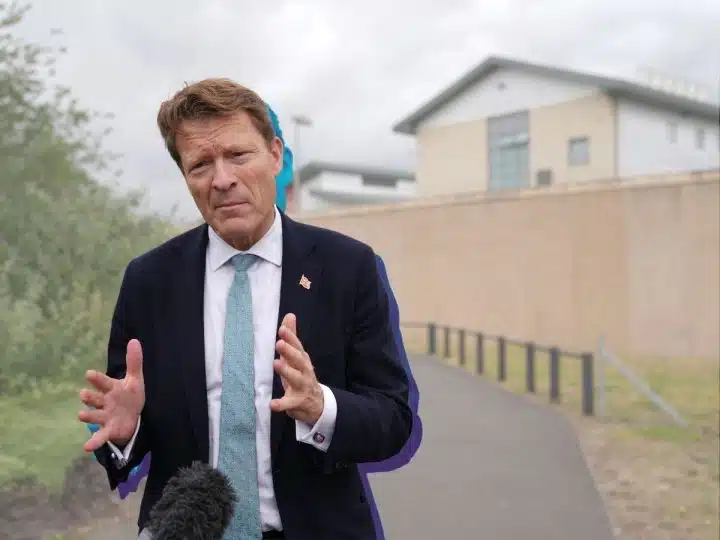
Reform UK and its senior politicians have embroiled themselves in several ongoing financial scandals, and deputy leader Richard Tice is now complaining that…people have noticed said financial scandals. Many of these controversies relate to funding the party received in the runup to the 2024 general election. And in what seems to be a clear sign that the Reform people are rattled, Richard Tice is now attacking the media outlets investigating him:
Both the BBC and Metropolitan Police appear to have acted in clear breach of legal obligations, contrary to well-established case law, in the BBC’s reporting about me over the weekend.
I have written to both the Commissioner of the Metropolitan Police and the BBC’s…
— Richard Tice MP
 (@TiceRichard) July 26, 2026
Richard Tice panic stations
Tice’s message read in full:
I have written to both the Commissioner of the Metropolitan Police and the BBC’s Director-General setting out these serious breaches. My lawyers have also been instructed.
Any media organisation considering repeating these allegations should exercise the utmost caution.
Tice has taken particular offence with the BBC, who reported the following:
Police are investigating payments to Reform UK by a company controlled by the party’s deputy leader, Richard Tice, BBC News has learned.
Britain Means Business gave the party two donations of £250,000 in the run-up to the 2024 general election, when Tice was party chairman.
Tice has said the money was given to his firm by Fiona Cottrell, a significant donor to Reform UK and mother of a convicted fraudster with close links to Nigel Farage.
The convicted fraudster in question is George Cottrell – a.k.a. ‘Posh George’. Posh George is also linked to other party scandals, having partially bankrolled Farage and Reform in the runup to the 2024 election:
EXCL by @ManuMidolo ft me @venetiamenzies @GeorgeGreenwood
The criminal who funded Nigel Farage made undisclosed donations to Reform in apparent breach of electoral law George Cottrell lawyers at Carter Ruck refuse to say when he became permissible donor https://t.co/yFEalCjDdr
— Gabriel Pogrund (@Gabriel_Pogrund) July 12, 2026
As with Tice, people accused Farage of trying to deflect from his scandals by focusing on everything besides the issue at hand. The key example of this was the Clacton by-election which Farage instigated for no obvious reason.
Deflections
Back to Tice, the BBC also noted:
The BBC understands that the party was not aware of the investigation into the payments from Britain Means Business.
So Tice’s issue is that the BBC and other outlets seems to have become aware of things he wasn’t aware of. In other words, he doesn’t seem to understand what ‘journalism’ is.
The BBC reported that the Metropolitan Police is investigating political donations made via a company controlled by Tice.
The Met confirmed this. Neither organisation claimed Tice is guilty.
Now he's threatening every newsroom that accurately repeats those facts. https://t.co/pnlEyXca1U
— Rebecca Tidy (@DrRebeccaTidy) July 26, 2026
Tice also seems to think that people are going to care more about how the revelations came out than the revelations themselves. This is optimistic on his part. It’s especially optimistic given that Reform has spent the past few months trying to deflect from its many scandals with pretty much no success.
As the Times revealed, the donations in question led to Reform’s bank blocking its payments for two weeks around the 2024 election:
BREAKING
Reform had its bank account frozen at height of general election after potentially illegal donations from George Cottrell's mother and Richard Tice We reveal Arbuthnot Latham, its bank, blocked payments for two weeks after suspect transactions https://t.co/2xPKI827mO
— Gabriel Pogrund (@Gabriel_Pogrund) July 25, 2026
The Times also reported:
Taking into account money she donated directly or via Tice’s company, Fiona Cottrell provided 35 per cent of all payments received by Reform during the [2024 election] campaign. She has never commented on the source of her wealth or the subsequent inquiries by the National Crime Agency or Scotland Yard.
Attention economy
By kicking up such a fuss, Reform and Tice could end up triggering the Streisand Effect; i.e. they could draw more attention to the story than if they just kept quiet. In other words, we encourage them to carry on kicking up a fuss.
Featured image via the Canary
By Willem Moore
Politics
Activists confront Aviva Norwich HQ for insuring migrant detention and surveillance private contractors
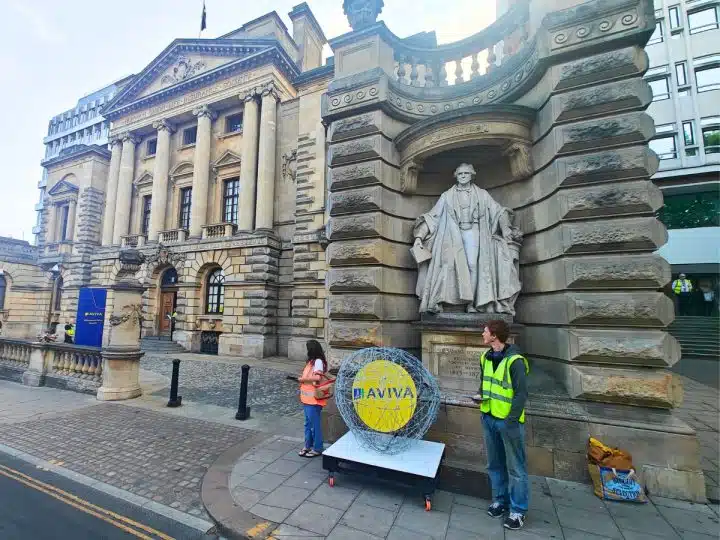
On Friday 24 July 2026, from 8.00-9.00am, activists converged on Aviva’s historic Norwich headquarters. They were demanding the insurer severs ties with companies accused of human rights abuses against migrants and asylum seekers.
They brought a 1.5m barbed wire ball surrounding Aviva’s logo, and spoke to hundreds of staff as they made their way to work.
Aviva insures the largest number of migrant detention and surveillance contractors operating in the UK. Activists say this record sits in stark contradiction to the company’s publicly stated human rights commitments.
Profiting from abuse?
Aviva, which grew out of Norwich Union to become a multinational company, positions itself as a leader on corporate human rights. Yet campaigners allege the insurer is failing to uphold its own due diligence policies.
They point out it continues to underwrite private corporations accused of serious human rights violations connected to the detention and surveillance of migrants and asylum seekers. These companies include Serco and Mears.
Activists are specifically calling on Aviva to drop its insurance contract with Serco, which comes up for renewal on 31 October 2026. Campaigner for Boycott Bloody Insurance, Andrew Taylor said:
Aviva’s five-plus years of cover have enabled Serco’s continued operation of immigration detention centres, round-the-clock surveillance of migrants, and substandard housing provision. Aviva has continued to insure Serco after reports of sexual abuse, human rights abuses and fraud. It’s time for Aviva to break ties with Serco.
Local context: migrant housing in Norwich
The action carries particular weight in Norwich. In 2025, the city saw a surge of anti-migrant protests outside hotels housing asylum seekers. Occupants and staff faced harassment and assault.
Following the closure of the Brook Hotel in Bowthorpe, there are currently no hotels in Norfolk housing asylum seekers, according to Home Office data. But campaigners say the underlying detention system remains intact.
Representing Nelson Ward in Norwich, Green Party councillor Hannah Hoechner said:
Serco’s role in the UK’s immigration system is a stark reminder of what happens when government outsources responsibility for vulnerable people’s lives.
Despite serious concerns raised about the treatment of those detained in Serco-run facilities, the company continues to be awarded contracts worth billions from the UK government.
The UK’s asylum system should be built on dignity, compassion and accountability—not on contracts that allow private companies to put profit over basic human rights.
What activists are demanding:
- Aviva drops its insurance contract with Serco before its renewal on 31 October 2026.
- Aviva conducts transparent, independently verifiable human rights due diligence on all clients involved in migrant detention and surveillance.
- Aviva publicly reports on the steps taken to align its underwriting portfolio with its human rights commitments.
Featured image supplied
By The Canary

Luke Littler delivered a record-breaking masterclass to retain his World Matchplay crown, overpowering Gerwyn Price 18-9 at the Winter Gardens and becoming the first darts player since Michael van Gerwen to win back‑to‑back titles.
The 19‑year‑old produced an extraordinary 111.53 average, hit 12 maximums and reeled off six ton‑plus finishes in a performance that never dipped, never loosened and never allowed Price a meaningful foothold.
Price, the 2022 runner‑up, averaged 104.97 himself. This was his best of the week, but he still found no way to disrupt Luke Littler’s rhythm.
The world no. 1’s scoring power and relentless accuracy pushed him clear early and kept him there, sealing a second straight Blackpool triumph and extending his lead at the top of the PDC rankings.
Luke Littler set the tone
The opening exchanges went with a throw before Littler detonated the first major blow: a clinical 167 checkout, his first bull finish of the tournament. He backed it up instantly with a 110 to hold, moving 4-1 ahead despite Price averaging north of 109 in the mini‑session.
From there, Littler tightened the screw. Back to back 11‑dart legs followed, then a tops‑tops finish for his third ton‑plus checkout inside the first nine legs. Price held where he could, but Littler’s scoring was already stretching the match beyond him.
Littler’s most brutal burst came across four legs that took him from 7-3 to 11-3. He pinned 128, then 127, and needed just 47 darts to sweep through the session. Price responded with successive legs to halt the slide, but the gap remained vast and the momentum stayed firmly with Littler.
Price kept himself within six legs, but Littler’s late acceleration was inevitable. A stunning 148 checkout landed with the same ease as everything else, followed by a break of throw that pushed him into the finishing straight.
He closed out the title with an 81 on the bull – a fitting end to a week where he averaged 109 or better in all five matches and smashed Phil Taylor’s long‑standing tournament scoring record from 2010.
Historic numbers, historic run
Littler’s victory marked his 10th consecutive win over Price and his 28th straight victory in PDC major matches over 20 legs, a streak stretching back to the 2024 World Championship final.
He also broke his own record for most 180s in a World Matchplay campaign and reclaimed the Phil Taylor Trophy along with the £225,000 first prize cashpot, pushing his season earnings past the £3 million barrier.
The win continues his perfect run through every PDC TV major in 2026, strengthening his bid to sweep the entire ranked major calendar.
Price had spoken before the final about needing his A‑game to challenge Littler. He produced something close to it, but the teenager’s finishing and scoring left him with too few chances to apply pressure.
Price acknowledged on air afterwards that the 167 checkout was a turning point and praised Littler’s consistency. He called him “one in a million” and admitted he was a little bit gutted not to have converted more of his opportunities.
Price’s run to the final included strong wins over Joe Cullen and Peter Wright, and his scoring throughout the week had been solid. But against Littler, he found himself repeatedly forced into chasing legs rather than dictating them.
It just was not meant to be for Price on this occasion.
To be clear on this performance, Luke Littler won 12 legs in that final in 12 darts or less.
It means the opponent has got to hit a 9 darter to win those legs. It was just not happening. Littler’s becoming unbeatable.
With every major still to come, and with his form showing no sign of dipping, Littler’s season continues to build towards a potential sweep of the ranked PDC majors. A feat no player has achieved.
Featured image via Luke Littler/ Instagram
By Faz Ali

Jewish Voice for Liberation (JVL) has issued a withering statement seeing off disgraced former prime minister Keir Starmer and demanding better from his replacement.
Starmer, buh-bye – do better Burnham
In an article on its website, the left-wing group looks back on Starmer’s record, particularly the lies in his departing speech about the findings of the Equality and Human Rights Commission (EHRC) on Labour under Jeremy Corbyn.
JVL’s verdict is that the EHRC’s report, and Starmer’s shameless misquoting of it, are a hypocritical “triple outrage” and an “extraordinary travesty”.
It elaborates:
First, the EHRC did not make any finding of ‘institutional antisemitism’. That term is not defined in law and does not appear in the EHRC’s report. The phrase conjures an organisation in which antisemitic speech and conduct are pervasive and which directly discriminates against Jewish people. Submissions to the EHRC did level these allegations against the Labour Party, but the EHRC did not uphold them.
Second, the EHRC’s actual, far more limited findings relied upon serious misrepresentations of both the facts and the law. This has been set out in detail elsewhere by JVL as well as the investigative journalist Paul Holden. The Labour Party under Jeremy Corbyn mounted a robust defence, but Holden reports that after Starmer became leader, he withdrew the party’s objections and thereby allowed the EHRC’s flimsy indictment to stand unchallenged.
Third, Starmer himself reportedly engaged in the very behaviour the EHRC had condemned. Multiple accounts relate that Starmer was personally involved in the decision to suspend Corbyn over his response to the EHRC report. This arguably amounts to ‘political interference’ in disciplinary cases of the kind that, according to the EHRC, unlawfully discriminates against Jews.
Put otherwise: Starmer colluded in the production of a flawed report on antisemitism, then violated this same report, and then flagrantly misrepresented it—all as part of an apparent effort to traduce his factional opponents.
We deplore Starmer’s misrepresentation of the EHRC report, we denounce the political weaponisation of the fight against antisemitism, and we endorse Peter Oborne’s measured verdict on Starmer’s exit from British political life: ‘Good riddance.’
It adds, to Andy Burnham:
We urge Andy Burnham as prime minister to have no truck with such distortions but to pursue a non-partisan anti-racist policy that is grounded in evidence and informed by universal human rights principles.
Tragically, Burnham’s cabinet appointment of a host of ‘Labour Friends of Israel’ suggests he has no intention of changing anything meaningful.
Featured image via the Times
By Skwawkbox
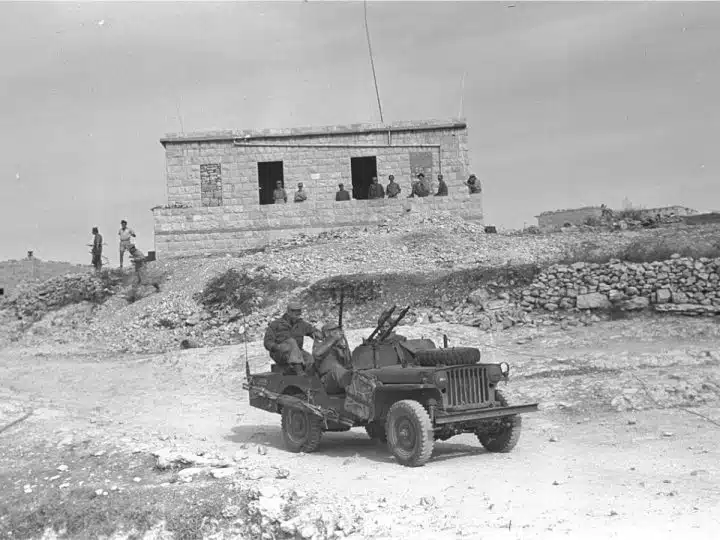
Hardly had the Second World War drawn its heavy curtains when Levantine and regional politics spun back into a vortex of bewilderment and existential struggle, causing widespread destruction across Palestine and Lebanon.
This was the inevitable detonation of the Arab-Zionist conflict over the identity and future of the historic land of Palestine. Exhausted economically and politically by the fallout of the global war, Great Britain found its continued position as a mandatory power in Palestine untenable. It could no longer withstand the blows of the Arab resistance and Zionist insurgent operations.
Following its absolute failure in February 1947 to reach any mutually acceptable political settlement, London decided to abandon the file entirely and cast it into the lap of the newly established United Nations, calling upon the international body to handle the issue.
The Partition Resolution and the Rejected Border Map
On 29 November 1947, the United Nations General Assembly approved the historic Resolution 181, which explicitly called for:
the partition of Palestine into independent Arab and Jewish States, bound by a close economic union, and the establishment of a special international regime and international trusteeship for the City of Jerusalem.
The Arab states and Palestinian leadership swiftly rejected the resolution in its entirety, viewing it as a stab into the heart of the nation. They publicly vowed to prevent its implementation on the ground, even if compelled to deploy total military force.
Yet, a meticulous geopolitical reading of the 1947 partition map reveals that, had it been implemented operationally, its structural impact on the shape and nature of the border between Palestine and Lebanon would have been profound and radical.
According to the precise terms and demarcations of the resolution, that long stretch of the 1923 international frontier – extending from the Mediterranean coast at Ras al-Naqoura in the west to a point situated immediately north of the Palestinian village of Salha in the east – would have fallen entirely under the sovereignty and authority of the proposed independent Arab Palestinian State.
Along the coastline, Arab jurisdiction and sovereignty were intended to stretch from Ras al-Naqoura in the far northwest down to the city of Acre in the south, while its northern interior sector was to reach a strategic point located directly south of the city of Nazareth.
It is patently clear how completely the Palestinian side of the sensitive border zone adjacent to Lebanon would have been altered by the execution of this resolution. The district of Safad – a geographical zone that had occupied a prominent and central position in the arduous post-WWI Anglo-French border negotiations due to Zionist insistence on integrating the existing Jewish settlements established there – was consciously excluded by the resolution to be subsequently incorporated into the proposed borders of the projected Jewish State.
This was done despite the undeniable fact that a crushing and decisive majority of the indigenous population were Arabs who held both the land and its history.
Beirut’s Territorial Ambitions
Nevertheless, armed Arab opposition and categorical political rejection ensured that the international partition resolution would never find a peaceful path to execution.
As the British Mandate approached its formal and dramatic termination in May 1948, security and military conditions along the border line between Palestine and Lebanon rapidly degenerated into the exact same state of absolute chaos and clashes that had prevailed during the Great Arab Revolt between 1936 and 1939.
An irregular, volunteer Arab military force known as the ‘Arab Liberation Army’ (or the Salvation Army), led by the military commander Fawzi al-Qawuqji – one of the most prominent leaders and combatants of the 1936 revolt – was operating dynamically and fighting fiercely on both sides of the Upper Galilee border. Meanwhile, South Lebanon, which by then had become a part of the newly independent Lebanese Republic, was transformed once again by the force of nationalist ties into a safe haven, a logistical supply base, and a vital launching pad for Arab fighter incursions against Zionist colonies.
As had been the case a decade earlier, the Lebanese entity in Beirut, with its fragile sectarian architecture, appeared neither willing nor militarily capable of intervening to regulate or prevent the commando and resistance operations against targets in Palestine, which were launched freely from its southern territories.
Much like the surrounding sister Arab states, the ruling elite in Lebanon harboured serious doubts and anxieties regarding the capacity of the Palestinians to establish an independent and viable Arab state within a fragmented Palestine. Furthermore, mirroring the fraternal Arab governments that acted on tactical nationalist and expansionist motives, Lebanon officially coveted the acquisition of certain lands and geographical zones at the expense of mandated Palestine to expand its own borders.
The 1948 Invasion of Lebanon
Consequently, the government in Beirut took the decision to utilise the small Lebanese Army to support and supply Qawuqji’s forces. They hoped that, if there were to be a partition and carving up of Arab Palestine, Beirut could at the very least claim the historical and geographical annexation of the Upper Galilee to Lebanese sovereignty. However, there were clear political and military limits to Lebanon’s military commitment in the battle to ‘save’ Palestine.
Possessing a regular army that was highly limited in size and efficiency – designed and armed primarily for the requirements of maintaining internal security and suppressing local unrest – Lebanon was not in a military position to conduct sustained offensive operations or wage a wide war of attrition in Palestine. Accordingly, its direct military involvement in the struggle for Palestine was mostly symbolic, functioning as a calculated political manoeuvre to secure the maximum possible political and territorial gains while expending the minimum of military effort and sacrifice.
From the perspective of the Zionist military command, which was fighting an existential battle, there were three clear tactical routes and axes of advance leading from Lebanon into the depth of Palestine:
- on the left flank from Ras al-Naqoura, moving directly along the coastal line toward the city of Acre;
- through the central sector stretching from the environs of Bint Jbeil to any number of border crossings;
- and on the right flank through the strategic Hula Valley via Marj’ayoun and Metula.
However, as the military historian Sacher noted in his analyses:
the lines of communication … were not favourable to an attack; the roads through the Galilee ran from west to east, not from north to south, so an advance from Lebanon faced immense logistical hurdles and challenges.
With the occupation of the Palestinian border post at Ras al-Naqoura on 24 May 1948 by a detachment of the Lebanese Army, we observe that Lebanon’s actual and direct role in the First Arab-Israeli War was tactically restricted and reduced to the narrow Bint Jbeil border sector.
On 15 May 1948, the very first day of Israel’s self-proclaimed independence, two Lebanese infantry battalions and an armoured company attacked and overran the small border settlement of Malikiyya, successfully uprooting its garrison. This rapid military incursion officially placed Lebanon in direct, dangerous opposition to the United Nations partition plan, as Malikiyya was located within the zone designated by the UN as part of the projected Zionist Jewish State.
The Israeli Backlash in the Deep South
Just three days after the resounding fall of Malikiyya, the Israeli forces launched a counter-offensive characterised by audacity and unconventional planning.
A small, highly mobile and mechanised Israeli force entered deep into Lebanese territory near the northern village of Odaysah, approximately eighteen kilometres north of the fortified Malikiyya crossing. The Israeli force pushed southward into the Lebanese interior, bypassing and threatening the towns of Markaba, Houla, Meiss El-Jabal, and Blida with a complete disregard for sovereignty. South of Blida, the Israelis wheeled sharply to the southeast and re-entered Palestine, taking the Lebanese garrison stationed at Malikiyya entirely by surprise and isolating it through a clever tactical outflanking manoeuvre from the rear, thereby recapturing the position.
The Lebanese Army responded to the loss of Malikiyya by launching its only genuine, organised combat operation on 6 June 1948, successfully storming Malikiyya and overrunning an additional small settlement the following day: Kadesh-Naftali. According to the historical military analysis by O’Ballance:
That attack on Malikiyya was the sole Lebanese success during the war. The assault was carried out by an infantry force numbering about 800 men, supported only by mortars. Not much can be deduced from this incident, as the victory was perhaps due to overwhelming numbers more than anything else.
In any event, that limited operation did nothing to bolster Lebanon’s resolve, or at least enhance its proficiency in major theatres of war.
Following its localised victory at the Battle of Malikiyya, Lebanon quietly and prudently retired from any active participation or assaults in the war, surrendering its gains and positions in the central sector entirely to the irregular Arab Liberation Army. At the conclusion of the first Arab-Israeli truce (9 July 1948), limited Lebanese forces were deployed in the border area of Bint Jbeil and just a few metres from the border in the ‘Arab’ sector of Palestine at Ras al-Naqoura.
Yet, Lebanon subsequently found that severing its connection and isolating itself from the fierce war raging in Palestine was neither easy nor permissible. Israel was resolute and determined to acquire the maximum possible amount of mandated Palestine and secure its frontiers.
Operation Hiram
In October 1948, the Israeli forces launched a sweeping military campaign aimed at completely clearing northern Palestine of the Arab Liberation Army’s presence, dubbing the assault ‘Operation Hiram’ after the ancient king of Tyre from the biblical era.
The operation represented a brilliant and unambiguous Israeli military success. The Arab Liberation Army was forced to abandon all its fortified positions in the Galilee and retreat chaotically into the Lebanese region of Bint Jbeil. The Israeli forces did not stop there, but pursued the defeated enemy deep into the Lebanese interior.
The Lebanese Army, exercising extreme caution and prudence, refrained from taking any combat stance or engaging the invading Israelis to avoid its own destruction. The Zionist forces found themselves in complete military control of eighteen occupied southern Lebanese villages, consolidating their presence across a wide area running parallel to the Manara road up to Wadi Douba and the Litani River. In the Zionist consciousness, this territory represented the natural geographical and historical borders of the entire Upper Galilee region.
Ben-Gurion and the Armistice Agreement
Finally, translating the dreams of long decades into reality, the Zionists managed to secure a solid, strategic military foothold on the banks of the Litani River. From that moment on, everything within Israeli political and military circles pointed toward a firm and final determination to retain and annex the captured Lebanese lands.
In late 1948, intensive and coordinated claims emerged in Israeli diplomatic and press circles asserting that the occupied Lebanese villages were demanding to be placed under the authority and protection of the Israeli army, and that a pro-Zionist Christian ‘Free Lebanese Movement’ was active inside Israel to justify the total annexation of Lebanese territories by Israel.
However, rather than risking a forced alteration of its northern borders and confronting the international community, Israel adopted an alternative, highly astute political strategy: bartering the occupied Lebanese lands in exchange for major political concessions and border security.
In early 1949, Israeli leaders believed they could conclude an attractive, unilateral peace settlement with the Christian-dominated Lebanese state. They assumed that such treaties would not only secure Israel’s historic access to the waters of the Litani River, but would also further fragment and isolate the Arab world by permanently detaching Lebanon from the Arab alliance.
On 21 May 1948, David Ben-Gurion, Israel’s first Prime Minister, recorded and summarised this strategic vision in his diary, stating:
The Achilles’ heel of the Arab coalition is Lebanon. Muslim supremacy in this country is artificial and can be easily overthrown. A Christian state ought to be set up there, with its southern frontier on the Litani River. We would sign an alliance treaty with this state.
As a practical demonstration of this vision, Israeli negotiators entered the negotiation arena fully aware that they could obtain either the Litani as territory or a political treaty, but not both simultaneously.
Consequently, when formal armistice talks with Lebanon commenced under United Nations auspices in January 1949, Israel displayed a high degree of readiness that resembled an eager desire to relinquish the Lebanese territories it controlled. It swiftly withdrew from four occupied Lebanese villages in exchange for a minimal, symbolic Lebanese withdrawal from the Israeli side of Ras al-Naqoura.
Nevertheless, several weeks of deadlock ensued as Israel attempted to link its complete withdrawal from Lebanon to a Syrian withdrawal from a small pocket of Palestinian territory in the Hula Valley. The two issues were eventually uncoupled under international pressure, and on 23 March 1949, the General Armistice Agreement was formally signed between Israel and Lebanon.
Deconstructing Homogeneity
The armistice was not a permanent peace treaty; it left Lebanon and Israel in a state of technical warfare under international law, although its signing was viewed within Israel as:
the penultimate step toward comprehensive peace.
Guided by the terms of the agreement, the Israeli forces withdrew from Lebanon behind the Armistice Demarcation Line, the purpose of which was to define the line beyond which the armed forces of both parties must never pass. The agreement stipulated that ‘the Armistice Demarcation Line follows the international boundary between Lebanon and Palestine’ as originally drawn in 1923.
The armistice agreement did not stop at restoring the border along its designated line, but imposed strict and specific military restrictions to be observed on both sides of the armistice line. The text called for the deployment of ‘defensive forces only’ in the armistice line zone to prohibit any mutual aggression. These ‘Defensive Forces’ were defined in the annex to the Armistice Agreement with mathematical and military precision as follows:
On the part of Lebanon:
- Two battalions and two companies of the regular Lebanese Army infantry;
- a field battery of 4 guns;
- a single company consisting of 12 light armoured cars armed with machine guns; and
- 6 light tanks armed with light guns (a total of 20 vehicles), with the total number of officers and enlisted men not exceeding 1,500 personnel.
No other military forces whatsoever were permitted to be deployed or utilised south of the general line: Qasimiya – Nabatieh al-Tahta – Hasbaya. This effectively rendered South Lebanon a zone demilitarised of heavy and offensive weaponry, with the closest point where Lebanese offensive forces could be stationed being approximately twelve kilometres north of Metula near the village of Blat.
In the case of Israel:
- One infantry battalion;
- a support company with six mortars, six machine guns, and six armoured vehicles;
- a single reconnaissance company;
- six armoured jeeps;
- a field artillery battalion of four guns, a platoon of field engineers, and logistical units, with the total not exceeding 1,500 officers and men.
No other military forces were permitted north of the general line: Nahariya – Tarshiha – Al-Jish – Marus. Under these conditions, Israel was permitted to concentrate its offensive forces in the Hula Valley region to confront the Syrians, and the General Armistice Agreement made absolutely no mention of the paramilitary forces garrisoned within the newly established Zionist Jewish settlements being constructed right along the armistice line.
Constructing the Belt
While the demilitarisation of South Lebanon succeeded in alleviating Israeli anxiety regarding a potential conventional military threat from the north, the forced demographic transformation in northern Israel came to be viewed as the true, radical solution to the problem of irregular warfare and the dilemma of ethnic homogeneity previously exposed by Tegart’s Wall. Thousands of Arab farmers had fled to Lebanon from northern Palestine under the weight of the 1948 battles and operations, and the Zionist state moved rapidly to convert their abandoned villages adjacent to the Lebanese border into fortified, militarily armed Israeli settlements.
During the years spanning 1948 to 1950, a dense chain of these settlements was established, and the Arabs who were still living near the border were expelled and displaced purely for security purposes. The goal was to create an exclusively Jewish security and ethnic belt stretching across northern Israel to ensure that any possibility of infiltration was severed. In this regard, the Israeli Attorney-General in 1972 clearly summarised this Zionist security philosophy, stating:
We do not want Arab villages near the Lebanese border; we do not want to provide an opportunity for them to establish contact with the Arabs on the other side.
Accordingly, the government barred the Arabs who had been expelled from the border villages of Iqrit and Kafr Bir’im in 1948 from returning, despite their loyalty and the service of their youth within the Israeli military.
In short, the immediate military effect of the 1949 General Armistice Agreement was the complete pacification of Zionist anxieties regarding the defence of their northern border. Lebanon, which had barely posed an offensive threat at the best of times, was barred from deploying any forces of substance, while Israel succeeded in transforming its side of the frontier into a chain of fortified strongholds.
The historic ethnic homogeneity of the border zone was erased, and the fear of invasion was eliminated, temporarily closing the battlefield of South Lebanon. Yet, in 1949, Israel failed to foresee that the absence of a strong, organised Lebanese presence south of the Litani would ultimately become its next security nightmare.
Featured image via Wikimedia
Politics
Politics Home | Deadly for dogs. Deadly for pigs. Blind spot in government monitoring leaves farmed animals suffering in heatwave
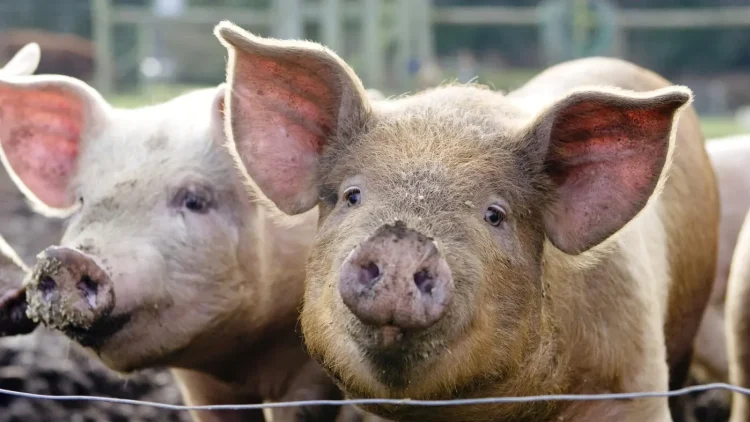

‘We recoil at dogs being left to die from extreme heat. That same compassion must extend to farmed animals, whose lives are at risk from intense heatwaves’ – Claire Bass
As temperatures exceed 35°C, Humane World for Animals U.K. (formerly called Humane Society International U.K.) warns that pigs, chickens and other farmed animals are suffering out of sight, with no transparency or a clear national system to monitor heat-related deaths or welfare incidents.
Pigs are among the animals most vulnerable to hot weather because they cannot sweat effectively and rely on their environment to cool down. Industry guidance acknowledges that heat stress in pigs can lead to collapse and, in the worst cases, death. The risk is especially acute in poorly ventilated sheds, during transport, or where animals cannot access shade, water or effective cooling.
While the U.K. rightly issues heat-health alerts for people and tracks the human impact of extreme heat, there is no equivalent transparent national picture for millions of farmed animals. Humane World for Animals U.K. says this leaves heat-related suffering, collapse and deaths among pigs, chickens and other animals largely invisible to the public and policymakers.
The Agriculture and Horticulture Development Board has also warned that sustained high temperatures, humidity and warm nights can compound heat stress in farmed animals, with animals unable to recover overnight.
The Climate Change Committee has stated that the U.K.’s preparations for climate change remain inadequate, with adaptation planning still too slow and disjointed. Humane World for Animals U.K. says farmed animals are a stark example of this gap: climate risks are recognised, but the systems needed to prevent, monitor and respond to heat-related animal suffering remain underdeveloped.
Current government advice tells farmers to plan for extreme weather and contact the Animal and Plant Health Agency or their local authority in an emergency. However, campaigners are concerned that this is insufficient for heatwaves affecting many farms at once, particularly where local authorities may lack the capacity or specialist animal welfare expertise to respond at scale.
Claire Bass, senior director of campaigns and public affairs at Humane World for Animals U.K., said:
“We rightly recoil at the thought of dogs being left in conditions where they could suffer or die from extreme heat. That same compassion must extend to pigs, chickens and other farmed animals, whose lives are increasingly—but so far invisibly—being put at risk by more frequent and intense heatwaves. The industry talks about the need to reduce heat impacts, such as ‘increased mortality’ and ‘reduced productivity’, but our primary concern should be the welfare of individual animals, not how these events affect the bottom line.
“Pigs are especially vulnerable because they cannot sweat effectively and can suffer heat stress at temperatures far below those being recorded in this heatwave. Chickens and other farmed animals can also face serious welfare risks when ventilation, water provision, stocking density or transport conditions are inadequate during extreme heat.
“These are sentient animals who can experience distress, pain and fear. Yet the U.K. has no clear national picture of how many farmed animals are suffering or dying during extreme heat. That is a serious blind spot in our climate planning and animal welfare system.”
Humane World for Animals U.K. is calling on the government to:
- Publish clearer, detailed and species-specific guidance to prevent heat-related suffering and deaths on farms and during transport;
- Commission a comprehensive national review of farmed animal housing to assess the investment needed to properly protect animals from extreme heat.
- Establish a transparent system to aggregate and publish data (from government agencies, vets, insurers, local authorities and industry bodies) on heat-related farmed animal mortality and serious welfare incidents, to understand the scale of the problem;
- Ensure farmed animals are properly included in climate adaptation planning as sentient beings, not merely as economic units.
Claire Bass added, “If we do not know how many farmed animals are suffering, collapsing or dying in heatwaves, we cannot know whether existing protections are working. As extreme heat becomes more frequent and intense, the government must close this data gap and make farmed animal welfare part of national climate resilience planning.”
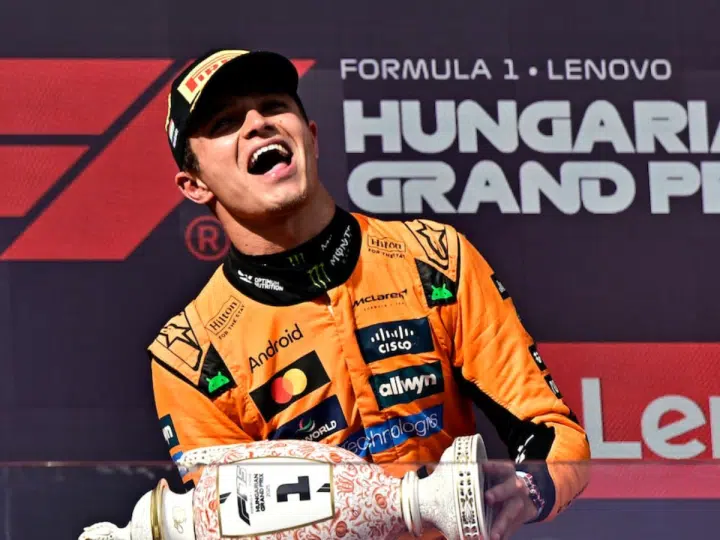
Lando Norris claimed his first victory of the 2026 F1 season at the Hungarian Grand Prix, converting McLaren’s strong weekend into a composed win after an early scrap with teammate Oscar Piastri.
The reigning world champion had been the benchmark through practice and qualifying, but a lively opening lap briefly put Piastri ahead before the race settled into a strategic battle that swung decisively back towards Norris.
Lando Norris’ race highlights
McLaren arrived in Budapest with a major upgrade package and immediately looked transformed. Norris delivered on Saturday with pole, but Piastri’s launch on the soft tyres was electric. He pounced when Norris ran slightly wide at Turn 2, grabbing track position on a circuit where overtaking is notoriously difficult.
For the first stint, Norris sat in Piastri’s mirrors, quicker but boxed in, asking over the radio whether he could pit first to break the stalemate. The team said no.
Piastri stopped just before half distance, rejoining ahead but vulnerable. Norris stayed out, extending his middle stint with strong pace despite older tyres.
The key moment came when Piastri, trying to clear lapped traffic, made minor contact with Williams’ Carlos Sainz at Turn 2. It cost him momentum and allowed Norris to chip away at the gap.
When Norris finally pitted on lap 40, he emerged ahead of Piastri and immediately controlled the race. Piastri looked set for second until a gearbox failure forced him to retire with 14 laps remaining, triggering a brief virtual safety car. From there, Norris cruised to McLaren’s first win of the season.
Verstappen held off Hamilton as Antonelli extends lead
Behind Norris, the fight for the podium became a story of missed opportunity for Ferrari and Lewis Hamilton.
Ferrari had expected to be strong at the Hungaroring and Hamilton originally qualified on the front row before being demoted three places for impeding Piastri in Q3. Starting fifth, he made a sharp getaway on new softs, jumping Charles Leclerc and immediately attacking Max Verstappen.
Hamilton hounded Verstappen throughout the first stint but couldn’t find a way past. Ferrari attempted the undercut, pitting him early. It initially worked, only for Verstappen to produce a blistering out‑lap and dive back ahead with a clean move down the inside at Turn 1. Hamilton was stuck once more.
A second stop on lap 30 put Hamilton back on the charge, effectively running third behind Norris and Piastri as Red Bull kept Verstappen out for a long middle stint. When Piastri retired, Hamilton was in position to take second and cut into Kimi Antonelli’s championship lead.
Ferrari’s strategy call proves costly
Ferrari rolled the dice under the late virtual safety car, pitting Hamilton again. The merge was tight: he rejoined just behind Antonelli, but was then handed a five‑second penalty for speeding in the pit lane. Unable to pass the Mercedes driver on track, Hamilton dropped to fifth once the penalty was applied.
Antonelli, delivered another composed drive. He held off Hamilton in the closing laps and banked third place, extending his championship advantage to 50 points over Hamilton and 59 over George Russell.
Verstappen finished second after a superb final stint, managing tyres and pace to keep Antonelli at arm’s length. Red Bull’s Isack Hadjar took sixth, while Russell recovered from a stall at the start to finish seventh.
F1 Top 10
1. Lando Norris, McLaren
2. Max Verstappen, Red Bull
3. Kimi Antonelli, Mercedes
4. Charles Leclerc, Ferrari
5. Lewis Hamilton, Ferrari
6. Isack Hadjar, Red Bull
7. George Russell, Mercedes
8. Liam Lawson, Racing Bulls
9. Nico Hulkenberg, Audi
10. Arvid Lindblad, Racing Bulls
How Lando Norris won with pace and patience
McLaren’s upgrade package delivered raw speed, but Norris still had to manage the race carefully. His ability to extend stints on older tyres proved decisive. While Piastri’s early aggression earned him track position, Norris’ consistency and tyre management allowed him to flip the strategy.
The minor contact between Piastri and Sainz was small but significant. It disrupted Piastri’s rhythm at a moment when he needed clean laps to protect the undercut. Norris’ lap‑40 stop put him ahead, and from there he was untouchable.
Ferrari left frustrated
Hamilton’s penalty seals a lost podium.
Ferrari’s day could have yielded far more. Hamilton’s early pace was strong and without the qualifying penalty he might have started ahead of Verstappen. The team’s decision to pit under the virtual safety car was bold but ultimately backfired. The speeding penalty compounded the error, leaving Hamilton fifth behind Leclerc.
Ferrari had the pace to fight for the win, but execution let them down.
Antonelli’s third place extends his lead heading into the summer break. Verstappen’s second keeps him in touch, while Hamilton’s penalty‑affected fifth leaves him with work to do. Russell’s recovery drive salvaged points but cost him ground.
Featured image via Marton Monus/ Reuters
By Faz Ali
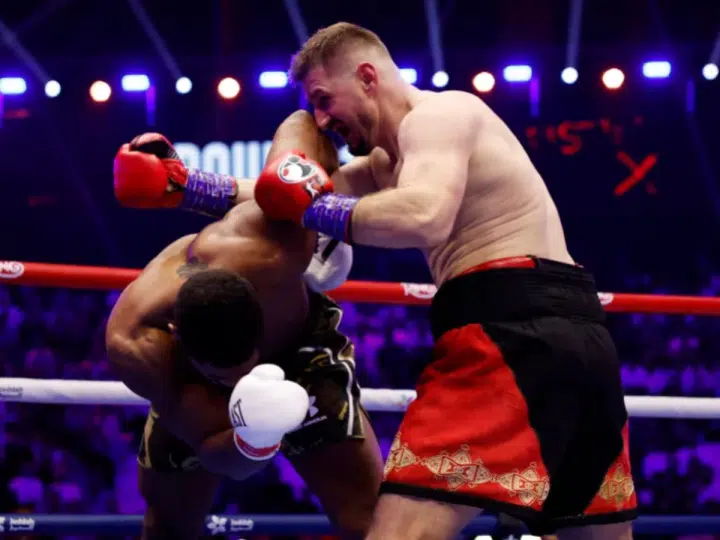
Anthony Joshua is still on the road to Tyson Fury but only after living through the worst round of his career.
Joshua was floored within 20 seconds by Kristian Prenga in Saudi Arabia, and dropped again before the end of the first round. However, Joshua steadied himself, reset and ended the fight with a brutal second round knockout.
The bout at the Jeddah Superdome was billed as a comeback and a tune‑up. It was Joshua’s first outing since the fatal car crash in Nigeria last December that killed his close friends and team members, Sina Ghami and Latif “Latz” Ayodele.
Instead, the opening three minutes turned it into a crisis. Prenga, an Albanian heavyweight with 20 wins, 20 knockouts and 16 straight victories since his only defeat in 2017, came out fast and violent.
A vicious right uppercut sent Joshua to the canvas almost immediately. Later in the round, a barrage forced him to touch down again, earning a second count. For a spell, the signed November fight with Fury looked like it might evaporate before it ever reached the boxing ring.
Joshua had to regroup
The minute between rounds was enough. Joshua came out for the second with his feet under him, his jab sharper and his defence tighter. He began to push Prenga back, landing solid right hands and short lefts, and the momentum flipped.
Now under pressure and backed towards the ropes, Prenga was caught clean. A big right hand, followed by a compact left and another clubbing shot, sent him crashing to the canvas. The referee waved it off, confirming a second round knockout and Joshua’s 30th win in 34 fights; his 27th inside the distance.
For Joshua, the finish mattered as much as the scare. It showed he could still punch with authority, but also that he could absorb a crisis, stay composed and find a way back. For Prenga, it was a reminder that at this level, hesitation is punished. His early success never turned into sustained pressure in the second round.
Emotion, grief and a clear dedication
The context around Joshua’s performance was heavy. This was his first fight since the car accident that killed his best friends, who were also part of his inner training circle. He was a passenger in the vehicle and has spoken about the impact on his life and career.
In the ring afterwards, Joshua made sure the win belonged to them.
Keeping his words short but loaded, he told DAZN after the fight:
It’s more than punch power. That was spirit, that was Latz, that was Sina, that was the families. It hurts to even talk about it. It has been tough. It’s my brothers. I don’t want to talk about it.
Promoter Eddie Hearn has spoken about giving Joshua space to return only when he was ready, and admitted that during the first round he briefly wondered if they had come back too soon. The way Joshua responded in the second answered that question.
Fury and the November plan
While Joshua was fighting Prenga in Saudi Arabia, Fury had already done his part.
On Friday, the WBC champion stopped Polish veteran Mariusz Wach in a low‑key, non‑televised bout in Thailand, fought in front of a small crowd.
Afterwards, Fury said he would not travel to Saudi Arabia for a face‑off, preferring to stay away until fight week.
Now the bigger picture is clear, contracts are signed for Joshua vs Fury, with November targeted as the month of the fight. The venue is still to be confirmed, with somewhere in America viewed as the most likely destination, though Wembley stadium remains in the conversation.
Both men now arrive at that date off stoppage wins, both having had to navigate awkward moments.
Joshua’s tone on Fury mixed edge with respect. Paying homage to Mike Tyson, he said to DAZN:
I am going to rip his heart out. I am the meanest and most vicious champion there has ever been!
Then he flipped to the other side of his personality:
All jokes aside, there are two sides to this thing. I respect everything Fury has done and achieved. I hope the fans will be in for a lovely treat.
What the Prenga fight showed
Strip away the noise and the Prenga bout did two things for Joshua: it exposed vulnerability — a cold start, a chin checked hard, a career hanging in the balance for a minute — and it underlined resilience. He got up twice, adjusted, and finished the fight emphatically.
It also kept the Fury fight intact. A shock defeat would have wrecked the November plan and thrown the heavyweight division into another round of delays and rebuilds. Instead, Joshua leaves Jeddah with a comeback win, a live rivalry, and a clearer sense of what he still has left.
For Prenga, there is credit in the performance. He arrived with a perfect knockout record, dropped a former unified champion twice and showed he belongs at a higher level than his previous opposition. The result will sting, but the footage will keep him in conversations for future opportunities.
Next steps for Joshua
The scare was real. The recovery was sharp. The Fury fight remains alive. Joshua now waits for confirmation of the venue and final details.
The scare in Jeddah will sit in the background of every preview, but the bottom line is simple: he was hurt, he recovered, he won, and the biggest fight of his career remains on the calendar.
Featured image via Ibraheem Abu Mustafa/ Reuters
By Faz Ali

The latest business survey from the Chemical Industries Association (CIA) highlights a sector still under severe strain, with persistently high UK energy costs and widening policy‑driven disadvantages delaying or derailing vital investment. Despite signs of demand recovery, chemical businesses face a year‑long trade deficit and mounting competitive pressure, deepening concerns over lost growth, reduced resilience and the future viability of a key foundation industry.
The struggle for growth continues for Britain’s key foundation sector, the chemical industry.
In the latest business survey of members of the Chemical Industries Association (CIA), 44% of companies reported planned investment scheduled had been delayed, reduced or cancelled altogether.
The survey which covered Quarter 2 of 2026, cited the continuing crippling cost of UK energy as the dominant issue preventing expansion to meet any uptick in both domestic and international demand. The findings match official data showing that for the past 12-months the UK has had a persistent chemicals trade deficit as monthly imports exceed exports.
Chief Executive of the Association, Steve Elliott said: “as challenging as our international competitors and wholesale energy prices are, the huge frustration for UK chemical businesses is the extent to which UK energy and carbon policy is forcing them to compete for investment and sales with one hand tied behind their backs”. Our new Prime Minister’s stated commitment to “reindustrialisation” can’t come quickly enough to enable the chemical industry to play its full part as a recognised foundation sector within the Government’s industrial strategy. Hopefully that starts with a positive signal of intent on maximising our own domestic energy security and supply, with the continued development of North Sea oil and gas. Action here will help secure the bridge to a cleaner, cheaper energy future through strengthening our industrial competitiveness, protecting jobs and reducing reliance on imports in an increasingly volatile world”
CIA Economist, Léa Charbonnier said “We are concerned about the knock-on impact to the wider economy from the unrelenting competitiveness challenges faced by UK chemical businesses. The latest available data show that, in 2023, the sector supplied £16 billion of essential products to other industries, with more than 44% of its output purchased by other manufacturing sectors. When the chemical industry struggles to invest and grow, the effects are felt well beyond our own sector.”
The survey also asked companies to give their experience of Brexit and of the Industrial Strategy, given their respective decade and one year anniversaries. On the strategy, almost 80% of businesses said there had been no noticeable impact on their business. Similarly, 82% believe Brexit has not worked for their business.
Nearly three quarters (73%) consider their UK operations less competitive than overseas sites, particularly compared with China, the United States and Southeast Asia.

ICE SLIDE POLICE PRISONRUN! Obby #money #roblox

Clinton Policy Institute looks to help states find nonpartisan solutions to health and family issues

Bucks Forward Kyle Kuzma Mocks NYC Mayor Mamdani as ‘Playing President’ Over Netanyahu Video This Week


-

 Fashion3 days ago
Weekend Open Thread: Brooks Brothers
-

 Crypto World6 days ago
Grayscale Files For Worldcoin ETF, WLD Registers Sharp Rise
-

 NewsBeat6 days ago
How a former Blue Peter presenter stunned America’s Got Talent judges
-

 Tech12 hours ago
Intel is reversing course and bringing hyper-threading back to its server chips
-

 Tech6 days ago
Sail Virtually Aboard The “Itanic” With IA-64 Emulator
-
 Tech6 days ago
Turtle Beach Command Series KB7 review: a nifty screen-equipped gaming keyboard
-
 Business5 days ago
New Jersey voter registration controversy explained: How 6,600 noncitizens got on the rolls, and what happens next
-
 Entertainment6 days ago
Johnny Depp’s R-Rated Gothic Cult Classic Gets New Release Ahead of Sydney Sweeney Remake
-

 Tech7 days ago
Watch Flock Safety CEO Garrett Langley discuss the future of surveillance at TechCrunch Disrupt 2026
-

 Crypto World5 days ago
Ethics, other provisions in crypto Clarity Act to be further discussed
-
 NewsBeat6 days ago
Shanghai science forum photos show China’s AI and robotics advances in rivalry with US
-
 Sports16 hours ago
Commonwealth Games boxing: Jadumani Singh seals dominant 5-0 win over Pakistan’s Sumama Rehman to enter quarter-finals | Commonwealth Games News
-

 News Videos4 days ago
The Peugeot Family: How 200 Years of an “Old Money” Dynasty Died in A Boardroom
-

 Sports3 days ago
2026 3M Open leaderboard: Scottie Scheffler finds putter in Round 1, sits three back
-

 Politics24 hours ago
Spain sweeps the board at 2026 World Cup with individual awards
-

 Fashion3 days ago
16 Dresses for the High Summer Event
-

 Crypto World6 days ago
Andrew Cuomo joins OKX board as crypto exchange expands in U.S.
-
 Entertainment3 days ago
A New Post-Apocalyptic Gundam Anime Series Blasts Into SDCC
-

 News Videos16 hours ago
BITCOIN JUST ENTERED THIS CRITICAL ZONE…
-

 Crypto World1 day ago
XRP Ledger adds $2.6B as RWA inflows rank second
You must be logged in to post a comment Login