

Politics
Boy George releases sick song defending Israel’s genocide


The nasty little freak Boy George has released a song defending Israel’s genocide:
#Shalom pic.twitter.com/0BfHIrThzO
— Boy George (@BoyGeorge) July 26, 2026
Much like Israel itself, Boy George has a history of committing false imprisonment.
Boy George presents war crime: the song
For clarity’s sake; we should add that the song is absolute dog sh*t. The track itself sounds like one of the demos that comes with a free music production app. It also sounds like the sort of thing a person might make their prisoner listen to as a method of torture (although we’re sure that’s just coincidental, and not something George is actually considering).
In the first verse, George sings:
You say genocide, I say war
When you’re attacked, that’s what the army’s for
Does it get ugly? You bet it does
When I know you wanna kill every last one of us
Much like the Israeli government, George is seemingly saying it’s okay to inflict unlimited collective punishment on the Palestinians, because apparently they want to ‘kill every last one of us’. George is neither an Israeli nor a Jewish person, so presumably by “every last one of us” he means ‘every last Zionist’ (we’re clarifying this because George does also sing that he ‘stands with the Jews’ – just not the many Jews who oppose the genocide, obviously).
George continues:
You never mention October 7.
The October 7 defence is often used by Zionists and their backers, but of course it doesn’t hold up. People aren’t condoning October 7; they’re saying that the events of October 7 don’t give Israel the right to carry out unlimited war crimes.
It’s really not an argument Israel should want to get into either. If past events justify future actions, you could say October 7 was justified by the apartheid conditions Israel subjected Palestinians to; or it was justified because of all the peaceful protesters Israel murdered; or it was justified by the Nakba – i.e. the event in which Jewish settlers ethnically cleansed the native Palestinians from what is now Israel. We’re not making that argument, obviously, but anyone asking ‘what about October 7?’ logically is.
Criminals stand together
In 2009, a judge famously convicted Boy George of false imprisonment. Here’s what the Guardian reported at the time:
Boy George was today sentenced to 15 months in jail for falsely imprisoning a male escort by handcuffing him to a wall and beating him with a metal chain.
The judge told the 47-year-old former Culture Club front man, whose real name is George O’Dowd, he had left the escort “shocked, degraded and traumatised” by the ordeal.
O’Dowd was found guilty last month of attacking the Norwegian model Audun Carlsen, 29, after he visited the singer’s flat in London in April 2007.
The sentencing judge said:
Whilst I accept that Mr Carlsen’s physical injuries were not serious or permanent, in my view there can be no doubt that your premeditated, callous and humiliating hand-cuffing and detention of Mr Carlsen shocked, degraded and traumatised.
There’s an obvious parallel between this and how Israel treats prisoners. Articles we’ve published on the topic include the following:
- Serious scabies outbreak in Israeli occupation prisons is part of the policy of torture and slow killing used against Palestinian political prisoners.
- 2025 saw unparalleled testimonies and atrocities from Palestinian prisoners in Israeli jails.
- Palestinian prisoners — Israeli lawyer branded traitor for exposing torture.
As Alaa Shamali reported for the Canary:
In recent reports, B’Tselem confirmed that torture in these prisons is not an isolated occurrence, but rather an institutional policy involving the occupation’s intelligence services, the Shin Bet, and the prison administration, aimed at breaking the prisoners’ will and humiliating their human dignity.
B’Tselem documents cases of direct physical torture, including beatings with rifles, sticks and military boots, electric shocks, and prolonged ‘shackling’ for hours on end, which has led to recorded deaths without any official investigation. Reports also reveal a comprehensive system of psychological and sensory torture, including depriving prisoners of sleep, food and water, placing them in metal tents or isolated containers, threatening them with execution or assault on their families, and forcing them to listen to the screams of others being tortured.
F*ck off, Boy George
The fact that Boy George was able to return to public life after his conviction is astounding. The man is an absolute danger. And his continued support of Israel shows that he can’t truly have rehabilitated himself since leaving prison.
Featured image via the Canary
By Willem Moore

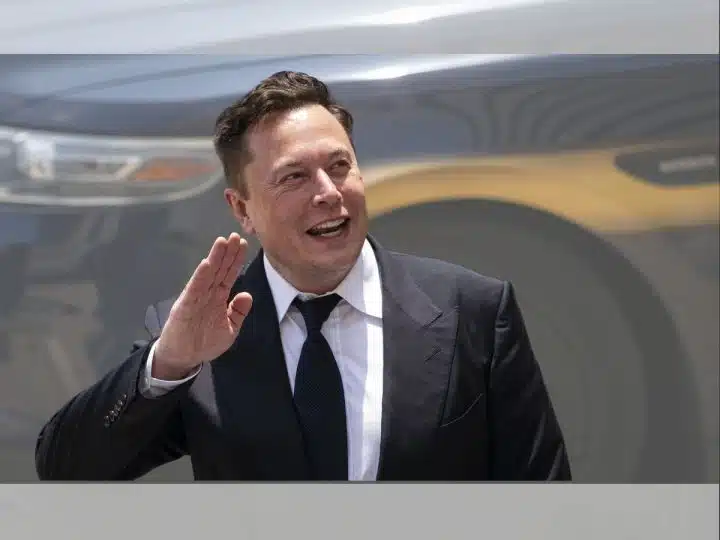
Elon Musk – the world’s richest buffoon – has thrown his weight behind the policy of ‘remigration’. If you’re unfamiliar with the term, it’s the right-wing plan to ethnically cleanse Europe of all ‘non-indigenous’ people. And this makes it a very strange policy for him to support, because he’s a white South African living in America:
Anyone who opposes remigration is a traitor
— Elon Musk (@elonmusk) July 26, 2026
So is he going to self-deport then or what?
Tweets of a clown
The UK group Remigration Now describes ‘remigration’ as follows:
Remigration is the act of returning immigrants and their descendants to their country of origin through both voluntary and mandatory measures.
They say ‘immigrants’, but what they mean is People of Colour. And you know they mean this, because there’s no campaign to deport anyone who has an Irish grandad or an Austrian nana (both of which this writer has).
Basically, then, remigration is just Nazi-grade racism with a fresh coat of paint. And everyone knows this stuff never ends with deportations.
For whatever reason, these people aren’t yet comfortable enough to admit their goal is white supremacy. That’s why they’re talking about ‘migrants’ instead of ‘People of Colour’. And as such, Elon Musk’s involvement is both a positive and a negative:
- Positive: Elon Musk has turned Twitter into one of history’s most powerful propaganda machines.
- Negative: Elon Musk is literally a migrant and a descendant of migrants, making it pretty clear that this policy is just white supremacy.
The remigration shtick doesn’t work at all with American politics, because America is a nation of migrants. Most Yanks are smart enough to realise this and leave it to the Europeans; Musk is not smart enough, obviously, which is why he’s tweeting like he is.
Oh, and Elon Musk is an even tougher sell for the serious remigration sellers, because the South African:
- Is a migrant to America.
- Had a maternal grandparent who was Canadian before moving to South Africa.
- Has roots which trace back to Europe.
In other words, he may be the least indigenous man in existence. Which is fine, obviously; it’s just not fine if you hold the opinions of Elon Musk.
Elon Musk isn’t immune to the “remigration” agenda
On paper, super-migrant Elon Musk is precisely the sort of person the remigration activists want to subject to ‘voluntary and mandatory measures’. The fact that they instead welcome his support shows what this is really all about. Because the following are all prominent remigration activists:
The choice is easy: Don’t be a traitor.
Sign the @SaveEuropeAct.https://t.co/fRo1EkASsa https://t.co/M5X4U0KOfB pic.twitter.com/CsNeV0AAtQ
— Eva Vlaardingerbroek (@EvaVlaar) July 26, 2026
The worlds richest man supports remigration. https://t.co/k24PRmpy1E
— Steve Laws
 (@Steve_Laws_) July 26, 2026
It’s time for these cowards to admit what they actually are. That or it’s time for Elon Musk do deport himself back to whichever dark corner of Europe his ancestors crawled out of.
Featured image via the Canary
By Willem Moore
Politics
Bus drivers ballot for heat strike as hundreds of thousands join call for max workplace temp
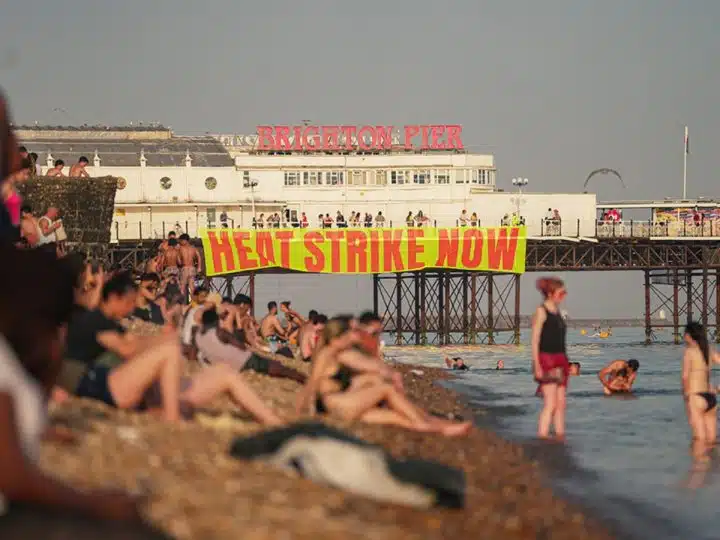
As the summer of heat continues, petitions calling for a maximum workplace temperature have exploded. Over 175,000 people have now signed petitions demanding the government takes urgent action to protect workers in the face of more dangerous heatwaves.
The increased attention on the issue of workplace safety comes after over 1,000 people including teachers, bus drivers and bakers took part in the first ever national Heat Strike during the unprecedented deadly heatwave in June.
Now this week, multiple unions are balloting for better working conditions in heat waves. Bus drivers in North London are threatening to strike unless air conditioning is installed in cabs. Some drivers have recorded cab temperatures of 50°C.
Meanwhile museum staff at the V&A in London are also balloting over closing areas that go above safe working temperatures. Both ballots close on Wednesday 29 July.
The campaign is calling for a maximum working temperature. It asks the government to implement a heatwave furlough scheme, and climate action plan.
From Exeter to York, groups have handed out health and safety advice in town. And workers shared photos of thermometers to show how hot their workplaces got.
From unfurling a 23 metre banner on Brighton pier to putting up safety posters in bakeries around Bradford, the Heat Strike campaign has brought together climate activists and union members.
Wide support for Heat Strike
Trade unions including the Bakers, Food and Allied Workers Union; the Fire Brigades Union; the NEU, and Equity have all passed motions to support Heat Strike and its demands.
Unite has said it would provide bus drivers with an official letter that they can show their employer when conditions become too hot in drivers’ cabs. It informs the company that the driver is stopping work for safety reasons.
In alliance with these prominent unions are climate groups including Greenpeace, War on Want, and Extinction Rebellion.
Now petitions shared by the Heat Strike campaign have collectively topped 175,000. One petition on Change.Org has gained around 1,000 signatures a day since it launched during the June heatwave.
Meanwhile the TUC’s petition, which started in 2021, has gained around 20,000 signatures in 2026 alone. Over 3,000 people have signed up to say they will take part in the next Heat Strike.
Climate crisis hitting home
This year has smashed heat records for the UK, with the record for hottest June day obliterated. It is the first year on record to see temperatures of 35°C or above in May, June and July.
People faced tropical nights with no chance of respite as temperatures remained in the 20s overnight for weeks on end.
With studies showing the extreme June heatwave alone may have caused 2,200 heat related deaths across England and Wales alone, we will never know precisely how many avoidable accidents have resulted from this country’s failure to prepare for the impacts of the climate crisis coming home.
That’s 440 deaths a day across England and Wales alone at the June heatwaves’ peak. For comparison, around 4 people die each day as a result of road traffic collisions.
The government’s own advisors are now calling for a maximum working temperature, MPs are putting forward Early Day Motions, and unions are coming together. And the impact of the recent heatwaves on the economy and excess deaths is becoming clear. So everyone’s wondering when the PM will protect workers from the impact of the worst effects of the climate crisis.
Robbie Woodland, president of the Kernow branch of the Bakers, Food and Allied Workers Union, a hygiene operative working in West Cornwall, said:
My union has been calling for a maximum workplace temperature for over a decade as bakeries regularly see extreme temperatures. It’s great to see the issue spreading to hundreds of thousands of people now.
It’s clear to everyone now that heatwaves are becoming more frequent and extreme. That’s why Burnham must set a maximum workplace temperature before we’re all cooked! If they don’t protect workers they will face more Heat Strike actions.
A bus driver from North London, who wished to remain anonymous but is in favour of balloted strike action, said:
Driving a bus in these heatwaves is like driving a mobile greenhouse. Some drivers who are bringing in their own thermometers are reporting in-cab temperatures up to 50°C. Work becomes unbearable.
It’s illegal to transport livestock in temperatures over 30°C, and yet we’re meant to keep driving buses in temperatures way beyond that. They’re asking us to do a job that’s physically impossible.
Liam Geary Baulch, campaigner for a Heat Strike, said:
The petitions show everyone is now feeling the effects of the climate now. People are scared these heatwaves will set off a national health and safety emergency. That’s why they are urging the PM to put the brakes on now, else more lives will be lost.
Until there’s a clear plan to protect everyone from the extreme heat, it’s up to workers to keep our colleagues and community safe by removing ourselves from unsafe workplaces. Join the Heat Strike today – we’re cooler together.
Featured image via Heat Strike / Léo Bodelle
By The Canary


On 24 July, a vicious settler attack took place in the village of Tal, southwest of Nablus, West Bank. Four Palestinians from the Ramadan family were fatally shot by Israeli occupation forces (IOF).
The village mayor reported that more than 70 residents had been arrested in retaliation. Eyewitnesses at the scene told the Canary that a group of Jewish settlers, armed to the teeth, infiltrated the village before descending on a Palestinian home. The homeowner, struggling to protect his home, rallied the local community. It was too late. The settlers had fanned out, accompanied by IOF soldiers providing legal cover.
Four Palestinians killed in settler attack
Two brothers, Farouq and Ibrahim, and their cousins Jawad and Imran were killed in the latest settler attack. Four other members of the Ramadan family sustained injuries.
One of the surviving brothers, Ihab Ramadan, told Middle East Eye that the IOF and settlers opened fire on the family.
Chaos broke out.
Farouq took a settler’s weapon and shot into the air. He then redirected the gun towards an occupation soldier to make him back off. Instead, the soldier shot at Farouq’s cousin, who was standing behind him. Farouq then opened fire.
On the same day a member of the IOF was killed, alongside Beniyahu Meltz, described by defence minister Israel Katz as “a reserve fighter” embedded within a settler-staffed “rapid response team” in the Havat Gilad settlement.
Video footage shows Meltz and another armed settler pressing a Palestinian man with a gun and kicking him. The man then grabs the shoulder strap of the settler’s rifle as the settler stumbles to the ground.
IOF infiltrates hospital in Nablus
Meltz is no hero. He was an illegal coloniser and acted with criminal intent. As is the norm for settlers, Meltz terrorised Palestinians, dislodged them from their homes, and stole their land. That’s the textbook definition of ethnic cleansing. The illegal settlement of Havat Gilad he hailed from transposed the native Palestinian villages of Far’ata, Tal, and Jit, near Nablus — stolen land to be precise. According to human rights group B’Tselem, settlers from Havat Gilad have a long, well-documented record of harassing and violently abusing local Palestinians.
Settlers are now calling for “revenge,” and have escalated their terror campaign against Palestinians, as these incidents worryingly become a daily occurrence in the West Bank.
After the attack in Tal, 30 to 40 occupation soldiers stormed the Nablus Specialised Hospital.
They entered the emergency department and assaulted medical staff, making them all lie face down.

They examined the hospital’s CCTV footage, then confiscated it. The IOF searched the hospital for a Palestinian who was injured during the Israeli assault on Tal. They arrested him and his brother, who was not present during the events.
Ben-Gvir makes unveiled threats
At just gone 8am that morning, illegal settler and national security minister, Itamar Ben-Gvir, took to X. He issued the following threat:
“The cities and villages of the murderers in Judea and Samaria are to be treated like Beit Hanun in Gaza … For every Jew who is murdered – the enemy must absorb the loss of lands and homes. This is the language spoken in the Middle East, and as we spoke it in Gaza – it is time to speak it in Judea and Samaria as well. “
Similarly, finance minister Bezalel Smotrich claimed the villages of Tal, Iraq Burin, and Beit Furik would look “exactly like the refugee camps in Nablus and Tulkarm.” The occupation demolished these camps and forcibly displaced their residents during Operation Iron Wall in 2025.
Netanyahu and Katz announced the IOF was to launch a “wide-scale military operation” across the West Bank in retaliation.
All leave for the IOF has been suspended. Troop deployments across the occupied West Bank have been reinforced, with the deployment of five extra military battalions. In a statement, Netanyahu also said the Ramadan family home would be demolished, and work permits would be revoked. He also vowed to expedite the construction of more illegal settler outposts and to suspend existing legislation prohibiting settlement expansion.
It’s also worth noting that since 7 October, Ben-Gvir has granted thousands of firearm permits to illegal settlers in West Bank settlements and Jerusalem. Palestinians are forbidden by both the occupation and the Palestinian Authority (PA) from carrying weapons.
Calls for revenge as settler violence surges
After the attack in Tal, hundreds of settlers began terrorising the nearby village of Sarra. They torched several homes and assaulted residents.

The village of Far’ata was also under attack by settlers, who caused extensive property. Five Palestinians sustained serious injuries, incluing a civilian shot in the head.
In recent months, the occupied West Bank has witnessed a sharp increase in settler violence, and home incursions. More checkpoints blocking entry and exit to Palestinian villages have appeared. Arrests have continued, as have settler attacks.
In the village of Tal, dozens of residents have been rounded up and subjected to field interrogations. The Palestinian Prisoners Society described this as an “ongoing policy of collective punishment.”
Settlers call for “blood”
The settlers are calling for blood and won’t rest until they exact revenge. Retributive attacks included an assault on two mosques which settlers set on fire. In another, a settler stabbed a Palestinian in the back, after his vehicle broke down on the al-Ma’rajat road near Jericho.
Illegal settlers also set fire to 10 excavators, bulldozers, and trucks belonging to the Ein Samia quarry, located between al Mughayyir and Kafr Malik. The word “revenge” was also graffitied in Hebrew at the site. The cost of the damage caused is estimated at USD 500,000.
ALARM!!
Violent attacks reported in all West Bank particularly northern area and Nablus! Packs of settlers – terrorists in full force backed by Israeli soldiers -are calling for "blood", literally.
STATES MUST DEPLOY A PROTECTIVE PRESENCE pic.twitter.com/OtEEsXDGZu
— Francesca Albanese, UN Special Rapporteur oPt (@FranceskAlbs) July 24, 2026
Settlers can get away with anything. That includes murder. They are fully protected and supported by the IOF, and funded by the occupation.
The world remains silent.
Less than a week before the fatal shootings in Tal, settlers set a house on fire in the village, and the blaze spread throughout the area. There is no hope of the situation improving for Palestinians until these criminals are held accountable.
POGROMS Israeli civilians and army joining forces.
It is not just Nethanyahu and few "rotten apples".
THIS IS ISRAEL
ARMS EMBARGO NOW – STOP TRADE NOW This is what intl law requires. pic.twitter.com/6IHR4yPolS
— Francesca Albanese, UN Special Rapporteur oPt (@FranceskAlbs) July 25, 2026
against defenseless civilians
all over the West Bank (while Gaza is under fire).
Double standards
Violence against Palestinians is spiralling out of control. According to the Colonisation & Wall Resistance Commission (CWRC), so far in 2026, terrorist Jewish colonisers have murdered 24 Palestinians, compared to 14 in 2025, and 12 in 2024. The total number of attacks carried out by the Israeli occupying state between 1 January and 30 June 2026, was 11,074. Settlers have perpetrated 3,488 of these attacks.
Noone is protecting Palestinians. They have to protect themselves. “Israeli” settlers continually intimidate and provoke Palestinians, while under the protection and support of the occupation’s soldiers.
The terrorist Israeli regime expects Palestinians to run away from any violence directed at them. If these unarmed civilians stand their ground, to protect their families, their homes and their land, they are blamed for the violence. They will then either be attacked, detained or shot, and the whole town or village likely to be subjected to the war crime of collective punishment.
Featured image via the Canary
By Charlie Jaay
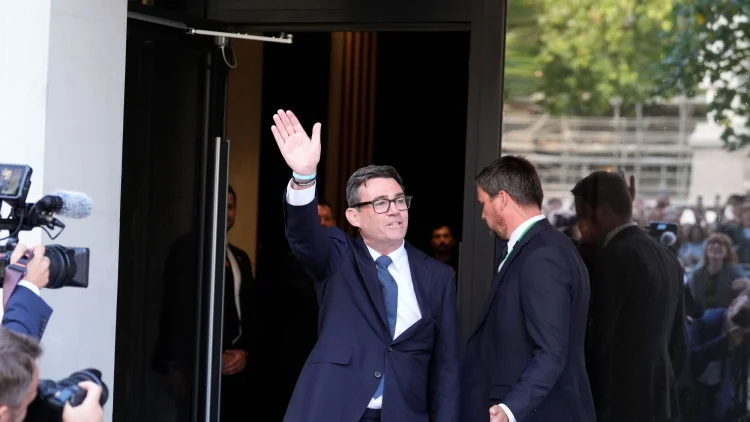

Andy Burnham said he wants to bring in “substantial change” to reform social care (Alamy)

7 min read
With Andy Burnham expected to make a major speech on social care this week, PoliticsHome looks at why it has been such a difficult issue for successive governments to grip.
The Prime Minister told the BBC’s Laura Kuenssberg on Sunday that he will put “whatever political capital” he has into fixing social care and doesn’t want to leave office without bringing in “substantial change.” He said the NHS will “collapse” without social care reform.
Successive governments have pledged to fix the social care crisis, but have failed. So why is it such a difficult problem to solve?
Why is social care such a big problem?
The term social care describes support for adults with care and support needs. In England, it is arranged by local authorities, and some people receive state support to help pay for it.
Pressure has been building on the UK adult social care system for decades.
The UK’s population is ageing steadily, with around 19 per cent of people – approximately 12.7m – now aged 65 or over, driven by rising life expectancy and lower birth rates. As the population ages, demand for adult social care continues to grow, increasing pressure on local councils, which are responsible for providing state-funded care.
According to the King’s Fund, care home provider fees paid by councils rose in real terms by an average of 3.6 per cent to £1,823 a week for working-age adults in 2024/25 compared to 2023/24, while fees for care for older people and homecare fees also rose by more than three per cent. An additional 30,000 people received publicly funded long-term care in 2024/25 than in the previous year, amounting to a 3 per cent rise. Total spending on social care by local authorities increased by 4.1 per cent to reach £34.5bn.
The UK adult social care sector also faces a chronic workforce crisis driven by tens of thousands of unfilled vacancies, uncompetitive pay, high staff burnout, and tightening international recruitment rules. Care England figures show that social care workers earn significantly less than equivalent roles in the NHS, averaging roughly £7,617 less per year.
This has also led to increased pressure on NHS hospitals and services, with patients taking up hospital bed space when it is impossible to secure social care for them.
The Times reported on Saturday that Burnham’s pledge to overhaul care so it “operates on the NHS principle” is unlikely to cover the daily living costs of a care home such as food and accommodation. According to the Health Foundation think tank, a comprehensive care system which could cover food and accommodation would cost £18.5bn a year by 2035-36.
Even avid supporters of reforming the care system accept that it would be very expensive, particularly at a time when departments already face limited budgets, adding to the difficult nature of the issue.
How have governments attempted to fix social care?
Many previous government attempts to reform social care have been abandoned.
Economist Andrew Dilnot was commissioned by the coalition government in 2010 to look at how to protect the public from the risk of sky-high care bills. Dilnot proposed capping individuals’ lifetime care costs. While accepting the principle, the government went on to repeatedly delay implementation of the proposal before it was eventually abandoned.
Former Tory prime minister Theresa May included in her manifesto a proposal to raise the asset threshold – the amount of personal wealth protected from paying for care – from £23,250 to £100,000. Under her proposal, the value of your home would also count when working out whether you could afford to pay for care if you were receiving it at home, which meant many more homeowners could end up paying for their own care, with money recovered from the sale of their house after they died if they couldn’t pay immediately.
It was quickly criticised by her political opponents and labelled the ‘dementia tax’ as it was seen to disproportionately affect people with conditions like Alzheimer’s disease. It was dropped by May in the run-up to the 2017 general election.
In July 2019, May’s predecessor, Boris Johnson, stated on the steps of Downing Street that he had a clear plan to fix the social care crisis “once and for all”. He proposed introducing the Health and Social Care Levy through higher National Insurance, before later abandoning both the levy and much of the wider reform package. However, when a Health and Social Care Levy was introduced in September 2021, a large proportion went towards tackling the massive NHS backlog caused by the COVID-19 pandemic rather than fundamental reform of the social care system.
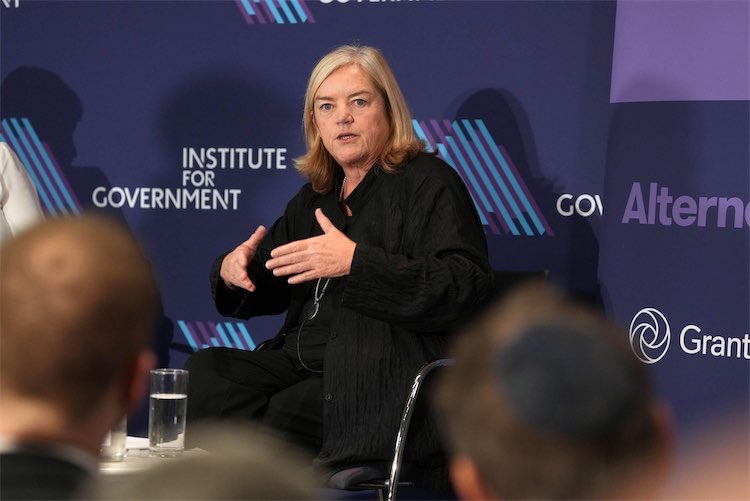
The Keir Starmer Labour government commissioned Baroness Louise Casey in 2025 to review how adult social care should operate and how it should be funded. In a speech earlier this year, Casey called for a national “moment of reckoning” similar to the 1948 Beveridge reforms which established the NHS.
The longer-term final report is expected in 2028, but Burnham has indicated he wants recommendations much sooner. Former health secretary Wes Streeting also suggested on Sunday morning that it could be brought forward to report earlier.
What could Burnham do to reform social care?
The most ambitious proposal to fundamentally reform social care would be establishing a National Care Service to operate much more like the NHS, with care becoming progressively free at the point of need.
While it does not have a dedicated National Care Service, Scotland has already implemented a free-at-the-point-of-need system for some forms of social care, but it does not include accommodation, food and everyday living costs, which are still subject to means testing. The Health Foundation estimates that implementing a similar system in England would cost £7.5bn a year by 2036.
A more incremental approach would focus first on improving workforce pay and conditions, integrating health and social care more closely, expanding short-term care to speed hospital discharge, and increasing support for local authorities while delaying the biggest funding decisions.
A cap on individuals’ lifetime care costs, as proposed by Dilnot, could be another solution.
The government could also raise the threshold for means-tested social care support. At the moment, people in England can be eligible for local authority financial support in a residential care home if the value of all their assets is less than £23,250.
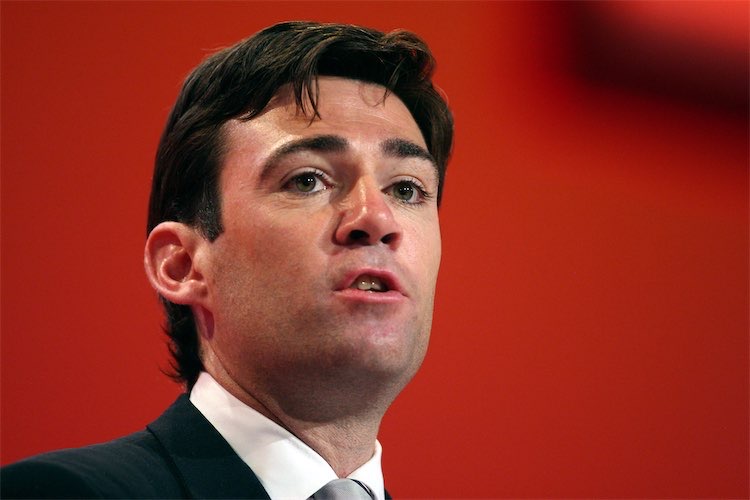
As health secretary under Gordon Brown in 2010, Burnham previously argued that dedicated funding may ultimately be needed and backed the introduction of a 10 per cent levy on estates to pay for a universal National Care Service. Downing Street confirmed on Monday that such a tax was among the options Burnham is now considering to fund his plans.
What have the other parties said?
Conservative Party leader Kemi Badenoch has said she agrees that the care system needs reform, but warned that it cannot be funded through tax cuts. She has written to Burnham urging the new PM to look at spending cuts elsewhere to pay for his plans.
Reform UK Treasury spokesman Robert Jenrick said the party would fiercely oppose any form of what he described as a ‘death tax’ via a levy on estates, arguing it would unfairly raid people’s life savings and far exceed current inheritance tax thresholds.
Lib Dem leader Ed Davey has long described social care reform as one of his top priorities, having been a carer himself for many years. He recently reaffirmed his support for cross-party talks on the issue, and ahead of the 2024 general election, the Lib Dems said they would deliver free personal care through an additional £2.7bn invested in social care by 2028-29 above existing social care plans.
The Green Party pledged an extra £20bn per year into adult social care, paid for through taxes on the super-wealthy, including a one per cent wealth tax on assets over £10m and two per cent on assets over £1bn.

The national football associations did not wait long after the curtain fell on the 2026 World Cup before rushing to launch a new era of technical change by signing managers ahead of the start of the 2030 World Cup qualifiers.
These recent developments reflect a striking shift in international football as the competition amongst top managers moves from European club pitches to the national team dugouts. Big names such as Zinedine Zidane and Jürgen Klopp are taking the helm, whilst other national teams are still racing against the clock to finalise their managerial appointments.
Ex-football player becomes new coach
The French national team has drawn the curtain on one of its most successful eras, following the end of Didier Deschamps’ 14-year tenure. Now, Les Bleus will embark on a new era under the leadership of Zinedine Zidane.
Zidane is embarking on his first coaching role with a national team following years of success with Real Madrid, whom he led to three consecutive Champions League titles — an unprecedented achievement in the modern era.
France is hoping that its former star will replicate his success as a manager, just as he did as a player when he led France to victory in the 1998 World Cup and the 2000 European Championship.
Klopp leads Germany’s project
For its part, the German Football Association has turned over a new leaf by appointing Jürgen Klopp as head coach of the national team. He succeeds Julian Nagelsmann, who stepped down following the team’s failure at the 2026 World Cup.
Klopp has a track record packed with achievements, having restored Liverpool to the pinnacle of European football and led them to victory in the Champions League and the Premier League. He also engaged in a fierce tactical battle with Pep Guardiola for many years.
Germany is counting on his experience and leadership to restore the ‘Mannschaft’ to contention for major titles.
Italy on the hunt for a manager of Guardiola’s calibre
Meanwhile, the Italian Football Federation continues its efforts to appoint a manager capable of bringing the ‘Azzurri’ back to the forefront, whilst attempts to persuade Pep Guardiola to take on his first role with a national team are ongoing.
Although Guardiola remains the first choice, the task appears complex, prompting the Italian Football Federation to consider alternative candidates. Meanwhile, Carlo Ancelotti continues his work with the Brazilian national team and remains one of the most prominent managers on the international stage.
Before deciding to continue negotiations with Guardiola, the Italian Football Federation considered the option of appointing Andrea Pirlo, given his significant standing in the history of Italian football.
However, the idea did not progress to an agreement, after the Federation’s management concluded that the coming period required a manager with a more impressive track record of achievements and international experience. Therefore, Perlo was out of the running to lead the national team, whilst efforts continued to persuade Guardiola or to approach other candidates with extensive experience.
A new battle away from club football
These changes confirm that competition amongst top managers will not be confined to European club competitions, as has been the case in recent years, but will extend to international tournaments with Euro 2028 and the 2030 World Cup fast approaching.
With names such as Zidane and Klopp in the mix, and the possibility of Guardiola joining a national team in the future, international football appears to be heading into an extraordinary era. It is an era that may see tactical clashes between the leading managerial minds who have made their mark in the Champions League – but this time under the banners of their national teams.
Featured image via Andrew Powell/ Liverpool FC/ Getty Images
By Alaa Shamali
Apologies for the slightly shonky quality of this video, readers, which is due to the fact that ITV are such monumental self-sabotaging clowns that it’s not possible to screencap any sort of digital broadcast of theirs – screw YOU, viral content! – so we had to do this by videoing our iPad with our iPhone.
Ouch. And speaking of monumental self-sabotaging clowns, Scottish Labour.
After the hilarious desertion of Anas Sarwar to the House Of Lords last week, just two months after he pinky-swore he’d never ever ever ever do such a thing:

…the Labour Party is once again searching for a heid bummer for what we’d ordinarily call its North British branch office, if not for the fact that its new leader, the new Prime Minister, has just determined that the “north” is in fact located several hundred miles to the south of said office. Far-North British, perhaps.
The Scottish press, short of much else to write about in the summer silly season, tried to stir itself to whip up some interest in the Sunday papers about who’d get the job – which looks increasingly like a runoff between Michael Marra and Monica Lennon – but you could tell their hearts weren’t in it.
The Sunday Mail ran a leader seeming to back Lennon as a “new direction”, but couldn’t rustle up a sentence to describe anything actually new that she’d represent.

Over at Scotland On Sunday, Euan McColm claimed Marra could “resurrect” the party, but once again any sort of detail on how that might be achieved was conspicuous by its absence, other than the abstract idea that he could somehow “quietly and effectively help Burnham deliver for Scotland”, in an unexpected and uncharacteristic outbreak of sunny Pollyanna optimism for the normally bad-tempered scribe.

Marra at least has a sliver of integrity, having ducked out of backing the Gender Recognition Reform Act, unlike his colleagues. But the truth, readers, is that nobody can save Scottish Labour. It’s a victim both of unlucky circumstances and its own utter bumbling haplessness. Remarkably, 20 years after the SNP’s first ever election victory the party is still in shock, unwilling and unable to accept there’s been a shift in the political landscape and still imagining that voters will realise the error of their ways and “come home to Labour”, begging forgiveness.
But there’s nothing to come home TO. We spent the whole election campaign asking Labour figures to name a single policy their party differed from the SNP on (save for the moribund issue of the constitution), and never got anything even approaching an answer, because there isn’t one.
Voters tired of the SNP have no interest in voting for the SNP but in red ties. Anyone seeking “change” is far more likely to look for it on the fringes of either the left (Greens) or the right (Reform). Switching to them is like moving house, whereas going SNP-to-Labour is like painting your front door a slightly different shade of the same colour.
Sarwar tried U-turning on gender after the horse had bolted, and he tried going out on a limb by knifing Keir Starmer, but none of it did him any good because the simple fact is that voters have stopped listening to Scottish Labour at all.
The episode of Tipping Point at the top of this article is from the spring of 2019 (though we saw it on a repeat on ITV Quiz yesterday). Ramsay Lundstrom had already been in charge of the Scottish branch office for a year and a half at that point, but neither contestant could even bring his party to mind, let alone him personally.
Scottish Labour has gone backwards in TWO successive Holyrood elections since then, its vote share dropping from 21% to 17%. The SNP’s support has fallen further – from 44% to 33% – in the same six-year period, yet Labour are no closer to power, or even to meaningful opposition. In the all-important list vote they actually came second to Reform, and beat the Greens by just two points. It’s wholly plausible that both parties (whose trajectories are pointing upwards) will overtake Labour at the next election, leaving them in FOURTH place.
Because the thing is, corpses can’t actually be revived. Anas Sarwar’s seemingly-uneventful reign as the regional branch manager was actually a fatal catastrophe, the nailing shut of the doors of the last-chance saloon.
With the SNP in unprecedented, shambolic disarray he completely failed to capitalise on the situation, missing every gaping open goal to put ideological distance between himself and the stumbling party of Sturgeon, Yousaf and Swinney, arrogantly expecting to become First Minister by default without doing anything to earn it, just as Labour had in the 2024 UK election when the Tories finally exhausted voters’ patience.
Scottish Labour have been anonymous and directionless and visionless for so long now that Michael McIntyre and Monica Bellucci couldn’t inject some energy and sex appeal into them, let alone their own Michael and Monica.

Who the party chooses for its next sub-leader is a matter of total indifference to the population of Scotland. They will have precisely no impact on anyone’s lives, and will be lucky to make it as far as the next Holyrood election at all, far less have any chance of winning it.
They don’t even get any extra pay for it (just an allowance for costs), and at the end of it no-one will remember their name. We only bothered talking about it so we’d have an excuse to print a picture of Monica Bellucci. We don’t actually care, and the voters of Scotland care less than we do.

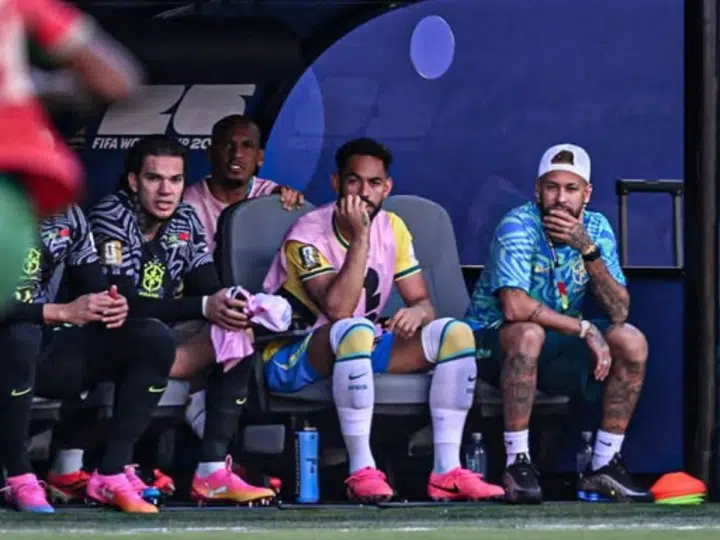
An early exit was not the only disappointment for footballers at the 2026 World Cup.
Whilst some stole the limelight with goals and trophies, a number of the game’s biggest stars experienced a tournament of a different kind: being included in their national teams’ squads, yet completely absent from the pitch.
Six weeks of waiting ended without a single minute played, reducing their participation in football’s biggest event to nothing more than a name on the team sheet.
The largest World Cup in history saw 1,248 players take part, but a small number of them returned home without their manager giving them a single opportunity, whether due to injury, fierce competition or tactical decisions that remained unchanged right up until the final whistle.
World Cup players who never played
N’Golo Kante: The world champion who became a spectator
France’s N’Golo Kanté tops the list of the most notable absentees from the pitch. The man who was one of the pillars of France’s 2018 World Cup triumph found himself left out of manager Didier Deschamps’ plans for the entire tournament this time round. Neither his track record or experience were enough to secure him a place, not even in the third place play-off, leaving him to watch from the substitutes’ bench.
Kobbie Mainoo: Disappointment for the Manchester United midfielder
No one expected Kobbie Mainoo, who started in the 2024 European Cup final, to become the only outfield player in the England squad not to feature for a single minute at the World Cup. An injury compounded his misery by also ruling him out of the third place play-off, meaning his World Cup campaign ended without him making an impact.
Spain: So many champions who didn’t play
Although Spain was crowned world champions, some of their players experienced the tournament with a different sense of bitterness.
Young striker Víctor Muñoz, 23, missed out on his World Cup debut after an injury ruled him out of the starting line-up. By the time he had recovered, he could not find a place in Luis de la Fuente’s squad, which continued its steady march towards the trophy.
As for goalkeeper David Raya, one of the Premier League’s finest, he was overshadowed by the brilliance of Unai Simón, who retained his place in the starting line-up right until the end.
Meanwhile, full-back Alejandro Grimaldo paid the price for Marc Cucurella’s outstanding performances, leaving both players as world champions without having featured in a single match.
England, Brazil and Uruguay next
In the England squad, goalkeeper James Trafford remained the third choice keeper throughout the tournament and did not get his chance even when manager Thomas Tuchel made substitutions in the third place play-off.
In Brazil, Gleison Bremer came up against the solid partnership of Marquinhos and Gabriel at the heart of defence. Uruguay captain Ronald Araújo’s dream ended before it began as injury ruled him out before his side was knocked out in the group stage.
As for the Portuguese player Gonçalo Inácio, he failed to break down the defensive partnership between Rúben Dias and Renato Vega.
Dutchman Mats Wieffer remained on the sidelines despite Jurrien Timmer’s injury as the coaching staff continued to rely on Denzel Dumfries at right-back.
The other side of the World Cup
These stories reveal that the World Cup is not defined solely by those who lift the trophy or score goals, but also by those who wait for an opportunity that never comes. For these players, the World Cup dream ended without a single touch of the ball or a moment on the pitch.
They left the tournament with medals and memories but without their names being immortalised in minutes of playing time, which is one of the harshest realities of football that rarely makes the headlines.
Featured image via ESPN
By Alaa Shamali
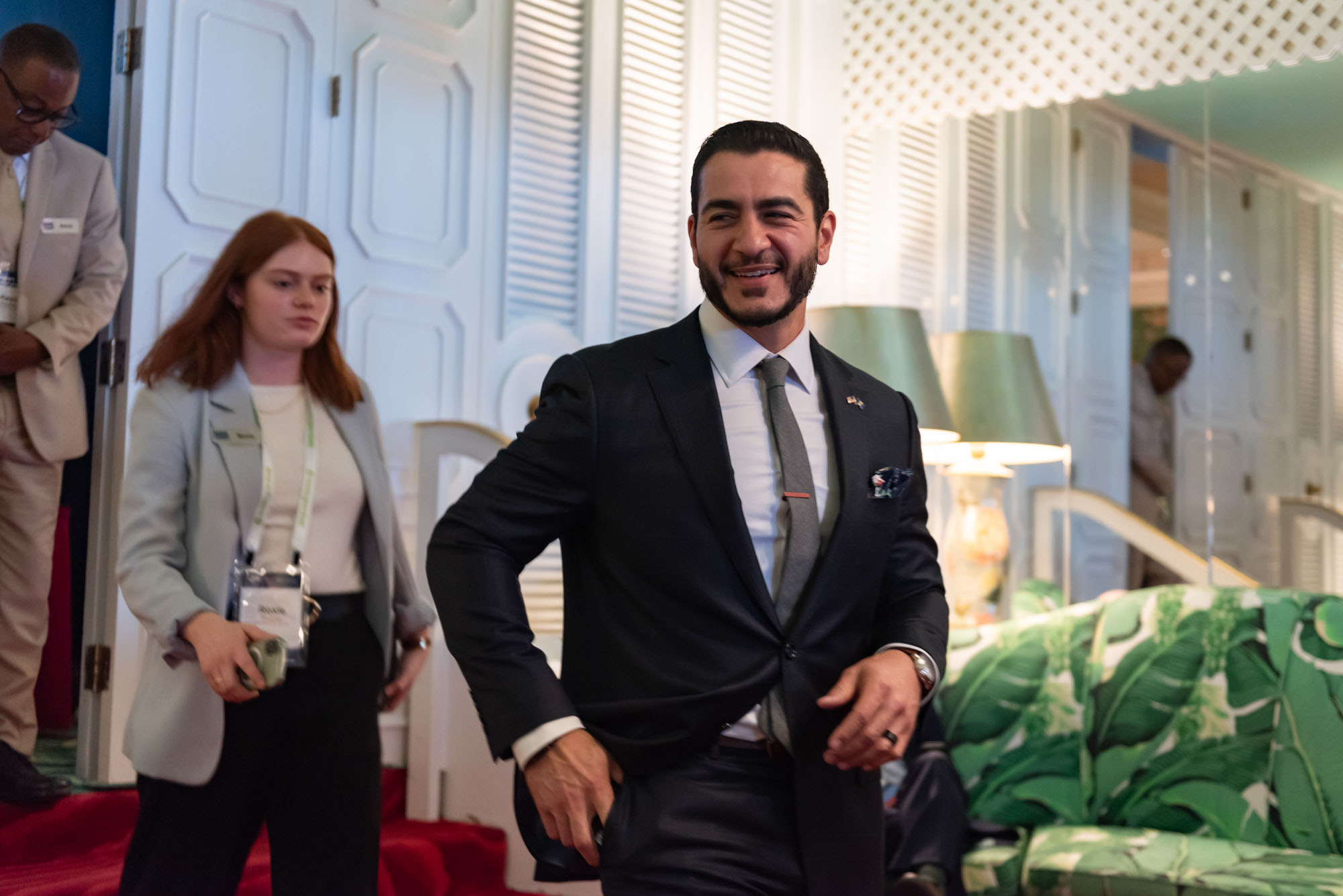

Michigan Democratic Senate candidate Abdul El-Sayed is facing backlash from within his own party after using controversial rhetoric to describe the stakes of his victory in a recent donor meeting.
“You put one ogre on a pike, and then everyone else gets the message, and all of a sudden starts to sound a lot different,” El-Sayed said, describing how his win could propel the progressive movement, according to audio of a Zoom meeting obtained by POLITICO.
On Monday, several Democrats were quick to slam his comments, which they took as direct reference to his Senate primary opponent, Rep. Haley Stevens. El-Sayed had not explicitly mentioned Stevens in the portion of the call POLITICO reviewed.
“Calling your female opponent an ogre you want to put on a pike is not beating the rap that this race has some serious sexism,” Neera Tanden, a centrist Democrat and president of the Center for American Progress, posted on X. Melissa Byrne, a former staffer for Sen. Bernie Sanders, called the remark an “unforced error” that is “really bad and beneath the progressive project.”
El-Sayed’s leaked comments and the reaction to them amount to another flashpoint in a tense primary that is dividing the progressive and moderate wings of the party, and at times has been defined by accusations of racism and sexism.
“Abdul continues with personal insults and making this race about his personal political ambitions and the other 49 states,” said Arik Wolk, spokesperson for the Stevens campaign. “Haley is focused on getting things done for Michigan, and only Michigan.”
Republicans also immediately jumped on the comment, and some leaned into stereotypes of El-Sayed’s religion as a Muslim. “Michigan Islamist discusses beheading his opponents,” said Steve Guest, a former staffer for Sen. Ted Cruz, on X.
An El-Sayed campaign spokesperson did not immediately respond to a request for comment on the backlash. A spokesperson had previously told POLITICO that the candidate was “speaking metaphorically” about his intention to support a primary against Sen. John Fetterman in Pennsylvania.
This is not the first time El-Sayed has used — and defended — aggressive political rhetoric. “When they go low, we don’t go high,” the progressive said while speaking at a campaign rally earlier this year, riffing on a famous line from former first lady Michelle Obama. “We take them to the mud and choke them out.”
He and Stevens will face off in their final Democratic Senate debate Monday night, and the results of the Aug. 4 primary could have major consequences for the party as it grapples with its ideological tack ahead of the 2028 presidential election.

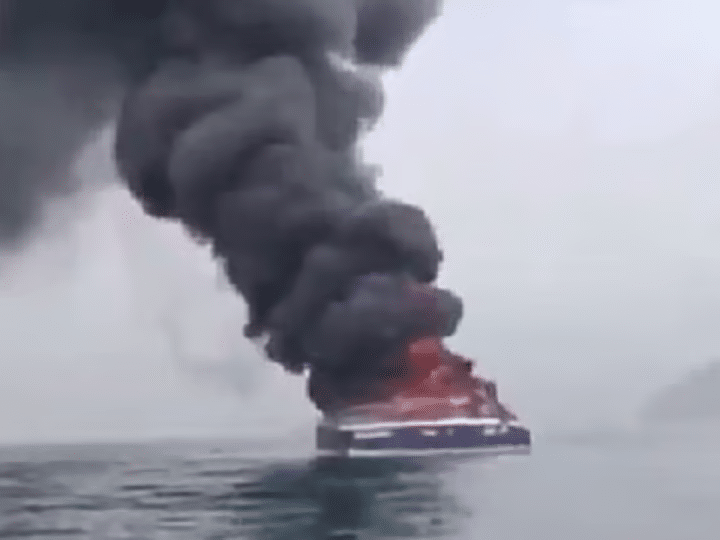
Iran’s Foreign Minister Abbas Araghchi has vowed to retaliate against Ukraine for its attack on a commercial Iranian ship in the Caspian sea.
Araghchi said that the attack, which blew up the ship and killed at least one crew member, violates the UN Charter and “cannot go unanswered”.
In a call with the EU’s pro-Israel foreign policy chief, Kaja Kallas, and Russia’s Foreign Minister Sergey Lavrov, Araghchi also said that Israel was behind the attack to try to “drag Europe into its war”.
Ukraine claimed it had attacked a Russian warship.
MP Ebrahim Azizi, who heads the Iranian parliament’s national security body, said:
Any attack on Iran always comes with a cost, and that remains true today; the US and Israel are well aware of this. Ukraine, too, may soon come to understand that Iran does not let actions go unanswered.
A post by the non-governmental Iran Observer X account showed a graphic that it said demonstrated the ability of Iranian missiles to reach Ukraine in retaliation.
BREAKING: Iran’s Foriegn Minister has announced that Zelensky’s Drone Strike on an Iranian Vessel in the Caspian Sea will receive a Response from Iran
Russia and the European Union have been Notified pic.twitter.com/TvIvFAs80G
— Iran Observer (@IranObserver0) July 26, 2026
Iran has summoned Ukrainian officials in Tehran over the “hostile and criminal act”. Araghchi thanked local authorities in Russia’s Astrakhan region for helping surviving crew members.
Featured image via Baird Maritime
By Skwawkbox
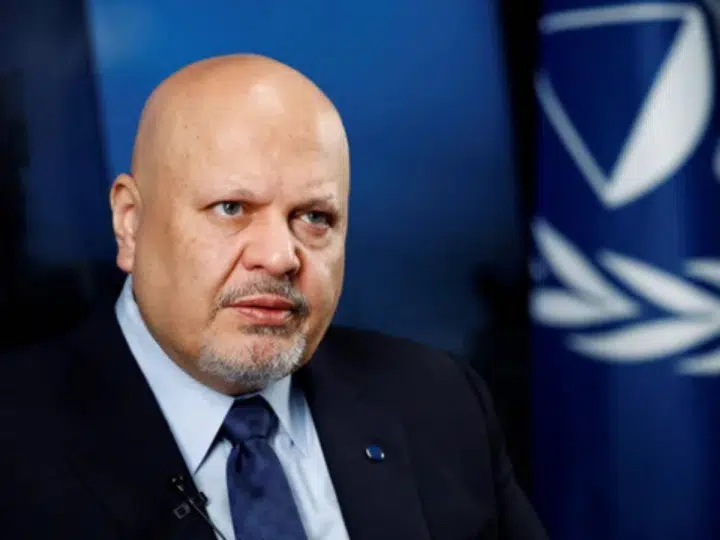
Weeks after the ruling ‘Bureau’ of the International Criminal Court (ICC) changed its voting rules to please the US and Israel, and stitch up its chief prosecutor, Karim Khan has been removed from his role.
The removal was voted through despite expert lawyers unanimously clearing Khan of wrongdoing in connection to alleged sexual misconduct with a junior colleague, which he has denied.
It is the first time in ICC history that a prosecutor has been removed. Meanwhile, Israel has boasted of its role in him being ousted.
Khan has said he will appeal the decision.
ICC top prosecutor pursued war criminals
Khan lost his role after a sustained pressure campaign by the US and Israel after Khan obtained arrest warrants for wanted Israeli war criminals, Benjamin Netanyahu and former Israeli defence minister, Yo’av Gallant, for crimes in Gaza.
Netanyahu has now claimed that Khan issued the arrest warrants to distract from the misconduct allegations, which the Canary has written about here. However, the warrant process considerably pre-dates any allegations against Khan.
The prosecutor and his family also faced physical threats from supporters of Israel and financial sanctions from the US.
Khan’s lawyers were not allowed to address the Bureau.
Lawyers for the ICC Prosecutor have been forced to write publicly after being denied the opportunity to address the body that will decide whether to remove him. It appears that the President of the Assembly of States Parties is determined to bring the Court into disrepute by… https://t.co/FOvwPf771I
— Martin Shaw (@martinshawx) July 21, 2026
Retributive manoeuvres
Israel and the US have pressured and manoeuvred for Khan’s dismissal ever since he applied for war crimes arrest warrants for Netanyahu and Gallant.
The Bureau is staging the latest manoeuvre despite repeated findings by independent legal experts that Khan was innocent of any wrongdoing.
Featured image via Piroschka Van De Wouw/ Reuters
By Skwawkbox
Savannah Guthrie says Nancy’s kidnappers have ‘tried to do things the right way,’ pleads ‘tell us where to look for her’

I’ve been stealing your crypto for 30 years #cybersecurity #finance #crypto

People in North East live 3 years less than London study shows


-

 Fashion3 days ago
Weekend Open Thread: Brooks Brothers
-

 Crypto World6 days ago
Grayscale Files For Worldcoin ETF, WLD Registers Sharp Rise
-

 NewsBeat6 days ago
How a former Blue Peter presenter stunned America’s Got Talent judges
-

 Tech19 hours ago
Intel is reversing course and bringing hyper-threading back to its server chips
-

 Tech7 days ago
Sail Virtually Aboard The “Itanic” With IA-64 Emulator
-
 Tech7 days ago
Turtle Beach Command Series KB7 review: a nifty screen-equipped gaming keyboard
-
 Business6 days ago
New Jersey voter registration controversy explained: How 6,600 noncitizens got on the rolls, and what happens next
-
 Entertainment6 days ago
Johnny Depp’s R-Rated Gothic Cult Classic Gets New Release Ahead of Sydney Sweeney Remake
-

 Crypto World5 days ago
Ethics, other provisions in crypto Clarity Act to be further discussed
-

 Politics8 hours ago
Luke Littler dismantles Gerwyn Price to retain title in Blackpool
-
 NewsBeat7 days ago
Shanghai science forum photos show China’s AI and robotics advances in rivalry with US
-
 Sports23 hours ago
Commonwealth Games boxing: Jadumani Singh seals dominant 5-0 win over Pakistan’s Sumama Rehman to enter quarter-finals | Commonwealth Games News
-

 Sports4 days ago
2026 3M Open leaderboard: Scottie Scheffler finds putter in Round 1, sits three back
-

 News Videos4 days ago
The Peugeot Family: How 200 Years of an “Old Money” Dynasty Died in A Boardroom
-

 Politics1 day ago
Spain sweeps the board at 2026 World Cup with individual awards
-

 Fashion4 days ago
16 Dresses for the High Summer Event
-

 Crypto World7 days ago
Andrew Cuomo joins OKX board as crypto exchange expands in U.S.
-
 Entertainment3 days ago
A New Post-Apocalyptic Gundam Anime Series Blasts Into SDCC
-

 News Videos22 hours ago
BITCOIN JUST ENTERED THIS CRITICAL ZONE…
-

 Crypto World1 day ago
XRP Ledger adds $2.6B as RWA inflows rank second
You must be logged in to post a comment Login