

Business
the founders turning down venture capital


A bootstrapped business is one that funds its own growth out of revenue rather than outside investment, and while British venture funding is running at record levels, a growing number of founders are deciding they would rather not take the money.
The term gets used loosely, but the meaning is narrow. A bootstrapped company pays for its growth from the cash it generates, plus whatever the founders put in at the start. There is no venture capital or institutional equity on the cap table, and no investor timetable dictating when the business must be sold or floated. The phrase borrows from the old image of hauling yourself up by your own bootstraps, and in practice it describes a company whose only real backer is its customers.
The definition matters because the alternative has rarely looked more tempting on paper. UK startups raised a record $17bn (£12.7bn) in the first half of 2026, with late-stage deals taking 68 per cent of all capital, up from 42 per cent a year earlier.
Read past the headline and the picture narrows considerably. Data intelligence firm Tracxn put UK technology funding at $15.3bn over the same period, spread across fewer completed rounds than in the second half of 2025. Investors are writing bigger cheques to a smaller number of companies, and a founder looking for £2m to £10m is raising into a market that has become markedly choosier.
Policymakers have noticed the gap. The British Business Bank has more than doubled its direct equity investing in nine months, explicitly to prod domestic institutions into following it. For the owner of a profitable but unfashionable business, though, the calculation has not changed much: capital is available, it is simply expensive in terms of control.
That is what bootstrapping trades. Growth is capped at what customers are willing to pay for today, and hiring waits until payroll can absorb it. There is also no external board to satisfy. What the founder keeps is the whole of the equity and the whole of the decision, which is worth a great deal in a downturn and very little in a land grab.
The precedent is not a fringe one. Mailchimp spent two decades funding itself on subscription revenue from small businesses before Intuit agreed to buy it for roughly $12bn in cash and stock in 2021, one of the largest exits ever recorded by a company that never raised a venture round. The founders owned all of it at the point of sale, a reminder that never raising and never selling are separate decisions.
The most instructive current European example sits in Amsterdam. Browser gaming platform Poki began as a personal collection of web games assembled by co-founder Michiel van Amerongen in the mid-2000s, was incorporated as a company in 2013, and has never taken external investment.
The scale it reached without it makes the case. Poki now counts more than 100 million monthly active players, a figure the company says puts it within range of PlayStation Network’s 119 million. Revenue has grown by around 50 per cent a year since 2020, according to Bloomberg, on a team that went from 50 to 65 staff last year.
The mechanics matter more than the folklore. All of the platform’s revenue comes from advertising, and its games run in the browser rather than through an app, so developers sidestep app-store gatekeeping and install friction, and the company avoids the user-acquisition spending mobile publishers typically fund with investor money. A venture-backed rival buys installs; the largest single share of Poki’s traffic arrives through organic search. Distribution that costs nothing is the structural reason revenue alone was sufficient.
That is the point most retellings of a bootstrapping story miss, and the reason it is a strategy rather than a virtue. Self-funding works where customer acquisition is cheap and cash converts quickly. It is close to unworkable in sectors where the first product costs millions before anyone can buy it, and it offers no protection against a rival who raises £50m to buy the market outright. Founders who choose it are betting that their distribution is defensible.
Concentration is the other cost. Poki’s revenue rests on a single advertising stream, and van Amerongen has said the company is exploring models beyond it. The Dutch Game Awards named the firm Best in Business in December 2025, citing its growth as a bootstrapped company competing globally.
For UK founders reading the funding headlines, the sharper question than whether to raise is whether the business has a distribution advantage its own revenue can compound. Where one exists, outside capital mostly buys speed the company may not need. Where it does not, no amount of ownership will substitute for the cheque.

Business
Microsoft Stock Climbs 2% Ahead of Pivotal Earnings Report as Investors Weigh Azure Growth and AI Spending

Microsoft Corp. shares rose Monday morning, climbing 2.05% to $389.52, as investors positioned ahead of one of the company’s most closely watched earnings reports in years, with the stock gaining $7.82 in early trading on the Nasdaq.
The advance came alongside broader gains across major technology names, as Wall Street braced for a wave of Big Tech earnings this week that will test whether massive artificial intelligence spending is translating into sustainable growth.
Tech Stocks Rise Together Ahead of Earnings Wave
Microsoft’s gain was part of a sector-wide move Monday morning. Tech stocks rose broadly amid tentative optimism ahead of a flood of Big Tech earnings this week, with Alphabet climbing 2.09%, Microsoft up 2.09%, Meta Platforms adding 0.70% and Apple gaining 1.04%, even as Nvidia declined nearly 4%. Results from Microsoft, Meta Platforms, Apple and Amazon headline the calendar this week, alongside reports from chipmakers including SK Hynix and Qualcomm, with investors paying particularly close attention to capital expenditure figures after Alphabet’s own capex guidance had previously unsettled markets amid growing concerns about free cash flow during the AI spending boom.
A Difficult Year Heading Into Results
Monday’s rally offered some relief after a rocky stretch for Microsoft shares. The stock had finished the prior session at $381.70, up just 0.03%, before climbing further in pre-market trading as investors weighed resilient Azure cloud growth and an attractive valuation against enormous AI spending commitments, uncertain returns on its Copilot AI assistant, and a weak technical chart structure. Despite the recent recovery attempt, the stock has lost around 25% over the past year and remains more than 30% below its record high.
That decline has put added pressure on Microsoft’s upcoming fiscal fourth-quarter report. The company is scheduled to report results after the market closes on Wednesday, July 29, in what analysts are describing as one of its most important earnings releases in years, with investors demanding evidence that the company’s enormous AI investments can generate sufficient returns.
Copilot and Azure Take Center Stage
A key focus for investors heading into the report is Microsoft’s push to embed its Copilot AI assistant more deeply into its core software products. Microsoft 365 Business began embedding Copilot more directly starting July 1, shifting the tool closer to a standard feature rather than a separate paid add-on, a strategy that could boost paid adoption and increase revenue per customer. Some estimates suggest Copilot could exceed 25 million paid enterprise seats by the end of 2026 if deployment continues to accelerate, though investors still lack clarity on usage, retention and profitability metrics tied to the product.
That uncertainty is compounded by an increasingly crowded competitive landscape. Competition from ChatGPT, Claude, Google’s Gemini and lower-cost open-weight models has intensified, and customers may grow reluctant to expand their AI spending if token consumption produces unpredictable costs. Microsoft will need to demonstrate that Copilot can meaningfully improve Microsoft 365 growth, deepen customer relationships and support pricing power, rather than simply representing another costly infrastructure obligation.
Analysts Watching Earnings Per Share and Cloud Growth
Wall Street’s expectations for Wednesday’s report are already taking shape. Analyst consensus calls for earnings per share of $4.21 for the quarter, with Microsoft’s next dividend, valued at $0.91 per share, set to go ex-dividend on August 20. The company carries a trailing price-to-earnings ratio of 22.73 and trailing twelve-month earnings per share of $16.79, with a one-year analyst price target of $556.75, well above where the stock currently trades. Microsoft’s market capitalization stood at roughly $2.835 trillion as of recent trading, with average daily volume near 27.6 million shares.
A Rotation Into AI Software Names
Monday’s gains also fit into a broader shift some analysts have identified in recent weeks, as investors rotate capital between different corners of the AI trade. Analysts have noted that big gains for AI hardware leaders throughout 2026 may be raising valuation concerns, prompting some investors to pivot capital into software players like Microsoft instead. While that rotation trend could continue to support Microsoft’s share price if it persists, it remains uncertain whether investor appetite for AI-linked software stocks will hold up given ongoing macroeconomic risks.
What’s at Stake Wednesday
Microsoft’s earnings call will offer investors their clearest look yet at how the company’s aggressive AI infrastructure buildout is translating into financial results. Following the release, Chief Executive Satya Nadella and other members of Microsoft’s senior leadership team are expected to host a live conference call with Wall Street analysts to walk through the results. That call is scheduled for 5:30 p.m. Eastern time on July 29.
Given the size of Microsoft’s cloud and AI investments, the report is expected to carry outsized influence over sentiment across the broader technology sector this week, particularly as Amazon, Meta and Apple prepare to report their own results in the days that follow. Investors will be watching closely for updates on Azure’s growth rate, capital expenditure guidance for the coming fiscal year, and any commentary from Nadella on how enterprise customers are responding to Copilot pricing and adoption.
With markets already jittery over the scale of AI-related spending commitments across the technology sector, including a separate financing arrangement involving Nvidia and OpenAI disclosed over the weekend, Microsoft’s results are likely to be parsed for signs of whether the broader AI investment cycle is beginning to pay off, or whether concerns about overspending and murky returns will continue to weigh on the sector heading into the fall.

Carvana's Epic Ride Proved Me Wrong (Upgrade)
Business
Oracle Stock Jumps Nearly 5% on $7 Billion Pentagon Deal as Shares Rebound From a Recent 52-Week Low
Oracle Corp. shares surged Monday morning, rising 4.59% to $120.26, as the enterprise software giant benefited from a wave of new government contract news even as the stock continues working to recover from a sharp multi-month decline.
The gains added $5.28 to Oracle’s share price by mid-morning trading on the New York Stock Exchange, extending a bounce that has taken shape over the past several sessions after the stock touched fresh 52-week lows earlier this month.
A Major Defense Department Win
The rally was driven largely by optimism around expanding cloud infrastructure and AI partnerships, after Oracle secured a 10-year enterprise software deal with the U.S. Department of War worth up to roughly $7 billion, creating a long-term revenue anchor for the company and helping consolidate what had been fragmented government procurement. In a separate contract, Oracle landed a five-year U.S. Navy indefinite-delivery, indefinite-quantity agreement carrying a base value of $3.31 billion, with options that could lift total potential spending to $6.99 billion across software, software-as-a-service and consulting work.
The back-to-back government wins give Oracle a substantial and relatively predictable revenue stream at a time when investors have grown increasingly focused on how quickly the company can convert its enormous cloud backlog into recognized revenue.
Not All the News Was Positive
The rally came despite some headwinds tied to Oracle’s data center expansion plans. Wisconsin regulators upheld strict credit rules that may force Oracle to post more than $7 billion in collateral for its planned AI-focused data center in the state, a requirement that could add more than $100 million in annual financing costs. Separately, CLSA initiated coverage of Oracle with a Hold rating and a $145 price target, signaling cautious sentiment on the stock and voicing a preference for Microsoft and Adobe within the enterprise software space.
Those mixed signals reflect the broader tension that has defined Oracle’s stock performance in recent months: a company with enormous long-term cloud demand but rising near-term costs tied to building out the infrastructure needed to meet it.
A Steep Recent Decline
Monday’s gain follows one of the sharpest pullbacks Oracle has experienced this year. From early July highs near $149, Oracle shares slid to about $115 by July 24, a sharp reset for a company of its size. The stock’s chart remains in a longer-term downtrend, trading well below its 20-day, 50-day and 200-day moving averages, with a “death cross” pattern that formed in January, when the 50-day moving average slid below the 200-day average, continuing to dominate the technical picture on every rebound attempt.
Even so, the stock’s relative strength index has shown deeply oversold conditions, a reading that often signals selling pressure has stretched far enough to spark sharp countertrend bounces even when the broader trend remains negative. Shares have been trading just above their 52-week low of $127.60 and remain far from their 52-week high of $345.72, keeping the overall chart in repair mode despite recent bursts of strength.
Other data trackers put the stock’s recent low even lower. Shares have traded as low as $120.03 over the past year, sitting roughly 27% below the 52-week high of $341.82.
The Case for a Longer-Term Rebound
Despite the recent volatility, some analysts remain optimistic about Oracle’s longer-term trajectory, pointing to the size of its contracted future business. Bulls argue Oracle could reach a new high by 2027, contingent on the company converting a meaningful slice of its $638 billion in remaining performance obligations into recognized revenue on schedule, sustaining growth in its Oracle Cloud Infrastructure business above 60%, and restoring free cash flow so markets stop reacting negatively to every capital expenditure disclosure. Over the past decade, Oracle shares have returned nearly 259%, underscoring the stock’s long runway of growth even through periodic steep pullbacks.
That backlog has been a central talking point for Oracle bulls throughout the year, particularly as the company has leaned heavily into AI-related cloud infrastructure spending to meet demand from large enterprise and government customers.
Broader Momentum in Cloud and AI Partnerships
Oracle’s recent contract wins build on a string of positive developments tied to its cloud business. Oracle’s share price gains in recent weeks have been tied to growth in cloud infrastructure and AI integration, with partnerships involving major hyperscale cloud providers helping expand the company’s enterprise customer base and improve revenue visibility.
The company has also drawn attention for potential wins beyond U.S. borders. Oracle shares climbed in a separate session after a report revealed the company had emerged as the frontrunner to deliver a highly classified cloud infrastructure contract for the Japanese government, adding to a growing list of large public-sector deals across multiple countries.
With the stock still trading well below its 52-week high and carrying a mixed technical picture, Monday’s jump is likely to be viewed by traders as a test of whether Oracle can build sustained momentum or whether the bounce will fade back toward its recent lows. Analysts have flagged the low $150s as a key resistance zone tied to the stock’s 20-day moving average, while the $127.60 area marks a critical support level that bulls will want to defend to avoid renewed breakdown risk.
For now, the combination of major new government contracts and a technically oversold setup appears to have given Oracle shares enough momentum to overcome lingering concerns about data center financing costs and mixed analyst sentiment, at least for Monday’s trading session.

Seven BSE 150 MidCap stocks scaled fresh 52-week highs as Sensex surged 776 points in a broad-based rally. Lloyds Metals & Energy, Laurus Labs and Gujarat Fluorochemicals led the list, reflecting strong buying interest, positive momentum and improving investor confidence.
Business
Mastercard Stock Rises 2% as Wall Street Positions Ahead of Thursday’s Second-Quarter Earnings Report
Mastercard Inc. shares climbed Monday morning, rising 2.19% to $551.66, adding $11.84 as investors positioned ahead of the payments giant’s second-quarter earnings report due later this week, part of a broader rally across major financial and technology names.
The gains extend a strong recent run for Mastercard shares, which have been building momentum over the past several weeks amid a string of bullish analyst calls and growing anticipation for Thursday’s results.
Earnings on Deck This Week
Mastercard is scheduled to release its second-quarter 2026 financial results on July 30. Analysts expect the payments company to report profit of roughly $4.75 to $4.77 per share, representing growth of about 14.5% to 14.9% from the year-ago quarter, with the company having topped Wall Street’s earnings estimates in each of the last four quarters. For the full 2026 fiscal year, analysts project Mastercard will report profit of $19.61 per share, up 15.3% from $17.01 per share in fiscal 2025.
That track record of consistently beating expectations has helped build investor confidence heading into Thursday’s report, with many on Wall Street expecting another strong quarter powered by resilient global consumer spending.
Analysts Turn Increasingly Bullish
A wave of positive analyst commentary has accompanied Mastercard’s climb in recent weeks. Baird raised its price target on the stock to $680 from $660 on July 7 while maintaining an “Outperform” rating, with the firm citing expectations for revenue growth acceleration in upcoming quarters as comparisons ease following the anniversary of the Capital One and Discover Financial impacts on the payments landscape. The firm also pointed to healthy transaction yields and better-than-expected margins that could help offset modestly worse foreign exchange volatility and higher interest expenses tied to a new debt package.
Other major firms have echoed that optimism. Barclays initiated coverage of Mastercard with an Overweight rating and a $640 price target, citing the company’s positioning as a durable franchise following a broader sector reset. Truist, meanwhile, trimmed its price target on the stock slightly to $554 from $561 ahead of the earnings report, a more cautious note among an otherwise largely bullish analyst community.
Among 39 analysts covering the stock, 31 currently recommend “Strong Buy,” four suggest “Moderate Buy,” and four rate it a “Hold,” with a mean price target of $639.76 implying more than 23% potential upside from recent trading levels. A separate tally of 41 analysts puts the average rating for Mastercard at “Strong Buy,” with a 12-month price target of $644.24, representing nearly 19% upside from the stock’s most recent closing levels.
A Strong Technical Setup
Mastercard’s share price has shown notable strength in recent trading sessions, building a technical foundation ahead of earnings. The stock recently traded well above its 20-week and 50-week moving averages and significantly above its 200-week average, closing at the top of its weekly trading range and maintaining strong bullish momentum relative to all key weekly moving averages. Weekly price action has remained volatile, with the stock’s expected trading corridor for the coming week estimated between $517 and $563.
Business Momentum Beyond the Numbers
Alongside its financial performance, Mastercard has continued expanding its product offerings and global partnerships. The company recently announced a series of enhancements to Mastercard In Control, including advanced virtual card controls designed to help reduce risk across the full payment lifecycle. Mastercard also launched its fourth Innovation Circuit in Singapore, focused on advancing artificial intelligence, digital identity and tokenization technologies for future payment systems.
The company has also continued building out its digital asset strategy. Mastercard joined the Open USD stablecoin consortium as part of an effort to modernize its digital payment capabilities, while a preliminary resolution of swipe-fee litigation has reduced a source of major legal uncertainty facing the company. Piper Sandler also upgraded Mastercard to a strong-buy rating, citing the company’s robust financial health.
Dividend Signals Confidence
Mastercard’s capital return program has also drawn positive attention from investors in recent weeks. Shares popped 2.2% on June 16 after the company declared a quarterly cash dividend of $0.87 per share, underscoring its strong cash generation and commitment to returning capital to shareholders. That dividend is scheduled to be paid on August 7, 2026, to shareholders of record as of July 9, 2026, a move management has framed as reflecting confidence in the company’s financial strength and long-term growth prospects.
A Broader Market Tailwind
Monday’s gains for Mastercard also came against a generally supportive market backdrop, with major technology and financial names posting broad gains in early trading as investors looked ahead to a heavy week of corporate earnings across sectors, including reports from Microsoft, Meta Platforms, Amazon and Apple later in the week.
What Investors Will Watch Thursday
Heading into Wednesday’s close and Thursday’s pre-market release, analysts will be watching closely for updates on consumer spending trends, cross-border transaction volumes, and any commentary from Mastercard’s leadership on how the company’s expanding stablecoin and AI-driven payment initiatives are progressing. Investors are also expected to focus on management’s commentary regarding risks tied to potential shifts in credit card competition and interchange regulation, along with updates on Mastercard’s continued expansion with partners including HSBC, SAP and Citi.
With the stock already up sharply over the past month and trading near record territory, Thursday’s results are likely to serve as a key test of whether Mastercard can justify its recent run-up or whether investors will look to lock in gains regardless of the outcome.
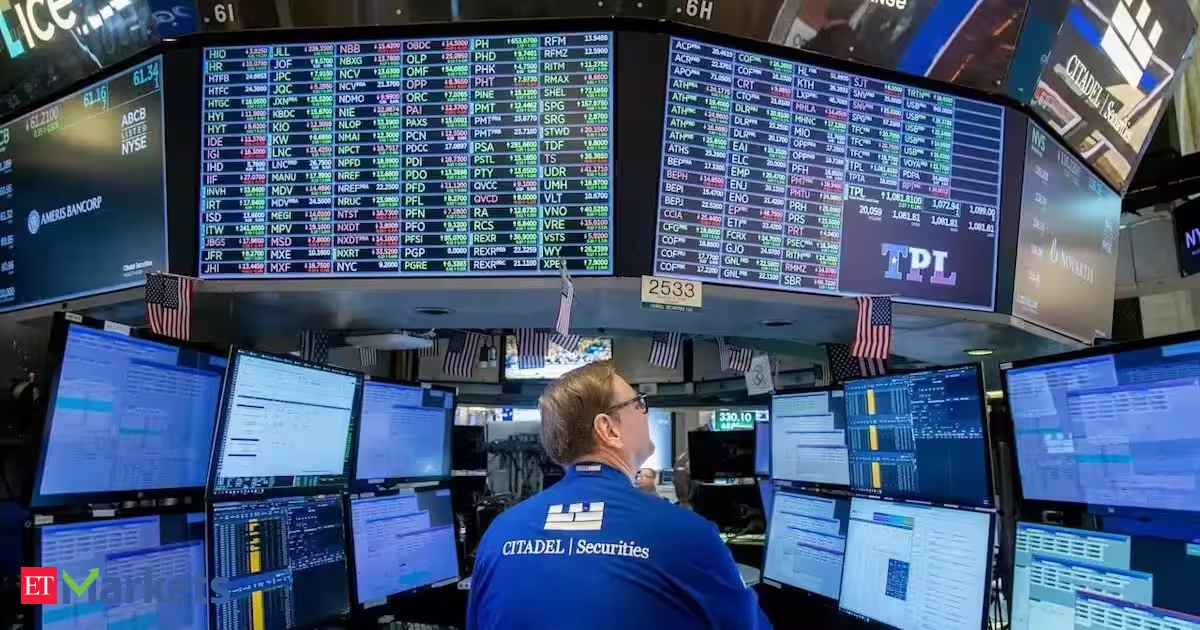
Microsoft, Amazon, Meta and Apple are set to report quarterly results this week. Investors were questioning whether a multi-year rally fueled by optimism about artificial intelligence may be losing steam.
Investors last week were spooked by quarterly results from Tesla and Alphabet that showed heavy spending on artificial intelligence.
On Monday, crude fell to a one-week low as U.S. President Donald Trump said Washington was having “good talks” with Iran and there was a chance of a peace deal, but warned U.S. strikes would resume if the negotiations failed to deliver. Oil prices surged last week, with Brent futures surpassing $100 a barrel, after new strikes on shipping in the Middle East.
The S&P 500 consumer staples index and the health care index both gained.

The PHLX chip index extended its recent selloff. It is down around 20% from its record high close on June 22 and remains up about 63% in 2026.
Chinese chipmaker CXMT Corp’s stellar debut on Monday and a report that the country has started manufacturing homegrown DUV chipmaking tools also signaled intensifying competition for the U.S. semiconductor industry. “Today represents a continuation of the rotational market that we’ve seen,” said Bill Merz, head of capital markets research and portfolio construction at U.S. Bank Asset Management Group. “Part of the market reaction may be related to that creeping suspicion that perhaps a rate hike is coming.”
According to preliminary data, the S&P 500 gained 1.45 points, or 0.02%, to end at 7,413.43 points, while the Nasdaq Composite lost 41.21 points, or 0.16%, to 24,934.61. The Dow Jones Industrial Average rose 255.58 points, or 0.49%, to 52,202.83.
Brent crude prices slid 8% to about $89 a barrel after Washington abruptly suspended a two-week campaign of air strikes against Iran on Saturday in Trump’s latest strategic U-turn in the five-month-old conflict.
Oil companies Occidental Petroleum and Exxon Mobil both dipped.
The Fed’s monetary policy decision is due on Wednesday and traders are projecting a 62% chance the central bank will leave rates unchanged, with a 38% chance of a 25 basis-point hike, according to the CME FedWatch tool.
The Personal Consumption Expenditures Price Index for June is due a day after the central bank’s decision and will be key in shaping market expectations for interest rates later this year.
Analysts on average expect S&P 500 aggregate second-quarter earnings to jump 39% from a year ago, with AI-related stocks accounting for much of that growth, according to LSEG I/B/E/S.
The S&P 500 is trading at around 20 times expected earnings, compared to a 10-year average of 20, according to LSEG data.


Optimize fruit inclusions for performance, stability, value, and appeal.
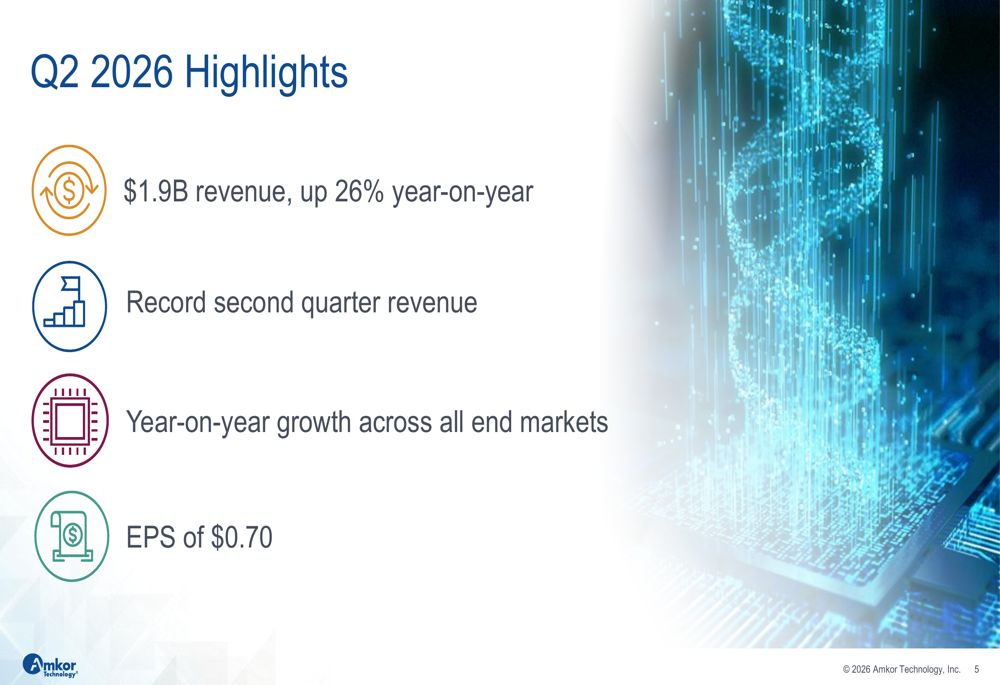
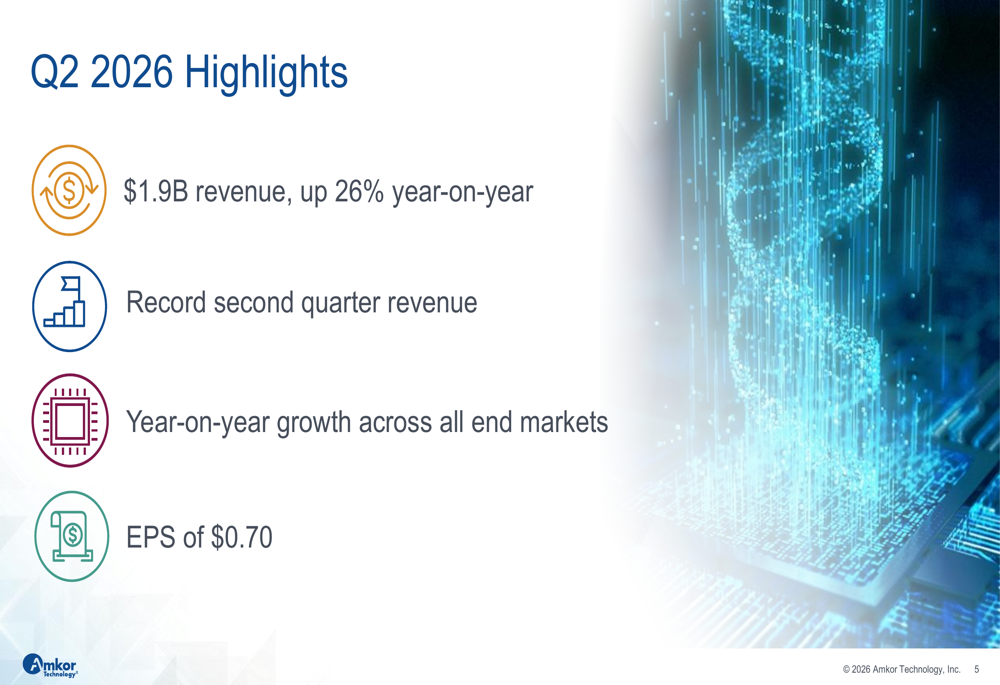
Amkor Q2 2026 slides: record revenue, stock falls on outlook

Hundreds of user conversations with Anthropic’s popular artificial intelligence (AI) chatbot Claude were found to have been available to essentially anyone using Google or other web browsers.
Links to the chats, some of which included personal and work information, would show up if a user of a search engine like Google used a site-specific search term.
The searches showed Claude chats for which a user had decided to “share” a link had been saved by search engines like Google, leaving them accessible to the broader public.
The search availability of the chat logs was removed over the weekend, but many were saved and shared widely online.
A spokeswoman for Anthropic said that Claude users maintained control over if and when to share conversations they had with the chatbot.
She said links to conversations were “not guessable or discoverable unless people choose to share them themselves”.
“When someone shares a conversation, they are making that content publicly accessible, and like other public web content, it may be archived by third-party services,” the spokeswoman added.
The share option within Claude tells a user that “anyone with the link” may view the contents of that link, but does not explicitly state that the link may end up in Google and search results.
Users on Reddit initially discovered, external the publicly available chats, which covered more than 200 conversations with Claude across at least 25 pages of search results – some taking place just weeks ago.
In the conversations, users prompted the chatbot to respond to a wide array of topics.
Chat logs include a user asking Claude last year whether it wanted “to help me or do you want to help anthropic more?”. The chatbot responded in part, saying “I experience something like wanting to help you”.
In one conversation from April, a user prompted Claude to draft an unpublished blog post about cloud security involving details of a corporate project. In another from last month, a user asked Claude how to “become become Nine-tailed fox?”, before clarifying they wanted to literally transform from human to the creature.
Claude first tried to show the user an AI-generated image claiming they had been given “fully functional fox powers!”.
Other conversations with Claude included users seeking help with their resumes, including their names, contact information and work history. Some users even conducted what appeared to be proprietary research for their work, such as in healthcare, including transcripts of private conversations.
When OpenAI last year experienced an almost identical issue with ChatGPT chat logs being made publicly accessible, external, the company ultimately changed, external the ease with which such logs were accessible.
A spokesman for Google made clear to the BBC that the company does not control “what pages are made public on the web,” saying instead that action comes from websites.
“We give site owners clear controls to decide whether pages can be crawled or indexed, and we always respect those directives.”
As the search indexing of the chat logs is no longer occurring, it is likely Anthropic used available tools to quickly block the chat log links from search results. Google’s process for a website owner to block a link, external is straightforward, but must be initiated by a website owner.
Other search engines like Bing, Brave and Duck Duck Go, through which the Claude chat logs also appeared, were approached for comment.

Earnings call transcript: OPKO Health posts smaller Q2 loss, shares rise in 2026

Improving filly French Accord breaks maiden at Sandown 2024

Microsoft unveils AI security tools it says outperform competing platforms

US singer D4vd to go on trial for murder in death of Celeste Rivas Hernandez


-

 Fashion3 days ago
Weekend Open Thread: Brooks Brothers
-

 Crypto World7 days ago
Grayscale Files For Worldcoin ETF, WLD Registers Sharp Rise
-

 NewsBeat6 days ago
How a former Blue Peter presenter stunned America’s Got Talent judges
-

 Tech23 hours ago
Intel is reversing course and bringing hyper-threading back to its server chips
-

 Tech7 days ago
Sail Virtually Aboard The “Itanic” With IA-64 Emulator
-
 Tech7 days ago
Turtle Beach Command Series KB7 review: a nifty screen-equipped gaming keyboard
-
 Business6 days ago
New Jersey voter registration controversy explained: How 6,600 noncitizens got on the rolls, and what happens next
-
 Entertainment6 days ago
Johnny Depp’s R-Rated Gothic Cult Classic Gets New Release Ahead of Sydney Sweeney Remake
-

 Crypto World5 days ago
Ethics, other provisions in crypto Clarity Act to be further discussed
-

 Politics12 hours ago
Luke Littler dismantles Gerwyn Price to retain title in Blackpool
-
 NewsBeat7 days ago
Shanghai science forum photos show China’s AI and robotics advances in rivalry with US
-
 Sports1 day ago
Commonwealth Games boxing: Jadumani Singh seals dominant 5-0 win over Pakistan’s Sumama Rehman to enter quarter-finals | Commonwealth Games News
-

 Sports4 days ago
2026 3M Open leaderboard: Scottie Scheffler finds putter in Round 1, sits three back
-

 News Videos4 days ago
The Peugeot Family: How 200 Years of an “Old Money” Dynasty Died in A Boardroom
-

 Fashion4 days ago
16 Dresses for the High Summer Event
-

 Politics1 day ago
Spain sweeps the board at 2026 World Cup with individual awards
-

 Crypto World7 days ago
Andrew Cuomo joins OKX board as crypto exchange expands in U.S.
-
 Entertainment3 days ago
A New Post-Apocalyptic Gundam Anime Series Blasts Into SDCC
-

 News Videos1 day ago
BITCOIN JUST ENTERED THIS CRITICAL ZONE…
-

 Crypto World2 days ago
XRP Ledger adds $2.6B as RWA inflows rank second
You must be logged in to post a comment Login