Connect with us
DAPA Banner
DAPA Coin
DAPA
COIN PAYMENT ASSET
PRIVACY · BLOCKDAG · HOMOMORPHIC ENCRYPTION · RUST
ElGamal Encrypted MINE DAPA
🚫 GENESIS SOLD OUT
DAPAPAY COMING

Business

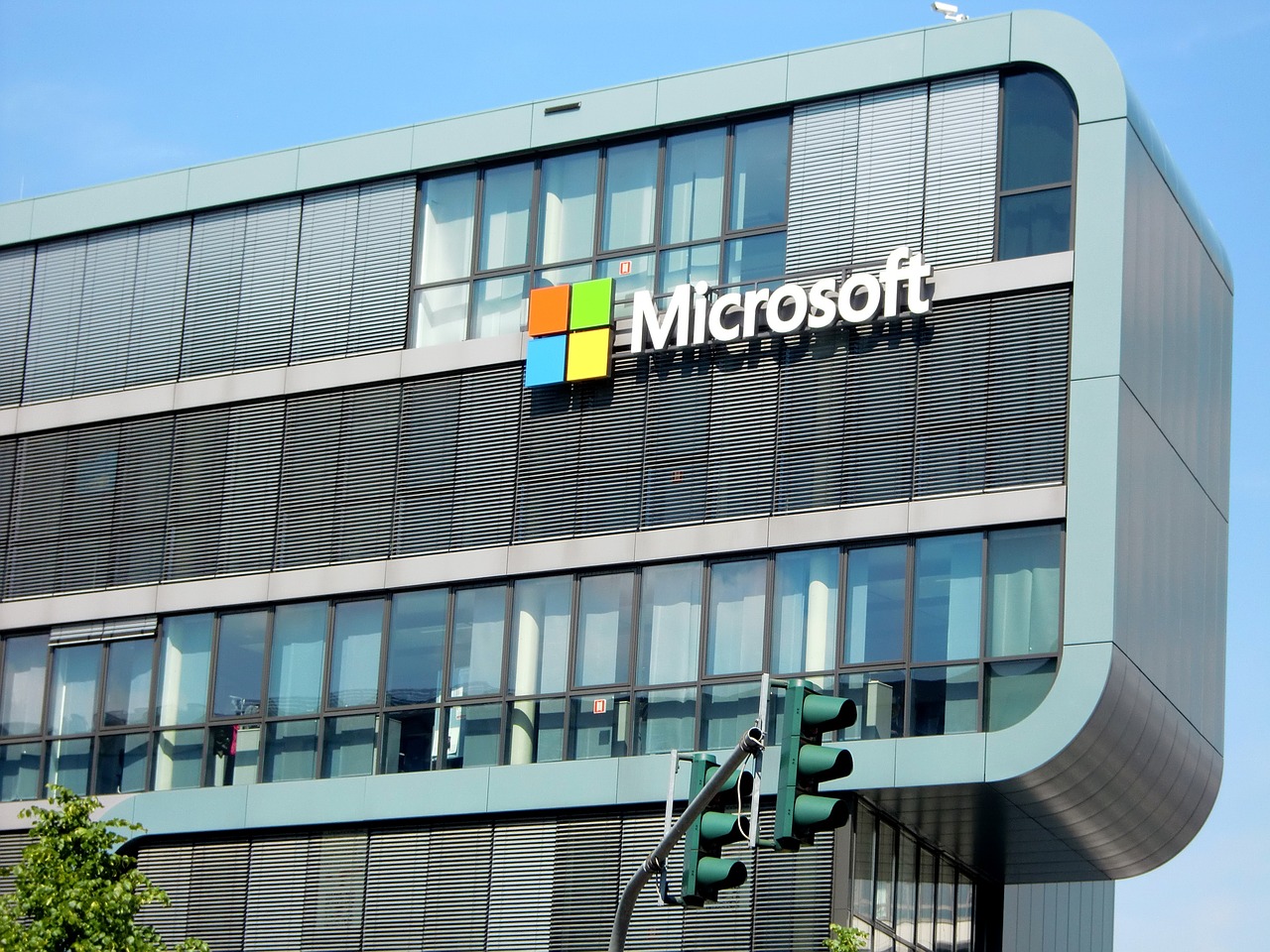
Microsoft Stock Climbs 2% Ahead of Pivotal Earnings Report as Investors Weigh Azure Growth and AI Spending

Published

on

Company headquarters, SpaceX Starbase in Starbase, Texas

Microsoft Corp. shares rose Monday morning, climbing 2.05% to $389.52, as investors positioned ahead of one of the company’s most closely watched earnings reports in years, with the stock gaining $7.82 in early trading on the Nasdaq.

The advance came alongside broader gains across major technology names, as Wall Street braced for a wave of Big Tech earnings this week that will test whether massive artificial intelligence spending is translating into sustainable growth.

Tech Stocks Rise Together Ahead of Earnings Wave

Microsoft’s gain was part of a sector-wide move Monday morning. Tech stocks rose broadly amid tentative optimism ahead of a flood of Big Tech earnings this week, with Alphabet climbing 2.09%, Microsoft up 2.09%, Meta Platforms adding 0.70% and Apple gaining 1.04%, even as Nvidia declined nearly 4%. Results from Microsoft, Meta Platforms, Apple and Amazon headline the calendar this week, alongside reports from chipmakers including SK Hynix and Qualcomm, with investors paying particularly close attention to capital expenditure figures after Alphabet’s own capex guidance had previously unsettled markets amid growing concerns about free cash flow during the AI spending boom.

Advertisement

A Difficult Year Heading Into Results

Monday’s rally offered some relief after a rocky stretch for Microsoft shares. The stock had finished the prior session at $381.70, up just 0.03%, before climbing further in pre-market trading as investors weighed resilient Azure cloud growth and an attractive valuation against enormous AI spending commitments, uncertain returns on its Copilot AI assistant, and a weak technical chart structure. Despite the recent recovery attempt, the stock has lost around 25% over the past year and remains more than 30% below its record high.

That decline has put added pressure on Microsoft’s upcoming fiscal fourth-quarter report. The company is scheduled to report results after the market closes on Wednesday, July 29, in what analysts are describing as one of its most important earnings releases in years, with investors demanding evidence that the company’s enormous AI investments can generate sufficient returns.

Copilot and Azure Take Center Stage

Advertisement

A key focus for investors heading into the report is Microsoft’s push to embed its Copilot AI assistant more deeply into its core software products. Microsoft 365 Business began embedding Copilot more directly starting July 1, shifting the tool closer to a standard feature rather than a separate paid add-on, a strategy that could boost paid adoption and increase revenue per customer. Some estimates suggest Copilot could exceed 25 million paid enterprise seats by the end of 2026 if deployment continues to accelerate, though investors still lack clarity on usage, retention and profitability metrics tied to the product.

That uncertainty is compounded by an increasingly crowded competitive landscape. Competition from ChatGPT, Claude, Google’s Gemini and lower-cost open-weight models has intensified, and customers may grow reluctant to expand their AI spending if token consumption produces unpredictable costs. Microsoft will need to demonstrate that Copilot can meaningfully improve Microsoft 365 growth, deepen customer relationships and support pricing power, rather than simply representing another costly infrastructure obligation.

Analysts Watching Earnings Per Share and Cloud Growth

Wall Street’s expectations for Wednesday’s report are already taking shape. Analyst consensus calls for earnings per share of $4.21 for the quarter, with Microsoft’s next dividend, valued at $0.91 per share, set to go ex-dividend on August 20. The company carries a trailing price-to-earnings ratio of 22.73 and trailing twelve-month earnings per share of $16.79, with a one-year analyst price target of $556.75, well above where the stock currently trades. Microsoft’s market capitalization stood at roughly $2.835 trillion as of recent trading, with average daily volume near 27.6 million shares.

Advertisement

A Rotation Into AI Software Names

Monday’s gains also fit into a broader shift some analysts have identified in recent weeks, as investors rotate capital between different corners of the AI trade. Analysts have noted that big gains for AI hardware leaders throughout 2026 may be raising valuation concerns, prompting some investors to pivot capital into software players like Microsoft instead. While that rotation trend could continue to support Microsoft’s share price if it persists, it remains uncertain whether investor appetite for AI-linked software stocks will hold up given ongoing macroeconomic risks.

What’s at Stake Wednesday

Microsoft’s earnings call will offer investors their clearest look yet at how the company’s aggressive AI infrastructure buildout is translating into financial results. Following the release, Chief Executive Satya Nadella and other members of Microsoft’s senior leadership team are expected to host a live conference call with Wall Street analysts to walk through the results. That call is scheduled for 5:30 p.m. Eastern time on July 29.

Advertisement

Given the size of Microsoft’s cloud and AI investments, the report is expected to carry outsized influence over sentiment across the broader technology sector this week, particularly as Amazon, Meta and Apple prepare to report their own results in the days that follow. Investors will be watching closely for updates on Azure’s growth rate, capital expenditure guidance for the coming fiscal year, and any commentary from Nadella on how enterprise customers are responding to Copilot pricing and adoption.

With markets already jittery over the scale of AI-related spending commitments across the technology sector, including a separate financing arrangement involving Nvidia and OpenAI disclosed over the weekend, Microsoft’s results are likely to be parsed for signs of whether the broader AI investment cycle is beginning to pay off, or whether concerns about overspending and murky returns will continue to weigh on the sector heading into the fall.

Continue Reading
Click to comment

You must be logged in to post a comment Login

Leave a Reply

Business

Wall St ends mixed as investors focus on tech earnings

Published

on

Wall St ends mixed as investors focus on tech earnings

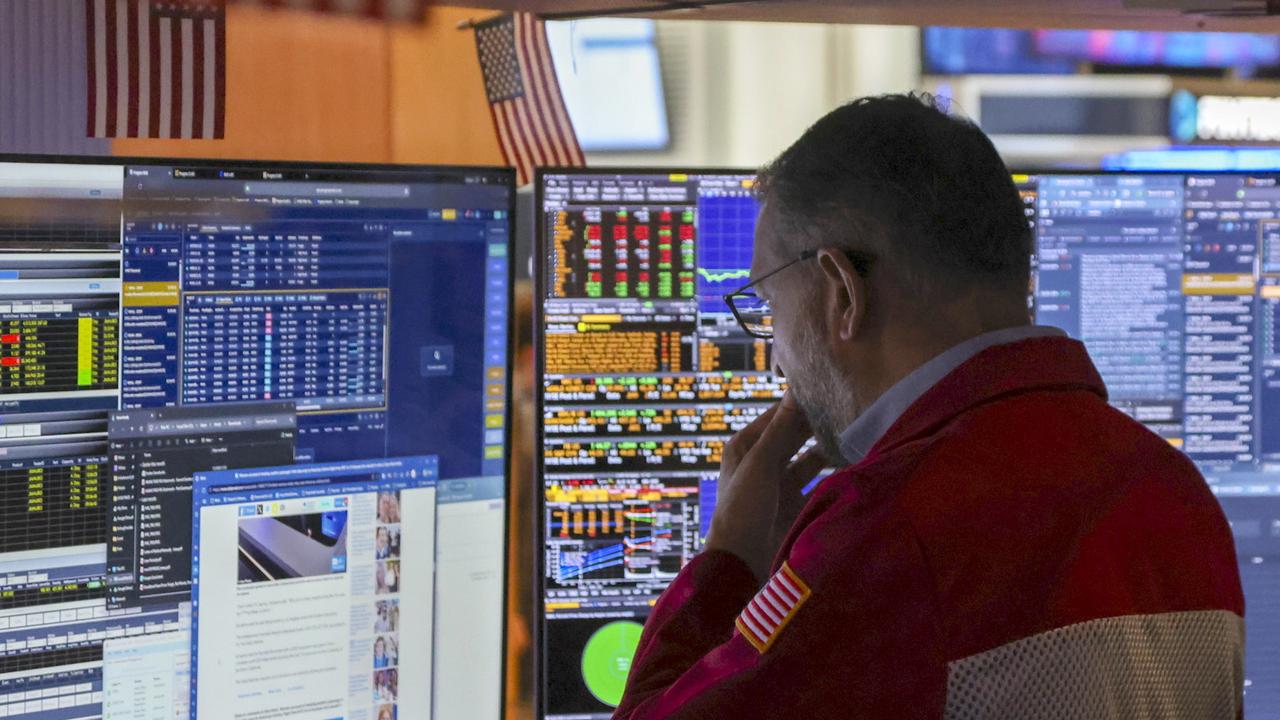
Wall Street has ended mixed as investors awaited ‌guidance from major technology companies in a busy week for quarterly earnings, while also worrying that stubbornly high oil prices could force the Federal Reserve to raise interest rates.

Microsoft, ‌Amazon, Meta and Apple are set to report quarterly results this week.

Investors were questioning whether a multi-year rally fuelled by optimism about artificial intelligence may be losing steam.

Investors ‌last week were spooked by quarterly results from Tesla and Alphabet that showed heavy spending on artificial intelligence.

Advertisement

Walmart rose 2.1 per cent, Microsoft added 1.9 per cent and Johnson & Johnson rose 1.0 per cent, with all three helping keep the S&P 500 in positive territory.

On Monday, crude fell to a one-week low as US President Donald Trump said his officials were having “good talks” with Iran and there was a chance of a peace deal but warned US strikes could resume if the negotiations failed to deliver. 

Oil prices surged last week, ‌with Brent futures surpassing $US100 ‌a barrel after new strikes ⁠on shipping in the Middle East. 

Seven of the 11 S&P 500 sector indices rose, led by ​consumer staples, up 1.58 per cent, followed by a 1.25 per cent gain in information technology. 

Advertisement

The PHLX chip index extended its recent sell-off, falling 2.2 per cent.

It is down 21 per cent from its record high close on June 22 and remains up 63 per cent in 2026. 

Chinese chip maker CXMT Corp’s stellar debut on Monday and a report that the country has started manufacturing homegrown DUV chip making tools also signalled intensifying competition for the US semiconductor industry.

Advertisement

“Today represents a continuation of the rotational market that we’ve seen,” said Bill Merz, head of capital markets research and ⁠portfolio construction at US Bank Asset Management Group. 

“Part of the market reaction may be ‌related to that creeping ​suspicion that perhaps a rate hike is coming.” 

The S&P 500 edged up 0.02 per cent to end the session at 7,413.18 points, the Nasdaq declined 0.18 per cent to 24,932.08 points ​while the ‌Dow Jones Industrial Average rose 0.51 per cent to 52,210.08 points.

Brent crude prices slid 8.0 per cent to about $US89 a barrel after the US abruptly suspended a two-week campaign of air strikes ​against Iran on Saturday in Trump’s latest strategic U-turn in the five-month-old conflict. 

Advertisement

Oil company shares declined. 

Occidental Petroleum fell 4.1 per cent and Exxon Mobil closed down 1.4 per cent. 

The Fed’s monetary policy decision is due on Wednesday and traders are projecting a 62 per cent chance the central bank will leave rates unchanged, with ​a ​38 per cent chance of a 25-basis-point hike, according to the CME FedWatch ​tool.

The Personal Consumption Expenditures Price Index for June is due a day after ‌the US central bank’s decision and will be key in shaping market expectations for interest rates later this year.

Advertisement

Analysts on average expect S&P 500 aggregate second-quarter earnings to jump 39 per cent from a year ago, with AI-related stocks accounting for much of that growth, according to LSEG.

The S&P 500 is trading at about 20 times expected earnings, compared to a 10-year average of 20, according to LSEG data. 

Advancing issues outnumbered falling ones within the S&P 500 by a 1.9-to-one ratio. 

The S&P 500 posted ​30 new highs and three new lows.

Advertisement

Volume on US exchanges was relatively light, with 15.8 billion shares traded, compared to an average of 18.2 billion shares ​over the previous 20 sessions.

Advertisement
Continue Reading

Business

Indo-MIM IPO closes with over 72x subscription on Day 3, QIB portion booked 204x; GMP at 39%

Published

on

Indo-MIM IPO closes with over 72x subscription on Day 3, QIB portion booked 204x; GMP at 39%
Indo-MIM‘s Rs 3,811.21-crore initial public offering (IPO) attracted robust investor demand on the third and final day of bidding on Monday, with the issue closing for public bidding after being subscribed more than 72 times its offer size. The strong momentum has been led by Qualified Institutional Buyers(QIBs), whose quota was booked a whopping 204 times, while the retail investor portion was subscribed nearly 7 times.

Adding to the optimism, the company’s shares are commanding a grey market premium (GMP) of around Rs 190, implying a potential listing gain of nearly 39% over the upper end of the IPO price band.

The Rs 3,811.21-crore IPO comprises a fresh issue of 1.03 crore equity shares worth Rs 499.10 crore and an Offer for Sale (OFS) of 6.83 crore equity shares aggregating Rs 3,311.21 crore by existing shareholders.

Indo-MIM IPO GMP Today

Indo-MIM IPO is witnessing strong traction in the grey market, signaling upbeat investor sentiment ahead of its listing. The Grey Market Premium (GMP) has climbed to Rs 190, indicating a potential listing gain of nearly 39% over the IPO’s upper price band of Rs 485 per share.

Advertisement

If the current grey market trend sustains and broader market conditions remain supportive, Indo-MIM shares could debut at around Rs 675 apiece. While the GMP reflects positive market expectations, investors should note that it is an unofficial indicator and not a guarantee of listing-day performance.
Disclaimer: The Grey Market Premium (GMP) is based on unofficial market activity and speculative demand. It should not be considered a reliable indicator of the IPO’s listing price or the company’s future stock performance.

Indo-MIM IPO Subscription Status

Indo-MIM IPO continued to attract robust investor interest on Day 3, with the issue subscribed more than 72 times against the 5.51 crore shares on offer.

Retail Individual Investors (RIIs): Subscribed 6.67 times against the 2.74 crore shares reserved.

Non-Institutional Investors (NIIs): Subscribed 50.63 times against the 1.17 crore shares allocated.

Qualified Institutional Buyers (QIBs): Subscribed 204.34 times against the 1.56 crore shares reserved.

Advertisement

Indo-MIM IPO Details

Indo-MIM’s Rs 3,811.21-crore IPO comprises a fresh issue of equity shares worth Rs 499.10 crore and an Offer for Sale (OFS) of Rs 3,311.21 crore by existing shareholders.

The IPO has been priced in the Rs 461-485 per share band. Investors can apply for a minimum lot size of 30 shares, requiring a minimum investment of Rs 14,550 at the upper end of the price band.

The basis of allotment is expected to be finalized on July 28, 2026, while the company’s shares are likely to be listed on the BSE and NSE on July 30, 2026, subject to the successful completion of the issue.

The public issue is being managed by HDFC Bank, Axis Capital, ICICI Securities, Kotak Mahindra Capital Company, and SBI Capital Markets as the book-running lead managers, while MUFG Intime India Pvt. Ltd. is the registrar to the issue.

Advertisement

Indo-MIM IPO: How Will the Company Use the IPO Proceeds?

From the Rs 499.10 crore to be raised through the fresh issue, Rs 400 crore will be utilized to repay or prepay, either fully or partially, certain outstanding borrowings. The remaining funds will be allocated toward general corporate purposes, strengthening the company’s balance sheet and supporting its business operations.

About Indo-MIM

Founded in 1996, Indo-MIM Ltd. is one of the world’s leading manufacturers of precision engineering components using Metal Injection Molding (MIM) technology. The company offers end-to-end manufacturing solutions, covering mold design, tooling, machining, finishing and assembly.

In addition to MIM, Indo-MIM has expanded its capabilities through advanced manufacturing technologies such as investment casting, precision machining, ceramic injection molding and 3D metal printing, enabling it to serve a diverse range of industries.

During FY26, the company manufactured more than 6,400 products for sectors including automotive, defence, medical devices, consumer goods and aerospace.

Advertisement

Financial performance

Indo-MIM delivered a robust financial performance in FY26, backed by healthy growth in revenue and earnings. Total income rose 28.1% year-on-year to Rs 4,320.70 crore from Rs 3,373.97 crore in FY25. Profit after tax (PAT) increased 25.9% to Rs 533.54 crore in FY26 from Rs 423.73 crore in the previous year.

Should you subscribe?

Anand Rathi research believes Indo-MIM’s valuation is justified given its leadership in the global Metal Injection Moulding (MIM) industry. At the upper price band, the IPO is priced at around 45x FY26 earnings, which the brokerage considers reasonable due to the company’s global market leadership, diversified customer base, integrated manufacturing capabilities, and strong export franchise. It has recommended investors subscribe to the IPO with a medium- to long-term investment horizon.

Marwadi Financial Services has assigned a ‘Subscribe’ rating to the IPO, citing Indo-MIM’s dominant position in precision engineering components manufactured using MIM technology. Based on a post-issue FY26 EPS of Rs 10.79, the issue is valued at around 45x P/E, translating into a market capitalization of nearly Rs 23,981 crore. The brokerage noted that peer comparison is difficult as there are no listed Indian companies operating in the same segment. It also highlighted the company’s diversified product portfolio, long-standing relationships with domestic and global OEMs, and consistent financial performance.

Sushil Finance has recommended subscribing to the IPO for long-term investment, pointing to the company’s steady financial improvement and industry leadership. Revenue from operations increased from Rs 2,870 crore in FY24 to Rs 4,193 crore in FY26, while PAT nearly doubled from Rs 284 crore to Rs 534 crore. EBITDA margins remained healthy at 25–28%, and RoNW improved to 21.3%. The brokerage also highlighted improving debt metrics, with net debt-to-EBITDA declining to 0.65x, while the fresh issue proceeds will further strengthen the balance sheet. It believes Indo-MIM’s global leadership in MIM technology, strong export business, and diversified end-market exposure provide sustainable competitive advantages.

Advertisement

Swastika Investmart has also given the IPO a positive outlook, highlighting Indo-MIM’s position as the world’s largest MIM company by installed capacity. The brokerage believes the company’s presence across automotive, aerospace, defence, medical, and consumer sectors creates a strong competitive moat. It also noted the company’s 28% revenue growth, 26% PAT growth, RoNW of 21.3%, and ROCE of 26.6% in FY26. Although the IPO is priced at around 45x FY26 earnings, Swastika believes the premium valuation is supported by the company’s global leadership and technological expertise, recommending the issue for both listing gains and long-term wealth creation.

SBI Securities has highlighted Indo-MIM’s strong standing in the global MIM industry, noting that the company commanded a 6.8% global market share in CY25. The brokerage pointed out that the company delivered a 20.9% CAGR in revenue, 20% CAGR in EBITDA, and 30.3% CAGR in adjusted PAT between FY24 and FY26. At the upper price band of Rs 485, the IPO is valued at 38.4x FY26 earnings, lower than estimates cited by some other brokerages. SBI Securities believes Indo-MIM’s diversified manufacturing capabilities and flexible production infrastructure position it well to capitalize on demand across automotive, defence, medical, consumer goods, and aerospace industries, supporting its long-term growth prospects.

(Disclaimer: Recommendations, suggestions, views and opinions given by the experts are their own. These do not represent the views of Economic Times)

Advertisement
Continue Reading

Business

Xbox Live Down Now? Xbox Live Suffers Major Outage Monday, Blocking Sign-Ins and Games Across the US Today

Published

on

Console Gaming Xbox PS5

Xbox Live suffered a widespread outage Monday, leaving thousands of players unable to sign in, access their game libraries, or even launch single-player titles that shouldn’t require an online connection, according to user reports and Microsoft’s own official status tracking.

A confirmed, officially acknowledged outage

Unlike some earlier, smaller disruptions this year, Monday’s Xbox Live outage was directly acknowledged by Microsoft. Xbox Support posted a statement on X confirming the company was aware of the problem. “We are aware that some users are encountering errors when attempting to sign in, see your game library, or launch games,” Xbox Support said, adding that engineers were actively working to fix the issue. Microsoft’s official Xbox Status page reflected the scale of the disruption directly, showing red “Major Outage” indicators for three separate service categories: Account & Profile, Store & Subscriptions, and Apps & Mobile.

Reports began building before dawn

Advertisement

Downdetector, the outage-tracking service that aggregates user-submitted reports, first flagged rising complaints about Xbox Network problems around 4:08 a.m. Eastern time Monday, according to reporting on the disruption. A follow-up alert from Downdetector at 9:41 a.m. Eastern showed the issue was continuing to generate significant complaint volume hours later, with total reports surging past 3,200 at points during the morning as players across the United States, Canada and other regions ran into login failures, multiplayer connectivity problems, and difficulty accessing Xbox’s online store and subscription services.

Even offline-style games were affected

One of the more notable aspects of Monday’s outage was its impact on single-player games, which many players assume should function without a live internet connection. According to reporting on the disruption, the outage prevented some users from launching single-player titles entirely, a detail that surprised gamers who expected offline-capable games to remain playable even during a broader network disruption. Reports indicated the outage appeared to affect players in the United States most heavily, with users in parts of Asia reportedly experiencing fewer disruptions.

A gap between user reports and Microsoft’s messaging

Advertisement

As has occurred during some previous Xbox disruptions, there was a period of inconsistency between what users were experiencing and what Microsoft’s status tools displayed. Some reports noted that, at least for a portion of the morning, Xbox’s official status page continued showing all services as operational even as Downdetector recorded a sharp, rapid spike in complaints, before the status page was updated to reflect the “Major Outage” designations across multiple service categories. That kind of lag between user-reported problems and official acknowledgment has become a recurring point of frustration among players during past Xbox service disruptions.

Part of a rough stretch for gaming platforms

Monday’s Xbox Live outage follows a similar disruption on Sony’s PlayStation Network just last week, which left PS5 users unable to access PlayStation Network services or play games requiring a PSN sign-in for several hours. That PlayStation outage notably occurred just hours after the open beta launch for “Marvel Tokon: Fighting Souls,” compounding frustration for players eager to try the new title. The back-to-back outages across two of the industry’s largest gaming platforms have renewed broader conversations among players about the reliability of always-online gaming infrastructure.

Renewed debate over digital game ownership

Advertisement

The outage has reignited a long-running discussion within the gaming community about the risks of relying on digital storefronts and online authentication for game access. Commentators covering Monday’s disruption noted that server outages capable of blocking access to games players have already purchased raise broader questions about digital ownership, with some suggesting the recurring pattern of outages strengthens the case for maintaining physical game collections as a hedge against future server problems. That debate has been further fueled by other recent industry controversies, including Sony’s decision to discontinue support for certain games and remove previously purchased movies from some users’ accounts without refunds, developments that have collectively heightened consumer wariness about fully digital game libraries.

A pattern of recurring Xbox service issues in 2026

Monday’s outage adds to a string of Xbox Live disruptions that have occurred periodically throughout the year. Earlier disruptions in 2026 included incidents affecting account sign-ins and cloud save syncing, as well as shorter outages tied to specific playback or connectivity issues. The recurring nature of these disruptions has drawn scrutiny from players and industry observers alike, particularly given Xbox’s growing reliance on cloud-connected services across its console, PC and subscription-based Xbox Game Pass ecosystem.

What players can do in the meantime

Advertisement

During the outage, players experiencing errors were largely left waiting for Microsoft’s engineering teams to resolve the underlying issue, since problems tied to a confirmed platform-wide outage typically cannot be fixed through standard user-side troubleshooting steps like restarting a console or checking a home network connection. Xbox Support indicated it would continue providing updates through its official social media channels and the Xbox Status page as engineers worked to restore full functionality.

Context beyond gaming

Monday’s Xbox outage arrived amid a busier-than-usual period for Microsoft’s gaming division more broadly, including recent announcements around new console-exclusive titles unveiled at the Xbox Games Showcase and continued growth in Xbox Series X|S hardware sales, which reportedly jumped 86% year-over-year in June. That growth in hardware sales has placed additional scrutiny on the reliability of the online services those consoles depend on for much of their day-to-day functionality, including digital purchases, cloud saves, and multiplayer access.

As of Monday, Microsoft had not provided a specific timeline for full service restoration, though the company indicated its engineering teams remained actively engaged in resolving the issue. Players affected by the outage were directed to monitor Xbox’s official status page and the Xbox Support account on X for further updates. Given the scale of complaints and the direct acknowledgment from Microsoft, Monday’s disruption appears to represent one of the more significant Xbox Live outages of the year so far, adding to a broader pattern of high-profile service interruptions affecting major gaming platforms in recent weeks.

Advertisement
Continue Reading

Business

Lakers Kept LeBron James in the Dark on Blockbuster Luka Doncic Trade, Report Says It Changed Everything

Published

on

LeBron James Russell Westbrook Lakers

The Los Angeles Lakers’ decision to trade for Luka Doncic without telling LeBron James beforehand marked the moment the franchise stopped building around its longtime superstar and began charting a future without him, according to a new report examining the fallout from one of the most stunning transactions in NBA history.

Dan Woike of The Athletic wrote that James’ eventual exit from Los Angeles should not have come as a shock, given how the organization’s priorities shifted the night it acquired Doncic without looping in its four-time champion.

“I wasn’t surprised that the final chapter would occur outside of Los Angeles,” Woike wrote. “The Lakers were the team he played for, but they were no longer his team.”

“That changed the night they traded for Doncic (and didn’t tell James) and gave themselves a clear direction for the present and future,” Woike added.

Advertisement

A Trade That Blindsided a Superstar

The Lakers pulled off the deal in February 2025, sending Anthony Davis, Max Christie and a future first-round pick to the Dallas Mavericks in exchange for Doncic, Maxi Kleber and Markieff Morris. The trade upended the NBA landscape overnight, and it did so without any advance word to James, who had spent parts of eight seasons anchoring the Lakers’ roster and title hopes.

James has said he found out about the deal while having dinner with his family in New York, and his first reaction was disbelief.

“The first time I heard it, I thought it was for sure fake,” James said at the time. “I thought it was a hoax.”

Advertisement

The gravity of the trade set in only after Davis reached out to him directly and the news broke publicly. For a player who had shaped the direction of every franchise he’d joined throughout his career, being excluded from a decision of that magnitude was something he had never experienced.

Doncic Becomes the New Face of the Franchise

The trade instantly gave Los Angeles a young centerpiece capable of carrying the franchise well past James’ playing days. In the immediate aftermath, James remained a key contributor, but the power dynamic inside the organization had visibly shifted. He later admitted he had to adjust his own game to fit alongside Doncic as the two worked to build chemistry on the court.

As the following season unfolded, the Lakers increasingly organized their long-term plans around Doncic rather than James. The Slovenian star signed a contract extension with the team, and the front office began constructing its roster with his skill set and future in mind — a clear signal of where the franchise’s priorities now rested.

Advertisement

That shift, according to Woike’s reporting, was the real inflection point in James’ relationship with the Lakers. It wasn’t a single dispute or public falling-out — it was a structural change in how the organization viewed its timeline, with Doncic now at the center of it.

James Moves On to Philadelphia

That transition ultimately culminated in James leaving the Lakers this offseason, ending an eight-year run with the franchise. He signed a two-year, $8 million contract with the Philadelphia 76ers as he prepares for his 24th NBA season, an all-time record for longevity at the sport’s highest level.

The 41-year-old has called the move his “last decision,” a nod to the way major career choices have shaped his public narrative for two decades. He said he chose Philadelphia because he believes the roster gives him a legitimate chance to compete for a fifth championship before he retires.

Advertisement

James leaves Los Angeles with plenty to show for his tenure. He helped deliver the franchise’s 2020 championship and put up averages of 25.9 points, 7.9 assists and 7.7 rebounds across 479 regular-season games in a Lakers uniform. But the way that chapter closed — with James watching from the outside as the franchise reshaped itself around a 25-year-old international star — appears to have colored how he now views his time there.

A Larger Pattern Around the League

James’ departure fits into a broader offseason storyline that has kept the NBA rumor mill active for weeks. Reports have circulated about how the 76ers managed to land James in the first place, with several factors reportedly playing into his decision beyond just roster fit. Meanwhile, other stars around the league are navigating their own uncertain futures, from trade speculation involving veteran guards to front-office maneuvering by teams trying to reset their financial books.

For the Lakers, the Doncic era is now fully underway, unencumbered by the balancing act of accommodating an aging superstar. The team’s front office spent the past year and a half building a roster and cap structure designed with Doncic, not James, as the long-term face of the franchise.

Advertisement

For James, the move to Philadelphia represents a fresh start in what he has described as the final stage of his playing career. Whether the 76ers can build a genuine title contender around him in the time he has left remains to be seen, but for now, the fallout from the Lakers’ shock trade for Doncic — and the way James learned about it — continues to shape how his Los Angeles legacy is being remembered.

The Lakers have not issued a formal response to Woike’s characterization of the front office’s decision-making process, and James himself has largely moved on publicly, focusing his comments on his excitement about the 76ers’ roster and his pursuit of a fifth NBA title.

Continue Reading

Business

Nvidia Stock Sinks Nearly 5% as $250 Billion OpenAI Deal Sparks Circular Financing Fears on Wall Street

Published

on

Company headquarters, SpaceX Starbase in Starbase, Texas

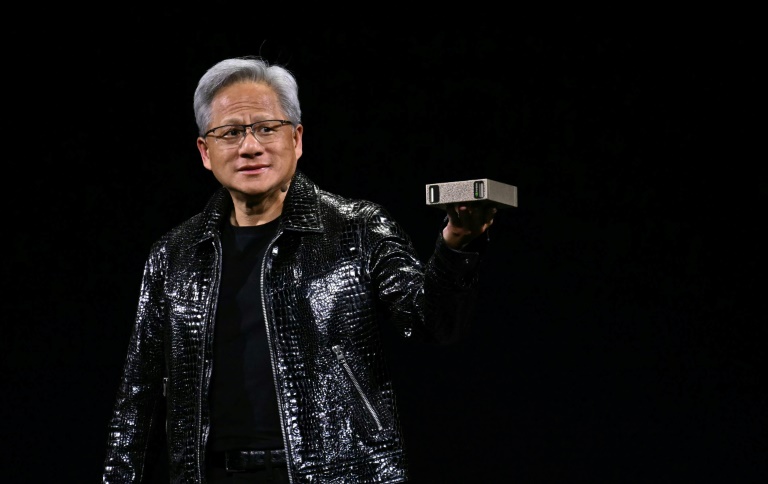
Nvidia Corp. shares tumbled Monday morning, falling 4.48% to $197.57, after a weekend report revealed the chipmaker is negotiating an enormous financial backstop tied to OpenAI’s data center ambitions, reigniting investor concerns about circular financing arrangements across the artificial intelligence industry.

The stock traded down $9.27 as of 10:44 a.m. Eastern time, according to Google Finance data, marking one of Nvidia’s sharper single-day declines in recent weeks and pulling shares further away from their 52-week high.

A Quarter-Trillion-Dollar Guarantee

The selloff traces back to a Wall Street Journal report published over the weekend. According to that report, Nvidia is in discussions to provide approximately $250 billion in financial guarantees to help OpenAI lease a planned 10-gigawatt AI data center campus in southern Ohio being developed by SoftBank’s energy subsidiary, a commitment that would represent the largest financing guarantee ever discussed between two private companies.

Advertisement

The proposed arrangement would have Nvidia backstop the data center’s lease and construction debt, while the company is separately exploring an additional structure to help finance OpenAI’s purchases of Nvidia chips. The scale and structure of the deal immediately raised questions on Wall Street about how much contingent risk Nvidia would be taking onto its own balance sheet in order to support demand for its products.

Circular Financing Concerns Resurface

The proposed arrangement drew swift criticism from prominent market voices. Michael Burry, the investor known for his “Big Short” bet against the housing market, publicly characterized the arrangement as Nvidia effectively guaranteeing a customer’s spending on its own chips, a framing that echoed concerns already raised by Bernstein Research analyst Stacy Rasgon. Rasgon had previously warned that these kinds of financing structures make it difficult for investors to distinguish organic AI demand from demand that has been financially engineered.

The criticism strikes at a broader anxiety that has followed Nvidia and its largest customers for much of the year: that a web of interlocking investments, guarantees and chip-purchase commitments between AI infrastructure players may be inflating the appearance of demand rather than reflecting it.

Advertisement

Insider Selling Adds to the Pressure

Compounding the negative sentiment, data shows Nvidia insiders have sold roughly $410.6 million in shares over the past three months, a level of activity some investors view as a cautionary signal. While insider sales are common at large technology companies and don’t necessarily indicate a lack of confidence in the business, the timing has added to the unease surrounding Monday’s news.

A Company-Specific Move, Not a Market Rout

Notably, Nvidia’s decline stood in sharp contrast to the rest of the market. The S&P 500 gained 0.6%, the Dow Jones Industrial Average rose 1.0%, and the Nasdaq Composite advanced 0.8% on the day, underscoring that Nvidia’s slide was a company-specific reaction rather than part of a broader selloff. That divergence reinforced the view among traders that the move was driven directly by the OpenAI financing headlines rather than macroeconomic factors.

Advertisement

Indeed, broader market conditions Monday were largely supportive. Easing tensions in the Middle East and a pullback in oil prices helped lift risk appetite across Wall Street, even as Nvidia bucked the trend on company-specific news.

Big Tech Earnings Loom

The timing of the report is notable, arriving just days before a pivotal stretch for the technology sector. Major hyperscalers including Microsoft, Meta and Amazon are scheduled to report earnings this week, and their guidance on AI infrastructure spending is expected to serve as a key barometer for continued demand for Nvidia’s graphics processing units.

Nvidia’s own quarterly results are also on the horizon. The company is expected to report second-quarter earnings on August 26, with Wall Street projecting earnings of $2.07 per share, up from $1.04 a year earlier, and revenue reaching an estimated $91.70 billion compared with $46.74 billion in the prior-year period. The stock currently trades at about 32.3 times earnings, and analysts maintain a consensus Buy rating with an average price target of $323.83.

Advertisement

That price target sits far above where shares changed hands Monday, reflecting continued long-term optimism among analysts even as the stock has struggled in recent months. Several firms have reiterated bullish stances in recent weeks, including China Renaissance, which initiated coverage with a Buy rating and a $319 price forecast, along with Needham and DA Davidson, which maintained Buy ratings with price forecasts of $270 and $300, respectively.

A Rocky Stretch for Nvidia Shares

Monday’s decline extends a difficult stretch for the stock. After a strong 2025, Nvidia shares had already fallen roughly 18% from their June high, including a 10.7% drop in June alone, as the broader artificial intelligence trade cooled. That cooling was partly driven by reports that OpenAI could delay its initial public offering until 2027 in order to protect a $1 trillion valuation, a signal some investors read as caution around stretched valuations across the sector.

Not all the recent news has been negative, however. Washington has begun issuing licenses allowing Nvidia to resume selling its H20 chips in China, reopening a significant market that had previously been restricted by U.S. export controls.

Advertisement

Nvidia hit a 52-week high of $236.54 in May before forming a swing low in June and slipping below key support levels in July, making the stock’s current trading range especially significant for investors watching its momentum. Monday’s drop pushes shares further from that high-water mark and adds fresh uncertainty just as the broader AI sector heads into one of its most closely watched earnings weeks of the year.

For now, investors appear to be weighing the immediate optics of a quarter-trillion-dollar financing commitment against Nvidia’s underlying position as the dominant supplier of AI computing hardware. How that tension resolves may hinge on the details of any final agreement with OpenAI and SoftBank, along with how hyperscale customers characterize their own AI spending plans in the earnings reports expected later this week.

Continue Reading

Business

Palantir Stock: The $1 Trillion Thesis Is Intact After The Pullback

Published

on

Palantir Stock: The $1 Trillion Thesis Is Intact After The Pullback

Palantir Stock: The $1 Trillion Thesis Is Intact After The Pullback

Continue Reading

Business

New technical education routes to be offered at 14 in England

Published

on

A woman with short brown hair looks directly into the camera with a slight smiling expression. She is wearing a pink top and a silver necklace with a heart charm.

The plans for technical education reform will build on local initiatives like the MBacc, or Greater Manchester Baccalaureate, which was announced in 2023 by the now prime minister when he was the city’s mayor.

Launched there in September 2024, it has provided a framework for pupils to pick GCSE subjects in both academic and technical subjects which align with growing local industries, like green energy or digital.

The government said it would be working with regional mayors, local leaders, schools, colleges and employers to deliver its plans nationally.

Education Secretary Lucy Powell said the announcement “marks the start of a real shared effort with employers, businesses, mayors and councils to design an education system that connects young people to jobs and careers in their local area”.

Advertisement

“The technological revolution we are living through should mean young people become the fresh lifeblood our economy needs to adapt and grow,” she said.

“I want to make sure this generation is able to seize that opportunity, whatever their background or postcode.”

Milburn said the changes announced for England on Tuesday were “very welcome”.

“They are a big step in the right direction and consistent with the findings of my review,” he said.

Advertisement

“A whole system reset is needed across health, welfare and labour market policy as well as in education and skills.

“I know the PM recognises this and my final report will outline the further changes that are needed.”

But Laura Trott, the shadow education secretary, said the announcements “don’t come anywhere close to undoing the damage Labour has already done to the job market”.

“We all want to see better opportunities for young people and a boost to technical education, but this announcement is all over the place…

Advertisement

“It’s not clear whether or not Labour intends to replace GCSEs, which would be a disaster.

“The focus should be on the knowledge-rich curriculum that has helped the most deprived children.”

Pepe Di’Iasio, general secretary of the Association of School and College Leaders, said he was pleased the government was treating the “shocking” number of Neets as an “urgent priority”.

Though he said the union supported its aims, he said there was “little detail” about what the plans for educational reform would look like in practice.

Advertisement

He added that it was “wrong” to make major educational policy announcements in the middle of the school summer holiday.

Paul Whiteman, general secretary of the National Association of Head Teachers (NAHT), said school leaders “support the principle of giving technical and vocational education the same status and recognition as more traditional academic routes”.

“However, this announcement sets out a direction of travel rather than detailed proposals, and schools will need much greater clarity about what it means in practice and over funding,” he added.

Advertisement
Continue Reading

Business

LARRY KUDLOW: Surely the GOP can defeat big government socialism and weird values

Published

on

LARRY KUDLOW: Trump Was Right About Tariffs

Did you know that after a year of the one, big, beautiful bill working family tax cuts, the government’s Bureau of Labor Statistics is showing that the biggest beneficiaries were the poorest quarter of workers which had a pay jump of 5.5 percent? And a middle quartile of earners at or below the median income got weekly wage gains of 4.6 percent over the past year.

These working-class folks outpaced the upper income earners. Think no tax on tips or no tax on overtime. And lower taxes on social security benefits. Think electricians, carpenters, welders, and other trades people. Maybe even working on AI data centers. Also the BLS report shows a 2.5 percent drop in prescription drug prices.

This is all good news because the Democratic party wants to jack up prices, sky-high. Yet the problem is recent polls suggest over half of voters don’t even know what was in one, big, beautiful bill. And many thought the biggest benefits were going to the wealthiest earners. This is one of many reasons why I fear the GOP is not messaging well in the run up to the midterms.

Advertisement

The former speaker, Newt Gingrich, argues that all the Democratic socialists talk about is big government socialism and weird values. Always talking about Palestine and transgenderism. Yet if the GOP wants to get its swag back, they’ve got to really pin those labels on the far left; make them stick.

And then Republicans should be talking about building a bold future for economic growth. Yet they can’t get a strong budget through. Allysia Finley in today’s Wall Street Journal says and I’ll quote: “The tenuous GOP majority looks to have given up on serious spending and tax reforms this year.” And she goes on to talk about how Republicans should be implementing Medicaid loan grants including work requirements and sobriety eligibility. Or ending the student loan forgiveness program. Instead of just creating more grant programs to fund left-wing local socialist so-called nonprofit programs that produce housing shortages and homelessness.

Meanwhile supply-siders like myself have been pushing for an end to the Biden inflation tax. Hat tip to Mike Faulkender. To grow the economy, how about inflation indexing capital gains. To produce more homes on the market, how about increasing the capital gains tax exemption for home sales. That allowance hasn’t been touched since 1997, but inflation has gone up 108 percent since then.

Advertisement

And President Trump is right about the SAVE America bill’s photo ID requirement for federal elections. And we must have military replenishments for the Iran war.  And to underscore peace through strength and America First freedoms, Mr. Trump’s $1.5 trillion War Department budget is crucial. Freedom and free enterprise are American values, so is patriotism. Godless communism is a weird un-American value. Israel is our friend. Iran is our enemy. Republicans know this. Democrats don’t. Yet the GOP has got to put some swag into their messaging to get these America First values across the finish line.

Continue Reading

Business

Is it time to stop using glue and labels on paper?

Published

on

A woman with short brown hair looks directly into the camera with a slight smiling expression. She is wearing a pink top and a silver necklace with a heart charm.

But what if you could skip the adhesive altogether?

That’s the idea that three firms from Germany – Fraunhofer, Hermann Ultraschall, and Henkel – have come up with.

It’s no coincidence they are all German, as the country is known for its Packaging Valley, external, a hub for the packaging industry.

Their efforts to innovate are partly a bid to satisfy ever tightening regulation around commercial recycling, and rising fines for those who fall foul.

Advertisement

With that in mind, German research organisation Fraunhofer established the PAPURE project in 2023 to develop a laser-based heating process that can seal paper packaging without an adhesive at all.

From September, when the project is set to officially close, Fraunhofer hopes to find an industry partner to take the technology to market. Fraunhofer researchers exhibited their work at the Interpack packaging trade show in Dusseldorf in May, and are hopeful that the interest they attracted will come to fruition.

“There are not really many paper sealing technologies without any foreign materials, so it’s a great technology and we feel it’s likely that we can bring it to market,” says researcher group leader Fabian Kayatz.

“If we are optimistic, we will have the first solution out in two years.”

Advertisement

Also in 2023, engineering firm Hermann Ultraschall bought the rights to develop a patented ultrasonic paper sealing technology, a process which it likens to welding.

“We are really actively at the moment in discussion with several really big players in the market with the focus of bringing this technology into mass production,” says Michael Baumann, the company’s head of business development packaging.

“One customer told me this is an innovation they have never seen before.”

Yet these seemingly simple solutions stem from complex technology, so naturally, there are challenges.

Advertisement

Firstly, it’s not as simple as simply getting product manufacturers and packaging companies to swap out their old packaging for these new options. It requires updating, and in some cases, completely replacing, existing machinery, which can be costly and time consuming.

“The packaging industry has existing machines which are all designed for glue materials. Some kind of redesign is probably necessary, and this is our biggest challenge,” says Hermann Ultraschall’s Baumann.

Yet Volker Franke, also a research group leader at Fraunhofer, is confident that those existing machines can be modified by integrating the laser module that PAPURE has been developing.

They both acknowledge that the production rate is also currently much slower than that for paper packaging that uses adhesives, but Franke says a key benefit PAPURE is selling is fully automated production, which he believes can continue to be developed for speed.

Advertisement

The other issue is that the technologies don’t work on all types of paper.

“It’s not possible to bond every paper material,” Baumann confirms. “But we are actively in discussion with paper manufacturers about how they can produce a raw material in a way that makes it easy to bond.”

PAPURE has also yet to find a way to apply their laser sealing technology to food-grade packaging, which needs a coating to protect the item. This tends to be why plastic is often favoured for packaging food.

But this is something Henkel, with both a consumer brand division, and adhesive technologies division, has cracked.

Advertisement

In February, Henkel announced the launch of the first cold seal solution that works with barrier coated paper, which is both recyclable and suitable for food products.

Barrier paper can be a difficult surface to bond, and using heat isn’t suitable for heat sensitive food products like ice cream or chocolate. Hence the cold seal solution, in which enough pressure is applied for the barrier coated paper to be bonded against itself.

Continue Reading

Business

Fast-growing UK accountancy group makes first South West acquisition

Published

on

Business Live

The deal will see a Trowbridge-based firm join the Stoke-headquartered business

Sam Gooding of Gooding Accounts (left) with and James Beardmore of DJH

Sam Gooding of Gooding Accounts (left) with and James Beardmore of DJH(Image: Handout)

A Stoke-on-Trent-headquartered accountancy group has made its first acquisition in the West Country, it has announced. DJH has snapped up Wiltshire-based Gooding Accounts for an undisclosed sum.

DJH, which offices across the UK including in Manchester, Leeds and London, said the Trowbridge practice was “an ideal fit” for its expansion plans.

Gooding Accounts’ owners, Sam and Katy Gooding, will continue to lead the South West business following the deal.

Scott Heath, chief executive of DJH, said: “We have been deliberately building our national footprint in regions where we know we can add real value to local businesses and their advisers.

Advertisement

“The South West has been firmly on our radar, and Gooding Accounts is exactly the kind of practice we look for – technically strong, client-focused, and with a culture that matches our own.”

Gooding Accounts was founded in 2014 by Mr Gooding and has developed a technology-led approach to accountancy. The firm moved to a new office on White Horse Business Park in July last year.

Mr Gooding said: “Joining DJH is the right move at the right time. We have built something genuinely special here in Wiltshire, and I am incredibly proud of what the team has achieved. But we are ambitious, and moving into a larger group gives us the platform to go further.

“Katy and I are both fully committed to this business, to this team, and to every client we serve. That doesn’t change. What does change is what we are now able to offer.”

Advertisement

DJH’s rapidly-expanding group now employs nearly 900 people across 20 offices in the UK and Ireland.

Mr Heath added: “Our model has worked exceptionally well in every region we have entered. We combine national scale with locally led advice – people who know their communities, who know their clients, and who are genuinely invested in their success.

“Sam and Katy embody that. We are delighted to welcome them and the Gooding Accounts team to DJH, and look forward to growing together in the South West.”

Advertisement
Continue Reading

Trending

Copyright © 2025