
Politics
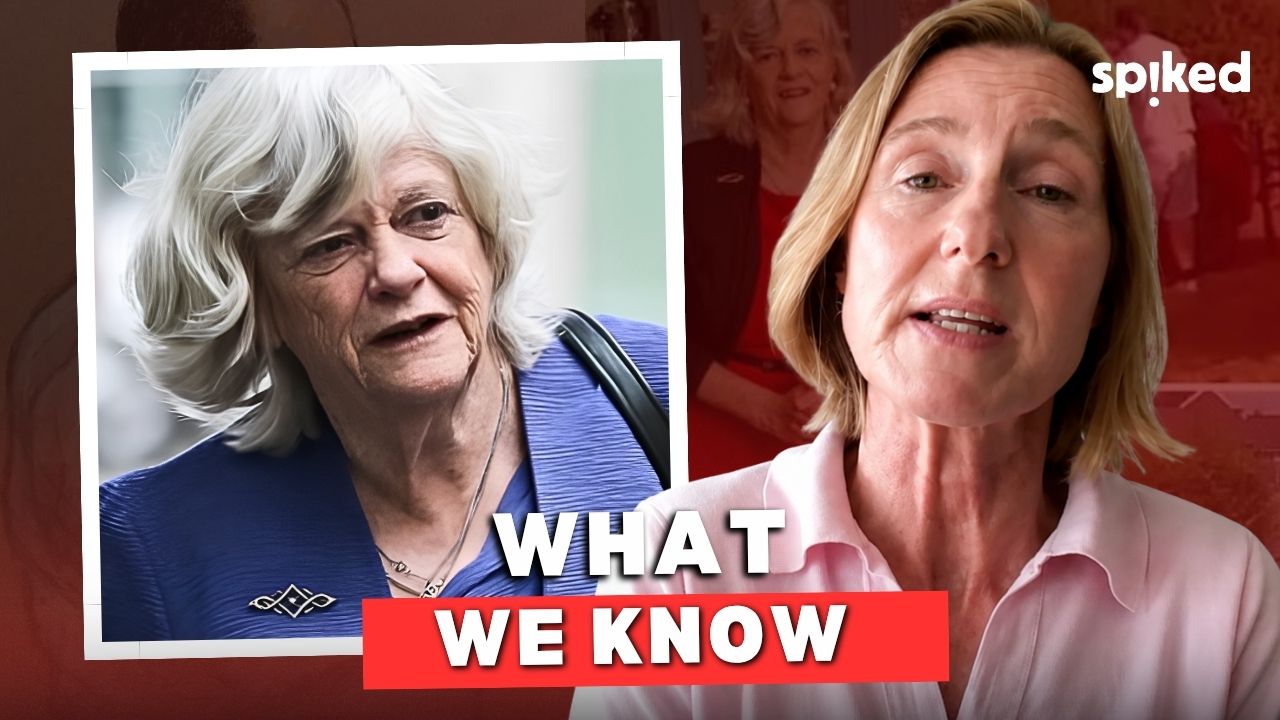
Ann Widdecombe murder: what we now know

The post Ann Widdecombe murder: what we now know appeared first on spiked.



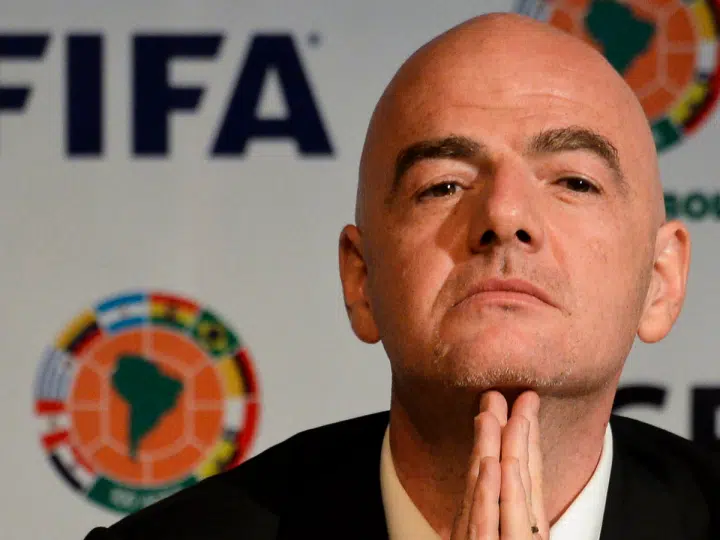
A major row has erupted between football’s governing bodies after FIFA confirmed plans to seek private investment in commercial rights linked to the world cup. UEFA reacted sharply, accusing FIFA of crossing a line and warning that European nations are prepared to discuss a potential boycott if Gianni Infantino pushes ahead.
FIFA announced on Tuesday that it intends to launch FIFA Forward Enterprise (FFE), a new commercial company that would combine the sale of FIFA’s commercial rights. This includes broadcasting, sponsorship, ticketing and licensing. All in line with the operational delivery of its tournaments. Under the proposal, FIFA aims to raise up to $4.2bn from external investors through minority, non‑controlling stakes in FFE, valuing the entity at around $20bn.
The governing body says the structure could generate more than $10bn in football development funding over the next four years. but UEFA issued a statement saying the plan “crossed a line”, arguing that the “soul and governance of football are not assets to trade”.
FIFA face threat of boycott
UEFA nations are expected to hold an emergency virtual meeting this week. It looks as though there is a willingness among some European associations to use the threat of a boycott if Infantino continues with the proposal.
Prime Minister Andy Burnham criticised the proposal, saying on x that football “does not belong to investors” and belongs to supporters who fill stadiums and stand on touchlines “week in, week out, rain or shine”.
Relations between FIFA and UEFA were already under pressure. UEFA president Aleksander Ceferin did not attend the World Cup final in protest at FIFA’s handling of governance issues, including the Folarin Balogun case. The emergence of the investment plan, without discussion during meetings with football associations in New York on the eve of the World Cup final, intensified European frustration.
UEFA said the proposal lacked transparency and warned that stakeholders, including leagues, clubs, players, supporters and governments should take the matter seriously. the organisation reiterated that “none of us are the owners of football” and insisted it is not FIFA’s to sell.
European concerns
UEFA’s statement emphasised that governance and the soul of football should not be traded, particularly without transparency over who would benefit financially. European associations fear that private investment could influence decision‑making, even if FIFA insists control would remain entirely with the governing body.
The manner in which the proposal surfaced, without prior discussion in New York has contributed to European frustration. UEFA argues that major structural changes should be openly debated among stakeholders rather than introduced through media reports.
FIFA says the proposed structure would allow the commercial side of the game to operate more efficiently, with dedicated focus on revenue generation and distribution. the organisation believes this could support long‑term development, particularly in regions with fewer resources.
FFE would consolidate commercial rights and operational delivery, creating a single entity responsible for major revenue streams. FIFA argues that minority stakes would not compromise governance, as investors would have no control over sporting decisions.
What happens next
FIFA will present the proposal to member associations and the FIFA council. European nations will hold emergency talks, and the possibility of a boycott remains part of the discussion. the outcome will depend on whether FIFA adjusts the proposal and whether member associations believe the structure protects governance and transparency.
The row highlights ongoing tension between FIFA and UEFA and raises questions about how global football should be governed in an era of increased corruption, the fans need to stand up to the evil that is Gianni Infantino and FIFA.
Featured image via Al Jazeera
By Faz Ali

FIFA’s announcement of its new project was not merely a passing commercial move. Within days, it had become one of the most controversial issues in the history of the game.
Whilst FIFA insists the project aims to increase financial resources and expand support for national associations, European stakeholders believe it paves the way for investors to be brought into the heart of the management of football’s most important tournaments, foremost among them the World Cup.
The crisis has escalated rapidly, with European federations threatening to boycott the World Cup as a means of pressure.
Meanwhile, UEFA is preparing to examine legal and political options to counter the project. The dispute threatens to redraw the balance of power within football.
FIFA considers an unprecedented investment project
The project involves the creation of a new commercial company, FIFA Forward Enterprise, which will manage the commercial rights to FIFA’s tournaments, including the men’s and women’s World Cups and the Club World Cup.
According to details revealed by the Times, FIFA is seeking to sell minority stakes in the company to private sector investors in exchange for raising around $4.2 billion, with the company’s valuation set to reach around $20 billion.
FIFA would retain full majority ownership to ensure it retains control over all sporting and organisational decisions.
The newspaper also noted that the project could pave the way for FIFA president, Gianni Infantino, to take up an executive role in the new company after his term ends, a prospect that has sparked further controversy. FIFA has denied that any decision has been made on this.
‘We are not selling the World Cup’
FIFA has rejected the project being described as it ‘selling the World Cup’ or the privatisation of football, with the main aim being to boost finances so they can be reinvested into developing the game.
It also aims to raise the value of the FIFA Forward programme to more than $10 billion over the coming years.
Investors will have no authority over tournaments, regulations or the international calendar, FIFA has emphasised. Their role will be limited to holding minority stakes in the commercial company.
Europe responds and a boycott is on the table
On the other hand, the proposal has been met with widespread European opposition. The Telegraph revealed that a number of European federations are preparing to hold an emergency meeting to discuss options for escalation, including boycotting the World Cup should FIFA proceed.
UEFA is also considering taking legal action against the proposal, amid anger across the continent over the failure to involve many national associations in discussions before the plan was announced.
The newspaper quoted sources involved in the consultations as having described the proposal as “a nuclear bomb in the world of football”, whilst other officials stressed the need to act swiftly to prevent its adoption before it becomes a fait accompli.
UEFA fears that the entry of investors will lead to constant pressure to increase the number of tournaments or expand them to generate greater financial returns. This could threaten the balance of the international calendar and affect domestic and continental competitions.
A battle that goes beyond money
Despite FIFA’s assurances that the project will keep sporting decisions in the hands of the world governing body, its critics argue that investors will not pour in billions of dollars without seeking the highest possible return, which could affect the format, dates and venues of tournaments in the future.
Analysis by the Guardian suggests that European concerns are not so much about the sale of shares in a commercial company as they are about a shift in the philosophy of football governance.
Many fear that investment considerations will become the main driver of decision-making, including the expansion of the World Cup, an increase in the number of tournament editions, and a focus on the most profitable markets at the expense of sporting considerations.
Observers believe that the current crisis is similar in scale to the upheaval caused by the European Super League project in 2021, but it may have a greater impact, as it affects the very institution that governs world football.
Crucial weeks ahead
The proposal still requires the approval of a majority of FIFA’s national member associations, making the coming weeks crucial in determining its future.
Meanwhile, the sporting world is watching to see what the European response will be, and whether it will be limited to legal and political objections, or whether it will escalate to more drastic measures.
The confrontation that could shape the governance of world football for decades to come.
Featured image via the Canary
By Alaa Shamali

4 min read
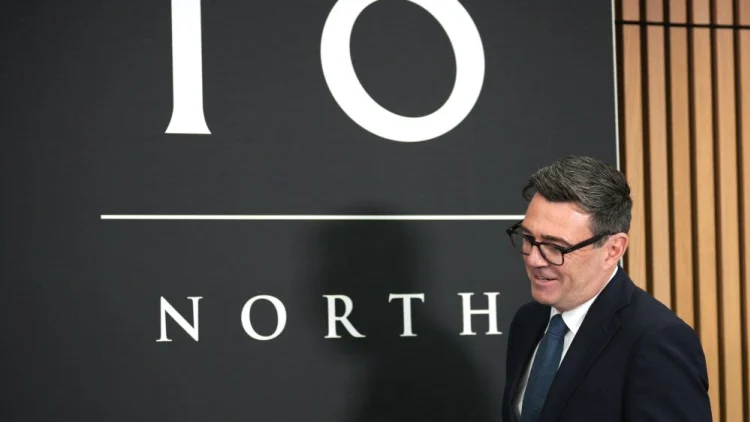
When I first arrived in Manchester, Andy Burnham said to me: “Duncan, it’s great that you’re here, and we love the University, but two-thirds of our young people don’t go to university, so how are you going to help them?”
Many people are asking what ‘Manchesterism’ means and if it has any relevance for the rest of the country. Part of the answer lies in the question Andy asked me. He wasn’t saying, “you’re not doing a good job”, but rather, “help me help those who aren’t coming through your doors”.
The premise of his question offers a deep insight into what I think Manchesterism ultimately means: it’s a way of working that is deeply collaborative, combined with a long-term political vision, policy stability, and shrewd investments in the city-region’s unique strengths and assets.
It’s an approach developed in Manchester over many years, across generations of leaders, in both the public and private sectors. The core insight is this: starting with the politics of place offers one of the most powerful ways of getting things done collectively, which in turn helps address the growing cynicism and sense of despair about politics.
At a time when people’s living standards are stagnant or going backwards, we need to focus on delivering the basics well: better housing, transport, public safety, education and training. People want to feel heard, respected and engaged. Successful city-regions operate at a scale where delivering the basics effectively is more likely to happen – but only if given the tools, freedom and opportunity to do so.
The default in Manchester has been to collaborate with anyone who shares our desire to improve the quality of life in our city. Whether in relation to health, education, skills, economic growth, or culture, Manchesterism is a mindset of shared responsibility – where universities, colleges, hospitals, businesses, schools, councils and the combined authority see each other’s challenges as part of their own, and work together to address them.
The results speak for themselves. Greater Manchester, over the last decade, has been the fastest growing economy in the UK, and has attracted more foreign direct investment than any region outside London.
That is no accident. Private investment craves stable and visionary political leadership and a public sector willing to turn ambition into delivery. That confidence creates jobs, prosperity and a city where, now, almost two thirds of our university graduates choose to stay after graduation and build their lives here.
Of course, things are far from perfect. Manchester still lags behind comparable cities in Europe when it comes to improved productivity and investment. And there is still too much entrenched social and economic disadvantage in our community that we need to tackle. However, it does show what can be achieved through new forms of collaboration.
But Manchesterism only works if institutions are prepared to change how they behave. In his first major speech after winning the Makerfield by-election, Burnham argued that universities should sit at the heart of local economies, alongside innovators, employers and local government. He is right. But that requires universities to reimagine their role in the politics of place.
This doesn’t mean being less ambitious. The UK’s best universities are amongst the very best in the world, and we should continue to aspire to that standard. But a great university should also be judged by the local ecosystems it helps build and sustain, and the contribution it makes to improving the wellbeing of the communities it serves.
This way of working is a necessary condition of what Manchesterism means, but not a sufficient one. Getting growth going in every postcode will require not only devolving power and building up the institutional and collaborative capabilities of our regions, but structural reforms to finance, policy-making, and public-private investment, well beyond what any single region can accomplish on their own. This is what will transform the politics of place into a truly national vision.
Duncan Ivison is President and Vice-Chancellor of the University of Manchester
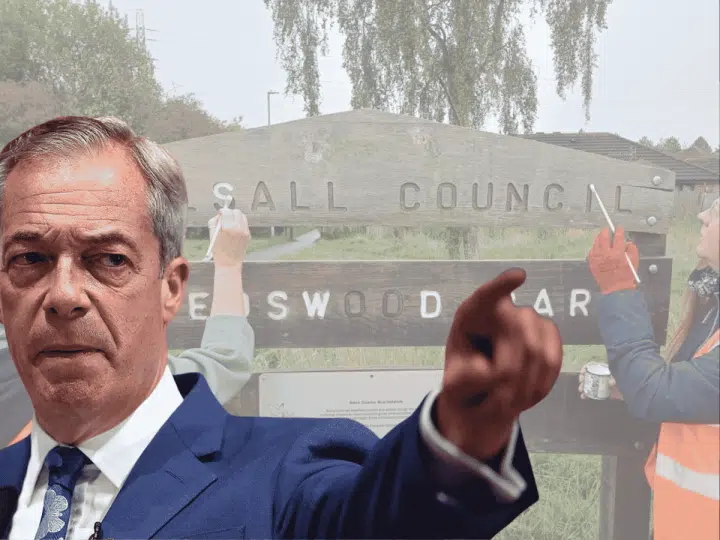

Yet another Reform UK council is in turmoil. After campaigning and winning in Walsall on the promise of opposing a £50 school development on Reedswood Park woodland, Reform’s pathetic councillors turned tail and ran from the council chamber when it came to the debate.
Reform turns back on party promises
The controversial project, pushed by the Department of Education, would see a secondary school built on 13.7 acres of green space in Reedswood Park, in the Black Country. Residents have raised concerns as the area serves as a haven for various birds, bats, mammals and even lizards.
Running with this during the local elections, Reform candidates explicitly told locals that, if they won, their administration would oppose the project.
But, and I am sure this will come as a shock to no one, turns out the Reform candidates were lying to their faces.
Reform ‘chickens out’ during unpopular school project debate https://t.co/HrCt5YpCbi
— Reform UK Exposed
 (@reformexposed) July 29, 2026
During a full council meeting this week, Reform UK showed its true colours. In the meeting, opposing councillors from Walsall Community Independents (WCI) tabled a motion, asking the new Reform administration to stick to its election pledge and oppose the school.
But instead of facing voters, council leader, Elaine Williams, tucked her tail between her legs and walked out of the chamber. Following at her heels was her faithful deputy leader, Nicky Barker.
Half of their bloody cabinet staged a retreat, cowering behind legal advice from the council’s monitoring officer. They stated they needed to “keep an open mind” in regards to the project.
They don’t work for us…duh
Speaking during the debate, WCI leader, councillor Aftab Nawaz, attacked Reform’s cowardly vanishing act, Birmingham Live reported.
The council leader, as many of you know, during the campaign made several promises. The leader attended meetings and said we will oppose the school. It’s an old habit, but if you get elected on promises, you should keep those promises.
WCI deputy leader, councillor Khizar Hussain, added:
Elected members for that area came to the public meetings and told residents they were going to oppose it. They said that clearly. But now they have chickened out, they’ve left the room…You should not make pledges before the elections and not deliver them when you get into power.
The way I see it, our elected officials have lied to us for years, but Reform UK does it so badly.
The remaining Reform members then had the gall to vote down the motion, directly spitting on their constituents in the process.
Councillor for children, education and skills, Lisa Jones, stated that a decision would be announced “in due course”. Yeah, sure. Probably when Reform’s head office works out just how this project can benefit them, and probably their wallet.
Party dictation over public interest
It seems like there’s a pattern emerging, doesn’t it? Reform councillors promise the world to voters, get into power and then completely renege on their promises and obligations.
This betrayal in Walsall isn’t an isolated fumble and it exposes the dark underbelly of Reform UK’s political project. The party doesn’t care about people, only power.
Reform UK routinely treats working class voters as nothing more than fodder. Its representatives leverage real local concerns to win seats, only to immediately abandon their constituents. They bend the knee and enforce top-down control from their head office, rather than concentrate on real issues.
Unfortunately, it’s a pattern that is replicated nationwide.
Following elections in County Durham, central leadership immediately hustled in to override local councillor control. It seems like Farage was laying down laws before the ink on the ballot paper was even dry.
When local elected officials attempt to honour their community promises, or resist orders from head office, they are silenced or forced to fall into line. Some stand up to it, such as in Westhampton when two Reform councillors quit, citing “misogynistic undertones”. Also 10 councillors from Derbyshire resigned from the party because of its autocratic model.
From Durham to Walsall, Reform’s populist stances evaporate the moment its councillors get into power. I find it hard to understand how these people have looked worried residents in the eye and lied to their faces. All to secure a vote?
Yet when it’s time to stand up for the communities who voted them in, Reform councillors show their true colours: they turn their backs, toe the party line and literally run away from their obligations.
The question is, will the public wake up to Reform’s lies?
Featured image via the Canary
By Antifabot
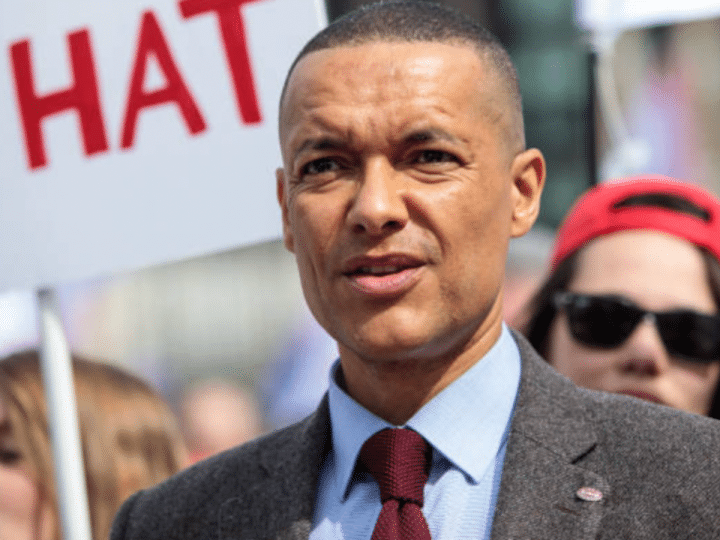

Labour MP Clive Lewis is calling for a referendum on nationalising the water industry.
Lewis, who is MP for Norwich South, links to a web form which will send a request to your MP, asking them to attend the debate. The form contains the following message:
I need your help to clean up our water system.
Over 160,000 people have signed a petition demanding a referendum on public ownership of water. That forced a debate in Parliament – on Monday 14th September.
This is a rare chance for MPs to hear what the public really thinks about our broken water system. Privatisation has failed, and 82% of the public agrees.
It’s no wonder why:
In 2024, sewage was discharged into our rivers for more than 3.6 million hours. Over 80% of all sewage spills into England’s waterways in the last two years may have been illegal.
Every single water company in England is under investigation for sewage spills.
Meanwhile since privatisation, £85 billion has been siphoned out of the system in dividends.
Almost a third of our water bills goes not into fixing pipes or protecting rivers, but into servicing debt and paying shareholders.
MPs need to hear this – and speak out for their constituents.
Over 160,000 people have signed a petition demanding a referendum on public ownership of water – enough to force a debate in Parliament on Monday 14th September. Help me fill the room: https://t.co/izO7Olfuj1 pic.twitter.com/CunkSsVENL
— Clive Lewis MP (@labourlewis) July 28, 2026
 Water shouldn't be a commodity. It should be a public good.
Clive Lewis wants what’s in the public’s best interest
We’ve reported extensively on the issues around privatised water, with recent stories including the following:
- London families told to refill water bottles despite having no running water during heatwave
- Thames Water issues massive bonuses to bosses… despite the ban on water bosses’ bonuses
- Water failure now top threat to UK – where’s the institutional panic?
Thames Water shareholders desperate to keep hands on cash cow monopoly
It’s also the case that nationalising water and other utilities is popular with voters.

You can contact your MP here.
Featured image via the Canary
By Willem Moore

Content warning: This article contains descriptions of sexual assault, abuse and grooming
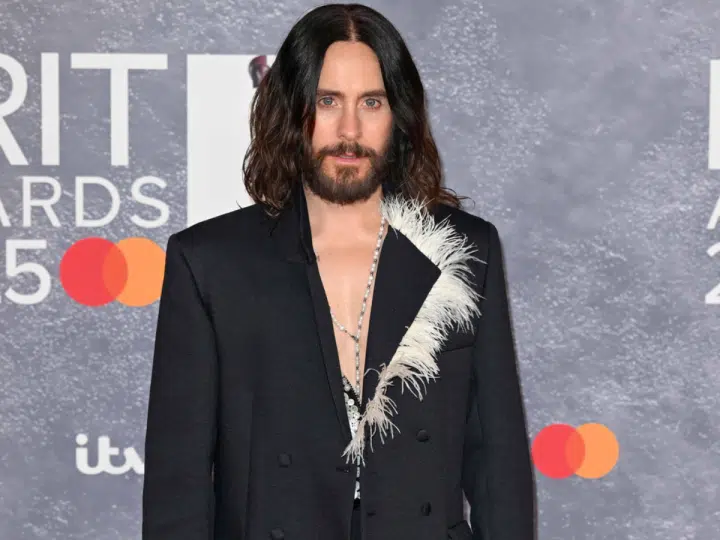
Jared Leto has been accused of sexual offences, including rape, and inappropriate behaviour by 10 women when they were teenagers.
The BBC documentary, Jared Leto: Hollywood’s Dark Secret, hears from 10 women who allege that the US musician and singer assaulted them, threatened them with rape or harassed them between 2002 and 2016. Leto would have been in his thirties and forties at the time.
All the women were under the age of 18.
Despite repeated attempts to contact Jared Leto, he has not responded to the allegations put to him by the BBC.
Leto lured teenagers to hotels for abuse
Isabel* told the BBC that she was sexually assaulted by Leto in a “dingy gross motel” in 2002, when she was 17.
She assumed they would be going somewhere else so waited for Leto in the room while he took a shower, he then called her into the bathroom.
Isabel said:
I don’t think there was many words exchanged and he opened the shower curtain and started kissing me
She told the BBC that he forced her to masturbate him by grabbing her hand. She stopped him and asked to leave, the actor put on a towel and checked the corridor before letting her out. It was only later, when she looked up the actor online, that she realised he was in his forties.
‘Age is just a number’
Alex* was lured to Leto’s hotel under the pretence of an after-party, but was instead threatened with sexual assault. She was 19, but Leto thought she was 17, she said.
This happened in 2013 when his band, Thirty Seconds to Mars, played at the O2 Arena in London. Leto was 41 years old at the time.
Alex was offered free VIP tickets as many female models were, and was taken to a backstage room only for the models. Brad*, a crew member claimed that request was “direct from Jared”.
After the gig, Leto’s female assistant invited Alex to an after-party at Shoreditch House, a private members’ club in east London. Alex told Leto she was 17, as she “felt the need” to pretend to be younger around him. She says he replied:
Age is just a number, and anyway, we’re in Europe.
After being taken to his hotel room, Alex asked him for a phone charger or cash so she could go home. When he refused, she asked to sleep on the chaise longue in the room. Leto told her that if she did, she would wake up “with a dick in her ass”.
Alex is in no doubt that this was a calculated plan to sexually assault her, aided by the people around him.
The assistant knew what to say, to lure me into his hotel room
Leto didn’t care about age of consent
Taylor*, then aged 14, met the musician at a signing after Thirty Seconds to Mars performed at a festival in 2005. She held out a t-shirt to sign, but Leto insisted on signing her breasts. She said it would’ve been “very obvious” she was a teenager.
He then instructed his security to take her backstage without asking her consent. Luckily, her mother intervened.
She told the BBC:
He looked at her and said, “It’s still a nice rack”. He just did not care.
Another victim, Clara*, said she first had sex with Leto in 2006, when she was 17 and he was 34, at his house in California. This was after a man close to Leto approached her on his behalf and asked for her phone number, while backstage at a Thirty Seconds to Mars gig.
Clara recalled a conversation with Leto about the age of consent. In California, sex with someone below the age of consent, which is 18, can be convicted of statutory rape.
Clara said:
He just kind of shrugged it off, like it wasn’t a huge concern for him.
Clara said they had sex three or four times, with age play being a part of it.
He told me, “I would like you to call me daddy”. And it was either pretend to be a little girl or “my little girl”.
There is no well-adjusted man in his 30s who’s going to look at a teenager and think…she would be a great partner.
Etta’s story
Etta* said Leto groomed her when she was 16, with him “abusing his celebrity status” to get her email address and phone number, which he then used to harass her with sexually explicit phone calls.
Leto knew she was 16, Etta told the BBC, which led to him asking questions about her being a virgin and having sexual “kinks”.
She said:
He did at least once mention him and I having sex at some point.
Leto then supposedly passed her number on to his friend ‘Christian’ under the guise of it being good for her modelling career. This man would call her and ask her to make porn, telling her it didn’t matter if she was underage. Etta now says she “would not be surprised” if Christian was, in fact, Leto.
Two years after the incidents, Leto asked Etta to sign a non-disclosure agreement (NDA). When she refused, he “chuckled” about his lawyer’s concerns, she said in the documentary.
Four other women told the BBC that they were also subjected to sexual calls from Leto when they were underage. Two of the women say they also received calls, supposedly from other men, but who they also believe could’ve been Leto.
A long history of abuse in plain sight
These are the latest in a very long line of allegations about Leto. The BBC reported that journalists counted more than 120 “separate allegations made online relating to his behaviour towards women, some of them historical”.
Last year, allegations from Los Angeles DJ, Allie Teilz — who said Leto had assaulted her backstage at a gig, aged 17 — prompted others to speak out.
The post was a screenshot of her Facebook status from 2012 which read:
You’re not really in LA until Jared Leto tries to force himself on you backstage at an M83 show.. In a Kilt.. And a snow hat
Further to this, another nine women told US media outlet Air Mail last year about the inappropriate behaviour they had experienced or witnessed from Leto. He denied all the allegations.
It’s clear from reading these accounts that many people who worked for Leto allowed these abuses to happen. Much like Johnny Depp and other abusers, Leto is someone who has been operating in plain sight for years and who Hollywood protects.
*All names were changed to protect their identities
Featured image via Pearl & Dean

Ali Ahmadi, Catherine Barnard and Fiona Costello explain what the Common Travel Area is, how it works, and whether it is used as a route for those seeking asylum.
During the evening of 8 June 2026, Hadi Alodid, a Sudanese refugee who had entered Northern Ireland (NI) from the Republic of Ireland, allegedly attacked Stephen Ogilvie in north Belfast, leaving him with life-changing injuries. Within hours, reports of the suspect’s identity and route into NI had fuelled rioting. As violence spread across Belfast, political attention quickly shifted to the Common Travel Area (CTA) and whether it had become a ‘backdoor’ into the UK.
The CTA is a border arrangement between the UK and the Republic of Ireland that has existed (with brief interruptions) since the establishment of the Irish Free State in 1922, when both governments agreed that citizens could move between the two jurisdictions without restriction. The CTA covers the United Kingdom, the Republic of Ireland, the Isle of Man and the Channel Islands. It allows British and Irish nationals to live, work, and have access to public services in either country, without immigration formalities. They are not legally required to carry a passport when crossing the land border between NI and the Republic, though airlines and ferry companies may require photo ID.
The primary piece of legislation giving CTA a statutory footing is the Ireland Act 1949 which provides that the Republic of Ireland is not a ‘foreign country’. Similarly, the British Nationality Act 1981 says that a citizen of the Republic of Ireland is not an ‘alien’. The Immigration Act 1971 also recognised the CTA in UK immigration law by exempting Irish nationals from routine immigration controls. Following Brexit, this was reaffirmed in the Immigration and Social Security Co-ordination (EU Withdrawal) Act 2020, which provides that Irish citizens do not require leave to enter or remain in the UK. The arrangement is reciprocated in Irish law through instruments such as Aliens (Exemption) Order 1999 and the Withdrawal of the United Kingdom from the European Union (Consequential Provisions) Act 2020.
The CTA does not extend the same free movement rights to non-citizens. Third-country nationals (people who are neither British nor Irish) must comply with the immigration rules of whichever country they enter. There is no general mutual recognition of visas between the UK and Ireland (with limited exceptions, such as a bilateral scheme for Indian and Chinese nationals). Those requiring a visa for one country will usually need a separate visa for the other. However, there are no routine immigration checks on the Irish border and undocumented migrants are unlikely to be detected except through intelligence-led operations or on-the-spot passport checks by law enforcement.
When it comes to asylum seekers, CTA management was smoothed by the two countries’ shared membership of the EU. The Dublin III Regulation provided a mechanism for transferring asylum seekers between the UK and Ireland.. However, in practice, the mechanism resulted in very few transfers between the two countries. According to the Home Office, between 2015 and 2020, only 50 people were transferred from the UK to Ireland, while 55 people were transferred from Ireland to the UK. Post-Brexit, this arrangement no longer applies Although the UK and Ireland signed an informal returns agreement in 2020 to replicate some of Dublin III’s functions, it has been almost entirely non-operational, in part because of legal proceedings in Ireland’s High Court regarding the designation of the UK as a ‘safe third country’ while the Rwanda deportation policy remained in force. Consequently, only one person has been returned from the UK to Ireland under the agreement.
Data on how many asylum seekers arrive through the CTA is incomplete. Home Office asylum data shows that, in the year ending March 2026, 8% (7,740) of asylum seekers entered the country via ‘other routes’ which includes CTA-related entries. However, there is no breakdown of how many of these arrivals specifically came through the CTA, and the actual figure may be significantly lower. This is also reflected in the number of asylum seekers in NI. Recent data from the Home Office shows that fewer than 2,400 people are in receipt of asylum support in NI. Although some individuals may enter via the land border and travel on to Great Britain to claim asylum, the available data does not suggest that this is a significant number.
The Irish government, on the other hand, says that in 2025 and 2026 approximately 88% and 90% respectively of first-time asylum applicants in Ireland made their initial application in person at the International Protection Office (IPO) in Dublin, rather than at a port or airport. Ireland’s then-Minister for Justice Helen McEntee told the Oireachtas Justice Committee in 2024 that ‘higher than 80%’ of new asylum applicants were arriving via the land border with NI. In 2024, Ireland received over 18,500 asylum applications. However, in the absence of physical border controls, these figures rely on self-reporting and are therefore not verifiable. Thus, there appears to have been a disproportionate movement from North to South, particularly in 2024, when some asylum seekers in the UK feared removal to Rwanda.
Asylum policy either side of the border is likely to shape the direction of movement, as informed asylum seekers respond to whichever system appears more favourable. This might also encourage some movement from Great Britain to NI where some EU law still applies under the Windsor Framework and can override conflicting UK laws. For instance, the NI High Court held that key provisions of the Illegal Migration Act 2023 could not lawfully apply in NI because they were incompatible with Article 2 of the Windsor Framework, which requires that Brexit must not cause diminution (i.e., reduction) of certain rights (e.g., anti-discrimination rights) under the Good Friday Agreement. However, this judgment will now need to be considered in light of the more recent Dillion case where the Supreme Court narrowed the reach of the non-diminution guarantee.
To address potential CTA abuse, joint cooperative operational frameworks have been set up. Operation Gull (Operation Sonnet on the Irish side) is an intelligence-led Garda and UK Border Force initiative working alongside the Police Service of Northern Ireland (PSNI) and a Cross-Border Joint Action Task Force (JATF). Following the Belfast riots, both governments pledged to intensify cooperation and crackdown on illegal migrants.
To conclude, there is little evidence that CTA is widely abused by asylum seekers to reach the UK. However, it needs to be managed. The main issue seems to be the collapse of the post-Brexit returns mechanism and the diverging asylum standards between the UK and EU/ Ireland. Ireland has opted into most of the EU Pact on Migration and Asylum (which came into force in June 2026) and therefore must implement harmonised EU asylum rules. The path forward may lie in strengthening the enforcement and cooperation infrastructure such as a functioning bilateral returns agreement while recognising the legal constraints imposed by Windsor Framework and international refugee law.
By Ali Ahmadi, Research Associate, University of Cambridge and PhD student at Anglia Ruskin University, Catherine Barnard, Senior Fellow, UK in a Changing Europe & Professor of EU Law and Employment Law, University of Cambridge and Fiona Costello, Assistant Professor, University of Birmingham.


It looks like the 2026 guga hunt won’t be going ahead.
The board of NatureScot will officially rule on the guga hunt licence application on 3 August. But a report from the agency’s scientific advisors has recommended refusal.
The advisors examined three options:
- Granting the full licence for the killing of 2,000 gannet chicks (guga).
- Granting a licence for a smaller bag of 500 guga.
- Refusing the licence.
They recommended the third option. The advisors said this was due to the impact on the overall gannet population in the Special Protection Area of North Rona and Sula Sgeir. Sula Sgeir is the remote island where the guga hunt takes place.
Population modelling concluded that killing 2,000 gannet chicks would have an “adverse effect on site integrity”. It also showed the same, although with less certainty, for killing 500. Therefore the advisors recommend refusing the licence.
Rob Pownall from Protect the Wild has been campaigning relentlessly against the guga hunt. He welcomed the report:
THIS IS HUGE! pic.twitter.com/4Oh9AaG6Bn
— Protect the Wild (@ProtectTheWild_) July 29, 2026
The League Against Cruel Sports has also responded to the report. Robbie Marsland, Scotland and Northern Ireland director, commented:
This is great news for the gannets of Sula Sgeir and we welcome NatureScot’s recommendation not to licence the hunt this year. But it’s a stay of execution, not a reprieve.
The decision has been made on conservation grounds which means that once the population recovers, there’s every likelihood that the killing starts again.
We’re calling on the Scottish Government to close the loophole that lets up to 2,000 young birds on this tiny island be killed.
This hunt belongs to another century. Understanding of animal welfare has changed and no animal should die like this for food in Scotland in the 21st century.
As Marsland points out, the recommendation makes no mention of issues beyond the population impact. It didn’t cover food safety concerns. And it didn’t bother tackling the question of ‘humane slaughter methods’. This is despite both research and the hunters’ own brainless evidence suggesting the guga hunt is far from humane.
The advisors’ report includes the full text of the licence application. In it, the hunters detail the “capture method” they use:

If they don’t regard this as pertinent to their decision making then maybe the campaign to end the guga hunt for good will have to continue.
Featured image via John Ranson / the Canary
By The Canary


The Human Rights Network has added its voice to the growing number of advocacy organisations and watchdogs which have denounced Home Office plans to use AI facial-recognition software to assess the age of asylum-seeking children.
The charity has already worked with hundreds of minors whom the state has wrongfully catagorised as adults. Back in April, the Human Rights Network exposed the fact that the Home Office frequently detains so-called “age-disputed children” as adults.
Of the 76 age-disputed detainees at the time, Social Services had reassessed (or were reassessing) 26 as children.
Less than a month later, the Helen Bamber Foundation revealed that the Home Office falsely identified 755 children as adults in 2025 alone.
Home Office choosing biased, racist tech
However, at the end of May, the Home Office announced plans that would further compound the problem by using AI facial-age estimation (FAE) in cases where an asylum seekers’ age is in dispute. The software was developed by German facial-recognition company Cognitec Systems.
At the time, the Refugee and Migrant Children’s Consortium warned that the scheme could lead to yet more wrongful detentions. Technology monitoring group Foxglove also urged the government not to test experimental software on children.
In June, Lighthouse Reports published data from a leaked Home Office report which demonstrated that even FAE tech from the “best performing supplier” is deeply unreliable. The software consistently predicted that 17-year-olds were 18. It also showed distinct bias against Sub-Saharan Africans, along with a bias against girls.
It was also unclear if Cognitec was in fact the “best performing supplier”. As such, the possibility remains that the Home Office chose to run with an even worse (but cheaper or more convenient) option than the junk tech it actually tested.
‘This is not about protecting children’
Most recently, among these many critics of FAE, Maddie Harris of the Humans for Rights Network stated that AI wound do nothing to improve the number of false identifications among asylum-seeking children.
In a searing critique, Harris accused the government of trying to justify its broken system:
This is not about protecting children – this is about shoring up the decisions that [the authorities] are making.
Harris went on to add that the UK’s immigration system already adultifies children from countries like Somalia and Sudan. She stated that:
As soon as a child is treated as an adult, they are susceptible to – or exposed, rather – to any of the egregious consequences that the Home Office is applying to adults, such as detention and removal.
By falsely labelling them as adults, the Home Office can place these vulnerable minors in greater danger by detaining them alongside adults and deporting them more easily.
’30-month margin of error’
Worse still, the Guardian reported that:
The government has admitted that even the best systems can have a 30-month margin of error.
As a reminder, the Home Office intends to use FAE specifically when a minor’s age is in dispute. Even a 6-month margin of error should be inexcusable for such borderline cases when a child’s life is on the line.
And yet, the government clearly considers plus or minus 2.5 years inconsequential, because it just does not value asylum-seekers’ lives.
This is the ‘acceptable’ face of white supremacy, pure and simple.
Featured image via the Canary
By Grace


4 min read
There are few better places to begin rebuilding trust in government than social care.
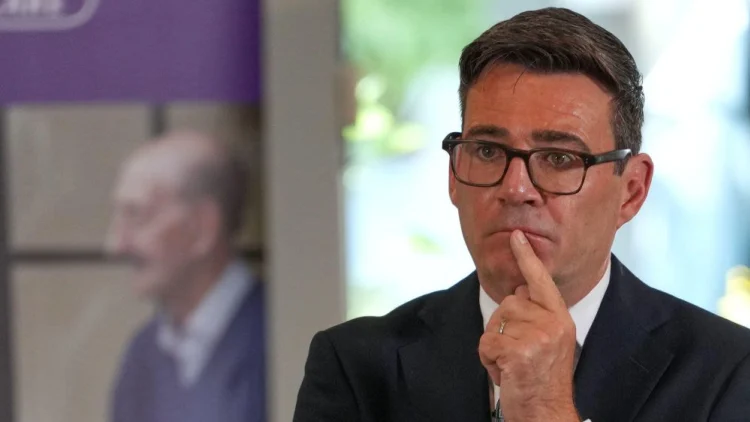
Andy Burnham has made an unusually personal – and politically risky – promise.
He said he was prepared to spend political capital sorting out social care. After decades of shelved commitments and broken promises, his pledge has prompted cautious optimism among campaigners, social care professionals on the frontlines and, most importantly, those currently struggling to access care.
Actions will matter more than words, but the evidence so far indicates a recognition in the new administration that social care is about much more than one struggling public service. It is one of the places where Britain’s relationship between citizen and state is tested most sharply.
Political capital may be needed to reform social care, but getting it right would also help rebuild trust between citizens and the state.
That’s because an expectation gap sits at the heart of social care in Britain.
That gap between expectation and reality is also at the heart of new research from Demos, carried out in partnership with the Joseph Rowntree Foundation. Analysing thousands of conversations in online support spaces, we found that people are describing not only a lack of funding, but a growing sense that the system no longer works with them or for them.
One person reflected that after caring for their mother “all day, every day”, Carer’s Allowance amounted to less than 50p an hour. Others spoke about having to contact their MP to ensure a family member received at-home care. These stories paint a picture of a system that too often leaves people feeling unsupported, undervalued and alone.
For years, the debate about social care has centred on funding. But our research suggests that the breakdown of trust in institutions also matters deeply. Every confusing assessment, every bureaucratic hurdle and every family left wondering why help never arrived, chips away at people’s confidence that the government can or will deliver on its promises when people need support the most. Over time, these experiences contribute to wider disengagement and a growing sense that meaningful change is beyond the reach of politics.
That is why we’ve seen Baroness Casey, one year into her review of the social care system, raise the need for a new social contract for care. It’s become one of the clearest examples of a wider problem facing British politics. Too often, citizens’ expectations of the state and their lived experience are drifting further apart.
Burnham knows the system well. As health secretary under Gordon Brown, he attempted to establish a National Care Service. Before the Makerfield byelection, he argued that the Casey Review should move faster because reform cannot wait for another Parliament – a change he’s now pushed through. Those instincts have become one of the defining commitments of his new premiership.
No PM will solve social care in 100 days. But the first few months of a government matter because they establish priorities. A commitment to either reforming means testing, implementing a comprehensive Fair Pay Agreement for care workers, or reviewing Carer’s Allowance would help continue pushing the social care reform agenda forward.
Our research shows that this is about more than repairing a failing service: it’s about repairing trust. At Demos, we have argued that Britain needs a New Deal between citizen and state, one built on respect and institutions that people believe are on their side. Social care is where that challenge becomes deeply personal. When people reach the moment in their lives when they most need public support, they should not leave believing the system treated them with suspicion or indifference.
Burnham has made social care one of the first major political tests of his premiership. There are few better places to begin rebuilding trust in government. If the new administration cannot rebuild trust at the moments that matter most in people’s lives, it will struggle to earn public confidence for its biggest ambitions.
Lucy Bush is Director of Research and Participation at Demos
Danny DeVito Left Michael Douglas Hanging 30 Feet In The Air

Logitech to ship mice with replaceable batteries in Europe only, following Nintendo

Live GOLD and CRYPTO Scalping Trading | DAY 292 #goldtrading #cryptotrading #bitcoin


-

 Fashion5 days ago
Weekend Open Thread: Brooks Brothers
-
 Sports3 days ago
Commonwealth Games boxing: Jadumani Singh seals dominant 5-0 win over Pakistan’s Sumama Rehman to enter quarter-finals | Commonwealth Games News
-

 Tech3 days ago
Intel is reversing course and bringing hyper-threading back to its server chips
-

 Crypto World7 days ago
Ethics, other provisions in crypto Clarity Act to be further discussed
-

 Politics2 days ago
Luke Littler dismantles Gerwyn Price to retain title in Blackpool
-

 Crypto World4 days ago
Ripple bought a bank in pieces. The $4 billion audit
-
 Entertainment5 days ago
A New Post-Apocalyptic Gundam Anime Series Blasts Into SDCC
-

 Sports6 days ago
2026 3M Open leaderboard: Scottie Scheffler finds putter in Round 1, sits three back
-

 News Videos3 days ago
BITCOIN JUST ENTERED THIS CRITICAL ZONE…
-

 Fashion5 days ago
16 Dresses for the High Summer Event
-

 Politics1 day ago
The Part of the Electric Transition Nobody Wants to Discuss
-

 News Videos6 days ago
The Peugeot Family: How 200 Years of an “Old Money” Dynasty Died in A Boardroom
-

 Business11 hours ago
Major shareholder moves on Canyon
-

 Politics3 days ago
Spain sweeps the board at 2026 World Cup with individual awards
-

 Crypto World3 days ago
XRP Ledger adds $2.6B as RWA inflows rank second
-

 Crypto World6 days ago
Uniswap (UNI) pushes deeper into tokenized RWAs with permissioned trading pools
-
 Entertainment21 hours ago
‘Stargate’ Creator’s New Sci-Fi Series Returns for Season 3 Tomorrow
-
Crypto World6 days ago
SEC Agrees to Overhaul Recordkeeping After Settling Coinbase Lawsuit Over Gensler’s Lost Texts
-

 Tech4 days ago
Anthropic launches Claude Opus 5, a cheaper AI model for coding, agents and enterprise workflows
-

 Entertainment4 days ago
Sara Gilson Killed By Husband After Viral “Pedophile” TikTok Video
You must be logged in to post a comment Login