Verizon has launched a limited-time preorder promotion offering up to $1,200 off Samsung’s newest foldable smartphones, giving early buyers a significant discount just days before the Galaxy Z Fold 8 and Galaxy Z Fold 8 Ultra officially become available.
The carrier is taking up to $1,200 off Galaxy Z Fold 8 preorders and up to $1,200 off Galaxy Z Fold 8 Ultra preorders, though both offers require a trade-in device and enrollment in an eligible data plan.
How the Deal Works
Verizon’s promotion allows buyers to shave a substantial amount off Samsung’s newly unveiled foldable lineup, provided they meet the carrier’s trade-in and plan requirements. The Galaxy Z Fold 8 preorder deal offers up to $1,200 off with a trade-in and unlimited data plan through Verizon, while the Galaxy Z Fold 8 Ultra preorder carries an identical structure, also offering up to $1,200 off with trade-in and select data plans.
What the Standard Galaxy Z Fold 8 Offers
The base Galaxy Z Fold 8 comes equipped with a substantial feature set aimed at both productivity and everyday use. The phone features a 7.6-inch AMOLED main display with a resolution of 1848 by 2448 pixels and a 120Hz refresh rate, along with a 5.5-inch AMOLED cover display, also running at 120Hz. It runs on the Snapdragon 8 Elite Gen 5 for Galaxy chipset, paired with 12GB of RAM and 256GB of storage in its base configuration.
On the camera front, the standard Fold 8 includes a 50-megapixel main wide-angle lens and a 50-megapixel ultra-wide lens on the rear, along with 10-megapixel selfie cameras on both its main and cover displays. Early hands-on impressions from Tom’s Guide described it as the outlet’s favorite foldable to date, noting that while it loses a dedicated telephoto zoom lens compared with pricier models, its display layout makes multitasking notably more practical, supporting up to four apps running simultaneously.
What Sets the Ultra Model Apart
The Galaxy Z Fold 8 Ultra positions itself as the more premium option in Samsung’s foldable lineup, with several upgraded specifications over the standard model. The phone features an 8-inch AMOLED main display at 2504 by 2256 pixels and a 6.5-inch AMOLED cover display, both running at 120Hz, alongside the same Snapdragon 8 Elite Gen 5 for Galaxy chipset and 12GB of RAM as the standard model.
Camera capabilities mark one of the clearest differences between the two devices. The Ultra’s rear camera array includes a 200-megapixel main wide-angle lens, a 50-megapixel ultra-wide lens, and a 10-megapixel telephoto lens with 3x optical zoom, a notable upgrade over the standard Fold 8’s dual-lens setup. Early hands-on testing highlighted the Ultra’s greatly reduced crease, upgraded silicon carbon battery, faster charging, and improved ultrawide camera as meaningful upgrades over previous generations.
A Key Difference in Multitasking
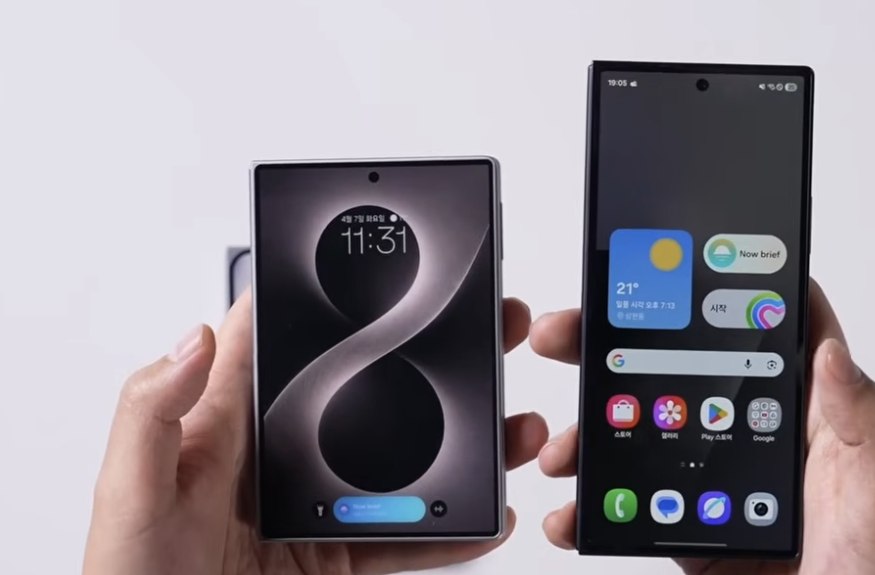
Despite the Ultra’s more premium specifications overall, testing found that the standard Galaxy Z Fold 8 actually holds an advantage in one specific area: multitasking layout. One of the biggest differences between the two models comes down to display size and aspect ratio, with the standard Fold 8’s wider design giving it an aspect ratio similar to an iPad Mini, making it particularly well-suited for video viewing.
That wider layout also enables a multitasking feature borrowed from Samsung’s tri-fold device. The Fold 8 incorporates the most distinctive feature of the Galaxy Z TriFold, its three-app side-by-side multitasking capability, allowing users to run three apps in their own windows simultaneously, all while keeping the windows proportionate and allowing users to save specific app combinations as shortcuts for quick access later. A fourth app can also be launched in a separate floating window if needed.
By comparison, testing found that the Ultra’s more square aspect ratio when unfolded made true three-app multitasking less practical. Running three apps on the Ultra’s 8-inch display only allowed two apps to display properly at full usability, with a third app forcing the layout to compress the other two into a shrunken, less usable format. Based on that testing, the standard Galaxy Z Fold 8 was identified as the stronger choice specifically for users prioritizing multitasking.
Pricing and Full Specifications
Both devices carry premium price tags reflecting their position at the top of Samsung’s smartphone lineup. The Galaxy Z Fold 8 starts at $1,899, while the Galaxy Z Fold 8 Ultra starts at $2,099, both in their base storage configurations, with storage options extending up to 1TB and RAM configurations available in both 12GB and 16GB variants.
Battery capacity also differs between the two models, with the standard Fold 8 carrying a 4,800 mAh battery compared with the Ultra’s larger 5,000 mAh battery. Both devices support 45W wired charging and 20W wireless charging, and carry an IP48 rating for dust and water resistance. The standard Fold 8 weighs 201 grams, while the Ultra weighs slightly more at 215 grams, reflecting its larger display and additional camera hardware.
Color Options
Buyers will have several finish options to choose from depending on which model they select. The Galaxy Z Fold 8 is available in Lavender, Graphite, Cream and an online-exclusive Pistachio finish, while the Galaxy Z Fold 8 Ultra offers Violet Shadow, Cream and Graphite finishes, along with an online-exclusive Violet Green option.
With the official release of both foldables still days away, Verizon’s preorder discount gives early adopters a chance to lock in significant savings before general availability begins. Prospective buyers interested in either device will need to weigh the trade-in and data plan requirements tied to Verizon’s offer against their current carrier situation, while those prioritizing multitasking flexibility may want to take note of the standard Fold 8’s layout advantage over its more expensive Ultra sibling, despite the Ultra’s stronger camera hardware and display specifications.
























































You must be logged in to post a comment Login