
Crypto World
Uniswap founder rejects claims v4 fees reduce LP earnings



Hayden Adams said critics misunderstood Uniswap’s newly approved v4 protocol fees, rejecting claims the change reduces liquidity providers’ earnings.



Russia has escalated its long-running dispute with Telegram by charging founder Pavel Durov with facilitating terrorist activities and issuing an international arrest warrant, marking one of the most significant legal actions yet against the messaging platform’s billionaire founder.
The move comes as governments worldwide intensify pressure on technology platforms over content moderation, encryption, and their responsibilities in preventing criminal activity. The latest accusations also add to Durov’s ongoing legal challenges outside Russia, including an active investigation in France.
The post Russia Targets Telegram Founder Pavel Durov With Terrorism Charges appeared first on BeInCrypto.


Bitcoin climbed 1% to about $63,800 on Wednesday while Asian equity markets suffered one of their worst stretches of the year, the second time in a seven-day period that crypto has held through a sharp unwind in the artificial intelligence trade.
The majors moved with it. Ether rose 1% to $1,899, XRP added 2% to $1.07, BNB gained to $567, solana held at $73, and dogecoin edged up. Hyperliquid’s HYPE was the only major in the red, down 3% to $54.
The damage in equities was concentrated in chipmakers. South Korea’s benchmark tumbled 11%, following an 11% drop on Tuesday and putting the index on course for a record two-day decline. SK Hynix fell about 17% after reporting a 557% surge in quarterly profit that still came in below expectations, and
Samsung slid 12% ahead of its own results on Thursday. The MSCI Asia Pacific index dropped 2% to its lowest since mid-April, and Nasdaq 100 futures fell 1%, extending a five-day losing streak for the tech-heavy gauge, its longest this year.
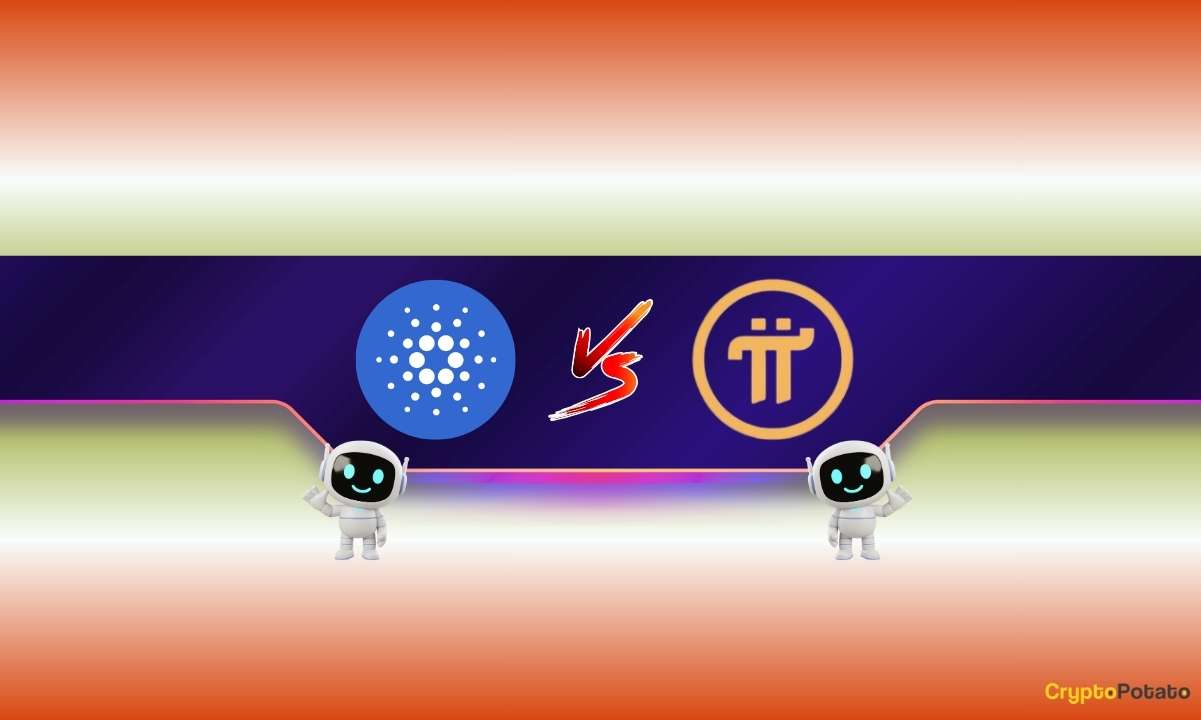
Cardano’s ADA and Pi Network’s PI have both posted staggering losses over the past year and are among the worst-performing cryptocurrencies during the current bear market.
Their deteriorating condition has stirred anxiety among industry participants and perhaps some fear that their prices could collapse to $0. We asked three of the most widely used AI-powered chatbots which of these tokens they consider most likely to experience such a crash this year.
PI Faces Greater Risk
According to ChatGPT, Pi Network’s native token (whose valuation recently neared its record low) is significantly more likely to collapse to $0 in 2026 than ADA.
It claimed that the former has weaker liquidity, a shorter operating history, much greater future supply expansion, and a price that is already hovering close to its historical bottom. The chatbot also touched on existing problems inside Pi Network’s ecosystem that could negatively impact PI in the near future.
“Any prolonged technical problems, delayed migrations, regulatory pressure, or loss of community confidence could have an outsized effect on the token. For PI to approach $0, investors would probably need to see several problems occur together: continued supply growth, weak application demand, declining exchange liquidity, stalled development, and a broader crypto market sell-off,” OpenAI’s platform stated.
ChatGPT noted that ADA has also been on a massive downfall lately, yet it highlighted its ability to survive previous bear markets and outlined its vast community base. It also pointed out that the majority of its eventual supply is already in the market, which makes the dilution risk far less than PI’s.
The chatbot did not rule out the possibility of a further collapse for ADA given the current conditions but claimed that reaching practically zero would require something much more destructive.
More in Favor
Perplexity agreed with ChatGPT’s theory that PI carries the higher risk of sliding to $0 sometime this year, but argued that a literal collapse to such territory looks improbable for either token.
“As long as there is any bid from speculators, community members, or exchanges, the price will be >0,” it claimed.
For its part, Google’s Gemini added a different angle to the discussion, flagging several Pi Network-related problems that the other chatbots didn’t mention and that could drag the price even lower.
Among the main ones are the accusations from multiple industry participants that the project is a pyramid scheme rather than a true decentralized network. Additionally, it pointed out that leading crypto exchanges like Binance and Coinbase still refuse to list PI, which could be interpreted as another red flag. In conclusion, Gemini said:
“While ADA may experience price swings driven by broader crypto market trends, its structural liquidity and established ecosystem make an absolute crash to $0 extremely unlikely. In contrast, Pi Network is far more vulnerable to severe price collapse or liquidity failure.”
The post Cardano (ADA) or Pi Network (PI): 3 AIs Predict Which Is More Likely to Hit $0 in 2026 appeared first on CryptoPotato.
Bitcoin traded above $64,000 on Wednesday, up 1% on the day, with the broader market green ahead of the Federal Reserve’s rate decision at 2 p.m. ET, per CoinDesk data. Ether added 1.7% to $1,909 and XRP led the majors at 2.6%.
The base case is a hold. About 70% of traders expect the Fed to keep its rate at 3.50% to 3.75%, a sixth straight meeting on pause, per CME data.
But roughly 30% now price a quarter-point hike, and the case has serious backers: Citadel Securities told clients it expects a surprise increase this week to shore up Warsh’s inflation-fighting credibility, and UBS said such a move would not surprise it.
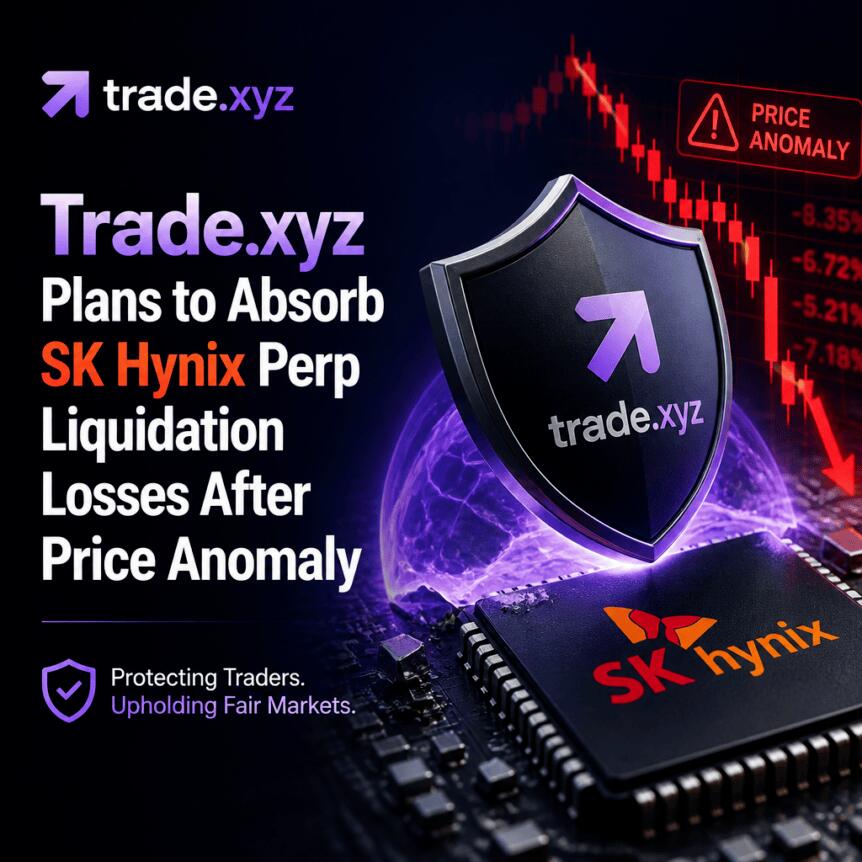
Trade.xyz, the operator behind onchain perpetual markets on Hyperliquid, says it will reimburse eligible liquidation losses after a sudden price anomaly affected the platform’s SK Hynix perpetual contract. The incident followed a sharp drop in the contract’s mark price late Monday, after an external trade was relayed and processed through Trade.xyz’s oracle.
In a statement posted on X, Trade.xyz said the SKHYNIX mark price fell from $1,127.90 to $917.25 at 23:01 UTC on Monday. The move, it explained, was triggered after an executed transaction on an external venue was picked up by multiple independent data providers. Trade.xyz did not provide details on the size of the reimbursement pool or how many traders would qualify, saying only that eligibility requirements will be announced soon and distributions are expected in the coming days.
Key takeaways
- Trade.xyz will cover eligible liquidation losses tied to the SKHYNIX mark-price anomaly, with eligibility details and payouts expected shortly.
- The affected mark price moved after an external market execution was processed via the contract’s oracle, not from activity within Hyperliquid’s own order book.
- Hyperliquid data cited in the report shows SK Hynix is one of its most actively traded contracts, with over $1.5 billion in 24-hour volume and nearly $600 million open interest at the time of writing.
- Trade.xyz said its oracle was operating “according to its specification,” but plans to review how prices are formed during extreme market events.
- The firm is considering weighting prices derived from its own order books more heavily going forward.
A liquidation event tied to an external print
The SK Hynix perpetual ranks among Hyperliquid’s most active markets. According to data shown on Hyperliquid earlier this week, the contract recorded more than $1.5 billion in 24-hour volume and maintained close to $600 million in open interest at the time of writing.
Trade.xyz attributed Monday’s dislocation to an executed trade on a separate venue. It said the oracle behind the SKHYNIX contract tracked the price of one SKHX common share in U.S. dollar terms by converting the underlying Korean won price using the prevailing exchange rate, as described in its documentation. That external print then fed into the oracle and contributed to the mark-price jump that determined position valuations and liquidation timing on Hyperliquid.
On Hyperliquid, the mark price is used for margin accounting and for deciding when leveraged positions become liquidatable. As a result, abrupt oracle-driven mark-price movements can translate quickly into forced liquidations—even if the platform’s own trading activity does not appear to mirror the same immediate pricing signal.
Trade.xyz: oracle worked, reimbursement is discretionary
Trade.xyz said its oracle “worked as intended according to its specification,” describing the oracle’s role in transforming an external venue’s execution into a mark price for the perpetual contract. The company acknowledged that traders may be frustrated when liquidation decisions rely on mark prices that change quickly due to external feeds rather than the dynamics of the local order book.
To address the fallout, Trade.xyz characterized the reimbursement as a “one-time discretionary decision.” While the firm did not disclose the total expected reimbursement amount or qualifying criteria in the immediate announcement, it said it would release eligibility requirements soon and make payouts in the coming days.
For traders and market participants, the key question is how “eligible liquidation losses” will be defined—particularly whether the scope will be limited to liquidations directly attributable to the oracle-driven mark-price move, or whether it will include a broader window of positions impacted by the anomaly.
What Trade.xyz says it may change in extreme moves
Beyond the immediate reimbursement plan, Trade.xyz indicated it is reviewing the mechanics of price formation during stress events. Specifically, it said it is considering giving more weight to prices formed on Hyperliquid’s own order books. The rationale is straightforward: if the platform’s internal liquidity and trading activity are “now providing meaningful liquidity and market signals,” then relying solely on an external oracle during unusual conditions may produce outcomes that feel disconnected from where traders are actually transacting.
This shift—more internal weighting versus external-feed dominance—matters for risk management on perp venues. Mark-price sourcing influences liquidation outcomes, and therefore shapes how traders size positions and place risk controls. If Hyperliquid’s internal pricing is considered a more reliable reflection of market consensus during abnormal intervals, it could reduce the likelihood of liquidation cascades driven by outlier oracle updates.
Trade.xyz also placed the anomaly within the larger context of Hyperliquid’s HIP-3 framework, which enables builders to launch perpetual contracts tied to assets with external price feeds. Trade.xyz has been a significant HIP-3 volume contributor, accounting for more than $22 billion of HIP-3’s first $25 billion in cumulative volume, as previously reported by Cointelegraph. It later launched an officially licensed S&P 500 perpetual using S&P Dow Jones Indices data.
Why this episode matters for Hyperliquid’s perp model
Hyperliquid’s architecture gives traders access to highly active perpetual markets, including contracts where mark prices are dependent on external data sources. That design can be efficient when external prints represent fair value—but it also creates a vulnerability when an external venue’s execution, reporting timing, or feed relays cause sharp dislocations that arrive faster than the internal order book can reflect them.
The SK Hynix incident illustrates the trade-off inherent in oracle-based perpetuals: external feeds can improve alignment with offchain reference pricing, but they can also produce sudden mark-price jumps during extreme events. Trade.xyz’s decision to reimburse liquidation losses is an attempt to address user harm after such a jump, while its stated intent to adjust how it weighs internal order books suggests it may seek to make future outcomes less dependent on a single external print.
As eligibility criteria are released and payouts begin, market participants will likely focus on whether reimbursed losses are limited narrowly to the affected mark-price window or extend to positions impacted by broader volatility. Traders should also watch for any subsequent technical or policy updates from Trade.xyz regarding oracle handling and the balance between external reference pricing and Hyperliquid’s own order-book signals.


Myanmar’s combined Parliament approved the Anti-Online Scam Bill on July 28 after reconciling amendments adopted by its lower and upper chambers.
Summary
- 10-year-to-life terms cover crypto scams and scam-centre operations under Myanmar’s published May draft legislation text.
- Parliament approved the bill July 28 after reconciling amendments previously adopted by both legislative chambers.
- Final text, presidential assent and commencement date remain unconfirmed in publicly available official records online.
The legislation targets digital-currency fraud, online scam centres, forced scam labour and financial infrastructure used by fraud networks.
The state-run Global New Light of Myanmar reported that the Pyidaungsu Hluttaw approved the bill in full. However, the final amended text, a presidential assent notice and a commencement date were not publicly available as of July 29. The exact penalties therefore remain based on the May draft and comments from lawmakers who reviewed the final version.
What penalties does the Myanmar crypto scam bill contain?
The 63-section draft published in May proposed prison terms of 10 years to life for operating an online scam centre or committing “digital currency fraud.” It also covered recruitment, financial facilitation, telecommunications support and other conduct connected with organised online fraud.
For violence, torture, unlawful arrest, detention or cruel treatment used to force another person into scam work, the draft allowed life imprisonment or capital punishment. It required the death penalty when that conduct caused death. Lower House lawmaker Aye Chan told AFP that the final bill retained the death-penalty provision and said there were “not many significant changes” to its important sections.
Because the enacted wording has not been released, it is not yet possible to confirm whether every offence, sentencing range and exemption survived the parliamentary amendments unchanged.
The bill creates broad financial and data powers
The draft establishes a central committee, regional bodies and an Anti-Scam Centre. It authorises coordination with foreign governments and information sharing among banks, telecommunications providers and state agencies. It also provides procedures for freezing suspicious accounts and confiscating proceeds or equipment linked to scams.
Human Rights Myanmar criticised the proposal before passage, arguing that its surveillance, account-freezing and website-blocking powers could be used against journalists, civil society and political opponents. The group called the bill “a repressive security instrument.” That is an advocacy assessment rather than a finding by a court or independent regulator.
The organisation also questioned the use of capital punishment and the absence of independent oversight. Those concerns will remain difficult to assess fully until authorities publish the final law and any implementing rules.
Scam compounds remain active despite regional raids
The bill arrives as evidence shows Myanmar’s scam-centre industry remains active. Satellite analysis reviewed by Wired identified at least 25 suspected sites built or expanded around Myawaddy during the first half of 2026. The International Justice Mission said the construction suggested previous crackdowns had not stopped the networks.
A July United Nations Office on Drugs and Crime assessment said fraud groups were responding to raids by dispersing, relocating and using smaller operations. Separately, the U.S. Justice Department charged two Chinese nationals in April over an alleged cryptocurrency-investment fraud compound in Burma and announced the restraint of about $700 million in cryptocurrency alongside broader website seizures.
As crypto.news previously reported, U.S. authorities also seized a fraudulent investment domain operated from Burma’s Tai Chang compound. In related coverage, crypto.news reported that India opened an investigation into allegations that citizens were trafficked into Myanmar and forced to conduct crypto scams.
Promulgation and enforcement are the next steps
The immediate next step is publication of the final amended law. That should clarify whether presidential assent has occurred, when the rules begin, which agencies receive enforcement authority and whether transitional provisions apply.
Implementation will also require financial institutions and telecom companies to build reporting and information-sharing systems. International cooperation will be central because victims, workers, operators, payment routes and digital assets often cross several jurisdictions.
No verified crypto-market price reaction was directly attributable to the parliamentary vote. The practical test will be whether authorities pursue senior operators and financial networks, protect trafficking victims and apply the law with due-process safeguards rather than relying mainly on raids against workers.
Crypto is trading on a cautious note. The upswing in bitcoin, the leading digital asset by market value, has stalled since last Wednesday, with prices pulling back to just under $64,000 from the high of nearly $67,000.
July hike to end forward guidance
Citadel’s rate hike call is less about where the data land and more about tactics, specifically, why Warsh has more to gain from raising rates today than from waiting until September.
A surprise hike Wednesday, Frank Flight, head of macro strategy at Citadel Securities, writes, “would emphatically end the forward guidance era in which every policy move is pre-signaled and act as a cleansing event, forcing markets to price what the data imply the central bank should do rather than what they expect it will do.”
It would also “clearly underline Federal Reserve independence after two years in which it has been repeatedly questioned.”
Forward guidance is a tool central banks use to signal how they expect interest rates to evolve over the coming months, helping households and businesses adjust consumption, investment, and borrowing without sudden shocks.
Over time, however, forward guidance has, according to many, including Warsh, distorted the market’s reaction function to the point where assets began trading off expectations of how the Fed might respond to news and data, rather than on the underlying data itself.


Regulated Layer One, or RL1, began operations on July 28 as a Luxembourg-based European Cooperative Society owned by 10 financial institutions.
Summary
- Ten institutions launched RL1 as a Luxembourg cooperative for regulated tokenized markets and digital money.
- SWIAT’s production network processed more than 50 transactions worth over €700 million before RL1’s launch.
- NatWest is expected to join shortly, while KfW and L-Bank continue supporting network expansion efforts.
The founding group includes ABN AMRO, Cecabank, Chartered Investment, Crédit Mutuel Alliance Fédérale, DekaBank, DZ BANK, LBBW, Natixis CIB, SC Ventures and Seturion.
Former SWIAT managing director Henning Vollbehr will lead the cooperative. RL1 now owns the underlying distributed-ledger network, while SWIAT remains its software supplier and technical operator. The launch announcement did not include a new token, public investment product or regulatory approval for a specific security.
RL1 gives 10 institutions equal governance rights
RL1 says each founding member has an equal vote over network governance and development. The structure includes a general assembly, a supervisory board and an operational management board. The network is private and permissioned, although membership remains open to additional regulated financial-market participants.
The current RL1 participant page lists NatWest as “joining soon” and says the bank will enter in the coming weeks. That is a more concrete update than the launch release, which said discussions were underway. No formal accession date has been published. KfW and L-Bank are supporting the network’s expansion but are not among the 10 institutions named as founding cooperative members.
The site also identifies eight technical operators linked to the existing SWIAT network, including DekaBank, LBBW, SC Ventures and SWIAT. However, it states that migration of those validators to RL1 is still intended. The list should not be treated as confirmation that every operator has completed the transfer.
SWIAT gives RL1 an existing production record
RL1 is based on SWIAT’s production network, which operated for three years before ownership moved to the cooperative. The platform completed more than 50 transactions with a combined value above €700 million, according to the launch statement. Those figures refer to the inherited SWIAT network rather than activity completed by the newly established cooperative after July 28.
SWIAT’s applications, including German electronic securities registry services, remain with SWIAT. The company said those services can migrate to RL1 without changing the software layer. The separation leaves the cooperative owning the common network while SWIAT continues providing technology and operating services.
The arrangement is intended to reduce reliance on separate institutional ledgers that cannot easily exchange assets or settlement instructions. Whether RL1 achieves that goal will depend on additional members, interoperable applications and sustained transaction activity. This is an inference based on the cooperative’s stated objectives. RL1 has not published volume targets or a timetable for moving all existing SWIAT services.
RL1 targets bonds, collateral and digital money
The network is designed to support tokenized bonds, funds, real-world assets, collateral, repo transactions, securities lending and digital money. RL1 also lists stablecoins and commercial or central-bank money among potential settlement tools. These are proposed use cases, not confirmation that every product is already live.
A practical test is expected through KfW’s third blockchain bond. KfW issued the €100 million security in June and plans an autumn migration of its registrar and underlying ledger from Cashlink and Polygon to DekaBank and SWIAT/RL1. KfW also intends to use the Eurosystem’s Pontes infrastructure for later payments, although the migration and Pontes connection have not yet been completed.
ECB settlement plans could shape RL1 adoption
The European Central Bank plans to launch Pontes in the third quarter of 2026. Pontes will connect market DLT platforms with the Eurosystem’s TARGET Services so tokenized transactions can settle in central-bank money. The longer-term Appia program is expected to produce a blueprint for an integrated European tokenized financial ecosystem by 2028.
As crypto.news reported, the ECB views central-bank money as a necessary settlement anchor for tokenized securities, deposits and stablecoins. In related coverage, crypto.news reported that RL1 member Seturion is building blockchain settlement links with Société Générale and SG-FORGE.
RL1’s claim that it will become “the connecting infrastructure for Europe’s digital financial market” remains forward-looking. Its next measurable steps are NatWest’s formal admission, validator and application migrations, KfW’s autumn bond test and technical connectivity with Pontes. No deadlines have been announced for broader membership or commercial-scale transaction targets, and no verified market-price reaction followed the cooperative’s launch.


Decentralized perpetuals exchange Trade.xyz said it will reimburse traders liquidated when its SK Hynix perpetual futures contract crashed 19% late on Monday, a loss the company attributes to a single executed trade on a thin Korean pre-market venue rather than any failure in its systems.
The mark price, the reference figure used to calculate profits, losses and liquidations, fell from about $1,128 to $917 at 23:01 UTC on July 27, according to the company. The print came from an executed trade relayed by multiple independent data providers, and the data point feeding the contract was tracking what Trade.xyz called the primary Korean pre-market venue.
“The oracle system worked as intended according to its specification,” the company said. Nothing malfunctioned and nobody manipulated anything, on the evidence so far
The oracle, a tool that fetchs data from outside points to within a blockchain-based system, faithfully reported a real trade on a market thin enough that one order moved the price nearly a fifth, and the contract liquidated positions accordingly.
Trade.xyz said covering the losses is a one-time discretionary decision rather than a commitment to do so again, with eligibility rules to follow and payouts expected within days.
Uniswap founder Hayden Adams rejected claims on July 28 that the decentralized exchange’s newly activated v4 protocol fees reduce liquidity providers’ existing earnings.
Summary
- Uniswap governance activated v4 protocol fees across seven chains after 46.6 million UNI supported proposal.
- Liquidity providers retain existing pool fees while traders pay a separate protocol charge, Adams said.
- A 30-basis-point pool adds five basis points, making the protocol fee 14% of total fees.
He said critics had misunderstood how the charge is calculated after governance approved the change.
The response followed the execution of Proposal 100 on July 27. The vote received 46.6 million UNI in support and 1.27 million against, clearing the 40 million UNI quorum. It activated the fee-controller system on Ethereum, Arbitrum, Base, BNB Chain, Polygon, OP Mainnet and Robinhood Chain.
Uniswap v4 fees are additive under the new design
Adams used a pool charging traders 30 basis points as his example. Under the approved curve, LPs continue earning 30 basis points, while the protocol adds five basis points. Traders therefore pay a combined fee near 35 basis points. The protocol’s five-basis-point portion equals about 14% of that total, not 25% of the LP fee stream.
Uniswap v4’s published code supports that distinction. The Pool contract describes the total swap charge as the LP fee plus the protocol fee. It calculates the protocol amount separately and routes the remaining fee growth to liquidity providers. The exact charge varies because v4 supports hooks and dynamic pool fees.
In addition, the proposal created a V4FeePolicy contract to classify pools and calculate charges, alongside a V4FeeAdapter that applies governance rules and sends collected assets to TokenJar contracts. For ordinary static pools, the policy uses a curve tied to the LP fee. Aggregator-hook pools use separate fixed rates.
Not every participant accepted the design. Panoptic founder Guillaume Lambert argued during the governance discussion that taking 10% to 25% of fees could weaken LP returns and push capital toward competing automated market makers. He called for protocol charges to depend on whether LP positions were already profitable. That criticism treated the charge as a reduction to LP income, while Adams’ response focused on v4’s additive implementation.
Adams also criticised a rival Uniswap fork that routes all swap fees away from LPs and uses token emissions allocated through voting to compensate them. He did not name the protocol in the July 28 post. His comparison was separate from the technical question of how Uniswap v4 divides fees.
Uniswap says previous fees did not drive liquidity away
Uniswap Labs said earlier fee activations on v2 and v3 had not produced a broad liquidity exit. Its July 18 governance response said Ethereum’s 25 largest fee-enabled v3 pools retained 98.5% of their pre-activation liquidity in token terms. It also said protocol fees funded about 7.5 million UNI in burns since December.
Those figures came from Uniswap Labs and have not yet established how v4 providers will respond. V4 pools can use customised hooks, dynamic pricing and different strategies, so their economics are not identical to v3. Labs said governance could submit another proposal to adjust rates if the new charges were not well tolerated.
DefiLlama listed Uniswap’s combined total value locked at about $3.06 billion on July 29. The dashboard also showed $88.4 million in gross fees over 30 days and about $3.36 million in protocol revenue. Those totals cover multiple Uniswap versions and chains rather than only the newly activated v4 pools.
More v4 fee activation and monitoring comes next
Fees collected through the new system move into TokenJar contracts. Searchers can claim those assets by providing and burning UNI through the protocol’s Firepit mechanism. Fees generated on supported layer-2 networks are connected to burns on Ethereum mainnet.
As crypto.news previously reported, the broader UNIfication programme began with a 100 million UNI treasury burn and protocol-fee collection across v2 and v3 deployments. In related coverage, crypto.news examined how Robinhood Chain activity increased Uniswap’s fee base before the v4 vote.
The executed proposal covers the first group of v4 deployments. Its text says Celo, Soneium, World Chain, X Layer and Zora require a later proposal because Uniswap’s governance contract limits the number of executable actions in one vote. No filing date has been announced for that second vote.
The next measurable test will be whether affected pools retain liquidity and trading volume after the charges begin accumulating. Governance can change individual pool overrides, fee-family rules or the underlying policy contract. Adams’ post settles the intended fee arithmetic, but LP behaviour will determine whether the model remains competitive.

Sam Smith Reveals Engagement to Boyfriend Christian Cowan

Prop Money Unboxing! #propmoneyinc #propmoney #moviemoney #movieprops #unboxing #unboxingvideos

Unauthorised car park near Stansted Airport grows after notice


-

 Fashion5 days ago
Weekend Open Thread: Brooks Brothers
-
 Sports2 days ago
Commonwealth Games boxing: Jadumani Singh seals dominant 5-0 win over Pakistan’s Sumama Rehman to enter quarter-finals | Commonwealth Games News
-

 Tech2 days ago
Intel is reversing course and bringing hyper-threading back to its server chips
-

 Crypto World6 days ago
Ethics, other provisions in crypto Clarity Act to be further discussed
-

 Politics2 days ago
Luke Littler dismantles Gerwyn Price to retain title in Blackpool
-

 Sports5 days ago
2026 3M Open leaderboard: Scottie Scheffler finds putter in Round 1, sits three back
-

 Politics22 hours ago
The Part of the Electric Transition Nobody Wants to Discuss
-

 Fashion5 days ago
16 Dresses for the High Summer Event
-
 Entertainment5 days ago
A New Post-Apocalyptic Gundam Anime Series Blasts Into SDCC
-

 News Videos2 days ago
BITCOIN JUST ENTERED THIS CRITICAL ZONE…
-

 News Videos5 days ago
The Peugeot Family: How 200 Years of an “Old Money” Dynasty Died in A Boardroom
-

 Politics3 days ago
Spain sweeps the board at 2026 World Cup with individual awards
-

 Business2 hours ago
Major shareholder moves on Canyon
-

 Crypto World4 days ago
Ripple bought a bank in pieces. The $4 billion audit
-

 Crypto World3 days ago
XRP Ledger adds $2.6B as RWA inflows rank second
-

 Crypto World6 days ago
Uniswap (UNI) pushes deeper into tokenized RWAs with permissioned trading pools
-

 Tech4 days ago
Anthropic launches Claude Opus 5, a cheaper AI model for coding, agents and enterprise workflows
-
 Entertainment12 hours ago
‘Stargate’ Creator’s New Sci-Fi Series Returns for Season 3 Tomorrow
-
Crypto World6 days ago
SEC Agrees to Overhaul Recordkeeping After Settling Coinbase Lawsuit Over Gensler’s Lost Texts
-

 Business5 days ago
Alliance Entertainment Holding Corporation (AENT) Discusses Evolution Into Omnichannel Distribution and Fulfillment Platform for Media and Collectibles Transcript
You must be logged in to post a comment Login