
Business
Analysts from Fortrade Review the Summit from a Financial Point of View

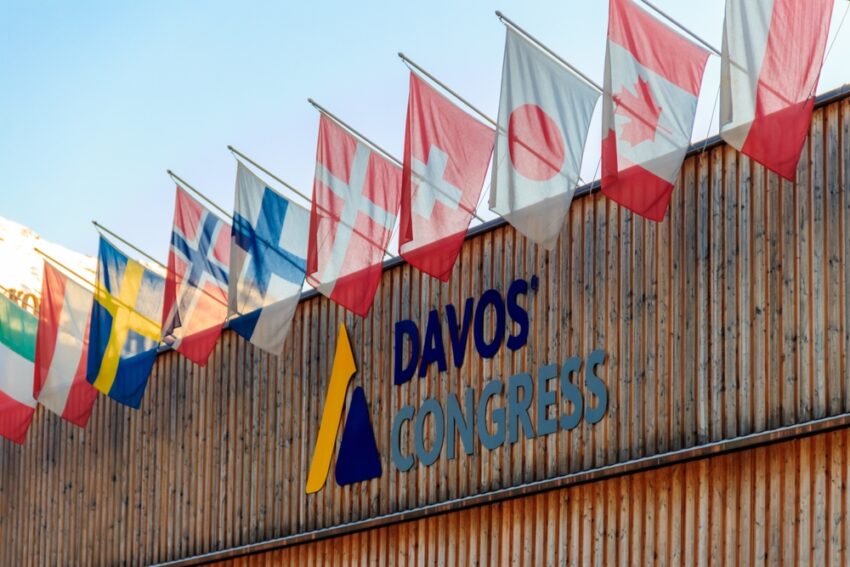
When the World Economic Forum met in Davos in January 2026, most people in financial markets were not waiting for any big announcement.
Davos has not worked like that for years. What it does is show how the people who influence money, policy, and capital are thinking at that moment.
The meeting, held from 19 to 23 January under the theme “A Spirit of Dialogue,” took place at a time when the global situation still feels uncomfortable. Inflation has eased in some places, but not enough to make central banks relaxed. Growth is holding in parts of the world and slowing in others. Debt remains high, and trade has become more political.
For financial markets, this continues to matter because tone shapes behaviour. Analysts at Fortrade, operating under FCA regulation, follow these discussions closely to see whether confidence is building or fading. Davos often quietly influences expectations, without anyone officially saying that anything has changed.
The wider background also remains important. The Global Risks Report published before the meeting remains important because it speaks directly about fragmentation and geoeconomic confrontation, and that language does not stay confined to formal documents. It appears in the way leaders talk about trade, technology, and security, shaping the broader narrative around risk. Investors notice this shift in tone and gradually factor it into how they interpret uncertainty and long-term market exposure.
Geopolitics and Market Confidence
Geopolitical risk was not treated as a distant issue at Davos in 2026. It was discussed as something that affects daily decisions. Reuters reporting showed that investors are now paying much more attention to political developments when pricing risk, partly because recent disputes and tariff threats have had very real market effects.
One example was the volatility linked to U.S. tariff threats connected to Greenland. It was a reminder that political signals can move currencies, equities, and commodities very quickly. These moves are not always logical in the short term, but they influence sentiment for much longer.
Analysts at Fortrade noted that these episodes tend to stay in traders’ minds. Even after prices stabilise, risk perception does not fully return to where it was. Over time, this changes how much investors are willing to pay for future earnings, particularly among those using short- and day-trading strategies.
Economic Resilience and Structural Debate
Discussions about growth at Davos were careful, and there was no strong sense that 2026 was being framed as a year of rapid recovery. Most forecasts pointed to moderate expansion, including a United Nations projection of global growth of around 2.7%, well below the pre-pandemic average, as reflected in the World Economic Situation and Prospects 2026 outlook. It suggests that the world economy is holding together but without enough momentum to generate sustained optimism.
In this kind of environment, markets tend to move in subtle and uneven ways rather than through strong, broad rallies. Investors become more selective about where they place capital, paying closer attention to balance sheets, policy signals, and longer-term sustainability. Many day traders become more cautious and focus on protecting capital rather than chasing fast moves. Fortrade news and market analysis page provides a broader market context and ongoing commentary, which helps traders follow major economic and policy developments without relying on unreliable sources.
Speakers at the forum also repeatedly returned to structural issues such as demographics, labour market adjustment, and inflation management. They mentioned that these slow-moving factors continue to shape interest-rate expectations and valuation models over time, explaining why markets in 2026 have remained cautious despite signs of economic resilience.
Central Banks and Policy Signals
Central bank credibility came up repeatedly in related coverage during Davos week. Policymakers spoke about independence and stability, especially as political pressure increases in some countries.
For markets, this is not theoretical. When central banks are seen as reliable, currencies tend to be more stable and bond markets calmer. When that credibility is questioned, volatility rises quickly.
Although no official policy announcements were made at Davos, the general message was clear. Monetary authorities are not in a hurry to change direction. Fortrade is a well-established broker that offers access to multiple markets through reliable trading conditions and stable platforms. The firm continues to factor this environment into how it supports traders and market participants.
Trade, Supply Chains, and Global Coordination
Trade and supply chains were discussed in practical terms throughout Davos, reflecting how costly recent disruptions have been and how companies and governments are still adjusting. It was reported that trade maps are changing as countries respond to earlier tariff measures and geopolitical pressure, with diversification and regionalisation emerging as common themes. These shifts affect markets gradually, as costs, margins, investment flows, and currency movements adjust over time rather than all at once.
Davos 2026 did not produce major agreements and functioned mainly as a platform for discussion, where leaders acknowledged that global cooperation is under strain and that new systems are still evolving. Instead of presenting clear solutions, they focused on managing complexity and adapting to long-term uncertainty.
How Davos Connected to Market Behaviour
After the summit, markets did not react sharply. There was no clear “Davos rally” or sell-off. Currencies moved slowly, and equity sectors moved unevenly.
This response itself was meaningful. Traders treated Davos as confirmation, not as a trigger.
Fortrade analysts observed that the main value of Davos 2026 was in showing how policymakers and business leaders were thinking about risk, growth, and stability when they were not trying to impress markets. That thinking influences behaviour over time. And behaviour is what shapes prices.
Davos still matters mainly because it shows how people with real influence are thinking about the months ahead, even when nothing dramatic happens at the time.


Shares of Blue Owl Capital Inc. fell sharply in morning trading Thursday after the alternative asset manager announced it would limit redemptions on two major private credit funds following unprecedented withdrawal requests from investors, raising fresh concerns about liquidity in the booming but scrutinized private credit sector.

Blue Owl (NYSE: OWL) shares traded as low as $8.10 before recovering somewhat, closing the previous session at $8.71 and opening lower amid heavy volume. By mid-morning, the stock was down about 3.62% at $8.40, extending a volatile period that has seen the shares lose more than half their value over the past year. The move came after the company disclosed that investors sought to pull roughly 21.9% of shares from its flagship $36 billion Blue Owl Credit Income Corp. (OCIC) and a staggering 40.7% from the smaller tech-focused Blue Owl Technology Income Corp. (OTIC) during the first quarter.
In response, Blue Owl informed shareholders it would cap redemptions at 5% for the quarter in both funds, a move designed to manage liquidity while avoiding forced sales of underlying loans at potentially unfavorable prices. The development marks the latest challenge for the firm, which has positioned itself as a leader in direct lending and private credit but now faces investor nervousness over credit quality, exposure to technology and software companies, and broader market conditions.
Blue Owl, co-founded by executives including Doug Ostrover and Marc Lipschultz, has grown rapidly into one of the largest players in alternative investments, with more than $307 billion in assets under management as of the end of 2025. The firm operates across credit, real assets and GP strategic capital platforms, emphasizing permanent capital vehicles such as business development companies (BDCs) that provide more stable fee income compared to traditional drawdown funds.
Thursday’s announcement highlighted tensions in the private credit market, where non-bank lenders have filled gaps left by tighter bank regulations, providing loans to middle-market companies often with floating rates that appeal in higher-interest environments. However, as the Federal Reserve has signaled potential rate cuts and concerns mount over valuations in tech-heavy portfolios, some investors are seeking exits.
The OCIC fund, one of the industry’s largest, saw redemption requests totaling about 21.9% of outstanding shares, while OTIC — heavily tilted toward technology and software lending — faced even steeper demand at 40.7%. Such levels are described as historic for major private credit vehicles. By imposing a 5% cap, Blue Owl aims to stagger outflows and protect remaining investors, but the decision echoes earlier moves, including a February asset sale of $1.4 billion across affiliated funds and a temporary halt on certain quarterly redemptions that also pressured the stock.
Analysts noted that the surge in requests may stem from multiple factors, including worries about credit quality in a slowing economy, potential markdowns on illiquid loans and competition from other yield-seeking investments. Some investors have grown wary of Blue Owl’s exposure to software firms, where revenue visibility can fluctuate, and questions persist about fair-value accounting for private assets that lack daily market pricing.
Despite the redemption pressures, Blue Owl has continued to attract new capital in other areas. On March 31, the firm announced the final close of its Asset Special Opportunities Fund IX with $2.9 billion in commitments, exceeding its $2.5 billion target. The vehicle focuses on asset-backed and special situations strategies, underscoring diversification efforts beyond core direct lending.
Co-CEOs Ostrover and Lipschultz have emphasized the resiliency of Blue Owl’s model, which includes a significant portion of permanent capital that reduces reliance on volatile fundraising cycles. In the firm’s fourth-quarter 2025 earnings released in February, management highlighted $56 billion in new capital commitments for the full year and growth in fee-paying assets under management. The company also maintained its quarterly dividend at $0.37 per share for the first quarter of 2026, payable in mid-April.
Yet the stock has struggled, trading well below analyst average price targets around $17 and reflecting a market capitalization near $6 billion. Over the trailing 12 months, shares have declined more than 50%, underperforming broader financials amid sector-wide scrutiny of private credit valuations and liquidity terms.
Industry observers point out that private credit has ballooned to an estimated $1.8 trillion market, with vehicles like Blue Owl’s BDCs offering retail and institutional investors access to higher yields than traditional fixed income. However, the illiquid nature of the underlying loans means redemption requests can strain funds if not managed carefully. Blue Owl’s decision to cap outflows at 5% follows similar liquidity management tactics used by peers when faced with elevated tenders.
The firm has taken steps to address concerns, including secondary sales of assets executed at or near book value and ongoing portfolio monitoring. In February, Blue Owl sold approximately $1.4 billion in loans from three BDCs to institutional buyers such as public pension funds and insurers, using proceeds to meet redemptions and reduce leverage in certain vehicles.
Thursday’s news also comes ahead of upcoming earnings for affiliated BDCs. Blue Owl Capital Corporation (OBDC) and Blue Owl Technology Finance Corp. (OTF) are scheduled to report first-quarter 2026 results in early May, with conference calls to discuss performance, credit metrics and any updates on liquidity.
Broader market context includes a shift in monetary policy expectations and increased competition in direct lending. While higher interest rates initially boosted net interest margins for private credit providers, potential easing could compress spreads, pressuring future fee growth and distributions.
Blue Owl’s leadership has argued that its scale, origination capabilities and focus on senior secured loans provide a defensive edge. The firm reported strong fundraising in private wealth channels in 2025, with equity commitments rising significantly as advisors allocated more client assets to alternatives.
Still, critics highlight the company’s own balance sheet leverage and the sustainability of its dividend payout ratio, which some analysts view as elevated given potential earnings pressure from lower base rates. A law firm launched an investigation in February into possible fiduciary duty issues following the asset sale and redemption changes, though no formal charges have emerged.
For investors in Blue Owl’s publicly traded shares, the redemption drama in its funds adds to volatility. The stock’s beta above 1 indicates it moves more than the market, reflecting sensitivity to alternative asset sentiment. Options trading has shown mixed sentiment, with some positioning for further downside.
Blue Owl traces its roots to Owl Rock Capital and Dyal Capital Partners, merging in 2021 to create a diversified alternative manager. It went public through a SPAC transaction and has since expanded via acquisitions and organic growth. The credit platform remains the largest, generating the bulk of management and incentive fees.
As of late 2025, fee-paying assets under management stood at approximately $187 billion, with permanent capital vehicles forming a key pillar for predictable revenue. Real assets and GP stakes provide additional diversification.
Thursday’s sell-off occurred against a backdrop of mixed performance across alternative asset managers. While some peers like Blackstone and KKR have faced their own pressures, Blue Owl’s retail-oriented BDCs have drawn particular attention due to quarterly liquidity features that appeal to individual investors but can create mismatch with illiquid holdings.
Company officials have not issued a public statement beyond the shareholder letters, but past comments stress a commitment to transparency and prudent capital management. With Q1 BDC earnings approaching, investors will seek details on portfolio yields, non-accrual rates and any realized losses.
The private credit sector overall continues to grow, fueled by banks’ retreat from riskier lending and demand from borrowers seeking flexible terms. Yet episodes like Blue Owl’s redemption caps serve as reminders of liquidity risks in a market where assets cannot always be sold quickly without discounts.
Longer term, Blue Owl’s management believes its model is built for various environments, citing historical performance through market cycles. The firm continues to win awards, including multiple 2025 PERE and infrastructure investor recognitions, and maintains active deal pipelines.
For now, the focus remains on navigating the current wave of redemptions without disrupting underlying portfolios. By limiting outflows to 5%, Blue Owl buys time to originate new loans, collect repayments and potentially attract fresh capital at more favorable terms.
The stock reaction underscores Wall Street’s sensitivity to any signs of stress in private markets. Whether this proves a short-term blip or signals deeper challenges will depend on execution in coming quarters and the health of the broader credit environment.
As one of the more visible players in retail private credit, Blue Owl’s handling of the situation will be closely watched by competitors, regulators and allocators. For shareholders, the coming weeks bring both uncertainty and potential opportunity if the firm demonstrates resilience amid the outflows.

Do you know how to hire international employees? If you’re looking to extend your company’s reach into global markets, hiring qualified candidates in other countries can help with that effort.
But if you don’t have a local entity, you may be wondering if it’s possible to recruit applicants in places like the UK.
Thankfully, you can, even if you lack a registered business structure there. Read on to learn how to recruit UK talent without a local entity.
Determine Your Hiring Strategy
It’s possible to hire in the UK without a formal business presence there, but you’ll need a hiring model to make it happen. You have a few options. And the right one may be determined by your size, financial status, and overall preferences.
You can hire individuals in the UK as individual contractors, for example. In this scenario, individuals will give you invoices for their work on your company’s behalf.
While independent contracting is a simple approach, it does come with some potential drawbacks. These individuals are essentially company employees, meaning that the UK may reclassify them. You could end up paying stiff penalties as a result.
With the Employer of Record (EOR) option, a third-party entity in the UK will do the hiring for you. You won’t need to establish an entity of your own and deal with payroll responsibilities. This option is appealing for its simplicity, and you can feel confident you’re staying compliant.
If you do set up a UK entity, you’ll gain more control over the hiring process, and you won’t need to outsource it. But be prepared to wait months for the entity to be set up, and know that you’ll have to tackle payroll and compliance issues.
Account for Benefits and Pensions
Keep in mind that you’ll need to budget for certain entitlements with UK hires. Employees in the UK are guaranteed at least 28 days of holiday pay each year. They can take parental leave and receive sick pay, assuming they are eligible.
Additionally, account for mandatory workplace pensions. Any employee over age 22 will be automatically placed in the pension program, and minimum contributions are 8% each year. 3% comes from the employer, while 5% comes from the employee.
The pension program is a requirement in the UK. But employees are allowed to opt out. Be aware that they’ll be re-enrolled every three years, though.
Calculate Employment Costs
Remember that providing an employee with a salary is just one part of the hiring process. You’ll need to budget for more than a salary.
Plan on making room for pension contributions, leave, and Employer National Insurance contributions. The insurance may be around 15% of an employee’s earnings, and you’ll be responsible for paying it. You may also have fees for your EOR.
Don’t be blindsided by unexpected costs. Instead, do the calculations in advance using resources from a reputable employer of record services in UK. You’ll gain access to a more accurate total compensation number that can help you anticipate future expenses.
Verify Legal Status and Run Payroll
Are you hiring employees who are legally allowed to work in the UK? Before issuing any contracts or paychecks, it’s important to check.
Make sure to evaluate passports or visas, and adhere to UK guidelines for doing checks. Failing to verify legal status can lead to fines.
In addition, you need to be mindful of the UK’s Pay As You Earn (PAYE) system. Be careful about deducting income tax and insurance contributions. All payments must adhere to strict government-mandated deadlines, as well.
It’s wise to turn to an EOR to oversee processes related to status and payroll. When an EOR handles the details, your risk of getting flagged for failure to comply should decrease. They’ll also be careful with all personal data, help with employee onboarding, and act as a reliable resource throughout the hiring process.
Recruit the Best UK Talent
Finding excellent UK employees without a local entity requires careful planning and research. While you can simplify some aspects of the process by going with a contractor model, you may be better off with an Employer of Record. You won’t have to worry about payroll, benefits, or onboarding with EORs.
With the right approach, you can start bringing in top talent to help your organization grow.
Business
Shui On Land Limited 2025 Q4 – Results – Earnings Call Presentation (OTCMKTS:SOLLY) 2026-04-02


Seeking Alpha’s transcripts team is responsible for the development of all of our transcript-related projects. We currently publish thousands of quarterly earnings calls per quarter on our site and are continuing to grow and expand our coverage. The purpose of this profile is to allow us to share with our readers new transcript-related developments. Thanks, SA Transcripts Team


Financial analyst by day and a seasoned investor by passion, I’ve been involved in the world of investing for over 15 years and honed my skills in analyzing lucrative opportunities within the market.I specialize in uncovering high quality dividend stocks and other assets that offer potential for long term-growth that pack a serious punch for bill-paying potential. I use myself as an example that with a solid base of classic dividend growth stocks, sprinkling in some Business Development Companies, REITs, and Closed End Funds can be a highly efficient way to boost your investment income while still capturing a total return that follows traditional index funds. I created a hybrid system between growth and income and manage to still capture a total return that is on par with the S&P.
Analyst’s Disclosure: I/we have a beneficial long position in the shares of QQQ, QQQI, META either through stock ownership, options, or other derivatives. I wrote this article myself, and it expresses my own opinions. I am not receiving compensation for it (other than from Seeking Alpha). I have no business relationship with any company whose stock is mentioned in this article.
Seeking Alpha’s Disclosure: Past performance is no guarantee of future results. No recommendation or advice is being given as to whether any investment is suitable for a particular investor. Any views or opinions expressed above may not reflect those of Seeking Alpha as a whole. Seeking Alpha is not a licensed securities dealer, broker or US investment adviser or investment bank. Our analysts are third party authors that include both professional investors and individual investors who may not be licensed or certified by any institute or regulatory body.

SYDNEY — Australia’s gambling sector is heading toward a defining compliance moment. As the March 31, 2026 deadline for key AML/CTF reforms approaches, operators are preparing for a more demanding reporting environment shaped by lower thresholds, tighter verification expectations, and more visible scrutiny. For many businesses, this is no longer a narrow legal adjustment. It is a structural reset that will affect product design, payments, onboarding, and customer trust.

The most immediate pressure point is administrative. When thresholds fall and due diligence obligations become heavier, compliance stops being something handled quietly in the background. It becomes part of the user experience. That is why Australia’s next phase cannot be judged only by the strength of its rules. It also has to be judged by how clearly those rules translate into a workable, intelligible market for operators and users alike.
That is where Canada offers a useful reference point. Ontario’s move from a loosely tolerated grey market to a formal, government-supervised iGaming system did more than legalize activity. It created a clearer environment around licensing, operator vetting, payment expectations, and consumer recourse. Just as importantly, it helped build an information layer around the market, where users could better understand which operators were legitimate and which were not.
Moving Beyond the Grey Zone
That distinction matters for Australia in 2026. Modern regulation is no longer only about restriction. It is about accountability that still leaves room for innovation. The strongest frameworks do not simply block risk. They create visible standards that help consumers and operators distinguish credible services from those that are merely opportunistic.
Canada’s example is useful because it shows that transparency is not created by regulation alone. It is also created by the surrounding ecosystem. A market becomes more trustworthy when users can identify licensed operators more easily, compare them more clearly, and understand what protections actually exist if something goes wrong. That is one of the reasons Ontario’s regulated model has attracted so much attention internationally. It does not just impose oversight. It makes oversight more legible.
Trust Needs Infrastructure, Not Just Rules
Once a market becomes structured, trust stops behaving like a vague branding concept and starts functioning as a commercial advantage. Consumers do not only want to know that standards exist. They want visible proof of those standards in the way platforms present identity checks, payment rules, security features, and operator credentials. In mature markets, confidence grows when users can evaluate platforms through more than advertising language.
That is why review infrastructure matters so much. In mature markets, consumers are increasingly avoiding platforms that operate outside the regulated framework, favoring trustworthy operators instead. This has made professional review portals like CasinoCanada a vital resource; they act as a digital shield, allowing users to distinguish licensed providers from high-risk offshore sites that lack recourse or security.
This point is more important than it may first appear. A regulated market can still feel confusing if ordinary users are left to interpret licensing quality, payment clarity, and platform reputation on their own. Independent review platforms help close that gap. They do not replace the regulator, but they make the market easier to navigate in practical terms. That is a lesson Australia should take seriously as its own compliance environment becomes more demanding.
Technical Benchmarks: Identity, Payments, and Friction
The second major lesson from Canada is more technical. A modern regulated market is not only judged by whether it is legal. It is judged by how intelligently it handles identity, payments, and transaction friction. That question is especially relevant in Australia, where policy has already taken a firm line on payment controls. Since June 2024, licensed online wagering operators have been prohibited from accepting credit cards and digital currency for bets. That is a strong consumer-protection signal, but it also shows that restriction on its own does not automatically produce a better user experience.
Canada’s provincial model offers a different perspective. It shows how high standards can coexist with a more flexible market design, provided the rules are clear and the operator environment is properly supervised. A closer look at the current Canada gambling laws overview shows how individual jurisdictions can maintain strong security expectations while still allowing different approaches to payments, oversight, and operational efficiency.
The practical point is simple: identity and payments are no longer secondary technical questions. They are where users feel the quality of regulation most directly. If onboarding is confusing, if verification feels arbitrary, or if payment rules create friction without explanation, users interpret that as weakness rather than safety. The strongest regulated systems are the ones that make control visible without making the process feel broken.
What a stronger 2026 framework should deliver
- Clear identity standards that remain consistent across the user journey.
- Payment rules that are understandable in practice, not only defensible on paper.
- A visible distinction between licensed operators and offshore risk.
- Independent consumer resources that help compare operators on trust, not hype.
The Future Is Biometrics and AI-Driven Compliance
The next encouraging sign is that stronger security no longer has to mean worse usability. Identity tools are improving quickly, and that changes the old trade-off between safety and convenience. Biometric sign-in, passkeys, and identity-as-a-service layers are making it easier to imagine a regulated gambling product that feels both secure and efficient. That matters because compliance systems tend to fail when they are designed purely as obstacles rather than as usable infrastructure.
Passkeys are a good example. They reduce reliance on traditional passwords, improve authentication flow, and lower failed sign-in rates. In practical terms, that means stronger security with less user frustration. The broader lesson is that identity is becoming the new perimeter. In a market facing tighter AML/CTF expectations, the operators that handle identity well will not only reduce risk. They will also feel more modern and more trustworthy to consumers.
AI-driven compliance is likely to deepen that trend. Transaction monitoring, behavioural anomaly detection, automated risk scoring, and adaptive compliance checks are all becoming more realistic as core platform functions rather than aspirational add-ons. For Australia, that could be one of the real opportunities hidden inside the 2026 reforms. Done properly, stronger controls could improve the user experience by making checks smarter, faster, and less visibly disruptive.
Conclusion
Australia’s 2026 regulatory shift should not be seen only as a compliance burden. It is also a market-design challenge. The question is not simply whether tighter oversight will exist. It is whether that oversight will produce a clumsy system built around friction, or a more intelligent one built around visible trust, better filtering, and clearer user signals.
Canada remains a useful reference point because it shows that transparency is strongest when it is supported by more than rules alone. Regulation, review infrastructure, technical clarity, and better trust signals all work together. If Australia wants its regulated market to remain commercially viable while meeting tougher AML/CTF expectations, it will need that same combination: stronger compliance, smarter identity systems, clearer payments logic, and a better way for users to recognize which operators deserve confidence in the first place.
Business
China Communications Services Corporation Limited 2025 Q4 – Results – Earnings Call Presentation (OTCMKTS:CUCSY) 2026-04-02
Seeking Alpha’s transcripts team is responsible for the development of all of our transcript-related projects. We currently publish thousands of quarterly earnings calls per quarter on our site and are continuing to grow and expand our coverage. The purpose of this profile is to allow us to share with our readers new transcript-related developments. Thanks, SA Transcripts Team

DENVER — Nikola Jokic continues his remarkable run as one of the most dominant and versatile centers in NBA history, prompting renewed debate whether the Denver Nuggets star has already surpassed Shaquille O’Neal in overall impact, skill and statistical brilliance — even as O’Neal’s four championships and three Finals MVPs keep him ahead in the championship pedigree that often defines legacies.

With the 2025-26 season winding down, Jokic, now 31, is posting numbers that rival or exceed O’Neal’s prime in several categories while redefining the center position with elite passing, shooting and basketball IQ. Yet the Serbian big man still trails O’Neal in hardware, with one NBA title to Shaq’s four, leaving the “better player” question as much about era, style and team success as raw talent.
Career averages tell part of the story. O’Neal, over 19 seasons and 1,207 games, posted 23.7 points, 10.9 rebounds, 2.5 assists, 0.6 steals and 2.3 blocks per game on 58.2% shooting. Jokic, in his 11th season through roughly 805 games as of early April 2026, sits at 22.2 points, 11.1 rebounds and a staggering 7.5 assists, with 1.3 steals and 0.7 blocks on efficient shooting that includes significant three-point range.
Jokic’s assist numbers alone set him apart. No traditional center has approached his playmaking. In the 2025-26 season, he has flirted with triple-double averages, leading the league in rebounds and assists at times while ranking among top scorers. Analysts have noted stretches where his scoring efficiency outpaced O’Neal’s best seasons, his rebounding topped Karl Malone’s peaks and his assists exceeded Jason Kidd’s career highs — all while shooting better from distance than Larry Bird in some comparisons.
Advanced metrics further favor Jokic in modern context. His career player efficiency rating and box plus/minus often rank among the highest ever for centers. In peak seasons, Jokic has led the NBA in value over replacement player while carrying the Nuggets to consistent contention. O’Neal dominated with brute force and interior presence, winning the 2000 MVP and three consecutive Finals MVPs from 2000-02 alongside Kobe Bryant in Los Angeles.
The championship disparity looms large. O’Neal captured four rings — three with the Lakers in a dynasty and one with the Miami Heat in 2006 — and earned three Finals MVPs. Jokic led Denver to its first title in 2023, earning Finals MVP with historic playoff averages, including leading all players in points, rebounds and assists in one postseason. But the Nuggets have not repeated, and as of April 2026, Denver sits in a competitive Western Conference without another championship.
Accolades also differ. O’Neal earned one regular-season MVP, 15 All-Star nods, 14 All-NBA selections and multiple scoring titles. Jokic has three MVPs (2021, 2022, 2024), with strong cases in other years, including multiple top-two finishes. He has earned All-Star honors and All-NBA nods consistently, transforming from a second-round draft pick into a perennial superstar.
In the current 2025-26 campaign, Jokic has battled injuries and team inconsistency, dropping him to third or fourth in some MVP ladders behind Shai Gilgeous-Alexander, Luka Doncic and Victor Wembanyama. Yet when healthy, he remains a triple-double machine, with analysts noting his on-court net rating impact often exceeds league leaders. Hall of Fame coach George Karl recently called Jokic the MVP of the past five years, citing his unmatched consistency.
Head-to-head statistical comparisons of their primes show nuances. From 2021-2026 for Jokic versus O’Neal’s 1999-2004 Lakers/Heat peak, Jokic edges in assists and efficiency from range, while Shaq posted higher scoring volume and blocks. Jokic’s ability to stretch the floor and facilitate makes him more adaptable to today’s spacing-oriented game, whereas O’Neal thrived in a physical, post-dominant era with fewer three-point attempts league-wide.
Debate rages among fans and analysts. Some argue Jokic is the more skilled and complete player, a “point center” who elevates teammates like Jamal Murray and Aaron Gordon. Others insist O’Neal’s physical dominance — at 7-foot-1 and over 300 pounds — made him unguardable in ways Jokic cannot match one-on-one. “Shaq could bully Jokic in the post,” one analyst noted, while crediting the Joker for superior versatility.
Recent rankings have stirred controversy. The Athletic placed Jokic fifth all-time in one list, ahead of O’Neal and Kevin Durant in some iterations, drawing backlash from Lakers fans who point to rings. Other outlets rank Jokic among the top centers ever, behind legends like Kareem Abdul-Jabbar, Bill Russell and Wilt Chamberlain but closing on O’Neal and Hakeem Olajuwon.
Jokic’s efficiency stands out. He shoots over 57% from the field career-wide, often higher in recent seasons, while adding 35-40% from three — areas where O’Neal rarely ventured. Free-throw shooting remains a contrast: Shaq’s career 52.7% plagued him in clutch moments, while Jokic converts at a solid 82% clip.
Playoff performances further the discussion. O’Neal averaged 24.3 points and 11.6 rebounds in 216 postseason games. Jokic has delivered in high-stakes series, including his 2023 championship run where he averaged near triple-doubles. Some seasons, Jokic has led the league in playoff advanced stats.
Off the court, both are larger-than-life figures. O’Neal became a cultural icon with movies, music and broadcasting. Jokic maintains a low-key persona, preferring horses in Serbia and avoiding spotlight, yet his on-court genius draws global praise.
As the 2026 playoffs approach, Jokic and the Nuggets seek another deep run. Another title would bolster his case significantly, potentially pushing him past O’Neal in many all-time center rankings. Without it, the debate persists: statistical and skill superiority versus championship dominance.
NBA history values winners, but evolving analytics and eye-test appreciation for playmaking have elevated Jokic. Advanced stats like VORP and BPM often rank his peaks higher. In an era of positionless basketball, his ability to run offenses from the high post or elbow makes him uniquely valuable.
Experts note context matters. O’Neal faced physical defenders in a slower, hand-checking allowed era. Jokic navigates switching defenses, zone schemes and three-point volume. Adjusted for pace and rules, some models suggest Jokic’s impact per possession rivals or exceeds Shaq’s.
Fan and media sentiment splits. Reddit and social media threads show passionate arguments: “Jokic clears Shaq statistically and as a teammate,” versus “Rings are rings — Shaq dominated his era.” YouTube breakdowns and podcasts fuel the fire, with some declaring Jokic already the best passing big ever.
For now, most agree Jokic has not fully surpassed O’Neal due to the championship gap and fewer seasons played. But at 31, with prime years ahead if health holds, Jokic could close that distance. His three MVPs already match or exceed many greats, and consistent top-tier production positions him for Hall of Fame entry on the first ballot.
The Nuggets’ supporting cast and Western Conference strength will influence outcomes. Injuries have occasionally slowed Jokic, as seen in 2025-26 when he missed time, affecting MVP positioning.
Ultimately, comparing across eras is imperfect. O’Neal changed games with his size; Jokic is changing it with skill and vision. Both rank among the greatest centers, with Jokic earning “best of his generation” status while chasing O’Neal’s hardware.
As April 2026 unfolds, the conversation intensifies. Jokic’s nightly masterclasses keep the question alive: Has he surpassed Shaq? In skill and versatility, many say yes. In legacy-defining titles, not yet. The coming playoffs may provide more clues.
Whether Jokic adds another ring or not, his place among basketball immortals is secure — a testament to how the center position has evolved from dominant force to orchestrator supreme.

Check out what’s clicking on FoxBusiness.com.
Nike Inc. delivered a disappointing outlook this week, sending its shares sharply lower and prompting CEO Elliott Hill to acknowledge growing internal frustration during a company-wide call.
Speaking at a Tuesday all-hands meeting, Hill told employees he is ready to move past efforts to “fix” the business and shift toward rebuilding momentum, according to Bloomberg.
“I’m so tired, and I know you are too, of talking about fixing this business,” Hill said. “I want to move to inspiring and driving growth and having fun.”
COSTCO’S SURPRISE NIKE COLLABORATION SENDS SNEAKER RESALE MARKET INTO COMPLETE FRENZY

Elliott Hill, CEO at Nike Inc., following a Bloomberg Television interview in Milan, Italy, on Feb. 11, 2026. (Francesca Volpi/Bloomberg via Getty Images / Getty Images)
The remarks came after Nike reported its fiscal 2026 third-quarter results, with net income falling 35% year over year.
The company also warned that revenue is expected to decline in the current quarter and continue falling through the rest of the year.
Shares dropped as much as 15% on Wednesday, hitting their lowest intraday level since 2014, Bloomberg reported.
NIKE PLANS TO CUT HUNDREDS OF JOBS AMID AUTOMATION PUSH

The logo of Nike is pictured in a store in Manhattan on March 30, 2026, in New York City. (Zamek/VIEWpress / Getty Images)
Chief Financial Officer Matthew Friend underscored the company’s cautious stance, urging employees to limit spending as Nike works to stabilize performance, according to Bloomberg.
“We’re going to be managing costs carefully as we have been doing,” Friend said. “I realize that that creates a tension inside, but I just need you to know that the reason why that tension is there is because our business is not moving in the right direction.”
Hill, who took over as CEO in October 2024 and has since reshaped parts of Nike’s strategy, also signaled the company needs to be more transparent with investors, Bloomberg reported.
NIKE ANNOUNCES CAITLIN CLARK AS ITS NEWEST SIGNATURE ATHLETE

Nike shoes are on display at the Nike store during the Sport Expo in Krakow, Poland, on March 15, 2026. (Marcin Golba/NurPhoto via Getty Images / Getty Images)
“You can’t just sit there and say everything’s great,” Hill said. “Frankly, it needed to be different.”
GET FOX BUSINESS ON THE GO BY CLICKING HERE
A Nike spokesperson told the outlet that the company regularly holds post-earnings meetings with employees to review key messages shared with investors and to coordinate next steps.
Nike did not immediately respond to FOX Business’ request for comment.

Stitch Fix: A Compelling 'Buy' As Order Values Rise (Upgrade)

Microsoft Is 11% Of My NAV And I'm Targeting Monster Returns

Myanmar’s coup leader set to become president

Blue Owl Capital Stock Falls 4% on High Redemption Requests in Private Credit Funds

SpaceX IPO Eyeing Largest Global Market Debut as Valuation Surfaces


-

 NewsBeat6 days ago
The Story hosts event on Durham’s historic registers
-

 Sports6 days ago
Sweet Sixteen Game Thread: Tide vs Michigan
-

 NewsBeat5 hours ago
Steven Gerrard disagrees with Gary Neville over ‘shock’ Chelsea and Arsenal claim | Football
-
Entertainment3 days ago
Fans slam 'heartbreaking' Barbie Dream Fest convention debacle with 'cardboard cutout' experience
-
 Entertainment5 days ago
Lana Del Rey Celebrates Her Husband’s 51st Birthday In New Post
-
Crypto World2 days ago
Dems press CFTC, ethics board on prediction-market insider trades
-

 Crypto World1 day ago
Gold Price Prediction: Worst Month in 17 Years fo Save Haven Rock
-

 Tech4 days ago
The Pixel 10a doesn’t have a camera bump, and it’s great
-

 Sports2 days ago
Tallest college basketball player ever, standing at 7-foot-9, entering transfer portal
-

 Tech3 days ago
EE TV is using AI to help you find something to watch
-

 Fashion5 days ago
Amazon Sundays: Soft Spring Layers
-

 Tech3 days ago
Apple will hide your email address from apps and websites, but not cops
-

 Politics3 days ago
Should Trump Be Scared Strait?
-

 Tech3 days ago
How to back up your iPhone & iPad to your Mac before something goes wrong
-

 Crypto World3 days ago
U.S. rule change may open trillions in 401(k) funds to crypto
-

 Tech3 days ago
Flipsnack and the shift toward motion-first business content with living visuals
-

 Tech4 days ago
Avatar Legends: The Fighting Game comes out in July and it looks pretty slick
-

 Tech5 days ago
Elon Musk’s last co-founder reportedly leaves xAI
-

 Business7 days ago
Chinese universities with military links bought Super Micro servers with restricted AI chips
-

 Fashion6 days ago
Weekly News Update, 3.27.26 – Corporette.com
You must be logged in to post a comment Login