
Crypto World
Bitcoiners are worried that Coinkite’s Blockclock could be spying on them



Paranoid Bitcoiners are worried that Bitcoin clocks created by Coinkite, the firm behind recently-hacked hardware wallet Coldcard, could be spying on them.
The Blockclock, which features an electro-mechanical display, can be tweaked to showcase up-to-date Bitcoin prices, exchange data, and various other metrics.
However, with the estimated $130 million Coldcard theft showing no sign of stopping, cautious Bitcoiners are becoming suspicious of the seemingly harmless machines.
Much of this suspicion appears to have been stoked by programmer and Bitcoin enthusiast “Wicked” who warned owners to “unplug” their device “immediately,” with very little by way of explanation.
“If you used your COLDCARD near them I would plan to move your funds out of an abundance of caution,” he said.
Read more: Coldcard hacker’s BTC wallet flooded with on-chain messages
Wicked’s post, whether completely seriousness or not, attracted 50,000 views and led to multiple Blockclock owners following the advice.
The growing paranoia even extended to Coinkite’s CTO Peter Gray, with pro-Bitcoin vintner Ben Justman claiming that, having learned that Gray worked on keylogging and remote computer viewing, he “wouldn’t feel safe” keeping the Blockclock.
“I don’t own a Blockclock and who knows if there’s anything wrong with them, but I personally wouldn’t wanna touch anything that touched Coinkite,” said Justman.
Some posts posited the idea that the Blockclock may contain spyware, a theory that was further fueled by parody account Teddy Bitcoin, which claimed that Blockclocks contain “an authentic high-tech Russian military-grade listening device” called the “Ухо-9,” or “Ear-9.”
“This thing is so advanced it can capture private sounds with insane precision, right down to the exact faint hammering of individual letters into steel plates,” the account wrote.
Some users, understandably, doubted Wicked’s claims, suggesting that the paranoia might be exaggerated and telling the programmer to “calm down.”
Bitcoin Magazine editor Shinobi described the paranoia as “Schizo theories about Coldcards wirelessly communicating seeds to them to phone home.”
Wicked replied to one comment asking if it was legit, saying, “No evidence of anything yet but I’m not risking it anymore.”
He’s since made a partial apology, claiming in an X Spaces that he posted about the Blockclock in a “schizo panic fear,” and that after talking to several people he trusts, “that fire in my mind has been doused.”
“My trust in Coinkite products has obviously been affected by all of this,” Wicked added.
Read more: 15 attackers now draining vulnerable Coldcard wallets, report
Coldcard urged users to move BTC
Coinkite is dealing with the fallout from its weak seed phrase generation system that left several versions of its BTC wallet open to hackers.
The firm has since warned Coldcard users to move their BTC elsewhere or risk being drained.
There have been at least 15 attackers taking advantage of the exploit, which have likely targeted thousands of victim wallets.
Protos has reached out to Coinkite for comment and will update this piece should we hear anything back.
Got a tip? Send us an email securely via Protos Leaks. For more informed news and investigations, follow us on X, Bluesky, and Google News, or subscribe to our YouTube channel.


Sesame Street plans to provide resources to help families, including a printed and digital storybook, to help children heal when the things they love are lost, articles and activities that support children and families as they deal with environmental stressors like heat or air quality, and plans to distribute “go bags” with essentials to support families during evacuations and periods of displacement.
It’s an important first step in getting children and families more equipped for dealing with extreme weather events—which most Americans are woefully underprepared for. In one 2025 survey of 2,000 adults by Talker Research, 90% said it’s critical to be prepared for extreme weather, but only 46% had an emergency plan in place.
The episode opens the channel of communication in an age appropriate way, experts say. “It’s covering all of the bases,” says Adam Rainear, associate professor of communication and media at West Chester University, whose work focuses on climate communications. “It’s giving the messaging so that kids are aware and alert, but also not making them afraid of everything around them.” While Elmo and his friend Abby acknowledge their fear, they focus on having courage—and when Elmo’s courage falters as the power goes out, his dad steps in to help with words of encouragement and an exercise to help calm him down.

Bitwise Chief Investment Officer Matt Hougan said the CLARITY Act could fail to pass this week, but that would not mean the end of the legislation or the crypto industry’s progress.
The US Senate is scheduled to leave for its August recess on Friday, August 7, and return on September 14. Under Senate rules, lawmakers must file for cloture on the CLARITY Act by Wednesday, August 5, for the bill to have a chance of receiving a vote before the recess.
Crypto Without Clarity
A failure this week would also not necessarily end the act. Hougan expects the legislation to enter a “walking dead” state. That could lead to fresh efforts to pass it in September or during a December lame-duck session. Congress often combines several measures into year-end omnibus legislation, and creates another possible route for the bill.
For Hougan, the bigger issue with that uncertainty is its effect on investors. Some professional investors are holding back from crypto because they do not want to commit capital while the outcome of CLARITY remains unclear. They may wait to see whether the legislation passes or fails and how markets respond.
If the bill does not pass this week, Hougan said a sharp drop in its Polymarket odds could actually help remove that uncertainty. He said the market may wobble initially, but a clearer outcome could leave crypto better positioned for a rally in the fall.
The Bitwise exec sees the Securities and Exchange Commission (SEC) as another potential path for the industry. Chair Paul Atkins recently said the agency is ready and able to introduce rules addressing the same issues covered by CLARITY. Hougan said these rules may be more supportive of crypto and innovation in the short term than a bipartisan congressional bill. The risk, he explained, is that a future administration could appoint a less supportive SEC chair and reverse those policies.
Despite this, Hougan noted that crypto has already built too much momentum for a future regulator to stop its progress. He cited BlackRock’s Bitcoin ETF, efforts by Nasdaq and JPMorgan to tokenize assets, and work by Visa, Mastercard, Stripe and Coinbase on a stablecoin platform. He also pointed to Robinhood’s blockchain, which connects with DeFi applications including Uniswap and Morpho.
The industry is also gaining a stronger position within the US banking system. For instance, the Office of the Comptroller of the Currency has granted trust charters to Circle, Ripple, Paxos and other firms. Outside the US, governments including those in the European Union, Japan and Russia are also pursuing pro-crypto legislation.
The exec said the situation resembles the early development of the internet. Congress failed to advance major telecom reform in 1994, but the internet continued to expand. Netscape, Amazon and eBay emerged, and the number of websites grew rapidly. Congress eventually passed the Telecommunications Act of 1996.
Long-Term Impact
Hougan’s argument comes as other crypto industry figures have also highlighted the wider regulatory impact they believe CLARITY could have. Andreessen Horowitz’s Chris Dixon, for instance, recently said that the bill could help prevent another FTX by giving regulators clearer oversight of crypto exchanges and establishing rules around disclosure, fraud and insider trading.
Dixon said that the market outside stablecoins, which he estimated at around 85% of the market, still lacks a comprehensive federal regulatory framework. Additionally, major banks and fintech firms are now moving beyond experiments, with significant blockchain deployments already live or expected to launch.
While agencies such as the SEC and the CFTC can address many issues, if CLARITY does not pass, Dixon added that legislation offers more lasting rules and gives businesses greater confidence to make long-term investments.
The post What Happens to Crypto If the CLARITY Act Fails This Week? Hougan Explains appeared first on CryptoPotato.
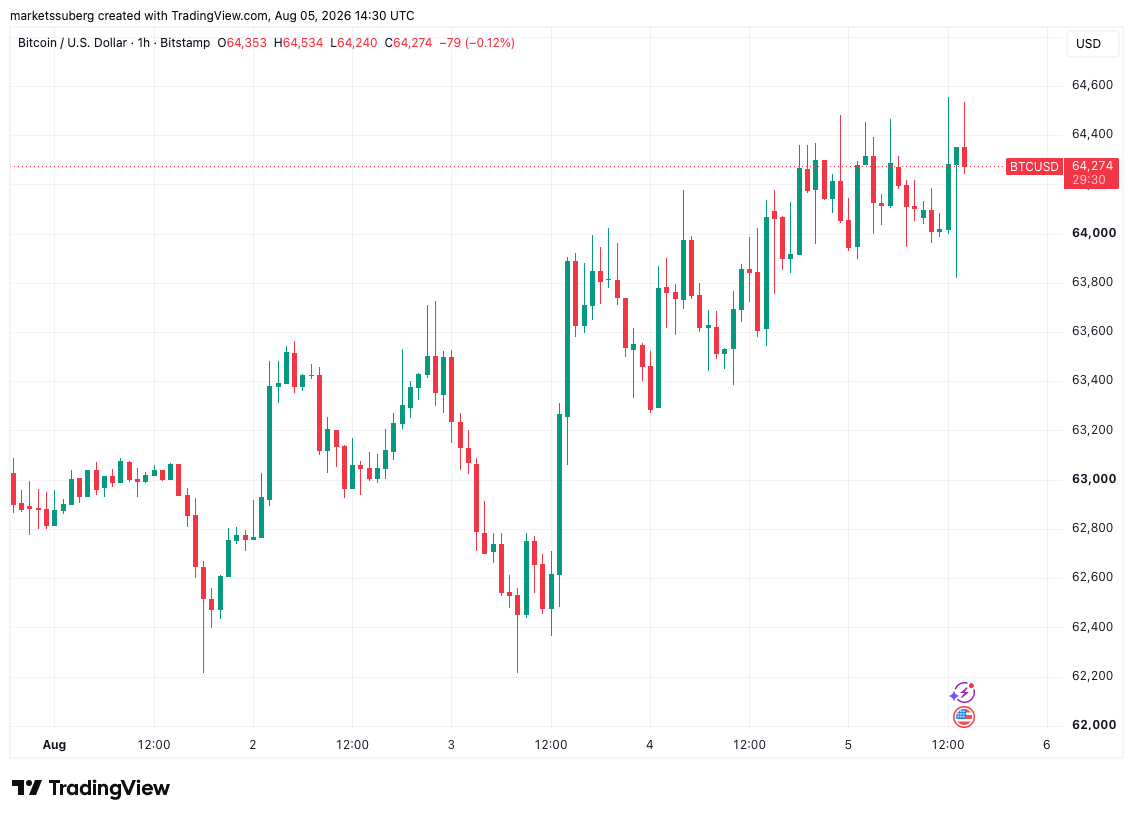
Bitcoin stayed wedged at $64,000 on Wednesday’s Wall Street open as gold hit six-week highs.
Key points:
- Gold analysis eyes Chinese demand as the precious metal hits its highest levels in six weeks.
- Bitcoin (BTC) sees a second day of lackluster performance against US stocks as the S&P 500 index builds on all-time highs.
China in spotlight as gold rebounds past $4,200
Data from TradingView showed continued BTC price inertia contrasting with upside for both precious metals and US equities.
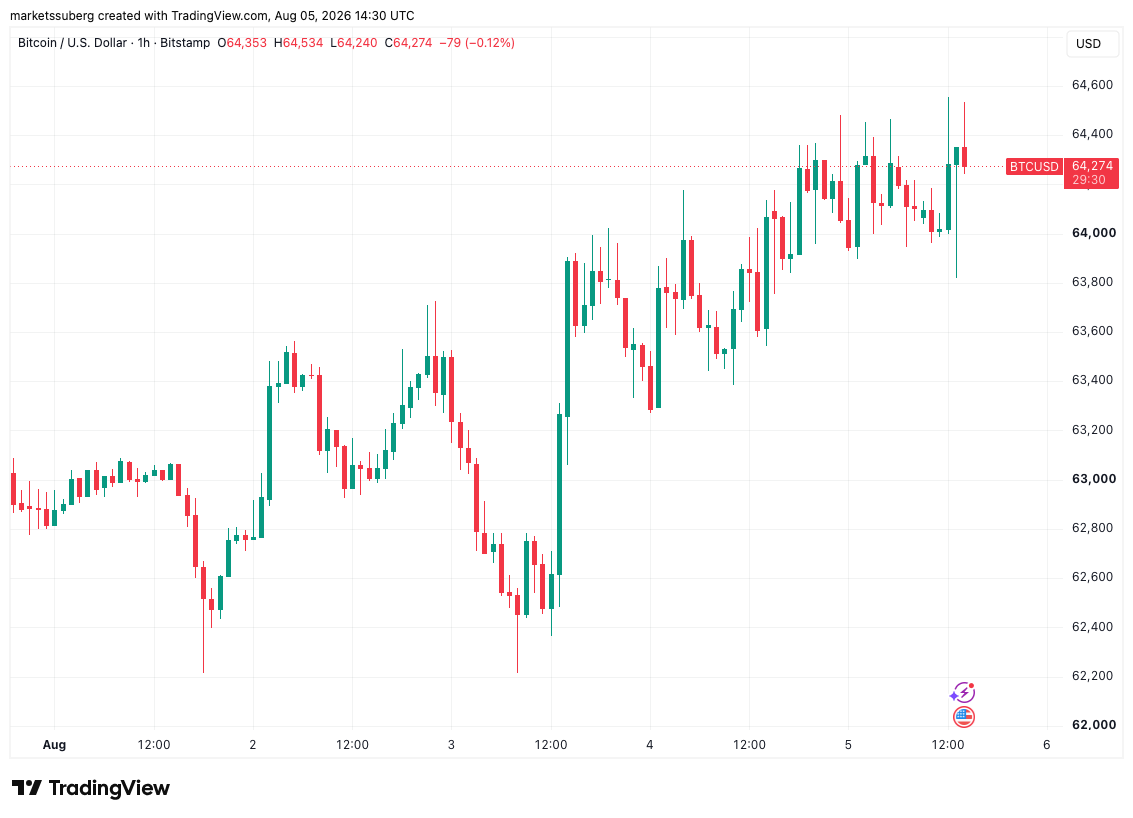
BTC/USD one-hour chart. Source: Cointelegraph/TradingView
Gold gained 2.8% on the day to hit $4,213 per ounce, its highest levels since June 22. Chinese appetite spurred the upside, with Bloomberg reporting 14 consecutive days of inflows for domestic gold-backed exchange-traded funds (ETFs).
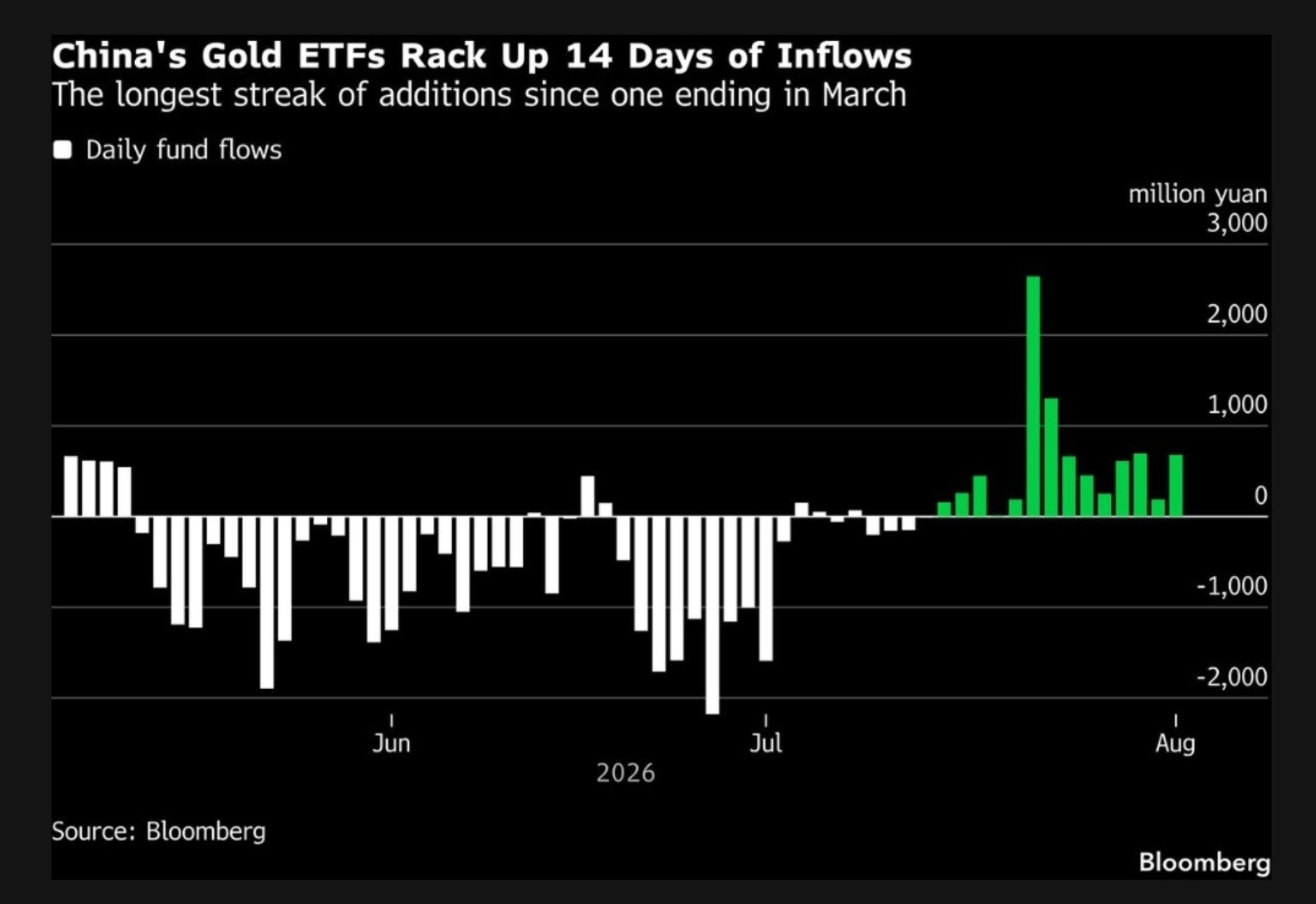
China gold ETF inflows data. Source: Bloomberg
These products saw their worst month of outflows on record in June per data from the World Gold Council. The year-to-date inflows to Chinese ETFs fell to 40 billion yuan ($5.6 billion). However, this is still the second-best H1 performance on record.
“Demand for gold ETFs stayed robust amid growing geopolitical and economic uncertainties, while the PBoC’s non-stop gold purchases continued to provide a supportive backdrop for sentiment. Institutional investor participation in Chinese gold ETFs has also risen, supporting demand for these products,” it commented, referencing China’s central bank gold purchases of 82 tonnes over the 20 months through June.
Elsewhere, US stocks were toggling between red and green while the S&P 500 index (SPX) touched a record high above 7,793 before pulling back at last look in early afternoon trading.
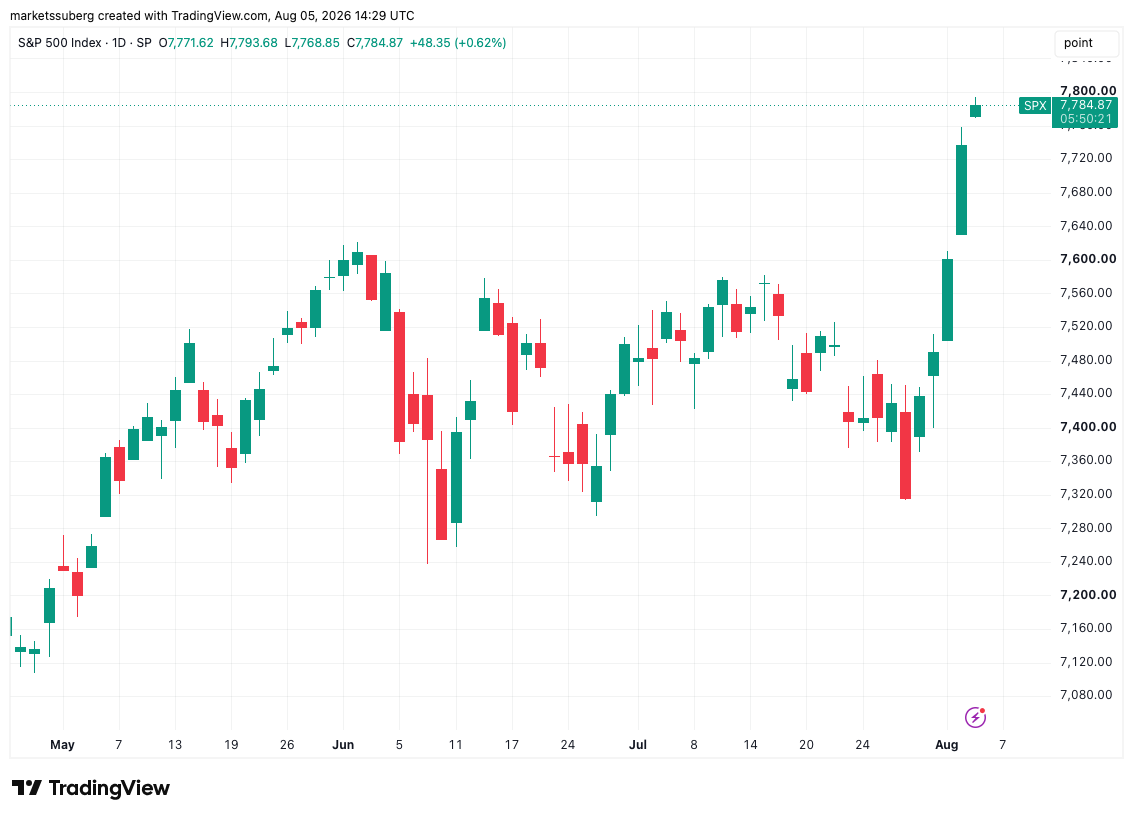
S&P 500 one-day chart. Source: Cointelegraph/TradingView
Bloomberg ETF analyst Eric Balchunas noted that 66% of S&P 500 stocks were now above their 50-day moving average, with 57% beating the index’s standard benchmark tracker.
Bitcoin lacks impetus for recovery, analysis shows
As on the previous day, Bitcoin failed to keep up with the broader risk-asset optimism seen in equities.
Related: Bitcoin price-metric basket sees longest capitulation since FTX blow-up: Glassnode
$64,000 remains a focus on low time frames, and market participants retained prior assumptions about the future of the current bear market.
“As long as the orange support here produces weaker rallies, price will keep forming Lower Highs to produce an eventual breakdown deeper into the $58000-$66000 Range (blue-blue),” trader and analyst Rekt Capital told X followers in comments on the weekly BTC/USD chart.
In research published on Tuesday, onchain analytics platform CryptoQuant highlighted three prerequisites for a durable BTC price rebound to emerge. In addition to sustained inflows to the US spot Bitcoin ETFs, the market needed US bond yields to cool, along with the absence of expected interest-rate hikes by the Federal Reserve.
The Coinbase Premium — the difference in price between Coinbase’s and Binance’s BTC/USDT pairs — also needed to return to positive territory, CryptoQuant wrote, reiterating analysis from June. As Cointelegraph reported recently, the metric has been negative for nearly 80 days.


Federal prosecutors have indicted Taj Tarsha, founder of the NFT startup Few and Far. They accuse him of stealing more than $10 million raised to build a decentralized marketplace.
The US Attorney’s Office for the Southern District of New York announced the charges on Wednesday. Tarsha, 34, of Miami, faces one count of securities fraud and one of wire fraud.
The Math Behind the $10 Million Raise
Tarsha started raising money in February 2022. He used Simple Agreements for Future Tokens (SAFTs), contracts that let investors pay now for tokens delivered later.
He sold 95 million FAR tokens to at least 67 backers, the indictment says. That works out to roughly 11 cents a token, and close to $150,000 per investor.
Follow us on X to get the latest news as it happens
The pitch carried real credibility. Few and Far ran on NEAR Protocol. The NEAR Foundation announced a grant and partnership in September 2022.
Tarsha owned every share of the company. Prosecutors say the money began leaving almost at once, moving to an online casino and speculative crypto trades.
The raise landed at the top of the collectibles boom. The NFT market cap slid toward record lows since then, and venues such as Gemini’s Nifty Gateway closed.
What the Audit Found
An audit in June 2023 caught the missing money. By then, prosecutors say, Tarsha had paid himself nearly $1 million through two hidden bonuses.
He hid those from investors and a co-founder. He also drew a salary he privately called unreasonable, given what he described as the company’s “zero revenue.”
Tarsha then told investors the bonuses matched preset presale targets. He said every remaining dollar was still needed. Both claims were false, prosecutors allege.
Nearly all staff were gone by then. One contractor stayed on, told to produce work that only looked like development.
The spending ran for 11 more months after the audit. It covered crypto buys, a Miami condominium loan, interior design work, and his DJ hobby.
FAR finally launched in May 2024. That was 27 months after the first investor paid in. The token arrived worthless and stopped trading soon after.
The Few and Far website is still online today, still advertising FAR as live on mainnet.
“As alleged, Taj Tarsha raised millions of dollars from investors by promising that their investments would be used to build a marketplace for non-fungible tokens, but he instead breached their trust by stealing those funds for his own personal benefit,” Deputy US Attorney Sean S. Buckley said that in a statement. The FBI’s New York office investigated.
Follow us on X to get the latest news as it happens
Each count carries up to 20 years. The case sits with US District Judge Lewis A. Kaplan, who in April rejected Bankman-Fried’s retrial bid.
Kaplan sentenced the FTX founder to 25 years in March 2024 for stealing over $8 billion. Tarsha is accused of taking about one eight-hundredth of that sum.
The charges are allegations, and Tarsha is presumed innocent unless convicted. Prosecutors must now tie each purchase back to an investor deposit.
The post NFT Founder Charged With Fraud Over $10 Million Token Sale, DOJ Says appeared first on BeInCrypto.


Three Citadel funds posted July gains after the firm bought a discounted portfolio of artificial intelligence stocks from Situational Awareness, the collapsed hedge fund run by former OpenAI researcher Leopold Aschenbrenner.
Ken Griffin’s flagship Wellington fund rose 5.9% for the month. Almost all of that gain arrived after the purchase.
Citadel Funds Made Half a Year’s Gain From One Deal
Wellington was up just 0.45% in July before the deal, Bloomberg reported. It closed the month at 5.9%.
That gap is the story. The fund did almost nothing for three weeks, then made its year in days.
For scale, Wellington returned 10.2% across all of 2025. July alone delivered more than half of that.
Wellington is now up 12% in 2026. It has already beaten last year’s full result with five months still to run.
The firm’s other two books did better. Citadel Equities gained 14.2% and Tactical Trading added 11.1%, according to figures shared with investors.
Both sit near 27% for the year. In all of 2025 they returned 14.5% and 18.6%.
Rivals moved the other way. Whale Rock’s flagship fund dropped 21.7% in July, erasing roughly half its 2026 gains.
Situational Awareness Had No Choice but to Sell
Situational Awareness peaked near $45 billion in early July. Weeks later it held about $10 billion.
The fund borrowed heavily. Its leverage ran as high as four times its own capital, which magnified every move.
It bet on AI infrastructure and against software. When chip and memory stocks slid, small losses turned large fast.
Its main holdings each fell more than 35% during the month. Goldman Sachs, JPMorgan Chase and Bank of America then demanded more collateral.
The fund could not meet those calls. It sold its whole public stock book, and Citadel took that leveraged equity portfolio at roughly a 10% discount.
The forced selling stopped. The same stocks bounced. Citadel already owned them.
A Playbook Griffin Has Run for 20 Years
None of this is new. In July 2007, Sowood Capital lost half of its $3 billion in under a month. Citadel bought its positions and profited as markets recovered.
A year before that, Amaranth Advisors collapsed on natural gas bets. Its energy book went to Citadel and JPMorgan.
The pattern is consistent. Griffin waits for a seller with no options, then names the price.
Aschenbrenner, 25, had returned 439% through June and more than 1,000% since launching in July 2024. His fund survives on private holdings, including a stake in Anthropic worth about $5 billion.
Citadel has booked the gain but not sold the stocks. The volatility that broke Situational Awareness now sits on its own books.
August earnings from those same AI names will show what the discount was really worth.
The post 3 Citadel Funds Soar After Buying Situational Awareness’s Distressed AI Stocks appeared first on BeInCrypto.
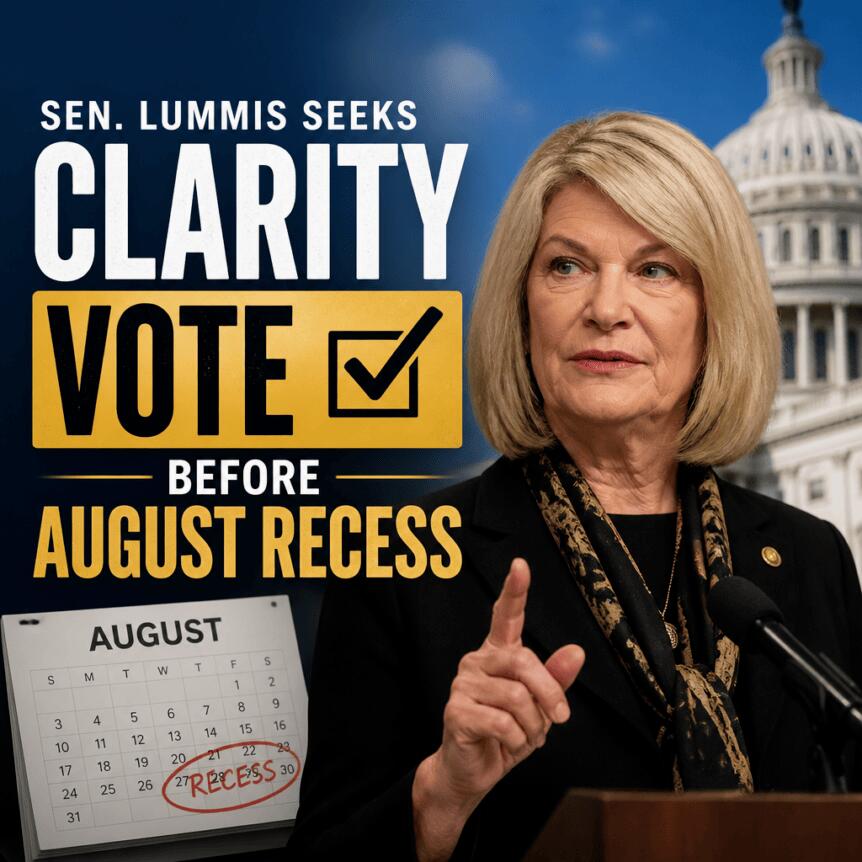
The Senate’s window to pass a comprehensive cryptocurrency market-structure bill is narrowing fast, with the chamber scheduled to enter its August recess within days and lawmakers still not clearly signaling a vote date. The pending legislation is the Digital Asset Market Clarity (CLARITY) Act, a proposal that has already cleared the House and now requires the right combination of timing and votes in the Senate.
Senator Cynthia Lummis said in an X post on Wednesday that she expects the Senate to hold a vote on CLARITY before it breaks for its month-long recess. With that deadline approaching, the central question for traders, platforms, and crypto-linked businesses is whether the bill can overcome a 60-vote procedural hurdle—without further amendments that could broaden political resistance.
Key takeaways
- Sen. Cynthia Lummis said she expects a Senate vote on the CLARITY Act before the August recess begins.
- Senate Democrats’ public schedule showed no vote set for CLARITY as of Wednesday, leaving only a few business days to act.
- The bill would need 60 votes to overcome a filibuster via cloture, making cross-party support essential.
- Opposition remains centered on stronger ethics provisions and banking-related concerns, particularly around how crypto firms relate to bank-style regulation.
- If no vote occurs before recess, consideration is likely to slide into the lead-up to the 2026 midterm elections.
Time pressure as the recess deadline closes
The urgency around CLARITY is practical as well as political. According to the Senate Democrats’ calendar posted for Wednesday, there was no vote scheduled for the legislation at that point, effectively compressing the timeline to a brief stretch of remaining business days before the Senate pauses legislative work for its August recess. Senate Democrats’ published schedule indicated no immediate floor opportunity.
Senate Majority Leader John Thune—who would control the scheduling—has been reported to be planning a vote before Saturday. That plan matters because, without a floor date, the bill cannot move through the procedural stages necessary to reach passage.
After Friday, the Senate is set to be in recess until mid-September, meaning any delays would almost certainly push deliberation into a period dominated by campaigning and political signaling ahead of the 2026 midterm elections.
Why Democrats’ support is still not settled
Even though CLARITY passed in the House in July 2025 by a 294-to-134 vote, the Senate debate has remained contentious. A key fault line is ethics. The opposition cited by the reporting notes that many Democrats want stronger ethics provisions tied to US President Donald Trump’s investments, after he disclosed he earned more than $1.4 billion from investments tied to digital assets in 2025.
Earlier coverage also pointed to ethics as a sticking point during the Senate process; Cointelegraph previously reported that Democrats were seeking additional safeguards that could affect how the bill intersects with political financial disclosures.
That creates a structural challenge for supporters: changes that improve ethics coverage may reduce resistance among Democrats, but they can also trigger objections from other lawmakers who view edits as reopening negotiations or diluting other parts of the bill.
The procedural hurdle and lingering bank-related concerns
CLARITY faces an additional, concrete constraint: it needs 60 votes in the Senate to invoke cloture and shut down a filibuster. In practice, that means the bill requires broad cross-party cooperation rather than a simple majority.
According to a recent report by Politico, at least one Republican senator plans to withhold support until concerns from banks are addressed. Politico reported that Senator Josh Hawley would withhold a favorable vote until changes satisfy bank-related worries.
While lawmakers reportedly reached some compromise with banking groups on aspects of the bill—particularly around stablecoin yield—industry leaders have continued to push for a tougher regulatory alignment. Earlier coverage noted that a stablecoin yield compromise was finalized after negotiations with banking groups (Cointelegraph reported), but further pressure has persisted for provisions that would require crypto companies to face licensing and restrictions comparable to those imposed on banks.
This tension—between closing a political deal and still meeting stricter regulatory expectations—underscores why the vote is far from guaranteed even after substantive negotiations.
What happens if CLARITY slips past recess
If the Senate does not act before the August recess, the legislative momentum for CLARITY could be significantly harder to maintain. The post-recess period runs into the final stretch of pre-election attention, when lawmakers often prioritize campaign dynamics and avoid procedural risks that could prove politically costly.
Just as importantly for the market, delay affects uncertainty around how the US will define and regulate crypto activities at a structural level. For businesses building compliance programs, trading venues planning policy frameworks, and users looking for clearer consumer protections, timing influences investment decisions and operational strategy.
Sen. Lummis framed the push for an early vote as a matter of accountability—she said it is “just time to get people on the record.” Whether senators can be convinced to go on record before recess, and whether the 60-vote threshold can be reached, are the immediate markers readers should watch in the coming days.
With the schedule tight and opposition still anchored in ethics and banking-related concerns, the next development to monitor is whether Majority Leader John Thune successfully schedules a cloture vote before the Senate breaks—and, if not, how the bill’s support and amendments evolve in the run-up to the midterms.
Aave founder Stani Kulechov and ether.fi chief executive Mike Silagadze have come out against the proposal to burn a rising share of Ethereum validator rewards, joining a list of DeFi founders, solo stakers and researchers who have spent two days arguing against it on X and on the Ethereum… Read the full story at The Defiant
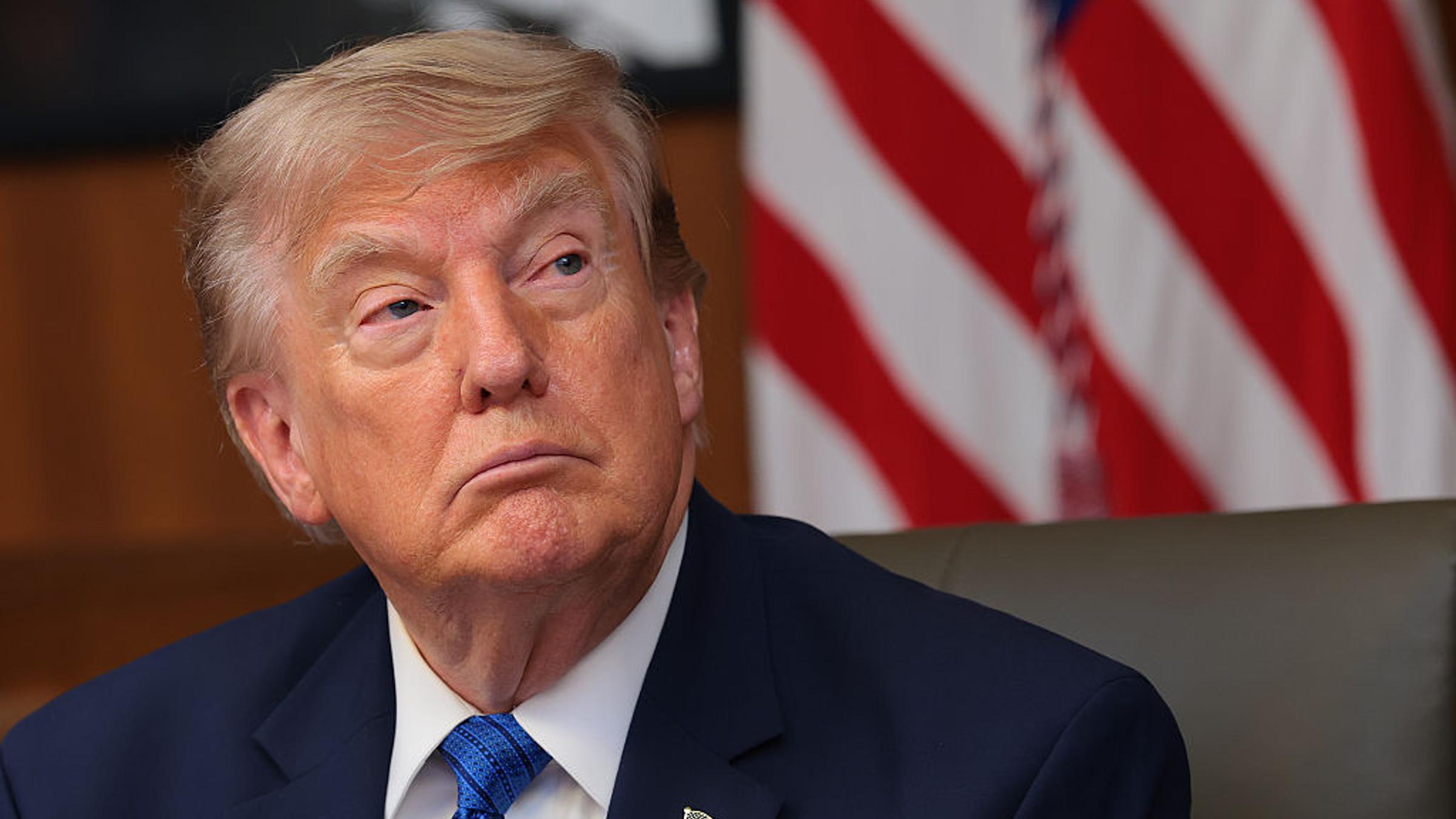
He contends that “it is not … [a] deal that anyone has considered and decided was in the best interests of the United States government; it’s simply in his and his family’s best interest, and he has the power to force the Justice Department to accept that.”
“In that respect,” Super says, “it is unlike anything we’ve seen before.”
Last month, a federal judge ruled that Trump’s lawsuit was an exercise in self-dealing. While she didn’t explicitly overturn the tax audit deal conferred on Trump, the judge said that the deal can’t be claimed to be a product of a legitimate legal process. The President has filed an appeal.
The NYU Tax Law Center also questioned in its Monday statement whether Blanche has the legal authority to end tax audits of Trump, his sons, and the Trump Organization in this litigation.
Blanche “only has authority to resolve tax matters that have been referred to DOJ—here, a taxpayer privacy lawsuit, not issues with tax returns,” the Tax Law Center contended. “Likewise, to the extent that the new documents purport to maintain the May 19, 2026 order’s audit immunity for the Trump plaintiffs, that is also unauthorized.”
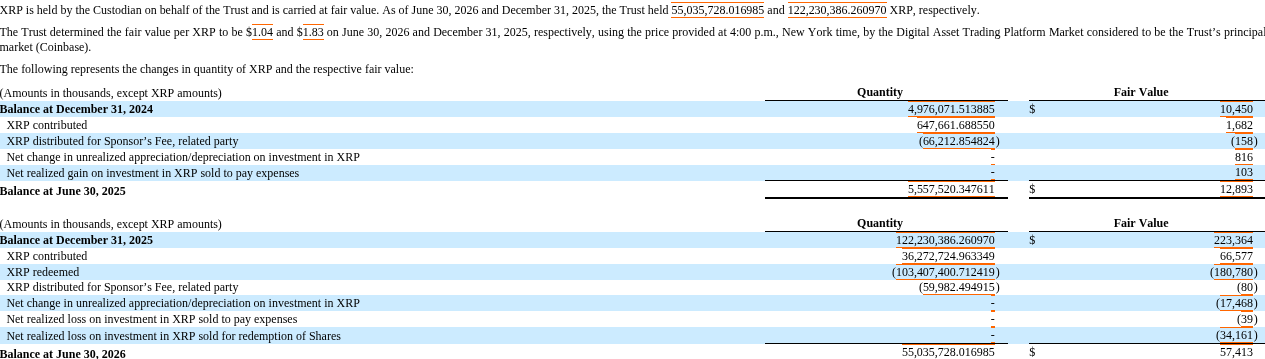
Grayscale XRP Trust ETF disclosed selling more than $180 million in tokens during the first half of 2026, according to a new SEC filing that also revealed significant realized losses.
The numbers show how sharply redemptions and falling prices have eroded trust over six months.

What the SEC Filing Actually Shows
A Form 10-Q is the quarterly report filed with the Securities and Exchange Commission (SEC) detailing financial performance and holdings. Grayscale’s submission covers the period ending June 30.
The headline figure stands out. The trust cashed out $180.78 million worth of XRP, selling 103.41 million tokens to redeem investor assets.
Holdings contracted dramatically as a result. The trust held 122.23 million XRP at the end of 2025, a figure that dropped to 55.04 million by June 30. Net assets fell even faster. The value declined from $223.36 million in December to just $57.41 million at the end of June.
Inflows did arrive. The trust created an additional 36.27 million XRP, contributions valued at $66.58 million. Those additions could not offset the exits. Outflows substantially exceeded inflows, driving the sharp reduction in holdings.
Follow us on X to get the latest news as it happens.

The mechanics involve authorized participants, who handle share creation and redemption based on shares issued or redeemed. Sponsor fees added pressure. Periodic XRP withdrawals covering those fees largely caused the reduction in holdings per share.
The Losses Behind the Redemptions
The losses tell their own story. Grayscale recorded a realized loss of $34.16 million on XRP sold for redemptions, plus $17.47 million in unrealized losses on the remaining position.
A smaller entry appears further down. Sales conducted to offset operating expenses generated an additional realized loss of $39,000.
Share counts reflected the exodus. Outstanding shares dropped from 6.30 million at the end of 2025 to 2.84 million by June 30, with the trust buying back 5.33 million shares while selling just 1.87 million.
Price action explains much of the damage. XRP traded at $1.06 at the time of writing, down roughly 1.35% over 24 hours and still far below its cycle highs, according to BeInCrypto data.

That decline compounds the redemption effect. Fewer tokens backing a cheaper asset produce the steep drop in net asset value in the filing documents.
Leadership activity had already drawn attention. Chief Executive Peter Mintzberg sold part of his personal stake in GXRP earlier this year. Redemptions themselves are routine, however. Authorized participants execute them mechanically, without expressing any directional view on the asset.
The scale still warrants attention. Losing half its holdings and three-quarters of its net assets within six months marks a significant contraction for the product.
Subscribe to our YouTube channel to watch leaders and journalists provide expert insights.
The post Grayscale’s XRP ETF Sold $180 Million in Tokens After Major Loss appeared first on BeInCrypto.


Cointelegraph is committed to providing independent, high-quality journalism across the crypto, blockchain, AI, and fintech industries.
All news, reviews, and analyses are produced with full journalistic independence and integrity. For more details on our standards and processes, please read our Editorial Policy.

Sesame Street Has A New Extreme Weather Episode. Here’s What Climate Experts Think

Star Wars: Visions Presents The Ninth Jedi Review : Coastal House Media

Prime Video Launches HDR10+ Advanced on Samsung TVs and Tries to Fix Motion Smoothing

Renter of Home in Anne Heche Crash Denies Settlement With Son

No Jackpot Winner as $257 Million Prize Rolls Over to $269 Million Monday Draw

Weekend Open Thread: Staud – Corporette.com

What is Financial Modelling? | www.carajaclasses.com | #365daysfinancemastery

New Broadway Cast of Cabaret (1998), Alan Cumming, Cabaret Ensemble (1998) – Money (Official Audio)

Bitcoin: Es ist klar diese BEWEGUNG startet genau JETZT! (BTC Analyse & Sp500 Analyse!)
-

 Fashion5 days ago
Weekend Open Thread: Wit & Wisdom
-

 Politics5 days ago
Meta enters AI-training agreement with far-right ‘propaganda rag’ Newsmax
-

 Politics3 days ago
Zack Polanski: an incitement to murder Nigel Farage?
-

 Crypto World4 days ago
MicroStrategy Post-Earnings CLARITY Act Push Could Add New Catalyst for Its Stock
-

 Crypto World5 days ago
XRP Ledger v3.3.0 brings five institutional features
-

 News Videos6 days ago
Bitcoin Enters the 3rd Stage of the Bear Market
-

 Politics6 days ago
Luke Littler’s dominance sparks GOAT debate
-

 Sports6 days ago
Seema Kaliramna Wins Discus Throw Bronze, Takes India’s CWG Medals Tally To 17
-

 Crypto World5 days ago
New York sues Kalshi over prediction market gambling
-

 Crypto World3 days ago
Crypto PAC spending tops $2M in Michigan House race
-

 Business5 days ago
Trump Announces Hamas Disarmament Agreement as Iran Strikes Kuwait Air Base and US Attacks Pause Overnight
-

 Business3 days ago
DTCR: Deleveraging And A Hedge Fund Collapse Point To A Possible AI Bottom
-

 Tech4 days ago
ESET tracks rise in malicious AI skills and adaptable malware
-
 Crypto World5 days ago
3 Fed Officials Just Explained Their Rate Hike Vote: Is Inflation Winning?
-

 NewsBeat6 days ago
Four people die trying to cross Channel in small boats
-

 Tech5 days ago
Gemini Spark can now use Chrome logins and saved passwords to run errands on your behalf
-
 Tech5 days ago
Building A Reproduction PlayStation Motherboard
-

 Sports4 days ago
France Cricket implodes: letters hidden in a drawer and a board at war
-
Crypto World3 days ago
XRP Ledger urges node upgrade after manifest flood
-

 Crypto World5 days ago
Moneyflip CEO charged in $40K murder-for-hire plot
You must be logged in to post a comment Login