
Business
Trump Announces Hamas Disarmament Agreement as Iran Strikes Kuwait Air Base and US Attacks Pause Overnight

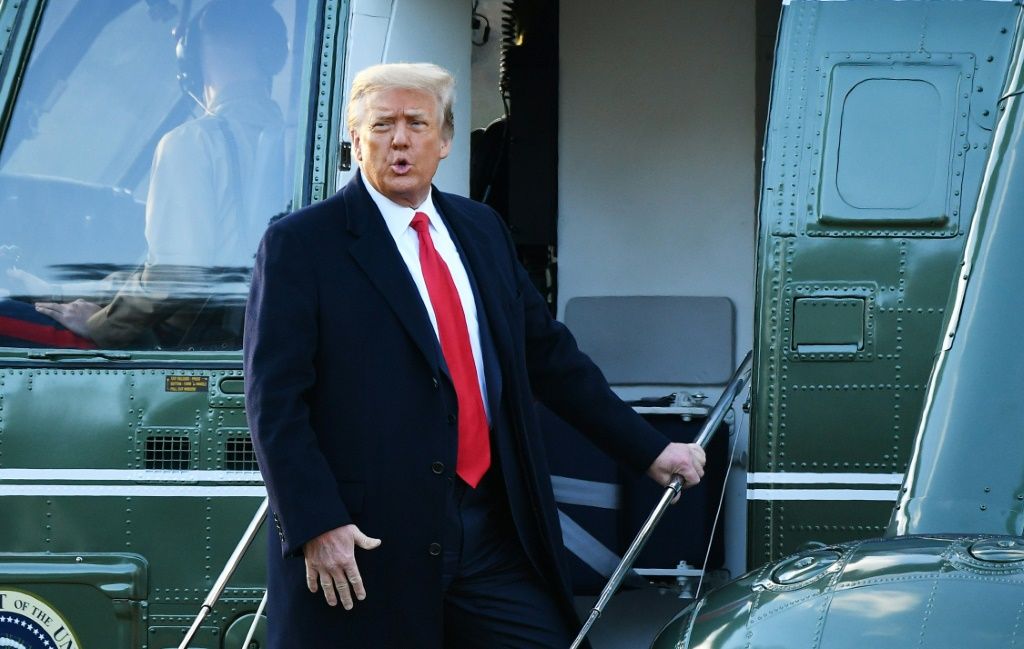
President Donald Trump announced Thursday what he called a historic agreement for Hamas to disarm in Gaza, even as fighting elsewhere in the region continued, with Iranian forces striking a military base in Kuwait early Friday while overnight U.S. strikes on Iranian territory appeared to pause for the first time in days.
Trump described the disarmament agreement in a post on Truth Social, writing that “the Board of Peace reached a HISTORIC agreement for the COMPLETE DISARMAMENT of Hamas and all other armed groups in Gaza,” calling it “a monumental step toward lasting PEACE and SECURITY.” A senior Hamas official, Ghazi Hamad, confirmed to CNN that the group had reached an agreement with the Board of Peace, the body overseeing implementation of a broader U.S.-brokered ceasefire plan, to relinquish its weapons. But Hamad stressed the deal remains conditional on Israel first meeting its own obligations under the agreement. “The agreement is a package,” Hamad said. “We will not begin any weapons-related steps until Israel implements these commitments. Frankly, if Israel does not implement them, we will not proceed.”
According to Hamad, those Israeli obligations include halting attacks on Palestinians in Gaza, withdrawing troops to a designated boundary known as the yellow line, allowing a surge in humanitarian aid, and permitting a Palestinian technocratic committee to take over civilian governance of the strip. Hamad also said Hamas’s heavier weapons would not be decommissioned or destroyed but instead “stored under the National Committee’s supervision,” while lighter weapons belonging to the group’s police force would be handed over first. He expressed skepticism about Israel’s willingness to follow through, citing what he described as extensive violations during an earlier phase of the ceasefire. “Our experience with the first phase was very bad,” Hamad said. “Israel did not abide by the agreement and there were hundreds or thousands of violations. Now it is a challenge for the guarantors — the United States, Qatar, Turkey, and Egypt — to ensure 100% that Israel will fully honor and implement all items of the agreement.”
A separate Gaza militant group, the Palestinian Islamic Jihad Movement, disputed the characterization of the deal entirely, saying early Friday that reports of the agreement were “inaccurate.” Israeli Prime Minister Benjamin Netanyahu had not publicly commented on Trump’s announcement as of Friday morning, though members of his right-wing governing coalition voiced opposition to the agreement.
A senior U.S. official told reporters Thursday night that Trump would be “very, very disappointed” if Israel failed to uphold its end of the arrangement, characterizing the request to Israel as simply following through on a 20-point plan it had already agreed to. The official added that the administration expects further details to be worked out over the coming weeks, with visible progress anticipated “in the next month or two” rather than adherence to a strict timeline. International reaction to the announcement was largely cautious. German Foreign Minister Johann Wadephul called the news “hopeful” while stressing that “real progress” depends on Hamas actually disarming. The National Committee for the Administration of Gaza, the technocratic body authorized by the United Nations to eventually govern the strip, welcomed the announcement as “an important milestone.”
Conditions on the ground in Gaza have shown little improvement despite the ceasefire signed roughly nine months ago. At least 1,214 Palestinians have been killed and 3,977 others injured by Israeli strikes since October 11, according to the Palestinian Ministry of Health.
Elsewhere in the region, the conflict between the United States and Iran showed signs of a possible pause after days of intensifying strikes. Neither Iranian state media nor U.S. Central Command reported any strikes hitting inside Iranian territory overnight into Friday, a marked change from Wednesday night, when the U.S. military launched what it described as a “heavy wave of strikes” against Iran in retaliation for an earlier Iranian attack on American military positions.
Even as U.S. strikes on Iran paused, Iranian forces struck outward. Iran’s military said it targeted Kuwait’s Ahmad al-Jaber Air Base early Friday, releasing footage that appeared to show projectiles launched toward Kuwaiti territory, according to Iranian state broadcaster Press TV. Kuwait’s army said it intercepted the attack, describing it in a statement as “heinous Iranian aggression” that caused “material damage as a result of falling shrapnel, without any human casualties.” Iran said the strike was carried out in response to earlier U.S. attacks on Qeshm Island, where American strikes this week killed a couple and their two-year-old child in their home, according to Iranian state media.
Shipping through the Strait of Hormuz, the critical Persian Gulf waterway through which a significant share of the world’s oil normally flows, has remained severely disrupted amid the fighting. Only five vessels transited the strait on Thursday, according to shipping analytics firm Kpler, after Iran’s Islamic Revolutionary Guard Corps warned the channel would not reopen “should excessive rhetoric, threats by American officials, and their interference with maritime movements in the region continue.” Further south, 47 ships passed through the Bab el-Mandeb Strait on Thursday, even as Iran-backed Houthi rebels in Yemen maintain a separate announced blockade of Saudi shipping through that chokepoint. Saudi Arabia responded Thursday by announcing a new Maritime Defense Alliance backed by 14 other countries aimed at protecting international shipping routes.
Oil prices fell Friday despite the region’s continued volatility, with Brent crude down 1.4% to nearly $88 a barrel and U.S. crude also down 1.4% to $82 a barrel, according to market data. Brent has fallen 9.3% and U.S. crude nearly 8% over the course of the week even as fighting between the U.S. and Iran resumed, with Deutsche Bank analysts noting in a Friday research note that shipping through the Strait of Hormuz “has been disrupted but it hasn’t completely stopped, while the US and Iran currently look to be avoiding a move from low-level escalation to all-out war.”
Trump is scheduled to convene his Cabinet Friday for a meeting at Camp David, the presidential retreat in Maryland, marking the 13th Cabinet meeting of his current term as the administration continues navigating both the Gaza ceasefire implementation and the ongoing conflict with Iran.

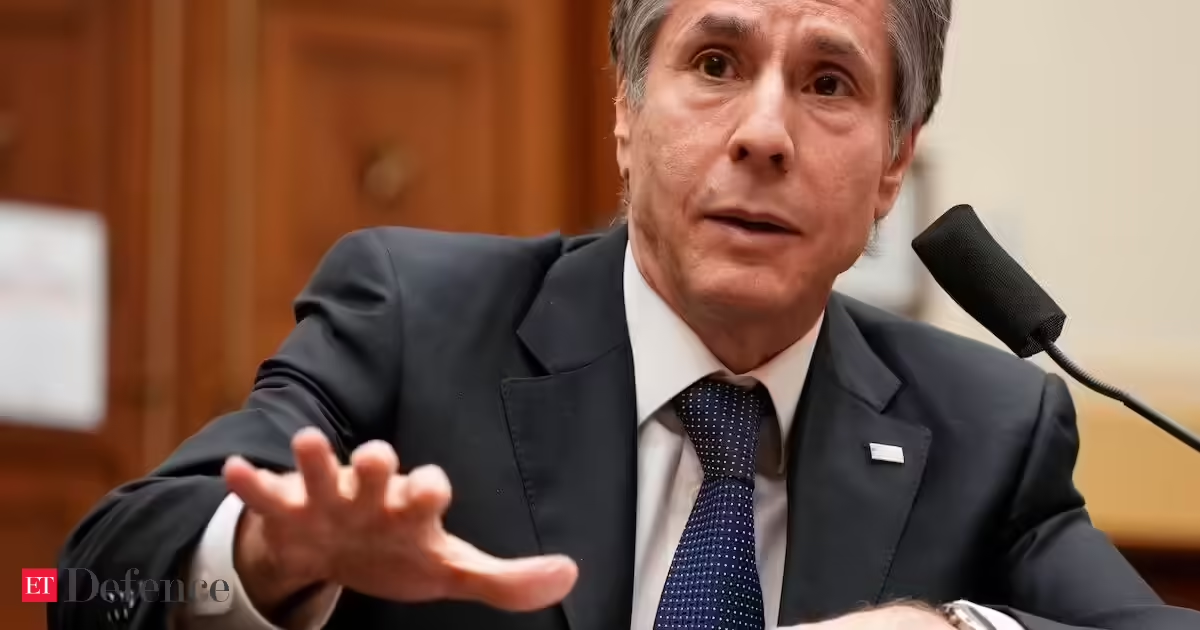
But two senior envoys who attended said there was no direct response from the ministers gathered in Brussels when Blinken said: “We must push back on China together and show strength in unity.”
Their reticence is partly due to an unwillingness to commit to anything until Washington spells out more fully its China policy under President Joe Biden.
But the ministers were also cautious because the EU is looking for a strategic balance in relations with Beijing and Washington that ensures the bloc is not so closely allied with one of the world’s two big powers that it alienates the other.
The EU also hopes to have enough independence from Washington and Beijing to be able on its own to deepen ties with countries in the Indo-Pacific region such as India, Japan and Australia, EU officials said.

In a new departure for the EU, they said, the bloc hopes to agree a plan next month that involves a larger and more assertive security presence in the Indo-Pacific, and more development aid, trade and diplomacy.
“We are charting a third way between Washington and Beijing,” an EU envoy in Asia said.Another EU official in Asia expressed concern that the United States had “a hawkish agenda against China, which is not our agenda”.
‘EUROPE ROADSHOW’
Last month’s videoconference was part of an attempt under Biden to rebuild alliances neglected by former U.S. President Donald Trump, who had an antagonistic relationship with both the EU and China.
The White House has embarked on a “Europe roadshow”, a senior U.S. official said, and is in daily contact with European governments about China’s rising power, in “a sustained effort for … a high degree of coordination and cooperation in a number of areas.”
In a sign that the U.S. push on China is having an impact, Germany plans to send a frigate in August to Asia and across the South China Sea, where Beijing has military outposts on artificial islands, senior government officials told Reuters.
The EU is also set to sanction four Chinese officials and one entity – with travel bans and asset freezes – on March 22 over human rights abuses in China’s Uighur Muslim minority, diplomats said.
In a further sign, when Chinese President Xi Jinping chaired a video summit with central and eastern European countries last month, six EU member states – Bulgaria, Estonia, Latvia, Lithuania, Romania and Slovenia – sent ministers rather than heads of state.
But there is still distrust in Brussels of Washington’s approach to China, even if attitudes in Europe have hardened against China over Beijing’s crackdown in Hong Kong, treatment of Uighur Muslims and the COVID-19 pandemic, first identified in China.
The United States says China is an authoritarian country that has embarked on a military modernisation that threatens the West, and has sought to weaken telecommunications equipment maker Huawei, which it sees as a national security threat.
The U.S.-led NATO military alliance is also beginning to focus on China, but Biden’s administration is still reviewing policy.
“We ask what their China strategy is and they say they still don’t have one,” the EU official in Asia said.
French President Emmanuel Macron highlighted concerns in some EU states last month by saying that uniting against China would create “the highest possible” potential for conflict.
‘NO ALTERNATIVE’
But the EU is hungry for new trade and sees the Indo-Pacific as offering huge potential.
The EU has a trade deal with Japan and is negotiating one with Australia. Diplomats say countries in the Indo-Pacific want the EU to be more active in the region to keep trade free and open, and to ensure they are not left facing a straight choice between Beijing and Washington.
France committed to closer ties with allies such as Australia and India with an Indo-Pacific strategy in 2018, followed by the Netherlands, which also has its own strategy, and Germany’s looser set of “guidelines”.
The EU strategy, if agreed, could involve putting more EU military experts in EU diplomatic missions in Asia, training coast guards and sending more EU military personnel to serve on Australian ships patrolling in the Indian Ocean, diplomats said.
It is unclear how much Germany, which has close business ties to China, will commit to any new strategy. German government officials say the EU cannot afford to alienate Beijing despite labelling China a “systemic rival” in 2019.
But French Foreign Minister Jean-Yves Le Drian will travel to India in April to develop the EU’s Indo-Pacific strategy, and the EU aims to hold a summit with India this year.
France, which has 1.8 million citizens in Pacific overseas territories, has about 4,000 troops in the region, plus navy ships and patrol boats.
“The Indo-Pacific is the cornerstone of Europe’s geopolitical path,” said a French diplomat. “There’s no alternative.”

GM began rolling out Google’s Gemini in eligible model year 2022 and newer Cadillac, Chevrolet, Buick, and GMC vehicles in the U.S. earlier this year with Google Built‑in.
Courtesy GM
DETROIT – General Motors plans to launch its own in-vehicle artificial intelligence system that’s better tailored for its customers later this year.
The new GM AI assistant is expected to be more integrated with the vehicle as well as its capabilities and telematics information than the company’s recently launched Gemini AI assistant from Google, according to Anna Santos, GM director of product management of voice and AI/machine learning.
“Later this year, we’ll be launching a more deeply integrated native AI assistant that combines conversational AI with GM vehicle knowledge and OnStar intelligence to create those capabilities that go beyond what a general purpose assistant can do,” she told CNBC.
GM last year announced the Gemini AI bot would launch this year in millions of 2022 model-year vehicles and newer, followed by a GM AI assist, but did not provide additional details on the technology.
Santos said the new GM assistant, which she declined to disclose a name for, will be able to better “understand the vehicle, the drive and our customers’ needs, and make everyday ownership simpler.”
With Gemini, customers can speak naturally without memorizing commands or repeating context. It also is beginning to offer “live sessions” in which the bot will speak with a like a normal conversation or play games like trivia or 20 questions. It also can control some aspects of GM vehicles, such as temperature and radio controls, but in general operates like it would through a phone.
“This is the beginning of a broader AI journey for us,” Santos said. “There’s a limit to what an AI that’s just sort of sitting at the top level of the vehicle can do.”
The Detroit automaker is working with an unnamed large language model provider on its technology to assist GM and its owners with predictive maintenance, vehicle telemetry and other more auto-focused features.
That also could include commands such as “kids setting” that would tailor music, seats, heating/cooling and door lock controls for children.
“It’s data that’s going to be proprietary to GM, and our goal is to make sure that we’re bringing the right technology forward to enable us to build the deep vehicle expertise that we want to be able to bring to the AI assistant,” Santos said.


Randy Johnson was previously CEO of Dot’s Pretzels.

BP has put its North Sea oil and gas business up for sale, the company announced on Friday, in a move that would end 60 years of production in the region by the group.
The business has five production hubs, two in the central North Sea and three west of Shetland, and employs about 1,100 people. It produced 117,000 barrels of oil equivalent per day in 2025, against BP’s total daily production of 2.3 million barrels.
The decision follows a review of BP’s operations as it seeks to slim down the group. A sale could bring in £2bn to BP. The Financial Times reported last month that the company had been in talks with Ithaca Energy to sell the assets for around that amount, although the talks fell through.
Chief executive Meg O’Neill, who took the helm in April, said earlier this year there was “untapped potential” in the North Sea. Announcing Friday’s decision, she said: “As we focus our portfolio and direct capital to our highest-value opportunities, we believe our North Sea business will be better positioned as part of another company.
“It has world-class people, resilient assets and a proud heritage, and it is precisely these qualities that can attract an owner ready to back its next chapter. We are seeking an outcome that recognizes that value.”
“The UK has been our home for more than 100 years and will continue to play an important role in our future,” O’Neill said. “We’re proud of the jobs we create, the contribution we make to the UK economy, and the work we do to keep energy flowing every day.”
BP employs around 13,960 people in the UK and said its global headquarters will remain in the country. The company said it remained committed to operating the business safely and reliably throughout the sale process.
The announcement comes amid political debate over the future of North Sea drilling. In its 2024 general election manifesto, Labour said it would not issue new licences for drilling but would honour existing ones. Earlier this week, Prime Minister Andy Burnham said he had told US President Donald Trump he would take a “pragmatic approach” to North Sea oil and gas. “There is a resource there. When people are struggling – you can’t ignore that,” Burnham said.
Labour’s deputy leader Lucy Powell has previously told the BBC that Burnham would stick to the party’s manifesto commitments, but that there would be a “change of emphasis” on North Sea oil and gas.
Oil and gas companies have also criticised the Energy Profits Levy, the windfall tax on North Sea producers, which they argue means the region has lost some of its appeal in recent years.
The Scottish government’s energy minister, Stephen Gethins, said the decision would cause uncertainty for workers. “Scotland’s future prosperity – and our contribution to energy security – are reliant on North Sea energy production and, crucially, the skills and experience of that workforce,” he said.
Gethins added that reserved policies, such as the Energy Profits Levy, were driving an accelerated decline of North Sea oil and gas before renewables were fully ready to meet energy needs.
The Scottish Conservatives’ energy spokesman, Andrew Bowie MP, called on the Labour government at Westminster to approve the Jackdaw and Rosebank offshore sites, cancel plans to ban new licences in the North Sea and scrap the Energy Profits Levy.
Reform MSP Duncan Massey said 1,100 workers faced uncertainty with the sale, adding that politicians should not put ideology ahead of jobs and economic reality.
The Scottish Greens said 80 per cent of the oil from the North Sea was shipped overseas and that it was therefore “doing very little to improve our energy security”.

Jamie Young
Jamie Young is Senior Reporter at Business Matters, covering SME finance, employment law and Westminster policy since 2016. He has reported on every Budget and Autumn Statement since 2018, helped make sense of the ‘covid era’ and the bounce-back loan scheme from launch through the fraud investigations, and broke the magazine’s coverage of the 2024 late-payment reforms. He joined Business Matters straight from completing his BA in Administration from Exeter University and is NCTJ-qualified. Reach him at jyoung@cbmeg.co.uk

Earnings call transcript: Medacta holds 2026 outlook as H1 revenue rises 9.7%

Yes. Corporate subscriptions are available for teams and organisations, with discounted rates as user numbers increase. Pricing starts from $1,625 + GST per user.
Get in touch
to discuss the right option for your organisation.
Business News subscriptions are used by executives, investors, consultants and professionals who need to stay informed and make better decisions about the WA market. When you subscribe you’ll get
- Unlimited access to WA’s most trusted business journalism
- Data & Insights — detailed profiles of WA companies, people, projects and deals
- MyBN — a personalised feed based on the companies, people and sectors you follow
- Special publications and industry reports
- Daily and weekly email newsletters
Data & Insights is a research tool built specifically for the WA market. It draws on more than 30 years of Business News reporting, updated regularly to reflect what’s happening now. Use it to:
- Look up detailed profiles of WA companies, including financials, directors and ownership
- Find decision-makers and track their career movements
- Research live and completed projects across WA industries
- Monitor deals, appointments and market activity
- Access industry rankings and league tables
Data & Insights is updated daily by our dedicated research team, which uses the latest announcements, ASX filings and editorial coverage to keep our person, company, list and project records up to date.
Business News welcome all opportunities to make our dataset accurate, complete and current, so if you have an update request, please email the team at
general@businessnews.com.au, and we’d be happy to assist.
MyBN
is part of every subscription. It’s your personalised view of Business News. You can follow the companies, people, sectors and projects that matter to you, and get a news feed and alerts tailored to your interests. You can save articles to read later and retain only what you need.
Only subscribers have full access to all content on the Business News website.
If staying informed about the WA economy is part of your job, and/or you’re looking for networking opportunities in WA, Business News is built for you.
Business News subscribers are:
- Executives and directors tracking competitors, clients and market movements
- Investors and advisers researching companies, deals and industry trends
- Consultants and professionals staying across sectors relevant to their clients
- Business owners looking for leads, context and market intelligence
Most Business News publications cover national or global markets. Business News is focused entirely on Western Australia, which means the journalism, the data and the intelligence are all built around WA companies, people and projects — not adapted from a national feed. Data & Insights, included with every subscription, combines more than 30 years of WA-specific editorial research with live business data. There’s no comparable product for the WA market.
The Morning Digest Email provides a comprehensive wrap of the major headlines, relevant to WA business, and includes with a snapshot of the overnight news covering oil, gold and ASX-listed companies.
The Afternoon Wrap Email focuses on the news covered by our team of journalists during the course of the working day, including exclusive stories and analysis, all of which relates to WA business and the local economy.
The BN Weekender Email contains a wrap of the Business News from the week that was, highlighting the top stories in each area of WA business.
Sign up for free.
We’re happy to help.
Get in touch
and our team will come back to you.

The woman’s case in California state court is the latest to allege workplace bias in Silicon Valley that focuses on cultural prejudices of some tech workers from South Asia. Cisco Systems Inc. is fighting a suit brought by California’s civil rights agency alleging bias against a member of India’s so-called lower castes, known as Dalits.
Anita Nariani Schulze is part of the Sindhi minority — she is Hindu, with ancestry in the Sindh region of what is now Pakistan. Her complaint alleges that her senior and direct managers, both male, consistently excluded her from meetings while inviting her male counterparts, criticized her, micromanaged her work, and deprived her of bonuses, despite positive performance evaluations and significant team contributions.
Schulze claims the managers’ animus reflects sexism, racism, religious bias and discrimination on the basis of national origin. The Sindhi Hindu nationality is “known for its technical acumen” and its gender equality, she says, which “exacerbated the managers’ discriminatory treatment.”
In a tentative ruling on Wednesday, Santa Clara County Superior Court Judge Sunil R. Kulkarni rejected Apple’s request to toss out the suit. While not ruling on the merits of the case, Kulkarni said Schulze had adequately supported her legal claims. Apple had argued her claims weren’t specific enough and were based on stereotypes.
But the judge rejected Schulze’s request to represent a class of female Apple employees who suffered job discrimination over the last four years. He agreed with Apple that she didn’t show a pattern of discrimination that could be applied to a broader group.
It wasn’t clear from the court’s docket whether the judge will hold a hearing Thursday before issuing a final ruling.
Apple didn’t immediately reply to a request for comment.
In the Cisco case, the California Department of Fair Employment and Housing alleged that two Indian employees at the San Jose-based company discriminated against a Dalit co-worker on the basis of caste.
Cisco has denied the claims, insisting it has “zero tolerance for discrimination.” It also said the lawsuit should be tossed out because caste isn’t a protected category under U.S. civil rights law.


California-based La Terra Fina operates a facility in Union City, Calif.
Earnings call transcript: Cameco Q2 2026 misses estimates but shares rise
Glantz from Rusi thinks that as legitimate businesses close, crime moves in. “Rents are down, there’s a lot of empty spaces, so landlords are willing to pretty much take just about anybody,” he says.
Plumb came up with a new name for these areas: the “shuttered front”, a string of constituencies with struggling High Streets that Power to Change think could play a pivotal role in future elections.
Indeed, Reform’s Nigel Farage and Richard Tice were among the first mainstream politicians to regularly talk about visible signs of High Street criminality.
In 2024, Farage said at an event: “You can see High Streets with five, six, seven barber shops in them.” Tice added: “Seriously, how come lots of these new barber shops have got no customers in them? How come they all want cash only? These are fronts for money laundering and drug money, and someone has to talk about it.”
And in a social media video he made last year – one that quickly set parts of the internet alight – Robert Jenrick, who was then the shadow justice minister, listed “weird Turkish barber shops” as a visible sign of decline, alongside bike theft, phone theft, and drugs in town centres. “It’s all chipping away at society,” he said. He later clarified that he was “obviously not talking about all Turkish-style barber shops”. Jenrick defected to Reform earlier this year.
Some politicians argue the language around High Street decline is in danger of becoming racially coded. In January, Miatta Fahnbulleh, then the devolution, faith and communities minister, agreed when asked by the Guardian if she thought the focus on Turkish barbers had racist overtones. “Yes, I do. The fundamentals aren’t to do with the colour of the skin of people running our High Streets. It’s to do with long-term decline and neglect.”
At the time a Reform spokesman was quoted as saying: “This is not a matter of ethnicity.
“The National Crime Agency itself has said many of these establishments are used as fronts for money laundering as well as a whole range of criminality which is why they carried out hundreds of raids on them last year.”
Meanwhile, immigration – the issue that voters consistently highlight as among the most pressing, and that Reform campaigns heavily on – came up in our investigation too. We exposed a Kurdish gang that was enabling migrants to work illegally in mini-marts the length of Britain, by offering to put their own names to official paperwork. Trading Standards told us they find a constant supply of staff from asylum hotels, who are vulnerable to abuse by employers, working in those shops.
Josh Nicholson, a researcher at the Centre for Social Justice think tank, says, “Chaos and flux in Westminster are reflected in our High Streets.
“People feel powerlessness, they look at Westminster and see an inability of politicians to grapple with the basics and that feeds down to a local level.”
This feeling of helplessness came up again and again in our travels.
“Nothing is going to change,” Daniel, in Swansea, told us about the criminality on his High Street, which has become a hub for counterfeit rolling tobacco. He has seen violence on the High Street and an increase in raids on High Street shops. He’s a dual British and Chinese national and was considering moving to Hong Kong.
“It doesn’t make me feel safe. I’ve got kids.”

17 Flowy Wide-Leg Pants That Elongate Your Legs — From $17

JUST IN! TRUMP JUST NUKED THE CLARITY ACT… (MAJOR XRP NEWS)

Field close to Full Sutton on fire – emergency crews called


-

 Fashion7 days ago
Weekend Open Thread: Brooks Brothers
-
 Sports5 days ago
Commonwealth Games boxing: Jadumani Singh seals dominant 5-0 win over Pakistan’s Sumama Rehman to enter quarter-finals | Commonwealth Games News
-

 Business2 days ago
Why Trees Belong on the Risk Register
-

 Tech5 days ago
Intel is reversing course and bringing hyper-threading back to its server chips
-

 Crypto World6 days ago
Ripple bought a bank in pieces. The $4 billion audit
-

 Politics4 days ago
Luke Littler dismantles Gerwyn Price to retain title in Blackpool
-

 Politics3 days ago
The Part of the Electric Transition Nobody Wants to Discuss
-

 News Videos5 days ago
BITCOIN JUST ENTERED THIS CRITICAL ZONE…
-

 Business2 days ago
Major shareholder moves on Canyon
-

 Crypto World5 days ago
XRP Ledger adds $2.6B as RWA inflows rank second
-

 News Videos1 day ago
Bitcoin Enters the 3rd Stage of the Bear Market
-

 Politics5 days ago
Spain sweeps the board at 2026 World Cup with individual awards
-
 Entertainment3 days ago
‘Stargate’ Creator’s New Sci-Fi Series Returns for Season 3 Tomorrow
-

 Entertainment6 days ago
Sara Gilson Killed By Husband After Viral “Pedophile” TikTok Video
-

 Crypto World3 days ago
Kraken Enables Retail Access to Jersey Mike’s IPO via Tokenized Shares
-

 Tech6 days ago
Anthropic launches Claude Opus 5, a cheaper AI model for coding, agents and enterprise workflows
-

 News Videos3 days ago
Claude: Build Financial Dashboards in Minutes (2026)
-

 Tech4 days ago
New macOS Sequoia & Sonoma security updates for older Macs
-

 Politics22 hours ago
Luke Littler’s dominance sparks GOAT debate
-

 Sports14 hours ago
Seema Kaliramna Wins Discus Throw Bronze, Takes India’s CWG Medals Tally To 17
You must be logged in to post a comment Login