Connect with us

Business

Riot Platforms Shares Climb Ahead of Earnings as Bitcoin Miner’s AI Pivot Draws Fresh Attention This Week

Published

on

Buy or Sell AMD Stock in 2026? Analysts Bullish on

Shares of Riot Platforms climbed to $23.30, up 8.05%, on Wednesday as the Castle Rock, Colorado-based bitcoin mining company prepared to report second-quarter earnings, with investors weighing the stock’s exposure to both cryptocurrency markets and an increasingly prominent push into artificial intelligence data center infrastructure.

Riot was scheduled to release its second-quarter results Wednesday, with analysts expecting a 2.8% revenue decline and a loss of 39 cents per share, reflecting broader pressure across the bitcoin mining sector tied to a significant drop in bitcoin mining difficulty and continued volatility in cryptocurrency prices.

Wednesday’s Rally Amid Broader Market Strength

The stock’s advance came amid a broader rally across U.S. equity markets, with major indexes including the Dow Jones Industrial Average and S&P 500 climbing to fresh record highs this week on optimism tied to easing tensions over the Strait of Hormuz and a busy stretch of corporate earnings. That risk-on environment has generally provided a supportive backdrop for higher-volatility names like Riot, whose share price has historically shown a strong correlation with broader shifts in investor risk appetite alongside movements in bitcoin’s own price.

Advertisement

A Bitcoin Miner Betting on AI Infrastructure

Much of the recent bullish narrative surrounding Riot has centered on the company’s strategic pivot from pure bitcoin mining toward broader data center infrastructure that could serve artificial intelligence workloads. Riot currently owns roughly 1.7 gigawatts of power capacity across two large-scale facilities in Texas, assets that analysts have described as rare tier-one infrastructure within the bitcoin mining sector, given the difficulty and cost of securing comparable power capacity for new data center projects.

Activist investor Starboard Value has publicly argued that Riot’s AI infrastructure pivot could be worth as much as $21 billion, a figure that stands in stark contrast to the company’s more modest market capitalization, underscoring what bulls see as a significant valuation gap between the company’s current stock price and its potential long-term value as a power-heavy infrastructure operator. J.P. Morgan has separately forecast as much as 45% upside for Riot shares through 2026, citing expectations that the company could secure a large-scale colocation deal at its Corsicana, Texas site.

Riot chief executive Jason Les has increasingly framed the company’s identity around its infrastructure capabilities rather than mining alone, describing Riot in recent public statements as a Bitcoin-driven industry leader in the development of large-scale data centers, a framing that reflects the company’s broader strategic emphasis on power infrastructure and data center development over its original core mining business.

Advertisement

Analyst Sentiment Turns More Bullish

Wall Street sentiment toward Riot has grown increasingly positive in recent weeks. Citi raised its price target on the stock from $21 to $28 while reiterating a buy rating, and BTIG similarly increased its own target on the shares, both moves reflecting growing analyst confidence in the company’s dual exposure to bitcoin mining economics and the broader AI infrastructure buildout that has dominated market narratives throughout much of 2026.

A History of Volatility

Despite the recent bullish momentum, Riot’s stock has continued to exhibit the kind of pronounced volatility that has long characterized bitcoin mining equities. Shares fell 3.55% in a single session in late July amid mixed options market sentiment, illustrating the degree to which the stock remains sensitive to shifting short-term sentiment even as its longer-term strategic narrative has grown more favorable among covering analysts. The stock has climbed roughly 90% year-to-date, according to recent analysis, reflecting strong market approval of the company’s broader strategic shift toward digital infrastructure even amid the sector’s characteristic volatility.

Advertisement

Funding Growth Through Bitcoin Sales and Equity

Riot has continued to fund its expansion plans in part by selling a portion of its mined bitcoin output alongside periodic equity raises. The company maintained a substantial liquidity position earlier this year, holding more than 15,000 bitcoin, a portion of which was held as collateral, valued at more than $1 billion based on prevailing market prices at the time. The average cost to mine each bitcoin, excluding depreciation, has risen modestly compared with the prior year, driven primarily by an increase in the global network hash rate that has made mining incrementally more competitive across the industry.

What Investors Are Watching

With Riot’s official second-quarter results expected later Wednesday, investors are likely to focus closely on updated commentary regarding the pace of the company’s data center infrastructure buildout, particularly any additional detail on potential colocation agreements at its Corsicana facility, alongside standard bitcoin production and mining cost metrics that have traditionally driven the stock’s performance. The results are expected to offer further clarity on whether Riot’s ongoing transformation from a pure bitcoin miner into a broader power infrastructure operator is beginning to translate into the kind of valuation re-rating that bullish analysts and activist investors have argued the stock deserves.

Advertisement
Continue Reading
Click to comment

You must be logged in to post a comment Login

Leave a Reply

Business

Envela Corp earnings beat by $0.04, revenue fell short of estimates

Published

on


Envela Corp earnings beat by $0.04, revenue fell short of estimates

Continue Reading

Business

Earnings call transcript: KORU Medical beats Q2 2026 estimates, shares fall

Published

on


Earnings call transcript: KORU Medical beats Q2 2026 estimates, shares fall

Continue Reading

Business

7 Best Prescription Safety Glasses Brands for Comfort and Protection

Published

on

7 Best Prescription Safety Glasses Brands for Comfort and Protection

If you need both vision correction and certified eye protection on the job, the best prescription safety glasses brands for most US buyers in 2026 are RX Safety, Wiley X, and Stoggles – each serving a different part of the market.

Regular prescription glasses are not designed as workplace eye protection: they generally lack the impact-rated lenses, side coverage, and certification markings required for hazards such as flying debris, chemical splash, and dust. For the electrician threading conduit overhead, the machinist at the lathe, or the lab tech leaning over a reagent bench, ordinary eyewear may not provide the required protection. Workplace eye injuries remain a recognized risk, particularly when eyewear is not designed for the hazard.

Our top pick is RX Safety for prescription-first shoppers who want a dedicated specialist covering a broad range of ANSI-rated safety eyewear – standard, women’s, Wiley X prescription sunglasses, and non-prescription – in one place. Built around prescription safety eyewear rather than added to a general optical shop or industrial supply catalog, it pairs optical Rx fulfillment with certified protective frames and a dedicated women’s-specific range. For high-impact or tactical environments where ballistic-rated protection is the priority, Wiley X is a strong alternative. For healthcare and lab professionals who want safety eyewear that reads as ordinary everyday glasses, Stoggles is another relevant option.

Below, we rank the 7 best prescription safety glasses brands available to US buyers in 2026, evaluated on frame selection, lens options, comfort features, and ANSI certification.

How We Chose

We didn’t rank these brands on marketing claims alone. We compared each against four consistent criteria that matter to real buyers wearing their glasses eight to twelve hours a day.

Advertisement

Frame And Fit Variety

We looked at how many frame styles each retailer carries, whether wraparound and standard silhouettes are both available, and – critically – whether women’s-specific fits exist. A frame that sits too wide on a smaller face leaves gaps at the temple, and that gap defeats the entire purpose of protective eyewear.

Lens Options And Coatings

Polycarbonate is the baseline for impact resistance in safety lenses, but the useful extras separate the specialists from the order-takers. We assessed availability of anti-fog, anti-scratch, UV, blue-light, polarized, and photochromic (transition) coatings. A lens that fogs on a cold morning or scratches by week two is a lens you’ll stop wearing.

Comfort For All-Day Wear

Weight, adjustable nose pads, temple grip, and how a frame distributes pressure across the face all determine whether a pair gets worn or gets left in a toolbox. We gave credit to brands that engineer for extended wear, not just certification pass rates.

ANSI Z87.1 Certification

The American National Standards Institute (ANSI) is a private nonprofit that coordinates voluntary consensus standards across US industry. Its ANSI/ISEA Z87.1 standard sets performance and marking requirements for occupational and educational eye and face protection. We required every ranked retailer or brand to offer prescription frames marked to an applicable ANSI/ISEA Z87.1 level, and we noted where select products carry additional ratings such as MIL-SPEC ballistic protection. Online prescription fulfillment capability was also weighted, since the whole premise of this guide is buying prescription safety eyewear without a trip to a physical store.

Advertisement

At A Glance

  • RX Safety – best for prescription-first shoppers who need a full-catalog ANSI specialist covering standard, women’s, and Wiley X prescription sunglasses.
  • Wiley X – best for high-impact outdoor and tactical environments, with select models carrying MIL-SPEC ballistic ratings.
  • Stoggles – best for healthcare workers and lab professionals wanting everyday-looking safety eyewear.
  • Marvel Optics – best for budget-conscious buyers who value broad frame choice.
  • SportRx – best for active users and sports-specific prescription safety eyewear.
  • VS Eyewear – best for industrial and occupational procurement buyers needing brand-name safety frames.
  • EyeWeb – best for affordable prescription safety frames with straightforward online ordering.

The 7 Best Prescription Safety Glasses Brands for 2026

Every brand on this list clears the same baseline: each offers prescription lenses in frames rated to ANSI Z87.1. What separates them is specialization, catalog depth, comfort engineering, and – most importantly – who they actually serve. A tactical outdoor crew has different needs than a dental hygienist or a procurement manager outfitting fifty employees. The ranking below reflects that reality, with our top overall recommendation at #1.

#1. RX Safety – Best for Prescription-First Shoppers Needing a Full-Catalog ANSI Specialist

RX Safety earns the top spot because it specializes in prescription safety eyewear across a broad range of categories and worker needs.

Unlike a general optical retailer that treats safety glasses as an afterthought, or an industrial supplier that sells protective eyewear alongside hard hats and gloves, RX Safety is purpose-built for the shopper who needs certified protection and an accurate prescription in the same pair. Its catalog spans standard prescription safety glasses, women’s prescription safety glasses, Wiley X prescription sunglasses, and non-prescription safety glasses – meaning the electrician, the safety-conscious homeowner, and the outdoor worker who wants a tinted Rx pair can all shop the same store.

That breadth is the real differentiator. Some competitors focus more heavily on either optical retail or industrial supply; RX Safety brings prescription fulfillment and a broad safety-frame range together. The women’s-specific category deserves particular mention: fit is a comfort issue, and a dedicated range for smaller face profiles can help close a real gap. For trade and blue-collar workers – electricians, construction crews, manufacturing staff – the standard Rx range handles the daily grind, while the Wiley X prescription sunglasses line helps manage glare on open sites.

Pros:

  • One-stop specialist covering standard, women’s, tinted, and specialty prescription safety eyewear
  • Dedicated women’s-specific range addresses a common fit and comfort gap
  • Carries Wiley X prescription sunglasses with full Rx capability
  • Purpose-built for the niche rather than a generalist with a safety aisle
  • Broad multi-brand frame selection across categories

Cons:

  • Fit must be judged from measurements unless you use the frame-only try-before-you-buy option
  • Custom Rx orders require the lead time typical of any online optical lab
  • Buyers who want a single, tightly curated brand aesthetic may find the multi-brand catalog broader than they need

Who it’s best for: Prescription wearers – especially tradespeople and women underserved by generic frame ranges – who want a single certified destination for standard, tinted, and specialty safety eyewear.

#2. Wiley X – Best for High-Impact Outdoor and Tactical Environments

Wiley X is a strong option when high-impact and ballistic-rated protection are the priority.

Advertisement

The brand offers frames rated to ANSI Z87.1+, and select models also meet MIL-PRF-32432A ballistic requirements. That heritage comes from decades of use in law enforcement, military, and first-responder settings, and it shows in the wraparound construction. Many models provide brow and side coverage that helps shield the eyes from debris arriving at an angle, not just head-on. For construction workers in open environments, contractors, and outdoor crews, that peripheral coverage can be valuable.

Prescription options exist, but this is where the trade-off surfaces. Wiley X fulfills Rx orders through select partner optical labs rather than running a dedicated prescription-first storefront, so the buying process is less streamlined than a specialist retailer. The tactical styling also skews toward sport and field use; these frames don’t blend into a clinical or corporate setting, and the sturdier builds can feel bulky over a full indoor shift.

Pros:

  • Offers high-impact certified safety frames for demanding environments
  • Select models combine ANSI Z87.1+ and MIL-SPEC ballistic ratings
  • Wraparound designs can add side and peripheral coverage
  • Established presence in tactical and outdoor markets
  • Prescription sunglasses line suits outdoor workers and active users

Cons:

  • Prescription fulfillment runs through partner labs, not a dedicated Rx storefront
  • Premium pricing relative to standard safety brands
  • Tactical/sport styling is less suited to office or clinical use
  • Frame bulk can be uncomfortable for all-day indoor wear

Who it’s best for: Law enforcement, military contractors, and outdoor or construction workers who place a high priority on ballistic-rated protection.

#3. Stoggles – Best for Healthcare Workers and Lab Professionals

Stoggles solves a specific problem elegantly: how to wear certified protective eyewear that doesn’t look like protective eyewear.

The frames use side-shield polycarbonate construction designed to pass as ordinary everyday glasses – which matters more than it sounds in clinical and professional settings where appearance and patient interaction count. Anti-fog coating comes standard rather than as a paid add-on, a meaningful advantage for anyone moving between temperature zones or wearing a mask, which fogs conventional lenses relentlessly. A blue-light-blocking lens option rounds things out for screen-heavy roles like lab data entry or clinical charting.

Advertisement

The compromise is range. Stoggles keeps its catalog tight, so frame variety and lens customization fall short of full-catalog specialists, and the aesthetic-first direction means it isn’t built for heavy industrial or outdoor abuse. Per-unit cost also runs higher than budget-focused competitors. Within its lane, though, the lightweight comfort and everyday styling make it genuinely easy to keep the glasses on all shift – which is the whole point.

Pros:

  • Safety eyewear that reads as normal glasses – valuable in clinical settings
  • Anti-fog coating included as standard, not an upcharge
  • Blue-light-blocking option suits screen-heavy work
  • Lightweight and comfortable for extended wear
  • Modern styling reduces the stigma of visible safety glasses

Cons:

  • Frame variety is narrower than full-catalog specialists
  • Skews to healthcare/lab use; weak for heavy industrial or outdoor jobs
  • Fewer lens customization options than broader retailers
  • Higher per-unit cost than budget brands

Who it’s best for: Nurses, lab technicians, dental professionals, and anyone in a clinical or clean-room environment who wants protection that doesn’t announce itself.

#4. Marvel Optics – Best for Budget-Conscious Buyers Needing Wide Frame Variety

Marvel Optics offers broad selection at accessible prices – a practical pick for buyers who know what they want and prefer to browse.

The catalog runs deep and wide, spanning wraparound industrial frames through semi-rimless styles, all rated to ANSI Z87.1 and available with online prescription upload. For a small business or safety manager outfitting several employees on a tight budget, the combination of variety and entry-level pricing is hard to argue with. There’s a frame here for nearly every face and workplace.

The experience, though, is catalog-driven rather than specialist-curated. You get volume and choice, but less hand-holding than in a consultation-led buying process. Women’s-specific fit options are less prominent, and the large catalog can take longer to narrow down. This is a browse-and-buy store, not a consultative one.

Advertisement

Pros:

  • Broad frame selection at accessible price points
  • Simple online ordering with prescription upload
  • ANSI Z87.1 certification across the catalog
  • Strong choice for outfitting multiple workers on a budget
  • Broad styling suits diverse workplace environments

Cons:

  • Catalog-driven experience with limited editorial buyer guidance
  • Support and lens customization depth trail dedicated specialists
  • Women’s-specific fits are less prominent
  • A large catalog can take longer to narrow down

Who it’s best for: Budget-minded individuals and safety managers buying in volume who are comfortable navigating a large catalog independently.

#5. SportRx – Best for Active Users and Sports-Specific Prescription Safety Eyewear

SportRx brings prescription optical expertise to performance eyewear, making it a useful option for workers who move between the job site and the trail.

The retailer specializes in sport and performance prescription frames, with staff consultation on lens fit for specific activities. Its ANSI-rated selection is curated rather than bulk, and lens customization includes polarized, photochromic transition, and tinted options that adapt to changing outdoor light.

The obvious caveat is scope. SportRx orients toward sport and recreation, so its ANSI-rated safety frame selection is smaller than a dedicated safety specialist’s, and pricing leans premium. It’s a weak match for clinical or indoor-only environments. But for landscapers, foresters, and open-site construction crews who also cycle, ski, or fish, sport-performance optics inside a certified frame may be a useful combination.

Pros:

  • Deep sport and performance optics expertise with staff consultation
  • Curated ANSI-rated selection
  • Suits outdoor workers as well as recreational users
  • Strong lens customization including polarized and photochromic transitions

Cons:

  • Focus skews sport/recreation over heavy industrial safety
  • Smaller ANSI-rated frame range than dedicated specialists
  • Pricing tends toward premium
  • Less suited to clinical or indoor-only settings

Who it’s best for: Active outdoor workers and recreational users who want sport-grade performance lenses in an ANSI-certified safety frame.

#6. VS Eyewear – Best for Industrial and Occupational Procurement Buyers

VS Eyewear is built for buyers who need recognized safety frames and prescription options for a workplace program – a procurement tool more than a consumer shop.

Advertisement

Its strength is the roster: a broad lineup of recognized safety brands including Wiley X, Pentax, and ArmouRx, with prescription customization varying by frame. For a procurement officer or safety manager comparing certified brands and lens options, that depth of recognized names is the point. The catalog serves industrial, manufacturing, and occupational buyers well.

The trade-off is the experience. The interface is utilitarian rather than consumer-friendly, and it assumes a buyer who already knows the brands and specs they need – not a first-timer looking for a guided, style-led experience. The catalog presentation is more B2B-focused than consumer-oriented.

Pros:

  • Access to multiple recognized safety brands in one place
  • Deep catalog suited to industrial and occupational buyers
  • Prescription customization available across multiple frame types
  • Recognized brand options simplify procurement comparisons

Cons:

  • Utilitarian interface, not built for casual consumers
  • Less intuitive for buyers unfamiliar with safety brand names
  • The presentation is more specification-led than style-led
  • Less consumer-facing guidance than some retail-focused competitors

Who it’s best for: Safety managers, procurement officers, and employers managing workplace eyewear purchasing across recognized certified brands.

#7. EyeWeb – Best for Affordable Prescription Safety Frames with Straightforward Ordering

EyeWeb rounds out the list as the no-frills value option for buyers who know their prescription and just want a compliant pair without fuss.

The retailer offers competitive pricing on ANSI Z87.1-rated prescription safety frames, with a straightforward online prescription submission process and an adequate range of wraparound and standard styles. For an individual worker replacing a pair, or a budget-constrained buyer who doesn’t need extensive customization, the simplicity is the appeal – order, submit your Rx, and go.

Advertisement

What you give up is depth. The catalog and range of lens coatings and customizations are less extensive than at larger specialists, and the shopping experience is more price-led than consultative. It’s a functional, affordable choice rather than a comprehensive one – and for the right buyer, that’s enough.

Pros:

  • Among the more affordable ANSI-rated prescription safety options
  • Simple online ordering for buyers who know their prescription
  • Adequate range of wraparound and standard styles
  • ANSI Z87.1-rated options at budget-focused price points

Cons:

  • Limited catalog depth and frame variety
  • Fewer clearly separated fit-specific categories
  • Fewer lens coating and customization choices
  • Less consultative guidance than specialist-led retailers

Who it’s best for: Individual workers and budget-constrained buyers who want a certified pair with straightforward online ordering and do not need extensive customization.

Frequently Asked Questions

What’s the Difference Between Prescription Safety Glasses and Regular Prescription Glasses?

Regular prescription glasses correct your vision but are not designed or marked as occupational eye protection. Prescription safety glasses combine optical correction with impact-resistant lenses and frames tested to an applicable ANSI/ISEA Z87.1 level. On a worksite, ordinary glasses should not substitute for eyewear selected for the relevant hazard.

What Does ANSI Z87.1 Mean, and Which Brands Meet It?

ANSI/ISEA Z87.1 is the US standard for occupational and educational eye and face protection. A Z87 marking indicates that the product has been tested to an applicable level under the standard; additional markings show the type of protection. Every brand in this guide offers prescription frames carrying an ANSI Z87.1 marking, while select Wiley X models also carry MIL-SPEC ballistic ratings. OSHA’s eye and face protection standard references recognized consensus standards for compliance, but OSHA does not certify individual eyewear products.

Which Brand Is Best for Women’s Prescription Safety Glasses?

For women’s-specific fits, RX Safety leads the list thanks to a dedicated women’s prescription safety glasses category designed for smaller face profiles – a useful option when standard unisex frames fit too wide. Stoggles is a secondary option in clinical settings because its everyday-glasses styling suits a range of face sizes. Budget- and procurement-focused sellers like Marvel Optics, VS Eyewear, and EyeWeb place less emphasis on dedicated women’s-specific categories, so fit-conscious buyers may prefer the specialists.

Advertisement

Which Lens Coatings Are Worth Paying For on Safety Eyewear?

Anti-fog is often one of the most useful coatings for workers dealing with temperature changes or masks – fogged lenses may be pushed up or taken off, which defeats the purpose. Anti-scratch protects your investment on dusty or abrasive sites, while UV protection matters for anyone working outdoors. If you shift between indoor and outdoor light, photochromic transition safety glasses adjust automatically, and both SportRx and RX Safety offer strong lens customization here. Screen-heavy roles may also benefit from a blue-light option, which Stoggles includes as a standard choice.

The Verdict by Scenario

No single brand wins for everyone, so match the pick to the job. If you’re a prescription wearer who wants one destination for standard, women’s, tinted, and specialty frames, RX Safety is the overall top pick, combining optical Rx fulfillment with a broad ANSI-rated catalog. If your work is high-impact, tactical, or outdoor and ballistic protection is a priority, Wiley X is a relevant alternative. Healthcare and lab professionals who want protection that looks like everyday glasses may prefer Stoggles.

From there, the choices narrow cleanly. Budget buyers and safety managers outfitting a crew on volume will do well with Marvel Optics; active users bridging job site and recreation should talk to SportRx; procurement officers comparing recognized certified brands may consider VS Eyewear; and anyone who needs an affordable, compliant pair with straightforward online ordering can turn to EyeWeb. Whichever route you take, confirm the ANSI Z87.1 markings appropriate to the hazard, get your prescription measured accurately, and prioritize fit and the coatings relevant to your work. Protecting your vision starts with eyewear that was built to do exactly that.

Advertisement

Continue Reading

Business

Spider-Man joins list of 2026 billion-dollar movies

Published

on

Spider-Man joins list of 2026 billion-dollar movies

“The Super Mario Galaxy Movie,” “Toy Story 5” and “Spider-Man Brand New Day.”

Disney | Universal Pictures | Sony

Billion-dollar films are back in Hollywood.

Advertisement

The theatrical industry welcomed its fourth billion-dollar film of 2026 this week as Sony and Marvel’s “Spider-Man: Brand New Day” surpassed the coveted benchmark. It joins the three-comma ranks alongside Universal’s “The Super Mario Galaxy Movie,” Lionsgate’s “Michael” and Disney and Pixar’s “Toy Story 5.” The group should soon be joined by Universal’s “The Odyssey,” which has tallied $912 million globally through Sunday and is set to play in theaters through at least mid-September.

Box office analysts expect Warner Bros.‘ “Dune: Part Three” and Disney and Marvel’s “Avengers: Doomsday” to also reach the billion-dollar figure later this year.

As it stands, this is the highest number of billion-dollar film releases in a single year since the Covid pandemic shuttered movie theaters and halted production six years ago.

In 2019, nine films pulled in at least $1 billion at the box office. Seven of those films were Disney titles. Its co-production of “Spider-Man: Far From Home,” in partnership with Sony, and Warner Bros.’ “Joker” completed the list.

Advertisement

On Wednesday, Disney touted the success of “Toy Story 5” as helping to propel its studios division during its most recent quarter even as the live-action “Moana” and “Star Wars: The Mandalorian and Grogu” films fell short of expectations.

Of course, modern blockbusters are benefitting more from higher-priced tickets both for standard screenings and premium large format showings. Imax, Dolby Cinemas, ScreenX and 4DX have all reported record ticket sales because of films like “The Odyssey” and “Spider-Man: Brand New Day.”

In 2025, more than 16% of tickets sold for domestic showtimes were for these PLFs, according to data from EntTelligence. That’s up from 15% in 2024 and 13.8% in 2023. These premium tickets can cost upwards of $25 or more in places like New York City or Los Angeles, but average around $18.22 a piece nationally, EntTelligence reports. That’s up 8% from 2023.

Standard movie tickets, too, are getting pricier. In 2019, the average movie ticket cost a little more than $9, according to data from Cinema United. Now, the average is closer to $13.50, EntTelligence reports.

Advertisement

Still, the hauls are a promising signal for a film industry that’s still chasing 2019 levels, even with the benefit of higher prices.

The domestic annual box office is currently on pace to cross $10 billion for the first time in seven years. Through Monday, the year-to-date haul stands at $6.2 billion, down 11% from 2019.

“The billion-dollar club has always been treated as a special box office milestone,” said Shawn Robbins, director of analytics at Fandango and founder of Box Office Theory. “It’s also one that’s become more challenging to achieve since the pandemic.”

“The sheer number of films crossing this threshold can be a good indicator of a banner year,” he added.

Advertisement

Unlike 2019, the 2026 class of billion-dollar films are spread across multiple studios and include not just sequels and franchise films but a musical biopic and a cinematic retelling of a 2,700-year-old epic poem.

The broad success signals to Hollywood it can take more risks on genre films and spreads the wealth among more players.

The resurgence in the number of billion-dollar films has been fueled in part by younger demographics that Hollywood and Wall Street previously worried would abandon cinemas in favor of their phones.

“The demise of the theatrical experience has once again been greatly exaggerated,” said Mike Polydoros, CEO at cinema marketing firm PaperAirplane Media. “Driving much of this resurgence is the growing influence of Gen Z, which accounted for 49% of ‘Spider-Man: Brand New Day’s’ opening-day audience and 30% of ‘The Odyssey’s’ opening-day crowd.”

Advertisement
Here’s how Gen Z is shaping the box office

Generation Z, which ranges from around 14 to 29 years old, is one of the most active moviegoing demographics and attends more films per year than some of their older peers. It also accounted for nearly 40% of all movie audiences in North America in 2025, Rentrak reported.

And the return to movie theaters isn’t just happening domestically, but internationally, too. The foreign market is vitally important to Hollywood.

Among the the four films that have generated at least $1 billion globally this year, more than 50% of box office receipts have come from outside the U.S. and Canada.

“Notably, there has never been a film released domestically that has ever earned over a billion dollars in North America alone,” Paul Dergarabedian, head of marketplace trends for Rentrak, told CNBC. “Only ‘Star Wars: The Force Awakens’ has even come close, with $936.7 million.”

Disclosure: Versant is the parent company of CNBC and Fandango.

Advertisement
Choose CNBC as your preferred source on Google and never miss a moment from the most trusted name in business news.
Continue Reading

Business

Scores of apprentices and graduates to join British Steel to build next generation of steelmakers

Published

on

Business Live

The business is taking on 70 new starters across its sites in Teesside, Skinningrove, Sheffield and Scunthorpe,

Rail being manufactured at British Steel

Rail being manufactured at British Steel.(Image: British Steel)

Scores of new apprentice and graduate roles have been created by British Steel as the company continues to build the next generation of steelmakers. The business is taking on 70 new starters across its sites in Teesside, Skinningrove, Sheffield and Scunthorpe, amid moves to secure the long term future of British Steel.

The announcement comes weeks after British Steel was brought under state ownership, after the steelmaker’s nationalisation passed a public interest test. The steelmaker appointed a revamped leadership team tasked with “stabilising the business and developing a commercially sustainable” future, the business department confirmed in mid-July.

The Scunthorpe site will see 36 electrical, mechanical, and structural apprentices launch their careers with the business in September. They will be joined by 17 apprentices in similar roles for British Steel’s Northern mills in Teesside and Skinningrove, and one at the company’s R&D centre in Sheffield.

At the same time, 16 graduates will join British Steel – the first to do so since 2022 following this year’s relaunch of the company’s graduate recruitment programme.

Advertisement

Minister for Industry, Blair McDougall, said: “Reindustrialising Britain starts with steel. These new roles will help build the next generation of skilled workers we need to secure the long-term future of British Steel and strengthen one of our foundation industries.

“We acted to safeguard British Steel because steelmaking is vital to our economy, our security and our industrial future. Today’s announcement is a sign of that brighter future, creating new opportunities for young people in communities across the UK to build careers at the heart of Britain’s industrial renewal.”

British Steel received more than 1,000 applications when the roles were advertised earlier this year. The successful candidates have come through a strict vetting process including a series of assessment centres.

British Steel HR director Nick Ashton said: “The quality of applications for our apprentice and graduate roles was extremely high, so we’re excited by the prospect of inviting so many talented new people into the business. Together they are an important part of our future as they are our next generation of engineers, technical specialists, and functional experts, with the opportunity to build long-term and fulfilling careers with British Steel.

Advertisement

“Together, with our highly skilled colleagues, they will help manufacture the steel Britain needs now and for decades to come and we look forward to welcoming them into the company at such an exciting time for British Steel.”

Earlier this year, British Steel reopened its Scunthorpe apprentice training centre as part of its ongoing commitment to skills development. Training for the Scunthorpe apprentices will be carried out by tutors from British Steel’s training provider, CATCH, alongside experts within the business.

The first year will be predominantly classroom-based before they spend three years getting hands-on experience on the Scunthorpe site.

Apprentices for Teesside and Skinningrove will start their studies with TTE in partnership with Middlesbrough College Group before going on-site.

Advertisement

Graduates will join in a series of roles across the business including Engineering (Electrical / Mechanical / Chemical), Manufacturing, Technical, Commercial, Finance, and IT.

When the Government announced nationalisation in July, British Steel interim chief executive Allan Bell described the move as a “momentous day” for the company.

He added: “Much more than that, it is an historic day for Britain and UK manufacturing, one which safeguards our future and strengthens the national security and infrastructure.”

Advertisement
Continue Reading

Business

McDonald’s elevates COO to president

Published

on

McDonald’s elevates COO to president

Skye Anderson will oversee nearly 14,000 restaurants as company advances McDonald’s > Next strategy.

Continue Reading

Business

Powerball jackpot reaches $786M: What to do if you win

Published

on

Powerball jackpot reaches $786M: What to do if you win

The Powerball jackpot has ballooned to an estimated $786 million, putting one of the game’s biggest prizes ever up for grabs Wednesday night.

The jackpot now ranks as the ninth-largest in Powerball history. The winner who takes the cash option would receive an estimated $341.6 million before taxes. The alternative is an annuity paid through 30 graduated payments over 29 years. 

Advertisement

“The last time we saw a Powerball jackpot of this size was on Christmas Eve, with a $1.817 billion prize on the line,” Stephen Durrell, the Powerball product group chair and Kansas Lottery executive director, said in a statement. 

The jackpot has been growing since May 2, when tickets sold in Florida and Texas split a $20 million prize. There have now been 40 straight drawings without a jackpot winner.

ARKANSAS WINNER CLAIMS $1.8B POWERBALL JACKPOT, CHOOSES CASH OPTION

clerk displays Powerball lottery tickets

The jackpot now ranks as the ninth-largest in Powerball history. (Brandon Bell/Getty Images)

For the person holding the winning ticket, the first move should be protecting privacy, according to Jeffery Degner, a research fellow in economics and economic freedom at the American Institute for Economic Research.

Advertisement

“If you live in a state that allows you to remain anonymous, remain anonymous,” Degner told FOX Business. “Keep your mouth shut.”

Degner warned that making a massive windfall public can quickly attract long-lost friends, relatives and strangers looking for money.

“When askers do eventually come, you should develop the habit of saying ‘no’ early and often,” he said.

The winner should also consider quickly hiring a tax attorney and certified public accountant because taxes can take a big bite out of the prize, according to Degner. 

Advertisement

“Don’t be surprised by the taxes because the lottery is going to withhold about 24% on the initial payment,” he said, noting that more could be due when taxes are filed.

GEORGIA RESIDENT IDENTIFIED AS WINNER OF $983M MEGA MILLIONS JACKPOT, LARGEST EVER IN STATE

Customers wait in line to purchase lottery tickets

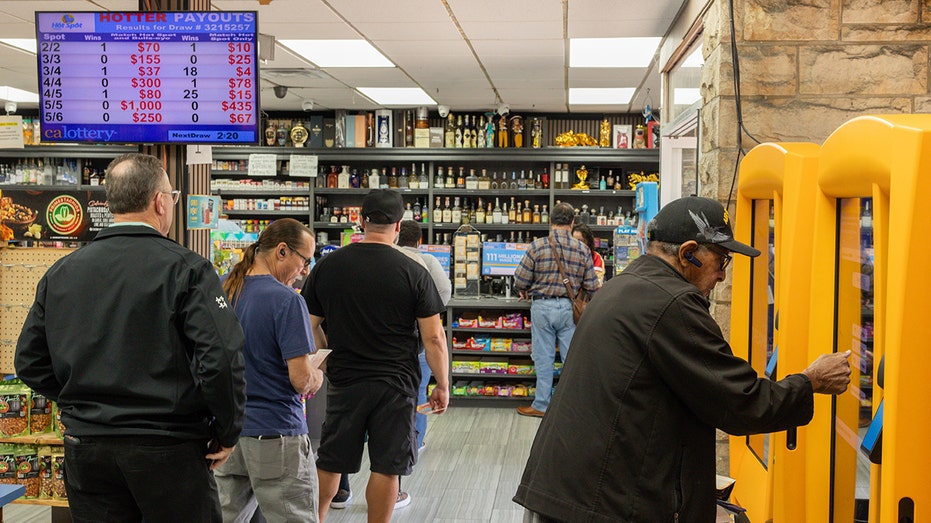
Customers line up to purchase lottery tickets at Bluebird Liquor in Hawthorne, Calif., Dec. 1, 2025. (Juliana Yamada/Los Angeles Times via Getty Images)

Choosing between the lump sum and annuity is less clear-cut. 

Powerball’s annuity includes one immediate payment followed by 29 annual payments that rise by 5% each year. Degner said those increases could help protect against inflation.

Advertisement

Meanwhile, the lump sum gives the winner immediate access to the money and the ability to invest it.

“When it’s all said and done, they actually are fairly close in the total return,” he said.

Degner urged winners to avoid major purchases and financial commitments during the first few months and warned against “lifestyle creep.”

Paying off high-interest debt should also be a priority. However, winners should be cautious about paying off debts for friends or relatives, Degner said.

Advertisement

$1.8B POWERBALL JACKPOT WON ON CHRISTMAS EVE IN ARKANSAS

Jeffery Degner, a research fellow in economics and economic freedom at the American Institute for Economic Research

Jeffery Degner told FOX Business a Powerball winner’s first priority should be protecting privacy. (FOX Business)

Powerball tickets cost $2 and are sold in 45 states; Washington, D.C.; Puerto Rico; the U.S. Virgin Islands; and the United Kingdom.

GET FOX BUSINESS ON THE GO BY CLICKING HERE

The odds of winning any Powerball prize are 1 in 24.9. The odds of hitting the jackpot are 1 in 292.2 million.

Advertisement

For the eventual winner, Degner said the focus should be on preserving the money.

“It’s tax strategy first, lifestyle later,” he said.

Continue Reading

Business

Who wins as Jeff Dean exits Google to launch AI startup?

Published

on


Who wins as Jeff Dean exits Google to launch AI startup?

Continue Reading

Business

Axum Capital Partners scores Barcode

Published

on

Axum Capital Partners scores Barcode

Private equity firm acquires controlling interest in sports hydration company.

Continue Reading

Business

Five UK Counties Retirees Are Quietly Flocking To

Published

on

Five UK Counties Retirees Are Quietly Flocking To

The glossy “best places to retire” lists love pointing towards Bath, the Cotswolds and the Surrey Hills. But ONS internal migration figures show a different pattern.

Over-55s are moving in growing numbers to counties that rarely make those supplements, drawn by lower costs and stronger communities.

Norfolk: Cheap Bungalows and a Faster Rail Link

Norfolk’s county average house price sits at around £268,000 according to early 2026 Land Registry data, almost exactly the UK national figure. The difference is what that money buys. A detached bungalow in a market town like Attleborough or Downham Market can still come in under £300,000 with a garden and a garage. Greater Anglia’s ongoing improvements to the Norwich-London rail line are also closing the gap for families split between Norfolk and the south east.

The trade-off is healthcare. GP-to-patient ratios are stretched in parts of the county, and the Norfolk and Norwich University Hospital covers a huge catchment area.

Inland Dorset: Beyond the Jurassic Coast

Dorset’s coastal towns get all the attention, but the quieter inland villages like Blandford Forum and Shaftesbury are where the real migration is happening. Prices here sit well below the county median of £349,000, often in the £280,000 to £330,000 range for a three-bed.

Advertisement

The sting is council tax. Dorset’s Band D rate hit £2,765 for 2026/27, the highest in England. That’s a serious consideration on a fixed pension income. On the plus side, broadband coverage across inland Dorset has improved dramatically, and Dorset County Hospital in Dorchester provides a solid A&E within reasonable distance of most villages.

Lancashire’s Ribble Valley: Bowland Without the Lake District Price Tag

Tucked between the Forest of Bowland and the Pendle Hills, the Ribble Valley consistently ranks among the safest boroughs in the North West. House prices averaged around £287,000 as of late 2025, above the regional average but a fraction of what the Lake District commands. Clitheroe is the main town, with independent shops, a weekly market and an arts scene that punches above its weight.

Public transport is limited, and the nearest A&E at Royal Blackburn Hospital is a 20 to 25 minute drive. Winters are cold and wet too, so anyone coming from the south of England would do well to visit in January before committing.

Rural Kent: Three A&E Departments and a Fast Train to London

Kent’s commuter belt is expensive, but the eastern districts tell a different story. Dover and Thanet both average around £285,000, and even the Canterbury district comes in below the county median of £335,000 for certain property types. Canterbury’s hospital network is a genuine draw, with three A&E departments within easy reach and the HS1 rail link putting London under an hour from Ashford.

Advertisement

Broadband is generally good in eastern Kent, and the ferry ports at Dover give easy access to France.

North Cornwall: Where the Year-Round Communities Are

Forget St Ives and Padstow. North Cornwall, around Bude, Camelford and Launceston, is where permanent communities are actually growing. The ONS average house price for the county was £275,000 in March 2026, but three-bed bungalows in these northern towns can come in under £250,000. Remote working has brought younger families into the area too, keeping local schools open and boosting broadband investment.

The biggest concern is A&E access. North Devon District Hospital in Barnstaple is about 45 minutes from Bude, and the Royal Cornwall in Truro is further still. Water bills are also higher here thanks to South West Water.

How the Housing Options Compare

Once the county is settled, there’s still the question of what to actually move into. Traditional bungalows remain the most popular choice, but stock is limited and competition is fierce. Retirement flats offer lower maintenance but come with service charges that can rise annually. New builds carry a premium over older stock.

Advertisement

Residential Park Bungalow Communities Are Winning Out

Then there are residential park bungalow communities. Operators like Regency Living run developments across several of these counties, including Dorset, Norfolk, Cornwall and Kent. Park bungalows are exempt from stamp duty because the purchase covers the home rather than the land, and owners typically sit in council tax Band A or B.

There’s a monthly site fee to factor in, but total outgoings often compare favourably with a traditional property once maintenance and stamp duty savings are accounted for.

Back It With Research, Not a Sunny Afternoon

The best retirement moves tend to be the ones backed by boring research rather than a sunny afternoon visit. Renting short-term in winter, driving to the nearest A&E at rush hour and checking which GP surgeries are accepting patients will paint a more honest picture than any brochure. For anyone considering a park bungalow community, attending an open event first is the closest thing to a test drive in property.

Advertisement

Continue Reading

Trending

Copyright © 2025