Connect with us

NewsBeat

Village pub told it can’t build eight homes they said were ‘critical’ to keep afloat

Published

on

Cambridgeshire Live

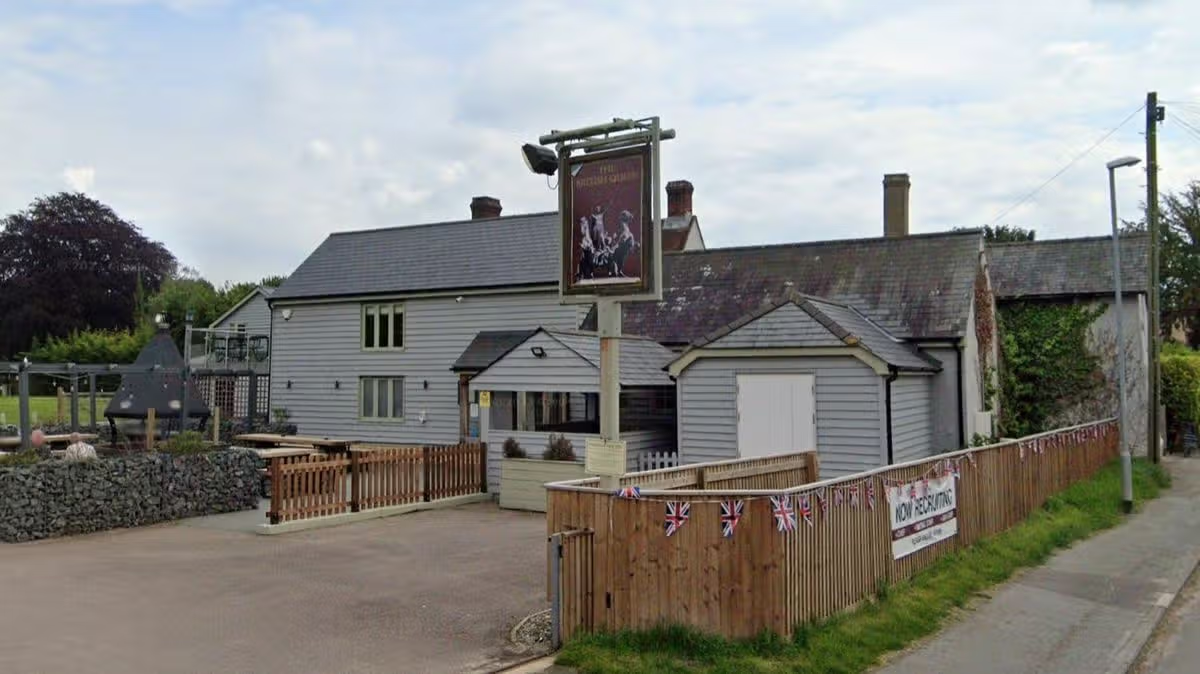
The British Queen pub in Meldreth applied to build the homes last year but South Cambridgeshire District Council rejected them

A Cambridgeshire village pub’s plan to build new homes they said were “critical” to keep them afloat has been struck down on appeal.

Advertisement

The proposal for eight homes behind the British Queen pub in Meldreth was put to South Cambridgeshire District Council last year and, after first delaying a decision, councillors refused the scheme.

A representative of the pub owners said funds raised from the development would be invested into expanding the facilities at the pub, adding that it would be a “disaster for the village” if the pub had to close. An appeal was launched after the plans were refused with a final decision made last month.

Inspector Zoe Raygen said the Grade-II listed pub is an “early example of architecture in the village” with “historic and social significance as a public house”.

Although she found the proposed homes to be “of an acceptable design and not overly large” they would still “diminish the verdant character and appearance of the area”.

Advertisement

The proposed access road would also be close to a tree which was protected by a Tree Preservation Order put in place when the council was considering this application.

Inspector Raygen said it was “a splendid, large sycamore tree with a large, low canopy which contributes substantially to the character and appearance of the area.”

She said: “It is not surprising therefore that the tree has been categorised as A1 in the appellant’s most up to date Tree Survey, a tree of the highest quality.”

The inspector raised concerns that two gardens extend to the edge of the river Mel, which could harm the habitat of bats that use the area for feeding.

Advertisement

Two bedrooms in one house and one bedroom in another would also “have only rooflights providing light and outlook” which she said “could lead to gloomy, oppressive conditions, particularly in the winter or poor weather conditions”.

Inspector Raygen said the pub owners’ claim that the development could secure their future was an “admirable proposal” but she could only give it “very limited weight”.

She said this was due to the lack of detailed information surrounding past trading, projected income from the project and how this would be spent.

Source link

Advertisement
Continue Reading
Click to comment

You must be logged in to post a comment Login

Leave a Reply

NewsBeat

Walkden town centre housing project stalled as contractor goes bust

Published

on

Walkden town centre housing project stalled as contractor goes bust

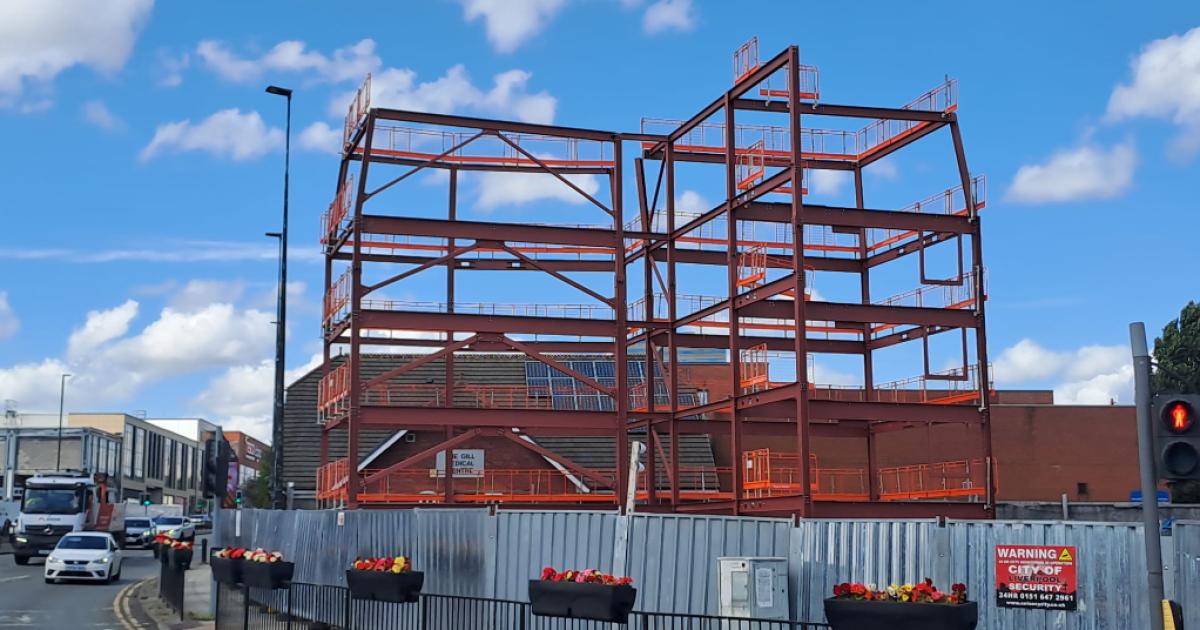
The large red steel frame at the junction between Manchester Road, High Street, Bolton Road, Bridgewater Road, and Memorial Road was going to be turned into an over-55s housing retreat.

But the contractor that property manager Housing 21 employed to complete the work, Alderley Group, has gone bust, according to the National Fraud Helpline, leading to concerns over who will finish the project.

The red steel frame (Image: Dan Dougherty)

A Housing 21 Spokesperson said: “We are unable to comment on behalf of other organisations. However, we can confirm work on the site has been temporarily paused whilst we source a replacement contractor to deliver the scheme.

We are keeping all interested parties updated with progress and would like to thank everyone for their patience and understanding.

Advertisement

“Our priority remains to deliver quality Retirement Living properties for older people and we look forward to completing the development and welcoming the first residents as soon as possible.”

Initially, there were concerns amongst residents that the building had stalled due to a planning infraction, but this soon turned out to be false.

(Image: Dan Dougherty)

The building ceased in June because Alderley, the group responsible for bringing the project to life, went into administration.

Housing 21 are now looking for new contractors to deliver on the Walkden scheme, leading to delays in the building process.

Advertisement

The Alderley Group was a social housing investment group involved in numerous affordable property development schemes around the North West.

(Image: Dan Dougherty)

But the housing giant went into administration in June of this year, leaving many of its development projects, including the Walkden retirement centre, unfinished.

The website for the Alderley Group no longer exists, and it is no longer possible to contact them via email or phone.

The National Fraud Helpline is urging affected Alderley investors to come forward to reclaim potential losses.

Advertisement

Source link

Continue Reading

NewsBeat

I’ve taken the new Wegovy ‘skinny’ pill for a month. It finally broke my weight-loss plateau, writes LOUISE ATKINSON, but at what cost? Week by week, here’s my honest account of EVERYTHING that happened…

Published

on

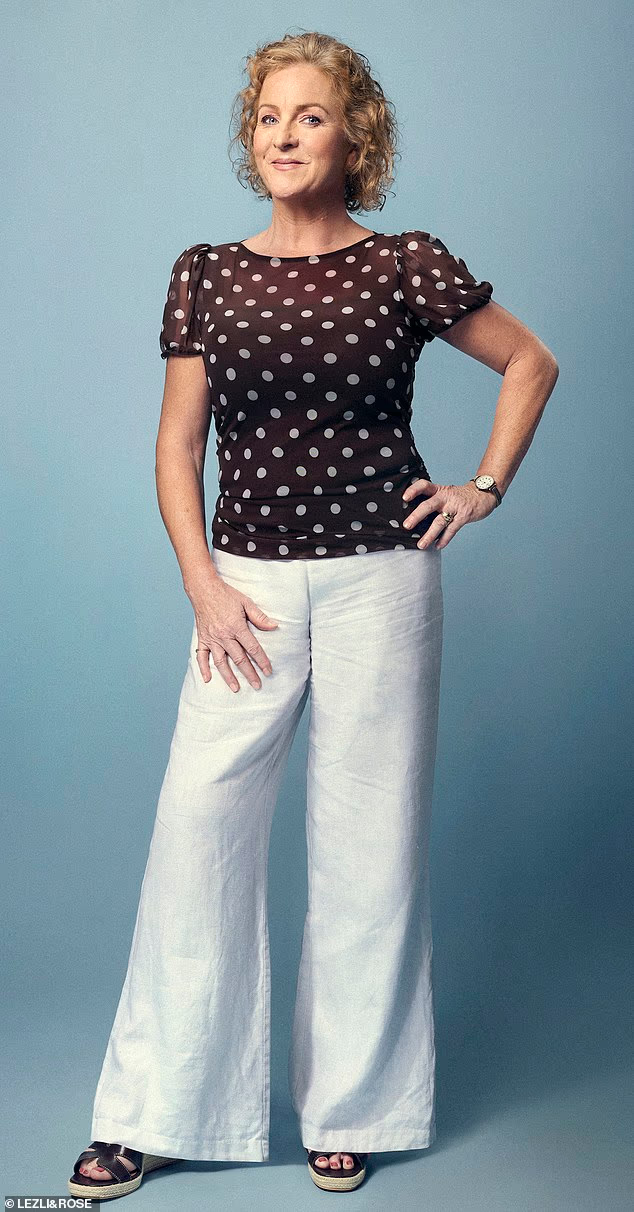
After losing 2st on Mounjaro in 18 months, Louise Atkinson was looking forward to swapping the jabs for the simplicity of swallowing a tiny tablet once a day

When a box containing my first pack of Wegovy pills arrived I was excited – until, that is, I spotted the stash of extra medication to help with side-effects tucked in beside them.

After 18 months of weekly Mounjaro jabs I was looking forward to swapping all the druggy paraphernalia (refrigerated syringe pen, spare needles, alcohol wipes, sharps bin) for the simplicity of swallowing a tiny tablet once a day.

I’d put my name on a waiting list and was one of the first in the UK to get my hands on the new pills when stocks were shipped out early last month.

So, it was rather a shock to receive four separate packs of tablets for diarrhoea, bloating, constipation and heartburn.

Advertisement

I’d happily lost 2st on Mounjaro (dropping from 13st 5lb to 11st 5lb) barely troubled by any of those ailments, so this got me wondering what hell I might be letting myself in for.

It turns out the stash was very much needed. Here’s my diary of my tumultuous first month on the new skinny pill.

Week one

After losing 2st on Mounjaro in 18 months, Louise Atkinson was looking forward to swapping the jabs for the simplicity of swallowing a tiny tablet once a day

Advertisement

UK pharmacies start shipping out their first packs of Wegovy pills on July 7. Only the two lowest doses have so far been supplied by manufacturer, Novo Nordisk – 1.5mg for complete beginners and 4mg for people like me moving over from a low dose of Wegovy or Mounjaro injections.

The pills are not likely to be available via the NHS for months (pending NICE approval) but all the online pharmacies are selling them privately, pitching their prices in line with the Wegovy jab (around £100 for a one month supply of the lowest dose) rather than more expensive Mounjaro (£150). Like the jabs, the cost goes up with the dose.

I go through a strict screening process with online provider shemed.co.uk, showing proof that I reached the criteria (BMI of 30 or, in my case, 27 with health concerns) at the start of my GLP-1 journey and convincing them of my commitment to continue on a low dose to maintain my weight loss and hopefully shift the last stubborn half stone that would take my weight into the ‘healthy’ category (BMI of 25 and under).

These tablets contain the same GLP-1 drug – semaglutide – as you find in the Wegovy syringe but the active ingredient is encased in a special coating which protects the peptides from stomach acids and digestive enzymes just long enough so it can dissolve and pass through the stomach lining to enter the bloodstream. There’s been a huge buzz of excitement surrounding the pills which many believe will revolutionise the medicated weight-loss market, driving costs down and opening up the GLP-1 world to a new needlephobic clientele and beyond.

Advertisement

Why am I switching? I am committed to being on a low dose of GLP-1 forever to keep my weight steady, my brain free from food noise and to reap the many emerging long-term health benefits (protecting me against heart disease, cancers and dementia), and I’m intrigued by the relative ‘normality’ of taking a pill each morning. My health is so much better already (blood pressure and cholesterol back in normal ranges), that my hope is this daily pill will take the place of the blood pressure tablet and statin I no longer need.

The active ingredient in the pill works just like the injection with the same impact on the body and brain, and the same potential side effect warnings (nausea, vomiting, diarrhoea, constipation). Studies for both show more than 70 per cent of users are affected by these ‘gastric issues’ but the pills were expected to hit the gut harder because it passes through the digestive tract every single day.

My ‘day one’ is timed exactly seven days after my last Mounjaro injection and I go to bed with the box by my pillow ready to take my first pill the moment I wake.

Your stomach must be empty (ideally after an eight-hour overnight fast), you can’t use more than 120ml of water (equivalent to a small glass of wine) to swallow it down and you absolutely must not eat or drink anything else or take any other tablets for at least 30 minutes so it has the perfect conditions in your stomach to dissolve and disseminate. It’s a hot and sweaty night and I wake up desperate for a large glass of water but that would over-dilute the pill and render it ineffectual so I ration myself to a few sips which barely disguise the bitter taste.

Advertisement

My second night is blighted by stress dreams in which I’m accidentally eating. Waking at intervals throughout the night I’m constantly checking the time and wondering if I should take my pill. Plus I really miss the early morning cup of tea that my husband Jon usually brings me in bed.

I’m eating healthily during the day but each evening I am hit by a strong drive to search out something sweet to eat. The sugar cravings are so strong I have to make a batch of biscuits because I want to lick the bowl so badly.

I’m concerned this 4mg dose is not going to be powerful enough to keep my evil eating demons in check. I needn’t have worried.

UK pharmacies started shipping out their first packs of Wegovy pills on July 7

UK pharmacies started shipping out their first packs of Wegovy pills on July 7

Advertisement

On day four a wave of nausea hits. It’s not debilitating or vomit-inducing but more like the ‘yuk’ feeling you get if you try to read your phone when you’re a passenger in a car. It passes but I have to force myself to eat lunch with Jon. He has zero tolerance for nausea and is struggling to understand why I’m doing this to myself.

Rachael Joy, chief clinical officer at SheMed (and a registered nurse) tells me the semaglutide in my daily pill has been accumulating over the last four days. ‘Although you take the tablet every day, semaglutide has a long half-life [the time it takes to reduce to half its original quantity] of around seven days, so it is not flushed out of your system after 24 hours,’ she says.

‘Each daily tablet adds to the semaglutide that’s already in your body, gradually increasing the overall amount in your circulation until you reach steady state, which takes around four to five weeks of daily dosing.’

She reassures me that serious complications such as pancreatitis and gallbladder disease are uncommon and normally associated with rapid weight loss. ‘As oral Wegovy may produce more gradual weight loss, these complications are less likely on the pills, although more real world evidence is needed to understand this fully,’ she says.

Advertisement

The bowel perforation which led to the untimely death of a 73-year-old woman from Norfolk recently is so rare, she adds, that it is not even listed as a recognised side- effect of GLP-1 medicines.

But the next night my tummy pain keeps waking me up. I check the clock at 4am, then 5.30am worrying – now – whether the drug is too strong for me.

Week two

Louise suffered from feelings of nausea after beginning to take Wegovy pills. She is seen at the start of her weight loss journey prior to taking Mounjaro jabs

Louise suffered from feelings of nausea after beginning to take Wegovy pills. She is seen at the start of her weight loss journey prior to taking Mounjaro jabs

The scales tell me I’m 11st 6lb and I’m infuriated to see my weight slightly higher than when I started but I twisted my knee playing padel a few weeks ago which means I can’t walk the dog or do spin classes and my daily step count has plummeted.

Advertisement

And although I have all the self-control required to eat small, healthy meals during the day, I seem unable to resist nibbling and picking at food (or succumbing to a glass of wine) in the evening.

Mounjaro used to be strongest for the first days after the injection, before tailing off and the Wegovy pill seems to follow a similar but daily curve: waves of nausea in the morning which subside, then an infuriating ‘all bets are off’ blast of food noise in the evening.

Rachael Joy explains that peak blood concentrations are typically reached an hour after taking the tablet. ‘The concentration then gradually falls over the rest of the day,’ she says, ‘but the half-life means it won’t fall to zero and each day’s dose simply tops up the background level that’s already there.’

Levels of semaglutide in my system are clearly building but the daily dosage curve means it’s now far too easy to say ‘yes’ to a proffered glass of wine in the evening and the chemical cocktail seems to be ramping up a hangover.

Advertisement

After one ill-advised (but fun!) evening my body feels totally toxic and, bizarrely, I develop an itchy hives-like rash on the back of my neck/upper shoulders. I’m not a rashy person and I can’t work out what might have caused it. Possibly the Wegovy?

A series of bad nights follows with gastro discomfort and the itching rash keeping me awake. It means my days are spent feeling shattered with strong sensations of nausea interspersed with intermittent trips to the loo with diarrhoea.

I’m beginning to wonder if it’s worth it.

On the Facebook support groups I follow, pill-takers are starting to bail.

Advertisement

‘It’s been hard work living with this horrible yukky feeling all the time,’ says one, with another agreeing: ‘I can’t take any more of the sickness, headache, fatigue and generally feeling lousy.’

I could safely switch back to the Mounjaro jab 24 hours after taking my last pill but decide I need to push through with this. The expense of Mounjaro is so much more difficult to justify when you’re maintaining rather than losing weight and, despite the side- effects, as my body gets used to the drugs, I’m finding I need to deploy far less willpower to stay in ‘diet mode’.

The Wegovy pill might be hard work right now but the suppression I feel is impressive (like the first few months on Mounjaro) and steady every day. I’ve just got to hope the gastric side-effects diminish.

Week three

I’m relieved to find I’m 11st 5lb – just one pound down but I’m back on track.

Advertisement

Finally! No hunger all day, side-effects are less strong, no food noise, just measured healthy eating. Antihistamines clear the rash and the evening munchies (and wine craving) have disappeared.

I’ve stopped sleep-stressing about taking the tablet and it turns out it’s really not that hard to use up the required 30 minutes waiting time in the shower and getting dressed before the normal routines of daily life can resume. I still do get occasional waves of nausea but I find it strangely reassuring that the pill is working.

I’m eating so much less than I was before I started taking this pill. If only I wasn’t so sedentary I reckon the weight would be falling off now.

New week, new problem: constipation. I glug a fibre drink and spend the evening snacking on prunes (to me in this sugar-deprived state, they taste as delicious as Lindt balls). Disaster averted and I don’t need to dip into the constipation capsules in my ‘care’ package from SheMed.

Advertisement

Fatigue is also still bothersome. Mounjaro made me feel spritely and light but some days now I feel as if I could curl up and sleep, particularly during the afternoon.

I’m putting extra focus

on the quality of my nutrition but I wonder whether my poor microbiome (the population of good bacteria in my gut which influences digestion, mood and immunity) is having a tough time adjusting to swimming around in my GLP-1-infused intestinal soup.

Week four

On week four, Louise found that her weight began to drop more substantially, and side effects had subsided altogether

On week four, Louise found that her weight began to drop more substantially, and side effects had subsided altogether

Advertisement

I’m 11st 4lb. Finally, after a 12-month plateau, the scales are moving down and I feel optimistic that I might reach my original weight-loss goal and get my BMI into the ‘healthy’ category for the first time in 30 years.

The side-effects have completely disappeared now my body has got used to the new GLP-1 regime and I’m falling into an easy rhythm of taking the pill each morning and being ‘good’ about what I eat and drink.

It’s so much easier to pop the pills in my wash bag for a big girlie weekend away – no more worrying about trying to micromanage the timing of a weekly jab – and the strong steady suppression really helps me resist the cocktails and pastries on offer.

Bonus: all the girls had hideous hangovers apart from me.

Advertisement

I celebrate by ordering my next month’s supply of pills. The predicted shortages haven’t happened – perhaps because the claimed loss (17 per cent of body weight) is less than Wegovy jabs (20 per cent) and Mounjaro (22.5 per cent) and the pills aren’t as cheap as expected – yet.

The protocol for those starting out on the Wegovy pill is to move up a dose each month if symptoms allow and the bigger doses (9mg and even 25mg) are now available but I definitely couldn’t handle a higher dose. This is plenty.

In fact, if I can get down to my goal weight I think I’ll drop to the 1.5mg ‘starter’ dose pill which should be just enough to keep that trickle of GLP-1 in my system long-term.

The second box of 4mg pills arrive without the side-effects care package which Rachael Joy tells me is sent out as a gesture of support to all SheMed GLP-1 users in their first delivery, regardless of pill or jab. Not just because they were expecting me to be blighted by symptoms.

Advertisement

I’m keen to keep going and I’m hoping the cost of the tablets will soon come down so they can be more widely available to everyone.

Maybe when the next GLP-1 pill – Foundayo – is approved for the UK market later this year, a price war might work in our favour.

But right now I figure I’m saving so much money on food, wine, the taxis we no longer need because I volunteer to drive, my daily magic skinny pill is virtually cost free.

Source link

Advertisement
Continue Reading

NewsBeat

Bolton food bank under ‘immense pressure’ as donations run low

Published

on

Bolton food bank under 'immense pressure' as donations run low

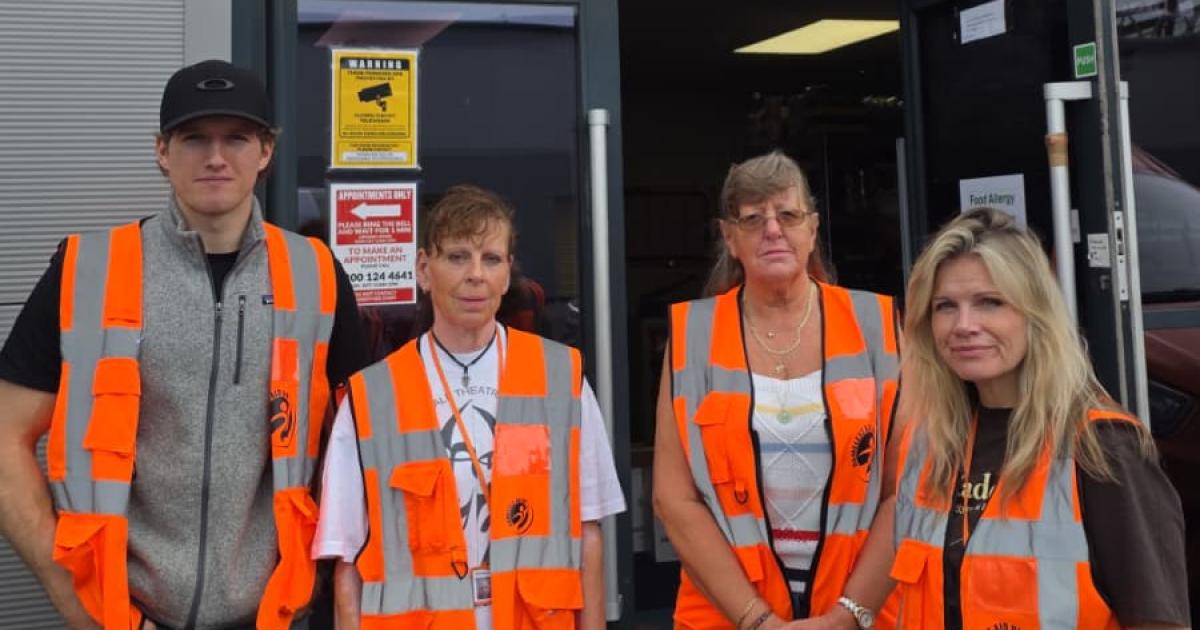
Homeless Aid UK, based on Orlando Street in Bolton, has warned that supplies are running dangerously low after the closure of another local food bank forced more people to turn to the charity for help.

It is now asking the community for donations of essential food items, including tinned vegetables, tinned meals such as macaroni cheese, cereal, Cup a Soup, sugar, tea bags, cooking oil, and rice.

Although grateful for the ongoing support, the group warns that stocks are extremely low and further donations are necessary.

Advertisement

“Our food bank is under immense pressure right now, and with demand higher than ever, we urgently need your support.

“Every tin, every box and every bag helps us support local individuals and families who are struggling.”

Homeless Aid UK provides its food parcels completely free of charge to people facing hardship across the borough.

Billa Ahmed, from Homeless Aid UK, said they had seen a dramatic increase in demand following the closure of another food bank in the area.

Advertisement

“There’s a local food bank, unfortunately, which is now closed down, and because of that, we’ve got a lot of pressure with the thousands and thousands of people that we are helping with free food hampers.

“Now we’ve got so many people coming from them who are now coming over to us.

“We urgently, urgently need your help.”

Mr Ahmed said the CIC focuses on providing practical ingredients that mean families can prepare nutritious meals without spending so much money on cooking costs.

Advertisement

He said: “People need to make a meal so we give them essentials that they can actually make a meal with.

“With the cost-of-living crisis and utilities being so high, gas and electric, we can’t give them something that is going to take a long time to cook.”

The appeal comes as many families continue to feel the strain of rising household bills during the summer holidays, with children not receiving free school meals and parents spending more on childcare as they continue to work.

Mr Ahmed said: “With the summer holidays and rising living costs, increased financial pressure, a lot of the local families are now struggling, even people who are working.”

Advertisement

At the same time, he explains how donations have fallen sharply as supporters face financial difficulties of their own.

“There’s been a massive, significant drop in donations because many people who used to regularly donate to us are now facing financial pressure themselves.”

They are now calling on anyone who can help to donate even a single item and reminding the community that every contribution could make a difference to a family in crisis.

Donations can be dropped off at Homeless Aid UK, Superstore Storage, Orlando Street, Bolton, and for more information, call 0800 124 4641.

Advertisement

Source link

Continue Reading

NewsBeat

Asian shares slip with Kospi down 4% after tech retreat on Wall Street

Published

on

Asian shares slip with Kospi down 4% after tech retreat on Wall Street

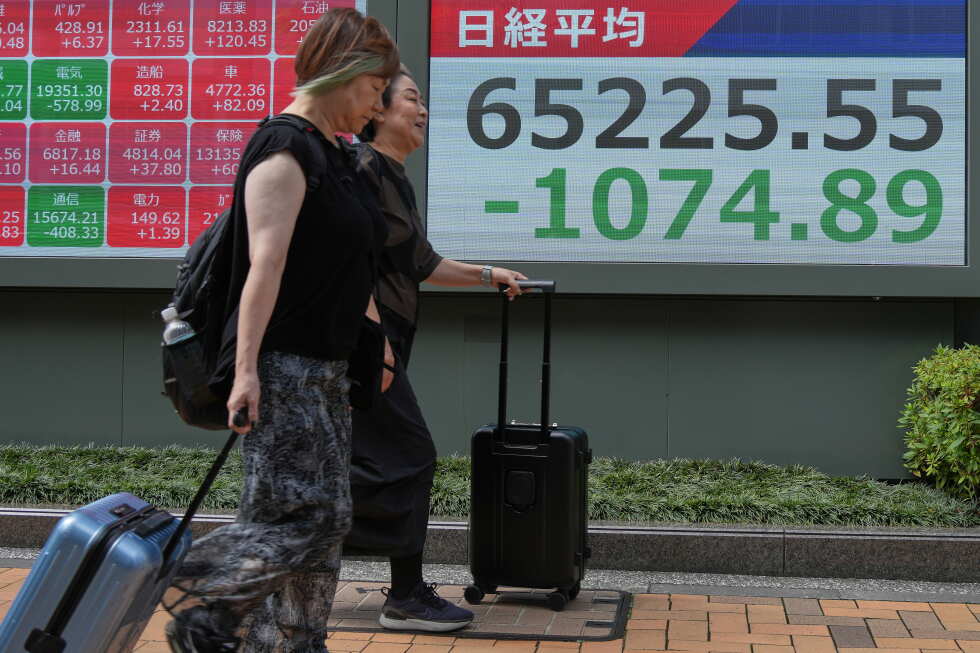
BANGKOK (AP) — Asian shares were mostly lower and South Korea’s Kospi dropped more than 4% on Thursday following declines for some Big Tech giants including memory chipmaker SK Hynix.

Oil prices held steady, with Brent crude trading near $79 a barrel. Uncertainty about the direction of the U.S. war with Iran is still overhanging markets despite hopes for a reopening of the Strait of Hormuz.

Markets will get an update Friday on U.S. jobs with the monthly employment report for July, and analysts say investors appear to be bracing for its potential impact.

“Asia’s chip selloff looks like a combination of profit-taking and risk reduction ahead of Friday’s nonfarm payroll report,” Stephen Innes of SPI Asset Management said in a commentary.

Advertisement

Strong corporate profits and expectations for more growth ahead generally have been steering U.S. stocks higher. But Asian benchmarks have been hit by bouts of selling of computer chipmakers and other companies related to the boom in artificial intelligence.

SK Hynix was down 9.7% after dropping ahead of the open in Seoul, while its larger rival Samsung Electronics lost 6.1% in the latest rout for shares linked to the AI boom.

The Kospi lost 4.5% to 6,306.40.

Japan’s Nikkei 225 lost 1.2% to 65,538.44.

Advertisement

In Hong Kong, the Hang Seng declined 1.8% to 25,463.51, while the Shanghai Composite index was nearly unchanged at 3,878.92.

Australia’s S&P/ASX 200 gained 0.5%.

U.S. President Donald Trump said a deal to reopen the Strait of Hormuz was coming soon. But there have been many stops and starts during the five-month-old conflict that has stifled the global supply of oil and rattled energy markets.

The price of Brent crude, the international standard, fell 0.3% to $79.24 a barrel. Oil prices have been swinging for months and were as high as $102 per barrel at one point during the conflict, jolting already stubbornly high inflation. Higher oil prices pushed gasoline prices higher and increased shipping costs for a wide range of products.

Advertisement

U.S. benchmark crude oil declined 0.4% to $74.93 a barrel.

On Wednesday, the S&P 500 slipped 0.2% from an all-time high to close at 7,723.55. The Dow industrials rose 0.5% to 54,349.12. The Nasdaq composite lost 0.8% to 26,363.44.

Among big technology companies losing ground, Google’s parent company, Alphabet, fell 4% and Microsoft lost 1.1%.

Overall, the market has been rising as companies head into the closing stretch of their latest round of earnings reports with sharp overall gains. Three-quarters of the companies within the S&P 500 have reported results so far, and Wall Street expects profit growth of 50% when they are all finished.

The Walt Disney Co. rose 3.6% after easily beating Wall Street’s profit forecasts, helped by a $1 billion box office haul from “Toy Story 5” and theme park revenue.

Booking Holdings jumped 6.6% after reporting that strong travel demand drove profit and revenue growth during its most recent quarter.

Advertisement

Elon Musk’s SpaceX fell 13.6% following the release late Tuesday of its first quarterly report as a public company, which showed that it sharply boosted spending on artificial intelligence. The company did help give semiconductor giant Nvidia a 3.4% boost after announcing it would exclusively use that company’s chips for its artificial intelligence technology.

Musk had said earlier he would use chips from both Nvidia and Advanced Micro Devices for SpaceX and his electric vehicle company, Tesla.

Inflation concerns have been hanging over markets and the Federal Reserve. The central bank has been holding its key benchmark rate steady as it monitors the costs and the impact on the economy.

In other dealings early Thursday, the dollar flipped to 157.73 Japanese yen from 157.77 yen. The euro fell to $1.1549 from $1.1555.

Advertisement

___

Associated Press writer Damian J. Troise contributed.

Advertisement

Source link

Continue Reading

NewsBeat

UK weather maps show next 37C heatwave starts on Sunday with 6 days above 30C

Published

on

Daily Mirror

The UK can expect to be hit by another heatwave at the end of this week as a scorching 37C is forecast as six days of sweltering heat are have been forecasted

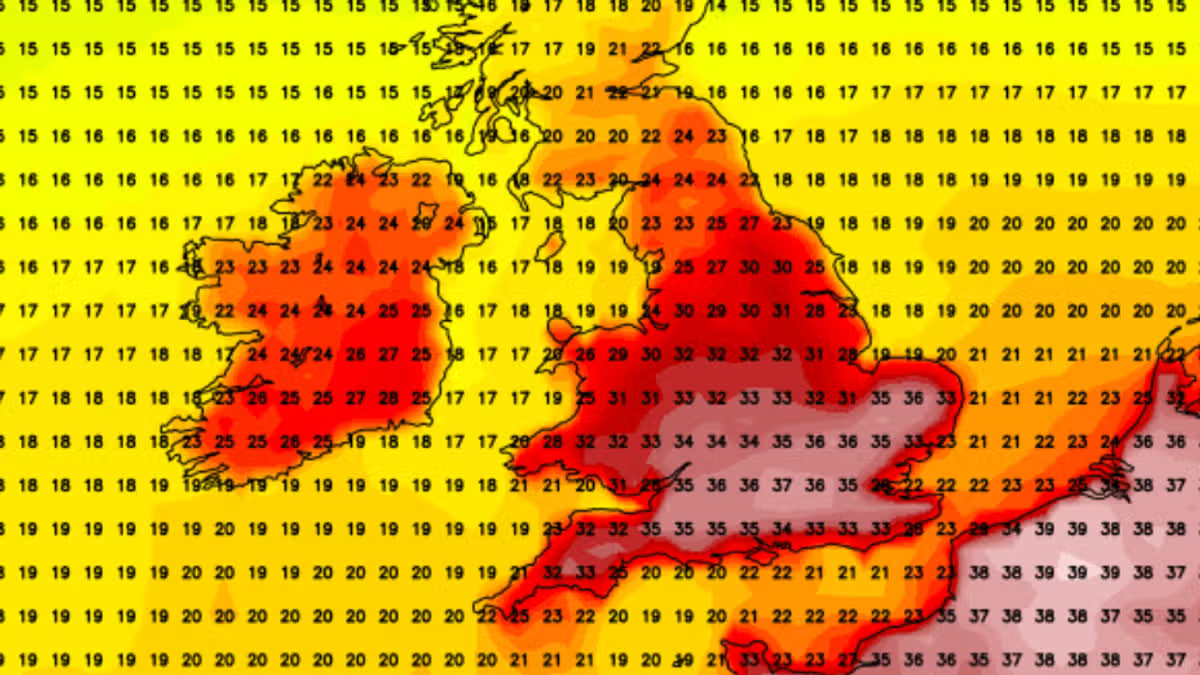
Another heatwave is expected to kick off on Sunday, hitting a scorching 37C high next week.

Advertisement

Netweather maps suggest that temperatures will begin to climb on Sunday, soaring above 30C, with the hot conditions expected to stay for six days.

On Sunday, August 9 there will be highs of 34C, with much of the south reach 32C or higher.

Elsewhere, highs of above 30C are also expected. With the East and West Midlands both sitting at around 32C.

Advertisement

In Suffolk, there will also be highs of 32C. Despite being slightly cooler, northern England will also see warm conditions, with Greater Manchester having the chance of reaching 29C.

On Monday, these sweltering conditions are set to remain, with it only getting hotter.

Highs of 37C are forecast in Berkshire, nearing the record 38C that was recorded at Lingwood, Norfolk on June, 26.

In London, Cambridgeshire, and certain parts of the south west, temperatures are also expected to skyrocket to 35C.

Hertfordshire is forecast to reach 36C alongside Suffolk.

These highs do not stop there, as on Tuesday much of the UK will be battered by the heat with the warmth travelling further north.

Many areas in the Midlands and the south will comfortably remain in the mid thirties as Greater Manchester and Cheshire are also expected to reach 34C and 35C.

Advertisement

On Wednesday, the weather maps are still a volcanic red, with some areas of Yorkshire also reaching 30C.

Areas in Wales and Scotland, although cooler, are also predicted to climb to the mid to late twenties.

Then, on Thursday, this prolonged spell of heat does not leave, with highs of 35C as much of London and the surrounding areas stays at 34C.

The whole week will be boiling as Friday is also expected to reach 35C in certain areas, including Sussex and Norfolk.

In Lincolnshire there are also expected to be highs of 33C, with Birmingham reaching 32C.

The Met Office says: “A heatwave is an extended period of hot weather relative to the expected conditions of the area at that time of year, which may be accompanied by high humidity.”

The UK’s threshold is met when a part of the country records a period of at least three consecutive days with daily maximum temperatures meeting or exceeding the heatwave temperature threshold – which varies by county.

Advertisement

According to these Netweather maps a heatwave is certainly on the cards for next week, as the warmth with smother much of England for a six day period.

The Met Office forecast says that it will be dry for most on Monday with temperatures on the very warm to hot side.

The longer range forecast then continues adding: “For the most part, temperatures look to remain above average, especially in the south, and perhaps turning very warm or hot.”

Source link

Advertisement
Continue Reading

NewsBeat

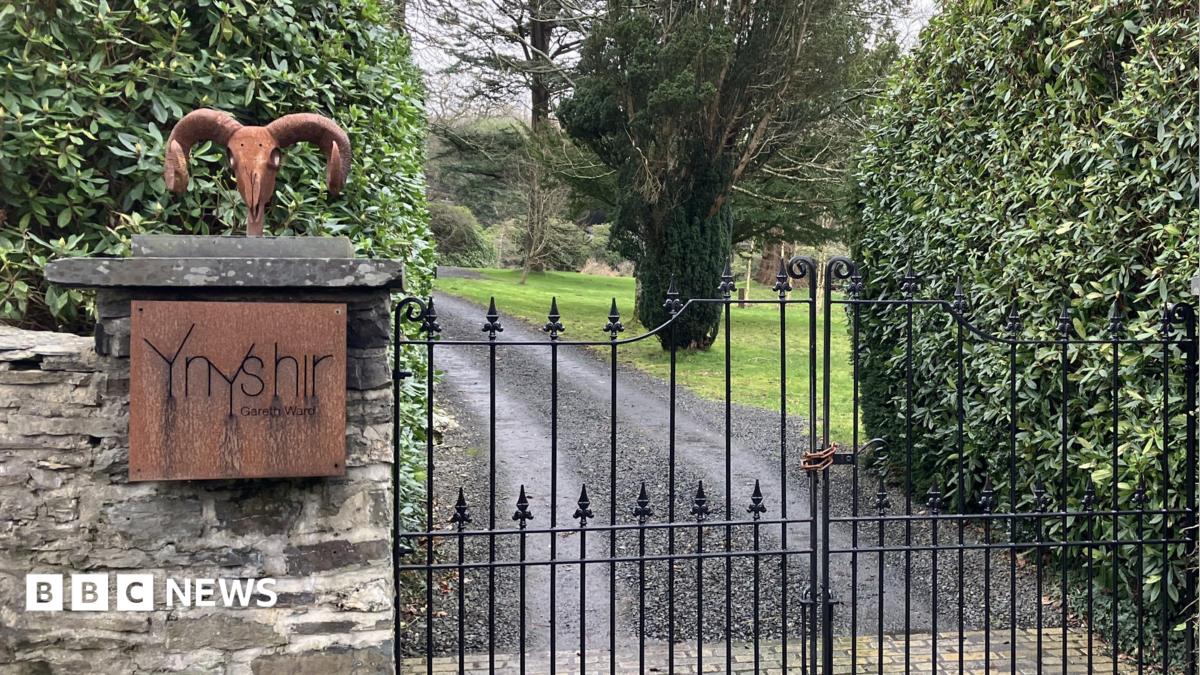
Michelin-star restaurant Ynyshir gets five star hygeine rating back

Published

on

Female soldier wearing army uniform, rear view

Food critic Giles Coren previously came out in support of the restaurant, claiming Michelin-starred restaurants should not have to abide by normal health and safety rules and the guidelines should “probably be modernised”.

“It is not little kitchens and pots boiling away, mimsy little things being placed on plates. He is cooking with fire… he stands there in his leather apron and it’s roaring like fireworks,” Coren said.

Ward, who has recently announced he will be bringing fine dining to Aberystwyth Town Football Club, previously said his restaurant was working “at the highest standard in the world” and doing “something different” with how it approached raw ingredients and techniques.

He said he had faced “persistent challenges” with Ceredigion council’s environmental health department, “primarily relating to documentation and a lack of understanding of our specialised procedures”.

Advertisement

A Freedom of Information (FOI) request by the BBC revealed the one-star rating was based on factors including a dirty floor, inadequate hand-washing facilities in some areas, broken equipment and “an accumulation of dead flies”.

Ceredigion council said inspections were carried out in line with national standards set by the Food Standards Agency and, between April and December 2025, 90% of inspected premises in Ceredigion achieved a food hygiene rating of between three and five out of five.

Source link

Advertisement
Continue Reading

NewsBeat

how the colonial legacies of these cities have shaped migration in the region

Published

on

how the colonial legacies of these cities have shaped migration in the region

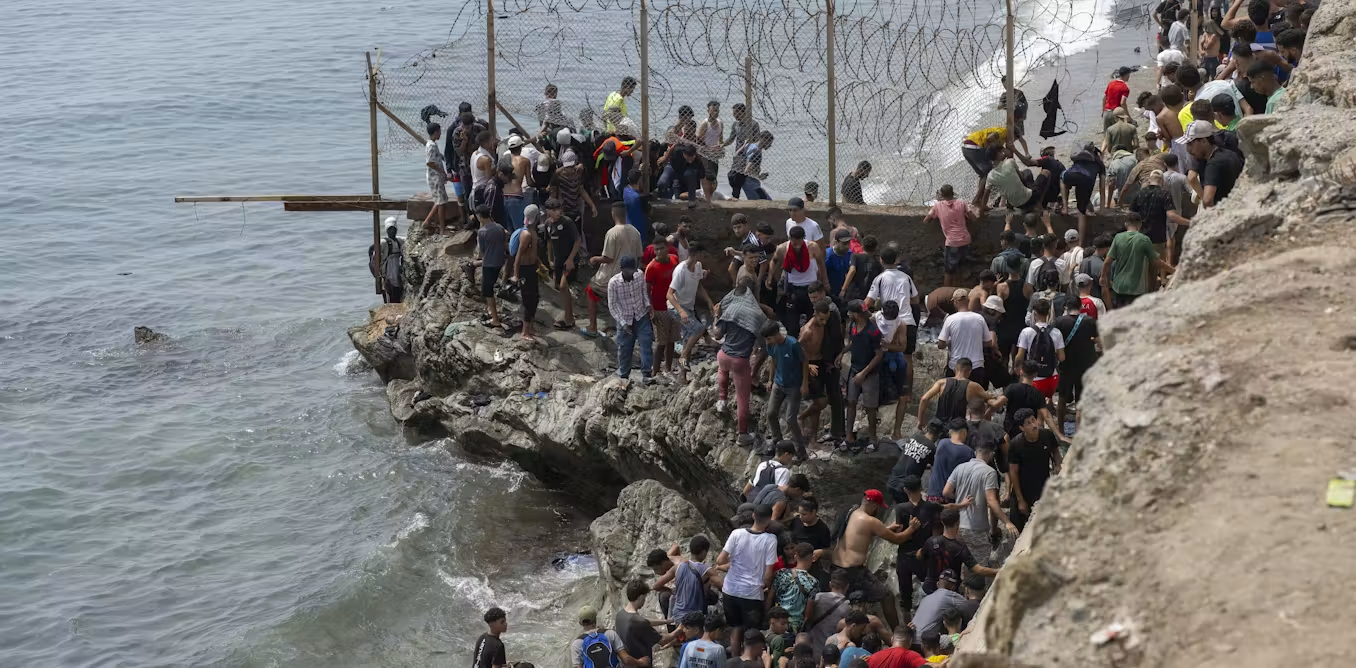
Ceuta, a small Spanish enclave on the Moroccan mainland, was unprepared for the arrival of more than 70,000 undocumented migrants on July 30. They arrived mostly by sea, from Morocco via the Tarajal breakwaters and its shoreline.

The minuscule city of just seven square miles had few provisions for food, shelter or support for the unexpected arrivals. This was a shocking exposure of the apparent porosity of the city’s heavily fortified borders.

More than 95% of the migrants have since returned via the land border, following emergency negotiations between the governments of Spain and Morocco. Those who remain have overwhelmed the city’s migrant reception centres.

According to the latest figures from Spain, at least 88 people are known to have lost their lives while attempting to cross into Ceuta.

Advertisement

The mass influx, however temporary, has fuelled some far-right and nationalist political reactions, as well as protests by those resisting Europe’s rising populism and anti-immigrant sentiments.


À lire aussi :
How the Ceuta border crossing incident immediately played into the hands of Spain’s far right


It has also led to the swift installation of yet another border separating Spain, and Europe, from Morocco by way of a sea barrier at the Tarajal.

Ceuta, like its even smaller sister city of Melilla, also an enclave on the Moroccan mainland, is a border flashpoint. These cities occasionally spark intense debates on undocumented migration to Spain, and hence to the EU.

Advertisement

The fortification of the border at Ceuta and Melilla resonates with the history of Spanish control over this part of north Africa, as well as with Spain’s role as a southern guardian of the European Union.

History of movement

There is a long history of colonialism and migration behind this latest incident. First known as Phoenician settlements and then as Roman ones, Ceuta and Melilla became part of the 8th-century Islamic conquest of the Mediterranean region. Their locations by the sea turned them into key ports and trading points for commerce across the Mediterranean.

As the Portuguese empire expanded in the 15th century, Ceuta was captured and, shortly thereafter, the Spanish and Portuguese crowns were united. When Portugal regained its independence in 1640, Ceuta remained under Spanish control. Melilla, on the other hand, was captured by the Duke of Medina Sidonia in 1497 and has been under the Spanish crown ever since.

In the 19th and 20th centuries, Spain’s control over northern Morocco expanded, while France controlled the rest of the country. As European powers agreed a division of protectorates in the region in 1912, Ceuta and Melilla did not fall under this agreement, since they were historically Spanish-administered towns. The Rif war of 1921-26 was a time of bitter defeat for Spain in the Maghreb, turning Spain’s continued control over Ceuta and Melilla into a symbol of Spanish might in the region.

Advertisement

General Francisco Franco launched the Spanish civil war from Spanish Morocco in July 1936, paving the way for 36 years of dictatorship. The transition to democracy in the 1970s coincided with the start of substantial migration to Spain from Morocco. This increased with Spain’s entry into the European Community in 1986, provoking anxieties about diversity and nationhood that remain unresolved.

The cities became guardians of Spain’s frontiers in the Maghreb. When Spain joined the Schengen area in 1991, this role extended into a Europe-wide duty. The EU has since invested hundreds of millions of euros over the years into fortifying these border towns, including with surveillance and fences. Ceuta and Melilla, small though they are, uphold this history, and have often been accused of doing so in serious contravention of human rights.

Fortress Europe

The notion of Europe as a gated “fortress” has long shaped the continent’s migration policies.

The borders with Ceuta and Melilla turn more brutal in this context. Moroccans, sub-Saharan Africans and many others attempt to brave razor wire, deep water and other perils to claim a foothold in Spain. They are driven by climate change, global inequality and the dream of a better life in Europe, among other factors.

Advertisement
Ceuta, Spain, has a long history of colonialism and migration.
kiomu.studio/Shutterstock

Meanwhile, colonial legacies continue to shape the geopolitics of this region in complex ways.

Morocco does not recognise Ceuta and Melilla as Spanish, and seeks to claim them as Moroccan in diplomatic exchanges with Spain. But it maintains its own colonial exploits, having invaded the former Spanish colony of Western Sahara to its south in the 1970s, sending in 350,000 citizens to settle in Western Sahara.

Another mass crossing of the border at Ceuta occurred in 2021 – though not at the scale of the latest one – amid a diplomatic row, as Spain allowed the leader of the Western Sahara independence movement to be treated for COVID in Spain.

Ceuta’s local government has blamed the Moroccan government for this latest mass influx, by allegedly loosening border controls.

Advertisement

Migration is a repeated theme in the political tensions between Spain and Morocco, which remain unresolved. This incident adds yet another layer to Ceuta’s chequered history as a Spanish town on north African soil. In discussing the politics present in this incident, it is also worth recalling that Ceuta and Melilla’s roles as European borders in north Africa can at times be deadly.

Source link

Advertisement
Continue Reading

NewsBeat

We must tackle the far-right but also tackle the root causes of poverty

Published

on

Daily Record

Record View says we cannot pretend that everyone in a crowd of 1,700 is a violent extremist.

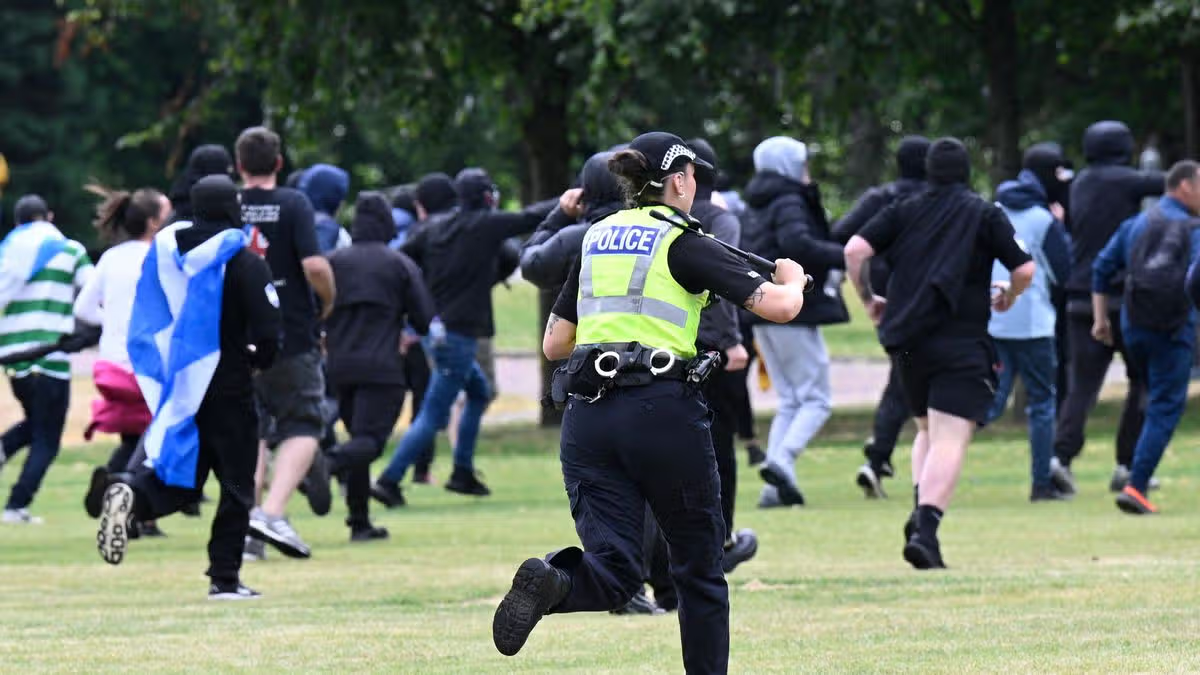
What should have been a positive fortnight for Glasgow as the Commonwealth Games returned was marred by the shocking scenes in the city centre on July 25.

Advertisement

An anti-immigration protest quickly descended into disorder as police struggled to contain hundreds of masked hoodlums from causing havoc as families tried to go about their business.

Police have a duty to facilitate peaceful protest – but anyone who saw the behaviour around Glasgow Green that day will tell you it was anything but peaceful.

The Record has revealed how several of those involved have a series of convictions for domestic abuse and thuggery.

Throwing Nazi salutes in public and harassing innocent bystanders because of the colour of their skin should lead to arrests and convictions, every time.

Advertisement

Hiding in a mob with a face covering does not give anyone the right to terrorise people, regardless of political beliefs.

At the same time, we cannot pretend that everyone in a crowd of 1,700 is a violent extremist.

Some of those who attended will have felt they were taking part in a genuine expression of protest – the kind of direct action caused by years of feeling excluded or pushed to the margins.

Employment opportunities for young Scots are becoming harder and harder to come by – particularly for those living in the poorest areas.

Advertisement

Years of grinding austerity, followed by a cost-of-living crisis, have pushed some to extremes.

Housing in Glasgow is also a major problem, with understandable anger at the lack of homes for locals.

We must tackle the far-right but also tackle the root causes of poverty and exclusion that prove fertile breeding grounds for discontent.

Tech no prisoners

AI could be a force for good, leading to a new age of prosperity for humanity.

Advertisement

But there are also plenty of horror stories about how it could enslave us.

That’s why it is vital that the use of this technology is applied carefully, especially when it comes to law enforcement.

Today we tell how a series of AI cameras are appearing at roadsides in Scotland’s main cities, which can look into your car to check that you’re not doing anything illegal.

Some might argue that you’ve got nothing to fear if you’re obeying the law.

Advertisement

But some civil rights groups are raising concerns about the spread of AI into public observation.

It’s a thorny issue – and one that needs a lot more public debate before this kind of technology is rolled out.

Get more Daily Record exclusives by signing up for free to Google’s preferred sources. Click HERE.

Source link

Advertisement
Continue Reading

NewsBeat

2 Israeli soldiers killed in Lebanon in the first Israeli deaths under truce

Published

on

2 Israeli soldiers killed in Lebanon in the first Israeli deaths under truce

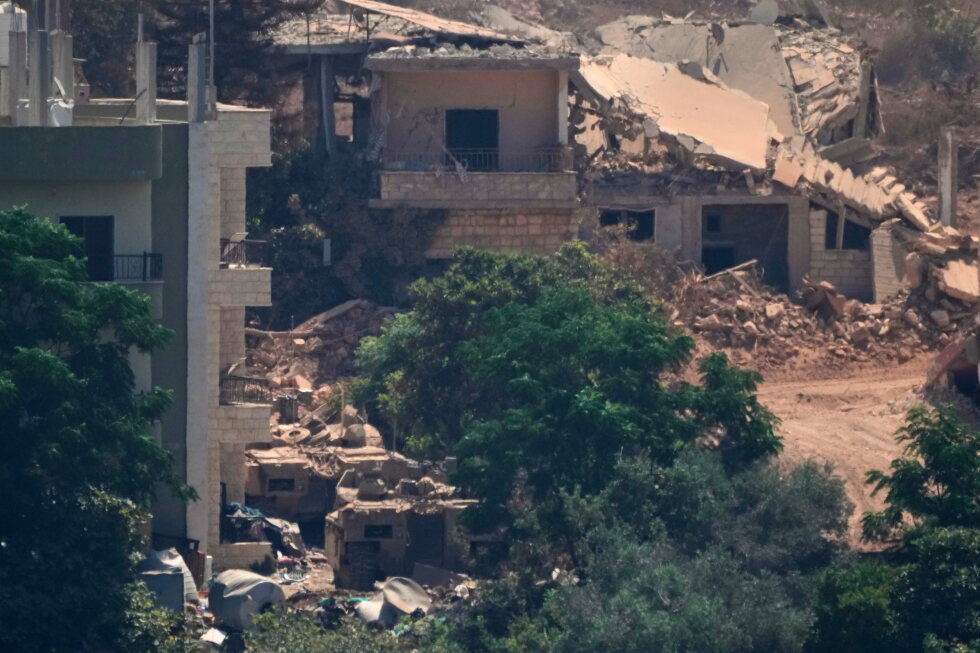
BEIRUT (AP) — The Israeli military said Thursday that two of its soldiers were killed in combat in southern Lebanon in the first Israeli deaths since the implementation of a shaky truce between Israel and the Iran-backed Lebanese militant group Hezbollah in June.

Four other soldiers were seriously wounded, the military said. The deaths had been reported by Israeli media a day earlier.

The Israeli army launched strikes Wednesday in southern Lebanon in response to what it described as Hezbollah’s violation of the ceasefire and issued a call for residents of the village of Mansouri to flee — the first such warning Israel has issued in Lebanon for weeks.

There was no immediate statement from Hezbollah.

Advertisement

The escalation came as Lebanese and Israeli negotiators met in Rome to discuss implementation of a June 26 deal under which Israeli forces are supposed to withdraw from areas they occupy in southern Lebanon and allow the Lebanese army to take control, in exchange for Hezbollah’s disarmament.

Wednesday’s talks ended early due to the escalation on the ground. It was not immediately clear if they would resume Thursday.

Lebanon’s Health Ministry said one person was killed and 12 wounded in an Israeli strike in the town of Tebnine Wednesday. The state-run National News Agency reported more people wounded in overnight strikes on the village of Burj al-Shemali, but the number was not clear. Artillery shelling also targeted the areas of Mansouri and Majdal Zoun, it said.

The latest Israel-Hezbollah war erupted on March 2, when Hezbollah fired rockets across the border two days after the U.S. and Israel launched their attacks on Iran. More than 4,000 people have been killed by Israeli strikes in Lebanon since then, including hundreds of civilians About 40 soldiers and three civilians – including a military contractor – have been killed on the Israeli side.

Advertisement

A shaky truce between Israel and Hezbollah has largely held since June 20, but Israeli forces have continued to occupy swaths of southern Lebanon and to carry out periodic airstrikes and shelling.

The talks in Rome have focused on implementation of “pilot zones” where Israeli forces would withdraw and the Lebanese army would take control. Implementation began last month with an initial pilot zone in an area that wasn’t occupied by Israeli forces but had previously sustained Israeli fire.

The Lebanese army entered the town of Zawtar al-Gharbieh and some civilians returned, although many came only to find their homes destroyed and left again.

A diplomat familiar with the negotiations said earlier this week that Lebanon had asked to be either in the town of Khiam or Bint Jbeil. Both areas saw heavy fighting in the latest Israel-Hezbollah war and are currently occupied by Israeli forces.

But U.S. Ambassador to Lebanon Michel Issa suggested ahead of the three-day talks that no new pilot zones would be immediately implemented, saying that “moving too quickly risks jeopardizing the very civilians this process is meant to protect.”

Advertisement

Source link

Continue Reading

NewsBeat

Suri steps into the spotlight… Tom’s girl makes stage debut treading the boards at the Fringe

Published

on

Debut: Suri dresses the part for her show at the Edinburgh Fringe Festival

Advertisement

She might not have spoken to him for a decade but Suri Noelle can’t escape her A-lister dad in the looks department.

Oscar winner Tom Cruise‘s youngest daughter appeared a dead ringer of him as she smiled while arriving at a dress rehearsal for her forthcoming Edinburgh Fringe show, which begins on Thursday for a 13-day run.

As the daughter of Dawson’s Creek star Katie Holmes and Cruise she has decided to follow in her acting parent’s footsteps and is making her theatrical debut in a queer adaptation of Shakespeare’s A Midsummer Night’s Dream.

Seen for the first time in her character, Suri, 20, who it was revealed last week had legally changed her name from Cruise, sported a pillbox fascinator, a yellow shirt with a purple corset and matching skirt.

Advertisement

Suri appears to be as hard-working as her 64-year-old Top Gun star father too. She spent more than three hours preparing for her big debut in a venue on Edinburgh’s St Andrews Square alongside eight of her fellow students from Carnegie Mellon University School of Drama in Pittsburgh, Pennsylvania.

The show, Midsummer!, is described as ‘bursting with queer transformative joy’.

Cruise, a devout and leading member of the Church of Scientology – a religion that is profoundly homophobic – will no doubt feel uncomfortable watching this modern translation.

But the Rain Man actor is a known fan of Scotland, having played golf in St Andrews.

Advertisement

Debut: Suri dresses the part for her show at the Edinburgh Fringe Festival 

Estranged: Tom Cruise with young Suri and Katie Holmes in 2011

Estranged: Tom Cruise with young Suri and Katie Holmes in 2011 

Suri is making her theatrical debut in a queer adaptation of Shakespeare's A Midsummer Night's Dream

Suri is making her theatrical debut in a queer adaptation of Shakespeare’s A Midsummer Night’s Dream

Advertisement

However, it is unlikely he will be attending the show as Cruise has reportedly been estranged from his daughter for years following his 2012 divorce from Holmes, 47, and her decision to cut ties with Scientology.

According to the voter records, the actress registered in Pennsylvania, where she currently lives, under her mother’s middle name, Noelle.

It was previously reported she was pursuing a degree in fashion, but it appears the nepo-baby has pursued her parent’s profession two years after graduating from New York City’s prestigious Fiorello H. LaGuardia High School of Music & Art and Performing Arts.

After their six-year marriage broke down, Ms Holmes was given full custody of their child, who she raised in New York and Cruise could get visits – paying £298,000 a year until her 18th birthday to meet living expenses.

Advertisement

Cruise previously admitted he had not seen the then six-year-old for 110 days over the previous summer, immediately following the breakdown of the marriage.

He agreed that over a five-month period, he saw Ms Noelle for ten days in total, six of which were a father-daughter bonding trip to Disney World.

Instead, he flew between Pittsburgh and London for an annual Scientology event and spent several days holidaying in Croatia with friends.

A source close to the actor has repeatedly denied the father and daughter are estranged.

Advertisement

During her parents’ marriage, Ms Noelle was raised as a Scientologist but after the divorce she and her mother split from the church, turning to Catholicism.

Infamous for discouraging its members from having family relationships with those outside the religion, it is believed Scientology is the reason behind Cruise and his daughter’s fractured relationship.

Advertisement

Source link

Advertisement
Continue Reading

Trending

Copyright © 2025