
Crypto World
ENS Scales Back Plan to Move DAO Treasury Control to New Foundation

Katherine Wu, chief operating officer of ENS Labs, posted an executable draft Thursday of the proposal to establish an ENS Foundation, dropping a plan to shift the DAO's operational wallet to the new entity after weeks of delegate opposition to an earlier version of the plan. The draft, "[Draft]… Read the full story at The Defiant

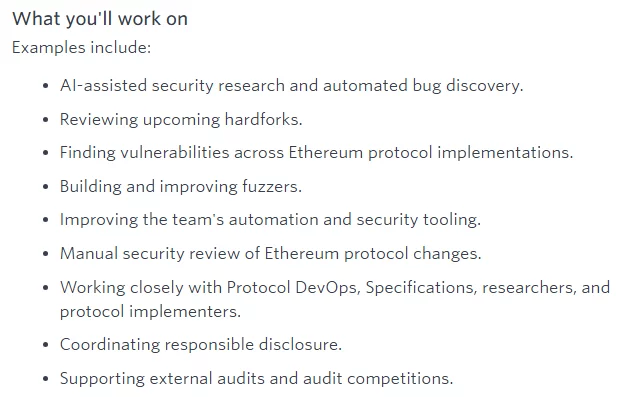
Ethereum Foundation is recruiting a protocol security researcher to use artificial intelligence, fuzz testing, and manual audits to find vulnerabilities across Ethereum’s core infrastructure.
Summary
- The researcher will examine Ethereum’s execution, consensus, networking, specifications, and client software.
- Responsibilities include AI-assisted vulnerability mining, hard fork reviews, fuzzing, audits, and disclosure coordination.
- The global remote opening follows the Foundation’s decision to cut 54 roles during a broader restructuring.
- Ethereum’s security team recently confirmed that its AI agents had identified real protocol bugs.
Ethereum security role covers the full protocol
According to the job posting, the researcher will join the Ethereum Foundation’s Protocol Security team and investigate weaknesses across several parts of the network.
The work covers the execution layer, which processes transactions and smart contracts, and the consensus layer, which coordinates validators. It also extends to Ethereum’s peer-to-peer network, technical specifications, and the client programs that implement protocol rules.
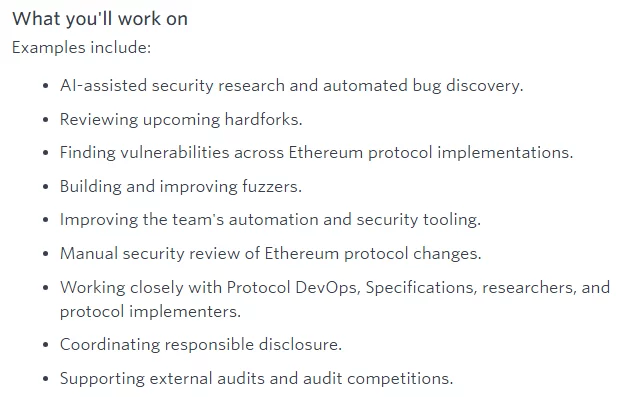
Key responsibilities include developing fuzzing tools, reviewing changes scheduled for hard forks, manually auditing protocol updates, and coordinating the responsible disclosure of confirmed vulnerabilities. The researcher will also use AI systems to support automated vulnerability discovery.
Such a combination reflects the limits of fully automated security testing. AI tools can generate large numbers of possible findings, but researchers must reproduce each issue, assess its impact, and separate genuine vulnerabilities from false positives.
Candidates need extensive knowledge of the Ethereum protocol. The Foundation said it prefers engineers who have contributed directly to protocol development or understand execution-layer and consensus-layer specifications.
Relevant programming languages include Go, Rust, Java, C#, Nim, and Python. The remote position is open to candidates in Europe and other regions globally.
AI tools have already found Ethereum bugs
The hiring follows the Ethereum Foundation’s recent tests of coordinated AI agents against protocol code, cryptographic software, and other systems used by the network.
In a July 9 technical post, the Protocol Security team said the agents had uncovered genuine flaws.
“The agents found real bugs…Agents finding bugs wasn’t the surprise. The surprise was how little of the work went into finding them, and how much went into telling the real bugs from the ones that just looked real.”
One confirmed finding was a remotely triggered panic in libp2p’s gossipsub component, part of the peer-to-peer layer used by Ethereum consensus clients. Developers fixed the flaw before it was disclosed as CVE-2026-34219.
However, the team said most of the work involved determining which AI-generated findings were real. Researchers required reproducible evidence, proof-of-concept code, and human review before treating a report as a vulnerability.
The new role formalizes that workflow by combining automated discovery with manual verification and disclosure management.
Hiring follows Ethereum Foundation restructuring
The recruitment comes less than a month after the Foundation dissolved its Protocol Support team as part of a restructuring that eliminated 54 positions, or about 20% of its workforce.
Protocol Support previously coordinated core developer meetings, tracked network upgrades, helped contributors navigate Ethereum Improvement Proposals, and operated training programs for new protocol developers.
Several former Foundation researchers have since moved into independent organizations. Former employees Mo Jalil, Oskar Thorén, and Aaryamann Challani created EthSystems, a for-profit company developing confidential Ethereum infrastructure for regulated institutions. Bitmine, SharpLink, and Consensys CEO Joe Lubin backed the venture.
Former Foundation researcher Francesco D’Amato also joined independent protocol research group Ethlabs on July 16.
The latest opening suggests the organization is still adding specialized staff in areas it considers essential, even as some development and coordination work shifts outside the Foundation.
Security remains central to Ethereum governance
The Foundation also appointed security researcher Pascal Caversaccio to its board on July 29 for an initial one-year voluntary term. His appointment expanded the board to four members and reinforced its stated focus on security, privacy, and censorship resistance.
For U.S. investors, protocol security has direct relevance because Ethereum supports spot exchange-traded funds, stablecoins, tokenized assets, and financial applications used by American institutions. A flaw affecting consensus or client implementations could disrupt infrastructure far beyond the Foundation itself.
The hiring process does not indicate that a new vulnerability has been discovered. Instead, the role expands the team responsible for reviewing future hard forks and finding weaknesses before protocol changes reach the main network.
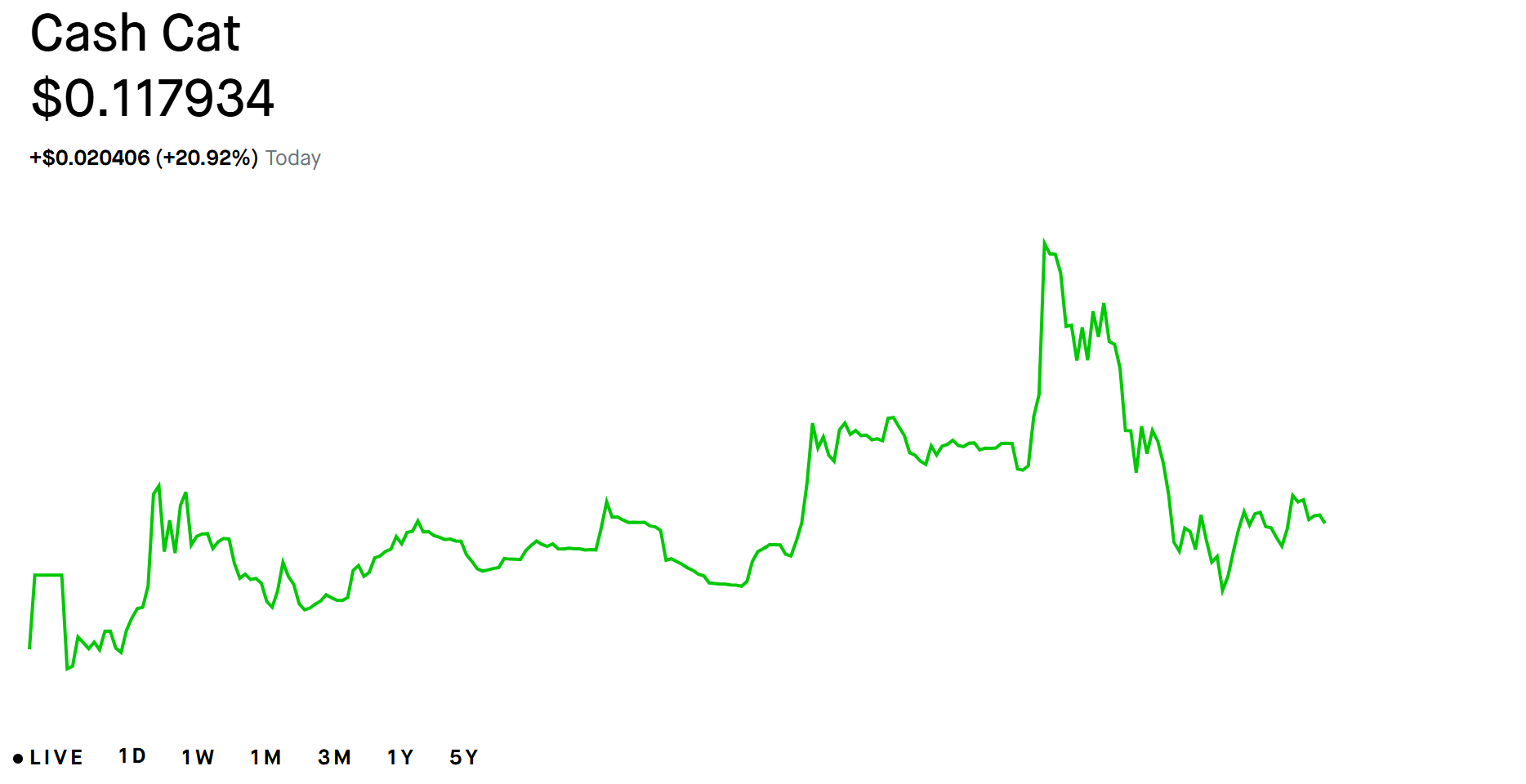
Robinhood listed a cat meme coin on Thursday that is named after the company’s own rejected name. The token more than doubled within hours, then handed back most of the gain.
Cash Cat (CASHCAT) ran from $0.0853 to $0.2143 in the 15 hours around the listing. That is a 151% move, according to onchain trade data. The token now sits near $0.1185.

A Rally Built on a Name Robinhood Threw Away
CASHCAT is a joke about Robinhood itself. The project’s site says the broker was almost called Cash Cat. It points to a 2021 post by Chief Executive Vlad Tenev.
The token has no link to the company. Its own website is blunt about that.
“No. We just think Cash Cat is a really good name they shouldn’t have abandoned. This is fan fiction with a ticker,” reads an excerpt in CASHCAT website FAQ.
Follow us on X to get the latest news as it happens
That did not stop the listing. Robinhood made the asset tradable in its app and on Legend, its desktop platform for active traders.
One Hour Did Most of the Work
The buying arrived in a burst. CASHCAT opened the midday UTC hour at $0.1288 and touched $0.2143, a 66% jump inside 60 minutes. That single hour saw $17.2 million in trades, more than any other hour of the day, GeckoTerminal data shows.
The peak landed within 6% of the record high of $0.2288 set on July 11. Then the move unwound. CASHCAT now trades 42% below Thursday’s top.

The reason is size. The main trading pool holds about $5.3 million. Roughly $92.6 million changed hands in a day. When daily trading runs 17 times deeper than the pool itself, large sells move the price hard.
Buyers still outnumbered sellers over the day, at 31,267 buys against 19,088 sells. The meme coin’s current price puts its market value near $116.8 million, ranking it 232nd overall. Chain records show 48,710 wallets hold it.
Meme Coins, Not Stocks, Still Rule Robinhood Chain
Robinhood launched its own blockchain on July 1. The company built it on Arbitrum and pitched it as “purpose-built for real-world assets” such as shares and exchange-traded funds.
Traders chose cats instead. Meme trading took over the network in its first week, and tokenized stocks trailed meme coins by value through July. Daily trading volume climbed to a record during the frenzy.
Thursday showed the pattern again. Exchange volume across the chain reached $517.8 million, up 60% in a day. Total deposits sat at $433 million, DefiLlama data shows. One cat coin moved the whole network.
CASHCAT is up about 1,193% over 30 days and briefly crossed a $200 million valuation in July. Analytics firm Artemis has warned that this kind of speculation could complicate Robinhood’s tokenization plans.
Bubblemaps Flags Wallets That Bought Early
Onchain analytics firm Bubblemaps looked at who was buying before the news broke. It found newly created wallets that loaded up on CASHCAT.
Bubblemaps did not name the wallet owners or allege wrongdoing. Robinhood has not commented on the addresses.
The next test is simple. CASHCAT needs the new retail buyers to stay once the listing stops trending.
The post Robinhood Listing Triggers a 100% Rally for This Meme Coin appeared first on BeInCrypto.


Ready, the self-custodial wallet formerly known as Argent, shut down its card program on Wednesday after its issuer wound down without warning, co-founder Itamar Lesuisse said in a post on X. "We were given no notice, so if you were relying on the card today, you found out at roughly the same time… Read the full story at The Defiant
Crypto World
Bitcoin Price Analysis: BTC Battles Key $65K Barrier as Short Liquidation Cluster Builds
Bitcoin has extended its recovery from recent lows and is now testing an important resistance region. While short-term momentum has improved, the asset is approaching an area that could determine whether the current rebound evolves into a larger breakout or another rejection within the broader consolidation.
Bitcoin Price Analysis: The Daily Chart
On the daily timeframe, Bitcoin continues to trade within its well-defined consolidation range. The recent rebound has carried the price back toward the major resistance zone at $66.2K to $66.8K, while the broader support remains at $57.8K to $60.2K.
Although buyers have regained short-term momentum, BTC is still trading beneath the declining 100-day and 200-day moving averages, which continue to reinforce the broader bearish structure. The descending long-term trendline also remains intact, adding further confluence around the overhead resistance.
For now, the market continues to favor range-bound conditions. A confirmed breakout above the $66.2K to $66.8K resistance would be the first signal that buyers are regaining control and could pave the way toward the next resistance around $72K to $74K. Until then, the current move appears to be another recovery leg inside the broader consolidation.
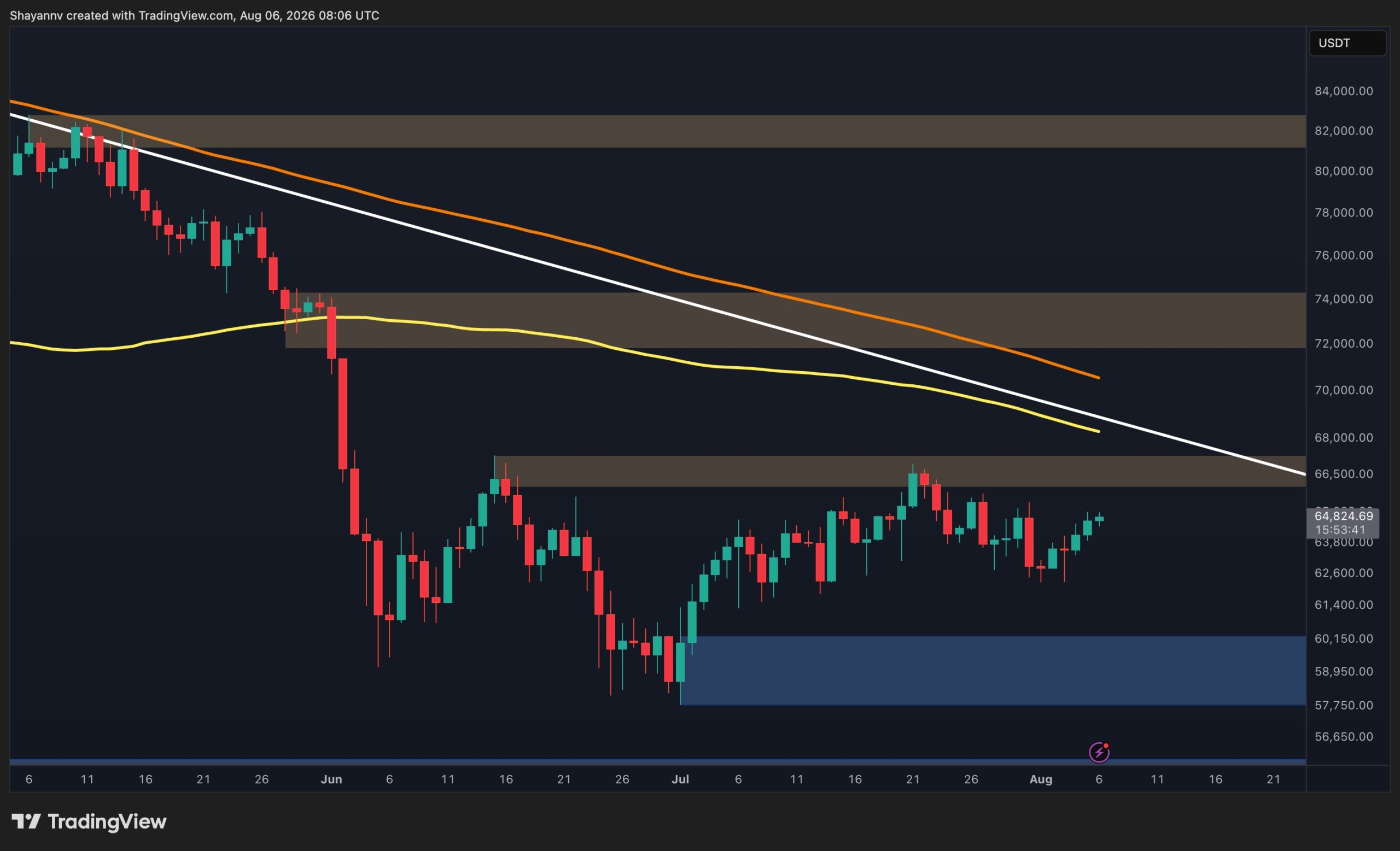
BTC/USDT 4-Hour Chart
The 4-hour chart shows that buyers have staged a strong recovery from the $61.8K to $62.3K demand zone, pushing Bitcoin back into the immediate resistance area around $64.8K to $65.4K.
This resistance has already rejected the price several times over the past two weeks, making it the key short-term barrier. A successful breakout above the $64.8K to $65.4K region would likely open the door for another rally toward the daily resistance around $66.2K to $66.8K.
However, failure to overcome this supply zone could trigger another rejection back toward the buyers’ defense at $61.8K-$62.3K, keeping BTC trapped within its broader consolidation range.

Sentiment Analysis
The latest two-week liquidation heatmap highlights a significant concentration of short liquidation liquidity above the current price, particularly around the $66K region. As Bitcoin continues pressing higher, this cluster becomes an attractive magnet for price, increasing the probability of an upward liquidity sweep.
If buyers manage to push through the nearby resistance, the liquidation of overleveraged short positions could trigger a short squeeze, accelerating bullish momentum toward higher resistance levels.
While a liquidation cluster also exists below the current market, it primarily reflects aggressive long positioning. For now, the more considerable and more attractive liquidity target remains overhead, favoring an upside sweep if buyers can maintain control.

The post Bitcoin Price Analysis: BTC Battles Key $65K Barrier as Short Liquidation Cluster Builds appeared first on CryptoPotato.
Uniswap's fee switch reached the protocol's newest pools this week, and the first revenue arrived alongside a public brawl over who is paying for it. The early returns favor UNI holders. Protocol revenue has nearly tripled since the July 27 activation, with about $325,000 flowing toward UNI burns… Read the full story at The Defiant


A Greek security researcher reportedly spent 22 months inside North Korean hacking servers. He came out with a victim list of 1,640 organizations in 57 countries.
Vangelis Stykas is chief technology officer at security firm Kumio. He presented the findings this week at Black Hat in Las Vegas.
How the Hunters Became the Hunted
Stykas turned the usual order around. He worked his way into the command-and-control servers the crews use to run their malware.
In some cases he landed on their personal computers. The hackers had infected those machines themselves.
Then he simply stayed. For nearly two years he watched them work and logged each new victim as it appeared.
He pulled roughly five terabytes of data. It held developer keys, private source code, and the crews’ own Slack and Discord messages.
That access is why the count is firm. Most threat reports estimate victims from the outside.
This one counted them from the attackers’ own files. Of the 1,640 organizations, Stykas rates 700 to 800 as seriously breached.
Follow us on X to get the latest news as it happens
In those cases the crews held root access to servers, Amazon Web Services (AWS) root permissions, or cryptocurrency wallet keys.
A Job Offer Was the Only Exploit They Needed
No software flaw opened these doors. A job offer did.
Developers were approached with senior roles and strong pay. They were then asked to run a take-home coding test. The test installed malware.
Palo Alto Networks researchers named the pattern Contagious Interview back in November 2023. Five security firms have since tracked the same crew under six different labels.
Microsoft published its own breakdown in March 2026. It traced the chain to fake code packages hosted on GitHub, GitLab, and Bitbucket.
Opening one in Visual Studio Code triggers a trust prompt. Approve it, and the editor runs the attackers’ code for them.
“By embedding targeted malware delivery directly into interview tools, coding exercises, and assessment workflows developers inherently trust, threat actors exploit the trust job seekers place in the hiring process,” read an excerpt in a March security blog from Microsoft security blog.
The backdoors then hunt a short shopping list. Microsoft names API tokens, cloud credentials, signing keys, crypto wallets, and password manager files.
Hiring is a repeat weak point. Consensys caught a hidden North Korean developer on its own team, a month into work on MetaMask code.
One Contractor, Thirty Front Doors
The lure is cheap. The reach is not.
Stykas found contractors carrying live credentials for as many as 30 companies. A single infected laptop became thirty ways in.
Boston Children’s Hospital shows the pattern. Stykas traced its exposure to a former contractor’s personal device.
The hospital disputes the framing. It says it cut the credentials within hours and found no sign its own systems were entered.
The crews were also picky. They could reach health records and criminal databases, yet ignored both.
They went for wallets and blockchain access instead. Coinbase and Uniswap Labs sit among the organizations that acted on his warnings.
That discipline shows up in the totals. Crews tied to the Democratic People’s Republic of Korea (DPRK) stole a reported $2.02 billion in digital assets during 2025.
CrowdStrike logged that as a 51% jump in one year. It also flags a crew it calls GOLDEN CHOLLIMA for using recruitment lures to reach fintech cloud environments.
That is the chain Stykas watched from the inside. The human route keeps winning.
TRM Labs traced April’s $285 million Drift Protocol theft to in-person meetings between North Korean proxies and staff.
Two attacks produced 76% of 2026 losses from just 3% of incidents. Pyongyang’s running total now clears $6 billion since 2017.
Stykas says fresh victims are still surfacing in the data. Most organizations he warned never wrote back, which is why groups like Crypto ISAC now pool DPRK threat intelligence instead.
The post Researcher ‘Lives’ Among North Korean Hackers, Discovers 1,640 Victims appeared first on BeInCrypto.
After a green July, the crypto market entered August against geopolitical and macroeconomic tension. Yet recent on-chain signals show smart money quietly positioning across the majors.
Large holders are adding Bitcoin (BTC), Ethereum (ETH), and XRP (XRP) as prices sit near or below their realized prices, according to CryptoQuant. The firm reads the buying as a sign that the downturn is in its final stage.
Whale Accumulation Continues Across Major Cryptocurrencies
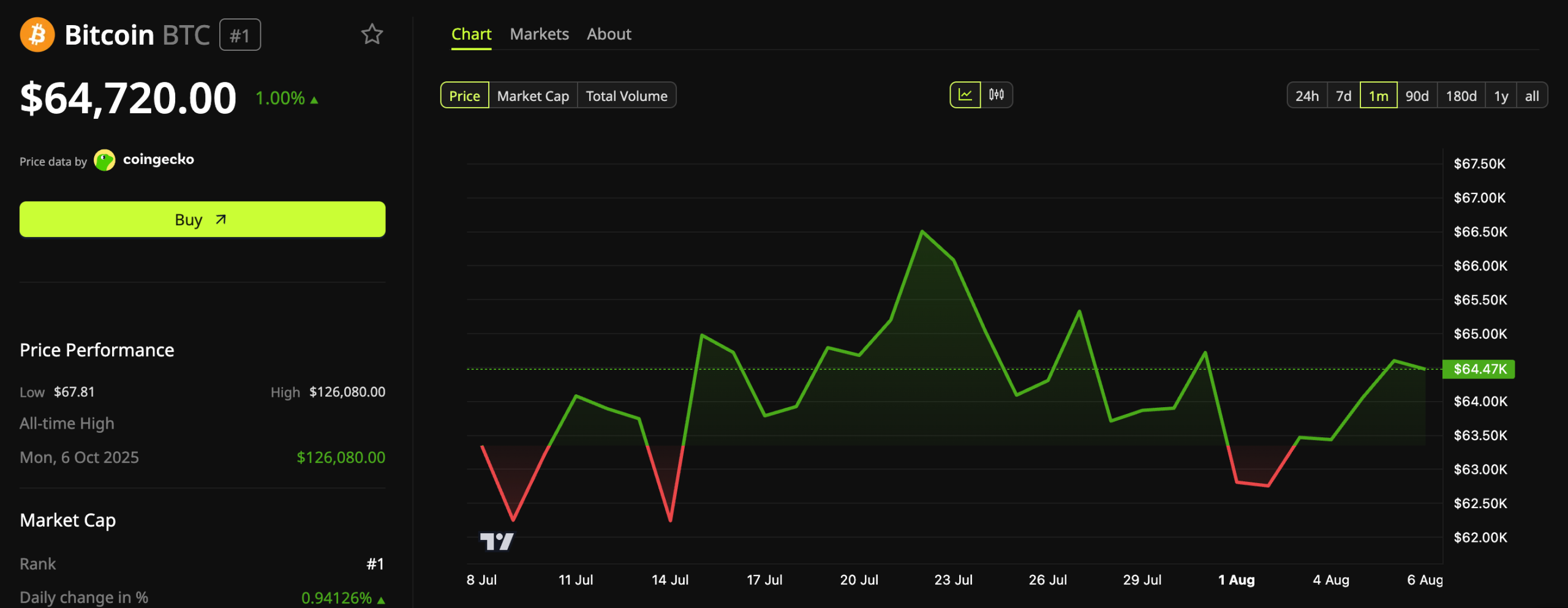
Global markets have pulled ahead while Bitcoin stalled. Equities set fresh records into early August, but Bitcoin held near $64,700, up just 1.5% from a week earlier.

Beneath that flat price, the largest wallets kept buying. Bitcoin whale balances, excluding exchanges and mining pools, climbed to about 3.06 million BTC.
However, it still sits below the 2025 bull-market peak of roughly 3.23 million, leaving room for more accumulation.
Ethereum tells a sharper version of the same story. Wallets holding more than 100,000 ETH added about 1.8 million ETH since mid-2025, a rise of nearly 70%. Meanwhile, the 1,000-to-10,000 ETH cohort cut its holdings to 12.9 million from 15.6 million in January.
In XRP, order sizes remained in “big whale” territory while the token held its range near $1, suggesting absorption rather than aggressive buying. BeInCrypto also highlighted that XRP inflows to Binance have fallen to a record low.
Taken together, the on-chain data suggests whales are treating the current period as an accumulation opportunity. Beyond large-holder buying, adoption indicators are also improving.
Holder counts across major cryptocurrencies have climbed, reinforcing the view that network participation is expanding even as market sentiment remains cautious.
Follow us on X to get the latest news as it happens
CryptoQuant also noted that valuations are approaching historically undervalued levels. Bitcoin and XRP remain close to their realized prices of $52,900 and roughly $0.75, respectively.
Ethereum appears even more discounted, trading well below its realized price of about $2,450. According to the firm, such conditions suggest “late-bear-market zones.” Other signals also indicate the bear market may be approaching its final phase.
Why the Crypto Market Bottom Is Not Yet Confirmed
While accumulation lowers downside pressure, it does not confirm a floor. CryptoQuant stressed that prices could still fall further before the market turns.
“Risk-reward has improved markedly, but is not fully de-risked. Downside pressure is lower as large holders accumulate, signaling the last stage of the bear market — yet from a pure valuation standpoint, some further downside remains possible before a confirmed floor,” the report read.
Analysts elsewhere echo the mixed picture. Glassnode has described the bottom conditions as “assembling but incomplete.”
“Bottom signals assembling through boredom, not capitulation; still short of every prior bear’s floor,” the firm wrote.
For now, whales are buying weakness the market has yet to reward.
Subscribe to our YouTube channel to watch leaders and journalists provide expert insights
The post Is the Crypto Bear Market in Its Final Stage? Whales Are Betting Yes appeared first on BeInCrypto.
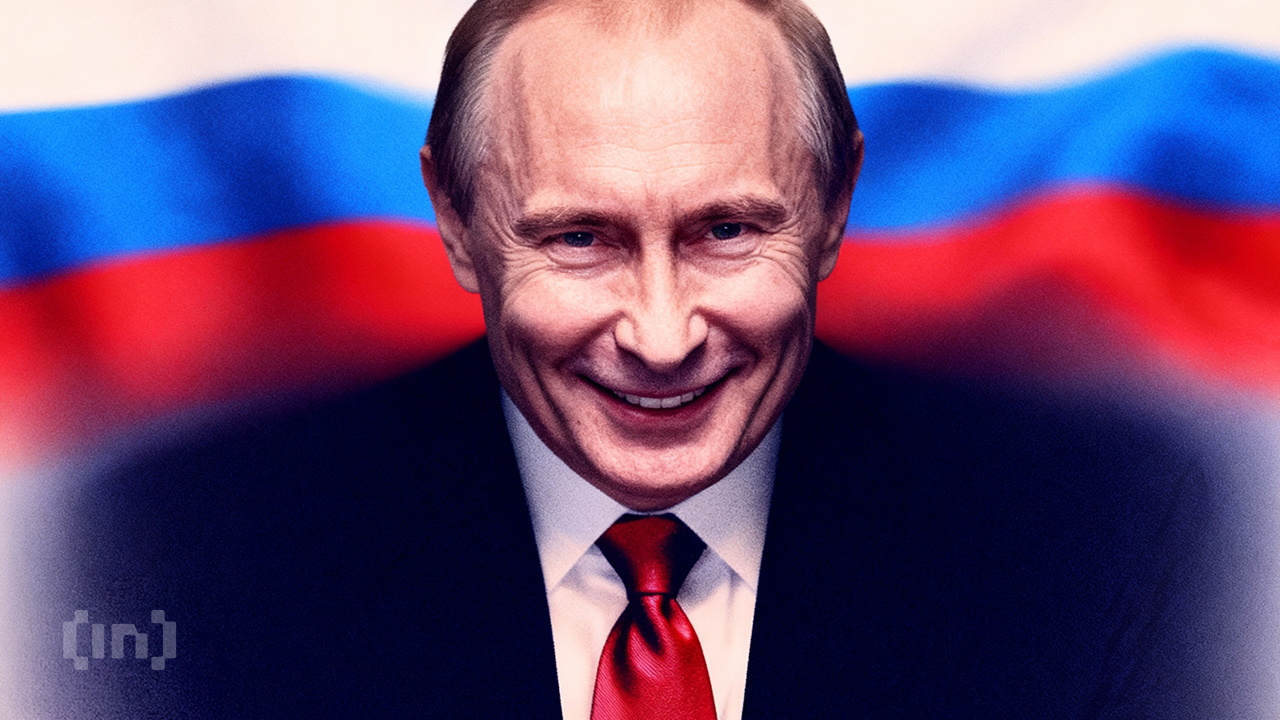
Russian President Vladimir Putin has signed a sweeping crypto regulation law, creating a licensed framework for digital asset trading. The law permits bitcoin (BTC) and other digital assets for cross-border trade starting September 1, 2026.
The measure gives Russia its first comprehensive legal structure for digital currencies. Regulators previously left crypto activity in a legal gray area with little oversight.
How the New Russia Crypto Regulation Works
Crypto exchanges, brokers, and custodians operating inside Russia must register with the central bank, known as the Bank of Russia, according to TASS. Registered platforms need at least 15 million rubles in minimum capital. They must also join a self-regulatory organization for the financial market. The Bank of Russia will phase in full registration requirements through July 1, 2027, giving existing platforms time to comply.
The requirement follows the passage of a sweeping crypto bill in July. Russia’s lower house of parliament, the State Duma, cleared the bill’s final readings the same day.
The law also defines what counts as active trading. Regulators set the bar at two or more transactions in a month worth a combined 3.5 million rubles or more. The threshold separates licensed market makers from occasional, one-off sellers.
Only select cryptocurrencies qualify for public trading under the law. Assets need an average market capitalization above 5 trillion rubles. Daily trading volume must also exceed 1 trillion rubles over two years. Bitcoin, Ethereum (ETH), and the stablecoin USDT currently meet that bar.
Anatoly Aksakov, chairman of the Duma’s Financial Markets Committee, defended the licensing rules ahead of the signing.
“Mass use of anonymous wallets and the gray circulation of cryptocurrencies contradict the idea of a legal market,” — Aksakov said.
The law builds on a narrower measure that already let companies settle foreign trade crypto payments starting July 1. The new statute consequently widens that channel into a full licensing regime rather than a temporary workaround.
Retail Limits and the Domestic Payments Ban
Retail access comes with tighter conditions than institutional trading. Non-qualified investors, essentially anyone who has not passed a required knowledge test, face annual purchase limits. The law caps each investor at 300,000 rubles, worth roughly $3,690, per licensed intermediary, every year. Non-qualified investors make up an estimated 98% of Russia’s retail investor base.
Domestic payments for goods and services remain banned. Officials argue the restriction protects the ruble’s stability. Wider domestic crypto use, they say, could weaken demand for the national currency.
The push toward legal crypto exchange also reflects sanctions pressure. European Union sanctions packages have progressively squeezed Russian access to global finance.
Russian experts remain split on how the domestic industry should respond. Meanwhile, new EU sanctions have made crypto services harder for Russian users to access. An earlier package specifically targeted Russia’s crypto sector.
The new law, therefore, positions state-licensed crypto rails as a controlled outlet. It offers a channel for trade that Western sanctions have otherwise restricted.
The comparison with Washington is stark. The Senate Banking Committee advanced the CLARITY Act, a market structure bill for US crypto exchanges, by a 15-9 vote in May. That bill still needs full Senate floor passage, reconciliation with a competing House version, and a presidential signature, and several roadblocks remain before it takes effect. Russia’s crypto regulation, by contrast, is already signed and takes effect on September 1.
The post Russia Outpaces US in Crypto Regulation: What the New Law Mandates appeared first on BeInCrypto.
Bitcoin (BTC) stayed motionless at Thursday’s Wall Street open as analysis saw signs of reemergent US “stagflation.”
Key points:
- Bitcoin stays below $65,000 as Iran tempers expectations over the Strait of Hormuz oil route reopening.
- US PMI data analysis sees “stagflation” return as a potential future risk.
- BTC price indecisiveness means that the market still lacks a “genuine breakdown,” says Bitfinex.
Iran cools market hopes of Hormuz deal
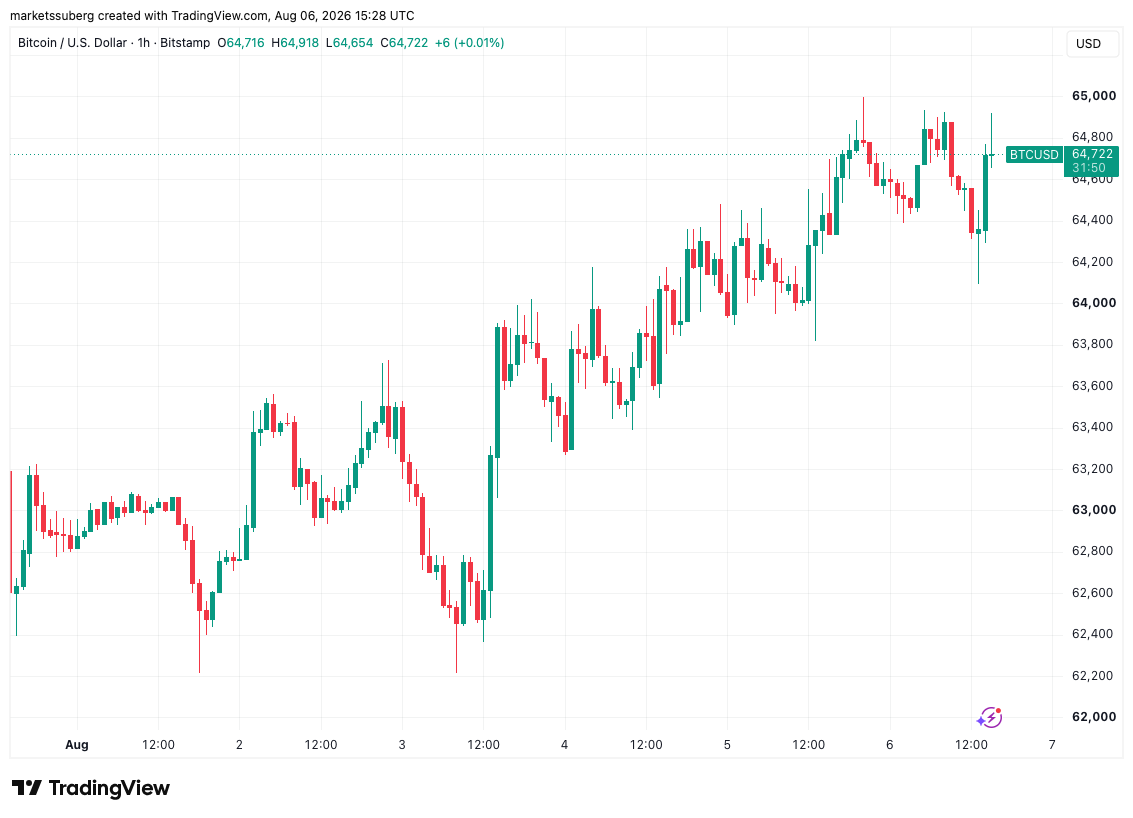
Data from TradingView showed BTC/USD hovering above $64,000, down around 0.5% on the day, while US stocks opened flat.
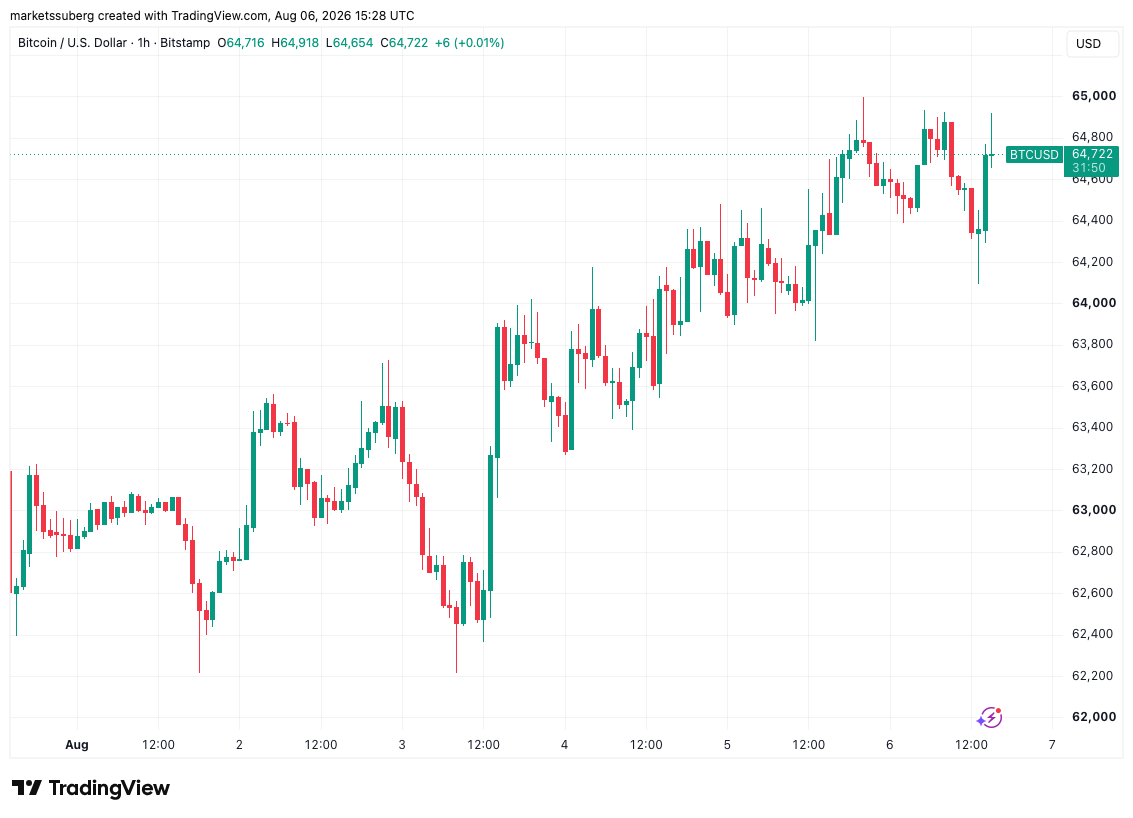
BTC/USD one-hour chart. Source: Cointelegraph/TradingView
Anticipation of a deal between Iran and Oman to reopen the Strait of Hormuz oil route did little to spark volatility — in the absence of US participation, it remained uncertain whether international shipping would fully resume.
“This understanding does not, in itself, mean that the Strait of Hormuz will reopen,” Iran’s Deputy Foreign Minister Kazem Gharibabadi said in an interview with the state-run Islamic Republic News Agency (IRNA), quoted by CNN.
US WTI crude oil was little changed on the day at $76 per barrel, having hit three-week lows of $74.30 the day prior.
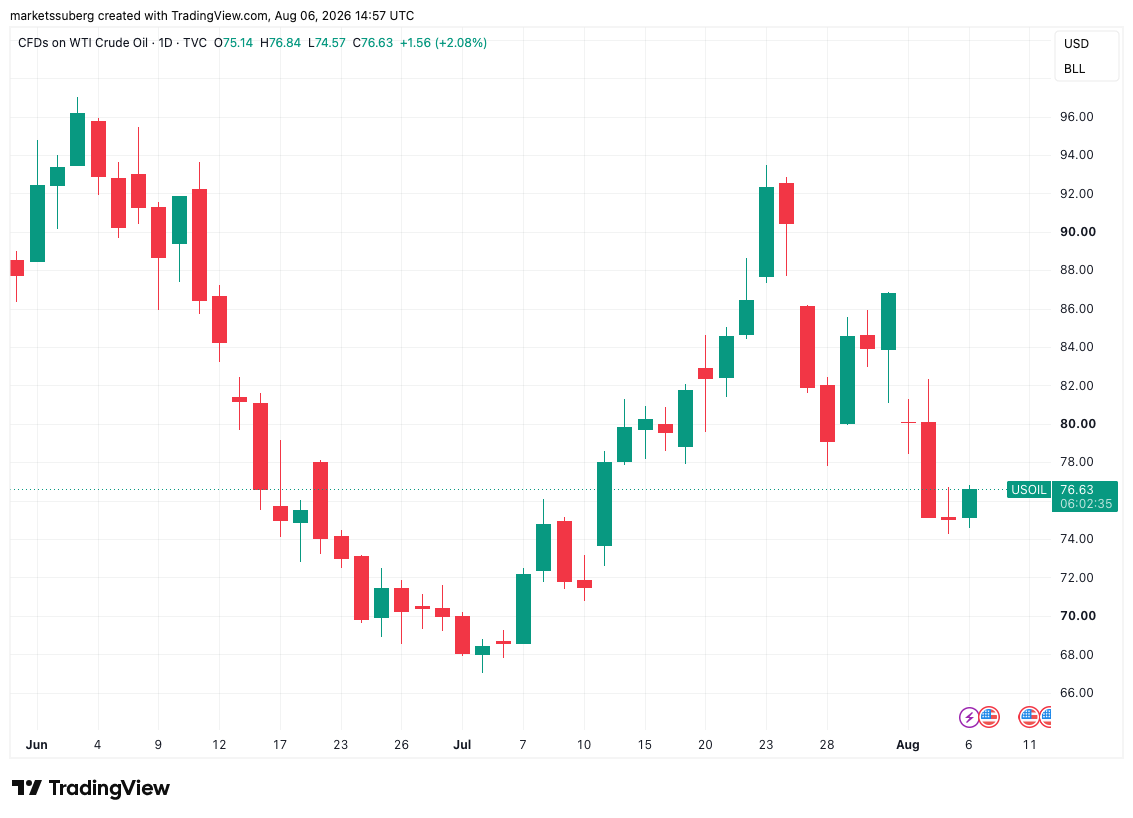
CFDs on WTI crude oil one-day chart. Source: Cointelegraph/TradingView
As markets awaited further geopolitical cues, trading resource The Kobeissi Letter turned to the latest US Institute for Supply Management (ISM) Services PMI and employment data. Released on Wednesday, this showed a divergence continuing, with PMI rising 0.1 point in July to 54.1, while employment dropped 3.6 points to 47.4, its lowest reading since March.
“At the same time, the prices paid index surged +2.6 points, to 70.3, near the highest since October 2022. Prices paid have now trended higher for over 2 years, rising +16.9 points since March 2024. In other words, the economy is increasingly under pressure from both rising prices and a weakening labor market,” it reported on X.
Kobeissi added that the odds of stagflation was thus “intensifying” based on the combined PMI readings.
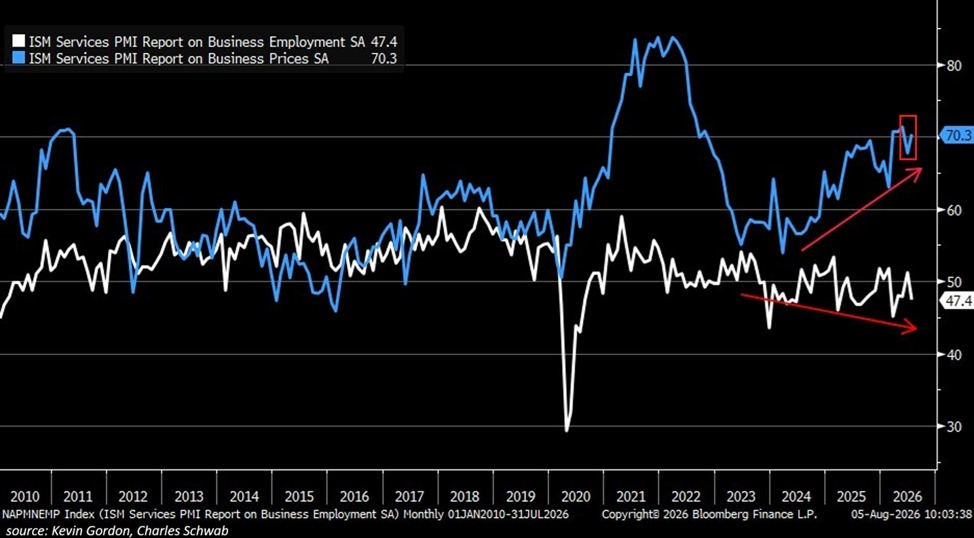
US services PMI data. Source: The Kobeissi Letter on X.com
Analysis debates solution to BTC price paralysis
With Bitcoin failing to break beyond a local range in place since the start of June, onchain analytics platform Glassnode described BTC/USD as showing “boredom rather than capitulation.”
Related: Bitcoin treasury trade ‘breaking’ and fund holdings drop 10%: Analysis
In its latest analysis on Thursday, Glassnode noted Bitcoin’s lack of reaction as gold hit its highest levels in six weeks and the S&P 500 reached all-time highs.
“The regime in one line: a compressed, under-owned market that global risk appetite has left behind, with bottom conditions assembling but incomplete,” it summarized.
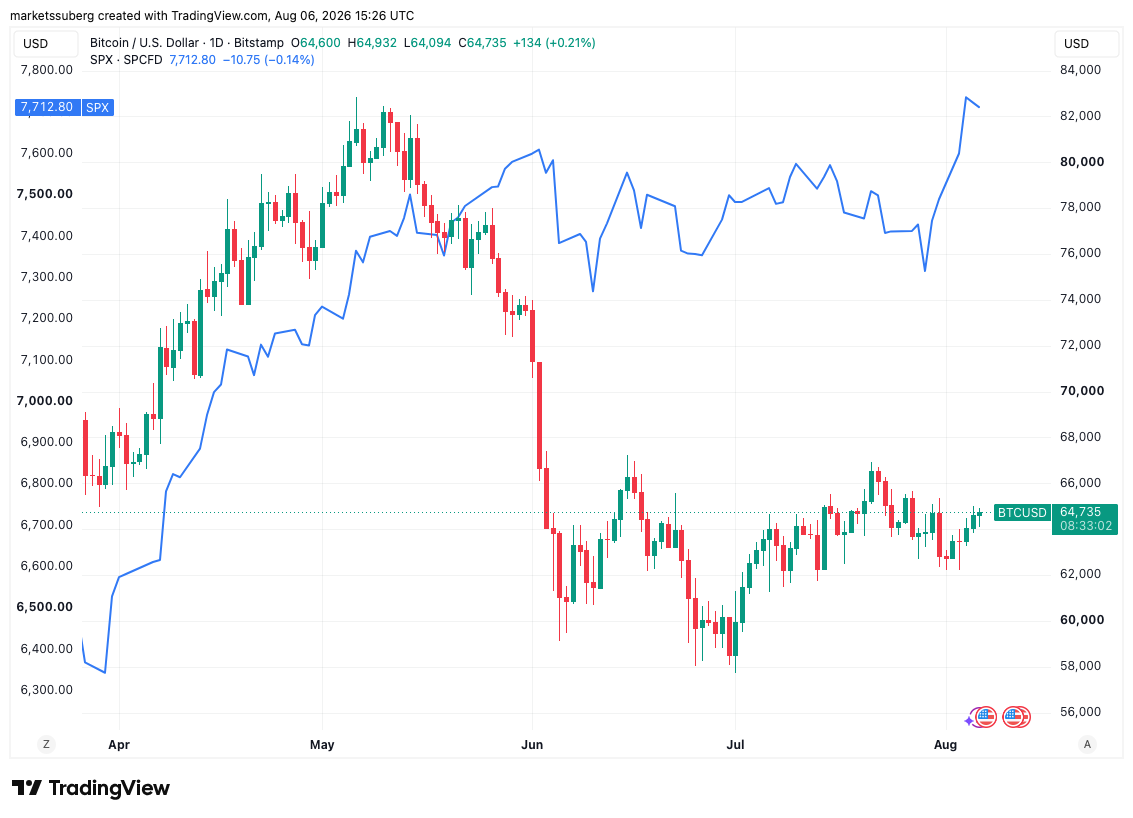
BTC/USD vs. S&P 500 one-day chart. Source: Cointelegraph/TradingView
Previously, Cointelegraph reported on bear-market comparisons seeing history repeating itself in 2026, with Bitcoin slowly eroding support before dropping to the cycle’s next macro floor.
Echoing Glassnode’s sentiment, Bitfinex Research, the analytics arm of crypto exchange Bitfinex, also saw the need for a more decisive macro bottom trigger than current conditions could produce.
“While macro developments and bitcoin’s underperformance compared with the Nasdaq and S&P 500 signal underlying stress, a genuine breakdown requires something more forceful, followed by volume-supportive price action,” it wrote in an update on Wednesday.
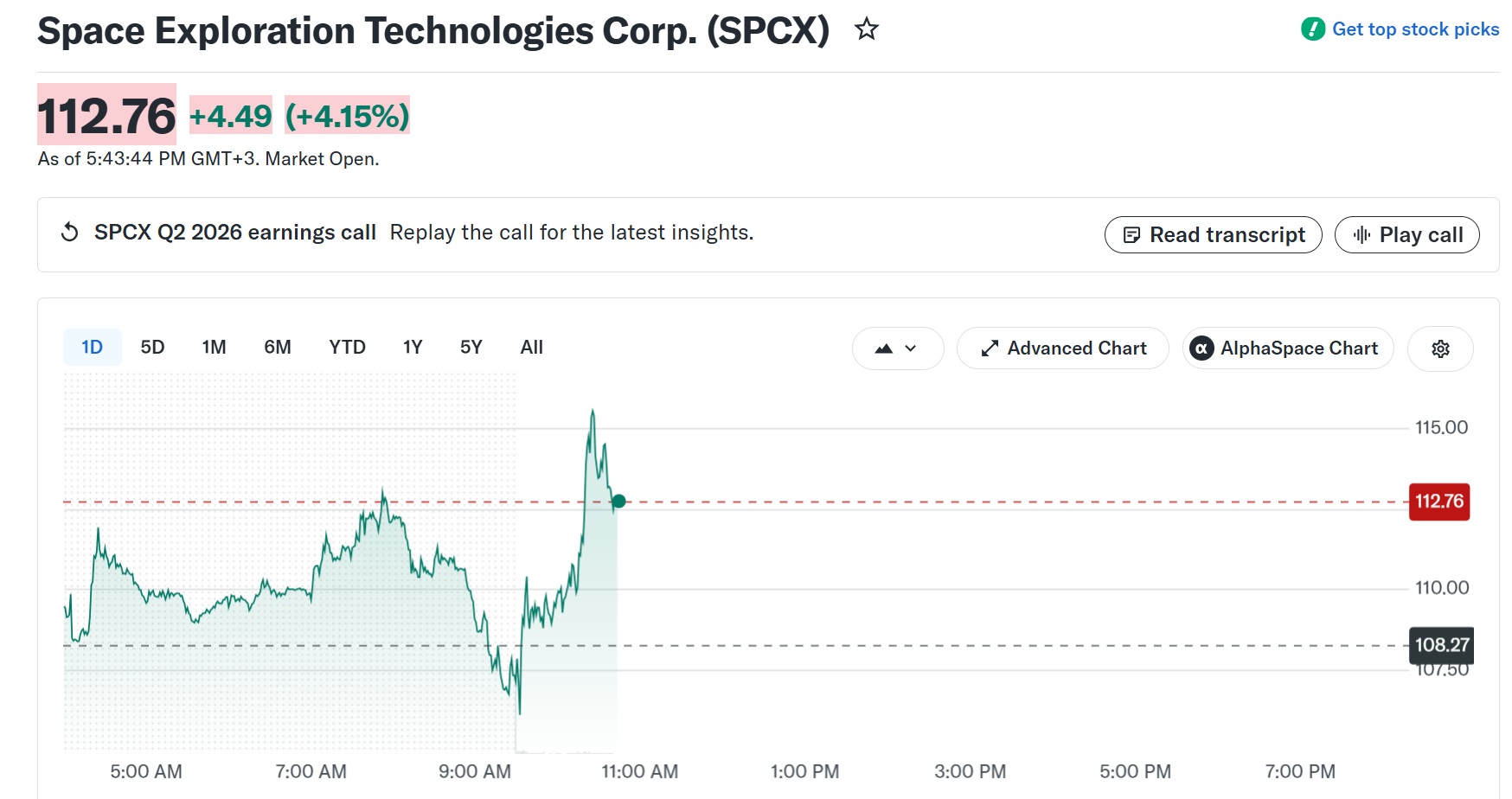
Eric Trump defended Elon Musk on Thursday, rejecting a Bloomberg column that cast the SpaceX founder as a serial overpromiser. His comment comes the same day 911 million restricted SpaceX shares become free to trade.
SpaceX (SPCX) stock climbed anyway. Shares changed hands near $112.76 late in Thursday morning in New York, up 4.15%. That bounce means less than it appears.

Eric Trump Answers Bloomberg With SpaceX Launch Numbers
In the report, Bloomberg credited Falcon 9 reliability and Starlink profits, but warns that a full mobile phone network could stretch the company too far.
One line did the damage, indicating that Musk has a long history of overpromising and underdelivering.
Eric Trump quoted that line back and answered it with launch data.
Follow us on X to get the latest news as it happens
The flight count holds up. SpaceX flew 165 Falcon 9 missions during 2025. That was roughly 85% of all United States orbital launches and close to double China’s output. One booster flew 32 times.
His mass figure is shakier. Public trackers count launches rather than payload weight, so the 80% to 85% claim is hard to test. Musk reposted the thread and called Bloomberg garbage.
The $18 Billion Number Behind the SpaceX Stock Slide
Neither man named the actual cause of the selloff. SpaceX reported earnings on Tuesday. Revenue hit $7.8 billion, up 92% and ahead of the $6.8 billion analysts expected.
Capital spending broke the story. SpaceX spent $18.4 billion in the quarter, against forecasts near $13 billion. That is more than twice what it earned in revenue.
Shares fell 13.61% on Wednesday to $108.27. Bloomberg had nothing to do with it. Jim Cramer had already flagged the unlock as a reason to wait.
Supply is the second problem. Roughly 911.5 million shares cleared their first lock-up on Thursday. That batch was worth close to $98.7 billion at Wednesday’s close.
The tradable float now roughly doubles. It moves from about 5% of the company to 12%, reviving an older thin float valuation debate.
Short sellers had crowded in first. Exchange data showed 165 million shares sold short at the July 15 settlement date, near 26% of the float. Later filings put the number around 219 million by July 29.
That detail explains Thursday. Heavy short interest hands any rally fuel, since bears must buy stock back to close out.
What Facebook’s 2012 Unlock Says About SpaceX Stock
History offers a clean test. Facebook walked into the same setup in 2012.
Its first lock-up freed 271 million shares on Aug. 16. The stock closed that day at $19.87, down more than 6%, a record low at the time. Volume ran five times normal.
The larger release went the other way. When 773 million shares came free on Nov. 14, Facebook gained 12.6%. Mark Zuckerberg held 504 million of them and said he would not sell.
Valuation professor Aswath Damodaran later studied the pattern across many listings. He found expiries shave 2% to 5% off a stock on average, yet about a third of them end higher. Volume jumps every time.
Thursday therefore looks ordinary rather than bullish. Bulls still see a floor here. Musk has called the slump an obvious entry point. One trader placed a $20 million options bet on a rebound.
Eight more tranches follow through December, and Musk’s own stake stays locked until 2027.
The post SpaceX Stock Price Recovers As Eric Trump Rallies Behind Elon Musk, Will It Hold? appeared first on BeInCrypto.

Uefa doubles down on Fifa boycott but holds greater weapon to unseat Gianni Infantino

Telo MT1 Electric Pickup Now Claims an 8,000-Pound Tow Rating, Out-Tows Cybertruck and F-150

Only 49% agree asylum seekers should be allowed to stay in NI, survey claims

Renter of Home in Anne Heche Crash Denies Settlement With Son

No Jackpot Winner as $257 Million Prize Rolls Over to $269 Million Monday Draw

Weekend Open Thread: Staud – Corporette.com

What is Cryptocurrency Trading & How to Start Crypto Trading in Pakistan

Psalm 23 Prayer for Financial Prosperity and Abundance #Psalm23 #DivineProtection #FaithInGod

XRP It’s Official! i got urgent CLARITY ACT NEWS for xrp holders
-

 Fashion6 days ago
Weekend Open Thread: Wit & Wisdom
-

 Politics6 days ago
Meta enters AI-training agreement with far-right ‘propaganda rag’ Newsmax
-

 Politics4 days ago
Zack Polanski: an incitement to murder Nigel Farage?
-

 Crypto World5 days ago
MicroStrategy Post-Earnings CLARITY Act Push Could Add New Catalyst for Its Stock
-

 Crypto World5 days ago
XRP Ledger v3.3.0 brings five institutional features
-

 Sports7 days ago
Seema Kaliramna Wins Discus Throw Bronze, Takes India’s CWG Medals Tally To 17
-

 Crypto World6 days ago
New York sues Kalshi over prediction market gambling
-

 Crypto World4 days ago
Crypto PAC spending tops $2M in Michigan House race
-

 Business4 days ago
DTCR: Deleveraging And A Hedge Fund Collapse Point To A Possible AI Bottom
-

 Business6 days ago
Trump Announces Hamas Disarmament Agreement as Iran Strikes Kuwait Air Base and US Attacks Pause Overnight
-

 Crypto World6 days ago
3 Fed Officials Just Explained Their Rate Hike Vote: Is Inflation Winning?
-

 Tech4 days ago
ESET tracks rise in malicious AI skills and adaptable malware
-

 Tech6 days ago
Gemini Spark can now use Chrome logins and saved passwords to run errands on your behalf
-

 Sports5 days ago
France Cricket implodes: letters hidden in a drawer and a board at war
-
Crypto World4 days ago
XRP Ledger urges node upgrade after manifest flood
-

 Tech6 days ago
Building A Reproduction PlayStation Motherboard
-

 Crypto World5 days ago
Moneyflip CEO charged in $40K murder-for-hire plot
-
 Sports6 days ago
Bruno Fernandes decision made as Man United ‘discuss’ striker transfer option
-

 News Videos5 days ago
Financial Crash Expert: The 90-Day Collapse Timeline They Are Desperately Hiding.
-

 NewsBeat7 days ago
Spain sending troops as thousands enter enclave of Ceuta from Morocco
You must be logged in to post a comment Login