
Politics
As Indian authorities use pellet guns again, Kashmiri survivors still await justice



In India, debates over the use of pellet guns on protesters have opened space for Kashmiris who have endured wounds from them since 2010.
Scroll India wrote that Kashmiri survivors of pellet gun violence are still awaiting compensation from the state even a decade later, and the current debate “gives them a chance to voice their grievances after a prolonged silence.”
Many survivors say the current debate over the use of pellet guns in Delhi protests gives them a chance to voice their grievances after a prolonged silence, @safwatzgr reports https://t.co/iwonZK0YvI
— Rokibuz Zaman (@ZamanRokibuz_) August 6, 2026
Scroll wrote that efforts by pellet gun victims to mobilise themselves and demand compensation died out in 2019, when the Modi government scrapped the special status of Jammu and Kashmir and turned it into a Union territory.
Now that pellet gun use has been in the news, this is a chance for them to make their voices heard again.
India — Pellet guns used in Delhi
On July 20, India’s Rapid Action Force (RAF) used tear gas, lathi charge, and firearms against protesters at Jantar Mantar who were demanding the resignation of Union Education Minister Dharmendra Pradhan over alleged irregularities in the National Eligibility cum Entrance Test (NEET) examination. The Bihar youth movement was even fired at with an AK-47.
No three-year-old kid was killed in Delhi, but that was done in Kashmir. No students sitting in their homes got hit by pellet guns, but in Kashmir that had happened. If a student is detained on Jantar Mantar, they will only face detention and then can get out. But if a Kashmiri student is detained, he will be slapped with the PSA.
Defending the security forces’ response during 2016 summer unrest, Mehbooba had said protesters did not go to security camps to “buy milk and toffee”, a statement that continues to be cited by her political opponents. Her latest comments have also brought renewed focus on the use of pellet shotguns, one of the most contentious aspects of crowd control in Kashmir.
By The Canary



Trump’s Central Intelligence Agency (CIA) has set up a new Cuba task force. Its aim, it seems probable, is the overthrow of the ‘communist’ state just 90 miles of the Florida coast. The New York Times claims to have spoken to unnamed insiders with knowledge of the unit.
First, a caveat: intelligence sources brief the press for their own reasons. The US clearly wants regime change in Cuba, this is clear. We don’t know whether the briefing itself is meant to influence the relevant parties — part of an information war — or is a genuine leak.
The NYT reported on 5 August:
The C.I.A. has secretly established a Cuba task force, setting in motion plans for a more concerted campaign to pressure the Cuban government to make the economic, political and leadership changes demanded by President Trump, according to people briefed on the action.
The creation of the task force will allow the agency to quickly direct more financial, human and technical resources at Cuba, they said.
The force includes all the people you would expect it to:
Case officers who recruit and manage spies, intelligence analysts, officers who conduct cyberoperations and officers who specialize in covert influence operations.
Control of the hemisphere is a core part of US president Donald Trump’s foreign policy. The Canary has written about this plan extensively. There’s a good starting point here. Our readers can catch up on US designs on Cuba here.
Needless to say, the intelligence agency and the island nation have a lot of history. Cuban officials said this kind of thing was typical of the CIA.
Cuban deputy foreign minister Carlos Fernández de Cossío told the NYT:
The intentions here are no surprise, since Cuba has long been the target of the C.I.A.’s efforts at espionage, subversion and destabilization, including terrorism.
And yet the State Department has the audacity to call Cuba a threat for exercising its right to legitimate self-defense.
Let’s take a look at the continental context.
Trump wants a fascist Latin America
Trump is backing leaders who align with his worldview. A new piece published by Canadian socialist author Naomi Klein, but written by regional experts Verónica Gago and William Callison, does a good job of describing this process.
They asked:
What might an increasingly far-right hemisphere look like?
Their answer?
Modeled on Argentine President Javier Milei and Salvadoran President Nayib Bukele, and unfolding in the shadow of Donald Trump and Marco Rubio, it appears violent, chaotic, and yet also coordinated.
As illustrated by Rubio’s recent initiatives around the so-called Resurgence of Political Terrorism and the Shield of the Americas, the far right increasingly operates as a sort of “internationalist” project.
Rubio, a Cuban-American obsessed with the threat of leftism, is seen as a driving force here. The Canary recently reported on his ridiculous ‘left-wing terror’ conference.
As Klein and co point out, the US right is having some success in reversing an earlier trend which saw the continent move politically leftwards:
Around the turn of the century, the “pink tide” ushered in leftist governments and a “green tide” of feminist movements advanced abortion rights.
Recently, however, the tides have shifted: twelve of the last fifteen presidential elections have been won by right-wing candidates. Clearly, the regional canvas is being repainted.
They describe the region as no longer American empire’s ‘back yard’, but the ‘front yard’ for a new program of domination. A program meant to remake the region and driven by:
techno-financial (especially crypto and AI), extractivist (critical minerals and fossil fuels to power them) and militaristic expansionism.
This is just the tip of the iceberg. The full analysis can be read here. The failed war on Iran is still taking up a lot of US attention and military capability for now. But the Americas are still a primary concern. If and when Trump manages to disengage from Iran, we are likely to see a return to intense operations across the continent.
Featured image via the Canary
By Joe Glenton


The Donald Trump regime was already getting its way in oil-rich Venezuela after illegally abducting its president in January. But two devastating earthquakes on 24 June gave Trump and his allies a chance to further solidify their colonial stranglehold. And interim Venezuelan president Delcy Rodríguez has seemed all too willing to help.
Rodríguez had already been seeking to please Trump since she took charge at the start of the year. But since June’s horrific natural disaster killed over 6,000 people, her subservience to US interests has been even clearer. For example, she has:
- Withdrawn from the International Criminal Court (ICC) just as Trump has stepped up his attacks on the institution to defend genocidal Israeli war criminal Benjamin Netanyahu. Academic Francisco Rodríguez called this “part of a bargain with Washington” that proves “Venezuela is a protectorate in all but name” and “is not conducting a foreign policy of its own”.
- Signed into law sweeping changes to the energy industry which give Venezuela less control and private corporations more profit.
- Allowed the US to take over Venezuela’s main airport and seaport, with around 2,000 US marines entering the country and US aircraft essentially controlling the skies and coastline. Former government official Elías Jaua called this “another escalation in the military occupation” of Venezuela.
- Been cosying up even further with Benjamin Netanyahu’s settler-colonial apartheid state and its cheerleaders in the US Congress.
- Given the green light for Elon Musk’s Starlink to operate in Venezuela.
Corporate vultures circle Venezuela’s devastation, with Rodríguez’s permission
At a London event on 30 July, an energy investment executive shared his thoughts on how things are looking for corporate interests in Venezuela under Delcy Rodríguez, especially in the wake of the 24 June disasters. He insisted:
The time is now… There is a window opening. There is an opportunity right now, and we can’t afford to miss that.
Many years of murderous US sanctions have helped to lay waste to Venezuela’s oil industry. But with the Trump regime now ‘administering’ Venezuela’s massive oil sales with Rodríguez’s compliance, corporations may be more willing to take the risk and get on board with Trump’s shameless neocolonial plan.
As author Naomi Klein has described, moments of national trauma can make people more vulnerable to political manipulation. Time after time, unscrupulous politicians have used tragic events like earthquakes to push through pro-corporate measures such as privatisation or deregulation. And Venezuela seems to be no different.
Elías Jaua, for example, warned that the area the earthquakes hit the hardest (La Guaira):
is set to undergo a process of gentrification and displacement of the local population, so that the Trump family, their associates, and business partners can secure the best plots of land to develop a real estate enclave linked to port, airport, and tourism services.
He said this following Rodríguez’s decision to allow real estate developers from the US to visit La Guaira after the natural disasters.
Local social activist José Félix Valera, meanwhile, told Truthdig about mainly US contractors clearing land despite ongoing recovery efforts. And this is prime land for development. Because as he added, the demolitions are taking place on:
the largest flat plots [of land] facing the Caribbean Sea in the region, and that has a lot of implications from a geopolitical standpoint but also for tourism.
Israel wants a piece of the action too
As the Canary reported previously, Rodríguez has also allowed Israeli figures into the country despite her predecessors’ longstanding (if sometimes inconsistent) opposition to the apartheid state’s crimes in Palestine. Talking about Israel’s post-disaster involvement, Venezuelanalysis explained that:
Tel Aviv is poised to play an important role alongside Washington in post-earthquake reconstruction planning, while the formal reestablishment of diplomatic relations appears imminent.
It also listed some of the key Israeli individuals and groups that entered Venezuela, which included:
- Occupation enforcers Brigadier General Elad Edri and reservist Brigadier General Yossi Pinto (who has a “documented record of war crimes and human rights violations”).
- Veteran occupation propagandists like Roni Kaplan and Yosef Garmon.
- Incoming Israeli ambassador to Mexico Yoed Magen — “an unapologetic proponent of US-Israeli genocide” who “has endorsed collective punishment” and endorsed both US-Israeli wars against Iran.
- Disinformation vehicle ZAKA, soft power whitewasher IsraAID, and occupation collaborators SmartAID and Magen.
A US takeover that was long in the making
Ever since the US lost its influential position in Venezuela following Hugo Chávez’s 1998 election win, the Western billionaire class has invested much time and energy into regaining control of the country.
In the early 21st century, the US couldn’t be as blatant with its terror campaign in Latin America as it was during the Cold War. So it tried numerous strategies to retake Venezuela. And Donald Trump’s first administration stepped up the hostility with brutal sanctions that hit ordinary people the hardest.
From 2017 to 2018, the Center for Economic and Policy Research (CEPR) estimated that over 40,000 extra people died in Venezuela as a result of Trump’s sanctions regime. Amid this economic warfare, millions of people left the country. But the ultimate US goal of getting rid of the government still failed.
Venezuelanalysis‘s Ricardo Vaz told us in 2024 that, in all the Western news about Venezuela:
the main aspect that is either ignored or whitewashed are sanctions.
Ending the sanctions would help Venezuela recover. But that’s not Trump’s priority.
Following the 2026 earthquakes, sanctions are unlikely to end completely despite them impeding a proper recovery in the country. Because as Venezuelan political scientist William Serafino told Truthdig:
The sanctions are what guarantees U.S. appropriation of Venezuelan resources at a clear disadvantage to Venezuela.
The UN’s Office for Disaster Risk Reduction has said full reconstruction following the disasters would cost $37bn. And this is something that gives the US empire massive leverage. Because sanctions have helped to freeze over $22bn of Venezuelan assets in the international financial system, with London freezing a further $4.2bn in gold.
On top of that, the US has apparently collected over $13bn since January alone as a result of its mafia-style control of Venezuelan oil sales. The Trump regime will keep this money indefinitely (possibly until it’s absolutely clear that Venezuela’s government is under its thumb) despite the country’s urgent need for it.
In short, all of the resources the US and its allies have stolen from Venezuela could immediately cover the full reconstruction costs. But the Trump regime won’t give away its political and economic leverage that easily. So it has promised a pitiful $386m for Venezuela’s recovery, while exploiting the disasters to further its occupation.
Rodríguez, meanwhile, has no excuse
It’s absolutely true that a combination of illegal US military action and the ongoing sanctions regime have put Venezuela in a difficult position. But there is little in Delcy Rodríguez’s response in recent months to suggest she’s someone with any real interest in resisting Donald Trump’s neocolonial assault.
Other countries in the world have shown that even in the toughest positions you can hold your head up high and refuse to surrender.
Rodríguez, however, has chosen another path. By welcoming the US military, representatives of a genocidal apartheid regime, and unscrupulous corporations into Venezuela, she has willingly become yet another puppet for US interests. And there is no excuse for that.
Featured image via the Canary
By Ed Sykes


In the latest twist in Trump’s defamation case against the BBC, the president’s legal team has filed an emergency motion to block the BBC from accessing his financial records, arguing the subpoena is a “disproportionate” and a “shockingly broad” fishing expedition.
According to the filing, made in the Southern District of Florida on August 5, 2026, the BBC’s subpoena for tax returns, asset histories, and business records from the Donald J. Trump Revocable Trust, the legal entity that holds the president’s business assets across approximately 400 affiliated entities, should be quashed. Or, at minimum, impose strict limits on what the BBC can access.

According to The Hill:
If the emergency motion is not approved, the BBC would be granted insight on Trump’s crypto and stock profit, as well as business transactions from at least 400 entities and companies tied to his personal assets managed by family.
The BBC also fired back on 5 August 2026. In its own filing in the Southern District of Florida, the broadcaster accused Trump and his trust of a ‘transparent effort to evade’ the court’s order. It pointed out that Trump has produced just 735 pages of documents in response to discovery — ‘consisting mostly of publicly accessible news reports and social media’ — while the BBC has already produced 88,855 pages.
The defamation suit Trump is pursuing against the BBC alleges the BBC “intentionally, maliciously, and deceptively doctored” a speech in a Panorama documentary to make it appear that he encouraged people to storm the US Capitol on January 6, 2021. BBC apologised for the edit.
Irony of “shockingly broad”
The irony is hard to miss. Trump’s legal team is now calling the BBC’s subpoena a “shockingly broad” fishing expedition, complaining that the broadcaster wants to poke through his financial records across 400 entities in the very same defamation case where Trump is demanding $10 billion over a documentary edit.
Apparently, asking for $10 billion is perfectly narrow and reasonable, but asking to see the financial records that would actually prove or disprove that claim is just too much.
The emergency motion filed by Trump’s lawyers specifically calls out the BBC’s “tactic,” arguing that the timing of the subpoena, served just 25 days after similar requests were made to the president and before his responses were even due, suggests that the BBC is not genuinely seeking relevant evidence.
Instead, the filing suggests, the BBC is using the subpoena to pressure and dig through Trump’s entire financial universe for “political” reasons, rather than for legitimate discovery tied to the actual defamation claim.

By The Canary


Pro-Palestine activist Paula Akpan has been cleared of criminal damage after a two-year trial. She had been charged with criminal damage after her role in a 2024 protest outside a genocide-linked bank. The financial services company Scotiabank, was one of many which held Israeli investments.
On 6 July, the Good Law Project said the woman had:
attended a protest outside Scotiabank on 17 June 2024, along with nine others. At the time, the bank was the largest foreign shareholder in Elbit Systems – holding a massive $500m stake in Israel’s leading weapons manufacturer, whose military hardware is directly used to target Palestinian civilians.
To highlight the bank’s complicity in the ongoing genocide, some of the protesters sprayed blood-red paint across the entrances, while Paula locked on to a fellow protester outside the building.
The police hit all ten protesters with a group charge for criminal damage. Now, more than two years on, Paula’s name has been cleared, and seven of her co-defendants have also been acquitted.
Paula Akpan said of her acquittal:
I feel like I can breathe again. This process is designed to make you feel like the weight of the state is against you, simply for protesting Israel’s genocide against the Palestinian people and highlighting the complicity of the UK state and financial institutions based right here under our noses.
She said the long wait for a trial was extremely difficult:
The last two years have been mentally gruelling for me and my loved ones
But it’s one of the honours of my life to have played a part in the international pressure on Scotiabank, leading to their full divestment in Elbit Systems last year.
Good Law Project’s lead lawyer on the case was Cat Knight. Knight said:
This is a great result for Paula, but it should never have gotten this far. The police’s response was entirely disproportionate, and it reflects a sinister crackdown on our right to protest.
As the Canadian Boycott, Divestments and Sanctions (BDS) campaigners have pointed out:
This divestment does not exonerate Scotiabank, which maintains investments in arms and extractive capital. Its CEO Scott Thomson has been a loud advocate for the American “Trump doctrine” of foreign military interventions, as well as the “Global Defense Bank,” a proposed hub for military financing.
That said, activists like Paula Akpan have clearly put a big dent in the Israeli war machine, narrowing the space in which it can operate. Her acquittal is a victory for those fighting for universal human rights and justice. Those who fought for it are a credit to themselves and the broader movement.
The fight continues, not least in the UK where state repression of campaigners has escalated rapidly. But we can all take succour from Paula Akpan’s courage.
Featured image via the Canary
By Joe Glenton
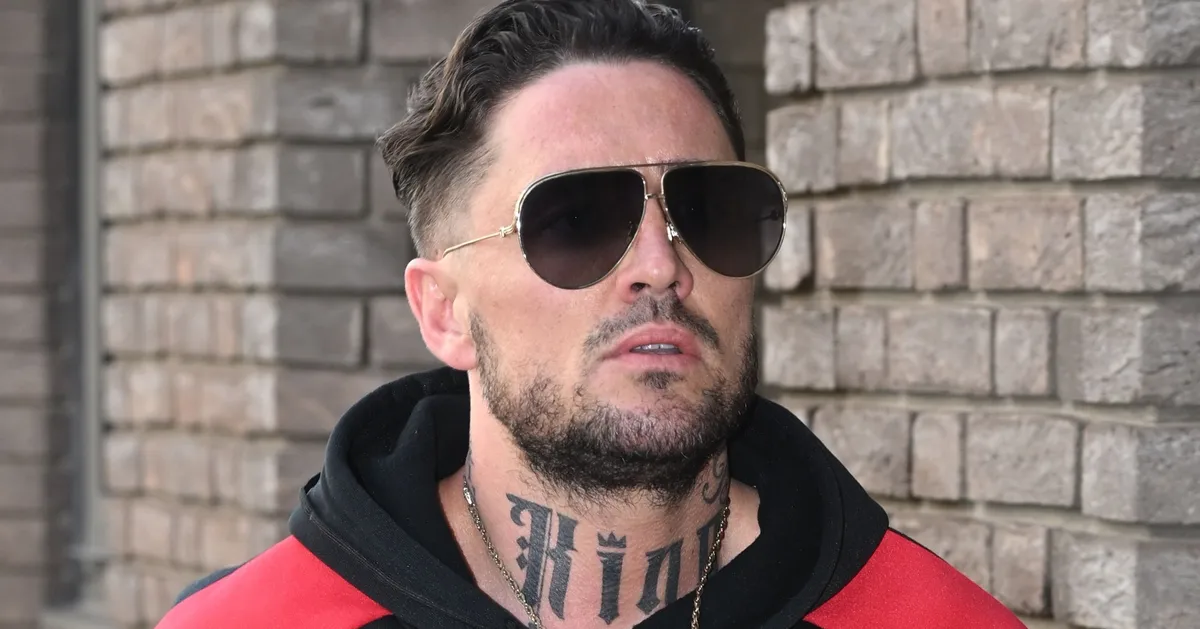
Reality TV personality Stephen Bear has been sentenced to 16 months in prison for breaking the terms of a restraining order.
In 2023, Bear served just over 10 months in jail after being found guilty of distributing footage of himself and his ex, Love Island star Georgia Harrison, having sex. She was not aware that they were being filmed, nor did she give her permission for the footage to be shared.
As part of the terms of his conviction, the Celebrity Big Brother winner had been banned from posting about Harrison or the case on social media.
However, he repeatedly broke this arrangement, leading to him being convicted of harassment by breaching a restraining order, which he previously pleaded guilty to at a hearing in June.
On Thursday, it was confirmed that Bear had subsequently been sentenced to more than a year in prison for breaking these terms, and is now banned from contacting Harrison, her mum and a family friend.
The court heard that Bear had “consistently” posted a slew of messages about both Harrison and the case “of the most abhorrent and harmful type” between March and July of last year.
Judge Christopher Morgan – who also oversaw the previous case involving Bear – said these posts were intended for “maximum harm” towards Harrison, and that he’d left her “at the mercy of any individual who had aligned themselves with your lies”.
Per BBC News, he told reporters upon leaving court: “Wish me luck guys. See you soon, hopefully.”
Bear first rose to prominence in the 2010s when he appeared as a contestant on Channel 4’s Shipwrecked, before being cast on MTV’s Ex On The Beach.
From there, he appeared on Channel 5’s Celebrity Big Brother in 2016, controversially going on to win the series, before appearing on reality shows Celebs Go Dating and The Challenge.

Most adult Brits struggle to get a good night’s sleep; as many as 14% of us get by on “dangerously low” levels of shut-eye, regularly catching less than five hours of kip a night.
Meanwhile, about two-thirds of us will experience neck pain at one point or another, while almost 80% of us will get back aches.
Worse, back and neck pain can make your sleep worse, and insomnia may increase your perception of discomfort. Talk about a vicious cycle.
So, it’s a good thing a systematic review of studies has found four pillow qualities that might help with all three.
What should I look for in a pillow?
This research analysed 11 studies, with 309 participants in total. The study authors wanted to evaluate the quality of evidence for the benefits of different pillow materials, heights, shapes, and thermal (heat) properties.
They found “moderate evidence that some of the following pillow parameters could improve sleep quality/spinal alignment, and decrease sleep-related neck pain”.
- Latex material,
- A contoured design (a dip in the middle of the pillow with higher sides, especially useful for side sleepers),
- A height of 7-11cm for the lower, middle part of the pillow,
- A cooling surface.
Latex pillows seemed best at reducing neck pain, while a contoured pillow with a 7-11cm high centre helped to keep sleepers’ spines in alignment.
Meanwhile, cooling pillows have been associated with more deep sleep than their non-cooling counterparts.
The researchers added that people should try to “consider as many of the above-mentioned parameters as possible when choosing a new pillow that fits their individual needs of promoting sleep comfort”.
Which pillows seemed to perform the worst?
Another review of studies found that, generally, feather pillows tend to perform worse than rubber or spring pillows.
And a separate 2011 paper also suggested “feather pillow users provided consistently low reports of pillow comfort and sleep quality”.
But your sleeping position matters here.
For instance, those who sleep on their side might have to put their neck at an uncomfortable angle if they’re using a softer pillow, while front or back sleepers could push their head further out of alignment if using a very stiff one.
That’s why, researchers note, it’s important to factor in your individual comfort level.
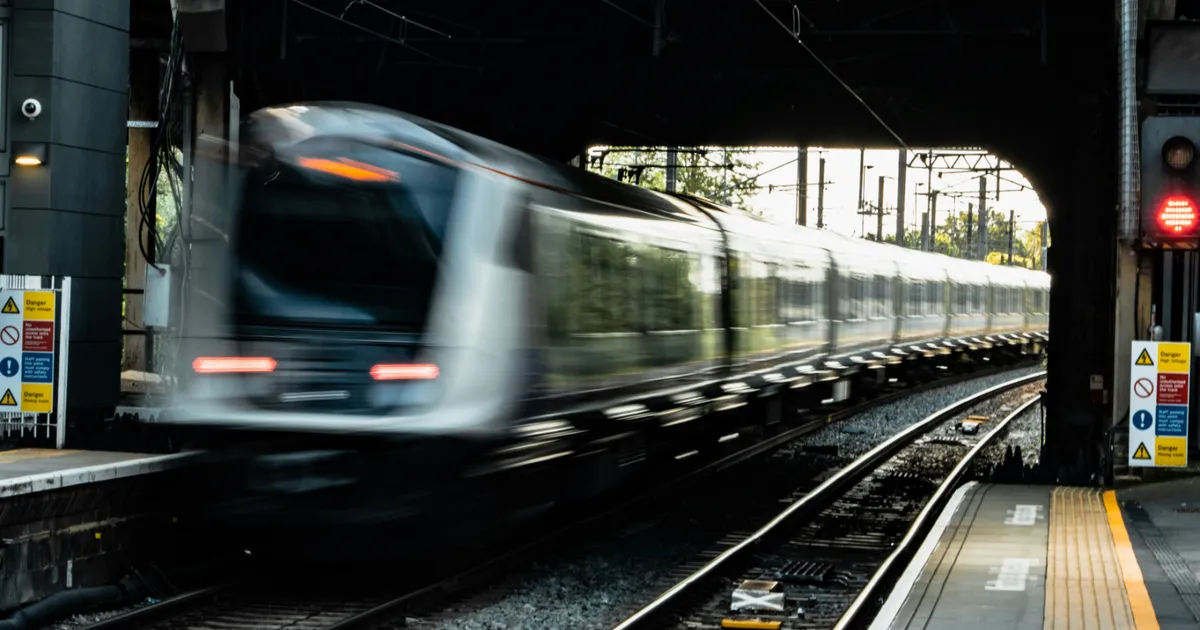
Major rail disruption has taken place following an electrical failure in the Manchester Rail Operating Centre communications centre.
National Rail said on its site that the issues began just before 2pm on 6 August and are expected to last “until the end of the day” in the Greater Manchester/north-west of England area.
The BBC reports we don’t yet know what caused the issue, how severe it may be, or how long it will last.
Here’s which train lines may be affected, and what each have said, as of the time of writing:
What has National Rail said?
In a statement, it warned of “major disruption for the rest of the day due to power issues impacting signalling”.
The service added: “Currently no trains can run from Manchester Piccadilly through to Manchester Victoria and Bolton, impacting services right across the North West network.
“Some trains are running south and east of the city towards Stockport, but are also subject to delays.
“As a result, cancellations are expected on rail routes across Greater Manchester until the end of today (Thursday 6 August).”
If you’re travelling by train today, check with National Rail or your train line first.
Which lines have been affected?
Per National Rail, lines affected by the signal issue include:
- Avanti West Coast,
- CrossCountry,
- East Midlands Railway,
- London Northwestern Railway,
- Northern,
- TransPennine Express,
- Transport for Wales.
What have these lines said?
This is what each line has said as of the time of writing. (Advice is subject to change, so check in regularly before travelling.)
TransPennine Express’s site reads: “All trains will be stopped due to a failure of the communication systems on the network”, adding there is “major disruption and no trains or replacement buses are operating, and we strongly advise you not to travel”.
Transport for Wales said “train services between Chester and Liverpool Lime Street are also disrupted” and trains “will not be able to run until the electrical supply has been restored”.
It added: “We have organised buses to run between Liverpool Lime Street and Chester to help you complete your journey, at no extra cost. These will arrive at 15:30 at Chester provided by Patts Coaches and arrive at Liverpool Lime Street at approximately 15:30 provided by Northwich Travel.” These arrangements will last until 6pm.
Northern’s site says there are “major disruptions” across various routes, adding, “due to failure of the electricity supply at Manchester Piccadilly all lines are blocked”. It said this is expected to last until the end of the day.
Esst Midlands’ site said: “There is a failure of the electricity supply around the Manchester Piccadilly area. This is currently disrupting our trains on the Liverpool Lime Street/Nottingham/Norwich routes.” The company added: “Our services are unable to run between Sheffield and Liverpool Lime Street until the end of the day.”
London Northwestern Railway’s site lists “major problems” from services via London Euston, from Euston to Crewe, from Crewe to Stafford, and services via Birmingham New Street.
And Avanti West Coast’s site reads: “This Friday, we’re seeing some short-notice cancellations on our network, so please check your journey before you travel. We’re really sorry if this affects you and your journey, but we’re working hard to make sure we can minimise these cancellations.” Its site has a section to help you find out your live train status.


Former neo-Nazi Joshua Bonehill-Paine has withdrawn as a Tory candidate for the 2027 council elections in Somerset. Far-right candidate are hardly a rarity in UK politics these days. However, reports claim he has now been given an internal Conservative Party role educating people about extremism.
Another Tory misstep
Bonehill-Paine was convicted in 2016 for harassing former Jewish Labour MP Luciana Berger.
The Guardian reported on 5 August:
Joshua Bonehill-Paine said on Wednesday that he had withdrawn from next year’s local elections, and that the Conservative leader had instead asked him to become an adviser to the party’s culture and integration commission, where he will specifically focus on how young men become radicalised.
The outlet added:
Badenoch, who has come under pressure in the last 48 hours from individuals and organisations including the Board of Deputies of British Jews, said she was “sad” that Bonehill-Paine felt he “won’t be given the space to explain his position and represent his community”.
Berger, who is now a baroness in the House of Lords, condemned the move on X:
The decision to welcome this individual as an adviser to the Leader of the Opposition is no better than allowing him to stand as a council candidate. It is a privileged and influential national role. As a victim of this man’s heinous crimes this appointment is an insult.
— Luciana Berger (@lucianaberger) August 5, 2026
The Guardian said:
Both the Board of Deputies and the Jewish Leadership Council (JLC) had turned down the Tory party’s offer of a meeting with the former neo-Nazi, who previously described himself as a “nationalist, fascist, theorist and supporter of white rights” and re-emerged in recent years as the creator of the Crewkerne Gazette, a satirical online account.
A ‘formidable record’ of hate offences
The BBC reported that Bonehill-Paine’s new role:
would focus on advising on how to prevent young men from being radicalised.
According to the corporation, Bonehill-Paine spent:
three years in prison after he was jailed in 2015 for posting antisemitic material ahead of a planned neo-Nazi rally.
He was convicted of racially harassing then-Labour MP Berger the following year.
During sentencing in the 2016 case, Justice Spencer said Bonehill-Paine had enacted:
a cruel campaign of vile racist abuse on the Internet against a Jewish Labour Member of Parliament, Luciana Berger, simply because she is Jewish.
At the age of only 24 you have amassed a formidable record of offences of hate crime using the Internet.
Meanwhile Badenoch tried to spin the story in her favour, saying it was important to engage with reformed fascists:
If we are going to stop extremism and antisemitism, we are going to need help from those people who were part of the problem, but have now changed and are being part of the solution.
A former neo-Nazi seems like an odd choice for a candidate a political party led by a British-Nigerian woman. Or it may be that UK politics is at this stage so decayed and unhinged that we should stop being surprised by these sorts of events.
Either way, Bonehill-Paine has still ended up with an influential job in the Tory party. Just not quite the one he was after…
Featured image via the Canary
By Joe Glenton


We know type A personalities are often described as hard-working, organised, and goal-oriented, while type Bs are seen as more emotionally attuned and easygoing (usually at the expense of motivation and urgency).
But people are increasingly recognising there’s a ‘type C’ personality, which is kind of a mash-up of both.
People who fit into the type C personality bracket might be introverted, non-assertive and passive. They tend to focus on others, sometimes at the expense of themselves, and are typically cooperative.
“Type Cs seem kind, obedient, well-mannered, pragmatic and normative people who are preferred by others in work and social life,” researchers wrote in the International Journal of Business and Management Invention.
They have a great interest in details and are creative. But they might also struggle to control themselves when stressed, find it hard to stand up for themselves, and generally fail to communicate their needs.
So, what’s a ‘type C’ parent?
Over 4,200 parents shared their confessions with Skylight Calendar – and more than one third (35%) said they lean into “type C parenting”. But in the parenting realm, type C looks a little different.
When you’re a parent, perfectionism can feel extremely unattainable. Enter: type C. If you were once a type A who had everything in order, you’re now probably veering into type C territory as the chaos of parenting meets your neat and orderly ways.
ABC News describes type C parents as “juggling the intensity of Type A energy with the messy realities of everyday life”. (I’m starting to think the C stands for ‘chaos’.)
Influencer Ashleigh Surratt popularised the term in a now-viral video where she summed up life as a type C mum. We see her putting toys into neatly labelled tubs and then, in the next breath, turning up to playdates where neither of her kids have shoes.
It’s having high standards, but it’s also acknowledging that sometimes your kids will lick the floor. It’s keeping a tidy house, but having a playroom that looks like a bomb’s exploded.
“Type C: everything is meticulously labelled but there is banana smushed into the car upholstery,” said one of Ashleigh’s followers in the comments section of her video.
Another described type C parenting as: “The shoe racks are immaculate, the drawer bins are organised, the go bags are on point, but the dining room table is an absolute catch all and I don’t remember the last time I washed my kids hair. Also the homework may or may not have food stains on it. Don’t look in my car.”
Therapist Cheryl Groskopf told Good Morning America people who adopt type C parenting are “choosing to loosen up in certain areas – maybe the house isn’t spotless, maybe dinner’s frozen – because you’ve realised that connection matters more than control”.
She added: “You still care. You’re still showing up, just in a way that actually works for your real life.”
How is type C parenting different to burnout?
Sometimes this chaotic way of parenting can look a lot like burnout. But there is a key way to spot the difference. Groskopf said if you can still “show up emotionally” for your family – and you’re still connecting and responding with care (even when it’s messy) – that’s type C.
Whereas “if you feel numb or like you’re disappearing, that’s burnout”, she added.
There are four key signs of parental burnout, according to Dr Emma Svanberg, author of Parenting For Humans.
These include: exhaustion in your parental role (regardless of how much sleep you’re getting), noticing your parenting has changed, feeling fed up with your parental role, and emotionally distancing yourself from your kids.
If you feel like you might be burnt out, Dr Svanberg shared some tips for helping yourself:
- Seek support from friends, family members and neighbours to “bring in a village”.
- Prioritise deep rest – this might look like a hot bath with the lights off, lying in a dark room, or going for a nice massage if that’s something you can afford. It might also look like turning off your phone, reducing your caffeine intake and making sure you’re eating well.
- Lighten your load – if you’ve got a to-do list as long as your arm, it’s time to offload jobs onto your partner or children and only prioritise jobs that are essential.
- Reset the nervous system. According to Healthline, breathing exercises, weighted blankets, hot baths, warm hugs, eating healthy fats (think avocado and nuts), lifting weights and taking a break (when possible) can all help with this.
- If it’s affecting day-to-day life, reach out to your GP, midwife or health visitor about how you’re feeling.
- If you can afford to pay privately for therapy, that might also help.
Related…



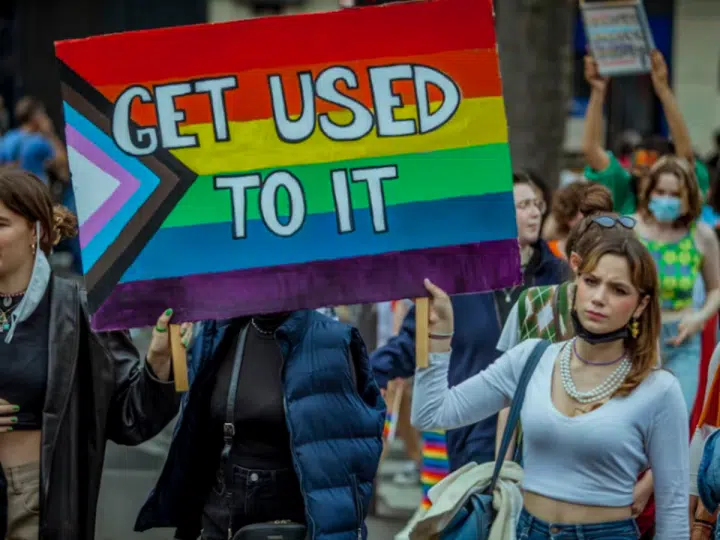
The past week has been a rollercoaster for trans rights in the UK. On Friday 31 July, the High Court rejected a legal challenge to the upcoming trial of puberty-blocking medication. That same day, the court also ruled that police don’t have to perform strip searches based on ‘biological sex’.
On 5 August, the Equality and Human Rights Commission’s (EHRC) new transphobic code of practice came into effect. It holds that a trans-inclusive women’s service is “very likely” to be discriminatory on the basis of sex. However, just one day later, the Good Law Project (GLP) has supported a legal challenge against the code.
Puberty blocker trial challenge fails
In spite of the fact that the (already ludicrously transphobic) Cass Review recommended the upcoming Pathways puberty blocker trial for trans youth medicine, transphobes have nevertheless been up in arms against it. Most recently, as GLP explained:
The controversial Bayswater Support Group have teamed up with claimants including Keira Bell, whose legal challenge to young trans healthcare in 2020 was overturned on appeal, following an intervention by Good Law Project. In a case funded by a group with links to the far right, they are asking the High Court for permission to challenge the NHS Pathways trial.
The claimants tried to argue that the medication – widely used throughout the world as part of routine trans care – posed a risk to children. As such, they held that the trial was unlawful.
Instead, Bayswater and its supporters suggested that the puberty blockers be tested on adults. This was, of course, patently ridiculous given that the adults would already have gone through puberty.
On 27 July, GLP announced that both it and trans-led charity Gendered Intelligence would oppose Bayswater’s challenge in court, if necessary. Fortunately, however, a legal battle won’t be necessary in this case. On 31 July, GLP reported:
The court held that the trial was “commissioned by NHS England with conspicuous care”, that the MHRA, the medicines regulator, undertook a “rigorous process” before approving it, and that each child involved in the trial will have been assessed for many months by specialist doctors as likely to receive direct benefit from the treatment.
The judge also noted that the court must be “very cautious” about interfering with medical regulatory decisions.
Gendered Intelligence stated that it was:
glad to hear that clinical trials of safe, effective gender care will be able to continue without interference. We should always put our young people first, and always put healthcare before politics
High Court strip-search ruling
On the same day, 31 July, the High Court also threw out a legal challenge against police strip-search guidance. The challenge, issued by anti-trans pressure group Sex Matters, argued that trans people should always be strip searched by an officer of the trans individual’s sex-assigned-at-birth.
Previous guidance held that officers matching a trans detainee’s gender should perform strip-searches, provided the detainee holds a Gender Recognition Certificate (GRC). However, following the 2025 Supreme Court ruling invalidating trans people’s gender under the Equality Act, the government issued new guidance.
The Police and Criminal Evidence Act 1984 (known as PACE) governs police powers to perform strip searches. Notably, PACE requires that an officer of the same sex as the detainee performs the search.
While the Supreme Court seemingly invalidated trans people’s right to be treated as a member of their assumed sex — i.e. the purpose of a GRC – the newest guidance argued that:
when requested, a strip search of a trans woman should be conducted by a female police officer. But there’s a significant limitation – both the trans detainee and the police officer have to consent to the search.
One might think that this is fairly straightforward. If a trans person requests an officer of their gender, and the officer is fine with it, this is a non-issue. However, Sex Matters objected, as the GLP explained:
They argued that the guidance creates a “shadow regime” attempting to “contract out” of the PACE framework, as established by the legislature.
Justice Lindon, the presiding judge, rejected the campaign group’s premise. He stated that PACE doesn’t forbid consensual searches outside of the statutory requirement, and voiced doubt that PACE was intended to protect officers rather than detainees. Moreover, he added that:
the effect of the ability to consent to a search by a person of the opposite biological sex is to mitigate the distress which the detained transgender person may feel, rather than to increase it
Anti-trans EHRC code challenged
However, the enactment of the EHRC’s new transphobic code of practice on 5 August overshadowed these two relatively-minor legal victories.
Though the code doesn’t carry legal weight in itself, instead offering an interpretation of equalities law, it encourages a nationwide bathroom ban against trans people, and their wholesale exclusion from single-sex services aligned with their lived gender.
As such, Leigh Day solicitors and GLP are supporting a legal challenge against the guidance. The claimants are currently anonymous, though GLP described them as a “trans person and a trans-inclusive organisation”.
Together, they will argue that the EHRC has fundamentally misunderstood the law, and that its code violates human rights. As an opening salvo, Leigh Day has sent a pre-action letter to both the EHRC and government setting out their argument.
GLP explained that:
Trans-inclusive women’s organisations […] are now faced with a stark choice:
- Ban trans women entirely.
- Stop being a women’s service, and open up to all men.
This blanket instruction puts inclusive organisations in an impossible position. […] The guidance lacks nuance, ignores context and pays no attention to the ways women want to run their own spaces and services.
Jess O’Thomson, GLP’s trans rights lead, added that:
This Labour government pushed through its transphobic guidance in the face of opposition from many MPs, including nearly a hundred of its own backbenchers. It’s not just immensely harmful. We think it’s unlawful, and completely against human rights. So this challenge is absolutely essential.
The Canary will report on the legal argument behind the challenge in more detail tomorrow. For now, however, it’s gratifying to see that neither trans people nor their allies have given up the fight just yet — no matter the forces arrayed against them.
Featured image via the Canary
By Grace

Gianni Infantino accused of ‘profound abuse of power’ by Fifpro over World Cup sell-off plan

Chuwi UniBook laptop review | TechRadar

crypto futures trading #trading #crypto #bitcoin #shorts


-

 Fashion6 days ago
Weekend Open Thread: Wit & Wisdom
-

 Politics6 days ago
Meta enters AI-training agreement with far-right ‘propaganda rag’ Newsmax
-

 Politics4 days ago
Zack Polanski: an incitement to murder Nigel Farage?
-

 Crypto World5 days ago
MicroStrategy Post-Earnings CLARITY Act Push Could Add New Catalyst for Its Stock
-

 Crypto World6 days ago
XRP Ledger v3.3.0 brings five institutional features
-

 Sports7 days ago
Seema Kaliramna Wins Discus Throw Bronze, Takes India’s CWG Medals Tally To 17
-

 Crypto World6 days ago
New York sues Kalshi over prediction market gambling
-

 Crypto World5 days ago
Crypto PAC spending tops $2M in Michigan House race
-

 Business4 days ago
DTCR: Deleveraging And A Hedge Fund Collapse Point To A Possible AI Bottom
-

 Business6 days ago
Trump Announces Hamas Disarmament Agreement as Iran Strikes Kuwait Air Base and US Attacks Pause Overnight
-
 Crypto World6 days ago
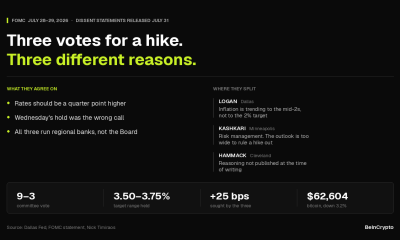
3 Fed Officials Just Explained Their Rate Hike Vote: Is Inflation Winning?
-

 Tech5 days ago
ESET tracks rise in malicious AI skills and adaptable malware
-

 Tech7 days ago
Gemini Spark can now use Chrome logins and saved passwords to run errands on your behalf
-

 Tech6 days ago
Building A Reproduction PlayStation Motherboard
-

 Sports5 days ago
France Cricket implodes: letters hidden in a drawer and a board at war
-
Crypto World4 days ago
XRP Ledger urges node upgrade after manifest flood
-

 Crypto World6 days ago
Moneyflip CEO charged in $40K murder-for-hire plot
-
 Sports6 days ago
Bruno Fernandes decision made as Man United ‘discuss’ striker transfer option
-

 News Videos5 days ago
Financial Crash Expert: The 90-Day Collapse Timeline They Are Desperately Hiding.
-

 NewsBeat7 days ago
Spain sending troops as thousands enter enclave of Ceuta from Morocco
You must be logged in to post a comment Login