
Crypto World
Safe Logs 130M Transactions in Q2, a Quarterly Record



Safe smart accounts processed nearly 130 million transactions in the second quarter, the highest quarterly total in the protocol's history and a 5.7% increase from Q1, the Safe Ecosystem Foundation said in its Q2 2026 report published Wednesday. The record quarter came against a weaker market, a… Read the full story at The Defiant



Tokenized stocks on Robinhood Chain averaged $29.7 million in daily DEX volume over the past seven days, according to a Dune dashboard maintained by OKX's Web3 wallet team — more than Solana's two stock-trading venues, xStocks at $11.1 million and Backpack's Sunrise at $13.4 million, combined…. Read the full story at The Defiant


The U.S.-listed spot bitcoin exchange-traded funds have pulled in $754.69 million in investor funds this week, according to data source SoSoValue. That puts these funds on track for their best week since April.
“The clearest shift has come in institutional flows,” Liya Kalchev, Analyst at Nexo, said, explaining the ETF inflows.
“Spot Bitcoin ETFs have taken in more than half a billion dollars so far in August, with inflows building through the week and Wednesday alone contributing over $240 million — a sharp reversal from June, when the funds recorded their worst month on record,” Kalchev added.
Note that despite the on-chain and ETF accumulation, BTC’s spot price has not yet been able to chalk out a meaningful rally. That, according to Kalchev, is a telltale sign of the kind of buyer stepping into the market right now.
“That the reversal has not yet lifted price meaningfully is itself informative: some desks argue the marginal buyer looks more tactical than convicted, and that a genuine recovery narrative likely needs a decisive close above $65,000 to take hold,” Kalchev explained.
BTC’s price chart patterns point to a potential for a notable price rally. At the same time, the fact that the U.S. Senate is unlikely to vote on the Clarity Act this month presents a headwind. The Clarity Act is widely seen as the one unlocking a massive institutional bid for the cryptocurrencies.


Attackers stole more than $1.1 billion across 212 verified exploits in the first half of 2026, the highest incident count on record for any half-year, according to Blockaid's H1 2026 Onchain Security Report, published Tuesday. The record count lands even as dollar losses came in below the same… Read the full story at The Defiant


Japan’s Financial Services Agency and National Police Agency asked cryptocurrency exchanges on Aug. 6 to introduce withdrawal delays, address registration and stronger fraud controls as authorities respond to rising scam losses involving digital assets.
Summary
- Japan’s FSA asked crypto exchanges to delay certain withdrawals as authorities respond to rising scams.
- Exchanges should pre-register withdrawal addresses and impose waiting periods before newly added destinations become usable.
- Japan recorded 18,067 fraud cases through May, with losses reaching 151.47 billion yen.
- The FSA wants stronger monitoring, phishing-resistant authentication, personalized limits and faster freezing of suspicious accounts.
- No uniform withdrawal period was mandated, leaving implementation details to individual exchanges and risk profiles.
The request went to the Japan Virtual and Crypto Assets Exchange Association, the industry’s self-regulatory body.The measures are requests rather than a binding rule. The FSA did not set a nationwide waiting period. Exchanges should tailor controls to their services and risk profiles. System changes may be phased.
Withdrawal delays are part of an 11-point anti-fraud package
The FSA wants exchanges to restrict crypto withdrawals for a period after customers deposit fiat currency or buy digital assets. It also asked platforms to require users to register withdrawal destinations in advance and impose another waiting period after a new address is added. The regulator did not specify either period’s length.
Exchanges were also asked to set withdrawal limits using customer risk, assets held, transaction purposes and previous activity. Regulators want firms to review customers who rapidly make large or frequent withdrawals after restrictions end, adding friction where scam proceeds can leave an exchange.
The request goes beyond withdrawal timing. Exchanges should strengthen transaction and access monitoring, detect activity inconsistent with customer profiles and identify accounts using devices linked to known misuse. Authorities also want suspicious transactions handled faster through holds, withdrawal restrictions or account freezes.
For higher-risk activity, regulators requested phishing-resistant multifactor authentication and stronger impersonation checks. Platforms should compare the name of a bank remitter with the crypto account holder and respond to mismatches. Exchanges are also expected to share fraud indicators and provide information rapidly to police.
Scam losses explain Japan’s tougher exchange controls
The National Police Agency’s latest published figures show why regulators are increasing pressure. Through May 2026, Japan recorded 18,067 special fraud cases, with losses reaching 151.47 billion yen. SNS investment scams accounted for 5,099 cases and 70.04 billion yen in losses, while SNS romance scams caused another 20.2 billion yen.
The trend was already visible in 2025. Police recorded 9,523 SNS investment scam cases with 128.8 billion yen lost. Romance scams reached 5,645 cases and 54.64 billion yen. Crypto-transfer romance scams rose to 2,177 cases, with 24.77 billion yen lost, helping explain the focus on digital-asset transfers.
Japan had already targeted the banking side. In February 2024, the FSA and police urged financial institutions to block transfers to crypto exchange accounts when the sender name differed from the originating bank account and strengthen monitoring of suspicious transfers. The latest request extends similar safeguards into exchange withdrawal systems.
As previously reported, Japan has also been tightening crypto oversight while moving digital assets closer to mainstream financial regulation. The withdrawal initiative fits that wider emphasis on investor protection and compliance.
What changes for Japanese crypto exchange users
The immediate effect will depend on each exchange. Because the FSA prescribed no single waiting period, users should not assume every Japanese platform will apply identical delays. Some operators already maintain withdrawal restrictions. SBI VC Trade, for example, says funds tied to certain quick deposits cannot be withdrawn or transferred as crypto until the eighth day.
For users, visible changes could include slower first-time withdrawals, mandatory address registration, personalized limits and more verification when activity differs from normal behavior. A customer adding a new wallet and immediately attempting a large transfer could face additional checks or a temporary hold.
The safeguards may also affect legitimate users who need rapid access to self-custody wallets. However, the FSA says implementation should reflect each operator’s business model and misuse experience. It does not order exchanges to impose a blanket freeze on every withdrawal.
Travel Rule requirements already require exchanges to collect and share identifying information for certain transfers. Japan’s newest request adds transaction friction and behavioral monitoring to those identity-based controls.
What happens next for Japan’s crypto exchanges
The FSA and police asked the JVCEA and member exchanges to strengthen the measures from August. Exchanges must assess which controls require policy or system changes and how quickly they can deploy them. The official request says planned implementation is acceptable where immediate technical changes are difficult.
No uniform start date or mandatory delay length was announced. The next developments to watch are exchange-specific notices, possible JVCEA guidance and any later move by the FSA to convert parts of the request into formal supervisory requirements. Until then, implementation is likely to vary by platform in practice.


Crypto exchange Bitget has signed an agreement with Gelephu Mindfulness City Authority to pursue a regulated local presence.
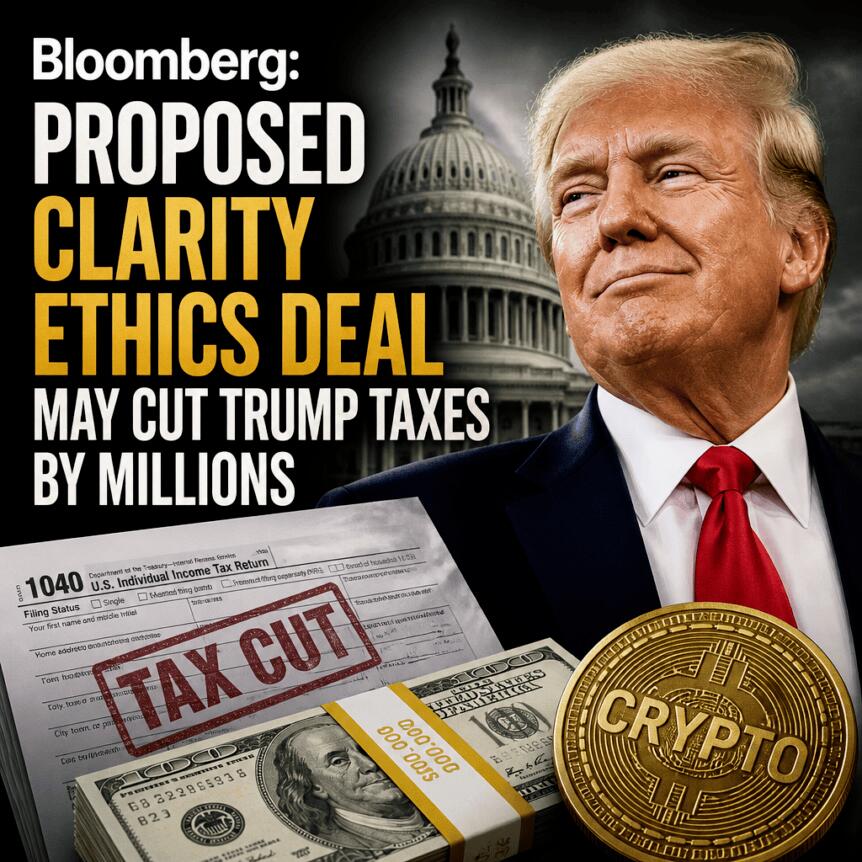
A bipartisan ethics proposal being discussed as a potential path to advancing the US crypto market-structure bill could offer a major tax benefit to President Donald Trump, Bloomberg reported on Thursday.
Bloomberg said the proposal—an addendum tied to ethics rules intended to address Democratic concerns about conflicts of interest—would require Trump to divest from crypto-related businesses. According to people familiar with the matter, it may also allow him to defer capital gains taxes on any divestitures, potentially resulting in tax savings in the millions.
Key takeaways
- Bloomberg reports a new ethics addendum could be linked to passage of the US crypto market-structure bill.
- The proposal would reportedly require presidential divestment from crypto-related business interests.
- A reported option to defer capital gains taxes on divestitures could create millions in potential tax savings.
- Democrats have previously flagged Trump’s crypto ties as a major hurdle to moving the market-structure legislation.
- Trump’s latest disclosed crypto-related income includes large revenue figures tied to token and memecoin licensing and sales.
Ethics addendum tied to market-structure push
Democratic lawmakers have repeatedly argued that the president’s financial exposure to crypto ventures makes it harder to support market-structure legislation without stronger conflict-of-interest guardrails. Bloomberg’s Thursday report frames the ethics proposal as another attempt to break that impasse.
While the addendum reportedly has not been made public, Bloomberg said it includes a divestiture requirement. The reporting also suggests an accompanying tax mechanism that would let Trump defer capital gains taxes if divestiture is required under the ethics rules.
Cointelegraph reached out to the White House for comment but did not receive an immediate response.
Why Democrats may scrutinize the tax-deferment angle
Even if divestment requirements were designed to reduce perceived conflicts, the reported tax-deferral benefit could complicate the political dynamics. Bloomberg noted that Democrats who are already wary about whether Trump’s financial interests are genuinely curbed may raise further questions if divestitures come with meaningful tax advantages.
That tension reflects a broader challenge in conflict-of-interest policy: divestment can change exposure, but the way tax rules interact with divestment can affect how fully a candidate or officeholder is seen to be stepping away.
Earlier coverage from Cointelegraph has described how concerns about Trump’s crypto conflicts have been central to resistance to the market-structure bill, and how senators were working on additional ethics language to clear a path forward. The new detail Bloomberg reported—tax deferral tied to divestiture—adds a fresh issue lawmakers may debate during negotiations.
New disclosure highlights scale of crypto-related income
One reason the ethics debate has been so intense is the extent of Trump’s disclosed financial involvement. Trump’s annual financial disclosure report for 2025, released at the end of June, listed $1.4 billion in income from crypto-related ventures during the prior year.
Bloomberg’s report, drawing on the disclosure, said the largest portion came from licensing and sale of memecoins, including Official Trump (TRUMP). The disclosure reportedly showed about $635 million in “royalties” from a “license agreement with Celebration Coins.”
The filing also indicated that World Liberty Financial—Trump’s family-associated DeFi platform—was a second major earner. Bloomberg said the disclosure attributed about $588 million to “proceeds from token sales.”
In addition, the disclosure reportedly listed $197 from the sale of an equity interest in a stablecoin venture.
Cointelegraph previously reported on the disclosures and their implications for the debate around crypto oversight, including details about stablecoin-related disclosures and the president’s crypto-connected business structures.
Corporate ties and ownership stakes remain part of the story
Separate disclosures about World Liberty’s website also reportedly show that DT Marks DEFI LLC, an entity affiliated with Trump and certain family members, owns approximately 38% of the equity interests in World Liberty’s parent company.
This kind of ownership stake is likely to matter as lawmakers weigh what “divestment” should mean in practice—especially when exposure can come not only from direct business operations, but also from equity structures and downstream licensing arrangements.
With the ethics addendum not yet publicly available, it remains unclear how detailed the divestiture requirement would be and whether it would extend to every category of financial involvement reflected in the disclosure.
For now, readers should watch whether the ethics language becomes public and how it is interpreted in Congress—particularly around what divestment would cover and whether Democratic lawmakers view the reported tax deferral as compatible with the goal of reducing genuine conflict. The outcome could shape not only the market-structure bill’s prospects, but also the standard future administrations may face when crypto policy intersects with personal financial interests.

Astera Labs (ALAB) stock spiked 12.7% on Tuesday after the company surpassed Wall Street’s targets in its latest earnings announcement. It’s wiping out the bulk of those gains in Wednesday’s trading. Investors could buy Astera Labs at the current price or use options to potentially buy shares of the semiconductor company for a discount. Astera Labs is a fabless semiconductor…
Copyright ©2026 Investor’s Business Daily, LLC. All rights reserved. 87990cbe856818d5eddac44c7b1cdeb8
The industry’s biggest legislation has faced yet another setback. The US Senate will not take up the crypto market structure bill before lawmakers leave Washington for the month-long recess, pushing the vote to September instead.
Senate Majority Leader John Thune, speaking through a spokesperson, confirmed there will be no vote on the CLARITY Act in August but said the measure is expected to be considered once the Senate returns.
Thune said Democrats remained opposed to holding a vote before the recess.
“The Dems are insistent on no CLARITY vote… I worked with sponsors of the bill. Senator Lummis was great, and we’re getting that queued up first thing when we come back.”
CLARITY Act on Hold
With the vote pushed back, senators now have several more weeks to gather the support needed for the legislation. The bill requires 60 votes to advance in the Senate, meaning it cannot pass without some Democratic votes.
Democrats are pushing for stronger safeguards to stop President Donald Trump from benefiting financially from crypto while serving in office. Support from Republicans has also been uncertain in recent weeks. For instance, Senator Josh Hawley earlier said that he will oppose the bill unless it is changed to address concerns from community banks.
Even if the Senate passes the CLARITY Act, the process will not end there. The legislation must go back to the House for approval before it can be sent to President Donald Trump for his signature.
Not everyone sees it as a major blow to the industry. Before the Senate confirmed the delay, Bitwise Chief Investment Officer Matt Hougan had stated that missing the August vote would not derail the industry’s long-term growth. He expects lawmakers could revive the legislation when Congress returns in September or during the year-end session.
Hougan said the biggest concern is the uncertainty surrounding the bill, which has kept some institutional investors on the sidelines. While a failed vote could trigger a short-term market dip, he believes a clearer outlook may ultimately boost confidence and support a stronger crypto rally later this year. He also noted that the SEC could still introduce crypto-friendly regulations.
Market Reaction
Major cryptocurrencies drew a muted response following the Senate update. Bitcoin traded around $64,100 on Friday, while Ethereum slipped below $1,900. XRP posted the biggest decline among large-cap tokens and lost over 2.5% to trade at $1.02.
BNB also moved lower, falling 1.4% to $587, while Solana slipped more than 1.7% to $72.6.
The post CLARITY Act Stalls in Senate as Political Divisions Push Crypto Bill Into September appeared first on CryptoPotato.

The Government Accountability Office found that the Department of Government Efficiency’s (DOGE) Wall of Receipts includes savings estimates that are incorrect or lack supporting evidence, casting doubt on the $110 billion the entity claims it cut from federal spending.
The report examined the DOGE Wall of Receipts, the public ledger the initiative used to display cuts to federal contracts, grants, and leases.
What the GAO Audit of DOGE Found
The GAO published its review on August 6. It assessed savings data DOGE reported from January 20, 2025, through July 7, 2026.
DOGE launched the Wall of Receipts on February 17, 2025, weeks after President Donald Trump created the entity by executive order. According to the report, DOGE listed $110.3 billion in savings as of early July.
Roughly $61 billion came from contracts and $49.2 billion from grants, according to the audit. However, the report found “issues limiting the transparency and reliability of these reported savings.”
“While the Wall of Receipts includes some information about the data and sources underlying reported savings, it does not sufficiently disclose limitations affecting data quality,” the report read.
Of the 13,476 contracts marked as terminated, more than a quarter carried no identifying details. That left them impossible to check. Only 43% of the reported contract savings were tied to contracts that were actually terminated, in full or in part.
The picture was worse for grants. GAO said DOGE reported 96% of its grant savings without enough information to verify how it calculated the figure.
Follow us on X to get the latest news as it happens
Savings That Never Happened
One example stands out. DOGE claimed more than $1.7 billion in savings on a Defense Health Agency technology contract at more than 700 military treatment facilities. GAO found the contract was never touched. So, nothing was actually saved.
Leases told a similar story. Of 264 still listed, 108 were already being wound down before DOGE launched. Real lease savings came to $31.8 million, not the $113 million claimed. The gap left roughly $81 million in savings that never existed.
GAO urged the Executive Office of the President, working through the US DOGE Service, to display the data’s limitations clearly on the public site. The agency said that DOGE did not respond to its request for information or interviews.
The findings arrive after DOGE quietly collapsed months early and formally ended on July 4. Elon Musk, who once led the effort, has since ruled out repeating it.
Subscribe to our YouTube channel to watch leaders and journalists provide expert insights
The post Government Auditors Question Evidence Behind DOGE’s $110 Billion Savings Claim appeared first on BeInCrypto.
Crypto World
AI Marketing Stock Hits A Buy Zone In Scorching Four-Day Rally| Investor’s Business Daily

Artificial-intelligence-powered cloud marketing platform operator Zeta Global (ZETA) spiked and broke out of a cup base on Wednesday. The big move came after the AI marketing company late Tuesday increased its 2026 revenue forecast. These are a couple of the reasons why Zeta is Wednesday’s focus among IBD 50 Growth Stocks To Watch. “With new momentum from our collaborations with…
Copyright ©2026 Investor’s Business Daily, LLC. All rights reserved. 87990cbe856818d5eddac44c7b1cdeb8

Shubman Gill suffers finger injury, KL Rahul leads India on Day 1 of warm-up game vs SLC XI | Cricket News

Ray-Ban Promo Codes: Save 50% in August 2026

Body found in search for missing St Davids rock climber


-

 Fashion7 days ago
Weekend Open Thread: Wit & Wisdom
-

 Politics6 days ago
Meta enters AI-training agreement with far-right ‘propaganda rag’ Newsmax
-

 Politics5 days ago
Zack Polanski: an incitement to murder Nigel Farage?
-

 Crypto World6 days ago
MicroStrategy Post-Earnings CLARITY Act Push Could Add New Catalyst for Its Stock
-

 Crypto World6 days ago
XRP Ledger v3.3.0 brings five institutional features
-

 Crypto World6 days ago
New York sues Kalshi over prediction market gambling
-

 Crypto World5 days ago
Crypto PAC spending tops $2M in Michigan House race
-

 Business7 days ago
Trump Announces Hamas Disarmament Agreement as Iran Strikes Kuwait Air Base and US Attacks Pause Overnight
-

 Business4 days ago
DTCR: Deleveraging And A Hedge Fund Collapse Point To A Possible AI Bottom
-
 Crypto World6 days ago
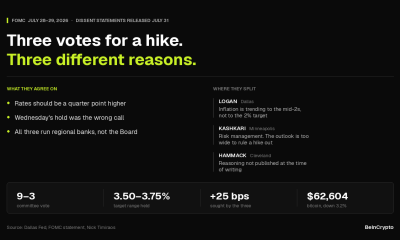
3 Fed Officials Just Explained Their Rate Hike Vote: Is Inflation Winning?
-

 Tech5 days ago
ESET tracks rise in malicious AI skills and adaptable malware
-
Crypto World5 days ago
XRP Ledger urges node upgrade after manifest flood
-

 Tech7 days ago
Gemini Spark can now use Chrome logins and saved passwords to run errands on your behalf
-

 Tech7 days ago
Building A Reproduction PlayStation Motherboard
-

 Crypto World6 days ago
Moneyflip CEO charged in $40K murder-for-hire plot
-

 Sports6 days ago
France Cricket implodes: letters hidden in a drawer and a board at war
-
 Sports6 days ago
Bruno Fernandes decision made as Man United ‘discuss’ striker transfer option
-

 News Videos5 days ago
Financial Crash Expert: The 90-Day Collapse Timeline They Are Desperately Hiding.
-

 Sports1 day ago
Jordan Coyle & Cordiamo take Laya Arena Stakes at RDS
-

 Sports6 days ago
Commonwealth Games 2026 Live Updates | Day 9 CWG 2026: Lovlina Borgohain, Sachin Siwach Enter Final After Indian Judokas Script History
You must be logged in to post a comment Login