
Business
Bhagwan Marine denies fault for alleged $2.6m damage to Monadelphous




The company recorded a net profit of Rs 131.6 crore in the same quarter of the previous fiscal, Hitachi Energy said in a statement.
Revenue from operations rose to Rs 2,493.7 crore in the reporting quarter from Rs 1,478.9 crore in the same period a year ago.
During Q1FY27, orders totalled Rs 5,096.5 crore.
The company’s growth saga continues in the opening quarter of FY27, resulting in the highest-ever order backlog of Rs 32,222.1 crore.

N Venu, Managing Director & CEO of Hitachi Energy India, said in the statement, “Q1FY27 indicates excellent overall performance, resulting in robust order and revenue growth. It reflects strong market momentum, driven by a surge in opportunities stemming from the energy transition & security across the country and globally.”


Revenues climb to $164 billion in fiscal 2026.
Business
Restaurant Brands Beats Earnings as Burger King’s US Sales Soar 8.5%, Popeyes Struggles Overall

Restaurant Brands International reported second-quarter earnings Thursday that topped Wall Street’s expectations, driven by a striking turnaround at Burger King in the United States, even as the company’s other chains, particularly Popeyes, continued to struggle with soft demand.
The parent company of Burger King, Tim Hortons, Popeyes and Firehouse Subs posted adjusted earnings of $1.07 per share, ahead of the $1.03 analysts had expected, according to a survey by LSEG. Net revenue rose 4.5% to $2.52 billion, in line with expectations. Net income attributable to shareholders came in at $507 million, or $1.45 per share, up sharply from $189 million, or 57 cents per share, in the same quarter a year earlier.
Burger King’s US Turnaround Takes Hold
The standout performer in Restaurant Brands’ results was Burger King’s U.S. business, where same-store sales climbed 8.5% during the quarter, extending a turnaround that has taken hold in the chain’s home market over recent quarters. Restaurant Brands Chief Executive Josh Kobza credited the improvement to disciplined execution, saying in a statement, “Burger King’s performance is a great example of what’s possible when you invest in the fundamentals and execute well – an approach we’re applying across all of our brands.”
Restaurant renovations, sharper marketing, and a renewed focus on core menu items including the Whopper have helped Burger King steal market share from competitors in recent quarters. Burger King U.S. President Tom Curtis told CNBC that the chain has benefited from consistent deal offerings, such as its $5 duos and $7 trios, a contrast to rivals that have frequently reshuffled their value menus. By comparison, McDonald’s reported U.S. same-store sales growth of just 0.8% in its own second quarter, a result executives at that company described as disappointing, prompting McDonald’s to name a new U.S. president to help accelerate sales.
Executives said there remains further room for improvement at Burger King. The chain has additional plans to refine its menu following an upgrade to the Whopper earlier this year, and not all of its U.S. restaurants have yet been remodeled. Curtis said restaurant renovations could accelerate further if beef prices decline.
Burger King’s momentum wasn’t confined to the U.S. International Burger King restaurants posted same-store sales growth of 5.5% during the quarter, according to the company, with Burger King’s overall adjusted operating income rising to $137 million from $121 million a year earlier.
Tim Hortons and Popeyes Lag Behind
Not every part of Restaurant Brands’ portfolio shared in Burger King’s momentum. Tim Hortons’ same-store sales in Canada, and overall, came in essentially flat for the quarter, rising just 0.1%. Kobza acknowledged the chain’s marketing had underperformed expectations during the period, telling investors on the company’s earnings call, “Taking a step back, while our marketing did not perform as anticipated in Q2, we were encouraged by stronger business performance as the quarter progressed and are excited about the back half calendar.” Tim Hortons revenue and operating income still increased during the quarter, driven largely by higher supply chain sales and consumer packaged goods performance, with adjusted operating income rising to $287 million from $278 million a year earlier.
Popeyes Louisiana Kitchen was the weakest performer across Restaurant Brands’ portfolio, with U.S. same-store sales declining 5.2% for the quarter. The fried chicken chain has struggled in recent quarters as an increasing number of competing restaurants chase a smaller pool of diners who have grown more value-conscious amid persistent cost-of-living pressures. Kobza expressed cautious optimism about the chain’s trajectory, saying, “While sales remained soft during the quarter, we’re encouraged by the improvement we saw and continue to execute against the same priorities,” and adding that he expects Popeyes’ same-store sales to return to growth in the second half of the year. Popeyes’ adjusted operating income fell to $63 million from $66 million a year earlier, as declining comparable sales weighed on both revenue and profitability for the segment.
A Bright Spot in Firehouse Subs
Beyond the company’s three larger chains, Firehouse Subs offered a relative bright spot, with system-wide sales growing 7.5% during the quarter. That growth was driven primarily by an 8.1% increase in restaurant count rather than same-store sales gains, which rose a more modest 0.7% in the U.S., suggesting the brand’s expansion strategy is currently outpacing organic demand growth at existing locations.
Solid Overall Growth Despite Divergent Brand Performance
Across the full portfolio, global comparable sales rose 3.8% during the quarter, ahead of the roughly 3% growth analysts had estimated, while consolidated system-wide sales climbed 6.4% year over year to $12.7 billion, including 10.7% growth internationally. Adjusted operating income rose to $715 million from $668 million a year earlier, representing 6.7% organic growth. Kobza framed the mixed results across individual brands as evidence of the strength of the company’s broader, diversified structure, saying the results highlight the benefits the company has built through disciplined execution across a varied consumer environment.
Shares Slip Despite the Beat
Despite topping Wall Street’s earnings and revenue expectations, shares of Restaurant Brands fell more than 1% in morning trading Thursday, and were reported down roughly 2% in post-earnings trading by some tracking services, as investors focused on the continued weakness at Tim Hortons and Popeyes rather than Burger King’s standout performance. The stock had entered the earnings report trading around $73.88, with a mean analyst price target of $85.04 implying roughly 15% potential upside, according to a survey of 27 analysts covering the stock, 17 of whom rate it a buy, nine a hold and one a sell.
Financial Position and Longer-Term Goals
Restaurant Brands’ net leverage improved to 4.1 times during the quarter, though the company still expects between $500 million and $520 million in adjusted net interest expense for 2026. The company continues working toward a long-term goal of consolidated net restaurant growth of at least 5%, with current growth running at 2.9%, unchanged from the prior year and still requiring acceleration to meet that target. Restaurant Brands also continues efforts to refranchise most of its company-operated Carrols Burger King restaurants, find a new partner for Popeyes’ China operations, and attract investors for its Firehouse Subs Brazil business, initiatives the company has said could affect segment profitability depending on their timing and execution.
With Burger King’s U.S. turnaround continuing to carry the company’s overall results, investors are likely to watch closely whether Tim Hortons can build on the stronger performance Kobza described emerging later in the quarter, and whether Popeyes can deliver the return to same-store sales growth executives have projected for the back half of 2026. The divergent trajectories across Restaurant Brands’ four chains are expected to remain the central storyline shaping the company’s performance heading into the remainder of the year.
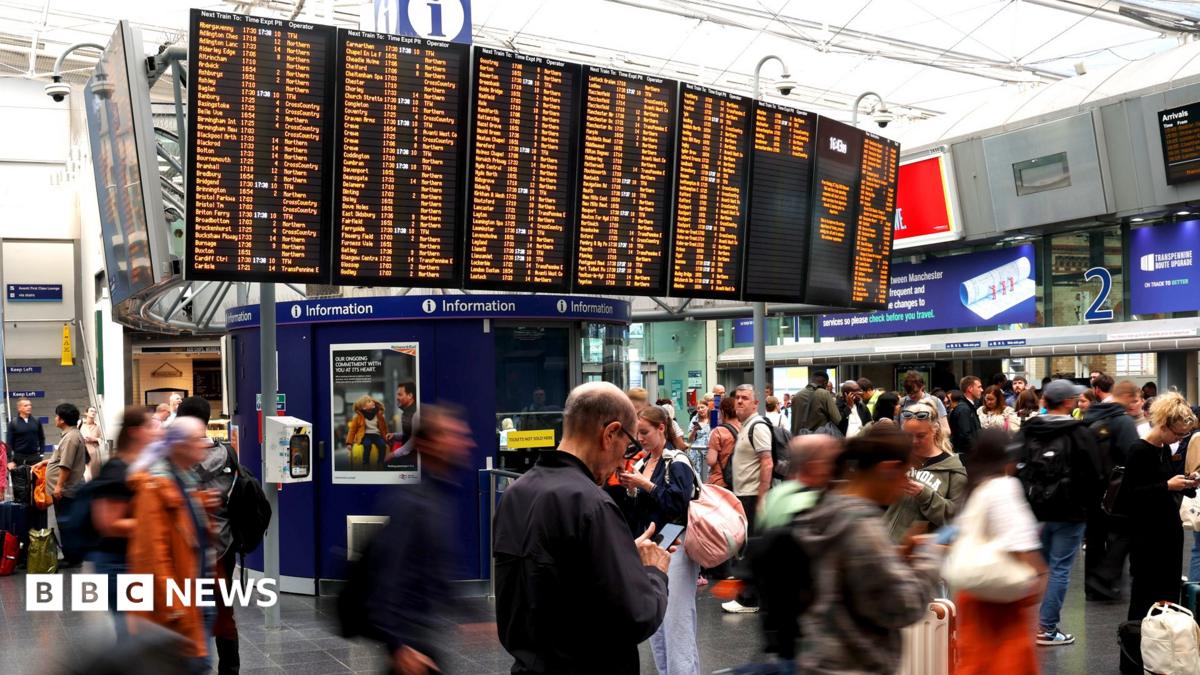
The power failure which hit a Network Rail operations centre in Manchester was a rare incident.
But after commuters were left facing chaos, it has raised questions about how a short outage at one operating centre could have a widespread impact.
Network Rail will face scrutiny for how its systems coped and responded to the outage.
That’s the publicly-owned body whose job it is to operate and maintain Britain’s railway infrastructure. That means the tracks, signals, embankments and major stations.
It was at Network Rail’s operating centre in Manchester that the problem started. Its operating centres are where crucial controls are housed that let trains run safely across the country, with Manchester’s centre responsible for large parts of the North West.
It was hit by a power cut in the area, which was resolved within 90 seconds. And despite having a backup supply, given the centre’s importance, this failed to kick in as quickly as expected.
Chris Wright, north-west route director at Network Rail, said the organisation was “working really hard” to understand exactly what went wrong.
“We didn’t experience a 90-second interruption,” he told the BBC, insisting its systems were back online sooner.
But he said some of Network Rail’s communications systems “did not respond how we would have expected, and then needed reconfiguring and replacing”.
“We’ve got to work really hard very quickly now to understand why that’s the case,” he added.
But because signalling was affected – think of that essentially as the traffic lights of the railway – trains had to stop.
Systems had to be rebooted. But there was some damage to the systems controlling signalling, and that took time to fix because of the need to replace certain parts.
Thinking about how busy parts of the rail network are, and how many trains and crews were left out of position across the North West of England and beyond, helps explain why the impact was so big.
Network Rail has apologised to customers and opened an investigation.
Bosses say engineers have been working hard to “build additional resilience into our signalling systems to ensure that this doesn’t happen again”.

Operator
Greetings, and welcome to the Alpha Metallurgical Resources Second Quarter 2026 Conference Call. [Operator Instructions] Please note, this conference is being recorded. I will now turn the conference over to your host, Emily O’Quinn, Senior Vice President, Investor Relations and Communications. You may now begin.
Emily O’Quinn
Senior Vice President of Corporate Communications
Thank you, Rob, and good morning, everyone. Before we get started, let me remind you that during our prepared remarks, our comments regarding anticipated business and financial performance contain forward-looking statements, and actual results may differ materially from those discussed. For more information regarding forward-looking statements and some of the factors that can affect them, please refer to the company’s second quarter 2026 earnings release and the associated SEC filing. Please also see those documents for information about our use of non-GAAP measures and their reconciliation to GAAP measures.
On the call today, I’m joined by Alpha’s Chief Executive Officer, Andy Eidson; and Chief Financial Officer, Todd Munsey, who will provide prepared remarks. Also participating on the call are our President and Chief Operating Officer, Jason Whitehead; and our Chief Commercial Officer, Dan Horn. Following our prepared remarks, we will be available to answer questions. With that, I’ll turn the call over to Andy.
Charles Eidson
CEO, Treasurer & Director
Thanks, Emily. Good morning, everyone. Today, we released our definitive second quarter financial results, which included
Twenty-three people were disqualified from acting as company directors in the first six months of 2026 for “persistent or serious non-compliance” with their filing duties, according to figures published by Companies House on Thursday, with bans totalling 70 years.
The disqualifications, which ranged from six months to five years, followed criminal convictions for failing to file documents such as annual accounts and confirmation statements. Courts also fined the 23 directors a combined £17,810, including £15,600 for non-filing of accounts and £2,200 for non-filing of confirmation statements, Companies House said.
Separately, 360 directors of 332 companies were convicted of filing offences between January and March. Companies House said these included 355 convictions for accounts offences, with total fines of £129,970, and 157 convictions for confirmation statement offences, with fines of £53,300. The registrar was also awarded £31,075 in costs.
Companies House did not publish comparable figures for previous years, but disqualifications are understood to have run at about 12 a year in the past, and courts have been handing down longer bans as the offences are treated more seriously.
Martin Swain, director of intelligence and law enforcement engagement at Companies House, said: “Limited liability encourages enterprise, giving businesses the confidence to start, invest and grow.
“In return, they are expected to be transparent and accountable. We encourage and support companies to comply with their legal obligations to file accounts and confirmation statements. Prosecution ensures that where there has been a serious breach of the law, individuals are held to account.”
All companies must file annual accounts and a confirmation statement under the Companies Act 2006, and directors are personally responsible for ensuring the documents are delivered on time. Where accounts are filed late, Companies House imposes automatic statutory penalties on the company. Failure to file is also a criminal offence for which all of a company’s directors risk prosecution.
Companies House said enforcement decisions are taken in line with its published enforcement policy, and that prosecutions proceed only where there is sufficient evidence and where prosecution is in the public interest.
The figures come as the registrar implements reforms under the Economic Crime and Corporate Transparency Act, designed to improve the accuracy of the register after years of criticism that it was open to abuse. Mandatory identity verification for new directors and people with significant control took effect in November 2025, and was followed by a fall of around 30 per cent in weekly company registrations.
From April 2028, about two million small and micro companies, defined as businesses with up to 50 employees or revenues of up to £15 million, will be required to file profit and loss information at Companies House for the first time. Following a backlash over the plans from small firms and business groups, companies will be able to opt to have the information hidden from public view.
The government has said the profit and loss statements would be available for review by “law enforcement and HMRC” to tackle “fraud, economic crime and tax evasion”. HMRC’s latest tax gap estimates put unpaid tax at £59.2 billion for 2024-25, with small businesses accounting for the largest share.

Jamie Young
Jamie Young is Senior Reporter at Business Matters, covering SME finance, employment law and Westminster policy since 2016. He has reported on every Budget and Autumn Statement since 2018, helped make sense of the ‘covid era’ and the bounce-back loan scheme from launch through the fraud investigations, and broke the magazine’s coverage of the 2024 late-payment reforms. He joined Business Matters straight from completing his BA in Administration from Exeter University and is NCTJ-qualified. Reach him at jyoung@cbmeg.co.uk


Net earnings jump 315% in second quarter.
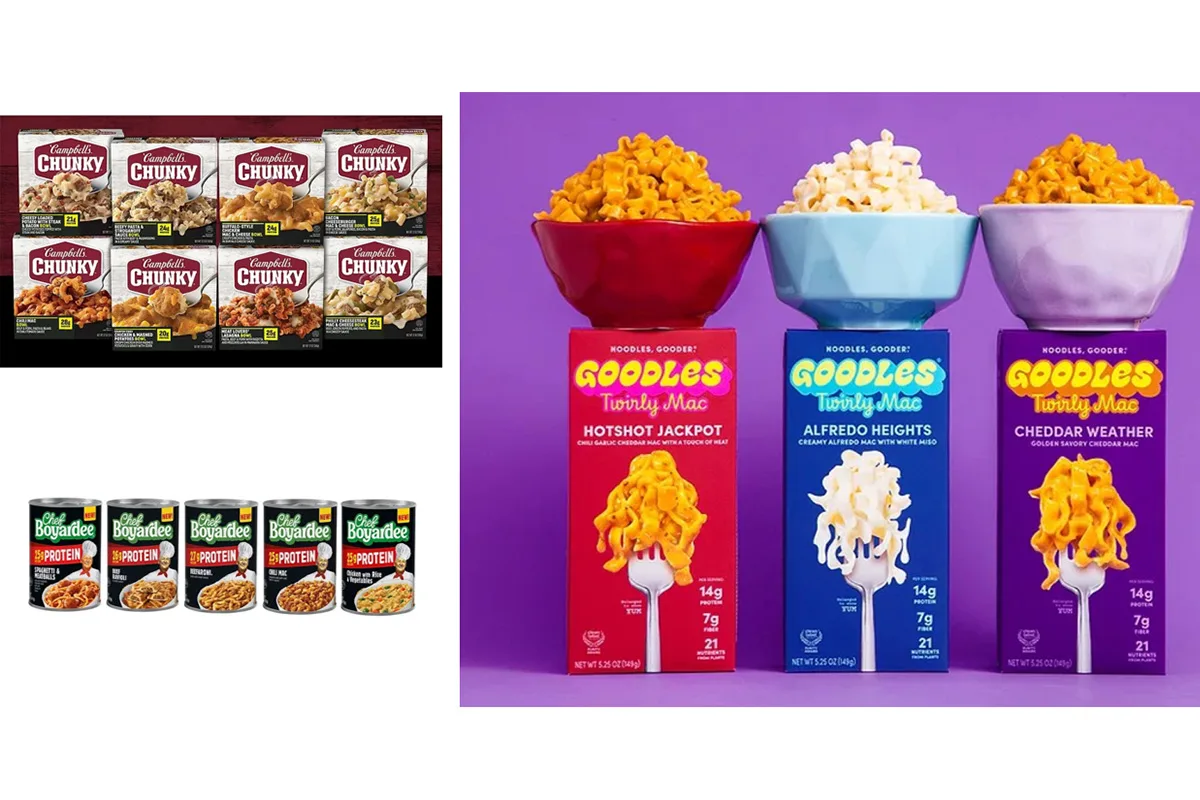

Pasta formulated with protein is becoming a packed category.

Florida real estate experts and California transplants speak to Fox News Digital about why more young people and families are relocating to the Sunshine State’s West Coast, from Tampa to Naples.
America’s most expensive ZIP code has officially returned to California, as the artificial intelligence stock surge has catapulted Silicon Valley’s ultra-exclusive Atherton past Miami’s tax-free paradise of Fisher Island.
But while deep-pocketed tech titans are willing to fork over nearly $10 million for modest Northern California properties, real estate experts say the move signals a high-stakes trade-off: Buyers aren’t staying in the Golden State for its tax climate or resort lifestyle — they’re paying a massive premium to remain plugged into the nation’s primary deal-making hub.
“Atherton offers something that cannot easily be recreated elsewhere: immediate access to the relationships and opportunities driving one of the world’s most influential technology economies,” Douglas Elliman’s Jenna Hoyas told Fox News Digital. “For many buyers, their business interests, investment networks, children’s schools and personal relationships are firmly rooted in Silicon Valley. The decision is not always a calculation of which state provides the most house or the lowest tax burden. At this level, time and access are often more valuable than savings.”
“The same $10 million is purchasing two very different interpretations of luxury. In Atherton, buyers are generally looking for a single-family estate with meaningful land, privacy and the ability to create a highly customized compound,” Douglas Elliman colleague Kristina Quesada also told Fox Digital.
CALIFORNIA WEALTH CHARTS A QUIETER PATH TO FLORIDA AS GULF COAST ENTER MULTIBILLION-DOLLAR BOOM
“On Fisher Island, $10 million is more likely to purchase a luxury condominium with water views, security, amenities and immediate access to a private resort environment. Buyers are trading a large private parcel for beachfront living, club access, services and a lock-and-leave lifestyle,” Quesada added. “Atherton offers ownership of the land and proximity to Silicon Valley, while Fisher Island offers a highly serviced lifestyle surrounded by water.”

Atherton, California, now ranks in the top spot for America’s most expensive ZIP code, overtaking Miami’s Fisher Island for the first time in two years. (Getty Images)
Recent data from PropertyShark.com and Bloomberg show that Atherton’s ZIP code (94027) overtook Fisher Island (33109) after the Miami enclave spent two consecutive years as America’s most expensive ZIP code. Atherton’s median home price jumped roughly 20% to $9.93 million, while Fisher Island’s median home sale price fell to $8.3 million.
“Living in Atherton is about privacy, land and proximity to the center of Silicon Valley’s wealth ecosystem. It does not offer the highly visible resort lifestyle people associate with Miami,” Hoyas said. “It is intentionally quiet and understated, with large, gated properties, mature landscaping and very little commercial activity.”
“The rankings may continue to move between Atherton and Fisher Island because both markets have relatively few sales and a handful of major transactions can influence the median. I would not interpret one year’s ranking as evidence that California has reversed migration to Florida or that Florida has lost its appeal,” Hoyas said.
Atherton is located just southeast of San Francisco, situated near Stanford University. | Getty Images
With OpenAI having confidentially filed for an IPO, alongside the public debuts of aerospace giant SpaceX and artificial intelligence rival Anthropic, billions of dollars in overnight liquidity could soon be unlocked for executives and middle management alike.
“The recent acceleration is undoubtedly connected to wealth created through AI, technology companies and equity gains, but buyers are not necessarily treating these homes as short-term purchases,” Quesada said. “A liquidity event may provide the capital and urgency to buy, while the long-term strategy is to secure an irreplaceable piece of land in a market with extremely limited inventory.”
“Atherton is also a market where newly created wealth often moves into real estate as both a lifestyle purchase and a way to diversify. The AI boom may be producing the buyers, but the scarcity of large parcels close to Silicon Valley is what supports the long-term value proposition,” Quesada continued.
A general aerial view of Fisher Island and South Beach on May 31, 2024, in Miami Beach, Florida. | Getty Images
The California-based agents say the biggest misconception about the wave of Silicon Valley buyers is that they’ve overlooked tax implications or “failed to compare what their money could purchase elsewhere.”
GET FOX BUSINESS ON THE GO BY CLICKING HERE
“They understand the financial differences very clearly. They are making the purchase because the property keeps them close to the companies, capital and relationships responsible for creating their wealth,” Quesada said. “For these buyers, a $30 million home in Atherton is not simply a house. It is a private base inside the ecosystem where they conduct business and build their future.”
“These markets serve different buyers and different priorities. Florida will continue attracting people seeking tax advantages, waterfront living and a resort-oriented lifestyle. California will continue commanding extraordinary prices wherever access to innovation, employment, education and established personal networks outweighs the financial advantages of relocating,” Hoyas said. “Atherton does not need to stop migration to Florida to remain one of the country’s most valuable residential markets.”
Business
Aussie Dad’s Rare Woolworths Ooshie Gets Fake $100 Million eBay Bid, Then Vanishes in Australia

MELBOURNE, Australia — A father of five who listed a rare Woolworths collectible on eBay for what he hoped might fetch a few hundred dollars found himself at the center of an absurd bidding war that briefly touched $100 million, only to watch the entire sale evaporate once the winning bid was exposed as a joke.
Melbourne dad Mark Hunter, 51, listed his family’s Flocked Bullseye Ooshie, one of just 125 in circulation across Australia, on eBay after his children discovered the tiny figurine, modeled on Woody’s loyal horse from “Toy Story,” was among the rarest items in Woolworths’ latest Disney Ooshies promotion. Hunter told Yahoo Lifestyle that the family’s original plan was modest: sell the toy for a couple hundred dollars and put the money toward a new puppy.
A Bidding War That Spiraled Out of Control
What followed instead was a chaotic escalation. The auction-style listing opened at a modest $100, and by the time Yahoo Lifestyle first reported on the frenzy, 93 bidders had already driven the price to $16,111. Hunter said he initially found the early surge exciting, thinking it might represent a genuine payday for his family, but his optimism curdled as the numbers kept climbing.
“At the point when it reached over $10,000 I was like, ‘This is something’s wrong with this,’” Hunter said. By the time the listing crossed $15,000, he said, he knew the bidding had tipped into farce. When the auction closed, the final price had rocketed past $100 million, with more than 25 people having participated in driving the listing to its absurd conclusion.
A Windfall That Never Was
The apparent winning bidder immediately filed a cancellation request once the auction ended, leaving Hunter with no sale and no payment. Hunter said he accepted the cancellation without a fight, reasoning there was little point pursuing a bid eBay would never be able to collect in the first place, given how obviously illegitimate it was.
Adding insult to injury, eBay’s system treated the canceled sale as a completed transaction for the purposes of Hunter’s account limits, using up his monthly selling allowance and blocking him from relisting the rare Ooshie for 28 days. The original listing disappeared entirely, taking the eye-popping headline price with it and leaving Hunter unable to sell the toy through the platform for nearly a month.
The Joker Comes Clean
Not long after the auction closed, the person responsible for the winning bid reached out to Hunter directly to explain what had happened. “I apologise for the inconvenience of the troll bid,” the message read, according to Hunter. “I showed my workmates, and he jokingly placed the maximum bid prior to my knowledge.”
Despite the setback, Hunter said the story may still end well. A genuine collector reached out to him on Facebook expressing interest in buying the Ooshie directly. “I’ll just see what the collector’s looking to paying, and if we’re happy with that, we’ll just agree. It’ll hopefully bring the collector some happiness, which would be a good ending,” Hunter said.
eBay Defends Its Hands-Off Approach
When Yahoo Lifestyle asked eBay whether the listing would be removed or whether the runaway bidding would be allowed to continue once it became clear the numbers were spiraling into the absurd, an eBay spokesperson defended the platform’s policy of not intervening in live auctions. “We don’t restrict bids on auction items,” the spokesperson said. “If a bidder wants to receive an item, however, they will need to pay the amount that they have bid for it. We have clear policies in place that restrict fake or shill bidding and consistently making bids that are not paid will see us take action on a user’s account.”
The spokesperson added that if a winning bidder ultimately refuses to pay, as happened in Hunter’s case, the seller retains the option of offering the item to one of the auction’s other participants instead, noting that Hunter’s listing had attracted 183 underbidders who could theoretically still be approached about purchasing the toy.
A Broader Collecting Frenzy
Hunter’s Ooshie was not the only rare figurine to attract inflated bids during Woolworths’ current promotion. A separate listing for a Platinum Buzz Lightyear Ooshie was posted with an asking price of $1,050.70, reflecting genuine, if still elevated, collector demand for the promotion’s scarcer items.
Consumer behavior expert Dr. Paul Harrison, a senior lecturer at Deakin University, told Yahoo Lifestyle that shoppers shouldn’t assume a rare Ooshie is automatically worth a significant sum, explaining that collectibles only carry real value when buyers genuinely agree they are worth paying for. He noted that limited-edition items can become especially desirable specifically because many collectors are driven by a psychological need to complete a full set, saying that when people have invested time collecting a set, the single missing piece can become incredibly valuable to them personally, even if that value doesn’t translate to a broader market price.
A Marketing Phenomenon a Decade in the Making
This year’s Ooshies promotion marks a decade since the collectible figurines first appeared in Australian shopping trolleys, and nostalgia appears to be fueling much of the current enthusiasm. For collectors unwilling to spend serious money chasing rare pieces, Woolworths has leaned into the community aspect of the promotion, with the company confirming it will host free trading events in every supermarket and Big W store between 1 p.m. and 3 p.m. Saturday, giving shoppers a chance to swap duplicate Ooshies and fill out their collections without turning to online marketplaces.
With his eBay listing wiped out and his selling privileges suspended for 28 days, Hunter said he now plans to pursue a private sale directly with the collector who reached out to him on Facebook, sidestepping the platform entirely rather than risk another round of runaway, illegitimate bidding. For now, the episode stands as a cautionary tale for other Australians who may find themselves holding a rare Ooshie and dreaming of a windfall, a reminder that even a listing headed toward a record-breaking price can collapse entirely if the winning bid was never real to begin with.
Hitachi Energy India Q1 Results: Net profit rises over twofold to Rs 294 crore

Avoiding These 3 Things in Midlife Is Linked to 13 More Dementia-Free Years
“Heated Rivalry” season 2 reveals hotly anticipated Troy and Harris casting: Meet the new hockey lovers


-

 Fashion7 days ago
Weekend Open Thread: Wit & Wisdom
-

 Politics7 days ago
Meta enters AI-training agreement with far-right ‘propaganda rag’ Newsmax
-

 Politics5 days ago
Zack Polanski: an incitement to murder Nigel Farage?
-

 Crypto World6 days ago
MicroStrategy Post-Earnings CLARITY Act Push Could Add New Catalyst for Its Stock
-

 Crypto World6 days ago
XRP Ledger v3.3.0 brings five institutional features
-

 Crypto World7 days ago
New York sues Kalshi over prediction market gambling
-

 Crypto World5 days ago
Crypto PAC spending tops $2M in Michigan House race
-

 Business5 days ago
DTCR: Deleveraging And A Hedge Fund Collapse Point To A Possible AI Bottom
-

 Tech5 days ago
ESET tracks rise in malicious AI skills and adaptable malware
-

 Crypto World7 days ago
3 Fed Officials Just Explained Their Rate Hike Vote: Is Inflation Winning?
-

 Sports6 days ago
France Cricket implodes: letters hidden in a drawer and a board at war
-
Crypto World5 days ago
XRP Ledger urges node upgrade after manifest flood
-

 Crypto World6 days ago
Moneyflip CEO charged in $40K murder-for-hire plot
-
 Sports7 days ago
Bruno Fernandes decision made as Man United ‘discuss’ striker transfer option
-
Business7 days ago
FIFA has scrapped $20 billion World Cup sell-off plan, New York Post reports
-

 News Videos6 days ago
Financial Crash Expert: The 90-Day Collapse Timeline They Are Desperately Hiding.
-

 Sports2 days ago
Jordan Coyle & Cordiamo take Laya Arena Stakes at RDS
-

 Sports7 days ago
Commonwealth Games 2026 Live Updates | Day 9 CWG 2026: Lovlina Borgohain, Sachin Siwach Enter Final After Indian Judokas Script History
-
 Crypto World4 days ago
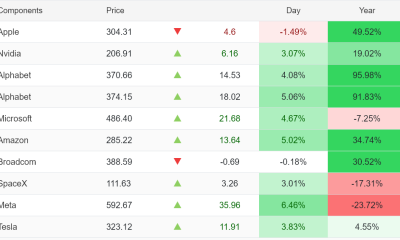
US Tech Stocks See Largest 5-Week Inflow in History: Can Nasdaq Break Its Downtrend?
-
 NewsBeat6 days ago
Tourist plane on sightseeing flight in Peru crashes into a field, killing all 13 people on board
You must be logged in to post a comment Login