





Connect with us

Business

Guests can ditch their clothes during nude dining events at Florida steakhouse

Published

on

Guests can ditch their clothes during nude dining events at Florida steakhouse

The C.L.A.S.S. Soiree Steakhouse located in Hollywood, Florida, welcomes diners to fully disrobe and eat a meal in the nude on the first Monday of each month.

While guests arrive wearing clothes, they’re free “to drop their clothes” after arriving at the restaurant, Tasheba Hart, who hosts the monthly events, told Fox News Digital during an interview on Wednesday while sitting alongside Chef Maurad Ali, the owner of the establishment.

Advertisement

Hart said she goes “totally nude” at the event, but noted that “if it gets a little chilly” she dons a robe.

FLORIDA STEAKHOUSE OFFERS CLASSY NUDE DINING EXPERIENCE THAT DOES NOT ALLOW ‘TOUCHY-FEELY STUFF’

C.L.A.S.S. Soiree Steakhouse chef and owner Maurad Ali (left) and nude dining event hostess Tasheba Hart (right)

C.L.A.S.S. Soiree Steakhouse chef and owner Maurad Ali, left, and nude dining event hostess Tasheba Hart, right. (Fox News Digital / Fox News)

She noted that only she and the guests are undressed, while the chefs and servers are “fully clothed.”

Ali explained that Hart, who does not work at the steakhouse on regular days, is the “head” of the nude dining events. She sells the tickets and gives the restaurant a cut of the funds, he said.

Advertisement

STEAK AND SEAFOOD CHAIN 801 RESTAURANT GROUP FILES FOR BANKRUPTCY AFTER CLOSING DENVER, MINNEAPOLIS SPOTS

The Florida steakhouse offers a nude dining experience once a month. (Justin Tsucalas; food styling by Lisa Cherkasky/Both for The Washington Post via Getty Images / Getty Images)

Hart said the tickets cost $150 for an individual woman, $250 for an individual man, or $300 for two people attending the event together.

She described the event as “a fine-dining experience.”

HIGH BEEF PRICES HITTING CONSUMERS AS MEATPACKING GIANT WARNS OF SUPPLY STRUGGLES

Advertisement
Steak meal

Rib-eye steak with a sweet onion-tarragon topping paired with a baked potato and asparagus.  (Bonnie Trafelet/Chicago Tribune/Tribune News Service via Getty Images)

CLICK HERE TO GET FOX BUSINESS ON THE GO

Ali remarked that “this is not your grandpa’s steakhouse.”

Continue Reading
Click to comment

You must be logged in to post a comment Login

Leave a Reply

Business

Mums hope school uniform swap in Tavistock will help families

Published

on

Three side by side photos from left a woman's legs wearing a skirt and flip flops, a man's legs wearing shorts and a woman wearing a white strappy top

In September, a new law from the Department for Education will be introduced on branded school items in England.

It means parents and guardians will not have to buy more than three branded items, plus a tie for children in secondary school.

The government decided to create the law after it was estimated a quarter of secondary schools still had four or more items on its list last year.

Bex said it was “relief” there was at least a limit on the branded items, but it depended on what items the school or establishment chose.

Advertisement

“I think in the long run, if the cost of living keeps going up, we are going to need to push for there to be less and less uniforms with logos, but it will definitely help,” Bex said.

Mum-of-two Faye said the price of uniform depended on the school and what their rules were around branded items, but some school uniforms could set a family back about £60 per child.

Continue Reading

Business

S&P downgrades Aston Martin rating on debt recovery concerns

Published

on


S&P downgrades Aston Martin rating on debt recovery concerns

Continue Reading

Business

Hundreds call for new town plans to be ‘ruled out’

Published

on

Business Live

Development of 3,500-homes planned for Glynchbrook, near junction 2 of the M50

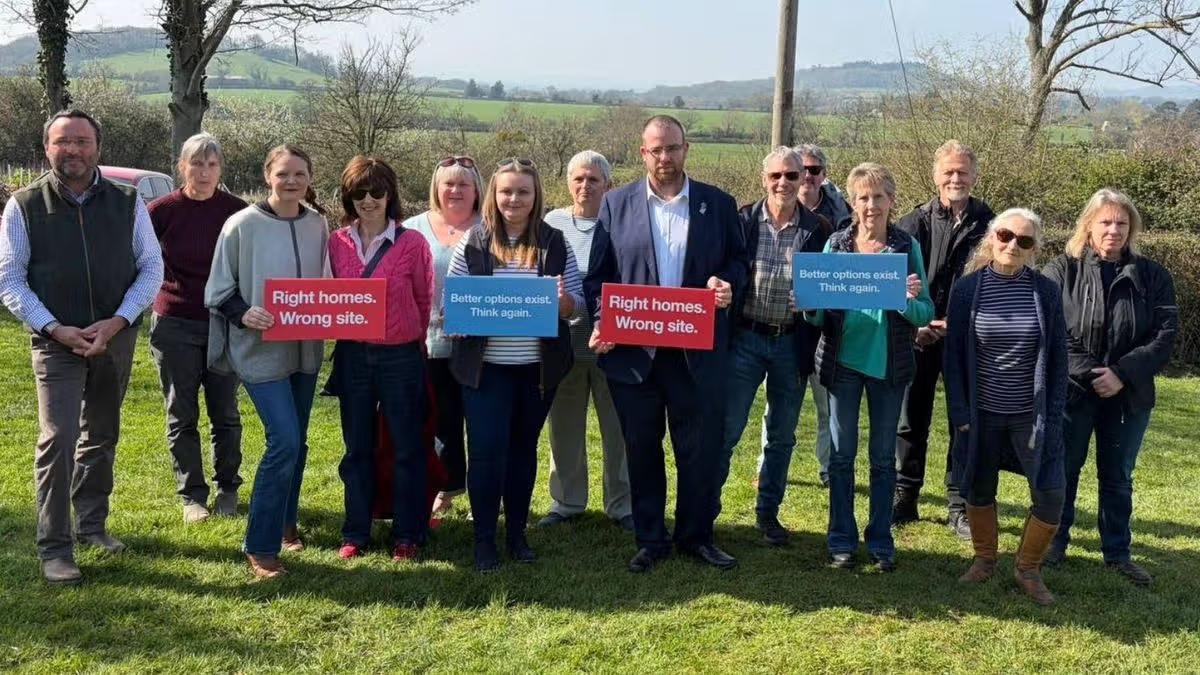
Forest of Dean MP Matt Bishop with residents at a United Against Glynchbrook meeting in March 2026.

Forest of Dean MP Matt Bishop with residents at a United Against Glynchbrook meeting in March 2026(Image: Local Democracy Reporting Service)

Hundreds of people have signed an open letter calling for a controversial 3,500-home town on the A417 to be “ruled out” of a council’s new blueprint for housing.

Advertisement

Forest of Dean residents have signed an open letter calling on councillors to rule out the controversial new town which was previously put forward at Glynchbrook, near junction 2 of the M50.

The Forest of Dean District Council decided on June 30 to withdraw its draft local plan and work on a new blueprint, which will set out where more than 13,000 homes will be built over the next 20 years.

Residents in the Redmarley area warn the Glynchbrook site remains “unsustainable” and a gathering in the village this week, attended by Forest MP Matt Bishop, has sent a clear message that the community would stand against the proposed development’s return.

Vicky Goodall, 52, a nurse from Redmarley, said: “Our open letter offers the council a workable solution that delivers on the housing targets, and ensures development is sustainable.”

Advertisement

Members of United Against Glynchbrook (UAG) assembled in Redmarley Village Hall on August 4, on the edge of the site that would host the proposed 3,500 home new town, wedged against the Malvern Hills National Landscape and the historic villages of Redmarley and Lowbands.

In a Facebook post following the event, Matt Bishop MP said: “I have made it clear that I do not support this large settlement … it is so important that residents take part… to ensure the local plan reflects local need.”

Mike Holtom, 66, a retired supply chain planning manager, added: “Glynchbrook is not the right place to build homes – everyone, including the council, has accepted that. However, we know that new homes need to be built in order to meet the district’s housing target.

“We hope the council considers our proposals – which are evidenced using the assessments of experts in their field.

Advertisement

“By expanding Lydney and Tutshill further, our reports show that both of those areas can be made even better places to live and the council will not need to build new towns.”

At the meeting, Vicky Goodall said: “We want new homes to be built, but they need to be built in places that deliver for people that move there.

“New homes need to be built near stations, schools and shops – our plan sets out how those homes can be delivered. We hope councillors engage with it.”

While residents have welcomed the local plan being pulled, UAG is concerned that the council may attempt to push Glynchbrook through again.

Advertisement

Phil Waring, 66, a Lowbands resident, said: “The new Local Plan is a great chance for the council to reassess how new homes can be delivered in the Forest of Dean in a sustainable way.

Glynchbrook development map. FREE TO USE FOR ALL PARTNERS. CREDIT: Redmarley Parish Council

The area proposed for development at Glynchbrook(Image: Redmarley Parish Council)

“Glynchbrook must be ruled out. Everyone knows it is not a viable option. I really hope Lydney and Tutshill are considered by the council – they are the options that can allow the council to meet its target in a sustainable way.

“Local residents have signed this open letter to make clear to the council that local people are still engaged in the Local Plan process. We hope they engage with our proposal.”

In the letter, residents argued that Glynchbrook would fall foul of the government’s new criteria for developing local plans, set out in the National Planning Policy Framework, as updated in December last year.

Advertisement

For instance, residents claimed that Glynchbrook could not deliver “sustainable transport“, as it would depend almost entirely on the car, with the nearest town 10km away and the nearest railway station 11km, and would make local roads roughly 50 per cent busier in the morning peak.

It notes that an independent study calls it “essentially unsuitable for a new settlement” and could harm the historic Chartist settlement of Lowbands, noting that no Infrastructure Delivery Plan, viability assessment or Strategic Flood Risk Assessment was ever produced for the site.

Using the government’s new methodology for determining local plans, UAG points to sites it says already have the infrastructure a new town lacks: Lydney, the district’s largest town, where analysis by Create Streets shows a “gentle density” of well-designed streets could add a further 3,200 to 4,600 homes and could be built around its existing station, schools and high street.

A Glynchbrook campaign sign off the A417 near Redmarley.

A Glynchbrook campaign sign off the A417 near Redmarley(Image: Local Democracy Reporting Service)

An independent landscape study by LVIA Ltd rated Lydney as “most capable of accommodating growth”.

Advertisement

In addition, UAG recommends a small expansion of Tutshill of around 500-700 homes, within 2km of Chepstow station, as well as wider spread of smaller sites, providing an additional 2,800 homes. The same study found “strong potential for landscape-led expansion.”

UAG says it will work constructively with the council as work on the new local plan gets underway.

The district council’s decision to pull the plan came after more than 3,600 responses to teh public consultation they held between January and March this year.

Feedback highlighted strong concerns about the options required to meet Government housing targets and proposed site suitability for the Forest of Dean.

Advertisement

Council leader Adrian Birch (G, Tidenham) said at the time that the authority’s first priority is to ensure that they listen to and deliver for residents.

“Having spoken to many residents at our in-person events earlier this year, and having carefully reviewed the consultation feedback, it is clear that the options needed to meet Government housing targets could not be achieved without more work to be right for our area,” he said.

Continue Reading

Business

Hitachi Energy India Q1 Results: Net profit rises over twofold to Rs 294 crore

Published

on

Hitachi Energy India Q1 Results: Net profit rises over twofold to Rs 294 crore
Hitachi Energy India on Friday said its net profit jumped more than twofold year-on-year to Rs 294.2 crore in the June quarter of FY27.

The company recorded a net profit of Rs 131.6 crore in the same quarter of the previous fiscal, Hitachi Energy said in a statement.

Revenue from operations rose to Rs 2,493.7 crore in the reporting quarter from Rs 1,478.9 crore in the same period a year ago.

During Q1FY27, orders totalled Rs 5,096.5 crore.

Advertisement

The company’s growth saga continues in the opening quarter of FY27, resulting in the highest-ever order backlog of Rs 32,222.1 crore.


N Venu, Managing Director & CEO of Hitachi Energy India, said in the statement, “Q1FY27 indicates excellent overall performance, resulting in robust order and revenue growth. It reflects strong market momentum, driven by a surge in opportunities stemming from the energy transition & security across the country and globally.”

Continue Reading

Business

Cargill touts shift in supply chain

Published

on

Cargill touts shift in supply chain

Revenues climb to $164 billion in fiscal 2026.

Continue Reading

Business

Restaurant Brands Beats Earnings as Burger King’s US Sales Soar 8.5%, Popeyes Struggles Overall

Published

on

burger king

Restaurant Brands International reported second-quarter earnings Thursday that topped Wall Street’s expectations, driven by a striking turnaround at Burger King in the United States, even as the company’s other chains, particularly Popeyes, continued to struggle with soft demand.

The parent company of Burger King, Tim Hortons, Popeyes and Firehouse Subs posted adjusted earnings of $1.07 per share, ahead of the $1.03 analysts had expected, according to a survey by LSEG. Net revenue rose 4.5% to $2.52 billion, in line with expectations. Net income attributable to shareholders came in at $507 million, or $1.45 per share, up sharply from $189 million, or 57 cents per share, in the same quarter a year earlier.

Burger King’s US Turnaround Takes Hold

The standout performer in Restaurant Brands’ results was Burger King’s U.S. business, where same-store sales climbed 8.5% during the quarter, extending a turnaround that has taken hold in the chain’s home market over recent quarters. Restaurant Brands Chief Executive Josh Kobza credited the improvement to disciplined execution, saying in a statement, “Burger King’s performance is a great example of what’s possible when you invest in the fundamentals and execute well – an approach we’re applying across all of our brands.”

Advertisement

Restaurant renovations, sharper marketing, and a renewed focus on core menu items including the Whopper have helped Burger King steal market share from competitors in recent quarters. Burger King U.S. President Tom Curtis told CNBC that the chain has benefited from consistent deal offerings, such as its $5 duos and $7 trios, a contrast to rivals that have frequently reshuffled their value menus. By comparison, McDonald’s reported U.S. same-store sales growth of just 0.8% in its own second quarter, a result executives at that company described as disappointing, prompting McDonald’s to name a new U.S. president to help accelerate sales.

Executives said there remains further room for improvement at Burger King. The chain has additional plans to refine its menu following an upgrade to the Whopper earlier this year, and not all of its U.S. restaurants have yet been remodeled. Curtis said restaurant renovations could accelerate further if beef prices decline.

Burger King’s momentum wasn’t confined to the U.S. International Burger King restaurants posted same-store sales growth of 5.5% during the quarter, according to the company, with Burger King’s overall adjusted operating income rising to $137 million from $121 million a year earlier.

Tim Hortons and Popeyes Lag Behind

Advertisement

Not every part of Restaurant Brands’ portfolio shared in Burger King’s momentum. Tim Hortons’ same-store sales in Canada, and overall, came in essentially flat for the quarter, rising just 0.1%. Kobza acknowledged the chain’s marketing had underperformed expectations during the period, telling investors on the company’s earnings call, “Taking a step back, while our marketing did not perform as anticipated in Q2, we were encouraged by stronger business performance as the quarter progressed and are excited about the back half calendar.” Tim Hortons revenue and operating income still increased during the quarter, driven largely by higher supply chain sales and consumer packaged goods performance, with adjusted operating income rising to $287 million from $278 million a year earlier.

Popeyes Louisiana Kitchen was the weakest performer across Restaurant Brands’ portfolio, with U.S. same-store sales declining 5.2% for the quarter. The fried chicken chain has struggled in recent quarters as an increasing number of competing restaurants chase a smaller pool of diners who have grown more value-conscious amid persistent cost-of-living pressures. Kobza expressed cautious optimism about the chain’s trajectory, saying, “While sales remained soft during the quarter, we’re encouraged by the improvement we saw and continue to execute against the same priorities,” and adding that he expects Popeyes’ same-store sales to return to growth in the second half of the year. Popeyes’ adjusted operating income fell to $63 million from $66 million a year earlier, as declining comparable sales weighed on both revenue and profitability for the segment.

A Bright Spot in Firehouse Subs

Beyond the company’s three larger chains, Firehouse Subs offered a relative bright spot, with system-wide sales growing 7.5% during the quarter. That growth was driven primarily by an 8.1% increase in restaurant count rather than same-store sales gains, which rose a more modest 0.7% in the U.S., suggesting the brand’s expansion strategy is currently outpacing organic demand growth at existing locations.

Advertisement

Solid Overall Growth Despite Divergent Brand Performance

Across the full portfolio, global comparable sales rose 3.8% during the quarter, ahead of the roughly 3% growth analysts had estimated, while consolidated system-wide sales climbed 6.4% year over year to $12.7 billion, including 10.7% growth internationally. Adjusted operating income rose to $715 million from $668 million a year earlier, representing 6.7% organic growth. Kobza framed the mixed results across individual brands as evidence of the strength of the company’s broader, diversified structure, saying the results highlight the benefits the company has built through disciplined execution across a varied consumer environment.

Shares Slip Despite the Beat

Despite topping Wall Street’s earnings and revenue expectations, shares of Restaurant Brands fell more than 1% in morning trading Thursday, and were reported down roughly 2% in post-earnings trading by some tracking services, as investors focused on the continued weakness at Tim Hortons and Popeyes rather than Burger King’s standout performance. The stock had entered the earnings report trading around $73.88, with a mean analyst price target of $85.04 implying roughly 15% potential upside, according to a survey of 27 analysts covering the stock, 17 of whom rate it a buy, nine a hold and one a sell.

Advertisement

Financial Position and Longer-Term Goals

Restaurant Brands’ net leverage improved to 4.1 times during the quarter, though the company still expects between $500 million and $520 million in adjusted net interest expense for 2026. The company continues working toward a long-term goal of consolidated net restaurant growth of at least 5%, with current growth running at 2.9%, unchanged from the prior year and still requiring acceleration to meet that target. Restaurant Brands also continues efforts to refranchise most of its company-operated Carrols Burger King restaurants, find a new partner for Popeyes’ China operations, and attract investors for its Firehouse Subs Brazil business, initiatives the company has said could affect segment profitability depending on their timing and execution.

With Burger King’s U.S. turnaround continuing to carry the company’s overall results, investors are likely to watch closely whether Tim Hortons can build on the stronger performance Kobza described emerging later in the quarter, and whether Popeyes can deliver the return to same-store sales growth executives have projected for the back half of 2026. The divergent trajectories across Restaurant Brands’ four chains are expected to remain the central storyline shaping the company’s performance heading into the remainder of the year.

Advertisement
Continue Reading

Business

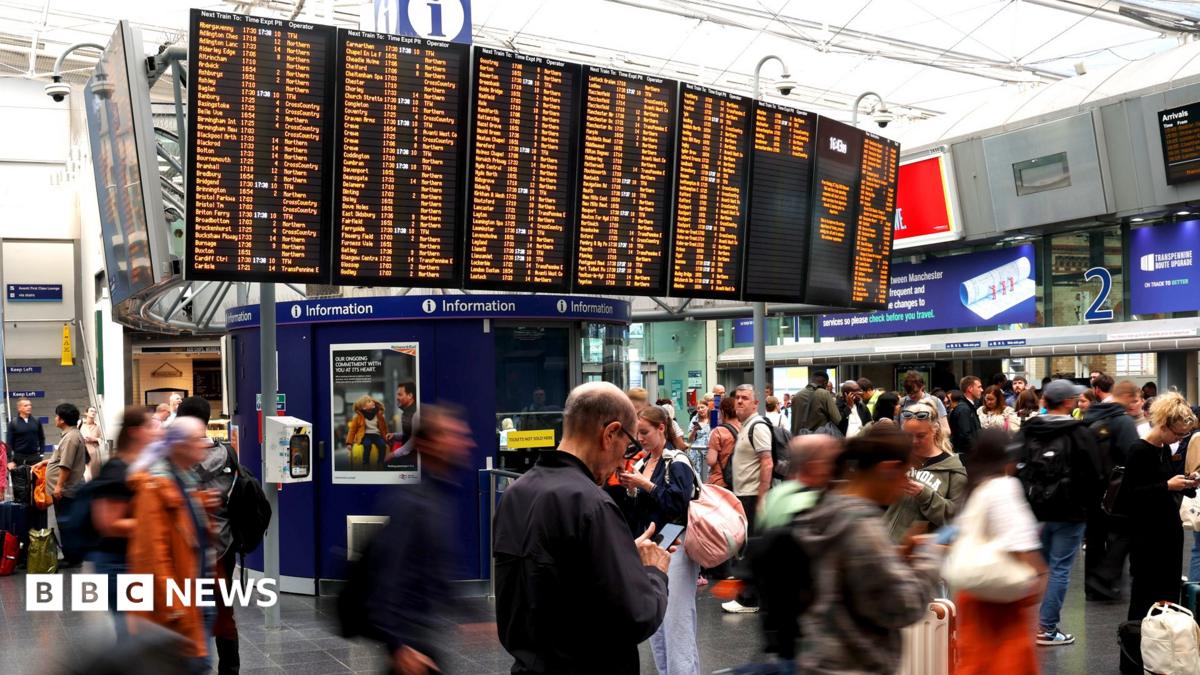
How a 90-second power outage sparked chaos for train commuters

Published

on

Three side by side photos from left a woman's legs wearing a skirt and flip flops, a man's legs wearing shorts and a woman wearing a white strappy top

The power failure which hit a Network Rail operations centre in Manchester was a rare incident.

But after commuters were left facing chaos, it has raised questions about how a short outage at one operating centre could have a widespread impact.

Network Rail will face scrutiny for how its systems coped and responded to the outage.

That’s the publicly-owned body whose job it is to operate and maintain Britain’s railway infrastructure. That means the tracks, signals, embankments and major stations.

Advertisement

It was at Network Rail’s operating centre in Manchester that the problem started. Its operating centres are where crucial controls are housed that let trains run safely across the country, with Manchester’s centre responsible for large parts of the North West.

It was hit by a power cut in the area, which was resolved within 90 seconds. And despite having a backup supply, given the centre’s importance, this failed to kick in as quickly as expected.

Chris Wright, north-west route director at Network Rail, said the organisation was “working really hard” to understand exactly what went wrong.

“We didn’t experience a 90-second interruption,” he told the BBC, insisting its systems were back online sooner.

Advertisement

But he said some of Network Rail’s communications systems “did not respond how we would have expected, and then needed reconfiguring and replacing”.

“We’ve got to work really hard very quickly now to understand why that’s the case,” he added.

But because signalling was affected – think of that essentially as the traffic lights of the railway – trains had to stop.

Systems had to be rebooted. But there was some damage to the systems controlling signalling, and that took time to fix because of the need to replace certain parts.

Advertisement

Thinking about how busy parts of the rail network are, and how many trains and crews were left out of position across the North West of England and beyond, helps explain why the impact was so big.

Network Rail has apologised to customers and opened an investigation.

Bosses say engineers have been working hard to “build additional resilience into our signalling systems to ensure that this doesn’t happen again”.

Advertisement
Continue Reading

Business

Alpha Metallurgical Resources, Inc. (AMR) Q2 2026 Earnings Call Transcript

Published

on

OneWater Marine Inc. (ONEW) Q1 2026 Earnings Call Transcript

Operator

Greetings, and welcome to the Alpha Metallurgical Resources Second Quarter 2026 Conference Call. [Operator Instructions] Please note, this conference is being recorded. I will now turn the conference over to your host, Emily O’Quinn, Senior Vice President, Investor Relations and Communications. You may now begin.

Emily O’Quinn
Senior Vice President of Corporate Communications

Advertisement

Thank you, Rob, and good morning, everyone. Before we get started, let me remind you that during our prepared remarks, our comments regarding anticipated business and financial performance contain forward-looking statements, and actual results may differ materially from those discussed. For more information regarding forward-looking statements and some of the factors that can affect them, please refer to the company’s second quarter 2026 earnings release and the associated SEC filing. Please also see those documents for information about our use of non-GAAP measures and their reconciliation to GAAP measures.

On the call today, I’m joined by Alpha’s Chief Executive Officer, Andy Eidson; and Chief Financial Officer, Todd Munsey, who will provide prepared remarks. Also participating on the call are our President and Chief Operating Officer, Jason Whitehead; and our Chief Commercial Officer, Dan Horn. Following our prepared remarks, we will be available to answer questions. With that, I’ll turn the call over to Andy.

Charles Eidson
CEO, Treasurer & Director

Advertisement

Thanks, Emily. Good morning, everyone. Today, we released our definitive second quarter financial results, which included

Continue Reading

Business

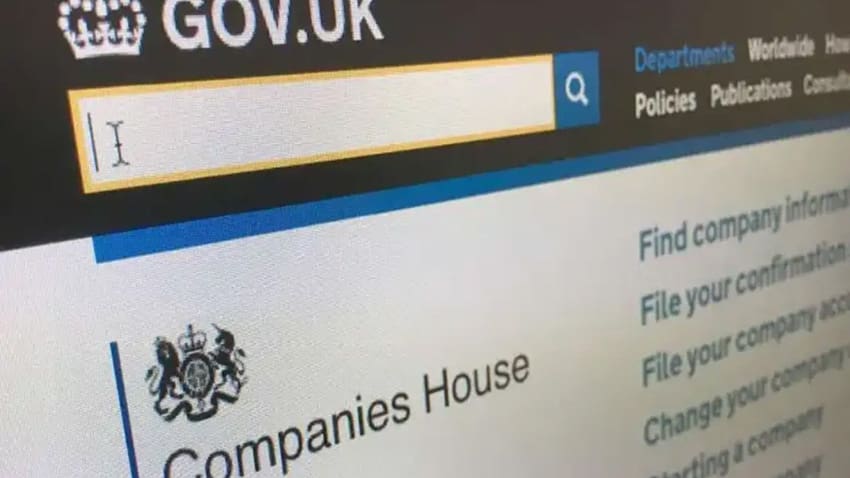
Companies House bans 23 directors over filing failures

Published

on

Companies House suspends filing service after cyber vulnerability exposes director data

Twenty-three people were disqualified from acting as company directors in the first six months of 2026 for “persistent or serious non-compliance” with their filing duties, according to figures published by Companies House on Thursday, with bans totalling 70 years.

The disqualifications, which ranged from six months to five years, followed criminal convictions for failing to file documents such as annual accounts and confirmation statements. Courts also fined the 23 directors a combined £17,810, including £15,600 for non-filing of accounts and £2,200 for non-filing of confirmation statements, Companies House said.

Separately, 360 directors of 332 companies were convicted of filing offences between January and March. Companies House said these included 355 convictions for accounts offences, with total fines of £129,970, and 157 convictions for confirmation statement offences, with fines of £53,300. The registrar was also awarded £31,075 in costs.

Companies House did not publish comparable figures for previous years, but disqualifications are understood to have run at about 12 a year in the past, and courts have been handing down longer bans as the offences are treated more seriously.

Martin Swain, director of intelligence and law enforcement engagement at Companies House, said: “Limited liability encourages enterprise, giving businesses the confidence to start, invest and grow.

Advertisement

“In return, they are expected to be transparent and accountable. We encourage and support companies to comply with their legal obligations to file accounts and confirmation statements. Prosecution ensures that where there has been a serious breach of the law, individuals are held to account.”

All companies must file annual accounts and a confirmation statement under the Companies Act 2006, and directors are personally responsible for ensuring the documents are delivered on time. Where accounts are filed late, Companies House imposes automatic statutory penalties on the company. Failure to file is also a criminal offence for which all of a company’s directors risk prosecution.

Companies House said enforcement decisions are taken in line with its published enforcement policy, and that prosecutions proceed only where there is sufficient evidence and where prosecution is in the public interest.

The figures come as the registrar implements reforms under the Economic Crime and Corporate Transparency Act, designed to improve the accuracy of the register after years of criticism that it was open to abuse. Mandatory identity verification for new directors and people with significant control took effect in November 2025, and was followed by a fall of around 30 per cent in weekly company registrations.

Advertisement

From April 2028, about two million small and micro companies, defined as businesses with up to 50 employees or revenues of up to £15 million, will be required to file profit and loss information at Companies House for the first time. Following a backlash over the plans from small firms and business groups, companies will be able to opt to have the information hidden from public view.

The government has said the profit and loss statements would be available for review by “law enforcement and HMRC” to tackle “fraud, economic crime and tax evasion”. HMRC’s latest tax gap estimates put unpaid tax at £59.2 billion for 2024-25, with small businesses accounting for the largest share.


Jamie Young

Jamie Young

Jamie Young is Senior Reporter at Business Matters, covering SME finance, employment law and Westminster policy since 2016. He has reported on every Budget and Autumn Statement since 2018, helped make sense of the ‘covid era’ and the bounce-back loan scheme from launch through the fraud investigations, and broke the magazine’s coverage of the 2024 late-payment reforms. He joined Business Matters straight from completing his BA in Administration from Exeter University and is NCTJ-qualified. Reach him at jyoung@cbmeg.co.uk
Advertisement

Continue Reading

Business

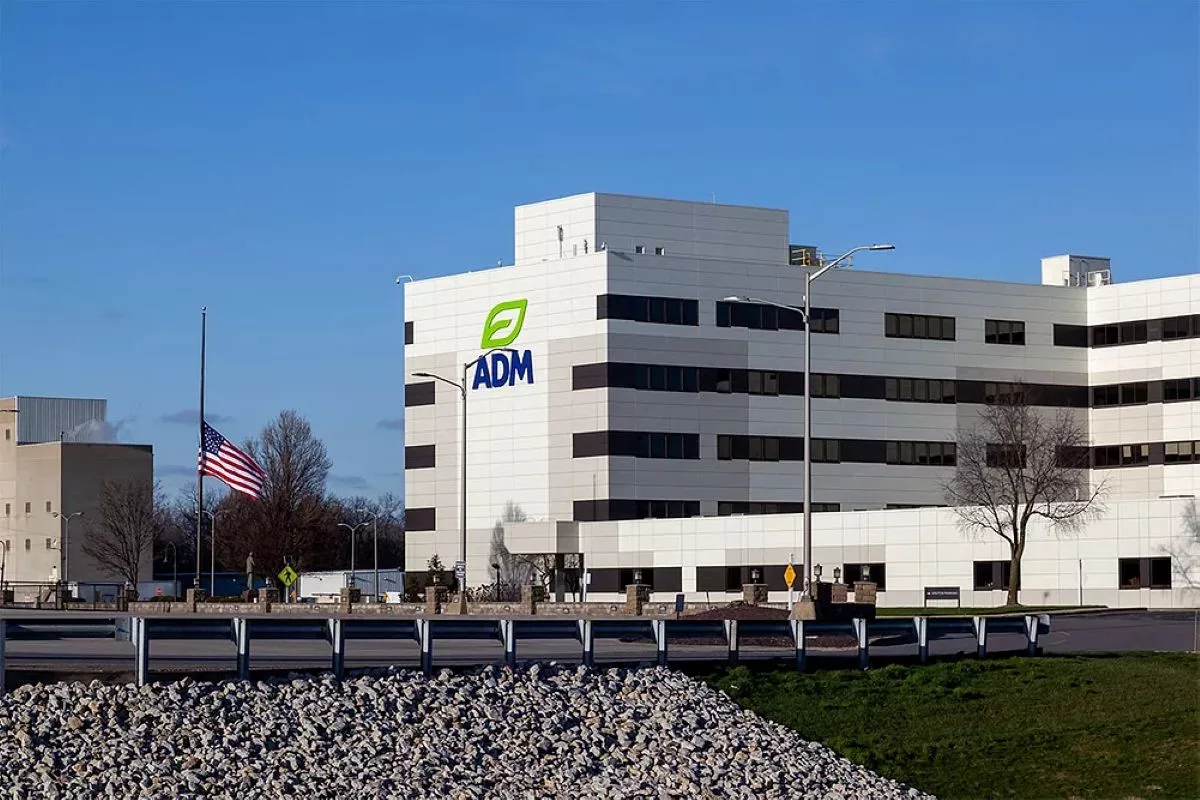
Operational execution leads to strong gains at ADM

Published

on

Operational execution leads to strong gains at ADM

Net earnings jump 315% in second quarter.

Continue Reading

Trending

Copyright © 2025