
Crypto World
Where Everyone Ends Up in the Series Finale of The Bear



Ever since executive chef Carmen Berzatto attempted to transform the Original Beef of Chicagoland into a Michelin-starred restaurant, the Bear (and, to an extent, The Bear) survived as a chaotic, quixotic idea—a fine-dining mirage built on dysfunction in an arid restaurant landscape. But in the show’s fifth and final season, Carmy, Sydney, Richie, and the rest of their bruised-but-breathing kitchen staff get one last shot at keeping their aspirational vision alive. Which is to say: They bicker, they cook, and they try not to drown during a torrential downpour for a final dinner service that might determine everything.
This time, though, Carmy isn’t in charge. Season 5 picks up the morning after the Season 4 finale, when Sydney has taken reluctant control alongside Richie and Natalie, attempting to orchestrate an impeccable multi-course meal for the Michelin inspector they’re convinced is arriving that night. All they have is a dwindling supply of ingredients, a flooded building, and staff aware that their jobs are in jeopardy. And yet, in their quest for culinary perfection, and as Carmy evaluates his decision to retire, the group pulls together without resorting to the profane, deafening chaos that characterized their previous work, almost entirely thanks to Sydney’s opposite-in-every-way leadership style. Every dish gets out, every table leaves happy, and the math finally works, even if just barely.
So, what does that mean for the Bear going forward? In the Season 5 finale, titled “The Original Beef of Chicagoland,” the restaurant’s fate shines brighter than expected. The next morning, Carmy discovers that the Michelin “Star Man” never showed up the previous night. Instead, during a call, he learns the real inspector, Peter Clark, had quietly visited months earlier. His verdict: the food was “exceptional and creative,” the “talent was undeniable,” and the dining room “felt alive without being precious or tryhard.” When Carmy relays the news to Sydney, she can’t help but ask: “Did we get a star?”
Carmy slowly shakes his head, before breaking into a soft smile.
“We got two.”
After processing this enormous badge of honor, Sydney and Carmen eventually share an intimate, meaningful embrace in the dining room (sorry Reddit theorists, no kiss), bathing in the morning sunlight and realizing a dream that sometimes never seemed possible between them. “You did it,” Carmy tells her.
Over the next week, the rest of the staff sinks into stability, making good on all the sweat, ambition, and belief it took to get there. The restaurant has a real foundation now—it has leadership, vision, a seal of excellence that will guarantee an endless flood of reservations, and a franchised sandwich shop. And, as Luca (Will Poulter) notes, the Bear has something even more difficult to find in a fine dining establishment: family. It’s a sweet, satisfying ending that makes it hard to say goodbye to this tight-knit, trauma-bonded kitchen staff. Here’s where each “family” member stands now that series creator Christopher Storer has closed up shop.
Carmen Berzatto

Carmy leaving the Bear right as the restaurant earns its Michelin stars feels like a bittersweet personal decision—and risky considering that he’s never worked a “real job” in his life. “Do you have any skills outside of this?” Sydney asks him, slightly concerned. “Have you ever had to write down a real resume?” The standout chef has his reasons for quitting. He also hopes to become an architect, or at least, for now, an intern at an architecture firm, where he lands a job interview thanks to an assist from Stevie (John Mulaney).
During the interview, he shares a moving monologue about his entire existence as a chef. “I didn’t want to know my coworkers. I didn’t care to care for them,” he says. “I saw them as tools to help me survive in the kitchen.” The previous night’s service, in which the entire kitchen pulls together under Sydney’s leadership, crystallized his need to move on. As Carmy shares with Jimmy (Oliver Platt) earlier, leaving the Bear is the only way he can end the vicious traumatic cycle that threatened to devour everyone in his life. “Lee was right,” Carmy says of his belligerent uncle. “To break patterns you have to break patterns.” Who knows? Maybe he’ll design the next great restaurant.
And yes, for those wondering about his love life: Claire Bear shows up to Richie’s daughter’s birthday party in the final scene, offering hope that their relationship is on the road to repair.
Sydney Adamu

It was always clear that Sydney was the brains behind the Bear, thanks to her dexterity and creativity in the kitchen. But even she can’t believe the Michelin stars bestowed upon the restaurant. Never one to take credit, she enjoys a few quiet moments taking in the individual praise and team’s achievements—further validation that staying at the Bear instead of jumping to Adam Shapiro’s new venture last season was the right choice. As revealed by her uber-proud father over breakfast, Sydney’s photo graces a front section of a Chicago newspaper celebrating the Bear’s turnaround. After doubt about her future caused strain in their relationship, it appears Sydney has finally found the place she belongs with the dad she always wanted.
Richie Jerimovich

This season started out poorly for Richie when his car got T-boned on the way to work in a surprise pre-season episode. Luckily, it ended much better for him—and in an upgraded mode of transportation. Earlier in the day, Natalie informs him that he’s been invited to an international hospitality seminar in Japan, which initially causes a panic attack. Richie has never left the country, let alone flown in a plane. Thanks to some rocky reassurance from Carmy, and full clearance from Sydney to miss a week of work as long as he brings her back stickers and weird snacks, Richie ultimately relents and takes the next big step in his career.
Luckily, Jess (Sarah Ramos) eases his fear of flying and journeys with him, with a few subtle hand touches all but confirming a budding romance that most of the kitchen had already sussed out. Before they go, Richie, now a master of hospitality, throws a surprise birthday party for his daughter Eva (Anabelle Toomey), convening the whole family—including Lee (Bob Odenkirk), Donna (Jamie Lee Curtis), Tiffany (Gillian Jacobs ), her husband Frank (Josh Hartnett), and even Claire Bear (Molly Gordon)—in celebratory harmony.
Natalie Berzatto

While everyone has been fussing in the kitchen and dining room, Natalie a.k.a. Sugar has been quietly managing the books in the back, making sure the lights stay on. That was a near-impossible task with Carmen in charge, especially when her brother demanded that the restaurant’s menu change every night (a mandate that required new, expensive ingredients and made profitability impossible). As she notes in the finale, the rain-soaked dinner service didn’t net them any extra revenue. Still, with Sydney in charge, she seems more optimistic about the restaurant’s future. “Usually, I’m filled with dread with numbers, but today I’m not worried, because we have a captain,” she tells Sydney. And with a healthy baby, a loving husband and doting father (Chris Witaske), and a reformed mother trying to finally be of service, Natalie looks like she’s forging the family and business she’s always wanted.
Marcus Brooks

Throughout the previous night’s dinner service, Marcus was in a bad headspace spurred on by his estranged father’s solo visit to the Bear. It impacted his mood, his work, and his relationship with Luca, turning a typically even-keeled, good-natured pastry chef into an anxious, defensive liability. But after sharing some meaningful time with his father (which included a special candle-poured dessert) and Sydney (who commiserates with him about losing their respective mothers), Marcus finds some catharsis and begins to make inroads with his dad. As he drops Luca off at the airport for his return to Copenhagen, he admits he plans to spend his off day in the lab, attempting to create another otherworldly confection. It’s the kind of grind that’s made him one of the most exciting new chefs in the city.
Tina Marrero

Tina came dangerously close to jumping ship and pursuing another, more secure chef job, but Sydney convinced her that she’d be her right-hand woman in the kitchen should they make their restaurant a profitable endeavor. It’s a fitting end to Tina’s evolution—from someone who joined the Beef with hardly any skills to middle-aged culinary craftswoman. In the weeks after learning about their Michelin status, Tina fantasizes about her new life as the Chef de cuisine with her husband beside her (played by the actor’s real-life husband David Zayas). “You think I can do it?” she asks him. “I know you can,” he replies.
Ebraheim

Ebraheim stayed in the margins of the show this season, but it’s clear his prospectus on the sandwich business and its franchising plan will be key to keeping the Bear alive. Despite the fact that Ebra anxiously rehearsed his pitch for hours, Carmy cuts him off and tells him that his plan to franchise the Beef side window into a few suburban locations is a perfect idea, having been tipped off by his Uncle Jimmy. “I want you to do it,” Carmy tells him and the Beef staff. “You guys are the reason this place is what it is.” The next step will be furnishing their “ghost kitchens” and bringing their signature sandwiches to the greater Chicago area.
Neil Fak (and family)

In what turns out to be the biggest moment in Neil’s young serving career, the handyman and Berzatto family friend keeps his composure and colorfully chats up the diner everyone believed was the Michelin-star inspector. The superb, improvisational interaction only bolstered Neil’s confidence as a server, setting him down a hospitality path he never realized could bring him so much joy. As for his brother Theodore (Ricky Staffieri) and the rest of the extended clan, there’s easy reason to believe that they’ll continue to shadow the Berzattos wherever they go.
Jimmy Kalinowski

It’s hard to count how many times Uncle Jimmy and Computer uttered the words “air rights” this season, but the repetitive phrase should seemingly be useful now that the Bear is a Michelin-certified restaurant. The financial investment into the restaurant has sunk Jimmy’s bank account, but Ebra’s franchise projections give him reason to hope there’s light at the end of this dark, clogged tunnel. (He also has his sights set, romantically, on Deedee, with whom he interacts affectionately at Eva’s shindig.) Then again, the Bear might still work out, too. “This place is going to be OK. She’s the real deal,” Carmen says of Sydney. “How do you know?” Jimmy asks him. Carmy replies matter of factly: “I’ve been in a few of them.”

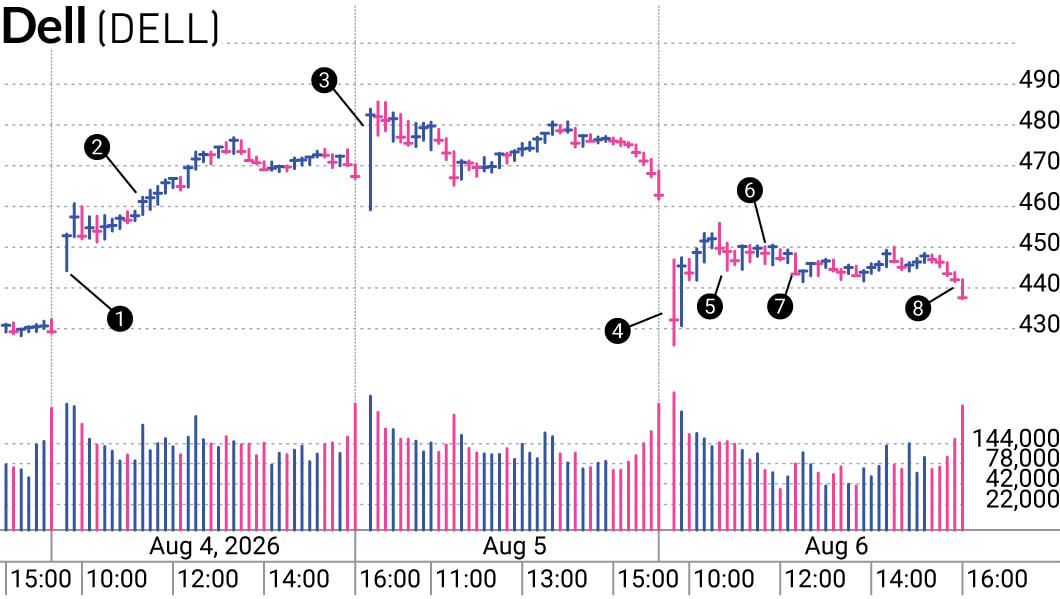
Every entry needs an exit strategy in order to limit risk. Once you know the risk, then you can also set an appropriate position size for the trade. But the big assumption is that you can get the exit price you want in order to keep the loss small. What happens when a gap-down at the open demolishes your risk…
Copyright ©2026 Investor’s Business Daily, LLC. All rights reserved. 87990cbe856818d5eddac44c7b1cdeb8
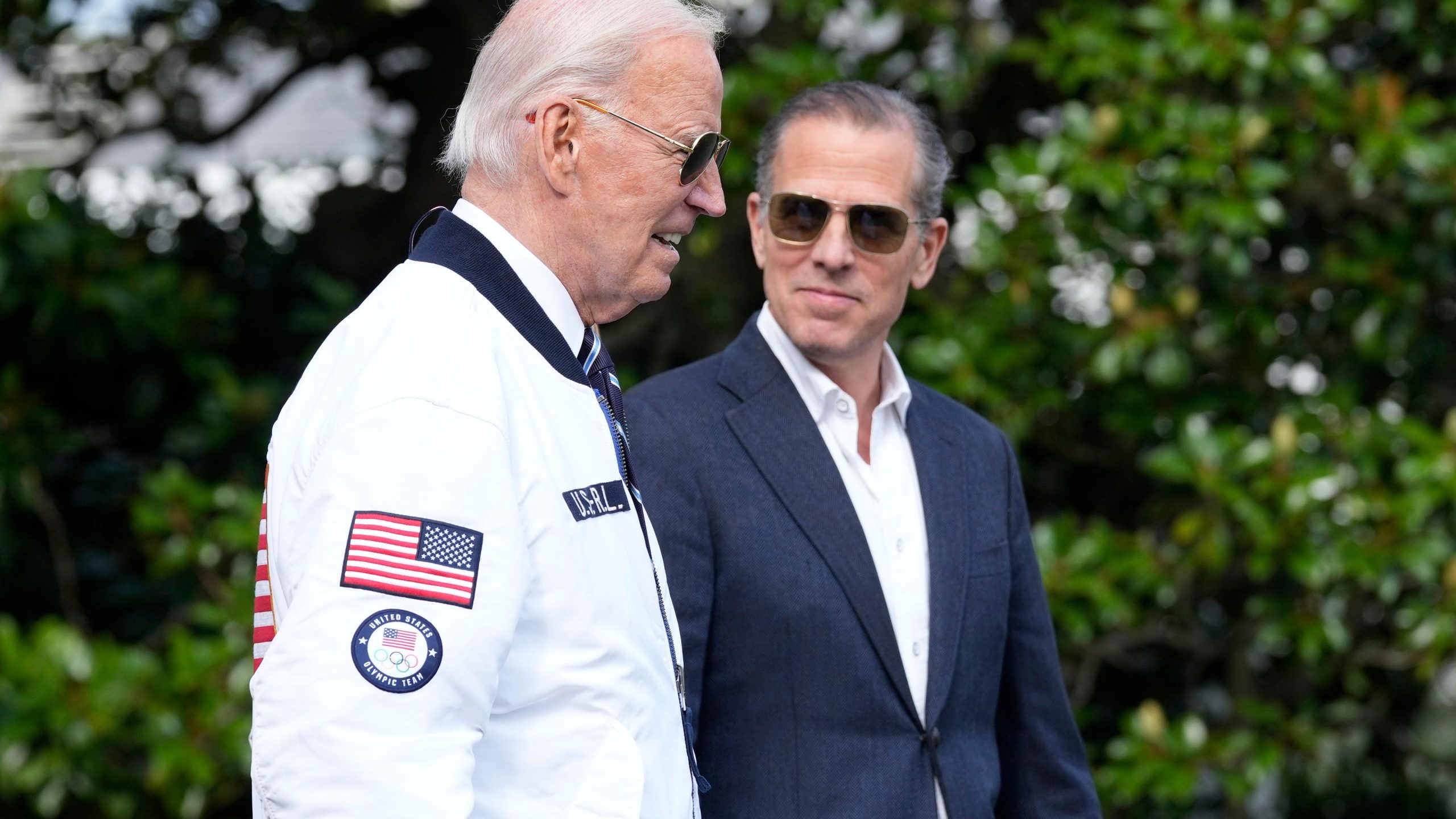
However, he added that his father’s concerns about the incoming President were likely well-founded.
“I think that Donald Trump has proven to be exactly who my dad thought he was going to be, as it relates to the revenge and retribution that he would seek on his political enemies,” he said.
The Biden family’s history with cancer
The Bidens have long advocated for comprehensive cancer research. Joe Biden’s eldest son, Beau, whom he had with his first wife Neilia Hunter Biden, died of glioblastoma, a type of brain cancer, in 2015.
“Cancer uses every tool at its disposal — it hides from the immune system, builds its own blood supply, uses viruses to spread, engineers a friendly cellular environment to support its survival and growth, and knows how to spread through the body by using pathways and mutations we do not understand fully,” the 46th President and his wife, Jill, wrote in an article for TIME in 2017, during which they shared their reasons for launching the Biden Cancer Initiative. “Cancer never gives up; it never surrenders.”
The delay of the US CLARITY Act announced at the end of the business week harmed several altcoins, but XRP’s price dipped the most among the larger caps.
BTC and ETH managed to hold support on Friday, remaining above or at key milestones at $64,000 and $1,900. XRP, on the other hand, slipped to just over $1. That’s why we decided to ask ChatGPT for its analysis of the matter and whether Ripple’s token will continue to face adverse consequences.
Why Such a Reaction, XRP?
The answer to whether the token will inevitably crash below $1, according to the popular AI solution, was “not necessarily, but the risk has increased.” It explained that the cross-border altcoin has become uniquely tied to US regulatory developments, dating back to the beginning of the lawsuit against the SEC nearly six years ago.
Unlike bitcoin, which has institutional and ETF demand, or Ethereum, which benefits from tokenization, stablecoins, and treasury accumulation from companies like Bitmine, much of XRP’s bullish narrative over the past few years has centered on regulatory clarity.
Passage of the CLARITY Act would likely cement its commodity status in federal law and provide greater certainty for banks, institutions, and ETF issuers. In contrast, delaying the process postpones those potential inflows rather than eliminating them.
OpenAI’s solution pointed out that XRP had historically rallied aggressively on regulatory optimism earlier in the cycle, making it more vulnerable to disappointment when the catalyst faded. Certain analysts agree with the thesis that XRP could indeed slip below $1 soon, but they believe this would open the door for a more profound rally.
Is Sub-$1 Inevitable?
Again, ChatGPT doesn’t believe this is the most probable scenario; instead, it thinks XRP has several catalysts that could prevent such a move. Perhaps the most significant support comes from the company behind the token and its substantial expansion experienced over the past few years, which included major partnerships, acquisitions, and regulatory wins, albeit in other jurisdictions.
The AI also noted that markets tend to overreact to legislative delays – after all, it doesn’t necessarily mean the bill will fail. If investors begin pricing in eventual approval rather than focusing solely on timing, Ripple’s token could stabilize before Washington returns in September.
Nevertheless, it didn’t completely rule out a dip below $1.00, especially if the broader crypto sentiment deteriorates and BTC loses key support. In addition, macroeconomic news or war escalation can trigger another leg down, and both of those factors are outside the scope of the regulatory delay.
The post We Asked ChatGPT: Is XRP Doomed to Fall Below $1 After the CLARITY Act Delay? appeared first on CryptoPotato.

Twilio (TWLO) stock jumped Friday after the communications software maker reported second-quarter earnings and revenue that topped consensus estimates as a new voice-based artificial intelligence product gained traction. The company’s September quarter sales outlook came in above expectations. The San Francisco-based company reported earnings after the market close on Thursday. Twilio EPS rose 24% to $1.47 for the June quarter…
Copyright ©2026 Investor’s Business Daily, LLC. All rights reserved. 87990cbe856818d5eddac44c7b1cdeb8

Nvidia (NVDA) is set to report second-quarter earnings on Aug. 26 after the market close, and the options market is pricing in an 8.8% move in either direction. The tech heavyweight’s stock has a solid recent history of strong performance following earnings reports. Let’s look at selling a cash-secured put to take advantage of the high implied volatility around the…
Copyright ©2026 Investor’s Business Daily, LLC. All rights reserved. 87990cbe856818d5eddac44c7b1cdeb8

Recent initial public offering Loar (LOAR) is the IPO Stock Of The Week as it offers a new buy point and attempts support at a key level. The defense stock also sits on Investor’s Business Daily’s IPO Leaders screen. Loar manufactures components for military and aerospace platforms. It supplies such defense giants such as Boeing (BA), Airbus (EADSY) and Lockheed…
Copyright ©2026 Investor’s Business Daily, LLC. All rights reserved. 87990cbe856818d5eddac44c7b1cdeb8

XRPL has released version 3.3.0, which takes another step toward becoming infrastructure for institutional tokenization.
It introduces several proposed amendments focused on privacy, payments, and managing real-world assets (RWAs).
Confidential Transfers
Perhaps the most significant new feature is called Confidential Transfer. It’s designed to allow institutions to hide balances and transaction amounts for Multi-Purpose Tokens (MPTs) while keeping the accounts and the asset type involved visible. It uses cryptographic proofs to verify that transactions are valid without publicly revealing the underlying amounts.
According to the GitHub post and previous reports on the matter, this could address an important obstacle for financial institutions, which may want the transparency and settlement benefits of a public blockchain without exposing sensitive position sizes or transaction values.
Data from RWA.xyz shows that roughly $850 million out of the $1.38 billion in RWA distributed on the XRPL is from Ripple’s own stablecoin, RLUSD. This leaves approximately $530 million in other tokenized assets from other big names in the niche, such as Ondo, Archax, Societe Generale, and VERT Capital.
Other Proposals
Aside from Confidential Transfers, the other updates named in version 3.3.0 include Batch, Sponsor, and Permission Delegation. The first amendment would allow up to eight transactions to be grouped together, including an atomic mode in which either all transactions succeed or the entire batch fails. This is expected to benefit complex settlements, swaps, and institutional transactions.
Sponsor is designed to enable one account to cover another user’s transaction fees and reserve requirements. In other words, it could allow companies to onboard customers without requiring them to purchase XRP before interacting with an application.
The last one would enable account holders to grant another party pre-defined transaction permissions without surrendering full control of the wallet. It would align with Dynamic MPT and provide issuers with greater flexibility by allowing certain token characteristics to be modified after issuance.
It’s worth noting that these amendments are not live on the XRP Ledger Mainnet yet, as the governance process requires each to maintain support from at least 80% of trusted validators for two consecutive weeks before activation.
The post Major XRP Ledger Upgrade Targets Institutional Adoption But There’s a Catch appeared first on CryptoPotato.

Donald Trump has warned that China could gain control of the global crypto sector as the US delays major market rules. The president stressed that America must protect its leadership in digital assets while lawmakers struggle with the CLARITY Act. His remarks add pressure on Congress as negotiations continue over regulations, ethics rules, and illicit finance provisions.
Trump Links Crypto Leadership to US National Strategy
Trump has placed cryptocurrency among the technologies that could shape America’s economic position in coming years. He also compared the strategic importance of crypto with artificial intelligence and urged the US to maintain leadership. Meanwhile, his administration continues to promote digital assets as an important part of the American technology sector.
The president warned that China could strengthen its position if the US slows crypto development. He also pointed to growing competition among countries seeking greater influence over emerging digital technologies. Therefore, Trump argued that restrictive policies could weaken America’s position while other nations expand their crypto industries.
Trump has also defended his administration’s approach toward digital asset regulation and innovation. He argued that excessive restrictions could discourage new businesses and push technological activity toward foreign markets. However, lawmakers continue to debate how the US should balance innovation with stronger safeguards across the crypto sector.
Clarity Act Faces Continued Senate Delays
Trump’s comments arrive as the CLARITY Act remains stalled in the US Senate. The market structure bill seeks to establish clearer rules for digital assets and define responsibilities across federal regulators. However, lawmakers have yet to resolve several major disputes surrounding the legislation.
Senate negotiations have focused on ethics requirements, illicit finance measures, and other provisions within the bill. These disagreements have slowed progress and reduced the chances of an immediate floor vote. At the same time, lawmakers continue working on changes that could secure broader support for the legislation.
The delay creates another challenge for Trump’s broader crypto agenda and his push for American leadership. A prolonged legislative process could leave the industry without a comprehensive market structure framework. Meanwhile, competing jurisdictions could use regulatory clarity to attract crypto companies, capital, and blockchain development.
Trump Challenges Ethics Concerns Over Crypto
Trump has also criticized proposals that could restrict his participation in crypto-related businesses while serving as president. The ethics debate has become another issue within the wider negotiations surrounding the CLARITY Act. Lawmakers have considered measures designed to address potential conflicts involving public officials and digital asset interests.
The president has indicated that his businesses remain under his family’s management during his administration. He has also said that he does not discuss government matters with his children. Consequently, Trump maintains that the ethics provisions should not prevent the US from advancing its digital asset sector.
The debate now combines regulatory policy, national competition, and ethics concerns around crypto. Trump continues pushing for US leadership, while Senate lawmakers seek agreement on the CLARITY Act. As negotiations continue, the final legislation could shape how America regulates crypto and competes with China in digital technology.

Bitcoin Improvement Proposal (BIP) 110 has entered its mandatory-signaling window, but miners are signaling support at a fraction of the level needed to credibly move the network to a new consensus regime. According to a BIP-110 monitor, support was present in just 51 of the 2,016 blocks preceding block 961,632—about 2.53%—far below the 55% threshold required for early activation.
As of block 961,632, nodes enforcing BIP-110 started rejecting blocks that do not set version bit 4. Ordinary Bitcoin nodes, however, continued to accept both signaling and non-signaling blocks. A smaller “BIP-110 branch” appears to have emerged, but it quickly fell behind the chain that most miners are extending.
Key takeaways
- Miners signaled BIP-110 support at about 2.53% in the run-up to block 961,632, well under the 55% early-activation requirement.
- Starting at block 961,632, enforcement nodes reject blocks missing version bit 4, while non-enforcing nodes still accept them.
- A minority enforcing branch formed but has not gained sufficient momentum to become the dominant chain.
- BIP-110 aims to impose temporary limits on transaction/script and data sizes to curb non-monetary on-chain bloat, especially inscriptions.
Mandatory signaling begins, but the signal is weak
The core mechanics of BIP-110’s current phase hinge on miner signaling through version bit 4. During the defined mandatory-signaling window—blocks 961,632 through 963,647—nodes enforcing the proposal apply stricter rules: they reject blocks that do not carry the expected signal. The monitor data indicates that support during the prior 2,016-block period was too low for a sustained competitive chain to plausibly form.
Because the dominant chain is still being extended without broad signaling, the long-term viability of any rival branch depends on whether miners materially increase their participation. With limited support, a BIP-110 branch would at best advance slowly and could stall if miners continue extending blocks that enforcement nodes will not accept.
This is why the milestone matters beyond the immediate block height: it tests whether a contentious consensus change can move forward—or meaningfully alter behavior—without broad miner backing. That dynamic also raises the risk of an operational split: enforcing nodes could follow a chain that enforces BIP-110 rules, while the majority chain continues to follow the default rule set.
BIP-110’s proposed restrictions target on-chain data growth
BIP-110 was drafted by pseudonymous developer Dathon Ohm and is designed to introduce additional consensus restrictions intended to last roughly one year. The proposal focuses on constraining how much data different parts of a transaction can carry, including limits on output scripts and specific data-bearing elements.
In broad terms, it would:
- Limit most new output scripts to 34 bytes.
- Cap OP_RETURN outputs at 83 bytes.
- Restrict certain data pushes and witness elements to 256 bytes.
- Temporarily limit several Taproot-related features.
Importantly for users and wallet developers, outputs created before activation would be exempt from the new restrictions. Supporters of BIP-110 argue that these constraints would reduce incentives for inscriptions and other non-monetary data patterns that increase storage and bandwidth demands on node operators.
Criticism centers on network division and rule mismatches
Not everyone agrees that limiting data sizes is the right path. Critics—including Strategy Executive Chairman Michael Saylor and Blockstream CEO Adam Back—have argued that BIP-110 could divide Bitcoin and lead to situations where some nodes reject transactions that are permitted under the network’s existing rules. Earlier coverage from Cointelegraph highlighted their concerns in an article titled “Bitcoin leaders Michael Saylor and Adam Back rebuff BIP-110 proposal.”
The enforcement model during the signaling window heightens that concern. With enforcing nodes refusing non-signaling blocks, the network’s practical behavior can diverge even before a proposal’s restrictions fully take effect. This raises a key question for participants: whether the enforcement boundary will remain a technical footnote or become a persistent source of disagreement over block space usage.
Timing details and a discussed fallback
BIP-110’s deployment schedule defines several important points:
- Block 963,648 marks the beginning of its locked-in state.
- Block 965,664 is when the transaction restrictions would begin to take effect.
The version-bit mechanism is also a centerpiece of the proposal’s strategy. BIP-110 uses version bit 4 for miner signaling, with the mandatory-signaling window already underway. The current miner support level—about 2.53% in the monitor’s measured period—suggests that early activation is not likely to happen without a sharp change in miner behavior.
Separately, BIP-110 proponents have discussed contingencies. On Aug. 1, Bitcoin developer Chris Guida rebased preliminary code for a proof-of-work change originally written by Bitcoin Knots maintainer Luke Dashjr. Guida later described the code as a contingency if miners opposed BIP-110, though he did not set an activation date at the time.
While that fallback discussion does not change the current signaling reality, it underlines the central tension of the moment: supporters want a path to limit certain on-chain data behaviors, while opponents worry about the consequences of contentious rule enforcement in a system that relies on miner consensus and network-wide agreement.
Going forward, readers should watch whether miner signaling meaningfully climbs as the locked-in and effect windows approach. If signaling remains low, the conflict could stay confined to a small enforcing subset; if it rises, the schedule could accelerate a much broader—and more operationally significant—change in what blocks are accepted.

Driscoll acknowledged that he was inspired, in part, by Ukraine’s rapid response to diminished support from its allies, leading to a rapid expansion of missile and drone manufacturing startups.
“If you look at what Ukraine has done so incredibly well, it’s this innovation through necessity, and it’s innovation at the speed that is near or close to matching the commercial sector,” Driscoll said. “So what we, the Army, are trying to do is break down every single barrier that we have put up over the last 20 or 30 years.”
Major aerospace players such as Lockheed Martin and Boeing, as well as arms-makers like General Dynamics, have long been the country’s go-to for defense contracts. But Hegseth’s DoD has more recently strived to increase production by incentivizing smaller companies and startups to build cheap-yet-effective weapons.
For its G-BAM Challenge, the Pentagon said it is seeking long-range precision-strike systems that can be demonstrated within 60 to 90 days and scaled into production within 12 to 18 months. Its website stated that weapons must have a target cost of less than $250,000 apiece at scale.
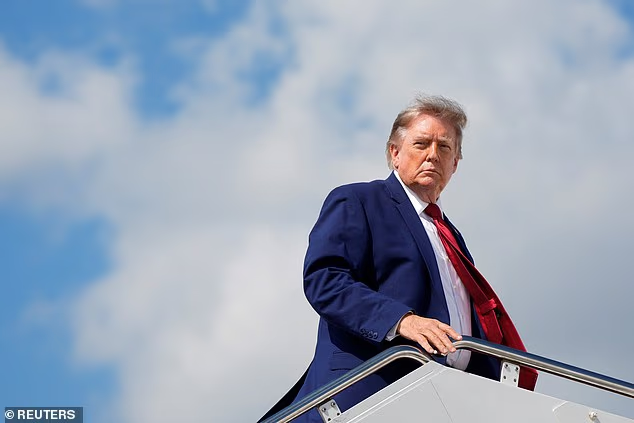
Brazen Iran makes EIGHT demands of the US as it dangles opening the Strait of Hormuz in front of Trump… while launching another attack on allied ship in crucial waterway
Wonder Takes a Gamble on Robots, Drones and AI-Generated Menus

The Art Of The Exit: Dodging Panic When Dell Stock Breached Stop


-

 Politics6 days ago
Zack Polanski: an incitement to murder Nigel Farage?
-

 Fashion2 days ago
Frugal Friday’s Workwear Report: Cap-Sleeve Pointelle Crewneck Sweater
-

 Crypto World7 days ago
Crypto PAC spending tops $2M in Michigan House race
-

 Fashion1 day ago
Weekend Open Thread: Mattifying Sunscreen
-

 Business6 days ago
DTCR: Deleveraging And A Hedge Fund Collapse Point To A Possible AI Bottom
-

 Tech7 days ago
ESET tracks rise in malicious AI skills and adaptable malware
-

 Crypto World7 days ago
XRP Ledger urges node upgrade after manifest flood
-

 Sports3 days ago
Jordan Coyle & Cordiamo take Laya Arena Stakes at RDS
-

 News Videos18 hours ago
Can Astrology Help Find Gold and Silver Trends? A Financial Astrology Guide
-
 Crypto World5 days ago
US Tech Stocks See Largest 5-Week Inflow in History: Can Nasdaq Break Its Downtrend?
-
 Business3 days ago
US stocks: Dow closes at record on Mideast optimism; SpaceX, AMD drag Nasdaq
-

 Tech7 days ago
Page Not Found | WIRED
-

 Politics3 days ago
Reform UK And Greens Sink To Lowest Favourability Ratings To Date
-

 Business4 days ago
Nvidia Stock Climbs 2.5% as Chip Sector Rally Builds Ahead of AMD Earnings, Nvidia’s Own Report Looms
-

 Crypto World5 days ago
Polymarket targets $20 billion valuation as competition heats up in prediction market sector
-

 Tech4 days ago
OpenAI, Anthropic AI agents targeted real people and systems in cyber tests
-

 Tech6 days ago
OpenAI teases Astra, its next major AI model, after it solves 10 long-standing math problems
-

 NewsBeat7 days ago
Tourist plane crash at Peru’s Nazca Lines kills all 13 on board | News World
-

 Business6 days ago
Myspace owners announce plans to relaunch the once-popular platform
-

 Business3 days ago
Supply chain issues impact Ingredion
You must be logged in to post a comment Login